Confidence in a band’s abilities is a good thing. And in context, this is impotent: history shows that even in 1981, Andrew Eldritch was convinced that The Sisters of Mercy were an important band. He’s been proven right, but could very easily have been forgotten and disappeared into the musical morass of the post-punk era, leaving a handful of interviews with one more egotistical tosser languishing in obscure and long-forgotten zines.
Greek goths The Black Capes aren’t lacking in confidence, as their bio indicates: ‘Lamentations about the fading glorious times of gothic culture may very well come to an end with the arrival of The Black Capes. Where great icons such as Type O Negative, The 69 Eyes or The Sisters Of Mercy have been unchallenged in the gothic Olympus, finally there is a worthy successor from Athens.’
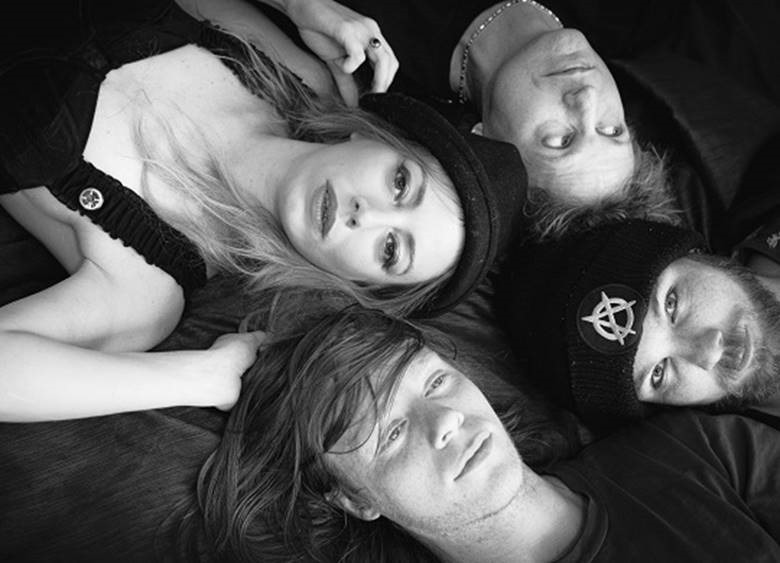
But with the opening bars of ‘Sarah the Witch’, I’m hearing technical goth-metal overtones and catch a strong whiff of cliché (and I’m not going to comment on the press shots). Much as I admire their balls – metaphorically – I can’t entirely buy into the hype. All These Monsters isn’t a bad album by any stretch, and against chunky, chugging guitars, it packs in a proliferation of nagging, hooky choruses.
‘Now Rise’ packs the chunk of Killing Joke and a claustrophobic verse dominated by a thick bass with some roaring metal vocals which tear into the verses. Elsewhere, the picked lead guitar work on ‘New Life’ is pure First and Last and Always era Sisters, but the throaty vocals are more Fields of the Nephilim, and the overall effect is diminished by its obvious drawing on pre-existent sources, in that it boils it all down to a derivative, Sisters of Murphy type amalgamation.
But The Black Capes are very much mistaken if they truly believe they’re the saviour of goth. They’re too much straight-ahead rock for a start. As such, it leans very much more toward Type O (are they really considered ‘icons’ of ‘goth’?) and equally sits more with the mid to late 80s second wave as represented by rock-orientated contemporaries like Gene Loves Jezebel and Rose of Avalanche than post-punk progenitors like The Sisters or Siouxsie. Ultimately, All These Monsters is adequate, but uninspired and unremarkable, and seems to largely miss the connection with the roots of the genre the band claims to be so keen to reinvigorate.
We’ve been digging both Salvation Jayne and Chess Smith’s solo work here at Aural Aggro for a while now. With live dates in the offing to support the release of their new EP, Moves That Make The Record Skip, Christopher Nosnibor welcomed the opportunity to have a virtual chat.
AA: Ok, let’s get the lame, predictable, off-the-peg questions out of the way first: why Salvation Jayne?
SJ: No depth to it really. We were once in a cafe in Camden, and there was a sign on the wall that said ‘Previously called Salvation Jane’. We thought it sounded cool, so we just added the Y.
Would you care to introduce yourselves? Who does what?
Chess (pronounced like the board game) is the vocalist, Holly plays guitar and does backing vocals, Tor plays drums, and Dan plays bass/does backing vocals and also records and mixes our stuff.
Chess, you’ve been in music forever and things started happening when you were 17, back in 2008. Having been in electro act Mooli, and then working as a solo artist, what made you want to be in a band again?
I’d always loved being in bands, and had recently tried starting an all-female band of my own which didn’t really work out. Initially I’d agreed to just stand in for SJ, but it really worked and so I decided to stay.
Your bio describes you as ‘a young, female driven alt-rock band with a distinctive dirty sound which combines elements of rock, nu wave and blues’. How do these elements combine to create something that uniquely defines Salvation Jayne?
We have the big fuzzy single note riffs of bands such as Royal Blood, and QOTSA, but often mixed which dark lyrical themes/chord changes and a chorus effect on the guitar/bass! There’s some big brooding sections not unlike Sisters of Mercy!
Anything that’s got big brooding sections that tip a nod to the Sisters gets my vote. Hit me: influences?
It’s really varied for all of us. In our sound you’ll find elements of Wolf Alice, Kill It Kid, Girls Against Boys, QOTSA and even some hip hop influences in terms of the cadances!
These guys get cooler by the second. In the three-and-a-bit years you’ve been in existence, you’ve accumulated some name-droppable fans, including AC/DC drummer Chris Slade, and The Clash drummer Topper Headon. How did that come about?
Slade is actually a customer of Dan’s. Dan records his other band and played him our stuff. Both he (Slade) and his partner have come to see the band live and really enjoy our stuff. Topper is an old friend of Tor’s Dad, and he has known Tor for years too. Tor often hangs out with him and he was keen to hear the EP, which he loved. He then came to see us live and was totally into it!
You recently released a new EP, Moves That Make The Record Skip. Would you like to talk us through the songs on there?
‘Burn It Down’ is the most recent, and the only one that was actually written with the lineup as it is now. That track nicely combines the elements of our sound described earlier. ‘The Jailer’ is probably the most blues influenced. Featuring slide guitar, although very heavy. That one is actually written about a serial killer, really gloomy in terms of the lyrics! ‘Thrillride’ was inspired by the film Natural Born Killers. It’s about a hedonistic couple indulging in a night of sin. Has a cool kind of ‘desert’ feel to it. ‘Whorehouse Down On The SE’ is another one with dirty slide guitar and even dirtier lyrical theme – it’s about the activities inside a Whorehouse!
There are a lot of people under the age of, I dunno, 30, who have never experienced the skipping of a record. Are you fans of vinyl? And what moves have you got?
Everyone loves vinyl right? Holly can moonwalk, that’s about all we’ve got.
You have a handful of live shows coming up: given the live rep you’ve managed to build, I’m guessing you quite enjoy playing live?
Yeah we love it, get to relieve ourselves of the stress of everyday life! Haha. We always put lots of energy into our performances.
How do you fit playing further afield with non-music commitments, and are you planning more live shows to promote the EP?
We’re pretty fortunate as we all work for ourselves. So taking time off is easy, something we’re thankful for. And yeah, you will catch us all over the UK in the forseeable future!
Final, superfluous and utterly frivolous question, which I’m asking for a friend: what are your favourite crisps?
We had a massive discussion about crisps on the way to a show once. Tell your friend it’s a closely guarded secret.
Moves That Make The Record Skip is out now. Tour dates are listed below.
The digital generation may be unfamiliar with the experience of leaping around their bedrooms to favourite tunes, only for their exuberance to result in the needle skipping a groove or two. While it’s unlikely to cause any damage to either the vinyl or the stylus, it has a way of disrupting the flow and making you feel like a bit of a buffoon. There’s Kent four-piece Salvation Jayne’s EP suggests, it contains rock nuggets potent enough to inspire bedroom moshing, although it’s not being released on vinyl.
After a brief introductory segment, the EP gets going properly with ‘Burn it Down’ which we covered when it first aired back in April. And it’s a cracking tune, chunky blues-based guitars chopping against a sinewy lead line and strolling bass. It also meets the ‘monster chorus’ requirement for a strong rock tune. And yes, tunes matter: on Moves That Make the Record Skip, Salvation Jayne offer tunes, with strong vocal melodies shaping the songs.
If ‘The Jailer’ contains all of the elements of infinite 80s rock bands and reminds me of many, many pub gigs I caught at the tail end of the 80s and into the early 90s in my home town (for all I know, there are still the same sort of bands cranking out the same stuff in the same venues now: Lincoln never was the most progressive of places), it’s well-executed and has the guts in the delivery to make it work. There’s also some nice slidey guitar action that brings a dirty country / blues vibe. ‘Thrillride’ starts with a low-slung bass and sassy, semi-menacing vocal from Chess Smith before she gives it some throat and everything kicks in.
EP closer ‘Whorehouse Down on the SE’ makes for a strong finish: it’s a percussion-driven hefty rock workout which has all the makings of an anthemic crowd-pleaser live. It mines a proper old-school rock seam, and calls to mind The Pretty Reckless at their best, with Smith giving it the raw, rough ‘n’ tough treatment.
There aren’t many bands whose instrumentation features an 8-string guitar. Italian quartet Søndag, however, feature two eight-strong guitar players. Not that you should ever judge a band by its strings to guitars ratio. The band I saw to feature a quantity of guitars with additional strings were proggy muso posers who delivered a whole lot of tedious fretwanking but no real tunes – or riffs, for that matter.
On Bright Things, Søndag bring the riffs – and tunes. The vocals may be clean, but the guitars are plenty dirty.
According to the band’s biography, ‘the inspirations come from the need to mix very “low modern rock metal tunings” with something more dated, to form a blend of classical and contemporary rock sounds.’ It actually seems like a fair summary: Bright Things is a rock album, but the metal influences are clearly apparent, woven as they are deftly into the layered sonic cloth of each of the nine songs. The album was recorded and mixed by Riccardo Demarosi, and mastered by Alan Douches, who’s formerly engineered for bands including Converge, Mastodon, Swans, and Dillinger Escape Plan, and their input has been sympathetic to the band’s chunky dynamics.
Opening track ‘Sweet’ begins with an atmospheric build before the guitars drive in. Yes, there’s a technically complex interloping lead guitar that’s heavily processed, but it’s pitched against a dense, gritty riff.
There are hints of Oceansize in the arrangements on ‘Back in Town,’ but there’s nothing proggy about their concise and overtly rock-orientated songs, and the grungy ‘Polite Rebel’ brings a stomping beat to an unrepentantly unreconstituted slab of hard rock. I can’t help but think of Alice in Chains when listening to ‘Wax’. It’s in the harmonies. For the most part, though, Soundgarden and Baroness are perhaps more obvious comparisons.
‘Spitfire’ boasts some sinewy guitars with a searing afterburn, sparking across a tense and low-slung snaking bassline that spits and snarls and registers somewhere around the pelvis.
Expansive and ambitious in sound, but focused and striking an appealing balance between sonic density and melody, Bright Things is far from lightweight or flimsy, but at the same time, it’s accessible and has hooks by the shedload. While they’re yet to make an impression UK, given the touring schedule which has seen them make inroads into mainland Europe, it’s surely a matter of when, rather than if.
So, are Tricky Lobsters anything like Scottish indie band of the 1980s, Close Lobsters? No. They may share a crustacean genus, but sonically, Rostock-based rockers Tricky Lobsters swim in very different waters indeed. They’re little known outside their native Germany, where they have a substantial following, but it’s well known that the Germans really do like their rock and that British acts who enjoy only cult status domestically are huge over there (take, for example, The Sisters of Mercy and Placebo, who regularly headline festivals there while receiving comparatively little attention back home).
Worlds Collide delivers everything you’d likely want from a proper rock album that has no pretence of being anything else. Opener ‘Bitter Man’s Fame’ sets the tone, with big, ballsy blued-based rock riffage amped up to eleven. Think Mötörhead covering 70s ZZ Top. Or perhaps the other way around: like ‘Just Got Paid’ played with gnarly aggression. And then with a big, greasy dollop of psychedelic biker attitude spat in on top.
‘Big Book’ is a quintessential heard rock tune: it’s not subtle, and it’s not especially clever, but it is big, especially in the chugging rhythm guitar and twiddly breaks department. But what separates Worlds Collide from so many albums of its ilk is just how dense it is, just how thick and up-front the guitars are, how much attack these guys bring to the performance.
They’re a proper power-trio, and it’s the thunderous rhythm section that holds it all together as they piledrive though riff-led behemoth after riff-based behemoth. The slower, quieter moments, like the reflective first section of ‘Dreamdiver’ with its picked guitar and sad-sounding strings only serve to accentuate the meaty heft of the bulk of the album’s nine cuts.
It may, on the surface, seem like rather weak summary to state that Worlds Collide is a rock album you can really rock out to, but given just how diluted and limp so much so-called rock music is these days (I’m not being an old fart: we exist in a time where PVRIS and Linkin Park are classified as rock bands. I mean… seriously), it’s refreshing to hear something as unapologetically old-school and played with energy and guts as Worlds Collide.
Straight out of the trap, DOG sounds like …And the Hangnails. They have a knack for blasting out of the speakers, full-throttle, from the first bar at the start of every album. There’s no preamble, no atmospheric or suspenseful intros, no slow-build and no pissing about: they’re in there, immediately, all riffing and explosive drumming.
That’s actually all there is: this grungey garage-pop duo have spent their carer to date maximising the impact of a comparatively limited format, namely the fact they’re a guitar and drums combo. But the trick is that they don’t sound like a duo, especially on this, their third album: the production is phat and full and with the treble backed off just a shade in comparison to their previous efforts, Martyn Fillingham’s split-signal guitar sounds thicker, denser meatier and more like both a guitar and bass simultaneously.
Steven Ried’s exceptional powerhouse drumming (this is a man who drums hard, and at a hundred miles an hour, and who makes Dave Grohl sound like some jazz tapper), sounds even more exceptional than ever on DOG. I mean, really. The guy’s a one-man percussion explosion. And again, while it’s commonplace for music critics – myself included, on occasion – to criticise little, grungy, lo-fi bands for ‘selling out’ by cleaning up their sound, aligning higher fidelity with a betrayal of their roots, in this instance at least, it would be a mistake. DOG is the work of a band which has evolved. This means that while there isn’t anything as explosively raw as ‘Fear Only Fear’ or ‘Everybody’s Luck’ from the previous albums, their edge has by no means been dulled. Yes, the songs do feel more crafted, more developed and less primal, bit it’s an incremental thing. It’s still loud, brashy, thrashy and rough around the edged. There’s still fuzz and feedback by the shedload.
But more than anything, on DOG, it’s possible to actually hear the detail and the sonic range. The result is that the full force of their live sound can at last be heard in a recorded format. Besides, it’s not as though they’ve gone super slick and delivered an album of radio-friendly r’n’b. DOG may be an album busting with hooks, but it’s also a serious alt-rock racket, and alongside the breezy surf-pop backing vocals are driving riffs galore.
DOG is without question their most accessible album to date, but that doesn’t mean that it’s overtly commercial or in any way a sell-out. There isn’t a weak track on the album, and there sure as hell isn’t a big ballad at the end of side one. DOG is ferocious, relentless, sharp, to the point and represents the realisation of everything …And the Hangnailshave been building up to.
It contains just ten songs, the majority of which sit around the three minute mark. And so, as is their trademark, DOG is a short, sharp blast of post-grunge garagey punk bursting with killer hooks and belting tunes from start to finish. If this doesn’t see them make some kind of breakthrough, the world is even more fucked up and wrong than I’d imagined.
Being a cynical motherfucker, and living in an era when everything’s not only been done, but done to death, diluted, fucked about with, hybridized and rendered beyond obsolete, I was a bit dubious when I read Salvation Jayne’s Facebook page, on which they describe themselves as being ‘four musicians who play their own unique style of dirty rock n’ roll’. Unique? Show me something unique and I’ll eat my own head.
But then I also note that the line-up features pop chanteuse Chess Smith, who’s previously featured on Aural Aggro in a solo capacity. And while image only goes so far, Salvation Jayne not only look like a proper band, but they look bloody cool, too.
‘Burn Down’ is a kickass blues-based rock tune with a dark edge countered by a carefully-crafted accessibility. If it harks back to the 80s, and therefore isn’t exactly unique, it’s forgivable: they don’t make tunes like this any more, and the lamewads at Kerrang should get their lugs round this and remember what a proper rock band sounds like instead of plugging all that pop-punk cack and dance music not even disguised as rock b acts like PVRIS. Smith’s vocals are gutsy, the guitars throb and the production is meaty. This means that while I’m not feeling any obligation to eat my own head, I do have to take my hat off to Salvation Jayne for delivering a quality single with a strong sense of identity.
My first encounter with Cinema Cinema was in 2012, when I received their sprawlingly epic double album Manic Children and the Slow Aggression for review, and landed an interview for Paraphilia Magazine with Ev Gold. Not only was it a remarkable album, but Ev proved to be a great interview subject: enthusiastic, affable, conversational, and I recall him singing ‘cinema, cinema,’ as he explained the origins of the band’s name to me. I didn’t recall the scene, but I knew the film in question: the dark, Belgian-made, parodic documentary, Man Bites Dog. As the press info accompanying the release of their latest album, ‘after years of explaining… the duo felt compelled to further affix it to their story by naming the new album after the film.
With the band’s gear – including all of their guitars – being stolen just two days into the recording sessions, Man Bites Dog is testament to the sheer determination and bloody-mindedness of one of the hardest-working bands around. Brooklyn duo Ev and cousin Paul Claro have gigged pretty much relentlessly since their formation, and it’s on the road that the material has been evolved and honed. This adherence to the punk ethos, based on the simple premise of two guys in a van, showing up, plugging in and playing hard. So, using borrowed gear, the album’s recording went ahead regardless. Never mind making lemonade from lemons, the very existence of this album proves that Cinema Cinema thrive in the face of adversity, and are completely unstoppable.
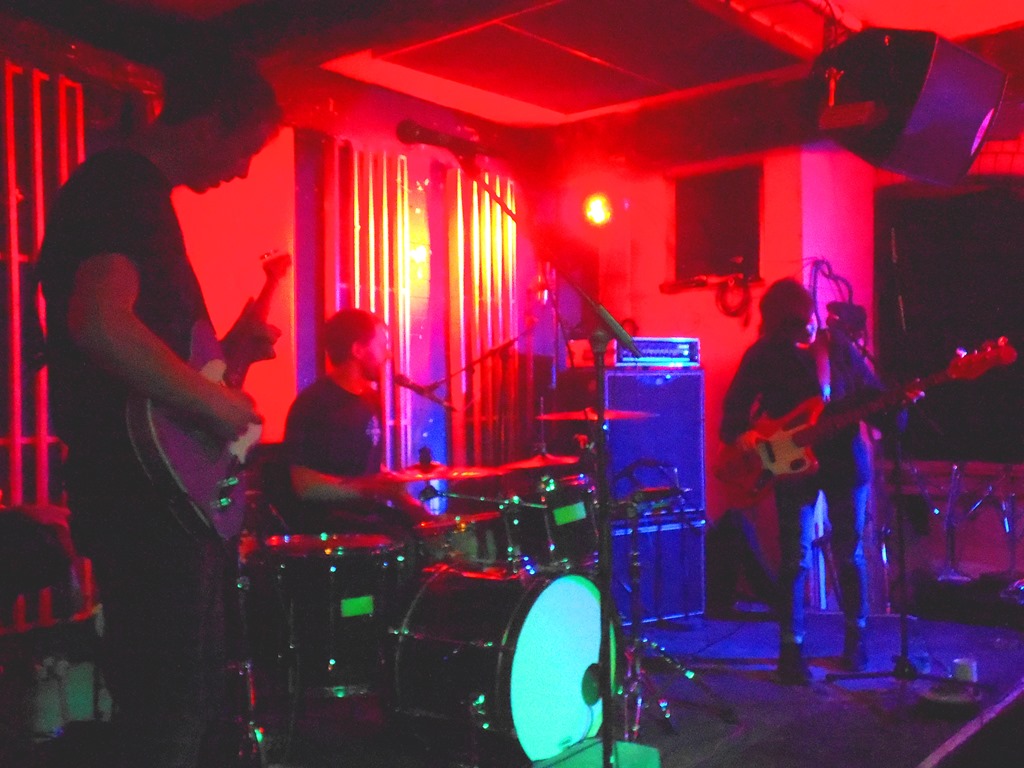
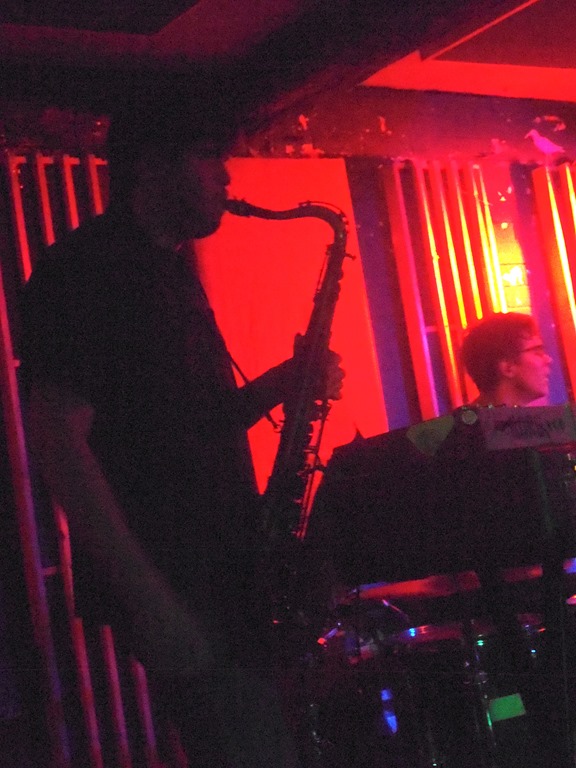
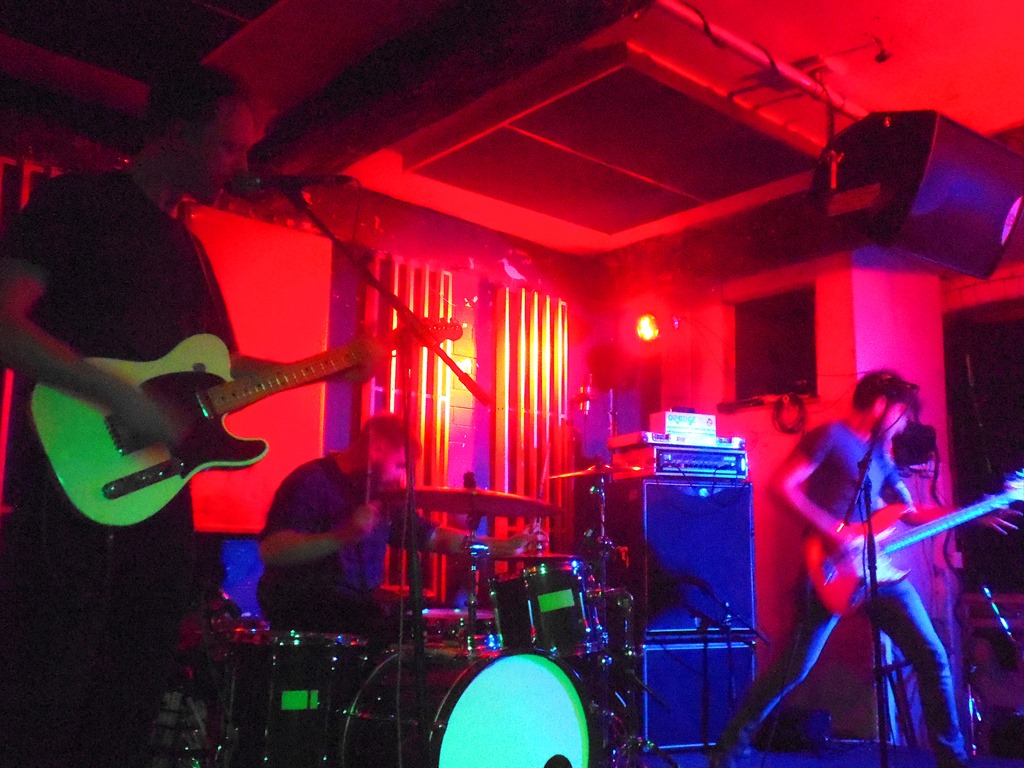
Man Bites Dog continues the trajectory of its predecessors, from the aforementioned Manic Children and through 2014’s Night at the Fights. That is to say, it’s a noisy, guitar-driven beast of an album, that veers wildly between crunching riffs and expansive experimental space-rock sections. On this outing, they expand their sound with the addition of saxophone, courtesy of NY jazz musician Matt Darriau.
The first track, ‘Bomb Plot is a lurching, low-slung racket, a crazed hybrid of US hardcore punk and math-rock, with a snaking groove and a fuck-ton of other stuff going on too.
‘Run Until Your Out’ packs a pot-punk vibe in the verses, then explodes into a roaring grunge chorus. It’s a complete riot, and while all sorts of incidentals whizz and whirr in the background and Gold comes on like Jello Biafra one moment and Kurt Cobain the next, it’s remarkable just how direct and accessible it is. It’s no small achievement that they can pen and perform a song that possesses such an overt pop sensibility without sidelining either their full-throttle rock sound or reining in the experimentalism. And it’s this fine-honing that makes Man Bites Dog their most powerful and potent work to date.
‘Exotic Blood’ represents the album’s first foray into more overtly experimental territory: a six-minute stoner rock work out, there’s a hefty riff, but it’s warped and bends all over the place in a way which invites comparisons to Melvins – until the sax comes in and takes it somewhere else completely while a whole heap of stuff goes off in every direction. Indeed, the album’s mid-section marks quite a change in tone from the opening salvoes, with the discordant riffs, tinged with free jazz flavours and riven with unpredictable tempo changes swathed in drifting noise and wandering sax. ‘You talkin’ to me?’ Gold yells dangerously on ‘Taxi Driver’, another song which reflects the duo’s equal appreciation of film and music. It’s also a song which chops and changes and stops and starts and judders and drives. The end result is little short of deranged: tense and strange and forceful, it packs a lot into a short time.
The thunderous, trudging ‘Mask of the Red Death’ is the soundtrack to a truly purgatorial experience that breaks into a monster stoner riff that’s hard to resist, picking up the pace and beefing up the density until hitting a frenetic peak around four minutes in. The obligatory ‘Shiner’ improvised jam track – the album’s closer being the fifth in the series – typically explores the band’s most experimental tendencies, and it’s nine minutes of angular guitars, wild effects and even wilder sax.
It all adds up to a focused, concise and yet still strangely divergent album, and in this way, Man Bites Dog is perhaps the most perfect encapsulation of Cinema Cinema’s sound, scope, and ethos to date.
We love a bit of Soma Crew here at Aural Aggravation. ‘Got it Bad’, which prefaces the release of their new album, is perhaps the most definitie statement of their sonic capabilities yet. Check it hre:
I struggle to find Bad Apples, even with my phone’ sat-nav. Talk about underground! There’s nothing like being in the know for more niche events. Hunkering down with a Newcastle Brown and Jean-Paul Sartre’s The Age of Reason, there’s a relentless thunder of thrash and grinding metal hammering out of the speakers in the upstairs bar while I wait for the first act.
It’s pretty quiet in terms of people, but then it’s the Thursday before payday and storm Doris is raging hard outside: it’s cold, it’s wet, it’s windy, and generally unappealing. Storm Doris is also the reason the headliners – who are bringing the drum kit – have still to arrive at the venue five minutes after the first act is due on, and our planned interview hasn’t happened. Music writing isn’t all cut-and-thrust, hob-nobbing and ligging: it involves a lot of hanging around, a lot of waiting, a lot of time sitting, drinking beer alone in a corner and reading books. It also involves a lot of standing, a lot of cross-city legwork, and a fair amount of train travel.
In a change to the advertised bill, which listed Sinkers (who are nowhere to be seen), and Lincoln ‘soul punk’ four-piece Striped Sight as the first act on the bill, Conrad Ashton steps up to play some acoustic numbers. This comes as quite a relief, because the write-up for the aforementioned ‘soul punk’ act sounded truly heinous. Durham Yakka Conrad Ashton – who handed me one of his plectrums sporting a Newcastle Brown logo on the flipside having clocked me supping a bottle of Broon – knows how to bash out a heartfelt punk tune solo on an acoustic guitar. Balancing keen melodies with a real sense of attack, he’s an engaging performer. He pings a string during the third song, ‘Straight to the Man’. “I’ve not got a spare guitar, like,” he apologises. Thankfully, one of the guys from Lost in Winter is on hand, and armed with a seven-string electric guitar, Conrad picks up precisely where he left off to play the last six bars. He wrapped up his acoustic -now-electric set on yet another guitar after another string met its end, and its credit to him for carrying it off with self-effacing humour. A true pro, and with some decent songs to boot.
Conrad Ashton
Lost In Winter scream ‘technical’ and ‘rich middle-class posters’, with their haircuts, clan suede boots, neat beards, a five-string bass and two guitarists both geared up with seven strings. One of the guitarists spends an age clamping a camera to the PA speaker stand while the drummer fiddles with his cymbals and the singer, in a shiny new-looking biker jacket performs head-rolls. Christ, the kit they’ve got probably cost more than I earn in a year – and of course, they sound absolutely fucking incredible. They need to, of course: their brand of atmospheric, melody-driven neo-prog is crafted with near-infinite attention to detail. It wouldn’t work without those microscopic nuances, the fifty shades of delay and delicate tube crunch. But what does it all amount to? Not a lot. Lost in Winter prove slick but dull in their overly serious emoting of lines about how we ‘crumble to dust’ and how ‘we must fight our way out and into the light.’
There’s no such pomposity where Maidstone five-piece Weekend Recovery are concerned. They set up swiftly, and Lorin rocks up in a long animal-print coat which she whips off to reveal a crop top that says she’s read to rock. And rock they do. This is a band with power, passion and an infectious energy, and watching them pour everything into every song, you’d never guess they’d just spent eight hours stuck in a van and piled on stage with barely three minutes to soundcheck.
Weekend Recovery
And while Lorin is the band’s clear focal point – she’s got real presence and never stays still for a second, as she struts her stuff and tosses banter like she was born to do it – it’s clear that this is a band who operate as a unit: they’re tight, cohesive and look like they’re having a blast up there. The songs themselves are punchy: banging out solid rock tunes with a keen pop sensibility, Weekend Recovery know their way around a hook, and no mistake. The set concludes with single cut and reason for the tour, ‘Don’t Try and Stop Me’, and it’s ace.
It’s a strong start to an ambitious tour, which should – if there’s any justice – see them expand their fan base considerably.