Posts Tagged ‘Post Rock’

Cruel Nature Records – 21st February 2025

Christopher Nosnibor

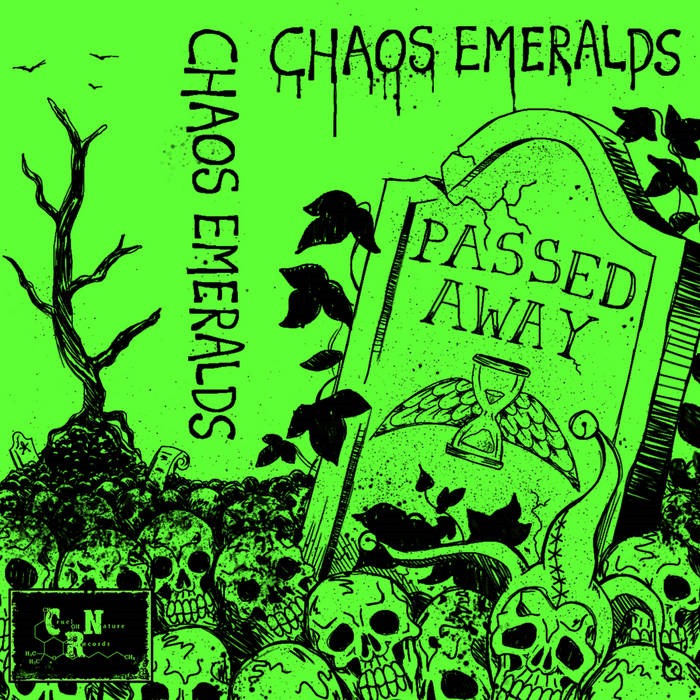
Cruel Nature are delivering a slew of releases on 21st February – an overwhelming volume, in fact. We’ll be coming to a fair few of them in the coming weeks, but first up, is the second album from Lanark / Reading based sludgy shoegaze project Chaos Emeralds, Passed Away, which comes in a hard-on-the-eye dayglo green cover which is catchy and kinda corny in equal measure.

According to the bio, ‘Chaos Emeralds is Formerly the solo project of Charlie Butler (Cody Noon, Neutraliser, Mothertrucker) with releases on strictly no capital letters, Les Disques Rabat-Joie and Trepenation Records, Chaos Emeralds has now expanded to a duo with Sean Hewson (Monster Movie, Head Drop, This) joining on lyrics and vocals.

Passed Away combines the lo-fi slowcore, shoegaze and doomy post-rock sounds of the previous Chaos Emeralds releases with a more song-focused approach to create a set of scuzzy emo gems.’

For some reason, despite ‘sludgy shoegaze’ and ‘lo-fi slowcore, shoegaze and doomy post-rock’ featuring in the above description, I didn’t quite expect the Pavement gone Psychedelic vibes of the title track which raises the curtain on the album. A primitive drum machine clip-clops away, struggling to be heard above a tsunami of feedback and waves of distortion on ‘Count Me Out’, which adopts the kind of approach to production as Psychocandy – quite deft, breezy and ultimately melodic pop tunes almost completely buried in a blistering wall of noise.

‘Juggler’ brings a wistful tone – somewhere between Ride and Dinosaur Jr – amidst ever-swelling cathedrals of sound, a soaring lead guitar line tremulously quivers atop a dense billow of thick, overdriven chords which buck and crash all about. The way the elements play off one another, simultaneously combining and contrasting, is key to both the sound and the appeal. It’s one of those scenarios where you find yourself thinking ‘I’ve heard things which are similar, but this is just a bit different’, and while you’re still trying to decide if it actually works or not, you find yourself digging it precisely because of the way it’s both familiar and different.

The vocals, low in the mix, feel almost secondary to the fuzzed-out wall of guitar, but their soft melancholy tones, sometimes doused in reverb, add a further minor-key emotional element to the overall sound, especially on the aching ‘Matter’.

When they do lift the feet off the pedals, as on ‘Welcome Home’, the result is charmingly mellow indie with a lo-fi sonic haze about it – and a well-placed change in tone and tempo, paving the way for the epic finale that is ‘In Our Times’, a low-tempo slow-burner which evolves from face to the ground miserabilism into something quite, quite magnificent, Hewson’s near-monotone vocals buffeted in a storm of swirling guitars as the drum machine clacks away metronomically toward an apocalyptic finish.

AA

a4117384026_16

Christopher Nosnibor

I expended a lot of typing extolling the virtues of grass-roots venues last year, and mentioned in my end -of-year summary how a change in personal circumstances had changed my gig-going habits somewhat. And so it was that I picked this one more or less on a whim: after DarkHer’s show on Monday was cancelled due to band illness, I found myself itching to see some live music.

Having been blown away by the Jesus Lizard last week, I figured seeing a band I had no knowledge or expectations of might be a good idea, as there would be less likelihood of disappointment.

A Thursday night in the middle of January is pretty much the ultimate lull in the gig year – ordinarily. So it’s pleasing to see a decent turnout early doors, with surprising mix of studenty types and older men. Grey hair, beards, bald heads… Yes, broadly my demographic now, but more like retirement age than approaching 50. At the opposite end, nerd glasses, mullets, turnups. And all as lanky as hell. Why is everyone under the age of thirty so bloody tall?

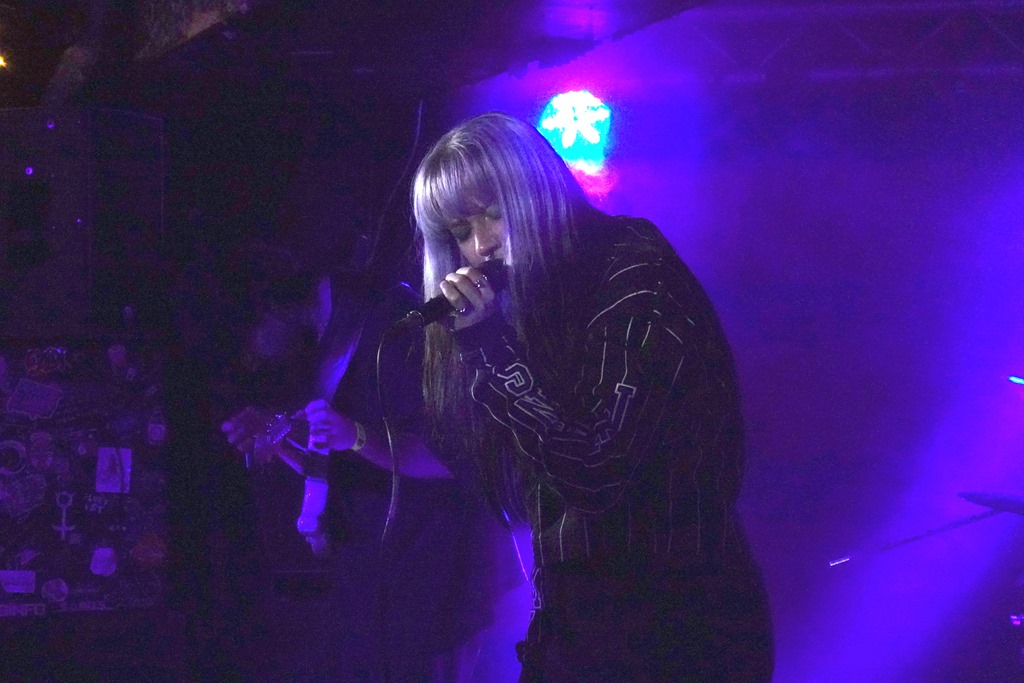
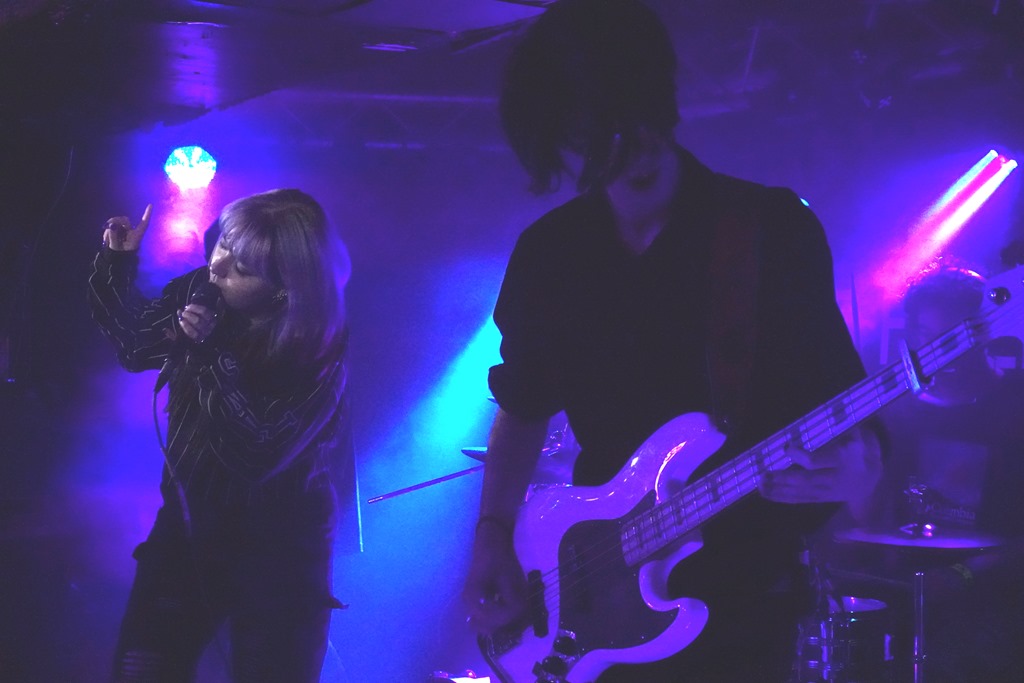
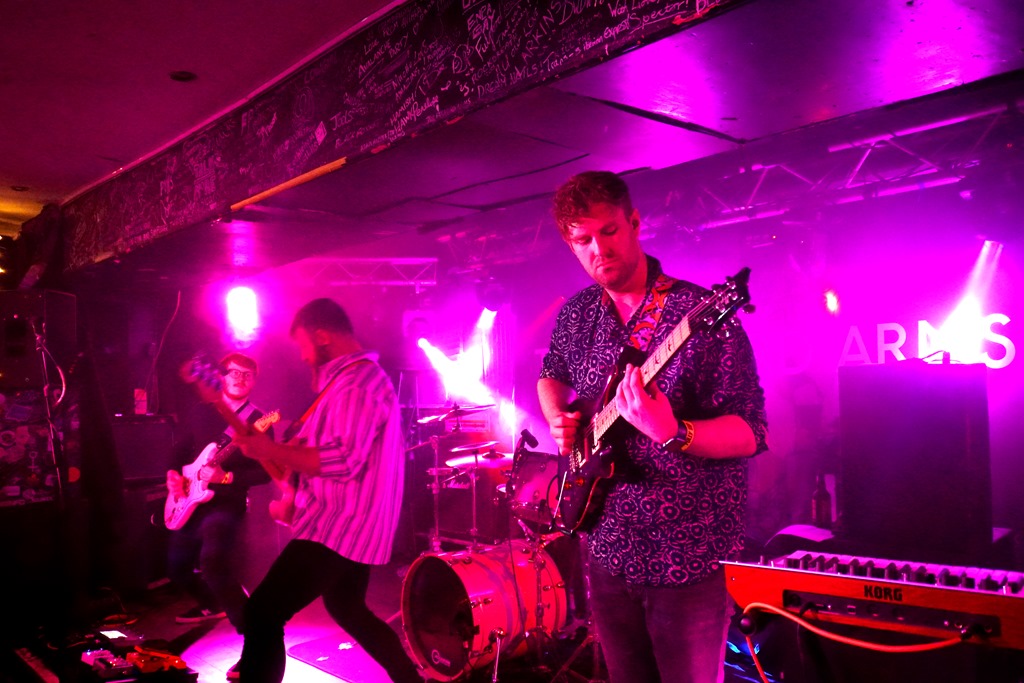
Patience are first up, bring a set of middling alt-rock with a bit of an emo edge and some flash mathy licks. The singer looks a little uncomfortable on stage: she makes rather hesitant moves when not singing, mostly with some small-stepping jogging on the spot. The band have some serious pedal setups for a bottom of the bill band with just a handful of tunes on Spotify. Perhaps partly on account of this, they sound really good. Things fall apart a bit during the last song, with tuning time-outs and false starts, and the bassist, who’s about seven feet tall and using a wireless setup, not content with bouncing and flailing in his own space, repeatedly encroaches on the singer’s space as he crosses the stage and lurches about around the drum kit. It’s a solid enough performance from a band who have no shortage of technical skill or kit, but whose songs are lacking in that all-essential grab which would make them memorable. They have clear potential, though, and I’d be interested to see them in another six months or so.

DSC00848.2DSC00843.2

Patience

Covent’s single, ‘Peace’, released just last week, was the only bit of pre-gig research I managed. Showcasing a proficient grunge-influenced sound, it’s more Bush than Nirvana, but I’d take that over Nickleback any day – and as a consequence, I was rather looking forward to their set.

They have even more pedals than Patience, especially the bassist. And fuck me if he’s not wearing a bloody Nickleback T-shirt. They’re certainly at the more radio-friendly end of grunge, sounding like Language. Sex. Violence. Other? era Stereophonics crossed with Celebrity Skin era Hole – not to mention Smashing Pumpkins. They sound great, mind, and the singer’s voice has a good level of grit and gravel, and when they do really kick it hard, as on ‘Under the Surface’, they move above drive time grunge into heavy-hitting territory. ‘Out of the Blue’ does remind me rather of Weezer, although I can’t put my finger on anything precisely, and they close with ‘Peace’. It’s a sound choice and a strong finish to a thoroughly decent set. I could easily see them playing considerably larger rooms.

DSC00866.2DSC00862.2

Covent

Chonky Dogg demonstrate why it’s worth taking punts on bands, and why grassroots venues are vital. Where else would a local band with no label backing – that is to say, a real band rather than a manufactured one – get to cut their teeth and build a fanbase? There’s been much made of the cutting of the pipeline, how the not-so-slow death of the small venue circuit is starting to choke the development of acts who will be playing arenas and headlining festivals in years to come. Chonky Dogg are never going to be headlining Glastonbury or selling out O2 venues around the country – but given the right exposure, clearly have the potential to play to substantially larger audiences than this.

DSC00919.2DSC00924.2

Chonky Dogg

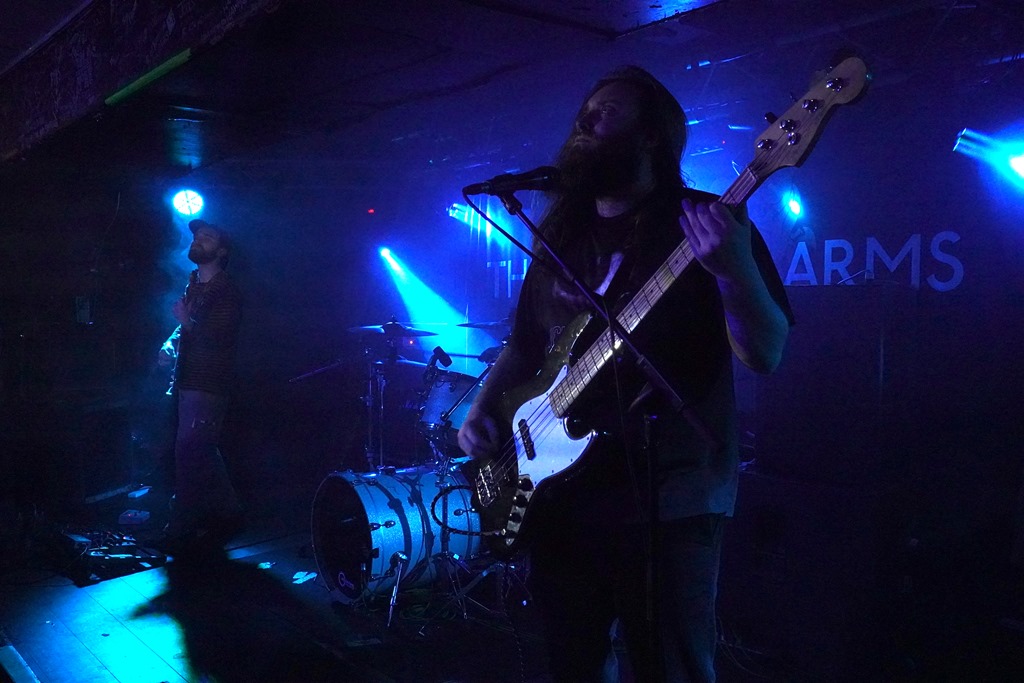
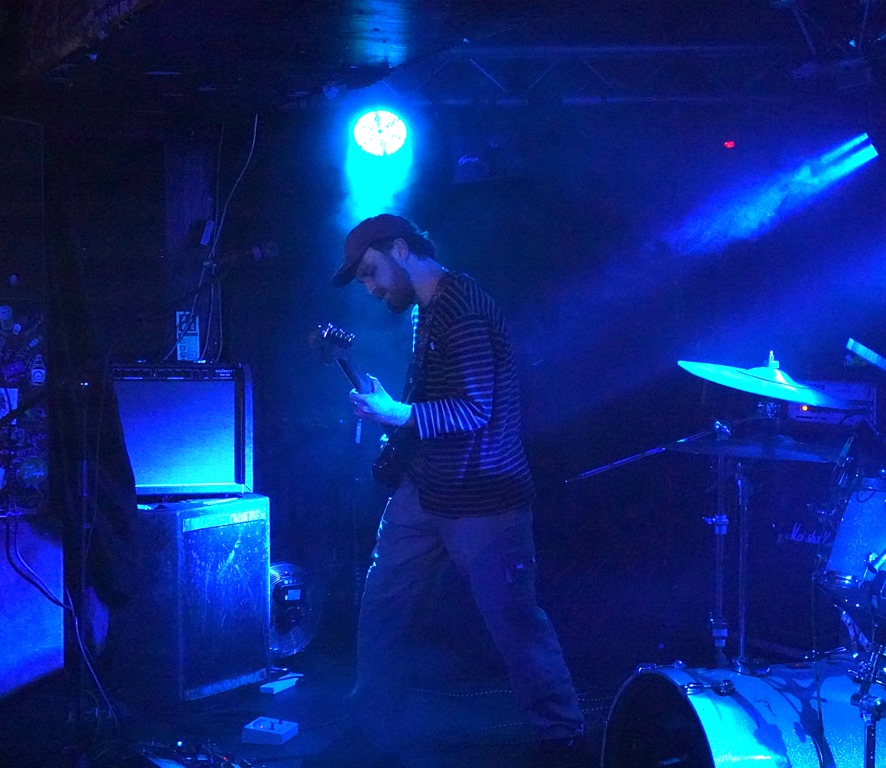
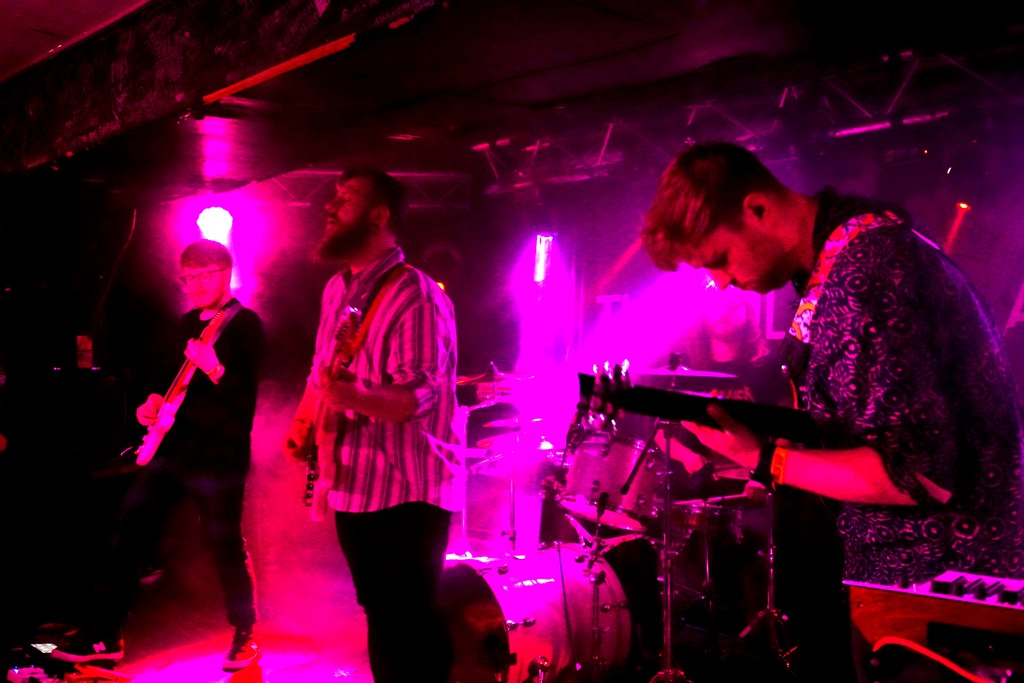
Theirs is a daft name, but it so happens they’re a great band, strongly reminiscent of And So I Watch You from Afar, another band I discovered by way of a fluke because I went to see maybeshewill – on the basis of hearing a single – while staying in Stirling for a conference. They play noodly, mathy post rock driven by big, big riffs. Their music is complex, yet accessible, richly layered, with some magnificent detail, wonderful guitar interplay, and some dense, crunchy bass. The songs pack some weight and substance. And, they’re as tight as they come: is it really only their third gig? ‘Barbenheimer’ is a blistering riff-fest with soaring lead work, and everything about their performance is perfectly balanced and brilliantly executed. A beautiful proggy neoclassical interlude prefaces the final song, scheduled for single release soon (I think), and it’s a blinder.

I’m going to call it here first while I can: they really are the (Chonky) Dogg’s bollocks.

Trestle Records – 18th December 2024

Christopher Nosnibor

Tout isn’t a seedy guy flogging – or trying to buy, at a cut-price – tickets outside a gig, but a band which, on this, their fourth album (bet you never guessed that) brings together aspects of contemporary classical, jazz and ambient, in addition to the ‘folk and new age traditions’ which influence their previous works. It follows and extends the trajectory of their previous albums, sequentially numbered with the exception of their last Live, released in 2017.

It’s certainly a lot to toss in together, and with no fewer than ten musicians contributing to this release, the compositions certainly afford a considerable amount of layering and offer much to process. Even after a few listens, I’m still digesting and on the fence as to whether the combined elements are appealing or not.

Jazz comes in almost infinite flavours, and it’s not the ‘nice’ jazz to which the cliché of the listener sporting a goatee and cardigan applies which is the strain that tantalises my taste buds – but Tout do sit perilously close to this at times. At others… they’re truly sublime.

One of their habits is to title the tracks – instrumental pieces, all – in such a was as read in sequence, they form a poem, although on Fourth, it ends abruptly, despite the full stop making it clear that this is no accidental cliffhanger.

I rob the rich to feed the poor

Which hardly is a sin

A widow ne’er knocked at my door

But what I let her in

So blame me not for what I’ve done

I don’t deserve your curses

And if for any cause I’m hung.

‘I rob the rich to feed the poor’ makes for an expansive, atmospheric start to the album, slow-swelling cymbals and understated percussion hover in the background while delicate sonic waves rise and fall, while smooth saxophone echoes out atop it all, growing increasingly excited toward the climactic finish.

It’s broad-brushed, sweeping synths and soft strings which provide the backdrop to ‘Which hardly is a sin’, where a strolling bass stumbles and stutters from time to time. ‘A widow ne’er knocked at my door’ marks something of a change in tone, with sparse acoustic guitar mournful strings bringing an altogether folkier feel in contrast to the jazz vibes. At the same time, it’s reminiscent of some of the post-rock which was all the rage circa 2005.

‘So blame me not for what I’ve done’ is truly magnificent: a minimal, piano-centred piece, it’s haunting and melancholy and leaves you feeling somewhat hollowed and bereft, and it’s apparent that – to my ears, at least – the less overtly jazz works are the superior ones on the album. Admittedly, that’s a matter of taste, but, objectively, Tout seem at their most inventive and creatively enthused when venturing into these different territories.

The album ends as abruptly as the poem it spins: one moment, ‘And if for any cause I’m hung.’ after a subtle, sedate start, is jazzing along, the bass strolling and ambling – and then suddenly it isn’t, petering out, unresolved. Et c’est tout. It’s well played, both literally and figuratively.

AA

a3531274275_10

25th October 2024

Christopher Nosnibor

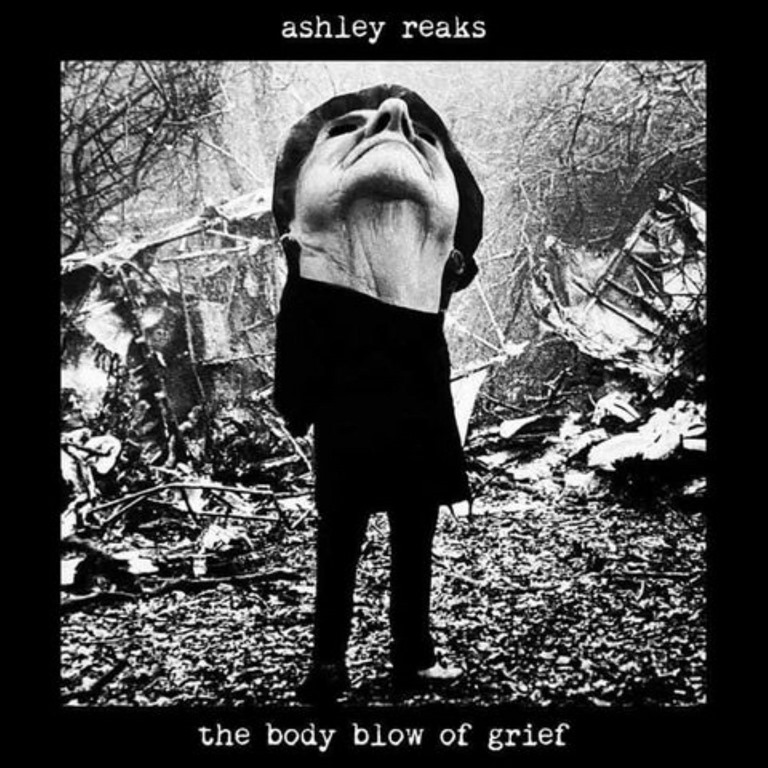
As is the case with his collage artworks, there is a sense of physicality about Ashley Reaks’ recorded work. His album titles tend to be brief but evocative, visually or otherwise: Compassion Fatigue; Track Marks; Growth Spurts; Winter Crawls… these are titles which evoke a sensory response – a shudder, a shiver, a skin crawl. The Body Blow Of Grief – Reaks’ fourteenth solo album – lands with an impact before you even arrive at the music itself.

I suppose – as is often the case when it comes to any music – there’s a personal element to my response here, and I make no apology for this. As I have touched on elsewhere, art is personal, in that it elicits a response which is unique based on a multitude of factors, ranging from life experience to emotional state and the mood of the moment. But the very phrase, The Body Blow Of Grief, lands like a punch in the stomach, and I’m aware that, while recently bereaved, having lost my partner of twenty-two years and adjusting to life as a single parent to a twelve-year-old, I am acutely sensitive to things which many others wouldn’t be. And yes, grief hits like a body blow. It knocks you, hard, socks the air out of your lungs and leaves you feeling weak, dazed.

Reaks’ music very much sounds like his artwork looks: a collage, a collision of styles, disjointed elements overlayed unapologetically; instead of smoothing over the joints, Reaks revels in the ruptures. Because this is where the vitality of life is found.

‘Home is Where the Hurt is’ may be a fairly obvious piece of wordplay, but the album’s opener digs deep into this seem, one which is a rich source of material in Reeks’ exploitation of trauma and its effects. ‘I can’t really feel what’s real’, he confesses against a backdrop of dubby bass and honking horns, before a shuffling beat settles into a tidy groove. It’s a bit Interpol meets Madness before lurching into post—rock territory and tapering out in a rippling tingle of layered guitar.

While the topics may be heavy, The Body Blow Of Grief is remarkable for its levity, its musicality, it’s easy tunefulness. I don’t mean necessarily that it’s all air and light – because it really isn’t.

There’s some quite tight, choppy, indie guitar on ‘No Place In The Nature Of Things’, a song that squirms and twists its way through almost seven-and-a-quarter minutes.

‘Somewhere To Hide Among The Swarm’ takes the bold step out into the swarm to offer some-full-on progressive rock flavours.

Across the course of the album’s eight tracks, Reaks walks through the familiar territory of previous albums with leaning toward dub and post-punk, but ventures into altogether newer territories with some spaced-out prog-inspired explorations, and ‘Hobbling Like A Refugee’ has an eighties feel that unexpectedly delves into electropop and AOR. It’s not polished to the levels of the 80s rolled-up jacket sleeve bands, but it alludes to the slickness of the era, but the dark lyrics are a stark and uncomfortable contrast. ‘Mongrel Nation’ is a slice of chunky post-punk laced with the bombastic excesses of Muse and a few jazzy twists.

The last track, the eight-minute epic ‘I’m Not a Fossil’ is a multi-faceted, multi-headed monster propelled by some strong technical dtrumming.

As always, Reaks presents us with an album that’s complex and layered, but The Body Blow Of Grief feels like a step up in the ways it opens horizons to new levels of boldness and ambitious sonic vistas.

AA

a1473578772_10

Summer has come to an end, all swallows have left the north, and autumn is already knocking on doors and windows with gusts of wind and rain. When the first leaves are falling, it is also time for melancholic tunes. WHISPERING VOID has the perfect offer for this darkening season: the eponymous song that gave the collective of renowned musicians from Norway’s west coast their name. ‘Whispering Void’ is taken from their forthcoming debut album At the Sound of the Heart, which has been scheduled for release on October 18, 2024.

WHISPERING VOID comment: “Lyrically, ‘Whispering Void’ combines all the elements of this album”, vocalist Kristian Espedal reveals. “The slow, gracious movements of the music evoke the innocence of natural beings moving through a forest, as acted out by the vocals in the verses. This song also features our third ‘outside’ collaborator, Matias Monsen from the band DROTT is playing the cello.”

Listen to this gloriously epic tune here:

AA

4e490e66-5245-adb3-6f07-95b056af9369

The collective of renowned musicians from Norway’s west coast known as WHISPERING VOID is releasing the single ‘Vinden vier’ (‘The Wind Sanctifies’) that features ABBATH guitarist Ole André Farstad. The track is taken from their forthcoming debut album At the Sound of the Heart, which has been chalked up for release on October 18, 2024.

Hear ‘Vinden Vier’ here:

AA

WHISPERING VOID comment: “This song began to form when I repeated the words ‘Vinden vier’, which is kind of a play on words”, vocalist Kristian Espedal explains. “This can mean ‘The Wind Sanctifies’ but it can also be read as: ‘The Wind Unites’. As the lyrical loop goes on, it also becomes ‘Vi er vinden’, which means ‘We Are the Wind’. Then Lindy added her wonderful vocals in a 70s or even 60s style. At first, she just sang the ghost vocals, but once we had set the lyrics for the song, she also gave her voice to them. We all felt that this song also needed more of an Eastern energy, which is the very reason as to why we invited Ole André Farstad to play guzheng and Indian slide-guitar. This has added even more of that late 60s vibe to the song and I really like the result.”

AA

4e490e66-5245-adb3-6f07-95b056af9369 21

No hype needed: new material from  AND SO I WATCH YOU FROM AFAR. Check it here:

AA

441964603_6593426110495_7554639745285294722_n

InsideOut Music – 11th May 2024

Christopher Nosnibor

Maybeshewill rose to prominence on the crest of the instrumental post-rock wave swiftly on their arrival in 2005, and while many of their titles and song structures, with brooding passages splintered by bold crescendos, were quintessentially of the time, what set them apart from their peers was the electronic element of their sound. Between 2008 and 2014, they released four albums, with Fair Youth being the final one. And then they called it a day the following year.

Something happened in the years which followed. Not to the band themselves, but in the culture. As so often happens, their reputation and the appreciation for the band seemed to grow in their absence. There’s inevitably an element of nostalgia involved, but with fashions being ever cyclical, post-rock’s popularity was somewhat diminished by 2014, largely due to oversaturation, no doubt – how many instrumental bands playing seven-minute songs with chiming guitars and crashing crescendos all wanting to be Explosions in the Sky do you need to see on a single evening, and how many such lineups do you need in a week, month, year, lifetime? But as time passed, there emerged a new generation who hadn’t been going to gigs in the mid-noughties, who’d missed out, and thus grew a renewed interest.

Maybeshewill reconvened in 2020, releasing No Feeling Is Final in 2021, an album which, seven years after Fair Youth, further cemented their style and certainly didn’t disappoint.

As 2024 marks the ten-year anniversary of Fair Youth, it seems an appropriate time to review the merits of a definitive album – here, reassessed, remixed, and remastered. Jamie Ward comments of the new mix and master: “With 10 years more mixing experience under my belt I feel a bit better placed to conquer the wall of sound and get a little more separation between the instruments to really bring out the details of those arrangements. In general I’ve tried to make things hit a little harder and be bit a more vibrant and technicolour.”

I haven’t been anal enough to play the two versions side by side or to really focus on those minute details which some fans will likely revel in for hours, and I sincerely hope they do. There is a certain and quite specific pleasure in rediscovering an album you know intimately, finding fresh details and dynamics along thee way, but this is perhaps more the material for fan forums and individuals to immerse themselves in.

For me, it’s been a long time since I’ve listened to this album – not because I don’t rate it, but because of the sheer volume of music in the world vying for my attention.

From the very start, rolling piano and brooding strings pair with chiming guitars, strolling bass, and solid percussion to make mood music that’s not meek or fay, but driven and dynamic, with remarkable texture and depth, and it draws you in instantly. There’s a magical musicality to ‘In Amber’, largely derived from the piano which ripples and rolls its way through the surging guitar.

The title track is one of many which, with vocals, would likely have made an epic academy-size venue-filling anthem, and ‘All Things Transient’ has soundtrack written all over it. The quality of the compositions – and their execution is impossible to fault, as they present back-to-back tunes which are solid, energetic, expansive, imaginative. ‘Sanctuary’ is mellow but at thew same time has drive and energy, pulsating shoegaze with a solid rock spine in its tight rhythm section, which stands in contrast to the rather more mathy, jazzy, folksy ‘Asiatic’.

The album’s eleven songs showcase a real range, and Fair Youth represents not only a high point in the band’s career, but also in the post-rock oeuvre. It’s an album of a rare consistent quality, and holds up as well ten years on as it did at the time – if not, perhaps, better.

AA

a2908336688_10