Posts Tagged ‘Post-Punk’

Aural Aggro faves Pound Land have unveiled an eye-bleeding, brain-melting video for the track ‘Liar’. It’s taken from their recent Singles Club compilation, released last month on Cruel Nature, which collects all the digital singles released between April 2022 and April 2023 in a physical form. It also emerges ahead of new album Violence which is out next month.

Check it here (and please watch to the end….)

AA

a3877052305_10

Icons Creating Evil Art – 4th August 2023

Christopher Nosnibor

The third single from Swedish act Darkplace is their first to feature vocals, and is not a cover of the Gary Numan hit.

The band are described as ‘a mysterious new Swedish dark dream pop/post-punk group whose forthcoming debut album, About The End Of The World, is a conceptual work inspired by the bleak landscape of the Stockholm suburbs that birthed them.’ They go on to say ‘for the members of this highly secretive group, it is not just about the music. They perceive themselves as more an art project that happens to be exploring and commenting on the state of the world through their chosen mediums of music and video.’

Is a band mysterious if they tell you they are, or does that undermine the mystery? Surely a lack of disclosure is mysterious in itself? If I’m overthinking, it’s almost certainly a consequence of their overexplaining, although I am entirely on board with the idea of an act taking their art seriously to the point of fully inhabiting that space. When it comes to concept-based creations, you have to fully believe in it, otherwise, how can you expect anyone else to?

When it comes to Darkplace, context counts for a great deal, and to provide this, I shall quote liberally here: ‘Centred around an alternative reality – or is it just a grim present and future? – the album is being unveiled gradually via a series of videos based on animated digital paintings for each of its tracks… Their new single, ‘Cars’ […] sees the story move on to a man who travels north following cryptic messages written on highway signs that only show up in the blast of his headlights. Is he the only person who can see them and follow the trail? Darkplace cryptically state that “trying to escape this psychotic, slow burning apocalypse is not easy. Nowhere is safe. These weird structures and phenomena seem to occur everywhere, all over the world. Nowhere is safe!”

Perhaps somewhat ironically, the slow-burning apocalypse of which they write is accelerating at a pace no-one can keep up with, and half the planet is on fire now, quite literally, although this afternoon I read of hailstorms of biblical proportions in Germany and Italy, smashing car windscreen and requiring snow ploughs to clear the streets. It really does feel like the end of the world, and there’s a strong chance that is truly is.

Detached from the narrative of the album, ‘Cars’ stands well as a standalone single. It’s a taut, dark (of course) slice of post-punk inspired tunage, and while its lineage is clearly one that can be traced to the early 80s, it’s equally indebted to the school of the early 00s, which brought us Interpol and White Lies. What goes around comes around, and here in 2023, times are the bleakest they’ve been since the early 80s, with the added bonus of climate change threatening the collapse of civilisation and life as we know it. It’s dreamy but driven by an insistent beat and nagging guitar lines, and if the vocals, floating in reverb, evoke The Charlatans or Slowdive, and there’s perhaps a hint of Doves in the mix, the energy is more reminiscent of early Editors. Lyrically, it’s anything but uplifting, but the musical counterpoint really sweeps you along, making for an exhilarating three minutes.

AA

fc7f46444f143114c333beafb3be754b3b51910f

skoghall rekordings – 4th August 2023

Christopher Nosnibor

This one feels like it’s had more build-up than any previous releases on either of Dave Procter’s labels, the recently-founded skoghall rekordings,, or the more established noise-orientated Dret Skivor: there have been numerous one-line quotes, snippets of lyrics from the album posted on social media in the last month – and it’s certainly piqued my interest as to just how far this latest project will take things.

Not that far, my notes suggests, but that’s no slight. You see, Procter’s output is copious and widely varied, from the abrasive noise of Legion of Swine to the recently-released acoustic protest songs of Guerrilla Miner. In between, there’s the grumpy spoken-word-with-noise of Trowser Carrier and the technical experimentalism of Fibonacci Drone Organ. But – and this is something I can say from personal experience – Procter is also a strong collaborator, one who’s open-minded and intuitive, but at the same time always retaining his own unique style as a clear element.

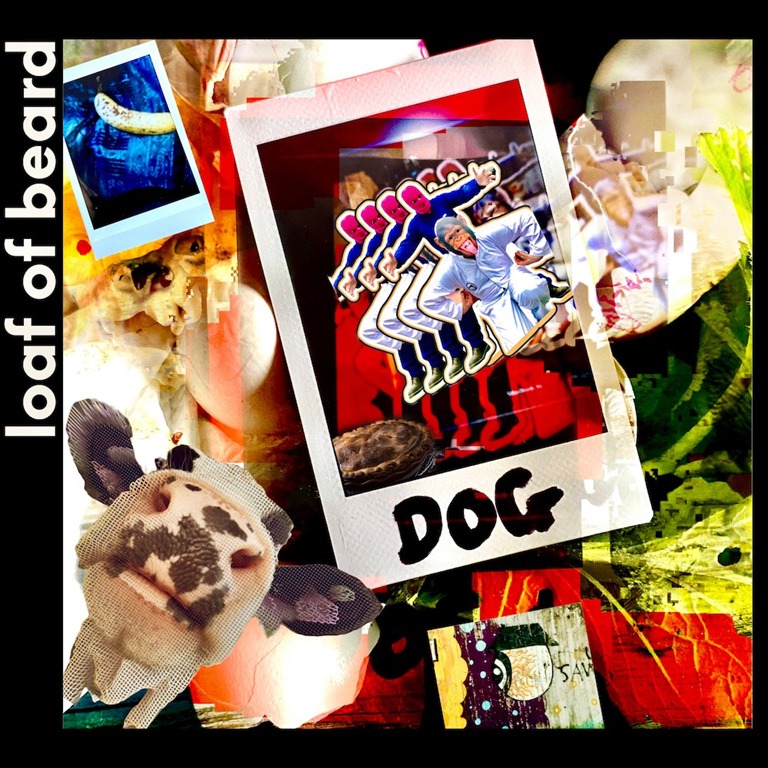
Loaf of Beard’s debut, Dog, features ‘2 British immigrants in Sweden point the finger at the state of politics in their home and former home countries, in a number of musical styles’. When they say ‘a number of musical styles’, it’s like listening to Joh Peel in the 90s, where baggy indie and experimental stuff would be crammed back to back with trance and grindcore. It’s all good, but it’s like a musical fancy dress party, with the pair tossing on different outfits and doing a different genre to go with it. And sometimes, it’s as if they’ve thrown on flares and a biker jacket, or a cocktail dress and a gimp mask by way of a combo.

‘Zippy Was a Blairite’ raises the curtain on the album in a post-punk style, and harks back to arguably one of Procter’s most popular and cherished musical vehicles, The Wharf Street Galaxy Band, with a nagging, elastic bassline pinned to insistent drums. Here, they’re programmed rather than acoustic, but that crisp, cracking vintage snare sound serves the purpose well of (re)creating the sound of the early 80s – but it’s the sound of the 80s as reimagined by Sleaford Mods, a primitive loop providing the musical accompaniment to the lyrics… and those lyrics are bitter. And at the risk of sounding like a crackling piece of overplayed 80s vinyl with a scratch, the current renaissance of the sound of the dark days of Thatcher in Britain is no coincidence. After thirteen years of austerity and the quality of life of the average worker being eroded faster than the world’s glaciers are receding, the mood is gloomy, angry, nihilistic. We can’t even think about protesting without risking being arrested. ‘The middle of the road is sitting on the fence’, Proc half-sings, half-speaks, reminding us of something many of us knew at the time, but chose to overlook because it meant getting the Tories out: New Labour was a long way off left in real terms: ‘pseudo-left credentials, politics so central’, as they summarise, chucking in a well-placed ‘motherfucker’ for essential emphasis.

Following ‘No Puffins for You, Lad,’ and Dale Prudent’s piece about pigeons, ‘Birds’ revisits the avian fascination that’s been a long-running theme in Procter’s work, and it’s a semi-ambient, spoken-word piece, which collides with the gritty chug and hyper-energised pumping of ‘Hund’, which comes on like Metal Urbain. ‘It’s a man in a frock!’ It’s a succinct summary of the indignation of the culture wars that obfuscate the real issues that are crippling the country.

That snarling glammy stomp of ‘Boothroyd Every Time’ is pure quality, and celebrates both a strong woman and a fellow Yorkshire person, and if ‘The Atrocity of it All’ is a less than subtle hectoring rant about the fucking state of everything it’s entirely justified, and the mangled, frenetic groove of ‘Cock’ may not be sophisticated, but it drives to the heart of the way the rich are milking the country dry while blaming increasing wages for inflation. Funny how wages are going down but profits aren’t isn’t it? No, it’s not remotely funny. Cock. Yes, Richboi Sunk, we’re looking at you.

‘Vote your life shitter / get your life shitter!’ Procter repeats over and over on ‘Lagom Murder Diaries’ and it doesn’t matter if he’s preaching to the converted here. Fuck. Just tell it to anyone who will listen: vote tory, get fucked. ‘Shithouse’ is comedically loose slacker funk, which finds Dave having a stab at rap. It’s not really his forte, but there’s a nice bassline and nagging guitar that’s a bit Orange Juice. It’s an odd mess of a tune that sounds a bit like a more tongue-in-cheek Yard Act.

‘Good’ sounds like Chris and Cosey but with that classic Northern flat vowel delivery in the vocals adding to the gritty groove as they sneer at the cuntiness of greedy capitalists. As if there are any other kinds.

Dog is fun, challenging, and tells it like it is. Fuck the Tories.

AA

364206108_807680231081653_4479751087162176766_n

28th July 2023

Christopher Nosnibor

Funny how time goes. Precisely two weeks short of a year ago today, I reviewed Bedroom Tax’s debut single ‘Kin’, against a backdrop of a heatwave and wild fires in the UK, and increasing level of panic over fuel costs ahead of the winter in prospect. And we thought things looked bleak then. No heatwave in the UK this year: instead, we’ve spent the last three months swinging between regular summer weather and days that more closely resemble October while the rest of the world burns, and we long for the days when it was only the cost of energy and Lurpak that were heading into the stratosphere.

Bedroom Tax are one of many bands with sociopolitical leanings who have adopted names which set their stance out in the simplest of terms. I’m thinking BDRMM, Bedsit, Benefits, bands born in many ways out of frustration and necessity, and their very existence is a statement about the crushing economic climate we live in – at least if you’re a regular person and not in the executive echelon, or otherwise comfortably off thanks to inherited wealth, a backhander from a mate in government, or an MP.

The so-called ‘bedroom tax’, introduced in 2012 is one of many examples of the tory government shafting the poor and the disabled, and as Michael Rosen pointed out in an article for The Guardian in 2014, the bereaved, was found in 2019 to be discriminatory by the European Court of Human Rights. No wonder the government are keen to ditch the ECHR: they keep ruling that their inhumane policies are illegal.

Since releasing ‘Kin’, Bedroom Tax have spent their time reflecting and refining their sound. It’s been time well spent.

‘Bad Behaviour’ is a magnificent melding of post-punk and post-rock with ‘urban’ elements, and possesses both beauty and bleakness simultaneously. Chiming guitars and programmed beats provide the backdrop to the incisive yet flowing rap of the lyrics, poetically dissecting social division and the hand we’re dealt due to privilege or lack of. It’s got bounce and groove, and even a certain noodly indie jangle that’s seen the sound of The Smiths cast through a more current prism that’s still more 2006 than 2023, but there’s a joy in witnessing the bounds of genre time being dismantled, and knowing that Morrissey would fucking hate it.

It’s a progression from the kitchen-sink reflections of ‘Kin’, but at the same time, there’s still that gritty realism, with echoes of The Streets, and the reason Bedroom Tax are so appealing is because there’s no pretence, no artifice: they’re telling it like it is.

And just as punk and post-punk emerged from the desolation of Thatcher’s Britain, so the current wave of acts who hark back to that but with the addition of more contemporary twists are coming from parallel circumstances. Austerity may not be the buzzword of the present, but we never left it: cuts upon cuts by cunts upon cunts are why we are where we are. And acts like Bedroom Tax articulate the everyday realities of life right now. We need these guys.

thumbnail_Bedroom Tax

Ipecac Recordings – 21st July 2023

Christopher Nosnibor

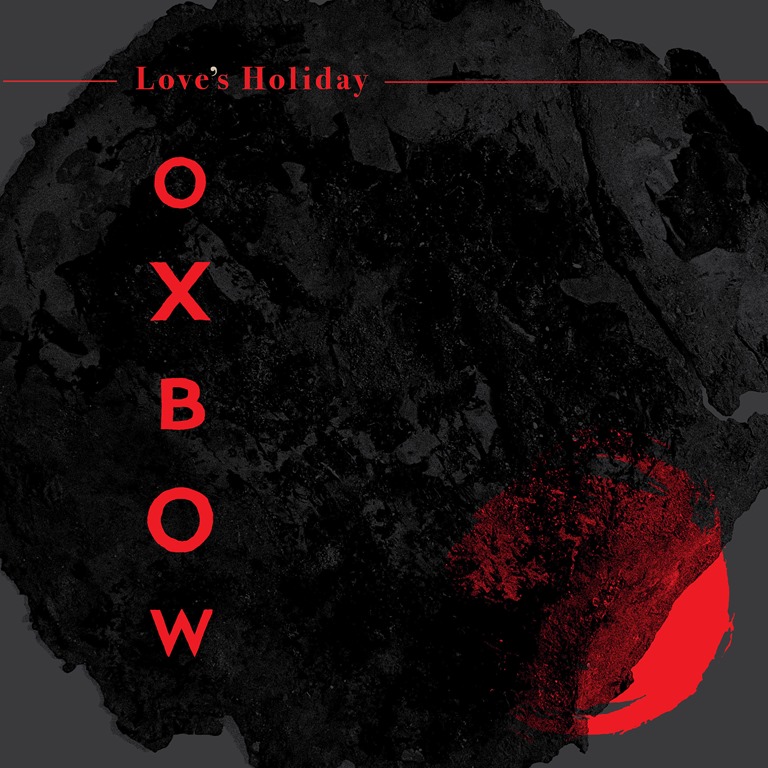
Thirty-five years is a long time. Not jus in cat or dog years, but in human years, too. For many, it’s half a lifespan. Perhaps it’s not so long in the scheme of the existence of the planet or cosmos, but that’s a timespan incomprehensible to most people, for whom the time from lunch till dinner feels like an eternity. But here Oxbow are, marking thirty-five years of existence.

A defining feature of their work has always been its diversity, and Love’s Holiday showcases that in abundance. The three songs released ahead of the album couldn’t have been much more different from one another, from the grainy, pained, and soulful ‘1000 Hours’ to the brooding, contemplative ‘Lovely Murk’ (both concerned with death and dying) via the full-throttle energised grunge-driven poke of ‘Icy White & Crystalline’.

How representative are they of the album? Entirely. Love’s Holiday has range, both sonic and emotional, and Robinson’s lyrics are dense and multi-facteted, and read like poetry. At first you’re struck between the eyes, but them you chew on them, because there’s more than mere impact, with smart wordplay running throughout, and they’ve visual, evocative, charged.

It screeches in with the sinewy discordant noise rock of ‘Dead Aherad’, Eugene S. Robinson hollering hard against scratchy guitar and tetchy drumming – and then, seemingly out of nowhere, everything locks together and brings a melodic chorus that’s somewhere between grunge and prog, landing in what you might call 90s alt-rock territory. Or you might not, but I’d challenge anyone to define it more specifically.

The raw, seething ‘Icy White and Crystalline’ drives in before ‘Lovely Murk’ and ‘1000 Hours’ follow one another in succession, changing the mood, pace, and dynamic of things. This piece of sequencing works well, as the intensity of the opening brace is enough to leave you gasping for breath and experiencing palpitation. Kristine Hayter’s Lingua Ignota choir vocals on the former fill the song with a white light, with something of a Gospel feel, in keeping with the song’s theme of death and ascension, after which ‘1000 Hours’ balances darkness with light.

A choral surge and rolling piano provide the backdrop to ‘All Gone’, and Robinson showcases his vocal versatility to stunning effect; first, a cracked, Bukowski-like drawl, before breaking into barrelling delivery more akin to Tom waits, and then switching to a hushed, intimate croon. The song bristles with tension and oozes soul.

There’s another switch of instrumental arrangement on ‘The Night the Room Started Burning’, with acoustic guitar entering the mix, and things taking a tense post-punk, almost gothy twist. But again, the choral backing adds a haunting dimension to the song, and it’s incredibly powerful. Pushing on with the stylistic collisions that they absolutely own and utilise to optimal effect, ‘The Second Talk’ melds no-wave noise with country-coloured slide guitar, before ‘Gunwhale’ takes leave by the grandest, most theatrical means possible, before slowing to a grinding drone.

If the overall mood of Love’s Holiday is reflective, introspective, there’s so much detail among it all that it’s hard to unpack even after several listens. Herein lies its greatest strength: it’s not an album which conforms to a genre, but an album which serves as a vehicle to convey, not one thing, but a whole spectrum of complexities. Love’s Holiday is not easy to process, but it’s an eye-opening artistic achievement that thirty-five years in, Oxbow are absolutely at the top of their game.

AA

OBLH_cover_final

16th June 2023

Christopher Nosnibor

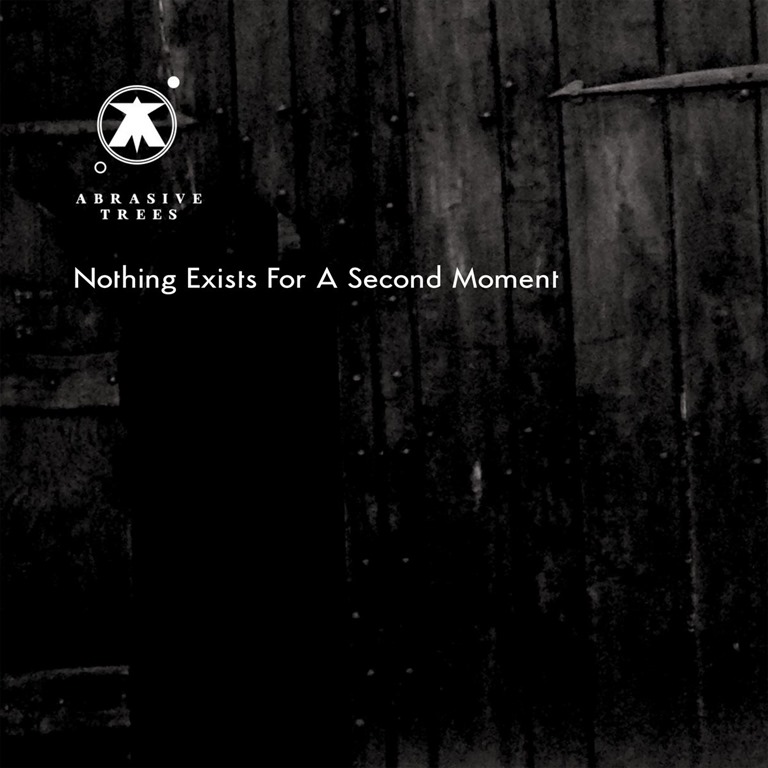
After a lengthy and sustained spell of creativity, dark Devonshire band Abrasive Trees are taking stock, reflecting and consolidating on their achievements to date, something which also affords newcomers an opportunity to catch up, March saw the release of Epocha, a compilation album which gathered their singles and EPs from 2019-2021, and now, housed in a sleeve which continues the thread of the design of its predecessor, they offer up a live album, which captures the band performing at hatch Barn, a venue close to their base in Totnes.

Live albums are notoriously tricky. So many live acts have an energy live that simply doesn’t translate when recorded. Then, at the opposite end of the spectrum, I recall meeting a metalhead in my first few weeks of university who was gushing in his enthusiasm for Iron Maiden “T’ Maiden” as he referred to them as being an amazing live as because “it sounds just like ont’ album”. This stuck with me, because I wasn’t accustomed to such thick Northern accents back then, and also because the idea of a live show so slick it sounded like the CD was a cause for consternation. Some people may think it’s a good thing, of course, but for me – even at the age of nineteen – it seemed to be missing the point of playing live. Especially when it’s a big band, who you’re likely to be watching on screens instead of looking at the stage. Might as well be watching a video at home for that.

Then there’s the recording itself: too much audience and it sounds like a shitty bootleg that’s as much that gobby tosser and his mate yammering away over the band; too hermetic and soundesky and it sounds dead and like there was no-one there, and all the vitality of the live experience is lost. This six-track release, once again mastered by Mark Beazely of Rothko, is magnificently realised: the sound is superbly crisp and clear – it’s obviously taken from the sound desk – but there’s a hum and a sense of space and audience, and it isn’t so clinical as to sound like another studio recording.

There’s irony in the title here: the live experience exists only in the moment, but here we are with a documents which gives us that second moment of existence. But of course, this is not the thing in itself, but a recreation, which captures only a part of it. Dimensions are missing: the sights, the ambience, and so on. This gives us not the full give experience, but an aural document of the band’s performance alone. They know this. We know this.

Four of the six tracks here are featured on Epocha in their studio forms, but the two mid-set songs, ‘Kali Sends Sunflowers’ and ‘Moulding Heaven With Earth’ are from the post-Epocha double-A-side single, and ‘Moulding Heaven With Earth’ is extended here from its near-six-minute form to almost eight her, making for a colossal centrepiece to the half-hour long set. Over its duration, the band sound solid, and assured, and they bring the detail of the studio recordings to their live show, with added dynamics and energy – the bass and drums in particular when they hit peak crescendo cut through in the way that only ever really happens live, and so it’s a credit that this release captures that energy.

The set opens with ‘Before’ from the Now You Are Not Here EP, and while abridged from its original six-and-a-half-minute sprawl to just three and a half, it conjures a magnificently atmospheric space, with chiming guitars, drifting ambient synth drones, hand-drums, and brooding sax, not to mention Easter-inspired vocalisations to build tension, and it segues into the ornate and delicate ‘Now You Are Not Here’ from the same EP, introducing vocals to the set, and finding the band at their most dramatic, evoking the quintessential goth sound from circa 1985-86. Mattthew Rochford’s voice quavers and you really feel as if you’re with him, teetering at the of the world… before the chorus-soaked maelstrom descends.

The soft swell of clean, reverby guitar on ‘Kali Sends Flowers’ is so very reminiscent of Wayne Hussey it sends an unexpected pang of nostalgia, echoing as it does both ‘Severina’ and the intro to ‘Deliverance’. But instead of Wayne’s overt drawing on Christianity in his lyrics, Abrasive Trees delve into other belief systems, and crash into some bold crescendos in the process.

The samples on ‘Moulding Heaven With Earth’ are studio-clear, without sounding at odds with the mix of the music itself, while the near note-perfect ‘Replenishing Water’ breathes deeper as the guitars burst through the air and it explodes into a monumental extended climax that’s absolutely killer and one hundred percent exhilarating. There is so much energy and life here. There is not much vocal, and for some reason this often takes me by surprise.

There isn’t much chat either, but then, on the evidence of this recording, Abrasive Trees’ set relies on building and maintaining tension rather than rapport.

‘Bound for an Infinite Sea’ begins with the crescendo and drives hard to an energetic, bass-driven finale, Rochford’s voice brimming with emotion – and delving into gloom before soaring into gripping tension – and it’s all of this and more that makes Nothing Exists for a Second Moment so great. It’s almost as if you were there, and very much wish you were, but Nothing Exists for a Second Moment achieves the rare feat of making you feel something almost like having been there, slipping a subliminal buzz in the process… It’s as close to a second moment as possible.

AA
a1140864367_10

UK indie pop-rock outfit JODY AND THE JERMS have a summer surprise for eager ears – their new single ‘Liberation’, which was produced, mixed and mastered by RIDE frontman MARK GARDENER at his OX4 Sound studio. Getting into the summer groove with a 3-minute stomp, the Oxford band ventures beyond their jangle pop roots. With vocals to the fore, buoyed by the addition of new Jerm Salma Craig on backing vocals, the song is awash with Wah, Hammond and shaker.

Now that the dust has settled on April’s release of their third album ‘Wonder’ and latest single ‘Intuition’, the sweet taste of ‘Liberation’ propels the band forward, recalling the killer riffs, sass and harmonies of the B-52s in the embrace of the Jerms’ own trademark twists and warm production. An upbeat and empowering song, ‘Liberation’ is about how the good times make you feel alive and free -  and how you want that positivity to last forever.

Listen here:

AA

mail(1)

skoghall rekordings – 30th June 2023

Christopher Nosnibor

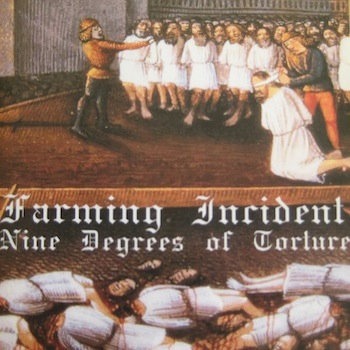
Racking up a second release in its first month of existence, new Swedish label skoghall rekordings – the gentler sibling of Dret Skivor – offers up a reissue of the second album by Farming Incident, originally released in 2008 on Wrath Records, home of The Scaramanga Six and Eureka Machines.

The tags which accompany this release include ‘experimental’, ‘hip hop’, ‘ambient’, ‘anarcho-folk’, ‘folktronica’, ‘politics’, ‘post-punk’, ‘post-rock’, and ‘space rock’, and if that seems an incredibly eclectic cocktail, it’s a fair summary of a band who never sat comfortably in any category, at a time when crossovers and hyper-hybridity were still pretty uncommon and even less accepted: this was a time in the wake of the 90s emergence of rap-rock crossovers and around the time when instrumental post-rock’s ubiquity was waning after what felt like an eternity but was in fact a span of maybe four years at most.

For this, their final album, Farming Incident had expanded its pseudonymous membership to four, with Agent Jones (guitar, bass), Agent Mays (drums) and Agent Procktaur (vocals, guitar, bass, keyboards) being joined by Agent Pushkin (backing vocals, guitar, bass) ‘to allow more flexibility in instrument swapping’. And that’s certainly a lot of guitar and bass-playing contributions across their personnel.

‘Elk vs Volvo’ is a choppy slice of post-punk that crunches Gang of Four and The Fall together with sinewy guitars propelled by energetic drumming. It’s also got that authentic lo-fi eight-track early eighties sound, and really only being familiar with Dave Procter’s work from the last ten years or so, it’s something of a revelation to hear him doing vocals – and actually singing(ish) – in a more conventional indie / rock context. The verses on the goth-tinged ‘Sadism vs Fadism’ (although it’s more early Pulp with a dash of PiL and Rudimentary Peni than The Sisters of Mercy or The Danse Society) finds him in more recognisable voice, with a Sprechgesang delivery with flattened northern vowels, before coming on more like David Gedge in the choruses.

There’s indie-surf and straight-up indie in the mix, and it’s all going on really. Casting my mind back to 2008, and some of it’s hazy because time, and beer, and so may gigs and albums, but this doesn’t sound like an album from around that time. The nagging bass and guitar of ‘Stiletto’, which reminds me of Murder the Disturbed but with the synths from B-Move or even Ultravox, giving it very much a feel of c79-81, before it locks into a motorik groove.

‘The Terrorist You Seek Is in the Mirror’ finds Procter in the kind of lyrical territory he’s made his home since, slogging out slogans with passion, but with a fairly standard four-square punked-up pub-rock instrumentation, it’s perhaps the alum’s least interesting track, particularly as it’s overshadowed by the atmospheric stroll of ‘G.O.T.H.’ which explodes in a colossal crescendo three quarters of the way in, flange and chorus heavy guitars dominating.

They chuck in a surprise grunge tune in the shape of ‘Phobos’, but it’s also got that early 90s noise rock slant that owes as much to the more obscure acts. And then there’s the final track, ‘Owls’. It’s a goth—tinged alt-rock screamer, one of those longer songs that simply could never be long enough even if it was half an hour long, in the same way that The Honolulu Mountain Daffodils’ ‘Tequila Dementia’ is simply too short. ‘Night vision, owls are gonna get you!’ Dave sings, channelling paranoia and panic while prefacing the avian themes that would resurface latter in his career on songs like The Wharf Street Galaxy Band’s ‘No Puffins For You, Lad’.

A lot has happened in the last fifteen years. We’ve had thirteen years under a Conservative government for a start, and the whole world seems to have taken a nosedive socially, politically, economically, and it seems impossible to think now that Trump and Brexit and Johnson and Covid were only the tip of the iceberg. But while we’re seemingly more divided than ever as people wage war over pronouns and images of Mickey Mouse in hostels for asylum-seeking children, we do seem to have become more accommodating of music that is so eclectic as to seem rootless. Nine Degrees of Torture probably feels more at home in 2023 than it did back in 2018, but even now, it doesn’t really sound like anything else. Bits of stuff, yes, like a magpie raid on bits and bobs from all over, but it’s not grunge or post-punk or anything really, but somehow it hangs together nicely.

AA

a3609247591_10

23rd June 2023

Christopher Nosnibor

Talk about moving fast: as their bio details, ‘The Bleak Assembly was formed in July, 2022. Two weeks after its inception, the first EP, We Become Strangers was unveiled. The Bleak Assembly’s meaning takes inspiration from Charles Dickens’s Bleak House – the ‘Bleak Assembly’ being the chain of people in the story whose lives are destroyed by the promise of wealth.” This seems a fitting parable for modern times, and show how we never, ever learn from history.

Comprising Michael Smith (all Instruments) and Kimberly (from Bow Ever Down), they continues to create at pace (ugh – I hang my head at having written such a corporate phrase in a review… but, phraseology notwithstanding, it’s true), and followed up their debut EP with the ‘Alibi’ single in February of 2023, and now they present Strangers Among Strangers. The goal of this EP, says Michael Smith was to “try a different sound. Bands seem to fall into a certain sound after a while, so if that should happen to us. I wanted to open it up to a more electronic sound to give us more room in the future.”

They have pedigree and experience, having between them shared stages with the likes of Assemblage 23, Razed in Black & Switchblade Symphony with their own individual projects, and it’s unusual to see them declare up-front that The Bleak Assembly will likely remain strictly a studio project. But why not? Sometimes the creative process evolves organically and feels like it needs to have that live outlet, while at other times, recordings simply don’t lend themselves to being replicated live. And then there are logistics, not to mention economics. The latter is a very real factor in determining how artists operate now. Funny (not) how the cost of everything has gone up apart from wages and the fees paid to artists.

But this sounds like a studio project, also. And that’s no criticism, and no bad thing. Oftentimes you’ll find bands striving – and failing – to capture the energy of their live performances in the studio. It’s often the case that they developed out of playing live and that’s the platform on which they’re familiar and on which they thrive. And fair play to them: but other acts evolved in the studio and are detrimented by distance, while others simply don’t feel comfortable as live entities and feel they simply cannot replicate their studio works in a live setting. Whatever the case with The Bleak Assembly, they’ve clearly found a method which works for them, facilitating a rapid stream of material.

With Strangers Among Strangers, The Bleak Assembly, who clearly have something of a fixation on strangers and the unheimlich have crafted a crisply-manufactured piece of electropop, and while it’s got some strong gothy / darkwave elements, there’s a lot of Midge Ure era Ultravox and Violator-era Depeche Mode in the mix here, as is immediately apparent on ‘A Night Like This’ (which isn’t a Cure cover).

Strangers Among Strangers is solidly electro-based and packs some real energy. It’s synthy and it’s dark – and nevermore dark than on ‘Ready to Die’, where Kimberley faces straight out into the abyss and confronts the ageing process and, ultimately, the end, against a backdrop of swirling chorus-soaked guitar that’s pure 1985. ‘Remains’ is similarly bleak on the lyrical front, and these songs channel a lot of anguish. It may well be that they’re common tropes in the field of goth and darkwave, but the delivery is gripping, as well as keenly melodic. There’s something of a shift on the EP’s second half, moving to a more guitar-driven sound, but the throbbing synth bass and cracking vintage drum machine snare keep everything coherent and push the songs along with a tight, punchy feel. There’s much to like.

AA

a0917300862_10