Posts Tagged ‘Post-Punk’

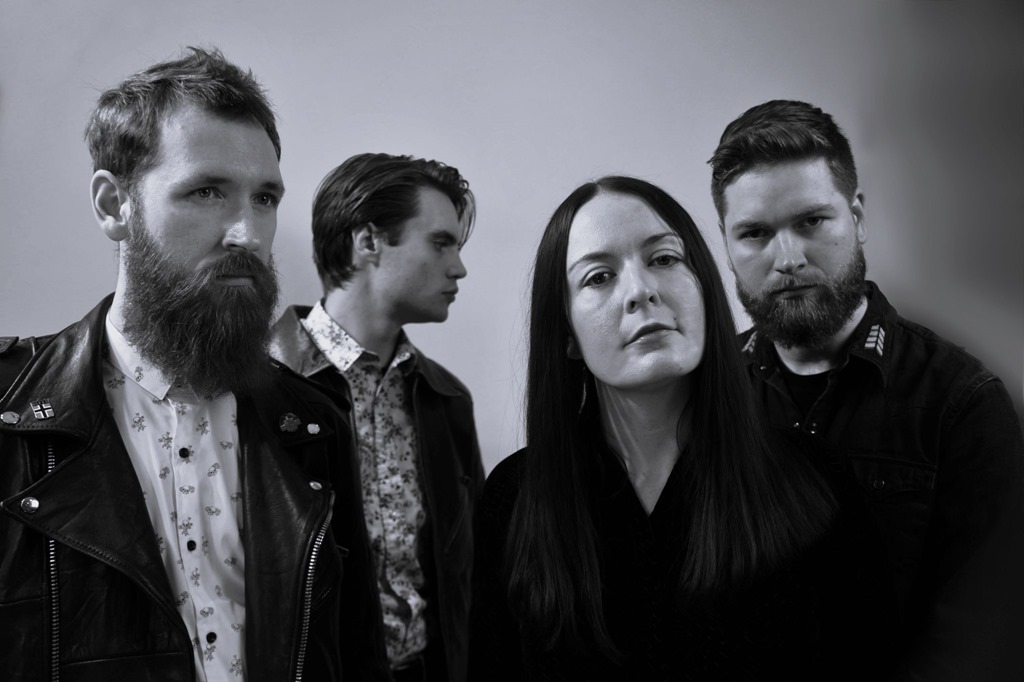
New Heavy Sounds is stoked to announce a new multi-record project by Cold in Berlin The Wounds.

Consisting of an EP, The Body is the Wound, and an album, due in 2024, The Wounds is a musical vade mecum of what is to come in a fresh era for the band.

Vocalist Maya explains: “The Wounds started as an idea about bringing together stories of loss and the idea that wounds can be growth, healing and that slow burn you use to fuel other fires.”

The Body is the Wound EP launches the next chapter in CIB’s journey.

Released on 19th January (New Heavy Sounds), the four tracks cover diverse musical ground, drawing ideas from krautrock, post-punk and doom, but always with the requisite  amount of weight. 

Watch the video for new single ‘Dream One’ here:

AA

QmYmfrwQ

7th October 2023

Christopher Nosnibor

West Midlands post-punk trio , The Glass House Museum, comprising Joe and Jon Cummings (both vocals and guitar) and Lee Meadows (programming and bass), have been releasing music since 2017, but ‘The Committee’ is their first new material since the mini-album Artifacts in 2020.

It begins with some dark atmospheric grumbling, some gloomy bell chimes and squawks, presumably the menacing cries of the vultures mentioned in the song’s chorus, and also featured on the cover art. And, naturally, the collective noun for vultures is a committee. Despite this literal referencing and representation, it’s apparent that the song’s meaning is truly somewhat rather more figurative: ‘Tread careful, stranger,’ is the caution which starts the song’s lyrics.

With the sequenced rhythm section, they hold the solid core groove tight, giving it that quintessential goth vibe.

Over the years, I’ve witnessed many detractors – and even fans – ask why bands like The Sisters of Mercy don’t get a drummer. There are numerous reasons why they don’t, won’t, and never would, but the main one is that the drum machine is a defining feature of the sound of that particular strain of post punk which came out of Leeds in the early 80s. That hard, relentless beat, paired with a bass that followed it, bam-bam-bam-bam, overlayed with guitars, edged with a metallic clang and shrouded in chorus and reverb created a perfect tension that isn’t really like anything else – and this is why it’s provided the blueprint for so many bands over the last forty years.

But to dismiss it as being ‘derivative’ would be to miss the point: this is about heritage and lineage, and also there’s a certain degree of knowingness to making references that are, in some ways, I suppose, tribal in their function. If you know, you know, and you’re one of ‘us’. And so it is that the lettering on the cover is lifted from Siousxie and the Banshees’ A Kiss in the Dreamhouse, offers another referential insight into the band’s stylistic touchstones. The devil really is in the details.

The vocals aren’t of the spiky punkier aspect of post-punk, eschewing the edgy styles of Siouxsie and Skeletal Family’s Anne-Marie Hurst and if anything, are more in the vein of Julianne Reagan in her rockier moments.

But the most significant thing here is that the ingredients are well-blended and folded in together around a decent tune with some sharp energy and a solid chorus, and none of it feels formulaic or ripped off. In short, ‘The Committee’ is in the ‘classic’ style, but with a strong identity of its own.

AA

533356

Neurot Recordings – 13 October 2023

Christopher Nosnibor

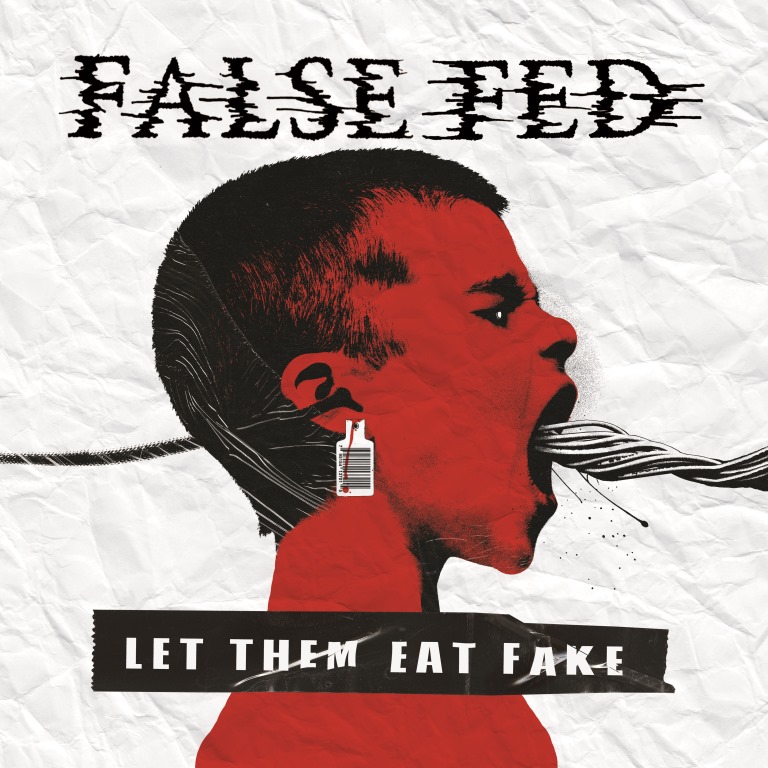
Let Them Eat Fake may be False Fed’s debut, but the members have between them a substantial catalogue of releases. The band comprises Discharge frontman Jeff Janiak, Amebix guitarist Stig C. Miller, Nausea, Ministry and Amebix drummer Roy Mayorga, and JP Parsons, and collectively, we’re told that this album sees them ‘all stepping outside their musical comfort zones to present an album of discomfort and rage in the face of reality’.

The solid, throbbing bass, glacial synth and squirming guitar that mark the album’s opening with ‘Superficial’ may come as something of a surprise given this preface: we’re deep in dark post-punk territory here, and it’s a huge shift from the hard, attacking pace of either Discharge or Ministry, as well as an immense stylistic departure. Janiak’s vocals, too, aren’t hardcore hollering, but a resonant baritone, at least unto he breaks our roaring and raging toward the end. The vibe is more UK goth circa ’86 than anything else, but this is fitting, given the many parallels between now and then. Yes, so much for progress: we’re right back to the 80s in a climate of fear and a new cold war… and not just a cold war. Instead of coming together to make some kind of effort to address the self-made catastrophe of climate crisis, we seem hell-bent on destroying one another.

‘The Tyrant Dies’ is more what you’d expect from this bunch: industrial-strength hardcore punk with a metal edge: the blasting punk fury of Discharge with the gritty heft of Ministry… but then the bridge slows things and we’re back in goth territory – well, goth as filtered through a strain of Rammstein – and the portentous refrain of ‘we will rise’ feels like a call to arms while at the same time calling on the ‘undead, undead, undead’ refrain of ‘Bela Lugosi’s Dead’: it’s time for a resurrection.

This album hits harder as it progresses: the guitars drive harder, the drums roll heavier, and goth, punk, and metal tropes melt together to forge something devastatingly intense. I haven’t heard anything that amalgamates these elements – and so successfully – since Alaric’s End of Mirrors, released in 2016 – also on Neurot.

‘The Big Sleep’ is all driving fury, hell-for-leather drums, chunky, chugging metal guitars, and high-pomp vocals echoing from the chest. Meanwhile, ‘Dreadful Necessities’ comes on like Killing Joke with its taut compressed guitar sound and driving beat. It’s dense, and probably more accurately described as steely grey than dark, since it brings a strong, melodic chorus.

The title – Let Them Eat Fake – may be light-hearted on the surface – but obviously has darker undertones in terms of its reference to class division, and that’s one of the major factors behind the album’s anger. And this is an angry album. Let Them Eat Fake is also an album that has a clear trajectory, and it builds as it progresses, becoming louder, faster, harsher, more angry with each song. By the end, it’s positively incendiary, a full-on roar of fury driven with guitars that burn. And ultimately, it makes sense as an articulation of ‘discomfort and rage in the face of reality’. We’re all feeling it. Reality is pain. Let Them Eat Fake tells is like it is.

AA

589049

‘Panic’ is the new single from DC goth rockers The Neuro Farm. The song is inspired by a childhood episode of fevered delirium, and it will be featured on their next album planned for 2024.

The Neuro Farm is a darkwave gothic rock band based in Washington DC. Combining vocal harmony with soaring violin melodies, driving rhythm guitar, and ethereal sonic textures, their music has been described as hauntingly beautiful. The Neuro Farm draws on influences such as Joy Division, Radiohead, Nine Inch Nails, Siouxsie and the Banshees, Sigur Ros, Chelsea Wolfe, Portishead, and Rammstein.

Listen here:

AA

a3842352669_10

AA

489859

Aural Aggro faves Pound Land have unveiled an eye-bleeding, brain-melting video for the track ‘Liar’. It’s taken from their recent Singles Club compilation, released last month on Cruel Nature, which collects all the digital singles released between April 2022 and April 2023 in a physical form. It also emerges ahead of new album Violence which is out next month.

Check it here (and please watch to the end….)

AA

a3877052305_10

Icons Creating Evil Art – 4th August 2023

Christopher Nosnibor

The third single from Swedish act Darkplace is their first to feature vocals, and is not a cover of the Gary Numan hit.

The band are described as ‘a mysterious new Swedish dark dream pop/post-punk group whose forthcoming debut album, About The End Of The World, is a conceptual work inspired by the bleak landscape of the Stockholm suburbs that birthed them.’ They go on to say ‘for the members of this highly secretive group, it is not just about the music. They perceive themselves as more an art project that happens to be exploring and commenting on the state of the world through their chosen mediums of music and video.’

Is a band mysterious if they tell you they are, or does that undermine the mystery? Surely a lack of disclosure is mysterious in itself? If I’m overthinking, it’s almost certainly a consequence of their overexplaining, although I am entirely on board with the idea of an act taking their art seriously to the point of fully inhabiting that space. When it comes to concept-based creations, you have to fully believe in it, otherwise, how can you expect anyone else to?

When it comes to Darkplace, context counts for a great deal, and to provide this, I shall quote liberally here: ‘Centred around an alternative reality – or is it just a grim present and future? – the album is being unveiled gradually via a series of videos based on animated digital paintings for each of its tracks… Their new single, ‘Cars’ […] sees the story move on to a man who travels north following cryptic messages written on highway signs that only show up in the blast of his headlights. Is he the only person who can see them and follow the trail? Darkplace cryptically state that “trying to escape this psychotic, slow burning apocalypse is not easy. Nowhere is safe. These weird structures and phenomena seem to occur everywhere, all over the world. Nowhere is safe!”

Perhaps somewhat ironically, the slow-burning apocalypse of which they write is accelerating at a pace no-one can keep up with, and half the planet is on fire now, quite literally, although this afternoon I read of hailstorms of biblical proportions in Germany and Italy, smashing car windscreen and requiring snow ploughs to clear the streets. It really does feel like the end of the world, and there’s a strong chance that is truly is.

Detached from the narrative of the album, ‘Cars’ stands well as a standalone single. It’s a taut, dark (of course) slice of post-punk inspired tunage, and while its lineage is clearly one that can be traced to the early 80s, it’s equally indebted to the school of the early 00s, which brought us Interpol and White Lies. What goes around comes around, and here in 2023, times are the bleakest they’ve been since the early 80s, with the added bonus of climate change threatening the collapse of civilisation and life as we know it. It’s dreamy but driven by an insistent beat and nagging guitar lines, and if the vocals, floating in reverb, evoke The Charlatans or Slowdive, and there’s perhaps a hint of Doves in the mix, the energy is more reminiscent of early Editors. Lyrically, it’s anything but uplifting, but the musical counterpoint really sweeps you along, making for an exhilarating three minutes.

AA

fc7f46444f143114c333beafb3be754b3b51910f

skoghall rekordings – 4th August 2023

Christopher Nosnibor

This one feels like it’s had more build-up than any previous releases on either of Dave Procter’s labels, the recently-founded skoghall rekordings,, or the more established noise-orientated Dret Skivor: there have been numerous one-line quotes, snippets of lyrics from the album posted on social media in the last month – and it’s certainly piqued my interest as to just how far this latest project will take things.

Not that far, my notes suggests, but that’s no slight. You see, Procter’s output is copious and widely varied, from the abrasive noise of Legion of Swine to the recently-released acoustic protest songs of Guerrilla Miner. In between, there’s the grumpy spoken-word-with-noise of Trowser Carrier and the technical experimentalism of Fibonacci Drone Organ. But – and this is something I can say from personal experience – Procter is also a strong collaborator, one who’s open-minded and intuitive, but at the same time always retaining his own unique style as a clear element.

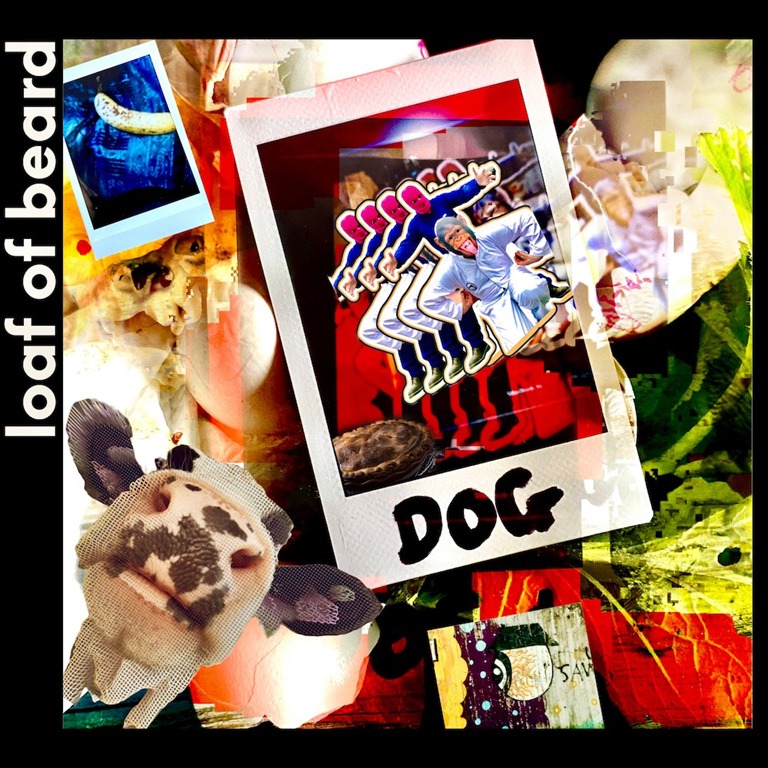
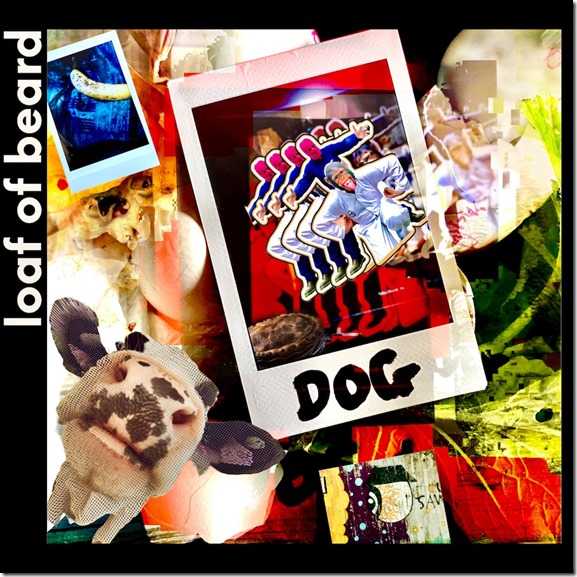
Loaf of Beard’s debut, Dog, features ‘2 British immigrants in Sweden point the finger at the state of politics in their home and former home countries, in a number of musical styles’. When they say ‘a number of musical styles’, it’s like listening to Joh Peel in the 90s, where baggy indie and experimental stuff would be crammed back to back with trance and grindcore. It’s all good, but it’s like a musical fancy dress party, with the pair tossing on different outfits and doing a different genre to go with it. And sometimes, it’s as if they’ve thrown on flares and a biker jacket, or a cocktail dress and a gimp mask by way of a combo.

‘Zippy Was a Blairite’ raises the curtain on the album in a post-punk style, and harks back to arguably one of Procter’s most popular and cherished musical vehicles, The Wharf Street Galaxy Band, with a nagging, elastic bassline pinned to insistent drums. Here, they’re programmed rather than acoustic, but that crisp, cracking vintage snare sound serves the purpose well of (re)creating the sound of the early 80s – but it’s the sound of the 80s as reimagined by Sleaford Mods, a primitive loop providing the musical accompaniment to the lyrics… and those lyrics are bitter. And at the risk of sounding like a crackling piece of overplayed 80s vinyl with a scratch, the current renaissance of the sound of the dark days of Thatcher in Britain is no coincidence. After thirteen years of austerity and the quality of life of the average worker being eroded faster than the world’s glaciers are receding, the mood is gloomy, angry, nihilistic. We can’t even think about protesting without risking being arrested. ‘The middle of the road is sitting on the fence’, Proc half-sings, half-speaks, reminding us of something many of us knew at the time, but chose to overlook because it meant getting the Tories out: New Labour was a long way off left in real terms: ‘pseudo-left credentials, politics so central’, as they summarise, chucking in a well-placed ‘motherfucker’ for essential emphasis.

Following ‘No Puffins for You, Lad,’ and Dale Prudent’s piece about pigeons, ‘Birds’ revisits the avian fascination that’s been a long-running theme in Procter’s work, and it’s a semi-ambient, spoken-word piece, which collides with the gritty chug and hyper-energised pumping of ‘Hund’, which comes on like Metal Urbain. ‘It’s a man in a frock!’ It’s a succinct summary of the indignation of the culture wars that obfuscate the real issues that are crippling the country.

That snarling glammy stomp of ‘Boothroyd Every Time’ is pure quality, and celebrates both a strong woman and a fellow Yorkshire person, and if ‘The Atrocity of it All’ is a less than subtle hectoring rant about the fucking state of everything it’s entirely justified, and the mangled, frenetic groove of ‘Cock’ may not be sophisticated, but it drives to the heart of the way the rich are milking the country dry while blaming increasing wages for inflation. Funny how wages are going down but profits aren’t isn’t it? No, it’s not remotely funny. Cock. Yes, Richboi Sunk, we’re looking at you.

‘Vote your life shitter / get your life shitter!’ Procter repeats over and over on ‘Lagom Murder Diaries’ and it doesn’t matter if he’s preaching to the converted here. Fuck. Just tell it to anyone who will listen: vote tory, get fucked. ‘Shithouse’ is comedically loose slacker funk, which finds Dave having a stab at rap. It’s not really his forte, but there’s a nice bassline and nagging guitar that’s a bit Orange Juice. It’s an odd mess of a tune that sounds a bit like a more tongue-in-cheek Yard Act.

‘Good’ sounds like Chris and Cosey but with that classic Northern flat vowel delivery in the vocals adding to the gritty groove as they sneer at the cuntiness of greedy capitalists. As if there are any other kinds.

Dog is fun, challenging, and tells it like it is. Fuck the Tories.

AA
364206108_807680231081653_4479751087162176766_n

28th July 2023

Christopher Nosnibor

Funny how time goes. Precisely two weeks short of a year ago today, I reviewed Bedroom Tax’s debut single ‘Kin’, against a backdrop of a heatwave and wild fires in the UK, and increasing level of panic over fuel costs ahead of the winter in prospect. And we thought things looked bleak then. No heatwave in the UK this year: instead, we’ve spent the last three months swinging between regular summer weather and days that more closely resemble October while the rest of the world burns, and we long for the days when it was only the cost of energy and Lurpak that were heading into the stratosphere.

Bedroom Tax are one of many bands with sociopolitical leanings who have adopted names which set their stance out in the simplest of terms. I’m thinking BDRMM, Bedsit, Benefits, bands born in many ways out of frustration and necessity, and their very existence is a statement about the crushing economic climate we live in – at least if you’re a regular person and not in the executive echelon, or otherwise comfortably off thanks to inherited wealth, a backhander from a mate in government, or an MP.

The so-called ‘bedroom tax’, introduced in 2012 is one of many examples of the tory government shafting the poor and the disabled, and as Michael Rosen pointed out in an article for The Guardian in 2014, the bereaved, was found in 2019 to be discriminatory by the European Court of Human Rights. No wonder the government are keen to ditch the ECHR: they keep ruling that their inhumane policies are illegal.

Since releasing ‘Kin’, Bedroom Tax have spent their time reflecting and refining their sound. It’s been time well spent.

‘Bad Behaviour’ is a magnificent melding of post-punk and post-rock with ‘urban’ elements, and possesses both beauty and bleakness simultaneously. Chiming guitars and programmed beats provide the backdrop to the incisive yet flowing rap of the lyrics, poetically dissecting social division and the hand we’re dealt due to privilege or lack of. It’s got bounce and groove, and even a certain noodly indie jangle that’s seen the sound of The Smiths cast through a more current prism that’s still more 2006 than 2023, but there’s a joy in witnessing the bounds of genre time being dismantled, and knowing that Morrissey would fucking hate it.

It’s a progression from the kitchen-sink reflections of ‘Kin’, but at the same time, there’s still that gritty realism, with echoes of The Streets, and the reason Bedroom Tax are so appealing is because there’s no pretence, no artifice: they’re telling it like it is.

And just as punk and post-punk emerged from the desolation of Thatcher’s Britain, so the current wave of acts who hark back to that but with the addition of more contemporary twists are coming from parallel circumstances. Austerity may not be the buzzword of the present, but we never left it: cuts upon cuts by cunts upon cunts are why we are where we are. And acts like Bedroom Tax articulate the everyday realities of life right now. We need these guys.

thumbnail_Bedroom Tax

Ipecac Recordings – 21st July 2023

Christopher Nosnibor

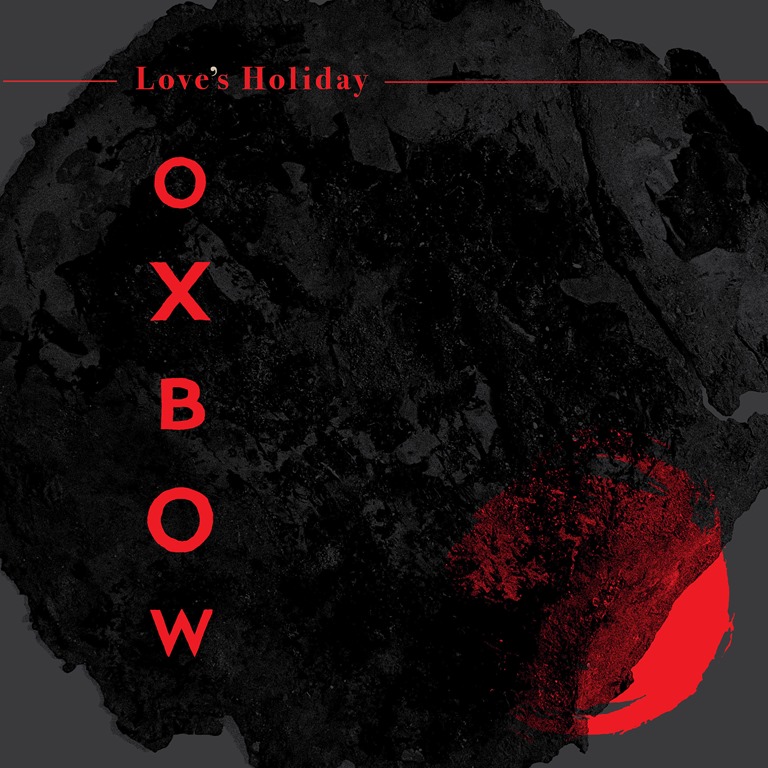
Thirty-five years is a long time. Not jus in cat or dog years, but in human years, too. For many, it’s half a lifespan. Perhaps it’s not so long in the scheme of the existence of the planet or cosmos, but that’s a timespan incomprehensible to most people, for whom the time from lunch till dinner feels like an eternity. But here Oxbow are, marking thirty-five years of existence.

A defining feature of their work has always been its diversity, and Love’s Holiday showcases that in abundance. The three songs released ahead of the album couldn’t have been much more different from one another, from the grainy, pained, and soulful ‘1000 Hours’ to the brooding, contemplative ‘Lovely Murk’ (both concerned with death and dying) via the full-throttle energised grunge-driven poke of ‘Icy White & Crystalline’.

How representative are they of the album? Entirely. Love’s Holiday has range, both sonic and emotional, and Robinson’s lyrics are dense and multi-facteted, and read like poetry. At first you’re struck between the eyes, but them you chew on them, because there’s more than mere impact, with smart wordplay running throughout, and they’ve visual, evocative, charged.

It screeches in with the sinewy discordant noise rock of ‘Dead Aherad’, Eugene S. Robinson hollering hard against scratchy guitar and tetchy drumming – and then, seemingly out of nowhere, everything locks together and brings a melodic chorus that’s somewhere between grunge and prog, landing in what you might call 90s alt-rock territory. Or you might not, but I’d challenge anyone to define it more specifically.

The raw, seething ‘Icy White and Crystalline’ drives in before ‘Lovely Murk’ and ‘1000 Hours’ follow one another in succession, changing the mood, pace, and dynamic of things. This piece of sequencing works well, as the intensity of the opening brace is enough to leave you gasping for breath and experiencing palpitation. Kristine Hayter’s Lingua Ignota choir vocals on the former fill the song with a white light, with something of a Gospel feel, in keeping with the song’s theme of death and ascension, after which ‘1000 Hours’ balances darkness with light.

A choral surge and rolling piano provide the backdrop to ‘All Gone’, and Robinson showcases his vocal versatility to stunning effect; first, a cracked, Bukowski-like drawl, before breaking into barrelling delivery more akin to Tom waits, and then switching to a hushed, intimate croon. The song bristles with tension and oozes soul.

There’s another switch of instrumental arrangement on ‘The Night the Room Started Burning’, with acoustic guitar entering the mix, and things taking a tense post-punk, almost gothy twist. But again, the choral backing adds a haunting dimension to the song, and it’s incredibly powerful. Pushing on with the stylistic collisions that they absolutely own and utilise to optimal effect, ‘The Second Talk’ melds no-wave noise with country-coloured slide guitar, before ‘Gunwhale’ takes leave by the grandest, most theatrical means possible, before slowing to a grinding drone.

If the overall mood of Love’s Holiday is reflective, introspective, there’s so much detail among it all that it’s hard to unpack even after several listens. Herein lies its greatest strength: it’s not an album which conforms to a genre, but an album which serves as a vehicle to convey, not one thing, but a whole spectrum of complexities. Love’s Holiday is not easy to process, but it’s an eye-opening artistic achievement that thirty-five years in, Oxbow are absolutely at the top of their game.

AA

OBLH_cover_final