Posts Tagged ‘Piano’

Hallow Ground – 21st December 2025

Christopher Nosnibor

Ivan Pavlov has been releasing music as COH since circa 1997, and in the last twenty-eight years has amassed an immense catalogue which includes some thirty-six albums, often on respected experimental / avant-garde labels like Editions Mego and Raster-Noton. This body of work features a fair number of collaborations. This is his first with ‘the mysterious’ Wladimir Schall, who is no stranger to performing radically overhauled cover versions, not least of all his 2020 release on an endlessly looping cassette with his take on Satie’s Vexations. Suffice it to say, then, that none of the seven pieces on here could be described as ‘straight’ covers. Then again, given the nature of the selected material, how would one go about performing a ‘straight’ cover, and what would be the point, precisely?

As the accompanying notes explain, ‘the two multi-media artists are not content with the mere reinterpretation of their source material, but strive to reimagine it. According to them, the seven pieces on Covers were conceived as “a series of manoeuvres with an ambition to expose the machinery of Music in detail and with utter honesty, without making up for the faults of its traditional instruments or of the compositions themselves.”’

Perhaps the best known and most easily recognisable of the compositions is ‘Merry Christmas Mr Erik’, which opens the album by reworking Ryuichi Sakamoto’s ‘Merry Christmas Mr Lawrence’ as a sparse, almost jazzy work where it’s acoustic guitar which leads before the arrival of piano, which remains at a respectful distance. Not long after, we’re transported into a sparse, foggy trip of piano-led ambience. Perhaps one of the most audacious ‘covers’ is Soii Blanc’, an original COH composition which appeared on IIRON in 2011 – the album which was, in fact, my introduction to the world of COH. This version transforms the sparse electronic piece where experimental synth music meets early industrial grind into a soft piano work that’s as light as a feather but also mysteriously atmospheric through its subtle dissonances which grow with ringing, buzzing tones which gradually disrupt the delicate ripples with digital discord, creating the effect of some form of mechanical breakdown. Then again, ‘Snowflakes’ sees the pair ‘cover’ a ‘non-existent’ original’. It’s evocative: close your eyes and you may well visualise snowfall in your mind’s eye – but then glitches and scrapes cut through the reverie. In the main, it’s subtle, but enough to be disconcerting.

While there’s no clear or specific arc to the album, there is a sense that as it progresses, digital decay and interference gradually erode the graceful atmospheres conjured by piano and acoustic instruments alone – and by the arrival of the final piece, the brief bookend that is ‘Starost ne Radost’ – or ‘Старость не радость’ (joy and sadness), the juxtaposition of scratchy in the vintage sense and scratchy in the ersatz, manipulated digital sense comes to share a meeting and sensation.

AA

a1396191075_10

Continuing with their nature-inspired theme, ‘Cwlwm Cariad’ refers to a type of moth, the ‘True Lover’s Knot’ in English. This is the second in a run of singles by singer-songwriters Eve Goodman and SERA from their upcoming collaborative album, Natur, due for release in the Autumn of 2025. It follows their first single ‘Blodyn Gwyllt’ which was released in July.

Where Blodyn Gwyllt was a celebration of freedom and the summer, Cwlwm Cariad is quite different. There are no guitars and percussion here, only one piano and 2 live voices almost until the end. It is delicate and it sings of the peril often tied up in the complexities of love and relationships, the passion, the self-destruction and flying too close to the flame. The delicate moth and the human heart connected in this way.

The track was recorded on an upright piano and the duo’s voices weave together in harmony once again.  Recorded at Wild End Studio near Llanrwst, North Wales, with co-producer Colin Bass. (member of Camel and also producer of the Tincian album from 9 Bach which won ‘Best Album’ at the BBC Radio 2 Folk Award in 2015)

The single is out on 15th August. Watch the video here.

AA

h-k_SGoIMrPy

Sonic Pieces – 30th May 2025

Christopher Nosnibor

Five years is quite some time, and a lot has happened in the last five, that’s for certain. Although the fact so much has happened means that the last five years have been something of a void for many. And so it is that Reverie, recorded in October of 2024, sees Otto A Totland (piano) and Erik K Skodvin (guitar, cello, electronics, and processing) reunited in concert for the first time since 2019.

It’s pitched as ‘a follow up to 2014’s Recount, which saw two pieces of music created around their live-sets in different periods. This time, we are treated with a contemporary, raw live performance from October 2024 in Rabih Beaini’s studio, Morphine Raum in Berlin, during the 15th anniversary celebration of Sonic Pieces.’

The two longform pieces which make up Reverie were recorded live, and as if to prove the point, there’s the sound of a light cough just as the first piano note hits, then hangs in the air. They could have dubbed it out, I’m sure, but to have done so would be against the spirit of this work – spontaneous, improvised, in the moment. The recording is not only about capturing the music, but the moment itself.

The seventeen-minute ‘Rev’ is delicate, built primarily around Totland’s graceful, nuanced piano work, and considerable reverb, which may well be natural from the room, but however the sound is achieved, the sense of space is integral to the atmosphere. Skodvin’s contribution is magnificently understated: the slow scrapes of strings and subtle sonic details may seem secondary or additional because they’re not the focal point, but without them, the effect would be diminished by more than half. A great musician is not necessarily the one who dominates or demonstrates virtuosic talents, but the one who understands their contribution to the work as a whole, and appreciates that less is more. And so it is that elongated notes quiver and quail, wailing tones and sonorous drones swirl about and bring so much depth and texture, an as the piece progresses, the piano and extraneous incidentals achieve an equilibrium, and it’s utterly mesmerising.

‘Erie’ turns the tables, and it’s Skodvin’s strings which take the lead initially, before trepidatious piano creeps in. Trilling tones hang hauntingly like distant memories and displaced ghosts, and there’s a melancholia to this piece which is difficult to define, but lingers amidst the brooding lower notes. The slow piano is soft, and sad, while tremulous strings evoke a sense of something lost, somehow.

Without words, Reverie paints a picture, and hints that memories and reveries are inherently tinged with sadness. For even to recall a happy time is to remember a moment which has passed, and will be relived. However many times one may return to a particular place which is imbued with fond memories, however many times one may listen to that favourite song which carries such joyous connotations, that moment, that time will forever continue to recede into the past, never to be experienced again. The past is forever past, and will become further past with each day that goes by. Summers will never be as long, or as carefree as in childhood. The exhilaration of new experiences will never provide the same buzz, however hard you chase it. And with this realisation comes the slow fade, and a sense of acceptance. Bask in the reverie, and hold those times dear as the years slip away.

AA

ReveriePATTERN013 front

Photo: Alex Kozobolis

9th April 2025

Christopher Nosnibor

With his latest offering, Gintas K promises a work of ‘ambience, electroacoustical micromelodies and noise played and record live without overdub.’ That he is so relentlessly active is perhaps one of the reasons its possible for him to create such wild improvised works on a first-take basis – which in turns means it’s possible to crank out new releases at such a staggering rate.

The first of the seven sequentially-numbered pieces is eleven and a half minutes in duration, and begins as a barely audible drip, a tiny trickling sound at the fringe of perception. Instantly I find myself on edge: it’s a sound I’ve become increasingly and acutely aware of in recent days, as the shower in my bathroom – only an internal stud wall away from my office where I listen and write – has progressed from a slow and infrequent drip to a full, continuous dribble, a nagging, torturous sound which has led me to place the shower head in the bath in order to mute it. There’s something of a liquid, and sometimes foamy, frothy sound to many of Gintas’ works, and Atmosphera begins with all the promise of being another one of these. And, indeed, as the drip and trickle increases in rate to become a gurgling stream, there is a sense of growing volume – in terms of liquid, rather than sonically. But a sparse piano rings out over the babbling stream, and as the piece progresses, creaks and bleeps and bumps and strange warps in the very fabric of time and space disrupt the flow. And yet, as the abstract interruptions and distractions become increasingly frequent and ever-more alien, sometimes extending to washes of fizzing distortion, and even fill-on frenzies of chaotic noise, echoing drips and splashes, like water falling from above into the lake at the bottom of a heigh-vaulted cavern, and reverberating piano notes remain at the core of this bewildering sonic collage.

There is a certain sense of evolution as the pieces run into one another: by Atmosphera #3, there is a sense of ambience blended with dissonance, and slow pulsations merge with the brooding and often melancholic piano lines, and these elements certainly contrast with the organic yet equally turbulent, almost artificial grunts and gurgles. Atmosphera #5 is the sound of lasers set to stun, with robotic squawks and a relentless whistle of feedback that hits right at the tinnitus pitch and congeal into concoction of wrongness, like a stew with a bunch of ingredients that should never be combined.

The album winds down gradually, sparse piano notes and a soft trickling liquid flow slowly descending, falling, and fading away…

Something about listening to Atmosfera is like watching a large fish tank. Just as the fish flit blithely and without any attention to the world beyond their own, darting here and there without any predictable linear path, so Atmosfera doesn’t follow a linear flow – and is all the better for it.

AA

a2258515655_10

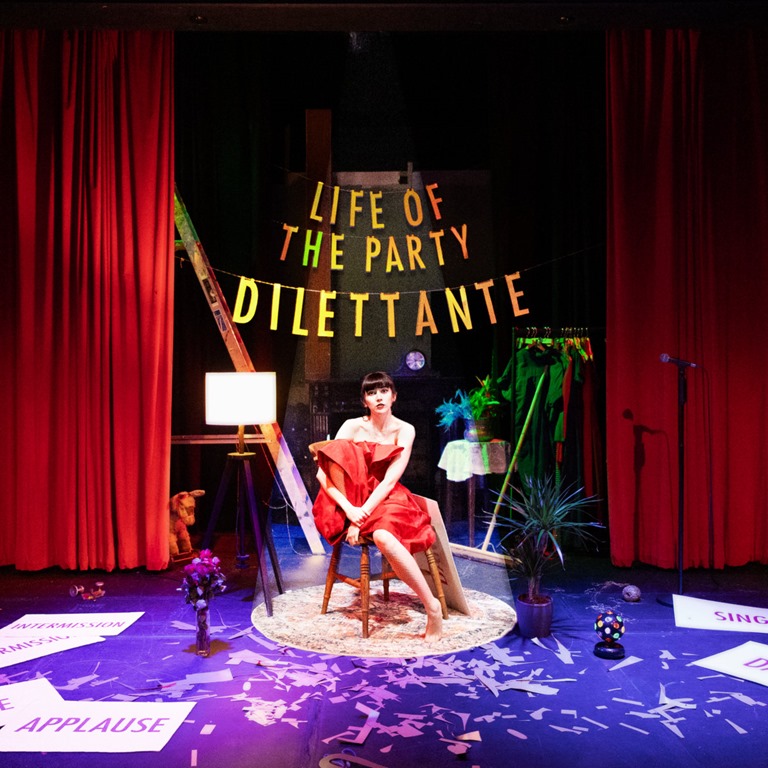
Dilettante return with their second album Life of the Party, Pidgeon’s first totally self-produced record and her most personal one yet. Made in the confines of a converted freight container, the album is an outpouring of frustration towards societal pressures and the acceptance of realising she sees the world differently to others. “I went to see Poor Things and I really felt like Emma Stone’s character made sense to me,” explains Francesca. “She’s really literal and sort of just looks at the way polite society always does things and says, ‘why are we doing that? That doesn’t make sense, let’s do it this way’.”

Life Of The Party covers a range of topics, from turning thirty and feeling the pressure to start a family, to feeling constrained within monogamous relationships as well as the more weighty matter of speaking out about sexual assault and dealing with the associated repercussions.

Sonically, the album maintains Dilettante’s signature art pop sound and impressive loop pedal skills whilst also diving into a more synth heavy realm. In parts, the record also sees Pidgeon exploring a gentler sound, reverting back to a more traditional and raw songwriting “I’d been listening to Andy Shauf and Harry Nilsson a lot and I was trying to actually write from the piano”. Life of the Party sees Dilettante continue to push boundaries, “This record is, at times, the weirdest stuff I’ve ever put out and at times the poppiest,” she adds.

To coincide with the release, Dilettante have released a video for the title track. Watch it here:

AA

a3699144988_10

Konnekt – 1st February 2025

Christopher Nosnibor

It’s perhaps an understatement that Charlemagne Palestine’s body of work is immense, and the range of artists he’s collaborated with quire staggering. Active since the early 70s, it’s likely impossible to give a brief summary of his career or output, and when approaching a work such as this, I find it easier to place career context to one side and evaluate it on its own merits. It may be an admission of failure, a confession to a limited knowledge, but the debates over how a release sits in relation to the other forty or so albums are the place of fan forums.

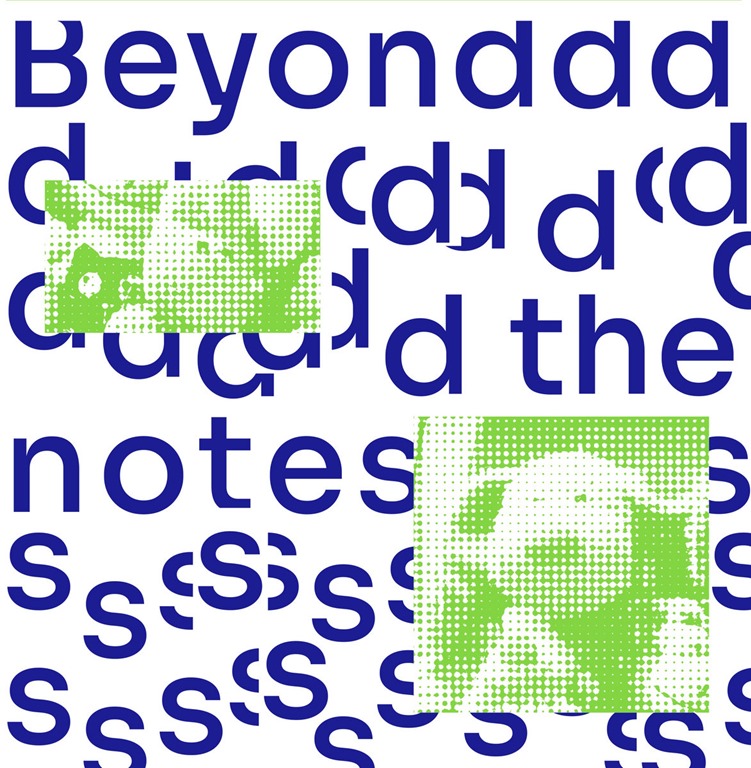
However, in keeping with his habit of adding many repeated letterssssss at the end of words and songgggggggg titlesssss, Beyondddddd The Notessssss, his collaboration with Seppe Gebruers bears a rather daft titleeeee, of which I shall make no more, other than to observe that this suitably sparse, piano-led work does indeed take the listener beyond the notes as it promises.

Over time, I’ve become quite drawn to this type of album, which seems to proliferate in experimental circles, whereby an LP – released on vinyl, too – will contain just two or three tracks, and the compositions seem to be arranged around the fact that each side has the capacity for around twenty minutes of audio. I suppose it’s because I grew up in the 80s, and was raised on vinyl as the dominant format, but in the world of the mainstream, where an album – approximately forty minutes in duration – would consist of ten, or perhaps nine songs, most of which were three or four minutes in length, and could be lifted as a radio-playable single. In the late 80s and 90s, the 12” would provide longer edits of singles, often aimed at clubs, but discovering the two-track album was a revelation, in that it seemed like a revolution of form. I was unfamiliar with the works of Tangerine Dream, Yes, or Pink Floyd beyond their singles at this time, because… well, because.

Side one is occupied by the twenty-one minute ‘Gotcha I’, a sparse composition where discord dominates to render an uncomfortable listening experience. It feel like semi-random plonking on an out of tune piano. In pinks and pings, plongs and tinkles with no time sequence, no key, and no clear sense of form. It simply is. Notes clash and collide, ripple and rush against one another, sometimes holding back, hanging in suspense. In some respects, it bears a resemblance to jazz improv pieces – and perhaps not entirely surprisingly: this album features two pianists ‘passion for unusual tunings and the playing of multiple pianos’. The result of the collaboration is four pianos, played simultaneously, with each piano tuned in a rather less than conventional way.

It would perhaps be beguiling if it wasn’t so far removed from anything we’ve been accustomed to recognising as melodic. But as it is… everything simply sounds wrong. Atonal, uncomfortable, off-key and off-kilter. The effect is quite brain-bending, because everything feels warped, out of step, uncoordinated. It isn’t, of course: it’s simply how our minds have been programmed and attenuated to conventional note sequences and melodies, and Beyondddddd The Notessssss trashes everything with a joyful abandon. Once you come to accept this, and to reattenuate your own listening to accommodate this strangeness, which offsets the balance, sets one lurching and feeling bewildered, it becomes somewhat easier to accept.

‘Gotcha II’ commences side two where ‘Gotcha I’ / side one leaves off, but tumbles slowly into altogether more spartan territory. Each note hangs. There are moments of silence. Deep, rumbling, stomping piano arrives, dinosaur-like. It’s primitive, but strangely magnificent, carrying as it does a simplicity which is rare. And this simplicity brings with it a sort of honesty. I’m fumbling for words, here, for reasons which aren’t even readily explainable. Towards the end, notes cascade and tumble over one another, culminating in a frenzy of clattering, broken notes, and it’s bewildering.

Bewildering is perhaps the most apposite description of Beyondddddd The Notessssss. The title track, which draws the curtain with a five-minute finale, offers something approaching minimal jazz – with the emphasis on minimal. And jazz.

Beyondddddd The Notessssss goes way beyond the notes, and, indeed, way beyond the rational.

AA

a3981957180_10

Room40 – 31st January 2024

Christopher Nosnibor

It begins with a rumbling roar, like a persistent strong wind rushing over moorland, before ripples of piano delicately drift over it to altogether calmer effect – although the roar continues beneath. The juxtaposition brings a balance of sorts.

Just a few days ago, I wrote on Circuits From Soft Frequencies by Jamie Lee, which was recorded among the sound mirrors at RAF Denge, in Kent, and touched on the fascinating nature of these structures, and opined that ‘often, the most alien and seemingly otherworldly creations are, in fact, man-made’.

Lawrence English’s latest work seems to contribute to this dialogue, albeit approaching from a different perspective.

‘I like to think that sound haunts architecture,’ he writes, and goes on to remark, ‘It’s one of the truly magical interactions afforded by sound’s immateriality. It’s also something that has captivated us from the earliest times. It’s not difficult to imagine the exhilaration of our early ancestors calling to one another in the dark cathedral like caves which held wonder, and security, for them.’

English also writes of the relationship between space and place, and how ‘Spaces hold the opportunity for place, which we create moment to moment, shaped by our ways of sense-making… Whilst the architectural and material features of space might remain somewhat constant, the people, objects, atmospheres, and encounters that fill them are forever collapsing into memory.’

The album comprises eight numbered segments, ETHKIB I – VIII, all formed using fundamentally the same sound palette, and which flow into one another seamlessly to create a single, continuous piece, which is best experienced without interruption.

The piano and the undercurrents, which evolve from that initial roar to altogether softer drones which drift, mist-like, develop an interplay whereby the dominant sound switches, sometimes with one or the other fading out completely – but this happens almost imperceptibly… It isn’t that you don’t listen to the music, but the preoccupation of the listening experience is absorbing the atmosphere, and it possesses almost a physicality. By ‘ETHKIB V’ the sounds has built such a density that the sensation is like being buffeted. Amidst the deep drones, there are, in the distant, whirring hums and elongated scrapes which evoke images of disused mills and abandoned factories. Perhaps there’s an element of the power of suggestion, but it’s difficult to contemplate purely abstract visualisations, or nature without some human aspect somewhere in the frame.

The soundscapes English creates are evocative, and in parts, at least, haunting – although ultimately, what haunts us is our own experience, our thoughts, our memories. And in this way, from space, we create our own sense of place, and tie things to them in an attempt to make sense of the world as we experience it.

By ‘ETHKIB VIII’, it’s the piano alone which rings out, in a reversal of the opening, and some of the mid-sections, ending on a single, low note, repeated, held, reverberating, leaving, ultimately silence, and a pause for reflection.

AA

RM4245 front

14th January 2025

Christopher Nosnibor

They only released their debut single on 1st December last year, and here we are, not quite halfway through January and we’re being presented with single number three.

While Argonaut’s track-a-month schedule for their ‘open-ended’ album Songs from the Black Hat, matching only that of The Wedding Present in 1992, seemed like the pinnacle of prolific – not to mention the ultimate advertisement for the DIY approach – three singles in six weeks must surely have the makings of a record (pun partly intended). As of this moment, though, we don’t know what their longer-term aim is, or even if there is one, beyond releasing new songs as soon as they’re ready, and if that is their MO, it’s admirable. Without the need to work to the schedules – or budgets – or a label, their only limitation is their own time and energy.

I had initially noted, following ‘Scarlet’, and ‘Amber’, a theme of colours linking their songs, but perhaps it’s female names. Or perhaps it’s pure coincidence, and they have simply plucked one-word titles to denote their songs.

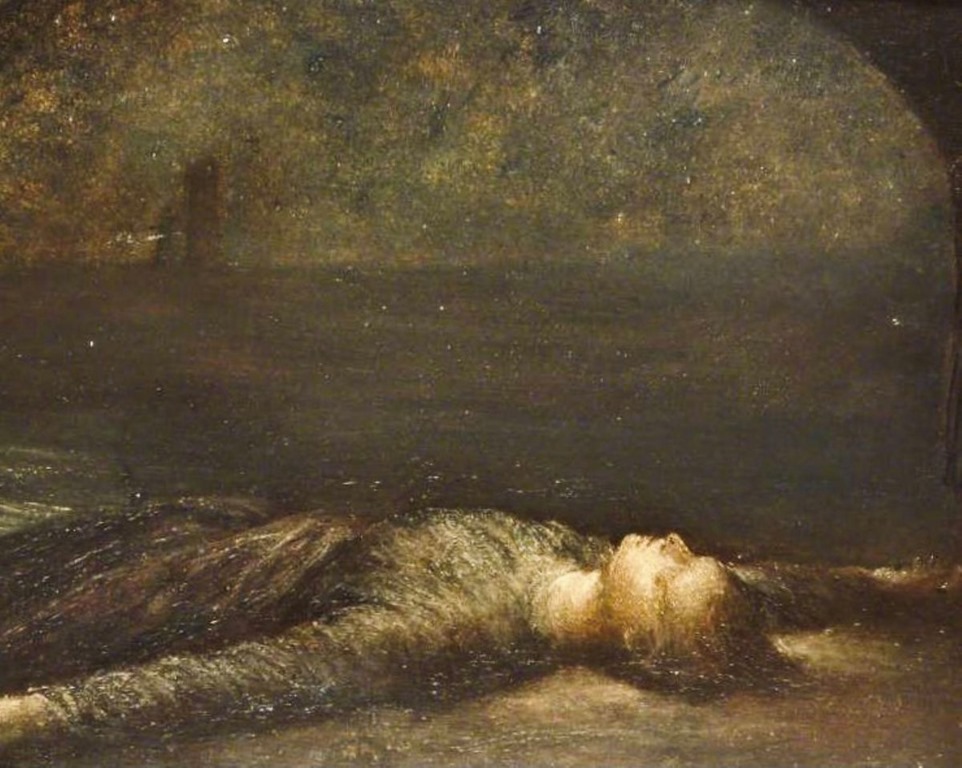
‘Jude’ – which comes with appropriately dramatic artwork, somewhere between swooning gothic drama and pre-Raphaelitism, the source of which I haven’t been able to identify – once again features the voice of poet Monica Wolfe, here whispering, and, as credited, ‘breathing’. These contributions are significant in rendering an atmospheric composition, particularly in the introduction, before the arrival of the piano – of which there are, in fact, two, adding layers to the brooding theatricality of the song, and Stephen Kennedy’s voice.

The feel – particularly in his delivery, with some quavering intonation, and enveloped in a spacious reverb – is very much gothic folk, as he casts introspection, while chasing ghosts.

‘Will the world miss me?’ I whisper

And sigh, as my life drifts away.’

It’s moving, poetic, and powerful, presenting a straight-ahead contemplation on mortality – not in some cheesy ‘romantic’ gothic style, and not in a crass emo way, but a rare sincerity.

Somewhat ironically, in our teens and twenties, we tend to agitate about death, while also treating it with a flippancy, because it’s what happens to old people, but as we grow older, we go out of our way to avoid thinking or talking about it, because as we begin to lose parents, uncles, aunts, and even – increasingly – peers, shit gets more real than we can handle. Invariably, we bury our heads in the sand, shrug off life insurance and toss making wills into the distant future along with pensions, laughing darkly how we never expect to retire anyway.

In the final minute, the song swerves into more electropop territory as the rippling piano combines with a crisp, insistent drum beat. It’s a magical, ethereal moment, which is but fleeting, like dappling sunlight through the branches of trees in a woodland on a breezy day. In many ways, this captures the essence of the song and its sentiment, in its fleeting ephemerality, a metaphor for life itself.

It ends suddenly, with only inaudible whispers fading to the close, and again the metaphor stands. This is perhaps their strongest and deepest release to date, and best absorbed by candlelight, with a large measure of something intoxicating.

AA

a0763472052_10

Maud the moth, the solo project of Spanish-born and Scotland-based pianist, singer and songwriter Amaya Lopez-Carromero shares the new track ‘Despeñaperros’, taken from her forthcoming album, The Distaff, to be released via The Larvarium (digital +CD) and La Rubia Producciones (vinyl), with Woodford Halse/Fenny Compton contributing a tape release on 21st February 2025.

Amaya has long used the mantle of Maud the moth as an alter-ego, a séance-like conduit to explore themes of rootlessness, identity and trauma. The Distaff in particular refers to the stick or spindle onto which wool or flax is wound for spinning, and an object which has historically been used across multiple cultures as a symbol wielded by the “virtuous woman”, an authoritarian ideal around which much of the trauma surrounding the feminine coalesces. The album takes the form of a sort of self reflective and surreal autobiography. It was in part inspired by the poem of the same name written by the Greek poet Erinna, as she mourns her friend’s loss of individuality and agency in exchange for marriage – and therefore safety and acceptance in the eyes of society.

Maud the moth shares the video for ‘Despeñaperros’. About the track, Maud the moth says;

"Despeñaperros is one of the cornerstones of The Distaff’s universe. A canyon and natural reserve with dramatic geology and very violent historical background, the Despeñaperros Pass is a gateway into the wilderness. Its name, which can be translated as “where dogs are thrown off the cliff”, has unclear origins and adds to the lore and mystery shrouding this area in the Spanish collective consciousness. Growing up in an environment where hunting and animal cruelty were commonplace and artistic sensitivities often ridiculed, Despeñaperros unfolded in my imagination, transcending its real physical location, and reforming as a quasi-mythical location for the sacrifice of those perceived as weak, different, misunderstood or simply challenging tradition.”

Watch the video here:

AA

MTMDESPENAPERROSPROMOPICTURE-990a2806db04513c

Photo credit: Scott McLean

Dark electronic music producer, MISS FD has just released her latest bewitching cinematic gothic music video for her song, ‘Curse Breaker’.

‘Curse Breaker’ is a liberating dark piano piece with laid bare female vocals that channel raw emotion, empowerment, and mystique.  A spell unbinding transformative song about overcoming and letting go.

The music video, directed by long-time collaborator and friend Tas Limur, was filmed in a Victorian mansion in Historic Old Louisville, KY.

The video follows MISS FD through a curse-breaking séance which releases her from a haunting apparition, symbolizing freeing oneself from the binds and limitations of the past.

Watch it here:

AA

c1152579-0f61-ec46-4e28-2c38a8e0a1d3