Posts Tagged ‘percussive’

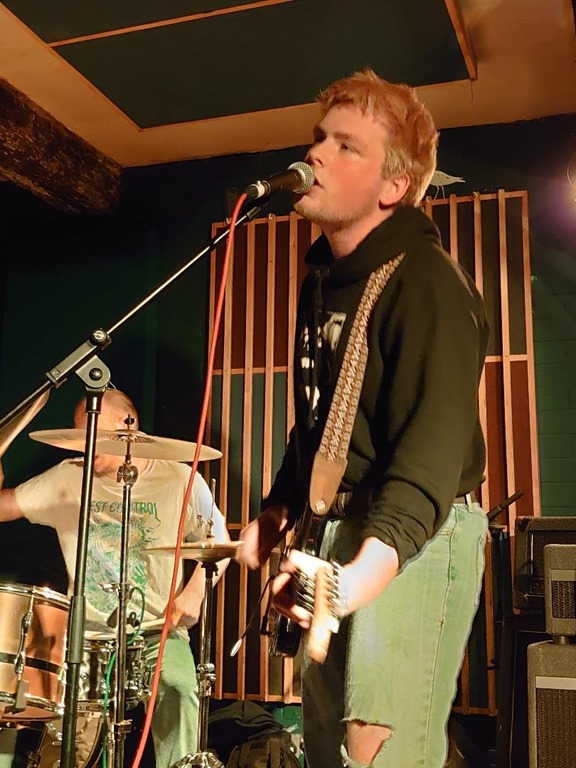
NYC-based electronic punk band LIP CRITIC, who are no strangers to Aural Aggro, have shared a new song and video, ‘The Heart’.

They may have switched labels and stepped things up a bit, but you couldn’t exactly say they’ve sold out.

Watch the video here:

The video was filmed in a barn in Roxbury, NY, and follows their Partisan debut single ‘It’s The Magic’, which earned them praise from Rolling Stone (‘Song You Need To Know’), NME (“on their way to becoming the next great NYC band”), Paste (“an apocalyptic wasteland of NYC’s best underground punk”) and more.

‘The Heart’ is a high-speed train of delirious percussion (two drummers!) and wonderfully demented electronic samples, weaving in and out of frontman Bret Kaser’s lyrics that inquire into the state of spiritual marketplace and the isolating results of consumption. It’s an exhilarating and singular piece of hardcore electronic punk, with Lip Critic using a broad palette of only the most extreme hues of emotion, each marked by a distinctive danceable mania.

Fresh off dates with Screaming Females for their last-ever tour and shows in London and Pitchfork Paris, Lip Critic will tour extensively in 2024. Their first-ever headline tour will kick off this summer. Prior to that, the band will play a special hometown show on 22 Feb at Elsewhere (Zone 1) in Brooklyn and stop at SXSW for a string of shows.

9136074e-8dc0-dd9f-a068-639db61eb466

Credit: Justin Villar

Room40 – 30th June 2023

Christopher Nosnibor

There is no quick way to consider this album. And for many reasons – the first being that it needs to be heard in its entirety before being able to summarise and pass critical comment. The second being that after hearing it, one needs to drag themselves from the wreckage of their psyche and process an experience that is likely akin to a week being subjected to psychological experiments at the hands of the CIA under MK Ultra. Brace yourself…

As his bio points out, ‘Tony Buck is no stranger to the realm of durational performance and composition. As a part of Australian unit The Necks he has been central to defining a reductive, but rich sound language that equally interrogates timbre and time…[and] with Environmental Studies he moves even further into these longitudinal pursuits.’

Longitudinal is one word to describe this album. It’s a single, continuous piece, some two hours in duration, and while there are a couple of five-minute excerpts designed to give potential listeners an indication of what it’s like, it’s simply impossible to convey the experience in snippets. The snippets are lifted from the album’s lighter moments: that doesn’t mean they’re mellow, melodic, but the multi-layered clattering percussion that’s evocative of some kind of space-jungle and brief segment of avant-jazz feedback is nothing in the wider context. And – as I always say – context counts.

While chart music – geared toward snappy three-minute cuts which are 90% chorus – and the inclusion of streams when compiling charts, has effectively killed the album in the mainstream, further afield (and to be fair, you can’t get much further afield than this), the album is still very much a cherished format for both artists and listeners alike. In fact, it’s interesting to observe the rise of the really long album. I will often harp on about Swans releases from the last decade, but they’re not isolated. Frank Rothkkaramm released an album as a 24-hour CD box set – which couldn’t be much more different from Throbbing Gristle’s 24 hours box – as he explored sounds which helped with his tinnitus. Numerous doom, drone, and ambient albums in recent years have really pushed the parameters of an album thanks to digital releases not being subject to the same limitations of physical formats – or the same production costs. Is the medium the message? Perhaps, at least to an extent.

The recorded medium was always an issue: even going back to the height of the classical era, once recording became possible, the media limited what could be released, meaning to hear a full performance of, say, Handel’s Messiah, you had to be there, since even a recording which required a box-set album release required truncation. It also, of course, required the turning of records and the segmentation of the work.

In its day, Earth’s groundbreaking Earth 2 challenged the conventional notion the ‘the album’ – more even than any monster prog releases like Yes’ eighty-one minute Tales from Topographic Oceans and the two-hour plus, sprawling triple YesSongs. Because what differentiates these is the fact that Yes was a lot of noodling wank, while Earth did something different, with a specific desired effect intended, and its duration was in fact integral to its cumulative effect, namely that of a sonic blanket of suffocation. Anyway: the point is that Environmental Studies is an absolutely immense album, and it’s a work that needs to be heard as an album. You may find yourself drifting in and out, but it feels as if this is part of the experience: better to drift than experience in fragments.

The accompanying notes describe Environmental Studies as ‘An incredibly dense matrix of interwoven voices and layers, each occupying and exploiting a unique space within the fabric of the sound-environment, co-existing to slowly reveal themselves in multiple interconnected relationships.’

Immediately from the start, the listener is assailed by a deluge of discord and dissonance and streams of noise. It gradually drifts through an ever-evolving, eternally-shifting journey, where mellow jazz piano and slow-melting notes emerge and drip slowly over cascading cymbals and an infinite array of extraneous sounds which wash in and out. There are passages of supple, strummed acoustic guitar – which get harder and more challenging at times but also explore mellow passages –– and gurgling extraneous nose, straining, clattering. There are sections which so tense, straining and submerged by noise that as feedback twists and turns and groans and hums, that the enormity of Environmental Studies finally hits.

There are infinite layers of percussion rattling shakes and clangerous curiousness, with errant twangs and all kinds of shades of strange, with dingy distortion crashing in heavy amidst the a maelstrom of noise that sounds like a hundred pianos being thrown down a hundred flights of stairs at the same time while someone in the top floor flat blasts a Sunn O))) album at wall-cracking volume and there’s a fire broken out in the basement and it’s rapidly escalating upwards.

An hour in, we’re in sonic purgatory – and it’s absolutely magnificent. The polytonal percussion builds and builds; industrial, tribal, everything all at once, with sonorous drones and crushing distortion and noise and wailing feedback whistling and screaming all the while, it’s a relentless barrage of sound – but not noise, and that’s an important distinction here. There are noises, and they’re collaged into something immense, with the rattling of cages and furious beating of skins.

When it does simmer down, some time further in, we find ourselves in an alien landscape, that’s strangely spacey and tense before the next round of percussion barrels in. Environmental Studies is big on beats, but not all of the beats are big: insectoid skittering and scratchy flickers are as integral to the complex interweaving as the thunderous floor toms and reverberating timpanis, and everything melts together to weave a thick sonic tapestry.

While there is nothing about Environmental Studies which is overtly heavy in the conventional sense, to immerse yourself in the album is an exhausting experience, both physically and mentally. But if art doesn’t challenge, what is it for? It’s merely entertainment. This is not entertainment. But it is an incredible work of art.

AA
a1038790420_10

Christopher Nosnibor

It’s always good to be back at Wharf Chambers, and this actually my first visit this year. Since my last trip, the cost of a train from York to Leeds has absolutely rocketed. It wasn’t that long ago that an off-peak day return for the 23-minute journey was about eleven quid. Now it’s more than £17, plus booking fee. Pre-lockdown, late 2019, it was around £15. This is the cost-of living crisis and inflation in sharp relief. It may only be a couple of quid, but as a percentage, it’s substantial, and when you apply the same kind of increase to everything… My dayjob pay hasn’t gone up by anything like as much, and we know that rail workers’ wages haven’t. But the consequence is that I have to be more selective about what gigs I travel to attend, which means in turn lower attendance for live acts, and less beer sold by venues, and so on. Thankfully, with shows at Wharf Chambers, I can offset the travel costs with decent hand-pulled beer at £3.40 a pint. When was the last time you paid under £3.50 for a pint?

It’s not all about the cheap beer, of course. Live music is always about more than just the music, though: it’s about the whole experience, and Wharf Chambers is a great venue with a great vibe that hosts great bands, and there are two on tonight’s bill.

Fuzz Lightyear are infinitely better than their somewhat flippant name, which doesn’t particularly convey what they do. Sure, there’s distortion, but the guitars take second seat to busy, heavyweight drumming on songs that feature abundant tempo changes, and are weighty, and shouty. Post rock collides with Fugazi. I’m a sucker for the full tom roll rhythm, and the drummer absolutely nails it on the third song. There’s a dash of Trail of Dead in the mix, and the bassist’s manic eyes are as compelling as anything. It’s a solid set, with a lot of range, that sets things up nicely ahead of the headliners.

Fuzz 1

Fuzz Lightyear

Deaf Kids start gently with something of an ambient intro. It’s dark, and they move as shadows. There are drums played with elbows amidst drone noise. And it builds… and builds… and then it bursts. And how!

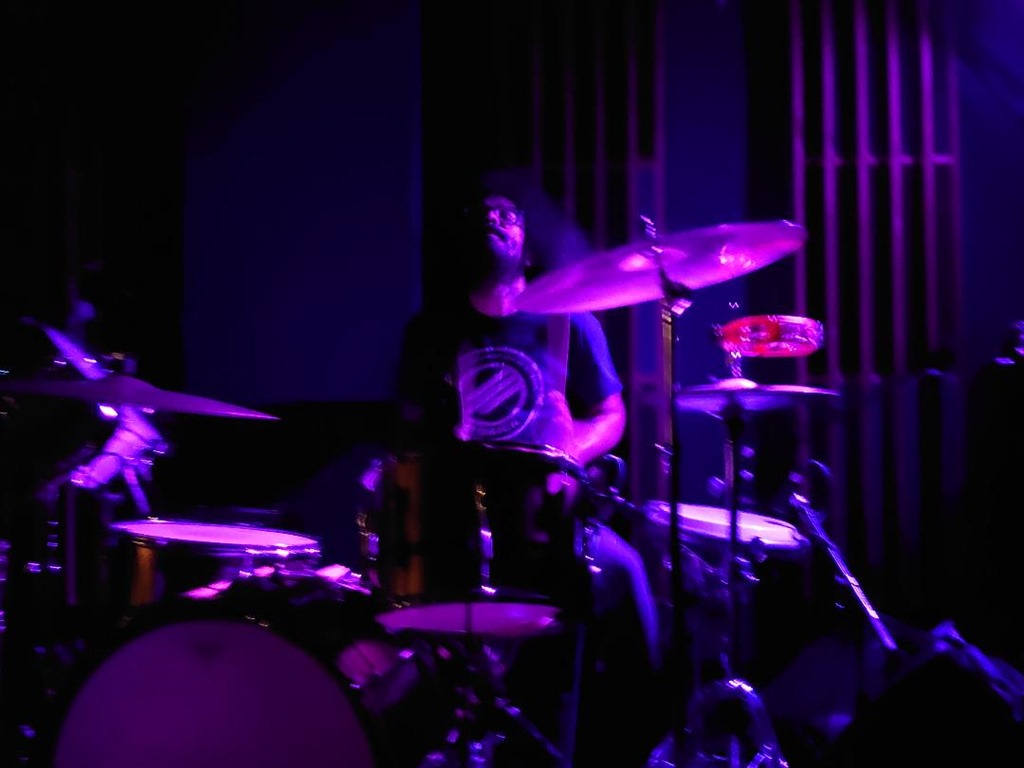
The Brazilian trio aren’t your staple Neurot act: instead of slow-lugubrious, rust-stained metal, this is a band with a vibrancy and an energy that’s positively eye-popping. It’s as if they’ve bottled everything since the release of their last album, Metaprogramação and are finally letting it all out. The set feels less like a succession of songs than a continuous overall work. They play in almost complete darkness. Briefly, there’s a percussive break that’s almost a mellow conga, but then it builds again before it explodes. The set is punctuated by bursts of noise, and – additional djembe breaks aside – it sounds like there are two drummers… There’s just ss much percussion, and so much urgency, and so much energy.

Kids 2Kids 1

Deaf Kids

And I realise on reflection, as I relive the immense buzz of the show, that chuntering about the price of trains from York to Leeds is likely nothing compared to the effort of transporting a band from Brazil to play in post-Brexit Britain in a venue with a sub-200 capacity. Really, we’re spoiled. I can only hope we continue to be.

Misanthropic Agenda – 20th June 2022

Christopher Nosnibor

I’ll admit, I was struck by the name when this landed in my inbox. Success! With an insane number of submission emails day, I don’t even open most, let alone play the albums attached. But then I learned that PWIS is Nathalie Dreier – who’s interesting for her visual work as well as her audio – and Dave Phillips, who’s To Death I covered last year – which deepened my intrigue. And it’s one hell of a cover, too.

Meaning What Exactly? is quite a different proposition – from pretty much anything, in truth. Presenting four lengthy compositions, it’s fundamentally an electronic album, but it’s far more than that, or anything. The title is a challenge, a query, a – what I keep hearing as a phrase in my corporate dayjob – a ‘provocation’. It comes down to ‘exactly’. The word is weighted; even without explicit emphasis, it feels emphasised, vaguely stroppy even. The addition is the lexical equivalent of a hand on hip, a raised eyebrow, a scowl, a sneer of condescension to a worker from another department who has no facts. ‘Yeah, do your research, bitch’, is what it says.

And who really knows what it means, or what anything means? Exactly. And what this album means – exactly – I can’t quite fathom. The titles conflict with the contents, at least, based on my lived experience, on my reception. They say it’s a ‘dialogue mixing treated field recordings with organic acoustics and digital sources, brought together in long trance-inducing sessions of meticulous audio de/construction and philosophical debate’. But how much of that is apparent in the end product? Well, that’ debatable.

‘Pangolin’ is otherworldly eerie: a booming drum echoes out through a shifting reverberation of spine-shaking synths. It doesn’t readily evoke aardvark-like creatures, apart from perhaps in the final minute or so when Drier’s monotone vocals are replaced by snuffling barking sounds. It’s weird, but then, what did you expect? I don’t know what I expected, if I’m honest, but probably not this. This is dark, disorientating, disturbed and disturbing, and even more challenging for the absence of context. Meaning is the end product of intent, of purpose, and there’s no clear indication of where this is coming from, meaning we’re left to face the strange with no guidance.

A grinding bass and muffled, muttering voices, whispering about fish all build to a hellish tumult of murmurs and doom-sodden low range hums and thrums, and nothing feels right. It’s awkward, and unsettling. You – certainly I – don’t really tune into the words delivered by Drier in her suffocating spoken word passages, not out of disregard or disrespect, but because all of it comes together to create a claustrophobic listening experience. Meaning What Exactly? is not an album you sit and dissect, or sit and comfortably disassemble or analyse. I find myself, instead, contemplating the meaning of meaning.

‘Us vs Us’ plunges into deeper, darker territories, with a grinding, driving bass worthy of Earth, propelled by thunderous sensurround drumming, with purgatorial howls echoing all around. It’s heavy, harrowing, and it’s that simple, tribal drum style that defines and dominates the eerie eleven-minute closer, ‘The House is Black’. The house is black and the atmosphere is bleak: the vocals are mangled and distorted and play out against a murky, fragmented, fractured backing, to unsettling effect. The beats are sparse, subdued, distant, yet taut, crashing blasts and ricochets. You make it want to stop. The clock is ticking. Your chest tightens. The nerve rise, jangling, fearful. It’s like walking through a graveyard at night, knowing there’s someone lese shuffling around nearby. Make it stop, make it stop!

A crackle, a crunch. What is this, exactly? Perverts in White Shirts don’t only excavate darker domains, but scour and gouge their way into the darker, deeper territories where tension pulls tight and tighter still. It’s the sound of trauma, of suffocation. Meaning it feels like a direct passage to the depths, meaning it’s dark, uncomfortable, like it’s almost unbearable at times. Meaning it’s good.

AA

a2108573613_10