Posts Tagged ‘Noise’

30th May 2025

Christopher Nosnibor

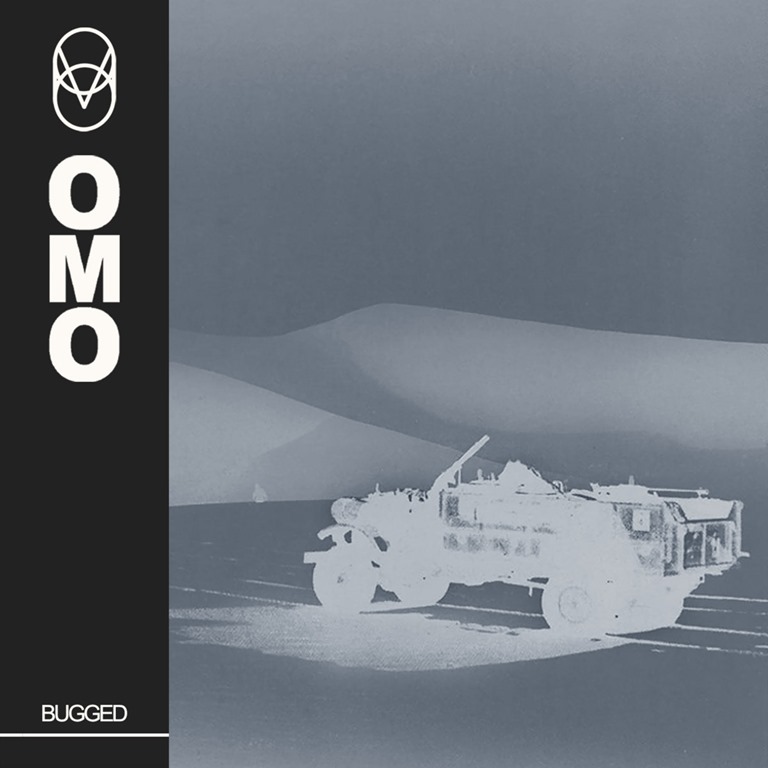
With mainstream music, all you have to do is stay tuned to prominent radio channels, watch TV, let Spotify recommend the next tune, and it lands in your lap. The further away from the mainstream you get, the more it becomes about keeping your ear to the ground, word of mouth, groups and forums – and occasionally, press releases and inboxing. Despite being a fan of a number of the acts involved, I discovered this one quite by fluke via a share in a Facebook group, which announced that ‘OMO DOOM , the Glasgow group who comprise members of Mogwai , The Twilight Sad , Desalvo , Areogramme and Stretchheads put out a new track this week, an intensely claustrophobic cover of a Head of David track – the brilliant late 80s UK Blast First act who everyone seems to have forgotten now’.

I’m perhaps one of the few who not only didn’t forget Head of David, but has a near-complete collection of their releases – and I can tell you it’s taken some years to assemble. While their first album – LP, released on Blast First in 1986, and later reissued as CD in 1990 isn’t too hard to find, and has a buzz around it on account of the fact that Justin Broadrick drummed with the band between leaving Napalm Death and forming Godflesh (although he didn’t actually play on any of their releases apart from their 1987 Peel Session, which features on the nigh-on impossible to find White Elephant compilation), their other releases are like rocking horse shit (as they used to say at record fairs in the 90s.

Their second LP, Dustbowl, which featured ‘Bugged’, was produced by Steve Albini and released in 1988. It’s a belter. While I snagged a vinyl copy in the 90s, I have never yet seen a CD copy in the wild, and it’s never been reissued, either. ‘Bugged’ also appeared on one of the 7” singles in ‘The Devil’s Jukebox’ Blast First 10-disc box set, and that’s hardly common or cheap either.

H.O.D.I.C.A. was a semi-official live album which captured Head of David playing at the ICA in London, delivering a purposefully unlistenable set with the explicit purpose of repelling EMI music execs who were sniffing around, and their final album, Seed State, released in 1991 lacked the same brutal force as its predecessors.

The reason for the history lesson is that they’re largely forgotten because their music is so hard to come by, and because Stephen R. Burroughs has pursued a very different musical trajectory subsequent to their demise, with both Tunnels of Ah and FRAG sounding nothing remotely like HoD.

But if you can hear Dustbowl, it’s aged well, a snarling mess of noise driven by pulverising drums and snarling, grinding bass that tears you in half. And this is where we resume the story, I suppose.

OMO DOOM’s version of ‘Bugged’ is slower, starker, more malevolent and menacing than the original which was ferocious in its unbridled brutality. Here, we get thick synths and punishing drum machines dominating the sound. The bassline is twisted around a way, and sounds for all the world like ‘Shirts’ by Blacklisters, and at around the two-minute mark is slumps into a low-frequency range that’s unsettling to the bowels as well as the ears. This sure as hell brings the dirt. The vocals are rabid. It’s gnarly, alright. Fans of Mogwai and The Twilight Sad and the late, lamented Aerogramme may be drawn to this, but probably won’t like it: it’s the work of a bunch of musicians trying something that’s nothing like their regular work, and it’s unfriendly and inaccessible and noisy and horrible… and of course, I absolutely love it. And maybe it could spearhead a Head of David Renaissance… We can hope.

AA
a2460593698_10

3rd February 2025

Christopher Nosnibor

This one may have started at the beginning of the year, but is an open-ended project which has been added to over the subsequent months, meaning that there’s more to absorb now than there was previously, and some five months in, it seems like a reasonable point to take stock of the progress so far. Although released under his Sunday name and therefore perhaps not a release that leaps out, Ash Sagar has been operating as Meanwoood Audio for a while, as well as being involved in numerous Leeds / York based collaborative works, notably The Wharf Street Galaxy Band and Neuschlafen, and perhaps notably the one-off experimental improv collective Beep Beep Lettuce, who will one day be hailed as a 21st century Big in Japan or Immaculate Consumptive. Well, we can but hope.

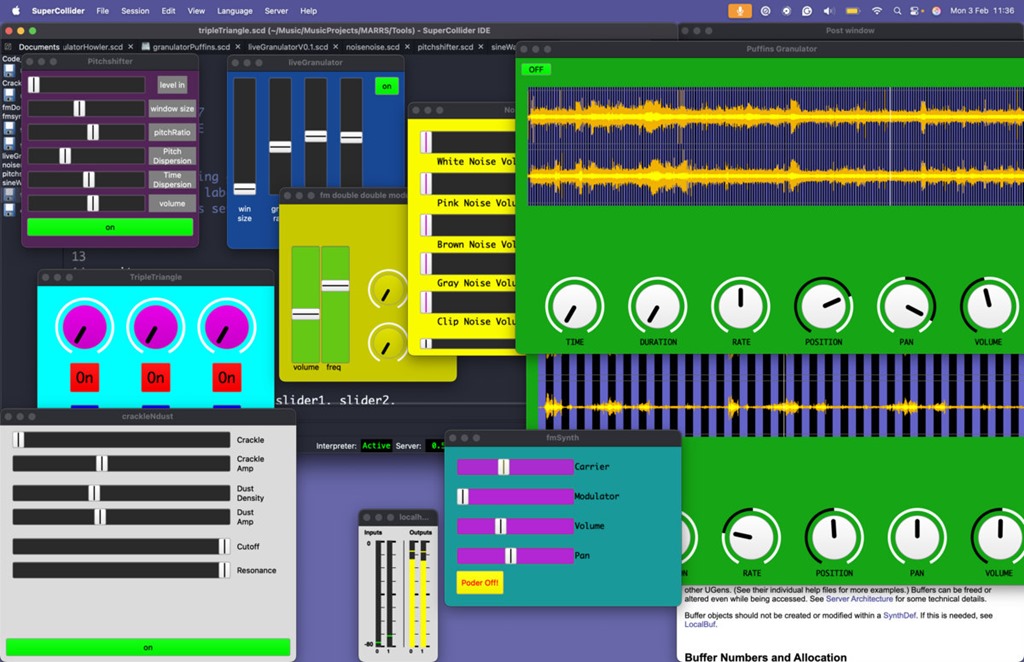
M/A/R/R/S tools is one of those albums that could only ever exist in the digital age, consisting as it does of some fourteen experimental pieces with a running time of around a hundred and eighty-five minutes. Yes, that’s over three hours – even longer than recent sprawling Swans releases.

Sagar’s notes are succinct – or scant, depending on your perspective – summarising M/A/R/R/S tools as ‘Audio recording from tests of building tools in SuperCollider for Meanwood Audio Recording & Research Services {"M/A/R/R/S"}.

My instinct is – because my instinct is dictated by my brain, which is brimming with stupid nonsense and is excessively prone to misfired associations – is to ‘pump up the volume’. But this proves to be rather unwise, as the release contains an endless stream of unsettling discordant rumbling, hovering hums, and fizzing extranea which is just around the tinnitus range.

‘Audio_25_01_20_1’ makes me feel tense: it reminds me of a ‘breather’ in a Teams call – there’s always one freak who positions their unmuted mic right in front of their open, gasping mouth, and the sound is like a gale on a mountain top.

Dripping, dropping, dribbling electronic abstractions dominate, with microtonal bibblings running on and on, sounds like twanging elastic bands and scratches and scrapes, atonal strings and R2D2 malfunctioning. I recall running my nails along an egg-slicer as a child. It’s a memory I had largely forgotten until hearing this remined me. M/A/R/R/S tools offers up an oddball array of sounds, and it feels random in the extreme. Oftentimes, it’s barely there, or it’s nothing more than the rumble of passing traffic or a distant radio. Occasionally, there are stuttering drums. Other times, there is not much at all.

This is a work which has been a long time in development: there are two full live sets, recorded five years apart, with a set recorded in London sitting at the midpoint, and another live set, recorded in Leeds, drawing the curtain on this colossal release. The fifteen-minute London set is a challenging work, which confirms what anyone who has seen Ash live will already know, and that’s that he in unafraid to test an audience with monotonous, woozy oops which are as uneasy on the intestines as they are on the ears. This is reinforced by the thunder-filled, sample riven discomfort of the Leeds set – something that his set in Leeds just this last weekend extended still further. Distorted, heavily reverbed and practically impenetrable vocals spitting out randomly sequenced words cut through the speakers, and it’s almost too much, too disorientation. A derangement of the senses. Both John Cage and Brion Gysin would have been proud. It’s dark and murky, and droning notes quaver in the background.

M/A/R/R/S tools is not an easy listen, not only on account of its duration. Despite its superficial minimalism, there is a lot going on. And none of it is kind, comfortable, or particularly easy on the ear or mind.

AA

a4289167092_10

Cruel Nature Records – 30th May 2025

Christopher Nosnibor

First things first: Beige Palace were ace, and their departure has left a gap in the musical world, especially in Leeds. In a comparatively short timespan, the trio produced a respectably body of work, evolving from their minimal lo-fi beginnings to explore musical territories far and wide, and this final release, split with another Leeds act, Lo Elgin, who, in contrast, have released precious little.

The accompanying notes provide valuable context for the final recordings laid down by Beige Palace, recorded at Wharf Chambers, one of Leeds’ finest DIY venues by Freddy Vinehill-Cliffe (guitar/keys/vocals)… and now helming the mighty Thank.

Taking a step back from the discordant post hardcore of ‘Making Sounds For Andy’ and the freewheeling experimentation of ‘Leg’, Beige Palace’s side largely favours the repetition and extreme dynamic shifts found on their 2016 EP ‘Gravel Time’. The production here also returns to the lo-fi, DIY approach from that EP, eschewing the more polished sound of their two full-length albums. Through returning to their roots, Beige Palace manages to drag their sound to new extremes, with these three tracks bringing to mind artists as disparate as US Maple and Sunn O))).

‘Wellness Retreat’ is dense and discordant, low-end synth drone and bass coalescing to a eardrum-quivering thrum over which scratchy guitars and vocals come in from all sides to forge a magnificently disjointed and angular two minutes and twenty seconds. Too chaotic to really be math-rock, it’s a squirming can of worms, a melting pot where Shellac meets Captain Beefhart at a crossroads with Trumans Water. Or something.

Bringing hints of Silver Jews, the lo-fi crawler ‘Good Shit Fizzy Orange’ does math-rock but with an experimental jazz element, the sparse picked guitar and slow-rolling cymbal work juxtaposed with what sounds like the strumming of an egg slicer before sad strings start to weave their way over it all. The lyrics are, frivolous and stupid, and we wouldn’t want things any other way. Because much as one may value well-crafted, poetical lyrics, sometimes dumb, trashy, meaningless words work just fine. Better than fine, even.

There’s a hint of later Earth about the spartan folksiness of ‘Update Hello Blue Bag Black Bag’ – a song which sounds serious but as the title suggests, isn’t quite so much, but around the midpoint, all the pedals are slammed into overdrive and suddenly there’s a tidal wave of distortion, a speaker-busting cascade of heavy doom-laden drone. And as it tapers to fade, while we mourn the departure of a truly great band, we get to rejoice that during the span of their career, Beige Palace did everything. It’s a solid legacy they’re leaving, and one which may well expand in the years to come. There will be people in five, ten, fifteen years asking ‘remember Beige Palace?’, and other people will be replying ‘Yes! I saw them at CHUNK!’. Well, I will be, anyway. And we still have Thank to be thankful for.

The two pieces which represent Lo Elgin’s contribution mark a sharp contrast to those of Beige Palace. The first, the eleven-minute monster that is ‘Beneath the Clock’, is a thunderous blast of doom-laden rage and anguish. The barking, howling vocals are low in the mix of droning, lurching, lumbering noise, through which strings poke and burst, and as the noise sways and sloshes like a boat tossed hither and thither on waves in a storm as it attempts to guide its way through the entrance to the harbour, the listener finds themselves almost seasick with the unpredictable movement. Around seven minutes in, the tempest abates and the piece meanders into altogether mellower territory, where again I’m reminded of Earth circa Angels of Darkness, Demons of Light. And then, right at the end, there’s a massive jazz segment, backed with crushing guitars. I did not see that coming. And then ‘Abomination’ is different again- a gritty, gnarly, gut-spewing blast of noise that is simply too much…. But too much is never enough as we’re led through a racketacious swamp that starts out Motorhead and toboggans down to a crazed morass of manic jazz.

The two very different sides belong to completely different worlds, at least on the surface. But they are both staunchly strange, keenly experimental, and dedicated to inventive noisemaking, and as such, compliment one another well. And this also perfectly encapsulates the essence of the Leeds scene: diverse, noisy, weird, and wonderful.

AA

a1376481820_10

Room40 – 9th May 2025

Christopher Nosnibor

Merzbow is an artist who requires little to no introduction, and one with a catalogue so immense – with in excess of five hundred releases credited – it’s beyond daunting for not only a beginner, but even a keen noise-lover. This is the reasons I personally own very few releases, and have only picked up a few incidentally along the way.

As Masami Akita approaches seventy, and Merzbow marks forty-five years of noise, this output shows little sign of abating, but it does seem an appropriate time to reflect on some previous releases which may be considered either ‘classic’ or ‘pivotal’. 1994s Venereology has been receiving some retrospective coverage of late, revered largely on account of its reputation for being the loudest, harshest thing ever, ever.

But here we have a reissue of The Prosperity Of Vice, The Misfortune Of Virtue, released a couple of years later, a much lesser-known work, but still during what’s broadly considered to be the golden era of the 90s, and, as the accompanying notes suggest, it’s ‘one of a series of unique editions from his vast catalogue that reveals a side of his practice often under represented.’

During the late 1980s and into the 1990s, Masami Akita was sometimes working on film and theatre music. In this space he created a series of recordings that capture the full scope of his sound worlds.

Given the nature of these settings, his compositional approaches were varied, seeking to create both intensely crushing walls of sound and more spatial, and at times rhythmic, pieces that plot out an approach to sound making which atomises his universe of sound, and uncovered the singular detail that is often consumed in the whole.

The Prosperity Of Vice, The Misfortune Of Virtue is the soundtrack to the theatre piece Akutoku no Sakae/Bitoku no Fuko by Romantica. Based on Marquis de Sades’s Historie de Juliette ou les Prosperités du vice & Les Infortunes de la vertu, this recording was originally released with limited distribution and remains one of the lesser available Merzbow recordings.

Completely remastered and contains an additional cut from those original sessions, this reissue of The Prosperity Of Vice, The Misfortune Of Virtue presents nineteen blasts of noise and rumbling and shrieking, scraping discord and dissonance. Many of the pieces are brief – a couple of minutes or so – and there is so much texture and tonal rage here, its sonic vision is remarkable. To many, of course, it will just ne noise – horrible, nasty, uncoordinated noise. But listen closer, and there is a lot happening here. The noise is, indeed, nasty, and the output is, brain-blasting chaos, for sure. But what these untitled pieces showcase is an intense focus and an attention to detail which is so much more than brutal noise. The Prosperity Of Vice, The Misfortune Of Virtue is, comparatively speaking, not that harsh – although when it is harsh, it’s absolutely next-level brutal with shards of treble exploding in walls of ear-shredding punishment. It contains a lot of clattering and crashing, like bin lids being dropped, and cyclical, thrumming rhythmic pulsations. There are tweets and flutters, bird-like chirrups flittering above cement-mixer churning grind with gnawing low-end and splintering treble, overloading grind and would oscillations.

The Prosperity Of Vice, The Misfortune Of Virtue is the sound of a man pushing all the buttons and turning all the dials at once and seeing just how far he can tweak them. There are moments of minimalism, of slow, stuttering beats, of mere crackles, passages one might even describe as ambient – a word not commonly associated with Merzbow. But the way in which The Prosperity Of Vice, The Misfortune Of Virtue explores these dynamics, and contains quieter more delicate segments, not to mention some bleepy electronica that borders on beat-free dance in places, is remarkable: while so much noise is simply repellent to anyone who isn’t attuned to it, The Prosperity Of Vice, The Misfortune Of Virtue offers engagement and offers openings to listeners with a broader interest in experimental music.

Eclectic is the word: we hear a chamver orchestra at the same time we hear strings being bent out of shape and what sounds like a Theremin in distress. While a fire alarm squawks in the background. This is everything including the kitchen sink. Imaginative and experimental, it’s noise with infinite dimensions.

AA

RM4195 front

9th April 2025

Christopher Nosnibor

With his latest offering, Gintas K promises a work of ‘ambience, electroacoustical micromelodies and noise played and record live without overdub.’ That he is so relentlessly active is perhaps one of the reasons its possible for him to create such wild improvised works on a first-take basis – which in turns means it’s possible to crank out new releases at such a staggering rate.

The first of the seven sequentially-numbered pieces is eleven and a half minutes in duration, and begins as a barely audible drip, a tiny trickling sound at the fringe of perception. Instantly I find myself on edge: it’s a sound I’ve become increasingly and acutely aware of in recent days, as the shower in my bathroom – only an internal stud wall away from my office where I listen and write – has progressed from a slow and infrequent drip to a full, continuous dribble, a nagging, torturous sound which has led me to place the shower head in the bath in order to mute it. There’s something of a liquid, and sometimes foamy, frothy sound to many of Gintas’ works, and Atmosphera begins with all the promise of being another one of these. And, indeed, as the drip and trickle increases in rate to become a gurgling stream, there is a sense of growing volume – in terms of liquid, rather than sonically. But a sparse piano rings out over the babbling stream, and as the piece progresses, creaks and bleeps and bumps and strange warps in the very fabric of time and space disrupt the flow. And yet, as the abstract interruptions and distractions become increasingly frequent and ever-more alien, sometimes extending to washes of fizzing distortion, and even fill-on frenzies of chaotic noise, echoing drips and splashes, like water falling from above into the lake at the bottom of a heigh-vaulted cavern, and reverberating piano notes remain at the core of this bewildering sonic collage.

There is a certain sense of evolution as the pieces run into one another: by Atmosphera #3, there is a sense of ambience blended with dissonance, and slow pulsations merge with the brooding and often melancholic piano lines, and these elements certainly contrast with the organic yet equally turbulent, almost artificial grunts and gurgles. Atmosphera #5 is the sound of lasers set to stun, with robotic squawks and a relentless whistle of feedback that hits right at the tinnitus pitch and congeal into concoction of wrongness, like a stew with a bunch of ingredients that should never be combined.

The album winds down gradually, sparse piano notes and a soft trickling liquid flow slowly descending, falling, and fading away…

Something about listening to Atmosfera is like watching a large fish tank. Just as the fish flit blithely and without any attention to the world beyond their own, darting here and there without any predictable linear path, so Atmosfera doesn’t follow a linear flow – and is all the better for it.

AA

a2258515655_10

Ant-Zen – 7th April 2025

Christopher Nosnibor

Kadaitcha’s Urban Somnambulistics was originally released on cassette in 2017, and was lauded for its dark atmospherics and rumbling narrative, spoken in Russian. A lot has happened since then, and the Ukrainian duo have, against all odds, remained active, releasing Tramontane in September 21023, and now a new version of Urban Somnambulistics, with the vocals in English. It’s not only the urban landscape of Ukraine which has changed since the album’s initial release, but the cultural landscape also, and the decision to re-record the lyrics in English was in some ways a reaction to the cultural and political context which has evolved, with Andrii explaining to me that, for him, Russian has become ‘a language of occupancy’.

There had been a shift following the annexation of Crimea in 2024, with some people switching from speaking Russian to Ukrainian, something which became more prevalent following Russia’s invasion in February 2022.

It’s hard to really grasp, from a position of comfort and safety, what it truly means to be an artist in a country which is not only at war, but has now been so for more than three years. The idea of making art under such circumstances seems completely wild, but at the same time, something we’ve learned from the long history of war – and indeed, history as a long thread, riven with tribulation – is that art has always been something we’ve made. It seems as if it’s almost a part of our survival mechanism, and that in difficult times, it’s a compulsion within the human psyche that there’s an absolute necessity to document, to create.

Urban Somnambulistics is dark and intense, and while it’s devoid of beats, it’s far too noisy and gnarly and bears the hallmarks of Throbbing Gristle at their darkest, most experimental best, abrasive, and anything but ‘very friendly’. The vocal on ‘hiding the angel’, while clean but reverby on the original version, is thick with distortion this time around, and significantly darker and more menacing in tone. ‘bushmeat’ is nine minutes of blown-out distortion and fizzing electronics, snapped cables and firing sparks, and it’s not only tense, but intense, not to mention unsettling. It’s a messy noise drift that would work as part of a soundtrack to Threads, a post-apocalyptic drone with the whistle of a bleak wind cutting across a desolate landscape. There is shredding noise, too, metallic devastation: you can almost picture ruined farm buildings hanging on their frames beside cropless fields.

Things really step up with ‘symbiote’, five minutes of oppressively dark industrial grind, before the rather more airy expanse of ‘paninsecta’, a piece that groans and drones, clanks and clatters, cut through with snarls and burrs, distorted vocal utterances just beneath the level of audibility adding an unsettling layer of discomfort. The eleven-minute title track provides the finale, and again, it’s very much in the vein of Throbbing Gristle’s more experimental works – menacing, uncomfortable, unpredictable, and noisy, collaged overlays enmeshing with crunching metal, melting circuitry, harsh drones rising up, a surging sonic tempest.

It’s remarkable that this is an album which was recorded before life in Ukraine changed beyond all recognition, because Urban Somnambulistics appears to convey all the tension and all the devastation of conflict in its presentation of sonic extremities, and its embracing of noise that hits like… like… It has significant impact, and that’s a fact.

AA

cover

Cruel Nature Records – 4th April 2025

Christopher Nosnibor

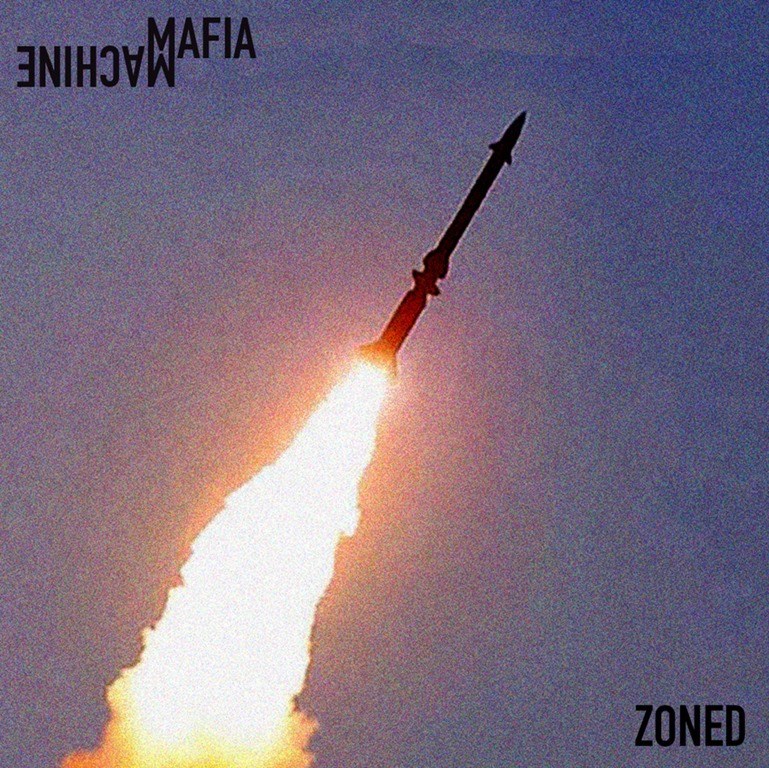
Machine Mafia may be largely unknown, but the duo’s members have some pedigree, being Adam Stone of Pound Land and Jase Kester (Omnibadger/Omnibael/Don’t Try/Plan Pony), all regulars at Aural Aggravation. Jase joined Pound Land’s ever-shifting lineup as the (then) sixth member in 2023 for a handful of live shows, and contributing additional noise to Mugged (because it needed more noise). Deciding to collaborate in early 2024, they slipped out a couple of self-released EPs, which as the notes which accompany Zoned observe, ‘more or less went under the radar at the time’ – which is why they’re getting a second go here, with Zoned being a compilation of those EPs plus four new tracks, or a new EP packaged with the previous ones, depending on your perspective. The tracks aren’t in their original order of release, and have bene resequenced, presumably for the purpose of creating a flow that’s sonic rather than chronological. And so it is that the album starts with ‘Killzones’, arguably the most overtly Pound land-like track on the album, which eases fans of Pound Land into the world of Machine Mafia nicely, or will otherwise alienate pretty much everyone else, unless they’re on the market for something that sounds like Sleaford Mods in collaboration with PiL while monged on Ketamine.

They describe themselves as ‘a voice/electronics duo in the grand tradition of Suicide, Silver Apples, Soft Cell, Pet Shop Boys etc.’ And it is indeed a grand tradition, to which one would reasonably add Sparks, Air, and Erasure, and even the final incarnation of Whitehouse, although what this list ultimately achieves is to demonstrate just how wide-ranging the electronic duo format stretches in terms of style. I very much doubt you’d find these guys donning big hats or flamboyant costumes and kicking out a set of brassy dancefloor-friendly pop bangers, at least on the evidence of the thirteen tracks on offer here. They recount that their first gig was ‘in a small craft ale bar in the Staffordshire town of Leek, receiving a ban for high decibel levels and foul language’. This sets the bar of expectation, and in this context, Zoned does not disappoint.

As I suggested in my write-up of the Killzones EP, the electronic duo they share the most common ground with is Cabaret Voltaire in their early years, mashing up samples and noise in a Burroughsian cut-up style, and churning out gnarly noise that sits between Suicide and Throbbing Gristle. This is particularly true of the collage chaos of ‘Lecture 0.3B’,

But then, ‘F.O.S’, is a blast of uptempo, lo-fi, bass driven drum-machine propelled hardcore punk strewn with feedback and snarling aggression, and ‘Where’s The Money Gone?’, from the Money Gone EP is a filthy racket with massive blasting beats which lands in the space between The Fall and Big Black, powering away at a motorik groove for the best part of six minutes while Stone hollers thickly and ever-more desperately ‘where’s the money gone?’ Well, we know it’s not gone into public services, but there some mega-rich cunts swanning around and jetting into space. And has anyone seen Michelle Mone since she sailed off on her multi-million quid yacht?

‘England’, originally released on Industrial Coast’s ‘Rock Against Racism’ compilation is very Throbbing Gristle, in the (pulsating) vein of ‘Very Friendly’.

Of the four new cuts, ‘Crabclaw’ invites comparisons to Selfish Cunt’s ‘Britain is Shit’, and this may not be entirely accidental, a stinking snarling assault on culture and the senses, with an overloading gritty bass and vitriolic vocals ranting in a mess of distortion and reverb over the murky morass of a musical backing. It’s the sound of frustration, it’s the sound of anger mashed together with despair. ‘Jackpot’, meanwhile, is like John Cooper Clarke spouting over a segment of Metal Machine Music. All the while, a drum machine and throbbing bass pulse away relentlessly: this is Sleaford Mods for real punks. ‘Human Like’ revisits the dubby tendencies first explored with ‘Killzones’, and it’s a dark, sprawling cavernous hell of reverb atop an organ-shaking bass, again bringing together PiL (think ‘Theme’) and Throbbing Gristle (think ‘What a Day’). It’s meaty, and then some, and crunches and grinds away for a full six echo-soaked minutes. Closing with the eight-and-a-half-minute megalith that is ‘Outside My House’, they go full Whitehouse, with a booming bass that’s positively weapons-grade density, over which Stone delivers a rabid, drawling rant from the perspective of a crabby right-wing old-timer while electronic extranea bubble and eddy around. It’s utterly brutal, and completely uncomfortable, and this is the brilliance of Machine Mafia. Gnarly, nasty, uncompromising, Zoned is not friendly, and it will leave you feeling drained, harrowed, punished. Mission accomplished. You’re not supposed to like this.

AA

a2183471837_10

28th March 2025

Christopher Nosnibor

In the early days of the Internet, although graphics were basic and the majority of sites were predominantly text, weird shit proliferated in a different way from the way it does now. Sites like rotten.com, active from 1996 to 2012, homed the kind of gruesome, graphic, morbid stuff that had the potential to traumatise a person for life, although there were very few videos online in the late 90s. However, one video which achieved notoriety was the ‘Traingirl’ footage, in which a woman is seen stepping onto a train track directly in front of a speeding train. And yes, on seeing the title of this new release from Hull noisemongers Bug Facer, that was almost immediately where my mind went.

The EP’s title perfectly encapsulates the unstoppable sonic squall of the music it contains: three wild, jolting, jarring sonic blasts that hit hard.

The band say of the release: “On this EP, we tried to emulate the energy we have at our live shows – like a big wall of noise and chaos. By recording everything in one room, all playing together at the same time, you can capture that energy of a live show & the chemistry unlike when you’re getting into overdubs. Compared to our 1st EP Triple Death, we’ve changed a lot as a band & finally we feel people can experience the energy of our live shows on record”.

Having witnessed one of their live performances late last year, I can vouch for this. The production is unpolished, bringing the immediacy of the live show, and the volume, too. Man Killed by Train FEELS loud.

They’ve certainly had an eventful journey to arrive at this point: starting out in 2022 as a duo, they subsequently expanded to a quartet, yielding the Triple Death EP and Lord of the Rings-inspired single cut ‘Fiery Demon Attacks Old Man on Bridge’ – and now they’re down to a three-piece following the departure of co-founder James Cooper. But this has seemingly resulted in a newfound focus, and as is often the case with the power trio format, the individual members play harder and louder to compensate the absence of that second guitar or whatever it may be.

‘Coke Cola Shop’ tears out of the speakers to deliver two minutes of discordant sonic chaos with crunchy bass, screaming guitar, and frenetic percussion. There’s some shouting going on in the middle of all of it, too.

‘Spinosaurus’ may be mellower at first, hinting at a swirling psychedelic space-rock groove, but it never really settles, instead lurching restlessly here and there and ultimately coming on more like Fugazi than Hawkwind. And then they really let fly for the finale: ‘Sweat Pea’ is simply explosive, with tom-heavy rolling drums driving a serrated buzz of guitar. The bass is so immense, so dense, it makes your stomach lurch. It’s a full-on pileup where punk, noise rock, sludge, and dirty metal collide, and petrol tanks explode and there’s broken glass and broken bodies and carnage all over. It’s raw, savage, completely without compromise – or a chorus in sight – and without question their strongest statement to date.

AA

BugFacer_ManKilledByTrain_artwork_1080sqr

Strategic Tape Reserve – 21st March 2025

Christopher Nosnibor

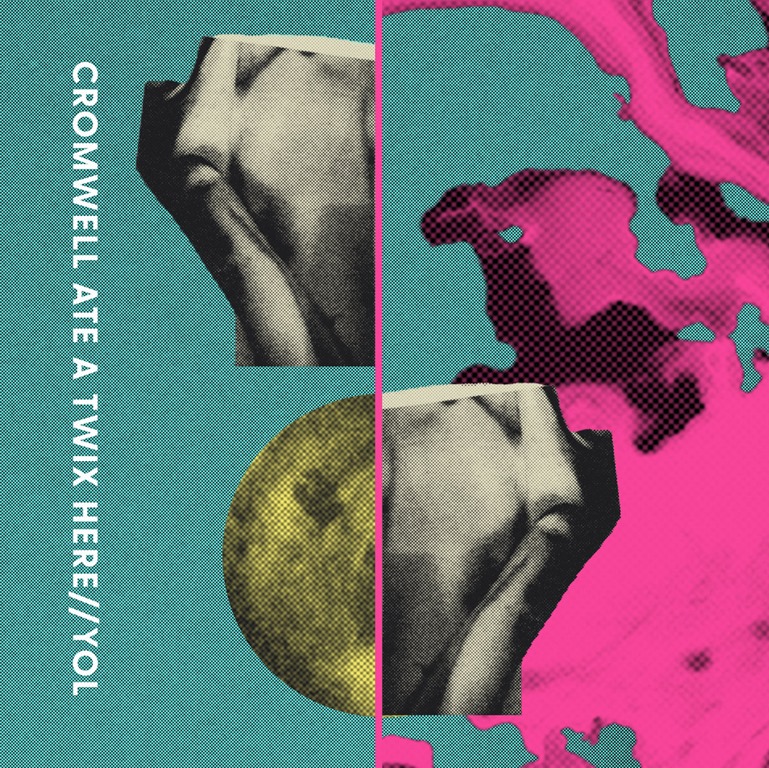
It’s certainly been a while since we last heard from Justin Watson, the epically-bearded being who formerly ran the Front & Follow label, but here he has temporarily resurfaced as one half of the absurdly-monikered Cromwell Ate A Twix Here on a split release with underground noise legend YOL, released by Spanish cassette label Strategic Tape Reserve. As such, even before hearing a sound, one can predict that this is destined to be unpopular – by which I mean an ultra-cult release for a microniche audience – or, put simply, the noise scene.

The bio for Cromwell Ate A Twix Here tells us more about what they aren’t than what they are, hammering home that ‘Justin ran Front & Follow and definitely doesn’t now. It’s over. He’s half of MORE REALISTIC GOALS, a third of The Incidental Crack and a quarter of The Watson Marriage Experiment (2006-)’. So in the wake of its brief revival for the charity fundraising Rental Yields series of complications not so long ago, we can be confident that the lid is now firmly nailed onto the coffin of F&F and even Dracula wouldn’t resurrect the label’s activity. But this is how it tends to be with those of a creative bent. They simply can’t not do anything forever. It’s not even an itch: it’s a compulsion. ‘Fragile’ occupies side one, and is eighteen minutes of expansive, filmic music, constructed around quavering, wavering drones, sparse pseudo-strings and soft, supple abstractions by way of an accompaniment to a somewhat surreal spoken-word narrative about… what is it about, exactly? Death, yes, but also a new relationship, interaction… The music fades into the background during the narrative, rising to the fore between passages. David Yates’ delivery is natural, down to earth, friendly, even, and is fitting for a tale which is largely given to quite mundane details before shit gets weird at the end. The audio begins to grow more unsettling, a shade disturbing around the seven-minute mark, and things only get darker thereafter.

And then there is eighteen minutes of Yol, which is pure derangement. Anyone acquainted with his work will be expecting nothing less. It begins with him stuttering and choking in convulsions over a mess of noise about ‘wheel of life, wheel of cheese’, and he yelps and roars, sounding as if he’s utterly possessed or dying, spasmodic ranting overloading over a horrific mesh of feedback and sonically rough terrain. You can practically hear your speakers wilting as the blasts of distortion scratch and scrape and glitch and burst and grind and buzz like so much sputtering, sparking, damaged circuitry. The whole thing is deranged, although it’s no less deranged than Liz Truss’ famous proclamations about cheese or any statement issued by The Whitehouse in recent weeks. He knows this, of course: however insane his work sounds, there are political undercurrents and a certain knowingness to his brand of frenzied avant-gardism, as evidenced on viral cats and dogs (2021).

The fact that this is just short of twenty minutes of a man yelping and barking and seemingly losing the plot before a microphone, and yet making more sense than five minutes spent perusing the news or social media tells us where we are in the world right now.

The two sides of this split release may be very different, but the contrasts are complimentary, and in combination, offer a welcome excursion beyond the everyday madness we’re living through, offering insights into rather more specialist madness instead. But this is artful madness, or good mad, or something. These guys won’t wreck the economy, invade or annexe your country, or fuck you over. They’ll just be over there making some weird noise. I’ll be over there with them, and you’re more than welcome to join us.

AA

a4054677057_10

17th March 2025

Christopher Nosnibor

Deborah Fialkiewicz has been busy again, recording and releasing her latest offering in a compressed timeframe. Deborah Fialkiewicz is a low-key and predominantly ambient set, comprising twelve sparse, minimal works which rumble and eddy around the lower reaches of the conscious mind.

There are beats, but they’re way off in the background, as is the rest of everything. The restraint shown on ‘summer mantra’ is impressive: it’s the musical equivalent of holding your breath for five minutes. ‘the lief’ is rather more structured, centred around a descending motif which tinkles and chimes mellifluously, guiding the listener down a delicate path which leads to a murky morass of unsettling sonic experimental in the vein of Throbbing Gristle. The crackling static and muffled, impenetrable verbal mutterings of the ominous title track is exemplary, and it makes for uncomfortable listening. A hovering, quavering, UFO-drone hangs over words which are indecipherable, as if spoken from the other side of a thin wall – but their tone is menacing, and everything about this tense experience feels uncomfortable.

The circular, rippling waves of ‘star lady’ offer some respite, but it still arrives with strong hints of Throbbing Gristle circa Twenty Jazz Funk Greats and Chris and Cosey’s Trace, but also alludes to both Kraftwerk and Tangerine Dream. Thinks take a turn for the darker on the swarming drone of ‘Corpus’, which feels angry, abrasive, serrated edges buzzing attackingly, a thick rippling dominating like a helicopter directly overhead. In the present time, I can’t help but feel twitch and vaguely paranoid hearing this, even as it descends into a lurching, swampy nothing, because ‘bloodchild’ goes full churning assault, an echo-heavy wall of noise that cranks the oscillators this way and that, churning the guts and shredding the brain in a squall of resistor-driven frequency frenzy.

‘norther star’ is particularly mellow, as well as particularly tied to vintage beats and rippling repetitions, a work that’ simultaneously claustrophobic and intense. Synth notes hover and drift like mist before the next relentless, bubbling, groove. ‘widershin; is static, a locked-in ripping of a groove. And then there is the thirteen-minute ‘timeslip’, which marks an unexpected shift towards that domain of screaming electronic noise. The fact I found myself zooning out to the thirteen-minute monster mix of ambience and noise that is ‘timeslip’ is testament to the track’s immense, immersive expansions which massage and distract the mind.

Genetic Radio i.d delves deep into the electronica of the late 70s and early 80s, embracing the points of intersection between ambient and industrial, early Krautrock and BBC Radiophonic Workshop, while at times venturing into the domain of noisemongers like Prurient. It’s a harsh, heavy, extraneous incursion into the quietude of daily living, and it’s a sonically gripping and ultimately strong work which stretches in several direction simultaneously.

AA

AA

a1096582352_10