Posts Tagged ‘Noise’

Hominid Sounds – 30th May 2017

Christopher Nosnibor

Matt Cargill’s project still has one of the best names around: it’s not only an example of punning genius, but also one of those band names which sets expectations as to what you’re going to get musically. I say musically, but that’s very much a matter of perspective. SATFD don’t make music in the conventional sense, and Molar Wrench is as sonically challenging as any of the previous releases SATFD have put out. On this outing, they’re joined by Dutch/British free jazz unit Dead Neanderthals, to form what they describe as ‘the ultimate tag team of the murky European underground’.

Given that the two acts featured on a split release last year, this collaboration seems like a logical progression. It certainly marks a departure for Sly, in that the trademark subterranean grind of endless, dark drones and unsettling atmospherics is matched with and at times consumed by the maddest jazz shit going.

The album contains just four tracks, but packs in a hell of a lot of racket. It all kicks off with a frenetic, a wild, free jazz cacophony, a melange of clamorous, ultra-hyped parping horns, sonorous lowed drone and is dominated by truly frenzied, cacophonous bent. Circuits fizz and hum while the percussion thrashes and crashes arrhythmically, throwing the listener around with reckless abandon a rollercoaster of tempestuous sonic mania.

There are two ‘Muck Man’ tracks and the first is ten minutes of slow, throbbing churn made up primarily of low and mid-range sludge, the drums holding a ragged but hard rhythm amidst a maelstrom of thick, dirty, pulsating noise. It’s almost a riff, but more a succession of waves in a rhythmically surging sonic tide, a with the density of liquid mud. Immersive would be one word.

‘Muck Man Part 2’ is altogether more low-key, a dark, atmospheric piece that manifests as a prehistoric sulphur swamp in sonic form. Slowly, the murky drift builds to a screaming tempest of noise; the brass develops from a low drone to a shrill shriek of pain and the drumming transitions from a sedate trudge to an explosive riot of noise, abrasive blasts of snarling electronica and whatever the fuck else bursting in waves of sonic shock.

The title track closes off the album, and it’s an eleven-minute trudge that calls to mind the claustrophobic brutality of Swans’ ‘Young God’ EP. The plodding percussion provides a doomy and tense prickling spine to the oppressive grind that lumbers on for what feels like a skull-crushing eternity.

There is a definite structure to Molar Wrench, in that it starts off wild and winds down to a grinding crawl, but it by no means feels like the energy displayed at the outset dissipates as the album progresses. It’s more a case that having exhausted the listener with frenetic kinetics and gone all-out on the attack at the front end, the album seeks to bludgeon the listener into submission in the later stages. And highly effective it is, too.
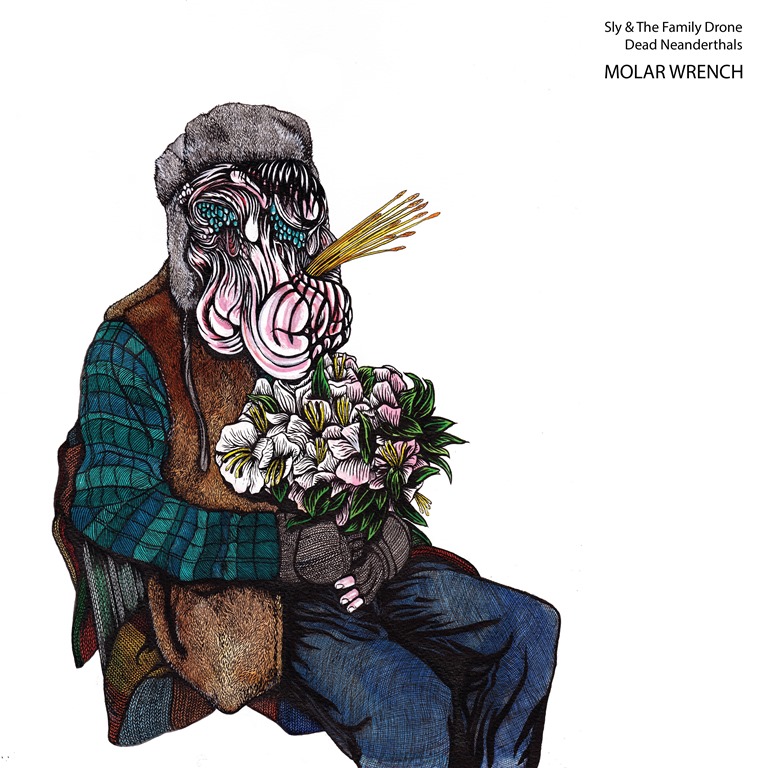
cover

Christopher Nosnibor

“I’ve fucked my wrist – chipped a bone in rehearsal.” I’m talking to Dom Smith, drummer with Seep Away. His band are due on in ten minutes. Should he even be playing? He’s not exactly a gentle percussionist. But as he and the rest of the band take to the stage to Hole’s ‘Doll Parts’, it’s clear he’s adrenalized and up for going all out. Screamer Jay is kitted out in full mini-skirted drag and looking killer. Seep Away get harder, heavier, denser and louder with each outing, and tonight, Jay is even more manic and confrontational than ever, writhing on his knees among the front rows.

DSCF0035[1]

Seep Away

Brooders might have a tough act to follow, but if it bothers them, they’re not showing it. They may be young – they certainly look it – but this power trio are solid as they come. They knock out some driving grunge tunes, which are dark, dense, and weighty, but also so much more. They pack in some neat and hooky melodies alongside the chunky, bass-driven noise: in many respects, they’re the quintessence of 90s alt-rock, and they know how to nail down a hefty Nirvana-inspired riff.

DSCF0061[1]

Brooders

Hands Off Gretel have drawn a decent crowd, particularly for a Thursday night that’s blessed with beer garden weather. In fact, it’s a battle to get a decent spot down the front on account of the clamour of folks with their phones out, filming. It’s not hard to see – or hear – why: they’re a killer live band, who combine a raw, ragged energy with a musical tightness. And there’s simply no sidestepping the appeal of Lauren Tate.

DSCF0097

Hands Off Gretel

I’ve been criticised on occasion for commenting on the physical attributes of women in bands, because despite the fact I’m equally likely to comment on the physical aspects of a man in a band, it’s not really the done thing. But Lauren Tate doesn’t so much invite the eyes to focus on her, but demands it. If the powder-blue hot pants and matching top, accompanied by knee-high socks, is sort of cutesy-sexy, the heavy eye makeup, smeared lipstick and truly ferocious full-throated vocal is terrifying. It’s the perfect paradox of appeal and repel, the cheerleader slut who’ll murder you and play with the blood. This, of course, makes her the embodiment of the grunge style; the oppositional elements of quiet / loud, melody and discord, introspection and screaming rage. And the songs encapsulate all of this perfectly. Yes: let’s not forget the songs, or the rest of the band. Both are equally essential to the band’s appeal.

DSCF0112[1]

Hands Off Gretel

Tonight, airing a set built around debut album Burn the Beauty Queen, the band positively tear into the guts of those songs, channelling every ounce of fury into those angst-filled aural assault. Dropping ‘Be Mine’ as the second track of the set, it’s a shuddering, full-on bass-led attack. ‘Bad Egg’ is served with a huge dose of venomous self-loathing, and ‘One-Eyed Girl’ is pure Live Through This era Hole – although unlike their forebears, Hands Off Gretel don’t sound ropey, and you can be pretty confident they’ll make it all the way through the set. And by the end of the set, everyone’s a sweaty mess, uplifted by the joy of catharsis.

Drid Machine – DRM27 – 21st March 2017

Christopher Nosnibor

Having looked over all of the tabs I had open on my computer I had to pause the disc three minutes into the first track. I was confused, I was convinced there were two songs playing at once – one woozy ambient piece, drifting and warping, and a whacky jazz-grunge effort. My head was beginning to spin. Jungle drumming and scrawking bass undulations collide with tearing guitars, weird synth incidentals and all kinds of other extraneous sound effects to create a sonic experience that’s quite bewildering on ‘The Approaching of the Disco Void’. It’s ten minutes of musical mayhem.

The golden oriole is a type of bird, binomially known as oriolus oriolus (which is considerably more pleasant-sounding than the ‘turdus’ genus of the thrush species). According to the go-to source for all information about everything, the call of this extremely common migratory bird ‘is a screech like a jay, but the song is a beautiful fluting weela-wee-ooo or or-iii-ole, unmistakable once heard.’ There’s nothing beautiful or fluting about this freeform chaotic din. This is not a criticism: freeform chaotic din is better than good with me.

The album’s shortest track, ‘The Chrysopoeia of the Trilithon Ass’ is also it’s wildest, a Beefheartian frenzy of discord and multiplicity (I’m recalling the traumatic experience of hearing ‘Trout Mask Replica’ for the first (and only) time, a record that sounds like standing in a hallway listening to seven people, all drunk, playing different tunes in seven different rooms which all open onto said hall.

The hectic percussion drives through a wall of feedback and a grinding, deliriously unpredictable, stabbing bass on the third and final track, ‘The Pyrite Wink’. It’s a nine-minute exercise in working a wonky groove with relentless and increasingly wayward energy, until it collapses in a crackle of overdrive and howling trails of feedback.

As freeform chaotic din goes, Golden Oriole stands as a cacophony of quality, but likely best absorbed in small doses.


golden-oriole-golden-oriole

On Saturday, June 13 Ellesmere Port noise-punks, Saltwater Injection will release their new anti-anthem, ‘Cuntryfile Part 3’ into the world.

Inspired by Bleach-era Nirvana, and Black Flag, Joe Nuttal (bass) and Paul Soames (drums, vocals) are ready to smash up your expectations of what to expect from a two-piece band.

As the press release puts, it, ‘this is quite frankly, pure and proper balls-to-the-wall heaviness, and we hope you’re ready?!’ and yes, it’s as gnarly as fuck: just the way we like it here at Aural Aggravation.

Recorded at The Vic Studios in Wrexham with Michael Harmina (Def Neon), and produced by Addz Milner (The Ladder), the track is a vehicle for the band’s aggression, and an outlet for their defiant and angry creation. Vocalist Paul Soames comments: "We needed to vent our anger at the terrible actions at the policies that we can see ruining our country, and at the strongly unstable people putting those policies in place."

Formed in 2013, Saltwater Injection have toured with the likes of Baby Godzilla, Blitz Kids and Sham 69.


Ironically, this news piece is longer than the song itself, which you can get your soon-to-be-bleeding lugs round here:


25th April 2017

Christopher Nosnibor

National Instruction is Soma Crew’s debut album. This is something of a technicality, as they rebranded shortly after the release of Another Dead Insect in 2015. And while all of the defining features of their previous incarnation remain, Soma Crew, having solidified with their current lineup, can be seen to have made marked progress since then.

The sonic haze which hangs heavy over all of their previous recordings and which defines their live sound is present and correct. On National Instruction, there’s also a wilful raggedness to the performances, with guitars and vocals titling off-kilter every which way, often to quite disorientating effect. It’s also by far the best-realised representation of what Soma Crew are about, showcasing a dense, murky sound, and a climax-centric approach to forging layered songs which plug hard at a single cyclical riff, nailed tight to a simple, repetitive drum pattern. Yet it’s also the work of a band who are evolving, and National Instruction marks a clear progression from their Soma EP release last autumn.

Si Micklethwaite’s vocal style isn’t conventionally tuneful, but then a melodic attenuation is by no means a prerequisite for singing in a rock band. Given the atonal drone elements of Soma Crew’s compositions, which are more focused on creating an atmospheric dissonance than a technically precise, melody-driven musicality, it works, and, bathed in reverb and a kind of fuzzy-edged soft-focus, he sounds more comfortable than on any release he’s featured on thus far.

‘Got It Bad’ features what is probably one of their most overtly catchy choruses to date, with a more clearly defined structure than any previous song – but it’s perfectly offset by a guitar line that heaves off to the left during one of the chord changes which launches said chorus. The nine-minute ‘Pyramids’ finds the band locking into the kind of groove they work the best. A spindly echo-drenched lead guitar wanders, spider-like over a chugging rhythm and spare, motoric beat that typifies their slow-burning brand of Black Angels-influenced psychedelic rock. Elsewhere, ‘Dangerzone’ is tense and angular, with eddying swells of abstract sound and feedback building into a cyclone of immersive noise close to the end. This is something they’ve got a real knack for.

Having heard a fair few of the cuts on Natural Instruction played live, it’s gratifying to observe just how well they’ve replicated the spirit and energy of the live sound on songs like ‘Remote Control’, which carries a shuddering, ramshackle Fall-esque vibe within its jagged two-chord battery. The album’s second eight-minuter, ‘Westworld’ starts of slow, sedate, but simmering: it’s never a case of if it’s going to break, but when, and while maintaining a pedestrian pace, it’s almost halfway through before the drums thud in. And then the guitars get up the volume… and then… and then… By the end, it’s still plodding away but the layers have built up and it’s a big old racket.

There’s something of a trickle toward the tranquil on the last two tracks, with the closer, ‘Maps and Charts’ being a particularly sedate – not to mention accessible indie tune. But rather than being an anti-climax, it reveals newly emerging facets of the bands, perhaps hinting that future releases will see them further extend their range.


Soma Crew - National Instruction

Play Loud! Productions – PL063LP

Christopher Nosnibor

Mark E Smith is not Damo Suzuki. Only Damo Suzuki is Damo Suzuki. Damo Suzuki requires no introduction, of course. However, his vast and almost immeasurably influential output seems to exist almost in the ether, his own name and that of CAN being names to conjure with, but perhaps carrying more connotations than actual connection.

Suzuki’ status as an innovator and a one-off requires no comment, either. The fact he’s been going for multiple eternities, and continues to perform sets that are completely off the wall means his reputation remains unharmed, and this release – one more addition to already impressive body of work which essentially stands to define Krautrock – won’t dent that.

As the title suggests, this set was recorded live at Marie-Antoinette, Berlin, Germany, on 24th November 2011. Damo Suzuki was joined on stage by a stellar lineup, consisting of Dirk Dresselhaus (Schneider TM, Angel) on electric baritone guitar and effects; Ilpo Väisänen (Pan Sonic, Angel) on electronics and effects; Michael Beckett (kptmichigan, Super Reverb) on electric guitar and effects; Claas Großzeit (Saal-C) on drums and percussion, and Tomoko Nakasato (Mio, JINN) on dance and electric rake. No, I have no idea what an electric rake is, but on vinyl, each of the album’s half-hour tracks occupies a side of the two-disc set.

Ordinarily, live releases take the best cuts, or the single best night of a tour. Dirk Dresselhaus’ comments which accompany the release suggest that this recording doesn’t necessarily follow that rule, and instead presents an honest account of a singular event: “I find it fairly difficult to say something about how the music in this concert came about, cause we didn’t plan or rehearse anything and hardly were able to hear each other on stage. Wherever it came from, the energy and course of this concert is very much based on group dynamics and an almost telepathic sort of communication, like a swarm of fish. When I mixed the sound later on in the studio I discovered a lot of weird things on the separate tracks: for example Kptmichigan’s guitar signal is changing level for about +/-30 dB once in a while which is a lot and was probably caused by a broken microphone cable. Luckily the fucked up parts made the sound even heavier and more distorted instead of destroying it,” he says.

At times the lack of planning and rehearsal is apparent, but in the main, Live at Marie-Antoinette captures a collective who are capable of a rare musical intuitiveness. And whatever it may have sounded like on stage, and regardless of the occasional stab of feedback and errant extraneous intrusion, the recording captures a tense, atmospheric musical soundscape which transitions across the various parts with a creeping stealth.

To draw attention to any one passage would be to entirely misrepresent the overall arc of the performance. From the tribal chants to the undulating synth-like tones to the slow-building crescendos and the sustained sonic blitzkriegs which absolutely tear through the curtains of sonic decency, each and every aspect of the set is integral to the overall experience, which is built around a series of ebbs and flows, often rising from next to nothing to a whorling tempest quite unexpectedly. And it’s true that the colossal peaks are accentuated by the shuddering volume and crackling distortion they produce. Sometimes, fucked up is good.

This is all part and parcel of the live medium: while the studio affords total control over every aspect of every element of the sound, when playing live, anything can happen. The real test of a band’s capabilities is how they deal with the unexpected eventualities and how they deliver the show to a crowd under adverse circumstances. There is no audience sound on Live at Marie-Antoinette, which means it’s impossible to gauge the audience reaction to the show. But the sound balance suggests the audience were subjected to a punishingly loud and challenging set. It’s probably one of those rare live albums where the recording is more pleasurable than the actual event.

http://playloud.org/archiveandstore/trailers/damosuzuki/trailercode.html


damo-suzuki-sound-carriers-live-at-marie-antoinette

Not so long ago, we streamed the video for ‘The Mound’ from the debut double-A-side single by Girls in Synthesis. We’re now pant-creamingly excited to be able to share its partner, ‘Disappear’. Yeah, we like riotous, scuzzed-out punk noise, so get your lugs round this:

Helen Scarsdale Agency – HMS039

Christopher Nosnibor

We live in a world of noise. We live in a decaying, post-industrial world. The so-called developing world is on an inexorable trajectory toward the same calamitous end, a world of tertiary industry and a level of noise – literal and metaphorical – which the framework of postmodern hinted at and but failed to fully appreciate the totality of its eventuality. To contextualise Natural Incapacity requires a certain grounding in postmodernism and the idea of a society defined by information overload. But, to reframe my comment on the shortcomings of postmodern theory, it essentially fails to account for the impact of the culture on those who find themselves existing in that culture. What have we done in making such technological leaps with so little consideration for the psychological consequences? Has the human mind evolved at a pace correspondent with the technologies we’ve made? What does the infinite noise actually sound like in the middle of that blizzard of information?

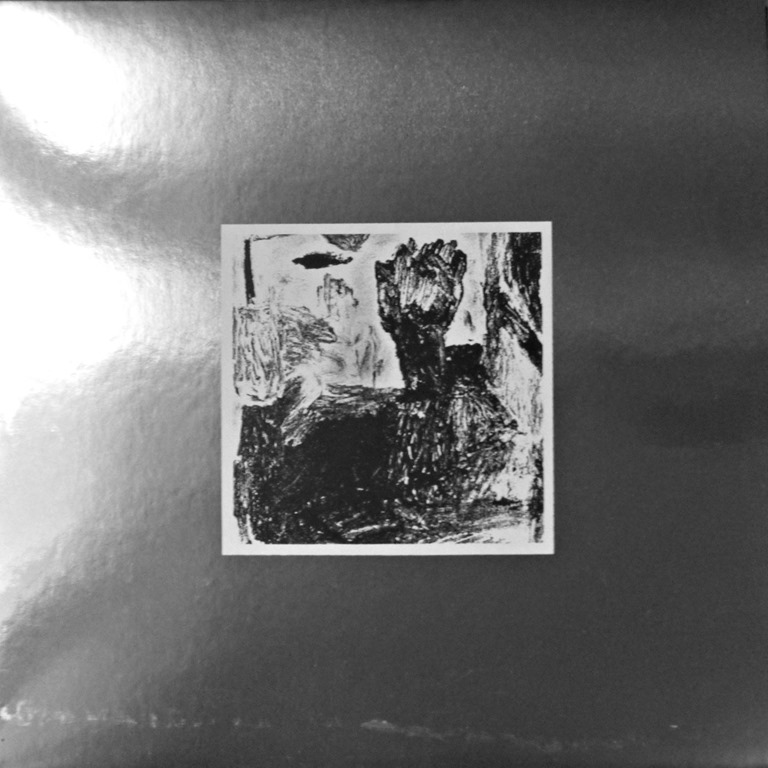
Natural Incapacity is an immense work, with a total running time of some two and a quarter hours across its two discs. Housed in a hand-rusted cover produced by Jim Haynes, this is serious art. The album soundtracks not the external noise so much as it does perhaps the internal noise, and the experience of the collapse of everything into an amorphous cyclone of everything happening all at once. The human brain simply isn’t built for the world in which we find ourselves. There’s so much talk of ‘white noise,’ but ultimately, total overload is an entirely different kind of noise, an explosive noise, simultaneously conveyed as the sound of collapse, of panic, anguish, and screaming despair.

Disc one is the shorter of the two, with has a running time of an hour and two minutes. A dark, quiet rumble soon breaks into a dense, harsh wall of sound. Tidal waves crash and planets explode in slow-motion, creating layer upon layer of textured noise that pounds the senses relentlessly. This is heavy, brutal stuff. The violent turbulence is punishing, effecting a psychological disturbance. The moments of calm are but brief and heavy with tension, the suspense of how and when the next wave of noise will erupt. And erupt it invariably does, tearing the fabric of the atmosphere, an annihilative volume of atomic force.

There’s no obvious shift moving onto disc two, but the effect of so much oppressively dense, murky and irredeemably inhospitable noise is cumulative. As the time crawls on, one senses the walls slowly moving closer, the light and oxygen gradually being pushed from the room and the life slipping from one’s soul.

Hums and whirs offer cold comfort in this funnelling fermentation of foul decay as factories collapse in slow-motion under the weight of so-called progress. The absence of vocals renders this even more disturbing, in that there are no obvious signs of human life to be discerned in the churning melee. As such, were reminded of our ultimate obsolescence, and there can be no bleaker prospect than that. Natural Incapacity is nihilistic in the absolute, a soundtrack to the end of time.


Relay for Death - Natural Incapacity

The Helen Scarsdale Agency – HMS040 – 2nd December 2016

Christopher Nosnibor

My first encounter with the work of Jim Haynes (the musician, not the writer who rose to a degree of cult prominence in the 1960s) came when The Decline Effect landed with me in 2011. Haynes’ territory is the dark, the ambient, the subterranean, but Throttle and Calibration is an altogether harsher work, which emerged from Haynes’ 2015 residency at MoKS in Estonia, where he would collaborate with and contribute to Simon Whetham’s Active Crossover series.

As the blub accompanying the release on the label’s website explains, ‘Throttle and Calibration is the first in a series of albums that find Haynes digging through the Active Crossover archive and grotesquely exaggerating the details into exploded compositions of volatile dynamics, nerve-exposed dissonance, caustic shortwave signal abuse, and a considerable amount of scarred metal. Marked as one of the more discordant works to date in Haynes’ career, Throttle and Calibration finds company near the atonal compositions from Hermann Nitsch and the sour, industrial collages that pock the Nurse With Wound catalogue. Previously released digitally on Crónica, Throttle & Calibration is fleshed out with an additional 20 minutes of material.’ This time around, the augmented digital release is also accompanied by a cassette edition. But, sadly, no vinyl, and no CD. Sadly because

As the blurb which accompanies the release intimates, discordant is it, and Throttle and Calibration does, most certainly, slot into the space where industrial and avant-garde intersect, and this reissue, expanded to eight tracks from the original five, is an essential work within its field. The album finds Haynes in exploratory mode, and he delves deep into the granular elements of sound over the course of this challenging work.

A long, buffeting rumble, like a distant train or the sound of wind on a mountain-top (if there is no-one there to hear it, does the wind still roar around the rocks?) is the first sound. The harrowing bleakness is but short-lived. Explosive blasts of noise rip and tear like detonations, atmosphere and ear-shredding eruptions. Small sonic ruptures are rendered at such volume and intensity as to inflict sensory and psychological.

What exactly is this? The Arctic wind ripping through an empty water tower? Or the apocalypse? It could be either, and may be both. It’s disorientating as well as full-on. Throttle & Calibration is an album which places sound under the microscope, so to speak. It’s not microtonal, but it is microcosmic, at least on the one hand. But in placing its focus on a small corner of the scene, Haynes then blows it up to A3 and zooms in 500%. The effect is terrifying, bewildering, intense, and the results are immense. In Haynes’ hands, mundane sounds are reforged and take on sinister dimensions. His addressing them from alternative perspectives – up close, amplified – is the key to building a new understanding.

A quiet rattle is annihilated by a roar which melts all definition into a whirling multitextural aural vortex in ‘Tabula Rasa’, and over the course of the album, Haynes repeatedly drags the listener through a succession of vertiginous sonic sinkholes. Single impacts – origins unknown and undisclosed – resonate and decay slowly n heavy atmosphere. The spoken word introduction to ‘It Doesn’t Matter’ sets an eerie tone, but this again is devastated in a tinnitus-inducing wall of screeding noise worthy of Merzbow at his most brutal.

It takes time and focus to peer through the harsh noise to discern the textures. Like stepping into the dark from a brightly-illuminated interior space, it takes time to recalibrate the senses. There are quieter passages, but they’re no less intense and no lighter in tone. Ominous monotone drones and hums hang for aeons; time is suspended in space.

Neither the full-throttle abrasion nor the shady, moody spells of dank mental torture offer anything by way of respite or levity: Jim Haynes is an artist who dwells in darkness and creates work that ranges from the darkest greys to the pitchest of blacks. Throttle & Calibration stands at the darker, more violent end of the spectrum. Uncomfortable unpleasant, and unforgiving, it’s a well-realised plunge into the bowels of a new shade of, rendered from the terrains of the everyday.


Jim Haynes – Throttle and Calibration

Heavy Baby Records – 21st January 2017

Christopher Nosnibor

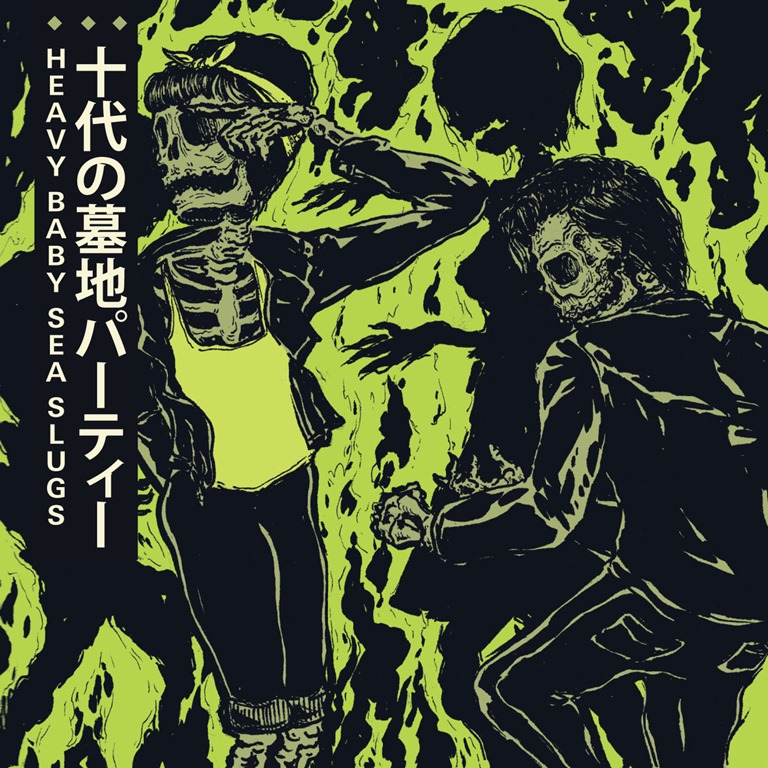
Ok, so I’m not one to judge a record by its cover, but obviously there’s a lot to be said for packaging music in – or with – cover art which reflects the contents in some way. Heavy Baby Sea Slugs’ new offering, the Teenage Graveyard Party EP has artwork which says ‘sixteen minutes of raw, full-tilt sludge-metal racket’, and funnily enough, that’s precisely what it delivers (as one might reasonably expect from a band who previously released an album entitled Fistula Missile and who seemingly enjoy considerably more success in Japan and Taiwan than at home in Texas).

‘King Midas of Shit’ launches the EP with a savage deluge of nasty, gnarly noise, piledriving in at a hundred miles an hour. Talk about a sonic slap round the chops! It’s a frantic, frenetic and stubbornly unpolished aural assault which spits and snarls and spews in all directions.

The title track slows the pace and actually offer some semblance of a tune, with some proper singing and everything – at least until about halfway through when the band put their collective pedal to the metal and thrash their way senseless to the end. Don’t expect any cuddles from the bass-led thunder of ‘Pit Bait’, either. It comes on like a Motorhead 45 being played at 33.

The six-minute closer, ‘Zero-One’ really brings the grind with a downtuned, gut-churning trudge that’s somewhere between early Swans and early Melvins. It’s a gruelling dirge which makes no real attempt to get going, and instead spends is time making threats, with slow, heavy drums, scrawling feedback and yawning bass drone. It’s crushingly heavy, and feels like the soundtrack to an eternity in purgatory.

It may only be sixteen minutes in duration, but Teenage Graveyard Party is a gloriously unpleasant, dirty, mangled mess of noise. Party on, dudes.


Heavy Baby Sea Slugs – Teenage Graveyard Party