Posts Tagged ‘Noise’

Christopher Nosnibor

Leeds’ DIY scene is becoming increasingly adept at turning poky rehearsal spaces into gig venues: it makes sense from a funding perspective, but also means that while conventional scenes are struggling to stay open for various reasons (as often redevelopment as being squeezed financially) and new and niche acts are finding it increasingly difficult to get gigs, the Leeds scene is thriving and as diverse as ever.

I’ve previously sung the praises of rehearsal-room-turned venue CHUNK, and it’s Theo Gowans, who does a lot of the stuff there, who’s behind this evening’s show. Tonight, Mabgate Beach (or Madgate Beach, as the poster has it), tucked away in a corner of an industrial estate in an obscure corner of the city plays host to a brace of Newcastle noisemongers, supported by a brace of very different local supports.

I’d been forewarned that the room was small, but that’s something of an understatement.

Intimate isn’t even close.: it’s about the size of my living room, although it’s still probably a few feet bigger than The Hovel in York’s South Bank Social, which has a capacity of maybe 16. The drum kit and back-line fill most of the room, after which we manage to pack in maybe 20. And the lighting is as minimal as the space, only less consistent.

The Truth About Frank have been knocking around for over a decade now, and Alan Edwards’ sets don’t get any more mellow over time. Kicks off the bill with a riot of samples, the set comprises a single continuous improvised soundwerk, a jarring audio cut-up through which murky beats fade in and out through an ever-shifting collage of noise, creating what cut-up originator Brion Gysin would refer to as ‘a derangement of the senses’. Playing in near-darkness with a pencil beam of light emanating from the arm of his glasses to illuminate his minimal digital kit, Edwards’ stubby nicotine-stained fingers manipulate shapes on a touch screen and jab buttons, and with each prod and poke, more strange sounds emerge, and it’s brilliantly bewildering.

DSC_3262[1]

The Truth About Frank

Things start to feel quite cramped when a full band with bass and two guitars play, and I’m less concerned about site lines for photographs than being smacked by the bassist’s headstock, meaning I’m happy to settle for the second row to observe Loro spin a set of mellow post-rock. It’s kinda standard circa 2004 fodder for the most part, but it’s nice, and with twists of mathiness and jazz without being indulgent.

DSC_3265[1]

Loro

Penance Stare prove to be an absolute revelation. Their recent recordings are a hybrid of ethereal shoegaziness with black metal production values, and while those elements are very much present here, witnessing their colossal noise in such an enclosed space is an incredibly intense experience. There’s ferocious reverb on the vocals, and murky as fuck guitar duels with thunderous drumming. The duo explore some deep, dark atmospheres, too, and coupled with Esmé’s brutal anguished shriek, there are comparisons to both Amenra and early Cranes to be drawn here. Some of the soft instrumental segments are achingly beautiful and affecting, and are invariably obliterated by devastating distortion and howling agony. This is music that reaches deep inside and leaves one feeling somehow altered.

James Watts has more bands and projects than I have albums in my review pile, and having met him and performed alongside Lump Hammer in the summer, I was keen to see how things worked with a different slant and lineup, and an absence of knitted head/face garb. Whereas Lump Hammer ae sludgy and repetitive, Plague Rider mine a seam of pounding math metal, with Watts’ vocal veering between shrieking demonic and guttural taking a shit deep grunt. And what the fuck even is his two-string instrument with some kind of touchscreen attached? In the less-than—half-light, I’m struck by how much Watts resembles a young Alan Moore. It’s so dark, I can barely see the rest of the band to know what they look like, but they relentlessly kick out juggernaut riffs that hammer hard.

DSC_3274[1]

Plague Rider

Technical difficulties struck 15 minutes in, with a power outage on the guitarist’s pedal board bringing a halt to the set, but after a brief intermission they resumed as loud and punishing as before, and then some.

In such a confined space, the effect is staggering: every beat, every chord, lands like a punch to the gut. It’s exhausting but exhilarating.

Christopher Nosnibor

The Wonkystuff nights to date may have been a shade sporadic, but that’s what happens when the organisers have day-jobs and families, and more importantly, what they’ve lacked in regularity, they’ve more than compensated in quality, and that’s a major reason why there’s such a respectable turnout to a gig midweek, mid-January, in York. There’s also the warm, welcoming vibe: these nights may be musical showcases, but they’re also a coming together of an oddball community, where we’re all misfits together and it feels good and feels like home. Tonight’s lineup – as usual – demonstrates John Tuffen’s skill for bringing together acts who provide a satisfying balance of contrasting and complimentary.

It’s the Wonkystuff House Band – a collective rather than a fixed entity, tonight comprising Tuffen alongside Ash Sagar and Simon Higginbotham – who warm things up with a set consisting of permutational repetitions delivered by multiple vocals, delivered in a drab monotone over repetitive beats. Comparisons to Can, Cabaret Voltaire circa ‘Nag Nag Nag’, The Fall, Flying Lizards, Girls vs Boys, Young Marble Giants, and the more contemporary Moderate Rebels all make their way into my notes as I watch them crank out vintage synth and drum machine sounds. Cyclical bass motifs and whizzing diodes fill the air as they sit and twiddle knobs and read lyrics from clipboards and the historical leaps into the present for a while.

DSC_3198[1]

Wonkystuff House Band

The start of TSR2’s set crackles and pops fireworks. The trio hunch over customised kit with wires all over to create warped undulations and machine gun fire beats that batter the speaker cones. The set builds into a dense, murky trudge. The second track, ‘What will be’ is more co-ordinated than the opener, and is solidly rhythmic, mechanoid and spacious, and metamorphosises into some kind of glam reimagining of Kraftwerk via DAF. Heavy echoes and tribal beats dominate the third track, and they very much find their groove at this point, at least for a spell, before the construction grows shaky despite solid foundations. Perhaps it’s the sheer ambition of layering up so much at once that’s difficult to keep together. Despite this, the discord and dissonance are part and parcel of an intriguing set.

DSC_3201[1]

TSR2

Rovellasca takes the stage, quietly and understated and stands behind a bank of kit. So far, so standard. The set begins with deep, dark, rumblings, and very soon builds into something shatteringly immense. It’s dense. It’s loud, and fills the room like a thick, suffocating smog. The sound is thick, immersive. Time passes. Unexpectedly, elongated mid-range notes sound out and the underlying dense noise builds. I’m no longer listening: my entire body is enveloped. This is the effect of sonic force. Noise wall without the harsh. Burrs of static, pink and brown noise lurk in the immense billowing noise. The shifts are subtle, and gradual, but present over the course of the single, continuous half-hour piece. People start to become visibly uncomfortable after a time others vaguely bored. I’m loving it, and could listen all night. A slow fade to finish. The hush is deafening.

DSC_3204[1]

Rovellasca

It’s a hard act to follow, but See Monstd – the new musical vehicle of radiofreemidwich’s Rob Hayler is an inspired choice, in that it represents something completely different that thus prevents any risk of comparison. There’s a lot going on here: the set starts with a sample, then breaks into what my notes describe as ‘wtf noise’. It subsequently settles into heavy harsh ambience, with dense, grating drones providing the body of sound, with swerves off trajectory for spells of audience participation, with a phone being passed around for members of the crowd to repeat lines from the sheets circulated prior to the set. This is one of those performances where you never know quite where it’s going to go, and is all the better for the element of unpredictability.

DSC_3212[1]

See Monstd

And this, in a nutshell, is everything that’s great about the Wonkystuff nights.

December 2019

Christopher Nosnibor

Ukranian industrial duo Kadaitcha, consisting of Andrii Kozhukhar and Yurii Samson, have stepped up a gear for their fourth album, Tar, which follows Southern Phlegm, which landed at the front end of the summer. It’s an expansion in every sense: sonically, it displays a broad palette, from barely-there ripples and clicks to all-out abrasion, with all shades in between, and with seven compositions, ranging from six-and-a-half to thirteen-and-a-half minutes in duration, there’s a lot of room in which to venture on an exploratory journey.

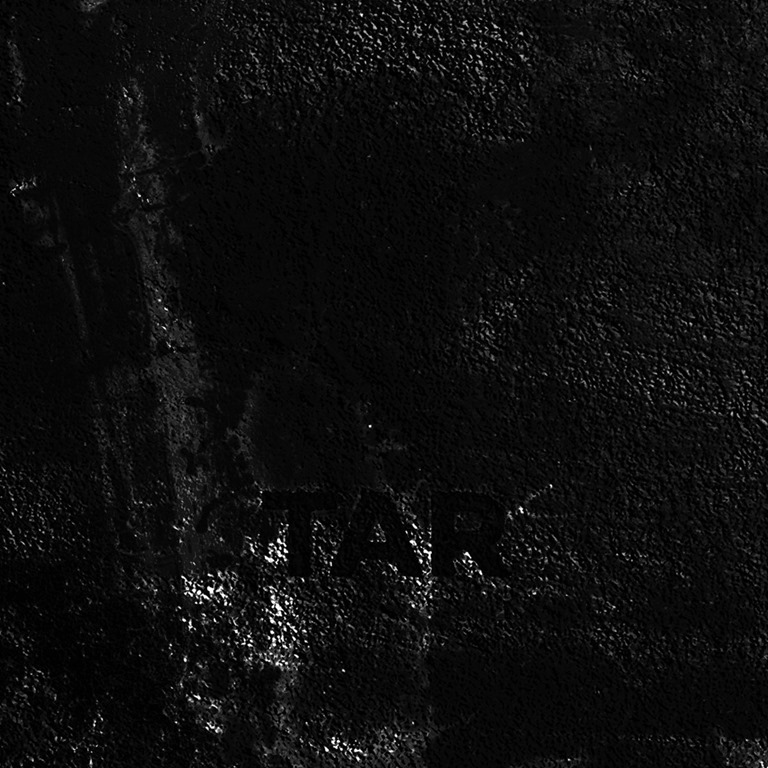
They describe Tar as their ‘most powerful and elaborate release so far’, and there’s a story of sort behind it, as Andrii explains: ‘[The] album cover is based on the images from the series APEIRON by Ukrainian photographer Maxim Dondiuk. It’s a series of scanned photo negatives found in the Chernobyl exclusion zone, which were remaining there lost and forgotten for over 30 years, being subject to radiation and forces of nature.’

The images, available on Dondiuk’s site are disturbing and otherly, and convey more about the horror of the Chernobyl catastrophe, an event on an environmental, ecological and human scale that still has yet to be fully assimilated and that has, globally, faded into the annals of time for many, than any narrative possibly could. Tar effectively provides a soundtrack to these images. The album has a discernible arc, which transitions and deteriorates into ever-deepening distortion and degradation.

Spacious, atmospheric electronic layers hover and cascade around sparse desert guitar twangs at the start of the first piece, ‘Idle Hands’, before mangled chords, overdriven and distorted, crash in. ‘2219 F’ also collides soft, semi-ambient soundscaping with crushing wall-of-noise guitar screes that come on like an avalanche and devastate everything in their wake. And yet things are only just beginning to take shape: this only foreshadows the aural challenges yet to come. ‘Ran’ brings pulverizing rhythms and a deluge of noise in an altogether more overtly ‘rock’ format, and it’s got tension and attack, and marks the first stage in the transition toward a harrowing mess of ugly noise.

There aren’t many vocals on Tar, but when they do enter the mix, they’re gnarled, dehumanied, and monotone: ‘Eclipse’ is Throbbing Gristle on a doom-infused downer: a persistent electronic throb provides the backdrop to a detached, dehumanised vocal wheeze, and ‘Serpent Hill’s slithers into a murky morass of discomfiture. By the end – the overloading analogue explosion of the 13-minute ‘Yatagarasu’, which calls to mind Halogen-era Whitehouse – it’s a barrage of noise, a clunking beat and something semi-musical plinking away beneath a squall of white noise.

It hurts, but in a good way, a way that conveys damage, devastation, and environmental devastation.

AA

AA

AA

K - Tar

8th December 2019

Christopher Nosnibor

The latest release from Yorkshire electronic noisemaker Foldhead comes with no information whatsoever. It features just one track, and laser synth sounds throb space-age pulsations into a void of distant dissonance and static air. Voices crackle somewhere almost subliminally as if tapping into the mutter line. Change the frequency. Same distorted, indecipherable message. Feedback. Hiss. Hum. Extraneous noise. Sounds like something… something indefinable. Something out of range. Something unsettling. Not painful, but uncomfortable.

At the four-minute mark: silence. Is that a low rumble or simply the heating and my laptop’s hard-drive?

The ponderance is disrupted by crawling, squalling extranea, a mess of feedback and treble, scrapes and hovers, a mid-range, mid-air act of defiance against comfort. The volume takes unexpected incrementals steps upward, while the stuttering rotary stammerings continue to churn and thrum. Faint trills of treble and low-level grinds emerge and fade. The swell of sound is increasingly unsettling as the volume and density increases… ad then, an abrupt end. Silence. This is how it ends. This is how everything ends.

Now, I like noise, but am often relieved in some sense when it ends. Foldhead’s latest isn’t as oppressive as that, but there is a certain sense or the pressure lifting after the end. It may only be ten minutes in duration, but Radio Dust MAG 4.wav has a certain sonic intensity from which there is no escape until that silence descends.

AA

Foldhead - Dust

Basement Corner Emissions – 28th June 2019

Christopher Nosnibor

For those outside Ukraine, and those who aren’t completely immersed in the most underground of underground scenes, few are probably aware of the fact there’s some seriously good noise shit emerging from Ukraine right now. And Portland, Oregon, US, too, on the strength of this release.

This split release between Vitauct and Crepuscular Entity is a monster, and one which demonstrates that there’s contrast and variety within the field.

The first piece is a seven-minute wall of noise courtesy of Crepuscular Entity. There may or may not be distorted vocals screaming low in the mix of a blistering white-noise assault. Noise doesn’t get much harsher than this, and everything is total overload. But there is texture, if you listen closely enough – if you can bear to. It’s not quite Harsh Noise wall, but it is a wall of harsh noise.

Vitauct’s ‘The Abominable Mechanism’ combines squelchy electronics with a thumping mechanical rhythm, the sound of a machine grinding and pumping away. Distortion and decay enter the equation at some point, upping the intensity. In context, however, Vitauct’s contributions are light relief against the relentlessly abrasive shards of pain served up by Crepuscular Entity: ‘Electrical Storm in an Electrical Storm’ is full-treble pain, an amorphous mass of blistering hiss with no discernible form, while Vitauct offers up something more overtly rhythmic. There is nothing accessible, or easy, or comfortable about any of this. It hurts, and it punishes and it fucks with your head. This is exactly what it should do and in the field of power electronics, it’s more sonically articulate than most.

The final track, ‘Madhouse’ is something else altogether: distorted vocals and maniacal laugher against a backdrop of fizzing electrodes and scraping noise. It’s deranged, and it hurts, but this is everything that’s good about it.

AA

Viatuct

It has been a busy year of touring for Daughters, who have recently completed their third and final European dates in support of their highly-praised album, You Won’t Get What You Want (Ipecac Recordings), and today the Providence-born outfit debut their third video from the album, “Guest House."

“It is always exciting to see our work interpreted by talented artists.” says vocalist Alexis Marshall of the A.F. Cortes directed video. “We first became familiar with Andres through his wonderful photographic work. His ability to capture unique moments, often missed by other photographers, is uncanny and we trusted him to be able to bring the same abilities as a director.”

The “Guest House” visual continues Daughters’ exploration into the world of black and white photography and film. Both of the band’s previously released videos from You Won’t Get What You Want, “City Song” and “Less Sex”, used the colour-free palette to create stunning, thought-provoking pieces that played on darkness and light, shadows and shading, to impart a variety of emotions, from the magic of a flickering candle to the beauty of the human form, and with “Guest House,” the exploration of psychological tension.

The “Guest House” video arrives as the band launches a three-week North American tour, kicking off the trek this Saturday with a sold out show at Neumos in Seattle. The tour follows two prior sold out North American outings, a nod to the band’s riveting, and intimate, live performances.

AA

Daughters North American tour dates:

November 30 – Seattle, WA @ Neumos # [SOLD OUT]
December 1 – Vancouver, BC @ Rickshaw Theatre *⁣⁣⁣
December 2 – Portland, OR @ Bossanova Ballroom *%⁣⁣⁣
December 4 – San Francisco, CA @ The Fillmore ^%
December 5 – Los Angeles, CA @ The Belasco Theater +⁣⁣⁣
December 6 – San Diego, CA @ SOMA Sidestage ^ ⁣⁣⁣
December 7 – Phoenix, AZ @ The Pressroom ^⁣⁣⁣
December 8 – Albuquerque, NM @ Sunshine Theater ^⁣⁣⁣
December 10 – Austin, TX @ Emo’s ^⁣⁣⁣
December 11 – New Orleans, LA @ One Eyed Jack’s ^⁣⁣⁣
December 13 – Birmingham, AL @ Saturn ^⁣⁣⁣
December 14 – Atlanta, GA @ The Masquerade ^⁣⁣⁣
December 15 – Tampa, FL @ The Orpheum ^⁣⁣⁣
December 17 – Carrboro, NC @ Cat’s Cradle ^⁣⁣⁣
December 18 – Washington, DC @ 9:30 Club ^⁣⁣⁣%
December 19 – Brooklyn, NY @ Brooklyn Steel ^⁣⁣⁣
December 20 – Philadelphia, PA @ Union Transfer ^⁣⁣⁣
December 21 – Boston, MA @ Paradise Rock Club ^⁣⁣⁣
⁣⁣⁣
^ w/ HEALTH, Show Me The Body
+ w/ Protomartyr, Show Me The Body
# w/ Lingua Ignota
* w/ Lingua Ignota, Haunted Horses
% Merch bundles not available

Christopher Nosnibor

Something is wrong. Seriously wrong. That there is something wrong with the enigmatic Paul T, who is Foldhead, almost goes without saying: purveyor of strange and dark noise via means of a multitude of collaborative projects as well as solo channels, creator of avant-garde visual art, William Burroughs nut, and passionate left-winger, Paul is the epitome of the fringe polyartist who confuses and confounds all things mainstream and normal. These are all the reasons I like the guy and so enjoy collaborating with him whenever we manage to get our shit together. He gets it: he lives and breathes cult and outsiderdom, and has both the means and the theoretical comprehension. Which in the eyes of the many, makes him wrong. He doesn’t fit and neither does his work, and his output as Foldhead is just so much noise to most ears.

The (at least on the surface) inexplicably-titled liveBufferingErrorTimeout (I must clean the black milk with brine) is typical, and wrong on every level. This is electronica that splinters the peripheral senses. It focuses on frequencies that register almost subliminally and that hurt the most, with shards of brain-piercing treble attacking from all sides while whipping whorls of stuttering circuit crackling prod the synapses like needles. It’s a relentless crackle, pop, hiss and fizz, like a firework display exploding inside your cranium exploding over a wash of analogue froth.

Recorded on 19 October 2019, the recording features just the one piece – ‘rotting tongue: nature’s assailed’. It’s as brutal as whiplash and ten times more likely to induce tinnitus, and with a running time of only 7’34” – instead of a classically Burroughsian 23’ that’s more typical, something is very wrong indeed. The noise stops abruptly, and in the absence of information accompanying the release itself, the clue, I suspect, is in the title.

Equipment malfunction or failure is one those things that plagues the recording artist in the digital age. And so what was mapped out to be an hour of racket has emerged as a mere seven minutes; a single rather than an album. But what it lacks in duration, it makes up in pian infliction. A short, sharp shock indeed.

AA

Foldhead - Buffering error

Panurus Productions – 18th October 2019

Christopher Nosnibor

WHELM
verb
past tense: whelmed; past participle: whelmed
engulf, submerge, or bury.
"a swimmer whelmed in a raging storm"
well up or flow.
"the brook whelmed up from its source"

It’s funny: I’d never really considered the true meaning of ‘whelmed’, and I’ve simply used it as a blank space between under- and over- and in some vague and misguided attempt to be amusing on occasions. But the definition provides the preface to the accompanying text for this split release featuring two spectacularly abstruse purveyors of gnarly noise, the latter of the two acts featuring Panurus head honcho (and indeed solo honcho) James Watts with grunts and growls.

The moment I clapped eyes on the name Bodies on Everest it lodged in my brain s one of the best band names going. There are thought to be currently around 200 unrecovered bodies on the world’s highest mountain, and it doesn’t take much searching of the Internets to find a library of images of frozen corpses. As such, the name isn’t only gruesome but highly visual in its connotations. And it’s also incredibly fitting:

Talk about a mammoth build… BoE’s first track, ‘My Mother in the Mountains Affects My Gym Coat at Work’ is a sprawling twenty-minute behemoth that starts gently, atmospherically, musically, with a strolling bass and takes its time to swell into the blistering, raging racket it winds up as, first growing in volume before ultimately being buried beneath the most agonising deluge of extraneous noise. And it’s a glorious tsunami of noise that they bring, with the vocals – and there aren’t many – howled, anguished – buried in the wall of noise as screaming feedback howls over the thunderous bass – it’s around twelve minutes in that I realise that said bassline has maybe only two notes – that grows evermore agitated. And in the end it all collapses into a churning squall of feedback and contact hum.

‘Can Ghosts See Dogs’ brings muffled samples of dialogue into the mix before bringing the gnarly noise centres around a low-slung bass churning out a repetitive groove, over which there’s some psychotic yelling, and‘(Yes)’ follows a similar format, but places the emphasis on loping rums, at least until the bowel-shaking bass loop slithers in at half speed and the percussion recedes.

Th fifteen-minute ‘Kicking my Landlord’ Head In’ goes punky postpunk grind groove while at the same time not exactly deviating from the formula, and it’s every bit as brutal as the title suggests, calling to mind Head of David’s HODICA racketfest.

Lump hammer aren’t a band who provide calm or contrast, serving up five tumultuous compositions built on gut-churning noise. Where do you take such a brutal, squalling grind of bass and drums paired with roaring vocal that veers between growling guttural and howling demonic throat-ruining screams? There’s no answer, really. Lump Hammer are also appropriately named, delivering a brutal bludgeoning in lieu of anything tuneful. The bass dominates the sludge mess, and it is a mess, an overloaded deluge of distortion from which it’s difficult to decipher, well, anything much.

‘Pigfish’ is the first, and clocks in at under three squalling minutes, before they settle into the six- or seven-minute zone. Each track is a lumbering sludgefest, tortured and torturous. Yes, it is all unintelligible raw-throated howling against a backdrop of rumbling bass, crashing rum and discordant guitars. And that’s everything that’ ace about it.

‘Tired’ pairs things back a looong way, trudging through a sparse space while he crawling ‘Manual Labour’ pounds away at a crawl that lands between early Swans and early Godflesh, with a dash of early Pitchshifer thrown in. It’s heavy, for sure.

Closer ‘FFS’ stretches the underlying formula out for almost eighteen minutes. Amidst the bass / guitar sludge that sounds like the grind and scrape of earthworks and some vocals where there are almost decipherable words. Almost. It’s a truly purgatorial noise and fifteen minutes feels like forever at 35 BPM.

This is dingy, dirgy, heavy, and utterly punishing. As such it may be a perverse pleasure, but a pleasure nonetheless.

AA

cover

Christopher Nosnibor

Yeah, yeah, I know it’s not the done thing to review a show you’ve performed at, let alone one you’ve had a major hand in organising and promoting, but what’s not done sometimes just needs doing.

This was a lineup I’d been excited about – seeing it take shape around the initial basic concept of curating a show and giving …(something) ruined – a platform while showcasing other acts we like.

…(something) ruined coalesced into a formal unit following a one-off experimental collaboration back in May following a shout-out on Facebook from racketmonger Foldhead for recommendations for someone to provide vocals to compliment / contrast his wall-of-noise power electronics. My name was put forward by a handful of sonic sadists, and so it came to pass we brought a new level of brutality to an unsuspecting audience at CHUNK in Leeds. The idea for a showcase came before we’d decided anything else. Orlando Ferguson were top of our wants list, and promptly agreed, before we’d even decided exactly what we were doing, both for the gig and as a band. We didn’t even have a name. Truth is, we were deafened and buzzed on adrenaline and beer and before we’d even dismantled the kit, had decided it was going to be a thing.

The rest of the lineup coalesced largely through Paul (Foldhead’s) immense network of far-out acts. This was always going to be niche, an event that was about putting on a gig we wanted to see, regardless of who else’s tastes it would likely appeal to. This is where venues like The Fulford Arms are vital to the arts, and are sadly few and far between. Midweek in York, as long as the cost of paying the sound guy is covered one way or another, anything goes. Selling some pints beats no pints. As a totally underground, completely DIY operation, it’s only this kind of opening that makes catering to more outré tastes and providing a space for artists with a minority appeal.

So we went up first. I was only our second show after all. We’d failed to get the Paul’s visuals projected behind us, so they played on the screens at either side of the stage. Not ideal, not the impact we’d been hoping for, but sonically, it came together, probably.

…(something) ruined

How did we do? Alright, for sure. We’d spent five minutes planning the shape of the set and how it would build over the first few minutes, and Paul’s awareness of my delivery led to a set given to more undulations in comparison to the blazing wall of noise that was the first outing. The broad consensus was that we were brutal, but loud enough? The majority seemed to think so, but no-one fled the venue crying or with their ears bleeding, and I could even hear my own vocals in the monitors for 70% of the set, albeit only when I shouted so hard I felt like my throat would erupt – so probably not. Then again, could we ever be loud enough? Again, probably not. But I did shift a hell of a lot of books.

Primitive Knot, over from Manchester, are showcasing material from the latest release, Puritan. I use the plural because Primitive Knot is a band, although on this outing, it’s just front man Jim doing the work and creating the sound of a full band. It’s impressive to witness him playing synths and churning out grinding guitars over sequenced bass and drums, while also performing vocals.

DSC_2199[1]

Primitive Knot

Said vocals are often single words, shouted, with heavy echo, reverberating into a churn of metallic overdrive, repetitive cyclical riffs, strongly reminiscent of the industrial grind of Godflesh, complete with thunderous mechanised drumming. It’s dense, oppressive, harsh, relentless. And as the only guitar of the night, PK’s set provides an essential contrast, standing out for all the right reasons.

Continuing to forge further contrasts, standing starkly against the regimented, heavily rhythmic attack of Primitive Knot, Territorial Gobbings’ freeform improvisational irreverence is different again, and then some. The new album, Sausage Chain, is a mess of random noises, but doesn’t really prepare the recipient for the crazed performance art that is the live show. Theo Gowans is nothing if not a showman, and one who doesn’t care about popularity or reception: tonight’s set begins with swinging mics and clanking beer bottles and concludes with cables and kit and the artist in a messy heap strewn across the stage. People watch perplexed, uncomfortable. Good. Art should challenge, be awkward and uncomfortable. And this is extremely awkward and uncomfortable – which is precisely why it’s ace.

DSC_2203[1]DSC_2212[1]

Territorial Gobbing

John Tuffen and Ash Sagar, of more bands than I’ve had pints on a big night, are Orlando Ferguson. They sit twiddling knobs and looking intently at their kit, and don’t actually look like they’re playing chess this time around. It’s the bigger table and side-by-side positioning.

DSC_2214[1]DSC_2220[1]

Orlando Ferguson

Tonight’s set is so much more than electronic drone, and the long, sweeping notes that provide the foundations create an expansive field in which they conjure an atmospheric soundscape. Sonically, they explore an array of textures and tones, and their improvisation is magnificently intuitive. It’s a pleasure to watch, and an even greater pleasure to hear, and following the raging tempests of weirdness and noise from the preceding acts, their altogether more tranquil approach provides some welcome calm and relief to round of a varied yet complimentary array of far-out music. And if you missed it – as most did- you missed out.