Posts Tagged ‘Mystical’

Genre-defying UK-based music outfit Tian Qiyi presents their impressive new single ‘Dharma’ featuring the legendary Jah Wobble on bass. This is the final single to be released ahead of their sophomore album Songs For Workers, out June 27 via Pagoda Records.

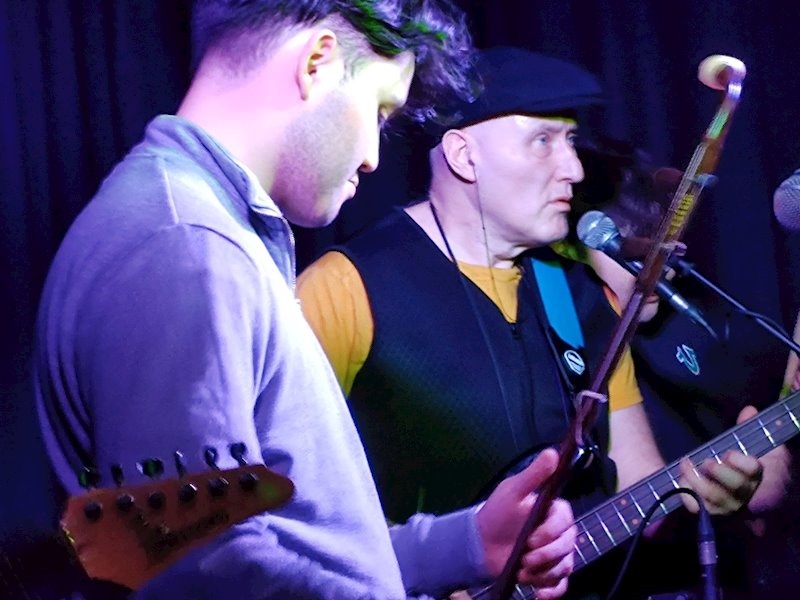
Tian Qiyi is more than just a band, bringing together brothers John Tian Qi Wardle and Charlie Tian Yi Wardle with their father, Jah Wobble (John Wardle). Their unique sound reflects their rich family heritage, blending their father’s pioneering work in post-punk and dub with the Chinese cultural influences of their mother, Zilan Liao.
’Dharma’ flows with a captivating blend of Eastern psychedelic melodies and Charlie’s ethereal vocals, all underpinned by a hypnotic fusion rhythm and beautifully primordial percussion. As groovy as it is addictive, the trio serve up a truly grounding experience here.

This new offering follows their stunning lead track ‘Watch The Sunrise’ and Bandcamp exclusive  ‘Mongolian Dub’, a fascinating ethno-psychedelic initiation into this 10-track musical journey. Like much of the goodness found on this album, Tian Qiyi’s music bridges generations and cultures, blending deep dub grooves with Eastern traditions.

“‘Dharma’ is a track that brings together our Irish, Chinese, and Mongolian roots. It features flowing, psychedelic melodies, with Charlie’s otherworldly vocals adding to the vibe. The rhythm section, anchored by a laid-back, hypnotic pulse from me on percussion and my dad on bass, creates a psychedelic dub fusion”, says John Tian Qi Wardle.
”And Songs For Workers is an album where we have moved away from influences and inspiration, instead embracing instinct and familiarity. Our background played a crucial role, from the traditional Chinese music we learned with our grandad and mum, to the improvisational, instinctive playing we developed from performing and recording with our dad.”

AA

Tian953964

The collective of renowned musicians from Norway’s west coast known as WHISPERING VOID is releasing the single ‘Vinden vier’ (‘The Wind Sanctifies’) that features ABBATH guitarist Ole André Farstad. The track is taken from their forthcoming debut album At the Sound of the Heart, which has been chalked up for release on October 18, 2024.

Hear ‘Vinden Vier’ here:

AA

WHISPERING VOID comment: “This song began to form when I repeated the words ‘Vinden vier’, which is kind of a play on words”, vocalist Kristian Espedal explains. “This can mean ‘The Wind Sanctifies’ but it can also be read as: ‘The Wind Unites’. As the lyrical loop goes on, it also becomes ‘Vi er vinden’, which means ‘We Are the Wind’. Then Lindy added her wonderful vocals in a 70s or even 60s style. At first, she just sang the ghost vocals, but once we had set the lyrics for the song, she also gave her voice to them. We all felt that this song also needed more of an Eastern energy, which is the very reason as to why we invited Ole André Farstad to play guzheng and Indian slide-guitar. This has added even more of that late 60s vibe to the song and I really like the result.”

AA

4e490e66-5245-adb3-6f07-95b056af9369 21

Cruel Nature Recordings – 23rd February 2024

Christopher Nosnibor

Nnja Riot is the solo project of Lisa McKendrick, who also happens to be one half of experimental electronic noise duo Isn’tses, with Tim Drage, who makes serious noise as Cementemental.

It’s a small world, especially in circles of noise and experimental electronics, and so it is that a few years ago, I paired with Tim for a one-off collaborative set in London at the bottom of a bill curated by Human Worth, with the mighty Modern Technology headlining. I lost my hearing in one ear before the set due to some congestion, and by the end, I’d lost my voice, too. Somewhere along the way, I’m convinced I’ve crossed paths with Isn’tses, too, but can’t find the evidence at this moment in time.

Anyway, my needless digression brings me to the point of observation that their individual projects are quite different from one another, and their collaborative output. This is ultimately a good thing, because while algorithms which have seemingly replaced the music press in making recommendations of the ‘if you liked listening to this, you’ll like this’ ilk, it ain’t necessarily so. Because algorithms don’t understand art, or the fact that an artist’s output may be widely varied.

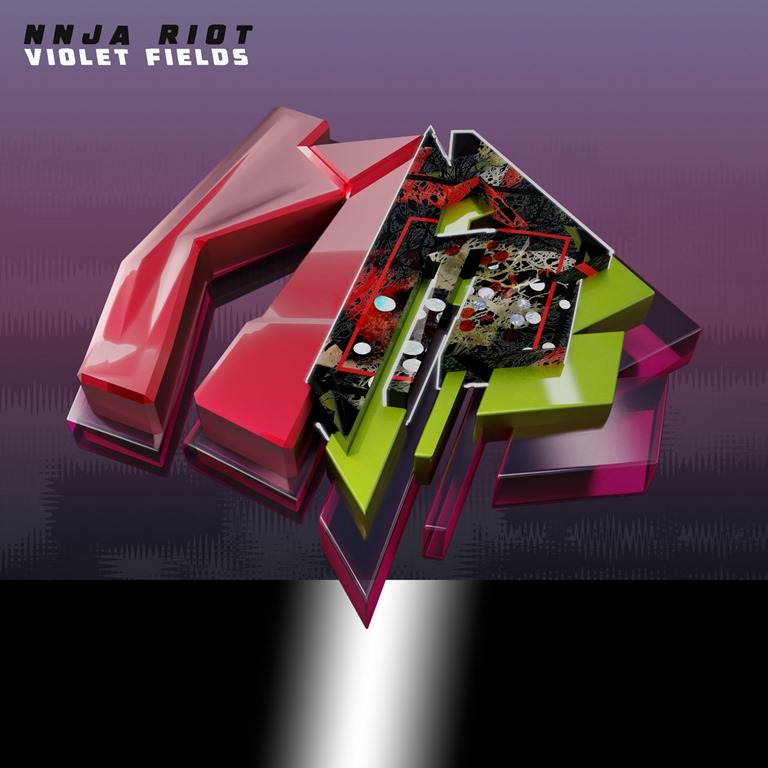
And so it is that as Nnja Riot, Lisa takes a much more songwriterly approach to things, and Violet Fields contains seven songs which can be described broadly as stark industrial electropop. ‘Horror Heart’ brings all of the elements in together to raise the curtains on the album: understated verses, with a thumping heartbeat bass beneath a delicate vocal bathed in reverb, are suddenly blown away in a wave of noise and monotone robotics with whipcracking synthetic snares cutting through the murk with some harsh treble.

‘The Evolve’ is a low, slow, dark pulsating grind which swells to a blistering ruckus of bubbling, broiling eruption of glitching electronic froth, and things get mangled fast and hard. Nnja Riot is indeed an appropriate moniker: the noise grows and takes over by stealth, as if from nowhere: one minute things are pretty mellow, the next, it’s all going off and you’re being carried away on a sonic tidal wave.

The album’s longest track, ‘Dark Assassination’, stretches beyond the seven-minute mark, and with a stuttering, beat hammering like a palpating heart in a state of fibrillation against the ribcage, it’s creates a muscle-tightening tension which is uncomfortable. The vocals are disconcerting, sounding as they do detached, off-key, non-melodic. Desperate drones bend and warp in the background, adding layers of dissonance and discomfort.

Everywhere across Violet Fields, there are subtle but essential incidental details, little lines of melody which ripple and fade. The title track is hazy, sedated, spaced-out, with melodic elements juxtaposed with swerving sci-fi noise which threatens to drown out the erratic beats and she cuts loose to another level of intensity with the vocal delivery: fuzzed with distortion, there’s a outflowing from the innermost which pours into the swirling wash of multi-faceted noise.

Violet Fields crackles and fizzes, often promising structures which crumble and evaporate and leave the listener feeling a little lost, grasping for something uncertain and just beyond reach. It’s this sense of vagueness which remains after the grainy ‘Musical Fix’ and the ephemeral drift of ‘Slow Release’, a mere fragment of a song which carries a spiritual richness on a ritual drumbeat before fading. There’s a sense that hearing Violet Fields and fully grasping it are not one and the same, and it feels that however long one spends engaging with it, there will always be depths and layers of implicit meaning that exist beyond the realms of conception. You wave a feeble hand, desperate to clutch and cling, but it’s gone. It’s gone.

AA

a2182947288_10

With the release of The Body & Dis Fig’s debut collaborative album Orchards of a Futile Heaven just on the horizon, coming 23rd February, the group share smouldering new single ‘To Walk a Higher Path.’ Heavy without conforming to any of the usual tropes of metal or electronic music, the trio here carve out their own distinctive soundworld, neon-lit scenes slowly unfurling amidst light and shadow. Rippling synthesisers beam out like searchlights scanning the horizon, slowly coalescing into strafing melody and staggered rhythms, with Dis Fig’s vocal vapour trails floating weightless above The Body’s obliterated howls and blasted electronics.

Orchards of a Futile Heaven’s walls of sputtering texture and tectonic booms are soaked in the reverence and melancholy of sacred spaces brought to life by palpable intensity by Chen’s voice. Crafted during a time of personal fragility, the album’s devastating force lies beyond any of the expected noise and abrasive textures typically associated with both The Body & Dis Fig. Suffused with a raw vulnerability and a longing for catharsis, Chen’s voice searches for escape in the midst of oppressive atmospheres as if determined to find relief from guilt.

Following the new single, The Body have also announced a string of U.S. tour dates. The Body & Dis Fig plan to tour throughout the US, UK, and Europe in 2024, with collab tour dates to be announced.

Listen to ‘To Walk a Higher path’ here:

AA

Body and Dis Fig

Cruel Nature Records – 2nd December 2022

Christopher Nosnibor

Seems I’ve blinked and missed a while slew of releases from Ontario experimentalist Clara Engel since writing about Hatching Under the Stars in the spring of 2020. Then again, the spring of 2020 doesn’t so much feel like a lifetime ago, as much as it does another life. Released on 5th April 2020, we were only just over a week into the first lockdown here in England, and we had no sense of what was to come.

As the blurb outlines, the album was ‘recorded entirely at home / solo’ and ‘Their Invisible Hands presents 13 tracks of subtle dream-like beauty… A mystical work, mixing classical and dark folk wanderings with misty soundscapes, which creates an abstract, new world atmosphere.’ Self-released in April digitally and on CD, Cruel Nature are giving it a cassette release.

In a way, returning to Clara’s work now is a powerful, and grounding experience. What has happened in the space between? Everything…and nothing. As they explain in the accompanying text, replicated on their Bandcamp, “I’m not writing the same song over and over so much as writing one long continuous song that will end when I die.”

If the last couple of years or so have reminded us of anything, it’s our mortality. And the sound of Their Invisible Hands is both spiritual and earthy. To unpack that, the sparse instrumentation, which consists predominantly of creening woodwind, chiming, picked strings, and hand percussion, has a simple, primitive aspect to it, and the slow, rhythmic undulations are attuned to elements of nature, as grounded as the act of breathing. ‘Dead Tree March’ is exemplary, a long, expansive drone that pulses in and out, repetitively, hypnotically, a sparse guide to a meditation.

Engel’s vocals, meanwhile, are ethereal and other-worldly, with a primal folk leaning that moves effortlessly between narrative and incantation, both of which tap into that subconscious part of the mind that it seems only music and nature can reach.

These themes of nature and of the ancient, of thoughts and tales lost in time, are constants in Engel’s work, giving credence to their comment about writing one long continuous song. In this context, it’s easy to see their entire catalogue as an interrogation and exploration of a quite specific field. Engel’s world is one full of magic and mystery, cryptids and magic beans and magnificent birds which sing. These songs are steeped in atmosphere and wonderment.

‘Ginko’s Blues’ is perhaps the most overtly classical piece on the album, a sparse composition led by picked acoustic guitar that calls to mind a stretched, dispersed rendition of Beethoven’s ‘Ode to Joy’, as it’s slowly dragged into a sea of scratched strings and gauze-like reverb.

Dissecting Their Invisible Hands too hard is to misunderstand its nature. It’s not an album to pick apart for the various elements, or even to comprehend its structures, origins, or meanings: any attempt to do so is to demystify its resonance. ‘It’s all fun and games ‘till somebody shows you their heart.. on a platter on a stake on a riverbed rusted…’ they sing on ‘High Alien Priest’. The metaphorical and the literal blur unsettlingly.

You shiver and find yourself mute as Engel leads you through an array of evocative soundscapes. All you can do is let go, and to explore them.

AA

a0799919546_10

Panarus Productions – 3rd December 2021

Christopher Nosnibor

It’s a challenge faced by many artists, and many try but fail to capture the fleeting moments that pass before we even see them. They’re sometimes visual, sometimes auditory, sometimes emotional, and sometimes a combination of all three, like an instant where the lighting is so rare or perfect and you feel a fleeting pang of something inside that you can’t even pinpoint… there is a soundtrack to that somewhere, but it’s so fleeting, intangible, there is simply no way you can grasp it, no way to capture it.

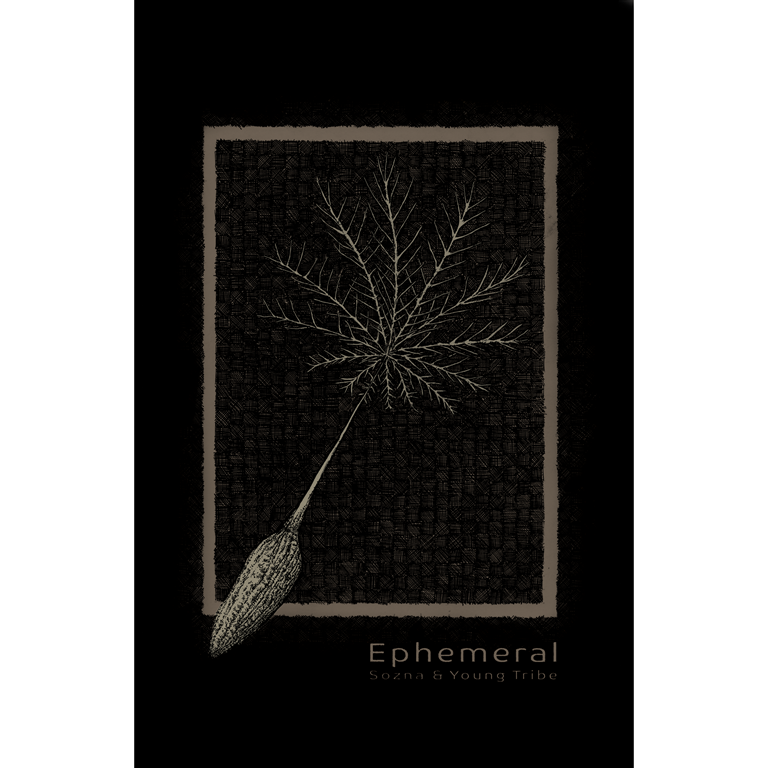
This is where we convene with Sozna and Young Tribe, whose biographical details are sparse but likely irrelevant. Because as the title intimates, nothing is fixed, and details are not important; what matters is chasing the mood of the moment, which is like catching air in a fishing net. It’s a common notion within the spheres of ambience, and more often than not manifests as gentle, ethereal works, with mellifluous trails of vapour drifting softly in attempts to convey the wistfulness of fleeting intangibility.

Where Ephemeral stands out is not only in its heavy use of field recordings and material lifted from various sources – snippets of voices, building work, street sounds – to create a layered collage that quite literally captures and combines fleeting moments and assembles them in a kind of patchwork, bit its darkness and weight. Everything overlaps to crowd the mind, as construction work and idle chatter overlap.

‘Subincision’ is a swampy murk of swirling dark ambient electronica withy rumbling, thunderous grumbles and ominous overtones. Following that, ‘Gods From Saturn’ is particularly dense; part space-age abstraction with hints of Krautrock, [art dark ambient, it’s not a sigh of reminiscence about that brief moment of ecstasy, but the gut-pulling nag of anguish that comes from recalling that social wrong step, that embarrassing misspeak, the sinking feeling of that wrong choice or bad decision. These emotions too are fleeting and ephemeral, and in many ways a more common kind of ephemera. The title track is dark and punishing, a gloomy chant and thud from the depths of a cavernous cave; it’s oppressive and somewhat scary, with monasterial moans and elongated shadows droning and rising. It’s eerie, creepy, and other-worldly. You may feel a pang of fear, but it, like everything else, passes in no time. There is no permanence; everything happens, and exists, in but a moment.

Every moment is just that; a moment, and it’s gone before you realise it. The highs may often prove more memorable and feel more protracted in comparison to the highs and the alrights, but in terms of the period of their existence, all is equal. Sozna and Young Tribe explore this space, and delve courageously into the lows, the throughs, the darker spaces, the moments of discomfort, shame, and embarrassment which are but fleeting which often haunt us forever. Ephemeral grips the corners of fleeting discomfort, the lower reaches of the intestine, and pokes the points of nagging discomfort from fleeting moments which linger there. In doing so, they inch closer to creating art that reflects life.

AA

cover

House Of Mythology – 6th July 2018

Christopher Nosnibor

In expressing my lack of enthusiasm for David Tibet’s collaboration with Youth under the moniker of Hypnopazūzu, I seemingly gave rise to mirth with my reference to ‘pseudomystical bullshit’. Tibet can laugh it off, but after so long churning out material that veers between the indulgent and the vapidly whimsical, I’m not convinced it’s a laughing matter.

Now, I’ll admit, I’ve never really got to grips with Current 93 – their catalogue was beyond overwhelming long before I even discovered music beyond the mainstream, and their output exists s far beyond the mainstream that I had to pass through Throbbing Gristle, Whitehouse and a slew of others having spent my early teenage years mining the seam of goth and (what was then) contemporary industrial and real indie to even learn of their existence. Context counts, and however influential Tibet has been in ultraniche, cult circles, it doesn’t alter the fact that some of his art and affiliations over the course of his career have been questionable.

ZU93 is the effectively named new collaboration between David Tibet and the ever-changing Italian group Zu, centered around Massimo Pupillo and Luca Mai. Mirror Emperor operates around a concept or theme that’s never really rendered with any clarity. All of the song titles reference the titular Mirror Emperor, but they who, what, and wherefores are absent, and there’s little guidance in the lyrics, which are fragmentary, hallucinatory, abstract and non-linear. This in itself is no problem: life is fragmentary, hallucinatory, abstract and non-linear, and we’re all accustomed to postmodern art and its fragmentary, hallucinatory, abstract and non-linear representations of the life experience.

Musically, it’s sparse but powerful. In terms of composition and arrangement, Mirror Emperor is widely varied, but very much leans toward the dark and ominous. There are brooding strings that soar and sway, drift and drag. There are moments of deep resonance and thick sonic density. Far from being a skippy, trippy, easy ride, it’s often difficult and challenging. ‘Confirming the Mirror Emperor’ is built around a dense, murky bass that booms and surges over a slow, heavy beat, before layers creep over and lift it somewhere altogether different.

Tibet’s delivery is the stumbling block. Every word is delivered with the same sense of immense portent, as if each phrase is a revelation of cosmic proportions. Which it isn’t. ‘And quickly…. A knuckle cracks… into space… Opens up her… and feels…’ he gasps with breathless wonder. I’m more breathless with wonder as to how he can still pull this shit off.

Tibet’s despondency at the emptiness of contemporary culture is something to which I can relate: his wide-eyed mysticism, more of a throwback to 60s hippiedom than the escape routes available now, I can’t. It feels oddly disjointed and out of place. While his fans’ belief in his visionary prowess and the potency of his lyricism, convinces that posterity will see him aligned with Dylan and Cohen, I’m looking at the Mirror Emperor to check out his threads, and I’m seeing none.

It does get easier with exposure: Tibet slowly diminishes into the background as the music intensifies as the album progresses. ‘The Heart of the Mirror Emperor’ is forged from woozy electronic pulsations which glitch and glow. Ignore the breathy, triptastic babble about the sun and moon and it’s pretty good.

AA

ZU93 – Mirror Emperor

House Of Mythology – 26th August 2016

Christopher Nosnibor

Like Natalie Imbruglia, I’m torn. Fence-sitting is no position for anyone, least of all a music reviewer: ho-hum is no critique. But I’m torn between instinct and critical distance here. Y’see, it’s a fine line between spirituality and pseudomystical bullshit. And the trouble is, one man’s spirituality is another man’s pseudomystical bullshit. The orientation of most organised religions and many other credos includes a certain emphasis on collectivism and unity, but ultimately any belief system or spiritual framework is inherently personal.

This review starts on difficult ground: Hypnopazūzu is a collaboration between David Tibet and Youth. I’m a huge fan of Killing Joke, and can only salute Youth for his production work, despite the fact I’m not keen on many of the major artists he’s worked with. David Tibet is an entirely different proposition and is someone I’ve never really been a fan of. I don’t have any issue with Current 93 per se, and it would be a grave mistake to overlook their contribution to the development of the experimental strain of industrial music in the early 80s. I’ve simply never got into their work. But some of the company David Tibet has kept over the course of his career does give cause for concern, not least of all prominent neo-Nazis Boyd Rice and Douglas Pearce. It would be a mistake to call Tibet guilty by association, but perhaps he should be more careful about the people he works with: Current 93 re broadly associated with Neofolk, and the Neofolk scene is conspicuous for the number of dodgy people connected with it. And beyond that, there are an awful lot of really turgid albums in circulation, which, when not revelling in far-right thematics, are preoccupied with disappearing up their own sphincters while preaching high occultism.

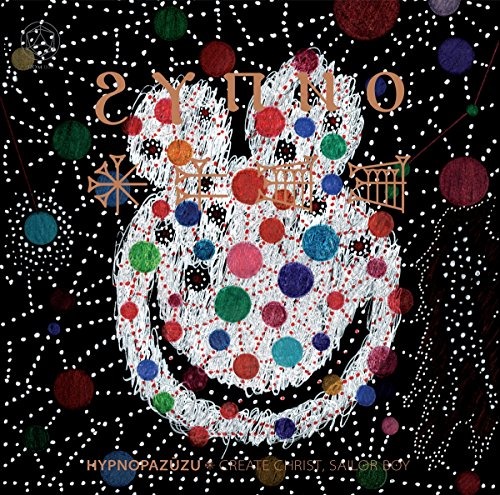
To give Tibet the benefit of the doubt, he presents as a broad-minded individual, who identifies himself as a Christian, but has devoted a lot of time to exploring occultism, Buddhism and Gnosticism, and as such, appears to be genuinely exploratory (rather than hiding behind the pretence of exploration as a means of justifying the use of dangerous imagery), engaged with spirituality in its broadest sense on a purely intellectual level first and foremost. Which brings us to Create Christ, Sailor Boy. How does one position a work such as this?

The press release describes it as ‘transcendent, tumultuous, and tricky, the sound of two spirits skipping as one to create a sidereal glimpse into uncounted cartoons,’ and quotes Tibet as saying, “I am happy always to work with Youth in any way, forever and for ever and always and in all ways… I wait for my Ouija Board Planchette to receive his Mind’s Eye Text.”

I’ll refrain from making any gags about the mind’s eye, third eye, and the brown eye and keep things as objective as possible. In such a context it’s perhaps a mistake to attempt to determine whether or not this is an album of high spirituality or pseudomystical bullshit, primarily in the interest of keeping a certain critical distance. Is it possible to separate the aesthetic from the art? Perhaps: Tibet has also long shown himself to be a man preoccupied with the apocalypse, and the sense of apocalyptic foreboding hangs heavy over this album. In the current global climate, it feels entirely appropriate. These are scary and challenging times, regardless of one’s faith or faithlessness, and in this context, Create Christ, Sailor Boy is an album of our times. It’s the soundtrack to struggle, the soundtrack of desperation, of humanity reaching out and clutching, desperately for something. Anything.

There can be no question that Create Christ, Sailor Boy is truly immense in scope and depth. Particularly in depth. This goes beyond the human condition. And in many respects transcends vague notions of spiritualism. This is not soul music, or even soulful in the conventional sense, so much as music which probes the very core of the soul, pulling hard at the gut. From the opening notes – shimmering, sweeping synths and crashing cymbals – provide an epic and portentous backdrop to Tibet’s evocations of apocalypse and build to a momentous climax. And all within the album’s first five minutes. Yes, this is colossal work that’s epic on every level. Every level. On first listen, I detested this album, but it needs time to grow. And time to grow. Whichever side of the fence you may sit.

‘Christmas with the Channellers’ brings forth an ethereal subterranean atmosphere which typifies the album as a whole. It’s an immense track which brings together heaven and hell in a battle on this earthly domain and as Tibet tears his guts out through his vocal delivery, the enormity of existence is thrown into sharp relief. ‘The Crow At Play’ is a tense colossus, which finds Tibet rasp into a frenzy as he name-checks Gary Glitter. Yes, this is a work’s that’s socially engaged and as such it would be wrong to accuse it of being a work which focuses on the spiritual at the expense of the real world.

‘It’s tool time!’ Tibet announces in a wide-eyed and excited tone on ‘Sweet Sodom Singings’. Is the invocation of Home Improvement intentional? It surely must be. There is no shortage of lyrical evidence to confirm that Tibet is as in touch with the upper world and its culture as he is with all things internal and far above the flesh.

Sonically, it’s interesting, too, with tracks like ‘The Sex of Stars’ whipping up a dense sonic maelstrom in contrast with the psychedelic / eastern / industrial crossover of ‘Sweet Sodom Singings’ and the trudging ‘Pinoccio’s Handjob’, the ethereal spacetronica of ‘The Auras re Escaping into the Forest and the and brooding folk of ‘Night Shout, Bird Tongue’. In terms of textural range, it’s hard to fault.

In many respects, I’m still on the fence, but musically and compositionally, Create Christ, Sailor Boy is an impressive work. It may be pseudomystical bullshit, but it’s a powerful album that has a lot of listening hours in it.


Hypnozazu - Create Christ Sailor Boy