Posts Tagged ‘Leeds’

Christopher Nosnibor

And yet again, after a soaking on my way to see Interpol in Leeds a fortnight ago, the heavens open to deliver a truly tropical downpour, a torrent of fair biblical proportions in stepping out of the station. It’s way to wet to have my phone out to sat-nav to the pub I’ve arranged to meet a mate in, so I take hasty refuge in The Scarboro Hotel.

It’s not hyperbole or dramatic scaremongering to say that this is climate change in effect. It’s been stiflingly hot, we’ve experienced high winds – which is why I left my umbrella at home: Poundland brollies and strong gusts don’t go together – and light showers and some flash downpours. But this precipitation isn’t so much a cloudfall as a monsoon, and as frustrating and mood-despoiling the soaking is, the bigger picture is that this is a sign of things to come. JG Ballard’s 1962 post-apocalyptic sci-fi novel The Drowned World is rapidly looking like future reportage rather than speculation.

It’s a good thing I’m heading to Temple of Boom in my drenched state. Live music invariably proves itself to be a mod-lifter, or at least the best conduit to a window of escapism, and never more than a night of full-throttle metal. It’s a genre I’ve come to appreciate almost exponentially over the last decade after spending years completely disinterested and dismissive. The irony that I considered metal somehow juvenile and primitive isn’t lost as I realise I’ve grown to grasp the sheer diversity of the – infinitely fragmented – genre, as well as the benefits of untrammelled catharsis as a form of therapy.

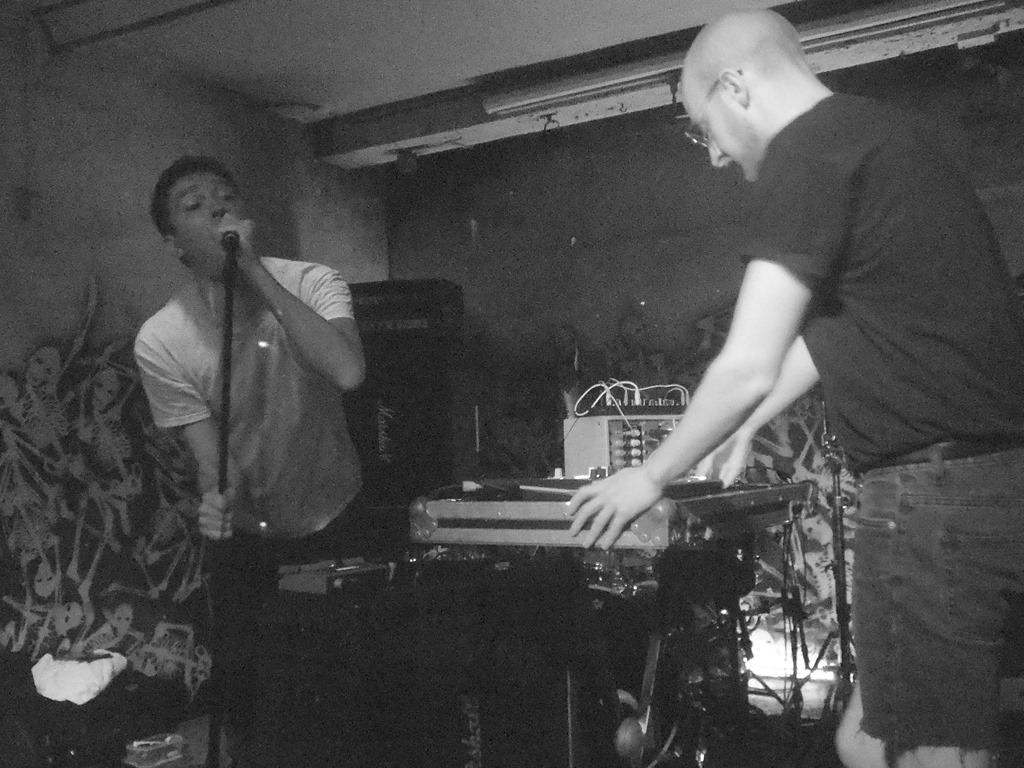
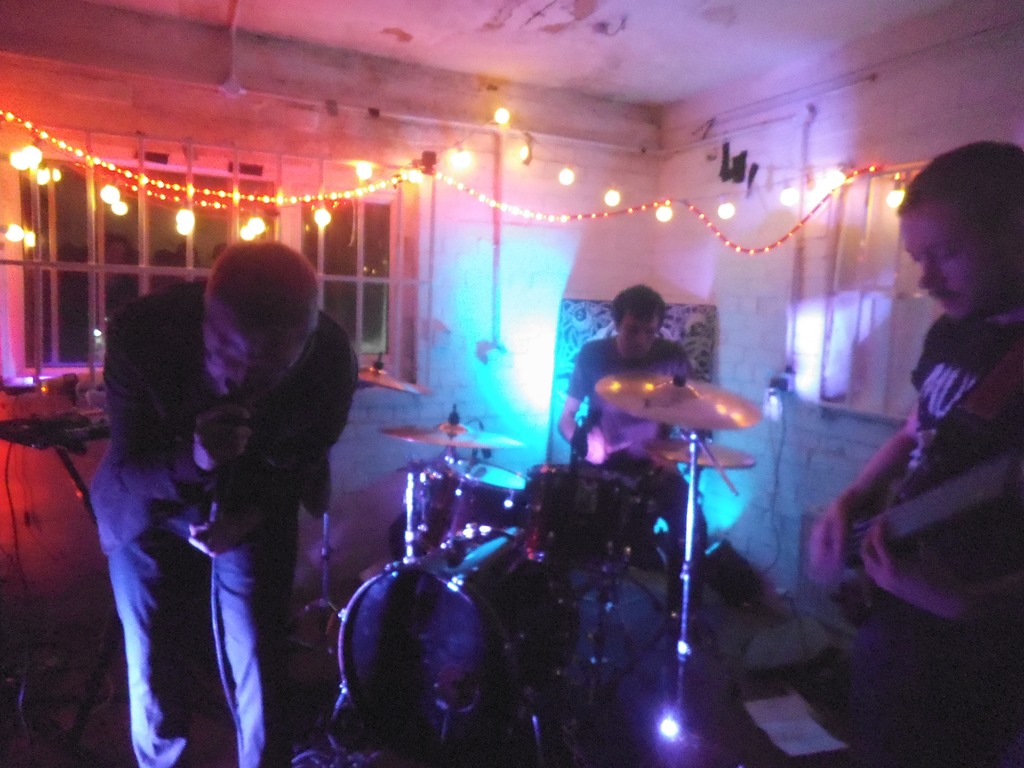
The tip I’d had ahead of the show suggested Vonnis were pedlars of fairly standard grindy thrash, and musically, this is fundamentally true. It’s all in the delivery, and I’m wondering a day on if their front-man’s antics were the result of drunkenness, insanity, or a combination of the two. Their Facebook bio records a history of ‘dislocated shoulders or open leg fractures’ and a ‘disregard for any kind of personal safety’, and they deliver on that. Tonight’s set found this guy piling up (and falling off) monitors, stumbling wildly, stripping from his boiler suit to socks and boxers and ending the set on the flor in front of the stage with his head in a bin. The whole thing was demented, and was a real horrorshow car-crash of a performance – but it was utterly compelling.

DSC_0057[1]

Vonnis

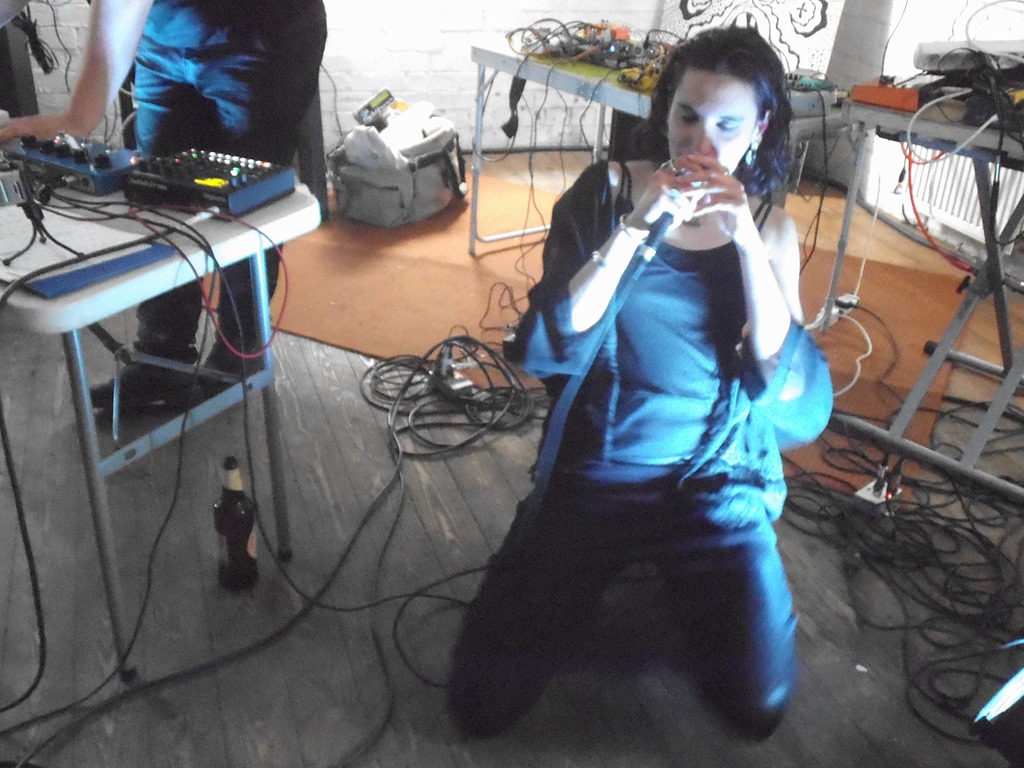
Bismuth are compelling for all the right reasons, bashing out some monumental noise with drums and bass. By which I mean BASS. Arsequaking bass. Head-shredding bass. Immense bass drones that sound like Sunn O))) and Earth circa Earth 2. Simultaneously. Bass channelled through a pedal board the size of a cruise liner to the point it no longer sounds like bass. An age separates the trike of every chord, every explosive, punishing beat. Bismuth grind it out, low, slow and heavy, but with the full frequency spectrum: bass that sounds like a full band lineup with everything up to eleven, or even twelve.

DSC_0061[1]

Bismuth

Tanya Byrne’s vocals range from a delicate and emotionally-charged melodic to full-blooded howl of pain: it’s all integral to Bismuth’s sound and intensity, and the set concludes with Tanya out in the audience, on her knees, shrieking and howling into a wall of feedback. It feels like the purest catharsis, and the entire room is on edge and close to breaking to bring down a devastating finish.

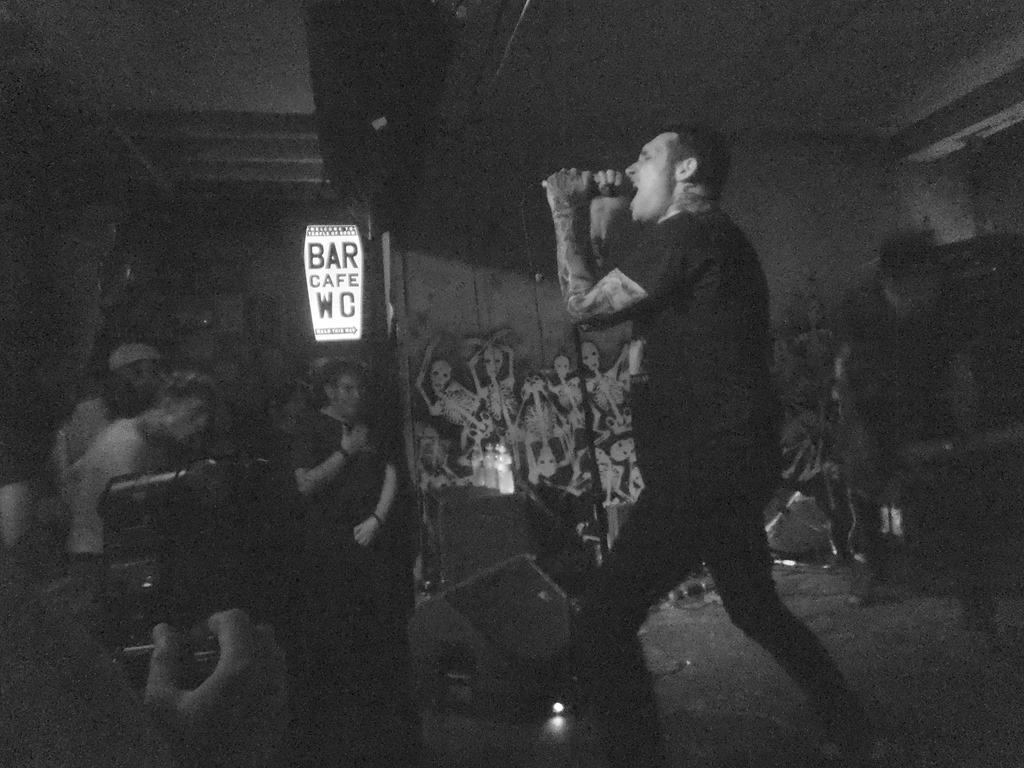
Whereas Bismuth’s sound is textured, detailed, and atmospheric, Moloch go all out for blunt force trauma. Lumbering riffage provides the backdrop to rasping guttural anguish. There’s something about the vocals, which register in the higher regions, and the way they contrast with the shuddering downtuned sludgefest. There’s also the complete lack of pretence or even any real kind of show involved.

“Hiya, we’re Moloch,” says Chris Braddock as he takes the mic. Cue a wail of feedback before everything crashes in and continues to grind away at a gut-churning crawl for the next forty punishing minutes.

DSC_0067[1]

Moloch

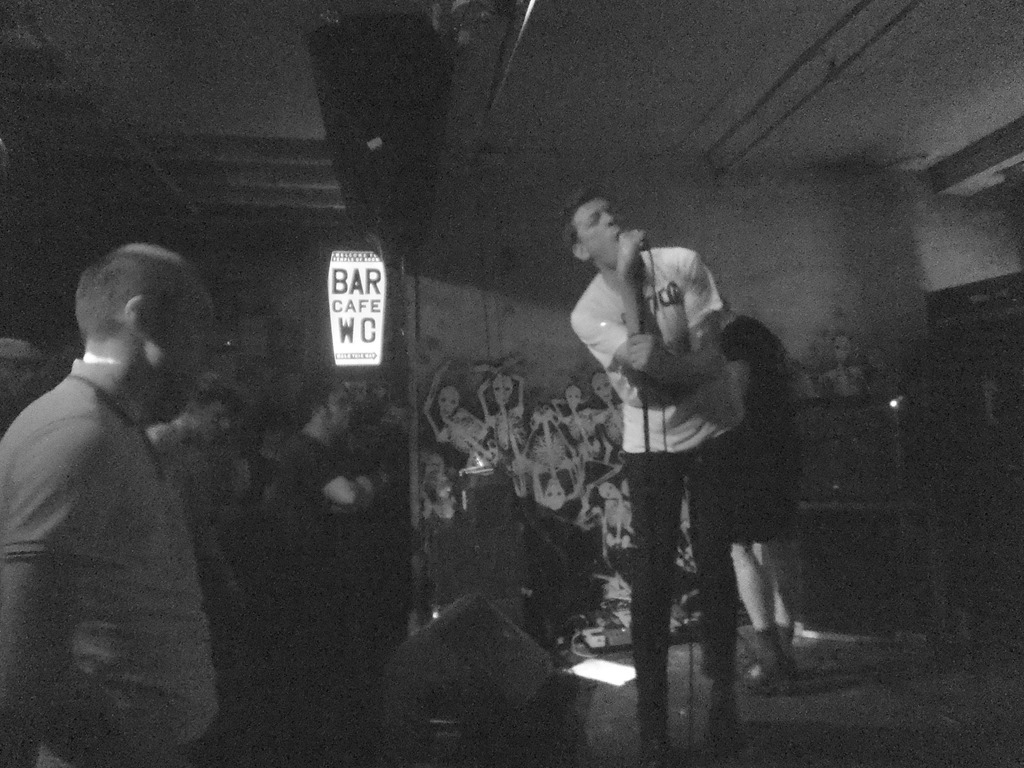
With three guitars dominating the six-piece’s instrumentation, Thou have texture and density completely covered. And despite the fact they’ve been going some fourteen years with only two changes to the lineup, they still appear remarkably youthful. The ever-informative Encyclopaedia Metallum locates them in the bracket of ‘Sludge/Drone/Doom Metal’ and lists their lyrical themes as ‘Despair, Revolution, Societal collapse, Death.’ This does nothing to convey the intensity of their albums or the kind of performance they deliver – or, moreover, the nonchalance with which Bryan Funck – wild-eyed and grey-bearded – delivers his velociraptor vocal scream.

DSC_0070[1]DSC_0078[1]

Thou

It should be harrowing, hellish, but is precisely the opposite. To witness a band so finely-honed, channelling everything into a powerful and relentless piledriving assault is a beautiful and uplifting thing: elating, life-affirming. As they thunder through an immaculate set, I find I’m no longer in the room and everyone else has melted away. There is nothing but this moment, in which I find my mind is empty and I am floating, detached, wired into the music alone. Time stops and the sound becomes everything.

Buzzhowl Records / EXAG

I caught Thank way back in December 2016, supporting Oozing Wound at The Brudenell in December 2016. Having a gig to review never fails as an excuse to leave a works night out early: it’s up there with a family emergency, only way cooler. Obviously, working with a bunch of straights who listen to whatever’s on the radio and have next to no concept of ‘alternative’, the sphere in which I exist and the music which is the focus of my ‘other’ job is completely beyond them,

The review of that night described Thank as something of a ‘“supergroup” collaboration between members of various bands, including Irk and Super Luxury’, clocking Irk’s front man Jack Gordon on drums, and Freddy Vinehill-Cliffe, bassist with Beige Palace, providing off-kilter vocals. And a lot of Day-Glo. On reflection, it’s probable that not a single member of Thank had been born when Day-Go was all the rage first time around. I remember my eye-watering acid yellow tennis socks with fondness. As I also now remember that show, meaning that a new release is most welcome.

‘Think Less’ prefaces the arrival of their second EP, ‘Please’, set for release in October, and finds another Leeds noise luminary, Theo Gowans adopt a permanent place in the latest lineup. It’s a wild frenzy of lo-budget industrial funk that throws together Cabaret Voltaire, Throbbing Gristle and early Nine Inch Nails into a blender, tossing in a messy vocal with an unashamedly northern accent and spraying the resultant snarling mess all over a chunky and deeply infectious cyclical groove that’s an instant earworm. Raw, ragged, jagged and all the better because of it, it’s cause to get excited.

AA

Thank - Please

Christopher Nosnibor

3pm on a Sunday afternoon may seem like an odd time for a noise gig, but one of the many great things about this rehearsal space that sometimes puts on live music is that being truly independent, it can do whatever the fuck it pleases. Noise aficionados tend to be undercatered for in general, and while it’s fair to say the Leeds scene is pretty healthy, even the most nocturnal of creatures have crawled out of the woodwork for this afternoon’s session of sonic torture. And being in the middle of an industrial estate, they don’t have to worry about the neighbours, meaning they can really crank it up at CHUNK.

The thing about a small scene is that you get to know or otherwise at least recognise people, and while we’re all misfits, we’re all misfits together, and the atmosphere – as promoted by the organiser, Theo, who incudes a ‘no bigots!’ stipulation on the poster – is inclusive, accommodating, and friendly. And we’ve all brought our own booze. I exchange dialogue with strangers and friends alike, and it’s incredibly relaxed. There’s a lot to be said for the fans of more extreme music – mostly that most of them are really decent people.

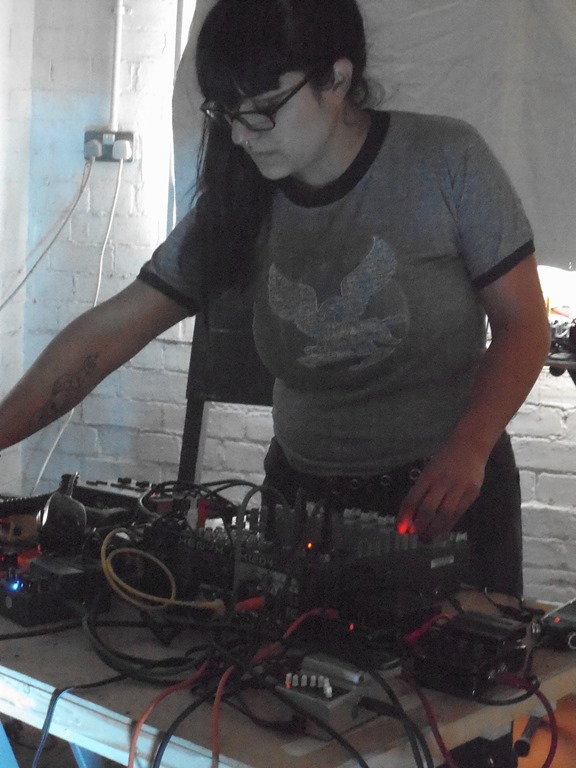
Duo Black Antlers are making their first appearance here and there’s no information to be found about them anywhere. Thunderous echoing beats and stray bleeps coalesce to form a dreamy but solid backdrop to emotive vocals buried in all the reverb ever. Some crisp electropop is massacred by wall of echo and murk which has an intensity when delivered at ear-shredding volume. Their singer is given to performing some form of interpretive dance when she’s not pacing and singing, and has a strong yet understated presence. It’s a stunning debut, and the warm reception is well-deserved.

DSCF8656

Black Antlers

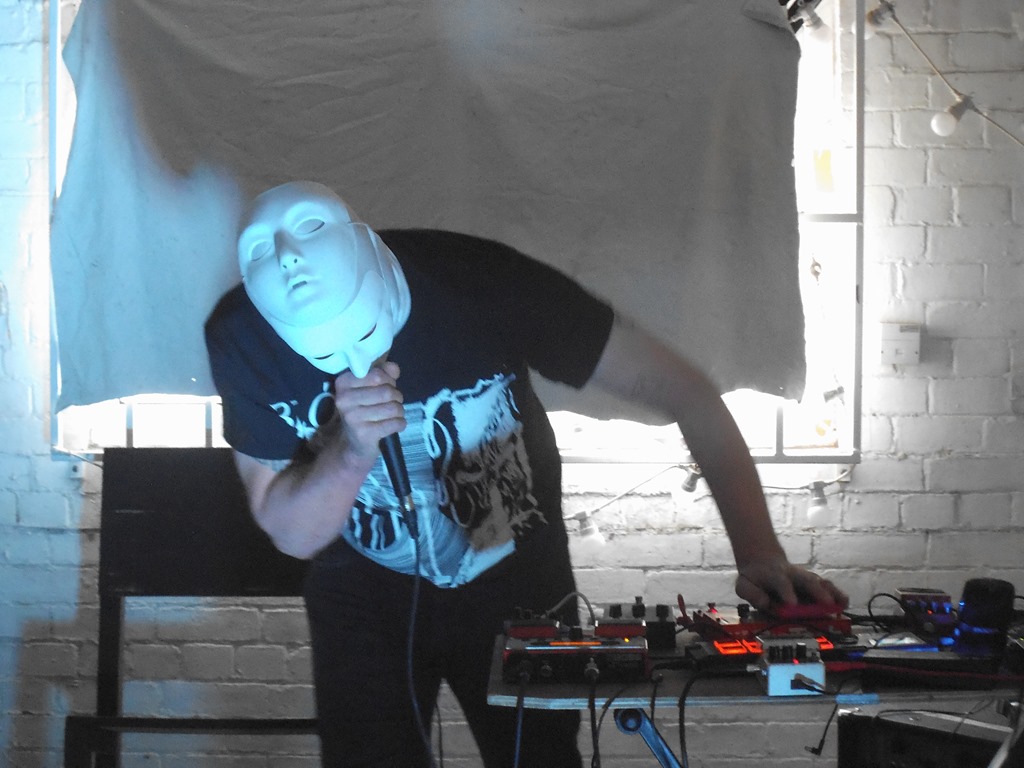
Long, spacey tones, rapid bleeps and blistering noise, paired with slow bass beats and explosive sampled snare cracks dominate a dizzying, disorientating wall of digital noise that flies off in all directions. This is Early Hominids. They know all the most brutal, pain-inducing frequencies, with blistering treble and squalling feedback howling from the speakers. Bleeps, blips, twitters, wow and flutter are crushed into an excruciating wall of distortion for what feels like a torturous eternity. They endlessly dick about with swapping bits of kit and moving wires, and while this isn’t a conventional ‘rock’ performance, there is an element of deconstructed performance to something like this.

DSCF8674

Early Hominids

My notes become shorter as the afternoon progresses: partly because I hadn’t really considered that 7% Polish lager on an afternoon might have quite an effect, but moreover, because it becomes increasingly difficult to consider note-taking when you’ve got brutal noise blasting in your face and you’re so immersed in the experience that documenting it seems vaguely futile. Because as a fan, it’s about being present, feeling it. Process and assimilate later – if at all. And this is something you feel even more than you hear, where sound takes on a physicality.

Glasgow’s Stable serves up looping echoes, woozy synths and relentlessly thudding uptempo beats… Hints of Suicide, only nastier glitchier, treblier performed by a guy with a mask with two faces… Slightly disturbing… Harsh. Noise. Stop / Start. Brutal. Unintelligible vocals.

DSCF8677

Stable

Headliners PURPURA are not so harsh, but definitely crank out a noise wall. It’s punishing, and it hurts. Burrs of blistering treble break through the speaker-breaking noise.

DSCF8683

PURPURA

It feels far later than the hour, and my brain and ears feel they’ve been thoroughly assaulted when I leave. And it’s been great: if ever a lineup reflected the diversity of the brad umbrella of ‘noise’, while hosting a show in a great space with a great vibe, it’s this.

Buzzhowl Records – 5th April 2019

Christopher Nosnibor

The first time I stumbled upon Beige Palace – a band with a name that simultaneously and contradictorily evokes blandness and grandeur – was at one of their early shows, back in May 2016. They were still ramshackle and difficult, in the best possible way, a couple of years later. On record, Beige Palace capture that awkwardness,

‘Mum, Tell Him’ congeals a discordant cacophony as shrieking feedback grates against a throbbing organ, off-key and out of time, hollered atonal vocals, hoarse, raw and not giving a fuck about musicality bark in the background – and then the rhythm section slams in, angular, stuttering, at which point it lurches into the territories of early Shellac and all things Touch ‘n’ Go, that early 90s noise attack recreated in full effect, and it bleeds into the dissonant racket of ‘Dr Thingy’, half-serious, half irreverent, it tears into a dense bass-driven shouting din reminiscent of the criminally underrated Rosa Mota around two-thirds of the way though. It’s the balance of dual male / female vocals tat does it. that. and the underlying aggression, and the raw, underproduced DIY sound.

Slowing it down, there’s a bit of a Pavement- feel to ‘Candy Pink Sparkle’. It’s stripped back, minimal and unpretentious in its lo-fi nature. In many respects, Beige Palace are prime representatives of the emerging underground scene in Leeds, much of which centres around the rehearsal space CHUNK, in the middle of a bleak industrial estate in Meanwood – it’s dingy, off the beaten track, and consequently affordable. Which also means it’s a community built on a collective desire to make music for art’s sake rather than commercial ends.

The lurching, stop-start ‘Illegal Backflip’ and jolting, sinewy ‘Ketchup Dirt’ both evoke the spirit of the 90s underground, and I’m going way underground in referencing the first album by Pram (but justified in that they would subsequently sign to classic cult label Too Pure). ‘Dinner Practice’ closes in a stop/start jolting mess of guitar that’s overloading the treble, the shouty atonal vocals… it’s so wrongly ace. And I’ve no idea why the album’s called Leg.

AA

Beige Palace - Leg

Christopher Nosnibor

“Are you a journalist?”

I nod. I don’t like talking when a band is playing. I don’t like other people talking when a band is playing, so why would I do it? It’s rude. And I’m there to watch the band. And so I don’t explain that no, I don’t consider myself to be a journalist or a music journalist, but a writer who happens to write about music often.

She’s already asked me what I’m doing and tried to get a look at my notes – a spidery scrawl barely legible to myself, to which I’d responded by wordlessly waving my A7 pad at her.

Some people just don’t get hints.

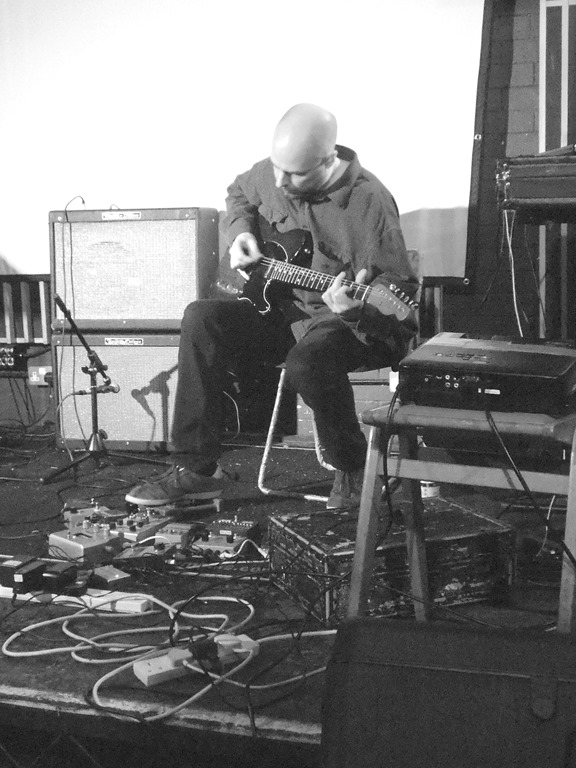
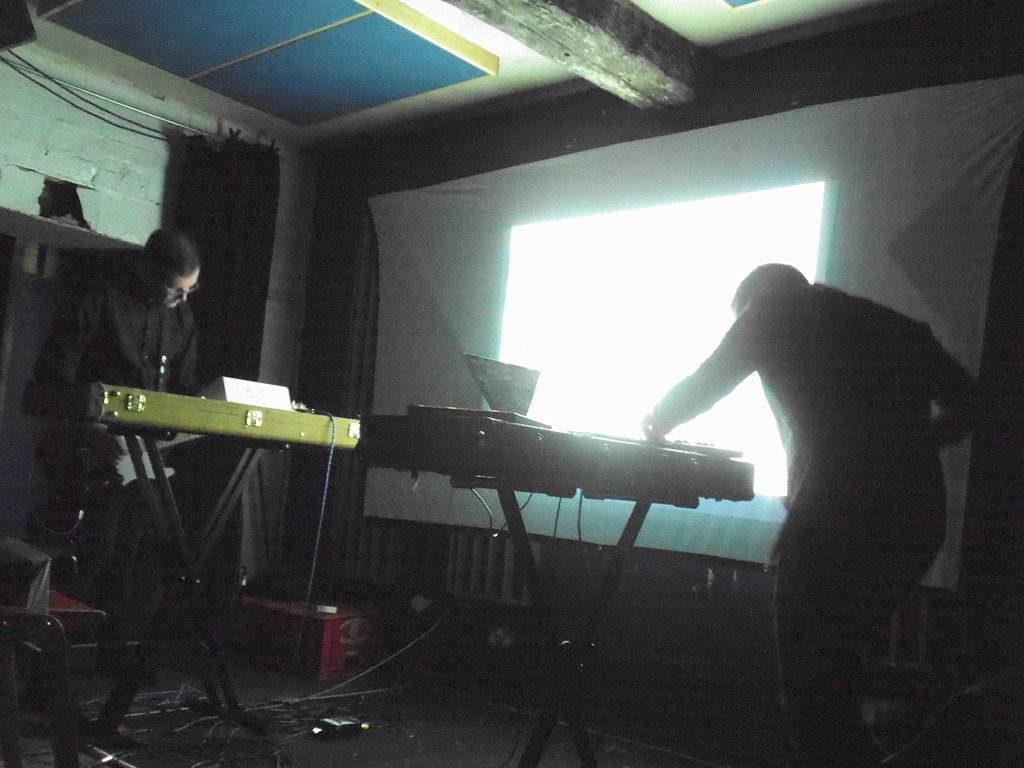
Following on from opening acts Steve Hadfield, who’ delivered a set of proficient but slightly static electronica and Dean McPhee, who performed some ethereal, atmospheric guitar instrumentals with the assistance of a bank of pedals that almost filled the venue’s small stage, worriedaboutsatan built their set nicely. One of their trademarks is intelligent structure, and while they’ve woven segments of their latest album’s more delicate parts into their set, they swiftly transitioned from drifting ambience through subtle rhythmic pulsations to propulsive beats, all the while conjuring rich layers of atmosphere. Gavin Miller’s guitar sounds even less guitar-like than ever, as he conjures rippling waves of sonic abstraction from six strings.

DSCF7638   

Steve Hadfield

DSCF7645                                                                            

Dean McPhee

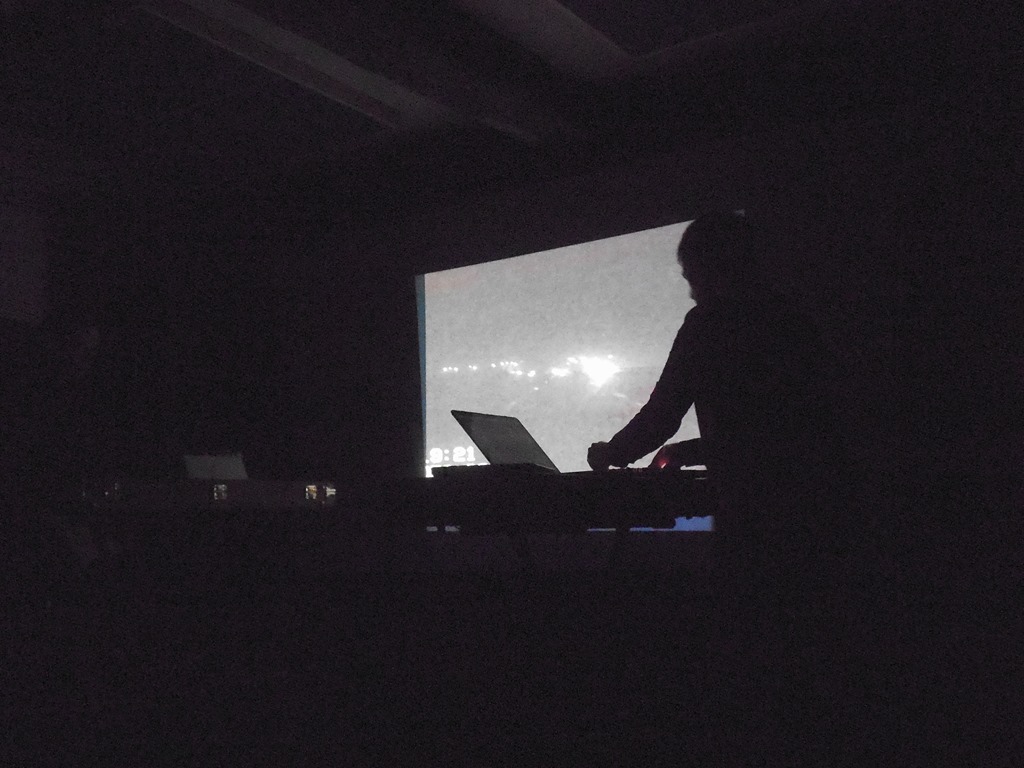
It’s been a long and taxing day, and I’ve consumed more beer than intended, than is wise, I’m switching between tenses, and I’m trying to decipher the narrative of the film projected at the back of the stage. It’s intercut with various black-and-white footage that conveys nothing in itself, but is evocative in its bleakness, and there are flickering light segments, too: beyond this, they play in darkness, visible only in silhouette. Their stage show hasn’t changed dramatically in recent years, but it’s visually striking and effective, and places the immersive music to the fore.

DSCF7691

 DSCF7685                                                                                                         

worriedaboutsatan

Then, halfway through, a couple of women appear at the front and get down to some mum-dancing: fair play, but they don’t need to be exchanging comments about it. I have my earplugs in and am in the zone, perhaps more even than usual in my state of inebriation. It’s the short, chubby one who starts nebbing at my pad – not that I’d have been any happier had t been her taller, slimmer friend.

“Who do you write for?” she shouts in my ear. It’s a shame earplugs only reduce volume and cut top-end rather than muting irritants.

“Me.” I want to tell her to fuck off, but even seven pints in, I’m mindful of manners.

This throws her but she seems to think it’s cool, and she asks yet more questions, and then she starts going on about how she’s worried about my eyesight, writing in the dark and all. I appreciate the concern, but my liver and blood pressure and anxiety are probably more of an issue than my eyes, and besides, I’m wearing tinted glasses at a gig, and if perfect strangers feel the need to worry about anything, I’d say climate change, Brexit, the stranglehold of capitalism, and the simple fact we’re all doomed are more worthy of that worry. Ok, so I don’t appreciate her concern one bit.

Eventually, she leaves me in peace and I’m able to watch the guys bring their set to a triumphant climax to an appreciative response from a home crowd. And deservedly so: the fact they don’t tour often, and when they do, they’re reliably solid, consistently engaging and dynamic in both set formation and performance, and perform with such incredible energy, makes an intimate show like this all the more special.

Christopher Nosnibor

It may only be nine minutes on foot from the station according to Google Maps, but despite having probably been maybe twenty or even thirty times, I still find myself struggling to find it, even with GPS assistance. I have no idea why: it’s like I have some kind of mental block, or the venue has some kind of cloaking device that blocks my internal geographical radar. And so I’m disproportionately pleased when I find myself within yards of the venue without taking a single wrong turn. And then I remember the bar doesn’t take cars, and despite having intended to get cash at York station, then Leeds station, then en route, I’ve sailed past all of the cashpoints and only have about four quid on me. Even with beer at £2.80 a pint, I might be a bit thirsty at the end of the night.

I still make it back, with cash, before doors, and they’re not quite done soundchecking. The fact I’m considering plugging up just for the soundcheck brings a small buzz of anticipation: we’re here for some hefty riffage, and it’s best experienced at an appropriate volume. If it doesn’t hurt, it’s not loud enough.

Leeds drums and bass duo Calm are an interesting proposition on paper, consisting of John Sutcliffe from Canvas, Humanfly, Kings, Natterers, and Paul Handley from The Plight, Kings and Ladies Night. In the flesh they’re interesting, too: at the opening, oscillating sequenced synth lines bubble along beneath woozy bass before the distortion crashes I like a tidal wave of sludge. The drums are more energetic than the low-BPM grind of the chords. Structurally, the compositions are segmented and almost sound like three or four pieces glued together, but the transitions make for a set that holds the attention well, and as Sutcliffe, on drums, intones mystical droning incantations into a sea of reverb against a wall of low-end that sends vibrations through my steel-toed boots, the experience takes on an almost spiritual quality.

Calm

Calm

A Headless Horse bring a much more sedate atmosphere with mellow female vocals and delicately layered, meticulously structured songs. Their songs are keenly focused on texture and melody. In contrast to Calm and the rest of the lineup, there’s significantly less weight, and less emphasis on volume overall: that isn’t to say they’re quiet, but when they bring in the riffs, they’re not obliterative, but simply denser. Comparisons aren’t everything, but The Cure and Cranes provide fair touchstones here, and Headless Horse demonstrate that they’re capable of delivering mathy post-rock with emotional resonance. Given that this is only their second outing, they show a lot of promise.

A Headless Horse

A Headless Horse

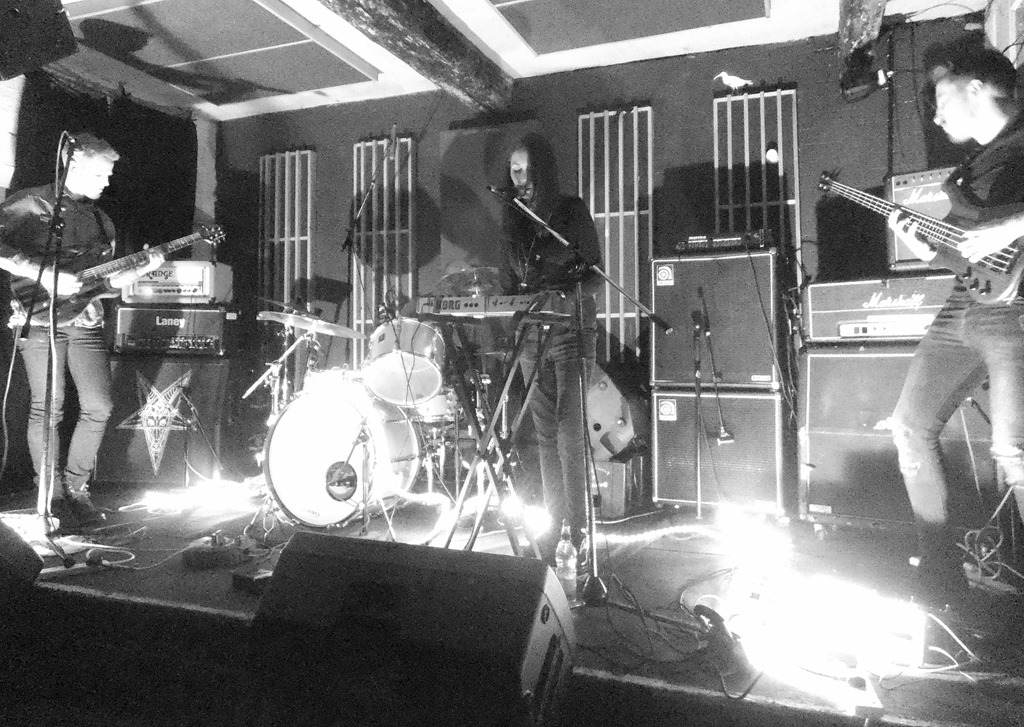
There’s a proliferation of beards tonight, and Dystopian Future Movies are very much a beard band (singer / guitarist Catherine Cawley clearly excepted). They’re also a very much an atmospheric band, and a band who exploit the dynamics of volume to optimal effect, as abundantly demonstrated by the choppy stop/start lumbering riff of ‘Dulled Guilt’ which opens the set powerfully. Their description of themselves as ‘taking a Sonic Youth approach but arriving at some dark place between Neurosis and Chelsea Wolfe’ is pretty accurate, and they pull the listener in with slow-burning ethereality that yields to punishing riffery, without at any time falling into the trap of formula.

Dystopian Futuere Movies

Dystopian Future Movies

This four-date joint tour sees DFM and Grave Lines unveil a collaborative / split EP, and they’re joined on stage by Jake Harding for a killer rendition of ‘Beholden, which begins a brooding whisper, almost folky in feel, before erupting into thunderous power chords The vocal duet is magnificent: the two singers intertwine with Hardin’s baritone croon underpinning Cawley’s graceful, evocatively gothic intonation to conclude a mesmerising set.

Grave Lines stand out as being very much different from their peers by virtue of the exploration of extended quiet passages that are as much dark folk as post-anything, while exploiting tropes commonly associated with post-rock. This imbues the songs with a palpable emotional depth, and when they crash in with the u-to-eleven distortion, it hits hard.

With ragged hair and beard, wrists and shoes wrapped in grubby shreds of bandage, and a dingy off-white vest, Jake Harding cuts a dramatic and tortured figure as he spews anguish and nihilistic fury, his body tense and wracked, over low, slow sludginess; then again, guitarist Oli, with Alan More hair and beard and sporting a torso so tatood as to appear to be wearing a heavily patterned shirt brings a stoic intensity that’s in stark contrast to the laid-back drumming of Julia Owen, who has an airy style of playing that belies the force with which she delivers stick on skin.

Grave Lines 2Grave Lines

Grave Lines

And yet it’s when Harding ceases words and spits a guttural ‘urrggh’ that most succinctly articulates all the pain and frustration the band channels.

Caroline from Dystopian Future Movies returns the favour of providing additional vocals on Grave Lines’ contribution to the new EP, the epic ‘False Flame’, and they take things right down for the penultimate track of a remarkably concise – but suitably hard-hitting – set with the minimal ‘Loathe / Disgrace’, pairing a droning organ sound which quavers against a vulnerable, melancholic vocal performance.

My notes blur to nothing as the band drive the set home with crushing force with ‘The Greave’. And in this high-volume release lies the uplifting joy of catharsis.

Christopher Nosnibor

My appreciation of the debut album by Leeds noisemongers Irk is already out in the public domain, as is my admiration of their capacity as a live act. It was only fitting that they should launch their debut album at Chunk, the rehearsal space which has become the hub of the new Leeds underground / alternative scene which has begun to emerge since the Brudenell – still the best venue in the country – has become increasingly popular and catering ever more to bigger-name acts. And there’s no escaping the fact that without the tiny venues, the microscenes, the free and cheap spaces where anything goes, there’d be nowhere for the bands of the future to explore and develop ideas free from the limitations of marketability and the pressure to achieve success. Commercialism strangles creativity, and we need the obscure band who want to fuck shit up more than ever in these desperate times in the stranglehold of corrupt, constricting neoliberalist capitalism which is not-so-slowly eroding every real freedom for the ordinary person.

Chunk is so no-budget, so DIY that there’s no licence for tonight’s (free) event: its BYOB, and people file in with carrier bags containing four-packs and the atmosphere is just so laid back that my anxieties about finding the place (Chunk is hidden through a door up some steps (which I worry I may fall down on my way out) next to a car repair place in an industrial area two miles out into the arse-end of nowhere) and all of the other stuff I panic about but tend not to talk about evaporate almost immediately. There are friendly faces, faces I recognise, faces I can chat to, and it feels more like a house party than a gig.

Only, there’s a gig PA and there are bands, and Beige Palace are on first. I note that they’ve been using a quite from a review I wrote of their live debut on my only previous visit to Chunk in the summer of 2016, which says ‘Beige Palace make sparse-sounding music that’s jarring, dissonant and hints at a clash between early Pram and No Wave angularity.’ Two yeas on, it still seems a fair summary. ‘It’s not math-rock’, their diminutive and moustachioed front man, Freddy Vinehill-Clifee forewarns the audience before they begin their set. He’s right. It’s atonal, droney, repetitive noise-rock with an almost spoken word delivery. Kelly Bishop’s flat, elongated vowels are reminiscent of Mark E. Smith in the early years of The Fall. They’re bursting with nagging, awkward guitar lines and clattering percussion playing unusual time signatures, too. So, like math-rock, only not. Or something. But it’s not about labels, but the music, and while they’re still rough ‘n’ ready, their confidence and intuition has evolved a lot over the last two years, and they turn in a more than decent performance.

Beige

Beige Palace

It was the release of BRITN3Y that brought deranged Edinburgh 3-piece Britney to my attention, and I’d been itching to see them live ever since. They don’t disappoint. Comprising bass – through a fuckload of pedals; vocals – through an even bigger fuckload of pedals; – and drums, they deliver sonic riots in the form of blistering sub-two-minute noisefests. Occasionally, chuggy riffs and even grooves emerge from the screaming, spasmodic mess, albeit fleetingly. It hurts after two songs. It hurts a whole lot better after ten. The speaker a foot from my right ear is sounding like it’s fucked and they just fuck it harder with a relentless barrage of explosive, brutal hybridized noise that draws on elements of metal, hardcore, and grindcore and Final Fantasy (the victory fanfare is a recurrent feature throughout their set and closes it, too, while the infamous Tidus Laugh from FF X also features). They’re joined at the end by NALA for some screaming vocals to wrap up set appropriately culminates in an ear-splitting wall of noise, and I’m not the only one blown away.

Britney

Britney

It turns out that Jack Gordon still has the copy of The Rage Monologues from the time we exchanged books. He’s read my review of the album, and during our brief exchange, I’m reminded that so many of the people who make art that pushes extremities, in whatever way, are the most pleasant, polite, and mild-mannered people you could wish to meet. It’s their outlet, and it’s what keeps them sane. Better to make brutal art than commit mass murder. Probably. Jack – bespectacled, sporting jacket and chinos and looking like any other smart-casual office worker – is a nice guy. But with the aid of a PA, a backline, and a bottle of Buckfast, he brings the brutality.

DSCF7106

Irk

If the disappearance of Blacklisters from the Leeds scene following Billy Mason-Wood’s departure for Germany left a jagged, gaping hole, then Irk more than manage it fill it with their own rendition of that Jesus Lizard, Touch ‘n’ Go skewed 90s US noise-rock racket. The trio are quite a different proposition and are very much their own people, but the comparisons and local lineage are impossible to ignore. And in this enclosed space, with the volume at pulverising levels and the warmth of community and camaraderie only adding to that of the proximity of bodies, everything comes together perfectly.

7th December 2018

Christopher Nosnibor

Irk have been tearing it up on the Leeds scene for a little while now, and are a band at the epicentre of the DIY scene surrounding the CHUNK studio / rehearsal room space, tucked away in a rough and dilapidated industrial estate a good half-hour hike out of the city centre. It’s an apposite location for the thriving creative community of metal / sludge / noise bands.

The band describe themselves as ‘three polite wee rascals…. who make ugly, angular, noise-fused, math rock, consisting of drums, bass, and vocals’, and as such, belong to the city’s now well-established post-millennium tradition for producing seriously noisy bands who are bloody good. Many have fallen by the wayside, but a lineage of acts that includes Blacklisters, Hawk Eyes, That Fucking Tank, Holy State, Hora Douse, and yes, we’ll throw in Pulled Apart by Horses here, because they’re hardy quiet or genteel, speaks for itself.

I’ve caught them live a few times in the last couple of years, and have even performed on the same bill, exchanging books with front man Jack (I think Life Pervert is ace; I’ve no idea what he makes of The Rage Monologues). I’ve never once been disappointed by their performances, and it’s a reasonable expectation that Recipes from the Bible should sound like the work of a band who’ve been honing their material live for some time.

But by Christ, Irk really give it some here, and forge the title: this is a sonic concoction that cooks up the most unholy racket going. ‘I Bleed Horses’ begins with a howl and a barrage of frenetic drums and a mass of guitar racket. While you’re picking your jaw off the floor, check that tight, compressed, springy bass sound and the churning throb it produces that just about holds the whole squalling mess of discord together. Less that two and a half minutes in duration, the bled horses bleed out into ‘Life Changing Porno’, another unintelligible blizzard of noise that’s so chaotic it’s not always entirely clear if they’re all playing the same song: the tempo lurches unpredictably and whole racket collides in a spectacularly ugly explosion.

The seven-minute ‘The Observatory’ built around a choppy, cyclical riff reminiscent of Bleach era Nirvana, and again, it’s the menacing bass that dominates as they forge a suffocatingly claustrophobic density. It’s about as close to respite as it gets: with the only other exception being the verses of the lumbering ‘The Healer’, Recipes from the Bible is relentless in its screaming mania and brutal angles. The wild sax action on ‘You’re My Germ’ could be free jazz in another context, but here, it just adds another level of crazed hysteria to the mix.

Taking obvious cues from Shellac and Blacklisters, it’s a set of sharp-cornered, serrated brutality that stops, starts, shudders, judders, jolts and jerks – but unlike Shellac, Jack’s raving, gibbering, rabid vocals break free from the tight limits of the coiled tension of math-rock tropes and instead cut loose and careen into the wild noise of The Jesus Lizard. Snarling, howling, drawling and slavering, there’s something cracked, even psychotic. In combination, it’s a tense, intense set that sound deranged, dangerous: at times, its really quite uncomfortable. That’s a clear measure of success.

Chances are, reviews will tout this as being ‘uncompromising’, not least of all on account of it’s being self-produced by the band (of course). But Recipes from the Bible goes beyond that. Way beyond. It harnesses the full force of the band: so often, bands draft in producers only for the sound to be polished, slickened, rendered overtly ‘studio’. By keeping things in-house, they’ve retained the rawness, and the sheer velocity and unbridled power that defined them, and the sonic vision remains unadulterated. And beneath all of distortion and dirt, the ragged, jagged edges and the feel of a style of playing that’s loose and uncontained, there’s a remarkable and deceptive degree of precision.

It’s hard to find fault with Recipes from the Bible: there isn’t a weak track or an ounce of fat. There’s no filler, and no slack. There’s not a moment of tameness or timidity, and instead, they bring top-level ferocity and relentless fury, and the chances are you’ll be hard-pushed to find a better noise-rock album this year.

AA

Irk - Recipes

Christopher Nosnibor

I can’t help but feel a little sorry for Jo Quail: the two occasions I’ve seen her this year as an opening act, she’s been on not only early doors, but within minutes of doors opening. So I’m standing outside, in the rain, hearing the strains of her opening piece and feeling frustrated: the doors, set for 7:30, don’t open until 7:40, but Jo, scheduled for 7:40, starts on time. Still, the fact there’s a substantial queue before doors, and that people have packed to the front immediately on arrival is validation, if validation is needed.

She’s no ordinary cellist, utilizing a vast bank of pedals to conjure pulsing rhythms and a grinding undercurrent which flows fluidly as she builds layer upon layer to form cathedrals of sound – appropriate for a venue which a former church, now restored as a venue, and which boasts some of the most magnificent architecture. Her music is immense and powerful, the experience intense, moving, as the compositions transition between graceful and forceful, and Jo channels the range through her posture, at one with the instrument. The third and final piece, taken from her forthcoming LP opens with thunderous explosions and eerie, haunting shrillness, cultivating a dark, industrial atmosphere. And she certainly knows how to build a sustained crescendo: by the end of her set, I feel like I’ve emerged, battered but triumphant, from a tempest, and the respectable audience show real appreciation for an impressive set.

Jo Quail

Jo Quail

Rewind: while queueing in the rain, some irritatingly superior bozos behind me prate on about this and that. One remarks how the support has a forgettable, generic “adjective, something, something, noun’ name. He checks the event on Facebook on his phone, before trilling ‘A Storm of Light…. Yeah, adjective, something noun…” I turn and point out that ‘storm’ is also a noun, and that the new album’s really good. The smug cret thanks me dismissively and returns to babbling about cake at work and the like. I turn back to wait in silence, alone, and I’m fine with it, not least of all because A Storm of Light more than compensate the cold, damp discomfort of the queue.

With relentless, ever-shifting streams from CCTV intercut with cascading pills and the like projected behind the stage, ASOL play in near darkness and they play hard. Cranking out gritty industrial-tinged, grunge-hued post-punk with a dark, metallic sheen seems most incongruous in the setting, particularly given the nihilistic sociopolitical leanings of the lyrics. But we’re on deconsecrated, renovated ground here, and as much as I’m struck by the contextual juxtaposition, I’m struck by the clarity of the sound, particularly the drums, which cut through and pack a serious punch.

lA Storm of Light

A Storm of Light

Veering between claustrophobically taut frameworks and more organic, Neurosis-like expanses, the band create a sonic space that’s very much their own. And throughout the set, the basis lunges, hard, building in intensity as the set progresses: near the end, his instrument is pretty much scraping the floor, and he steps in front of the monitors to deliver some of the most savagely attacking bass playing you’re likely to witness. Not so much a strong performance as an act of total devastation.

Mono are considerably less abrasive, and I some ways, feel like a little bit of a step down. They sit down to play, for a start. It makes for a mellow atmosphere, but renders them invisible to anyone not in the first few rows, for a start.

Mono

Mono

Unable to get decent sight of the band, I make my way to the back, where the sound is magnificent. I can’t see anything other than smoke and strobes, but it’s ok: Mono aren’t a band to watch, even with the addition of vocals to their arsenal: they’re a band to get lot in. and that, I do. I find myself slowly drifting in the enormity of the experience: the sound, the atmosphere, the space, all contrive to create an immersive experience.