Posts Tagged ‘krautrock’

17th March 2025

Christopher Nosnibor

Deborah Fialkiewicz has been busy again, recording and releasing her latest offering in a compressed timeframe. Deborah Fialkiewicz is a low-key and predominantly ambient set, comprising twelve sparse, minimal works which rumble and eddy around the lower reaches of the conscious mind.

There are beats, but they’re way off in the background, as is the rest of everything. The restraint shown on ‘summer mantra’ is impressive: it’s the musical equivalent of holding your breath for five minutes. ‘the lief’ is rather more structured, centred around a descending motif which tinkles and chimes mellifluously, guiding the listener down a delicate path which leads to a murky morass of unsettling sonic experimental in the vein of Throbbing Gristle. The crackling static and muffled, impenetrable verbal mutterings of the ominous title track is exemplary, and it makes for uncomfortable listening. A hovering, quavering, UFO-drone hangs over words which are indecipherable, as if spoken from the other side of a thin wall – but their tone is menacing, and everything about this tense experience feels uncomfortable.

The circular, rippling waves of ‘star lady’ offer some respite, but it still arrives with strong hints of Throbbing Gristle circa Twenty Jazz Funk Greats and Chris and Cosey’s Trace, but also alludes to both Kraftwerk and Tangerine Dream. Thinks take a turn for the darker on the swarming drone of ‘Corpus’, which feels angry, abrasive, serrated edges buzzing attackingly, a thick rippling dominating like a helicopter directly overhead. In the present time, I can’t help but feel twitch and vaguely paranoid hearing this, even as it descends into a lurching, swampy nothing, because ‘bloodchild’ goes full churning assault, an echo-heavy wall of noise that cranks the oscillators this way and that, churning the guts and shredding the brain in a squall of resistor-driven frequency frenzy.

‘norther star’ is particularly mellow, as well as particularly tied to vintage beats and rippling repetitions, a work that’ simultaneously claustrophobic and intense. Synth notes hover and drift like mist before the next relentless, bubbling, groove. ‘widershin; is static, a locked-in ripping of a groove. And then there is the thirteen-minute ‘timeslip’, which marks an unexpected shift towards that domain of screaming electronic noise. The fact I found myself zooning out to the thirteen-minute monster mix of ambience and noise that is ‘timeslip’ is testament to the track’s immense, immersive expansions which massage and distract the mind.

Genetic Radio i.d delves deep into the electronica of the late 70s and early 80s, embracing the points of intersection between ambient and industrial, early Krautrock and BBC Radiophonic Workshop, while at times venturing into the domain of noisemongers like Prurient. It’s a harsh, heavy, extraneous incursion into the quietude of daily living, and it’s a sonically gripping and ultimately strong work which stretches in several direction simultaneously.

AA

AA

a1096582352_10

Christopher Nosnibor

On this night twenty-four years ago, I was at Leeds University Refectory, watching The Sisters of Mercy play their tenth anniversary gig. Having previously only seen them once, in November 1990, at Wembley Arena, to be in the front row in a venue so much more intimate was absolutely mind-blowing. This reminiscence has little to no correspondence to tonight’s event, beyond the date, although I recall that it was a bitingly cold night, the kind of seasonal grimness that means it’s a real effort to venture out.

Thankfully, despite it not only being absolutely biting, but being a Sunday, a decent crowd has ventured out for this, the second part of the album launch event for The Illness’ debut album (the first part having been in Liverpool the night before, with the band being split between Liverpool and York). 6:30 doors and the prospect of not only two quality bands and an early finish are likely all contributing factors in terms of incentive.

So what do we know about The Illness? Not a lot. It’s taken them a decade knocking about to get to this point. The notes which accompany the Bandcamp of their eponymous EP, released in 2020 and featuring Steve West and Bob Nastanovich of Pavement, gives a clue as to where the time goes: ‘Following 5+ years of scrapped sessions, line-up changes and other distractions, both tracks were initially recorded in the basement of a former maternity home, Heworth Moor House in York (on Scout Niblett’s old 8-track machine). Steve recorded his vocals at Marble Valley Studio, Richmond, Virginia and Bob in Des Moines, Iowa.’

It’s a tale reminiscent of the likes of The Stone Roses and My Bloody Valentine stalling on their second album… only this is a band that stalled for more than five years without releasing a note. So the fact Macrodosed has arrived at all seems nothing short of miraculous.

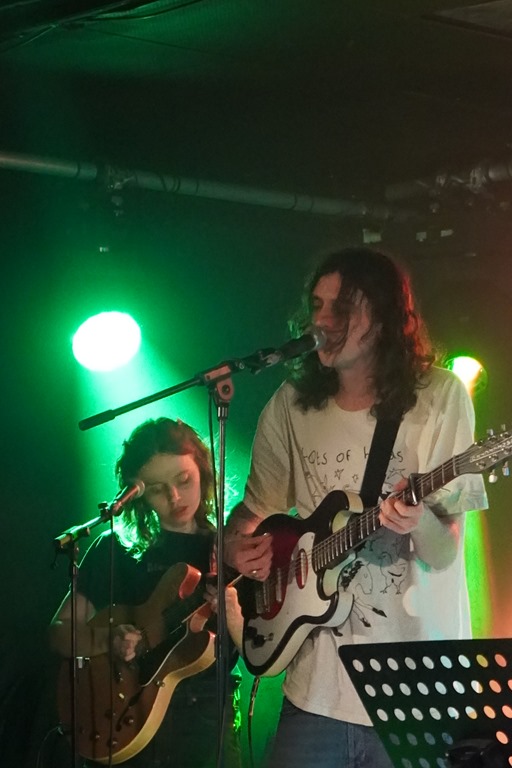
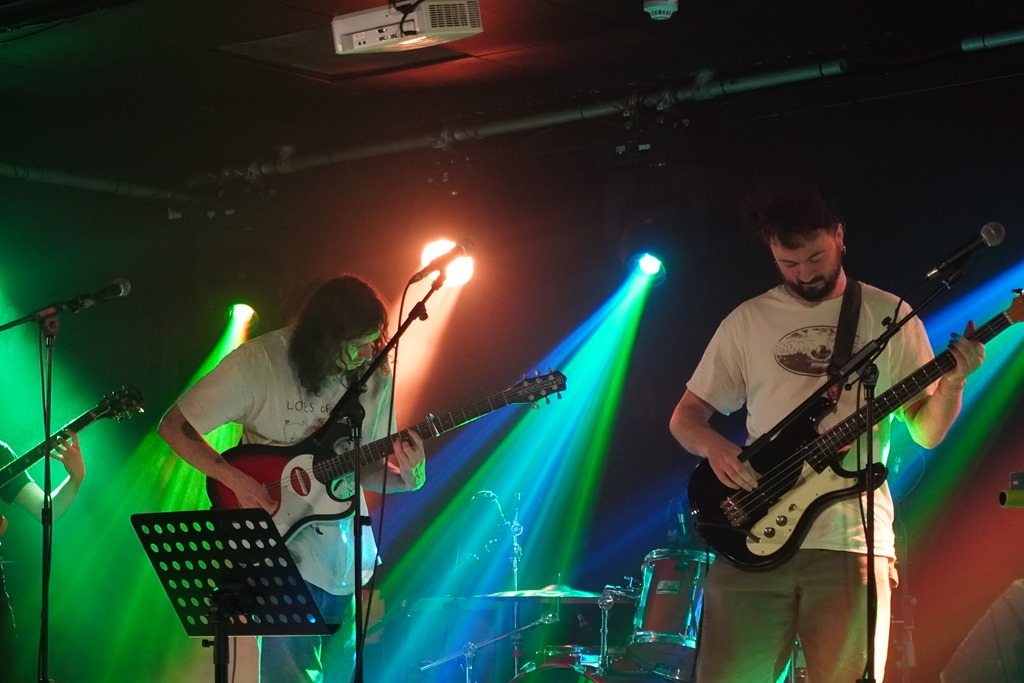
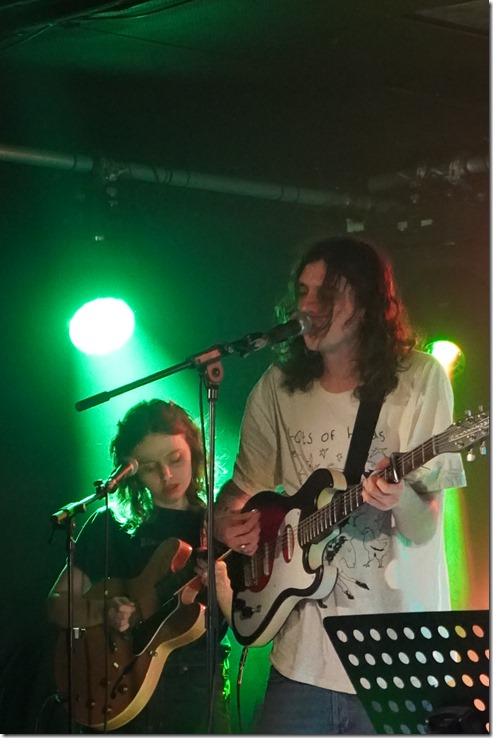
Before they launch the album, Nature Kids – a band who’ve been gigging around York for a while but I have no experience of – warm things up, and they’re nice. That’s not ‘nice’ in the bland, insipid way, but the enthusiastic way. They serve up a set of mellow indie, which is both happy and sad at the same time. There’s some nice twangy country tones and subtle keyboard work, and some saw action, too. ‘Always’ goes a bit post-punk and has a tidy groove to it, and is a standout in a set of consistent quality. The lead guitar is what really stands out – although it’s subtle and understated, to the point that it takes a few songs to realise what it is about their sound that’s so magic. No two ways about it, this is a gem of a band.
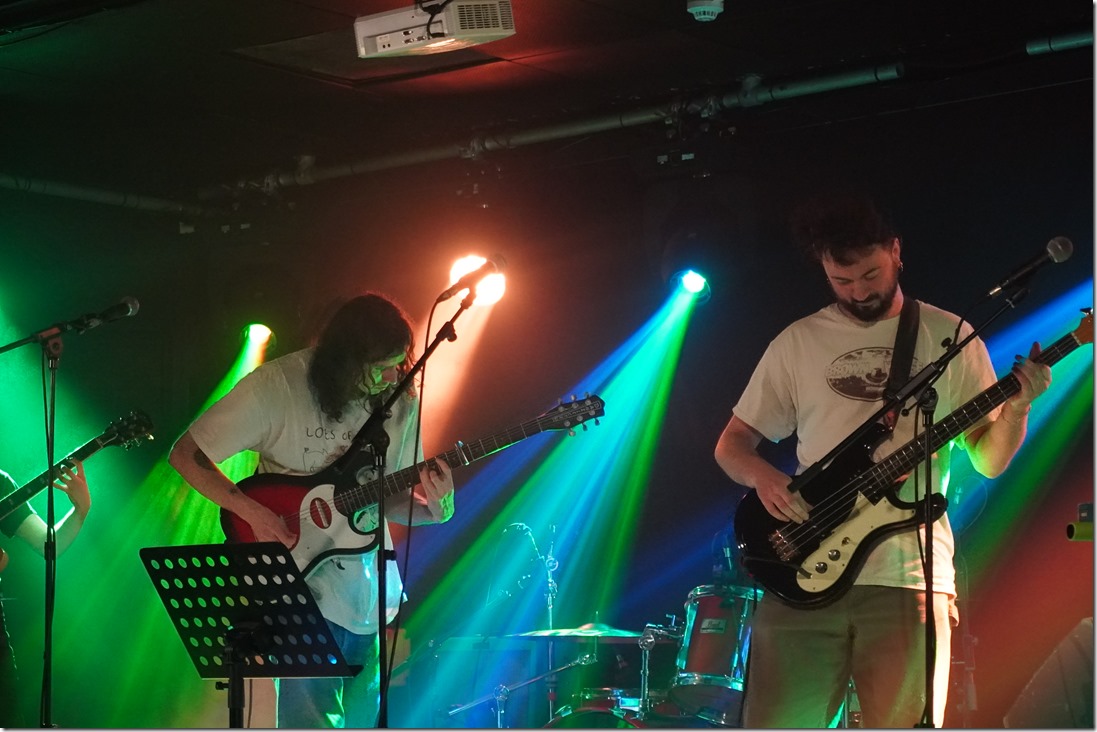
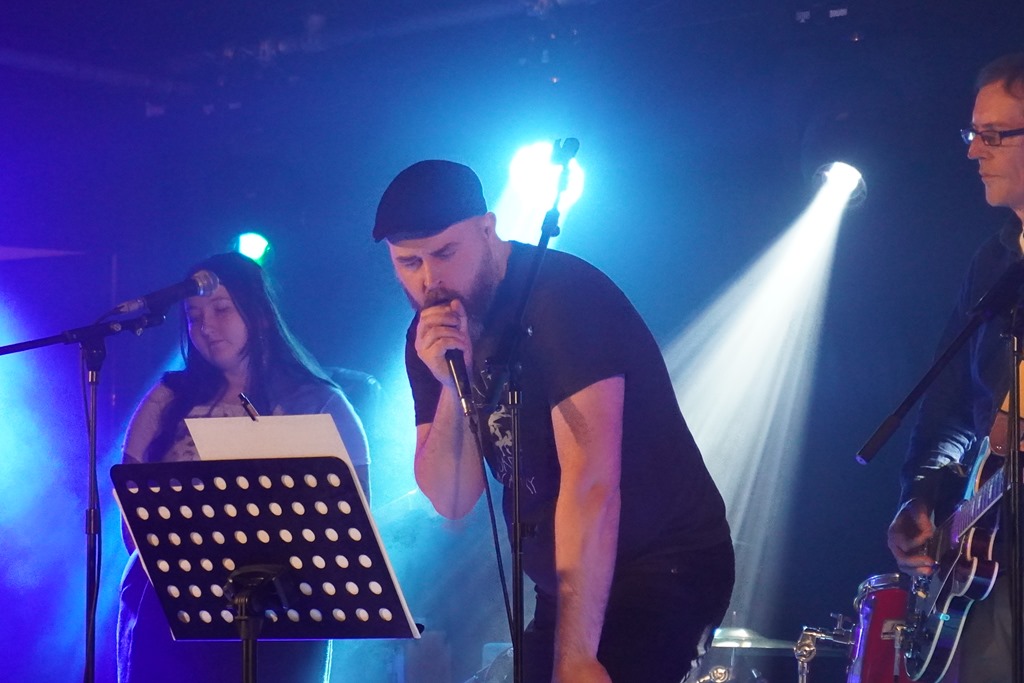
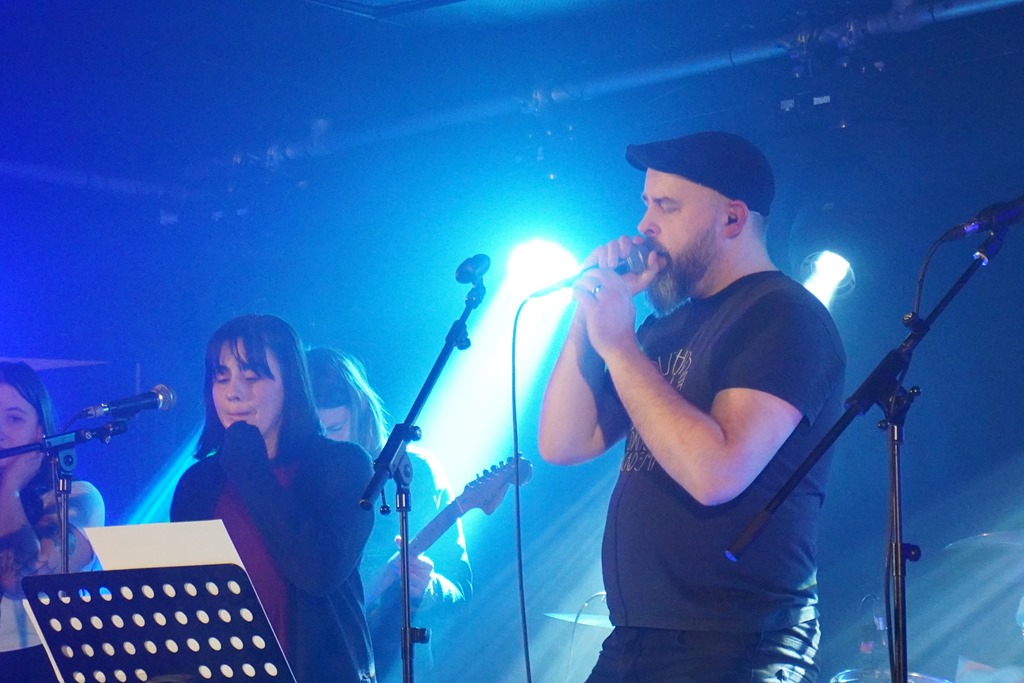
DSC01079DSC01082

Nature Kids

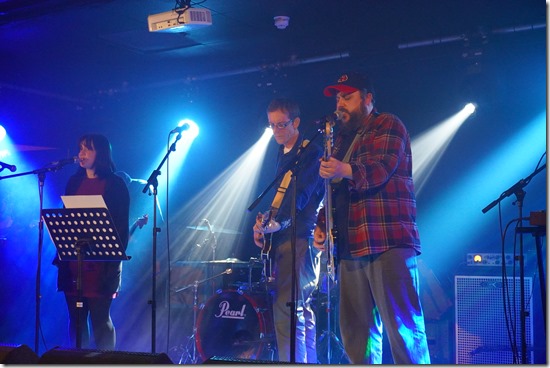
The Illness is not so much a band as a collective, and just as the album has a roll-call of guest contributors, so they present an ever-changing lineup on stage. There are never fewer than six of them, but sometimes as many as eight, and there is instrument and position-swapping galore, with vocal and bass duties switching all over.

Much of the time, they have three guitars, bass, drums… but there are some synths happening, and their sound is an immaculate blend of indie, prog, epic psychedelic space rock, all executed, if not with precision, then behind a curtain of shimmering sonic fireworks, from blooming roman candles to the spirals of Catherine wheels.
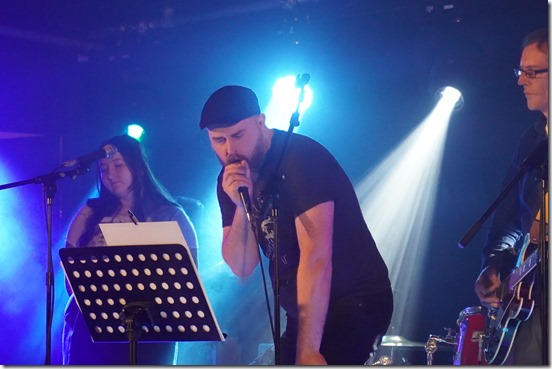
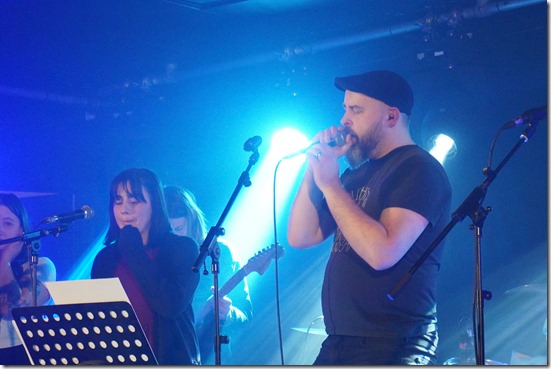
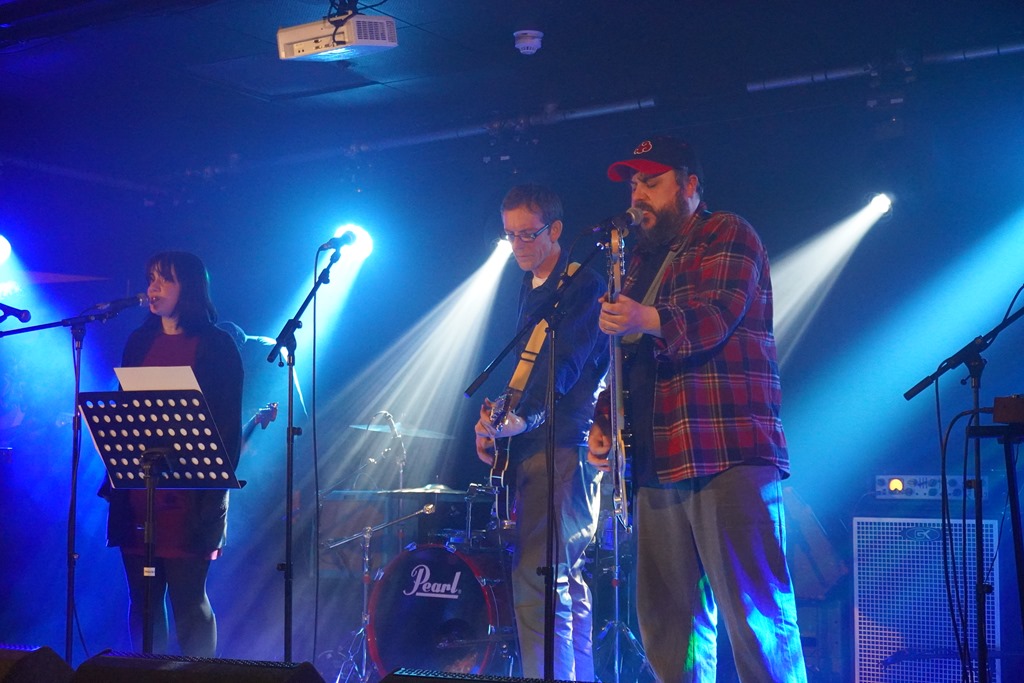
DSC01087DSC01101DSC01097

The Illness

‘Speedway Star’ is the second song of the set, and it’s laid back but had a certain grip. The album version featured David Pajo, and the question keeps arising: how? Ultimately, it doesn’t matter: what matters is that their set – a mere forty-five minutes – is something special.

The final song of the night is a full-on motorik wig-out, and it’s absolutely magnificent, with two trilling synths and two guitars, it’s equal parts Stereolab and Early Years (do better comparison). Danny (Wolf Solent, etc, a man who’s essentially a one-man scene in York and who I gather is a late addition to the band’s lineup) , who’s been keeping restrained throughout goes all out with a blistering guitar workout

The Illness may be well under the radar and well underachieving – given their connections alone they ought to be massive, never mind the fact they’re uniquely brilliant – but perhaps that will change given the brilliance of the album and superb shows like this. The Illness are totally sick… right?
Tidal Wave Records – 6th September 2024

Christopher Nosnibor

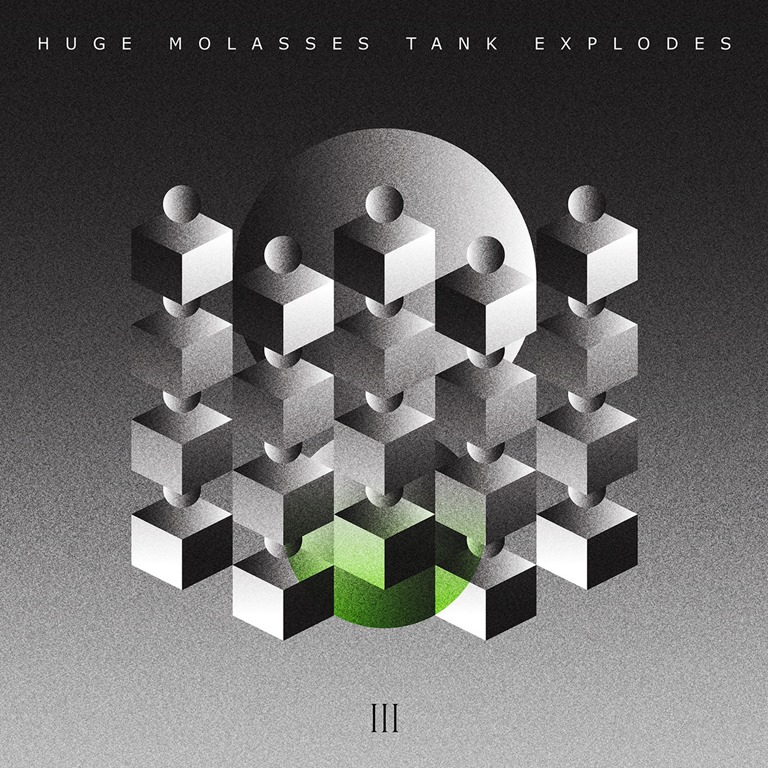
Advance single cuts ‘Indeterminate’ and ‘Distant Glows’ whetted the appetite for III, the latest long-player from the cumbersomely-monikered purveyors of swirling psychedelic rock with a propensity for motorik rhythms. And the album does not disappoint.

Sure, there’s an element of formula here: sprawling psychedelic rock may have its roots in the 60s, but the 90s revival really cemented the form, and since then, it’s just kept on coming in wave after wave: it’s never really been totally on trend, but it’s never been out of favour, either. But when done well, it’s utterly enthralling, and Huge Molasses Tank know exactly what they’re doing here.

After a short, shimmering keyboard-led intro, first single ‘Bow of Gold’ wafts in like a heat haze, a steady, trickling melt of tone and texture – mellow, bleached-out hues ripple as the guitars bend and drift, bleeding into the mid-paced flow of the cloudlike ‘Tenuous Form’, where I’m reminded of Nowhere-era Ride, but also – perhaps less well-known but no less worthwhile – The Early Years. Time simply floats into a passing drift, and in your mind’s eye you see vintage photographs and movie clips, the oversaturated colours glaring and the details, the faces and forms blurred. Five minutes, six minutes, as you become immersed within the hypnotic flow of each song, time and reality evaporate in a sonic haze. It’s beautiful. Compelling and calming in equal measure, you start to feel your limbs loosen.

I’ve no great insights or exploratory reflections to posit here, no theories or musings: I simply find that music of this ilk hits a certain spot. You can sit back and let it unwind, and unwind with it. The original 60s sound may have been revived in the 90s, but since then it’s been a cyclical return to the space in between these as the past is filtered through endless contemporary filters and refractions, and receded further into the distance.

‘Indeterminate’ brings the synths to the fore and is more assertive and overtly Krautrock in its stylings, but still possesses that essential depth and dynamic which drives the more guitar driven songs – among which the penultimate track, ‘The Fall’, stands out with some solid riffery in the wake of the more dreamy, drifting, less overtly structured lower-paces ‘Eerie Light’. Yes, here they bring to energy and some pace, highlighting the album’s range. But for that range, III is a coherent work which pulls together the corners of all things psychedelic, and its quality is consistent – and it sure is a groove.

AA

a0971484828_10

Cruel Nature – 26th April 2024

Christopher Nosnibor

Just as their album was smashing the charts and the band were riding the crest of the wave, the shit hit the fan for The Last Dinner Party over a quote about how “People don’t want to listen to postpunk and hear about the cost of living crisis any more.” Of course, it was taken out of context, and all the rest, but I’ve got no truck with any kind of critique from a bunch of boarding school poshos: of course they can peddle theatrical escapism, because they’ve spent their entire lives in a Gatsby-like whirl of posh frocks and soirees. The name is a bit of a giveaway: only people of a certain position in the social strata ‘do’ dinner parties, dahling, no doubt sharing culinary delights discovered while trotting the globe on their gap yahh. Meanwhile, half the country is at the point where it struggles to afford a McDonald’s, let alone gastropub grub.

It might sound counterintuitive to those so far removed from the reality endured by the majority – the Jeremy Cunts and Rachel Johnsons of the world who reckon £100K a year isn’t much – but music that reflects the grim realities of life are what people do want. Life juggling work and parenting while struggling to make ends meet can be not only stressful, but isolating, and so music which speaks of the harsh realities serves as a reminder that you are not alone. It’s relatable in the way that soaps are for many.

As an aside, I saw a post from a (virtual) friend on Facebook recently commenting that every time they visited Manchester, it pissed it down, and it so happens that this is my experience also. It’s small wonder, then, that Pound Land are such miserable mofos, and again, contrast this by way of a band name with The Last Dinner Party. This is an act that’s gritty and glum and telling it like it is. And you know how it is – and how bad it is – when stuff in Poundland, the shop, costs £1.50, £2, even a fiver. Back in the 90s, you could got to Kwik save and get a tin of No Frills baked beans for 3p and a loaf of bred for 19p.

It’s perhaps because of just how far downhill and how fast it’s happening – in real time – that with Mugged, Pound Land have delivered their most brutally blunt and utterly squalid set to date.

‘Living in Pound Land’ is a brief blast of an intro, atonal shouty pink with some wild parping jazz tossed in, and it hints at what’s to come: ‘Spawn of Thatcher’ is dirty, disdainful, spitting and snarling vocals hit with a grunt and a sneer amidst a cacophony of jazziness held together by a saw-toothed bass grind.

There are hints of The Fall in the mix, a dash of the raging fury of Uniform, too.

As ‘Flies’ evidences, they’re not all one hundred percent serious: against a pounding drum machine reminiscent of Big Black and a bowel-tensing bass, we get a yelping pseudo-John Lydon vocal going on about flies in his underpants.

The nine-minute ‘Power to the People’ is the album’s centrepiece, literally and figuratively. A slow, groaning behemoth, it thuds and grinds away for nine and a half minutes, coming on like ‘Albatross’ for the 2020s (That’s PiL, not Fleetwood Mac) mixed with a Fall cut circa ‘Slates’ played at half speed, its grinding repetition emerging more at the Swans end of the spectrum. It’s ugly, it’s unpretentious. ‘Power to the people! Make everything equal!’ slides down to a rabid howl of ‘be happy with what you’ve got’, exposing the lie of meritocracy and social mobility. The album’s second ten-minute monster, ‘Shish Doner Mix Apocalypse’ is a brutal shredder – like much of the rest of the album, only longer.

Contextually, one might be inclines to position Pound Land somewhere alongside Sleaford Mods and Benefits, but they’re a very different proposition – sociopolitical, yes, but more overtly rock in musical terms, mashing up punk, post-punk, krautrock and noise rock. And then there’s that manic jazz streak.

The snarling racket of single cut ‘Pistol Shrimp’ is both representative, and as nice as it gets. That is to say, Mugged is not nice: in fact, it’s harrowing, gnarly, overtly unpleasant. But it is also entirely necessary.

AA

cover

5th April 2024

Christopher Nosnibor

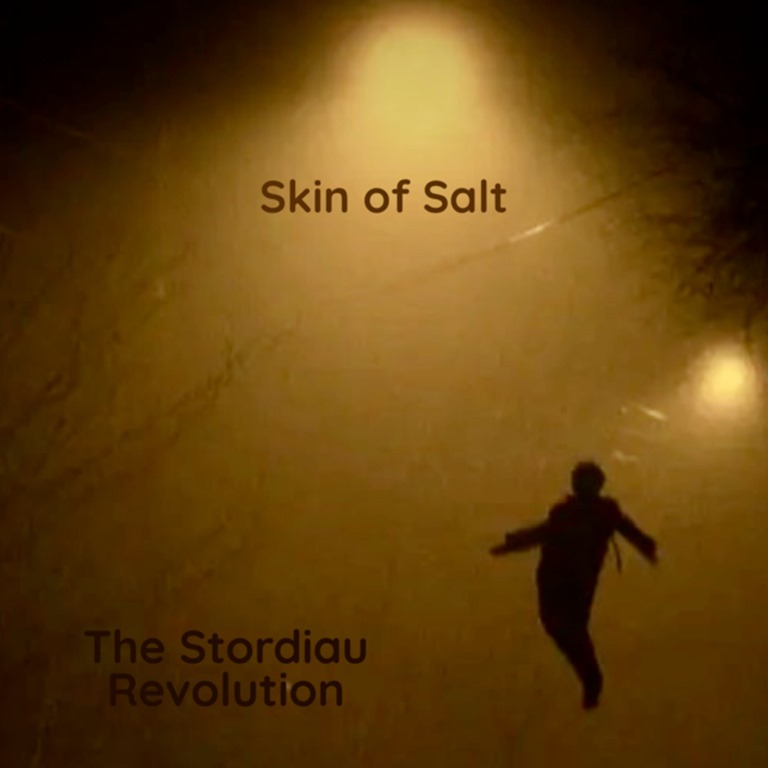
It’s been almost four years since I encountered Alaxander Stordiau, when I covered the single release by The Original Magnetic Light Parade, a collaboration between Stordiau and Edinburgh man, Harold Nono, on perennially oddball label Bearsuit Records.

With minimal info about that release – and not much more about this one, I’m mostly left to grapple with the music as it presents itself, with minimal content. This is good: and so is this EP.

A brief Internet delve uncovers that the material on this this EP was initially released a year ago, as part of an album-length work bearing the same title, slipped out on Soundcloud. Now, there are plenty of albums I think would have made decent EPs – or 7” singles – but there’s no reason to believe Stordiau has whittled this set down due to any issues with quality, and it does seem that it’s often easier to pitch an EP than an LP in our attention-deprived times. If I were to go all-out on a personal obsession, I’d make a greater deal of the fact that this four-track cut has aa running time of twenty-three minutes. There’s nothing to suggest Stordiau is a fan of William S. Burroughs or otherwise beholden to the ‘23 Mythos’, but the fact it does have a playing time of twenty-three minutes was of note to me, simply because. The twenty-threes just keep on coming.

And so to the music itself. ‘Fear Merges Easily’ is something of a teaser, an introduction, an atmosphere-builder, with wavering synth undulations creating a nice, even flow over a shuffling beat that sits off in the background. It’s got groove, but it’s subtle, and overall, it’s pretty mellow. It doesn’t ‘do’ much: one gets the impression it’s not supposed to, and nor is it necessary for it to do more. It’s vaguely background, it has some classic eighties electro and krautrock elements to it, and enough texture to keep it engaging.

‘Hearing the House Breathing’, stretching out to almost eleven minutes is the centrepiece and defining track here, and what’s interesting is how it’s centred around a core motif and built upon a solid spine of subdued beats, pulsating bass, and nagging synth shapes, but shifts and moves through a succession of segments. It’s dancey, but at the same time, it isn’t. and there are gasping, whispering vocals wheezing beneath the waves of undulating analogue ripples. Around the mid-point, it breaks into a more energetic mood, the bubbling synths bouncing over a lively robotic electro beat dominated by the whip-cracking snap of a vintage drum machine snare sound. Everything gets quite busy, and a shade hazy around this point, there’s a lot going on, and not all of it synchronous. I can’t be alone in finding this kind of busyness induces not a trance-like state, but one of feeling dizzy and vaguely overwhelmed, an experience not dissimilar to sitting in a busy pub or coffee shop and being unable to focus on reading or the conversation in front of my face for the distraction of all the babbling noise filling the air all around.

Things take a turn for the eerie, the proggy, the spacey, on the trilling title track, where a creeping dark chord sequence sits beneath altogether more vibrant tones, before giving way to a sloshing ebb and flow overlayed with some barbed organ, and there are moments here that remind me of Gift by The Sisterhood, Andrew Eldritch’s project between phases of The Sisters of Mercy: specifically, the notation the chilly closer ‘Rain From Heaven’. Closing off, ‘The Sting of the Lie’ is a relentless, cyclical composition over which blasts of wavering, quavering keyboards wander and spin.

Skin Of Salt brings together a range of elements, and not always comfortably. But why should music be comfortable, why should it always be easy, accessible? What’s wrong with discord and dissonance, lumpiness, discomfort? Why, nothing, is the answer. Life is brimming with discord and dissonance, lumpiness, discomfort. And without these elements, this would just be a bland hybrid of dance and ambient. Thankfully, it is so much more. Skin Of Salt isn’t mere mental chewing gum, but something which requires some proper chewing and a slow digestion.

AA

artwork-album_Skin-Of-Salt

Crazysane Records – 24th Nov 2023

Christopher Nosnibor

The press release describes Zahn as a ‘German post–modern noise rock ensemble’, while their bandcamp bio offers ‘A bold escape from your daily life through technicolor transmissions of post–rock, krautrock, dark jazz, noise–rock, post–punk and electronic music. Influenced by the likes of TRANS AM, THE JESUS LIZARD, METZ, THE MELVINS and TORTOISE’, adding that ‘Adria is a compelling soundtrack to a 1980’s anti–utopian road movie!’

As a prospect, it’s head-spinning, sounding like an everything-all-at-once hybrid, and the actuality isn’t much different. There are plenty of driving grooves, largely propelled by solid bass and insistent drumming, but there are also some angular riffs and big splashes of noise.

The first track, ‘Zebra,’ boasts a bulbous bass with some big low-end and some easy, noodly synths which wibble and wander agreeably and mellifluously… and then towards the end it builds and distorts and things get altogether more twisted and less pleasant. And this is a feature characteristic of the compositions on show here. They don’t mash everything into every second simultaneously, and there’s none of that jazz / Beefheart kind of stuff that sounds like each band member is playing a different tune in a different key and time signature all at the same time. There are times where that kind of avant-gardism most definitely has its place, and works, but this isn’t what Zahn are doing here. In keeping with the road movie concept, the pieces are constructed around transition.

The ten-minute ‘Schmuck’ is a magnificent example of their ability to do mellow, with clean sounds and even a tinge of a country twang, it swings along breezily and evokes sunshine and expansive vistas. Then, near the seven-minute mark, the bass steps up to a crunching grind and things get a whole lot noisier, from where it builds into a big, driven riff which crackles with energy. ‘Yuccatan 3E’ is another colossus of a cut, running to almost nine and a half minutes and manages to take it time in pushing outwards and working a single passage for a fair while, but equally packs in at least three or four songs’ worth of ideas.

The changes feel organic, and sometimes emerge gradually, and at others there will be a sudden and unexpected swerve, and there’s so much happening that the absence of vocals barely registers.

Because the mood, tone, and tempo differs so radically between songs – and between sections – Adria very much does feel like a journey, through space and time. ‘Apricot’ is a sparse synth work with crispy vintage drum machine snare cutting through quavering analogue synth sounds – then, without changing the instrumentation or the simple repetitive motif, it goes massive. A post-rock Depeche Mode chronically undersells it, but it’s as close as I can get, at least off the top of my head. The final minute is an extravagant climax, and truly magnificent.

The majority of the album’s eleven tracks run past five minutes, with the majority sitting more around the seven-minute mark, but the eleven-and-a-half-minute ‘Faser’ is the album’s megalithic centrepiece. It blasts hard with a fuzzy, scuzzy repetitive riff cycle with stoner rock tendencies, and it’s dynamic and exhilarating. Dropping down to bubbling synths in the breakdown around six minutes in, the threat of a re-emergence of the heavy lingers suspensefully. When it does land, it does so with a vengeance, before transitioning once more into something altogether different again, skittering its way into Krautrock territory.

The power blast of ‘Tabak’ hits square between the eyes and feels unexpected however expected it actually is. These guys are absolute masters of the unpredictable and varied structure, and conjure some highly evocative and atmospheric passages, and while the playing is technical, it’s not technical for its own sake: there’s nothing showy or extravagant, and the focus is very much on the compositions, the structures, and the impact. ‘Amaranth’ piledrives a full-on doom riff, slogging away at it for what feel like an eternity. It’s a heavy trudge, and really hits the spot – again, when you least expect it.

Adria straddles many, many genres, and does so in a way that’s incredibly imaginative. The key to its success is its execution, which balances precision with passion.

AA

a0822649105_10

Thanatosis produktion – 24th March 2023

Christopher Nosnibor

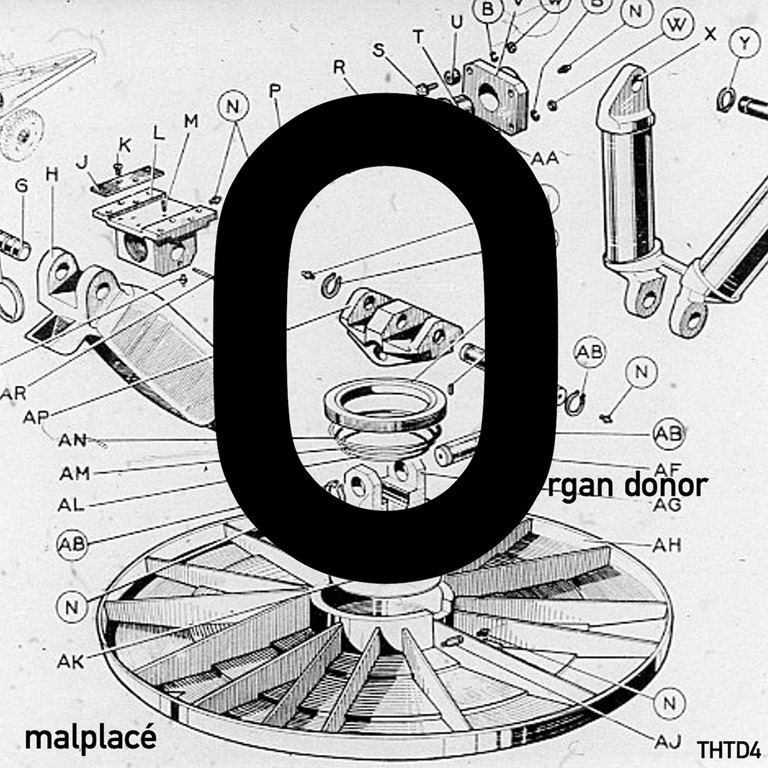
Having frothed with enthusiasm over Mammock not so long ago, I was particularly thrilled to discover Organ Donor, a Swedish/Greek outfit featuring members of Viagra Boys, Grismask, VÖ, Mammock, Angles, Fire! Orchestra, Aurora Ensemble, CBVB and the Mute. Admittedly, I’d expected something more guitar-driven and noisy in the rock sense, but expectations are best when confounded.

Malplacé evolved through improvisation, resulting in what they describe as ‘6 diverse yet coherent tracks, spanning from instrumental kraut, to mystic themes perhaps reminiscent of John Lurie or Loren Connors, to dark, minimal pulsating improv and punkish, full-on, noise outbursts.’ Diversity and coherence tend not to converge too commonly, and in truth tend to sit at opposite ends of the spectrum.

As the rippling vibes and subtly trilling horns of the abstract jazzy post-rock of the first track, ‘A Sleeping Beauty’ meander their way from the speakers, I’m struck by just how far a cry this is from Mammock and The Viagra Boys, and, on reflection, this is something to be pleased about. Why have a collaborative side project that sounds like your main project? It’s like having a hobby that’s the same as your dayjob. You can insert your own example here, because, well, I can’t help but feel that too labour  the point with explicit examples would be crass.

‘Touch’ spills jazz juices across a chiming guitar that jangles over an insistent yet mellow groove, where post-rock meets psychedelia and krautrock. Sometimes, for a moment, I find myself wishing there was slightly less sax, but then, again, the overloading nature of the jazzery is what makes this what it is, and things get really scratchy and discordant on the ten-minute ‘Stemless’. This is one of those freeform pieces that hurts the brain. Everything jars and flits, and toots and parps, squeaks and squawks and twangs and pings, like rubber bands being stretched and plucked across pans and bin lids, bowed notes bend, drone and grind, and it sounds more like a scrap than a song. It groans and wheezes and stutters and heaves, to the point that it’s enough to induce motion sickness.

‘A Sleepwalking Beauty’ provides a welcome moment of rest and tranquillity, before ‘Power Tools’ goes all out on the avant-jazz noise frenzy trip. It’s noisy, noisy, and noisy, a wild chaotic and cacophonous blast and an instant headache which feels a lot longer than a minute and a half.

In contrast, ‘Sci Fi Marmots’ is slow and smoky, an odd yet sedative piece where everything melts away into a haze. I’m tired, and need sleep. I’m all the more tired after experiencing the bind-bending chaos of Malplacé, but have to hand it to the guys in Organ Donor for creating an album that has the capacity to both exhilarate and drain the very life through aural excess. It’s a significant achievement.

AA

THTD4_art

Cruel Nature – 6th January 2023

Christopher Nosnibor

It’s something of a relief to discover that Score’s seventh long player for Cruel Nature isn’t some gentle exercise in self-help and mental health wellbeing, or otherwise the soundtrack to some existential post-pandemic breakdown – because the former are utterly fucking nauseating, and the latter, while I’m all for those primal screams of anguish, which I often find relatable, at least to an extent, variety isn’t only the spice of life but the key to staying within the marginal parameters of sane in an insane world. No, COPE, recorded in six weeks at the end of 2022, which somehow feels like a long time ago now already, takes its title from Julian Cope.

As the blurb explains, ‘the album was directly inspired by the musical descriptions to be found in the autobiographies of Julian Cope: Head On and Repossessed. Using Cope’s impassioned words as instructional starting points for each track, COPE references Mott the Hoople, Patti Smith, CAN, Duane Eddy, The Doors, Suicide, Dr John, Sly & The Family Stone and more.’

Julian Cope of one of those people who I’ve long been somewhat perplexed by, and, truth be told, haven’t spent too much time investigating, either musically or biographically. He has always struck me as having a career less centred around his relatively low-key musical output following a degree of commercial success with The Teardrop Explodes, and more around the fact that he’s Julian Cope. Some may want to set me straight on this, but right now, I don’t need to hear it, and a familiarity with the source material shouldn’t be a prerequisite of my ability to critique the work at hand, which interestingly, in drawing on his biographies, only serves to further indicate that Julian Cope spends more time writing about being Julian Cope than making music I need to hear.

COPE is a document to creativity under intense circumstances. To quote from the accompanying notes, COPE was ‘recorded as it was written, in one or two takes in a tiny garage and drawing on an old quote from the arch-druid himself as a creative manifesto: “It had to be very cheap, very fast, very loose. I needed to be an ambassador of looseness”’… ‘COPE is an exercise in embracing limitations and existing in the moment, a lyric-less love letter to Rock ‘n’ Roll itself, and a one-word command to the fried modern human.’

Containing nine instrumental compositions, COPE is a pretty demented journey, an absolute rollercoaster of a ride, that swings between psychedelia and krautrock, twangy desert rock, swampy jazz, with the six-minute ‘Brick’ bringing it all together with a Doorsy kind of trip with the added bonus of some woozy brass in the mix. ‘On The One’ goes deep into a funk workout that grooves hard, but ‘Old Prick’ stands out for its darker post-punk feel that suggests it could almost be a Psychedelic Furs or The Sisters of Mercy demo. The twelve-and-a-half-minute ‘Softgraundt’ is more than just expansive in terms of duration, and is a multi-faceted musical exploration that wanders hither and thither, shifting, evolving, a dozen or more songs in one. And perhaps this is the key to COPE – both the album, and the man. It’s everything all at once, and it’s more than you can really keep up with. It’s a challenge, and one I’m not entirely sure I’m up to, but there’s never a dull or predictable moment here.

a1384536327_10

Panurus Productions – 2nd December 2022

Christopher Nosnibor

Panurus Productions are renowned for their favouring of pop and jaunty indie on their catalogue, but as the title suggests, they’ve really excelled with the saccharine-sweet, shimmery Christmas bauble stylings on this December release by Distant Animals, the vehicle for Daniel Alexander Hignell.

The accompanying blurb sets the pitch for ‘A scuzzed out synth/noise/punk affair… straddling a range of genres but never settling on any one of them for long, shifting around with an angry, anxious energy directed at our bleak status quo.’

Granted, this does mean it’s nowhere near as abrasive as recent releases from Trauma Bond or as dark as Carnivorous Plants, this is a hybrid form that coalesces to convey the sound of post-industrial nihilism.

The synths drive and dominate the sound, and they’re layered into thick, foggy swirls pitched against grinding, fuzzy-as-fuck sequenced bass and a drum machine that’s largely submerged beneath the swelling squall. The opener, the eight-and-a-half-minute ‘Greetings from the MET Office’ builds and builds into an immense wall of sound, the guitar adding layers off noise and feedback rather than melody. There is a tune in there, somewhere, and vocals, too, buried in a blitzkrieg that sounds like Depeche Mode covered by My Bloody Valentine and then remixed by Jesu or Dr Mix and the Remix.

‘Phase Down and Sweat to Death’ gets dubby, with samples and snippets cut in and out of the mix, and actually finds a murky, echo-drenched groove in places, before veering off on myriad detours.

As titles such as the title track and ‘Panning For Shit In The Shallow End’ intone, this is far from a celebratory collection, with the delicate and brittle-feeling ‘Hegel’s Violin’ sounding like it could have been penned by The Cure circa Seventeen Seconds, and yes, it’s fair to say that there are what some may refer to as ‘gothic’ elements to the brooding sound.

If songs titles like ‘Fondly Remembering When Primark was a Woolworths’ and ‘They Didn’t Have Snowflakes In 76’ might suggest that Hignell’s been gorging on the Memberberries, but on the evidence there is, buried away in trudging industrial sub-zero trudges and stark, oppressive abstraction, this couldn’t be further from the truth, and we can appreciate these compositions as critiques of the multi-billion-pound nostalgia industry and Brexit Britain, where narrow-minded twats get dewy-eyed all over social media reminiscing over false memories of a golden age that never was. ‘They don’t make ‘em like they used to…’ It’s patent bullshit of course, but so many subscribe to this that, well, it must be true that The BBC haven’t screened Monty Python in decades because they’re woke lefties (and nothing to do that after airing it in 2019 for the fiftieth anniversary, the rights were purchased by NetFlix), and Stranger Things is only good because, well, it’s like The Goonies, isn’t it?

‘Panning for Shit’ is sparse, minimal electro that borders on Krautrock, and is the sound of drowning, not waving from our turd-encircled island, and there are many elements of this album which seem to align with the bleak perspectives and sounds of early industrial acts like Throbbing Gristle. But, to be clear, these are simply touchstones, rather than direct comparisons. Everything Is Fucked And We Are All Going To Die may evoke a sense of familiarity and a strange sense of déjà-vu, but ultimately presents a unique view and amalgamation of influences and stylistic references, and herein lies its true strength.

AA

a0758660749_10