Posts Tagged ‘Jazz’

Textile Records – May 2018

Christopher Nosnibor

Just as I don’t really do jazz, I don’t much do country, either. But for every rule – or perhaps more of a broad, general guideline – there necessarily has to be an exception. So here I am, sipping hot black coffee having just ejected an album by Marc Sarrazy and Laurent Rochelle, which goes way over the limit on the jazzometer and has left me shaking my head and thinking there’s just no way I can review that objectively, and looking at a plain white paper sleeve stamped with six song titles under the header ‘J.O.M.F BLOOM’.

The biographical commentary that ‘the band is moving more slowly these days, with core members Tom Greenwood and Michael Whittaker living in the more rural corners f Northern California’ is perhaps an understatement: Bloom was a full three years in the making. But it’s not just its evolution that was gradual: compositionally, too, the pieces are slow-growing and sparse. The quietly picked guitar notes resonate outwards as woodwind trills over the hills on the instrumental intro piece, ‘Pipe’ It’s kinda quiet, sort of ambient. A sudden swell of noise ends abruptly to make way for the sedate country ramblings of ‘Radiating’. If you dig downbeat country tines that drag on for over eight minutes, this is going to do it for you bigtime. If you don’t… It’s laid back to the point of horizontal, the lyrics drawled rather than sung, and as such decipherable only in snippets.

But while this is very much a country album, it’s anything but conventional or straight ahead overall. ‘Wreck’ is slow-building, initially just guitar and Greenwood’s cracked croon. But before long, a tumult of crashing cymbals, overloading electric guitar feedback and straining saxophone create a glorious cacophony. Wild brass and woodwind shriek and squeal all over the raucous stomp of ‘Strike’. A sort of country/blues heart pulses beneath the chaotic racket that pummels in all directions and drives toward the horizon of abstraction. ‘Wildgeese’ brings dolorous trudging before the lo-fi plod of ‘Golden Bees’ thuds its way to the album’s conclusion in a muddy haze of echo.

On Bloom, Jackie-O Motherfucker fuse the mellowest, most downcast of country with the most awkward jazz dirges, which drone and wheeze and scrape at divergent angles across the linear country compositions. It may be country at its core, but it’s a whole lot more.

AA

Jakie-O Motherfucker

Play Loud! Productions – 13th April 2018

Christopher Nosnibor

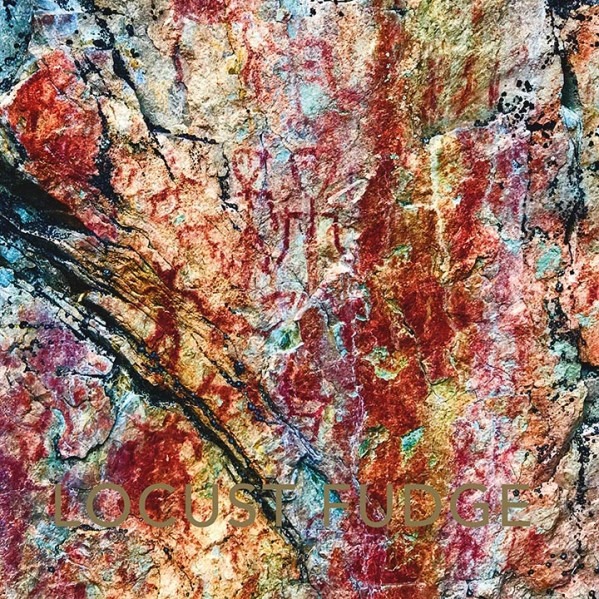
My first thought on hearing the opening bars of the album’s first track, ‘Light & Grace’ is ‘wow, this sounds just like Dinosaur Jr!’ My second thought, on the vocals starting is ‘No way, this really sounds like Dinosaur Jr!’ Sure enough, J. Mascis is listed among the long list of collaborators on this, the first Locus Fudge album in 20 years. Mascis has nothing if not a unique signature sound, often aped but never replicated. The track in question rumbles along for over eleven minutes, the singing soon giving up for the guitar solo to do the talking. Less characteristic of Dinosaur Jr is the way in which the solo comes to battle against a rising tide of extraneous noise, and the song itself finally collapses to a churn of dark ambience and feedback. As it happens, large chunks of Oscillations sound very Dinosaur Jr, and the overall vibe is very much late 80s / early 90s US alternative rock.

This is also very much the sphere to which Locust Fudge belong: their two previous albums, Flush and Royal Flush, released in 1993 and 1995 respectively, were released on Glitterhouse and saw the German duo aligned to the grunge movement. The EP, Business Express (1996), saw them push into more electro/industrial/krautrock territories, and even include overt elements of drum’n’bass in the mix. Those records are almost impossible to find now and the YouTube uploads of the tracks aren’t available in the UK. There’s something strange about the idea of being unable to access something on-line now. Whatever happened to the global village? Marshall McLuhan and Quentin Fiore pitched the global village as the territory of electronic media; with territorial divisions over music rights, it feels much more like a map of war than a plan for peace.

Oscillation reminds of simpler times – but more than that, seems to belong there. It’s not merely a nostalgia work, but a heartfelt return. You can’t exactly criticise a work for being ‘derivative’ when the bulk of the artists it’s derivative of feature.

‘Hormones’ slips into the easy but wonky country vibes of Pavement, while the motoric groove of ‘No Defense’ has some gloriously skewed guitar work. And then…. then there’s a wild frenzy of discordant jazz all over the middle eight. The big sax break on ‘Something’s Wrong’ comes on like The Psychedelic Furs, over a big, crackling valve guitar buzz, a melody reminiscent of Dinosaur Jr’s ‘Turnip Farm’, and lyrics that appear to present a process of self-dismemberment.

It’s a great album – not of its time, but of its spawning era. And now I’m off to revisit You’re Living All Over Me. Just because.

https://playloud.org/archiveandstore/trailers/locustfudge/trailercode.html

AA

locust-fudge-oscillation

Christopher Nosnibor

It’s fitting that a band as wildly eclectic and sonically unpredictable as Bearfoot Beware should have a suitably varied and contrasting but complimentary lineup of bands on the bill for their album launch show. And it turns out that tonight is a night of energetic bassists.

Ganglions’ bassist is almost swamped by her instrument, but she kicks out some thumping basslines around which the Sheffield trio forge an unusual blend of grungy post-rock jazz with melody. It’s an unusual blend. Some moments border on the twee, a shade muso, even a touch indulgent in their noodliness, but their tightness carries the complexity of the songs’ structures and nagging, interloping guitar motifs which even incorporate currents of reggae and skiffliness. They’ve also got enough energy and drive – both the songs and the band themselves – to make it all pull together, making their set engaging and entertaining.

Ganglions

Ganglions

It’s quite the leap to go from a compact three-piece unit to the sprawling ten-legged groove machine that is ZoZo. RSI means that front man Tom has had to ditch the guitar and stick to vocals only. The two vocalists are set up in front of the small stage, and Fred really throws himself into the choppy, cutty guitar parts.

However, it’s the exuberant lunges of bassist Joe, who cranks out some driving bass noise, that provide the band’s most striking visual focal point, while sonically, it’s the big, raucous, sax sound that defines the band’s brand of art-rock. Their frenetic funk fusion calls to mind aspects of Gang of Four, Talking Heads, and Shriekback, but their more flamboyant inclinations and pop sensibility perhaps owes more to acts like The Associates, ABC, and Orange Juice. They’re as tight as they are lively, as well as being good fun.

ZoZo

ZoZo

Bearfoot Beware blur final soundchecking with the actual set, lurching headlong into scorching rendition of ‘Point Scorer.’ It’s a hell of a way to introduce the new album to the crowd, and they follow with a couple more newies before touching on the back catalogue. The songs twist, turn, lumber and lurch unpredictably, and as I watch them, I can’t help but wonder just how much they must rehearse to memorise the complex song structures and play every change with such precision. They don’t just play, either, but really perform. Again, it’s the bass player, Richard Vowden, who provides the axis around which the band spins, both as a physical and sonic presence. Energy emanates from him as he bounds and lurches around, legs going all over, a perpetual blur, his contortions almost literal interpretations of the musical compositions, while the chunky grooves hold down the spasmodic, fractured guitars.

Bearfoot Beware

Bearfoot Beware

Their Pavement meets Shellac meets No Age stylings make for an angular racket, but it this somehow suggests a band out of time and hung up on the US alternative scene of the 90s, its delivered with a twist that’s representative of the contemporary Leeds scene. It’s perhaps hardly surprising that a band whose members have established a rehearsal space and studio that lie at the heart of a DIY subscene all of its own should epitomise it.

I’ve digressed, and am no longer focusing on the set, but any launch event is only the beginning of a journey. Bearfoot Beware are here, and they’re now, and they’re kicking ass with Sea Magnolia. Tonight, they’ve thrown it out to Leeds, and tomorrow the world. It deserves to float.

Thrill Jockey Records – 17th November 2017

Christopher Nosnibor

The second collaborative album between The Body and Full of Hell, which collides with the earth like a meteor, and a mere 18 months after its predecessor, and just six months after Full of Hell’s full-tilt annihilation that was Trumpeting Ecstasy, it’s every bit as unremitting and remorselessly heavy as anything previous. It’s the sound of two uncompromising bands finding compromise by amplifying one another to the nth degree, meaning that Ascending a Mountain of Heavy Light is fucking intense, fucking heavy, and yes, even more fucking intense.

The accompanying blurb forewarns that ‘samples, synth, saxophone, and a drum orchestra all throb, and sputter, coagulating under the weight of the two bands. Programmed drum patterns and loops taking cues from hip hop are bent and twisted throughout, flawlessly emboldening the distortion drenched guitars and howling vocals.’ And did I mention that it’s intense?

Beyond the first few seconds of skittering synth oscillations, there is no light on the opening track, ‘Light Penetrates’. The crushing power chords land at tectonic pace, while the vocals – an impenetrable scream of anguish – are nothing more than a primal scream of pain. And then the jazz shit beaks loose, with horns squealing like tortured pigs bleeding in all directions.

There’s nothing pretty about this, but occasionally, from amidst the screeding walls of amorphous racket emerge full-throttle stoppers, like the pounding ‘Earth is a Cage’. Elsewhere, ‘Didn’t the Night End’ is a snarling, grinding, bowel-shaking racket of surging waves of noise that simply hurt. It’s the kind of snarling, grinding, bowel-shaking racket that makes you want to lie on the floor and curl up into a foetal position. It makes you want to die, and it certainly makes you long for the night – and the noise – to end, as it assails the senses from every angle.

The drum intro is nabbed from oh, so many tracks – a simple four-four thump of a drum machine bass – before everything explodes in a tempest of screaming industrial-metal fury. Early Pitchshifter come to mind, at least in the drum programming, but this is something altogether more psychotic in its unbridled fury, and in its amalgamation of paired-back hip-hop and industrial metal, all crackling with overloading distortion, ‘Master’s Story’ invited comparisons to the innovations of Godflesh – at least until it goes all crushing doom halfway through.

As with anything produced by either band, either independently or collaboratively, Ascending a Mountain of Heavy Light is not music for pleasure, and large chunks are little short of anti-music, blistering walls of sonic brutality built on discord with the most challenging of tones and frequencies explored to the max.

AAA

cover

Nakama Records – NKM008

Christopher Nosnibor

Strolling bass, graceful strings, rolling piano: these are the defining elements of Nakama’s Most Intimate. But if this sounds like it’s an album of romantic pastoral compositions, then this would be to misrepresent the range and expanse of the more experimental bent of the Most Intimate sonic experience. And none of this touches the

By way of background, Nakama is ‘a five-piece band led by Norwegian bassist Christian Meaas Svendsen. Nakama is Japanese and can be translated as ‘comrade’, or simply a community where no-one is above the other, but rather watches over one another.

The intimacy articulated on this album, then, is not of a sexual nature, but instead reflects the close interaction of artists working in collaboration. Can anything be more intimate than revealing the soul of one’s creative process, the core of one’s art?

At times discordant, at times venturing into free jazz, at times eerie, and at times playful, the album’s fifteen tracks bleed into one another to forge an aural journey. Over its course, the album demonstrates musical range and a certain depth. It’s not always fun, and it’s not always easy. But it’s never anything less than art. And the embossed cover is something special.

Nakama,

Gusstaff Records – 2nd September 2017

Christopher Nosnibor

It may have bene groundbreaking and have acquired a legendary status, but I have to confess to being unfamiliar with Mapa’s previous album, Fudo, released some nineteen years ago. That said, No Automato is billed as being quite an evolution and reveals a newfound simplicity and sense of minimalism.

Not that you could exactly call any of the album’s nine compositions simple or minimal, because there’s a lot going on, but there is a directness and energy which emanates from the music. Stylistically, it’s all in the mix, incorporating elements of punk, avant-garde jazz, instrumental hip-hop and experimental electronica.

There’s a playfulness about the way they forge juxtapositions: slow, ritual percussion booms and rattles tribalistically as if marking the pace of a funeral march deep in the jungle. In contrast, warping bass tones and flickering, glitchy electro whirs and bleepy scrapes shape the sound: this is ‘MPA Jazz’, and this is how Mapa introduce themselves on No Automatu, and it’s clear that working with Marcin Dymiter brings out a different side of Paul Wirkus.

The mad, lo-fi disco of ‘Burnt Tragiczny’ transitions into the world of the weird as the juddering retro beats slip their sprockets, and the rapid-fire retro snare explosions which pin the woozy bass undulations of ‘Heute Tanz A’ in place evoke a bygone era of experimental electro recordings. ‘Heute Tanz B’ juxtaposes surging waves of analogue synth with a beat lifted almost directly from Cabaret Voltaire’s ‘Nag Nag Nag’, and it’s the primitive drum machine sounds that define the album’s sound throughout.

‘Rudyment’ may be instrumental, but its sparse plod is harrowing and oppressive, and it’s clear that Mapa are abundantly capable of forging an atmosphere more or less out of nowhere and pulsing throbs build the backdrop of the infinite layers that build on top. The title track is the album’s closer, and it’s a dense, relentless attack built around motoric drums and woozy, abrasive synth-bass.

Mapa are all about the clatter and clang, and No Automatu is a curious album whichever angle you care to view it from. Messy, noisy, unpredictable, the range of atmospheres and vibes packed into the album keeps it moving at pace, and means it’s never less than fascinating.

AAA

mapa-no-automatu

‘Gravity’ is the first video from the debut of New York-based Ω▽ (OHMSLICE)’s debut album Conduit. One interesting aspect of the video is that it uses footage  from well-known experimental film maker Mark Street’s films with Street’s wholehearted approval. The album was recorded at Ft.Lb Studios in Brooklyn, produced by the outfit’s premium mobile multi-instrumentalist and instrument inventor Bradford Reed (King Missile III, creator of the electric board zither he calls the “pencilina”). The album is being released September 8 by Imaginator Records.

Ohmslice formed around Reed’s experiments in processing percussion  through a modular synth. Layered over a sonic framework of double-drummed syncopated rhythms  and analog pulses and drones are the sultry vocals and driving, often abstract lyrics of poet Jane LeCroy (Sister Spit, Poetry Brothel).  Joined by a rotating crew of collaborators including Josh Matthews (Drumhead, Blue Man Group) on drums, the legendary and ubiquitous Daniel Carter (Thurston Moore, Yo La Tengo) on trumpet and saxophones and Bill Bronson (Swans, The Spitters, The Gunga Den, Congo Norvell) on guitar. The album combines formal structures and heavy grooves with a sonic meditation on the nature of human-electronic improvisation.

OHMSLICE-duo

Conduit was recorded live over a two-year period. The album is an organized documentation of spontaneous creation and exploration and moves from the fuzzed-out psychedelic of “Crying on a Train” to the meditative ambient cycles of “Broken Phase Candy” and beyond.  Within this realm, the listener is meticulously guided through beautiful harmonic and rhythmic phase mosaics and held captive by an innovative and violently unquantized approach to groove based electronic music. Combined with LeCroy’s visionary mixture of philosophy, reflection, language and song Conduit illuminates a path to a rare and alluring space that reveals endless layers with each new listen.

‘Gravity’ is a brain-bending piece of jazz-infused experimentalsim, and coupled with the cut-up visuals, the promo makes for quite the multisensory experience.  You can check out the video here:

Hominid Sounds – 30th May 2017

Christopher Nosnibor

Matt Cargill’s project still has one of the best names around: it’s not only an example of punning genius, but also one of those band names which sets expectations as to what you’re going to get musically. I say musically, but that’s very much a matter of perspective. SATFD don’t make music in the conventional sense, and Molar Wrench is as sonically challenging as any of the previous releases SATFD have put out. On this outing, they’re joined by Dutch/British free jazz unit Dead Neanderthals, to form what they describe as ‘the ultimate tag team of the murky European underground’.

Given that the two acts featured on a split release last year, this collaboration seems like a logical progression. It certainly marks a departure for Sly, in that the trademark subterranean grind of endless, dark drones and unsettling atmospherics is matched with and at times consumed by the maddest jazz shit going.

The album contains just four tracks, but packs in a hell of a lot of racket. It all kicks off with a frenetic, a wild, free jazz cacophony, a melange of clamorous, ultra-hyped parping horns, sonorous lowed drone and is dominated by truly frenzied, cacophonous bent. Circuits fizz and hum while the percussion thrashes and crashes arrhythmically, throwing the listener around with reckless abandon a rollercoaster of tempestuous sonic mania.

There are two ‘Muck Man’ tracks and the first is ten minutes of slow, throbbing churn made up primarily of low and mid-range sludge, the drums holding a ragged but hard rhythm amidst a maelstrom of thick, dirty, pulsating noise. It’s almost a riff, but more a succession of waves in a rhythmically surging sonic tide, a with the density of liquid mud. Immersive would be one word.

‘Muck Man Part 2’ is altogether more low-key, a dark, atmospheric piece that manifests as a prehistoric sulphur swamp in sonic form. Slowly, the murky drift builds to a screaming tempest of noise; the brass develops from a low drone to a shrill shriek of pain and the drumming transitions from a sedate trudge to an explosive riot of noise, abrasive blasts of snarling electronica and whatever the fuck else bursting in waves of sonic shock.

The title track closes off the album, and it’s an eleven-minute trudge that calls to mind the claustrophobic brutality of Swans’ ‘Young God’ EP. The plodding percussion provides a doomy and tense prickling spine to the oppressive grind that lumbers on for what feels like a skull-crushing eternity.

There is a definite structure to Molar Wrench, in that it starts off wild and winds down to a grinding crawl, but it by no means feels like the energy displayed at the outset dissipates as the album progresses. It’s more a case that having exhausted the listener with frenetic kinetics and gone all-out on the attack at the front end, the album seeks to bludgeon the listener into submission in the later stages. And highly effective it is, too.

cover

23rd June 2017

Christopher Nosnibor

Ashley Reaks’ relentless release schedule continues apace with the arrival of Track Marks, his eleventh album. Because it’s an Ashley Reaks album, it’s characterised by off-kilter experimentations in dub and socio-political commentary. But whereas jazz provided the core influence on 2015’s Growth Spurts, it’s spectacularly spacious prog-rock wizardry that arrives fresh on Track Marks to bring the all-important new, unexpected and so-incongruous-it-shouldn’t-work-but-somehow-does feature of the material.

‘Stale Mate’ opens the album with a suitably eclectic mix of ingredients, with the blippy electronica of the opening bars immediately being submerged by one of the wandering basslines that define Reaks’ output regardless of what he’s doing. Somehow it moves from here to ultimately culminate in a knowingly gratuitous guitar solo.

‘I’ll Take My Pilgrimage’ is seemingly about as much a yearning to find faith as a criticism of religion per se, and melds a stormy, rolling drum to another phat bassline and some progtastic guitars and synths, while packing in some jazzy sax too. The jazz direction, which came to the fore on previous album, Growth Spurts, becomes increasingly dominant as Track Marks progresses. ‘Exposing Fiona’ gets pretty wild in its horn-parping intensity.

‘Stick Thin Worms’ pitches a stomping rhythm beneath some more abstract lyrical content, while poet and bluesman Paul Middleton (who hails from Reaks’ hometown of Harrogate) provides spoken word on ‘Tank From Grimsby’, which continues the extending thread of collaborative efforts which have become stablished as a feature of Reaks’ receny output. It’s actually a piece about some musicians, and marks a departure into mellow flamenco guitar.

If it all sounds like overload, it’s credit to Reaks that somehow, it all hangs together with a remarkable cohesion. It’s not immediate: one has to first surrender to the strangeness, the otherworldliness that Reaks creates. But there are some – many – undeniably great musical moments here. They’re not preoccupied with hooks or choruses, but there’s a certain atmosphere that envelops Track Marks – an album where the darker second meaning is (wisely) left unhinted at in the cover art. And once again, it’s Reaks’ refusal to pursue any obvious avenue which is the key to his success as an artist. Whether it’s a detriment to him in commercial terms, well, who knows? But that’s not what he’s about, and precisely why he deserves respect and attention.

cover

Drid Machine – DRM27 – 21st March 2017

Christopher Nosnibor

Having looked over all of the tabs I had open on my computer I had to pause the disc three minutes into the first track. I was confused, I was convinced there were two songs playing at once – one woozy ambient piece, drifting and warping, and a whacky jazz-grunge effort. My head was beginning to spin. Jungle drumming and scrawking bass undulations collide with tearing guitars, weird synth incidentals and all kinds of other extraneous sound effects to create a sonic experience that’s quite bewildering on ‘The Approaching of the Disco Void’. It’s ten minutes of musical mayhem.

The golden oriole is a type of bird, binomially known as oriolus oriolus (which is considerably more pleasant-sounding than the ‘turdus’ genus of the thrush species). According to the go-to source for all information about everything, the call of this extremely common migratory bird ‘is a screech like a jay, but the song is a beautiful fluting weela-wee-ooo or or-iii-ole, unmistakable once heard.’ There’s nothing beautiful or fluting about this freeform chaotic din. This is not a criticism: freeform chaotic din is better than good with me.

The album’s shortest track, ‘The Chrysopoeia of the Trilithon Ass’ is also it’s wildest, a Beefheartian frenzy of discord and multiplicity (I’m recalling the traumatic experience of hearing ‘Trout Mask Replica’ for the first (and only) time, a record that sounds like standing in a hallway listening to seven people, all drunk, playing different tunes in seven different rooms which all open onto said hall.

The hectic percussion drives through a wall of feedback and a grinding, deliriously unpredictable, stabbing bass on the third and final track, ‘The Pyrite Wink’. It’s a nine-minute exercise in working a wonky groove with relentless and increasingly wayward energy, until it collapses in a crackle of overdrive and howling trails of feedback.

As freeform chaotic din goes, Golden Oriole stands as a cacophony of quality, but likely best absorbed in small doses.


golden-oriole-golden-oriole