Posts Tagged ‘Jazz’

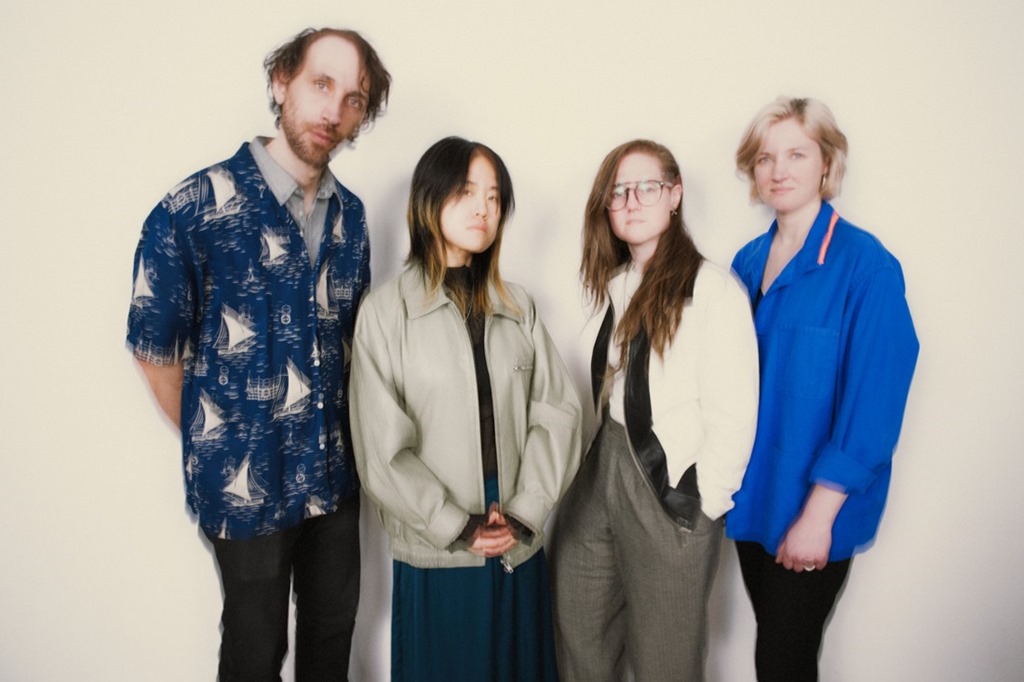
Constellation welcomes Montréal-based jazz ensemble Bellbird to the label.

Meanwhile Bellbird celebrates with new track ‘The Call’ and will kick off 2026 playing a half-dozen shows on a winter tour of Western Canada in January.

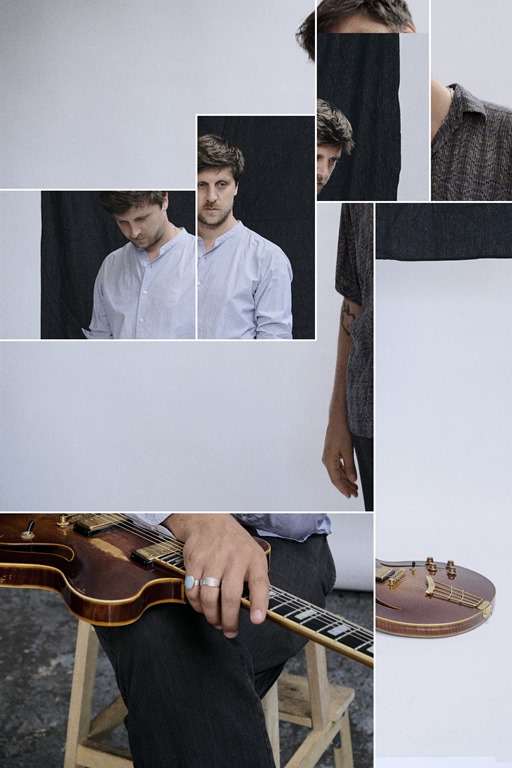
Bellbird features tenor saxophonist Claire Devlin, alto saxophonist and bass clarinetist Allison Burik, bassist Eli Davidovici, and drummer Mili Hong. The players hail from various countries and backgrounds: rooted in modern jazz, Bellbird’s music also channels influences from the players’ wide range of influences steeped in Montréal’s genre-mashing experimental undergrounds, including punk/rock, drone/minimalism, electroacoustics and more. (Constellation has previously worked with Hong via her terrific drumming on The Obsession With Her Voice by Erika Angell and for Angell’s smouldering live shows).

Bellbird’s first album Root In Tandem was self-released in 2023, garnering some well-deserved critical accolades, and acclaimed live appearances on the Avant/Jazz circuits in Canada ever since.

Hear ‘The Call’ here:

AA

BELLBIRD LIVE

January 2026 • Canada

January 15 – The Esplanade (Medicine Hat)
January 16 – Yardbird Suite (Edmonton)
January 17 – Buckingjam Palace (Calgary)
January 18 – ArtsPlace (Canmore)
January 23 – Alliances Français (Vancouver)
January 24 – The Bassment (Saskatoon)

AA

Bellbird

Bellbird photo by Marc Etienne Mongrain

Sinners Music – 1st October 2025

Christopher Nosnibor

Sinners Music – the label established by electronic music maestro and one-time music shop owner, Ian J Cole, continues to offer up new music that’s interesting and unusual. There are some context where ‘interesting’ is somewhat dismissive, diminishing, and people of a certain age will remember snooker legend Steve Davis being given the nickname of Steve ‘Interesting’ Davis ironically… although the double irony emerged that he was genuinely interesting, as his work with The Utopia Strong abundantly attests. Here, my use of ‘interesting’ is neither ironic nor dismissive: it’s meant sincerely, as there is no specific ‘house’ style or overt genre specificity evident. This is one of the reasons why boutique microlabels can be worth following – you never know quite what you’re going to get from them, but you can guarantee if won’t be ordinary. And this release by no means ordinary.

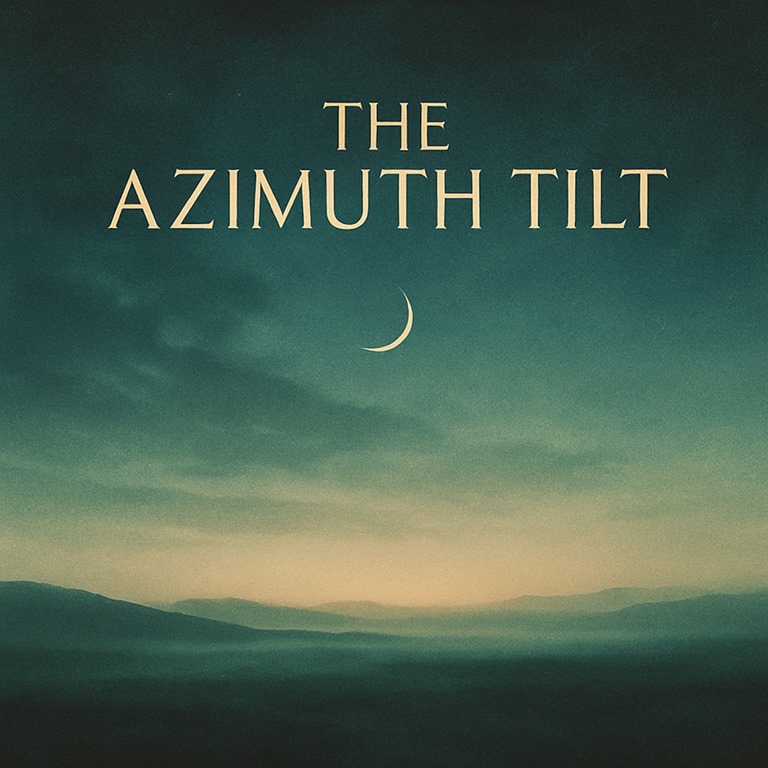
As for The Azimuth Tilt, their bio informs us that this is the work of ‘a solo ambient electronic project exploring the liminal spaces between sound, memory, and landscape. With a name drawn from the alignment of a real to reel tape head, the project orients itself toward the unseen—subtle shifts in perception, emotional resonance, and the hidden geometries of the natural world… Blending atmospheric textures, glacial rhythms, and immersive sound design.’ There are no clues as to who this is the project of, but it matters not, and in fact, the less we know, the better. This is the joy of abstract ambient works: all you need is the sound, and all you need from the sound is to let it drift, to carry you away. And this is what Alignment does.

On a certain level, it does very little. On another, it is a quintessential deep ambient album. Alignment features just six compositions, but has a running time of some fifty-seven minutes. The soundscapes which define it are sonically rich, with soft, drifting, cloudlike contrails merging with lower drones and contrails. In combination, filling the entire sonic spectrum, Alignment does a lot.

From nowhere, halfway through ‘An Unqualified Person’, a raucous sax breaks out.

And the layers build. Against scrawling spacious drift, it’s quite a contrast. And then there’s some subtle piano intervention, and from hereon in, the piano and sax alternate in leading. It’s nice… and not in a turtle-neck top kind of way. It’s nice but… a little strange. But ‘The Exquisite Space’ crackles and swirls abstractedly, with some supple motifs rippling and intertwining with a mellow mood exploration which arrives at more sax. Always more sax.

This seems to be a dictum The Azimuth Tilt are happy to follow, although it’s melted into the echo-soaked atmospherics of the final track, ‘And the Band Played On’. Alignment is not a dark album, but it’s one which feels unsettled, uncomfortable, unsure of its destination – and whatever it may be, the journey is worth the exploration.

AA

a0054555481_10

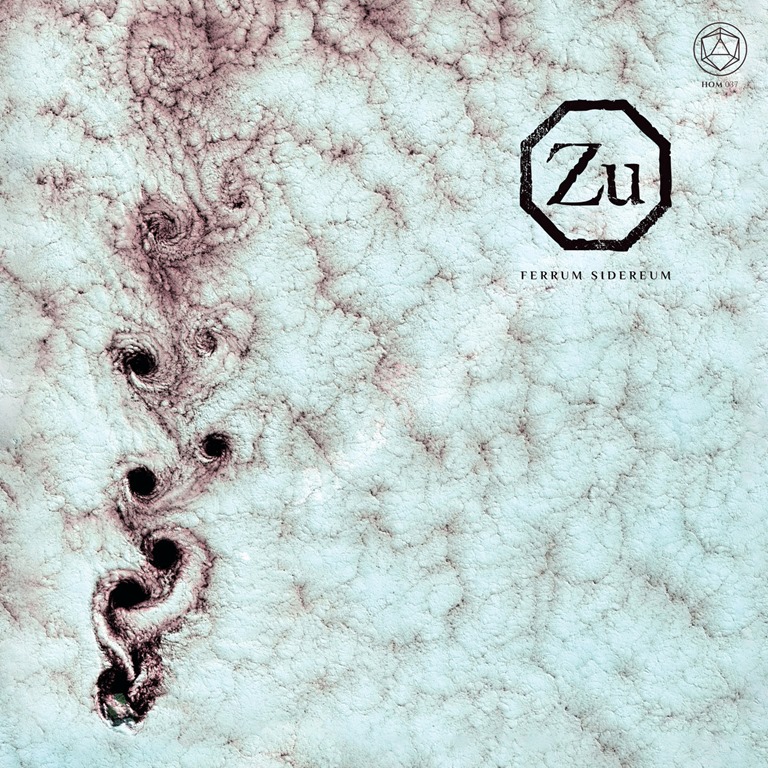
Legendary Italian experimental trio Zu recently announced their return with Ferrum Sidereum (produced by Marc Urselli), a big and bold double album arriving on House of Mythology on the 9th January.

The music combines the complexity of progressive rock, the grit of industrial music, the precision of metal, the spirit and energy of punk, and the freedom of jazz. The result is a sonic journey that is as cerebral as it is visceral, defying easy categorisation while remaining unmistakably Zu.

Today they share the new single and video for ‘A.I. Hive Mind’ – about which the band comments, “Smart cities, brain computer interfaces, internet of things, singularity. This particular track addresses all of these things as well as questioning the loss of self, the idea of single consciousness and collective predictable behaviour. Perhaps the most burning question for us is: What does it mean to be human in a world increasingly shaped by artificial intelligence, simulated realities, and technological control?”

AA

Zu have also shared live dates in support of the new album – dates and details below.

2026 LIVE DATES

10/01/26 – Bologna, TPO – Italy
21/01/26 – Caserta, Lizard Club – Italy
23/01/26 – Palermo, Candelai – Italy
24/01/26 – Catania, Zo Culture Contemporanee – Italy
28/01/26 – Milano, Santeria – Italy
29/01/26 – Verona, Colorificio Kroen – Italy
30/01/26 – Zagreb, Mocvara – Croatia
31/01/26 – Nova Gorica, Mostovna – Slovenia
01/02/26 – Bratislava, Žalár – Slovakia
02/02/26 – Prague, Palac Akropolis – Czech Republic
05/02/26 – Berlin, Neue Zukunft – Germany
06/02/26 – Copenhagen, ALICE – Denmark
07/02/26 – Malmo, Inkonst – Sweden
09/02/26 – Bruxelles, Magasin 4 – Belgium
10/02/26 – Eeklo, N9 – Belgium
11/02/26 – Amsterdam, OCCII – Netherlands
12/02/26 – Paris, Le Chinois – France
13/02/26 – Bulle, Ebullition – Switzerland
14/02/26 – Torino, Magazzino sul Po´ – Italy

Ferrum Sidereum – Latin for ‘cosmic iron’ – draws inspiration from the mythological significance of meteoritic iron, found in artefacts like ancient Egyptian ritual objects, Tibenta ‘Phurpa’ blades, and the celestial sword of Archangel St Michael. This elemental force imbues every moment of the album’s apocalyptic sound. Whilst heavy in tone and subject matter, bassist Massimo Pupillo comments that their music also aims to "raise good energy… people would come up to us after the show and tell us that they felt alive."

The trio – Paolo Mongardi (drums, percussion), Luca T Mai (baritone saxophone, synth, keyboards) and Massimo Pupillo (electric bass, 12-string acoustic guitar) – spent a year refining this sprawling 80-minute epic through relentless rehearsals and live studio recordings in Bologna. Produced and mixed by three-time Grammy-winning engineer Marc Urselli, known for his work with Laurie Anderson, Lou Reed, and Mike Patton, the album balances raw intensity with refined production tweaks and textures.

“We are very spiritually-oriented people,” says Massimo. “Machines and AI do not have spirituality. So they can mimic and they can assemble existing things, but they cannot create. That spirit is probably the most important thing that our music carries.”

AA

IMG_18602-9903cf03cf05143c 

Photo credit: Marco Franzoni

Legendary psych outfit Gong are back today with their new single ‘Stars In Heaven’ alongside a brand new music video created by Drain Hope. The band have also teased the release of their new album which fans will see in 2026 and shared the album’s name – Bright Spirit.

“It’s such an eclectic record,” says singer and guitarist Kavus Torabi. “This is the most colourful and kaleidoscopic album so far from this incarnation of the band. There are Eastern-infused epics, long instrumental jazz-inspired sections, meditative and cosmic detours and blistering, incendiary psychedelic rock. When picking the first song to be released, it has felt as if there’s an extra weight on the choice, as if the song somehow has to represent the whole album.”

Lyrically it expands on the idea that the world is as you are. “If you are a cynical, defensive or suspicious person, then that’s the world you’ll inhabit,” continues Kavus. “You’ll see mean-spirited behaviour and selfishness all around you but it’s always a choice. I think perhaps some people forget that. That’s not the world I live in, nor would I want to. It’s a sad old world for sure but it’s also a beautiful one bursting with hope, possibility, wonder and magic in every single moment.”

‘Stars In Heaven’ is the first single to be released from the new album Bright Spirit which will be released in 2026 on Kscope. Bright Spirit continues the legendary Gong catalogue – an extensive and acclaimed collection of releases that has seen Gong produce over 30 studio albums during a career spanning more than 50 years, since the band was founded in 1970 by the late Daevid Allen.

Gong continue to carry the torch ignited by Daevid Allen with their UK tour alongside fellow psych legends HENGE currently underway -  

UK TOUR DATES 2025/26

GONG – UK

Nov 08 – Bedford Esquires, Bedford

Nov 14 – Marine Theatre, Lyme Regis

Nov 15 – The Boileroom, Guildford

Nov 16 – The Piper, St Leonards

Nov 25 – Norwich Arts Centre, Norwich

Nov 29 – Club 85, Hitchin

GONG & HENGE – UK

Nov 05 – The 1865, Southampton

Nov 06 – Trinity Centre, Bristol

Nov 07 – Dreamland, Margate

Nov 09 – Colchester Arts Centre, Colchester

Nov 11 – The Globe, Cardiff

Nov 12 – Exeter Phoenix, Exeter

Nov 13 – Princess Pavilion, Falmouth

Nov 19 – Crookes Social Club, Sheffield

Nov 20 – The Leeds Irish Centre Leeds

Nov 21 – Northumbria Students’ Union, Newcastle

Nov 22 – Kanteena, Lancaster

Nov 23 – St Luke’s Glasgow, Glasgow

Nov 26 – Cambridge Junction, Cambridge

Nov 27 – The Robin, Bilston

Nov 28 – Rescue Rooms, Nottingham

Nov 30 – Earth Hall, London

Mar 19 – Chalk, Brighton

Mar 20 – Gulbenkian Theatre, Canterbury

Mar 21 – Hangar 18, Swansea

Mar 26 – The Drill, Lincoln

Mar 27 – New Century Hall, Manchester

Mar 28 – Hangar 34, Liverpool

AA

lb2IGs9Q

Relative newcomers Suspicious Liquid have crashed the York scene in a big way with some powerful live shows, and now, with an album in the offing, they’ve gifted us with a video for ‘Fish-Like Things’.

It’s the perfect introduction to the band – melding elements of stoner / doom, prog, psychedelia and even a hint of jazz, and driving them home with some big riffage, ‘Fish-Like Things’ encapsulates the weird and wonderful sound of Suspicious Liquid. The accompanying video is suitably dark and twisted, and locals have the added bonus of being able to play ‘identify the location’.

AA

channels4_banner

Legendary Italian experimental trio Zu returns with Ferrum Sidereum (produced by Marc Urselli), a big and bold double album arriving on House of Mythology on the 9th January.

Ferrum Sidereum – Latin for ‘cosmic iron’ – draws inspiration from the mythological significance of meteoritic iron, found in artefacts like ancient Egyptian ritual objects, Tibenta  “Phurpa” blades, and the celestial sword of Archangel St Michael. This elemental force imbues every moment of the album’s apocalyptic sound. Whilst heavy in tone and subject matter, bassist Massimo Pupillo comments that their music also aims to "raise good energy… people would come up to us after the show and tell us that they felt alive."

The music combines the complexity of progressive rock, the grit of industrial music, the precision of metal, the spirit and energy of punk, and the freedom of jazz. The result is a sonic journey that is as cerebral as it is visceral, defying easy categorisation while remaining unmistakably Zu.

Today they share the track "Golgotha", about which Massimo says; “Once upon a time, the stars spoke to men, but now cosmic destiny brings a silence. Silence in which lies what men say to the stars. Man radiates atmospheres and is in continuity with the cosmos. These are atmospheres of colour and atmospheres of sound.  What we radiate is colour and sound. And the cosmos listens.  The return of what it incessantly gives to the earth.”

AA

The trio – Paolo Mongardi (drums, percussion), Luca T Mai (baritone saxophone, synth, keyboards) and Massimo Pupillo (electric bass, 12-string acoustic guitar) – spent a year refining this sprawling 80-minute epic through relentless rehearsals and live studio recordings in Bologna. Produced and mixed by three-time Grammy-winning engineer Marc Urselli, known for his work with Laurie Anderson, Lou Reed, and Mike Patton, the album balances raw intensity with refined production tweaks and textures.

“We are very spiritually-oriented people,” says Massimo. “Machines and AI do not have spirituality. So they can mimic and they can assemble existing things, but they cannot create. That spirit is probably the most important thing that our music carries.”

Set for release in January 2026, Ferrum Sidereum is Zu’s biggest and boldest statement yet that challenges all conventional boundaries. Uncompromising, innovative, fiercely original.

Zu

Photo credit: Marco Franzoni

Coup Sur Coup – 17th October 2025

Christopher Nosnibor

Few drummers receive much recognition, unless they’re the backbone of bands who are household names (people know Ringo Starr, Keith Moon, Dave Grohl, Mike Joyce, Lars Ulrich), or have otherwise featured prominently in a specific musical milieu (Martin Atkins and Paul Ferguson come to mind). Their contributions are overlooked and underappreciated, and in the main, there’s a tendency to only notice exceptional drummers, or poor ones. It’s not the job of a drummer to grab attention, but to hold everything together at the back. Consequently, you might be forgiven for being unfamiliar with William Covert, whose career is defined more than 15 years of drumming in math rock, post-rock, and post-hardcore bands (Space Blood, Droughts, and Rust Ring).

As the narrative goes, ‘Covert began experimenting with live-looped synths alongside acoustic and electronic drums. This experimentation birthed two full-length solo albums characterized by post-rock and krautrock-inspired synth loops and melodies, all performed solo with loop pedals and sequencers.’ Dream Vessel was born out of a desire to pursue a different approach and a different direction, and indeed, the first part of this latest offering was a collaborative, group effort, with Nate Schenck on bass and Jack McKevitt on guitar, while we learn that ‘the other half was performed entirely solo, diving deep into cinematic ambient soundscapes, dreamy Frippertronic-influenced guitars, modular synth, and free-jazz drumming filtered through a post-industrial lens.’ Nothing if not varied, then.

The album’s five tracks span thirty-eight minutes, and it’s very much an exploratory experience. ‘Brotherhood of Sleep’ eases the listener in gently, with a slow, strolling bass and reverby guitars. It’s an expansive and spacious instrumental work, rich in texture and atmosphere – a shade proggy, a little bit jazzy, unfurling at a sedate pace. ‘Trancers’ fades in, and offers similar vibes, but it’s both more spacious, and more groove-led. The guitars bend and echo that bit further, and as the track progresses, so the pace and urgency build, along with the density of the guitars, which warp and stretch more with every bar. It may not hit the extremity of My Bloody Valentine’s Loveless, but the guitars do sound as if they’re melting by the midpoint, before the track locks into a muscular, driving groove that’s a world away from where it began. There’s an appeal that’s not easy to pin down when it comes to compositions which begin in one place and end up entirely in another, while it’s not entirely clear how they’ve transported the listener from A to B. The experience isn’t completely unlike making an absent-minded walk somewhere, when you haven’t been paying attention, and arrive with minimal recollection of the journey- although the difference is that the walk is usually via a familiar route that requires little to no concentration or engagement, whereas a song that swerves and switches involves an element of brain-scrambling along the way.

‘Dream Void’ is a centrepiece in every way: The third track, right in the middle, it’s over nine minutes in duration and a towering monolith of abstract drone. It’s immense, cinematic, widescreen, gentle. Around the mid-point, the drums arrive, and they’re busy, but backed off in the mix, and we’re led down a path to a place where frenetic percussion contrasts with chords which hover and hum for an eternity. Slow-picked guitar brings further texture to the mellow but brooding post-rock soundscape of ‘C-Beams’, which pushes toward nine minutes, as the album ventures into evermore experimental territory. As present as the drums are, they don’t provide rhythm, but bursts of percussion, swells of cymbal and wild batteries of rolling, roiling whomps.

The more concise, feedback-strewn ‘Throttle’ marks a change in aspect, a roar of noise, a wail of feedback, and positively wild, before ‘Come True’ closes the set with some Kraftwerkian bubbling synth and undulating bass, paired with a rolling beat. It’s all nicely done. And this is true of the album as a whole.

Dream Vessel is gentle, overall, but not without edge, or variety, and certainly not without dynamic. Here, ‘interesting’ and ‘unusual’ are not dismissive shrugs with a hint of condescension: Dream Vessel brings together a host of ideas and traverses a succession of soundscapes , never staying still for a second.

AA

a0283722598_10

17th October 2025

Christopher Nosnibor

From the very outset, this is not easy on the ear. Sometimes, something leaps out about an album in the opening minutes, and here it’s the production – or lack of. The title track heralds the arrival of Benefactor, the first album by Washington D.C. improvisational psychedelic outfit Zero Swann in two years. And it’s a swampy, reverby, dingy mess. It’s integral to the experience, but it’s also likely to be a deterrent for some – but screw them, it’s their loss, right?

Although straddling heavy psychedelic and the dramatic gothic style, it’s the sludgy, feedback-riven outtakes of The Jesus And Mary Chains’s Barbed Wire Kisses which first come to mind when listening to this.

Benefactor is the follow up to 2023’s Amon Zonaris, which, at the time, was a one-off collaborative release with Scott “Wino” Weinrich. This time around, bandleader and Saccharine Underground label curator Jeremy Moore is flying solo, handling guitars, fretless bass, drums and noise assault. And there’s no shortage of the noise assault on this punishing no-wave behemoth. As they tell it, ‘From the noise rock / no wave snarl of Ritual Tension and early Sonic Youth, to the shoegaze sounds of My Bloody Valentine, to doom and free jazz chaos over a backdrop of pure lo-fi abrasion, Moore’s latest outing is a true crosspollination of styles’. It is, and what’s more, many of those styles are melted together to form a dark, disturbing sonic sludge.

‘Grave Wax Horticulture’ is a skull-splitting mesh of noise, equal parts The Jesus and Mary Chain and Christian Death. It’s theatrically gothy, in the vein of The Horrors, but primitively noisy – which is a fair summary of the album as a whole. It’s experimental, overloading in its racketaciousness – and while is a psychedelic album, it’s a full-on assault album, too, which draws parallels with Head of David’s first album, LP, and simply summarises a noise ethos which eschews convention in every sense.

Moore’s commanding baritone brings a sense of drama, not to mention a certain theatricality to the chaotic, palpating grind, and there’s an edge to his delivery which is both world-weary and tense, a voice emerging from the desolation of a society collapsing, a world in flames. This is surely the sound of the apocalypse, the sound of everything ending. Everything is overloading, murky, blown-out, blasted with distortion and reverb, resulting in a discordant thunderous attack which fires in all directions at once. It’s a primal roar reverberating from buildings collapsed to rubble, a brain-bleeding blitzkrieg of ruinous proportions, as mechanised drum sounds fire like machine guns and missile explosions, cutting through the wildest, densest racket. The absence of overt structures only compounds the sense of things falling apart. It’s the sound of unravelling, of societal threads pulling apart in real-time, a descent into mayhem, anarchy, barbarity.

‘Anagrams for Agnosia’ is perhaps jazz, but jazz in the loosest sense: it’s exploratory, experimental, freeform, but more than anything, it’s the sound of fracture, or fragmentation, instruments churning and burning, and pulling in different directions like splinters of an object in the wake of a detonation. As the screams die down, there is the thud of a panicked heartbeat, before the final track, ‘Phaneron’ obliterates with a squalling wall of howling guitar, stuttering drums and raw, ruinous noise.

Benefactor is an album without let-up, which provides no breathing space, and is thoroughly relentless in its intensity from beginning to end. Recommended, but approach with caution, and a stiff drink. It sounds like the cover looks.

AA

a0986994420_10

2nd October 2025

Christopher Nosnibor

The context for Ashley Reaks’ sixteenth solo album – and his third in three years (not counting the compilation of demos released earlier this year) – is weighty. He has written openly and extensively of his health issues, while sharing images and commentary nocturnal wanderings, and these both inform At Night The World Belongs To Me, of which he writes:

The looming spectre of death and loss haunt the album: Reaks survived two major health scares and a misdiagnosed terminal illness over the last 18 months, experiences that inform the reflective, poetically gloomy lyrics, and the 4 am downtempo grooves. Adding to the sense of loss, guitarist and long-term collaborator Nick Dunne died suddenly at home just one week after completing his guitar parts for the record.

Through all of this, he has continued to collage and write prodigiously, but At Night The World Belongs To Me marks a distinct change of tone from its immediate predecessors, The Body Blow of Grief (2024) and Winter Crawls (2023). The usual elements are all present and correct – the sense of experimentalism, the collaging of genres, melding post-punk, jazz, and dub – but this feels darker, more introspective. The cover art, too, reflects this. While it has the same rather disturbing, grotesque strangeness of his usual work, the grim-looking figure in repose has connotations of ailment, frailty, even the deathbed.

The first track, ‘Playing Skittles With The Skulls and Bones’ has a bass groove that calls to mind The Cure’s early sound, melded to a rattling rhythm reminiscent of ‘Bela Lugiosi’s Dead’. The smooth sax that wanders in around the mid-point provides something of a stylistic contrast, but at the same time, it’s minor-key vibes keep the song as a whole contained within a bubble of reflection, evoking the stillness of night. I know, I’m sort of dancing about architecture here, but something about Reaks’ work prompts a multi-sensory response.

‘Rimmed With Yellow Haloes’ brings soaring post-rock guitars atop of an urgent ricochet of drumming and solid bass. On the fact of it, it’s almost poppy, but it soon shifts to take on a folksy aspect, while Reaks sings of death and funeral pyres, and the refrain, delivered with lilting, proggy overtones, ‘The Lord gave the day to the living, the night to the dead’. In context of the album’s title and theme, there is a tangibly haunting foreshadowing here, a suggestion that Reaks has not only accepted his mortality, but has assumed his place. It’s powerful, and deeply moving. Of course, Reaks can’t help but introduce incongruous elements, with some horns which are pure ska and some super whizzy 80s pop synths providing a pretty wild counterpoint to it all. It’s hard not to smile, because there’s an audacity to this approach to composition and arrangement – a lot of it simply shouldn’t work, but it does, and it’s uniquely Reaks.

The album’s shortest song, ‘Things Unseen’ is snappy, poppy, Bowie-esque, an amalgamation of post-punk and electropop, a standout which is succinct and tight, and consequently, the dark connotations of the bleak shuffle of ‘Life Forever Underground’ – a rippling synth-led tune – are rendered more profound. The sequencing of this album is such that the shifts between songs accentuate their individual impact.

‘Mask the face, unmask the soul…’ he sings softly on ‘Mask The Face’, which has a somewhat spacey Krautrock feel to it – before a guitar solo that worthy of Mark Knopfler emerges most unexpectedly. And as dark as things get here, Reaks never ceases to bring surprises. At Night The World Belongs To Me perfectly encapsulates the reason he’s so respected and critically acclaimed, but orbits light years outside the mainstream. In a world defined by an exponentially reducing capacity for sustained attention, Ashley Reaks makes music that requires real engagement, the musical equivalent of complex carbs and high fibre foods in a processed, white bread culture. But also, contemporary mainstream radio music favours short songs which cut straight to the chorus, where the hook has to land in the first twenty seconds. Here, we have eight songs, all but one of which are over five minutes long. They take their time, they’re expansive and exploratory, there’s atmosphere, there’s depth. And as ‘Eyeing Up The Sky’ tapers away on a buzzing drone, we’re left with much to chew on, much to consider.

AA

a2008509738_10

Constellation – 3rd October 2025

Christopher Nosnibor

The third album by The Dwarfs Of East Agouza (Maurice Louca (Lehkfa), Alan Bishop (Sun City Girls, Sublime Frequencies), and Sam Shalabi (Land Of Kush) promises ‘a focussed set of rhythmic psych-trance free/improv’.

As their moniker and the album’s title suggests, they demonstrate a collective interest in urban myths, the strange, the embroidered and embellished tale, perhaps spun with a twist of esoteric mysticism, but at the same time, aren’t entirely serious about it all. That is by no means to imply they’re not serious about the music they make, even when the pieces have titles like ‘Goldfish Molasses’, ‘Saber Tooth Millipede’, and ‘Swollen Thankles’. Because it is possible to be intense and serious and at the same time retain a capacity for humour, a sense of the absurd.

Sasquatch Landslide is an album that’s knowingly ‘out there’, but at the same time, it’s clearly the work of a collective who are completely immersed in the world they’re creating through a conglomeration of sounds which border on the transcendental. Elongated, quavering drones and an array of percussion merge in a haze to forge loose, yet curiously intense grooves. The aforementioned ‘Sabre Tooth Millipede’ is a full-on wig-out jazz frenzy played with the psychedelic loopiness of Gong as their most far-out, and at the same time, amidst the twanging and clattering, there’s something of the spirit of The Master Musicians of Joujouka about it. For an added addling bonus, there are tempo changes galore, and some parts where there are multiple tempos crossing one another simultaneously as the players seemingly detach from this physical realm into different plains of consciousness, separate from one another yet still connected by some kind of telepathy. Because however weird and disjointed it gets, somehow it works.

‘Double Mothers’ goes spaced-out, haunting, and atmospheric. On the one hand, it’s one of the most overtly jazz pieces on the album, but the wandering, reverb-soaked saxophone weaves its way through a nagging twang of a distinctly Eastern influence, while a pulsing heartbeat rhythm creates an underlying tension.

Single cut ‘Titular’ is busy and adds an easy listening, lunge-like organ trill which is completely at odds with the hectic hand drums and frenzied fretwork. They really cut loose on the ten-minute ‘A Body to Match’, stretching things out in all directions – tempo, texture, detail, serving up a pan-cultural smorgasbord of noodlesome improvisation. There, they slowly pick apart the component elements, a slow-motion explosion or deconstruction of the composition, each part slowly moving further from the rest. ‘Goldfish Molasses’ slowly melts, a plodding beat reminiscent of ‘What A Day’ by Throbbing Gristle provides the spine for this slow, pulsating Industrial thudder, where a woozy bassline undulates in the background, and incidental noises and chattering yelps fill the space behind some indecipherable vocal.

Sasquatch Landslide is big on warped, looping drones and layers of intricacy upon layers of intricacy, which weave a shimmering sonic cloth that ripples and shifts before the eyes – and ears. Time itself bends and stretches, taking on an almost elastic quality as the threads unravel to reveal new layers and dimensions. One can feel the instrumentation expanding outwards into infinity – and infinite reverb – in the same way that the universe is continually expanding, only in an accelerated timeframe. For all of its abstraction, Sasquatch Landslide provokes quite visual interpretations of the sounds emanating from the speakers. I expect to have very strange dreams tonight after this.

AA

08 - The Dwarfs Of East Agouza cover art