Posts Tagged ‘Industrial’

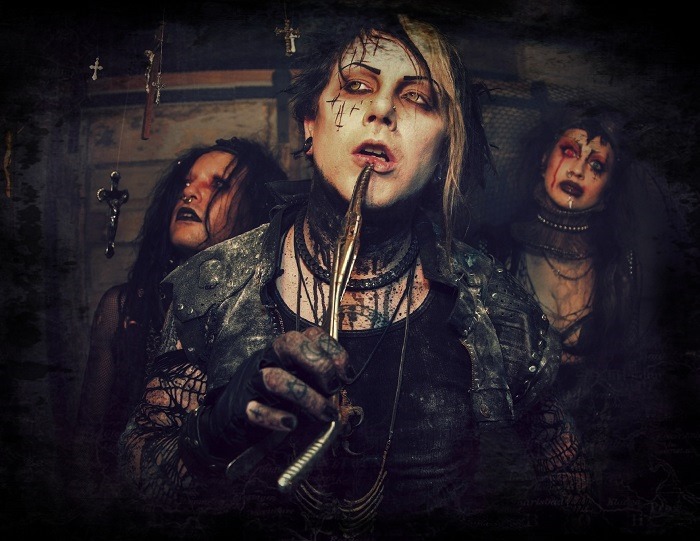
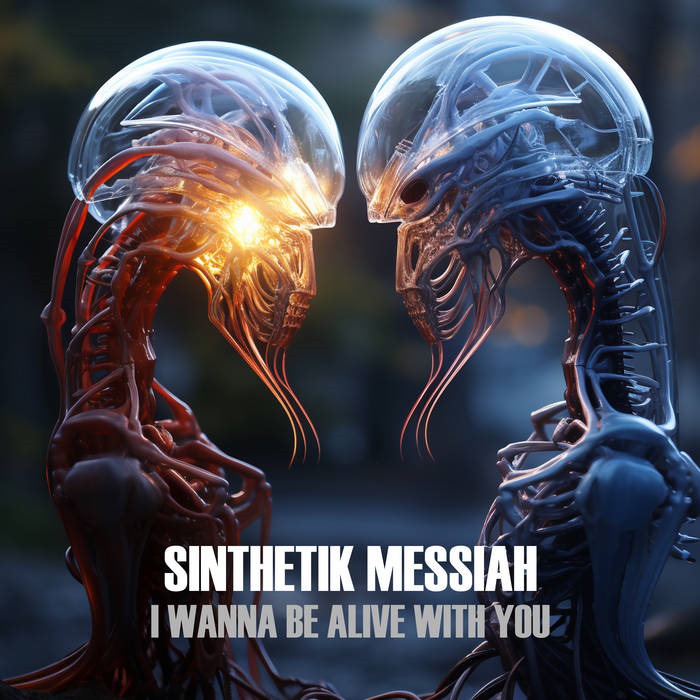
Louisiana’s ‘Industrial Bass’ pioneer, SINthetik Messiah has just unveiled their new single, ‘I Wanna Be Alive With You’.

‘I Wanna Be Alive With You’ tells the tale of a ghost watching and wanting to be alive with his lover  The track is a hybrid of Industrial Noise and Drum ‘N’ Bass.

Blending various elements of industrial, electro, dance, rock, ambient and pop. The international act, SINthetik Messiah(SM) is the work of the Cajun songwriter and sound designer, Bug Gigabyte. The name is a misspelling of the of the term ‘synthetic messiah’, which is the pronunciation used by the band. SM has received radio play, publicity and respect from peers alike from around the globe.

Watch the video here:

AA

190929

Cruel Nature Records – 29th September 2023

Christopher Nosnibor

Following the stop-gap video release of ‘Liar’ from their singles compilation, Manchester’s most miserable are back with another long-player.

For their sixth album, they promise ‘eight filthy tracks of vitriolic desperation’ on a set that ‘often veers towards a nineties alt-metal/industrial sound, along with the usual smatterings of customary Pound Land abstraction…In addition, this new album continues to aggressively push lyrical themes relating to the same old shit that seems to be getting worse: corporate hegemony, business culture, mainstream media influence, automation, class polarisation and economic austerity.’

I sit in the dim, narrow ‘spare bedroom’ that is the office where I work my day-job by day and write reviews by night, slumped, exhausted by life. I moved into this house ten years ago, and while I was fortunate to be able to buy it, it was previously a magnolia-coated rental with fire doors and stain-forgiving turd brown carpets throughout. The fire doors may be gone, but my poky office which, measuring 7 feet by 12 feet, would make for a fucking tight bedroom, still had the turd-brown carpet, because when presented with the choice of food and beer or a new carpet, carpet seems like an extravagance I can survive without. I realise and appreciate that I’m fortunate: I can at least afford both food and beer.

If Pound Land’s releases seem to plough the same furrow only deeper and laced with a greater despondency, that’s largely the point. As they say, ‘the same old shit that seems to be getting worse’, and that’s the shit that’s grist to their mill. No doubt their mill will be sold off or shut down, or knocked down to make way for a hotel or flats before long, but for the time being at least, they’re still plugging away. And thank fuck they are.

Yes, there is a rising swell of music that’s telling it like it is: if Sleaford Mods led the way, it’s been a slow trickle rather than an opening of the floodgates in their wake, most likely because people are too busy working overtime in their day jobs to pay the electricity bill to make music, but lately we’ve seen these guys, plus Benefits, Kill! The Icon, and Bedsit calling out the shitness of everything. And make no mistake: everything really is fucking shit, unless you’re a fucking billionaire.

‘Programmed’ barrels in with a squalling mess of grimy bass and screeching electronics reminiscent of Cruise-era Whitehouse, and it’s a sonic amalgamation that’s painful and penetrating, hitting the guts and piercing the ear drums simultaneously. The thunderous ruff buries the drums and when the snarling vocals enter the mix, spitting vitriol with blinding rage, everything combines to tear forth with a wall of nihilism that’s in the same field as Uniform. Then – what the fuck? Wild roaming saxophone sprays all over before another onslaught of rabid rage. It’s seven and a half minutes of devastating carnage that leaves you feeling hollowed out and wondering where they could possibly go from here?

More of the same, of course: grimacing and with gritted teeth, they grind, thud, trudge and bulldoze their way mercilessly through another six tracks – and half an hour – of relentlessly grey sludge, by turns angry and despondent.

Like Sleaford Mods, Pound Land’s compositions are built around monotony and repetition, but whereas the former place predominant emphasis on the lyrics, the snappy wordplay and caustic commentary, Pound Land batter and bludgeon repetitive lyrics in the way that Swans did in their early years, and their music is very much a mirror of the crushing effects of drudgery. It does articulate the gut-puling anguish of the everyday, and in the most direct way possible.

The raw, raging punk of ‘New Labour’ offers a shift in tempo, but it still sounds like it was recorded on a mobile phone left in a corner of the rehearsal room.

The majority of the album, though, is a succession of crawling dirges dominates by overloading bass. The lyrics are simple, direct – when they’re audible. ‘Fuck the facts and roll the news’ Adam Stone yells repeatedly over a bowel-busting bass growl on ‘Media Amnesia’. ‘Life is so much easier / with media amnesia,’ he spits before launching into a brutal rant – one of many.

There is absolutely no let up on Violence. It’s hard and heavy, uncompromising and unpleasant. Even sparser tracks like ‘Low Health’, where it’s more spoken word with churning noise, the atmosphere is never less than crushingly oppressive, harrowingly bleak.

The last track, ‘Violence Part 2’ is five minutes of brutal racket that’s the nastiest of lo-fi- sludge and which is the perfect encapsulation of the album as a whole. It’s grim, it’s bleak, and it’s supposed to be.

Rarely has a band so perfectly captured the zeitgeist through a horrible mess of noise that makes you physically hurt and ache and feel like you’re being subjected to an array of tortures. This is the world. This is Britain, in 2023. If you’re not a millionaire, you might as well be dead. It’s what they want. Poor, disabled? Fuck off and die. This is the grim reality of the world Pound Land present, and while that isn’t actually one of their lyrics, the bleak message is clear: we’re fucked.

AA

a1836109826_10

8th September 2023

Christopher Nosnibor

GLDN – the vehicle for the one and only Nicholas Golden – blasts in by way of a return after a few fallow months with a single – his sixth – in the form of ‘Harmful If Swallowed’, taken from the upcoming remastered and expanded deluxe edition of their first release, First Blood. There was a lot of blood then, and moving forward, this new offering is less gore-centric, but is somehow yet more disturbing. This may just be a personal response – but then, what response is there to anything artistic in its nature – but I tend to be more unsettled by the psychological than the visceral. I mean, in real life, blood makes me feel nauseous and faint, but ultimately, I ca n handle it, but headfucks, they’re harder to handle.

Tripped-out piano provides the initial disorientating backdrop. Of course it does: GLDN’s domain is the dark and unsettling, and his cues stem in no small part from Nine Inch Nails’ magnum opus The Downward Spiral, the point at which Trent Reznor really found his stride in terms of nuanced composition and dynamics beyond harsh and soft, loud and quiet, but expanded his emotional range and sonic texture.

‘Harmful If Swallowed’ is well-studied, then, but it’s more than mere appropriation. This is one of those songs that’s dark, dense, and menacing, rather than overtly abrasive and aggressive, and the twisted, tangled emotions it explores are introspective and desolate but interwoven with a sense of underlying tension which hints at the turning of tables.

Two-thirds in, things take a turn for the heavy with a chugging crashing in as flames erupt and the darkness and crushing sense of apocalypse take over.

Stylistically in visual terms, GLDN is equal parts Reznor and Manson, striking and disturbing in equal measure. In the accompanying video, GLDN goes full Jekyll and Hyde. The Reznor GLDN crawls, naked, skin peeling, hunched and traumatised, flipping to thee sneering, croaking Manson GLDN who is the demonic supreme master.

GLDN continues to test, tease, and challenge, both musically and presentationally, and ‘Harmful If Swallowed’ is strong and progressive on all fronts.

AA

su74197-harmfulnewcover

ant-zen – 16th September 2023

Christopher Nosnbor

Four years on from Tar, Ukrainian industrial duo Kadaitcha, consisting of Andrii Kozhukhar and Yurii Samson, have overcome many, many challenges to deliver album number five, in the form of Tramontane.

The tracks which appeared on their limited lathe-cut single last year do not appear here, and this is admirable: singles so often tend to be used as launchpads for albums, and it was particularly common in the 80s and 90s that albums would sell on the basis of a couple of singles, but would have next to no other decent tracks. In the days before streaming, this was something that was easy to get away with, since the only way of hearing the album was by buying it, which you would do based on the singles. But then, the risk could be reduced by taking punts using your half price or free options through Britanna Music, or similar. The advent of streaming hasn’t really improved things, though, because now, at least in mainstream circles, the album is essentially obsolete.

But outside the mainstream, the album is thriving, and artists are pushing the format now that the constraints and limitations of physical formats aren’t necessarily dictatorial in determining duration, and there are infinite options for exploration. The single wasn’t so much of a stop-gap release as a standalone document of a period in time. But the key point here is that Tramontane is very much an album, and a work to be approached as such. The notes which accompany the release are almost hallucinatory – not quite Burroughs cut-ups, but fragmented, non-linear, and they serve to articulate the essence of the music contained here. Stylistically, it’s tight and cogent, and there’s a flow to it, too, which begins with the appropriately-titled ‘Intro’, which is precisely that – a short instrumental intro piece which paves the way for the ten heavyweight cuts which follow. But within that coherence, what Tramontane offers is a work which really goes all-out to disrupt and unsettle.

‘Niello’ draws primarily on the sound and style of earlier industrial music, the electronic pioneers of the late 70s and early 80s, the likes of DAF and Cabaret Voltaire, but with its distorted, menacing vocals, there’s an element of the later evolutions of industrial which emerged in the mid 80s. It seems to be that there are very different understandings of industrial, and while Al Jourgensen may be a huge fan of William Burroughs and the music that formed the body of the first wave of Industrial music, namely Throbbing Gristle and also the wild tape loop works of Foetus and the heavy percussion of Test Dept, it’s industrial metal and harsh post-NIN electronica which have come to become synonymous with industrial latterly.

On Tramontane, Kadaitcha have brought the two forms, old and new, together, and the result is discordant, noisy, difficult. And these are its selling points. It feels like a guided tour through the most challenging aspects of Industrial music through its evolution and history.

‘Knife’ is a sparse, oppressive low-end throb pinned down by a dull, thudding, muffled-sounding beat, over which twitching electrical streams flash and flow while monotone vocals are unsettlingly detached. The percussion really dominates on the tempestuous ‘Liars’ and any and all references to Einstürzende Neubauten are entirely appropriate. It’s a thunderous, dense racket where the low end really stands to the fore, but it’s tame in comparison to the dark ‘Offering’: even when it drives out as a heavy and insistent bass riff, it feels unfinished, undercomposed. Yet therein lies its success: it feels organic, and nothing is overdone.

The mangled noise and droning distorted vocal on ‘Fossil’ is pure Throbbing Gristle, a barrelling barrage of blitzkrieg laser synth bleeps and a whole mess of midrange and lower end distortion and dirt, churning, discordant, the monotone vocals almost buried in the tempest of overloading unpleasantness, and ‘Seeds’ is similarly unpleasant and uncomfortable, everything going all out on overdrive.

It all comes together on ‘Insight’: beginning as a gentle, spacious, mellow post-rock guitar-led piece, it soon erupts into a mess of overload akin to Metal Machine Music, only with drums and sinister vocals. It’s got the lot, and as the album enters its final stages, it seems to consolidate the elements of the previous tracks to punch even harder, with the percussion harder, the grinding morass denser and darker.

Perhaps a reflection of the circumstances in which it was created, perhaps a reflection of the times in the world at large, Tramontane is heavy and at times harrowing. The lyrics may not be decipherable for the most part, but the mood requires no translation or interpretation, and Tramontane will crush your soul.

AA

a3600121745_10

28th August 2023

Christopher Nosnibor

Techno/industrial is rather like craft beer. It was invented in Europe (KMFDM are obvious progenitors back in 1984), before being embraced in the States and with Wax Trax! almost singlehandedly spawning a factory for the genre, which in turn found significant popularity in mainland Europe, particularly in Germany.

English exponents are rather harder to come by, although Benjamin Blank, who has been working under the Binary Order moniker since 2008, is a worthy representative. His words on this latest single, lifted from forthcoming album The Future Belongs to the Mad (out at the end of November), illustrate perfectly why this mode of music is ideally-suited to life in Shit Britain: “’Slow Blade” is a reflection of the decline I’ve witnessed in my lifetime. It’s a decline that has gotten us to a point where we are more concerned with passing the blame than attempting fix the decay that has rotted away at us all, leaving many despondent and lost, myself included.”

I’m writing this in the week that, as schools are due to reopen after the summer break, hundreds are being forced to close or otherwise relocate students because the buildings are unsafe, built using cheap concrete which is structurally unsound and liable to collapse without notice. Our government has known about this for years, but has failed to act. And, indeed, over the last thirteen years, our infrastructure has been slowly crumbling – our roads, our sewerage systems, our rail network – as profit has been put before people, and we’ve become embroiled in petty patriotism, culture wars, and outright horrible racism and prejudice of every kind. It’s no wonder Blank feels as if our small island is sinking while the only things rising are rates of poverty, depression, and other mental health issues.

‘Slow Blade’ feels like a significant progression from the material which comprised previous album, Messages from the Deep. While it incorporated guitar elements, it was very much in the vein of early Nine Inch Nails, the sounds crisp, tight, overtly synth-dominated. In contrast, ‘Slow Blade’ is far more gnarly, far dirtier, more raw, rough-hewn, and simply more metal. And not the kind of metal you’d likely associate with industrial – the likes of Ministry or perhaps Godflesh – but gritty, murky black shit smashed together with the guitar slabs of nu-metal. At least, to begin with – because ‘Slow Blade’ is a song of psychotic multiple personalities, and a song in three parts.

Unexpectedly, the songs slows and goes first expansive and melodic, then explodes in a frenzy of stuttering techno beats that’s more Fixed than Pretty Hate Machine, and then it brings the two elements together in the third and final stage. While to suggest it has a particular arc, narrative or otherwise, feels like something of a stretch, ‘Slow Blade’ transitions through a series of emotions, from blind raging fury to the acceptance of defeat as everything collapses. The end is final. And we all know it’s coming.

AA

082306

Felte FLT-089 – 14th July 2023

Christopher Nosnibor

Mission to the Sun is Chris Samuels of Ritual Howls fame (synths, samples, programming) and Kirill Slavin (vocals/lyrics), and comes recommended for fans of Wolf Eyes, Moin, Throbbing Gristle, Coil, The Legendary Pink Dots, Drew McDowall, Suicide, Cabaret Voltaire, etc.

Sophia Oscillations is their second album, and it pitched as ‘an immersive journey through the dark corners of post-industrial music’, whereby ‘The Detroit based duo continues the sonic exploration started on their debut album Cleansed by Fire, while delving deeper into themes of isolation and lost communication. Christopher Samuels’ synths, samples and rhythmic programming is accented by Kirill Slavin’s haunting vocal delivery as the listener receives intersperse audio recordings from the outer reaches of inner space.’ This may seem an unusual angle of approach given their chosen moniker, but the one place hotter than the sun or the earth’s core is the core of what it is to be human. We still understand space better than we understand the deep sea, and the deep sea better than we understand the human mind. There is much scope for exploration in every sphere.

William Burroughs famously described ‘Scottish Beat’ writer Alexander Trocchi as a ‘cosmonaut of inner space’, although he also applied the label to himself, stating ‘In my writing I am acting as a map maker, an explorer of psychic areas, a cosmonaut of inner space, and I see no point in exploring areas that have already been thoroughly surveyed.’

This is an appropriate context for the eight compositions which make up Sophia Oscillations, which are essentislly beatless but strongly rhythmic in form. If they belong to the lineage of the avant-garde and the industrial music of the late 70s, it equally draws on a host of other, more contemporary threads in order to forge something quite different and ultimately new.

‘Drowning’ surges and pulses, rippling waves washing over a slow-treading bassline which wanders up and down, stepping somewhere between DAF and The Cure’s Carnage Visors while the vocals whisper and wheeze low in the mix, a stealthy monotone that’s both tense and detached. Whistles of feedback strain from the speakers and wrap themselves around the whole drifting expanse. Things take a turn for the abrasive on the title track, with machine-gun blasts of noise cutting through grainy swathes of bleak ambience, gradually fracturing and fragmenting quite uncomfortably.

There are hints of medievalism and classical on ‘Censor Sickness’, but they’re melted into a dark murk of muttered voices and unsettling atmospherics, and the combination is quite unsettling and far from comfortable: if anything, it’s queasy, and the minimal yet noisy ‘Unborn’ pushes this to another level: stark, metallic, robotic electronica, it has an 80s dystopian feel which again calls to mind DAF and Cabaret Voltaire. The late 70s and early 80s were exciting because musicians with limited means – and ability – were finding ways of using emerging, and increasingly affordable – technology to make music which represented the world in which they found themselves. As such, the emergence of experimental electronic music and industrial music was born out of a collision of multiple factors, none of which will ever recur, and for this reason can never be recreated.

Mission to the Sun aren’t attempting to recreate history here, but instead, Sophia Oscillations finds them processing history through their own filters. ‘Attrition’ brings together post-rock and crunching industrial electronica with a dash of Gary Numan and more detached spoken-word vocals, and it’s a hybrid that isn’t easy to process, because it all feels so alienating. But then, articulating alienation always does.

The churning grind of ‘Cornerstone’ sounds like the intro to something by Big Black, but instead of Roland kicking in, alongside a relentless bass, it just grinds on and on, and it’s dark and messy. Once again, Slavin’s voice is half-buried in the mix: it’s difficult to decipher the words, and his voice hovers, blank, flat, vaguely Dalek-like, in the vein of Dr Mix, but less harsh.

Sophia Oscillations is a challenging album. Yes, it’s unsettling, bleak, stark sparse, but the hardest part is the fact it doesn’t confirm to any one genre, it doesn’t follow any obvious or specific form, and it’s not the fact that it’s unsettling and difficult to find a place for it that’s the issue, but the fact it keeps you tense and on edge for its duration. But, perhaps even more than that is the fact it feels removed from anything human. But it’s not so far removed as to be alien. The brain simply isn’t equipped to process the inhuman– or the near-human-but-not-quite, the uncanny, the unheimlich. Because we recognise it, and yet we don’t. Sophia Oscillations brings the challenge right in front of your face. Sit back, draw breath, process. This isn’t an easy ride.

AA

FLT089_front

The Helen Scarsdale Agency – 4th August 2023

Christopher Nosnibor

She Spread Sorrow is the musical vehicle for Italian artist Alice Kundalini, and over the course of a number of releases, the majority via Coldspring, she has explored a minimal industrial style, stark yet dense, and characterised by an eerie, whispered vocal delivery.

As the accompanying notes explain, ‘Orchid Seeds was originally published as part of the instantly out of print On Corrosion – a 10 cassette anthology from 2019 that was housed in a handcrafted wooden box and featuring full albums from Kleistwahr, Neutral, Pinkcourtesyphone, Alice Kemp, She Spread Sorrow, G*Park, Relay For Death, Francisco Meirino, Fossil Aerosol Mining Project, and Himukalt. The collection also stood as the 50th release for The Helen Scarsdale Agency, an imprint founded in 2003 and dedicated to post-industrial research, recombinant noise, surrealist demolition, existential vacancy and then some.’

Four years on, it finally gets a standalone release, both digitally and on vinyl.

Kundalini states that the album, “is about 5 different women of my family. Each track is about one of them with their difficult story and strengths. My family is totally destroyed now, no relation between anyone, but in the past there was a strong tradition of women with

interesting personalities.”

And even by the standards of She Spread Sorrow, Orchid Seeds is stark and eerie, dark and unsettling. The reverby, robotic vocals that whisper and moan over the sparse backing of ‘The Solitude in the Giant House’ may set the tone, and with a vintage drum machine thudding and clopping in the background, it has that late 70s vibe – somewhere between Young Marble Giants and cabaret Voltaire.

Things twist into darker territory with ‘Star’ as strains of feedback and grating, serrated synth ripples fizz and crackle beneath her gasping monotone vocal. This is much more reminiscent of Throbbing Gristle. It makes for a tense eight minutes: so often, when acts capable of producing great and heartstopping noise show such restraint as to keep it minimal yet audibly straining, the effect is amplified. This is one such composition; you find yourself moving to the edge of your seat, limbs tensing, waiting for something that never comes.

While the songs are about different people, ‘She Didn’t Care’ and ‘Queen of Guilt’ show opposite aspects of a theme, and perhaps provide some insight into the dynamic of the familial relationships and why they collapsed. The former is built around a stammering beat and hovering, hesitant synthesized organ hum; the sound and overall performance is primitive, immediate, while in contrast, the latter is dominated by a slow, heavy beat defined by a thunderous, reverberating snare, over which a simple synth wanders as echoed vocals drift, fuzzed and breathy and way off in the distance. The effect is some king of industrial dub, and it’s unsettling but not altogether unpleasant, perhaps because it contains stripped-back elements of common pop and dub tropes and so its oddness is countered by a certain stylistic familiarity.

The fifth and final track, ‘The Fortune of Others’, builds through serrated oscillations to grind away for what feels like a slow-throbbing eternity of electronic claustrophobia. It’s important to bear in mind the context: this is an album that’s equal parts narrative and concept, and the execution really pushes the concept to the fore, building the atmospheres of moments missed.

Without more detail – and let’s face it, more detail would likely be unsettling, even potentially traumatic – it’s impossible to determine the full extent of the meaning and also the pain behind the title. But for better or worse, the prospect of taking a firm grasp on the album seems to grow ever further away as it progresses. There is something magnificently and also frustratingly elusive about Orchid Seeds, and however deep you delve, however long you seek it, one suspects it will remain eternally beyond grasp.

AA

HMS050J_front

For this follow-up effort to their 2021 debut album Blacken the Skies, the Terminal formula of industrial glam has been updated with ‘more industrial, more glam.’ Mainman Thomas Mark Anthony also makes a strident case for being his genre’s best wordsmith, weaving grand themes of power, zealotry and corruption via complex rhymes and anthemic choruses. Picking up where its predecessor left off in its excoriation of society’s dangerous hypocrites, the very first line on the new record is “How many guns would Jesus buy?” Plato’s Republic provides the album title and theme – that an unjust society is a doomed society and democracy in itself is no defence against demagogues or tyrants – while Anthony’s sonorous baritone is prominent in the mix as he ponders existential themes of religion and mortality.

Compared to the rapid-fire delivery of Blacken The Skies, the new Terminal songs are wider in breadth and depth as well as longer in duration, while experimental influences are evident in the orchestral-inspired title track and in the hard glam of ‘Don’t Be Taken Alive’, which is believed to be the first industrial blues shuffle. The album includes four instrumentals among its thirteen tracks.

The New Republic is dedicated to the late Metropolis Records label founder Dave Heckman.

The soundtrack to a world unbalanced, reeling, spinning out of control and running out of time, Terminal allies industrial music and glam rock with trace quantities of dark techno, synthpop and raw machine recordings. Each of their songs is a broadside against the atrocities of lost humanity and the devastation of our planet.

Terminal is the work of singer, songwriter and multi-instrumentalist Thomas Mark Anthony. A lifelong anti-apartheid and civil rights activist over a life lived in South Africa, Canada and the United States, Anthony is joined by the US-based Terminal Live Unit for his group’s powerful and confrontational live shows.

Check lead single ‘The Sin of the Sanctified’ here:

AA

a0144423605_10

Electro-Industrial music producer Miss FD has just released her latest electrifying single, ‘Distractions’. The track showcases a combination of dark, pulsating instrumentals, and sinister female vocals.

‘Distractions’ envelops listeners in a dystopian realm, where glitchy electronic textures intertwine with gritty industrial elements to create an immersive cyber industrial undercurrent. The turbulent fusion of atmospheric soundscapes, aggressive beats, and haunting melodies sets the stage for lyrics inviting listeners to question and reflect on the constant bombardment of distractions thrown at us, keeping us from truly grasping the rapidly evolving events taking place in the world around us.

‘Distractions’ is out now through Quantum Release Records, available worldwide on all major streaming outlets.

Listen here:

AA

Miss FD is an underground dark electronic music artist, singer, songwriter, producer, and performer. The project began in 2009 and has since captivated audiences from the dark music world with a unique combination of haunting yet upbeat music, thoughtful lyrics, and mysterious and sensual vocals.

Miss FD released her debut single ‘Together Forever’ in 2009 to positive reception. This was swiftly followed-up in 2010 with her seminal debut album Monsters in the Industry. Her original style focused on electro-industrial, dark synthpop, and darkwave related genres. From 2010 to 2017, Miss FD went on to release a string of singles including ‘Love Magic’, Down in the Dungeon’, ‘Infatuated’, ‘Cry For You (Haunted)’, ‘Unraveling’, and ‘Electropop Sickle’. She also released two more albums, 2011’s Love Never Dies and 2013’s Comfort for the Desolate.

2018 saw Miss FD combine all her musical prowess over the years for her definitive industrial-rock album “Transcendence”. “Transcendence” also included a collaboration with Vulture Culture, whom she would further collaborate with on the singles ‘Ashes Of Stars’, ‘Spitfire’, and ‘Faster Than Light’.

Following her 2020 singles ‘Keep Going’ and ‘Pandemic 2020’, Miss FD released her three-song EP “Adore”, and the single ‘Your Core’, which were heavily infused with futuristic and cyberpunk elements. 2022 saw Miss FD exploring Göbekli Tepe in her three-song dark pop EP, “As Above, So Below”, followed by her cyberpunk single ‘Menticide’. 2023 brings the release of Miss FD’s latest cyber-industrial single ‘Distractions’.

463606

Solo experimental electro-industrial outfit, Nebulae Complex has just unveiled their new EP, Bryozoan Operator.

Inspired by peculiar plant and deep sea life amongst other themes, Bryozoan Operator paints an almost alien, yet familiar planetary landscape as viewed through remote sensing instrumentation. While Bryozoan Operator is not a concept EP, each track tells both its own story and also belongs in a loosely-tied and loosely-defined aesthetic universe of the entire EP.

The EP opens a new musical era for Nebulae Complex. It signifies a shift to harder-hitting electro-industrial beats with layered vocals while continuing with an intricate sound design. The sound and music morph organically and sometimes unexpectedly, albeit with solid precision and intention.

As a taster, they’ve produced a video for the track ‘Bleachburn’. Watch it here:

AA

31a15664-3726-6eab-2328-2231d310225e