Posts Tagged ‘Indie’

Heddlu is the new musical project by Rhodri Daniel. The Ceredigion native was a founding member of renowned Welsh band Estrons who had a major impact on the industry having gained rave reviews from the likes of NME, Vice, DIY and Clash to BBC Radio, Radio X, Ultimate Guitar, The Guardian and Independent.

After finishing the band in 2019, Rhodri became aware that his hearing was severely damaged. Years of touring the live circuit had taken their toll, Rhodri ultimately being diagnosed with hearing loss, tinnitus and severe sensitivity to noise. The effects were so acute, Rhodri was unable to play live music, leading to him composing his critically acclaimed debut album (Cantref, 2022) in his head whilst completing the entirety of the Wales Coastal Path (900 miles). His family and namely his sister, were great sources of comfort and hope during this difficult period. Serendipity led Rhodri back to music, and heddlu was born. Meaning ‘Police’ in Welsh, from the words ‘peace-force’, heddlu’s music has been true to its’ name, offering a force of peace to the songwriter.

Rhodri spent the next few years writing and experimenting with new sounds and instruments as his hearing slowly recovered. Whilst writing and recording his 2nd album, life found a way of both disrupting and influencing the creative process, leading to multiple re-writes and an entire album being erased. Eventually, despite the interruptions, heddlu’s 2nd album, Tramor – was completed.

Meaning ‘Overseas’ in Welsh, Tramor is series of intimate and volatile songs, detailing years of loss, estrangement, trauma and hope.

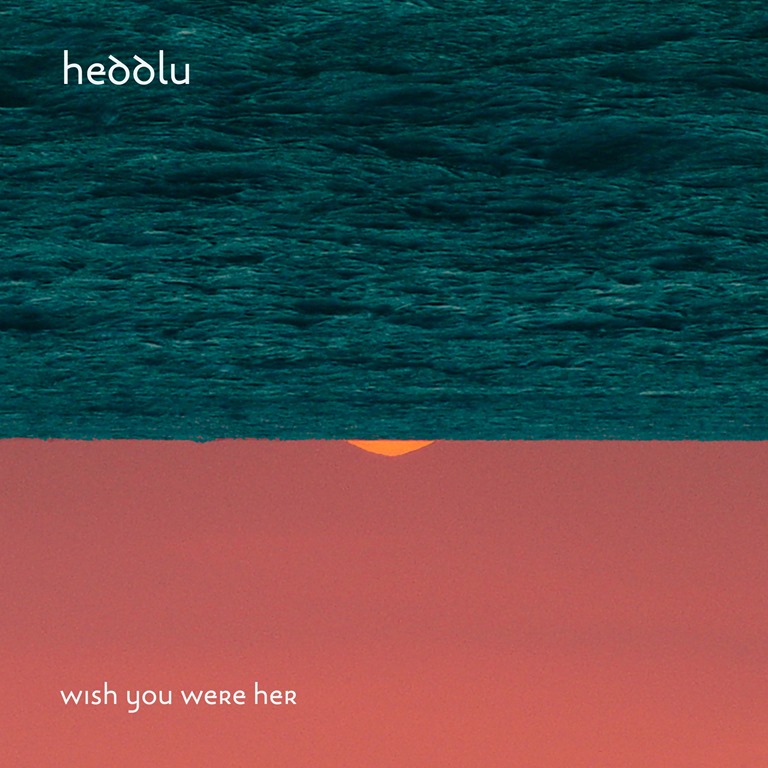
‘Wish You Were Her’ is the 2nd single from heddlu’s 2nd album Tramor, it is a raw emotionally charged track that pleads for someone close to grow into a better version of themselves—driven by equal parts frustration and love. Both confrontational and compassionate, it’s a self-aware lament that blurs the line between calling someone out and looking inward, capturing the messy beauty of caring deeply and hurting honestly.

‘Wish You Were Her’ is out 12th June 2025 on Zawn Records.

Human Worth – 6th June 2025

Christopher Nosnibor

Where does the time go? No, really? I’m not just stunned by the fact we’re a week into June already, but the fact that it’s been six years since the last Lower Slaughter album, and nine years since I missed their show in Leeds with Working Man Noise Unit supporting because I was watching Man of Moon play to a nearly empty room across town instead. That’s almost a decade I’ve spent being frustrated by my inability to clone myself, and I find it hard to let these things go.

They’ve undergone some changes since their last outing – changes of the nature which would have terminated, many a band. Their bio traces a raid succession of personnel switches:

Following the departure of long-time vocalist Sinead Young, their surprise return in 2024 saw the remaining former members unveil a new line-up, welcoming James Gardiner to the fold on bass, and with previous bass player Barney Wakefield switching over to vocal duties. Upon Gardiner’s addition, a considerably more expansive sound has emerged, bringing the band’s now recognised output of what the Quietus once referred to as ‘lurching noise-rock’ to new exciting heights, all the while set against an equally more confident and expansive dynamic, reinforced by the chemistry of Graham Hebson and Jon Wood, who remain tighter than ever on drums and guitar respectively.

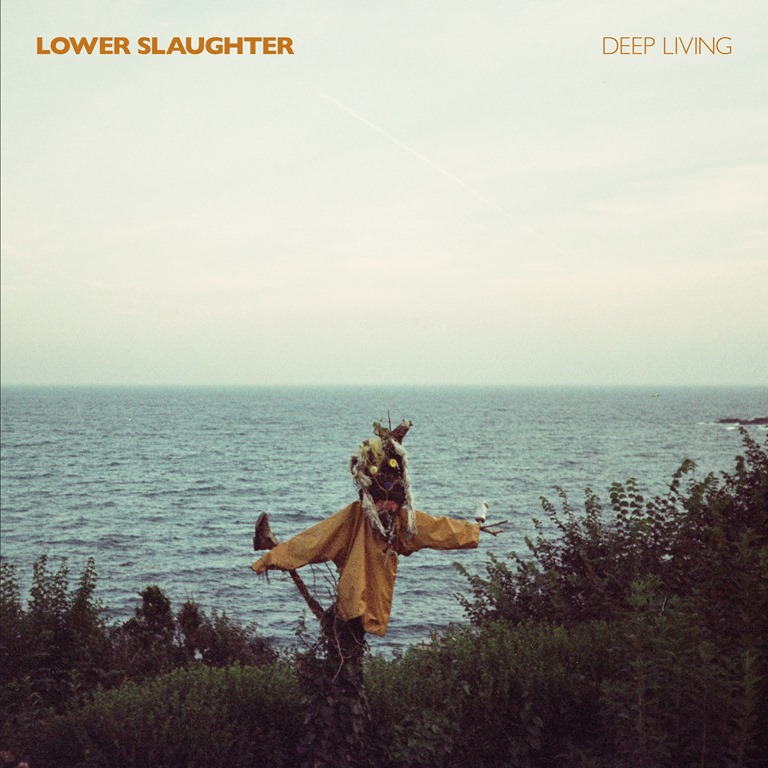
And so seemingly miraculously, they’re still here. Thus, we arrive at Deep Living, a colossal twelve-track document of the new Lower Slaughter, a release of blistering overload dominated by rolling percussion and thick bass. It’s varied, to say the least, and most certainly does not pursue the most obvious or commercial avenues. It was certainly worth the wait, and we’re most grateful that they are still here. And because it’s being released by Human Worth, 10% of all sales proceeds donated to charity The PANDAs Foundation – a trusted support service for families suffering with perinatal mental illness.

After a good couple of minutes of rolling, tom-driven percussion and muted vocals which sit partially submerged beneath a fat, fuzzed out bass ‘Year of the Ox’ suddenly slams the pedals on and erupts and Wakefield roars in anguish, ‘My eyes! My eyes!’. ‘Take a Seat’ is quite different, more overtly mathy, post-punky, and more accessible overall, despite its hell-for-leather pace and wild energy, and there’s a bit on jangle to altogether mellower ‘The Lights Were Not Familiar’ that’s a shade Pavementy – but it’s Pavement as covered by Fugazi. And the guitars sound loud. In fact, everything on Deep Living sounds loud, and what’s more, the recording and mixing work done by Wayne Adams (Petbrick/Big Lad) captures and conveys that it such a way that it feels loud, like you’re in the room with the backline practically in your face. This is nowhere more apparent than on ‘Dear Phantom’, which has something of a Bug-era Dinosaur Jr vibe to it – and the big grungy riff is magnificent. Then halfway through it goes slow, low, and sludgy – and that’s magnificent too.

Balancing melodic hooks and some quite breezy indie / alt-rock with some hefty, heavier and hugely overdriven passages, Deep Living has some range.

The six-and-a-half-minute ‘Memories of the Road’ is a slow-burning epic that builds to a roaring finish, and makes for a standout cut. It’s a trick they repeat on the title track which brings the album to a close.

In between, ‘Hospital Chips’ brings pace and jittery tension via thumping bass and jarring, sinewy guitars, and straight-up punk brawlers ‘The Bridge’ and ‘Motions’. All the range, but it’s the fact there are tunes galore that make Deep Living a cracking album.

AA

Lower Slaughter LP.indd

Christopher Nosnibor

Sure, having Kurt Cobain proclaim his fandom and bringing them on tour as a support act may have helped bring Shonen Knife to a wider audience, but in the Internet age, when it’s much easier to discover bands who aren’t shoved under your nose by pluggers and playlists, it seems probable that they’d have reached the current place on their journey on their own merits.

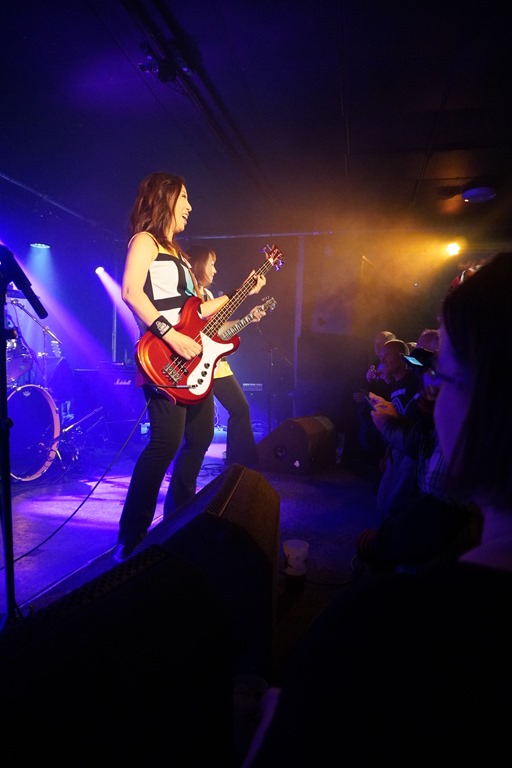
And so it is that the original all-female Japanese pop / punk power trio return to York after quite some time, bringing their ‘Have a Knife Day’ tour to a sold-out Crescent the night after stopping at the legendary Brudenell in Leeds. With the twenty-seven EU / UK tour taking in Hebden Bridge, Manchester, and Sunderland, it’s nice to see the North getting a decent share of shows, and the turnout and response tonight shows it’s appreciated.

The front bar is busy a good half an hour before the doors open, and local support Speedreaders seem genuinely surprised by the size of the crowd they’re playing to. They’re never the most conversational of acts, with the gaps between songs spent turning up and keeping their eyes to the floor, but their brand of slowcore indie – a significant contrast to the headliners’ uptempo style – is well-received, and deservedly so: they’re tight, and the arrangements are such that there is considerable air between the instruments, The sound is crisp and clear, and their concise set no doubt won some new converts.

 DSC02209DSC02206

Speedreaders

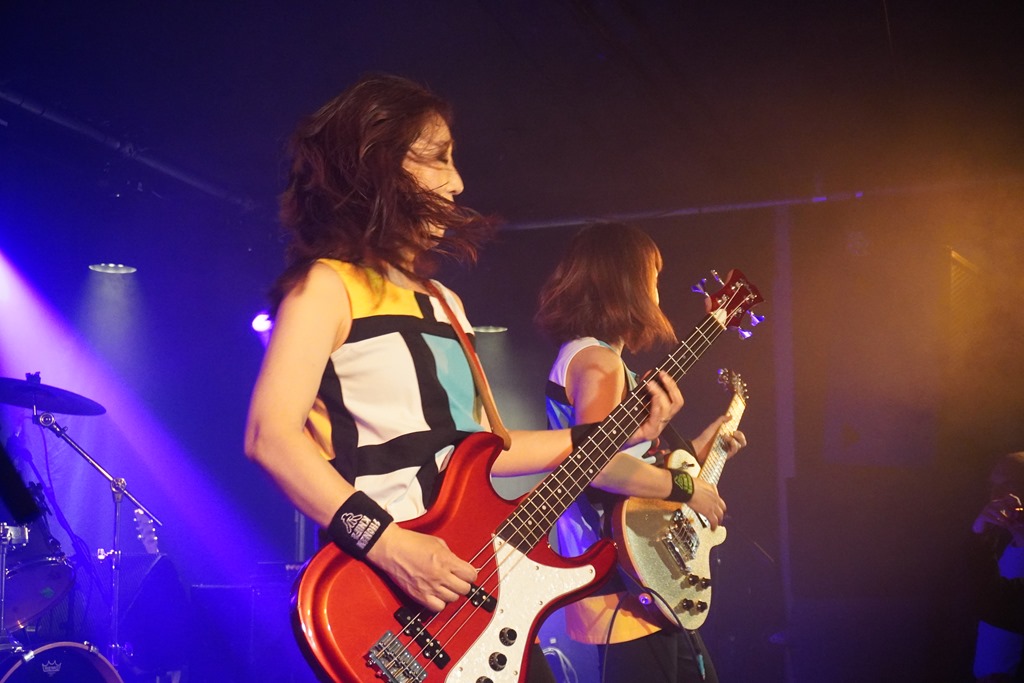
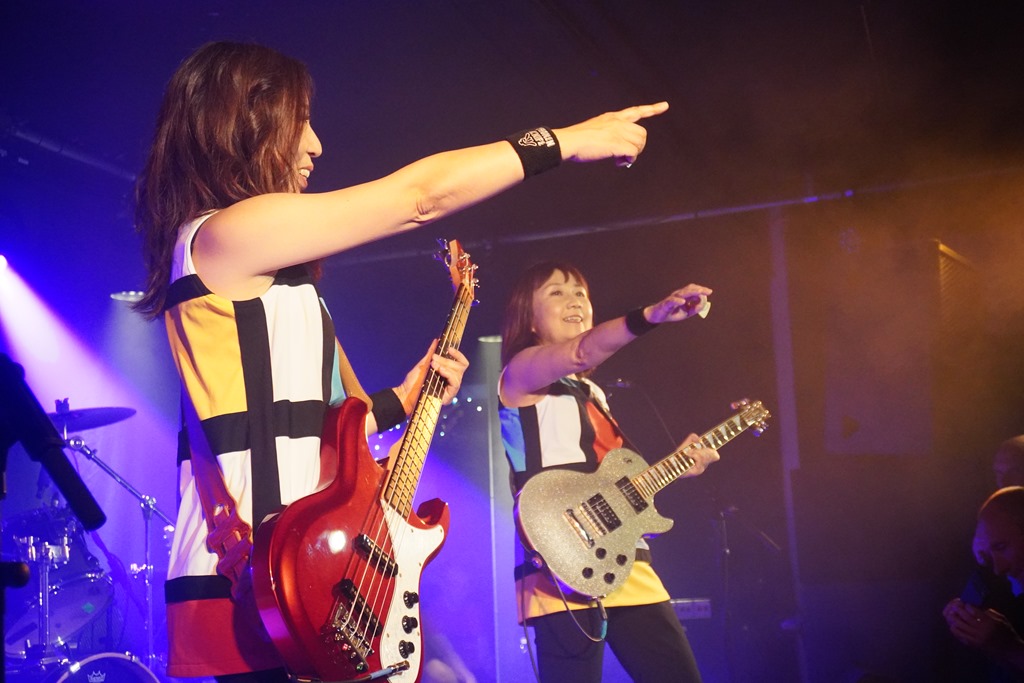
Shonen Knife set up their own kit – drums, the lot, tuning, etc., all wearing their own current tour shirts. One bass pedal, perhaps half a dozen guitar pedals, small amps, there’s nothing fancy about their setup. That’s the essence of punk right there. A tech does come on and make some final checks before they return, T-shirts removed to reveal their co-ordinated colourful stage dresses, and they’re proceed to serve up a set which is pure joy from beginning to end.

For a band that’s been going for nearly forty-five years, their lineup has been consistent for long periods of time, and currently consists of co-founding sisters Naoko and Atsuko Yamano (guitar / vocals and bass / vocals respectively) and singing drummer Risa Kawano, who’s been with the band since 2015. This stability is likely one of the key factors in their tightness as a unit: the songs may not be especially complex, but their played really well – to the extent that it stands out. What also stands out is just how much they look to be enjoying themselves: they smile a lot, and Kawano in particular beams throughout the set, like she’s having the absolute time of her life on every swing of a stick. And that joy is infectious.

DSC02282DSC02251

Shonen Knife

For the uninitiated, Shonen Knife sound like a Japanese female Ramones experiencing a massive sugar rush. Their songs are perfect pop, and revel in the pleasures of ice cream, candy, and cookie dough. They’re the musical equivalent of kawaii drawing, and their stage show is in keeping with this. It’s not just the outfits, but the spangle guitars, the way the harmonies come together, the way the jumps aren’t jumps so much as bunny hops. Yet none of it feels trite or contrived, and it’s never cloying. It’s simply good, clean fun. A couple of times, I find myself thinking of Dogtanian and the Three Muskehounds – and it’s theme tune, that hyperpop energy the likes of which I had never heard before at the time.

DSC02215DSC02212

Shonen Knife

For an hour and a half, I find myself uplifted to a point that I am simply bursting with joy. While they play, everyone is in the moment, transported away from everything: the room is filled with happiness which celebrates simple joys. It’s pure escapism, and absolutely wonderful.

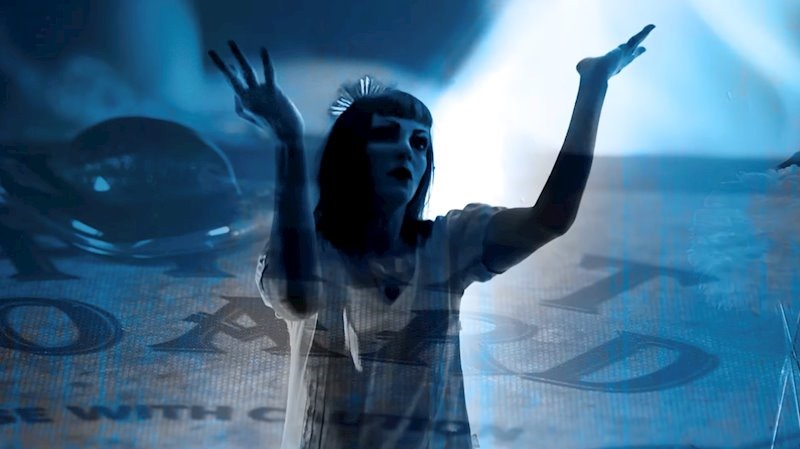
New Hampshire indie rock outfit Replaced by Robots presents ‘Since You Broke My Ouija Board’, a haunted love story where heartbreak crosses over to the other side. The final audio-visual gem showcasing their powerful debut mini-album The Experiment, here we have a surreal blend of eerie visuals, vintage séance aesthetics, and emotional rawness.

The video brings the supernatural fallout of a shattered connection to life. Who knew losing someone could silence the spirits, too? As a bonus, the video begins with ‘The Air of Uncertainty’, an instrumental interlude – a pause to welcome the spirits.

Replaced By Robots formed as a sound and vision laboratory, where they search through the wreckage and noise of modern life to find unusual combinations and create moments of beauty. Goolkasian (The Elevator Drops, The Texas Governor, Lovesick) and Heather Joy Morgan initially met guitar maestro Adam Wade (Funeral Party, The Uprisers) at a Chameleons UK show they hosted in their living room, a fateful meeting that led to the musical chemistry we know as Replaced by Robots.

“’Since you Broke My Ouija Board’ was a spontaneous expression of grief and longing to connect, for Goolkasian broke my antique oujia board, hurling my spirit telephone into oblivion. And I can’t talk to ghosts no more,” says Heather Joy Morgan, adding, “Adam Wade really stretches out on guitar and shines on this track.”

AA

For this album, they worked with legendary producer Paul Q.Kolderie (Pixies, Dinosaur Jr, Throwing Muses, Radiohead) and Josh Hager (Devo, The Elevator Drops), as well as mastering engineer Terry Palmer.

“We got to work with Paul Q. Kolderie, who instinctively did a lot of weird things. He pushed the bass and guitars to the max, giving this record an undeniably glam-era feel and a rhythmic pulse, driving songs like ‘All The Lonely Nights’”, says Goolkasian.

AA

RBR

The Whimbrels is an outer-borough masterpiece. The sound is dense, polyrhythmic, hard, and sweet, hooks and riffs to save your soul pop out at unexpected moments. The players’ credits — The Glenn Branca Ensemble (dating to the 1980s), The Swans, J. Mascis — predict the guitar-driven, sonic onslaught of The Whimbrels, captured on their startling debut – and as a taster, they’ve unveiled a video for the song ‘She is the Leader’.

A Whimbrels show involves racks of guitars, tuned in different and unconventional ways with the players constantly switching between them. ‘The Whimbrels’ album showcases this. There are counterpoint choirs, dueling e-bows phase against each other, chunking, poly- and cross-rhythmic interludes, soaring arias of distortion from Westberg and Evans’ strangely melodic and inventive guitar. Evans’ and Hunter’s vocals front a three-guitar line up tuned every way but normal. The ax men are veterans with contrasting styles that come together in a potent whole. The beats are smart and unrelenting. The album concludes with the instrumental Four Moons of Galileo, four short sections with the inner two framed by shimmering walls of descending, slowly evolving harmonies. The title recalls the four moons discovered by Galileo, suggesting the many more then lurking unknown in space.

ARAD EVANS (guitar, vox, primary songwriter) was a member, recorded and toured with Glenn Branca’s ensemble from the 1980’s until Branca’s death a few years ago. He is founder and still performs with Heroes of Toolik. In addition to Branca, he has played with Quiet City, Rhys Chatham, Ben Neill, John Myers’ Blastula, The SEM Ensemble, The New Music Consort, Virgil Moorefield’s Ensemble and many other groups. “A truly inventive and surprising guitar player.” (Rick Moody, The Rumpus Aug. 25, 2016).

NORMAN WESTBERG altered the course of rock as the main guitarist of the Swans over 35 years, contributing "overwhelming waves of volume with a mix of the rhythmically slashing and the harmonically sensual." He has a busy career as a solo artist and with other projects, such as Heroin Sheiks, NeVah and Five Dollar Priest.

LUKE SCHWARTZ is a New York guitarist and composer to watch; he also toured and recorded with Branca, and he performs in a wide range of groups, including Rick Cox, Joh Hassell, Lotti Golden, Wharton Tiers and with several of his own projects, The Review and the improvisational Hive and Quiet City and is in demand for film scoring work.

MATT HUNTER (bass, vox, songwriter) is a co-founder of New Radiant Storm King and plays or has played with a galaxy of cool projects, including J. Mascis & the Fog, King Missile, Silver Jews, SAVAK, and his own Matt Hunter and the Dusty Fates.

Drummer STEVE DiBENEDETTO, is a widely shown and collected fine art painter but also in in high demand for his music. ("The Spinless Yesmen" 1984—89, "Wonderama",aka "The Shapir-o-Rama" 1990—95, Airport Seven from 2010 to 14). He frequently collaborates with Dave Rick (Bongwater, King Missile, Yo La Tengo, Phantom Tollbooth) and Kim Rancourt (When People Were Shorter and Lived by the Water).

LIBBY FAB (drummer on That’s How It Was) is a founding member of the noise duo Paranoid Critical Revolution. She was technical director of Glenn Branca’s Symphony 13: Hallucination City from 2006-09 and toured as drummer for his ensemble on the Ascension: The Sequel tours. Her own electro acoustic and video works have been featured in festivals in Europe, North America and the Caribbean.

JIM SANTO (producer) partnered for many years with Wharton Tiers in the fabled The Kennel studio. At his own Tiny Olive, Santo has worked with a wide range of clients and projects. As a guitar player, his credits include The Sharp Things, George Usher and Harley Fine.

The New York Times once placed Arad Evans on “an index of creative or experimental electric-guitar-based music in America — young lords of the wild in the post-rock tradition.” That description fits The Whimbrels perfectly. You may need earplugs.

AA

Whimbrels_platforms

Christopher Nosnibor

With grassroots venues closing at an alarming – and depressing – rate, there are fewer and fewer places for bands with a smaller draw, and new acts, to play. Meanwhile, particularly since the pandemic, Working Men’s Clubs have also been in decline or otherwise struggling. But as The Brudenell in Leeds and The Crescent in York have demonstrated, WMC make ideal gig venues, with a well-appointed room with a stage which is simply ideal. And so it is that the organisers of previous all-dayers in York at the now-closed Vaults have scoured the city for a new home, unveiling a brand new ‘Utterly Fuzzled’ stage banner to mark simultaneously a fresh start and a rebirth of sorts.

The advertised lineup included a number of acts who are no strangers to the York scene, or to these virtual pages – certainly solid enough to get me and plenty of others to an out-of-town venue before 4:30pm on a broiling hot Saturday afternoon.

Pete Dale, who also happens to be the guitarist in Knitting Circle, got things going with a solo set of Milky Wimpshake songs, with a couple of covers tossed in for good measure, before Fat Spatula stepped things up with the first full-band set of the occasion.

Every time I see Fat Spatula it’s like experiencing a different band, with different facets of their sound seemingly presenting themselves and pushing through to the fore. Going for a set of high-energy roustabout songs, they’re good fun, and some people dance.

IMG20240216-222204-27

Fat Spatula

Soma Crew start slow with ‘Hey Sister’, and it’s a set that focuses on the mellower, gentler stuff. You never know what you’re going to get with Soma Crew, from lineup to set, but one thing is always assured, and that’s drummer Nick’s T-shirt. About halfway through they finally kick things up a notch with their first Motorik groove, when they come on like Hawkwind playing Sister Ray. It’s not until the last track that they pick up the tempo and let the drone diffing spin out. People don’t dance. It simply wasn’t that kind of set.

IMG20240216-231318-29

Soma Crew

In these troubling times, Knitting Circle’s commitment to being an issues-driven band is something I find both stirring and in no small way quite moving. It shouldn’t seem like a bold thing to be staunchly anti-war and sing about it, but this is seemingly where we are now, and the fact they have some cracking tunes with two and three-way vocals and choppy Gang of Four style guitars makes seeing them an uplifting experience – and they’re consistently good, too.

IMG20240217-001104-40IMG20240217-000508-35

Knitting Circle

The next couple of acts aren’t local, but they are both absolutely outstanding. Glasgow’s Slime City bring energetic punky tunes, matching zipper tops, and a size nine shoe with knobs on that does something to the guitar. They have a few gimmicks, but they’re worked into the set in a way that’s knowing and humorous without being cringey. And they have TUNES. Said tunes are led by some outstanding drumming – tight, crisp, a bit disco in places. ‘Never Stop Giving Up’ goes a bit poppy, a bit Prince, but more oftentimes, they’re rather reminiscent of Future of the Left.

IMG20240217-010603-53IMG20240217-010506-49.BW

Slime City

Irked take things to a whole other level: fierce, ferocious, tight, they’re blistering from beginning to end. I didn’t really take any notes during their set. But what’s to say about a band with such a fearsome frontwoman who charges about the room howling a fill-throated roar against a full-throttle twin-guitar attack interspersed with some good-natured between-song banter with a strong North-Eastern twist from the guitarist. The vitriol is real, but so is the fact they have a clear sense of humour.

IMG20240217-015255-84IMG20240217-014749-66

Irked

Now, the last time I saw Crumbs was a rather difficult night, when they supported Dream Nails. They were great, although their performance was rather eclipsed by subsequent events. It’s a pleasure to see them under more friendly circumstances: they’re good fun, and worthy headliners. There’s more inter-band crossover, as Jamie Wilson who does guitar / synths / vocals for Knitting Circle is also Crumbs’ bassist, and paired with Gem’s easy drumming style. with minimal kit – bass, floor tom, snare, hi-hat – they play straight-up indie that’s accessible and quite simply great fun.

Crumbs

Crumbs

And ultimately, fun is what this is all about. The sense of community is heartwarming. A lot of those present are in bands – and not the bands playing – but there are also plenty of faces often seen at local gig, as well as many who aren’t, but hopefully events like this will entice them out more often. And with a decent enough range of bottled beers at £3.70 ago, and good quality sound throughout, Fulfordgate WMC has strong potential to become a more regular venue. Real credit has to go to Jo Dale, bassist with Knitting Circle, for her curation, organisation, and promotion of such an adventurous DIY event. Here’s to much more Fuzzlement in the future.

Christopher Nosnibor

And this is why it’s always worth turning out in time to see the support acts… Just last month, I was in this very same venue to see Feather Trade, a band who pretty much guarantee a quality show. There were three other acts on the bill, all of whom were well worth seeing, but the pick of the crop by some margin were Suspicious Liquid, who, it transpires, won the York Battle of the Bands last year. It wasn’t hard to see why. But has I stood outside chatting, or just rocked up for the headline act I knew, I’d never have seen them. And having seen them play as a support was what compelled me to come and see them headline tonight. And once again, the support acts proved to be good value – especially when you do the sums of three bands for seven quid.

As they took to the stage, I had some initial doubts about Echoviolet: image-wise they look a bit 90s indie, especially the singer / guitarist who’s sporting a bad indie haircut, and they sounded like a band who are still working things out. Sometimes the bass and guitar lines don’t really gel, with one running ascending chords and the other descending and not necessarily in perfect time either, but then suddenly from nowhere they’d land a cracking chorus. The vocals, too, aren’t quite there yet: they sound somewhat tentative, undersung, as if rehearsing quietly in a bedroom rather than going all-out. But, as a power trio, they’re unusual in that the guitar parts favour spindly picking rather than fully-struck chords. It’s certainly distinctive, and they’ve definitely got things going for them.

DSC01896DSC01898

Echoviolet

Broadly speaking, their sound could be reasonably described as alterative rock with a 90s flavour and some heavy moments that would have really hammered hard at higher volume. There are hints of Bleach era Nirvana, and a few dashes of dark psych, and at times they call to mind The Horrors.

The punky ‘Micromaniac’ is driven by some foot to the floor bass but dominated by an unexpected drum break near the end. Drummer definitely overplays, but he brings a vibrance, an energy to the stage, and while they’re a bit rough in places, there is clear potential here. Would see again.

Velleity are straight in with a groove, they’re as tight as fuck and the layers of synth add polish. Sure, they’re a bit muso, a bit groggy, there’s a bit too much sexface guitar wankery, but they radiate confidence and it’s forgivable because – and it’s a rare thing – they actually are as good as they think they are, and you could easily envision them going down a storm at festivals, bringing in a range of elements from Pink Floyd to Led Zepp and… Muse.

DSC01919DSC01921DSC01922

Velleity

It’s certainly a remarkable debut even from seasoned musicians, and the quality of the performance and musicianship is impossible to deny. Mid-set they drop a tune that could easily be a Smashing Pumpkins outtake, before going Alice in Chains for the last song. They grew on me as the set progressed, and the bass tone was supreme. During last song, singer popped to the bar and returned with shots which he fed the band before a particularly indulgent instrumental break. I guess you could call that showmanship…

Suspicious Liquid are the reason most of us are here, and while it’s only a third full, it’s not bad for a Thursday night when students are still drifting back after Easter. And they give the show 100% from start to end. It takes some guts to open with a slow, sprawling epic… which is just what they do. Showcasing new material – a lot of new material, for that matter – and some seriously meaty hard rock riffs, they are on fire. The small audience pack forward and close to the stage, things look busy. It must be gratifying for a band to see faces up close instead of playing to a void with lights in their faces. All the elements come together perfectly, with no weak parts. Sound and performance, everything is just superb, and they play with intense focus. They boast powerful vocals with incredible range, especially at the upper end, and collectively they seem so comfortable on stage, too. Yes, this is how it’s done.

DSC01933DSC01937DSC01963

They chuck in a King Gizzard cover mid-set, followed by more new material and some colossal riffery, debuting one nine-minute behemoth near the end of the set. Every second of the set is pure quality, and on the strength of the new songs, you get the sense that the best is yet to come.

Christopher Nosnibor

Ah, Shoe York, indeed… I find some amusement in the fact that the original York feel compelled to reference its later tribute city. I’m not sure if Brew York is just a plain pub or born out of a feeling that punning on New York may be in some way beneficial to their profile – but they do make some great beers and are doing well in terms of distribution and expanding their pub outlets, and this can only be a good thing. Shoe York, meanwhile, offers a nigh of shoegaze courtesy of a trio of local acts.

Some MBV lurches from the PA as I find a surface to lodge my pint of porter, and the place is filling up early doors, which is encouraging, and also heartening. Grassroots venues tend to survive on tribute bands and the bigger visiting bands, so to see a local night so well-attended is significant.

Joseph B Paul does a line in New Order / Joy Division influenced pop that at times sounds more like a darkly spun reimagining of Erasure. The setup is with live guitar, and everything else sequenced, and the drums are way too low in the mix, depriving the songs of the groove that’s clearly integral to their form. In contrast, the vocals are possibly a bit too forward, and devoid of any reverb, they sit on top of, rather than within the arrangements. Joseph does some bouncy dancing and it’s all very 80s, and perhaps there are dreampop elements in the mix, but it doesn’t exactly feel shoesgaze as much as shoehorned.

DSC01431

Joseph B Paul

Suddenly, it’s absolutely rammed by the time Moongate take the stage. There is a bar queue, too. I don’t simply mean the bar is busy: there is a queue of individuals snaking back halfway into the rows of people facing the stage. This is wrong. It is not how bars work. I circumnavigate the queue. I don’t get served much quicker, but feel some sense of relief in not perpetuating this dismal wrongness, and I do make it back to the front in time for Moongate.

Moongate do a nice line in dreamy indie that jangles, drifts, and washes gently with a hint of melancholy over the ears, and Joseph has a lot to answer for, being the subject of around 75% of the set, the subject matter of which is predominantly heartbreak, breakups and breakdowns. It’s a nice set, and they’ve got clear potential – and more so when the singer moves on from Joseph.

DSC01455DSC01448

Moongate

Aiming are three serious, studious, earnest bearded young men. Their drum machine is also low in the mix, but with a crisp, Roland snare sound cutting through the swathes of layering guitar and synths. The live bass has a bouncy groove and is really solid in a 4/4 chuggalong way. In fact, the bassist is excellent, delivering sturdy low-end, and this works: the band have a certain energy and a level of polish that’s slick but nor completely slock or passionless.

The band don’t do chat, but the audience does. This is the most loudly talkative audience I’ve experienced in a while, it’s positively a roar between songs.

DSC01487

Aiming

The song they announce as a new song is perhaps the strongest of the set, which is encouraging, with a delicate melody and solid guitar and bass fusing together. It works well, but there are no real surges or crescendos, and as much as these may be more overtly shoegaze in forms, on this outing… they could do better. But… they’re tight, melodic, captivating, and go down a storm.

28th February 2025

Christopher Nosnibor

It seems quite remarkable that Pink Turns Blue are still going a full forty years on from their formation in Berlin in 1985. Starting out as a duo consisting of Thomas Elbern (vocals and guitars), Mic Jogwer (vocals, bass and keyboards) and a drum machine, they’re considered a part of Germany’s first wave of gothic rock.

The history of goth is certainly a divergent one: the hotbed of dark post-punk that was Leeds in the early 80s spawned a host of bands approximately simultaneous with the emergence of The Cure and Siouxsie and the Banshees, and Germany latched on to them and The Sisters of Mercy early on – so in relative terms 1985 feels like being late to the party. But at the same time, this was a peak year for goth across the continent.

As a personal aside, despite being deep into my goth once I discovered The Sisters and The Mission in 87/88 (late? I was 12/13 and simply too young to be into anything other than Duran Duran and Madness in 84-85) my introduction to Pink Turns Blue was 1994’s Sonic Dust, which was floating around at the second-hand record shop I worked at on weekends. It very much sounded like the indie stuff of the time, but perhaps with a dark edge, but gave no hint of the band’s history.

Since then, they’ve returned to their roots somewhat, and Tainted (2021) was a dark, brooding masterpiece which largely went under the radar, largely like the band’s output as a whole. But while latter-day acts like Editors and Interpol draw the media and commercial attention, Pink Turns Blue just keep on. And Black Swan is a classic addition to their catalogue.

The chiming, picked guitar of ‘Follow Me’, brings an instant pang of melancholy. The rippling synths and crisp drums make everything tight and the sadness begins to permeate. It’s a wistful, reflective sensation: this is where Pink Turns Blue excel. Their songs are drenched with an aching weight.

Jogwer’s clipped vocal delivery sits perfectly with the rolling bass and insistent rhythms, which underpin guitars which wash and chug in neatly-orchestrated duels. And so it is that Pink Turns Blue make music that’s dynamic, exciting, and sad, at the same time.

Single cut ‘Can’t Do Without You’ is simultaneously perfect pop and melancholy indie, and ‘Dancing Wirth Ghosts’, another single, brings the jangle of The Sisters’ First and Last and Always in a style that’s reminiscent of ‘Walk Away’ and ‘No Time to Cry’. Because it’s still possible to be pop and intense and claustrophobic. ‘Fighting for the Right Side’ steps things up and punches hard.

‘Why Can’t We Just Move On’ reminds me more of Slow Readers Club, dark-inflected indie / alternative, with a vibe that balances mellowness and melancholy with a certain tension, and this is really where Pink Turns Blue excel. The title track – by far the album’s longest song, clocking in at nearly six minutes – really taps into emotional undercurrents with its downtempo, reflective styling. There’s no one thing that one can identify as the thing – it’s all about the mood, the delivery. It goes beneath the surface, resonates on a level that’s beyond the articulation of cause and effect: it’s simply achingly sad, but at the same time, utterly beautiful.

Pink Turns Blue have a quite unique take on mid-80s post-punk / goth, and unlike many of the bands which emerged from the class of ‘85-’87, they don’t conform to the clichés to the tropes, the template which became predictable and tedious so quickly, and yet has endured, with every other band doing doomy baritone, aping Craig Adams’ bass pinned to a thumping drum machine. And this is integral to their enduring appeal. They don’t carbon copy The Sisters of Mercy, they’re not another Rose of Avalanche. Yes, they do incorporate certain elements, as ‘Please Don’t Ask Me Why’, with its thumping bass groove and chorus-heavy guitars evidences, but at the same time, they do something different and sound uniquely Pink Turns Blue, and it’s not only the German inflection. Again, it’s not easy to pinpoint the difference: the simple fact is that it’s tangible. Black Swan is a great album: it’s consistent, it’s got mood and feeling, and has something that’s just beyond reach, and that is magic.

AA

a3699160702_10

1st March 2025

Christopher Nosniboir

Richard Rouska is something of a cult legend in his own lifetime: back in the 80s he was pivotal in the Leeds zine scene, documenting the emerging post-punk movement Leeds remains so renowned for, in real-time, subsequently writing a number of books. Along the way, he’s made some music of his own, recently making Well Martin This is Different his primary focus, with some prolific results. Finding The Ai G-Spot is WMTID’s fifth since their inception in the mid-late eighties, and serves up a set of remixes, with proceeds from any donations going to the Throat Cancer Fund.

And yes, it certainly is different, and that’s clear from the get-go. WMTID’s music is essentially electronica, but draws on a host of elements which have their origins in different decades and different scenes. I will admit that I misread the title as Finding The Ali G-Spot initially. Ai-iit! But while this album draws on a huge array of influences, you won’t find any naff cultural appropriations.

‘The Prince is Dead (Again)’ is a twisted hybrid of lo-fi post-punk, 80s electronic industrial (think Wax Trax! stuff in the late 80s / early 90s), space rock, and Krautrock, a motorik groove stricken through with some wild orchestral strikes and multi-layered vocals – and this is to an extent the template: ‘03:33 Time’s Up’ is exactly the same duration as the original version (‘333’) which appeared on I Know What You Are But Who Am I? in the Autumn of 2024, tweaked to optimise the hypnotic rhythm and detached-sounding vocals. The result is somewhere between DAF and early Human League. ‘Deep Down Low II’ – again reworking a track from I Know What You Are goes full-on techno / cybergoth stomper, with industrial-strength beats pounding away relentlessly. It works so well because it doesn’t take from the original, instead simply rendering it… more. More. MORE! And I want MORE!

There are hints of both KMFDM and very early New Order about ‘It’s (Another) Lovely Day’, but then, it’s as much a work of buoyant lo-fo indie and bedroom pop, while ‘Little Bombshells’ comes on a bit Prodigy, but again, a bit technoindustrial, and a bit kinda oddball, bleepy, bloopy, twitchy, stuttery, the vocals quavering in a wash of reverb as crashes of distortion detonate unexpectedly. Elsewhere, ‘Waiting For The End…’ goes dark and low and robotic, and ‘Three O’Clock Killer’ is hyperactive and warped, and brings menacing lyrics atop a baggy 90s beat.

It really is all going on here, and the end result feels like a wonderfully eclectic celebration of music, articulated through some quite simple compositions, all of which have solid grooves providing the backbone of each.

My general opinion of remix albums is widely documented and not entirely enthusiastic, but Finding The Ai G-Spot is a rare exception, mostly because it doesn’t feel like a remix album an doesn’t offer three or four unnecessary and unrecognisable versions of each song, boring the arse off all but the most obsessive fan. In fact, if you’re not up to speed on WMTID’s output – and there’s a fair chance you may not be, to be fair – Finding The Ai G-Spot offers a neat entry point and summarises the last couple of albums nicely, too.

AA

a2835565654_16