Posts Tagged ‘Garbage’

The Glue Factory / The Orchard – 2nd May 2025

Christopher Nosnibor

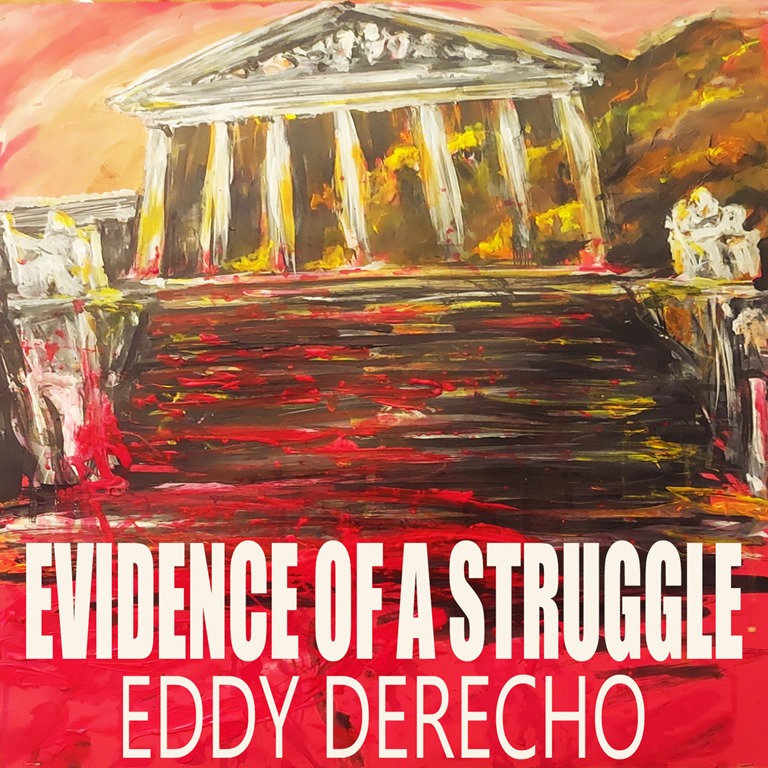
For his second album under the Evidence of a Struggle moniker, W P C Simmons V a.k.a. Rev. Billy Simmons has managed to recruit a band lineup with some serious pedigree, with Matt Walker (Smashing Pumpkins, Morrissey, of1000faces, Garbage, Filter) on drums and synths, with bass contributions by Alan Berliant (Chris Connelly, Mavis Staples, Saint Asonia) and Solomon Walker (Liz Phair, Bryan Adams, Morrissey). We’ll forgive Walker and Solmon for Mozz – musicians need to work and get paid, after all.

We aired the title track here on Aural Aggravation a little while ago, and it launches the album with all engines blazing, a full-throttle industrial / grunge beast of a cut in the vein of Filter. And from hereon in, things get darker, heavier, and weirder. ‘The Whale’ adds a psychedelic spin to some dense, sludgy riffage, coming on with some hints of Melvins, Smashing Pumpkins, and Queens of the Stone Age in the blend.

AA

‘Alma’ takes a skipping detour into rippling, expansive electronics, even alluding to prog as it locks into a looping, metronomic groove and serves up an extended guitar solo towards the end of its sprawling six minutes. But there’s a tough, serrated edge which remains consistent throughout. It’s hard to really pinpoint, but there’s a drawl, a sneer, about the vocal, and something about the treatment – be it compression, reverb – that calls to mind Girls Against Boys. Musically, there’s no similarity: in fact, Eddy Derecho is an album that’s difficult to pin down stylistically. There’s a keen 90s vibe to it, in some rather abstract way. It’s a guitar album, but that in itself isn’t it, not by a long shot. I’m almost reluctant to describe it as ‘heavy’, too: the guitars may be big and overdriven and the drums thunderous, but, well, it’s all relative, is my point. What made grunge exciting in the early 90s was that we got to hear music with aggression, angst, and edge, in a mainstream setting: anyone who was in their mid- to late teens or early twenties in in the early 90s had been raised on crisp, clinically-produced music in the charts, and sure, that production was phenomenal in so many ways – listen to Duran Duran’s Rio and it’s truly remarkable just how clean and yet, at the same time, dynamic it sounds. We also grew up with the studio slickness of Phil Collins and the like, and even ‘rock’ was highly polished. It’s no wonder that grunge was an absolute phenomenon. But was it that heavy? Not really, not in comparison to the likes of, say, Earth, or Swans, or, for that matter, early Melvins. Nine Inch Nails smashed everything with Broken and The Downward Spiral, though. Those releases were truly revolutionary. The reason I’ve taken this diversion is because Eddy Derecho is an album which has all the hallmarks of emerging from this musical milieu. The guitars are bold, but it’s not so heavy that you’d shit your pants. It’s edgy and has aggression, but it’s also fairly accessible, in that it has tunes, with tangible structures. There’s melody.

The sinewy ‘Orchan’ is perhaps one of the hardest-hitting tracks on the album: all of the elements just seem to come together to render a sum greater than the parts, and not only is the drumming mighty, but the mix is such that the snare really cuts through in a way that’s rare on contemporary releases.

Despite my enthusiastic focus on aspects of the production, this is by no means an attempt to milk the engorged udders of nostalgia – although if any ‘new’ bands should get a pass for sounding ‘retro’ it’s these guys, since they were there at the time. Eddy Derecho is an album with tunes – and the slow-burning, seven-and-a-half-minute epic ‘Aethyrs’ is a standout among them, a hefty grunger which spins in some Six-era Mansun vibes.

Eddy Derecho may well sound like a lot which has come before – but that’s true of so much music now, inevitably. But what sets it apart is the quality, and the consistency of that quality, and by sprinkling a dash of cosmic pop dust on the top, Evidence of a Struggle have hit a winning formula here.

AA
a3526355763_10

14th September 2023

Christopher Nosnibor

Have I lost the plot covering such commercial stuff as this? No, not at all, and besides, plot is overrated, and this is an interesting one. Having built up something of a following since emerging a few years ago, Luna Aura’s latest EP release coincides with her touring as support for Slipknot Frontman Corey Taylor on his solo tour. If on the face of it, it seems like a surprising choice for such a pop-orientated act to bag such a slot, however big on guitars they are, Corey’s ubiquitous media of late in promotion of his second solo album has seen him really pushing to emphasise the fact that he’s a multi-faceted, genre-fluid songwriter.

I think I’ve been growing a newfound respect for him for this: he genuinely seems more about making the music that he enjoys than about being remotely cool, which is a far cry from the enigmatic masked presentation of Slipknot, where no-one ever knew who any of the members were for a long time. I always thought Slipknot were shit on every level, and I’d always suspected they were middle-aged record company execs donning boiler suits for some postmodern nu-metal equivalent of The KLF, only more calculatingly exploitative. I was wrong, but not completely off track. But it turns out Taylor’s had some high-profile feuds with the kind if people who warrant feuding with, although I digress. The promo rounds for CMF2 have been interesting, in that they show Taylor, aged 49, facing up to the fact that he’s staring directly at a point in life where his physical capacity is waning and frankly, he’s reached a point in his life where he doesn’t care about cool and just wants to do his thing. At 48, I find this far more relatable than an artist trying to remain relevant and be the voice of ‘youth’, like so many acts who emerged around the turn of the millennium, not least of all so many punk-pop acts who are old enough to be grandparents to their target audience. But also, credit due for giving a young, up-and-coming female artist the exposure instead of some predictable all-male band.

Perhaps unsurprisingly, half of Luna’s EP has already been unveiled as video singles, because that’s how it works now, but regardless, hearing all five songs in sequence is what this is about, and over the course of five songs, we get a sense of Luna’s range and what she’s about.

It’s hard to evaluate new music from new artists that resembles the new music by new artists that was emerging when I was at the same point in my own life. As a teen in the 90s, it didn’t only feel like the most exciting time in music ever, but it felt like our generation had something of its own and something that spoke both to and for us. This was our punk, our new wave, our new romantic. I may have been aware of and listening to new romantic and electropop as it emerged, but at the age of maybe eight or nine, I can’t claim it was for ‘me’. Grunge and the alternative music of 92-94… that was different. On the one hand it seems unusual that a generation behind should revisit and reclaim it. But after a wilderness spell of shit mass-produced r‘n’b and a truly dismal decade socially politically, and all the rest, it makes sense that this should once again reflect the zeitgeist.

But something has changed. There has been a shift. Not only has life in general got shitter, but technology and social media have changed everything. Attention spans have shrunk, and that’s a fact. When it comes to music, you’re got maybe ten, fifteen seconds to make an impression (although an article published earlier this year suggested it was as little as five seconds – but interestingly, the study showed listeners tended to like a song more if they listened to the whole thing first, rather than just being exposed to just a clip).

In this context, it’s obvious why ‘Money Bag’ is the first track and why it was the first single: it’s uptempo, guitar-driven and punky and blasts in, all fuzzy guitar, and arrives at the hook in under a minute. It’s a promising start. Savvy songwriting for attention-deprived times. The guitar is up-front, overdriven, gutsy. But the chorus goes for the bubblegum vacuous style, with an airy ‘woo-hoo’ at the fore. It’s popular right now, and it’s a winning formula, but it just gets on my tits because it feels like a lazy stab at a radio-friendly hit without actually writing a lyric. And it often seems to work. Well, for some people: not for me, really.

But after this obvious start that’s probably only weak in my view, the majority of the rest of the EP is pretty solid. ‘Lost in the Fiction’ is smoother but no less guitar-based, and with an overtly digital feel, it slots in comfortably alongside Garbage sonically and stylistically.

Blind? Bland would perhaps describe this derivative turn-of-the-millennium alt-rock bounce-along that’s Avril Lavigne and Natalie Imbruglia and Alanis Morrisette all rolled into one, which isn’t the worst thing, and it’s neatly crafted, but you can’t accuse Luna Aura of being predictable or one-trick. ‘Candy Coloured Daydream’ is an explosion, with a monster hook and killer chorus, and ‘Cut and Run’ closes in kick-ass style, with an opening riff that’s pure Nirvana before adding a 90s shuffling drum groove and more driving guitar. The Fiction EP is grunge for the 21st century – it’s perhaps more melodic, but it’s got attitude and you can mosh to it. And that’s more than reason enough to say yeah.

AA

AA

LUNA AURA - CANDY COLORED DAYDREAM copy

1st June 2023

Christopher Nosnibor

Sometimes, things don’t work out. It’s sad, but it’s life. But it’s how you deal with these setbacks that counts. Just over a year ago, I was getting enthusiastic about Warning Signal, a band who looked set to be ones to watch with their full-throttle gritty-industrial pop that was a head-on collision between Nine Inch Nails and Garbage. But, it was not to be.

But Eva Sheldrake is back and kicking it hard fronting new power trio Eville, and while there’s a clearly a shift from her previous project, the key ingredients remain in place, namely hard-edged metallic guitars and a crackling dark energy. ‘Messy’ melds goth and industrial and stitches them together with a pop sensibility, making for a high-impact tune – and again, clocking in at just over two and a half minutes, it’s succinct, and all the better for it, with there being no room for any tracer of flab or indulgent wankery.

‘Messy’, in songwriting terms, is anything but: they’re straight in, a back and forth slap round the chops, and out again before you know what’s hit you. It’s heavy but melodic and catchy, and if there are hints of nu-metal in the mix, there’s a lot more besides.

Jamie Sellers’ production nails it, balancing fizzy distortion with crisp, digital cropping and sharp edges, making it radio-friendly without dulling the serrated edges. Here’s hoping the second bite of the cherry is the one that delivers the pie – or some other failed extended metaphor relating to attaining well-deserved success, because they absolutely deserve it on the strength of this release.

AA

347123297_1197676684264041_4239722450375332471_n

7th October 2022

Christopher Nosnibor

Having been introduced to GLDN this summer via the gritty industrial gore-flecked First Blood EP, the vehicle of Nicholas Golden continues at juggernaut pace, having prefaced the full-length Haemophilia with lead single ‘Suicide Machine’.

While some are particularly sensitive about anything pertaining to suicide, its disturbing prevalence means it’s a topic that needs to be out there and under discussion. While rates among the young are conspicuously high, here in the UK, rates are now highest for men in the 45-49 bracket (my own demographic), while globally, it’s rocketed among those beyond retirement age. And, traumatic as it may be for some directly affected, it shouldn’t be considered taboo or require a trigger warning – otherwise, pretty much all industrial and metal would need to carry warnings before every song.

Point is, that suicide, death, and, indeed, the fixational theme of plasma and platelets that dominates the work of GLDN are as much tropes, themes as much metaphorical as literal – and that’s ok. To confront one’s darker thoughts is healthy, and is a world apart from acting upon those thoughts. More often than not, those who produce the most dark and grotesque art, in any medium, prove to be the most balanced and the least dangerous, as they’ve found a healthy outlet for whatever it is that’s chewing at them.

On the evidence of Hemophilia, there’s a lot chewing at Nicholas G, and he channels every last ounce of that angst into his art. The result is an album that’s tense, taunt, relentless. And yes, of course it’s harsh. Not to a power electronics level of extremity, but this is an album that’s edges are serrated with industrial abrasion every inch of the way. Oh, and there’s blood and guts all over – just look at the cover. It sounds how it looks: by turns incendiary with rage and ominous and sinister with disconsolate darkness, Hemophilia has sonic and emotional range, but at the sae time, it’s bleak, bleak, bleak, as song tiles like ‘Self-Mutilation as a Form of Compliance’ indicate.

It opens with the lo-fi punky metal thrashabout of ‘Animal’, which is as up-front as it is unexpected, with GLDN roaring raggedly against a gritty, grimy guitar blast. But ‘New Face, Same Lies’ is bleakly electronic, dingy, subterranean, whispered and tense and is everything you would expect. The contrast of these two tracks alone tells you pretty much everything you need about GLDN and Hemophilia – namely it’s every inch the gritty, dark industrial album you’d expect, but it’s got twists – lots of twists. ‘#1 Crush is just one of them – a chugging metal reworking of the flipside to Garbage’s second single ‘Vow’, it clearly recognises the song’s lyrical darkness, then plunges is into an abyss and culminates in screaming angst. Despite being familiar with the song – it’s something of a personal favourite from the Garbage catalogue – it didn’t land as immediately recognisable, and that’s a positive, and a measure of just how much GLDN have twisted and mangled the tune – or put their own twist on it, if you’re talking more commercially. It’s a bold move, and one that proves successful. In contrast again, ‘Half-Life’ is sparse, stark electronics and as gritty, grimy and gnarly as hell.

At times it’s pure NIN: often it’s much more, not least of all in that it does its own thing within the industrial framework and at times pushes beyond, making for an exciting and dynamic album, and one that is, naturally, brimming with anguish and existential angst. And relentless, pounding beats, too. ‘Suicide Machine’ stands as a highlight, with parallels to ‘Happiness in Slavery’ from Nine Inch Nails’ Wish, which is clearly one of Nicholas Golden’s touchstones – and it’s a solid choice, as a release that really took harsh noise to a massive audience.

Hemophilia is dark, dense, and intense, the sonic equivalent of bloodletting. And the production is tight. It’s clearly a studied work, and the execution is magnificent – not just the performance, but the production, too, which presents the songs in their best light, tugging out the details and the dynamics to yield maximum impact.

AA

a0853929147_10

2nd May 2022

Christopher Nosnibor

‘Bitch 16’ is the debut single from French darkwave project Distance H. It was recorded in collaboration with Ophelia from Saigon Blue Rain, one of a number of female vocalists to feature on Distance H’s forthcoming EP, Intimacy.

It’s a deft slice of dark pop with both atmosphere and edge, not to mention hints of Garbage. And while not without hooks – it has plenty – it’s the atmosphere that stays with you, at least after the first listen, and it’s the vibe you want to revisit and which makes you hit repeat – and that urge to hit repeat is strong.

Propelled by an old-school drum machine sound, there are some retro drum fills that sound just a shade clunky against the austere, smooth-surfaced synths, but there’s a compelling urgency, and a certain sass about ‘Bitch 16’ as Ophelia’s vocals glide and soar – and yes, perhaps it’s something about the translation, as the band summarise that ‘Bitch 16’ is ‘in some ways opposed to Sweet 16 and its form of happy, carefree transition. When sweetness gives way to brutality; when detachment gives way to obsession, when desire gives way to disgust’.

These are strong emotions, and Distance H have distilled them into a taut four and a half minutes, making for a strong debut.

AA

073130

PNKSLM – 2nd April 2021

Christopher Nosnibor

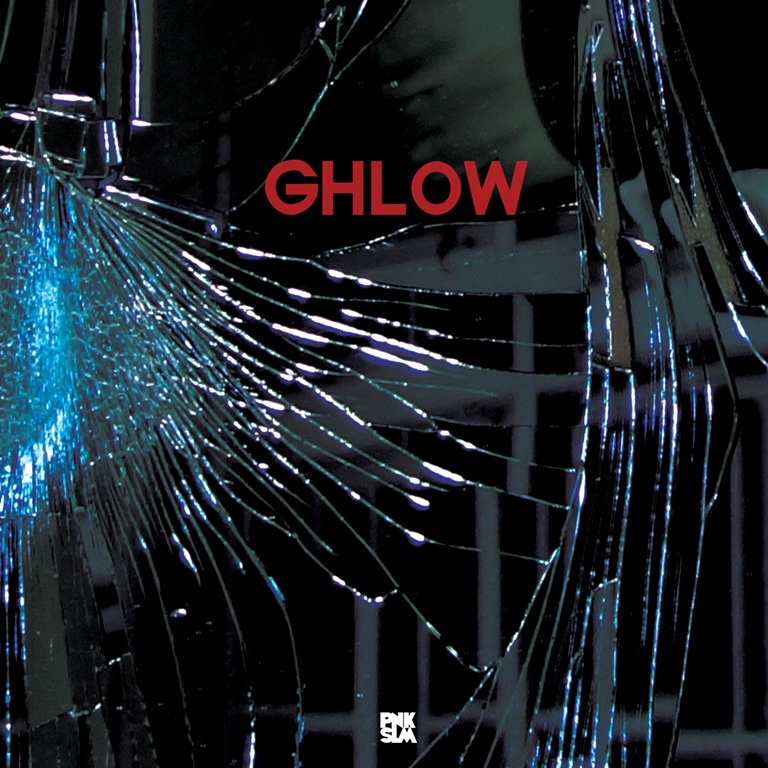
Following the single release of ‘Not Fit For This’, GHLOW unleash Slash and Burn, the album which spawned it – and brimming with dark energy, it does not disappoint. While clearly operating within a genre field, and a comparatively limited instrumental format, it has range. It also packs so much tension and an emotional force that it’s an instant grab. As what you’d likely describe as an old goth (although nowhere near as old as some), I have a predisposition towards this kind of stuff, but by the same token, I’m immensely picky, in that anything overtly cliché I simply can’t muster any enthusiasm for – but GHLOW have got it all: the songs, the style, and the production. In combination, this is a work that resonates on a level that isn’t necessarily easy to articulate: it’s not simply nostalgia – and drawing on the dense electro shoegaze of Curve as much as early 80s post-punk and its lineal descendants. Anyway., it’s hard to feel nostalgic for a time before your own, and even if some of the aforementioned bands soundtracked my teens it’s not a pining pang for that which I feel on hearing this. No, GHLOW tap into something else altogether with their explosive blend of jagged guitars and simple sequencing plat places power to the fore over musical dexterity.

It’s ‘Not Fit for This’ that slams in by way of an opener, a gloriously spiky hybrid of Siouxsie, X-Mal, Garbage, and Savages, a thunderous bass and stuttering beat hammering away beneath a toppy blasty of guitars that provide the tense, fiery backdrop to Emille de Blanche’s commanding vocal performance. It grabs you by the throat and drags you into the seething morass of darkness that follows. There’s texture and depth, for sure, but this is one of those albums that’s best experienced end-to-end in order to appreciate the highs and lows integral to its sequencing. It’s also big on mood and big on dynamics, and the duo ratchet up the atmosphere to create a work of rare intensity.

The slower ‘Sleep’ is a song that drives right through the gut: the primitive drum machine sound stutters and jolts, the kick sound beating like a palpating heart, the snare a whipcrack that slices through the murk – and alongside is a grating bass sound that churns and growls malevolently. Over it all, Emille gives a powerful, full-lunged vocal performance. The title track is a mid-tempo motoric chugger that hammers away somehow unfurls as it progresses, and the repetition, paired with the soaring vocals and some howling lead guitar, becomes more than the sum of its parts, while ‘Hold It’ is a heavy, repetitive droner that’s claustrophobic in its dark intensity.

There’s something magnificently unpolished about GHLOW’s sound and for all its electronics, it’s The March Violets that their dirty, immediate sound calls to mind most, although ‘Hollow’ goes all out on the attack, and with the brittle guitar riding wildly over a furious beat, they sound more like Big Black fronted by Jehnny Beth or Anne-Marie Hurst. Slash and Burn has attack, it has edge, as well as repetition and hooks, and really hits the spot.

AA

ghlow-slash-and-burn-artwork-1500