Posts Tagged ‘Exile on Mainstream’

Exile On Mainstream – 21st March 2025

Christopher Nosnibor

Noisepicker get a pass for a rather lame name by virtue of being absolutely phenomenal purveyors of noise rock, and that they are absolutely phenomenal purveyors of noise rock is a fact, not an opinion.

It’s also a fact that the album’s title, The Earth Will Swallow The Sun, is factually inaccurate. But again, they get a pass, not least of all because without Earth, there would be no Sunn O))) and the whole world of drone metal was born from Earth and the sun, or at least Sunn O))) revolve around that… but I digress. The Earth Will Swallow The Sun marks the return of Noisepicker after a seven-year break following the release of their debut, Peace Off, in 2018, because… life, apparently. This seems to be how it goes. Stuff happens, you get busy dealing with it, and simply doing everyday stuff, like laundry and life admin, and before you know it, shit, five years have evaporated, and that’s half a decade.

‘Do not expect neat, polished, note perfect, carefully constructed sound. Noisepicker are loud and abrasive. They pay homage to the genres which made them fall in love with music in the first place – doom, punk and blues – and bring it all together in a hearty and heavy concoction that is all their own.’, they forewarn, and yes, it’s all true. The Earth Will Swallow The Sun places texture and impact and density over palatability and accessibility. And that’s for the good: the world is engulfed in slick digital mass-produced music, and there seems to be something of a rebellion against it in underground circles, with artists with nothing to lose going all-out to splurge their souls with unapologetically raw output. And this is something that feels relatable, it’s music to connect with, because it’s real, immediate, direct, and without compromise. To listen to something so unfiltered is to feel alive.

The album starts sparse, with strong hints of Mark Lanegan, with Harry Armstrong delivering a heavy-timbred vocal croon that emanates from the chest and crackles in the throat, over a simple guitar strum and some anguished drones, until finally, almost two minutes in, it all kicks in with some big guitars, thudding drums, booming bass. It’s a hint at the potential energy that Noisepicker offer, and if opening an album with a slow-paced dredger of a song seems like an odd choice, it paves the way for some high-octane, high-impact racket, sliding immediately into the darkly chaotic snarl of raging riff-out roar of single cut ‘Chew’, which lurches and lumbers between grunge and metal and heavy psychedelia.

Things only get more intense from hereon in. ‘Tomorrow Lied the Devil’ is built around a solid blues-based boogie, but with everything cranked up to eleven and Armstrong giving it some gravel-throated grit while the guitars chug hard against thunderous percussion. ‘Leave Me the Name’ sees them coming on like Chris Rea not on the road to hell, but dragged up, charred and rotting from the depths of hell, and ‘What Did You Think Was Going to Happen’ is dense, dark, gnarly, menacing and lands like a punch to the gut. The riff is actually a bit Led Zep, but with so much distortion and a vocal that sounds like a death threat, it all takes on a quite different dimension, while ‘The End of Beginning’ is simply a slow but blistering assault. None of this is pretty, and none of this is gentle. All of it is strong, and rabid in its intensity. ‘Start the Flood’ offers some wild bass runs amidst the raving riff-driven mayhem – because we need for there to be more happening here. There’s some rabid raving about supernovas, and then the title track comes on like some deranged stoner rock blitzkrieg that has hints of Melvins and a megadose of daftness. We need that daftness as much as we need the guitar carnage. There’s a smoochy swagger to the blues / jazz-hued ‘Lorraine in Blood’ that’s like Tom Waits narrating a pulpy crime novel, before ‘Lunatics’ brings the album to a more experimental conclusion with its dominant crowd noise backing.

It’s rare for a side-project to stand above the main band, but Armstrong has his fingers in many pies beyond Orange Goblin, and Noisepicker are a rare entity in every way. The Earth Will Swallow The Sun is something else. It’s the sound of a pair of extremely capable musicians really testing themselves, and having fun in the process. It’s fun to listen to, too. Hard, and harrowing at times and in places, but ultimately fun.

AA

AA

420726

This is the third single from NOISEPICKER’s 2nd album "The Earth Will Swallow The Sun", released on 21st March 2025. Noisepicker’s Harry Armstrong about the video: "Just like our music, all our videos are homemade, organic and completely free from ‘AI’. We create 100% of our art and stand by all of its flaws. And we have the scars to prove it! This video was filmed in London at the historic ruins of the Crystal Palace, which burned to the ground in 1936. The ruins are surrounded by some of the smoothest concrete in England, and contain much of the skin I lost learning to skate as a child. This video combines our love of noise and skateboards. An idea that was originally written off as logistically impossible – Somehow mounting all our equipment onto skateboards and capturing it like a live performance? Madness. But the seed had been sown, and we just had to try. The result is ‘Tomorrow Lied The Devil’. The bruises that cover our limbs tell the truth. Skate and create."

With more than a quarter of a century of noise making history behind him, singer and guitarist Harry Armstrong returns, alongside drummer Kieran Murphy, as Noisepicker and release their second album on March 21st 2025 via Exile On Mainstream Records.

Also known as the current bass player in Orange Goblin, you may well have caught Armstrong on countless festival line ups, experimenting with sounds in bands such as the hard rock of Blind River, the thrash metal of End Of Level Boss, the piano-led jazz rock of The Earls Of Mars, getting his stoner fix in Hangnail and Firebird (alongside Bill Steer and Ludwig Witt), the instrumental soundscapes of The Winchester Club, the death metal of Decomposed, and that’s just to name a few. Murphy has been earning merits in Cold Comforts and several other bands such as being the drummer for Paige Kennedy.

On a permanent search to constantly try “something else”, Armstrong has taken to writing, recording and mixing this new record himself, just to see if he could. Recorded in a rehearsal room, and mixed in his kitchen, it is an approach to music with a DIY ethic fully embedded in it’s heart.

Do not expect neat, polished, note perfect, carefully constructed opuses in this environment. Noisepicker are loud, abrasive and in constant flux, influenced by their love of all things doom, punk and blues. Come stare aghast at it. The album is released on vinyl with the CD bundled, No seperate CD release.

image0-990451045104513c

Exile on Mainstream – 28th March 2024

Christopher Nosnibor

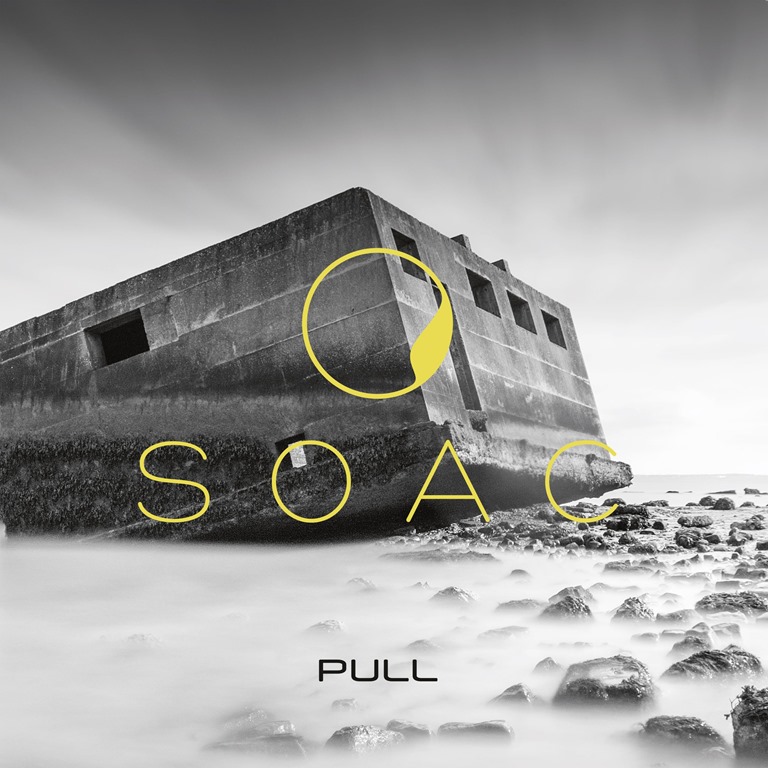
Cutting straight in with a big old guitar chug is a bold and hard-hitting way to open an album. No intro, no preamble, just big, beefy chuggernaut riffery. Bam! I’ve no aversion to a bit of intro a bit of preamble, but it’s refreshing to hit play and be smacked around the chops. The sound – and style – is quintessential grunge, and that grit, that grain, it has a grab that’s more than mere nostalgia, it’s a physical experience. But it very soon becomes apparent that Sons of Alpha Centauri are no generic grunge template rehashers, despite their adept use of the quiet / loud dynamics: ‘Ephemeral’, the opening song, draws in elements of quite blatant prog and classic rock, with melodic vocals and a reflective refrain of ‘Ephemeral… we are ephemeral’ that’s unashamedly prog in its ‘big, deep philosophical contemplations’ approach to lyrics. It’s certainly more ‘Black Hole Sun’ than ‘Smells Like Teen Spirit’.

Pitched as a ‘natural evolution’ to predecessor Push, they proffer ‘a powerhouse of searing post hardcore, alternative metal and progressive hazy rock’, where ‘Across the album, Sons of Alpha Centauri capture both a renaissance of the 90s post hardcore of their Sacramento luminaries, and a contemporary take on atmospheric dream-like rock music.’

Across the album’s nine tracks they straddle genre boundaries in a way that feels remarkably natural. Time was that I would be turned off by an album that was heavy instrumentally but not so heavy vocally – meaning I’d have been a bit hesitant about this. But it’s a mistake to perceive clean, melodic vocals as somehow weak or a detraction, as I discovered from listening to The God Machine and Eight Story Window, and Jonah Matranga packs in some emotional integrity into a strong set of songs.

‘Ease’ brings a watery-sounding bass and big, chunky guitar, and the combination makes for an unusual and interesting textural contrast, while the title track rocks particularly hard, the distorted guitar positively buzzing the speakers, Matranga giving a taut, tense performance.

At times I’m reminded of Amplifier, and not only in their incorporation of space themes – only far grungier in their melding of flighty prog and ballsy guitar attack. The chord structures of the aching ‘The Ways We Were’ are reminiscent of Placebo, and while sonically and lyrically there’s no real similarity, something about the dynamics and the heightened tension that defines Pull do warrant comparison, especially the slower, sadder ‘Tetanus Blades’. Sitting in the very middle of the set, it makes for the perfect album structure, and it’s clear that Pull has been created, crafted, curated, as an album rather than just some songs. ‘Doomed’ brings delicacy and introspection, anger and anguish delivered with a downcast sigh and wistful guitars. On ‘Weakening Pulse’ the guitars shudder and shimmer, and there’s a blend of dark aggression and choppy accessibility about ‘Final Voyage’. With its refrain of ‘Regenerate, regenerate, regenerate’ I can’t help but think of Dr Who, but that’s no criticism, and despite the big, bold, ambitious songs and matching production, they manage to steer well clear of going Muse on us.

The songs are pretty concise – mostly sitting around the three-and-a-half to four-and-a-bit minute mark, but have all the hallmarks of bigger, more epic songs. Yes, the vibe is very much rooted in the alternative sound of the 90s, but painted with the broader palette of the twenty-first century, whereby more diverse and eclectic elements have come to be accepted. It seems strange to think in 2024 that back in 1994, rap/rock crossovers were pretty revolutionary, that the soundtrack to Judgement Night was groundbreaking. In time, it came to pass that we discovered more complimentary hybrids, and Pull is a demonstration of this. There’s much detail to absorb and these are very much early impressions – but with so much to assimilate, Pull has everything about it that makes for an enduring album which only digs deeper with repeat listens.

AA

920630

Exile On Mainstream – 22nd February 2019

Christopher Nosnibor

I hear this a lot, at work, at home. People tell me that I must relax. I disagree, of course. It’s not healthy to get too comfortable. To relax is to be vulnerable. You make yourself vulnerable, you’re open to attack, and also emotions. Who needs any of that? It’s not that sensitivity is undesirable in these times of dehumanised capitalist culture, as much as it’s dangerous, a risk to self-preservation. Taking a cynical view, relaxation and wellbeing are avenues which pave the way to exploitation. No, better maintain a hard exterior even while you’re breaking on the inside. Never relax.

There’s absolutely nothing relaxing about the squeal of feedback and distorted, tortured vocals that shred the speakers in the opening moments of the album’s first cut, ‘Hollywood 2001/Rollrost’. The closest comparison I can draw is to early Whitehouse: shards of treble and humming lower-end feedback provide a brutal, unstructured backdrop to vocals designed to inflict maximum pain.

Things to become overtly rock thereafter, with the grinding sludge riffery of ‘Old Overholt’ bringing maximum gnarly grind. The repetitive, barrelling bass trudges on remorselessly, while thunderous drumming explodes amidst a wall of obliterative guitar noise that’s very much about the texture rather than the tune. Ten minutes later, it bleeds into the title track, which sounds more or less the same, but half as slow again. The bass is so low and murky as to vibrate the bowels. The vocals are warped, distorted, a demonic howl from the pits of fiery hell. But it’s not unbearable; the heavy psychedelic leanings give both a kind of context and bring a certain groove. As whiplash whirls of flange fire in and it transmogrifies into some raging beast that’s half Hawkwind, half Sabbath on Ketamine, samples begin to echo around in the murk, adding further layers of suffocating sound on sound.

And as the album progresses, so the songs get longer and gnarlier, the riffs more cyclical and tightly wound and packed with a greater intensity. By the time they piledrive into the eighteen-minute finale, the volcanic assault of ‘CBD/Herinunder’, the earth has shifted on its axis under the sheer weight of the thunderous riffery, guitars so dense as to have created their own gravitational force.

There’s an agonising eternity between each beat, each driving power-chord, the grainy blast of distortion channelling down and re-emerging as a howl of feedback sustain. And on and on it grinds. And in its own perverse way, with its dense, rich wall of overdrive crawling at a tectonic pace, ‘CBD/Herinunder’ brings a certain cannabinoid comfort. It’s not the stoner mellowness of HTC, but the quiet delivery of a more settled underlying state.

It’s still by no means relaxing, but it is a superlative example of no-messing, slow-churning monster riffing.

AA

Bellrope

Exile On Mainstream – 11th May 2018

English intergenerational duo Noisepicker are one of the new generation of two-piece acts who sound like full bands. Not by virtue of any trickery, but because they whack everything up full tilt and rock hard. Peace Off sounds like a band, albeit one with the guitars and drums dominating the mix.

There are so many shades, but for Noisepicker, it’s a spectrum of subtle blues that colours their lumbering, riffy racket. The songs are heavy, raw, the lyrics dark. It may mark something of a stylistic shift for Earl of Mars and former Lord of Putrefaction Harry Armstrong, but he still pours all the anger into it, his thick-throated vocal roar the perfect vehicle for this kind of heavy, heavy scuzzed-out stoner blues metal.

Pulverizing, slow, heavy discord worthy of Swans circa 1984 swiftly yields to swaggering heavy rock on opener ‘No Man Lies Blameless, which thunders away with the grainy grungy heft of Black Sabbath as filtered through Melvins. It sets the tone, and the tempo: Peace Off very much favours weight and groove over pace, the riffs big and gutsy (although when they do pick up the face, as on ‘O What Mercy Sorrow Brings’, they really do drive hard and fast.

‘A Taste of My Dying’ is the grittiest, grainiest blues, dark and dirty and slowed to a crawl. Under any other circumstances, you’d be thinking about grime and sweat, but at this low, low tempo, it’s more of a case of Led Zep on Temazepam. Armstrong gargles and spits the words to ‘He Knew it Would All End in Tears’ against a roar of guitars and crashing drums: there’s nothing fancy about Kieran Murphy’s style, and that’s a virtue, as the songs are focused in a fashion that delivers optimal force.

AA

218462

Exile on Mainstream – EOM082 – 23rd June 2017

Christopher Nosnibor

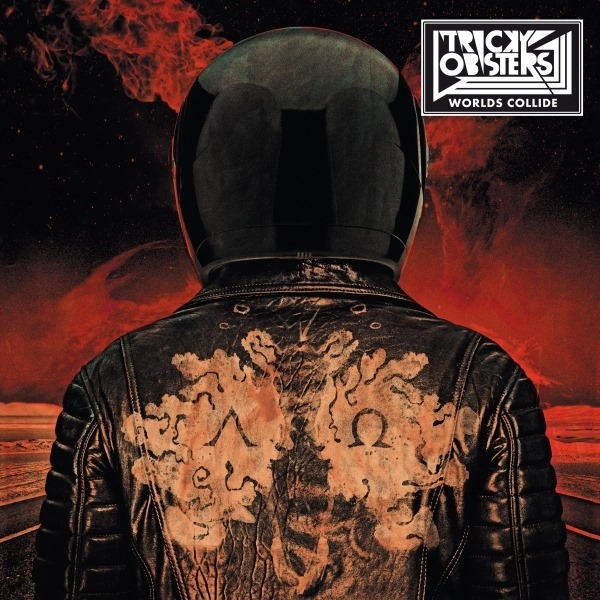
So, are Tricky Lobsters anything like Scottish indie band of the 1980s, Close Lobsters? No. They may share a crustacean genus, but sonically, Rostock-based rockers Tricky Lobsters swim in very different waters indeed. They’re little known outside their native Germany, where they have a substantial following, but it’s well known that the Germans really do like their rock and that British acts who enjoy only cult status domestically are huge over there (take, for example, The Sisters of Mercy and Placebo, who regularly headline festivals there while receiving comparatively little attention back home).

Worlds Collide delivers everything you’d likely want from a proper rock album that has no pretence of being anything else. Opener ‘Bitter Man’s Fame’ sets the tone, with big, ballsy blued-based rock riffage amped up to eleven. Think Mötörhead covering 70s ZZ Top. Or perhaps the other way around: like ‘Just Got Paid’ played with gnarly aggression. And then with a big, greasy dollop of psychedelic biker attitude spat in on top.

‘Big Book’ is a quintessential heard rock tune: it’s not subtle, and it’s not especially clever, but it is big, especially in the chugging rhythm guitar and twiddly breaks department. But what separates Worlds Collide from so many albums of its ilk is just how dense it is, just how thick and up-front the guitars are, how much attack these guys bring to the performance.

They’re a proper power-trio, and it’s the thunderous rhythm section that holds it all together as they piledrive though riff-led behemoth after riff-based behemoth. The slower, quieter moments, like the reflective first section of ‘Dreamdiver’ with its picked guitar and sad-sounding strings only serve to accentuate the meaty heft of the bulk of the album’s nine cuts.

It may, on the surface, seem like rather weak summary to state that Worlds Collide is a rock album you can really rock out to, but given just how diluted and limp so much so-called rock music is these days (I’m not being an old fart: we exist in a time where PVRIS and Linkin Park are classified as rock bands. I mean… seriously), it’s refreshing to hear something as unapologetically old-school and played with energy and guts as Worlds Collide.


Tricky Lobsters - Worlds Collide

Exile On Mainstream – 21st April 2017

Christopher Nosnibor

It begins with a howl of feedback. Of course it does. The sustain continues through the opening power chords: doomy, slow, before it all comes crashing in, trudging tempo and gut-churningly downtuned.

Obelyskkh’s fourth album isn’t so much about surprises, but about continuing – and extending – the trajectory of its predecessors, albeit with a greater emphasis on groove. Not that this is an album you can dance to: it’s very much one to slow headbang to. The press release draws attention to the fact that the album’s title ‘evokes one of H. P. Lovecraft’s iconic poems, providing inspiration for the album’s lyrical content and the artwork for The Providence. Another dimension to the album is illustrated almost perfectly by French revolutionist Victor Hugo: “Above all, you can believe in Providence in either of two ways, either as thirst believes in the orange, or as the ass believes in the whip.” The band lived by this message throughout their uphill battle to complete the record.’

It’s taken them four years, and The Providence feels like four years’ anguish and slog distilled into six immense pieces. The title track, which opens the set, is twelve minutes long. It’s not pretentious, but heavy with portent: this is a vast doomscape of an album, dominated by some colossal guitar riffery, propelled by a juggernaut of a rhythm section.

Things get a bit progressive folk-metal in the middle of ‘Raving Ones,’ but when the riff hits its stride, it’s a throbbing, driving rush. Elsewhere, ‘Northern Lights’ veers toward classic, vintage horror, with a deluge of cataclysmic guitars burning a purgatorial furrow on the scale of the Grand Canyon. And just when the thick distortion threatens to burn out the eardrums, a shift toward upper frequency overload provides the punishing attack needed to complete the abominable mission. The fourteen-minute ‘NYX’ stands as the album’s centrepiece, and is a classic slab of thunderous, sludgy doom metal. Over the course of a succession of passages, it grinds its way to a punishing critical mass, with velocity consumed by density.

Clocking in at under six minutes, ‘Aeons of Iconoclasm’ feels almost throwaway in its brevity. Fear chords weave and waft almost subliminally, and it feels at first like a mere interlude, but then the gates of hell open and every screaming demon ever known tears down from the blackest of skies.

In contrast, the slow, but so, so, dense guitar overload of ‘Marzanna’ feels like a gentle wind-down, although at over nine and a half minutes of roaring thunder and groaning, droning, slowed riffage and mangled vocals that squeeze Sabbath through a Melvins filter it’s hardly some kind of loungecore fluff.

Everything about The Providence is immense. This is heavyweight, it’s doomy metal exactly the way it should be.


Obelyskkh – The Providence

Exile on Mainstream – 18th March 2016

Christopher Nosnibor

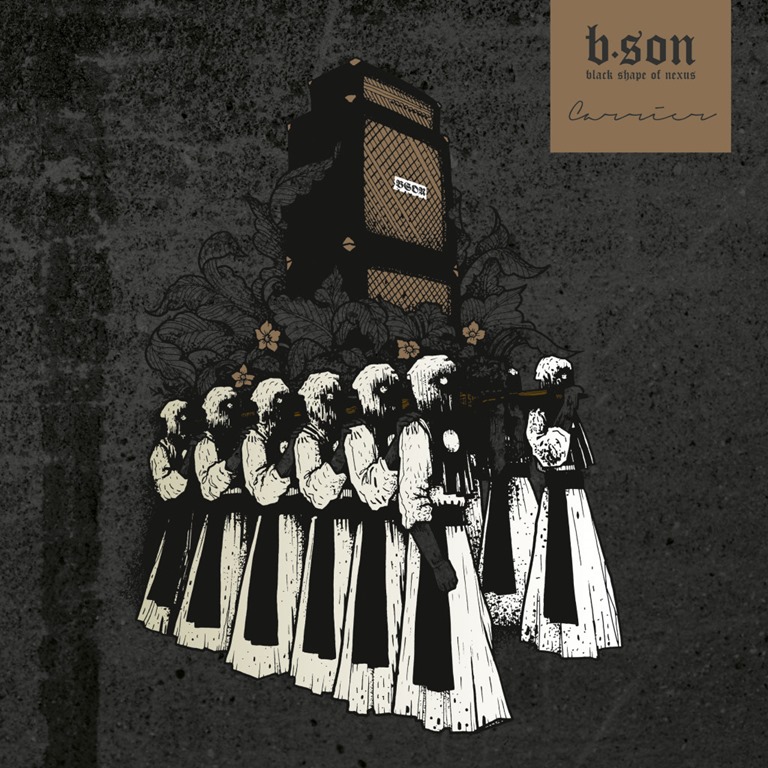
‘The only constant is the blackness of the shape. Everything else, including the shape itself, is in a constant state of flux for Black Shape Of Nexus.’ So begins the press release. If it sounds like preposterous hyperbole with a hefty hint of pretention, then think again: it doesn’t even begin to convey the enormity of this dark, dense work which on the surface confirms to all of the conventions of droney doomy stoner sludge metal, but in fact breaks every last one. The imagination of Carrier is astounding.

To get down to brass tacks, there’s heavy, and then there’s HEAVY. And then there’s this, which is all shades of heavy, and more. As the press blurb implies, Black Shape of Nexus are not a band to align themselves or define themselves as any one fixed thing. Never mind the full sprawl of their output, which occupies four previous releases, Carrier could provoke lengthy and heated debates over which section it should be located in at the local record store (if such a thing still existed. But imagine High Fidelity set in a shop devoted to all things alternative, rock and metal. The conversations would run for pages). And that’s cool.

It’s also cool that Black Shape step up and slap a political disclaimer on the front page of their website. They shouldn’t have to, but kudos to them for making it clear that they’re principled about the people they want as their fan-base. The message reads, ‘Note: There are some doom/drone bands out there sympathizing with fascist/racist “views” – we want to make it as clear as possible, that we strongly disagree with such opinions.
B·SON is anti fascist and anti sexist. Thank you for paying attention! Got that? WE’RE ANTIFASCIST YOU NAZI FUCKS!!! EAT SHIT!!!’

It’s depressing that we do live in a world where extreme right views are rife, not only in countercultural circles, but have become almost accepted in corners of mainstream politics. But at least we can be sure that Black Shape are among the good guys, and not just musically. Although, you could argue that musically, they’re the band guys, ‘cause Carrier is creaking under the interminable weight of the devil’s tunes.

(Shape)shifting between styles, ‘Carrier’ explores various manifestations of heaviosity If the idea of a light, vaguely jazzy break for a few bars in the middle of a seven-minute trudge through the most devastatingly cataclysmic doom seems not so much incongruous as eye-bulging crazy, then you’ll be in even more of a spin to learn that it actually works. Yes, opener ‘I Can’t Lift It’ is a belter, and sets the bar high.

The guitars are backed off – and barely present – on the dark ambient pulsations which occupy the first half of ‘Lift Yourself’, before ripping into a dingy crust-punk thrashabout. If you’re struggling to keep up already, quit now: the Melvins to Sabbath sludge of ‘Sand Mountain’ threatens to collapse under the weight of its own riffage before ‘Facepunch Transport Layer’ lunges in to bring a psychedelic twist to the pulverising chug.

It all comes to a colossal, gut-churning head on the mangled doom of ‘Triumph of Death’: 12 minutes of relentless metal. Transitioning from slow-paced doom and cranking up the tempo and the brute force to build to a driving riff, it drives the album home

It’s punishing, but in the best possible way.

bson_carrier_vinyl-album_satz_12inch-5mm.indd


Black Shape of Nexus Online