Posts Tagged ‘EP Review’

Self-released – 14th February 2025

Christopher Nosnibor

Yes, it’s ‘when’, not if, and since January 20th this year, it feels as if that crumbling which has been slowly emerging, first as a series of cracks, is now accelerating, to the point that we’re well on the way to almost certain collapse as Trump ‘the peacemaker’ puts his foot to the floor and hurtles us headlong toward self-extinction, one way or another. So after the ‘when’, the only question remaining is ‘how?’

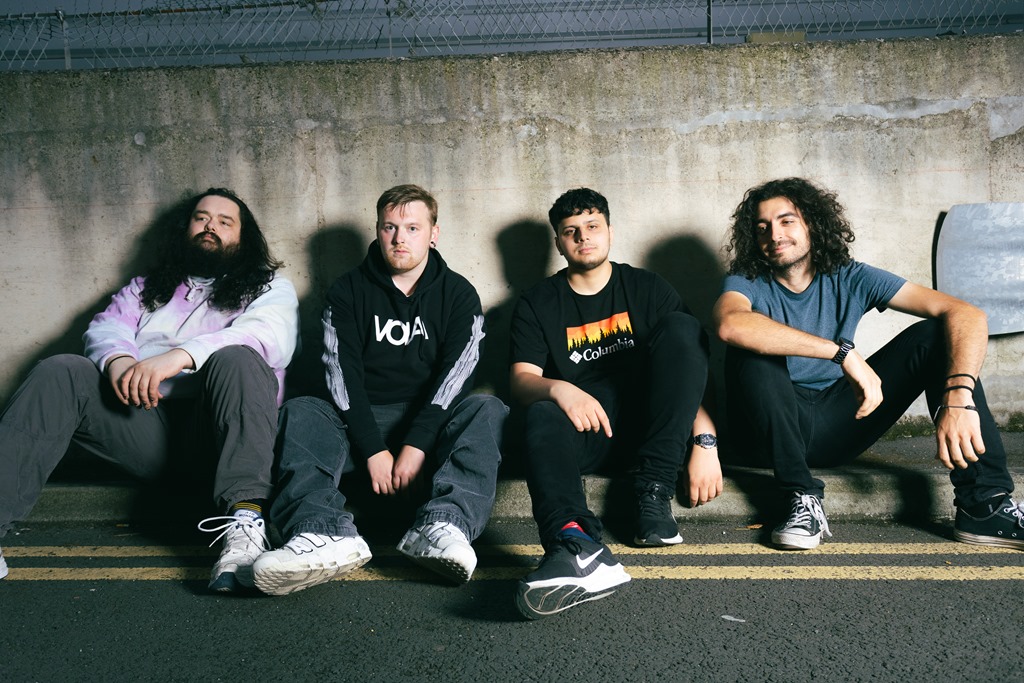
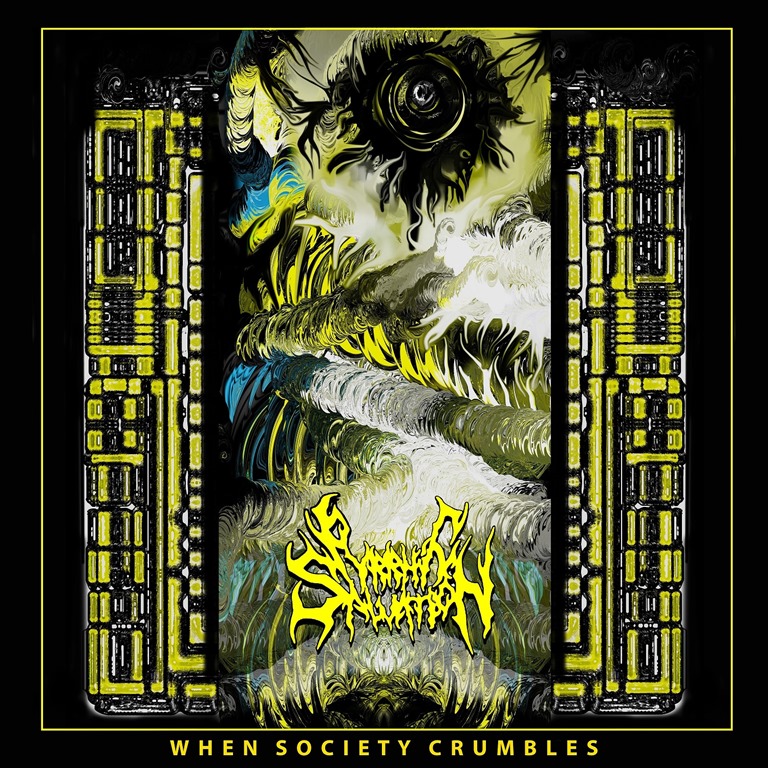
While we ponder that, US interstate internet-based technical / experimental death metal act have delivered – after quite some time – their second EP. Having formed in 2015, it took them until 2022 to birth Manifestum I, following which singer Chrisom Infernium departed, being replaced by Shawn Ferrell. In the overall scheme of their career to date, When Society Crumbles has come together pretty quickly.

It’s overtly a concept work, centred around a fifteen-minute suite of three pieces which each address component aspects of ‘When Society Crumbles’ – ‘Infrastructure’, ‘Insight’, and ‘Inferiority Complex’. Well, ok.

The guitar parts alone contain about three hundred notes per minute, a frantic blanket of fretwork bursting from the very first bars. The vocals switch from growls to barks to howls to the squeals of wounded pigs, sometimes layered to occur simultaneously, while the drums blast away at a manic pace.

One thing that stands out from the first track alone is the production. Perhaps it’s the technical angle, perhaps it’s the circumstance of the recording, since being in a room and making noise is a very different experience from bouncing audio files around via Dropbox or whatever and adding to them in isolation. It’s not the clarity or separation per se, but the way the different instruments reverb – or don’t so much – in different ways. It isn’t that it sounds or feels cobbled together – it doesn’t – it just sounds different. But in a world where so much music is uniform, conformist, even if to supposedly alternative values, different stands out, and we need different. But the way that snare drum and the tom rolls cut through… they dominate in a way that’s rare, but it works: all too often with death – and black – metal – the drum dominate live, but are submerged on the recordings, reduced to a rattling clatter that’s more like the hyperfast clicking of a knitting machine than the thunderous blast of a drum kit being hammered hard. In places, it’s so technical as to border on the jazzy, although it’s clear they’re not just about technical prowess.

Not quite so different is the relentless fury the trio bring with the pounding percussion and frenzied picking: these elements are very much of the genre – death metal played with a real attention to technical detail. There are some well-considered tempo changes, and even some gentler, almost folk-inspired moments on ‘Insight’, where it drops down to some soft picking.

The three movements of ‘When Society Crumbles’ lurch into rabid dark territory on the third and final segment, where heavily processed vocals rip across a full-throttle all-out metal assault. The final track, the standalone ‘Every Last Soul Unmade’ is the longest by some margin, extending to almost six minutes and slamming down a tumultuous broadside of wildly noodling lead guitar over a bass that lands like a knee to the stomach. These guys know what they’re doing. I hope they keep doing it when civil war breaks out. I mean if, if…

AA

228618

Metropolis Records – 10th January 2025

Christopher Nosnibor

According to their bio, ‘Morlocks are a Swedish act who combine elements of industrial rock, neo-classical, darkwave and metal with epic production values to create an exciting hybrid sound. Having issued the long-awaited and well received album Praise The Iconoclast in late 2023, they subsequently promoted it with two US tours in 2024, both in support of their friends and occasional collaborators KMFDM.’

Asked about the inspiration behind the song, the band state: “Watch the world from a distance. Get angry at first, but also inspired. Take the darkest parts of it and twist them into something weird, beautiful and batshit insane – something that you could either dance to, brood in the shadows to or scream at the top of your lungs at the moon. Preferably all of the above. Everything can be turned into art, and art must hurt. Situation normal: all fucked up.”

‘Everything can be turned into art, and art must hurt’ is a phrase which stands out here. It may seem somewhat dramatic, but to summarise Buddha’s teaching, ‘all life is suffering’, or ‘life is pain’, and the function or art – true art – is to speak in some way of deep truths of what it is to be human. Art must therefore, reflect life and capture something of the existential anguish of the human condition. If it doesn’t, it isn’t art, it’s mere entertainment. And if the idea that ‘Everything can be turned into art’ may superficially seem somewhat flippant, a diminishment of serious matters, if the work is, indeed art, and not entertainment, then the obverse is true: using the pain of life as source material is the only way to interrogate in appropriate depth those most challenging of issues. In other words, making art from trauma is not reductive or to cheapen the experience – but making entertainment from it very much is.

There’s a snobbery around what constitutes art, even now, despite the breakthroughs made through modernism and postmodernism. It’s as if Duchamps had never pissed on the preconceptions of art for the upper echelons of society who still maintain that art is theatre, is opera, is Shakespeare, that art can only exist in galleries and is broadly of the canon. This is patently bollocks, but what Morlocks do is incorporate these elements of supposed ‘high’ art and toss them into the mix – most adeptly, I would add – with grimy guitars and pounding techno beats. Art and culture and quite different things, and those who are of the opinion that only high culture is art are superior snobs who have no real understanding of art or art history.

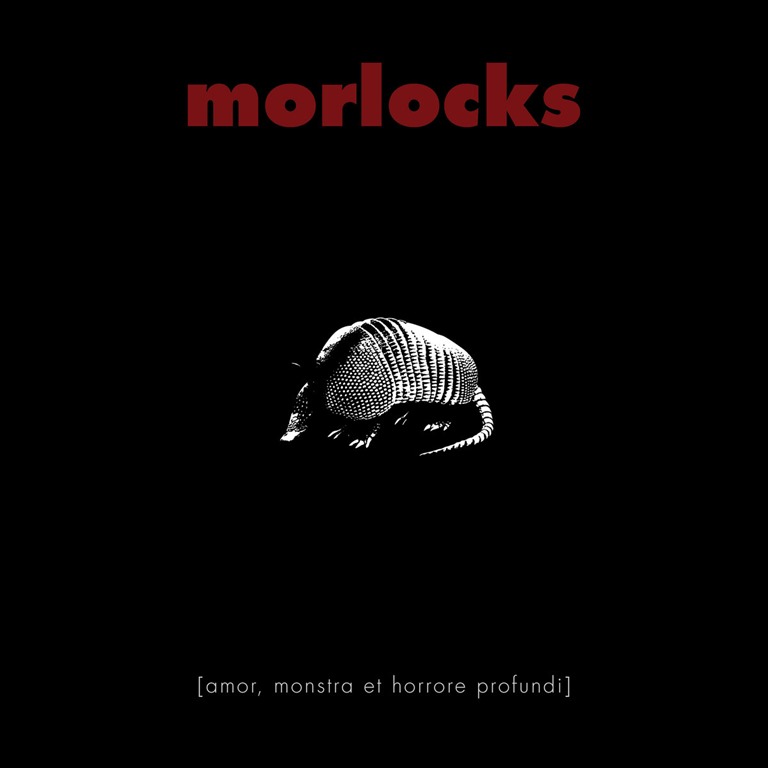
The five songs on Amor, Monstra Et Horrore Profundi are therefore very much art, although that doesn’t mean they don’t also entertain. ‘The S.N.A.F.U. Principle v3.0’ arrives in a boldly theatrical sweep of neoclassical strings and grand drama – and then the crunching guitars, thumping mechanised drums and raspy vocals kick in and all hell breaks loose. Combining the hard-edged technoindustrial of KMFDM – which is hardly surprising – with the preposterous orchestral bombast of PIG and Foetus bursting through and ascending to the very heavens, it’s complex and detailed and thrillingly dramatic, orchestral and choral and abrasive all at once.

With tribal drumming and bombastic, widescreen orchestration, ‘March of the Goblins’ has a cinematic quality to it, which sits somewhat at odds with the rather hammy narrative verses. It seems to say ‘yeah, ok, you want strings and huge production and choral backing to think it’s art? Here you go, and we’re going to sing about radioactive dinosaurs like it’s full-on Biblical’. It’s absurd and audacious, and makes for a truly epic seven and a half minutes of theatrical pomp that’s admirable on many levels. Ridiculous, but admirable.

‘The Lake’, split over two parts with a combined running time of over ten minutes explores more atmospheric territory, with graceful, delicate strings, acoustic guitar, and tambourine swirling through swirling mists before breaking through into a surging tower of power, melding crunching metal guitars with progressive extravagance, and medieval folk and martial flourishes.

Amor, Monstra Et Horrore Profundi is remarkably ambitious and unashamedly lavish in every way. Quite how serious are Morlocks? They’re certainly serious about their art. But while delivered straight, one feels there’s an appropriate level of knowingness, self-awareness in their approach to their undertaking. And that is where the art lies: theatre is acting. The stories told are drawn from life, and resonate with emotional truth: but the actors are not the action, and there is a separation between art and artifice. Amor, Monstra Et Horrore Profundi is something special.

AA

a2788665137_10

29th November 2024

Christopher Nosnibor

While the entirely of this EP has already been made available as individual tracks, some of which have made our ‘recommended streams’ pages, songs as standalone pieces are one thing, but understanding them in context can often be quite another.

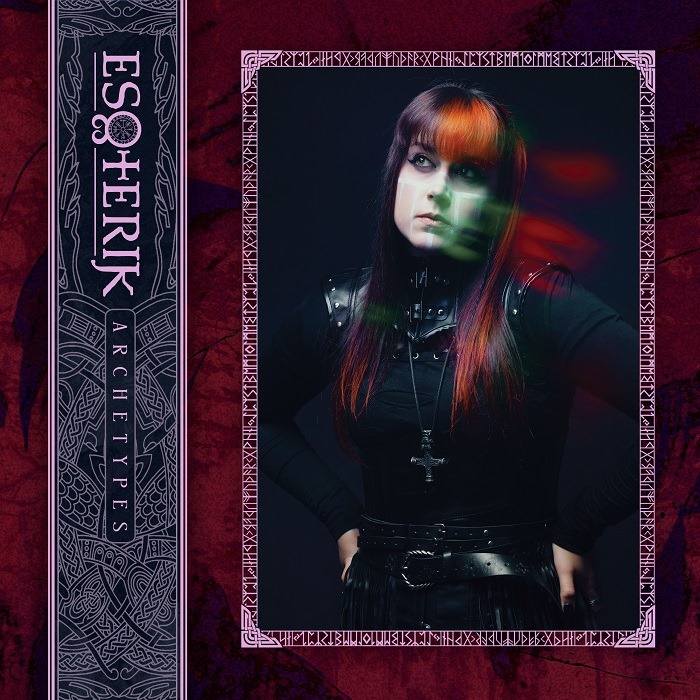
And so it is that Archetypes ‘explores timeless themes that have shaped societies for centuries. The band delves into the power of language and storytelling, celebrating legends that transcend time and culture. These stories, rich in symbolism and ritual, carry the wisdom of generations and continue to captivate audiences with their enduring lessons and sensational nature.’

Hearing the songs in isolation, the sense of thematic unity which unite them as an EP isn’t immediately apparent, particularly with the visual accompaniments of highly stylised neon-flashing cyber-tinged promo videos. They’re necessary – even essential – tools for grabbing attention in our hyper-stimulated, visually-obsessed world. Post some words, or some audio, and it’s like standing in the middle of a field at night dressed in black and expecting attention – but post an image, or a video, and people notice. It really is that clear-cut. It’s as if people need their media injected directly into their eyeballs, but listening the songs in sequence and only in audio, draws the attention to the music itself.

‘Mentor’ opens the EP, driven by a sturdy industrial groove and some tidy two-way vocals which form a dialogue and pivot around themes of disconnection while pitching a magnificently melodic chorus that really brings all the hooks. ‘Trickster’, the first song to be released from the EP, is bold and energetic, and if the backing is like a pumped-up disco interpretation of Depeche Mode, the belting vocals bring from-the-gut passion. The song’s overt pop sensibilities are enhanced with this raw edge, making it a clear and instant standout.

AA

As the title implies, ‘Shadow’ is darker, and finds the duo tunnelling deeper into the psyche and troubled waters, and satisfaction – or lack of – bubbles to the surface amidst the lyrics, and what filters through over the course of the EP is that as much as Archetypes is about the power of language, Esoterik are interrogating the shortcomings of language to fully convey complex emotions – the elements of which constitute our very DNA which ties us to those myths and legends of centuries past, and which, ultimately, are the essence of the human condition.

‘Hero’ makes for a strong, bombastic finale, the big drum-fills and powerful snare sound evoking the spirit of the 80s power ballad as they push to the conclusion with a surging chorus. Just how effectively they explore the elements of symbolism and ritual may be questionable, but as a superbly-realised slab of dark pop, Archetypes is hard to fault.

801465

Mortality Tables – 22nd November 2024

Christopher Nosnibor

Matthew’s Hand by Nicholas Langley is the twenty-fifth instalment in Mortality Tables’ LIFEFILES series, now in its third season. The principles of this ongoing project are simple: ‘Recordings of places, people, objects, moments in time, environments and quotidian events are shared with a range of artists working across different disciplines. Those artists are free to respond to the recordings in any way they like.’

Simple principles, but in actuality, giving free reign to the artist to respond to the source material offers near-infinite possibilities. And so it is that Nicholas Langley presents to six-minute pieces in the form of ‘Milton Keynes University Hospital, 3 April 2024’ and ‘Milton Keynes University Hospital, 17 April 2024’.

Label head Mat Smith provides the following context for the source material for this release: ‘On 2 April 2024, I fell over while walking near Smithfield Market on my way to work, and broke my hand. The two recordings used by Nicholas were both made at Milton Keynes University Hospital – the first while waiting for an x-ray that confirmed the fracture the following day, and then two weeks later while in the waiting room for the cast to be removed.’

I’ll spare the tale of the time I fell and broke my ribs and shredded my hand one night, but shall move to the point that for some of us, the reaction to an event which contains an element of shock and even mild trauma is to document it. Having photographed my bleeding palm, and recorded the horrendous roar of the oxygen machines which were installed in our living room for the final nights my wife was with us, I can only conclude that recording these things creates a separation which enables us to process them as being ‘media’, for wont of a better term, rather than the painful reality of our actual lives. I certainly prefer this rationale to the idea that it’s a sociopathic impulse to revel in experiences of trauma and pain.

‘Matthew’s Hand’ captures the ambient chatter and clatter of a waiting room, at least initially, before this fades out to be replaced with something that one might describe as echo-soaked abstract synth jazz. Langley applies the principles of dub reggae, but without the percussion. The sonic experience is in some ways like the lived experience of the waiting room, as the chatter dims into the distance and your head slowly swims in a sea of overwhelmed strangeness as you wish you were elsewhere.

Someone recounts the grim tale of someone who was close to a mortar explosion at the beginning of ‘A Mortar Went Off Near Him’, before heavy elongated, humming drones enter the mix, and Langley builds a dense soundscape of whistles, hums, and whooshes which owes as much to early 80s industrial as it does to more contemporary dark ambience. A monotonous throb emerges, and it’s overlaid with scrawls of feedback and sharp, needling treble. Ultimately, little happens over the course of its seven-minute duration but somehow, you feel the effect.

Taken together, the two tracks have an impact which somehow extends beyond their sound alone.

AA

a1808514016_10

ROT ROOM – 6th December 2024

Christopher Nosnibor

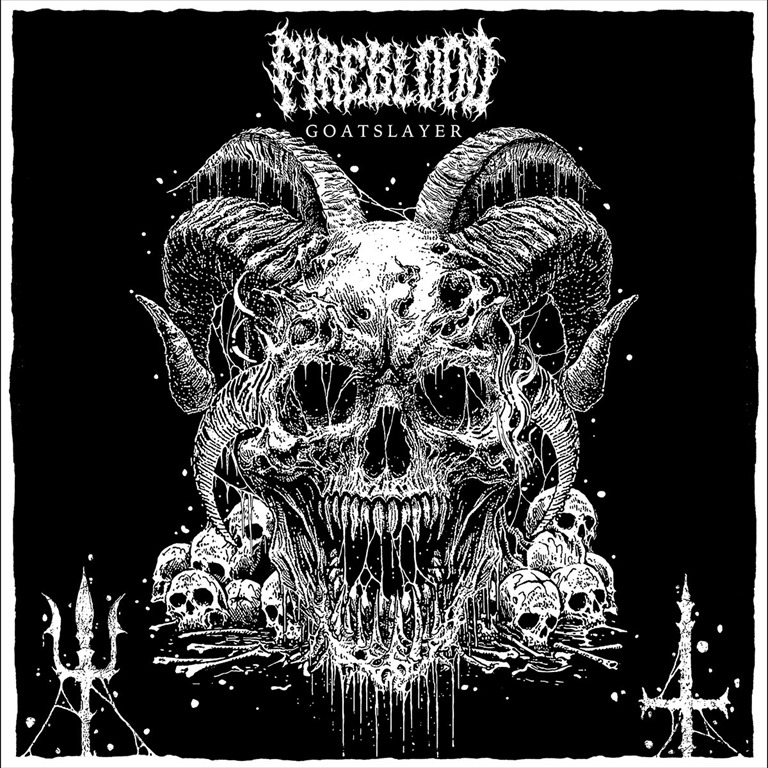
Super-spiky, not-really-legible font? Check. White on black cover art? Check. Goats galore? Check: in the title and on the cover. This is going to be some gnarly metal din, right? Right. Sometimes, you can judge a book – or a record – by its cover.

Goatslayer is the second EP of 2024 for North Carolina ‘southern-fried sludge quartet’ Fireblood, following the Hellalujah EP, released in April.

They promise a work which ‘take[s] the genre in a somehow meaner, more extreme direction, they employ massive atonal guitars, booming drums, and churning low end to create a caustic, thick-as-molasses sound that has a physical weight to its thunderous mid-tempo grooves. Lumbering ever forward, each stomping beat comes laden with the threat of eruption, and when the top does blow it’s an explosion of seething rage.’

While I wasn’t aware that theirs was a specific genre, I’m on board with this, not least of all because the EPs four tracks are magnificently mangled, feedback-strewn heavy as hell riff-fests with an obsession with death.

‘A Perfect Place for Death’ is a lumbering chuggernaut, with overdriven power chords galore and processed, fucked-up vocals which add a deranged psychedelic edge to the purgatorial experience. As much as there are hints of Melvins in the blend, the vocal treatment reminds me of Henry Blacker, knowingly over the top and uncommonly high in the mix, but everything congeals into a thick black tarry sonic soup. ‘Death Comes Rolling’ thunders in hard, beating its chest and stamping its feet against an industrial-strength riff and roaring, glass ‘n’ gasolene gargling vocals. It ain’t pretty: it’s not supposed to be. It’s not subtle, either, but again, it’s not supposed to be.

They slow the pace to a crawl on the trudging ‘Burning Underground’, and it very much feel like being dragged by the collar down an endless staircase hewn in rock, the temperature rising as sulphurous lava and eternal flames draw ever closer, before ‘A.I.G.O.D.’ locks into a relentless and powerful groove, and pummels away at a dingy riff for seven and a half punishing minutes. Around halfway through, something twists and suddenly it seems to get even denser, sludgier, heavier, the guitar overload threatening to do damage to your speakers. The long, slow fade comes almost as a relief in easing the cranial pressure. This is a beast, and no mistake.

AA

a2189145838_10

Mortality Tables – 25th October 2024

Christopher Nosnibor

Some time in the last decade or so, genre distinctions simply exploded to the point of obsolescence. People – many people, and I won’t deny that I’m not immune or above doing so – will spend endless hours quibbling over categories. Is it post-punk or goth? It is doom or stoner doom? Country, or Western? Or both? It does seem that the ever-fragmenting microgenre, once the domain of dance, with its infinite focus on detail, has more recently become a battleground within metal – but then, a friend recently described an act as being ‘Jungle adjacent’ and I felt my brain begin to swim. What I suppose I’m driving at is that artists themselves are breaking out of genre confines and the place we find ourselves now is a point at which anything goes. But listeners – not to mention labels and journalists – or perhaps especially labels and journalists – find themselves clawing desperately to define whatever it is. There have to be benchmarks, touchstones, comparisons. We’re simply not attenuated to music which doesn’t conform to some parameters or others. This is one of a number of reasons that I tend to try to focus my attention on what a work does, what it actually sounds like, the sensations and emotions it elicits and other more tangential provocations – because the way we respond to music tends to be personal, and instinctive, intuitive. One may react immediately, and enthusiastically to a punch in the guts from an overdriven guitar, or may instead feel a greater emotional stirring from something soft and delicate, be it an acoustic guitar, a harp, or a flute. In summation, one’s first instinct is not to assess whether or not those opening bars belong to a specific microgenre, at least when it comes to a ‘blind listening’ experience.

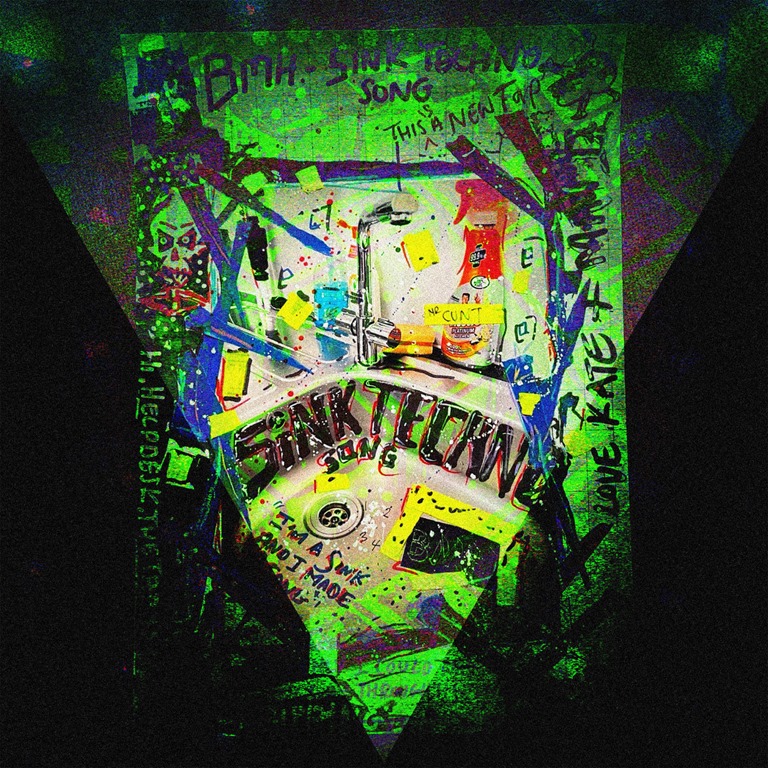
But then there’s always a spoiler, and here I find myself facing a ‘spontaneously-created acoustic punk techno EP made with a dripping tap’. What the hell do you do with that? How do you prepare for listening to something so far beyond the outer limits? Personally, I start by pouring a large vodka, and putting the light off.

The EP features four tracks; two versions of the title track, plus two versions of the longer ‘Water Sink Song’. The former centres around a relentless thudding beat, clearly derived from a dripping tap, with swishing, swashing, gurgling watery noises and other scraping and thumping and crashing incidentals. There’s nothing quite like taking the sounds from one’s surroundings and manipulating them in order to forge new sounds, and new sonic experiences. It’s life, but not was we know it. Or, perhaps it’s too close to life as we know it.

“Matt Jetten and I made the track in the sink at work,” says BMH’s Kate Bosworth. “The tap was leaking and we managed to get to it minutes before the engineer did. The original is in mono, but our mate Stuart Chapman (Terminal Optimism) suggested we ‘do a Beatles’ on it and bring it into stereo by duping and layering and adding effects etc. All in all, the process was very quick.”

‘Water Sink Song (End Dark Train 21st October 2024)’ features a haunting vocal which drifts mistily over a swampy swell and a thick wash of static, as well as more watery sounds, like heavy rain and swashing, glooping, the disconcerting sounds of ingress in a storm. The shuddering electronic rhythms call to mind Suicide, but with an esoteric folk twist; one can almost picture the performance of a pagan ritual at a stone circle in a torrential storm – but then stammering vocals cut through in a rising tide of mains hum and buzzing electricals. Synths buzz and crackle at the fade. The ‘Original’ version (17th October 2024) is more heavy rainfall and water running from a roofs onto gutters – or the sound of a number of men urinating hard onto a corrugated shed roof. Thuds, clatters, clanks, trickles and sprays, a bottle or jar filling at pace; the incidental sounds, the additional layers, are wet and uncomfortable.

It may be that my response is as much coloured – a hazy amber – by my recent experiences of a trip to Castlerigg stone circle in a saturating downpour, and a train journey whereby the train was rammed solid with rowdy football fans, who, unable to make their way to the broken toilets, resorted to urinating in water bottles and Costa coffee cups, which they left on luggage racks and on tables, while cheered on by mates passing more cans of cheap shit lager and a bottle of lager along the carriage.

Jetten’s vocals are breathy, semi-spoken, and there’s a sense that they’ve been recorded quietly in the bedroom of a flat or terrace, trying not to disturb the neighbours. There’s an element of triumph in the tone as Jetten announces the title, as if he’s utterly pumped by the experience – or something seedier.

As an experimental work that encapsulates the DIY ethos, this is a quality example of the kind of weirdness that can only happen independently. It’s perverse, and imaginative, and it’s different. Oh, and all proceeds go to Kidney Cancer UK.

AA
a4195200752_10

20th September 2024

Christopher Nosnibor

2024 is the year of Pythies, the musical project of Parisienne grunge fan Lise.L. While the Internet age has enabled countless acts to leap from bedroom conception to releases in a matter of weeks, she’s been rather more measured in her approach, and having decided at the end of 2022 ‘to form a new musical project lead only by women, which included influences of the grunge culture of the 90s (L7, 7 Year Bitch, Babes in Toyland, Hole) and her taste for witchcraft’, debuting with an EP in May 2023, 2024 has seen the emergence of a couple of singles ahead of this EP release.

I will admit that I’m still coming to terms with this new model. In the 80s, 90s, and even 00s, you would either release a single or an EP. But digital has changed everything. Historically, whether it was a single or an EP, there would be physical formats, and a single or EP would both receive a release on 7” or 12” and a CD. Now, making a track available on Bandcamp ahead of the full EP’s release counts as a ‘single’, as does putting out a video for a song on YouTube.

Disillusion lands firmly on a personal level, then, because it’s hard not to feel disillusioned with the state of the industry, and, often, the state of music, period, and this EP’s five tracks articulate the sentiment with precision. But… acts like Pythies do bring hope, not to mention a real alternative to the mediocre, mass-produced, autotuned slop which dominates not only the charts but mainstream culture as a while.

There’s something wonderfully raw and exciting about this EP, blasting off with ‘Blondinette’, fast-fingered bassline that boasts some nifty runs racing hither and thither beneath a driving, gritty guitar, which does nothing fancy, but crunches hard, propelled by some energetic drumming and a fuckload of attitude.

The punning ‘I Pithie You’ is gentler and more melodic in the verses, but exploits the classic grunge quiet / loud dynamic with a ripping chorus. And did I mention attitude? Yeah, I know, but it needs emphasising: Pythies distils a blend of anger and nonchalance, while sonically they encapsulate the spirit of ’78 as much as ’92, and the title track positively roars.

Closing off with goth-punk tinged single cut ‘Toy’, Disillusion leaves you feeling exhilarated, excited: there’s nothing better than hearing a band channelling all the frustration, all the rage, all the angst into tight bursts of guitar-driven energy, and Pythies do it so, so well.

AA

Pythies cover EP crédits Orane Auvray

Metropolis Records – 27th September 2024

Christopher Nosnibor

Hot on the sweaty trotters of Red Room, released in May, the Lord of Lard, Raymond Watts has managed to mine fresh truffles for a whole new EP ahead of embarking on an extensive tour of the US, which so happens to take its name from the first track on said EP, ‘Heroin for the Damned’. The fact that this isn’t a set of remixes

The title alone is glorious, and you can almost feel the relish with which Watts conjured up the phrase, wicked, perverse, dark, and equally ostentatious and grand, evoking an image within the realms of The Last Supper but with an S&M slant as the participants dine on an orgy of gore… or something. When it comes to relishing the richness of language and delighting in deliciously devilish wordplay and alliteration, sifting through PIG’s catalogue for titles and lyrics (there’s a suitably extravagant book containing all of them just out) provides abundant evidence that Watts really gets kicks from it.

It’s also clear he is absolutely loving the whole self-styled industrial rock-god posturing, hamming it up in leather and mesh, and simply the whole music-making thing, perhaps more than at any point in his career. Instead of being awkward about self-promotion, he’s fully embracing its absurdity, and in a genre that’s largely dominated by serious, angry people, PIG stand out as being rather less po-faced, and altogether more fun than your average industrial act. I’m not sure I’ve seen Al Jourgensen or Trent Reznor posting pics on Facebook hugging their pooches.

That doesn’t mean that the music is any less serious. Watts and his various collaborators really know how to bring a crunching riff and a stonking beat, and, occasionally, having taken early cues from the legendary JG Thirlwell, spin in some bombastic strings and grand orchestral strikes. And Feast of Agony is dark, heavy, intense, and marks a strong return to the more experimental 90s work following a pursuit of an altogether glammier sound of late.

‘Heroin for the Damned’ – the opium of the people for the 21st Century, perhaps – starts low, slow, and sinister, Watts’ vocal a croak amidst a dank electronic swamp before a steady riff, laden with grit, grinds in, rubbing hard against a lowdown pulsating synth groove. It’s a bit NIN circa The Downward Spiral, but equally it’s quintessentially 90s PIG, and lands a monster chorus that combines the raging roar of Sinsation and the grainy grooves of Praise the Lard with gushing gospel grandeur – something that really dominates the final track, the Jim Davies remix of ‘Baptise, Bless, Bleed.’ Piano and bold orchestral sweeps meld with stark synths and crunching guitars on ‘Fallout’, before Watts comes on like Bowie on the slow-paced anthemic ‘Comedown’, while the verses of ‘Hand of Mercy’ owe more to Prince.

It’s a PIG release and therefore it’s a pure [serial killer] thriller, alright – but even within the now-expansive catalogue, Feast of Agony is a strong entry.

AA

a2658647365_10

Buzzhowl Records – 27th September 2024

Christopher Nosnibor

Once again, following the release of a four-way split showcasing local talent a few months ago, Stoke proves the be the spawning ground of more off-kilter noisy noise, this time from no-wave duo Don’t Try with their second EP. As an additional point of note, and also something of a recommendation / hype point, the EP’s artwork is courtesy of Dan Holloway, of USA Nails/Eurosuite/Dead Arms fame, who worked with the band previously on their 2018 single ‘JWAFJ’. To accompany the release, Dan has also realised a video in his own inimitable style.

Like ‘JWAFJ’, their first EP, Elvis Is Dead was released in 2018, meaning it’s been a full six years since they last released anything, suggesting that on the output stakes at least, they’ve been living up to the band’s name.

Lead track ‘my grazed knee’ with its gritty yet poppy synths and urgent, determined beats isn’t actually a million miles from the sound of The Eurosuite. It reminds us of the proximity of new wave to punk, and the reasons why new wave and post-punk are essentially interchangeable terms. And while punk did, undoubtedly, spawn some great tunes (I’d perhaps contend less great bands, in that many punk acts, with a few notable exceptions like The Ruts and Adverts, produced only one or two outstanding or even memorable sings, and were unable to deliver the entirety of a solid album, let alone a career), it was post-punk where things got interesting, after things had evolved from three-chord stomps. If punk was predominantly pissed-off, railing against boredom and just off the rails, what followed explored a greater emotional range, and was more articulate, both musically and lyrically. For all its rebellion and antagonism toward conventions and norms, punk very quickly established its own conventions and norms: post-punk broke down those definitions to explore in myriad different directions, fragmenting and evolving into countless new genres.

It’s been a long time since the advent of both punk and new wave now, and in theory, any contemporary exponent of either is liable to tie themselves to certain tropes. But contemporary punk bands, more often than not, seem to be so limited in their scope, whereas many current acts who align themselves with post punk / new wave offer a broader range – even the ones who have been lazily lumped into the bracket of Joy Division imitators. I mention this as I discovered both Interpol and Editors because they were constantly being compared to Joy Division, and while I came to like both bands very much, my first reaction was dismay laced with disappointment over how unlike Joy Division either act sounded.

And so, circuitously, we arrive back with Don’t Try. ‘my grazed knee,’ as I was starting to say before I embarked on my obligatory and epic detour, is a fuzzy, low-fi keyboard-driven cut that boasts a monstrous throbber of a grindy synth bass groove that lands between Suicide and Cabaret Voltaire’s ‘Nag Nag Nag.’ But it’s a lot harder, harsher, noiser, more aggressive, more antagonised. Punkier? I suppose it’s representative of the point at which that nascent industrial sound began to evolve, but there’s also a manic hardcore edge to it, which is more apparent on the harsh assault of ‘climax in the imax’. Here, everything is ratcheted up in its volume and intensity, there’s a clattering metallic snare sound that crashes like a bin lid through the song’s duration, and about two-thirds in, it sounds like someone’s started up a drill and it all suddenly goes slower and heavier and you start to feel like things are getting dark and tense. This is very much a positive, in case you’re wondering.

There’s a clear trajectory to this EP, a sonic evolution which moved forward with each track, and things turn full-on industrial on the third track, ‘ritual’, which manifests are a monstrous, relentless rhythmic pounding reminiscent of mid-80s SWANS and the heavy grind of Godflesh. The crazed, anguished vocals are howled, yelped, drawled, hinting at the manic howl of the Jesus Lizard (and so, equally, Blacklisters). After hitting what feels like a locked groove around the mid-point, everything explodes and the track – and EP – climaxes in a slamming wall of ear-blasting noise. None of it’s pretty. All of it’s good.

AA

AA

a1753193572_10

Self-released – 23rd August 2024

Christopher Nosnibor

Violent and Murderous Thoughts is the second EP from ‘Horror-themed death metal act Morgue Terror’, and this one is all about ‘chronicling the atrocities of four sadistic serial killers and a debauched, abusive sect’ across its five tracks. In this sense, it broadly represents a thematic continuation of its predecessor, their eponymous debut, which was ‘all about the murders and characters in the Terrifier movies’. Nerds. However, it also marks something of a departure, being their first release ‘to have an actual drummer, with Dustin Klimek (ex-Full of Hell) behind the kit’.

His presence has certainly brought a new dynamic to the sound, with (full of) hell-for-leather pedalwork bringing relentlessly powerful beats to propel the furious fret frenzy and guttural grunting vocals. I mean, it’s impossible to determine by ear who any of the sadistic serial killers might be, and serial killers really have been done to death – if you’ll pardon the pun – and have, thanks to Channel 5 and Netflix, become completely mainstream. Still, in terms of revelling in gore and death metal tropes, Morgue Terror deliver everything they promise, and this EP sounds exactly the way you’d expect it to based on the bloody, gruesome cover art. Sure, it’s puerile and way over the top – the cover and the music – but it works.

‘Chessmaster’ (inspired by Claude Bloodgood, perhaps?) showcases some well-conceived dynamics, with tempo changes and breakdowns aplenty and some interesting chord progressions, packing a lot of action into only a little more than three minutes. ‘Bludgeoned_Brutalized’, the longest of the songs and running past four minutes conveys the sentiment of the title as an aural manifestation, relentlessly battering the listener with punishing force. The vocals sound as if they’re being coughed through a cascade of blood while the guy’s entrails are being torn out through his abdomen. Make no mistake, this is nasty, and single cut ‘Neanderthal’, which features guest vocalist Cheney Crabb is punishing from beginning to end, three devastating minutes of raw intensity.

There is simply no let-up across the duration of Violent and Murderous Thoughts, and while the whole EP may only have a duration of around eighteen minutes, it’s a blunt forced trauma in musical form: hard-hitting and harrowing, it leaves you feeling battered, bruised and borderline concussed.

AA

397796