Posts Tagged ‘EP Review’

Future Void Records – 25th August 2017

James Wells

The pedant in me – and he’s a dominant, sarcastic brawling bastard – asks if two tracks with a combined running time of just over eight minutes really constitutes an EP. The same pedant also wonders if post-rock and post-hardcore can really sit together as a hybrid genre.

The debut release by Brighton’s Chalk Hands makes him shut the fuck up. These two cuts – ‘Burrows’ and ‘Arms’ – are both brutal and beautiful in equal measure. The guitars shift between delicate chiming notes and driving power chords, the vocals a nihilistic snarl of rage amidst the tempest.

According to the band’s bio, they’ve been compared to Pianos Become The Teeth, Caspian, and Envy. Because I’m old and because it’s impossible to know every inch of every microgenre or even every genre, I don’t know any of these bands, but instead draw from a sphere of reference that includes Profane and Andsoiwatchyoufromafar, and comparisons to both are favourable in the case of Chalk Hands. However, they also reference MONO and Russian Circles, and yes, they hold up nicely against them too.

On ‘Burrows’ in particular, Chalk Hands build some awesome crescendos from delicate, rippling washes of clean, chorused guitars, presenting an impressive dynamic and emotional range.

Chalk Hands EP Sleeve R2 OL

2nd June 2017

Christopher Nosnibor

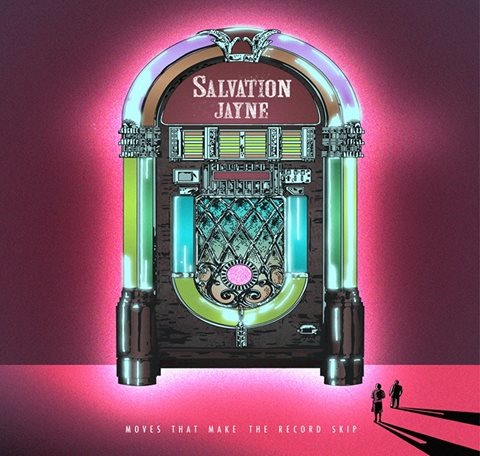
The digital generation may be unfamiliar with the experience of leaping around their bedrooms to favourite tunes, only for their exuberance to result in the needle skipping a groove or two. While it’s unlikely to cause any damage to either the vinyl or the stylus, it has a way of disrupting the flow and making you feel like a bit of a buffoon. There’s Kent four-piece Salvation Jayne’s EP suggests, it contains rock nuggets potent enough to inspire bedroom moshing, although it’s not being released on vinyl.

After a brief introductory segment, the EP gets going properly with ‘Burn it Down’ which we covered when it first aired back in April. And it’s a cracking tune, chunky blues-based guitars chopping against a sinewy lead line and strolling bass. It also meets the ‘monster chorus’ requirement for a strong rock tune. And yes, tunes matter: on Moves That Make the Record Skip, Salvation Jayne offer tunes, with strong vocal melodies shaping the songs.

If ‘The Jailer’ contains all of the elements of infinite 80s rock bands and reminds me of many, many pub gigs I caught at the tail end of the 80s and into the early 90s in my home town (for all I know, there are still the same sort of bands cranking out the same stuff in the same venues now: Lincoln never was the most progressive of places), it’s well-executed and has the guts in the delivery to make it work. There’s also some nice slidey guitar action that brings a dirty country / blues vibe. ‘Thrillride’ starts with a low-slung bass and sassy, semi-menacing vocal from Chess Smith before she gives it some throat and everything kicks in.

EP closer ‘Whorehouse Down on the SE’ makes for a strong finish: it’s a percussion-driven hefty rock workout which has all the makings of an anthemic crowd-pleaser live. It mines a proper old-school rock seam, and calls to mind The Pretty Reckless at their best, with Smith giving it the raw, rough ‘n’ tough treatment.


Salvation Jayne - Moves

Schoolkids Records – 2nd June 2017

Christopher Nosnibor

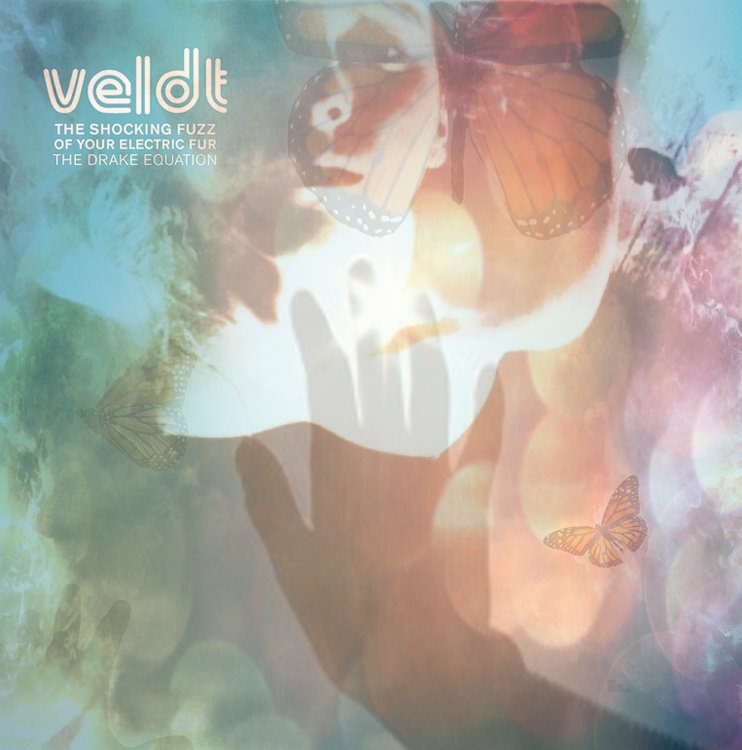
The blurb tells me that ‘On the trail of their successful Record Store Day 7” single ‘Symmetry / Slow Grind’, Raleigh-based Schoolkids Records have announced the coming release of ‘The Shocking Fuzz of Your Electric Fur: The Drake Equation Mixtape EP’ by alternative soul and shoegaze pioneers The Veldt.’

The Veldt have been around for a very long time, now – always on the peripheries, but wholly ingrained in the same milieu as The Cocteau Twins, The Jesus and Mary Chain, et al, as well as sharing stags with an impressive roll-call of acts spanning The Pixies to Echo and the Bunnymen via The Manic Street Preachers.

The EP’s title is (in part) lifted from a poem by e.e.cummings, while ‘The Drake Equation’ is a sort of punning gag that’s both intellectual and spectacularly . Cumbersome as it is, it’s quite a tidy literary allusion, and one which illustrates both the band’s overtly arty leanings the and the immense breadth of their spheres of reference: this is, after all, a band whose name derives from a story by Ray Bradbury. If the idea of high modernism coming together with slick 21st century r‘n’b seems like an improbable and unlikely recipe for success, then it’s all down to the execution.

The five tracks on this EP may or may not ‘rage’ with ‘a sound influenced equally by emotional soul of Marvin Gaye, free jazz warriors Sun Ra and Pharaoh Sanders, various Drake hip-hop tracks, long-term musical kin Cocteau Twins, and their own fertile electric imagination.’ But what they do achieve is a compelling hybrid of styles.

Stuttering beats, somewhere between hip-hop, jazz and drum ‘n’ bass jitter and twitch beneath draping, rifting layers of sonic mist define the multifaceted ‘Sanctified’, which glides he EP into a smooth yet detailed launch. It’s the progressive soul element of their expansive shoegaze-orientated sound which renders The Veldt most distinctive:

‘In A Quiet Room’ simmers and chimes, a laid-back rhythm contrasting against the swirl and eddy of layered, FX-drenched blankets of guitars. The tom-orientated drumming on the dreamy ‘One Day Out of Life’ has echoes of early New Order about it, before a rising swell of a drifting sonic cloud.

The EP ends on a super-mellow soul trip in the shape of ‘And It’s You’: with a melody that evokes Bread’s ‘Make it With You’. Perverse as it may sound, it not only works well, but seems entirely fitting, the smooth soul vibes entwine with a slick hip-hop beat to forge a loved-up groove that’s sort of slanted, but at the same time, kinda natural. Nice.


Veldt EP

March 2017

Christopher Nosnibor

I’m not actually a fan of physical violence. The sight of blood – particularly my own – is enough to make me nauseous or even pass out, and I struggle with pain. And yet I’m also strangely, perversely drawn to violence. I consider the Marquis de Sade’s 120 Days of Sodom to be a comic masterwork. Why? Because violence at that level becomes absurd, as real as Tom and Jerry. It’s also perhaps important to distinguish art and life. So much brutal music and art is an outlet of the darker psychic states channelled by some of the mildest, sanest people you’re likely to meet. I haven’t met Tristan Shone so can’t vouch for his character, but his work under the Author and Punisher moniker is pretty brutal, and appeals precisely because of it.

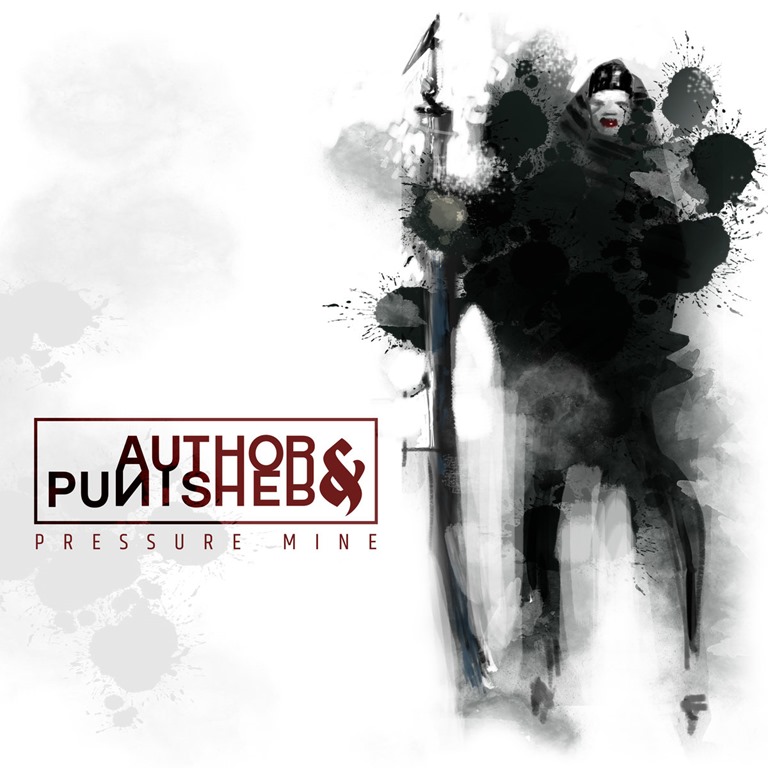
The Pressure Mine EP, which finds Shone bring everything in-house to deliver five new tracks, all written, recorded, mixed and self-released by Shone himself balances brutality and beauty. What’s more, there’s a definite trajectory which runs over the course of the EP: something of a downward spiral, if you will, which sees each successive track prove darker, bleaker, heavier and more fucked-up than the one before. It may not be quite as gnarly and doomy s some of its predecessors, but that hardly makes this a stroll in the park and if anything, the absence of eardrum-shredding lasts of noise only accentuates the uncomfortable tension Author and Punisher is capable of creating.

First track ‘Enter This’ is a magnificent, mechanised droning industrial trudge, synths interlacing to forge a dark atmosphere over a battering mid-tempo rhythm. It’s all a backdrop to Shone’s vocals, which balance disconsolation and anguish. While reminiscent of Prettty Hate Machine Nine Inch Nails, it’s also rather more emotionally nuanced. ‘Pressure Lover’ lunges deeper into a woozy, nightmarish fugue, a dense, rumbling bassline and clanking percussion dominating.

‘New World’ warps and grinds, a dislocated discord emerging from the echoes and twisted vocals, and the last track, ‘Black Wand’ comes on like Depeche Mode on a cocktail of Ketamine and LSD. It’s not entirely pleasant, but it is unsettlingly awesome.


Author and Punisher - Pressure Mine

3rd February 2017

Christopher Nosnibor

As a band who really grabbed me by the throat with the release of their ‘Nowhere’ EP in 2015, the arrival of the latest offering from GHXST in my inbox was cause for excitement. And rightly so. To cut to the chase, Perish is a masterpiece.

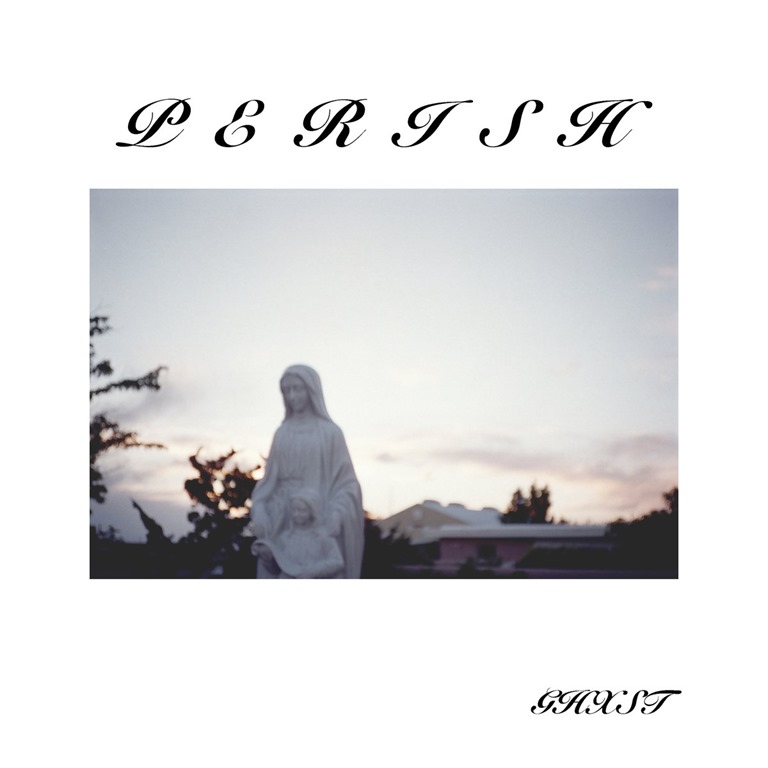
The EP’s first track, ‘Southern Eye’, carries the refrain of ‘nowhere’ and as such, continues the theme of displacement, of outsiderdom, of not belonging which was core to the aforementioned EP. It’s a fair summary of what GHXST are about, musically, conceptually, and lyrically. Their songs deal with darker themes, and the cover art, which seems to evoke the spirit of Joy Division conveys an appropriate sense of bleakness, but also a certain, ineffable serenity and grace.

On the title track, a rushing guitar grind and reverberating samples are counterpointed by a haunting – and achingly beautiful – vocal that has hints of Alison Shaw of Cranes, only less squeaky, and Toni Halliday. The contrast is what defines the sound, and is ultimately what makes GHXST so special: it’s so rare for a band this heavy to convey so much emotional sensitivity. Theirs is not a sonic expression of nihilistic rage, but of something altogether more nuanced, possessing a heart-trembling beauty, rendered all the more distinct in their execution by the use of a drum machine. As such, they’re in an entirely different league from the few doomgaze contemporaries with female vocals one might name, like Esben and the Witch and Mammoth Weed Wizard Bastard. And on this outing they expand their sound to incorporate elements of blues and country. How does that sit as a genre? But it’s not merely the fact they exist within their own niche: the tracks on Perish: the quality of the songs, and their spectacularly atmospheric execution is something special.

‘Stories We Tell’ achieves a heart-rending beauty while crushing your skull with punishing guitars and pounding, slow-tempo percussion: the guitars grate and grind, each power chord throbbing with a malevolent afterburn. ‘Summer Moon’ presents a surging pop dynamic, a dash of Jesus and May Chain against a Chapterhouse-y whirl of shoegaziness and ‘Waiting for the Night’ is a slow-surging dirge, riven with the crackling pops of Akai snare bursts which shouldn’t work but actually bring a bleak aggression to the droning. Closer ‘No Wild West’ introduces a droning desert blues element, the chugging guitars drifting over an expansive, barren wasteland as Shelley X drawls into a sea of reverb.

This is by no means inaccessible music: it’s music to lose yourself in. The songs themselves are comparatively short – none extend beyond the five-minute mark – but all bear all the hallmarks of true epics, with a sound which is beyond vast.


GHXST - Perish

GoldMold Records – 10th February 2016

Christopher Nosnibor

Once upon a time, everything was tapes. The romanticism of a frustrating and often inconvenient medium has endured perhaps largely on account of the potential impermanence of their nature: how many music fans of the cassette age mourn the loss of a beloved recording on account of a moment’s forgetfulness which resulted in overrecording, or some freak event which resulted in demagnetisation? How many hours spent spooling and respooling tape which had become mangled in the heads, or otherwise stretched or snapped? The albums of yesteryear, all recorded to quarter inch tape, slowly decaying are an integral backdrop to our appreciation of the existence of the sounds they contain.

But is with books in the printed medium over digital text, it’s easier to form a bond with an artefact which feels somehow personal and personalisable. Just as a book with various creases and marks, perhaps even annotations develops a tangible, unique sense of ownership a Kindle edition never can, a playlist can never have the same resonance as a lovingly-sequenced mix-tape with hand-scribbled notes accompanied by a creased post-it or page from a spiral-bound notepad containing a covering note, folded into quarters and stuffed inside a scuffed case. On an emotional level, at least, sonic fidelity counts for less than fidelity to a pure moment, and it’s the thought that counts: those analogue documents of yesteryear can contain the entirety of a crush that dissipates in weeks or the early stages of a lifelong relationship on any level.

While the debates over the nostalgia ‘industry’ continue to rage, it’s fair to say that the renaissance enjoyed by the cassette is not a purely economic one. After all, the costs involved in burning a bunch of CD-Rs and stuffing them into handmade sleeves is negligible, and even though a bulk batch of 100 C30 cassettes can be obtained for in the region of 55p per unit, the time and effort required to dub even a small run of tapes is proportionally greater than any number of CD-R burns. But the changing nature of the music industry means that where it’s at now is in the small-scale, the personal, and the idea that an artist or label has invested time and personal attention on a product imbues the object with an instant emotional resonance.

The debut release from Glasgow’s Forehead – the vehicle of Sean Garrett (said to be ‘the shyest frontman you’ll ever meet’ and mother goose of the Lovely Ladies) – is appropriately named, as it is being released – if you hadn’t already deduced – on (baby blue) cassette, in a limited edition of just 15. It’s also being released as a download of course. Because no artist makes a release exclusively for 15 people.

The blurb notes that the four tracks contained herein ‘have been about for a while but are only being released now, a testament to Sean’s wholly unwarranted modesty’. And yes, the songs are superb, in a sketchy, nervous, hesitant yet achingly sincere way. You get the impression that Garret’s shyness is integral to the material, to the extent that its awkwardness defines what makes it special. And by no means interpret awkward as clumsy: there’s a skilled songwriter hiding behind the sonic fog here.

Regardless of the protracted journey between conception, recording and release, in keeping with the EP’s title, Bedroom Tapes conveys the spirit of 90s analogue enthusiasm. Low-key, lo-fi indie rock songs, reminiscent less of Pavement and more of Silver Jews, define the Forehead sound. This only serves to amplify the nostalgic quality of the release, evoking the excitement of hearing something stubbornly lo-fi, dubbed from a cassette or a record, the grind of a worn stylus on cheaply-pressed vinyl, for the first time.

Forehead also captures the awkward shyness of J Mascis on ‘Honest’, and the swampy plod of ‘Corner Pieces Falling Apart’ bursts into slanted psych-hued noise before crawling off to hide under the table.


Forehead

Christopher Nosnibor

Sometimes, stuff just gets buried in my inbox. People – bands, PRs, family, friends – all probably figure I’m ignoring them, or just being a twat as usual. The latter may well be true, and as for the latter, perhaps so, but unintentionally. John Peel always used to make a point of listening to everything he was sent. Unfortunately or otherwise, depending on your perspective, I’m not John Peel.

“We all have that need to break out of the cycle of daily life,” says the band’s guitarist and vocalist Dein Moore. He’s right. I’m at work all day every day during the working week, which makes wading through review submissions hard. So, yeah. I’m almost six months late this this. But better late than never, right?

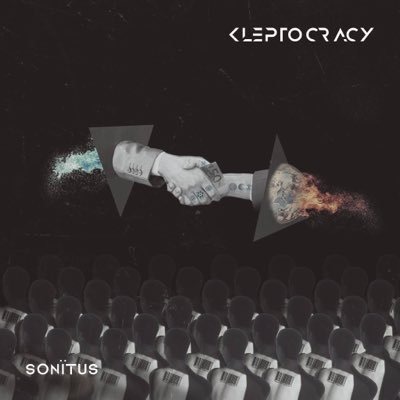
The seven tracks on Kleptocracy showcase the band’s immense range, often within a single track. Opener ‘Alleviate’ begins quiet, lilting, an amalgamation of folk and prog with a distinctly mainland European flavour, before rupturing into a surging alt-rock climax.

Salsa rhythms clack through the delicate, supple guitars and build gradually on ‘Colour Tone’, and if ‘Autumn Leaves’ manifests as a rather middling, mellow radio-friendly acoustic rock number, the soulful depth of the vocals have a certain appeal. There are also elements of 8 Storey Window (whatever happened to them?) and Amplifier in the arrangement, and the comparisons carry through on the driving title track, too.

There’s plenty of meat to Kleptocracy, but also a lot of detail, making for a neat balance and an EP that’s got a fair bit to hold the attention.


Sonitus

Leonard Skully Records – 9th December 2016

James Wells

I’m growing rather weary of arty shots of naked or semi-naked women adorning the covers of releases by post-rock and shoegaze bands. And shit post-metal and post-hardcore bands. Everything’s post-something now, and I’m beyond weary of that. But we live in a click-bait world where adolescence is suspended in perpetuity, and despite the fact that everything’s freely available and as hardcore or strange as you want it at the click of a button, there’s still a certain lure in the risqué.

Call it art – and it should be possible to do so – but the prevalence of the practice makes it feel hollow, cheap and exploitative. ‘Yeah, let’s slap a chick on the cover of our meandering, ponderous post-rock EP… it’ll make us look arty and interesting and like we know photographers who can get girls to pose for them. Incidentally, I hate photographers as a rule, especially the ones who manage to make like they’re ‘safe’ aren’t sleazy… and no, not because I’m jealous. I really do just think they’re cunts.

The_Veldt_-_In_a_Quiet_Room

In a Quiet Room’, the single cut from The Veldt’s preposterously-titled The Shocking Fuzz of Your Electric Fur: The Drake Equation has an arty black and white head and shoulders shot of a woman, or a girl, by way of a cover. Apropos of absolutely bloody nothing. It certainly says nothing of the layered, textured, murky, glitchy, drum ‘n’ bass influenced soulful post-rock sonic expanses they conjure, the trickling cymbal work which grips a tight tension over squalling, drifting guitar treble on the EP’s opener ‘Sanctified’ or the shimmering post-rock / r’n’b crossover of said single ‘In a Quiet Room’.

Quite how comfortable I am with their seemingly incongruous but seamlessly smelted hybridity, I’m not sure, but there’s no faulting its execution. The Veldt get atmosphere, and they get sleekness. I’m not sure I get it, or the appeal, but it’s neatly executed and sounds nothing like the cover art suggests.


Veldt EP

ELaB Records – 10th February 2017

Christopher Nosnibor

Being a teen of the late 80s and early 90s, I discovered curve through the pages of the music press as was, and absolutely bloody loved them. It’s perhaps hard to appreciate now, in these jaded, music-saturated ties, just how exciting it all was back then. I’m not disparaging the current music scene: far from it. I find new bands which excite me on a weekly basis. But that’s part of the problem: it’s all there, streams and links shared by friends and reviews rippling across social media within hours of posting by a single person of note. And said person of note can be anyone with a high media profile. Back then, it was all about the ability of a critic to capture the imagination, and then for the music fan to seek it out. If you were lucky, John Peel would be spinning something by the act in question. If not… well, you’d got legwork to do. If it sounds arduous, think again: it was fun. It was rewarding.

Anyway. Post-Curve, Dean Garcia formed SPC ECO with his daughter, Rose Berlin. The parallels between this current vehicle and Curve are abundant, to the extent that they require no comment: you can likely find those observations elsewhere all over the internet, and such duplication is such a bore.

What you want – need – to know is that this EP which features five tracks which break the mould: instead of bursting with compressed guitar and mechanised drum-machine led shimmering walls of sound, these are hushed sedate and understated works. Restrained and dreamily subdued as they are, they’re rich in atmosphere depth.

Instrumentally, ‘Under My Skin’ has hints of Moby and The XX about it.. It begins quietly, Rose’s voice close to the mic singing quietly and backed by only a brooding piano. But there are layers building beneath, with tapering synths and delicate reverb filling the space and the space between.

‘Creep in the Shadows’ is a weird one: the bloopy autotuned vocals are so heavily processed as to be essentially robotic, detached, unhuman, and they drift over a backing so minimal as to be barely there: a sparse beat clacks away way back in the distance as a super-low, dubby synthesised bass wanders at will. There’s practically nothing to get a hold of, and it’s so produced it’s hard to position. Contrast that with the lo-mo tri-hop dub of ‘Lt it Be Always’: murky beats and swampy bass conjure dark atmospherics while Berlin comes on like Beth Gibbons at her most hauntingly ethereal.

In its pursuit of the fragile and the paired-back, this EP is by no means SPC ECO’s most immediate release, and doesn’t offer the dynamics of some of their previous releases, but it does follow their recent trajectory which has seen the duo create music of an increasingly claustrophobic, hushed intensity.


SPC ECO - Under My Skin

12th January 2017

Christopher Nosnibor

Ummagma have been making quite a name for themselves, and have done a great deal in revitalising the shoegaze / dreampop crossover style characterised by early 4AD releases. This release finds the Ukranian/Canadian act join forces with dreampop pioneers A.R. Kane (who also released music as half of M/A/R/R/S) and who have been silent since the 90s.

To try to get to the root of what it is about dreampop’s capacity to touch the listener is, indeed, akin to trying to locate the source, and subsequent emotional resonance of a dream. Waking up at 5am – as I often do – I was groggy with the images of dreams melting from my mind as I made the uneasy transition from unconscious to conscious. Some of the scenes clung, but their significance, which had been immense whist in sleep, swiftly evaporated as I rose to the surface. There was a logic to some of the more anxiety-inspired elements of the dream – desperately trying to send a text message while trapped in an eternal office meeting held in a room with no windows, for example – required little unravelling, but others subscribed to a dream-logic which only sustains any sense of coherence while in a dream-state.

Dreampop, at its best, suspends the listener’s connection with the concrete world and transports them into a mental zone somewhere in between realities. For the three to five minutes the song plays, the sound occupies the mind completely, and conjures a rarefied emotional state, a distillation of a deeper inner self that’s only partly accessible at any given time. This is why, in order to fully appreciate the cream of dreampop, it’s necessary to fully surrender oneself to the music. Anything else is likely to leave the listener feeling very much on the outside, looking in, and completely untouched.

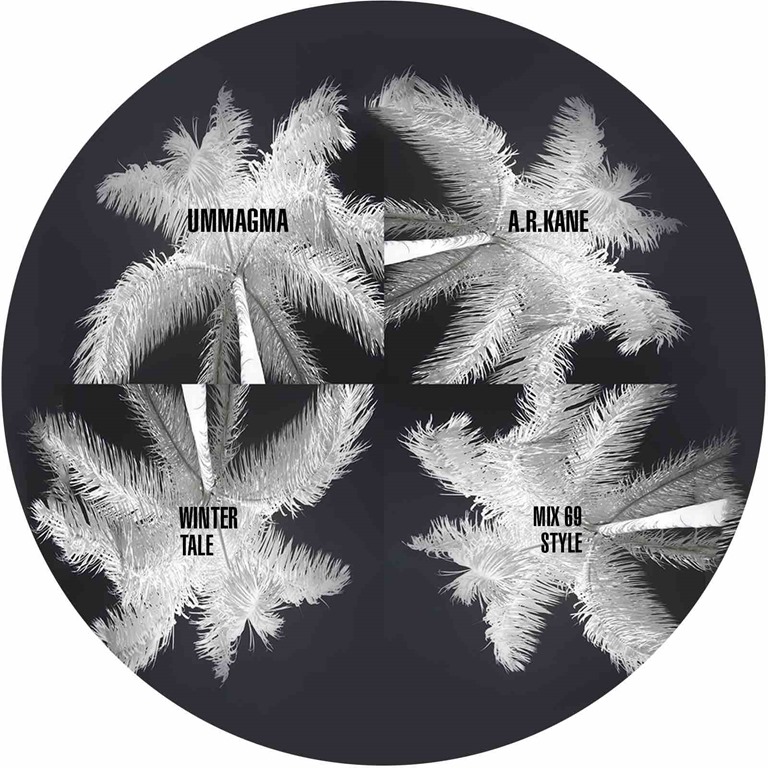
‘Winter Tale’ is a song by Ummagma, featured here in its original form and subject to a substantial reworking by A.R.Kane, and accompanied by an abridged radio version of the A.R. Kane interpretation.

The original is a dainty, delicate ditty, wistful, softly blurred, a lightly skipping vocal melody careening its way over a sparse backing of simple percussion and cloud-like synths, and it’s full of wintry imagery and a pervading sense of suspense. Shauna McLarnon’s vocal is delicate, airy, and floats mellifluously on the breeze.

The alternative version is quite different. A.R.Kane’s primary addition, however, is an overloading guitar. It’s kept at a respectful distance and doesn’t submerge the entire frame of the underlying original, but crashes like waves and breaks into howls of feedback, bringing textural layers and additional depths to the song, accentuating the darker aspects. The absence of percussion somehow abstracts the song in some way, and the gently rising bubbles of synth bring a sense of colour.

But when it ends, it’s hard to recall exactly what it was about it, like a cloud that’s changed shape and the rabbit is now just a streak in the sky.


Ummagma   A.R.Kane - Winter Tale (cover artwork)