Posts Tagged ‘Electropop’

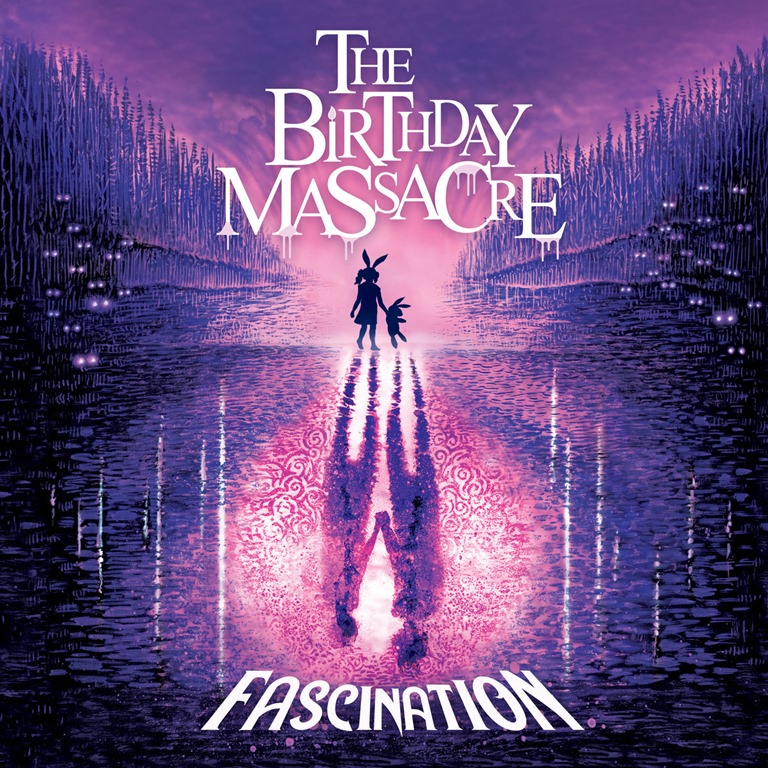
Over twenty years and a dozen albums, The Birthday Massacre have become prime exponents of goth synth pop. They describe Fascination as ‘at once the most fully realized album with the bands signature blend of haunting vocals, captivating electronica and aggressive guitars and their most accessible’.

It’s this accessibility that immediately announces itself from the outset. The title, ‘Fascination’, immediately makes my mind leap to the song by The Human League, and this is unquestionably poppy, but this is in a different league instead. It’s the title track that opens the album and it’s a colossal anthem. It’s in the slower mid-pace tempo range, and the production is so immense as to be arena-worthy, the slick synths drifting over big, bombastic guitars. Some may baulk at the notion, but it’s pretty much a power ballad. It paves the way for an album that’s back-to-back bangers.

I mean, make no mistake, this is a pop album in a pure 80s vein, and pushes tendencies that were always in evidence in BM’s work. People often seem to forget just how dark a lot of mainstream pop was in the 80s, but listen to A-Ha, even Howard Jones or Nik Kershaw objectively and the currents of darkness are clearly apparent amidst the clean lines of the clinical synth pop production of the day. It’s perhaps time to re-evaluate what actually constitutes ‘cheesy’ – an adjective so often pinned to the 80s with no real consideration – and cast aside the idea of ‘guilty pleasures’ when it comes to a lot of music of the era.

‘Stars and Satellites’ is bold and brooding, and probably the most overtly ‘goth’ track of the album’s nine, although ‘Like Fear, Like Love’ grabs bits of The Cure and tosses them into a stomping disco tune. But those drums… they’re great, they’re huge, but they really are the epitome of the 80s sound. Elsewhere, the guitar line on ‘One More Time’ actually goes 80s U2 with heavy hints of Strawberry Switchblade (and they weren’t goth either). Step too far? Maybe for some craving the chunky chug of industrial guitars, because this is fundamentally a riff-free zone, but Fascination works if you embrace the spirit of its being easy on the ear and accessible.

It feels fresh for the band, but also feels like a relatively safe step in the direction of commercialism. It’s ok, and the songwriting and performances are solid throughout, that much is undeniable. It’s one of those albums that may take some time to sink in, in the way that Editors’ On This Light and on This Evening and The Twilight Sad’s Nobody Wants to be Here, Nobody Wants to Leave, felt just that bit mainstream initially. Digesting an overtly ‘pop’ album or a change of direction – and while the direction of Fascination is something that’s always been a part of The Birthday Massacre’s sound – hearing it placed front and central inevitably feels like a shift. And it is a shift, of course, just not one of seismic proportions.

‘Is anyone real anymore?’ they ask on ‘Precious Hearts’ before the final cut, ‘The End of All Stories’ goes Cure again, only this time with monster power chords that border on metal to fill out the mix.

Dig it, soak it in, play it a few times. You’ll probably like it, even if not on first listen.

AA

a2672010454_10

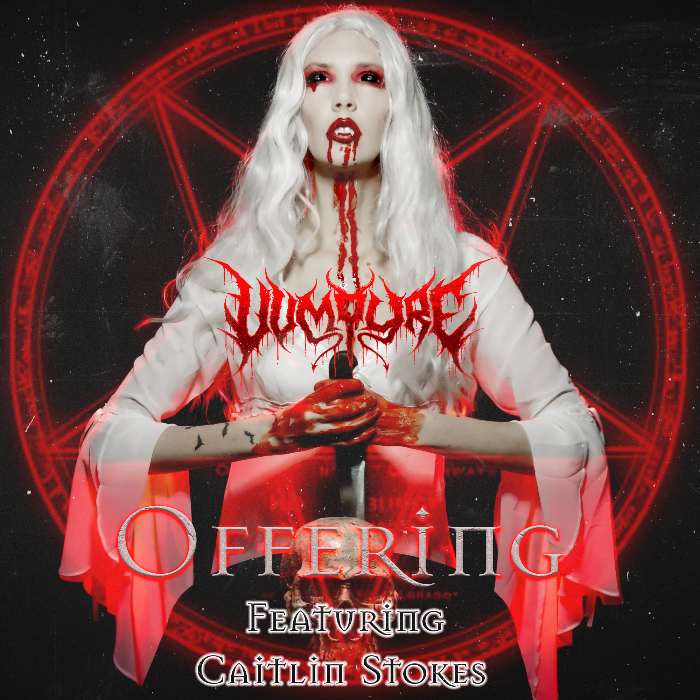
Darkwave act VVMPYRE begins a new reign in blood in 2022 with a horrific new single ‘Offering’. Inspired by vampire cults and 70’s cult horror films, ‘Offering’ is a track that personifies the leaders of these cults in an alluring anthem. VVMPYRE creates a modernized sound with a rekindled inspiration from artists like The Sisters Of Mercy and Inkubus Sukkubus.

In a search for the right voice, VVMPYRE reached out to CORLYX singer Caitlin Stokes. VVMPYRE’s twisted imagination is met with a set of lyrics as if the chant to a ceremony against the backdrop of increasingly massive and infectious melodies.

Together with VVMPYRE’s production, ‘Offering’ is a monstrous mix of classic electrogoth, 70’s horror scores, and modern darkwave to form a bloody anthem that unleashes a barrage of hooks. Brandon Ashley of DTuned Brighton Productions and The Dark adds a gripping guitar to the mix, building the track up further in the chorus and bridge, only equally met by VVMPYRE’s haunting organ melodies.

Check the video here:

AA

d8ede0ae-4189-1bba-8cd4-c424e569b1c9

14th February 2022

Christopher Nosnibor

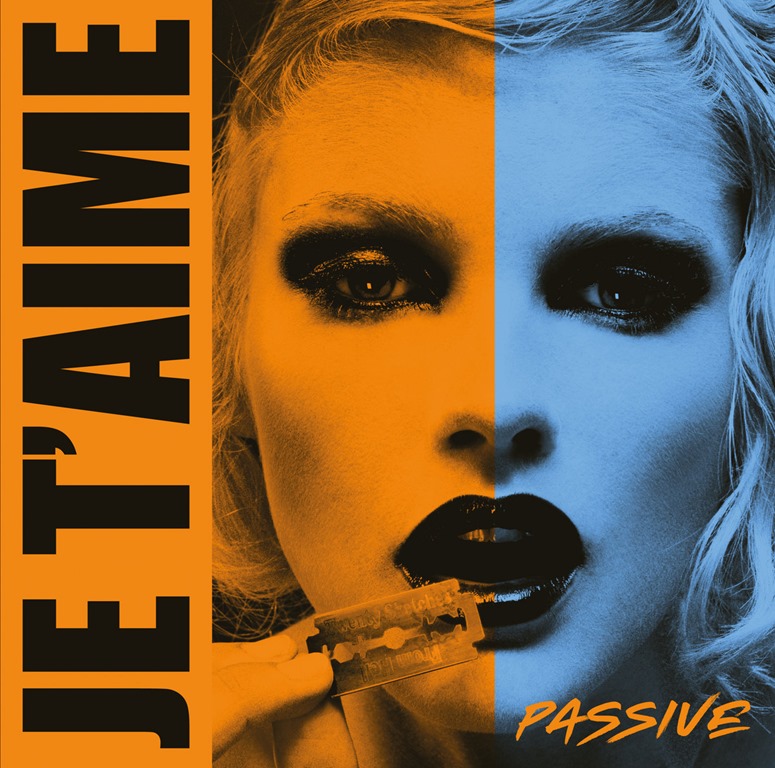
Passive is the second album from French post-punk band Je T’aime, and is the first of a two-part set, which will be completed with the release of Aggressive in the not-too distant future.

The album continues where its predecessor left off, and marks the development of a theme as part of an extended concept work, where we ‘follow the evolution of the same antihero; a common avatar of the three musicians. The tone hardens, the atmosphere becomes more melancholic, and the lyrics embrace bitterness and anger.’ The liner notes explain that Passive ‘continues the theme about the difficulty of growing up. Our main character is constantly caught up in the past, repeats the same mistakes and ends up not being able to move forward in his life. It is no mystery that the band’s music constantly looks for influences in the past 80’s for that reason’.

So many people do get hung up on the past, and seem to hit a point in their life – usually around their early 30s, in my experience – where they simply stop evolving and reach a stasis, a brick wall where they conclude that no good new music has been released since they were in their early 20s and nothing is as good as it used to be. It’s not all memberberries and memes, but there are many agents at play driving an immense nostalgia industry. And it’s easy money: no development required for new ideas when there’s a near-infinite well of past movies and music to plunder and rehash or at least lean on. Would Stranger Things have been the smash that it was if it was set in the present? However great the script, plots or acting, much of its appeal lies in its referencing and recreation of that intangible ‘golden age’. While that ‘golden age’ may depend on when an individual was born, the acceleration of nostalgic revivals and recycling means that kids who weren’t even born in the 80s or 90s are nostalgic for synth pop and grunge by proxy.

Passive is anything but. But what it is, is a dark, heavy slab of dark, bleak, brooding, a mix off sinewy guitars and icy synths with rolling bass and tribal drumming that lands in the domain of early Siouxsie, Pornography­era Cure and The Danse Society around the time of Seduction. The instruments blur into a dense sonic mesh. There’s a tripwire guitarline on ‘Another Day in Hell’, which kids off the album with a gloriously dark, stark, intensity that’s Rozz William’s era Christian Death as if played by X-Mal Deutschland. And if I’m wanking nostalgia over this, it’s less because I miss 1983 (I was 8) than the fact they capture the energy and production of that groundbreaking period with a rare authenticity.

‘Lonely Days’ is a bit more electro-poppy, but has a guitarline that trips along nicely and throws angles and shade. ‘Unleashed’ reminds me more of The Bravery and their take on 80s pop, but then again, The Cure’s influence looms large again, and elsewhere, ‘Stupid Songs’ goes altogether more New Order / Depeche Mode, but then again, more contemporaneously, it’s not a million miles off what Editors were doing on In This Light and On This Evening – and album I found disappointing at first because it felt like derivative 80s electro fare, before the quality of the songs seeped through to convince me.

One thing that’s often overlooked about 80s pop is that dark undercurrents ran through even the most buoyant of tunes from the most chart orientated acts; Duran Duran and Aha, even the music of Nick Kershaw, Howard Jones, A Flock of Seagulls, was cast with shadows flitting beneath that veneer of production. So when they go bouncy disco on ‘Givce Me More Kohl’, the parallels with The Cure’s ‘Let’s Go To Bed’ and ‘The Walk’ are apparent, with a lost and lonely aspect to the vocals, and they go full Disintegration on ‘Marble Heroes’. And that’s cool. It’s poignant, sad, wistful, an emotional cocktail. On Passive, Je T’aime revel in all of those elements of influence and pack them in tight, and they do it so well and with such discipline. They really know what they’re doing: the sound and production is class, and the songs and classic, and the sum of the parts is a truly outstanding album.

AA

a3347450970_10

Everest Records – 14th January 2021

Christopher Nosnibor

Language is fluid, it evolves. Sometimes I appreciate that, and like the fact. Other times, this is something which can be intensely frustrating, and it seems the meaning of hypernormal has evolved – seems to have been reconfigured, rechannelled – with remarkable rapidity. Initially, it was something of a colloquialism, an on-trend sassy term to describe something that was so normal it was beyond bland.

The connotations of the scarily mundane, the individual who was so lacking individuality that they made clones appear unique, which emerged late in the first decade of the new millennium remained largely stable until Adam Curtis delivered his seismic three-hour documentary in 2016, which espoused the theory that HyperNormalisation is a process whereby a mundane, readily-digested version of life and society has been superimposed over the complex world by those in power. And so according to this, we now live in a ‘fake’ world. And this concept of a constructed reality overlaying the true reality seems unsettlingly feasible. What, and who can you trust or believe? Trust no-one; believe nothing.

Perhaps because I think too much and don’t sleep enough, I’ve wondered ever since I was a child if the world we live in is real, or if we’re all figments of our own imagination, and if reality is a construct. Yes, I experienced existentialism combined with some kind of take on The Matrix at the age of five. But I digress, and there is a point to all of this, and that is that nothing is fixed, nothing is certain. We know so little, we don’t even know ourselves.

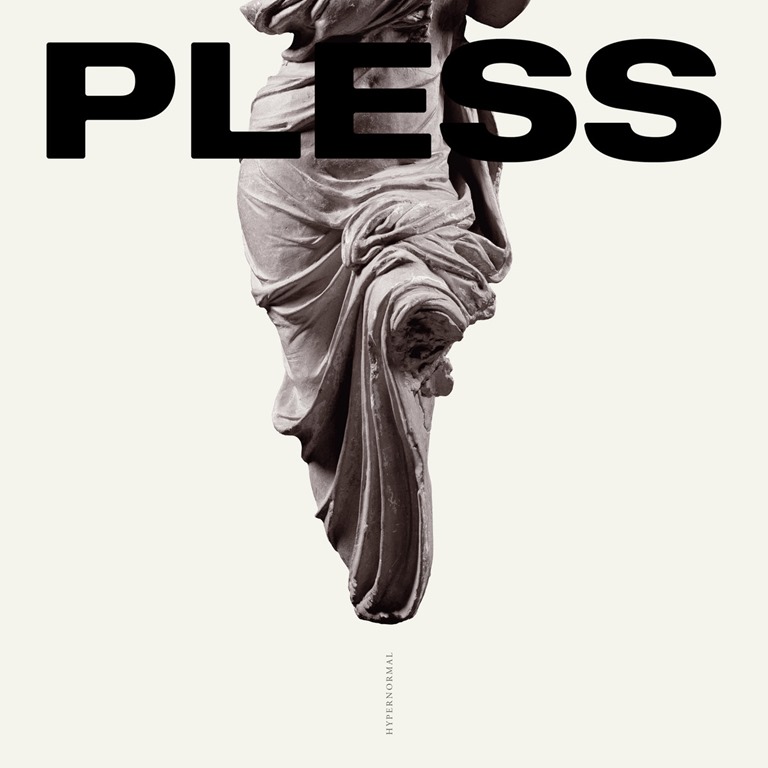
Pless’ hybrid sound is absolutely not normal, and it’s certainly not normal beyond normal so as to be the next level of mundane; but nor does it feel entirely like a carefully-constructed fiction which bears the ultimate lie. That said, there is a certain element of deception here: the façade of simplicity, of minimal, semi-ambient electronica belies the detail and complexity of these layered compositions, and as such, it’s something not normal, disguised as something that resembles normal, or at least familiar. Ultimately, it’s something else entirely; something mellow, something layered, something dark and something light. All of this filters into cognisance in the first piece, the slow-paced, semi-abstract ‘Azure’, whereby spectral synths drift around a metronomic drum and ever-moving bass tones.

The drum sound is noteworthy: it’s somehow immediate, up-front, and dry, as well as reverby, landing between Joy Division and Duran Duran.

The synths of ‘La Cienaga’ lean towards A Flock of Seagulls, but the stuttering drums and stammering incidentals contribute to transporting this track to another place entirely, one filled with dark shadows cast by brooding electropop and darkwave. Meanwhile, the six-minute ‘La Grenouille Volante’ has a bass that thrums like an engine throbbing at the dark heart of its soft ambient washes and distant drums. Around two-thirds in, it unexpectedly revs up a gear, and while the same, the additional volume translates to additional intensity, too.

The haunting, spectral organ drone of ‘Ante finem’ is blasted through with hefty tribal percussion, gradually shifting to a slow, deliberate bass-driven trudge, while ‘Fog City’ is every bit as murky and disorientating as you would likely imagine, with vocal samples and reverberated snare cracks echoing through stark synth stabs, and ‘Hot God’ comes on like a collision between Kraftwerk and DAF with a dash of early New Order, mining a deep seam of late 70s/early 80s electronica. The final track, the ten-minute ‘Reodorant’ is a dark-ambient epic in every sense, deep, moody, a little unnerving.

Each of the pieces shifts as it progresses, and evolves over the course of its duration, often subtly, twisting through expansive soundscapes front one plateau to another. Under the cloak of minimalism is shrouded considerable detail, and a quite remarkable focus on texture and movement. Even in the most stagnant of moments, there isn’t an element of stillness here. It may be cold, it may be distanced, but it’s also quite its own work. Normal? What even is that anyway? Stark, sparse, yet so, so rich, with Hypernormal, it becomes clear that Pless is more.

AA

a2732208461_10

3rd December 2021

Christopher Nosnibor

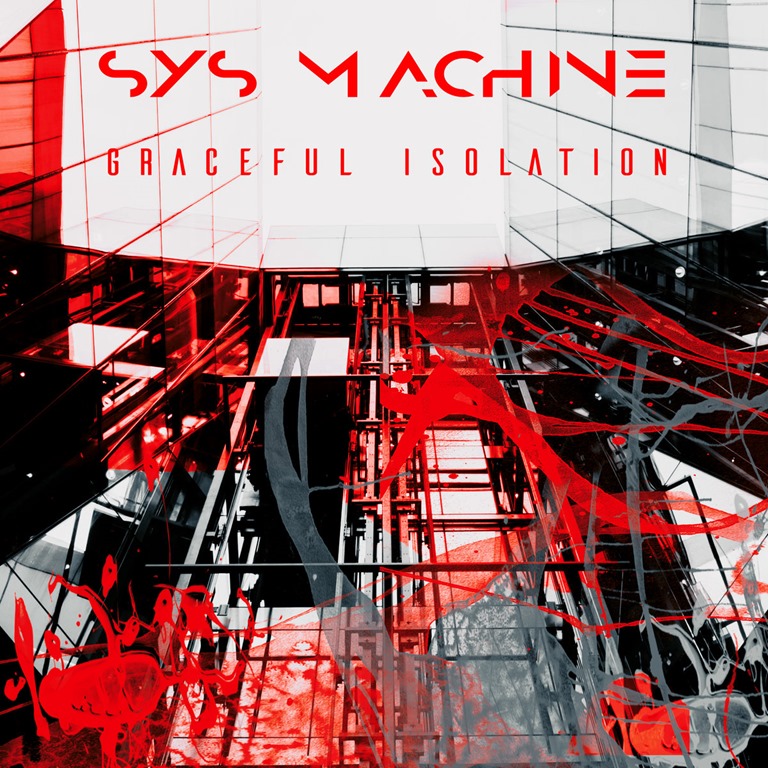
If there’s ever been an emerging theme across music of all genres in the last year and a half, it’s isolation. Yes, if a global pandemic has achieved one thing, it’s brought everyone together in their feelings of isolation.

And so it is that we learn that the tracks on Graceful Isolation ‘address the feelings of isolation and coming to terms with new norms that the past year has brought. The title is derived from the fact that over the course of the album, none of the collaborators were ever in the same room.

One could counteract that in creating an album featuring numerous collaborations (notably Kimberly Kornmeier of brooding orchestral electro goth act Bow Ever Down on vocals on three songs, but also a slew of remixers), Dave McAnally has been far from alone despite being forced to work in physical isolation, yielding an album that demonstrates that distance is no object and geography is a state of mind, even if it is no substitute for proximity.

‘Poison My Skin’ makes for an atmospheric opener, with stark, minimal synths and drum machine providing a cold backdrop. ‘You’re never gonna touch me again’, Kimberly croons in a detached, robotic monotone, with subtle hints of Siouxsie, while giving voice to the thoughts that have echoed around my head that there are likely many people I have seen, heard, and been in the presence of for the last time in my life. I don’t miss the office, I don’t miss the people I used to work alongside in that artificial, uncomfortable, unnatural space, and yet… well, none of us expected that way of life to be curtailed, and certainly not in the way it was, an instant switch-off. March 2020, on being told to go home to work, I never anticipated being away more than a few weeks. And here we are… people have moved on; people have left; people are no longer with us. It’s been a long and painful couple of years.

‘All the Pieces’ and in particular ‘Impossible Dreams’ are stripped-back and sparse in their arrangements – not quite demos, but certainly skeletal, with stuttering drum machines providing the brittle spine to the songs. The lack of flesh on the bones is integral to the appeal here.

‘Drowning in the Past’ and ‘Illusions’ are tense, queasy in their taut atmosphere. McAnally resumes vocal duties, and said vocals are pegged low in the mix, compressed, accentuating the dislocation and distance. The former pegs a particularly expansive guitar solo to some nagging synths and comes on like a proggy James Ray, and it’s some good shit if you’re on the market for dark, gothy electropop.

My only niggle – surprisingly or perhaps not so much – would be that the thirteen tracks on the album consist of only five individual songs, and with three mixes of ‘All The Pieces’ slap bang in the middle, in addition to the original version, plus three versions of ‘Drowning in the Past’ it’s does get a little bit repetitive, and it may have worked better as an EP and a remix EP rather than a full-length album in its own right. Put another way, I’d play the grooves off the EP, but would probably only spin the remixes every now and again – not because they’re poor remixes, but because the original cuts hang together so well, it feels like a fully-realised document that requires no adornment.

AA

a2053013240_10

Time to Kill Records (TTK) – 15th December 2021

Christopher Nosnibor

A good slogan or manifesto can say so much more than the words in themselves. And so it is that Vonamor introduce themselves with a bold statement that hints at Dada or perhaps the more arch and ironic Neoism in a way.

Vonamor state that:

VONAMOR is music and movement. VONAMOR is real and virtual.

VONAMOR is the end and the beginning. VONAMOR is from love, of love, for love.

Vonamor are more than simply a band, then, and more an aesthetic, a single-act movement. They exist in the space between simultaneous contradictions, the likes of which have informed poetical works since the Renaissance, with Sir Thomas Wyatt’s ‘I Find No Peace’ sonnet effectively setting a blueprint for modern literature.

Postmodernism, and Neosim in particular positively revelled in those contradictions, taking the avant-garde idea of self-awareness and self-destruction as a means of creating anew, and this, on the strength of Vonamor’s statement, is their primary objective: to be everything, and therefore nothing: to exist, they must cease to exist.

How seriously to we take this? They look pretty serious to me, but that may all be part of the performance. The next, and perhaps most important question is, does the music validate the bravado and high art bombast?

‘Take Your Heart’ is a smart slice of stark, minimal electronica, dark pop with a gothy, post-punk leaning, a collision of Siousxie and Florence and the Machine that’s both spiky and groovy, five minutes of mid-tempo doom-disco with an industrial edge – I’m talking more later Depeche Mode than Nine Inch Nails. It’s daring in the adherence to the adage that less is more: it’s tight and claustrophobic, and this gives the song a particular intensity.

No question this is a low-budget effort on all fronts, but that’s a significant part of the appeal. This isn’t some major-label act masquerading as something cult and underground to score kudos and cool cachet; Vonamor are clearly a fringe act with big, bold ideas and a strong sense of identity, and ‘Take Your Heart’ is understated but strong.

AA

Vonamor

James Wells

Kids Love Surf’s fourth single finds them continue the dreamy shoegaze trajectory of ‘OYO and ‘Moment’, but takes a more overtly electro / pop approach, with a crisp 80s disco drum beat. The chiming guitars may hark back to late 80s / early 90s Cure via vintage shoegaze, but the vocals – bathed in reverb and sculpted with a hint of autotune are clear and soulful, and very much to the fore against the blurred swirl of ambient synths that create a wash of sound.

It’s all pinned together with a nagging bassline that’s integral to the song keeping its shape. As a production work, it’s smooth, and it’s deft: with a solid and definite structure, the catchy chorus is distinct but slows effortlessly. At just three minutes and a half minutes long, it’s succinct – to the point that it makes you want to hit repeat straight away.

UK electronic indie outfit H2SO4 were one of the best kept secrets of the late ’90s, releasing a slew of singles and a brace of albums at the turn of the millennium that were well received by pundits and public alike, with songs that can be heard in TV shows such as ‘The Sopranos’, ‘Six Feet Under’ and ‘Queer As Folk’. 

Now, via a collaboration with production duo Bombay Monkey, they have created a stunning new album of ’80s tinged electronic prog-pop interlaced with atmospheric soundscapes. Entitled ‘Love And Death’, it will be released on 23rd July 2021.

The slinky and hypnotic album opener ‘Machines Love’ is available as a single now. A bittersweet take on love, loss and the transience of passion, the accompanying video features H2SO4 vocalist James Butler battling with dancer Lydia Savva as the physical embodiment of his virtual chess opponent.  Watch the video here:

AA

abd7aa4ca99a7cd2fd34421d91b2771b3d56f667

‘Perpetual Sequence’ is the ninth full-length album by Croc Shop, an electronic based act featuring long time members Mick Hale and vMarkus. With a post-electro, pop and synth-rock approach over the duration of its eleven captivating songs, the duo also make occasional nods to their post-punk goth and electro-industrial origins.

Originally formed as Crocodile Shop in a flat above a record store in West Berlin, the band released their debut album, ‘Lullaby’, in 1988. Produced by Dave Fielding of The Chameleons, the record displayed dark goth-rock influences that only hinted at what was to come. They subsequently transitioned towards an electronic-industrial sound as they began replacing band members with machines, releasing ‘Celebrate the Enemy’ in 1993.

In 1995 they signed to Metropolis Records and issued the albums ‘Beneath’, ‘Pain’, ‘Everything Is Dead And Gone’, ‘Order + Joy’ and ‘World’. The last of these was a nifty fusion of EBM and synth pop that arrived in 2002 and their first album under the shortened name Croc Shop. 2004 saw the release of ‘SEA’ (Self Extracting Archive), which was a double CD ‘Best Of’ the band’s musical output. Pursuing other musical interests, group mainstays Hale and vMarkus then took a longer than expected break from recording together.

Fifteen years later, with the ‘election’ of and chaos caused by Trump, the band’s creative and political fires were rekindled and they began to work on new material that resulted in the blistering ‘Resist!’, a nine song digital album released in 2020, followed by ‘(TRiP): The Rest In Pieces’, a thirty track ‘Rest Of’ Croc Shop that featured tracks not included on ‘SEA’ as well as a number of remixes.

Croc Shop have toured heavily across North America and Europe throughout their career and have garnered loyal fans the world over. They have shared stages with acts such as Rammstein, Front 242, The Damned, Nitzer Ebb, Project Pitchfork, Xymox, Switchblade Symphony and Numb. Their live show has been described as an “audio-visual-assault”, with multimedia video projections, bold lighting and an energetic stage presence.

Ahead of the album ,they’ve unveiled a video for second single, ‘Secrets’: what it here:

AA

a3b606bf1449e01997a50ef83db5cb4d623576a6

29th January 2021

Christopher Nosnibor

I have a hunch that the ethereal, bohemian songstress may not have been born Gabrielle Ornate, but it’s certainly fitting for the kind of light, decorative, yet expansive and kaleidoscopic electropop showcased on her debut single, ‘The March of the Caterpillars’.

Yes, it has that quintessentially 80s vibe, but then that in itself has become something that’s grown beyond its origins to become a genre unto itself, meaning that this single is both of a time and timeless. Propelled by a solid beat and buoyant bassline, it balances elements of both rock and pop, it’s a perfect vehicle for Gabrielle’s vocal, which switches from quiet and contemplative to full and bold in the choruses.

Lyrically, it’s about evolution and ‘respecting one’s roots’, but said lyrics are largely oblique and poetical, spinning together a succession of thoughts and images to form a semi-abstract flow, which works nicely.

It’s a strong debut, and Gabrielle seems to have emerged in full-fluttering glory.

AA

promo-photo-2