Posts Tagged ‘electronica’

UK electronic indie outfit H2SO4 were one of the best kept secrets of the late ’90s, releasing a slew of singles and a brace of albums at the turn of the millennium that were well received by pundits and public alike, with songs that can be heard in TV shows such as ‘The Sopranos’, ‘Six Feet Under’ and ‘Queer As Folk’. 

Now, via a collaboration with production duo Bombay Monkey, they have created a stunning new album of ’80s tinged electronic prog-pop interlaced with atmospheric soundscapes. Entitled ‘Love And Death’, it will be released on 23rd July 2021.

The slinky and hypnotic album opener ‘Machines Love’ is available as a single now. A bittersweet take on love, loss and the transience of passion, the accompanying video features H2SO4 vocalist James Butler battling with dancer Lydia Savva as the physical embodiment of his virtual chess opponent.  Watch the video here:

AA

abd7aa4ca99a7cd2fd34421d91b2771b3d56f667

In the second of our exclusive streams from the NIM compilation album Deprived of Occupation and Pleasure We Feast, released tomorrow, we’re excited to showcase ‘I Wish You Wouldn’t’, which sees Iowa old man AGED bring us more sad computer music.

His ‘I Wish You Wouldn’t’ is a nightmare, the kind you’re embarrassed to tell people in the morning, like the ones where you miss your flight, or breakdown crying at a shopping mall because you can’t find the food court. Bass rumbles and clanking and some kind of voiceover – do you need to know what it’s saying? how can you tell? – drown out faraway music before giving way to a low thrum. You’ll never wake up.

Check it here…

AA

a2705195024_16

Christopher Nosnibor

No two ways about it: coinciding with the NIM compilation album Deprived of Occupation and Pleasure We Feast, FEAST 4 offers the most jam-packed and solid quality lineup they’ve put on yet, with sets from a number of acts featured on the album and a stack more besides.

After some weird woozy shit off Territorial Gobbings’ recent Automatic for Nobody album release (which we covered and coveted here), where Theo Gowans hoarsely whispers corruptions of lines from REM, Rejections Ops kick things off early doors with a blitzkrieg of stuttering beats, squalling bass feedback and squealing, crackling synths: the guitarist’s wearing a veil and there are strobes galore. The noise is complete overload, a devastating mass of distortion, and while it would perhaps benefit from a little more contrast – it’s absolutely fucking full-on from beginning to end – it would just be amazing to witness in a small, sweaty room at proper ear-bleeding volume. I could happily go home now – but of course, I’m already home, and am thirsty for what’s to come.

DSC_7128

Rejections Ops

Hubble’s cover of Swans’ ‘No Cure for the Lonely’ from the aforementioned compilation provides a mellow interlude before Omnibael’s set. It’s another intense work, and probably their best yet. Stark, black and white footage accompany the duo’s low-down, dubby industrial scrapings. There are some mangled vocals low in the mix, while the crashing metallic snare is pitched up high, and driven by a relentless sequenced synth bass groove overlaid with explosive noise, the atmosphere is dark and oppressive.

DSCPDC_0003_BURST20210523204013324_COVER

Omnibael

Blackcloudsummoner brings more overloading electronica, dark, dense, story, tense, crunching electrodes crackling distortion, occasionally rent by trills of feedback. And it all sounds as if it’s coming from an immense cavern, about a quarter of a mile underground. The bass sounds like a nuclear experiment, and it’s all going off at once, making for an intense and disorientating experience.

AGED’s sound is rather more ambient, and considerably less abrasive, and it’s well-timed. That isn’t to say that this is in any way soft: there’s a crackling decay at the edge of the sound, and distant samples, barely audible, create a disorientating effect. And it’s over in the blink of an eye.

Making a return for …(something) ruined, the full-tilt, all-out noise abrasion with shouting seemed to hit the spot, and the altogether mellower sounds of Pigsticks and the Wonderbra, making droning harmonica noises in some woods arrives just in time to prevent any aneurysms. This is wonderfully weird, with leaves dropping and being raked creating a ‘field recording’ element to this curious experimental concoction. Birds tweet. A helicopter flies over. Atonal woodwind. Random words. What is it all about? The epitome of avant-garde oddity.

DSC_7133

…(something) ruined

Paired with Pressure Cooker Release valve for a collaborative set, Territorial Gobbing bring all the oddball experimentalism you’d expect. For TG, anything and everything is source material, and on this outing we witness some effervescent vitamin tablets fizzing in bowls, the sound contained by a folded IKEA box. And then they bring on the squeezy sauce bottles, which puff and sigh and gasp in their varying degrees of emptiness. Drainpipe and walkie-talkie, toast, toasters, lighters, phone ring tones, egg slicers, books, paint tube, polystyrene packaging, and kitchen sink also provide sound sources in this bizarre object-led experimental set. It almost feels like we’re watching an album being recorded in real-time. Maybe – and even hopefully – we are. With a track per object, it would work well.

DSC_7134

Territorial Gobbing / Pressure Cooker Release Valve

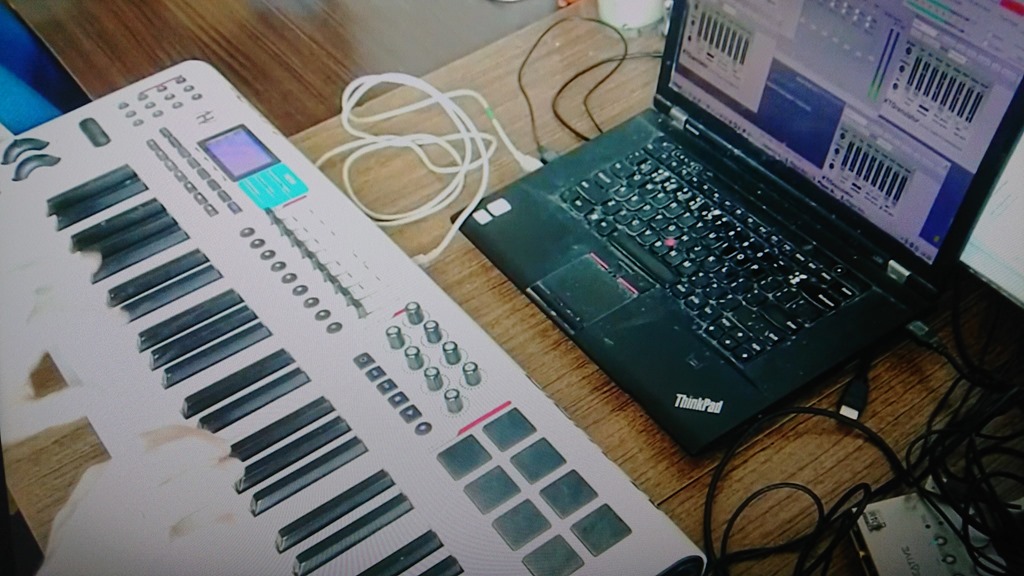
Gintas K’s set is a brain-bending bleepfest, a tangle of jangling synths and collapsing synapses that fray the nerve-endings. Everything squelches and zaps every which way, and we get to watch it all happen in real-time as the notes twitched away on his keyboard are run through software on a dusty Lenovo Thinkpad to create a crazy sonic foam that bubbles and froths all over. But deep, resonant bass tones boom out over the stuttering bleepage and groaning, croaking drones emerge. It all squelches down to a mere drip before finally fizzling out in a patter of rain, and it’s well-received, And rightly so.

DSC_7136

Gintas K

Hubble’s headlining set is accompanied by some eye-opening PoV visuals of a parachute jump and clips of people leaping off mountains, and the footage is so terrifying I actually hope it’s CGI even though it looks like it’s actually real. The freefalling blue sky space is the ideal accompaniment to the disorientating fretwork of the musical accompaniment which sounds like multiple guitars and keys playing interloping lines together and across one another. The rapid ebbs and flows are immersive, hypnotic, and a long, mid-range drone builds and hangs against the dizzying blanket of fretwork that weaves the rich and sense sonic tapestry of this bewildering sound on sound. It couldn’t be more different in sound from Ben’s regular gig as guitarist in NY noise act Uniform, but everyone needs a break, and this is wonderfully, if dizzyingly, realised. It makes for a top ending to a top night packed with all the weird and all the wonderful from the full noise spectrum.

Box Records – 7th May 2021

Christopher Nosnibor

Gavin Miller’s hardly been slacking of late: in fact, it turns out I’ve been struggling to keep pace with his output this last year or so. While for many, time seems to have stalled since the sequence of lockdowns began some fourteen months ago, Miller’s had his foot firmly on the accelerator, expanding the already extensive worriedaboutsatan catalogue with five new releases, including an archival excavation (appropriately titled The Vault) and an expanded reissue of the Europa EP, and a split release with Capac, all of which followed a brand-new LP, in the form of Time Lapse.

This latest effort, releases on Box Records, run by Matt Beatty of Pigs x7, arrives almost a year to the day after Time Lapse, and is in many respects of the period since its predecessor was recorded, a period which has been both eventful and uneventful at the same time.

The liner notes detail Miller’s objective in piecing together the album as follows: ‘Resisting the urge to simply turn in more longform experiments in expansive post-rock informed electronica, Providence seeks to capture several different elements of the ‘satan sound, whilst attempting to thread it together into one cohesive whole.’

There has been a certain sense of linearity to the majority of previous ‘satan releases, although that sense of trajectory has, for me, always been most defined in the live sets, and the challenge here is very much how does one provide a sense of flow, of linearity, or narrative, of continuity; to what is, in many ways, a drifting desert of time, punctuated by so very little?

Since the departure of Thomas Ragsdale, at which point worriedaboutsatan again became Gain solo, the beat and bass elements of the sound have much more subdued, and sonically, Providence is very much classic Miller: rich ambient tones with subtle undercurrents that allude to post-rock and glitchtronica, and on paper, it probably doesn’t sound all that remarkable – although perhaps what is remarkable is that worrriedaboutstan started carving this nice back in 2006, before it became commonplace, making was trailblazers the world has gradually caught up with.

‘Stück Für Stück’ shimmers, rippling notes cascading delicately down like droplets of spring rain while a subdued, almost subliminal beat and bassline pule in the background, and ‘Für Immer’ finds Miller return to German for the track’s title – and perhaps some clues as to the narrative lie in the titles of the tracks. ‘Für Immer’ shares no obvious connections to the 1982 DAF album of the same title, but perhaps hints at the sense of eternity that pervades Miller’s work, not least of all as reflected in the name of his label, This is it Forever. It may be creative reading, it may be the enactment of reception theory or even projection on my part, but some of the track’s resonance lies in the sense that the soft ambience, directionless, lacking overt form, encapsulates the drifting emptiness of this span of disconnection, of aimlessness, of there being no end in sight, and the weak, powerless, listless, feeling is engenders, a sense reinforced by ‘On Your Own’, and all of the connotations of isolation and loneliness it carries.

Waves washing onto the shore splash through soft chimes on the short interlude that is ‘Everything is Fine’ (which I can’t help as read by turns as sarcastic and self-affirmation, but neither of which suggest that things truly are fine), while ‘Stop Calling My Phone’ is its antithetical scenario, and it’s a jabbing, petulant synth that dominates this track All or nothing: the desolate silence, or the bombardment of contact are both equally difficult to manage, and there rarely seems to be a happy medium.

If the nine-minute trance-inducing haze of ‘Stórar Franskar’ articulates the expansive drift of time and that sea of emptiness, then closer ‘Just to Feel Something’ is perhaps the companion to ‘Everything is Fine’, in that the numbness manifests as façade. Because everything is so empty, and so numb, and so absent, it’s difficult to retain focus, a sense of space, a sense of perspective.

Providence is the perfect soundtrack to those protracted spells of ponderance, that discomfort and dissatisfaction, the introspective reflection and self-doubt. It stands as a magnificent blank canvas into which to project and reflect. It’s also another strong addition to the worriedaboutsatan catalogue.

AA

a2413327704_10

Nomark

James Wells

Stone Giants is Amon Tobin’s new musical vehicle, and marks yet another chapter in the versatile and eclectic electronic innovator’s quarter-century spanning career that’s seen his music feature in films and video games.

‘Metropole’, the second release from forthcoming album West Coast Love Stories, is a bewildering work, with so much happening simultaneously, to the extent that it feels like several different tunes overlaid. A steady, pulsing synth remains a constant throughout, as layers of droning organs, reverbed vocals, yawning synth washes and a meandering baritone melody that’s seemingly wandered in from another track and ambulates around.

The effect is disorientating, but not unpleasant: the confluence of the numerous contrasting and superficially discrepant elements is not so disparate and difficult so as too induce tension or cerebral disharmony, nothing of the gut-lurching bewilderment of something like, say, Trout Mask Replica. More, it draws the listener in to explore the ways in which the different pieces fit together, the ways each layer of this sonic palimpsest ebb and flow and reverberate off one another at varying frequencies.

AA

a2924726865_10

Audiobulb Records – 5th May 2021

Christopher Nosnibor

The wonderful thing about stories is that there are no rules – no rules about what they should contain, how they should be told, or whose perspective they should be told from. Even the standard expectations of ‘beginning-middle-end’ are an artifice, and for any convention, there are infinite ways to deviate from it. Linearity is a construct which assists in rendering events more easily navigable, but sometimes, disrupting that linearity is an integral part of the unravelling of events. Stories – be they true or fictional – are often a way of making sense of the world through the construct of narrative. Sometimes, we forge our own narratives from fragments of confusion in order to orientate ourselves, and as such, stories are instinctive and integral to our understanding the world and our place in it.

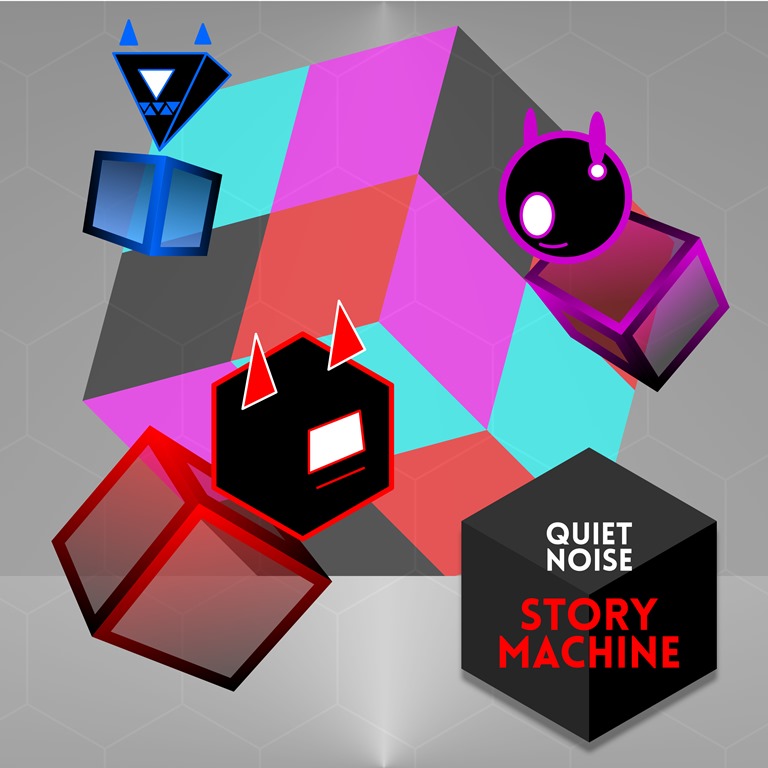
The fourth album from Quiet Noise, the vehicle of West Wales based producer Adam Wilkinson, is, like so many albums from the last year, the product of lockdown. ‘In a studio that overlooks a valley where the air breathes a lone craftsman sets to work mapping his experience through experiment,’ his biography tells us. Does this mean that Wilkinson was perhaps better equipped than many to deal with the last fourteen months, given his solitary nature? Not necessarily, but while many lockdown musical projects, which have been steeped in an air of claustrophobia, anxiety, and tension, Story Machine is a breath of fresh air that conveys aa sense of – if joy is too strong, then appreciation – of life. Perhaps it’s the fact that after four years being busy producing music for singers and film makers, Wilkinson finally has time out to return to the world of Quiet Noise to explore his own avenues of creativity. Adam explains the limitations that determined the album’s formation, recounting, “stuck at home, sitting with my wife and children while they worked from home, I set myself the challenge of creating pieces using only equipment that could fit in my space on the living room table. Motivated by my game and pleasantly surprised by what I could achieve.”

For the most part, Story Machine is an overtly electronic set that comfortably incorporates a diverse range of styles from across the spectrum – and a large portion is fresh and accessible, danceable even. The range is such that the individual pieces feel as though they each tell their own stories – but then again, taken as a while, perhaps they’re chapters of a longer story that is the album as a whole.

With bold, surging orchestral strikes and tension-building strings, ‘Grand Entrance’ is appropriately titled. ‘Climbing Trees’ is altogether more light-spirited, with a buoyant electro beat and birds twittering – although it suddenly explodes in a surge of light that’s a veritable epiphany. ‘Murmurations’ brings a very different vibe, with a straight-up dance groove. The beats are bold and uptempo, and while the top synths are quite soft and subtle, bringing an expansive but chilled later to the sound, the bass is bouncy and urgent.

In among it all, there are some moments where vast expanses of sound burst seemingly from nowhere, radiating an almost prog-rock grandiosity. These bursts of extravagance are a shade audacious, but somehow, they work. Above all, Story Machine is an uplifting experience, and in the face of so much bleakness, it’s one that’s most welcome.

AA

Quiet Noise Story Machine Cover 12 v2

Nova Alternativa – 16th April 2021

Christopher Nosnibor

The two Ks are Gintas K & Jan Kruml, and Environmental Framework is a collaborative work, whereby, as the liner notes outline, Jan worked with the historically first and last track that Gintas published. Gintas reworked tracks from Jan’s (Instinct Primal) live set from January 2021.

But rather than simply rendering this as an album of two sides, which would be perhaps the obvious approach, but instead, the seven tracks are sequenced with A1-A2-A4-B1 composed by JK, remixed by GK, and A3-B2-B3 composed by GK, remixed by JK.

Bring unfamiliar with Jan Kruml’s work, and having not heard the live set in question, it’s difficult to judge just how radically Gintas K has reworked the pieces here, but the remixes 1 and 3 of ‘Myths’, with their combined running time of ten minutes are sparse, spacious, and unsettling, as an elongated droning drift hangs, conjuring n eerie atmosphere. Incidental echoes and flickers, barely-present crackles of static rise and fall, fading in and out of the mist almost subliminally, but growing thicker and denser and more layered over time in the first, before transitioning into the explosive digital sloshing that is something of a signature for Gintas K. If this raises the question of the extent to which a remix can become more the work of the remixer than the original artist, here it’s worth commenting that it does work well, and places a complimentary light on Kruml’s sounds, and the way in which Jan approaches the ‘Noisebient RMX’ of ‘Phono’ very much returns the favour as it presents a clamorous babbling microtonal rush against a broad sweep backdrop.

The first remix of ‘Entering the Cave’ (which is in fact Remix 4) is hectic, a busy bubbling rush of sound that recreates that vintage analogue froth, only on a cocktail of steroids and speeds – amped-up and foaming away at a blizzard’s pace. Remix 1, which immediately follows, is altogether more low-key, shadowy, manifesting as a rumbling, grumbling ominous ambience. It’s dank, dark, and very much does evoke the scene of the title.

As the liner notes point out, ‘they never met in person, but sonically it’s like if they knew each other for decades’ – and certainly, there is a keen sense of intuition displayed here, as the two artists seemingly become interchangeable in their works.

It’s drone that defines Kruml’s remix of ‘Almost the End’, which is, fittingly, the penultimate track, before he revisits the ‘Noisebient’ theme for the epic span of the album’s bookending ‘Invite Round For A Cup Of Tea’, which strains and clamours and whirs in a flurry of granular tonality for over ten minutes. If it’s familiar territory for Gintas K, it equally highlights how at ease Jan Kruml is with this type of electronica, and despite its segregated origins, the remixing process has given the material a sense of unity that renders Environmental Framework a remarkably cohesive work that actually feels like ‘an album’ rather than a bunch of remixes. A true artistic triumph.

AA

cover

28th March 2021

Christopher Nosnibor

While online streams have become quite a thing as a gig substitute during lockdown, I’ve personally struggled to really connect and haven’t been all that engaged with the virtual gig scene.

In classic real-life style I arrive a few minutes in (although due to technical difficulties rather than a late train or being at the bar over the road) to find a man –Stale Cooper, apparently – sitting cross-legged with a guitar in front of an immense back of effects pedals. The lighting is hazy, noise is droney.

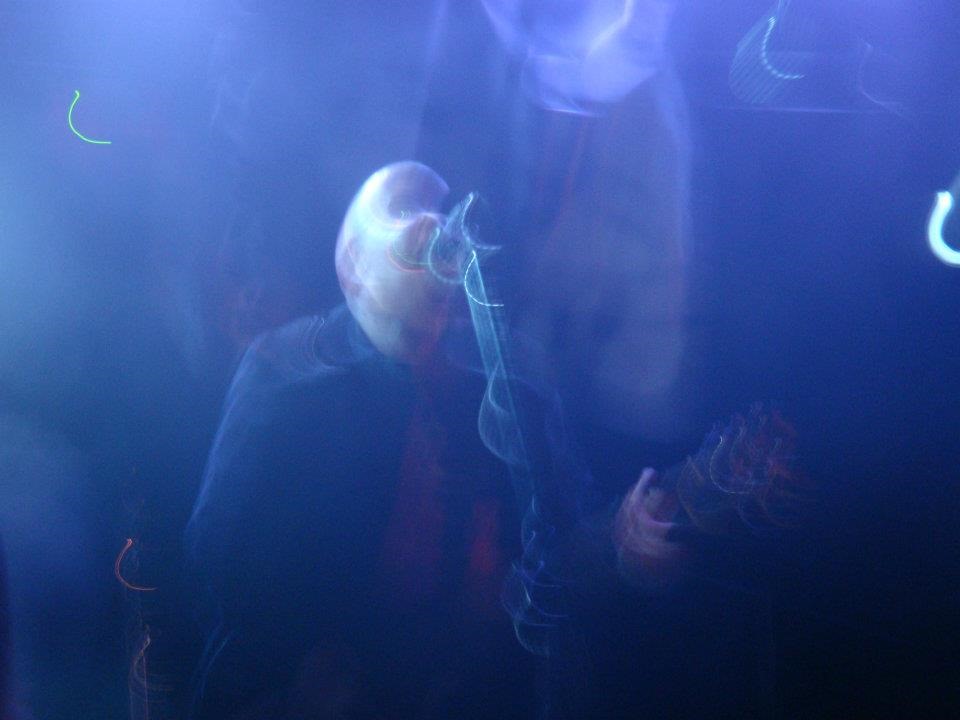
A mass of monochrome blurring and squalling feedback drone combine to conjure a vast, expansive soundscape as OMNIBAEL take the virtual stage: there are hints of Jesu in this immersive, transportative wash of noise. The sound and visuals compliment one another perfectly. When there are vocals, they low in the mix, buried in a tempestuous whorl of sound that’s a blend of Swans and Throbbing Gristle. The set culminates – or at least it maybe should have – in a motoric throb of a repetitive riff that ultimately dissolves in a mess of noise, and it’s absolutely fan-fucking-tastic The set goes on a further ten minutes or so, and would have probably been more impactful with a shorter duration. Nevertheless, it was one of those sets that if it were a real gig, you would be able to go home happy, safe in the knowledge that you’ve probably seen the band of the night.

thumbnail

OMNIBAEL

The best way to follow a hard act to follow, and it’s no brag that …(something) ruined are different. Yes, it’s my band, and we have a knack of standing out like a sore thumb in any context, not least of all because there are so few noise acts with vocals. Watching back our 3:22 of obliterative noise was a challenge, but only a couple of people left. I don‘t know if I’m pleased or disappointed by this.

DSC_6658

…(something) ruined

Lovely Wife make a monstrous blackened din: dark, dense, pitched at the low-end, low-tempo and with bowel-churning vocals, there’s an other-worldly, ethereal quality to their music. Featuring members of a number of other prominent noisy / doomy / sludgy / etc acts from the city, the trio combine elements of their other projects to conjure something powerful and intense. The Band of the night crown has been passed on.

The dark ambience of AGED is well-placed, changing the tone and the tempo, and the visuals contain a neat narrative, too, while Lost Music Library drift into softer terrain that slows the pulse, and paired with some hypnotic digital visuals, it’s a gripping experience.

Despite the rainbow discoball visuals, Blackcloudummoner’s set is a brain-shredding blast of feedback, a thrumming squall of dank electronics. Heavy low-end drones are disturbed by glitches and ruptures, and it’s heavy but mellow, in a harsh way. If that makes no sense, then, well, maybe you had to be there to appreciate how the scrape of nails down a blackboard against a dense fog of static and blistering, billowing noise can somehow be soothing.

DSC_6661

blackcloudsummoner

Neuro… No Neuro’s short set leads us into more minimal territory, with glitchy crackles and pops defining the sound of a brief set that would have been quite acceptable had it continued for an eternity. No matter, ‘Flower of Flesh and Blood’ bring an array of pink and white and brown noise and endless reverberations and humming circuitry, occasionally exploding into some difficult noise.

Forest Friends lead us through a leafy woodland as soundtracked by a crunching crackle of overloading noise: again, there are heavy hints of Throbbing Gristle, and with some woozy synth brass that trills away, their set is deeply lo-fi in its leaning. The vocals and drums are both a horrible mess of distortion, thick and dirty and it’s the sound of decay and disintegration that define the set as it gradually crumbles into a pulp of derangement. It’s a fitting end to a night of intense and challenging music, and credit goers to Nim Brut for assembling a varied, contrasting and complimentary lineup.

DSC_6663

Forest Friends

See you down the front for FEAST #3!

ant-zen – 18th February 2021

Christopher Nosnibor

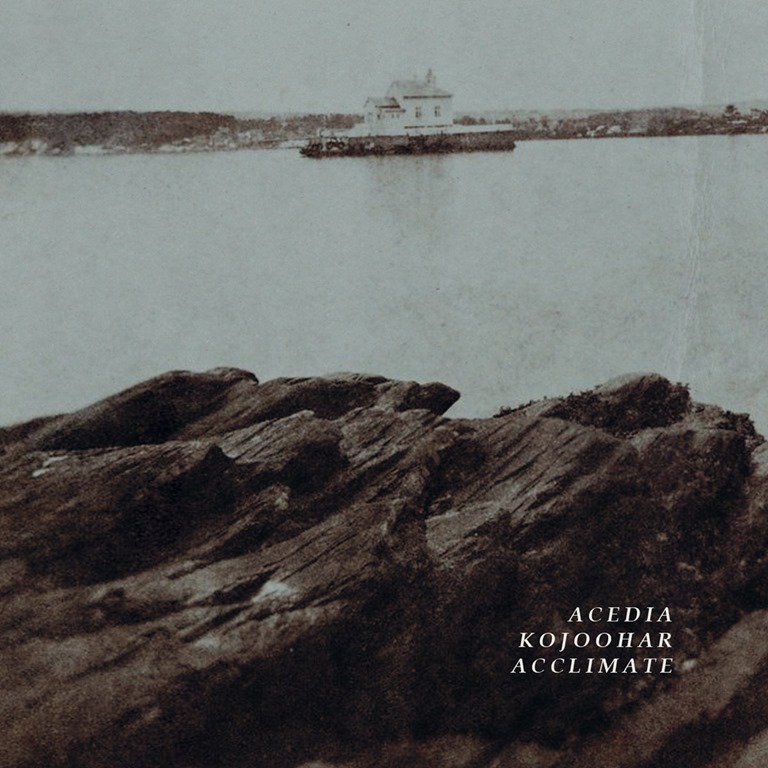
Dotla finds ‘accidental one-man project’ kojoohar reunited with purveyors of experimental hip-hop ködzid goo to deliver a follow-up to their 2019 collaborative EP, ‘Дотла’.

The blurb promises ‘heavy lyrics spiked with solemn images and numerous literary references’; and a work of ‘dark, dystopic angst pop with deep aesthetic lyrics and unrelenting vocals… delivered in a blank monotone.’

Now, I’ve long maintained that how and why we respond the way we do to certain music is subconscious, subliminal, psychologically or even genetically embedded. I’ve never found myself able to connect with disco or funk, but music that’s chillingly bleak and inhuman resonates to my very core. And shit, is this bleak and inhuman.

My inability to even vaguely comprehend the actual lyrics is completely immaterial: the characteristically hard-edged Slavic consonants lend themselves perfectly to that detached, monotone delivery, in a similar way to that in which Germanic languages do, and that harshness is much of the appeal of bands like DAF and X-Mal Deutschland (bit not Rammstein, because they always sound like a parody of that Germanic strain of industrial to my ears. I’m not saying I need my Industrial to be po-faced, far from it, but one should be able to take serious music seriously – and kojoohar × ködzid goo are seriously serious, in the best possible way).

Dotla is all the monotone, all the monochrome, thudding industrial beats hammer slow and hard through murky sonic wastelands. It’s unforgiving, relentless: there’s not much light or variation in mood here, and that’s the beauty of it: this is not an album designed to entertain. By the fourth track, the mangled droning trudge of ‘burelom’, you already feel the walls closing in and the light growing dim.

Whereas there’s a popular perception that the heaviest, most oppressive music exists within the domain of metal, electronic music at its darkest, sparsest and most monotonous is, if anything, more intensely claustrophobic.

The production on dotla is also a factor: there’s a lot of low end, rumbling, droney bass, but more than that, there’s a lot of murk. Dotla applies the values of black metal to industrial hip-hop. The drums and vocals are muffled, and there’s, a thick haze that hangs over the whole thing, and cumulatively, it’s almost suffocating. There’s no space or air between the instruments or the notes: everything condenses to form a thick, noxious cloud and a sound so thick and impenetrable it’s nigh on impossible to penetrate and separate the component parts.

The result is like the suction or air from the lungs, the endless battering of blunt objects, and the slow, wading through sludge trudge of ‘typh’ is exemplary. It’s not pleasurable – in fact it slowly grinds the life out of you – but successfully articulates in sonic from every last ounce of the life-sapping oppression of the drudgery of corporate conditioning and governmental oppression, of life. ‘plot’ is the sound of defeat, of self-loathing, of emptiness, of dehumanisation. Feel the pain. Immerse yourself in it. You deserve it.

AA

a0292046476_10

Cae Gwyn Records – 22nd January 2021

Christopher Nosnibor

It’s dark. It’s winter. We’re in lockdown – again / still. Whatever cheer Christmas and the prospect of new year brought – and let’s face it more than cheer, it was a flicker of false hope, or worse still, a diminutive moment of delusional hope – has faded with the return to work (from home) and (home) schooling and the prospect of socialising, pubs, and gigs but a snuffed candle for the foreseeable, meaning that the jaunty Christmas tunes that assailed us last month can well and truly delete themselves while we get back to reality.

‘Doppelgänger’, the debut single from IsoPHeX, aka 19-year-old Cian Owen from Anglesey, it pitched as ‘brooding electronica of the highest order’, and it fits the bill and no mistake.

If you’re expecting – or wanting – more dark ambient, you’ll likely be disappointed, although ‘Doppelgänger’ brings atmosphere in spades, and one that’s cold and dark.

It may only be three minutes an eighteen seconds in duration, but ‘Doppelgänger’ melds an array of styles, incorporating hip-hop and sparse electro to create something that’s simultaneously bleak and dynamic, as chilly synths wrapped like mist around a hectic beat: uptempo hip-hop or downtempo drum ‘n’ bass? Who cares? Despite the urgent pace of the stammering rhythm, ‘Doppelgänger’ is sparse, minimal, and edgy, a twitchy trip through dark alleyways at night, tense and paranoid. Is there something there? Or is it all in your head? Keep one eye over your shoulder. Keep moving. Trust no-one. Apart from me, of course, when I tell you this is a killer tune.

bAF3hL-z