Posts Tagged ‘electronic’

Twice a Man have released a video for their new track ‘Dahlia’, which is featured on the lavish 3-CD and 72-page artbook compilation entitled Songs of Future Memories (1982-2022) that was released on January 27.

The Swedes’ long-time artistic preoccupation with environmental issues is also reflected in the clip, which contrasts the beauty of the natural world with the urban landscapes created by humanity.

Watch the video here:

Twice A Man comment: “The song ‘Dahlia’ is a reflection about our time,” Dan Söderqvist explains on behalf of the trio. “The world is getting darker and uncertain with wars, pandemics, and above all: climate change, environmental destruction, and through that a loss of biodiversity that is all caused by human activity. We experience a conflict between the outer world and an inner imaginary world. We need to feel comfort, and music at its best grants us that inner peace. Two new songs, ‘Lotus’ and ‘Dahlia’, were made to be included in our new compilation album Songs of Future Memories and – in some respect – to epitomise the spirit of Twice a Man.

Cover Twice a ManV3.indd

Medication Time Records – 27th January 2023

Christopher Nosnibor

My first encounter with Fågelle was supporting Big | Brave in Leeds last spring. Despite suffering some technical difficulties and being on before a band so mighty that I still haven’t quite got over the experience, I wrote that ‘Fågelle proves to be an absolute revelation’.

The release of her new album, album Den svenska vreden (The Swedish rage), affords proper time to digest, and to reflect on this. And live, I remarked on her understated presence and the variety, shifting from quiet restraint to some heavy noise, and with experimental elements. Those are all present here, to forge what the press release set out as ‘collage-like soundscapes made with twisted field recordings, mobile memories, digital trash, dark electronics, and howling choirs while moving between harmony and noise.’

For the most part, Den svenska vreden is subtle. There are soft, electronic washes and the slightest of glitches ripple and stutter almost subliminally. The layers rub against one another to create tensions, but still, the overall mood of the album is comparatively light, particularly given the album’s title and her explanation of the album’s context and contents.

“I was so angry and had been for years.” explains Fågelle, “A kind of adult rage that was new to me. Feeling forced to accept and stay in circumstances making me miserable. To patiently suffer now for a better future. But also, a subdued Swedishness that doesn’t hold space for flaring, tearing, wallowing rage but rather pushes it down from the surface and inwards. Question is, where does the rage go, and which forms does it take? That became a starting point for the record where I kept exploring my personal boiling points, pressures and releases, where to hold my rage, in words and in the body, as a swede and as a woman.”

She continues, “Swedish social norms value the level headed and emotionally subdued. There is a pressure put especially hard on women to function like social glue and to always be consensus oriented. It’s a pressure to practice self control, a self choking of non-agreeable ideas and feelings. Rage being one of them.”

As such, one senses the rage is very much tempered by the Swedish restraint. And that’s something that there is a strong sense of, listening to Den svenska vreden – that there is in fact far more beneath the surface, simmering.

‘Slavar’ is dark and tense, tentative, mysterious. In contrast, ‘Aldrig mera här’ is almost minimal pop in its flavour. As a prelude to the soft folk reflections of ‘Fåglar’, which in parts invites comparisons to Suzanne Vega while in others goes quite wonderfully weird, ‘Tredje långgatan tretton’ begins as hushed ambience and builds into dramatic strings. It’s on the title track that the rage burst forth, manifesting as two minutes of mangled noise, and the album culminates in a thumping burst of beat-driven electronica which I wouldn’t go so far as to describe as dance, but it’s certainly got enough groove to get down to.

There’s a sense that Den svenska vreden reflects its creator: complex, inscrutable, enigmatic, and multi-faceted.

AA

919308

Front & Follow – 25th November 2022

Christopher Nosnibor

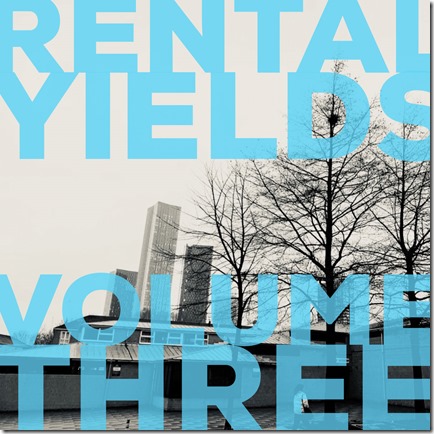
Longtime Aural Aggro faves Front & Follow have delivered the third in their series of truly immense Rental Yields compilations, with another twenty-five tracks of remixed works which showcase the community spirit they espouse as a label and among those in its orbit.

They describe it as ‘a multi-release collaboration project raising money to tackle homelessness in Manchester… Inspired (if that’s the right word – perhaps ‘motivated’…) by our current housing system, the project encourages artists to steal (or borrow, nicely) from another artist to create their own new track – in the process producing HIGH RENTAL YIELDS. Over 100 artists are now involved (the spreadsheet is fun), each one tasked with creating a new track from the sounds created by someone else – we are then collating the tracks and releasing them over the course of the next year.’

Some would describe the project as ambitious, others as simply crackers, and it’s likely both in equal measure, but this is why we love F&F. That, and the fact that they seem of have a knack for attracting and releasing interesting artists who exist far beyond the peripheries of any kid of commercial radar (or even most alternative radars).

This compilation really does make the most of the medium: unrestrained by the limits of vinyl, cassette or CD, and has a playing time of about a week. Yes, I exaggerate, but the point is, each contribution is the length it needs to be, or the artist feels it ought to be, rather than cut or constrained, meaning that while a fair few pieces sit around the five minute mark, the Decommissioned Forests vs Pulselovers rendition of ‘Rental Yields’ runs for nine minutes and forty-four seconds, ahead of the ten-minute workout that is IVY NOSTRUM vs The Snaps Jar’s ‘AND MONEY LESS’ and a few other six- and seven-minute monsters.

But what is time, anyway, and what’s it for? As much as it’s a measure of time, it’s a tool by which lives are ordered, limited, constrained, controlled. The vast majority are paid work by the hour, not by output, and time on the clock is not your time, but your employer’s. You don’t own your time, and you don’t own your space, and you give your time to some company who profit from your time and output in order to pay for a roof over your head, a space to eat and sleep, for the profit of a landlord or a bank you owe tens, even hundreds of thousands.

How often do you hear people shrug about their shit jobs saying ‘well, it pays the rent’. Imagine lying on your deathbed, reflecting on a lifetime of drudgery to say ‘I paid the rent’, while your landlord’s spent their life living it up in restaurants and on overseas holidays and celebrating their success because you’ve paid their rent too.

Audio Obscura VS Secret Nuclear’s ‘Vacant Period’ opens the album with an apposite sample from a TV show discussing gross and net yield before embarking on a glitchy, flickering journey of droning industrial Krautrock, and paves the way for an extensive and magnificent-curated collection of variant forms of ambience. Pettaluck Vs Giant Head’s ‘Dot to Dot’ is disorientation yet soothing and hypnotic – and fucking strange. But we like strange, and Front & Follow provide plenty.

If it’s a long, long listening journey of crackling stating, looming darkness, bleeps, bloops, and extraneous noise intercut with snippets of radio, film, and TV, and ultimately forges an immense intertext of sources.

Sometimes it’s swampy, eerie, tense, others it’s quite mellow and finds a subtle groove, but Rental Yields is unyieldingly brilliant, both in terms of range and quality. And you really can’t go wrong for a fiver – the worthy cause is simply a bonus.
a2023857748_10

Gothic/occult wave duo Raven Said has just unveiled their new EP, Chants To Dissolve.

Chants To Dissolve is about the spiritual essence that represents a certain alchemical phase of Solve (a transitional process between the Nigredo and Albedo phases in basic Alchemy).

On the abstract, the EP represents the invisible and inaudible flattering of a butterfly’s wing to the deafening roar of the inescapable wave of the coming future. Physically, it’s an effort aimed at changing the composition, without an exact result In a philosophical context. This means that the future is not defined and there is only the possibility of one or another existence; a certain point of polyfurcation, a set of evolution.

With pulsing vibrations of guitar and synths transformed into elegant canvases in cold tones, Raven Said is the flexible fusion of darkwave / goth rock / post-punk; the musical expression of symbolic mysticism and psychology.

Check ‘Immersive Waves’ from the EP here:

The founders of the band – Andrey and Maria united for creation of old school Goth Rock / Occult Wave project. One of the most famous poems of the American romantic writer E. А. Poe inspired the band’s stylish title.
Raven Said accumulates the energy of Second Wave Goth Rock and complements this with elements of Post-Punk and New Wave to form their original modern sound.

Musically, Raven Said takes inspiration from the likes of Rosetta Stone, Nosferatu, Witching Hour, The Cult, Mephisto Waltz, Cinema Strange among others. Raven Said’s lyrics focus on occultism, attraction to the world beyond and following into the realm of the unconsciousness themes.

Raven Said has served as a support act for cult artists such Golden Apes (DE), The Danse Society (UK), Das Ich (D), My Own Burial (ES), Murnau’s Playhouse (FI), Moon Far Away (RU), Orplid (DE), Larva (ES) etc.

Raven Said has received considerable acclaim and recognition. The band has participated in numerous online, print and radio interviews and has been reviewed in various online and print publications worldwide. They have also taken part in online festivals – Absolution NYC, Goth for Sanctuaries, ARG-Fest & Luna Negra.

2017 saw the release of the EP, Seven Deadly Tapes which was well-received both in Russia and abroad. In 2020, the band released the LP, Beyond the Darkest Hour on the UK label, Secret Sin Records.

Broadening the forms of traditional Goth rock, Raven Said are experimenting with new shapes and themes having the artistic charm and authentic visual aesthetics.

4ad711f9-1a39-bee2-c05f-7c5704bd40a2

Negative Gain Productions – 9th September 2022

Christopher Nosnibor

Curse Mackey has enjoyed an enviable career as a frequent performer with legendary industrial collectives Pigface and My Life With The Thrill Kill Kult, and has built a substantial catalogue of work as a solo artist too – and it’s perhaps to be expected that much of this, including his latest, Immoral Emporium, is defined by the vintage late 80s / early 90s Wax Trax! electroindustrial sound.

While Immoral Emporium is undeniably dark, it’s also fairly poppy and accessible, with a title track that calls to mind more recent Gary Numan. And this is in the region of the album’s tone and style overall.

Starting off, ‘Smoking Tongues’ is strong on melody and surprisingly sparse retro synths and while Depeche Mode circa Black Celebration comparisons are likely the obvious choice, it’s as much A Flock of Seagulls. That may appear to some as a rather casual dismissal as being flimsy pop, but the electropop that rode the charts in the early to mid-80s was way darker than it’s usually given credit for or remembered as being. Consequently, suggesting that the spoken-word verses of ‘A Sharp Reminder’ are reminiscent of Pet Shop Boys’ ‘West End Girls’ is absolutely no sleight.

‘The Reveal’ takes a turn for the more overtly industrial, with menacing synth bass pulsations and a death disco thudding beat. ‘Dead Fingers talk’ borders on bouncy, and while ‘Lost Body Hypothesis’ is harder, darker, and driven by a nagging bass, it’s in the same sphere as Nine Inch Nail’s ‘Sin’, and it’s that late-80s grind that dominates Immoral Emporium. Many will bang on about how Pretty Hate Machine broke new ground, but the fact is, without denigrating what is undeniably an outstanding and era-defining album, that it only broke the territory in commercial terms. It maty have added some layers of noise in the production, but it didn’t really add all that much to what Ministry and Depeche Mode had already been doing, and that’s before we get to the conveyor-belt catalogue run of acts churned out by Wax Trax! between 1986 and 1988 with releases by the likes of Revolting Cocks, Front 242, and Fini Tribe. There was a certain sameness among the label’s acts and releases, but they worked, because there’s something instinctive and primal about drums that thump and clatter distortedly against insistent bass workouts and various elements of extraneous noise.

On Immoral Emporium, Curse very much revisits his roots, and it’s well-realised with solid songs packed back-to-back.

AA

a2417364119_10

9th September 2022

Christopher Nosnibor

Brooklyn-based blood and gore and dark-fixated industrial metal act GLDN keep on mixing things up with their singular and innovative take on industrial / metal / electronica, and the first single released ahead of the upcoming album Hemophilia, released early October, is another genre-smashing blast of excitement.

At the start of the video, front man Nicholas Golden is wearing a minidress on a mock-up of a slightly fuzzy-looking VHS clip, and while in itself it’s not edgy, it’s both resourceful (can’t afford actors for your promo? Do it yourself) and parodic in setting a dystopian tone n a retro setting. The trouble with retro dystopias is that, as we’ve come to find the hard way, is that the projected future which is now the present is actually worse. 1984 no longer reads like fiction, but reportage. What do you actually do with that knowledge? How do you live with that grim realisation? You too could be the owner of an obelisk…

The lyrics pick at social media and Instagram perfection, and on reading the lyrics, I remember with a slow sinking feeling how I read on a daily basis in the tabloid media how professionals – nurses, teachers, name it – are taking to OnlyFans to make ends meet and in no time they’re quitting their stressful, shittily-paid dayjobs in favour of coining it in to pay off their mortgages:

Got no flaws, no imperfections

The unachievable is my new obsession

Can’t get enough, I’m never satisfied

I’ve got to whore myself out just to feel alive

‘I’d rather be dead than be irrelevant’, Golden concludes, and it’s a stark yet fair reflection: people crave the attention as much as the money, and the bottom line is that the system is fucked and society and culture is fucked.

Coming on like an electro-infused black metal cross between Placebo and Marilyn Manson and Nine Inch Nails, ‘Suicide Machine’ finds GLDN in darkly abrasive form, peaking with a blistering climactic finale that’s utterly punishing. Bring the album.

AA

su49119-Cover1

Cardiff electronic producer Conformist and gloom wave duo H O R S E S. ‘Heddiw’ ( ‘Today’ in English) collaborate for a collision of electronica and ominous post punk,  on a inventive framework of crunching beats and blips, haunted synth samples  and infused with the ominous vocals of duo H O R S E S, that bare more than a passing resemblance to Joy Division. A collaboration forged in the depths of lockdown, this haunting and bracing release is just a teaser of what’s to come in 2023.

Conformist says of the collaboration, it’s “a project that began by exchanging audio files between myself and H O R S E S on WhatsApp during the depths of Covid lockdown; I’m really pleased we can finally get this track out.  Vocals are by H O R S E S and production is by myself.  Hopefully this is just the beginning; we’re looking to follow up Heddiw in 2023 with a bunch of new ideas.”

Listen to ‘Heddiw’  here:

Conformist is one of the most respected names on the Electronic music scene in Wales, with early demos immediately catching the attention of Steve Lamacq, Huw Stephens, John Kennedy and Eddy Temple Morris.

Subsequent Conformist albums "Paid To Fake It" (2013) and "Lifestyle Bible" (2016) earned lavish praise:

"Paid To Fake It" is the sort of record that will take your breath away…bloody brilliant" The 405

"A musically kaleidoscopic head f***…brilliant" Louder Than War

"a head-spinning deluge of audacious beats and samples…staggering" Wales Online

Conformists’ production work is distinguished and full of unique character; staying leftfield but fresh and ahead of others; meticulous, dense and layered, revealing hidden detail with every listen – taking inspiration from Public Enemy’s Bomb Squad and cut n’ paste pioneers Coldcut, Steinski and The Dust Brothers to name a few.

Purveyors of dark hearted electronic music and inventors of the Gloom Wave genre, H O R S E S are formed by two gentlemen from a southeasterly part of Wales.

Casting a longing gaze on early 70s German electronica, mournful vocals escorted gently by cold beats and balmy synths evoke a brutalist image of Berlin, as the melodies wash between the brash concrete structures of your mind.

735276

gk. rec. – 13th August 2022

Christopher Nosnibor

Since taking control of his own release schedule – in addition to various releases via various labels – Gintas K’s output has shifted from rivulets to cascades, with this nature-themed album being just one among countless releases, live performances, exhibitions. soundtrack and compilation appearances so far this year, and, not least of all, Lėti in May, released on venerable experimental label Crónica.

There’s little explanation behind Mountains, runlets, caves & cascades, beyond a selection of quotes from HP Lovecraft and the detail that the album’s six pieces were ‘played, recorded live, at once without any overdub; using computer, midi keyboard & controller’ in 2020, and one suspects Gintas has a hard drive bursting with such recordings just waiting to be edited and mastered to form unified documents of his tireless output.

The first five pieces form the larger work that sits under the album’s overarching title, numbered one to five. They’re sparse, minimal, echo-heavy, like wandering around in a vast cavern while droplets fall into the subterranean lake that occupies the bottom, and who knows how deep it may be, how many tunnels are filled with millions of gallons of water that have run down through the ground and into this naturally-carved warren of rock-lined corridors beneath the ground.

In places, barely perceptible glimmers of sound, like bat sonar, jangle in the upper reaches of the audio spectrum. I’m reminded of the cat repellent device in my back yard, and I wonder if to some, these passages would actually appear as silence – or if for others, like my ten-year-old daughter, they would find the pitch unbearable and have to run from the room covering their ears. Quiet gurgles and trickles are the primary sounds on ‘Mountains, runlets, caves & cascades #3’ and I find myself feeling altogether calmer, picturing myself in a pine woodland with steep banks. I picture in my mind’s eye local scenery like Aysgarth Falls and Ingleton Falls and find myself at ease – but this being Gintas K, there’s disruption afoot, and blips and squelches zap in seemingly at random to remind us that this is digital art, and the fourteen-minute ‘#4’ marks the full transition into digital froth and sluices of laptop-generated foam.

And so it trickles into ‘#5’ which brings more bleeps and blips and jangling and some high-pitched rattling that for some reason makes me think of seeing footage of milk bottling plants in the 80s – back when milk came in glass bottles, and I trip on this trajectory of nostalgic reverie until the arrival oof the unsettling final track, the eight-minute ‘eastern bells’ that’s a slowed-down yawn of sound, metallic reverberations ringing out into the silence, echoing in the dark emptiness in ebbs and flows, like a conglomeration of sounds, drifting in a breeze.

Mountains, runlets, caves & cascades is a supremely abstract work, and while it’s not a huge departure for Gintas K, it does represent one of his softer, gentler, sparser and less frenetic works. It’s by no means an album to mediate to. But it is overall fairly sedate, and it not only allows, but encourages a certain quiet reflection.

AA

a3599404171_10

Expert Sleepers – 25th August 2022

Christopher Nosnibor

Fallout 4 is, as the title suggests, the fourth album in Darkroom’s Fallout trilogy.

Darkroom have been going for more than twenty years now, and have built up an extensive catalogue centred around fluid ambient work, which they’re keen to point out ‘stretches the definition of the genre to its limits in many directions: from quiet, introspective and naturalistic through celestial and melodic to intense, abrasive and synthetic.’

In presenting three longform compositions, Fallout 4 affords the collective to fully explore all of these elements.

As the accompanying notes explain, ‘Darkroom’s music has always been played not programmed, with a focus on human interaction and capturing the magic of live performance’, and the first two pieces hark back to the last performance of their 2012 tour. ‘It’s Clear from the Air’ is hypnotic, rippling, mesmerising, low, undulating drones providing a subtle low end to the textured interweaving synths that overlay subtle yet complex rhythms.

It bleeds into the twenty-five minute ‘Qaanaak (Parts 1 & 2)’ and immediately the tone is darker, denser, with a grumbling low and needling pulsations that create tension within the suffocatingly thick, beatless smoggy atmosphere. You find yourself lost, in suspension, somewhat bewildered as the tones twist and change. Electronic flares whip and lash as stuttering beats emerge through the relentlessly nagging pulsations, and continue to shift and mutate to a broiling, bubbling larva as booming bass tones surge and swell. The rhythm grows in urgency, but it’s muffled, constrained, which heightens the experience of a sense of airlessness and entrapment and as much as the throbbing oscillations are indebted to Can and Tangerine Dream, their abrasive edge hints at the uneasy, wheezing synth grind of Suicide.

The third piece, ‘Tuesday’s Ghost’ is perhaps the most conventionally ambient’ of the three, and is certainly the most overtly ‘background’ as is swims and floats and chimes along fuzzy lines of slow decay and loose, vague forms that have no shape, rise and fall. There is a discreet linearity to it, as it gradually, and subtly builds in depth and density, and it’s here that it become clear just how essential that human element is to Darkroom’s work – that sense of musicians bouncing off one another and understanding one another through intuition. There is no substitute for it, and you simply can’t programme the dynamics of form. It’s this intuitive, natural fluidity that breathes life into the compositions, and in turn, it’s this sense of life that the listener connects to and engages with. Fallout 4 may be ambient at heart or by genre… but it’s also far beyond the frontier of ambient.

AA

a2945227307_10

Machine Man Records – 27th May 2022

Christopher Nosnibor

‘Into the Glow’ is the second single from Michael Haggerty’s upcoming album, Fire Behind The Paper Trees, and his second official release under his real name having previously recorded as Krebs. Perhaps stepping out and being himself is in some way liberating, but whatever the motivation or rationale, it’s fair to say that the results are thus far positive.

There’s something somewhat uncomfortable when critics speak of ‘craft’ in their critiques. Perhaps it’s because ‘craft’ connotes something one works at, and improves, honing to a point whereby a level of quality can be achieved consistently, day in, day out, up at the crack of dawn and chiselling away until sundown, manufacturing… which there is a certain sense to, and it’s valid to a point, but this is to diminish the flare of creativity, the sparks of emotional channelling, the way in which elements of chance and happenstance all combine to make art. Because music isn’t furniture.

‘Into The Glow’ is probably as close to perfect songwriting as you can get. It is crafted: the dynamic shift between the 80s-style electronic verses and more guitar-driven choruses is precise, and balances subtlety with impact. The tempo change is sweet and shifts from reflective to driven, and the production is vast – also crisp, cold, mechanical. Bleak, brooding, but shining with optimism, ‘Into The Glow’ packs so much range into its concise three-and-a-half minutes, it’s a glorious thing.

AA

248581