Posts Tagged ‘electronic’

Christopher Nosnibor

Being restricted to live shows within walking distance of one’s house really does change one’s perspective and selections. As much as it also significantly limits my options, I’m fortunate to have no fewer than three venues within this range, and spotting that The Royal Ritual – a band I’ve long been aware of but have never witnessed live – were playing at one of them provided more than enough of a poke to get out.

It’s not exactly heaving. That is to say, come 8:15, it’s still pretty quiet, even for a Wednesday night. But then, I noticed that York was conspicuously quiet all day today: driving almost empty roads to a near-dead Tesco was as welcome as it was strange earlier in the day. The first week of the school summer holidays, and it seems everyone has buggered off – apart from the tourists clogging the town centre, which was far from quiet in the afternoon. But tourists tend not to seek out relatively unknown alternative bands playing a mile or two out of town. They should. Live music is as integral to a city’s nightlife as its pubs and bars and so on. I once ditched a conference dinner in favour of a gig when visiting Stirling, having clocked that maybeshewill were playing, and in the process, discovered And So I Watch You from Afar, who absolutely blew me away, plus I got to explore a new venue. It was a memorable event, and one which has stuck with me. It’s unlikely the alternative would have had quite the same impact – and while I’ll never know, as someone who’s uncomfortable dining with strangers and making small talk, I’m as comfortable with my choice now as then.

Comfortable isn’t really my default, and caving crawled out of my bunker, this is an evening I’m quite content to hide in a dark corner with a pint and observe.

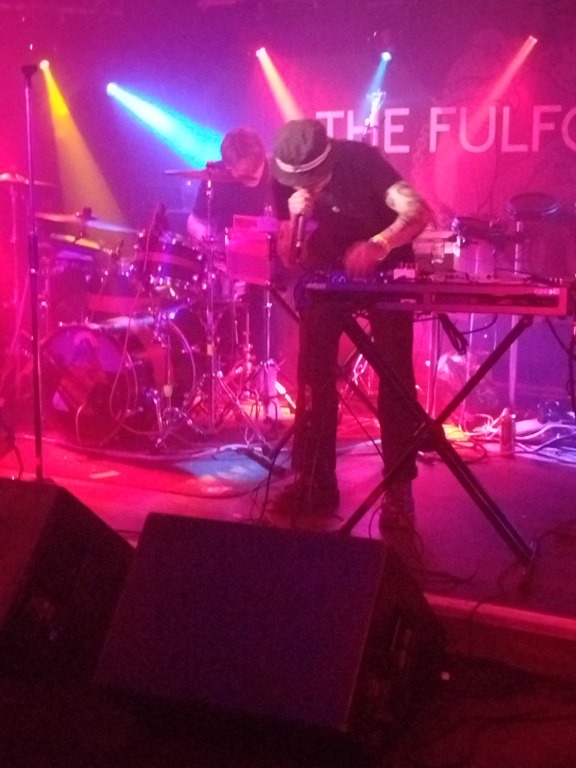
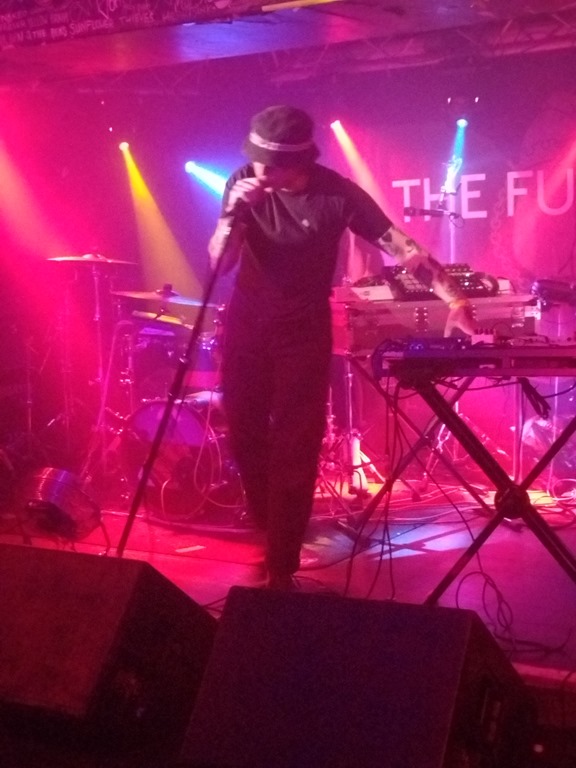
Material Goods are a last-minute replacement for Dramalove. It’s a solid, blank name which suits the duo’s style, which comprises some heavy, complex synth work paired with live percussion – and quite outstanding live percussion at that. The processed vocals are a bit muffled, but overall, the sound is dark and dense and the drums really cut through it with energy and force. Essentially, their palette is 90s alt rock, a bit NIN but with a vague dash of nu metal, and a bit Filter, too. Multitasking and a vast amount of gear affords the singer limited scope for movement on stage, but the sound has a really good, strong energy, despite the songs being pretty downtempo and downbeat.

IMG_20240724_200808IMG_20240724_200818

Material Goods

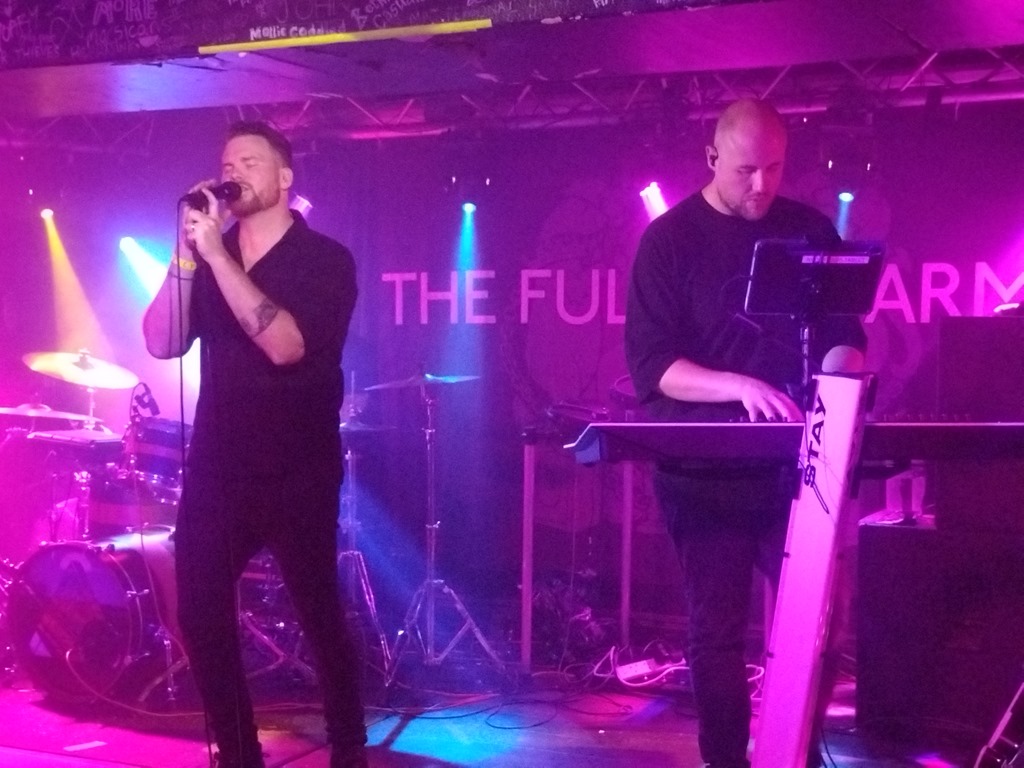
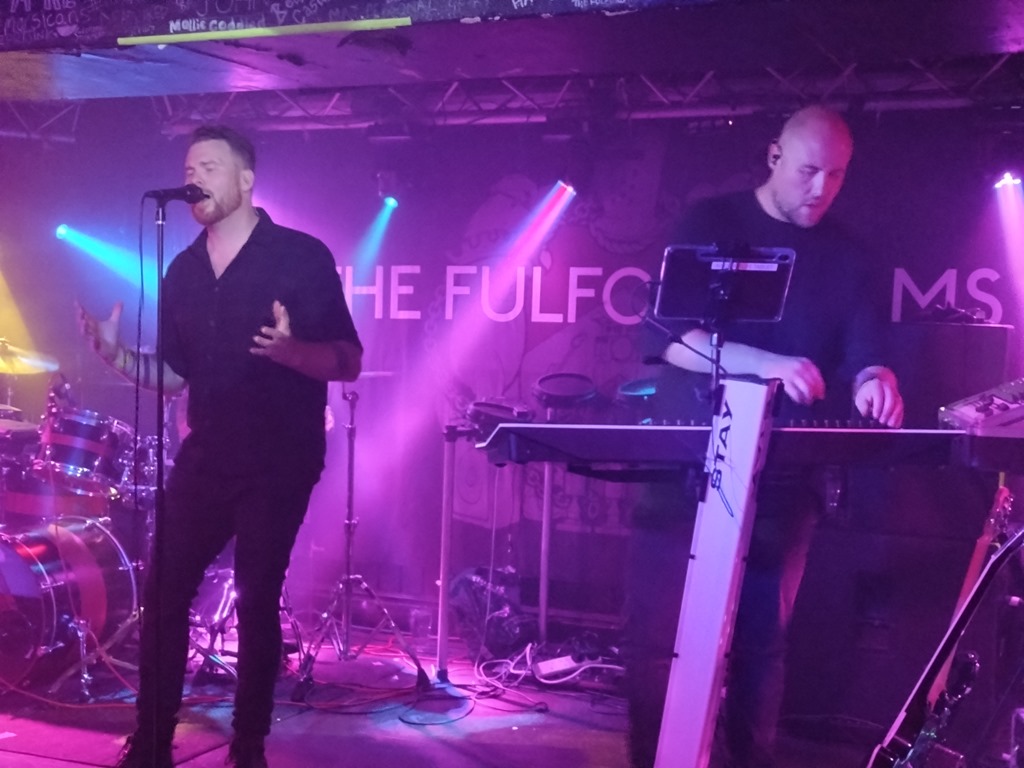
With Material Goods overrunning and Neon Fields also possessing an immense amount of flash-looking tech which needed setting up, we’re fifteen minutes behind time when they take to the stage. Sonically, they’re astonishing. Playing a hundred-and-twenty-five-capacity pub venue, they sound like half a million quid’s worth of gear in an arena. And the songs match it. They sound like they look: black clad, tattoo bands, neatly-trimmed beards, big, soaring emotional outpourings… And completely lacking in soul. Christ, this guy’s level of emotional trauma is enough to raise the blood pressure to induce a heart attack. Wracked with anguish and all of the pain of the lovelorn, the love-torn… And yet it’s all articulated so blandly, everything is so slick, and so one-level. The theatre soon wears thin, and I start to forget I’m listening to it while I’m listening to it. It doesn’t help that there’s a group of four people bang in front of me gabbing on and pricking around, pulling faces, play-fighting, the guys trying to impress the birds by demonstrating their strength by lifting one another up… they get shushed by a fan but even the absence of their distraction doesn’t really improve the experience. There’s some earnest, meaningful falsetto, and the penultimate song had some cliché tribal drumming, and they wrapped up their bombastic set ten minutes after the headliner was due on.

IMG_20240724_21083420240724_210849

Neon Fields

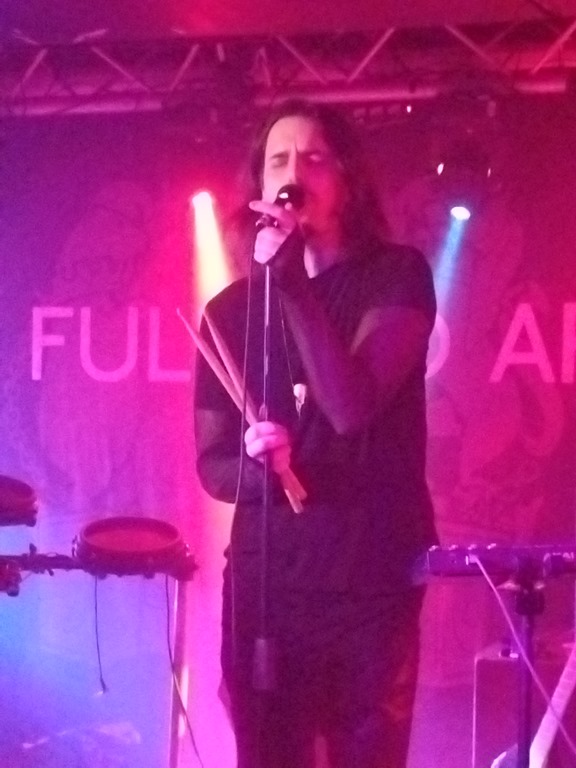
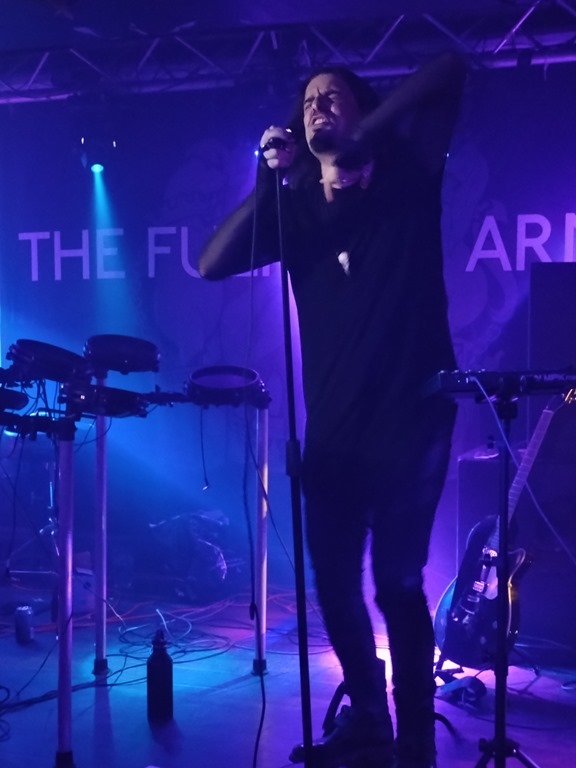
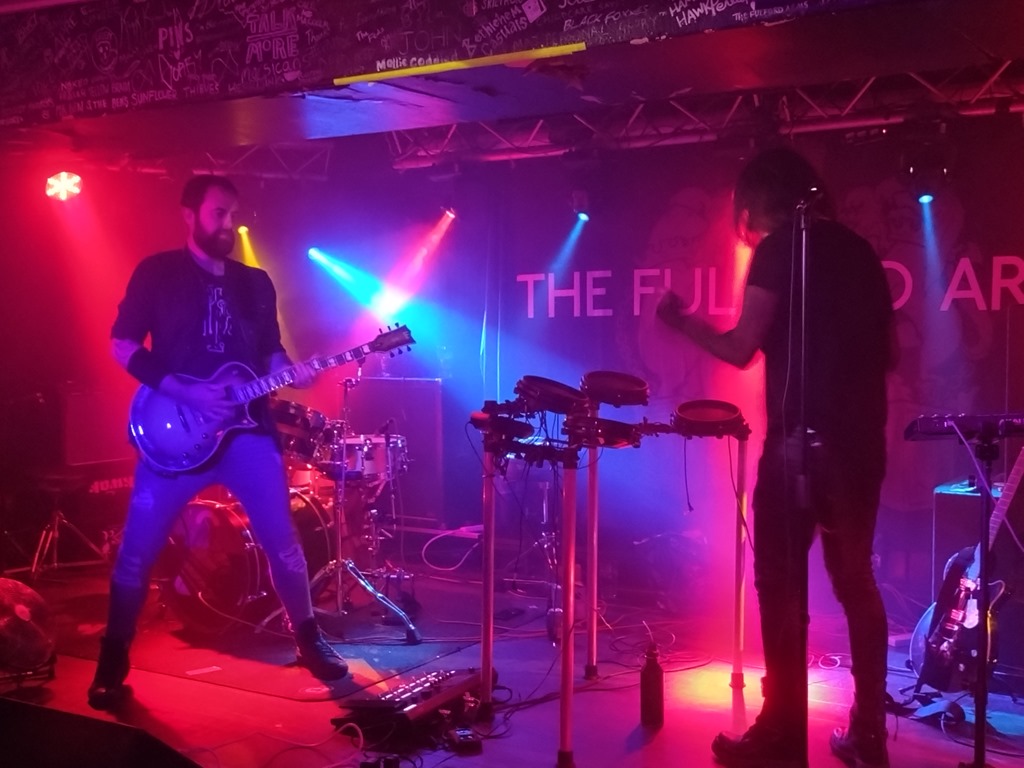
The Royal Ritual are also a duo who have an extremely ‘produced’ sound. But their approach to production owes more to the methods of Trent Reznor as pioneered in the early 90s on Broken and The Downward Spiral, balancing gritty live guitars with synths and fucked-up distortion and harnessing their tempestuousness in a way that creates a balanced yet abrasive sound. David Lawrie plays live electronic drum pads in addition to the sequenced beats, adding dynamics and live energy to proceedings, and flitting between the drum pads, synths, and mic stand, he’s incredibly busy throughout the set. But something about Lawrie’s delivery highlights everything that was absent on Neon Fields, and just carries so much more weight: the whole package brings a rush of adrenaline propelled by that emotional heft and solid force.

Objectively, the feel is very Stabbing Westward, and goes hard NIN at times in its combination of guitar, synths, and sequenced and live electronic drums. The Royal Ritual are strong on dynamics and atmosphere, and Lawrie is an intense and compelling performer.

IMG_20240724_22045120240724_22154320240724_220550

The Royal Ritual

He does break out of the moody persona to thank other bands and plug merch, but what do you do? In the current climate, bands sadly need to plug the stall. The fact that David steps out of broody tortured soul for two minutes of affable chap may seem hard to reconcile, but then, this perhaps speaks more of the human condition than remaining ‘in character’; people are complex and conflicted, multifaceted and inconsistent. And this is what truly lies as the heart of tonight’s performance by The Royal Ritual. Digging deep into the complexities of the psyche, there’s something about the duo’s performance that gouges into the flesh and demands contemplation.

Dragon’s Eye Recordings – 7th June 2024

Christopher Nosnibor

There isn’t really anything funny about Yorkshire Modular Society, conceptually or otherwise. But one never really fully appreciates one’s own locale, especially not when it’s in the north of England, a region renowned for its pithy, gritty nature rather than its glamour. People will tell you that Yorkshire folk are welcoming and friendly – and tight – and as a non-native whose lived in Yorkshire the majority of my life now, it’s probably a fair summary. The county boasts some of the most magnificent countryside, and I only need to walk ten minutes from my house to be in woodland or fields – not bad considering I live twenty minutes from the centre of a cathedral city, not to mention twenty minutes from the train station, which will land me in Leeds in under half an hour. But for all that, and despite the huge number of outstanding bands to have emerged from Leeds over the years, mention Yorkshire and people will probably think of brass bands, cobbles, and Hovis, flat caps and equally flat brown beer. People tend not to think ‘Yorkshire, the county of experimental electronica’. They’re missing something significant.

There is a thriving modular / electronic scene in Yorkshire, notably with electronic music open mic (EMOM) nights in Leeds, York, and Halifax, all giving platforms to acts who aren’t necessarily on the main gig circuit, although venues like Wharf Chambers in Leeds and The Fulford Arms in York will often feature weird and wonky stuff from across the electronic spectrum.

Like many electronic experimenters, the YMS BandCamp page presents a prodigious self-released output, so if you’re wondering where to start, a release selected by a label seems like a fair point.

Of this continuous hour-long ambient work, Yorkshire Modular Society says, “As the cityscape pulses with electric fervor, oscillations emerge like whispers in the rain-soaked streets. LFOs, like elusive shadows, guide the listener through a maze of sonic intrigue, each modulation a glimpse into a world of mystery. Within the depths of digital tape modules, time unravels and reconstitutes, casting a veil of uncertainty over the sonic landscape. Reverb and delay wash over the senses like urban decay, adding depth to the sonic architecture that surrounds.”

Fiery the Angels Fell is a lot calmer, more soothing, and less apocalyptic than its cover art suggests.

As is often the case with ambient works, I find my mind – like the music – drifting, and my contemplations following divergent trajectories. Here, I found myself wondering what the end would – or will – really look like. Growing up in the 80s, I envisaged the white light of nuclear annihilation, but on recently watching Threads, came to realise that this may not be the spectacular moment of silence prefacing perfect oblivion my younger self had fantasized. But no part of me ever envisaged an globe, or an egg, colliding and splitting in half with molten flames as something I may witness. The cover art, then, harks back to pure 60s / 70s sci-fi vintage. The artwork propagates tension. The sound soothes it.

While there are some billowing clouds along the journey that is Fiery the Angels Fell, this is a delicate, graceful work dominated by organ-like drones and soft sounds which ebb and flow. If this is the soundtrack to the end, I will likely sleep through it, and awake pure nothingness.

AA

de6063_art

Cruel Nature Records – 28th June 2024

Christopher Nosnibor

It’s a perennial complaint around the passage of time, an oft-tossed-out remark with each month that everyone churns out as a space-filler, especially when speaking to someone they haven’t seen in a while – ‘I don’t know where’re the year’s going!’ But 2024: what the fuck?

I recently read Four Thousand Weeks by Oliver Burkeman after a friend kindly sent me a copy after I’d been bleating about how I always had too much to do and too little time to do it in. I almost simultaneously had a heart attack and shat myself reading the opening chapters which explained the book’s premise – namely, that the average human lifespan is around 4,000 weeks. Somehow, I’ve blinked and missed about 20 of them already this year. And whenever I receive an album in advance of its release, I add it to the list, and think ‘Hey, I’ve got a while on this one, I can take my time and still get a nice early review in.’ Because getting in early is satisfying – and, being transparent, brings traffic. I don’t make any money from doing this, so hits don’t equal quids, but there’s a certain pride involved – not to mention a sense of duty.

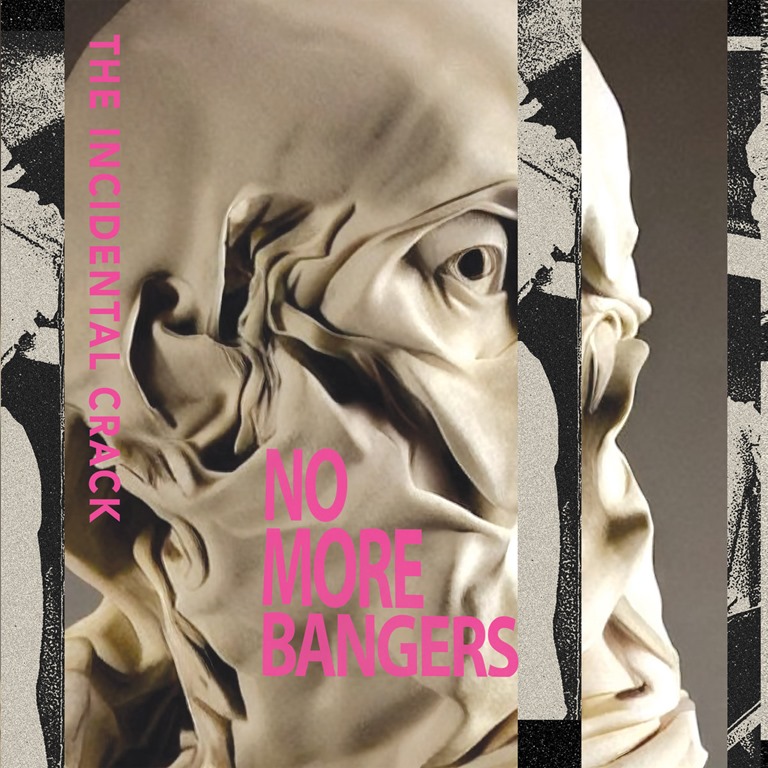
On learning of there being a new release imminent from The Incidental Crack – longstanding regulars at Aural Aggravation, an occasional collective who’ve managed to maintain a steady flow of releases in recent years, I was immediately enthused, but the end of June was a way off, and life… and here we are at the end of June. In no time, it will be the end of the school year, and once we hit August bank holiday the nights are shorter and it’s time to think about jumpers and central heating and the end of another year and being another year closer to death.

The Incidental Crack have a knack of conveying the pessimism that pervades the futility of the everyday, the way in which those small, mundane disappointments mount up and slowly sap your soul. Look no further than titles like ‘The Kettle Broke’, and ‘There Was No Path At the End of This Field’ on this latest offering for evidence of microcosmic gloom and frustration. The impact of small – almost non-events – can never be underestimated in the context of a stressed and overloaded mind. And people aren’t in that headspace simply don’t get it. Kettle broke? Just get a new one, they’ll say. No, no, that’s not the point. The kettle broke, the cat was sick on the rug, the bread went mouldy, I spilled my drink and it’s an absolute disaster and my life sucks.

The fact is that sometimes, when life feels intense, the smallest details count for a lot: it’s not making a mountain out of a molehill when simply getting through a day feels like an epic battle, and walking to the corner shop feels as daunting as a marathon. And No More Bangers – a title which is equally ironic and carries a tone of sadness, of defeat – is detailed, with infinite nuance proving integral to these five minimal – and lengthy – compositions.

The pieces are constructed around nagging electronic loops, scrapes, drones, hums. There’s nothing dominant, sonically, or structurally. Ten-minute expanses of trickling dark ambience create brooding soundscapes and a tension that sets in the jaw, the shoulders. Insectoid chatters and clicks, stutters and scrapes build the fabric of the sound. Clamouring echoes and rapid repetitions evolve internal rhythms without percussion, with surges and swells driving the second half of the twelve-minute ‘The Springtails Love It.’ But it’s a nagging tension and feels more like being poked repetitively while trying to rest than an inspiration to get up and dance.

‘The Kettle Broke; is largely a hum, a room ambient sound which does next to nothing other than play back the sounds in your head and your kitchen when you’re trying a new recipe and find it requires digging the blender out from the back of the cupboard.

Sometimes, late at night – but also during the day, as I work from home – I find myself acutely aware of the quietness. There will be spells with no traffic, no planes or helicopters overhead, no dogs barking, no pings alerting me of new messages, no meetings. During these often unexpected moments, I will become aware of the whir of the laptop fan, the constant hum of the dehumidifier in the bathroom adjacent to my office, my own circulation.

This is the soundtrack that No More Bangers presents. Low-ley, low-level ambience which sounds like the boiler running through a maintenance cycle, like the throb of the fridge, the fizz of extractor fan. Delivering 100% on its title, this album is absolutely banger-free. But more than that, it feels strangely familiar, and yet familiarly strange.

AA

a0749472000_10

Invada Records – 28th May 2024

Christopher Nosnibor

Well, this one landed out of the blue. A boon for fans, a shock to everyone, necessitating a reshuffle of review diaries for the likes of me.

It’s been six years since the last Beak> album. There are good reasons for this, as they explain: “After playing hundreds of gigs and festivals over the years we felt that touring had started to influence our writing to the point we weren’t sure who we were anymore. So we decided to go back to the origins of where we were at on our first album. With zero expectations and just playing together in a room.”

This is a remarkable slice of honesty about the effects of touring on the creative process, and band relationships. Most bands start at home – in some sense – with writing songs and the aspiration of touring those songs. But the dynamics change with success, and when touring relentlessly, time to write new material is squeezed. Over time, particularly with a pandemic interfering with, well, everything, many bands evolve their methods to operate over distance, and there’s always a risk that some of the dynamic is lost and stuff gets dialled in. It’s true that it’s now possible for bands to operate at distance, intercontinentally, even, but that’s not the Beak> way. They thrive on that instant interplay, the interaction, and without it, there’s simply no Beak>.

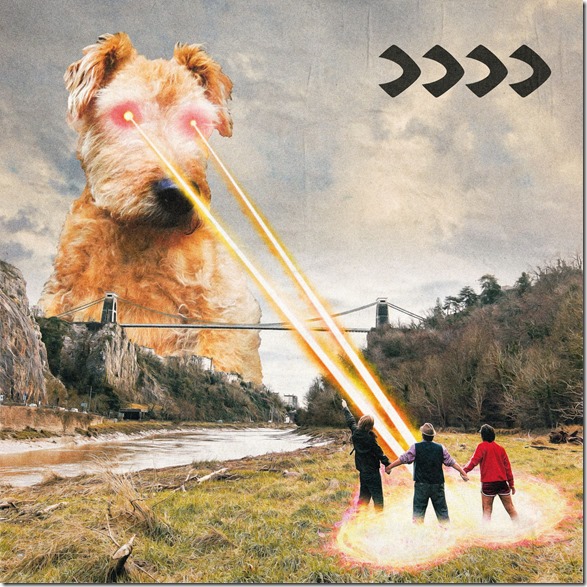
When they do come together they work fast. Single ‘Oh Know’ was ‘recorded on the only day the band could physically get together during the winter lockdown’ and released in October 2021. They really do make the most of their time, and their music – particularly this latest effort – froths with the urgency of pressured time. The urgency which has always permeated their music is banged up a couple of gears here, and as a result, >>>> is a frenzied explosion, with perhaps a desperate edge.

This being a Beak> album, it’s brimming with experimentalism, oddness, woozy psychedelia and persistent Krautrock pulsations, relentless beats. This being a Beak> album, it’s bloody great, and a lot of fun.

But that said, much of >>>> actually feels pretty bleak. Yes, Beak> turn bleak. It’s like a band having a blast while staring into the abyss, conscious that the end is near, but carrying on because at some point…

Of the album’s sudden and unexpected release, the band say in their statement, “At its core we always wanted it to be head music (music for the ‘heads’, not headphone music), listened to as an album, not as individual songs. This is why we are releasing this album with no singles or promo tracks.”

‘Oh Know’ isn’t included here, but the album does, however, include flipside ‘Ah Yeh’, and it does slot in nicely with its downtempo, lo-fi Pavement on sedatives vibe. It’s kinda loose, with rattling drums and drags out with a quivering organ drifting over a tense bassline, and it works something of a trance-inducing spell over the course of six minutes. You get the sense that however long and far part these guys are, they share a magical intuition, and whenever they do manage to get into a room together, creative sparks fly.

The band continues, “the recording and writing initially began in a house called Pen Y Bryn in Talsarnau, Wales in the fall out from the weirdness of the Covid days. Remote and with only ourselves and the view of Portmeirion in the distance we got to work.”

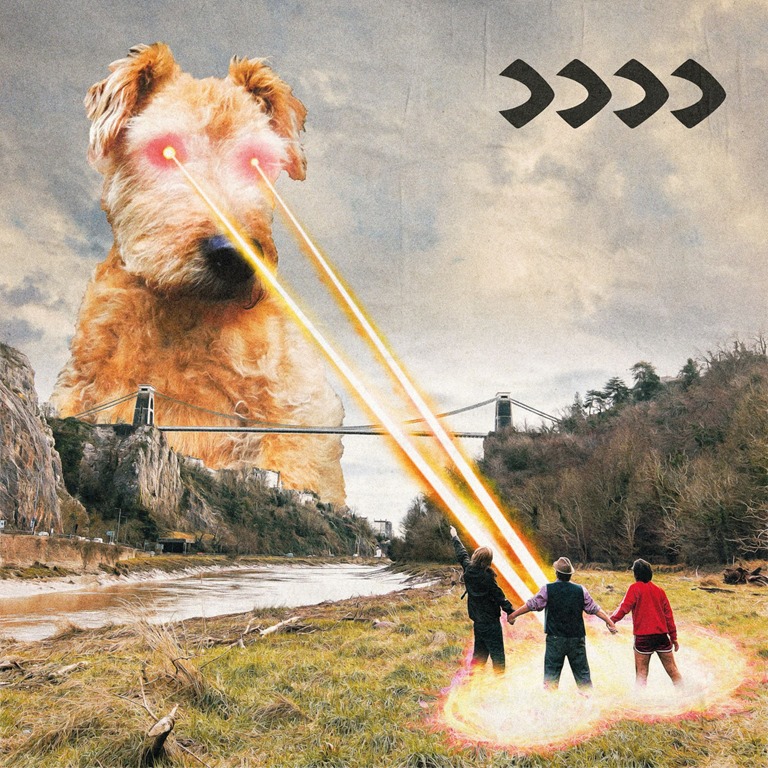
“With the opening track, ‘Strawberry Line’ (our tribute to our dear furry friend Alfie Barrow, who appears on the album’s cover) as the metronomic guide for the album, we then resumed recording, as before, at Invada studios in Bristol, whilst still touring around Europe and North/South America.”

‘Strawberry line’ makes for fairly a low-key opener, with a trilling organ and psychedelic reverby-drenched vocals rippling atop a bubbling bass before a shuffling beat enters the scene. But it stands as an eight-minute statement of intent, with that statement being that >>>> packs density to equal its melody. ‘The Seal’ delves into Krautrock, with a relentless groove centred around the rhythm section dominating. It grows dark. It grows tense. It’s sparse, minimal, but it persists, and four and a half minutes in, there’s a taut, jangling Joy Division guitar part.

Chilly synths and a robotic, rolling, repetitive bassline dominate the slow-melting ‘Denim’, a hazy psychedelic downer which delivers delayed gratification with the bursting of a monster riff. ‘Hungry Are We’ is delicate, reflective, post-rocky, with vocal harmonies which again allude to 60s pop and perhaps a bit of prog.

‘Bloody Miles’ marks a stylistic shift towards groovier territory, with a nagging bassline that borders on funk, but the tone remains doggedly downbeat, without getting depressing. With one foot firmly in the early 80s new wave sound, there’s no shortage of weirdness and warpy, brain-bending discord here, not least of all in the shadowy vintage-sounding electropop of ‘Secrets’, that brings together elements of Soft Cell and The Associates with the atmosphere and production of New Order’s Movement.

>>>> is often stark and claustrophobic (and nowhere more so on the eight-minute closer), and it’s always intense and brilliant. Beak> have surpassed themselves – again.

AA
a3178303801_10

Bearsuit Records – 31st May 2024

Christopher Nosnibor

There was a time – not so long ago – when I would come home from work and struggle to nudge the front door open with my shoulder for the mountain of CDs that had been dropped through my letterbox, along with the occasional ‘sorry we missed you’ card telling me I had a parcel at the depot awaiting collection or to arrange redelivery, and more often than not it would be some vinyl, and all of it promo material for review. I had a box – which was initially a shoebox, but later replaced with something larger – which was my ‘to-review’ box, after the pile kept falling over once it reached an unsustainable height. It was a storage nightmare, and I still have boxes containing quite literally thousands of promo CDs with press releases folded up with them, in boxes in the walk-in cupboard and the end of my office, which is, in truth, too stuffed with boxes of CDs to squeeze more than a toe into, rather than actually walk in.

Working in an office as I did then – rather than at home – I would take a bundle of CDs in a jiffy in my bag, and sit and listen to them as I worked. It beat enduring the often moronic drone of the people around me, and I’d tap out notes which I’d email home to myself to flesh out into full reviews in the evening.

My working method has changed rather since then, and while still working the dayjob, I’ve barely set foot in an office other than the one in the back bedroom of my house since lockdown. I haven’t received stacks of CDs in the post for a similar length of time, if not longer. For all of practical issues around the stacks of CDs, I do kinda miss it, and this is one of the reasons I always get a thrill at the arrival of a disc in the mail from Dave Hillary, who runs Bearsuit Records. The other, and not insignificant reason I always get a thrill at the arrival of a disc in the mail from Dave is that I’m eager to discover what mad genius work the label’s releasing next. I enjoy slipping the disc in the external CD drive I have attached to my laptop and soaking in the strangeness that spills from my speakers: I’m never disappointed.

I love the fact that I still get CDs in the mail, with promo cards and handwritten notes and so on, from Bearsuit, not just because of the joy of the physicality and the personal touch, but because it’s emblematic of the label as an entity. It does what it does, regardless of whatever else is happening, and it releases music the likes of which you simply won’t find anywhere else.

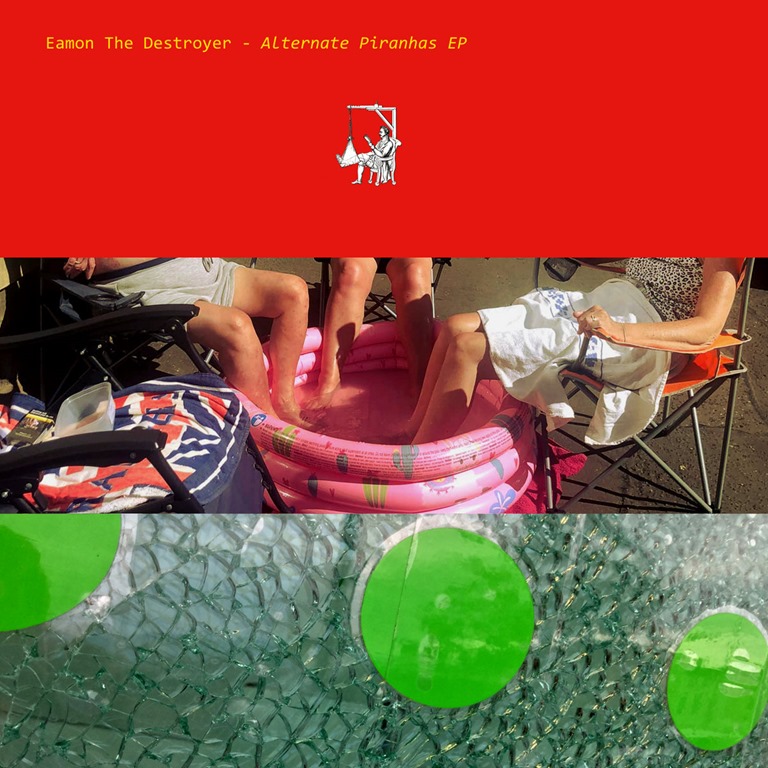
Eamon the Destroyer is a classic case in point. Another typically enigmatic artist in the Bearsuit tradition, Eamon the Destroyer has enjoyed a great run of releases to date. Debut album A Small Blue Car was a work of fuzzy, minimalist , downtempo brilliance. A sad, introspective work, it was unexpectedly touching for something so overtly odd, and follow-up We’ll Be Piranhas pushed further into forging songs that straddled the dreamlike and the nightmarish, a disorientating, discombobulating work that delved deep into the psyche in a way that felt like invisible fingers creeping inside the cranium and directly massaging the brain.

And now we come to the more or less obligatory counterpart release. Instead of the standard and expected remix EP, Alternative Piranhas gives us outtakes alternative takes of tracks from the album. A cynical voice might ask why they didn’t make the album cut, but there are myriad valid reasons: an album need to cohere and sometimes even the best tunes don’t fit with the flow, and similarly, the mood of one take or mix may in fact be better objectively, but not quite sit with the context.

And so it is with the five tracks here. All five appeared on We’ll Be Piranhas. While exactly the same length as its album counterpart, ‘A Pewter Wolf’ presents a quite different mix: the organ is much more boomy, more ‘churchy’ than on the album version, while the guitar sounds, almost buried on the album blurred and hazed out low in the mix, are more up-front and gritty here.

The version of ‘Rope’ on Alternate Piranhas seems to be in a different key, and is much grainer, murkier and messier than the more polished album take, and it’s more abrasive, more aggressive, with the vocals more up-front, and the result is that I found myself hearing thee song anew and soaking in the anger which permeates it, less obviously on the other version, tempered by the more mellow mix.

Overall, the versions on Alternate Piranhas are rougher, less ‘produced’, and it’s not difficult to discern why the versions chosen for the album were the ones they were. The album worked as a cohesive set, with an even, smoothed-out sound – well, in context – but Alternative Piranhas provides an insight into the process, which is never more apparent than on ‘The Choirmaster’. It’s not radically different… but it is different, while the alternative take of ‘My Stars’ is half the length of thee album and feels like a sketched-out demo. But again, it possesses qualities absent from the album version, just as the album version has elements which are absent here, including another five minutes of sound.

Alternate Piranhas feels more overtly rock than its progenitor, and perhaps it is, but above all, it’s a source of enjoyment to revisit these songs from a different perspective.

AA

a4099667252_10

Moabit Musik – 8th March 2024

Christopher Nosnibor

Gudrun Gut has forged a career on the fringes, participating in numerous collective and collaborative activities as well as solo projects. Often creating artistic work which sits well outside the boundaries of genre categorisation, her output has never been dull, or predictable. And so it is that GUT Soundtrack is precisely what the title suggests – her own soundtrack, to – wait for it – a mini-series about Gudrun Gut.

It’s a difficult call to make in assessing whether this is indulgence or an essential artistic profile, especially without actually viewing the series, but reading the synopses of the three episodes, it does seem that GUT is a bizarre hybrid of documentary and reality TV, particularly on the arrival of episode three:

Episode 1 The Blank Page. In the first episode of “GUT,” everything revolves around the mysterious blank page that means so much to artists. A Boat trip at moonlight with Thomas Fehlmann, a foto session with Mara von Kummer, and the surprise guest Ben Becker.

Episode 2 MMM. In the second episode the letter M takes center stage: Music, Mother, Malaria, and the mysterious Monotron. Gudrun composes the soundtrack for her series, everything turns into a pink dream. In the studio with her bandmates Manon Pepita and Bettina Köster.

Episode 3 The Sourdough. In the final episode, Gudrun turns her attention to the everyday, the routines, the laundry, and the bread. Here, an artistic ode to the freedom hidden in the seemingly ordinary unfolds. The visit of musicians Pilocka Krach and Midori Hirano culminates in a garden performance with Monika Werkstatt. A delicate symphony of the everyday, the essence of art and community resides.

Ah, that delicate symphony of the everyday. On a personal level I find pieces where people recount their routine not only vaguely dull, but, worse, depressing, as they invariably seem to have time – time to eat a nutritious breakfast, do some yoga or go to the gym or got for a run, before their morning session of creativity or money-making from a comfortable environment, be it a studio, or spacious office, or a coffee shop or somesuch. I feel myself shrivelling inside as curling with envy as I compare these routines to my own, which involves a daily to-do list an arm long whereby I squeeze in endless laundry and changing cat litter around my dayjob, runs to the shops and making sure everything is ready for my daughter to go to school in the morning, including making a packed lunch, before finally sitting down to knock out a review around 9:30pm and waking up at my desk, review-half-written around 11:30 and panicking about being back at the dayjob for 6:30 the next morning.

But I’m not here to berate the former Neubauten member’s breadmaking, but to critique the audio accompaniment, and, as ever, to reflect on how well a soundtrack stands when standing apart from the visuals to which it is intended to augment.

The series may contain three episodes, but the soundtrack comprises some twenty-four short, incidental snippets, which are nothing if not wide-ranging in style and form. One minute it’s like an episode of The Clangers; the next, it’s like listening to percussion made from the banging of bin lids. Spoken word and space-rock, swirling synths and fizzing electronics are tossed around all over the shop. There are moments of glacial synthpop glory – ‘Gutscore’ is atmospheric, dynamic, a bit Kraftwerk, a bit Tangerine Dream, a bit Mike Oldfield, while ‘Garten (Edit)’ is reminiscent of Yello. Yes, it does sound, often, overtly German, but then, Gudrun Gut was there from the early days of electronic exploration and as such, she isn’t following the lineage, but has been instrumental in its evolution.

‘Biste Schon Weg (23 Mix)’, one of the set’s few longer songs – that is to say, over three minutes – is a reworking of the song which appeared on Guts’ last album, the 2018 release Moment, while ‘How Can I Move (24 Mix) revisits a song which originally featured on Wildlife in 2012.

Tossing bumping electronica and some weird excursions make for an interesting journey, and a collection which encapsulates Gudrun Gut’s varied output during the course of a lengthy career. Quirky, odd, idiosyncratic, these are all highly appealing features which define a unique artist, and render GUT Soundtrack a fascinating listen.

AA

MOA24_front

Cruel Nature Recordings – 23rd February 2024

Christopher Nosnibor

Nnja Riot is the solo project of Lisa McKendrick, who also happens to be one half of experimental electronic noise duo Isn’tses, with Tim Drage, who makes serious noise as Cementemental.

It’s a small world, especially in circles of noise and experimental electronics, and so it is that a few years ago, I paired with Tim for a one-off collaborative set in London at the bottom of a bill curated by Human Worth, with the mighty Modern Technology headlining. I lost my hearing in one ear before the set due to some congestion, and by the end, I’d lost my voice, too. Somewhere along the way, I’m convinced I’ve crossed paths with Isn’tses, too, but can’t find the evidence at this moment in time.

Anyway, my needless digression brings me to the point of observation that their individual projects are quite different from one another, and their collaborative output. This is ultimately a good thing, because while algorithms which have seemingly replaced the music press in making recommendations of the ‘if you liked listening to this, you’ll like this’ ilk, it ain’t necessarily so. Because algorithms don’t understand art, or the fact that an artist’s output may be widely varied.

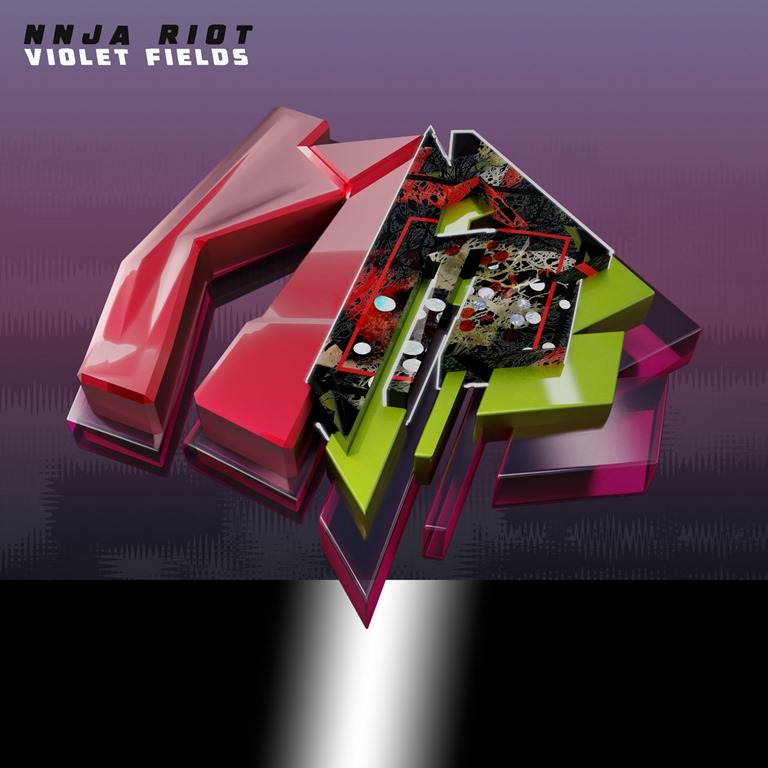
And so it is that as Nnja Riot, Lisa takes a much more songwriterly approach to things, and Violet Fields contains seven songs which can be described broadly as stark industrial electropop. ‘Horror Heart’ brings all of the elements in together to raise the curtains on the album: understated verses, with a thumping heartbeat bass beneath a delicate vocal bathed in reverb, are suddenly blown away in a wave of noise and monotone robotics with whipcracking synthetic snares cutting through the murk with some harsh treble.

‘The Evolve’ is a low, slow, dark pulsating grind which swells to a blistering ruckus of bubbling, broiling eruption of glitching electronic froth, and things get mangled fast and hard. Nnja Riot is indeed an appropriate moniker: the noise grows and takes over by stealth, as if from nowhere: one minute things are pretty mellow, the next, it’s all going off and you’re being carried away on a sonic tidal wave.

The album’s longest track, ‘Dark Assassination’, stretches beyond the seven-minute mark, and with a stuttering, beat hammering like a palpating heart in a state of fibrillation against the ribcage, it’s creates a muscle-tightening tension which is uncomfortable. The vocals are disconcerting, sounding as they do detached, off-key, non-melodic. Desperate drones bend and warp in the background, adding layers of dissonance and discomfort.

Everywhere across Violet Fields, there are subtle but essential incidental details, little lines of melody which ripple and fade. The title track is hazy, sedated, spaced-out, with melodic elements juxtaposed with swerving sci-fi noise which threatens to drown out the erratic beats and she cuts loose to another level of intensity with the vocal delivery: fuzzed with distortion, there’s a outflowing from the innermost which pours into the swirling wash of multi-faceted noise.

Violet Fields crackles and fizzes, often promising structures which crumble and evaporate and leave the listener feeling a little lost, grasping for something uncertain and just beyond reach. It’s this sense of vagueness which remains after the grainy ‘Musical Fix’ and the ephemeral drift of ‘Slow Release’, a mere fragment of a song which carries a spiritual richness on a ritual drumbeat before fading. There’s a sense that hearing Violet Fields and fully grasping it are not one and the same, and it feels that however long one spends engaging with it, there will always be depths and layers of implicit meaning that exist beyond the realms of conception. You wave a feeble hand, desperate to clutch and cling, but it’s gone. It’s gone.

AA

a2182947288_10

With the release of The Body & Dis Fig’s debut collaborative album Orchards of a Futile Heaven just on the horizon, coming 23rd February, the group share smouldering new single ‘To Walk a Higher Path.’ Heavy without conforming to any of the usual tropes of metal or electronic music, the trio here carve out their own distinctive soundworld, neon-lit scenes slowly unfurling amidst light and shadow. Rippling synthesisers beam out like searchlights scanning the horizon, slowly coalescing into strafing melody and staggered rhythms, with Dis Fig’s vocal vapour trails floating weightless above The Body’s obliterated howls and blasted electronics.

Orchards of a Futile Heaven’s walls of sputtering texture and tectonic booms are soaked in the reverence and melancholy of sacred spaces brought to life by palpable intensity by Chen’s voice. Crafted during a time of personal fragility, the album’s devastating force lies beyond any of the expected noise and abrasive textures typically associated with both The Body & Dis Fig. Suffused with a raw vulnerability and a longing for catharsis, Chen’s voice searches for escape in the midst of oppressive atmospheres as if determined to find relief from guilt.

Following the new single, The Body have also announced a string of U.S. tour dates. The Body & Dis Fig plan to tour throughout the US, UK, and Europe in 2024, with collab tour dates to be announced.

Listen to ‘To Walk a Higher path’ here:

AA

Body and Dis Fig

Human Worth – 1st February 2024

Christopher Nosnibor

Anyone familiar with the works of William Burroughs will likely be aware of the so-called ‘23 enigma’, which essentially centres around the auspicious frequency of the occurrence of the number 23. It may be a case of confirmation-bias, but once attuned, it’s impossible not to notice, and the fact it’s filtered into mainstream consciousness via the KLF and the 2007 Jim Carey movie The Number 23 is worthy of note, if nothing else. So the fact that catalogue number HW023 has been assigned to the second album by supergroup COWER, featuring members of The Ghost of a Thousand, Petbrick, USA Nails, Yards, The Eurosuite and JAAW is something that may be of no real significance, but then again…

Few would necessarily expect the album to begin with a soft, gentle piano ballad with ‘We Need to Have the Talk’. It’s contemplative, and even if the talk is direct at times lyrically, the mood is low-key and lulls the listener into a sense of false calm. Immediately, ‘Summoner’ crashes in with pounding drums, a snare like smashing a bin lid, and a bass so thick and grimy as to churn your very guts. This broad shift is precisely what you expect from COWER, as they push parameters and do things different; this is what you want from COWER, and this is what they deliver. It’s a rambunctious roar, with an elevated artful tone and all the rage. They pack a lot into a mere three and a quarter minutes – and a lot of what they pack is beefy riffage and furious noise. It’s an instant rush, and at the same time, your muscles tense.

‘Hard-Coded In the Souls of Men’ presents as a downtempo slice of brooding electropop with hints of Depeche Mode, even down to the soulful baritone croon and spacious sound with soft synth interludes. In a parallel universe, this song would get played all over on Radio 1 and would make all of the mainstream radio and Spotify recommended playlists, and people in their tens and hundreds of thousands would love it. And then they would arrive at the album, and wonder ‘what the fuck?’ as they simultaneously shat their pants. This would be the perfect outcome, but is of course, highly unlikely, because acts on small labels just don’t have those opportunities.

The funny thing is that back in the 80s, major labels would back all kinds of bands and would promote – and shift mega-units of – an album based on a largely unrepresentative single. Back then, you couldn’t hear the album online, so would head down to Boots or Woolworths or WHS, or add it to your selection with Britannia Music, and you might love it or you might hate it, but they’d shifted the unit either way and because you only had a handful of records or tapes, you’d play it enough times there was probably a 50% chance you’d come to like it even if you hated it at first.

COWER succeed by being unpredictable, and whichever way they turn, be it noise or electropop, what they deliver is top quality. ‘Buffeted by Solar Winds’ boasts a stalking bassline and brooding vocal, as well as some synths and some circuit-melting overload that shows Nine Inch Nails how it’s done. ‘Deathless & Free’ is pure Depeche Mode circa Songs of Faith and Devotion: soulful, dark, and sonically immense, with percussion that utterly blasts you away. How is this right? And how does it work, when songs like ‘False Flag’ bring the most raging, sinewy punk, half fired-up post-punk, half incendiary grunge, entirely raw, ragged antagonism. The end result is New Model Army meets Big Black, with some wild sax tossed in for good – or crazy – measure.

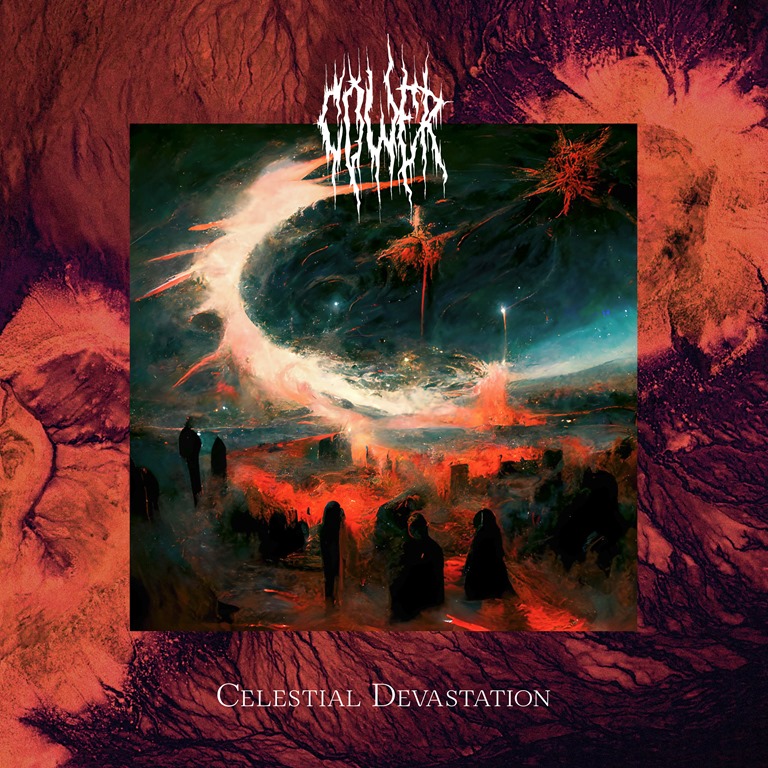
The tile track is a slow, slow groover, driven by immense, industrial beats. What a contrast the energetic, intense and ultra-tense ‘Bury Me in the Lawless Lands of the West’ which really exploits the tropes of early 80s goth with is throbbing bass and fractured mesh of lattice-like guitars. Celestial Devastation;, however you pitch it, is hefty.

There are many so-called supergroups who aren’t especially super, who seem to trade on their main projects as the selling point. COWER amplify the intensity of their individual main projects to the power of three. Balancing mangled guitar noise and some pretty harsh electronics from beyond, Celestial Devastation is as good as it gets. Celestial Devastation is special.

AA

HW023_Cower_CelestialDevastation_CoverArtwork

NYC-based electronic punk band LIP CRITIC, who are no strangers to Aural Aggro, have shared a new song and video, ‘The Heart’.

They may have switched labels and stepped things up a bit, but you couldn’t exactly say they’ve sold out.

Watch the video here:

The video was filmed in a barn in Roxbury, NY, and follows their Partisan debut single ‘It’s The Magic’, which earned them praise from Rolling Stone (‘Song You Need To Know’), NME (“on their way to becoming the next great NYC band”), Paste (“an apocalyptic wasteland of NYC’s best underground punk”) and more.

‘The Heart’ is a high-speed train of delirious percussion (two drummers!) and wonderfully demented electronic samples, weaving in and out of frontman Bret Kaser’s lyrics that inquire into the state of spiritual marketplace and the isolating results of consumption. It’s an exhilarating and singular piece of hardcore electronic punk, with Lip Critic using a broad palette of only the most extreme hues of emotion, each marked by a distinctive danceable mania.

Fresh off dates with Screaming Females for their last-ever tour and shows in London and Pitchfork Paris, Lip Critic will tour extensively in 2024. Their first-ever headline tour will kick off this summer. Prior to that, the band will play a special hometown show on 22 Feb at Elsewhere (Zone 1) in Brooklyn and stop at SXSW for a string of shows.

9136074e-8dc0-dd9f-a068-639db61eb466

Credit: Justin Villar