Posts Tagged ‘electro’

Christopher Nosnibor

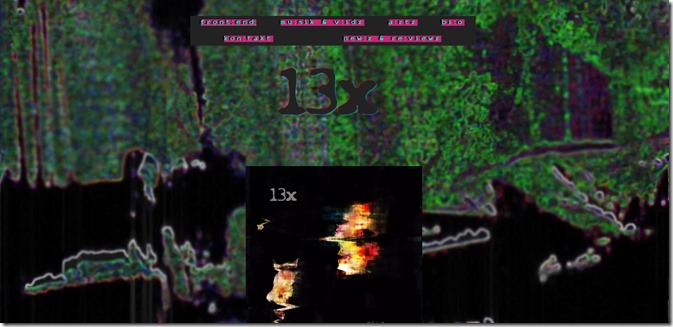
13x is less of musical project and more of an experience. As such, the katt13x website, the platform of the proudly transgender antiscene artist is a brain-melting labyrinth of sound and image that has a William Gibson-esque retro-futurist vibe that screams cyberpunk while searing your retinas with wildly oversaturated images that often render what’s being presented barely distinguishable.

The EPK video is, without doubt, a perfect summary of everything, as raw, bleeding primary tones melt and glow radioactively through a selection of appropriated snippets and other spliced scenes that takes Burroughs’ cut-up technique to the height of early noughties simplism to create something disorientating, disturbing.

Remember when the Internet was considered scary, because it contained the worst and more terrifying shit, from images from murder scenes and people being hit by trains (the original traingirl video was a blur, but a sickening one)? Pages like gruesome.com seemed extreme, and the porn explosion that was so concerning to many consisted of just so-many thumbnails and low-res .JPEGS of barely 50K because dialling up on 14K modems at a penny a minute, that kind of prurience was actually a fucking luxury. 13x takes us back to a time before YouTube, when eBay and Amazon were in their nascency, and we had Yahoo! Auctions and most people accessed the Internet and email having installed AOL with a free 3.5” floppy disc passed on to them by a friend who’d bought a magazine from WHS.

I’m reminded of Stewart Home’s original Spacebunny-designed website, which was a primitive-looking affair, neon-green text on a black background, and every word was an internal hyperlink. Not because 13x looks like it, but because it’s a reminder of when the Internet was inventive, was crazy, because there were no riles and there was no corporate involvement. No-one really policed the Internet, but then, kids were safe because the fact was, no-one even had Internet. But it was then future, and those who were present were pulsating to race headlong into cyberspace, whatever that was. And this takes us back to the time when we were on the cusp, and is accompanied with a period soundtrack, of sorts.

That soundtrack is an array of glitching, overdriven technoindustrial noise propelled by harsh, smashing snare crashes and squelching, wet fabric thwacking deadened bass beats define the abrasive, disorientating sound. Abrasive soundclashes, with squalls of noise and shards of feedback flare and blare over woozy undulating basslines and retro blippy 16-bit game mzk.

The sound and visuals in combination are an extreme and intense experience, where everything goes off in your face all at once, and it’s magnificent: dizzying, overwhelming, uncompromising, and one that doesn’t just touch, but assaults the sense from all sides at once.

PNKSLM – 2nd April 2021

Christopher Nosnibor

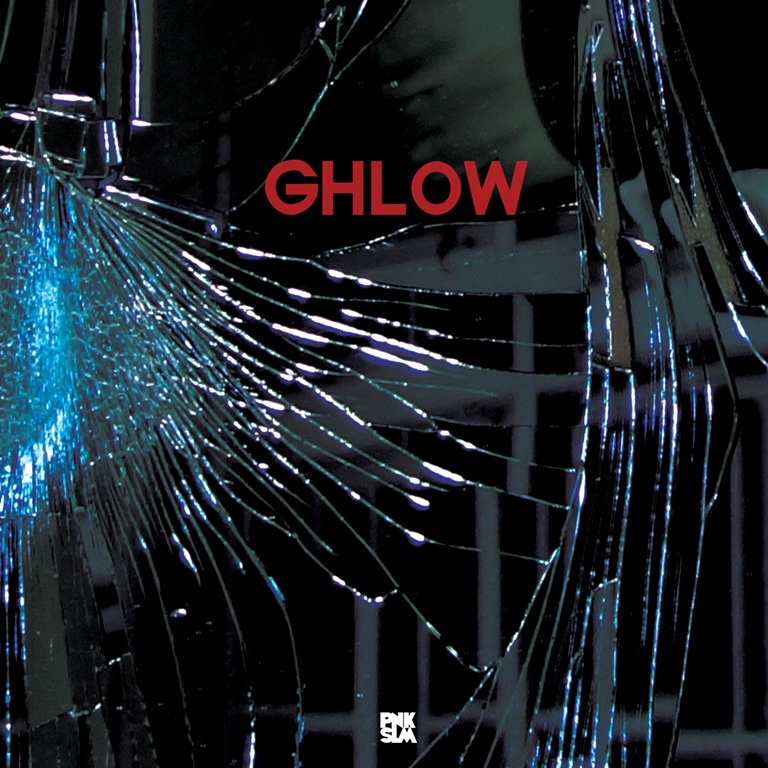
Following the single release of ‘Not Fit For This’, GHLOW unleash Slash and Burn, the album which spawned it – and brimming with dark energy, it does not disappoint. While clearly operating within a genre field, and a comparatively limited instrumental format, it has range. It also packs so much tension and an emotional force that it’s an instant grab. As what you’d likely describe as an old goth (although nowhere near as old as some), I have a predisposition towards this kind of stuff, but by the same token, I’m immensely picky, in that anything overtly cliché I simply can’t muster any enthusiasm for – but GHLOW have got it all: the songs, the style, and the production. In combination, this is a work that resonates on a level that isn’t necessarily easy to articulate: it’s not simply nostalgia – and drawing on the dense electro shoegaze of Curve as much as early 80s post-punk and its lineal descendants. Anyway., it’s hard to feel nostalgic for a time before your own, and even if some of the aforementioned bands soundtracked my teens it’s not a pining pang for that which I feel on hearing this. No, GHLOW tap into something else altogether with their explosive blend of jagged guitars and simple sequencing plat places power to the fore over musical dexterity.

It’s ‘Not Fit for This’ that slams in by way of an opener, a gloriously spiky hybrid of Siouxsie, X-Mal, Garbage, and Savages, a thunderous bass and stuttering beat hammering away beneath a toppy blasty of guitars that provide the tense, fiery backdrop to Emille de Blanche’s commanding vocal performance. It grabs you by the throat and drags you into the seething morass of darkness that follows. There’s texture and depth, for sure, but this is one of those albums that’s best experienced end-to-end in order to appreciate the highs and lows integral to its sequencing. It’s also big on mood and big on dynamics, and the duo ratchet up the atmosphere to create a work of rare intensity.

The slower ‘Sleep’ is a song that drives right through the gut: the primitive drum machine sound stutters and jolts, the kick sound beating like a palpating heart, the snare a whipcrack that slices through the murk – and alongside is a grating bass sound that churns and growls malevolently. Over it all, Emille gives a powerful, full-lunged vocal performance. The title track is a mid-tempo motoric chugger that hammers away somehow unfurls as it progresses, and the repetition, paired with the soaring vocals and some howling lead guitar, becomes more than the sum of its parts, while ‘Hold It’ is a heavy, repetitive droner that’s claustrophobic in its dark intensity.

There’s something magnificently unpolished about GHLOW’s sound and for all its electronics, it’s The March Violets that their dirty, immediate sound calls to mind most, although ‘Hollow’ goes all out on the attack, and with the brittle guitar riding wildly over a furious beat, they sound more like Big Black fronted by Jehnny Beth or Anne-Marie Hurst. Slash and Burn has attack, it has edge, as well as repetition and hooks, and really hits the spot.

AA

ghlow-slash-and-burn-artwork-1500

28th February 2021

Christopher Nosnibor

VVolves seriously impressed with their debut single, ‘Momentum’, unveiled last June – a heady rush of shoegaze and pop with ethereal vocals and a repetitive groove, it was, well, impressive.

‘Well-Loved Tales’ is an admirable follow-up: rich in atmosphere, but at the same time, a bold electronic pop tune, it’s a magnificently balanced composition. The rolling drums and teetering piano add drama to a guitar soaked in chorus and reverb, and with a rich, luscious production, the sound and the feel and the vibe is every inch the Cure’s Disintegration. And let’s be straight: if you’re going to take your cues from any classic album that has a truly timeless feel, that’s probably a top pick. There’s also a hint of ‘Naked and Savage’ by The Mission in the brooding, hypnotic hues, too.

There isn’t an attention-grabbing hook or an overt immediacy about ‘Well-Loved Tales’ – rather it casts a dreamy sonic spell that draws the listener in with a captivating sense of melody.

The ‘sparse’ version which serves as the B-side lives up to its name: stripped of the drums and the drama, slow-drifting synths provide the main accompaniment to a dreamy vocal that’s almost folksy, and equally, almost part of the instrumentation, and it’s nice. Very nice. As is the mesmerising video which accompanies it.

AA

AA

a4189478984_10

Christopher Nosnibor

Lifted from their forthcoming double album Duel, scheduled for release in April, Deine Lakaien have unveiled their cover of The Cure’s 1983 classic pop tune ‘The Walk’.

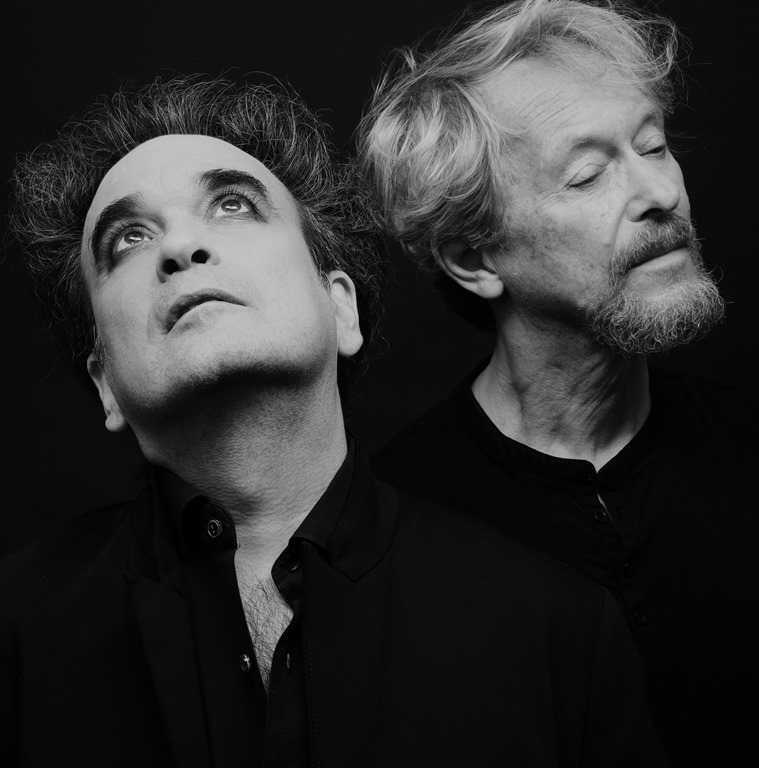
The duo, comprising pianist Ernst Horn and vocalist Alexander Veljanov, have over the course of ten albums attained a significant status in their native Germany, but haven’t quite the same reach further afield, but there’s a strong change that this could change with Duel, which pairs an album of original compositions with an album of paired covers, ‘The Walk’ being one of them.

And it’s good. By which I mean, it’s an affectionate, even reverent cover that pays an overly sincere homage to the original – as it should, of course. Much of the appeal of the original is its rough edges, and the sound of those early 80s synths and drum machines, recorded to tape. Listening to it now, along with so many contemporaneous songs, reminds us for that for all we’ve gained with advancing technology in terms of fidelity and ease of recording, mixing, and so on, so much has been lost in terms of essence.

As Ernst Horn comments, “For an old-school synthesizer freak like me, ‘The Walk’ was of course a welcome opportunity to celebrate beautiful old sounds in simple tone sequences, although I really blunt my teeth on the hook… I guess I couldn’t get it to sound as dirty as in the original. ‘The Walk’ is really an acoustic advertisement for the original sound of a vintage synthesizer. The instrumental part was also a lot of fun, the increase to the last, ‘Take Me to the Walk‘, where I could let my equipment totally off the leash.”

It’s telling that the artist himself feels a certain sense of shortcoming, and in a way, it’s refreshing: instead of artistic ego, we get an insight into the anxiety of influence experienced by the influencee.

Horn’s comments demonstrate an unusual degree of self-awareness, and it’s true that Deine Lakaien’s efforts to recreate the spirit and sound of the original falls short: the playful exuberance is lost to a certain self-applied pressure to deliver, while the sound is close, but somehow artificial. But for all that, I’m not going to do this down one iota: it very much does capture the 80s vibe, especially wit the dominant crack of a processed snare sound that cuts through everything… everything… everything. The brooding, swampy break is nicely done and if for the most part it sounds like A-Ha covering The Cure, the play-out goes darker and sounds more like a post-First and Last and Always Sisters of Mercy demo. And from me, that’s a compliment, and this is a solid cover, for sure.

AA

Deine_Lakaien_04_by_Joerg_Grosse-Geldermann

Deine Lakaien by Jörg Grosse-Geldermann

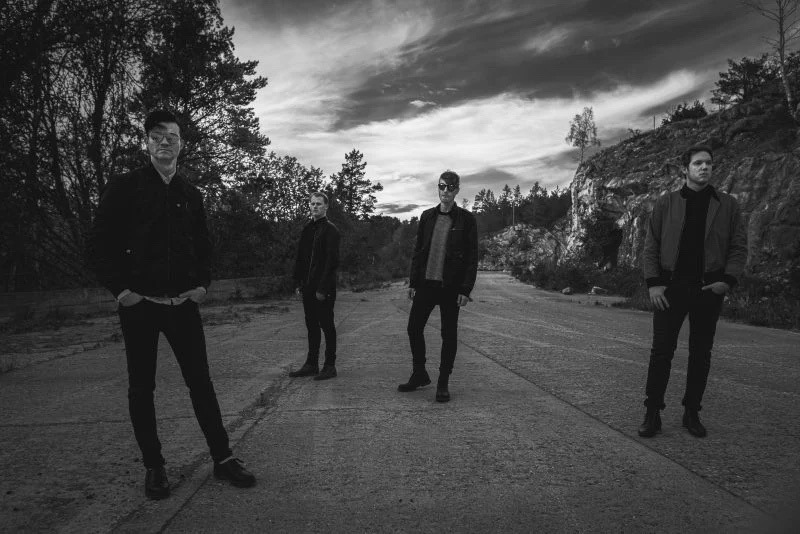
A Projection are a post-punk/darkwave act from Stockholm, who signed to Metropolis Records in 2019 for the release of their well received third album, ‘Section’. Inspired by dark post-punk/proto-goth acts such as The Cure, Sisters Of Mercy and Joy Division along with the electronica of Depeche Mode, the band are known for their compelling and dynamic live shows.

‘Darwin’s Eden’ is a brand new single by the quartet and sees them more fully embracing the electronic realm, placing themselves in the intersection between the ‘80s synth pop and the darkwave hit lists of 2021.

Watch the video here:

AA

6451d8638233cc01f4928454f3ca53d309893942

The opulent darkwave closing song off of VEXILLARY’s latest EP, SurViolence has now received the music video treatment it deserves. Both the song and the video explore the link between science and spirituality and how they influence one another. The dark supernatural theme is embodied by the menacing lyrics of the song :“Chimera awaits at the tip of his hands, a snap of his fingers and the beast is in your land."

The video echoes the same theme visually. It presents us with a sci-fi dream sequence that plays like techno hypnotism.

Watch the video here:

SurViolence adopts the theme of unease in an overly politicized society; using surveillance culture as a metaphor on how technology that was created to serve and protect can serve to exploit. Hence the title, SurViolence.  The sub-plot of tension and lack of trust in the decisions that are being made for us fueled the eerie sounds and direction of the record. 

Voyeurism has been weaponized to give rise to surveillance. Violence has been digitized to replace intelligence.  This is where evolution has led us. It’s time to take back control. If only we could have our eyes back to see. 
Welcome to the surrealist horror of SurViolence.

7156f3f6-7430-41fd-9b43-34fa59ae4182

4th December 2020

Christopher Nosnibor

Woooh, shit, trigger warning! Aggressive electronic music which may trigger feelings of anxiety and n increased heart rate paired with themes of death and suicide! Biomechanimal should be plastered with red flags and probably quarantined. Wait, we’re all quarantined, and it should go without saying there’s some heavy sarcasm there.

Personally, my tigger is the ‘triggers’ crowd: unless either billed as family entertainment or the content is particularly disturbing, art shouldn’t require a warning: the very function of art is to challenge, and to present audiences with real emotions and concepts that are uncomfortable. Art is a window – or a mirror – on the world, and one that provides a conduit to explore the places we don’t necessarily venture in everyday conversation.

‘End Your Life’, which features Nysrok Infernalien is pitched as ‘a brutal, filthy expression of electronic music,’ and an ‘aggressive collaboration [which] brings together elements of industrial, extreme metal’.

If, in combining the crazed attack of the likes of KMFDM with the persistent but gnarly groove of early Ministry and stitching it together with a gauze of heady trancey cybergoth, anyone could possibly expect anything that wasn’t full on and in-your-face intense and designed with absolute precision to punch buttons – while at the same time geared up to make you move – is living on a different planet. Sonically, ‘End Your Life’ is very much rooted within genre context, but it’s actually an uplifting tune, a rush of hi-nrg beats and hyper synths, while lyrically, it’s hard to decipher, and it may be a threat or a promise or neither. But it’s more likely you’ll be too busy bouncing around to want to be slitting your wrists.

The five accompanying mixes mangle the tune to varying degrees, each accentuating a different aspect of this snarling beast of a tune, with the harsh metallic guitars often pitching to the fore, propelled by pounding beats that pump so, so hard. Die Sektor strip it back and slow it down a bit, and get a bit Nine Inch Nails in the process. Overall, there’s more than enough variety in the mixes to keep it interesting, and they compliment the original version well.

AA

a0539954098_10

Kent based electronic quartet CODE have released a rebooted version of their 1992 debut single ‘Light Years’, which was available on white label only at that time and remains highly collectable to this day. Attracting support from John Peel at Radio 1 and Colin Faver and Colin Dale at Kiss FM, the original was a cross-genre classic; cosmic and psychedelic yet club-friendly, it pointed towards the future while acknowledging past masters such as Tangerine Dream with its sinuous, mind-bending arpeggiations and minimal melodic motifs. The 2020 upgrade remains true to its industrial techno roots but adds a contemporary dancefloor sheen. Bandcamp orders will also include a remix by Bjika, a musician who melds the spatial elements of progressive and deep house with the rawness of Detroit techno.  
The full length rework of ‘Light Years’ appears on a new album by CODE entitled ‘Ghost Ship’, their first in 25 years.

Watch the video here:

7eaaa5ea05da962bad5d421c72ccbd64ef4e4aaf

7th June 2020

Christopher Nosnibor

I suppose I’m fortunate to move in the circles I do. In both the real and virtual world, I’m surrounded by some remarkably talented creatives, working in all fields. Many seem to have found new outlets for their creative leanings under lockdown, in many cases probably for the sake of their sanity.

The emergence of a brand new act, VVolves, proved as welcome as is was unexpected, because the duo’s debut, a blend of shoegaze and cool synth pop, is a belter.

‘Momentum’ is a brilliantly kinetic, driving tune that kicks in solidly after a gentle, spacious intro. I’m a sucker for a song that locks into a groove and feels like it’s surging forwards because of, not despite, the repetition, and ‘Momentum’ absolutely does that: a repetitive chord motif, overlaid with chilly synth stabs and a propulsive drum track which contrasts with the ethereal vocal delivery. In combination, it’s an exhilarating rush.

We need more of this, please.

AA

a1325238669_10

Wonkystuff – 5th September 2019

This one’s been a long time in coming: the liner notes document that the three pieces that make up Traditional Computer Music were ‘conceived and composed from various SuperCollider recordings over the years 2010 – 2014 [and] edited and compiled in Logic.

Then again, both Ash(ley) Sagar and Wonkystuff label boss John Tuffen have been kind of busy for most of the five years since this was finished, what with their being one half of The Wharf Street Galaxy Band, as well as operating as Orlando Ferguson and contributing to myriad other projects.

The title of this release is clearly a wilful oxymoron on the one hand, but on the other it’s entirely fitting, and a recognition of the tropes which have established themselves around digital musicmaking. Computer Music, once radical, is now a convention with a substantial lineage. And yet there is, somehow, a certain idea of what ‘computer music’ sounds like when presented with ‘computer music’ as a term, and Sagar manages to encapsulate that on this release.

The three numbered pieces – impersonal, inhuman, digital – are lengthy: 1 is 14:21, 2 is 19:24 and 3 is 18:58. And while Sagar doesn’t delve into retro robotix with bleeps and bloops, Traditional Computer Music explores digital soundscapes that have become synonymous with electronica.

Bulbous, warping drones weft and warp in the opening moments of ‘1’, with sounds of indecipherable origin – are they voices? Are they synthesised sounds? Tapering to an undulating mid-range droning hum after a couple or so minutes, coalescing to a throbbing hum around four minutes before dispersing into a vaporous mass after some four minutes, it becmes little more than a drone, before dissolving, fractured, splintered and broken, into painful howls of feedback that continue for a good few minutes before fading to darkness.

‘Part 2’ continues where ‘Part 1’ leaves off, with elongating feedback-filled drones extending outward for centuries and light-years back. It’s simultaneously evocative and sterile, again highlighting and exploring the dichotomies of digital music. Ash is one of those musicians who explores to the core. And yet his technicality is not at the expense of feeling. You can tell by listening to this that he lives and feels the music, wanky as it probably sounds.

The third and final track, ‘3’ moves into microtonal territory, which is crackly, glitchy, bleepy, and finds a slow pulsing beat thumping beneath an array of tweeting twittering R2D2 stutters. It descends into a morass of tweaking laser shots and squelchy pulsations buried under a growling generator hum ad there’s pitch-shifting and slowing drones galore. It becomes increasingly difficult as it progresses, dolorous drones and low pulsations and eternal, deliberate throbs roll on and on, before finally yielding to a climax of retro-futurist wibbles which ascend to a sustained rippling hum that’s not exactly comfortable whatever your preferences for sonic range.

On TCM, Ash shows that he probably knows the boundaries and remains within them, but at the same time tests the listener’s limits in a positive way. And yes, it’s good, and in its field, outstanding.

AA

Ash Sagar - Traditional