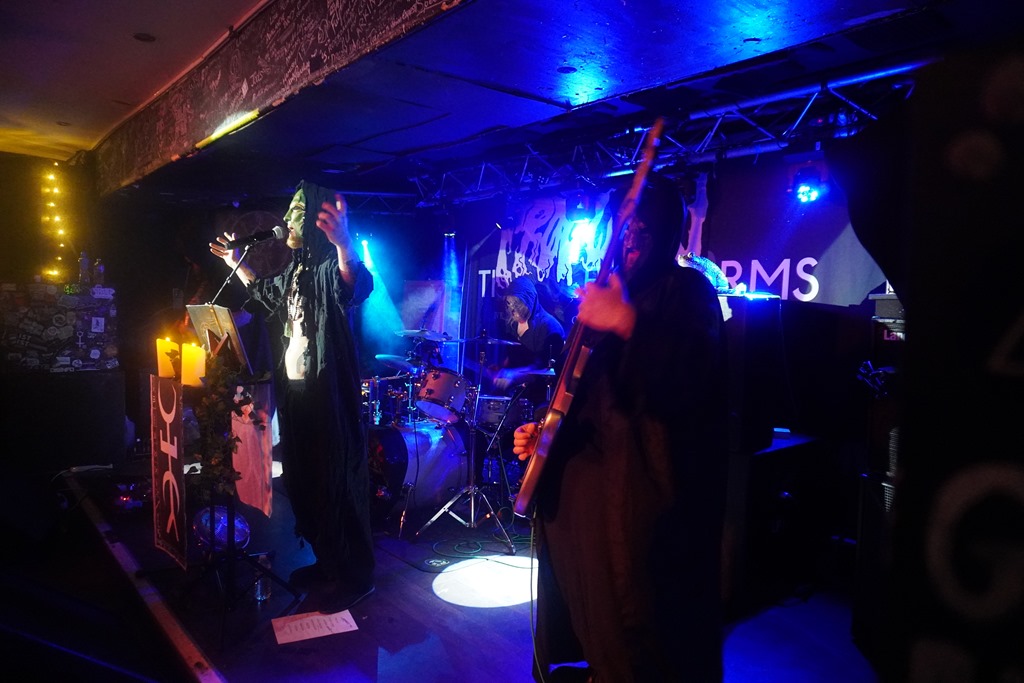
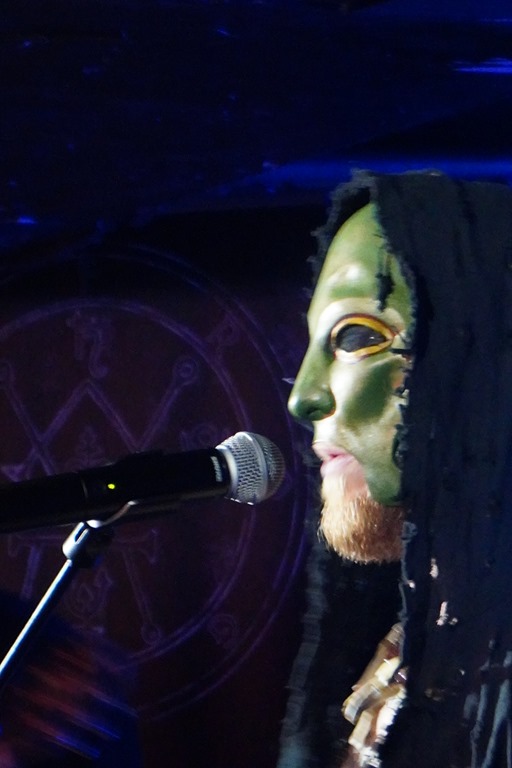
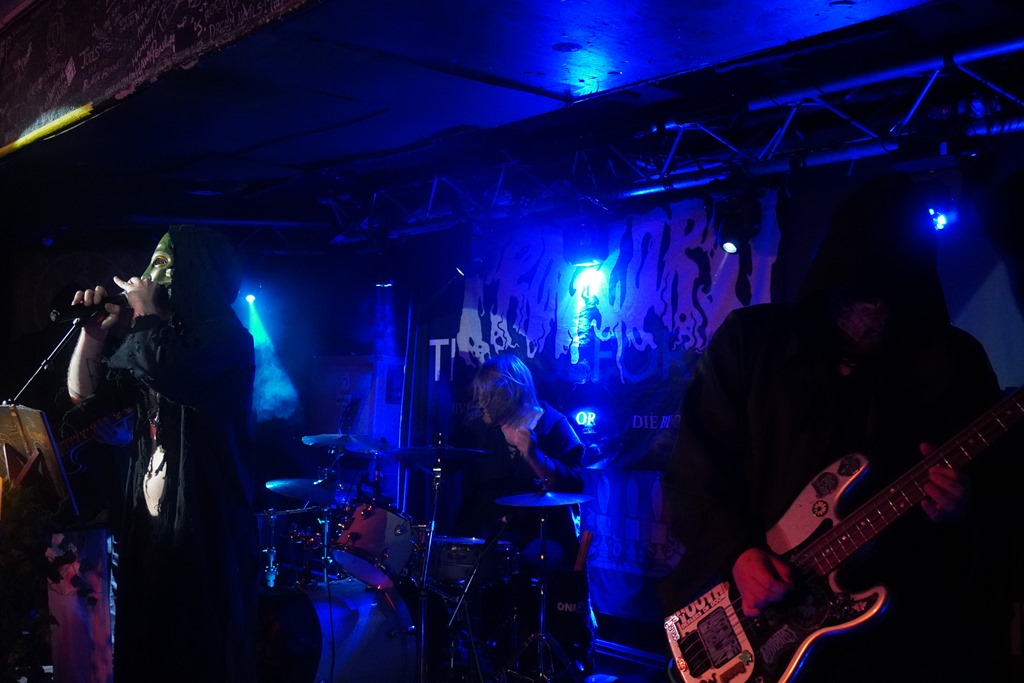
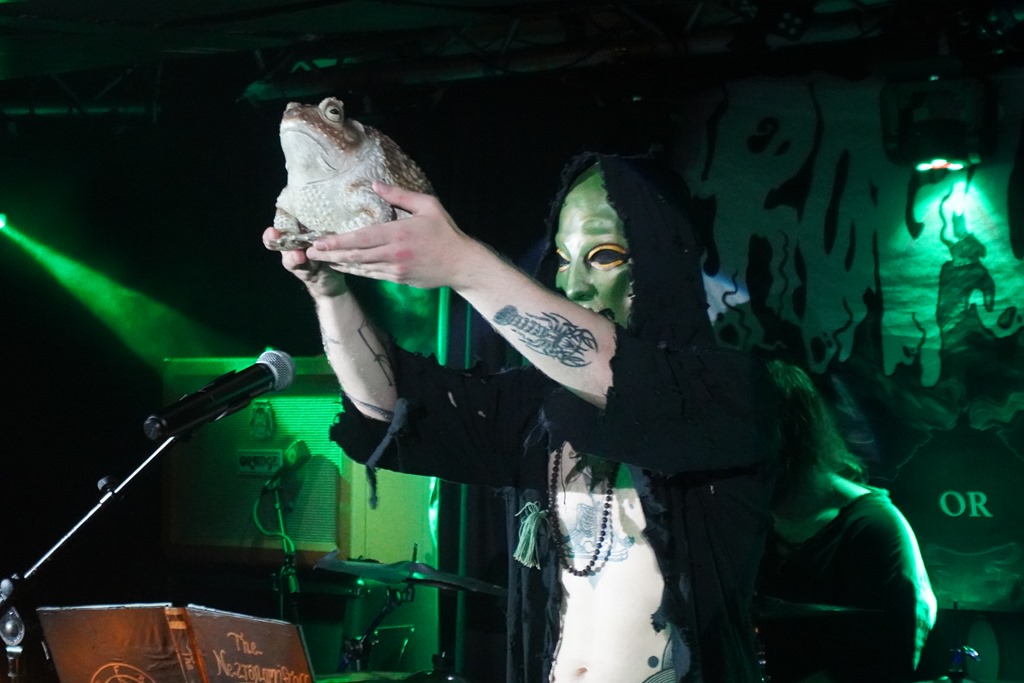
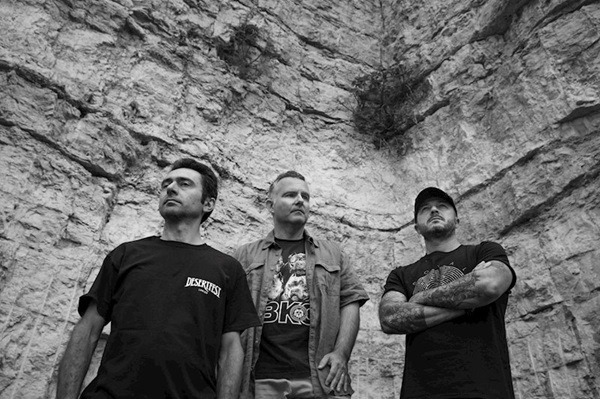
Southern Italy’s riff-wielding power trio King Potenaz have officially signed to Majestic Mountain Records for the release of their highly anticipated sophomore album Arcane Desert Rituals Vol. 1, due out June 27th, 2025 on both vinyl and digital formats.
To mark the occasion, the band has just unleashed their blistering new single and video for ‘Rivers of Death’, a 10-minute descent into fuzzy doom, psychedelic dread, and scorched-earth riff worship.
“We’re back with a vengeance, unleashing our long-awaited second album, Arcane Desert Rituals Vol. 1! Says the band. "This is our heaviest, most intense work yet — a sonic onslaught that’ll blow your mind. We can’t wait for you to crank it up and dive into the chaos!”
With a sound steeped in the grimy tradition of Electric Wizard, Sleep, and Monster Magnet, King Potenaz blend occult doom, stoner fuzz, and eerie psychedelia into a swirling ritual of sound. “Rivers of Death” is the perfect first taste of what’s to come: hypnotic, devastating, and weird in all the right ways.
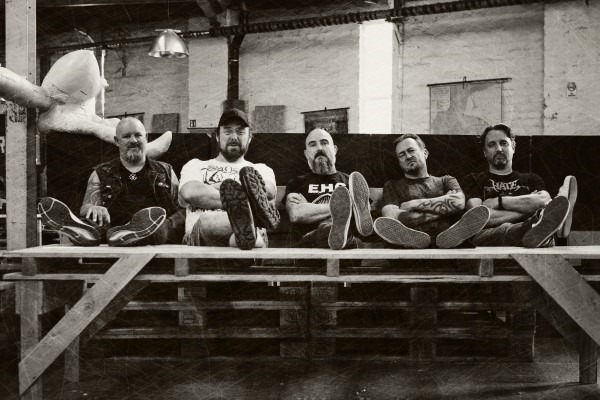
First things first: Beige Palace were ace, and their departure has left a gap in the musical world, especially in Leeds. In a comparatively short timespan, the trio produced a respectably body of work, evolving from their minimal lo-fi beginnings to explore musical territories far and wide, and this final release, split with another Leeds act, Lo Elgin, who, in contrast, have released precious little.
The accompanying notes provide valuable context for the final recordings laid down by Beige Palace, recorded at Wharf Chambers, one of Leeds’ finest DIY venues by Freddy Vinehill-Cliffe (guitar/keys/vocals)… and now helming the mighty Thank.
Taking a step back from the discordant post hardcore of ‘Making Sounds For Andy’ and the freewheeling experimentation of ‘Leg’, Beige Palace’s side largely favours the repetition and extreme dynamic shifts found on their 2016 EP ‘Gravel Time’. The production here also returns to the lo-fi, DIY approach from that EP, eschewing the more polished sound of their two full-length albums. Through returning to their roots, Beige Palace manages to drag their sound to new extremes, with these three tracks bringing to mind artists as disparate as US Maple and Sunn O))).
‘Wellness Retreat’ is dense and discordant, low-end synth drone and bass coalescing to a eardrum-quivering thrum over which scratchy guitars and vocals come in from all sides to forge a magnificently disjointed and angular two minutes and twenty seconds. Too chaotic to really be math-rock, it’s a squirming can of worms, a melting pot where Shellac meets Captain Beefhart at a crossroads with Trumans Water. Or something.
Bringing hints of Silver Jews, the lo-fi crawler ‘Good Shit Fizzy Orange’ does math-rock but with an experimental jazz element, the sparse picked guitar and slow-rolling cymbal work juxtaposed with what sounds like the strumming of an egg slicer before sad strings start to weave their way over it all. The lyrics are, frivolous and stupid, and we wouldn’t want things any other way. Because much as one may value well-crafted, poetical lyrics, sometimes dumb, trashy, meaningless words work just fine. Better than fine, even.
There’s a hint of later Earth about the spartan folksiness of ‘Update Hello Blue Bag Black Bag’ – a song which sounds serious but as the title suggests, isn’t quite so much, but around the midpoint, all the pedals are slammed into overdrive and suddenly there’s a tidal wave of distortion, a speaker-busting cascade of heavy doom-laden drone. And as it tapers to fade, while we mourn the departure of a truly great band, we get to rejoice that during the span of their career, Beige Palace did everything. It’s a solid legacy they’re leaving, and one which may well expand in the years to come. There will be people in five, ten, fifteen years asking ‘remember Beige Palace?’, and other people will be replying ‘Yes! I saw them at CHUNK!’. Well, I will be, anyway. And we still have Thank to be thankful for.
The two pieces which represent Lo Elgin’s contribution mark a sharp contrast to those of Beige Palace. The first, the eleven-minute monster that is ‘Beneath the Clock’, is a thunderous blast of doom-laden rage and anguish. The barking, howling vocals are low in the mix of droning, lurching, lumbering noise, through which strings poke and burst, and as the noise sways and sloshes like a boat tossed hither and thither on waves in a storm as it attempts to guide its way through the entrance to the harbour, the listener finds themselves almost seasick with the unpredictable movement. Around seven minutes in, the tempest abates and the piece meanders into altogether mellower territory, where again I’m reminded of Earth circa Angels of Darkness, Demons of Light. And then, right at the end, there’s a massive jazz segment, backed with crushing guitars. I did not see that coming. And then ‘Abomination’ is different again- a gritty, gnarly, gut-spewing blast of noise that is simply too much…. But too much is never enough as we’re led through a racketacious swamp that starts out Motorhead and toboggans down to a crazed morass of manic jazz.
The two very different sides belong to completely different worlds, at least on the surface. But they are both staunchly strange, keenly experimental, and dedicated to inventive noisemaking, and as such, compliment one another well. And this also perfectly encapsulates the essence of the Leeds scene: diverse, noisy, weird, and wonderful.
Belgium’s harbingers of doom and despair, Growing Horns, have just unleashed a music video for ‘Godvergeten’, the latest single from their crushing debut album The Essence of Suffering, set to be released on May 3rd.
With riffs that crash like falling cathedral walls and vocals that echo like the wails of the damned, ‘Godvergeten’ is a sludge-soaked sermon of pure sonic punishment. Filmed in stark black and white, the video captures the primal energy and unfiltered bleakness that defines Growing Horns sound.
AA
Formed in 2015 in the shadow-cloaked depths of Kortrijk, Belgium, Growing Horns didn’t emerge as just another sludge band—they rose as a séance. A slow-burning, punishing invocation of pain, fury, and existential dread. Their sound isn’t forged—it’s exorcised.
Their 2019 debut EP, The Nobility of Pain, landed like a blow to the chest. A raw, unrelenting outpouring of emotion that critics called relentless and fans called home. It wasn’t just music—it was a wound. Pulsing. Festering. Unrepentantly real.
Now, the Belgian collective returns with The Essence of Suffering—an album that doesn’t simply gaze into the abyss, but sets up camp, builds an altar, and lights black candles in its honor. Heavier, darker, and more immersive than anything before, this new chapter digs even deeper into their signature sound: a harrowing fusion of sludge, doom, and stoner-infused despair.
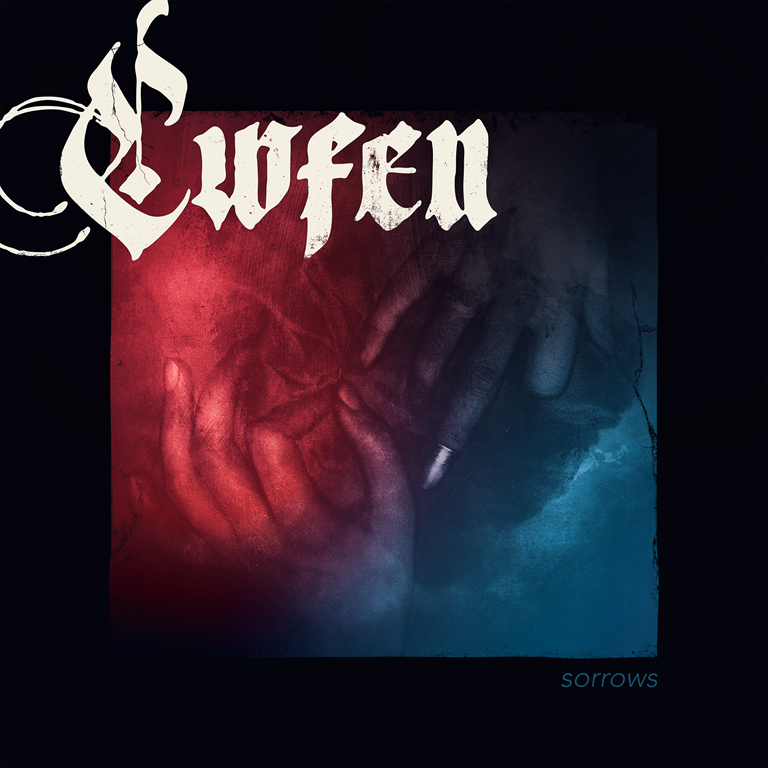
Only the middle of March and I’m running behind on releases, so my apologies to Teleost for letting this one slip down the pile, especially as I’d been looking forward to it for some time. Even their earliest live shows, Before rebranding as Teleost, the duo, consisting of Leo Hancill and Cat Redfern, showed a rare musical chemistry, resulting in music of huge, immersive power. Recent shows, such as their recent York homecoming show with Cwfen, demonstrated that they have reached a whole other level of almost transcendental drone, a place where sound becomes a physical force.
But the challenge for any band who are so strong as a live unit, is how successfully can that be translated via the record medium. To commit the sound to tape – or digital recording – is in some way to compress and contain it, to reduce it to two – or even one – dimension. A recording is essentially a listening experience, without the visual element, without the klick drum or the low frequences vibrating your ribs, and all of the other stuff. So how have Teleost faced up to that challenge? Remarkably well. No doubt recording the guitar and drums live has helped retain the huge sound of the live experience. No slickening, studio polishing, just that huge sound caught in real-time, and Pedro at The Audio Lounge in Glasgow has done a remarkable job, clearly understanding what the band are about.
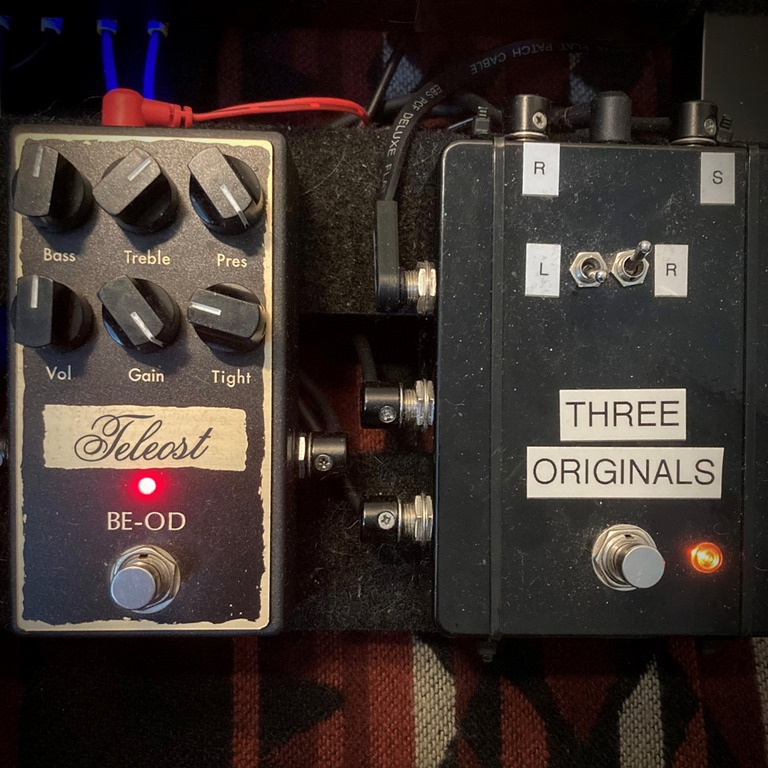
Three Originals opens with the ponderous grind of ‘Forget’, where a sustained whistle of reverby feedback is rapidly consumed by the first thick, sludgy chord: the distortion is speaker-decimatingly dense, and there’s so much low-end you feel it in the lower colon. It’s pure Sunn O))), of course, but then the ultra-heavy drums crash in and the vocals start… Hancill’s approach to singing is very much about rendering his voice an additional instrument rather than the focal point, and the elongated enunciations convey an almost abstractly spiritual sensation.
The first time I saw Earth was following their return with Angels of Darkness, Demons of Light I, and I spent the entire show completely hypnotised by Adrienne Davies’ slow drumming. It was an experience I shall never forget: it was if time slowed down, and empires could rise and fall between each beat. I haven’t experienced anything similar since, until Teleost. And once you’ve had such a powerful visual experience in a musical context, it’s not only impossible to forget it, but it becomes integrated with hearing the band. And so it is that on listening to Three Originals, I find myself reliving that experience. It’s clear where Teleost draw their influences, but in amalgamating that low, slow drone of Sunn O))) with the more nuanced, tectonic crawling groove of latter-day Earth, they offer something that is distinct and different.
The seven-and-a-half-minute ‘Ether’ blasts in and the sheer density of that guitar is pulverizing. It simply does not sound like two people, let alone that it’s one guitar and no bass. There’s a delicate mid-section consisting of a clean guitar break before the landslide of distortion hits once more. Final track, ‘Throwaway’ is anything but, another sprawling, seven-minute monster dominated by gut-churning sludge and yawning yelps of feedback, while the vocals drift plaintively in the background.
Three Originals is without doubt their strongest work to date, my only complaint being that it simply isn’t long enough. But then, if each track was fifteen minutes long, it still wouldn’t be. In the field of doomy droney heaviosity, Three Originals is in a league of its own.
If a release is on Neurot, there’s almost a guarantee that it’ll pack some heft, and that it’s likely to be good. And so it is with the debut album from Guiltless, who feature members of A Storm of Light, Intronaut, Generation of Vipers, and Battle of Mice and were ‘born from a love of experimental rock, noise rock, early industrial, sludge, and doom’. Their bio describes their first release, the EP Thorns as ‘crushing and cheerless’, adding that ‘it seemed to welcome the apocalypse looming on our collective horizon.’
The horizon is feeling closer than ever, the Doomsday Clock now set to just 89 seconds to midnight, reported as being ‘the closest the world has ever been to total annihilation.’ Teeth to Sky is a worthy successor to Thorns, and while it may not be quite as unutterably bleak, it sure as hell isn’t a laugh a minute, or even a month. And if anything, it’s heavier, denser, and it’s more layered, more exploratory.
‘Into Dust Becoming’ crashes in on a howl of feedback before the riff comes in hard. No delicate intro or gradual build-up here: just full-on, balls-out explosive power. It’s a veritable behemoth, dragging a megalithic weight and a brutal rawness as it churns away with devastating force. It’s one hell of an ear-catching way to open an album, and serves as a statement of intent.
‘One is Two’ barrels and lurches, the bass booming low while the guitar slices and slews across at jagged angles, and with the roaring vocal delivery, it’s dark and furious, as is fitting for a song that explores human behaviour and the fact that as a species we seem utterly hell-bent on destroying our own habitat. It’s a perverse contradiction that as the most advanced species to have evolved on earth, we have seemingly evolved to bring about the hastening of our own extinction, but then again, perhaps it’s for the best. But considering this, and the state of everything, brings a range of complex emotions which aren’t necessarily easy to articulate through language, or language alone – and this is when one comes to really appreciate the catharsis of visceral noise. And it’s a crushing force that blasts from the speakers on ‘In Starless Reign’; the guitar tone rings a squalling dissonance, and there are some deft tempo changes which accentuate the textural detail and enhance the impact.
They slow things to an eerie crawl on the epic ‘Our Serpent in Circle’ to round off side one, and although it doesn’t exactly offer respite, it does provide some variety ahead of the assault which ensues with the title track at the start of side two, followed by the utterly merciless ‘Lone Blue Vale’, a track of staggering density. Combined, they deliver a relentless sonic barrage. ‘Illumine’ closes the album with slow-paced precision, a harrowing seven-minute dirge designed to snuff the faintest glimmers of hope in your soul.
It’s a significant achievement that Guiltless manage to maintain such a punishing level of intensity for the duration of the whole album: Teeth to Sky will leave you feeling utterly pounded, breathless, and dazed.
The four-piece ‘sludge ‘n’ roll stoner metal band’ from Columbus, OH, come with the description of being ‘the audio equivalent of bong water spilled on a Ouija board’
The Doom Scroll – such an obvious but well-placed piece of punning – is their third album, and lands a full decade after their debut EP – or as they put it, they ‘exhaled a cloud of riffs over the doom metal scene with their debut EP, Stoned to Death… [and] since then, they’ve consistently delivered a steady dose of sludgy, groove-laden stoner doom potent enough to make Beelzebub himself bang his horns.’
For this outing, they promise ‘a reinvention of their signature sludge ‘n’ roll style of doom. Equal parts unrelenting and crushing, yet infused with heavy blues-inspired riffage, this new chapter sees Weed Demon expanding their sonic horizons like never before… Expect doom, gloom, sludge, thrash, death, blues, and even a dash of dungeon synth for good measure.’
That this is an album which contains just five tracks (six if you get the vinyl, which features a cover of Frank Zappa’s ‘Willy the Pimp’) is a fair indication of its form and the duration of said tracks: apart from a couple of interlude-pieces, they’re all six-plus minute sprawlers, with the colossal ‘Coma Dose’ spreading out over more than nine and a half minutes.
And so it is that after the slightly pretentious and proggy-sounding synth-led instrumental intro that is the woozy, wibbly, ‘Acid Dungeon’, they’re thundering in with the rifftastic ‘Tower of Smoke’. It’s a quintessential stoner-doom effort, a mid-paced slab of thick, distorted riffage with a strong Sabbath via Melvins vibe to it. It’s big on excess – of course it is. It simply wouldn’t work without the widdly flourishes that spin their way up from the dense, grainy overdrive that just keeps on ploughing away. And it keeps going on – and on. As it should, of course. It simply wouldn’t be befitting to batter a leaden riff for three or four minutes – you can’t mong out to that.
‘Coma Dose’ starts out gently with some desert rock twangs and a shuffling beat that’s almost a dance on the beach kind of groove, and there are – finally – some drawling vocals low in the mix. A couple of minutes in, of course, the riff lands, and the vocals switch from spacey prog to growly metal, and just like that, things get dark and they get heavy. But for all the weight, there’s still a floaty trippiness about it, a softer, mellowed-out edge: it’s heavy, but it’s not harsh, or by any means aggressive. There are some flamboyant drum fills and a super-gritty bass break over the song’s protracted duration, and at times, it sounds as if the batteries are starting to run low as it slows to a thick, treacly crawl and Jordan Holland’s vocals sound as if he’s being garrotted – and again, this is all on point.
There are elements of hardcore to the shouted vocals and pummelling power of ‘Roasting the Sacred Bones’, while ‘Dead Planet Blues’ brings a quite delicate blues-rock twist and even a hint of Alice in Chains circa Jar of Flies.
Rather than push hard at the parameters of the genre, Weed Demon nudge at the edges in all directions, and this works in their favour. There’s plenty here to keep diehard fans of all things sludgy, stonery, and doomy content without straying into territories that don’t sit well, but then there’s enough to make it different and interesting.
Enigmatic doom and psychedelic rock duo Lord Sin has released a haunting new video for their track ‘Living Sin,’ taken from their highly anticipated sophomore album Confessions, due for release on December 13th via Larvae Records. The video premiered at Heavy Blog Is Heavy, who praised the band’s ability to capture both the fragility and finality of mortality, stating: “Mysterious duo Lord Sin capture both sides of mortality with their eerie combination of doom and psychedelic rock. Their music is largely improvised and built in layers, the two feeding off the haunted rituals of doom metal and infusing them with the unnerving unpredictability of occult rock.”
‘Living Sin’ perfectly encapsulates the spirit of Confessions — a mesmerizing mix of haunting melodies and deeply atmospheric riffs. Watch the video here:
AA
The band shared their thoughts on ‘Living Sin,’ explaining: “’Living Sin’ depicts a phase in the life of someone close, where, on their deathbed, they confess all their sins to a loved one, burdened by the weight of pressure just before their last breath. This person lived their life like a specter, which is why the album is titled Confessions.”
Formed in 2020, Lord Sin made a powerful debut with Portrait of the Devil (released October 11, 2020, via Miasma of Barbarity Records), which laid the groundwork for the duo’s unique blend of improvisation, doom, and psychedelic dark rock. Now, with Confessions, the band has taken their raw, spontaneous approach to new heights.
The new album was recorded live in March 2021 at Rock’n’Raw Studios in Alfornelos by Bruno Jorge, capturing the visceral energy of Lord Sin’s performances. The raw guitar and drum takes were recorded in a single live session, followed by the addition of bass, guitar, vocals, and keyboards to complete the immersive sound. Mixing and mastering was done by Ricardo Towkuhsh Rodrigues at ERRE Estúdios in September 2022, giving the album a polished yet organic quality that retains the essence of Lord Sin’s gritty, improvisational style.
It was the single release of their cover of The Sisters of Mercy’s ‘Body and Soul’ which brought me to this album. I’ll not retread the ground I covered in my review of aforementioned cover, other than to note that I was uncommonly impressed by the band’s spin on the track, and shall instead pick up on the point that I was intrigued as to precisely how a cover would fit into the art of a concept album.
In a sense, I find myself back in the 80s, when – before it was possible to stream an album online or otherwise hear it without owning it, unless a mate passed you a tape recorded from their copy – one purchased an album on the strength of a single heard on the radio. It was not all that uncommon that the single was absolutely in no way representative, and you’d feel somewhat duped. Imagine buying Faith by The Cure in the basis of ‘Primary’, for example. You may not necessarily feel duped, but you’d probably struggle to reconcile the single and album experiences, assuming you could lift yourself off the floor to do anything at all by the end of the album. But then, oftentimes – because you probably only bought an album a month, on vinyl or cassette, you’d play it enough times to come to appreciate it anyway. This simply doesn’t happen anymore, and what’s more, the art of the album is one which is criminally undervalued. That isn’t to say I feel in any way duped by The Somnifer: it’s simply that the single, while obviously the most accessible and attention-grabbing track, is not entirely representative.
Taking pause for a moment, there’s that term – ‘concept album’ – which creates immediate obstacles; it can be perceived as self-indulgent, overblown, conceited, arty in the way that implies a superiority, or even just plain wanky. You can largely blame prog for that, but there have been plenty of excessive concept albums in other genres, particularly metal. But I’m not here to prejudge: I am genuinely curious, especially as the single showed considerable promise. So, first things first: what is the concept?
As they set it out, ‘The album captures the different mental stages one can pass through, from feelings of self-empowerment to existential dread. The Somnifer takes listeners on a journey that blends the drama of classic doom (Candlemass, Cathedral), cosmic psych explorations (All Them Witches, King Buffalo), and the aggression of hardcore and crossover scenes, with the timeless instrumental journey of classic heavy metal.’
The title track certainly builds atmosphere, and it’s the kind of brooding, heavy-timbred tones which call to mind Neurosis, interlaced with a hint of the gothic, which draws the listener into the album. The guitar sound is clean, but rich, and earthy, gradually shifting towards a thicker, overdriven sound, but there’s lots of space and separation. This paves the way for the haunting ‘Draining the Labyrinth’, which takes some time before really going all-out on the riffery before ploughing into ‘Rapid Eye Movement’, the first track to really feature vocals prominently. With ethereal backing vocals floating in to balance the almost speechified spoken-word delivery atop a Sabbathesque riff, it’s an interesting blend of elements.
‘Eat The Day’ comes on like Melvins aping Sabbath with an overloading blast of thick, mid-rangey guitar, before the rippling instrumental ‘Delta Waves’ brings softness and respite, starting out a bit Pink Floyd before growing gradually more intense in its playing. ‘Recurring Nightmare’ slams in out of nowhere, snarling, downtuned doom riffing, churning power chords and darkness, replete with dramatic, theatrical vocals and searing lead guitar work. One of the album’s heaviest pieces, is brings the intensity of the sense of being trapped in a nightmare, the repetitive guitar motif recreating that terrifying sense of déjà vu.
In terms of concept, it works well: instead of pursuing some artificially-imposed narrative arc, The Somnifer explores the way in which moods and emotional responses can manifest as rapid and unexpected transitions, which aren’t always provoked by obvious triggers.
‘Image Rehearsal Reaction’ is a towering monolith of a track, a colossal ten-minute stoner/doom exploration that suddenly hits turbo at the mid-point, blasting fierily forward while the guitar solo runs wild. This is where they’re at their most ‘trad 70s metal’ of anywhere on the album, which is impressively diverse, something which the ‘concept’ allows for.
The album in fact closes with ‘Body and Soul’. It’s incongruous in many ways, but it oddly works to conclude a varied and yet consistent and quality album.
The Sisters of Mercy have a long history of unexpected covers, and a not only that, but of really ‘making them their own’, as you’ll hear TV talent show judges froth at contestants. Notably, among their B-sides, BBC sessions and live sets, they’ve covered Dolly Parton’s ‘Jolene’, ‘Emma’ by Hot Chocolate, ‘Gimme Shelter’ by The Rolling Stones, and Kylie’s ‘Confide in Me’. All great songs, all completely Sistersified, irreverent, but in no way sacrilegious.
When it comes to other bands covering The Sisters (obviously, I’m not meaning tribute acts here, a topic I’d perhaps rather avoid right now)… it tends to be metal bands doing pretty predictable and incredibly straight, faithful renditions, cranking up the distortion and giving the vocals some growl. Paradise Lost’s well-known rendition of ‘Walk Away’ is exemplary, in that it really brings precisely nothing. For this, I have to hand it to Lambchop for their stripped-back country rendition of ‘This Corrosion’, which succeeds in making the wildly bombastic epic something completely different, while still retaining something of its core essence. Such achievements are rare.
So here we come to this take on The Sisters’ 1984 single, ‘Body and Soul’: the band’s first release on Warners and their first recording in a 48-track studio. It was also, notably, the first to feature Wayne Hussey, and marked a radical shift from its predecessor, the seething alternative dancefloor monster and arguably definitive single, ‘Temple of Love’.
Critics and fans alike seemed rather underwhelmed at the time, and while it was a fixture of their live sets though ’84 and ’85, it’s not had many airings since their live comeback in 1990. And yet, for me, it’s a song which holds a unique pull which is hard to describe. The cascading lead guitar line, lacing its way across a busy, detailed, yet still nagging and repetitive bassline, and Eldritch going for a more melodic vocal style makes it something of an anomaly in the Sisters’ catalogue. It also contrasts with the rest of the tracks on the 12”: ‘Train’ is a blinder, murky, urgent, echoey and strung out, while ‘Afterhours’ is a truly unique classic, and the 48-track rerecording of ‘Body Electric’ is strong. In this context, I can appreciate why Vessel may have been drawn to the song.
Credit where it’s due, they’ve made a really decent fist of it, too. Sure, they’ve kind of metalized it a bit, but not in a way that’s big on cliché. And it’s not a completely blueprint copy with just a bit more distortion and growl, either. They’ve slowed it down a bit, and in doing so, succeeded in emphasising the guitar detail to good effect. If anything, this comes on more like Godflesh than any generic goth / metal, the thick, sludgy bass trudges along while the guitar rings harmonic, controlled feedback. The drum machine – an essential component here – follows the pattern of the original, but slowed and with more space and reverb, again, Godflesh and early Pitch Shifter come to mind. The vocals are gravelly, but not overtly metal and work well, especially with the harmonies in the chorus.
It does perhaps seem curious that this should be culled form a concept album but as the band explain, “It’s interesting that a cover song was able to fit the narrative of a concept album so well. I’m a huge fan of The Sisters Of Mercy, and was listening while working from home and taking breaks between writing for the new album when ‘Body And Soul’ spoke to me so directly. It was saying exactly what I needed to hear, what I wanted to say, and that was how the story of The Somnifer ends.”
For context, we learn that ‘Musically, The Somnifermerges the epic drama of Candlemass and Cathedral, the cosmic psychedelia of All Them Witches and King Buffalo, and the aggression of hardcore and crossover scenes, all tied together with the timeless spirit of classic heavy metal.’
It may well be interesting to hear this within that wider setting, but for now, as a standalone – and I write as a huge Sisters fan – that this is, for me, one of the best Sisters covers I’ve heard. The cover art is a nice tribute to one of the Sisters’ best sleeves, too.
The scene of microlabels will always give you something absent from the mainstream. I mean it’ll give you many things, but I’m talking about variety. We live in the strangest of times. Postmodernism brought simultaneously the homogenisation of mainstream culture and the evermore extreme fragmentation of everything outside the mainstream. And example of that fragmentation is the existence of Cruel Nature Records, who operate by releasing albums digitally and on cassette in small quantities. Further, the second album by Deep Fade, is typical, released in an edition of forty copies. It’s better to know your audience and operate on a sustainable model of what you can realistically sell, of course, but do take a moment to digest the numbers and the margins and all the rest here. It’s clear that this is a label run for love rather than profit.
The sad aspect of this cultural fragmentation is that so much art worthy of a wider, if not mainstream, audience simply doesn’t get the opportunity. Not that Deep Fade have mainstream potential, by any means. As evidenced on the seven tracks – or eight, depending on format – tracks on Further, Deep Fade are just too weird and lo-fi for the mainstream to accommodate them. They simply don’t conform to a single genre, and with tracks running well over eight minutes and often running beyond the ten-minute mark, they’re not likely to receive much radio airplay either.
Opener ‘Tidal’ is exemplary. Somewhere during the course of its nine minutes it transitions from being minimal bedroom pop to glitchy computer bleepage to a devastating blast of messed-up noise. Yet through it all, Amanda Votta’s vocals remain calm and smooth as she breathily weaved her way through the sludge. The twelve-minute title track veers hard into wild Americana, a mess of country and blues and slide guitar, before tapering into fuzzed-out drone guitar reminiscent of latter-day Earth. Amidst trudging drone guitar, thick with distortion, it’s hard not to feel the lo-fi pull.
We’re immensely proud to present an exclusive premier of the video for the mighty ‘Tidal’:
AA
‘Surge’ arrives on a raw metallic blast before yielding to a spacious echo-soaked guitar drift and some dense, grating abstractions. Texture and detail are to the fore on this layered set of compositions are by no means easy to navigate.
As the band explain, ‘The album, influenced by Neil Young and Einstürzende Neubauten, was recorded across various locations including St. John’s, Providence, Liverpool, and Edinburgh. Environmental elements play a significant role, with guitars recorded during a nor’easter and vocals captured at lighthouses, incorporating natural sounds like wind and bird calls… Toronto’s Church of the Holy Trinity and the Cowboy Junkies’ The Trinity Sessions also influenced the album’s sound, adding to its atmospheric and melancholic feel.’
Atmospheric and melancholic it is, although many of the aforementioned touchstones aren’t easy to extrapolate from the mix. Nevertheless, and you feel your stomach enter a slow churn, which is exacerbated by the low-gear drones which sound like low-circling jets – there have been a lot of those lately and the air is filled with paranoia and mounting dread right now. Further, however not only provides a sonic landscape that matches this mood, but runs far deeper into the psyche.
The acoustic ‘Little Bird’ scratches and scrapes over a fret-buzzing acoustic guitar. The fifteen-minute ‘Heartword is simply a mammoth-length surge of everything, occasionally breaking down to piano and deep tectonic grinds.
It’s fitting that Deep Fade should call their second album Further, because this is where they take things. At times it’s terrifying and at times it’s immense.
The lyrics are as breathtaking as the crushing bass on ‘Wake Me’, and the sparse arrangement of closer ‘Fixed and Faded’, with its breathy, folky vocal and crunchy overdriven guitar which drones, echoes, and sculpts magnificent spares from feedback and sustain, brings a sense of finality and offers much to digest.
The digital version includes an additional track, another monumental epic in the form of the eleven-minute ‘Hawk’, a work of haunting, spectral acoustic country: it’s one hell of a bonus worthy of what is inarguably, one hell of an album.