Posts Tagged ‘dark’

5th May 2020

Christopher Nosnibor

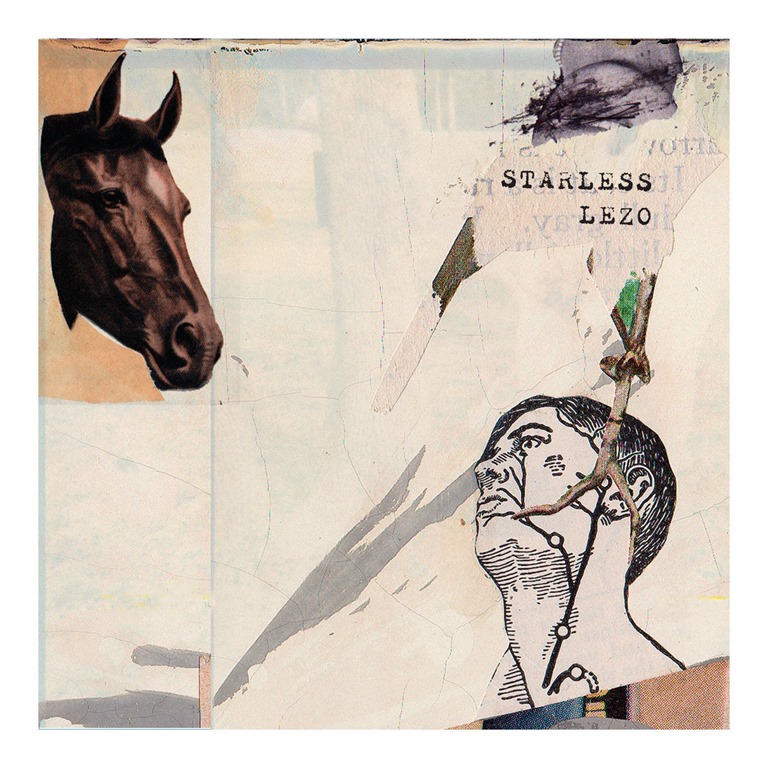
Starless is a new musical project from Yurii Samson of Ukranian industrial noisemakers Kadaitcha. It’s pitched as being ‘less industrial and noisy than Kadaitcha, but more acoustic and lyrical’, although this very much depends on the strain of industrial you’re angling towards.

Admittedly, my first thought is less ‘more acoustic and lyrical’ than Kadaitcha, but ‘fuck me, this is spaced-out experimental jazz!’ ‘Entro’ piles in haphazard and chaotic, as a riot of parping horns hoot and honk seemingly at random though a twittering electronic oscillation with bleeps and quirts, and wandering notes that are difficult to assimilate, stylistically or psychologically. There’s a lot going on at once.

But the title track goes much more industrial / dark ambient, a restless thrumming providing the backdrop to a distanced, echo-heavy vocal and squalls of extraneous noise, swells of feedback and layers of serrated electronica, whole distorted impenetrable vocals ring out with a bold authority. It’s the sound of Big Brother’s dictation, monotone, cold, flat, and impervious, while metallic noise spirals and swirls.

Next up, ‘Chudovys’ka’ begins all aclatter and aflutter, a clicking flicker or delicate beats, before a warped vocal begins to nag away in the background. And then, before long, it goes full Throbbing Gristle with churning electronic rhythms and hard-edged noise butting up against them. And this is a sustained sonic attack, the best part of ten minutes of difficult noise that simultaneously rumbles and screes, a low-end wash that rolls and throbs while clattering percussion ricochets off in all directions.

‘Kiviten’’ goes all-out with the heavy-duty percussion, calling to mind the thunderous battery of Test Dept. It also brings droning church organ and shrieking feedback that hurts the ears and bends the brain, as well as heralding introduction of epic choral voices on the scale of Carl Orff’s ‘Carmina Burana’, only distant and dissonant. It’s big on drama, and also disquiet.

Closer, ‘Saga’ is also impressive in its depth, and equally the depth of the discomfort it discharges as wheezing monotone vocals drone out over a shifting soundscape of hesitant beats, creeping jazz horns and scrapes and bubbling synths. It’s sparse, low, slow, and trepidatious, making for an unexpectedly Low-key conclusion that also happens to leave the listener hanging on the edge of a swamp hidden by fog, wondering what lies beyond.

AA

a3986107524_10

11th June 2020

Christopher Nosnibor

Stoke on Trent’s pottery industry may not be what it once was, and apart from Robbie Williams, who’s not a good advertisement for any city, it’s not exactly renowned for its music. But then, underground artists tend not to be renowned generally, existing as more of a loose-knit and divergent community. It was through this community that I first heard the sounds of Plan Pony, although I’ve known the man behind the project – again, through the community – for some time.

Single release ‘Martyr’, backed with ‘Martyr II’ (and accompanied by a third track, ‘Hipster Soufflé’ on the ultra-limited CD-R edition) is a dank, muffled, chunk of raw experimental noise layering that combines elements of gnarly punk, early industrial, and no-wave.

Created using sampler, delay pedals, voice, loops, guitar and found sounds all recorded to tape, it’s primitive, raw, and the epitome of DIY in the best possible sense: this is the sound of an artist making art out of a need to make art, without having even the peripheral vision of one eye on any kind of audience.

‘Martyr’ thuds in with a muddy sequenced drum that sounds like a wet pair of balled socks being slapped around inside a cardboard box. The guitar sparks like the jack lead’s been plugged directly into the mains, and the shouty vocals are all the echo and utterly impenetrable. The result is an angular, abrasive noise that sounds how I expect some of Uniform’s demos to sound.

‘Martyr II’ is very much a contrast: the same production values and tonal range this time provide the context for a slice of brooding dark ambience, an instrumental (de)composition that creeps and spreads like mildew.

These are dark times, which are evidently inspiring some dark shit: and this is some dark shit right here.

AA

a3432590618_10

Human Worth – 25th August 2020

Christopher Nosnibor

Modern Technology crashed the scene hard with their eponymous debut EP in January of 2019. A devastating detonation of thunderous post-punk nihilism that dismantled consumer culture with half a dozen hard-hitting sonic blasts, it was focused and perfectly formed. It also very much captured the zeitgeist, while plunging sonic depths appropriate to the bleakness of mass consumerism and a culture that favours conformity and the erosion of individuality.

The duo – bassist / vocalist Chris Clarke and drummer Owen Gildersleeve gigged hard for a full year off the back of the EP, proving themselves to be a truly formidable live act: with a clear grasp of dynamics, intensity, and the importance of volume, they not only won a proper grass-roots fanbase, but also used their art for social good, donating proceeds from their Human Worth events and the profits from said EP to a selection of charities, notably Mind, Shelter, and The Trussell Trust.

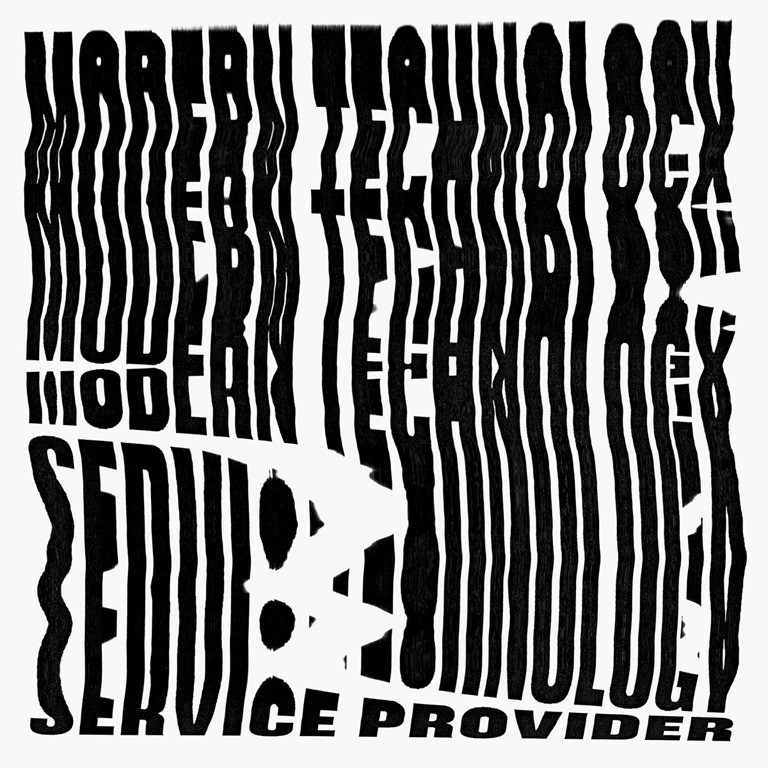
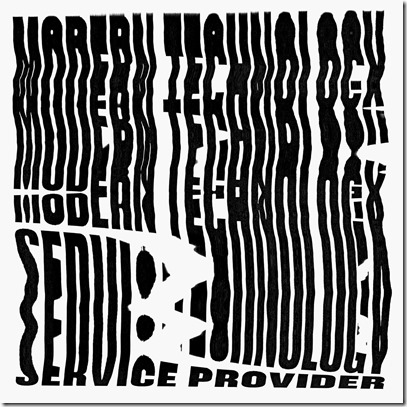
Service Provider finds the duo even more aflame with fury and frustration at contemporary society, and although they seemed pretty well-honed on their first outing, they’ve taken things up another level or three here. The formula – such as it is – is unchanged, with the compositions centred around repetitive, cyclical grooves, pulverizing percussion and anguished vocals swamped in reverb to forge dense capsules of nihilism. The artwork, similarly, consolidates their identity, and the stark monochrome design with its dissolving text is a perfect summary of the stark images of social decay the band depict in their songs. But now, they’ve triple-distilled their ire, and the mammoth production only enhances the effect.

The first of the eight songs, ‘Therapy’ starts sparse, just Clarke’s brooding baritone voice and a primitive thudding drum beat. Those opening bars contain pure anguish, his voice cracked and distorted. Then, in a sharp squeal of feedback, the bass tears in like a whole troop of tanks crashing in, their caterpillar treads tearing at the earth, before locking into a single grinding note that booms out, each simultaneous strike of drum and bass like an explosion. Part Unsane, part Swans, it’s a heavy-hitter, and sets the tone and weight from the outset.

The bass buzzes and rumbles, the drums are understated, thumping away an insistent slow build, and it’s mostly just a scream of feedback like a jet engine that accompanies Chris’ vocal, an edge of distortion on the epic reverb, while he hollers, half-buried in the mix on ‘Blackwall Approach’. According to Wikipedia, ‘The northbound Blackwall Tunnel is a traffic bottleneck with tailbacks. A TfL study in 2009 revealed that the 1.1-mile (1.7 km) approach to the northbound tunnel took around 19 minutes in rush hour traffic, or a delay of approximately 11 minutes per kilometre.’ As such, it makes sense, the band casting a bleak eye over miles of excess traffic and literally tonnes of CO2 emissions. Because this is how we will die, choking the planet and ourselves in our question for exponential growth. And if you think ‘The Great Pause’ will change anything, then while I applaud your optimism, you are completely deluded: lockdown isn’t even over and there are mile-long queues of traffic to access beaches and beauty spots.

‘All is Forgiven’ is an epic grunger, coming on like an outtake demo for Nirvana’s Bleach played at half speed, with Owen’s powerhouse drumming driving thunderously. It’s raw and dingy and hits with serious velocity. The riff on ‘Gate Crasher’ is cyclical, repetitive, gut-churning, ribcage rattling, an intensely physical experience, which captures the force of the band’s live performances perfectly.

Describing a riff as ‘crushing’ may be a cliché, but fuck it: ‘Twitcher’ is a monolithic doom-weight crusher of a beast. A low-slow stealth verse yields to a thick distortion-ripping chorus that is absolutely punishing.

‘Terra Firma’, the album’s shortest song at a mere two-and-a-half-minutes, finds the band explore their more experimental side in a bleepy intro that gives way to a devastating bass blast paired with a squall of treble that calls to mind early Head of David, and serves as an into to the closer, ‘Life Like’, into which it segues. It begins with a spoken-word narrative, a rolling drum and bass almost serene as Clarke hovers around a calm monotone. Early crescendo threats subside and contribute to a simmering tension. But around the four-minute mark the build really begins in earnest, the bass thickening, swelling, and emerging in a tempestuous burst for an elongated outro that takes it to near the eight-minute point.

As a social commentary, Service Provider gets right to the rotten core of capitalist exploitation, and the way it pitches everyone as competition. The upper echelons are competing for supremacy: the majority are competing for scraps and for survival as the divide grows wider. And yet the irony is that the supremacy at the top is predicated on the rest purchasing whatever they’re selling, and all too often it’s shit they don’t need and can’t afford but that’s somehow become essential to contemporary living.

If anyone believes a world emerging from lockdown after the first wave of Covid-19 will be kinder, more accommodating, more humane, the early signs are that they’re sadly mistaken, as businesses slash employees and push even harder to return profits in the wake of a global financial slump.

We’re all fucked, and Service Provider sells it out loud – very loud – and clear, in stark, brutal terms. It’s a pretty punishing set, and what’s impressive is that they sustain the bludgeoning impact throughout, making for an absolute monster of an album. It’s hard to fault service like this.

AA
a1432357693_10

Sargent House

Christopher Nosnibor

Chelsea Wolfe and her band drummer Jess Gowrie came together while touring Wolfe’s Hiss Spun album in 2017. I reasonably expected Chelsea to be the dominant force here, and it’s perhaps because of that expectation that Self Surgery, the fruits of their collaboration under the moniker of Mrs Piss, hits as hard as it does. It’s the best kind of collaboration, greater than the sum of its parts, and finds Wolfe standing equal creative billing.

If Wolfe’s albums are marked by a degree of poise, control, balance, then those are tossed to the wind in a deluge of noise on Self Surgery. It’s unrefined, even messy in places, and all the better for it. It feels like a true exploration as the pair cut loose, dredge deep, and find what’s really inside themselves.

‘To Crawl Inside’ is but an intro track, 43 seconds of no-wave buzz and a vocal stew that bubbles discord and disquiet. It sets the tone in that it’s raw and ragged, angular and challenging, but it barely begins to set the levels for volume and abrasion. On Self Surgery, Wolfe and Gowrie crank it up and go all out.

‘Downer Surrounded by Uppers’ blasts headlong into a grunge blast, and we’re talking more early Hole than the stereotypically formulaic quiet/loud dynamic of what’s come to be associated with grunge since Nevermind and Live Through This redrew the template and rendered it accessible. It’s not the only full-throttle grunge explosion: ‘Nobody Wants to Party with Us’ is throws in some skull-cracking percussion and an industrial edge that lands it somewhere between Pretty On the Inside and The Downward Spiral. It’s heavy-duty.

‘Knelt’ finds Chelsea in more familiar territory, with a grinding, low-registering bass and swirling maelstrom of distorted guitar providing a dense, murky backdrop to a breathy, brooding vocal that’s reminiscent of ‘Spun’. But while still cinematic, and also deep, dark, and weighty, as well as simultaneously ethereal, the guitars wrapped in layers of effects and drenched in reverb, there’s a different feel to the production here: less polished, less precise, everything is more up-front, more direct.

If the first half of the album is intense, the second is next level: muscles twitch and nerves jangle in the face of the upshift in pace and intensity that begins with the driving riffery of ‘M.B.O.T.W.O.’ and steps up with ‘You Took Everything’, which is shadowy, gloomy, gothic in mood, stark snare ricochets shaping the direction as screaming banshee backing vocals fill the backdrop with a fearful hauntology.

The title track is a daunting morass of dingy bass and pulverising percussion that paves the way for the mess of no-wave noise that is the pair’s titular tune and sums up what their about perfectly, as the guitars and dual vocals swirl in currents of feedback before a driving drum thrash that calls to mind Bleach-era Nirvana hammers to an unexpected moment of calm to fade.

Because of its timing, and its staunchly uncommercial titling, this project could well be a bit of a sleeper, but the fact is, it’s as strong as anything Wolfe has released during her career to date, and is a truly killer album in its own right.

A

AA

a4118909094_10

Hallow Ground – HG2005 – 5th June 2020

Christopher Nosnibor

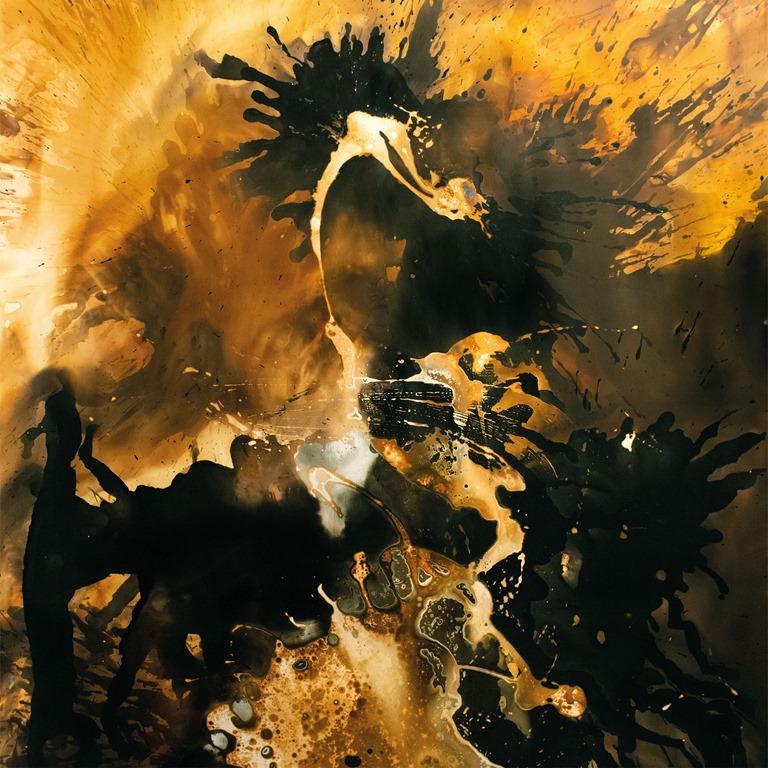
For this release, it’s worth laying out the context in detail, as provided in he press release, which explains that the album ‘was conceived as the soundtrack for the eponymous installation piece by the French artist Fanny Béguély.’

‘First presented as part of the group exhibition »Panorama 21 – ›Les Revenants‹« at Tourcoing’s Le Fresnoy Studio National des Arts Contemporains in December 2019, Béguély’s chemically painted photographs focused on humankind’s propensity for self-examination and its attempts to probe the mysteries of the past, present and future. Oberland’s heavily processed electric hurdy-gurdy, the »boîte à bourdons,« provides the foundation upon which the Borghesia member Tomažin unfolds her gripping vocal magic(k). Their dense mesh of soundscapes and singing mediate between the mystic and the modern, the natural and the all-too-unreal to further examine our persistent desire to decipher the signs we find in nature. As the first collaboration between these prolific experimental artists, ARBA, DÂK ARBA is as evocative and thought-provoking as the art that has inspired it.’

The hurdy gurdy is by no means a common or popular instrument. Not that you’d be likely to be able to discern any specific instruments on the five sparse, ominously atmospheric pieces presented here.

From a sparse, quivering tone surrounded by emptiness, ‘Grotta’ builds in density over the course of fourteen and a half minutes into dense bugle of sound, a deep, resonant thrum over which mournful sounds – voice-like but not voices – moan and groan as they drape elongates notes of sadness over an increasingly uncomfortable backdrop.

This is not an album so settle down comfortably with, and it’s not a comfortable kind of ambience: ‘Fumes’ brings a suffocating tension, heightened by the unintelligible vocals that speak – wordlessly – of an inner torment as they reverberate in an endless monotone, through which rumbles of thunder rupture. Ululations undulate evoking strange, distant lands and mystical esotericism. It culminates in a long, isolated drone, almost lost beneath a cacophony of shrieking, wailing, and crying. It’s difficult to hear: I feel my chest tighten: it’s the sound of pain of torture.

‘Hieromancy’ (brief research tells me this is a form of divination involving sacrificial remains or sacred objects) only heightens the anguish amidst more shrieking and wordless despair. It fades down to a defeated murmur and a hovering hum which drift into the more optimistic dawn of ‘Hereafter’, which offers a glimmer of light and hope. It’s late-coming, but welcome.

LP_Cover.indd

Southern Lord – 29th May 2020

Christopher Nosnibor

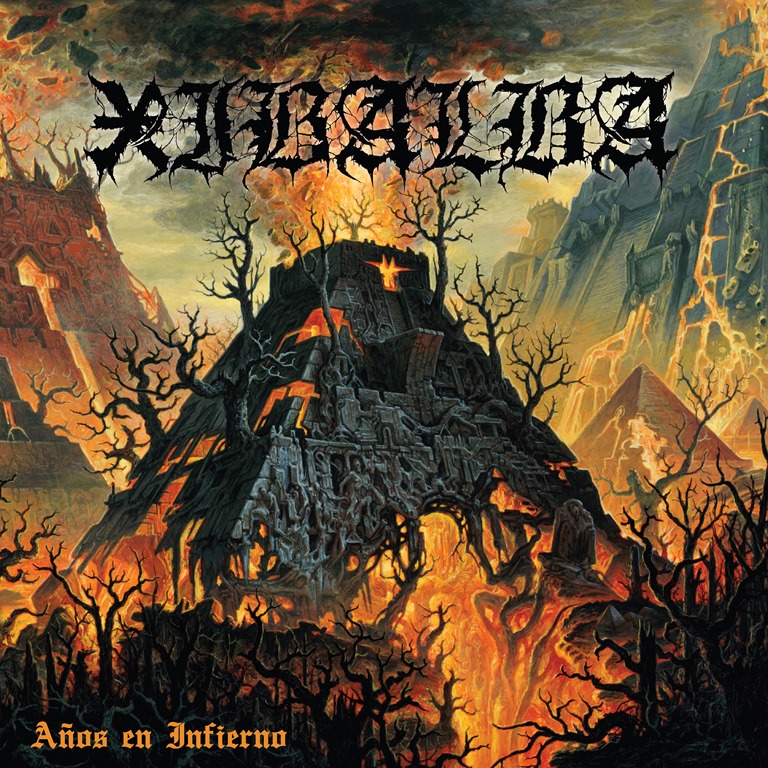
The title, Años En Infierno, translates as ‘Years in Hell’, and 2020 has felt like years condensed into what in reality amounts to just a few weeks. Time flies when you’re having fun, but drags for an eternity when you’re trapped in one place and life is slowly passing you by. On reflection, though, much of the time post-millennium has been pretty hellish and in myriad ways, and we have indeed endured years in hell – but right now, this moment in time feels abjectly apocalyptic, and the arrival of this album as a soundtrack seems timely.

Five years on from the savage assault that was Tierra Y Libertad, the Californian creators of the heaviest of metal haven’t gone light or soft on us, with a set of songs that switch the pace from breakneck double-pedal drum propelled thrash fury to slow, sinewy doom within the space of a single four-minute piece. Everything about Años En Infierno is dense, condensed, giving it a degree of intensity that truly hurts. It’s physical, pounding at the ribcage and raining blows to the head; but it’s also psychological. The guttural vocals and simply the style of playing exudes anguish, torment. The lyrics – bark, snarled, growled. Amd indecipherable by ear – offer a relentless succession of images of degradation, death, despair, although nothing different from watching or reading the news for a few minutes. This is the world now, and Xibalba soundtrack it perfectly, in that Años En Infierno is relentless, unforgiving, and so hard and heavy that to experience it from beginning to end is to take a thorough pummelling.

‘Saka’ brings a whole other shade of heavy, with thunderous tribal drumming hammering out a pulverizing percussive tattoo. The guitars churn, and they’re a pure filth that gnaws at the intestines: it’s a deeply physical experience, like being punched, repeatedly. When they’re going hard and fast, it’s blinding; when they slow it down, it’s to the pace of slow decay: the air hangs in thick suspension as time stalls to a crawl.

‘Al Abismo I’ marks a change of pace and also mood, with a slow picked, chorused guitar weaving a reflective atmosphere and drifting ponderously into expansive realm between latter day Earth and Fields of the Nephilim. It casts a different kind of darkness, and when the guitars do erupt, albeit briefly, it’s a landslide of sludge, an annihilating tornado of ferocious noise. The track bleeds into its furious counterpart, ‘Al Abismo II’, a guttural, grinding explosion from the bowels of hell. The mid-section breaks it down to a delicate, brooding post-metal chime, but then it goes full-on power-chord crushing dirge as it powers it way to its dark conclusion. It drives a punishing album to a monolithically heavy finale, while also hinting at a certain light on the horizon. We can only hope it will emerge in time.

AA

LORD279_12inch Gatefold LP Jacket 1 Pocket

Christopher Nosnibor

Leeds’ DIY scene is becoming increasingly adept at turning poky rehearsal spaces into gig venues: it makes sense from a funding perspective, but also means that while conventional scenes are struggling to stay open for various reasons (as often redevelopment as being squeezed financially) and new and niche acts are finding it increasingly difficult to get gigs, the Leeds scene is thriving and as diverse as ever.

I’ve previously sung the praises of rehearsal-room-turned venue CHUNK, and it’s Theo Gowans, who does a lot of the stuff there, who’s behind this evening’s show. Tonight, Mabgate Beach (or Madgate Beach, as the poster has it), tucked away in a corner of an industrial estate in an obscure corner of the city plays host to a brace of Newcastle noisemongers, supported by a brace of very different local supports.

I’d been forewarned that the room was small, but that’s something of an understatement.

Intimate isn’t even close.: it’s about the size of my living room, although it’s still probably a few feet bigger than The Hovel in York’s South Bank Social, which has a capacity of maybe 16. The drum kit and back-line fill most of the room, after which we manage to pack in maybe 20. And the lighting is as minimal as the space, only less consistent.

The Truth About Frank have been knocking around for over a decade now, and Alan Edwards’ sets don’t get any more mellow over time. Kicks off the bill with a riot of samples, the set comprises a single continuous improvised soundwerk, a jarring audio cut-up through which murky beats fade in and out through an ever-shifting collage of noise, creating what cut-up originator Brion Gysin would refer to as ‘a derangement of the senses’. Playing in near-darkness with a pencil beam of light emanating from the arm of his glasses to illuminate his minimal digital kit, Edwards’ stubby nicotine-stained fingers manipulate shapes on a touch screen and jab buttons, and with each prod and poke, more strange sounds emerge, and it’s brilliantly bewildering.

DSC_3262[1]

The Truth About Frank

Things start to feel quite cramped when a full band with bass and two guitars play, and I’m less concerned about site lines for photographs than being smacked by the bassist’s headstock, meaning I’m happy to settle for the second row to observe Loro spin a set of mellow post-rock. It’s kinda standard circa 2004 fodder for the most part, but it’s nice, and with twists of mathiness and jazz without being indulgent.

DSC_3265[1]

Loro

Penance Stare prove to be an absolute revelation. Their recent recordings are a hybrid of ethereal shoegaziness with black metal production values, and while those elements are very much present here, witnessing their colossal noise in such an enclosed space is an incredibly intense experience. There’s ferocious reverb on the vocals, and murky as fuck guitar duels with thunderous drumming. The duo explore some deep, dark atmospheres, too, and coupled with Esmé’s brutal anguished shriek, there are comparisons to both Amenra and early Cranes to be drawn here. Some of the soft instrumental segments are achingly beautiful and affecting, and are invariably obliterated by devastating distortion and howling agony. This is music that reaches deep inside and leaves one feeling somehow altered.

James Watts has more bands and projects than I have albums in my review pile, and having met him and performed alongside Lump Hammer in the summer, I was keen to see how things worked with a different slant and lineup, and an absence of knitted head/face garb. Whereas Lump Hammer ae sludgy and repetitive, Plague Rider mine a seam of pounding math metal, with Watts’ vocal veering between shrieking demonic and guttural taking a shit deep grunt. And what the fuck even is his two-string instrument with some kind of touchscreen attached? In the less-than—half-light, I’m struck by how much Watts resembles a young Alan Moore. It’s so dark, I can barely see the rest of the band to know what they look like, but they relentlessly kick out juggernaut riffs that hammer hard.

DSC_3274[1]

Plague Rider

Technical difficulties struck 15 minutes in, with a power outage on the guitarist’s pedal board bringing a halt to the set, but after a brief intermission they resumed as loud and punishing as before, and then some.

In such a confined space, the effect is staggering: every beat, every chord, lands like a punch to the gut. It’s exhausting but exhilarating.

Christopher Nosnibor

The trouble with receiving more shit than you could ever listen to in a week on a daily basis means you lose track now only of what you’ve got, but also where much of it came from. The positive spin is that life becomes a constantly-rolling conveyor-belt of surprises, some of which are pleasant.

What’s pleasant is a matter of taste, of course, meaning not everyone in my position would be enthused on stumbling on the dark, industrial-strength electronica of Kojoohar × Ködzid Goo – less a collaboration than a collision of Ukranian Andrei Kojoohar (who produces industrial / power electronics as Kadaitcha, and synthpop / triphop / downtempo under the Fogscape moniker), and Ködzid Goo from Russia, who specialises in bleak darkwave.

It’s no criticism to say that Дотла represents the sum of its parts. ‘Сулема’ (trans:‘Sulema / (Mercury Chloride)’ sets the tone with churning atmospherics paving the way for a thudding industrial rhythm and shivering electronica. It’s low-tempo, intense and claustrophobic. There’s no space to get comfortable here: there’s barely space to breathe. Its as dark as the black on charcoal cover from beginning to end.

There are dark hip-hop elements buried deep in the songs, too, and the hybridity contributes to the otherworldly distancing that defines the sound.

Whether or not the lyrics lose anything in translation, I couldn’t comment, but there’s something fascinating about their viscerality and potent images, with the opening lines of the final track, ‘Полынь’ (trans: ‘Polyn’ / Wormwood’ being fairly typical:

Eye slits plastered with phlegm completely,

eyelashes sealed with wax tightly

All the humanity has a single mind,

and now it starts getting distracted

Wrapped in food plastic film deceitfully,

it rots in its semiconsciousness

Drowning unhelpfully in swampy lakes,

trudging scarcely through powder dunes

The same song closes off with the equally dark lines:

Dust settled on our senile scalped heads

Successively having turned into powder

We all were born at the wrong time in vain

Blossomed in the wrong place all over

Delivered in a blank monotone, devoid of emotional and humanity, it sits well with the stark, mechanoid instrumentation that thumps and grinds low-end bass throbs welded to dead-hearted beats, overlaid with icy synths.

Hard, stark, cold and dystopian in every sense, this release offers no comfort and no breaks, no hooks and no easy inroads. It’s a difficult and singular work that reminds us that we’re all on the outside, all alone, and all doomed.

AA

cover

Buzzhowl Records – 18th October 2019

Christopher Nosnibor

What came first, the music or the mindset? I’m going to put it down to how some of us – myself included – are wired, and will forever be drawn to that tense, dark sound that came out of the late 70s and early 80s that was a reaction to – and against – everything that was happening at the time. Just as punk was a reaction to – and rebellion against – prog and the beigeness of the times, so post -punk and its various strains, including (dare I whisper it?) goth harnessed the frustration and the dejection that was a product of the first years under Thatcher and the political climate of the second cold war and rendered it in a more articulate, and perhaps more musically resonant way (because let’s face it, 90% of so-called punk bands were just playing pub rock with the amps up).

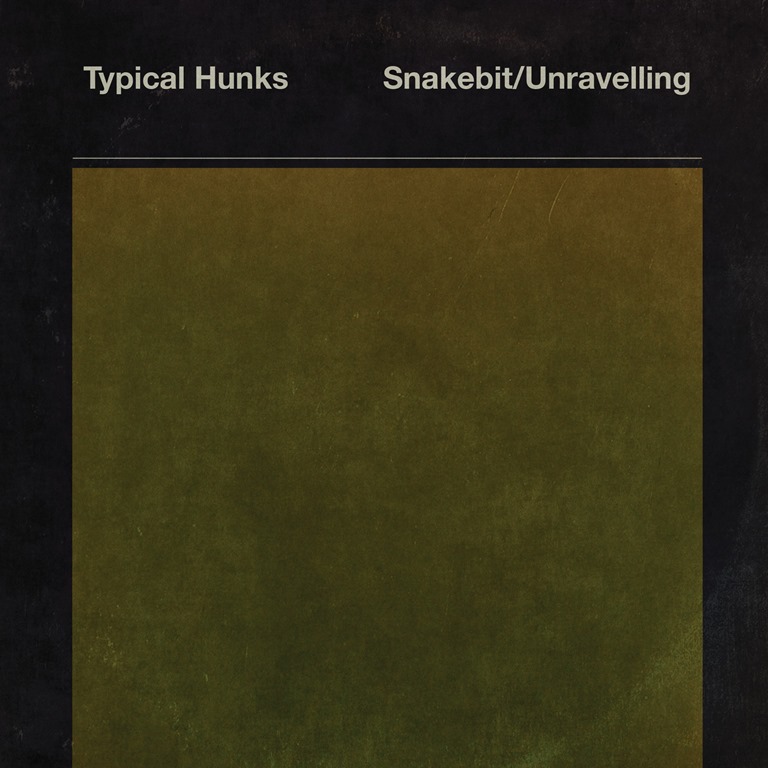
To revisit briefly an observation I’ve made variously in recent years, these are bleak, bleak times, and the future is well out of hand. The post-punk renaissance that began around 2004 with the emergence of Editors and Interpol grew from an underground which was there long before, but now it’s in full spate. Reading’s Typical Hunks fully embrace all of this as a guitar bass duo backed by a drum machine.

The guitar on ‘Snakebit’ is spindly, reverb-heavy, weaving one of those tense post-punk guitar-lines that’s pure Joy Division, and it snakes its way around a tight, insistent bass that booms and drives along with the insistence of the grooves Craig Adams laid down to define the sound of The Sisters of Mercy in the early years. That in turn is wenled to thumping beat that’s a distillation of all things Yorkshire circa 1983-4. It’s all in the programming: nothing fancy, no attempt to make it sound like an actual drummer, no flash fills or flourishes, just a hammering repetition and a snare sound that’ll slice the top off your head. Those Boss Dr Rhythm machines really are unbeatable. The vocals are tense, paranoid, and channel disaffection.

Strains of feedback and a hesitant bass hover before everything locks in around another relentless rhythm on ‘Unravelling’ with elements of March Violets, Red Lorry Yellow Lorry, and early Danse Society all spun into a solid block of discomfort. Vintage in its roots yet ultimately providing the soundtrack of the zeitgeist, this is a cracking Aside / B-side combo housed in a suitably barren sleeve, that showcases Typical Hunks at their strongest and most focused yet.

AA

Artwork

Christopher Nosnibor

I love getting weird shit in the post. Not literal shit, of course, not the kind of shit one might have received for panning The Levellers in a review in the early 90s, but the kind of sonic faeces people I associate with might send me when they have a new release or project in the offing.

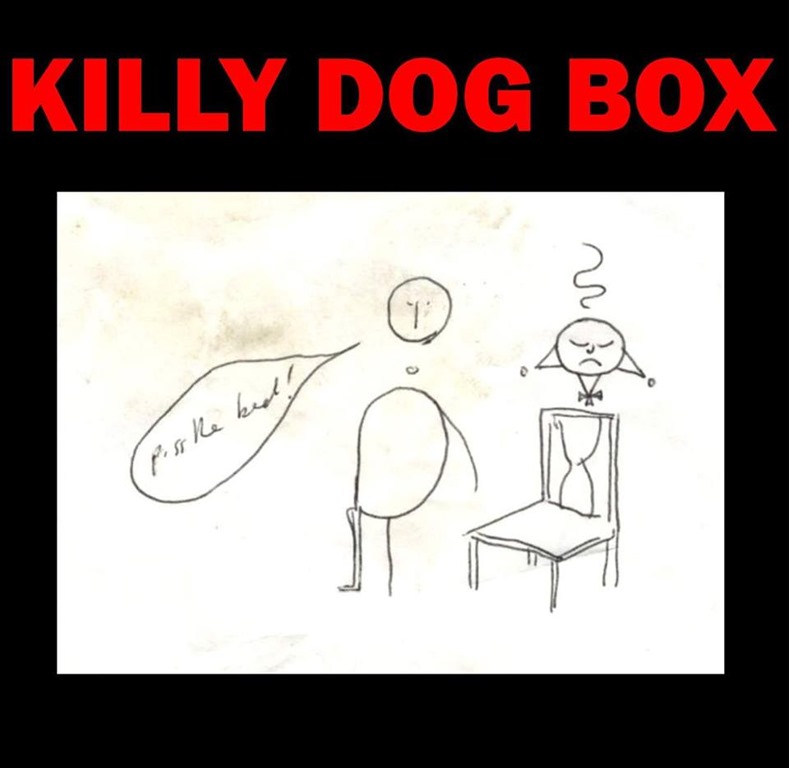
I clocked the sender’s name on the envelope: one P.A. Morbid of Middlesbrough. Having been moving in the same circles for a while, the arrival of a package in itself was no major shock, but I hadn’t been aware of anything musical in the offing from this North-Eastern master of bleak lines who, having recently published a collection of poetry split with local luminary Harry Gallagher, has also been working on some flash fiction pieces. It’s not entirely clear where this fits in: on-line sources suggest it was released back in 2017, but the infrequently gigging band also look set to make a rare hometown appearance in July.

Morbs is credited as providing ‘vocals, rhythms, noises’ on this three-tracker, produced in collaboration with Peter Heselton, who’s responsible for guitars, electronics, keyboards, and also rhythms.

Most of those rhythms are sequenced pulsations, with the vintage feel of analogue or at least early, primitive digital drum machines, and overall, the production on this experimental electro effort is primitive to the point of condenser mic in the middle of the room standard. But this kind of straight-to-tape DIY approach is integral to both the ethos and the appeal.

Dingy pulsations drive ‘Das Jenseits’, the first cut on here, and it’s pure Throbbing Gristle. Murky drones and extraneous noise that all sits in the mid-range form a drifting sonic fog. There are vocals lurking in the smog, but they’re distorted and low in the mix: the result is that they’re an abstract disorientating addition to a difficult mess of abstract disorientation.

‘Standing by the Grave’ is more direct: a whipcrack snare cuts though the infinite murk of the guitars while Morbid moans and grunts impenetrably. There are hints of neofolk, but equally goth-tinged post-punk in evidence. The atmosphere is oppressive, dense. You don’t really know what it’s about or what’s going on, but it’s like wading through treacle and a suffocating airless smog that lies thick and heavy.

The closer, ‘what light remains’ is a mercifully short four minutes in duration. Rippling shards and quivering synths shimmer through the atmospheric fog. It’s dislocated, difficult, dark ambient; percussionless desert rock, reverby chords echoing out across space and time rippling in a heat haze.

I’m left dazed, feeling strangely alone and wondering what it was all about.

KDB