Posts Tagged ‘dark’

Prophecy Productions – 3rd February 2023

Christopher Nosnibor

When I decided to strike out and create Aural Aggravation, the premise – at least in my head – was that I would write whatever I liked about whatever I liked, although the more detailed version of that was that I would pen essay-length reviews instead of the usual sub-three-hundred-word summaries that were, I suppose, about volume rather than depth. Equally, the idea at the time, back in 2016, was that it would be a vehicle by which to explore my relationship with music as much as the music itself. I haven’t always maintained this approach since: sometimes I’ve kicked out pieces simply chasing hits as the site has grown in its readership; others I’ve simply not felt like going deeper. And ultimately, I’ve thought ‘fuck it, my site, my platform’, and I have to say I’m comfortable with that. The quality of my writing is variable, and my typing and proofing even more so, but that’s part and parcel of keeping it real and with a view to the bigger picture that reviewing has to be – for me – about how I feel about the music I’m writing about. Because music isn’t something to simply be dissected clinically, assessed on technical merit. People listen to music because of the way it affects them, not because they’re on a battle of the bands panel critiquing like they’re judging Strictly.

You’d think that when things are unspeakably bleak and I’m facing struggles of a magnitude I find almost impossible to face, let alone articulate, the last thing I would want to do is wrap myself in a blanket of suffocatingly dark music, and that the last thing I could bear to listen to while in the process of arranging a funeral is anything by a band called FVNERALS.

But then psychology is complex.

I write to neutralise, to create distance. If it’s on the page, it’s not me, or my experience, it’s simply words. When I fell and broke my ribs some years back, I tore open the palm of my hand on landing. In shock, the first thing I did on arrival home wasn’t to clean the grit out and sterilize the bloody mess, but to photograph it. My wife asked why the hell I did that. It was a fair question. I hate blood, it makes me feel queasy, dizzy, faint. If it’s my own. A photograph of blood doesn’t bother me. So the photograph created separation. It was a hand, not my hand. If it had been my hand, I’d have probably passed out. A hand is just a picture, it’s just TV, like a movie.

I do not feel as if I am living in my own life right now. It doesn’t seem real. Having suffered a bereavement – expected, but at the same time unexpected – solace emerges from unexpected places. I’m not seeking comfort, and have no interest in exploring where I am on the journey of the five stages of bereavement. I am stepping back, and assessing the scene. It is not my life. And this is the soundtrack to my surveillance.

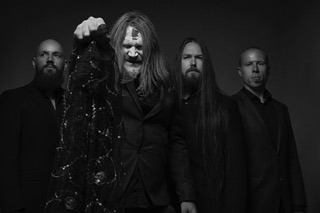
‘Darkness. FVNERALS have created an album that turns the emptiness of the void and the depth of the abyss into sound with their third full-length "Let the Earth Be Silent". The duo gives sonic shape to the silence of extinction that humankind brings to all life on earth and itself. Depression, isolation, and the despair that this existence brings ooze out of every note’.

Lead single and the album’s opening track, ‘Ashen Era’ sets the tone and is representative of the heavy, harrowing furrow the album ploughs, with warping, disorientating noise and disembodied vocals circulating in a mist around thunderous but muffled percussion. It’s all-immersive, dark, dense, and listening to it feels like being buried alive, but at the same time transcendental.

A crashing gong heralds the opening of the scene that is ‘Horror Eats the Light’, released back in November as a single. It’s a bass-dominated exercise in heavy, droning doom and ethereality.

The album’s song titles really do speak for the album as a whole: ‘Annihilation’, Yearning’, ‘Barren’. This is bleak and harrowing stuff. ‘Yearning’ begins brittle, before exploding into a landslide of crushing guitars bearing down. The beats – crashing a light year apar, paired with bass notes landing like detonations event minute or so, this is heavy, but a different kind of heavy.

‘Yearning’ pitches that kind of Swand circa ‘86 crawling dirginess with crushing weight paired with a sepulchral glooming ambience, while the album’s last track, ‘Barren,’ lives up to its title, presenting eight-and-a-half minutes of crushing gloom with ethereal vocals which ascend heavenwards like angels on a zephyr.

Let the Earth Be Silent feels like the final shudders of a dying planet, the collapsing death throes of eternity. It’s a vast and at times quite overwhelming experience. The sound is immense and there’s something of a ceremonial feel about parts of it, but elsewhere it simply feels like the outpourings of grief and is hard to listen to under any circumstances. It chokes you up. There’s something final and ultimately funereal about the droning organ that hovers out to the end, and it leaves you to reflect on the idea – the end. It’s beyond comprehension. But on Let the Earth Be Silent, FVNERALS have created an album that paves the way towards acceptance.

AA

a1345175263_10

When industrial bass artist, Bug Gigabyte heard TikTok star, Kamarah Rae’s ‘a cappella’ rendition of Sam Smith’s ‘Unholy’ with her lyrical re-write, he immediately felt inspired. He wanted to write a full track sampling her vocals while adding his own. So….. he did. 

“When I first heard her version, it inspired me to continue the story and emotion of what she is talking about in the track. I wanted to express the emotions of her lyrics through the music, to bring her idea deeper down the "rabbit hole. This is my tribute to all the female witches in the world, much love goddesses”. – Bug Gigabyte

You can only find the track on SoundCloud, YouTube and as a free download on Bandcamp.

Check it here:

AA

ece39751-7cb3-516e-fb10-32808425007f

26th January 2023

Christopher Nosnibor

The Hull scene has been simmering nicely for some time, and it’s a great advertisement for deprivation and off-the-track locations being melting posts for dark underground creativity.

We may have bid farewell to Chambers and Cannibal Animal, but Hull continues to throw up a wealth of dark and noisy bands, and while Low Hummer have been making some serious headway, along with BDRMM, there’s no shortage of acts emerging behind them, with Besdit making rapid progress recently.

The name is a fair summary. Anyone who as ever endured bedsit living will relate to the claustrophobic sensation of confined living. Bedsits -appropriately – carry connotations of meagreness, of low-budget gloom, and Bedsit really do convey that sense of claustrophobia.

The four-piece’s latest offering, ‘Dead Bands’, is the lead and title track from their upcoming EP, which follows up on 2020’s Pocket Toy EP. It’s a step up from the lo-fi grunge metal production of its predecessor, and sees the band consolidated on that blueprint, leaping from rough diamonds ready for development to something lean and mean, and dense and taut and truly outstanding.

It’s not just the production: the composition, the playing, the vocals, the lot – they’ve not sold out and gone super-slick by any means, but ‘Dead Bands’ is a dark, dense amalgamation of post-punk and grunge, and while it may be a celebration of bands gone before, it sounds pretty bleak in its mid-tempo, bass-driven way, paired with baritone vocals that border on the gothic. It’s a combination of the sound of 1985 and the sound of 1993 and it’s dark and its heavy, but it’s magnificently realised with some killer riffage and some blistering, blustery guitars squall and scream their way to the end.

There’s no joy to be found here, but it’s a glorious exercise in dark nihilism that has to be my single of the year so far.

AA

AA

Christopher Nosnibor

The third – or fourth, depending on your source – album by electronic duo Akustikkoppler, is a work of starkness, of austerity, and a collision of vintage and contemporary, and quite the contrasting experience.

The cover looks like a photo I may have taken from my daily wanderings. I’m not saying it’s a good cover or a bad cover, this is merely an observation. The duo would likely say the same about the cover itself. It’s a snapshot that speaks for itself of the nature off people in our all-waste capitalist society.

I feel an almost inevitable shiver of nostalgia listening to this, despite the fact that the album’s style and sound predate my musical awareness. Instead, it makes me feel a nostalgic tug for my teens, when I was introduced to all of the weird and wonderful, experimental and starkly harsh music that had emerged in the late 70s and early 80s, to which Alles Muß Raus demonstrates a clear lineage.

As the blurb explains, ‘Inspired by the rough commercial industrial surroundings of Schusters Studio back then in Hamburg, Alles Muß Raus was produced on vintage and modern equipment. The two artists combine past and future to a sparkling, shimmering darkness.’ And industrial it is – not in the Ministry sense, but in the spirit of the early innovators utilising primitive synths, drum machines, and tape loops. And it ignites a spark of excitement, in that even now, this kind of music doesn’t sit comfortably with anything in the sphere of ‘normal’ music. The nostalgia, then, is in remembering how hearing TG, Test Department, DAF, et al for the first time completely changed my world, and my concept of what ‘music’ could be.

The analogue drum machines, mixed to recreate the sound of the late 70s and early 80s with a dominant synthetic snare is a defining feature. The first track, ‘Entrümpelung’ is a head-cracking, gut-smashing sub-bass groove that’s anything but vintage and pulls you in before the bass-driven churn of ‘Mitnahmequalität’ steps boldly into grinding, bass-led Throbbing Gristle-influenced industrial. In contrast, ‘Mittenmang’ is almost playful, with tempo changes and some d‘n’b rapidfire drumming bouncing alongside some busy, bloopy electronica. One of the shorter tracks, ‘Horses And Carriages Burn’ hints in the direction of The Cure’s ‘Carnage Visors’ while recreating the spirit of ‘Pornography’.

Entirely instrumental and assimilating so many disparate elements, despite some insistent grooves and accessible, melodic ,moments, Alles Muß Raus certainly isn’t a pop album, but contains many elements of electropop, even if the shade is turned down to twelve. While Kraftwerk may be an obvious touchstone, the vibe that radiates from Alles Muß Raus is much more DAF, with insistent, snare-driven beats driving relentlessly to define the sound and structure of a varied and meticulously arranged set.

AA

a1894982188_10

3rd February 2023

Christopher Nosnibor

Aural Aggro regulars Sleep Kicks make a welcome return with their latest offering, ‘Words in Vain’. With a rumbling bassline and busy, effects-heavy guitars that soar tremulously, the opening bars of ‘Words in Vain’ smashes together The Fall’s take on ‘Jerusalem’ and Editors’ ‘Bullets’ – cathedrals of sound underpinned by an earthy thud, and this is one of those expansive, gut-pulling new-wave revival tunes in the vein of the early 2000s – think Interpol, Editors, White Lies – and it’s taut and evocative. There’s an emotional depth to the vocals, but there’s more than that: everything feels tightly packed and tense. And I can’t deny that I’m a sucker for that.

What is it about the post-punk template that endures? Why do these goth-tinged tunes have so much bite? It’s not simply nostalgia: hell, I was hardly born when this sound emerged in the late 70s and early 80s, and suspect that the turn of the millennium crop – the revivalists – were inspired by listening to their parents’ collections. And what goes around comes around, meaning the new bands emerging, in their twenties, have likely discovered the noughties revivalists via their own parents. But why do these cycles emerge?

I can’t help but suspect thee socio-political landscape has a fair bit to do with it. Rocketing inflation – not to mention strikes, droughts, and floods – mean parallels to the 70s are being drawn in the media, and for obvious and justified reasons. Social and economic troughs bring frustration, despondency, despair – and music which reflects that mood.

As troughs go, this is a deep one; we’re looking as escalating war and nuclear threat – same as in the early 80s – insane inflation and mass deprivation – with extreme climate, flooding, etc., etc, on top. People can’t afford to exist, let alone to live. And when things hit the bottom, art invariably rises to reflect the mood and present the voice of the zeitgeist.

AA

su57784-WiV_1200px

Taken from their album ‘Apocalypse For Beginners’, Rabbit Junk have released ‘Nostromo’ as a taster of their bold technoindustrial/electropop/metal crossover sound.

Rabbit Junk draws subtle parallels between the challenges facing our species as a whole and the challenges facing our own personal lives. These challenges are characterized as foreseeable and yet tragically unavoidable. As such, the album communicates the fatalism and frustration of modernity alongside the lack of control we often feel over our own lives.

The album’s lead track “Stone Cold" (Feat. Amelia Arsenic) exemplifies Rabbit Junk’s willingness to take risks and defy genre norms. “Stone Cold” is a gender-fluid and genre-mashing anthem with an infectious sing-a-long chorus. The song featuries lyrics in both German and English delivered by masculine and feminine vocal textures floating over a mélange of punk, drum & bass, metal, and hip hop.

Other standout tracks include “Nostromo”, a sci-fi influenced art-metal meets synthwave track which is quickly becoming a fan favorite, and “Love Is Hell”, a decidedly danceable and gritty homage to everyone’s broken hearts.

Check it here:

AA

470953

Cruel Nature Records – 2nd December 2022

Christopher Nosnibor

Many of us were waiting for the snow. And then, it arrived. And then everything ground to a halt. Welcome to the world now. What happened? It wasn’t always this way.

It’s all in a single word: ‘remember’ immediately imbues the album’s title with a sense of nostalgia. It isn’t explicit, of course, but it’s so, so evocative. Because, so caught up in life and the way everything blurs as time races past, we forget so much. The things we remember, then, hold a special place in our crowded minds. Reminiscences between friends, where moments, events, occurrences, people and places are conjured in those moments of reflection whereby we ‘remember when…’

Winters now are simply not the same as they were. I remember, in the early 80s, a full foot of snow on my parents’ back lawn, from which I would build a six-foot snowman and an igloo. We’d even build igloos on the school field during breaks. Snow didn’t stop school busses from running then. Perhaps it’s because of climate change, perhaps it’s because of the sheer volume of films, art, and literature, that depict idyllic, snowy winters, that show is so evocative. Most of can only dream of a white Christmas, but then, even Irving Berlin’s 1942 song was in itself a slice off nostalgia: ‘just like the ones we used to know’ is perhaps more accurately summarised as ‘just like the ones we see in fiction dating back to Dickens’ but obviously, it doesn’t have the same chime. Ultimately, the world is changing, and

The text which accompanies the album’s release serves almost as an affirmation of my line of contemplation, with the explanation that Remember We Were Waiting For The Snow is about what is called ‘solastalgia’: our anxiety, our concern, our sadness to see some natural phenomenon disappear. Written 5 years ago, after Žils [Deless-Vēliņš – aka (Lunt)] relocated to Latvia, it is a collection of exquisite reflective moving guitar-driven ambience drawing from same the sonic well as soundscapers like Jim O’Rouke’.

The nine tracks of Remember We Were Waiting For The Snow range from the expansive – the eight-minute opener, ‘Flakes and Feathers’ and the nine-minute closer, ‘Auseklis’ – to the fragmentary – the sub-two-minute ‘Dead Man in the Sand’ and ‘Dead Man in the Snow’.

Between the bodies, there is atmosphere. There is tension, but it’s contained by the soft curtains of sound. ‘Plasma (Under the Ice)’ is stark, scraping, brooding, dark, and difficult, uncomfortable, uneasy on the ear.

The instrumentation is varied, from screeding synths to picked guitar and mellow woodwind that falls between jazz and post-rock. But genres matter not and dissolve in the face of such magnificence. Remember We Were Waiting For The Snow drags hard on melancholic reflections. It’s also melodic and intimate, and ultimately, quite magical.

AA

cover

Cruel Nature Records – 2nd December 2022

Christopher Nosnibor

Having raved about Pound Land’s second album, Can’t Be Arsed back in March, I was pretty thrilled to find the follow-up landing so swiftly. What with the exponential rise of Benefits, and acts like Polevaulter emerging, it seems that now is a good time for angsty, angry music with noisy tendencies and gritty sociopolitical leanings. Of course it is: it’s a sign of the times, and besides, it’s not a good time for anything else, unless you happen to be a non-dom billionaire or a CEO at an oil company.

If Sleaford Mods set a new template for the paired-back duo setup as being in vogue before the pandemic, the combination of lockdowns and crippling economic circumstance has rendered this an operational necessity for many musicians.

Pound Land may be up to their elbows in grimy dishwater and wading through excrement in streets where the drains and sewers are backed up due to torrential downpours and a lack of council funding, but they share little common ground with Sleaford Mods, and that’s despite favouring repetitive monotonous Krautrock-inspired grooves over dynamic structures: Pound Land are far doomier, dingier, lugging their way closer to sludge metal than anything you could possibly dance to.

The Stockport duo’s third album is a monster slab of punishing, gut-dragging, bass-heavy grimness, and one has to wonder how much to read into the title. The people are weary, ground down: will they rise up, or curl up and give up?

The blurb points out that the album finds the Stockport band pushing their ‘post-industrial kitchen-sink drama preoccupations even further on Defeated, exploring the dark comedy of everyday life in the dismal land of eternal recession. Sometimes the vision expands out of shitty Britain too, ‘Drone’ recounting the wearied observations of an electronic device as it traverses the globe… You’ve got to laugh, because if you don’t you’ll kill yourself. Or somebody else.’

The laughter is pretty dark and pretty hollow, though, and derives as much from the keen observations as any particular knack for a punchline (a line about mobility scooters with Northern soul stickers on stands out as particularly pithy) and the stark musical backing isn’t especially musical, more of a pounding trudge that provides a backdrop to an endless stream of vitriol and bleak depictions of the everyday, from pavements caked with dogshit and news items about rising fuel prices and their effect in the average household. If it sounds mundane, it is, but then we need art that speaks to us about life as we experience it, and the majority know far more about scrabbling for change to buy a loaf of bread than luxury cars, watches, and clothes.

‘Violence’ is their equivalent of Public Image Ltd’s ‘Theme’, a brutal, sprawling, brawling, squalling monster that opens the album with a relentlessly heavy battering ram of a racket, like Sunn O))) with a howling harmonica and sneering Lydonesque vocal. It crushes your skull, before it fades out swiftly and unexpectedly, which somehow works. But maintaining the PiL comparison, it’s Metal Box that is perhaps the closest similarity, in that the album as a whole is diverse, fractured, unpredictable.

‘Carry On Screaming’ sounds like The Fall in a three-way collision with Yard Act and Melvins. It’s a mangled mess of drum machine beats and psychedelia and noise with a monotone vocal drawl.

Against a thumping dirge of a noise, a grating mesh of distortion and dolorous drum, the title track is a gnarly hybrid of early Swans, and elsewhere, as on ‘Sick Day’, it becomes less about songs and more about spoken word narrative delivered against a backdrop of mangled noise, and at times, it’s pretty harrowing. Lyrically, Pound Land don’t pretty things up. Sonically, they don’t either. It’s magnificently raw and un-produced, and this is no more true than on penultimate song ‘Pathogen’, a dirty slow stomp that’s pure rage and invites comparisons to Uniform. And it sounds like it was recorded on a phone from the next room.

‘Drone’ sneers and snarls like Lydon at his best, closing with a venomous refrain of ‘fucking twat’ delivered in a thick, spitting Manchester accent.

Defeated may only contain eight songs, and only a couple of them extend beyond the five-minute mark, but it’s feels immense, and experience that’s exhausting both physically and mentally. Listening, you feel the weight of the world condense and compress as the angst and anguish press down ever darker, ever denser. It’s a bleak, suffocating document of everything that’s wrong right now. This is the sound of broken Britain, and it’s a harrowing insight into just how fucked everything is. But in this channelling of nihilistic anguish, you realise you’re not alone. It doesn’t change anything, but it’s something to cling to.

AA

cover

FVNERALS have released a video clip for the track ‘For Horror Eats the Light’, which is the first single taken from the dark doom duo’s forthcoming new album Let the Earth Be Silent, which has been scheduled for release on February 3, 2023.

FVNERALS comment: “The track ‘For Horror Eats the Light’ is a lament about giving up all sense of hope, embracing the absence of light and a forced return to barren lands through devastation”, guitarist Syd Scarlet explains. “The song is about contemplating our lives coming to an end while accepting that nothing can save us and nothing should. It was written to include several movements that each mirror an emotional stage. The title of the song was inspired by a quote from Thomas Ligotti: ‘Not even the solar brilliance of a summer day will harbor you from horror. For horror eats the light and digests it into darkness’.”

Tiffany Ström adds: “The video was created by Simona Noreik, an amazing artist with whom we had previously collaborated on our live visuals”, the singer and bass player writes. “Simona’s artistic vision really complemented the apocalyptic nature of our song perfectly and she managed to portray desolation, extinction and nothingness with grace.”

Watch the video here:

AA

zYbnsRdQ

Septaphonic Records – 7th October 2022

Christopher Nosnibor

While Dystopian Future Movies’ ‘difficult’ second album, Inviolate, took a full three years to land after debut Time, their third, War of the Ether crashed in after just over two, and it’s an immense sonic documents that the Nottingham trio have compiled in this time.

Back in the spring of 2020, I wrote of Inviolate that ‘Everything about Inviolate is bigger, bolder, more pronounced and yet more nuanced, shaper and more keenly felt and articulated. And every corner of the album is imbued with a sense of enormity, both sonic and emotional: Inviolate feels major-scale, from the driving riffs to the heartfelt human intensity.’ That amplification is again true of War of the Ether. Dystopian Future Moves’ previous releases amply demonstrate a band with both an interest in and a knack for the cinematographic, the dramatic, so it stands to reason that they should extend these focal elements here.

This time around they’ve drawn inspiration from little-reported but truly horrifying events which took place at the former Catholic-run Tuam Mother and Baby Home in songwriter Caroline Cawley’s native Ireland, where 796 skeletons found in the grounds after suspicions were raised by a local historian in 2012. As the press release explains, ‘to hide the shame of pregnancy outside of wedlock, women were sent to homes like this all over the country – forcibly separated from their mothers, many of the children died in infancy due to neglect, and some were trafficked for adoption to the US. The country is still dealing with the fallout from these discoveries.’

War of the Ether is not a joyful record. It is, however, a record with real depth, and imbued with real emotion, as well as an aching sense of tragedy. And, as has been established as Dystopian Future Movies’ signature style, it’s an album which balances riffs and restraint, and is built on atmosphere and menace. They promise an album that ‘explores a wide range of genres from prog and shoegaze to doom-metal, noise-rock and folk,’ and don’t disappoint.

DFM 3 Portrait Photo 2000px WEBSIZE

War of the Ether opens – somewhat daringly – with the ten-minute spoken word crawler that is ‘She From Up the Drombán Hill’. For the most part, it’s sparse and spare, tingling guitars gently rippling behind the narrative – but there are bursts off noise, and it swells and grows and when it kicks in, it kicks in hard with piledriving riffage. The dynamics absolutely blow you away – exactly as intended. ‘Critical mass’ is appropriately titles, starting out with a haunting, echoed clean guitar and delicate drums rolling in the distance as a backdrop to Cawley’s aching, melodic vocal as it stretches and soars, and ‘The veneer’ is a magnificent slow-burner that builds to a shimmering sustained crescendo which unusually fades at the end. Against the weight of the subject matter and brooding instrumentation, it feels somewhat frivolous to focus on a fade, but it serves to highlight the many ways DFM are outside trends and exist in their own space. This is never more apparent than on the dreamy but serrated buzzing shoegaze of the title track.

For all its darkness, War of the Ether is a remarkably accessible album – not on account of its myriad hooks and killer choruses, but because it is simply so strong on melody and so utterly captivating. And because, as they demonstrate admirably on ‘No Matter’, the album’s shortest and most overtly structured song – they do have a real knack for snagging the listener with the combination of tunefulness and megalithic riffery. And then, the final track, the eight-and-a-half-minute ‘A Decent Class of Girl’ brings together all aspects of the album in a powerful accumulation of sedate, strolling psychedelia and climactic crescendos that optimise the impact of both.

Magical, majestic, and immensely widescreen, the scope of War of the Ether is simply breathtaking, and leaves you feeling stunned. Awesome in the literal sense.

AA

DFM 3 Album Cover Artwork 1500px