Posts Tagged ‘DAF’

1st March 2025

Christopher Nosniboir

Richard Rouska is something of a cult legend in his own lifetime: back in the 80s he was pivotal in the Leeds zine scene, documenting the emerging post-punk movement Leeds remains so renowned for, in real-time, subsequently writing a number of books. Along the way, he’s made some music of his own, recently making Well Martin This is Different his primary focus, with some prolific results. Finding The Ai G-Spot is WMTID’s fifth since their inception in the mid-late eighties, and serves up a set of remixes, with proceeds from any donations going to the Throat Cancer Fund.

And yes, it certainly is different, and that’s clear from the get-go. WMTID’s music is essentially electronica, but draws on a host of elements which have their origins in different decades and different scenes. I will admit that I misread the title as Finding The Ali G-Spot initially. Ai-iit! But while this album draws on a huge array of influences, you won’t find any naff cultural appropriations.

‘The Prince is Dead (Again)’ is a twisted hybrid of lo-fi post-punk, 80s electronic industrial (think Wax Trax! stuff in the late 80s / early 90s), space rock, and Krautrock, a motorik groove stricken through with some wild orchestral strikes and multi-layered vocals – and this is to an extent the template: ‘03:33 Time’s Up’ is exactly the same duration as the original version (‘333’) which appeared on I Know What You Are But Who Am I? in the Autumn of 2024, tweaked to optimise the hypnotic rhythm and detached-sounding vocals. The result is somewhere between DAF and early Human League. ‘Deep Down Low II’ – again reworking a track from I Know What You Are goes full-on techno / cybergoth stomper, with industrial-strength beats pounding away relentlessly. It works so well because it doesn’t take from the original, instead simply rendering it… more. More. MORE! And I want MORE!

There are hints of both KMFDM and very early New Order about ‘It’s (Another) Lovely Day’, but then, it’s as much a work of buoyant lo-fo indie and bedroom pop, while ‘Little Bombshells’ comes on a bit Prodigy, but again, a bit technoindustrial, and a bit kinda oddball, bleepy, bloopy, twitchy, stuttery, the vocals quavering in a wash of reverb as crashes of distortion detonate unexpectedly. Elsewhere, ‘Waiting For The End…’ goes dark and low and robotic, and ‘Three O’Clock Killer’ is hyperactive and warped, and brings menacing lyrics atop a baggy 90s beat.

It really is all going on here, and the end result feels like a wonderfully eclectic celebration of music, articulated through some quite simple compositions, all of which have solid grooves providing the backbone of each.

My general opinion of remix albums is widely documented and not entirely enthusiastic, but Finding The Ai G-Spot is a rare exception, mostly because it doesn’t feel like a remix album an doesn’t offer three or four unnecessary and unrecognisable versions of each song, boring the arse off all but the most obsessive fan. In fact, if you’re not up to speed on WMTID’s output – and there’s a fair chance you may not be, to be fair – Finding The Ai G-Spot offers a neat entry point and summarises the last couple of albums nicely, too.

AA

a2835565654_16

Lake of Confidence – 15th December 2023

Christopher Nosnibor

Having worked for far too many years in financial services in order to pay the bills, ‘terms and conditions’ is a term that weighs heavily on my soul and my psyche. All that small print… the devil is in the details, and there’s a good reason customers often feel swindled by the inclusion of impenetrable clauses written in language which only someone with an advanced degree in legalese could even begin to decipher. The title, then, brings fitting connotations to a complex and detailed work, although, mercifully, it’s more rewarding than frustrating and doesn’t leave you feeling bamboozled and shafted over.

Label Lake of Confidence – which sounds like it’s on the moon – informs us that ØrsØ’s debut EP ‘is a reflection on our civilization, offering a gripping critique of consumable culture and post-social network alienation.’ They also describe his style as a fusion of ‘experimental music, indietronica, dark wave and English-speaking pop’, and ‘English-speaking’ is right: ‘Unreal Moment’ has the nagging industrial-strength electro pulse of DAF paired with the electro pop layering of early Pet Shop Boys, topped with a vocal delivery that alludes to the monotone nonchalance of The Flying Lizards.

ØrsØ’s brilliance lies in his ability to amalgamate such a range of elements while still keeping the compositions relatively simple, structurally and in terms of things happening at any given time. These songs – and they very much are songs, even if conventional hooks and choruses aren’t dominant features – are clever and carefully constructed. ‘Dancing Girl’ has something of a recent Sparks vibe about it, while he channels shades of Bowie in the vocals, and this is accentuated on ‘To Yourself’, which could be an outtake from Outside.

The EP’s five tracks showcase the work of an artist who possesses a high level of musical articulacy, matched by a high level of experimental curiosity. There isn’t a weak track here, and significantly, no two tracks are particularly alike: the last of the five, ‘Follow the Wind’ brings a more overtly dance feel, with a pumping bass beat and rippling, trancey synths, but at the same time, there are hints of The Human League and Visage in the mix.

In an ocean – not a lake – of retro-tinged, vaguely dark-hued synthy pop, ØrsØ’s ‘Terms and Conditions’ stands out as being more detailed, more nuanced, and more inventive in its assimilation of wide-ranging elements – and the results are accomplished.

Cruel Nature Recordings – 24th November 2023

Christopher Nosnibor

Spanish electronic musician Julio Tornero has been producing minimal techno, IDM and experimental music since 2015. He’s one of those people who has a million different projects and as many different pseudonyms, also recording as Dark Tibet, Oceanic Alpha Axis, Sequences Binaires, with his work published by a multitude of labels including Fmur, Intellitronic Bubble, Detriti, Phantasma Disques.

I never cease to be amazed by artists who simply effuse and froth with creative output: how do they do it? How do they have the time, let alone the headspace? Given the economics of art in the 21st century, the likelihood of a life on the further recesses of obscurity in the most obscure of genres could provide a living seems improbable, but then to have the capacity to produce art after the slog of a day-job seems almost superhuman. And this, this is not just some easy, off-the-cuff, going-through-the-motions half-arsed toss-off.

Tierra de Silencio is pitched as ‘A homage to the formative years and evolution of electronic music’, with nods to Nurse With Wound and other progenitors of that nascent industrial sound, which was born primarily out of a spirit of experimentalism, and a desire to be different, facilitated as it was by emerging technology.

It’s perhaps hard to really assimilate now how the late 70s and early 80s witnessed a technology explosion, which not only witnessed the advent of new synths and drum machines, but saw them become available on a low-budget, mass-market basis. But while many bought them up and started making synth pop, some oddballs did what oddballs always to and decided to push the kit as hard as they could. And some of the results were utterly deranged. Tape loops and all kinds of messing yielded results with varying degrees of listenability, from Throbbing Gristle to NWW to Foetus and Cabaret Voltaire.

With only four tracks, this is one of those albums which would lend itself to an extravagant 2×12” release, with a track per side, since these are very much longform works, with ‘Duermevela’ stretching out beyond seventeen minutes, and the title track lasting more than a quarter of an hour. But if the expectation is for a set of compositions which are primitive, difficult, and in some way steeped in nostalgia for that early 80s noise, this isn’t that album. Despite the analogue feel, Tierra de Silencio finds Tornero exploring the spirit of the period, rather than striving to recreate the sound.

The first track, ‘Metamorph’ splashes in at the dancier end of the spectrum with some hard groove vibes. Fast, urgent, flickery, and glittery, it’s a shimmering curtain of electronica which ripples over a driving, dynamic beat that doesn’t let up. It’s got heavy hints of DAF, but it’s still not without a taste of Yello or Chris and Cosey. And it keeps on going for eleven and a half minutes. In time, the beat peters out and we’re left in a whirlpool of fizzing electronics.

The aforementioned ‘Duermevela,’ the album’s second track, draws on 70s electronica, with endless bubbling, rippling synths and incursions of altogether harsher sounds. Blasts of dark noise deluge over the bleak explosions of dankness. The beats are busy, and also metrononomic, and the effect is mesmerising.

Something dazzles for a moment. Then the lights flicker. What is this? This is likely panic. Negatividad Absoluta binks, bonks, bleeps and tweets, and the atmosphere is 70s sci-fi, something on the cusp of strangeness, jarring, alien, robotic. There are crunches and fizzes, crackles of distortion, and top-end tones ping back and forth like ping-pong.

Tierra de Silencio is very much an album which pushes an experimental vibe, while maxing out on what feels now like more contemporary dance tropes, largely on account of the rippling synths and glooping repetition. But it also incorporates elements of Kraftwerk and early Human League in its deployment of those vintage synth sounds and layerings. It’s an intriguing and entertaining work, and it passes hypnotically in what feels like no time at all.

AA

AA

a0904785816_10

ant-zen – 16th September 2023

Christopher Nosnbor

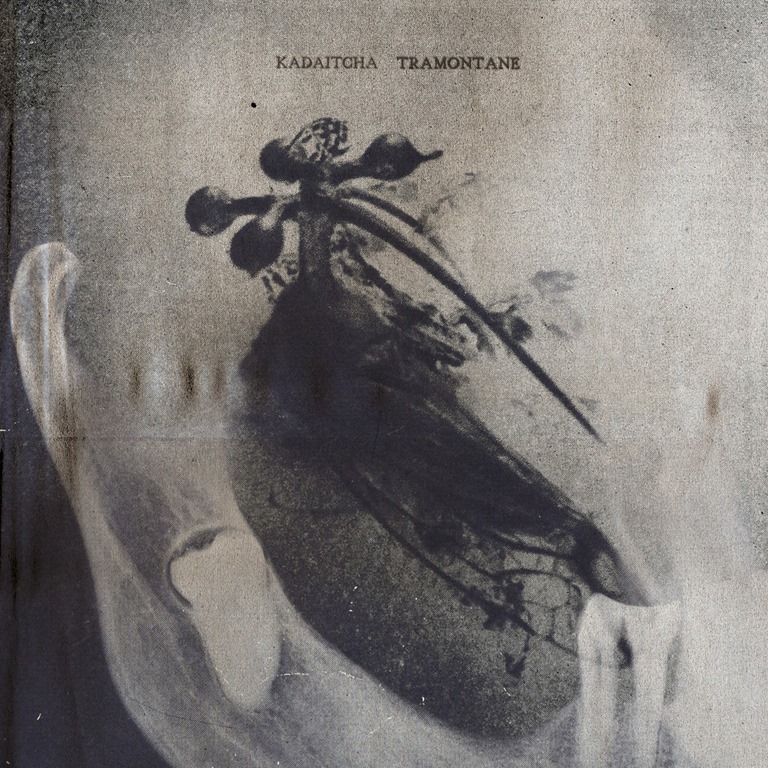
Four years on from Tar, Ukrainian industrial duo Kadaitcha, consisting of Andrii Kozhukhar and Yurii Samson, have overcome many, many challenges to deliver album number five, in the form of Tramontane.

The tracks which appeared on their limited lathe-cut single last year do not appear here, and this is admirable: singles so often tend to be used as launchpads for albums, and it was particularly common in the 80s and 90s that albums would sell on the basis of a couple of singles, but would have next to no other decent tracks. In the days before streaming, this was something that was easy to get away with, since the only way of hearing the album was by buying it, which you would do based on the singles. But then, the risk could be reduced by taking punts using your half price or free options through Britanna Music, or similar. The advent of streaming hasn’t really improved things, though, because now, at least in mainstream circles, the album is essentially obsolete.

But outside the mainstream, the album is thriving, and artists are pushing the format now that the constraints and limitations of physical formats aren’t necessarily dictatorial in determining duration, and there are infinite options for exploration. The single wasn’t so much of a stop-gap release as a standalone document of a period in time. But the key point here is that Tramontane is very much an album, and a work to be approached as such. The notes which accompany the release are almost hallucinatory – not quite Burroughs cut-ups, but fragmented, non-linear, and they serve to articulate the essence of the music contained here. Stylistically, it’s tight and cogent, and there’s a flow to it, too, which begins with the appropriately-titled ‘Intro’, which is precisely that – a short instrumental intro piece which paves the way for the ten heavyweight cuts which follow. But within that coherence, what Tramontane offers is a work which really goes all-out to disrupt and unsettle.

‘Niello’ draws primarily on the sound and style of earlier industrial music, the electronic pioneers of the late 70s and early 80s, the likes of DAF and Cabaret Voltaire, but with its distorted, menacing vocals, there’s an element of the later evolutions of industrial which emerged in the mid 80s. It seems to be that there are very different understandings of industrial, and while Al Jourgensen may be a huge fan of William Burroughs and the music that formed the body of the first wave of Industrial music, namely Throbbing Gristle and also the wild tape loop works of Foetus and the heavy percussion of Test Dept, it’s industrial metal and harsh post-NIN electronica which have come to become synonymous with industrial latterly.

On Tramontane, Kadaitcha have brought the two forms, old and new, together, and the result is discordant, noisy, difficult. And these are its selling points. It feels like a guided tour through the most challenging aspects of Industrial music through its evolution and history.

‘Knife’ is a sparse, oppressive low-end throb pinned down by a dull, thudding, muffled-sounding beat, over which twitching electrical streams flash and flow while monotone vocals are unsettlingly detached. The percussion really dominates on the tempestuous ‘Liars’ and any and all references to Einstürzende Neubauten are entirely appropriate. It’s a thunderous, dense racket where the low end really stands to the fore, but it’s tame in comparison to the dark ‘Offering’: even when it drives out as a heavy and insistent bass riff, it feels unfinished, undercomposed. Yet therein lies its success: it feels organic, and nothing is overdone.

The mangled noise and droning distorted vocal on ‘Fossil’ is pure Throbbing Gristle, a barrelling barrage of blitzkrieg laser synth bleeps and a whole mess of midrange and lower end distortion and dirt, churning, discordant, the monotone vocals almost buried in the tempest of overloading unpleasantness, and ‘Seeds’ is similarly unpleasant and uncomfortable, everything going all out on overdrive.

It all comes together on ‘Insight’: beginning as a gentle, spacious, mellow post-rock guitar-led piece, it soon erupts into a mess of overload akin to Metal Machine Music, only with drums and sinister vocals. It’s got the lot, and as the album enters its final stages, it seems to consolidate the elements of the previous tracks to punch even harder, with the percussion harder, the grinding morass denser and darker.

Perhaps a reflection of the circumstances in which it was created, perhaps a reflection of the times in the world at large, Tramontane is heavy and at times harrowing. The lyrics may not be decipherable for the most part, but the mood requires no translation or interpretation, and Tramontane will crush your soul.

AA

a3600121745_10

Felte FLT-089 – 14th July 2023

Christopher Nosnibor

Mission to the Sun is Chris Samuels of Ritual Howls fame (synths, samples, programming) and Kirill Slavin (vocals/lyrics), and comes recommended for fans of Wolf Eyes, Moin, Throbbing Gristle, Coil, The Legendary Pink Dots, Drew McDowall, Suicide, Cabaret Voltaire, etc.

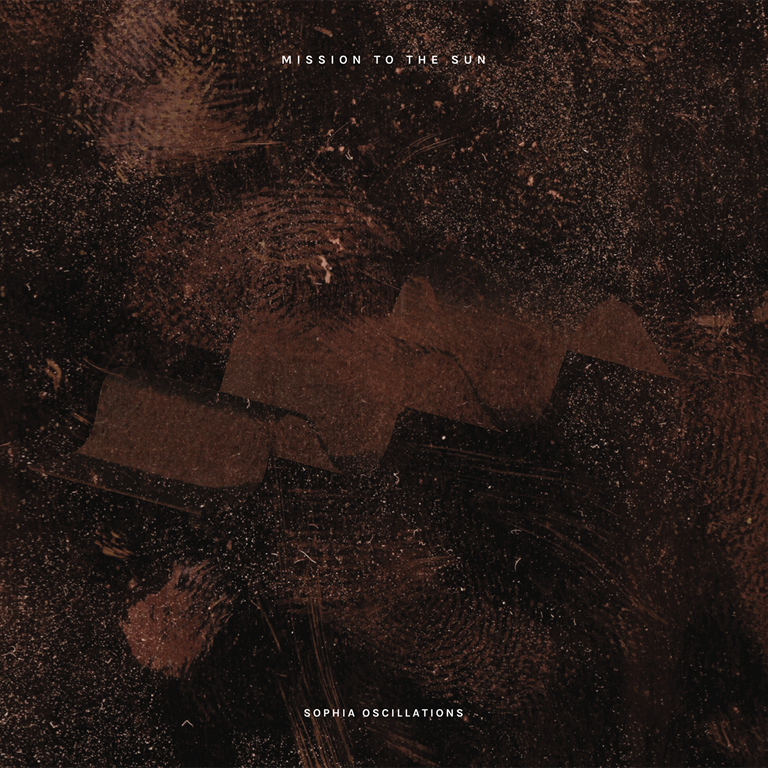
Sophia Oscillations is their second album, and it pitched as ‘an immersive journey through the dark corners of post-industrial music’, whereby ‘The Detroit based duo continues the sonic exploration started on their debut album Cleansed by Fire, while delving deeper into themes of isolation and lost communication. Christopher Samuels’ synths, samples and rhythmic programming is accented by Kirill Slavin’s haunting vocal delivery as the listener receives intersperse audio recordings from the outer reaches of inner space.’ This may seem an unusual angle of approach given their chosen moniker, but the one place hotter than the sun or the earth’s core is the core of what it is to be human. We still understand space better than we understand the deep sea, and the deep sea better than we understand the human mind. There is much scope for exploration in every sphere.

William Burroughs famously described ‘Scottish Beat’ writer Alexander Trocchi as a ‘cosmonaut of inner space’, although he also applied the label to himself, stating ‘In my writing I am acting as a map maker, an explorer of psychic areas, a cosmonaut of inner space, and I see no point in exploring areas that have already been thoroughly surveyed.’

This is an appropriate context for the eight compositions which make up Sophia Oscillations, which are essentislly beatless but strongly rhythmic in form. If they belong to the lineage of the avant-garde and the industrial music of the late 70s, it equally draws on a host of other, more contemporary threads in order to forge something quite different and ultimately new.

‘Drowning’ surges and pulses, rippling waves washing over a slow-treading bassline which wanders up and down, stepping somewhere between DAF and The Cure’s Carnage Visors while the vocals whisper and wheeze low in the mix, a stealthy monotone that’s both tense and detached. Whistles of feedback strain from the speakers and wrap themselves around the whole drifting expanse. Things take a turn for the abrasive on the title track, with machine-gun blasts of noise cutting through grainy swathes of bleak ambience, gradually fracturing and fragmenting quite uncomfortably.

There are hints of medievalism and classical on ‘Censor Sickness’, but they’re melted into a dark murk of muttered voices and unsettling atmospherics, and the combination is quite unsettling and far from comfortable: if anything, it’s queasy, and the minimal yet noisy ‘Unborn’ pushes this to another level: stark, metallic, robotic electronica, it has an 80s dystopian feel which again calls to mind DAF and Cabaret Voltaire. The late 70s and early 80s were exciting because musicians with limited means – and ability – were finding ways of using emerging, and increasingly affordable – technology to make music which represented the world in which they found themselves. As such, the emergence of experimental electronic music and industrial music was born out of a collision of multiple factors, none of which will ever recur, and for this reason can never be recreated.

Mission to the Sun aren’t attempting to recreate history here, but instead, Sophia Oscillations finds them processing history through their own filters. ‘Attrition’ brings together post-rock and crunching industrial electronica with a dash of Gary Numan and more detached spoken-word vocals, and it’s a hybrid that isn’t easy to process, because it all feels so alienating. But then, articulating alienation always does.

The churning grind of ‘Cornerstone’ sounds like the intro to something by Big Black, but instead of Roland kicking in, alongside a relentless bass, it just grinds on and on, and it’s dark and messy. Once again, Slavin’s voice is half-buried in the mix: it’s difficult to decipher the words, and his voice hovers, blank, flat, vaguely Dalek-like, in the vein of Dr Mix, but less harsh.

Sophia Oscillations is a challenging album. Yes, it’s unsettling, bleak, stark sparse, but the hardest part is the fact it doesn’t confirm to any one genre, it doesn’t follow any obvious or specific form, and it’s not the fact that it’s unsettling and difficult to find a place for it that’s the issue, but the fact it keeps you tense and on edge for its duration. But, perhaps even more than that is the fact it feels removed from anything human. But it’s not so far removed as to be alien. The brain simply isn’t equipped to process the inhuman– or the near-human-but-not-quite, the uncanny, the unheimlich. Because we recognise it, and yet we don’t. Sophia Oscillations brings the challenge right in front of your face. Sit back, draw breath, process. This isn’t an easy ride.

AA

FLT089_front

Christopher Nosnibor

The third – or fourth, depending on your source – album by electronic duo Akustikkoppler, is a work of starkness, of austerity, and a collision of vintage and contemporary, and quite the contrasting experience.

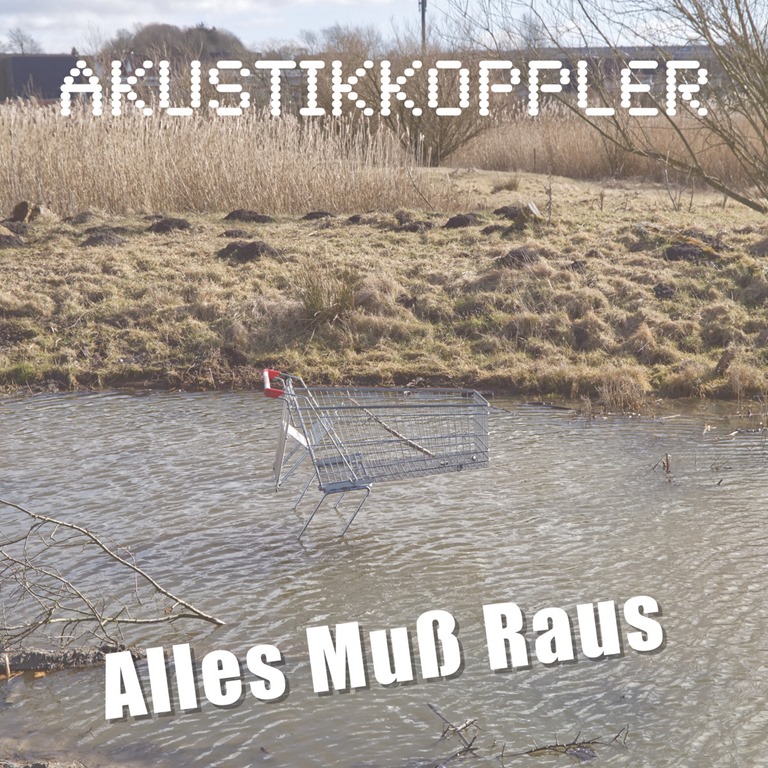
The cover looks like a photo I may have taken from my daily wanderings. I’m not saying it’s a good cover or a bad cover, this is merely an observation. The duo would likely say the same about the cover itself. It’s a snapshot that speaks for itself of the nature off people in our all-waste capitalist society.

I feel an almost inevitable shiver of nostalgia listening to this, despite the fact that the album’s style and sound predate my musical awareness. Instead, it makes me feel a nostalgic tug for my teens, when I was introduced to all of the weird and wonderful, experimental and starkly harsh music that had emerged in the late 70s and early 80s, to which Alles Muß Raus demonstrates a clear lineage.

As the blurb explains, ‘Inspired by the rough commercial industrial surroundings of Schusters Studio back then in Hamburg, Alles Muß Raus was produced on vintage and modern equipment. The two artists combine past and future to a sparkling, shimmering darkness.’ And industrial it is – not in the Ministry sense, but in the spirit of the early innovators utilising primitive synths, drum machines, and tape loops. And it ignites a spark of excitement, in that even now, this kind of music doesn’t sit comfortably with anything in the sphere of ‘normal’ music. The nostalgia, then, is in remembering how hearing TG, Test Department, DAF, et al for the first time completely changed my world, and my concept of what ‘music’ could be.

The analogue drum machines, mixed to recreate the sound of the late 70s and early 80s with a dominant synthetic snare is a defining feature. The first track, ‘Entrümpelung’ is a head-cracking, gut-smashing sub-bass groove that’s anything but vintage and pulls you in before the bass-driven churn of ‘Mitnahmequalität’ steps boldly into grinding, bass-led Throbbing Gristle-influenced industrial. In contrast, ‘Mittenmang’ is almost playful, with tempo changes and some d‘n’b rapidfire drumming bouncing alongside some busy, bloopy electronica. One of the shorter tracks, ‘Horses And Carriages Burn’ hints in the direction of The Cure’s ‘Carnage Visors’ while recreating the spirit of ‘Pornography’.

Entirely instrumental and assimilating so many disparate elements, despite some insistent grooves and accessible, melodic ,moments, Alles Muß Raus certainly isn’t a pop album, but contains many elements of electropop, even if the shade is turned down to twelve. While Kraftwerk may be an obvious touchstone, the vibe that radiates from Alles Muß Raus is much more DAF, with insistent, snare-driven beats driving relentlessly to define the sound and structure of a varied and meticulously arranged set.

AA

a1894982188_10

2LP Editions Mego – Digital release date: 4th December 2020 / Physical release date: early February 2021

Christopher Nosnibor

Initially – and indeed, oftentimes – On Feather and Wire sounds very like so many slightly noodly minimal electro albums, incorporating elements of pop and krautrock to forge some neat synthy moments, fairly light and accessible and propelled by soft but insistent beats and bubbling bass grooves, and it’s pleasant enough, with the darker overtones providing depth and detail. Rivet’s reverence and enthusiasm for the technology is apparent, as is his appreciation for the likes of both Chris and Cosey and Kraftwerk. The invited comparisons to COH are warranted, and if the synthy explorations of the 70s and into the early 80s with the emerging industrial scene is your bag, then the appeal here is clear: there’s plenty to like, but then again, not a lot to distinguish Rivet from myriad other artists of the era or his myriad peers operating in the same field, which seems to be increasingly populous.

‘Glietende Liebe’ has hints of DAF, but then equally of Cabaret Voltaire, and even Depeche Mode with its buoyant repetitive motif. Vocals are limited just the occasional phrase, more shouted the sung, and it seems Rivet – that’s Mika Hallbäck Vuorenpää – is more than happy for the listener to wrestle – or not – with the questions of intention and meaning, as, according to the liner notes, ‘interpretation is flung open as the audience are invited to gauge what on earth is going on here… Are these songs? Are these lyrics? Words melt as beat perpetually takes us deeper into flight. Throughout this trip sharp snares punctuate ghost melodies as vocals rise and vaporise. Shadows hover the walls leaving holographic traces of the duality between fun and fear, the unexpected drifts diagonally across the audio plane teasing and taunting the listener’.

‘Keloid’ is an out-and-out minimal dance tune, and ‘Mag Mich’ is pretty much straight-up EBM, and all of this is fine and neatly executed by largely unremarkable. ‘Sodden Healer’, on the other hand is stark, clinical, dangerous in its detachment. Fragmented vocals cut across one another against a backdrop of grating analogue bass oscillations.

But ‘Coral Spate’ comes as if from nowhere, a standout and standalone, the absolute distillation of every feature of the album culminating in five minutes of claustrophobically gripping intensity, It’s the sound of anxiety, of agoraphobic panic, in ways that are difficult to pinpoint and even more difficult to express. Whereas the dislocated retrofuturism of ‘Ordine Kadmia’ sounds like so much cyberpunk and so many 80s sci-fi movie soundtracks, and is the kind of composition that’s affecting because there’s a certain sense of the unheimlich about its stark robotic repetitions and whipcrack snare sound, it’s precisely the extreme familiarity of ‘Coral Spate’ that’s so uncomfortable – suffocatingly so. And yet the experience of discovering that physical spasm articulated, given a soundtrack, is perversely comforting. It’s a rare and dichotomous sensation that’s difficult to reconcile – but then, art is at its best when it challenges us. The more it makes us feel, however much it hurts, it’s fulfilling that function of taking us beyond the limited boundaries of whatever comfort zones we may have and challenging us to confront those innermost fears by mirroring them back at us.

For this alone, this track alone, I wholeheartedly recommend this album, but maybe should forewarn those of a weaker disposition that it isn’t all breezy grooves.

AA

EMEGO293_front

Editions Mego – 1st November 2019

The 80s was an exciting and revolutionary time, and UK label Some Bizzare gave a platform to some of the more unusual exploratory and experimental acts around the middle of the decade, meaning that while acts like Depeche Mode and Soft Cell were mainstays that brought in funds, they were able to release albums by Soft Cell offshoots like Flesh Volcano, as well as work by Foetus, The The, Coil, Einstürzende Neubauten, and Cabaret Voltaire. Their reputation may have slipped in later years following various stunts and a major falling out with Neubauten over unpaid royalties, but the legacy very much remains strong.

The Elbow is Taboo was Renaldo & The Loaf’s fourth and last album of their initial phase prior to their return in 2010, which was released by and Some Bizzare in the UK and Ralph in America in 1987. Marking a significant expansion and evolution on their previous outings in compositional and instrumental terms, and the result of three years’ work, it’s considered to be ‘the definitive statement by the group in this early period’.

There was a 2016 reissue, with a stack of ‘elbonus’ material and I’m sold on the pun alone, but this Editions Mego reissue has to be the ultimate, as in addition to the elbonus stuff, the first 300 vinyl copies and digital editions also include bonus bonus 7” tracks ‘Hambu Hodo’ live and a remix, ‘Hambu Hoedown’, which ultimately sees the album’s original nine tracks expanded to twenty-two. Comprehensive is the word.

But is it any good?

It’s leftfield, weirdy and experimental: the album’s first piece, ‘A Street Called Straight’ melds medieval folk with tribal drumming and something pan-pipey and hints at neofolk but then goes off at some odd tangents, before ‘Boule’ does some kind of quirky somersaults across traditional Japanese music and sparse, clattering electronica. It’s the stuttering, busy-yet- rattly percussion that defines the oddball and off-kilter compositions, from the wonky country twangery of the title track to the marching Krautrock groove of ‘Hambu Hodo’ that lands somewhere between the pulsing electro of DAF and the zany mania of early Foetus. ‘Critical/Dance throws some jazz and atonal bleepings into the mix. It’s this offbeat eclecticism paired with an emphasis on rhythm that renders The Elbow is Taboo simultaneously compelling and bewildering.

The slew of bonus material on Elbonus ranges from fragmentary loops to fully realised versions and songs, spanning disorientating sound collage to audio collisions which are simply dizzying, not to mention quite inexplicable.

If ever an album qualified as a lost classic, it’s The Elbow is Taboo. So if the 80s underground is your scene, you need this. And if it isn’t, then it’s time to get educated.

AA

Renaldo & The Loaf – The Elbow is Taboo

Metropolis Records – 8th February 2019

Christopher Nosnibor

In a sense, I was raised on so-called ‘industrial’. It was the very early 90s and I was in my mid-late teens: Ministry had broken through to the MTV major league with ‘Psalm 69’ and I worked weekends in a second-hand record shop. The other hired hand, who worked when the owner wasn’t around and drove the van carrying the shop’s contents to record fairs on Sundays, was around 15 years older than me, and was massively into all sorts, but particularly punk, new wave, and industrial shit. He’d feed me stuff like Pigface and Lard. Records and CD had a pretty rapid turnover, so recent releases often landed with us for resale within a few weeks of release after a rush of ‘mistake’ purchases off the back of reviews in the music press, and at record fair, it was possible to swipe Wax Trax! remainder12” – which included albums, often still sealed – for a pound apiece.

The fact there was a certain similarity of sound across many of the releases was, in a sense, part of the appeal: the uniformity of industrial civilisation and its attendant culture, reflected in musical from echoed a blank nihilism that simultaneously accepted and confronted the grim harshness of daily reality.

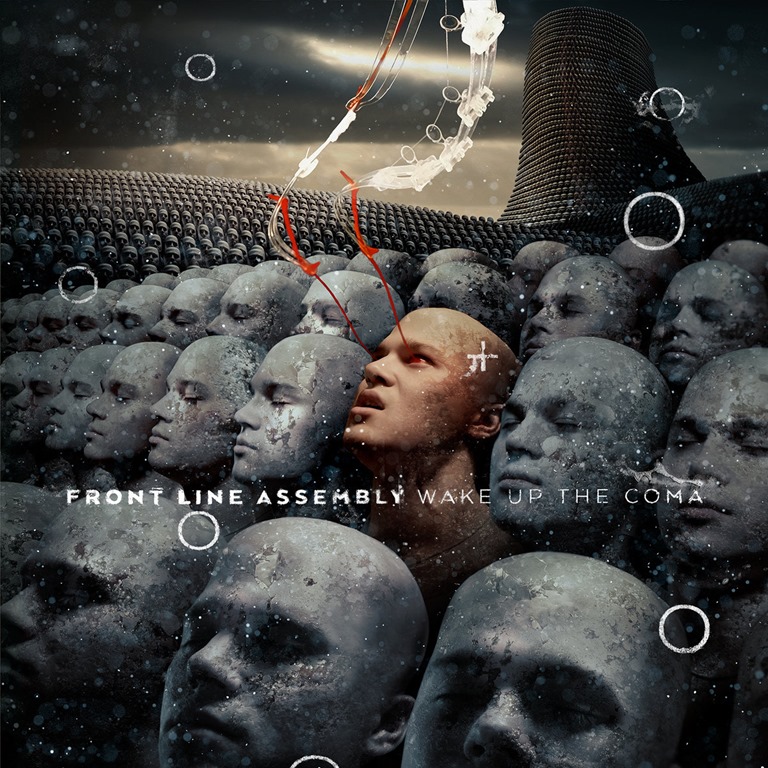
But it’s 2019 and many of the old bands are still cranking out the same trudging grind, and there don’t really seem to be that many emerging bands in the field, making for a genre that’s increasingly stagnant, continually cross-feeding from within itself without drawing inspiration or air from outside its hermetic grey-hued space. The additional contributors featured here is a case in point: the album features contributions from Robert Gorl (DAF), Nick Holmes (Paradise Lost), and Chris Connelly (Revolting Cocks, Cocksure). As a catalogue of luminaries from the scene, it’s cool, but it’s the same catalogue as you might have seen as far back as twenty years ago

Wake Up the Coma isn’t bad by any means, and it certainly has its standout moments. It’s brimming with thumping industrial-strength disco beats, bubbling basslines and stabbing synths, and in this field, songs like ‘Hatevol’ are exemplary. The minimalist slow grind of ‘Tilt’ sounds very like PIG with its woozy, grimy, stop / start synth bass and snarling vocals, fuzzed at the edges with a metallic distortion. Then again, their cover of Falco’s ‘Rock Me Amadeus’ (with Jimmy Urine) stands out for less good reasons: it’s 100% straight, with negligible deviations from the original save for a more industrial beat. And I can’t help but think ‘what’s the point?’ there have been plenty of inspired industrial covers, and I will always cite RevCo’s take on ‘Da Ya Think I’m Sexy’ as an example of irreverent and inventive adaptation.

No-one looking for a solid Front Line Assembly album is going to be disappointed by this. And since FLA, now thirty-three years and almost twenty albums into their existence, are always likely to be preaching to the choir, they’ve delivered firmly with Wake Up the Coma.

AA

Front Line Assembly – Wake Up The Coma