Posts Tagged ‘Collective’

8th August 2025

Christopher Nosnibor

The seventh single released by the Papillon de Nuit project / collective / ensemble centred around Stephen Kennedy is perhaps the most ambitious yet. It’s clear that Kennedy, who has for a number of years, operated as a live music promoter under the guise of The Velvet Sheep, is an irrepressible creative, a restless spirit never content to do or be any one thing. In Papillon de Nuit, he’s songwriter, arranger, vocalist and multi-instrumentalist, bringing to this track vocals, found-sounds, additional percussion, additional piano. And here, in just three and a half minutes, he and his collaborators have produced a song which is many things at once. They’ve also got Steve Whitfield, known for his work with The Cure and The Mission (admittedly, some of my least favourite works by The Mission, but that’s more a matter of material than production) in as producer again.

Being drawn to certain names because of songs is, I suppose, only natural: favourite songs create images and associations which in some way we use to orientate ourselves within the world, internally. And there’s no doubt that Charlotte, like Alice, is a name with special resonance to those with musical tastes which lean towards the gothier domains. That Robert Smith’s inspiration for ‘Charlotte Sometimes’ was inspired by Penelope Farmer’s haunting 1969 novel of the same title was reason enough for me to track down and read a copy of the book, and in context, the doubling / overlapping of the vocals can be seen to represent the parallel / interchangeable lives of the lead character.

‘Frozen Charlotte’ is also a work of a historical persuasion, described as ‘a dark Victorian morality tale about the folly of vanity.’ And it is, indeed, dark. It arrives with a sharp squeal of feedback and the crunch of feet on gravel, before a low but springy – classic goth – and ultimately stealthy bass strolls in and completely shapes the song’s framework. Rolling drums – a minimal, Mo Tucker style, which adds to the stark, brooding atmosphere. The addition of cello and piano builds things further ahead of the arrival of the vocals. It is all about the intro and the build here, but Kennedy gives a magnificent performance. It’s not the overdone booming baritone goth cliché, but a rich, soulful delivery which imbues the lyrics with meaning, in what I can perhaps best describe as a ‘literary’ sense. What I mean by this that while studying English literature at university, some lecturers had the ability to get you completely hooked in a writer because the way they delivered the quotations had impact: they felt the words, and could convey them in a way that opened your eyes to the fact the word on the page contained so much more depth when orated with passion.

The chorus here is understated, the emphasis very much on the dark atmosphere, although the vocal melody does still provide a clear and vital hook, and the ultimate result is alchemical.

AA

AA

Frozen Charlotte artwork

13th May 2025

Christopher Nosnibor

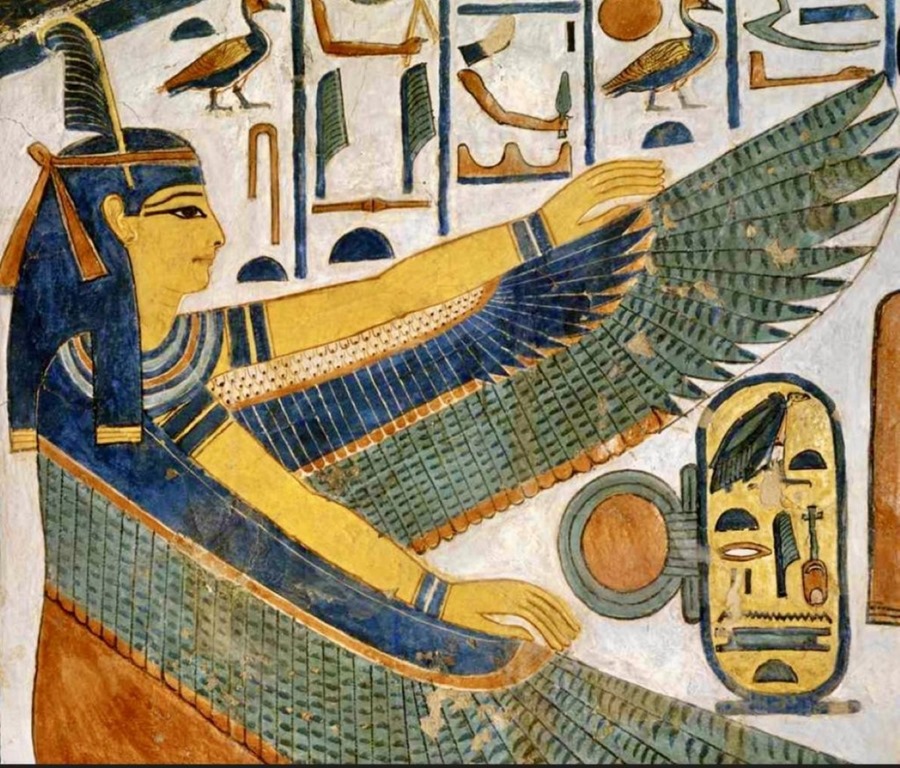
Papillon de Nuit, the ever-evolving, ever-shifting musical collective centred around the multi-talented composer, arranger, lyricist – not to mention promoter and musical / creative all-rounder – Stephen Kennedy, presents a sixth single in just a few short months, a run which began in December last year. And, true to form, ‘Ma’at’ is very different from each of the previous offerings.

Once again featuring the grand piano work of Karen Amanda O’Brien and Michalina Rudawska on cello, along with the return of Megan Richardson providing vocals alongside Kennedy’s, ‘Ma’at’ follows its predecessor, ‘Adriane’, as a song built around strong, dominant percussion and brooding strings. Where it departs is that what emerges from the bold, dramatic intro is a pretty straight-up dark pop song that’s not a million miles removed from later March Violets. It’s graceful, melodic – and I’ll even add catchy, comfortably withstanding repeat plays – and naturally, it’s laced with a delicate hue of wistfulness and melancholy.

AA

a1804204922_10

Human Worth – 18th April 2025

Christopher Nosnibor

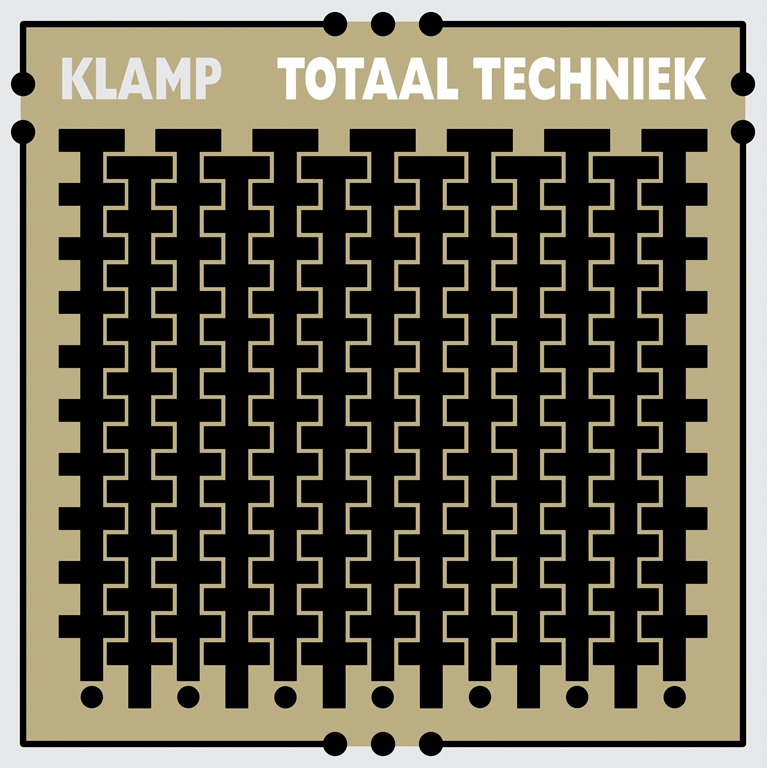
Given the event it supposedly commemorates, Good Friday has always seemed like a rather strange choice of name to give to the day – although I suppose for Christians it’s good because without it the religion probably wouldn’t exist. But this year, Good Friday actually lives up to its name, with the ever-dependable Human Worth dropping its second new release in a fortnight, this time in the form of TOTAAL TECHNIEK by KLAMP.

KLAMP first emerged in 2020, with the upfront Hate You, and since then, they’ve evolved considerably. Less a band and more of a fluid and ever-expanding collective, the original trio consisting of Jason Stoll (Sex Swing / Mugstar / JAAW), Lee Vincent (Pulled Apart by Horses) and Greg Wynne (Manatees) has now swelled to a lineup of seven performers, with Adam Devonshire (IDLES), Matthew Parker (Tall Ships), Rachael Morrison and Wayne Adams (Petbrick / Big Lad) having joined their ranks, along with a host of others who have contributed to this second album while passing through.

When approached in the right way – that is to say, with an open mind – collaboration can yield not only works which are greater than the sum of the parts, but unexpected results, as fresh input and different perspectives can throw wide open the doors to new ideas and possibilities. The converse of this is when a collaboration finds those involved arriving with egos fully inflated and preconceived ideas, and they simply stifle one another into playing to form. It’s abundantly clear that KLAAMP foster a spirit of experimentalism, a willingness to try things out, and see what transpires. The list of genres and influences, direct or implicit, noted in the liner notes is immense, and a reminder of why genres are not really the friend of artists who go with the flow of whatever happens creatively. But rather that dwell on that excessively, I’m simply going to replicate the ‘FFO’ list which accompanies the release, because it not only illustrates the stylistic range TOTAAL TECHNIEK offers, but also sets the scene in terms of expectation: ‘Swans / Sonic Youth / Black Sabbath / Godspeed You Black Emperor / Mark Lanegan / Einstürzende Neubauten / The Fall / Sunn O))) / Wire / Aphex Twin / Portishead / Godflesh / Earth / My Bloody Valentine / Gnod / Anna Von Hausswolf / The Bug and more… ‘ In other words, while there’s a lot of heavy and noisy stuff happening, there’s a whole lot more besides.

This means that the appropriately-titled ‘The First Song’ commences the set not with skull-crushing heavyweight riffery, but a subtle sense of ambience. Drones hover ominously, while chittering extranea evoke almost jungle-like sounds while distant beats flicker and echo like a collapsed synapse before they strickle into a drifting, psychedelic indie dream. There may be hints of later Earth about it, but ultimately it’s mellow and shoegazy, and while the pedals kick in just shy of the five minute mark, it’s steering hard in the vein of desert rock with an easy-going vibe, even with the raging vocals which are practically submerged in the mix. As it carries you along on its warm currents, there’s no frustration that this isn’t the heavy shit they’d promised. It’s simply good music, and has atmosphere and texture.

‘Zpine’ brings motorik drumming, a hint of Pavement crossed with Stereolab, with some noisy guitars slashing and splashing cross the solid, sequenced groove, while the vocals are harsh and ragged. The mid-section goes full Hawkwind, and the weirder and more wide-ranging it gets, the better it gets, too.

The album’s shortest song, ‘Wet Leather’ is a bass-led Krautrock-influenced psych-hued droner that bounces along nicely, and while it does kick off heavy a minute or so in, it mostly kinda comes on like The Fall circa Code: Selfish but with guitars from early Ride swirling all over.

‘Leprozenkapel’, the fourth track – which marks the end of side one – brings the rage and the noise and the throbbing noise, and it’s dark and heavy, and in some respects calls to mind late 80s Ministry as it pounds and snarls. Those drums, totally overloading with distortion and a metallic crunch… this is mean and brutal, while the eight-and-a-half-minute ‘The Crying Towel’ is different again, and altogether kinder. This is good: we need more kindness right now. And at some point a couple of minutes in, the ball-busting, super-weighty riff comes in, and there it is. But there are layers, texture, elements of shoegaze and more atop the lumbering rockout riffery. There is a lot happening here, and KLAAMP balance e it all perfectly.

Things shift towards menacing, doomy black metal on ‘Evil Pipe’, but the album ends – with another epic track in the form of the seven-and-a-half-minute title track, that comes on like a meshing of Joy Division or early New Order – particularly with the drumming – and Doves, before going full Melvins. And it somehow works. Of course, Human Worth would never release a crap album, but TOTAL TECHNITECH is truly outstanding. It’s not just the concept,  but in the delivery, and it’s all killer.

AA

HW044_KLAMP_TOTAAL TECHNIEK_CoverArtwork

10th December 2024

Christopher Nosnibor

Less than a fortnight after Yorkshire-based collective Papillon de Nuit unveiled their first track, ‘Scarlet’, they present to the world the second fruits of their recent recording sessions, mastered by none other than Tom Woodhead, formerly of ¡Forward Russia! at Hippocratic Mastering. While ‘Amber’ continues the colour-themed song titles, they promised something different, and, indeed, that’s precisely what they’ve given us.

‘Scarlet’ was a somewhat folk-infused tune with a rolling rhythm: in contrast, ‘Amber’ sits more in neoclassical territory, in terms of composition and arrangement, with a lone piano providing the primary instrumentation; around the sung segments are spoken-word poetical passages. Again, Stephen Kennedy leads, but there is a counterpoint in words composed and spoken by Edinburgh-based polyartist Monica Wolfe, and the interaction between the voices and modes of delivery is engaging. This is not rock, or pop, or folk, but unashamedly music as art, and as compelling as it is beautiful.

AA

a1612744261_10

Following on from the recent inaugural ‘Gothic Moth’ event, a second of which is now booking for February 2025, Stephen Kennedy and a number of contributors to this ever-shifting, expanding, permutational musical collective have unveiled the first recorded fruits of their collaborations, and we welcome the arrival of ‘Scarlet’ by Papillon de Nuit.

They write that this is ‘an introduction, a flexing of the wings. There will be many songs, written by us, coming soon. We intend to be extremely busy, and what comes next will be very different… enjoy our nocturnal flutterings…..

AA

a1215162421_10

33.3 – 24th July 2024

Christopher Nosnibor

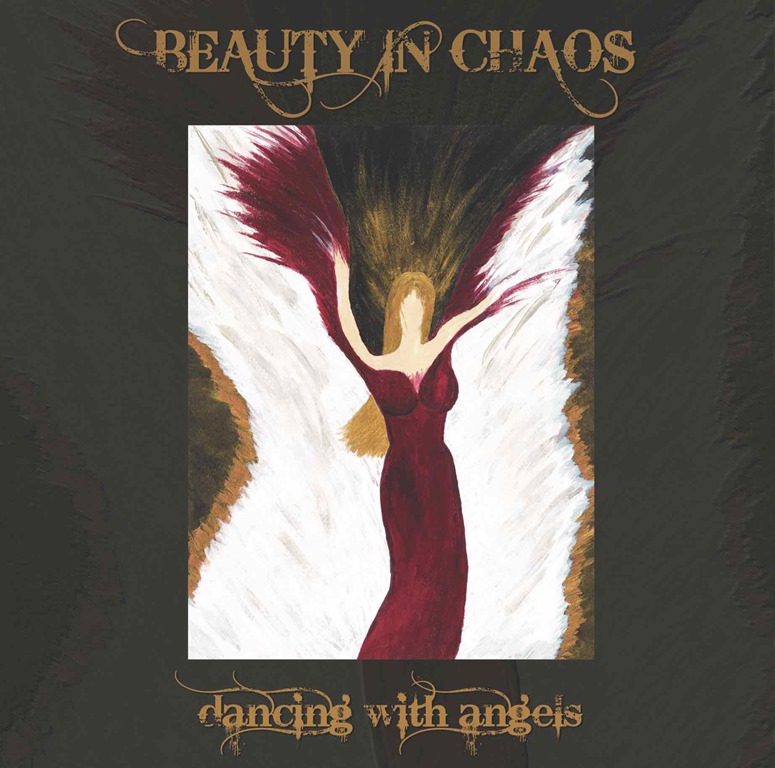
Since their inception and debut album Finding Beauty in Chaos in 2018, the project helmed by Human Drama and Gene Loves Jezebel guitarist Michael Ciravolo has presented a staggering array of collaborators and contributors. Not so much a band as an open music collective, they return with Dancing With Angels, which promises appearances by ‘luminaries from The Mission, The Bellwether Syndicate, Holy Wars, Kommunity FK, The Awakening & Strangelove.’ Indeed, Wayne Hussey has been a regular contributor, and he, and wife, Cynthia return this time around to appear on the dreamy, Cure-esque single cut ‘Diving for Pearls’, with chiming guitars and bulbous bass sound reminiscent of ‘Pictures of You’.

Each of the album’s eight atmospheric gothy post-punk hued songs features a different vocalist or vocalists, with duties shared by William Faith and Sarah Rose Faith of The Bellwether Syndicate on opener ‘Present Tense’, a cut that harks back to the sound of the alternative scene circa 1986, when The Mission were taking their first steps and Gene Loves Jezebel were at their commercial peak. Given Ciravolo’s other work, this isn’t entirely surprising – but what is welcome, and impressive, is the extent to which the sonic blueprint is expanded to incorporate a broad range of styles, stretching out to the shimmery shoegaze dream pop of ‘The Devil You Know’ at one end of the spectrum, and the brooding anthem that is ‘Echoes and the Angels’ via the crackling guitar-driven indie of ‘Kiss Me (Goodbye)’.

With its rippling piano and swooning vocals, courtesy of Cynthia Isabella of Lost Gems (and formerly of Silence in the Snow’, ‘Hollow’ is delicate and emotive, while ‘Holy Ground’ brings soaring lead guitars to a solid rockin’ tune. It may be because it’s sandwiched between ‘Hollow’ and the slow-burning closer, ‘Made of Rain’ (featuring Ashton Nyte making a fifth appearance with Beauty in Chaos), but it feels like the weakest of the songs here.

Whether or not Ciravolo wrote the songs with the singers in mind, or if they evolved around them once they were on board, the fact each guest brought their own lyrics means they feel like they’re in their natural environment, and each songs sounds like it belongs to them. The end result has something of a mixtape feel to it, while retaining that essential coherence.

Nevermore has the project’s moniker felt more apposite: conjured from a whirlwind, an effervescent creative froth of a diverse range of creative minds, Dancing With Angels stands as testament to the power of collaboration.

AA

551286

Human Worth – 10th November 2023

Christopher Nosnibor

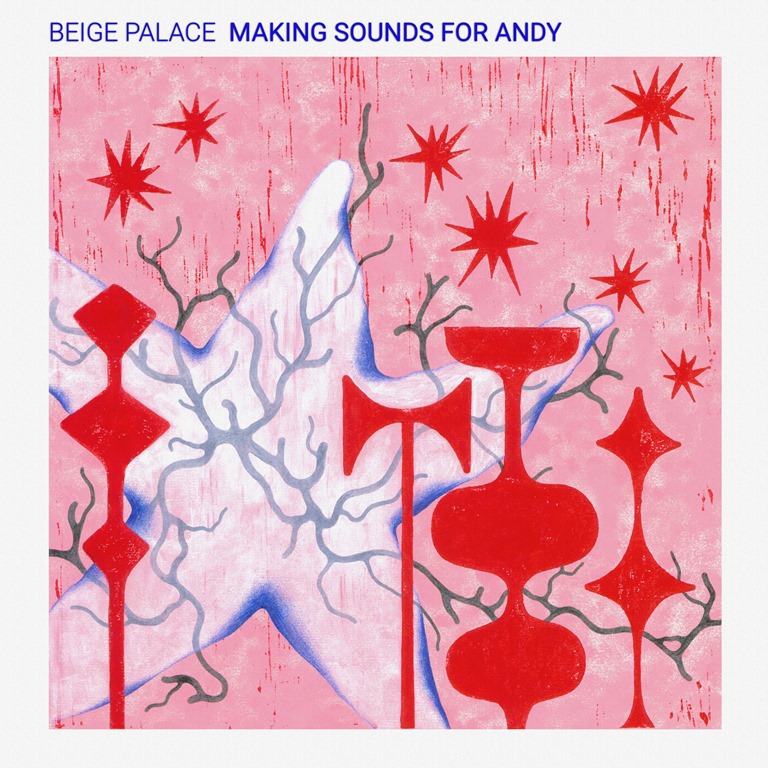
I know it’s not really cool to make that you’re cool because you’re in the know or whatever. A few years ago, it was the way of the hipster, but after what felt like forever, they seems to have disappeared, probably because everyone grew beards during lockdown, so the hipsters had to shave and resort to telling people they were wearing a beard before the pandemic or something. Nevertheless, I can’t help but take some satisfaction from having observed Beige Palace from their very dawn, at their first show in the now-lost CHUNK rehearsal space-cum-gig venue way back in the spring of 2016. The place was a bugger to get to from the train station, being practically in the middle of nowhere you’d actually want to go, and to describe it as basic would be polite. But what CHUNK provided was a place where anything went. It was BYOB, pay what you can, and it was a hub of creativity which lay at the heart of the DIY scene in Leeds. And so it was that Beige Palace – perhaps not quite a supergroup at the time, but simply people in other bands (Freddy Vinehill-Cliffe (Thank), Kelly Bishop (Gloomy Planets) and Ant Bedford (Cattle)) doing something different together – came to be.

They’ve come a way since then, notably with slots at The Brudenell supporting Mclusky and also Shellac, with a personal thumbs-up from god himself, Steve Albini. There’s likely a number of reasons for this, apart from the simple fact that Beige palace are bloody good, a major one being that they make angular noise without being overly abrasive, preferring instead to push sounds that are slated, skewed, imbalanced, jarring, jolting. This is right up front at the start of this, their second long-player, with ‘Not Waving’, a scuzzy collision of Shellac, The Fall, early Pavement, and Truman’s Water. The bass is right up in the mix, the vocals down low, and everything about it is absolutely wrong in terms of conventional sound. You can imagine sound engineers all around the country shaking their heads and saying “but that bass is just booming… it’s drowning out the vocals… and the guitar, maybe you should take the treble down a bit?” But Beige palace’s sound isn’t conventional, and they’re not going for radio-friendly pop tunes.

The album’s title appears to make a nod to XTC, and calls to mind the band’s hit ‘Making Plans for Nigel’ (surely one of the greatest snappy tunes of the New wave era) and the fact that Andy Partridge was co-frontman of XTC. Coincidence? Am I joining dots and identifying references which simply don’t exist? Possibly, but then again, for all the wrongness, the off-key and the off-kilter, there are some neat hooks to be found leaping out from the rumbling basslines and loping drums. ‘Local Sandwich’ is representative: the rhythm section strolls along kicking a loose groove where the bass and drums are seemingly playing alternate to one another, the discordant sprechgesang vocals of the verses overlap one another, making for a tense combination – and then out of nowhere, pow! Hook! And then a squalling climax.

The genius of the songwriting lies in its unpredictability: for as much as the compositions are largely built around repetitive motifs, hammering away at the same nagging loop for minutes at a time, adding and subtracting elements such as keyboard or guitar, they’re prone to veer off somewhere else or otherwise change tempo or burst into a scratchy blast of noise at precisely the moment you least expect – and just when you expect something unexpected, a song like ‘My Brother Bagagwaa’ doesn’t do it. They’re as keen to explore the space in between the notes as the notes themselves, and there are numerous passages on Making Sounds for Andy where they pull things back to stark minimalism. This makes the crackling bursts of distortion and clattering drums all the more impactful.

Leeds has a habit of birthing weird bands who are nosy but not noise, with the legendary Bilge Pump and the should-have-been-legendary Bearfoot Beware providing a brace of examples – but Beige Palace are very much their own band. Making Sounds for Andy is a bold celebration of ramshackle lo-fi, delivered in such a way as to hit hard. It’s got ‘underground classic’ all over it.

AA

HW025_BeigePalace_MakingSoundsForAndy_CoverArtwork

SPV Records – 2 October 2020

Christopher Nosnibor

It’s easy to forget just how absolutely massive The Mission were at their peak, packing out headline shows at Wembley Arena, Finsbury Park, and Reading Festival.

There was a time when Wayne Hussey looked like being the new Bono. Or something. And now he’s gone and done Band Aid for goths, with a rerecording of ‘Tower of Strength’ featuring a truly immense roll-call of luminaries from the gothier end of the alternative / post-punk scene to raise funds for covid charities around the world.

The press release reports that alongside Mission frontman Hussey, the project involves Andy Rourke (The Smiths), Billy Duffy (The Cult), Evi Vine, Budgie (Siouxsie and The Banshees), Gary Numan, James Alexander Graham (The Twilight Sad), Julianne Regan (All About Eve), Kevin Haskins (Bauhaus, Love & Rockets), Kirk Brandon (Theatre of Hate, Spear of Destiny), Lol Tolhurst (The Cure), Martin Gore (Depeche Mode), Michael Aston (Gene Loves Jezebel), Michael Ciravolo (Beauty in Chaos), Midge Ure (Ultravox), Miles Hunt (The Wonder Stuff), Rachel Goswell (Slowdive, The Soft Cavalry), Richard Fortus (Guns N’ Roses, The Psychedelic Furs, Love Spit Love), Robin Finck (Nine Inch Nails, Gary Numan, Guns N’ Roses), Jay Aston (Gene Loves Jezebel), Steve Clarke (The Soft Cavalry), Tim Palmer and Trentemøller, the latter of whom has provided a remix of the new recording.

Having properly got into The Mission by hearing ‘Tower of Strength’ during the weekly top 40 (I was 11 and my exposure to ‘alternative’ music had been quite limited at that point), the song has a certain special place on a personal level, and the likelihood is that it’s the same for many fans. Reworking a classic is risky, potentially an act of desecration or sacrilege (referential word-choice half-intended).

The EP contains four 2020 versions in total, with the regular single version, a radio edit, and three remixes.

In term of the instrumental backing tracking track, the single-version sound very like the original, only with some additional extraneous details and the meat where the bass and extra layers kick in stripped out. Meaning it’s ok, but while one of the major criticisms of The Mission has ben that they lean toward the bloated and bombastic, the fact is that was always a part of the appeal. But overall, it’s nicely done: the guest contributions, both instrumental and musical weave into one another pretty seamlessly, and there are no instances of any one person stealing the limelight with their overstepping delivery of a line. There’s no ‘tonight thank God it’s them instead of yoooouuuu’ moment, and this feels very much like a collective, collaborative, egalitarian effort, and I almost feel as if I could give it a virtual hug for that.

The nine-and-a-bit ‘Beholden to the Front Line Workers of the World’ mix comes closest to the basking, expansive glory of the original. It’s a song that’s meant to just keep going, and this version does just that.

Trentemøller goes technoambient with his reworking, and kudos for breaking the mould, and double for the fact that it works. It’s all in the strings, of course. The Albie Mischenzingerzen remix is drummy but doesn’t seem to bring quite as much to the party.

It might not quite pack the power of the original, but it’s not far off: the people playing on it are worth hearing, and it would be churlish to criticise a release made with such positive intentions. In bleak times, Hussey and his pals aren’t only a tower of strength, but a beacon of humanity, and it’s a powerful thing.

AA

ReMission International (cover artwork)

31st May 2019

Christopher Nosnibor

Where We Sleep – the supergroup consisting of Debbie Smith of Echobelly and Blindness, Curve and SPC ECO, Beth Rettig of Blindness, and also Axel Ray of United Ghosts – extend their super status on this outing, with Ben Pritchard, formerly of The Fall and currently Manc Floyd contributing guitar work on ‘Control’.

Despite the more indie-leaning backgrounds of the collaborators, Experiments in the Dark espouse more of a post-punk sound, amalgamated with the blurry shoegaze of Curve. There’s reverb galore as the layers of guitar wash over and bleed into one another: ‘What I Deserve’ has one of those classic slow-building intros that’s built around a strolling bass and dual guitars – one chiming fractal, gothy, the other overdriven and set to stun. And from the emerging murk, Rettig’s voice combines sultry and dangerous to strong – yet simultaneously understated – effect.

‘The Desert’ sits between Curve and debut-album era Garbage – and it’s magnificent: rich in atmosphere, dark, brooding, and again centring around a strong rhythmic framework. ‘Control’ is a standout: after gentle start, it bursts into a mesh of guitars colliding over a woozy bass and metronomic mechanised drum sound. And as the track progresses, the icy vocals and treble snap of the snare become increasingly submerged by the squalling noise. ‘Into the Light’ repeats the form, only with the added bonus of a propulsive chorus and a bassline on a par with The Mission’s ‘Wasteland’ overlayed with howls of feedback.

The title track which draws the curtain on proceedings is sparse, stark, and minimal, and owes more to the ghostly, smoky trip-hop of Portishead than anything remotely post-punk or shoegaze.

If Experiments In The Dark is 75% 80s and 25% early 90s, it’s also 100% representative of the zeitgeist in terms of the aspects of the past it draws on. And Where We Sleep’s strength lies in their ability to absorb those elements and draw them together to forge a sound that’s both familiar and fresh, avoiding sounding derivative and instead delivering an exciting set of songs that demand repeat plays.

AA

Where We Sleep – Experiments In The Dark