Posts Tagged ‘Avant-garde’

Not Applicable – 4th March 2022

Christopher Nosnibor

Instant disorientation is the effect of hitting ‘play’ on Isambard Khroustaliov’s Shanzhai Acid. What the hell is this? Woozy drones and amorphous waves or warping wisps ripple and blur, and hums like a swarm of drunken bees weave precariously through an alien soundscape. I’m accustomed to experimental and sci-fi, but this… This, I was not fully prepared for. By fully, I mean at all.

It’s vaguely sci-fi in its strangeness, and I find myself blinking and bewildered in a lack of comprehension as to what it’s all about.

Welcome to the world of artificial intelligence, which may well be intelligent, but in a way that’s so artificial as to have taken leave of intuition. To unpack that, the liner notes explain that Shanzhai Acid is an album ‘produced through artificial intelligence design and interaction with modular synthesisers. Reminders of the complex, granular music of Autechre, Fennesz’s reimagined environments, the deconstructed dance music of Lorenzo Senni, and the expanse, gestures and sheer reach of Gerard Grisey’s spectral master-work: Les Espace Acoustiques, Shanzhai Acid exists in its own intersection of art, design, music and technology where process and function are transcended to produce an album of extraordinary auditory allusions’.

My initial reaction was, if I’m honest, ‘hell yeah!’ Because innovation in music seems to have slowed so badly over the last decade. No, that’s not my ageing and being stuck in the past. I’m not saying there’s been no good or exciting new music. But innovation stalled: I believe that to be pretty much fact. Because it’s pretty much all been done by now. Guitars have been taken to their limits and beyond, meaning most significant advances since the late 70s have been driven by the use and abuse of technology, and while hip hop and dance music have certainly exploited technology, we’ve not seen anything as radical as the advances made by Throbbing Gristle and the like in the last forty years.

There are points during Shanzhai Acid that both Throbbing Gristle and certain dance tropes are evoked, with crackles and fizzes and static shudders and glitches pop and hum and there is circuitry in interplay, whirring and wowing. It’s hard to tell how much meaning to attach to the titles of these pieces, or even how seriously to take it. But then serious music can have a playful element, and ‘Experts v. Shamans’ sounds like R2D2 in communication with a nightmarish fairground ride. It’s a journey – and a disorientating one at that – that leads to the seven-minute slow-grinding drone and stirring swirls and hums that build layer upon layer on ‘Meanwhile Cephalopods’. Meanwhile, cephalopods what? No, there is no what. It simply is.

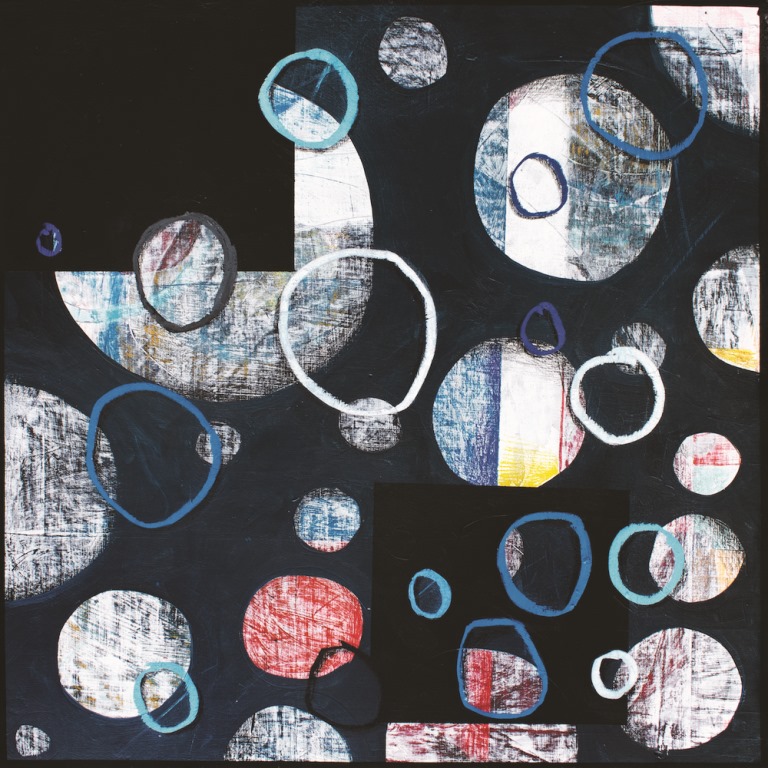
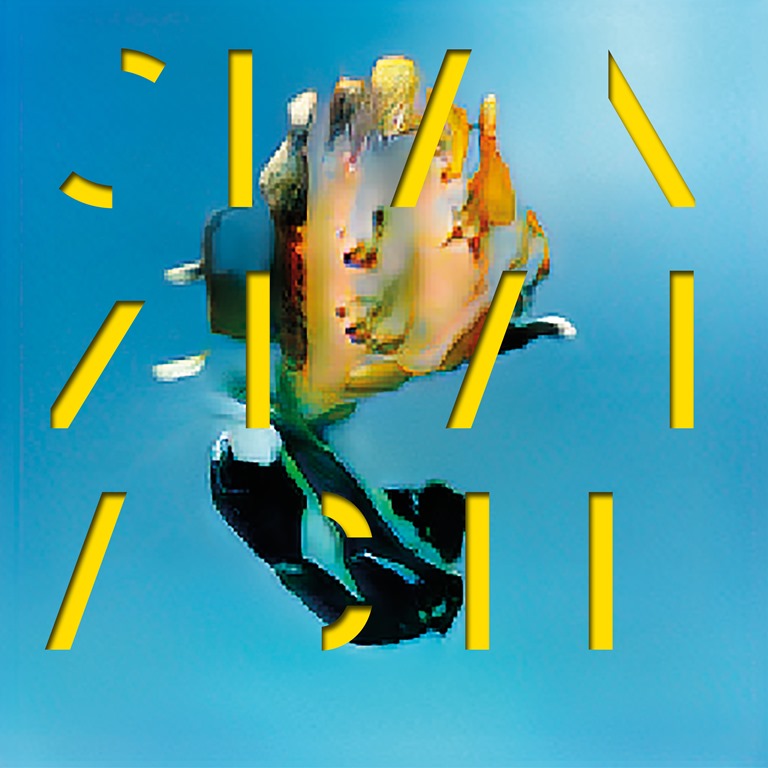
Shanzhai Acid is a remarkable abstract work that delves into microtonal and glitch territory, swerves wide into drone and ambience, and scratches at the shores of early industrial and vintage avant-garde. With such wide-ranging elements scrunched together, it’s a unique hybrid and a refreshing, if at times challenging listen. And while you should supposedly never judge a book (or album) by its cover, Shanzhai Acid sounds like the cover looks.

AA

Shanzhai Acid album cover 6000px RGB

Audiobulb Records – 2nd March 2022

Christopher Nosnibor

Experimental and underground music, particularly of the electronic persuasion is a broad field, but, it would seem, a small world.

During lockdown, the Nim Brut label hosted a series of virtual gigs, where performers would submit sets accompanied by visuals, and the resulting streams were varied and eclectic, in the best possible way, presenting the full breadth of the melting pot of a diverse and disparate milieu. As is so often the case with events of this ilk, everyone was not lonely accommodating, but welcoming toward one another, celebrating the differences in style and approach.

Feast 5, back in August of 2021, was a belter, and not only because as half of …(Something) Ruined I got to unleash new brutal noise in a safe environment, but got to do so alongside some remarkable artists, notably Omnibael, who have featured a number of times here. Also on the bill was a performance so brief as to barely be an interlude, something I described as a ‘shifting wave of glitchronic ambience’ courtesy of Neuro… No Neuro, of whom I knew nothing, until today, when on the arrival of Faces & Fragments in my inbox, I learn that NNN is ‘a moniker of the electronic musician Kirk Markarian, an avid synthesist, drummer, abstract painter, and graphic designer residing on the alluvial plain of the Sonoran Desert, in dry and dusty Tucson, Arizona’.

The title is a fitting summary of the album, both its input and outputs, and the lived experience of listening to the thirteen pieces, which are as much collages as compositions.

As the liner notes explain, ‘Each track illuminates fragments of memory and speech, as they wander out of focus in the growing aperture of time.’

As such, each piece is formed, sculpted and layered, from an array of sounds and sources, snippets, and scatterings, fleeting and ephemeral; chiming notes ring out over soft washes, sporadic glops and plops, like drops of water falling in a cave, overlaid with brief fragments of voices. On ‘Everybody is Out to Get You’, those voices slow, distort, blur, into a nightmarish nagging. It drags on the psyche, against a skittering, jarring backdrop what warps and tugs unsettlingly, and makes for awkward, queasy listening.

Neuro… No Neuro’s own comments on the album’s formulation and function bring us closer to the heart of the state of confusion it creates, explaining, “Each track shares the ‘fragments’ of speech/memory, the growing aperture of time and loss of thought. While forming sentences via type has not declined (because there is time available), speech and recollection are steadily decaying into simplified phrases and poor playback for quick address.’

As William Burroughs said, the function of writing is to ‘make us aware of what we know and don’t know we know’, and this was particularly pertinent in the context of the cut-up texts he produced, essentially collages of other texts designed to recreate the real-time experience of memory and sensory awareness, and the simultaneity of events. We do not live in linear time; we experience multiple sensations simultaneously; thoughts, sounds, conversations, things happening around us all occur on the same timeline, in layers, and our memories record these experiences. This is the sensation that Neuro… No Neuro recreates with Faces & Fragments, from the stop start jittering of ‘Slice of Mind’, to the trickling sedation of ‘And the Energy Goes Back to the Ground’.

The faces blur into anonymity after a while; people look alike and are strange or strangely familiar, and things can get confusing after a while. Faces & Fragments may not – and probably doesn’t sound just like your internal monologue or the soundtrack to your life, but structurally, the resemblances are clear once you step back and reflect. Our thoughts are a jumble of intrusions and overlaps, with memories and recollections triggered by the most random associations and events, sometimes with seemingly no trigger at all, and all flitting through at the same time as you’re watching TV or scrolling through social media shit on your phone as messages and emails ping in and there are conversations and the radio or TV is dribbling away while dinner’s bubbling away in the oven. Life never stops: it happens constantly and all at once, overlapping, overwhelming. Faces & Fragments is a slice of life.

AA

AB119_front

Human Worth – 4th February 2022

Christopher Nosnibor

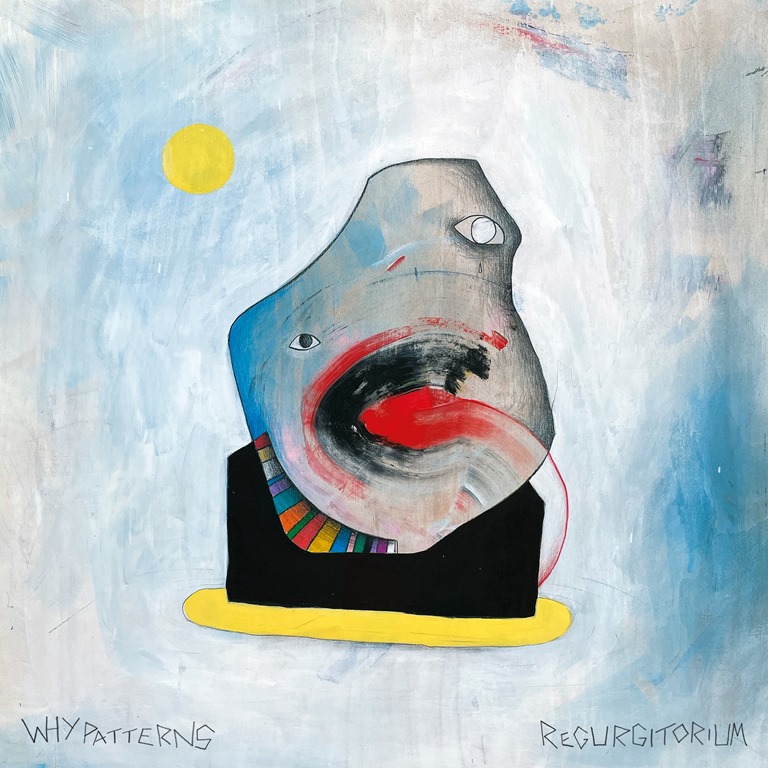
Pitched as being for fans of Primus, Lightning Bolt, Swans and Mudvayne, the accompanying text informs us that ‘Regurgitorium was haphazardly constructed with the sole goal of distressing and alienating their few remaining friends and family. Members of Warren Schoenbright, Wren and Deleted Narrative come together to deliver angular drums, discordant bass, and harrowing vocals accompanied by themes of existential paradoxes and day-to-day despair. The result being something best described as “Not Subtle”.’

If there was ever a strong and perfectly nihilistic reason to make music, that has to be it. It’s one of those hilarious band clichés that get wheeled out when they say they make music for themselves, and if anyone else likes it, then it’s a bonus. It’s almost impossible to not to be sceptical, because, well, fuck off. I mean, I believe Nirvana were sincere in not wanting international mega-stardom and that they wrote In Utero to get back to their roots and piss off casuals and their major label, but they still wrote songs to be heard by an audience – just a more select one. Of course, it depends on your ambitions as an artist, but I would say it’s better to have a small but devoted fanbase than one consisting of a larger but fleeting, fickle bunch of casuals whose interest will have cooled faster than their post-gig McDonald’s fries.

Regurgitation is not subtle, but it is high impact, and it’s a monster racket from the outset, with a clunging bass-rattling racket and squalling guitar mess of noise bursting forth with ‘Parapraxis’. It’s a minute and a half of total mayhem.

They hit optimal Big Black drilling grind on second track ‘Bachelor Machine’: the bass sounds like a chainsaw, while the guitar fires off tangential sprays of metallic feedback and harmonics, bringing together ‘Jordan, Minnesota’ and the intro to ‘Cables’. It’s a brutal squall of noise, and it goes beyond guitar: it’s sheering sparks off sheet metal that singe your skin as they fly, and it really makes a statement about both the band’s influences and intent. It’s messy, and it’s noisy. And it’s perfect.

Every track just gets nastier, more deranged. ‘Elective Affinities’ is all about wandering verses and choruses that sound like a seizure. Everything is overloading all the time: max distortion, max reverb, max treble, max crunch: the bass sounds like a saw, the guitar sounds like a drill, the drums sound like explosions: it’s intense, and it’s punishing, in the best possible way. It’s the sonic expression of a psychological spasm, and everything goes off all at once.

There’s no obvious sense of linearity or structure to the songs on Regurgitation. There’s a bass that sounds like a bulldozer grinding forward at the pulverising climax of ‘Bone Apple Teeth’. And then things go helium on ‘Wretched Makeshifts’: it’s like the Butthole Surfers gone avant-garde. And then there’s the stark spoken word of ‘Silentium’, which is tense, dark.

Listening to Regurgitation is like taking blows to the head in rapid succession. It’s not just the hits, but the dazing effect. Everything mists over, you don’t know where you are, and you’ve even less idea what the fuck this is. It’s bewildering, overwhelming. ‘Railways Spine’ is a nerve-shattering explosion of feedback-riven chaos and there is no coherent reaction. ‘Untismmung’ is the epitome of wordless anguish, this time articulated by means of experimental funk that yields to head-shredding noise. Noise, noise, noise: I keep typing it, and that’s because Regurgitation is relentless in its noise. It’s noisy. So many shades of noise. It’s fucked up. It’s deranged. It hurts. There is just so much noise, and no escape from it. Not that you should seek escape: bask in the brutality, the yawning bass grind and King Missile-like spoken-word segments that provide the brief passages between the blasts of noise, noise noise.

Closer ‘Vomitorium’ sounds like a collision between Shellac and Suicide, and the maniacal laughing at the fade sounds like the only sane reaction to all this madness.

AA

HUMANWORTH_WhyPatterns_CoverArtwork

Eight Bells have revealed the dark melancholic video single ‘The Well’ taken from their forthcoming new album Legacy of Ruin, which is scheduled for release on February 25, 2022.

The avant-garde doom project from Portland, Oregon conceived by guitarist and singer Melynda Jackson has previously revealed cover art, tracklist, and further details of their new full-length. Watch the video here:

AA

“This song’s story is particularly personal for me”, explains singer and guitarist Melynda Jackson. “It explores the emotions and fears of pastoral ‘salt of the earth types’ looking over the land that no longer yields a good harvest as a metaphor describing their lives. Mourning the bountiful past and coming to realize that they themselves are responsible for a bleak future. Melynda Amann, who was a member during the writing of this track, is also singing with us, while  Andrea Morgan adds haunting ambience with his violin.”

With their third album, the Portland metal experimentalists have sharpened their songwriting approach to create a soundtrack for the end of the world. Legacy of Ruin again features the trio’s trademark haunting vocal harmonies along with sometimes blistering, and sometimes impressionistic guitar riffing to create heady atmospheres of dark and light. 

The result of Eight Bells’ musical exploration is an emotional and insistent odyssey that transcends genre and imbues contemporary metal with 19th-century Victorian ghostliness, cinematic soundscapes in combination with female and male vocal harmonies perfectly fitting the album’s lyrical story. "Legacy of Ruin" focuses on themes of the human condition, natural destruction, death, regret, loss, malice, and retribution.

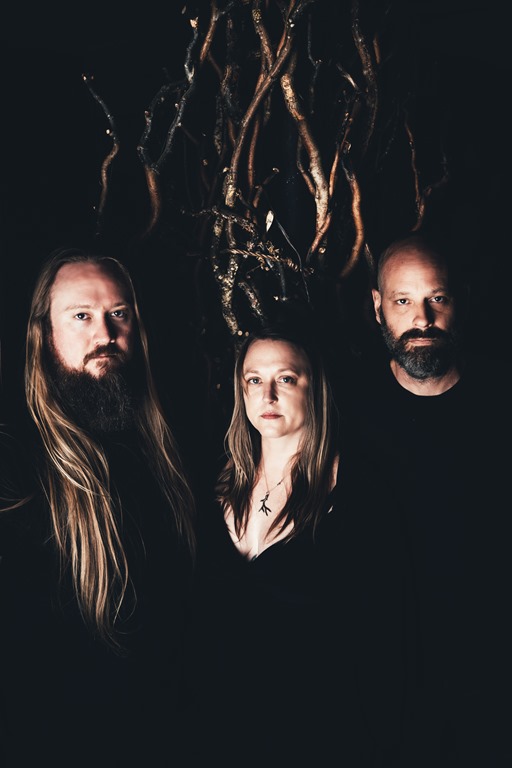
Eight_Bells_001_band_by_Cody_Keto

Pic: Cody Keto

Dret Skivor – 4th February 2022

Christopher Nosnibor

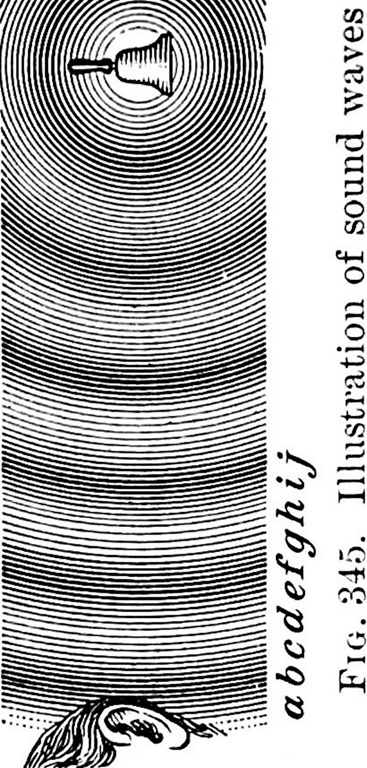
Either delayed or having skipped January, Dret Skivor’s latest monthly instalment marks quite a shift from December’s spoken word / harsh noise assault. Fern’s Illustration of Sound Waves belongs to the field of sonic microanalysis: specifically, as we learn from the minimal notes which accompany the release ‘The source of inspiration and foundation for the entire compilation have been the possibilities and limitations of the buchla 208c’. The ‘legendary Music Easel instrument’ is a modular device, and a fucking expensive piece of kit to boot. And yet it, like any other instrument, device, or programme, has its limitations.

Tonal range isn’t one of them, and nor is its capacity to create eerie electronic soundscapes, and there are plenty of both on Illustration of Sound Waves. I would perhaps be interested to hear of Fern’s frustrations, and also his motivation for this intensely-focused exploration of the buchla 208c. Many such releases offer extensive explanations of the process – sometimes to the point of excess,

‘Closed Geometry (Circle)’ bleeps and blips, while ‘Action & Reaction’ paints a haunting scene, based around sharp needles of feedback and warping, curved drones. ‘Blame the Wires’ is a classic modular synth noodle, a cyclical, repetitive motif looping hypnotically over a subdued echo of a beat, pulsing gently in the background. ‘Apparatus A’ sinks deep into the depths of swampy murk. The beats are subdued and muffled, and the entire EQ is pitched into lower and mid-ranges. There’s a slow, growling oscillation somewhere deep in the mix, and it’s a grating, Suicide-like drone that sneers and snarls on the heavyweight ‘Way of the Waves’; waves that pulse and grind and groan and thicken and envelop.

There feels like there’s a distinct and definite trajectory to the album, as the sound grows darker and denser as it progresses: this changes with the pairing of the final two pieces, which mark a rapid return to bubbling, bleeping circuitry and sound, in many ways, like an escalating meltdown of circuitry. This feels like a fitting finale to the album, as well as an apt conclusion as we melt into the waves, drowning slowly in a sea of static.

AA

a0490863369_10

Room40 – 14th January 2022

I know I’m not alone in experiencing the sensation that large parts of my life have been spent wading through treacle. It may be something of a cliché, but it’s a valuable simile for that slow struggle.

Although these are the associations circulating sluggishly in my mind, they have no bearing on the origins of the album’s title, which is, as Cooper himself explains, ‘a soundtrack for an otherwise silent film. The title of the album, and of course the film, is borrowed from my late friend Fred Hardy’s book The Religious Culture of India – Power, Love and Wisdom, considered to be one of the most important books on the subject. In this book Fred wrote,

“In 1835 the historian Macaulay investigated whether there was anything in the traditional Indian systems of learning and education that could be used in the training of native personnel. In fairness to Mr Macaulay, we must remember that those were days long before the writings of a Tolkien or a Mervyn Peake. He came to the devastating conclusion that people who believe in oceans of milk and treacle had nothing to offer to a modern system of education. A straightforward, realistic assessment in an age that believed in science and realism! The effects were far-reaching. Traditional Indian ways of looking at the world were written off as obsolete. India was provided with three universities (Calcutta, Bombay and Madras, founded in 1857) as the hothouses to nurture a custom[1]built, English-speaking Indian intelligentsia. A new age began for India, and two of its inevitable consequences were the demand for independence and the production of atomic bombs and satellites by the post-independent Bhārat.”

This places Oceans of Milk and Treacle in an altogether more academic context, and perhaps, if only a shade, this knowledge does colour my appreciation of the work specifically, an album consisting of nine compositions.

The pieces themselves present a collaged array of sounds, from distant rumbles and clanging hammers, to wind-chimes and static crackles. The clanking windchimes and eerie vocal moans and bleats, which drift amidst a breaking storm on the first piece, ‘A Chart of the Wet Blue Yonder’ contrive to create something quite sinister, and a significant contrast from the playful Jazz frivolities of ‘Boogie Boards and Beach Rubbish’. Oceans of Milk and Treacle is very much an album of contrasts and of strange sounds, combining chillout grooves and collaged field sounds and weirdness, often simultaneously.

It’s one of those albums that packs in so much, it transcends definition or categorisation, for better and worse – because genre distinctions tend to be lazy marketing pitches, and music – or any other artistic medium – should just be. Why can’t a book simply be a book or a story? Why does I have to be crime fiction, a thriller, sci-fi, or otherwise tossed into the netherworld of literary fiction or speculative fiction? And so why can’t an album simply be an oddball amalgamation of all sorts and simply be an album? Electric guitar and Moogs or something tinkle around while something electronic happens in the background to fill the space like crickets scratching, but clearly actually something less natural in origin on the warping, bending array of almost-pleasantness of ‘Tirta Gangga’, a woozy collision of sedated bleeps and chimes that sounds like it’s nodding off near the end – and it’s not an unpleasant experience.

The title tracks goes deeper into jazz territory, but there’s trilling analogue noise humming in the background, and it nags away at the peripheral sense, while on ‘Mono-Hydra’, amidst tweeting birdsong, the musical elements sound warped., bent, as if the tape is stretched and the notes spin off their spindles to spin into strangeness. ‘Under Vertical Sunlight’ brings hectic percussion to the fore, amidst drones and groans, before drifting into abstraction on ‘Toward Great Piles of Masonry’, which sounds like a wander down a city street while the clubs are still open.

Oceans of Milk and Treacle isn’t really a journey, but then what is it? A meandering sonic amble through a succession of sonic spaces and a range of scenarios? Possibly. Whatever it s it’s interesting, and devoid of genre conventions.

AA

a0586186042_10

Powdered Hearts – 25th December 2021

Christopher Nosnibor

I vowed not to cover anything Christmas-related, simply because, well, because, and also because fuck it. Christmas releases tend to be mawkish, and / or shitty cash-ins, which I have simply no time for, and even a general distain. Charity fundraisers are laudable, although in a just world there should be no need for them because ultimately the state should be supporting the needy and vulnerable without musicians, most of who make next to nothing from their art, having to donate their small royalty fees to food banks and the like. Christmas sucks on so many levels that it’s an essay or even a book in its own right, but this perhaps isn’t the place to begin expounding any of that.

But here we are, and here I am making an exception, and for what I feel to be the right reasons, with the additional bonus that this is no crappy cash-in, and no motive beyond itself.

The prodigiously prolific Gintas K celebrated Christmas unconventionally with yet another release, this time in the form of a Christmas treat entitled Christmas Till The End. With five tracks in all, which are mostly shorter pieces, apart from the twelve-minute title track, it’s quite a departure from much of his back-catalogue, not least of all some of his experimental digital explosions of recent years which have seen him move from microtonal explorations to squelch-laden sonic chaos delivered by means of some nifty software run though an ancient Lenovo Thinkpad (something I have infinite respect for: so many musos have state of the art hardware, while I’ve discovered for myself that reconditioned corporate laptops even from a decade ago have better specs and are built more sturdily than the majority of consumer-orientated laptops). Whatever the sonic differences, though, he’s maintained the same process, namely recording each track live in a single take with no overdubs.

Christmas Till The End may not be the frenzied digitised froth of recent releases, whereby GK simply blasts out various strains of laptop-generated whirring, blooping, crackling noise, and you couldn’t exactly call it a conventional Christmas album, or a celebration of the festive season, either. It’s more of an assemblage of elements of Christmas collaged, crossed out, crunched together.

If the first track, ‘Bah’, perhaps speaks for itself, ‘Für Elise’ presents a picture that highlights the complexities of Gintas’ work. It features Beethoven’s ‘Bagatelle No. 25 in A Minor’ (aka ‘Für Elise’) and mangles the absolute fuck out of it, because it’s a Gintas K digital mess mash-up. There’s no overt or explicit statement here but trashing the piece feels more like a desecration of the Christmas spirit than a celebration, an act of destruction that feels wonderfully irreverent and more than just a little cathartic in context. It is, also, an ultimately avant-garde act of destruction, in keeping with the principle of destroying the old to build anew. Here, Gintas renders that destruction performative, integral to the form and content.

‘Hymn Lithuania’, at first, does sound overtly Christmassy: a rendition of the Lithuanian national anthem on a glockenspiel, the notes ring out, chiming, bell-like and charming. But after about a minute, it begins to degrade and disintegrate as extraneous noise, feedback and bleeping whistles begin to disrupt the tranquillity, while the delicate piano of ‘vivaLIDL spring’ is ruptured by bomb-like detonations and the clatter and thud of descending rubble. If I’m not mistaken (and I may well be), a corruption of Vivaldi’s ‘Spring’ played at about a quarter pace provides the backdrop to this grim scene; you can almost picture the pianist playing, the film in slow motion, while the building collapses in flame around him. The wordplay is also worth noting – I’m assuming LIDL is bigger in Lithuania than Aldi, as VivALDI would have been the most seamless pun by which to highlight the commercialism of the season.

The title track wraps it all up nicely, and ventures closer to K’s whiplash blizzard off whirrs and bleeps, although in a relatively restrained form, whereby the discombobulating discord whirs and warps over delicately chiming tones. As things slowly disintegrate – both on the album and in the real world, it feels more like Christmas for the end: this is the soundtrack to the decline. May the end come soon.

AA

a3680885656_10

Constellation is honoured to welcome Montréal producer Kee Avil to the label. Her hybrid songcraft of postpunk, electroacoustic and electronics gets inside our heads and under our skins in the best way. She’s celebrating by sharing a song and video. Details of her first and phenomenal full-length album to follow in early 2022.

‘See, my shadow’ is a kinetic assemblage of tension and release with chiselled guitar lines, plucked and pounding prepared piano, scraping metal, electroacoustic micro-samples and alternating blasts of crisp drum programming, all galvanised by Kee Avil’s intimate, inscrutable, insistent vocal.

Watch the video here:

AA

Led by Montréal producer Vicky Mettler, Kee Avil combines guitar, voice, electroacoustics and electronic production to create song assemblages that teeter on the edge of collapse while oozing forward, like sticky resin picking up and shedding disparate elements along the way. Kee Avil evolved from playing guitar with broken cymbals and drumsticks to forging askew tempos and templates glued together by samples of screws dropped into crystal bowls. Her self-titled debut EP, released in 2018 on Black Bough Records, harnessed her improvised music and prepared guitar background toward a newfound structural sensibility and arresting vocal / lyrical experimentation; she has been immersed in the exploration of distinctive compositional architectures ever since, expanding her sonic palette with increasing and intensive detail, where twitchy, finely wrought postpunk electro-industrial avant-pop songs are meticulously assembled to resemble disassembly.

Honed through pre-pandemic tours in North America and Europe (sharing stages with Marc Ribot, Pere Ubu, Bill Orcutt and Fly Pan Am, among others), Kee Avil’s emerging body of work signals a vital, viscous, virtuosic new voice in experimental songcraft – where touchstones include Juana Molina, Scott Walker, Fiona Apple, and Eartheater; where PJ Harvey meets Pan Daijing or Grouper melds with Autechre.

Kee Avil will be presenting a new and definitive collection of studio recordings in early 2022.

4de07a03-c59e-2d3c-013a-f686f6c8a644

Bisou Records – BIS-019-U-B – 2nd December 2021

Christopher Nosnibor

Maybe it’s because I’m tired, and I’ve had quite a bewildering couple of weeks in terms of dayjob and quite simply life, but this is one of those band bios that leave me wondering quite simply ‘what the fuck?’ and more specifically ‘is this for real?’ Either I’m delirious, or this really is completely off-the-wall nutsness.

The facts, it seems are that The Snobs were ‘Formed by brothers Mad Rabbit (singer and producer) and Duck Feeling (multi-instrumentalist) near Paris’ and that Blend The Horse! was written and recorded between spring 2019 and autumn 2020.

Is this a real band? Then I read that the track ‘Long Winter Evenings’ follows a sonata form blending ethereal singing and a motorik groove’ and that ‘Over a minimalist rhythm section borrowing from Joy Division, Miles Davis and Kraftwerk, The Snobs restate their loyalty to rock music with Tropical Fuck Storm’s sharp guitars. Tropical Fuck Storm sounds like a character from Mark Manning’s warped rock-band novel Get Your Cock Out, and this is surely satire… right? Right?

Nope, it’s just whacky and irreverent, and it reminds me that not so long ago, humour and irony were commonplace, and art was whatever it wanted to be. And so since their formation at the turn of the millennium, The Snobs Have built quite a body of work, with a substantial number of releases recorded in collaboration with artists of various disciplines and styles. Blend The Horse! presents six compositions – bookended by songs that stretch beyond the ten-minute mark – that explore a massive range.

‘Long Winter Evenings’ is a minimalist protoindustrial effort, but then about three minutes in, there’s a kind of baggy / rappy break, before it spirals into some kind of psychedelic electro that’s a bit trippy, driven by a droning bass while squdgy bleeps and all kinds of going on go on. It’s an intense and eye-opening way to open an album. It feels cohesive, but it feels uncomfortable at the same time, and not just because it’s a genre-defying melting pot of hybridization.

There is a lot going on, even when there seemingly isn’t. ‘The Low Angle’ is sparse and minimal in its arrangement, with a thick, ambulating bassline dominating the arrangement. It’s low, slow, and dubby, and an exemplar of the ‘less is more’ adage.

What to make of this? It’s kinda trip-hop, kinda low-tempo hip hop with an experimental leaning, kinda… kinda what, exactly? There are expansive reverbs and echoes in the mix is, too, and it’s hard to know what to make of it.

Sonically it feels dislocated and difficult, with no real specific plan set: lo-fi, bedroomy wooziness lumbers and lurches as old-school drum machines provide crispy snare cracks around the reimagined Bowieness of ‘Plastic moon’, and as the thumping industrial drums of ‘Cable Call’ that combines the looping synths of KMFDM and the easy 90s popness of Jesus Jones and the like.

It’s a mish-mash of everything, and some of the elements work better than others, although there’s likely little benefit to dissecting which aspects of which track work or don’t, not least of all because there’s so much happening, and it sort of feels ‘outside’. Neoprog and post–rock melt into dreamy electro and shoegaze all mixed with a hefty dash of psychedelia, and no one of it makes sense, and yet, at the same time, it does. And it’s kinda nice, but kinda frustrating, too. It’s as though the range and exploratory nature of this project is prejudiced by an increasingly conservative market where genres and categories are core to marketing, and I’m aware I’m in some small way complicit in this process. But then, sometimes, an album simply doesn’t fit, and it’s not that Blend The Horse! doesn’t connect to any genres, so much as they’re all thrown in together to create a mind-bending stew.

‘The Sixth Dragonfly’ throws everything into the blender all at once, and it all happens, from mellow ambience to fill Nine Inch Nails guitar attack. It’s an eye-popping climax to an eye-popping set. It’s deranged, but a perfect summary of out times.

AA

BIS-019-U-B_cd_front

Crow Versus Crow – 29th October 2021

Christopher Nosnibor

Yol is, unquestionably, a definitive presence of the self-professed ‘no-audience underground’. If you’re unfamiliar with this (and there’s no shame in that, because the clue’s in the name), it’s a term coined by Rob Hayler who blogs at radiofreemidwich, who says ‘there is no ‘audience’ for the scene because the scene is the audience’. If it sounds incestuous and self-involved, then maybe it is, but in a good way: that is to say, it’s more of a community than a scene, and one defined not by sound or style, but an ethos of mutual support, and it’s an incredibly broad church. Global domination isn’t on anyone’s agenda: this is art for art’s sake, free expression, experimentalism because. No-one is judged on technical competence – in fact, no-one is judged at all. Anything goes, and yol absolutely encapsulates that, with ‘music’ that’s utterly off the wall.

The blurb advises that viral dogs and cats offers ‘five tracks that revolve around the essential ‘found objects / mouth noise / mangled language’ core of yol’s practice, brimming with razor-sharp observations, absorbed and regurgitated to form absurd, looping, distending cantillations. Visceral, cathartic and piss-funny in equal measure!’

The first piece, ‘chunks of tongue’ (it’s not a song, by any stretch), is deranged, demented, with what sounds like some kind of contact mic slattering and random tweets providing the backdrop to some utterly dented shouting and yelping and gargling about expensive ice cream being sold as strawberry, but… well, he doesn’t believe it. The strawberry pieces are chucks of tongue! He splutters and spews like he’s choking on the offensive material, and as amusing and Dadaist as it is, it’s also quite disturbing. Context counts, of course: this is an album (albeit a short one that’s more of an EP), so it’s art, but if you found someone doing this in the street, they’d likely be sectioned.

There’s very little musical backing on here, apart from whistles and trills of feedback and random extranea, meaning that it’s almost a spoken word album of sorts. But it’s crazed, cracked spoken word – there’s no narrative, only crazed spluttering and yelping. More than anything, I’m reminded of Mike Patton’s Adult Themes for Voice album. The simplicity and sparseness is a major feature here: yol shows that you don’t really need anything to make an impact, and when we’ve become accustomed and conditioned to polished, produced song-orientated music , to be assailed by something so primitive as almost nothing but a human voice, contorting every way possible is an unusual experience, and one that will likely freak some people out. Good, I say.

‘eat out to help out’ isn’t only representative of the album as a whole, but a standout. He stammers and mumbles around, catching his breath, panting, while struggling to verbalise some deep, frenzied anguish about a plastic fork with a nugget on it. The repetition of a single phrase with varying emphasis is very much an extension of the permutational technique initiated by Brio Gysin in the late 1950s and early 1960s, only here, the sequence of the words remains unchanged, with the delivery and emphasis changing on each repetition instead. The effect of the repletion is quite challenging and ultimately disorientating.

‘Viral cats and dogs get bored… Get back to shitting everywhere!’ he screams on the title track. ‘Yes, but not in my backyard!’ I want to shout back after waking to frequent turds from neighbourhood cats on the sliver of AstroTurf at the end of my yard. Bastards. And immediately, I find myself foaming at the mouth with fury, and realise that this is it. Tapping that vein into raw emotion and unspeakable fury, I’m seconds away a fit of from inchoate screaming abdabs – which is precisely what yol serves up here.

viral dogs and cats isn’t an album to be judged on technical competency – in fact, it’s not an album to be judged on any scale of merit of whatever, beyond ‘does it have an impact?’ Of course it does. It leaves you feeling weird. Because it is weird. And that’s the fun of it.

cover