Posts Tagged ‘Atmospheric’

Cruel Nature Recordings – 24th November 2023

Christopher Nosnibor

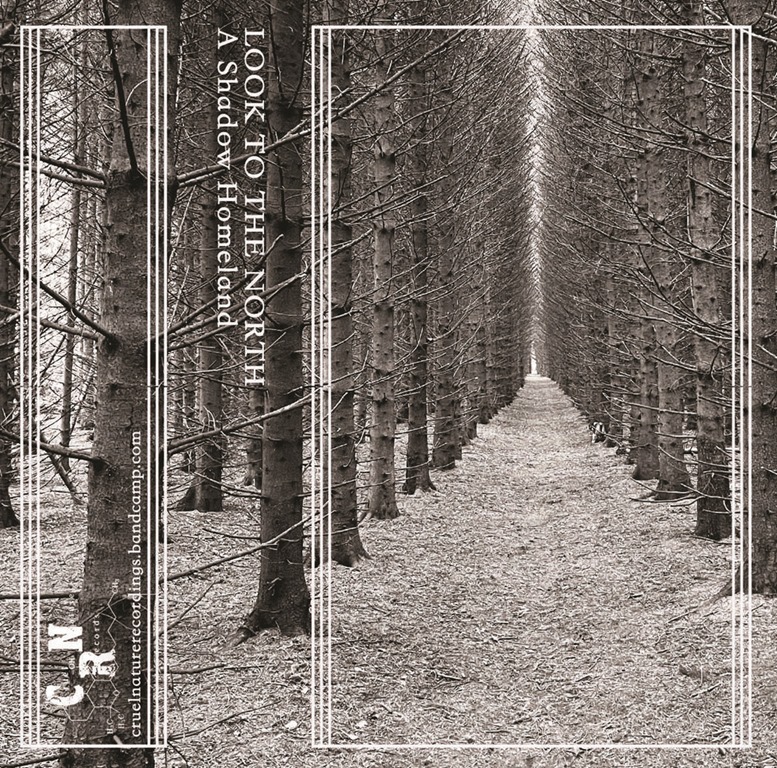
The brief accompanying biography tells us that ‘Look To The North is the ‘dronefolk’ duo comprising David Colohan (United Bible Studies, Raising Holy Sparks) and Zachary Corsa (Nonconnah, Lost Trail)’, and that ‘Recorded in 2021, A Shadow Homeland is 4 tracks of atmospheric other-worldly introspection; melancholic ambience interspersed with sparse piano, spoken word and field-recordings, creating an immersive transcendental twilit experience.

We’re immediately in with what initially sounds like some form of narrative, and joining as we do seemingly in the middle of it, it’s difficult to orientate oneself in terms of context. Soon, soft droning tones drift in like mist and rings out heraldic over the hills and draping the woodlands with string-like sounds amidst images of clouds and nature, interlaced with spiritual abstractions rich in poeticism, but their meanings obscure. The title of this first composition, ‘Disintegrating Consoles And Cartridges’, has a ‘found sound’ connotation, a suggestion of decaying histories and lost origins, and in time, distant voices mutter almost imperceptibly while piano notes roll in and out. Increasingly I find sparse piano notes which are allowed to resonate conjure the saddest and most bereft of emotional sensations, and by the end of eight minutes, I find myself feeling empty, heavy of heart, and pining for something lost – something I can’t quite recall beyond a vague sensation, like the occasional pang of pining for childhood or people and places left long behind, the melancholia of hazy reminiscences which creep at the fringes of a fugue-like memory.

‘The Water That Shattered Their Image’ feels darker at the start, Not necessarily ominous, but there are grainy textures scratching lower in the layers of sound, elongated whisps and broad sonic washes, and they bring a certain discordance and discomfiture. Human voices mingle into wolf-like howls, baying, crazed, before growing hushed, as if in anticipation of the album’s dominating finale, the seventeen-and-a-half-minute ‘An Amulet For The Flux Of Blood’. Here, the piano is very much the central instrument, but surrounded by layers of organ and organic-sounding drones. These sounds coalesce to create a haunting yet smoothly tranquil atmosphere.

To suggest that it seems to share more in common with post-rock than any form of folk is perhaps to pick pedantically at irrelevant details, but I mention this because these genre distinctions have a tendency to set certain expectations. But as elegiac pastoral works, infused with subtle elements of collaging and experimentation, the pieces which make up A Shadow Homeland certainly don’t disappoint, and indeed, confound any expectations one may have. Mood-wise, I’m left feeling uncertain; neither uplifted now downcast, but somewhere in a strange place and a sensation of something missing. It’s neither pleasant nor unpleasant, but remarkable that such understated instrumental works can resonate in such a deep and complex way.

AA

a0117392340_10

Dret Skivor – 1st December 2023

Christopher Nosnibor

Yes, that’s fjord, not fox, meaning you won’t find these collaborating sound artists bouncing around the woods dressed as furry animals, making daft, random sounds. Well, you won’t find them bouncing around the woods dressed as furry animals, anyway, although Dave Procter did spend many years performing while wearing a latex pig’s head, but he put a stop to that after David Cameron started turning up at his shows.

This latest collaboration between Martin Palmer and Dave Procter is, in fact, inspired by the site of previous experimental audio tests in 2019, namely the sculpture “what does the fjord say?” in Trondheim harbour. As they tell it in the accompanying notes, ‘Armed with percussive sticks, contact microphones, audio recorders and the occasional toy and synth, they set about a full exploration of the sculpture and their own sonic ideas in and around the sculpture, using created and environmental sounds to answer the question posed by the sculpture. These recordings are Palmer and Procter’s replies.’

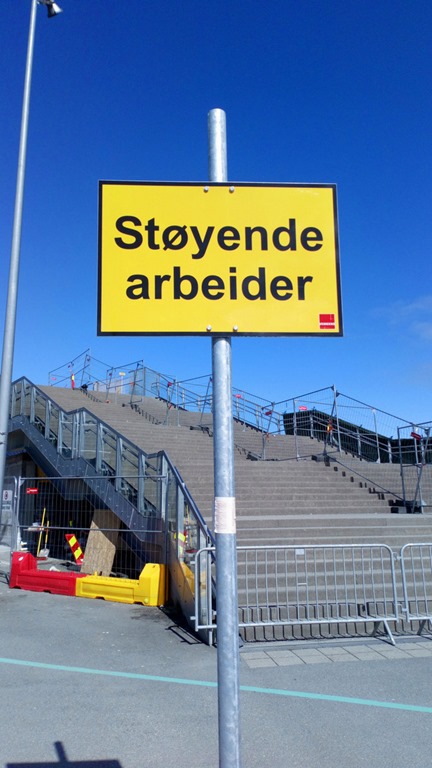
The first reply ‘støyende arbeider’ is more of a lecture than a simple reply, with a running time of twenty-one minutes. Consisting of random clatters, crashes, squidges, squelches and shifting hums which ebb and flow amongst an array of incidental intrusions, it’s more of a non-linear rambling explication, and exploration of the rarely-explored recesses of the mind than a cogent conclusion. But then, why should a reply necessarily be an answer. This, then, is a dialogue, a discussion, not an interview constructed around a Q&A format. It’s nothing so formal, and all the more interesting for its being open-ended, evolving organically. There are points at which the thuds, clanks and scrapes grow in their intensity, creating a sense of frustration, as if attempting to unravel a most complex conundrum and finding oneself stuck and annoyed by the fact that there is something just out of reach, something you can’t quite recall. And at times, this is also the listener’s experience. The way to approach this is by giving up on the expectation or hope of coherence, or anything resembling a tune, and yield to the spirit of experimentalism.

‘Moose Cavalry’ and ‘Mock Paloma’ are both significantly shorter pieces, the former being atmospheric and evocative, the animalistic calls conjuring images of beats roaming moorlands in the mist. Plaintive, droning moans and lows transmogrify into warped, pained cries and needling drones. The latter is different again: dark, tense, shrill tones scratch and scrape, flit and fly, reverberating from all directions. It’s unsettling, uncomfortable.

These three compositions are so different from one another, it superficially makes for a somewhat disjointed set, but on deeper reflection, what Palmer and Procter have forged a work which demonstrates how it’s possible, and even desirable, to approach a subject from multiple angles and perspectives. I still don’t know what the fjord says, but I do know that Palmer and Procter have posed some interesting musings in response.

AA

a3551752136_10

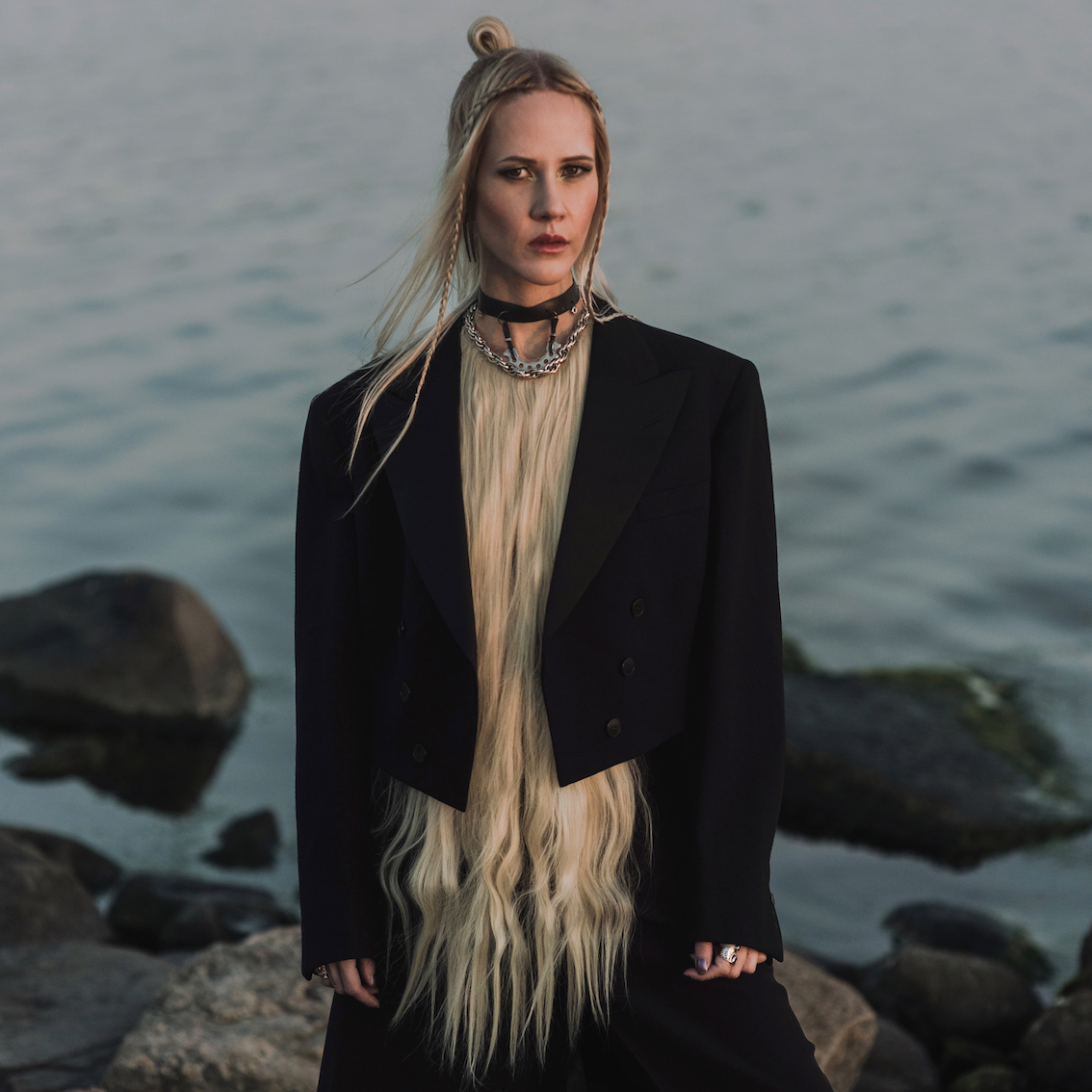
Bedless Bones is Kadri Sammel, a singer-songwriter, producer, multi-instrumentalist and interdisciplinary artist from Tallinn, Estonia. As Bedless Bones, Sammel presents what she describes as ‘incantations of nocturnal rapture’, building bridges and bending borders in her experiments with electro-noir sub-genres such as darkwave and EBM and marrying them with techno beats, industrial sounds and otherworldly atmospherics.

Mire Of Mercury is the third album by Bedless Bones and was released on Metropolis Records in early November. A Kenneth Anger-style video for a song from it entitled ‘Solar Anumus’.

"The video is directed and edited by me and filmed by [Bedless Bones drummer] Anders Melts,” explains Sammel. The song is inspired by the contrasexual archetype in the unconscious. The predominance of the shadow extends to a possession, a chronic eclipse of the sun. Animus in anima. So she has to transform her Eros."

Watch ‘Solar Animus’ here:

AA

Sammel’s influences are vast and varied. She has spent a decade singing in choirs and has studied cultural theory, audiovisual media and photography.  She is a member of Estonian avant-garde deathbeat/outdustrial outfit Forgotten Sunrise and the singer in the UK/Estonian dystopian industrial band Deathsomnia. Additionally, under the alias DJ Dirt Vessel, she has been a crucial part of Beats From The Vault, an underground event series in Estonia that has been in existence since 1998. Her captivating and transcendental live sets see her performing dark industrial techno, EBM, darkwave and post-punk.

As Bedless Bones, Sammel has performed at festivals that include Wave-Gotik-Treffen (Germany), Cold Hearted Festival (Germany), Castle Party (Poland), Kalabalik på Tyrolen (Sweden) and Tallinn Music Week. She has shared stages with acts as varied as She Past Away, Ordo Rosarius Equilibrio, New Model Army and Sex Gang Children.

Ipecac Recordings – 13 October 2023

Christopher Nosnibor

Having recently aired the video for the last single cut from Venera’s eponymous debut, in the form of ‘Ochre’ featuring HEALTH, I was feeling energised to explore their eponymous debut.

As their bio outlines, “Venera enigmatically launched their debut single ‘Swarm’ in July. No information, no pre-sale, simply the three-minute single released in tandem with a mysterious screed and a pulsating black-and-white video directed by EFFIXX.”

Some of the excitement is dulled by the unveiling which followed, as the band subsequently revealed themselves as James Shaffer (Korn) and Atlanta-based composer/filmmaker, Chris Hunt. Why? Not because I’m down on Korn: they’re an act I’ve never really felt any gravitation towards. Wrong place, wrong time. But essentially Venera are another supergroup / side project for a major act, which means they’ve already got a head start which places them head, shoulders, and torso above pretty much any other ‘new’ band. What’s more, several guests join Hunt and Shaffer on Venera. Drummer Deantoni Parks (Mars Volta, John Cale) plays on ‘Erosion’ and ‘Disintegration,’ HEALTH’s Jacob Duzsik contributes vocals on ‘Ochre’ and Alain Johannes lends his voice to ‘Triangle.’ The album was self-produced.

Should it matter? Probably not: I judge any music on its own merits, but I am aware that music doesn’t necessarily reach an audience or receive exposure based on the same criteria.

But here we are, and on merit alone, Venera is a strong album: dark, atmospheric, electronic and often beat-driven, but with layers of noise. It couldn’t be much further from Korn, stylistically. The album has range, too: ‘Erosion’ is like minimalist drum ‘n’ bass contrasts powerfully with the surging, enigmatic ethereality of ‘Ochre’. ‘Triangles’ finds Alain Johannes deliver a magnificent vocal that sits somewhere between Scott walker and David Bowie, crooning and emoting over a slow, dense backing of thick but dispassionate 80s synths reminiscent of The Sisters of Mercy’s Floodland. Clocking in at under four minutes, it feels as if it’s only just beginning to take form – not so much unfinished, but it just could do with there being… More.

‘Disintegration’ transitions between bombastic doom and frenzied blasts of noise, an enigmatic pancultural implosion that hints at Eastern influences, but also melts in droning sonorous low-end synths, and percussion that sounds like a brutal attack. In the context of this week’s world news, it simply makes me feel tense, but it’s but a brief passage before it shifts to clattering jazz-inspired energy rattling around amongst the drift. ‘Holograms’, featuring VOWWS is perhaps the album’s biggest surprise: a slow-burning ethereal and dreamy trip-hop song with a vaguely industrial / gothic edge, it’s supremely well-realised and has immense radio potential.

As a critic, declaring something to be ‘good’ or ‘not good’ feels somewhat redundant, like a teacher leaving comments on a piece of homework. Technically, this is good. Sonically, it’s good. The songs – where there are songs – are good: atmospheric, evocative, haunting – while the same is true of the instrumental passages. Venera succeeds sonically, and as a significant departure for its contributors. And perhaps, over time, I shall come to appreciate it more personally. But first impressions are conflicted: I like it, I like what it does, but I simply don’t feel an emotional connection, there’s nothing that elicits a physical pull in my chest or in my gut.

AA

746105

As a final preview from Venera’s self-titled debut album, the duo have shared the track and video ‘Ochre’ (featuring HEALTH). The darkly surreal Venera is out tomorrow via Ipecac Recordings.

About the track; “’Ochre came early on in the recording process of the album. For me, it recalls a beast stealthily moving through a dark space, or a strange ritual unfolding in moonlight.” – Chris Hunt

Jake Duzsik from HEALTH adds, "It was refreshing to contribute to a track that is focused on creating atmosphere and feeling rather than simply capitulating to the endless regurgitation of standard verse/chorus structure.  It is grounding to reconnect to the building blocks of music making that are elemental and emotional, and I wish I got to do it more often.”

Watch the video here:

AA

Ven   HEALTH

Photo credit: Rizz

Atmospheric doom-metal collective The Answer Lies In The Black Void featuring members of Thy Catafalque and Celestial Season have just revealed a music video for a new song titled ‘Virgin Fire’, which is taken from the band’s forthcoming second album Thou Shalt, scheduled for release next week, October 13th via Burning World Records.

The band comments: “’The Virgin Fire’ was created using the GEN-2 AI software, modelling the dream-like surreal and occult images that visualise The Answer Lies In The Black Void’s universe. Our second album Thou Shalt is inspired by the concept of Carl Jung’s shadow and ‘Virgin Fire’ deals with the concept of the dream state according to these works of Jung : “The dream is the small hidden door in the deepest and most intimate sanctum of the soul”.

Watch the video here:

AA

The Answer Lies In The Black Void is a collaboration between Martina Horváth from avant-garde metal project Thy Catafalque and Jason Köhnen from Celestial Season, The Lovecraft Sextet, Bong-Ra, ex-The Kilimanjaro Darkjazz Ensemble, the duo also work together in the transcendental music project Mansur that releases on Denovali Records.
Horváth and Köhnen joined forces through their passion for all things doom, presenting their personal take on the genre with all its beautiful darkness and from all possible angles. Bringing their own mix of atmospheric laden avant-doom.

After their immensely well received debut album ‘Forlorn’, The Answer Lies In The Black Void now returns with their second album titled ‘Thou Shalt’. Inspired by Carl Jung’s ‘shadow work’ this new album is scheduled for release on October 13th via Burning World Records and will followed by the bands first ever live performances with a full line-up in a small tour throughout The Netherlands and Germany. The Answer Lies In The Black Void will be performing live as a 5 piece, with Botond Fogl (guitar), Attila Kovacs (guitar) and Mark Potkovacz (drums) being part of the full line-up. Confirmed dates are below:

22 October – A38 Hajó, Budapest. HU [Album try-out show]
23 October – Klub Močvara, Zagreb. HR [Album try-out show]
03 November – Simplon, Groningen. NL
04 November – De Helling, Utrecht. NL
05 November – Dutch Doom Days, Baroeg, Rotterdam. NL
18 November – Hammer of Doom Festival, Posthalle, Würzbürg. DE

AA

672cf7f8-e82e-5d94-a470-dbfb0c58809b

16th June 2023

Christopher Nosnibor

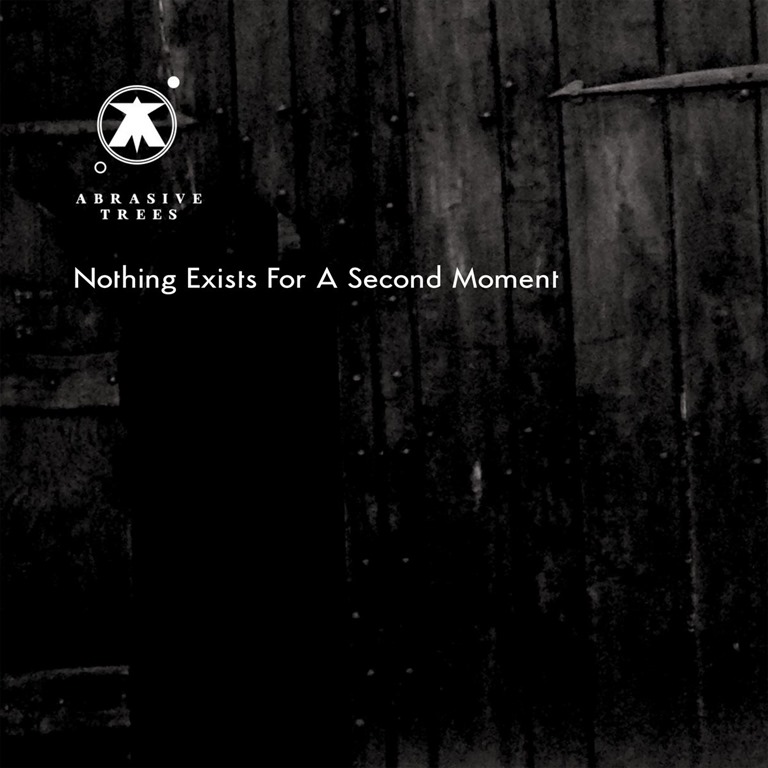
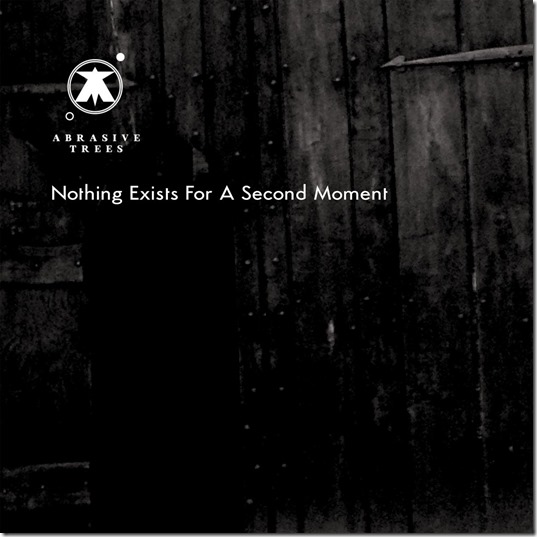
After a lengthy and sustained spell of creativity, dark Devonshire band Abrasive Trees are taking stock, reflecting and consolidating on their achievements to date, something which also affords newcomers an opportunity to catch up, March saw the release of Epocha, a compilation album which gathered their singles and EPs from 2019-2021, and now, housed in a sleeve which continues the thread of the design of its predecessor, they offer up a live album, which captures the band performing at hatch Barn, a venue close to their base in Totnes.

Live albums are notoriously tricky. So many live acts have an energy live that simply doesn’t translate when recorded. Then, at the opposite end of the spectrum, I recall meeting a metalhead in my first few weeks of university who was gushing in his enthusiasm for Iron Maiden “T’ Maiden” as he referred to them as being an amazing live as because “it sounds just like ont’ album”. This stuck with me, because I wasn’t accustomed to such thick Northern accents back then, and also because the idea of a live show so slick it sounded like the CD was a cause for consternation. Some people may think it’s a good thing, of course, but for me – even at the age of nineteen – it seemed to be missing the point of playing live. Especially when it’s a big band, who you’re likely to be watching on screens instead of looking at the stage. Might as well be watching a video at home for that.

Then there’s the recording itself: too much audience and it sounds like a shitty bootleg that’s as much that gobby tosser and his mate yammering away over the band; too hermetic and soundesky and it sounds dead and like there was no-one there, and all the vitality of the live experience is lost. This six-track release, once again mastered by Mark Beazely of Rothko, is magnificently realised: the sound is superbly crisp and clear – it’s obviously taken from the sound desk – but there’s a hum and a sense of space and audience, and it isn’t so clinical as to sound like another studio recording.

There’s irony in the title here: the live experience exists only in the moment, but here we are with a documents which gives us that second moment of existence. But of course, this is not the thing in itself, but a recreation, which captures only a part of it. Dimensions are missing: the sights, the ambience, and so on. This gives us not the full give experience, but an aural document of the band’s performance alone. They know this. We know this.

Four of the six tracks here are featured on Epocha in their studio forms, but the two mid-set songs, ‘Kali Sends Sunflowers’ and ‘Moulding Heaven With Earth’ are from the post-Epocha double-A-side single, and ‘Moulding Heaven With Earth’ is extended here from its near-six-minute form to almost eight her, making for a colossal centrepiece to the half-hour long set. Over its duration, the band sound solid, and assured, and they bring the detail of the studio recordings to their live show, with added dynamics and energy – the bass and drums in particular when they hit peak crescendo cut through in the way that only ever really happens live, and so it’s a credit that this release captures that energy.

The set opens with ‘Before’ from the Now You Are Not Here EP, and while abridged from its original six-and-a-half-minute sprawl to just three and a half, it conjures a magnificently atmospheric space, with chiming guitars, drifting ambient synth drones, hand-drums, and brooding sax, not to mention Easter-inspired vocalisations to build tension, and it segues into the ornate and delicate ‘Now You Are Not Here’ from the same EP, introducing vocals to the set, and finding the band at their most dramatic, evoking the quintessential goth sound from circa 1985-86. Mattthew Rochford’s voice quavers and you really feel as if you’re with him, teetering at the of the world… before the chorus-soaked maelstrom descends.

The soft swell of clean, reverby guitar on ‘Kali Sends Flowers’ is so very reminiscent of Wayne Hussey it sends an unexpected pang of nostalgia, echoing as it does both ‘Severina’ and the intro to ‘Deliverance’. But instead of Wayne’s overt drawing on Christianity in his lyrics, Abrasive Trees delve into other belief systems, and crash into some bold crescendos in the process.

The samples on ‘Moulding Heaven With Earth’ are studio-clear, without sounding at odds with the mix of the music itself, while the near note-perfect ‘Replenishing Water’ breathes deeper as the guitars burst through the air and it explodes into a monumental extended climax that’s absolutely killer and one hundred percent exhilarating. There is so much energy and life here. There is not much vocal, and for some reason this often takes me by surprise.

There isn’t much chat either, but then, on the evidence of this recording, Abrasive Trees’ set relies on building and maintaining tension rather than rapport.

‘Bound for an Infinite Sea’ begins with the crescendo and drives hard to an energetic, bass-driven finale, Rochford’s voice brimming with emotion – and delving into gloom before soaring into gripping tension – and it’s all of this and more that makes Nothing Exists for a Second Moment so great. It’s almost as if you were there, and very much wish you were, but Nothing Exists for a Second Moment achieves the rare feat of making you feel something almost like having been there, slipping a subliminal buzz in the process… It’s as close to a second moment as possible.

AA
a1140864367_10

Room40 – 2nd June 2023

Christopher Nosnibor

I’ve been engrossed by Lawrence English’s works for some years now, and my appreciation of him and his methods were only enhanced when I conducted an interview with him about ten years ago for a now-defunct site (so many are now: the idea that once online it’s there forever has been proven false, and we’re all sitting, bewildered by as rapidly-vanishing archive of the recent past), where we touched on cut-ups and William Burroughs and I was struck by the depth of his knowledge and references.

But I have grave concerns around future history, or the future of history. While the move to digital was hailed as a move toward permanence, incorruptibility, the opposite has proved true. No-one writes anything down anymore, no-one produces additional. tape copies. If your hard-drive gets fucked, so does your entire library. The Cloud? Do you even know where it is? Does it even exist?

While we reflect on this, let us also consider this album and its slow gestation. David Toop is another artist I’ve spent some time listening to, and writing about, including his Breathing Spirit Forms three-way collaboration with Akio Suzuki and Lawrence English, but this is the first time just the pair of them have worked together, and Lawrence explains its evolution as follows: ‘Over the years, David and I have shared an interest in both the material and immaterial implications of sound (amongst other things). Moreover we’ve connected many times on matters which lies at the fringes of how we might choose to think about audition, our interests seeking in the affective realm that haunts, rather than describes, experience. The Shell That Speaks The Sea very much resonates from this shared fascination… I’m not exactly sure when we first mooted this duet, but I sense its initial trace is now more than a decade ago. I tend to live by the motto of ‘right place, right time’ and I believe David likely also subscribes to this methodology. A couple of years ago, David and I reignited the duet conversation and began exchanging materials. As a jumping off point, I explored a series of field recordings that, for me at least, captured something of this affective haunting that I mentioned previously’.

And haunting it is: ghosts of memories and fragments of half-recollections lurk and loom amidst the thick, dark shadows forged by the unsettling sounds. The title suggests an album of soft ambient washes, a gentle tidal swash, a soothing, tranquil work. It is not.

‘Abyssal Tracker’ is remarkably atmospheric in a sparse, gloomy, sense, and provides a fitting introduction to the duo’s idiosyncratic work, compiling sighs and vocal rasps over elongated strains of feedback and a suffocating atmosphere. Shrill shrieks echo out over eerie notes and a scratching insectoid clamour in the trebly range. Thuds ripple beneath the surface: there is so much texture and detail here, you find yourself looking about nervously, seeking the various sources and to see what’s over your shoulder, or hovering above your head.

Clanks and clatters and clanks and thuds are the dominant features of this album, and is lasers fire into the abyss of emptiness on the dense and disturbing ‘Reading Bones’, which scratches and scrapes, while there are earth-churning low-range disturbances – and words, but they’re indecipherable, spoken in low, whispering grunts, and it’s impossible to decipher even the language, sounding as it does like an ancient incantation.

It’s not all quite so skin-pricklingly tense, but much of it is: ‘Mouth Cave’ is dark, dank, low and rumbling, but has textures and what sounds like the trickle of running water spattering in the background amidst the cavernous gloom, and if ‘Whistling in the Dark’ sounds like a simplistic description, it’s accurate – but also suspenseful, scary and bordering on horror tropes; the whistling is deranged and floats through a heavy, crackling doomy drone. There are more ominous mutterings amidst the creeping darkness of ‘The Chair’s Story’, which feels like casting a look back through the ages through a thick fog at scenes of torture and pain and great sorrow and forward, to a laser-bleeping future.

As I seem to be prone to lately, I found myself nodding through fatigue but also, simultaneously, tense and alert during The Shell That Speaks The Sea, an album which possesses vast sonic expanses and a bleak, oppressive atmosphere. Each track offers something different, and this only accentuates the ‘otherness’ of the music this album contains; it’s like walking through a series of disturbing dreams, whereby each scene presents a new unfamiliar setting, and there are hints of BBC Radiophonic Workshop and vintage sci-fi about this incredibly imaginative work.

It may have taken a long time to piece together, but the results make the labour more than worthwhile.

AA

RM4205_front

Magic Wands is a US dark pop outfit originally formed in Nashville by guitarists & vocalists Chris and Dexy Valentine, but now based in Los Angeles where they have been joined by drummer Pablo Amador. Their name stems from the gift of a wand from Chris to Dexy when they first started making music together while still living on opposite sides of the country.

The group have released three albums over the last decade on which they have refined a shimmering and cosmic dream-pop sound that incorporates elements of shoegaze, post-punk and goth. Textured guitars, droning synths and delicate, ethereal vocals combine to create an otherworldly atmosphere.

Armed with songs that have often been praised on both sides of the Atlantic for their euphoric quality, especially in live performance, the trio themselves have remained dedicated to creating music that is both imaginative and emotionally engaging. They have developed a loyal fanbase drawn to their ability to create a sense of mysticism and wonder through their music.

Magic Wands have shared stages with the likes of Radiohead, Slowdive, Jesus & Mary Chain, The Horrors, Deerhunter, The Kills and The Black Keys. They also played their own headlining tours of the UK and mainland Europe in 2017-18.

Having released a single in late March entitled ‘Joy’, the group have now followed it with ‘Time’. Complemented with a pair of remixes apiece, both are also included on Switch, a brand new album set for release on 12th May by Metropolis Records.

Listen to ‘Time’ here:

AA

be0d4c9d8c96fdc499fd4e2d0b3c0886f1d0745b

Following the announcement of their forthcoming album Dødheimsgard return with their exceptional first single ‘Abyss Perihelion Transit’. The ten minutes plus track weaves a sombre tapestry incorporating elements of multiple sub genres in the world of Extreme Metal and thematically tackles ideas of epistemological dualism.

Regarding the single Vicotnik had the following to say:

“The whole album revolves subjectively around perception, experience, psychology, objective/subjective reality vs external pressure, tropes, taboos, the laws of motion/causality which influences one’s life. The subjective perception of reality vs the objective causal effects of reality and how they are bound interact. Epistemological dualism.”

Vicotnik continues:

“I guess mental health, or rather instead of health, let’s call it mental condition is a big topic on this record. Not as in a complaining way, or as a good or bad notion, but rather a subject’s study of his own psychology (en)during everything.

Like the ambiguity of Being. What is Being? Is it a meta-physical stratum of subjective emotionally fuelled notions or is Being just explaining a physical object that is, therefore being. Epistemologically I guess these lyrics dwell a lot on naïve realism vs representational realism. Cognitivism vs behaviourism, and then bringing it all to an artist context obviously. So, it is experiential renditioning, not solution driven.”

Accompanying the single is a video and single cover art from visionary artist Costin Chiorenau who brings the disparate and incredibly solemn existence of ‘Black Medium Current’s first single to life. Working together both the song and the video evolve over the course of the ten-minute run time to create something truly visionary both in a sonic and visual context. Costin elaborates on the video below:

“I’ve been following Dødheimsgard for 20 years now, and the genius of Vicotnik always captured my highest focus, being at the same time a huge inspiration, both musically and aesthetically. I always perceived Dødheimsgard being more as an artistic movement than a black metal band, another aspect which excites my creativity and I feel fulfilled that I could express all this passion through the ‘Abyss Perihelion Transit’ art video and single cover.”

He continues: “When I first heard it, I felt that void left behind by the desperation of the root-sense of old structures of perception. That void, which shakes the black matter foundation every time when manifestations tuned with and born in the past overleap the fresh sight of the present which fights hard to penetrate the dense walls of repetition. The main characters of this movie are the absence created by the vanishing old, the observer in search of a new fitting cloth of identity for its avatar and the desperate need of giving shape to the yet-not assimilated nor understood living new.

Secondary characters are different types of glitches in the matrix between self-imposed reality and the golden mean dream state, measuring systems for various types of space found between the layers of perception and the omnipresent shadow. These characters are interfering one with another in a multiverse of contrasts between defined and undefined, forming a brick-dust flavoured whole, at times exotic, at times smoked in bitter nihil. These characters are also the topics spoken but the energy of this song, by the voice of now and I consider the proper ones to be dissected through art.”

Watch the video here:

AA

thumbnail_2021-09-12 DØDSHEIMGAARD0819