Posts Tagged ‘atmosphere’

Projekt Records – 9th December 2025

Christopher Nosnibor

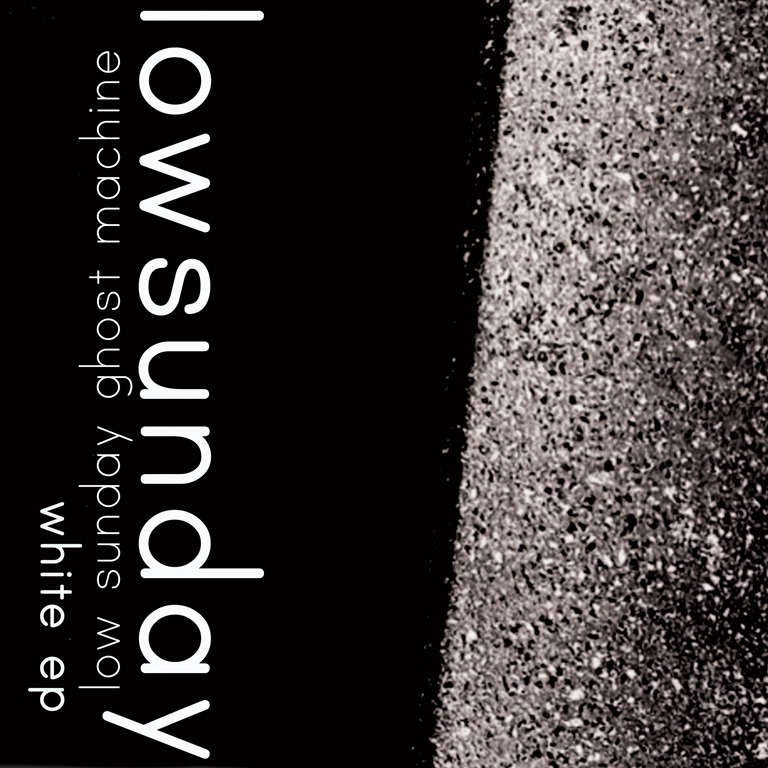
Woah, wait. 1999 is more than 25 years ago? Logically, I can grasp this. But the fact that lowsunday have existed for some thirty years and have been dormant since 1999 meaning this is their first material in over twenty-five years is still difficult to comprehend. It does very much seem to be a more common occurrence in recent years that bands who existed comparatively briefly in the 80s or 90s are reuniting and returning with not only new material, but strong new material. It may be a rather different league, but the last thing I expected last year was a new album by the Jesus Lizard, and that my first gig of 2025 would involve David Yow flopping off the stage and directly onto my face in the opening thirty seconds of the set. Lowsunday formed in 1994: the year Kurt Cobain died, the year I started university, the year of my first job as a reviewer. It feels like another lifetime. It probably does for them, too.

It may be pitched as a blurring post-punk, shoegaze, dreampop, and darkwave, and also as being for fan of The Chameleons, ACTORS, The Cure, Modern English, Clan of Xymox, Then Comes Silence, TRAITRS, but that thumping bass groove and pumping mechanoid drum beat on the EP’s opener, ‘Nevver’ is as trad goth as it comes. But the squalling noise that envelops the vocals – swathed in echo and low in the mix and taking direct cues from The Cure circa Faith and Pornography – is something else, a melding of My Bloody Valentine and The Jesus and Mary Chain with a dose of early New Order, Danse Society, and The Chameleons swirling around in there. And out of this swampy post-punk soup cocktail emerges a song of quality which really recreates that early eighties dark groove.

‘Call Silence’ goes straight for the sound of The Cure circa ’83, the singles on Japanese Whispers. And that’s cool: if you’re going to lift from early 80s gothy pop, you could certainly do far worse than ‘Let’s Go to Bed’ and early New Order as an inspiration – the bassline is pure Peter Hook. The production – and the strolling high-fretted bass work – really hits the spot, although it should be perhaps noted that they really do sound like a band born in 1982 rather than 1994. I guess they were retro before their time.

Paired with chiming guitars, it’s the monster snare smash that really leads – and grabs the attention on ‘Soft Capture’, a song that unashamedly draws on Ride and My Bloody Valentine, and pairs that wash of sound and monotone vocals with a drum sound straight from 1984. The fall from favour of the dominant snare feels like a loss, but there’s no time for lamentations as they pile in with another claustrophobic read goth groover in the shape of ‘You Lost Yourself’. Here., I can’t help but feel the vibes of late 90s goth acts like Suspiria and the scene around that time. It’s well-executed, with fractal guitars tripping over pumping drum machines and throbbing bass.

Closing with single cut ‘Love language’ sees the band strive for low-key anthemic with dreamiest and most overtly shoegaze song of the set. With the vocals drowning in a sea of reverb amidst a swirl of guitars, its detachment is its emotional power, perversely enough. And then, unexpectedly, it stops.

Everything about the White EP is simply magnificent – the way the songs are composed and played, the production, the overall feel. And while retro is all the rage – and has been for a while now, since postmodernism has eaten itself and the entire world has collapsed into endless recycling and nostalgia for ersatz reimaginings of golden bygone times. But sometimes a release will appear, seemingly from nowhere, that radiates a rare authenticity, and reaches the part others don’t. Lowsunday’s White EP is one of those.

AA
756671

Sinners Music – 1st October 2025

Christopher Nosnibor

Sinners Music – the label established by electronic music maestro and one-time music shop owner, Ian J Cole, continues to offer up new music that’s interesting and unusual. There are some context where ‘interesting’ is somewhat dismissive, diminishing, and people of a certain age will remember snooker legend Steve Davis being given the nickname of Steve ‘Interesting’ Davis ironically… although the double irony emerged that he was genuinely interesting, as his work with The Utopia Strong abundantly attests. Here, my use of ‘interesting’ is neither ironic nor dismissive: it’s meant sincerely, as there is no specific ‘house’ style or overt genre specificity evident. This is one of the reasons why boutique microlabels can be worth following – you never know quite what you’re going to get from them, but you can guarantee if won’t be ordinary. And this release by no means ordinary.

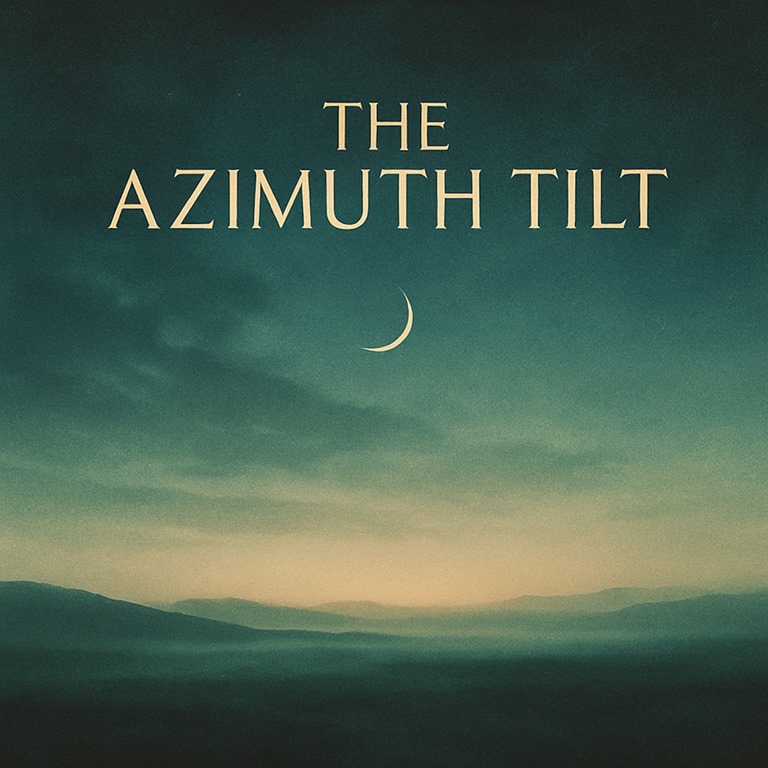
As for The Azimuth Tilt, their bio informs us that this is the work of ‘a solo ambient electronic project exploring the liminal spaces between sound, memory, and landscape. With a name drawn from the alignment of a real to reel tape head, the project orients itself toward the unseen—subtle shifts in perception, emotional resonance, and the hidden geometries of the natural world… Blending atmospheric textures, glacial rhythms, and immersive sound design.’ There are no clues as to who this is the project of, but it matters not, and in fact, the less we know, the better. This is the joy of abstract ambient works: all you need is the sound, and all you need from the sound is to let it drift, to carry you away. And this is what Alignment does.

On a certain level, it does very little. On another, it is a quintessential deep ambient album. Alignment features just six compositions, but has a running time of some fifty-seven minutes. The soundscapes which define it are sonically rich, with soft, drifting, cloudlike contrails merging with lower drones and contrails. In combination, filling the entire sonic spectrum, Alignment does a lot.

From nowhere, halfway through ‘An Unqualified Person’, a raucous sax breaks out.

And the layers build. Against scrawling spacious drift, it’s quite a contrast. And then there’s some subtle piano intervention, and from hereon in, the piano and sax alternate in leading. It’s nice… and not in a turtle-neck top kind of way. It’s nice but… a little strange. But ‘The Exquisite Space’ crackles and swirls abstractedly, with some supple motifs rippling and intertwining with a mellow mood exploration which arrives at more sax. Always more sax.

This seems to be a dictum The Azimuth Tilt are happy to follow, although it’s melted into the echo-soaked atmospherics of the final track, ‘And the Band Played On’. Alignment is not a dark album, but it’s one which feels unsettled, uncomfortable, unsure of its destination – and whatever it may be, the journey is worth the exploration.

AA

a0054555481_10

Room40 – 31st January 2024

Christopher Nosnibor

It begins with a rumbling roar, like a persistent strong wind rushing over moorland, before ripples of piano delicately drift over it to altogether calmer effect – although the roar continues beneath. The juxtaposition brings a balance of sorts.

Just a few days ago, I wrote on Circuits From Soft Frequencies by Jamie Lee, which was recorded among the sound mirrors at RAF Denge, in Kent, and touched on the fascinating nature of these structures, and opined that ‘often, the most alien and seemingly otherworldly creations are, in fact, man-made’.

Lawrence English’s latest work seems to contribute to this dialogue, albeit approaching from a different perspective.

‘I like to think that sound haunts architecture,’ he writes, and goes on to remark, ‘It’s one of the truly magical interactions afforded by sound’s immateriality. It’s also something that has captivated us from the earliest times. It’s not difficult to imagine the exhilaration of our early ancestors calling to one another in the dark cathedral like caves which held wonder, and security, for them.’

English also writes of the relationship between space and place, and how ‘Spaces hold the opportunity for place, which we create moment to moment, shaped by our ways of sense-making… Whilst the architectural and material features of space might remain somewhat constant, the people, objects, atmospheres, and encounters that fill them are forever collapsing into memory.’

The album comprises eight numbered segments, ETHKIB I – VIII, all formed using fundamentally the same sound palette, and which flow into one another seamlessly to create a single, continuous piece, which is best experienced without interruption.

The piano and the undercurrents, which evolve from that initial roar to altogether softer drones which drift, mist-like, develop an interplay whereby the dominant sound switches, sometimes with one or the other fading out completely – but this happens almost imperceptibly… It isn’t that you don’t listen to the music, but the preoccupation of the listening experience is absorbing the atmosphere, and it possesses almost a physicality. By ‘ETHKIB V’ the sounds has built such a density that the sensation is like being buffeted. Amidst the deep drones, there are, in the distant, whirring hums and elongated scrapes which evoke images of disused mills and abandoned factories. Perhaps there’s an element of the power of suggestion, but it’s difficult to contemplate purely abstract visualisations, or nature without some human aspect somewhere in the frame.

The soundscapes English creates are evocative, and in parts, at least, haunting – although ultimately, what haunts us is our own experience, our thoughts, our memories. And in this way, from space, we create our own sense of place, and tie things to them in an attempt to make sense of the world as we experience it.

By ‘ETHKIB VIII’, it’s the piano alone which rings out, in a reversal of the opening, and some of the mid-sections, ending on a single, low note, repeated, held, reverberating, leaving, ultimately silence, and a pause for reflection.

AA

RM4245 front

Lamour Records – 16th December 2024

Christopher Nosnibor

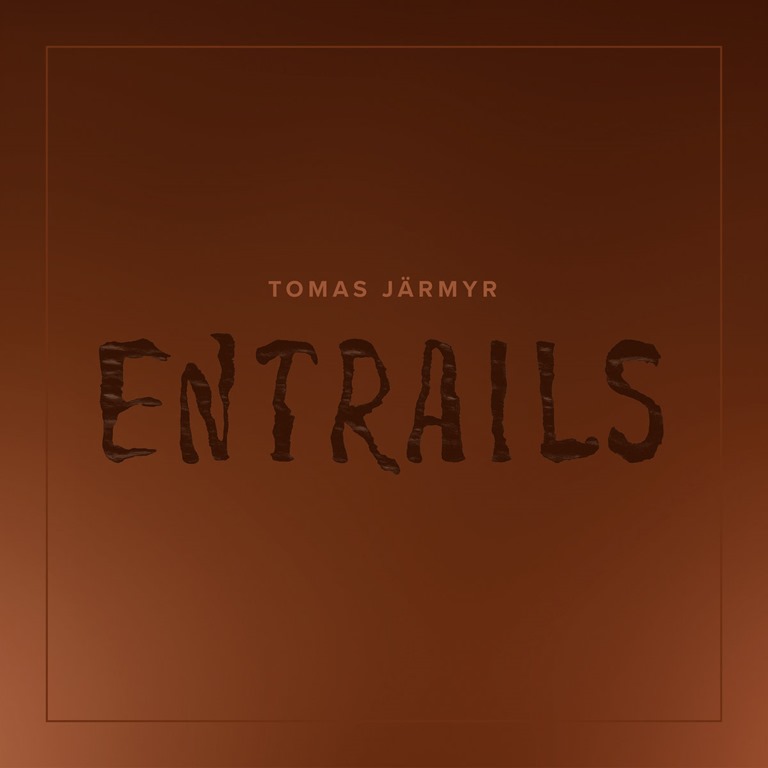
When you read that someone is exploring metal, the likely response is to think it’s a metal album in terms of genre. But not Tomas Järmyr: his explorations into ‘the deep frequencies of metal’ are quite literal. ‘Using only cymbals’, the notes accompanying the release explain, ‘Järmyr creates a slowly rotating musical sphere that holds beauty, deep emotion, and fierce heaviness… Entrails is an album that shows the core of his artistic expression and serves as the perfect introduction to Tomas Järmyr as a solo artist.’

As titles go, Entrails is unquestionably visceral in its connotations – another thing which would, for many, suggest a ‘metal’ album rather than a ‘metal’ album. But here we have an album containing a single track, which runs for thirty-eight minutes, consisting of nothing but cymbal work.

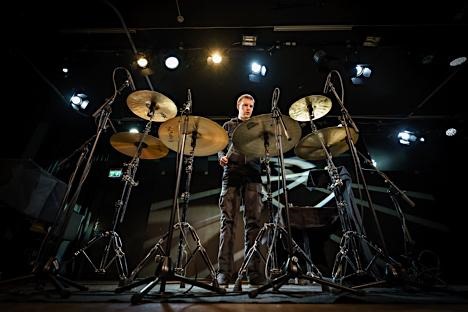
Thomas J

Photo: Thor Egil Leirtrø

In the context of a full drum kit, cymbals provide expression, and also an amount of ‘fill’ to the overall sound, not only of the kit, but the band, creating a wash of resonance in between the notes of the instruments and the beats of bass drum, snare, toms, etc. How do cymbals stand up when separated from everything else?

In the hands of Tomas Järmyr, we come to appreciate the range and versatility of the cymbal. Size certainly matters, and Järmyr’s setup which spans small, light crashes to huge, resonant, bell-like peels, against a backdrop which builds from a delicate clatter to a clashing, splashing tempest, is educational.

There are passages where the clatters and chimes diminish, and make way for dank, atmospheric reverberations which evoke the gloom of subterranean caverns, dark ambience which bears no discernible resemblance to anything remotely percussive, at least to the average ear – or mine.

Sometimes, with experimental music, the mystery is an integral part of the appeal: I prefer not to know which instruments have been used to create which sounds, and similarly, knowing how certain synths or laptop-based programmes have been used to conjure alien sounds feels like something of a spoiler, because I find myself scrutinising the sound and seeking to pick apart its construction. On Entrails, the opposite is true, because most of the sounds simply do not correspond to the source. So on the one hand, Entrails does lay bare the guts of the instrumentation: on the other, as I sit in the swirling drone which fills the room around the eighteen-minute mark, I find myself perplexed and in absolute awe at the creativity of the musicianship. How does anyone come to discover that cymbals have the capacity to be this versatile, to create sounds like these? Who has both ready access to this many cymbals and the time to explore their sounds and the way they interact with one another in such detail?

Sometimes the crescendos are delicate, slow-building: others, they explode unexpectedly. At others still, the sensation is more like an outflow of molten lava from a volcano.

Järmyr’s metal album may be devoid of guitars and guttural vocals – or, indeed, any vocals – bit it is still, for the most part, a heavy album, issuing forth an immensely dense, dark atmosphere, not to mention some quite challenging frequencies, spiking at the top end while rumbling heavily around the lower sonic regions. Ominous, oppressive, Entrails is not a fist-forward punch to the guts, but instead prods and pokes. The effect is no less potent.

AA

a3439715063_10

Sound In Silence – 5th December 2024

Christopher Nosnibor

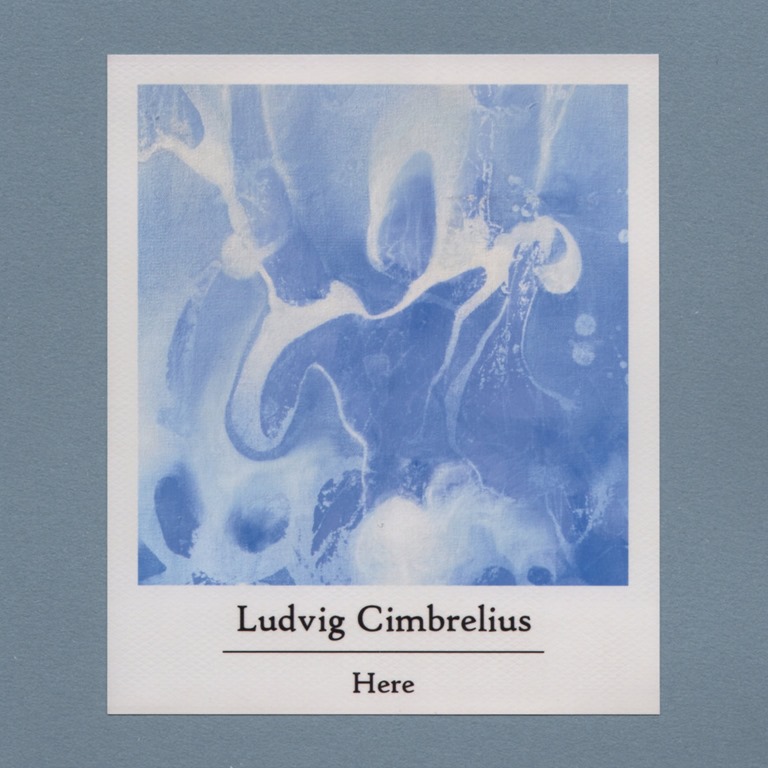
Ludvig Cimbrelius has been around for some considerable time now, and the label bio outlines how the Swedish musician – now based in Turkey – has, for over a decade, been producing music ranging from ambient and modern classical to deep electronic and minimal dub techno, under his own name and many different aliases such as Eternell, Purl, Illuvia, and others. His latest offering incorporates sound sources such as ‘calm acoustic piano, ethereal vocal spheres, atmospheric electric guitars and field recordings’

Despite containing only six tracks, Here has a running time of almost fifty minutes. These are expansive, contemplative works, and offer more than a hint of neoclassical gentility. Hearing ‘Left But Never Left’ is a wonderfully calming experience. It’s true, of course, that any individual’s response to anything musical or otherwise creative is entirely personal, but Cimbrelius transcends the layers of atmosphere between floating adrift and arriving in layers of mist and haze. The notes flow with space in between, and this space provides a lull in which to exhale, and to reflect. This piece, at just under four minutes in length, is just a prelude to the immersive soundscapes which follow.

‘When Warm Tears Fell from the Sky’ is a composition of the kind of ambience which evokes the soft wash of diluted watercolours spreading on paper to conjure, as if by some form of magic, a sky, a sea, fields, with just a few simple brush strokes, whereby the effect is greater than the input, at least to the eye. This is the sound of currents in the air, of mist, of cloud drifting, evaporating, reforming, changing shape as it moves through the sky.

The fourteen-minute ‘These Flames I Gently Let’ encapsulates the essence of the album in its entirety within its parameters. It begins with lilting, light-as-air piano and gradually melts into a soft swash which includes what sounds like rainfall and wordless vocalisations which slowly run into the broad flow of non-specific sound which slowly slips from being the focus of your attention into the background. It is, in this sense ambient in its purest form, falling into the background. ‘Lost in the Mists at Dawn’ is the soundtrack to the narrative vignette contained in the title: haunting, evocative, it conjures the scene in your imagination without actually saying anything, and its power lies within the depths of its wispy vagueness.

The execution of Here is magnificent. The tracks trickle into one another imperceptibly, creating a seamless sonic flow. The layers are interwoven so as to meld into a finely-textured gauze, and everything is so smooth, so soothing and soporific.

AA

a2808403183_10

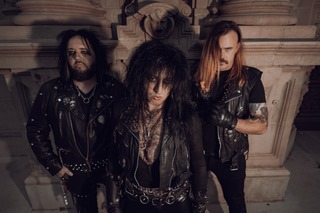
After recently announcing their signing with Peaceville Records, California death-rockers New Skeletal Faces return today with a new single and details of their upcoming album, Until The Night.

The single, also titled ‘Until The Night’, is the first track from the band’s Peaceville debut and delves deep into the forgotten, dark underbelly of rock and roll. “Until The Night is about the ritualistic deviancies partaken by the lost souls of our planet” the band say. “It’s an anthem for the heathens that plague the night." The album, recorded and mixed by Bill Metoyer (Slayer/W.A.S.P.), is set for release on November 1st.

Alongside the single comes a raucous new video directed by Gaberealhell. Speaking about the video, the band said, “The video for ‘Until The Night’ captures the true essence of the song and lifestyle of the band. Done with little planning and no storyboard, you can feel the uncertain, spontaneous atmosphere”.

We reckon they sound better than they look, and arrive with a strong dash of vaguely gothy early post-punk in the mix.

Watch the video here.

AA

The band’s Peaceville debut, Until The Night (which follows in the path of 2019‘s Celestial Disease full-length release) further enriches New Skeletal Faces’ effortless blending of the spirits of old; with the seductive & spellbinding gothic prowess of bands such as Christian Death fused with the raw unbridled energy of early Swedish black metal legend, Bathory to create a bold new statement of intent, in stark contrast to the often overly-refined polish of contemporary metal. Until the Night is, as a result, something more akin to listening to the 1980’s Sunset Strip in an alternate universe from hell.

Formed in 2017, the trio of Errol Fritz, KRO, & Don Void present themselves as a cosmic abomination that tote the genre lines between all manners of darkness in music. New Skeletal Faces cast their own black light onto the long dormant corpse of Death Rock, shattering the mirror of modern Heavy Metal into fragments that reflect back a fresh new take on this form of music with an energised & outlandish conviction.

Recorded in the shadowy recesses of Hollywood, California, the opus was tracked, mixed and mastered by producer/engineer Bill Metoyer (Slayer, Wasp, DRI), capturing a richly crafted, organic sound authentic to the legends of the past, presenting all-new haunted tracks alongside a reimagined take on Bathory’s own Raise The Dead. Of the recording Bill Metoyer said “It was a pleasure working with New Skeletal Faces. A band who not only chose to NOT follow recent songwriting trends of so many other newer metal bands seem to do nowadays, but also the trends in the SOUND of their record.”

thumbnail_New Skeletal Faces

Pic: Becky DiGiglio

Record Release Shows:

Friday, October 18th – Til Two Club San Diego (Club Grave Beat)

Saturday, October 26th – Knucklehead Hollywood CA, (Club Rockit)

Friday November 29th – Lucky Liquor, Seattle, Washington

Saturday, November 2nd – Rubber Gloves Rehearsal Studios, Dayton, Texas (w/ Pentagram)

Saturday, November 30th – Coffin Club, Portland Oregon

10th May 2024

Christopher Nosnibor

Back in April 2020, writing on the release of their second album, Prepared for a Nightmare, I remarked that it had been four years since their debut, Observed in a Dream, and it had felt like an eternity. And here we are, a further four years on, and ‘A Foretold Ecstasy’ has landed as the prelude to album number three, due in the autumn.

Here, they’re straight in with that tight, solid rhythm section – a chunky bass with a hint of chorus to fatten it out while also giving it that classic spectral goth sound, melded to a relentless four-four metronomic thump, minimal cymbals, no flamboyant fills, just taut, a tense, rigid spine around which the body of the song grows. This, of course, is the foundation of that vintage gothy / post punk sound which originated with The Sisters of Mercy and, thanks largely to Craig Adams – who is arguably one of the greatest bassists of all time by virtue of his simple style of nailing a groove and just holding it down for the duration – carried on in The Mission. The Mish may lack some of the style and certainly the atmosphere and lyrical prowess of The Sisters, but the musical ingredients – and in particular that unflinching rhythm section – are fundamentally the same. And so it is that while the dominance of that thunking bass and bash-bash-bash snare may have become something of a formula, it’s hard to beat and absolutely defines the genre.

Mayflower Madame have always sat more toward The Mission end of the spectrum, whipping up songs which owe a certain debt to Wayne Hussey’s layered, cadent guitar style. But what they bring that’s unique is a swirly, psychedelic / shoegaze hue, a fuzzy swirl of texture and light. There’s a dark decadence, a lascivious richness to Mayflower Madame that accentuates the dramatic aspects of the gothiness: theatrical, flamboyant, but without being hammy or campy. And of course, Trond Fagernes’ vocals drift in an ocean of reverb, and the cumulative effect isn’t simply atmospheric: it carries you away on a sea of mesmeric sound.

With layers of synth which drift like mist across a production that balances dreaminess with a driving urgency, ‘A Foretold Ecstasy’ floats between haunting verses and surging choruses – and it’s hinting at their best work to date.

AA

5tqs_MayflowerMadame1photobyMiriamBrenne650--1

PHOTO CREDIT: MIRIAM BRENNE

Christopher Nosnibor

It’s a common issue for artists, even those with labels, that a release simply fails to gain traction. There are myriad reasons and multiple factors, and it’s often a combination of them which contrive to leave a release sunk like a stone, dead in the water. It’s rarely a question of quality. Even A-Ha’s ‘Take On Me’ and ‘West End Girls’ by the pet Shop Boys took more than one attempt to break through, despite major label backing at a time when labels would plough absolutely hods of cash into new artists.

Sometimes it’s simply a question of timing: some weeks and months there’s a glut of major releases or releases that otherwise grab the attention that mean some great records slip through the cracks. This month is a classic example, and it seems there are at least half a dozen truly killer releases all landing on the 10th. I can’t even listen to them all, let alone write about them.

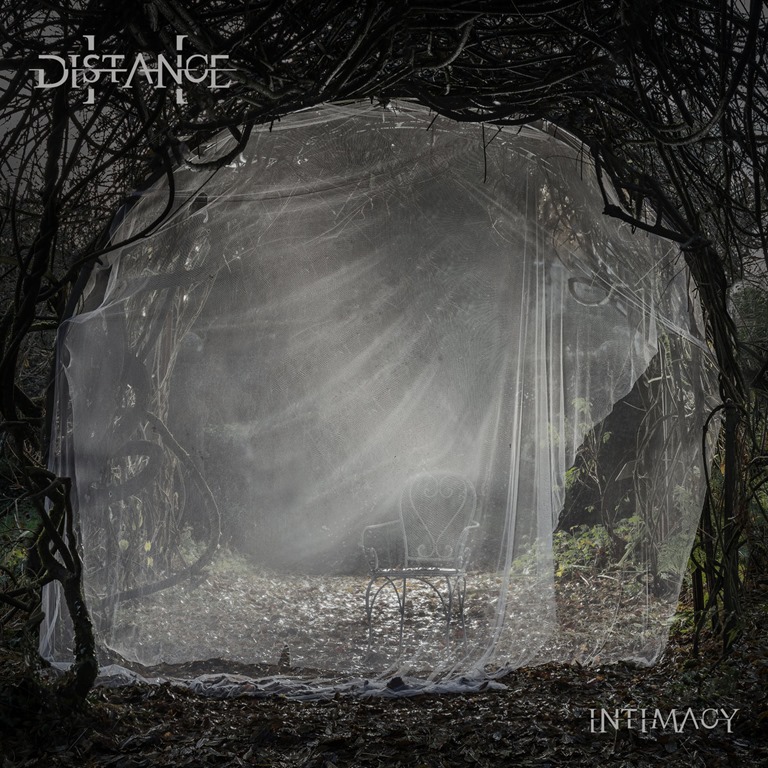
And so it seems to have been the case when Distance H dropped debut EP Intimacy a few months ago. The single cuts released in advance of this EP grabbed my attention, not least the first, Bitch 16’, featuring Ophelia from Saigon Blue Rain. In fact, there wasn’t a weak selection among the three singles: ‘Waters of Woe’ by Distance H feat. Marita Volodina was – and remains, as I described it at the time – ‘vintage goth with a contemporary spin’ and ‘a cracking tune’.

But having failed to make a splash, Intimacy is getting a PR reboot, and it’s a good thing, because the tracks which didn’t get single releases a year ago or whenever, are just as strong, and this makes for a full and founded EP. Casting an eye back to the 80s and 90s when big bucks were doing the rounds, it was often the case that albums would depend on a strong single or two, and that those singles would stand as beacons in set of mediocre slop, or, as was often the case, indulgent turd. It’s rather harder to get away with that ‘lead single’ marketing approach now people can stream the album or hear to by other means in advance without needing to go and check out a listening booth or blag it off your mate.

But Intimacy is truly all killer. ‘Twilight’ is a big, sweeping slab of majestic melancholy, balancing cool synths and chiming guitars that lean on Disintegration era Cure and sits nicely alongside The Twilight Sad circa Nobody Wants to Be Here and Nobody Wants to Leave. It’s a song with a sadness that aches, but at the same time, there’s an ethereal majesty about it, due in no small part to the sweeping, soaring vocals. The epically multi-faceted ‘Waters of Woe’ we’ve already raved about here, but hearing it afresh in the context of the EP, it seems to gain power. The same if true of ‘Reasons to Rush’ which features Liset Alea, combining heavy goth vibes with the electric rush of 90s alternative acts like Curve.

The final track, the epic six-minute ‘Leaden Sky’ now selected to lead the reboot, again features Ophelia on vocals. It’s another gothy epic, clocking in at over six minutes, with a bulbous bass and a wash of echo-soaked guitars weaving a richly textured backdrop cut through with programmed drums which punch out a rolling rhythm. In the context of the EP, it rounds off a big journey ending as it begins, while stepping through some memorable terrain. For these collaborative cuts, Manu H has made some truly immaculate selections. Each of the vocalists brings a subtle but essential twist to the sound, and while tied tightly to the templates of his stated influences (The Cure, Joy Division, Siouxsie And The Banshees, Cocteau Twins, The Sisters of Mercy or The Chameleons), Intimacy sees Distance H emerge victorious by capturing the atmospheric aspects of his forebears without falling to cliché, and the quality of the songs seals it.

AA

a1691727151_10

Delivering a resolute punch with an acerbic sting in its tale, new single ‘Stamp You Out’ sees the Manchester band return to the spotlight with commanding form and typically uncompromising style.

From its blistering post/punk guitar lines to its punishing percussives, ‘Stamp You Out’ creates an impending atmosphere of anxiety throughout. With Adam Houghton’s trademark baritone vocal booming with all the force of an omnipotent autocrat at the lectern of a police state; it makes for a powerful statement of intent that instantly envelops listeners back into the shadow-strewn world of IST IST.
Speaking about ‘Stamp You Out’, Houghton says:

“[Stamp You Out] tips its hat to the previous IST IST where the modus operandi was to try and make an impact in the most forceful way; pounding drums and bass and repetitive lyrics. I remember watching a news report where a politician, whose name I forget, just kept saying: ‘we need to stamp this out’. I was thinking ‘we need to stamp you out’, so I wrote an aggressive fight song and a call to arms about it.”

The single is accompanied by an official video that sees the band deliver a voltaic performance of the track against a flurry of incandescent lights. Watch it here:

AA

Of the video Keating adds: “We felt like the track is a straightforward rock song which required a straightforward video and we didn’t want to over-embellish the visual aspect. For existing IST IST fans, it re-affirms what we’re all about, and for anyone new it tells you everything you need to know.”

The new single is also accompanied by the announcement of IST IST’s third studio album Protagonists, out 31 March 2022 via Kind Violence Records. After securing their status as one of Manchester’s most exciting acts with their 2020 debut Architecture, and then consolidating the title with its 2021 follow-up The Art of Lying; new album Protagonists arrives as something of a new dawn for the four-piece. As Andy Keating says:

“This was our first straightforward album, which sounds strange given it’s the third one. Our first album was a little bit of a back catalogue, and the rest was written in the same vein to have a coherent record. The second album was a stab in the dark and written and recorded during lockdown restrictions, but it broke us into the top 100. ‘Protagonists’ feels like the first album where there’s no pressure.”

Stamp

An album all about new beginnings, with a nod to the trials and tribulations of love, tricky family relationships and the feeling of being trapped by the past, ‘Protagonists’ arrives as an attestation to a band sure of their own identity. With the time and space to experiment in order to solidify their own sound, Keating adds:

“We originally started just exploring sounds and textures which appealed to us, and it evolved into fully-fledged songwriting. There are some elements which hark back to our ballsy days of a heavy sound, but we feel like this is a band expressing themselves how they want to.”

Owing its title to songwriter Adam Houghton’s magpie-like method of writing, Protagonists finds the frontman taking prominent characters that have caught his imagination, whether fictional or non-fictional, and transplanting them into dystopian worlds with new and uncertain outcomes. As Hougton explains:
“My process has always been taking inspiration from everything around me including but not limited to TV, Books, Movies, Newspaper, Articles on Wikipedia, Crime Documentaries etc. I then use these sources to craft fictitious stories around an imagined persona. The title ‘Protagonists” seemed to work with this method.”

Blurring the lines between fact and fiction and traversing a broad spectrum of genres, tracks like “Nothing More Nothing Less” — a  “simple love song written from a woman’s perspective” — take on a gauzy and ethereal pop-tinted quality, while slightly more menacing moments like “Fool’s Paradise” and “Trapdoors” find closer alignment with the band’s brooding, brazen rock roots.

From future favourites like “Something Has To Give”, a jittering guitar track about “a stick or twist situation”, to fully fitted-out classics like the anthemic “Emily” (a live fixture from the band’s earliest days, which has finally found its place on this record), ‘Protagonists’ will provide plenty to pore over for fans new and old.

Recorded and mixed by Michael Whalley and IST IST at Milkshed Studios, the album was mastered by the legendary  Greg Calbi and Steve Fallone at Sterling Sound (The National, Yeah Yeah Yeahs, Interpol).
A compulsive, character-driven record from a band hitting their creative zenith, IST IST will release ‘Protagonists’ in Spring of 2023.

To mark the release, IST IST will be playing a special hometown launch show for the new record at the Manchester Ritz in March next year – details below. There will also be a small preview tour before the end of 2022, with dates in London, Birmingham and Hebden Bridge. Standby for further UK live dates soon.

IST IST UK LIVE SHOWS

NOVEMBER 2022

3/11 O2 Academy 2, Islington,
4/11 The Rainbow, Birmingham,
25/11 Trades Club, Hebden Bridge (Sold out)

MARCH 2023

31 – Manchester Ritz

Ist

21st October 2022

Christopher Nosnibor

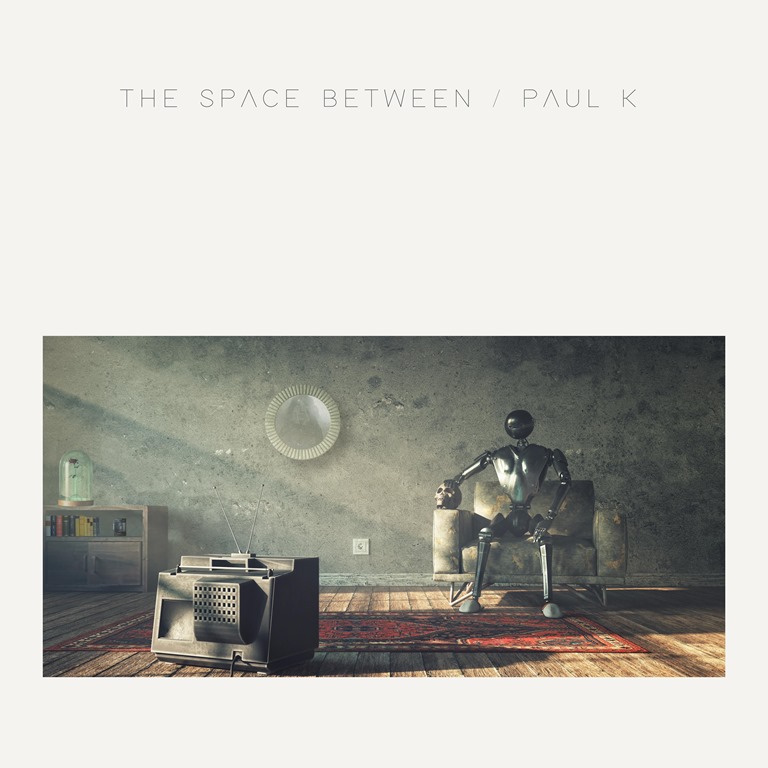
It’s been almost three years since Paul K delivered Reconstructed Memories. Listening to The Space Between, it becomes apparent why. Pandemic or nay, this is an ambitious and complex album which sees Paul return to the territory explored on 2018’s The Fermi Paradox and go the whole hog on devising and scoring a vast conceptual progressive work that’s heavily invested in narrative as it traces what he outlines as being a story ‘about an astronaut who has volunteered for a one way journey through space to pass through the Heliopause and is set maybe 30/50 years in the future.’

Space is both the backdrop and the story, in many ways, and the fascination it holds is something that transcends words or even rational explanation. Perhaps the fact that the sheer enormity and infiniteness of space is beyond our comprehension is a major factor in our space obsession. And however far and deep we probe, I suspect we will never truly be capable of assimilating the universe, especially as we, as a species, struggle to comprehend that we do not exist at its centre.

In classic sci-fi form and echoing 2001: A Space Odyssey, the concept behind the story is that the astronaut’s sole companion is an AI robot that becomes sentient during the journey, before the astronaut eventually dies and the robot continues the journey alone.

As Paul explains, ‘Each track plots the journey from liftoff looking back at the Earth (True Splendour) to the debilitating effect of years alone in space (Pareidolia) and is also related to the love and loss the astronaut has felt in his life’.

Understatement is the album’s defining feature. While it is unquestionably ambitious and incorporates cinematic arrangements, and notably choral-sounding vocals, the instrumentation is subtle and layered.

‘True Splendour’ makes for a gentle introduction and very much sets the tone. The Space Between keeps the drama and pomp to a minimum, and instead, the mood is contemplative, almost subdued, as strolling basslines wander sedately through soft washes of sound. Percussion is minimal, and low in the mix.

‘Sleep Within’ is perhaps the album’s most conventional ‘rock’ composition, but there’s a subdued, soporific overlay to its mid-pace melodic drift, although the reflective, wistful ‘Spektr’ has a certain solidity to it. In contrast, ‘Artifact’, the point at which the AI assumes autonomy, is almost vaporous, a soft piano reverberating among wispy sonic contrails.

The Space Between is an album that functions on numerous levels simultaneously, although they’re not all necessarily obvious. But it’s not imperative to follow the narrative to appreciate the detail; the album works in a way that not only creates space, but conveys space, the eternal distance, the vast emptiness… we are all lost and floating. But some are more lost than others. Welcome to The Space Between.

292588895_411372567443242_3679202510317740520_n