Posts Tagged ‘Album’

PBP

Christopher Nosnibor

If the band’s name sounds a little odd in a quirky, absurd dada sort of a way, then it’s due in part to the translation. Initially formed as a post-punk band working under the name Dystopia, the bandmembers’ discovery of acts like the Strokes, Arctic Monkeys, Radiohead, Interpol, The Smiths, and Jon Spencer Blues Explosion prompted a radical change of direction and a new name, which, I’m reliably informed (i.e. from the press release, not Google) translates as ‘shrimp whiskers’ in Italian. Ok, so it still doesn’t make much sense, but it’s certainly different.

The same is true of the Italian trio’s second long-player, pitched as ‘a concept album, a fantasy tale that explores environmental issues and animal rights.’ I respect and even admire that. These are big issues, and they’re more than merely political issues. Yet pop culture as a whole seems strangely removed from real culture. It’s very much a measure of the first-world late capitalist society that ‘culture’ can be a separate entity unto itself, and concerned with entertainment and personal emotions instead of things that matter, like, say, the state of the planet or the dominance of global corporations.

Not that much of this is apparent in their wild and often experimental alternative rock, which jolts and jars, lurches, scratches and scrapes. They don’t ape any of the aforementioned influences in any obvious way, and instead head out on a very long limb to create something that slaps the listener round the face with its otherness and a real sense of urgency. Nagging basslines and angular guitars explode in frenzied discord against drums that fire spasmodic rhythms in every direction.

A chunky, elastic bass guitar line worthy of Gang of Four underpins guitars that twitch and jerk every which way on ‘Mountaintop’, and the funk-tinged ‘Breakdown’ makes you want to dance and makes you feel tense at the same time. There are occasional moments of hippy-trippy psychedelia (‘Goodbye Zero’, for example), and jangle-centric indie (‘Something is Growing’), but despite gleaning snippets of lyrics about elephants and breaking the government, this doesn’t feel like an excessively preachy work, and it’s certainly not about gooey, wide-eyed idealism.

It is, however, wildly eclectic, and there’s some superlative drumming, not least of all on the explosive ‘Waterquake’ which combines harmonious melody with immense percussive firepower.

How much of the concept or the message you get is likely to vary, but there’s no missing the universal and utterly exhilarating delivery.
Moustache Prawn

https://www.youtube.com/embed/YORVelOf6Y4?list=PLTd0ejrxraFwNp7GWzSncgMUA_0XuFHlo
Moustache Prawn Online

Rock is Hell / UNrecords – RIP 66 / unrec11 – February 2016

Christopher Nosnibor


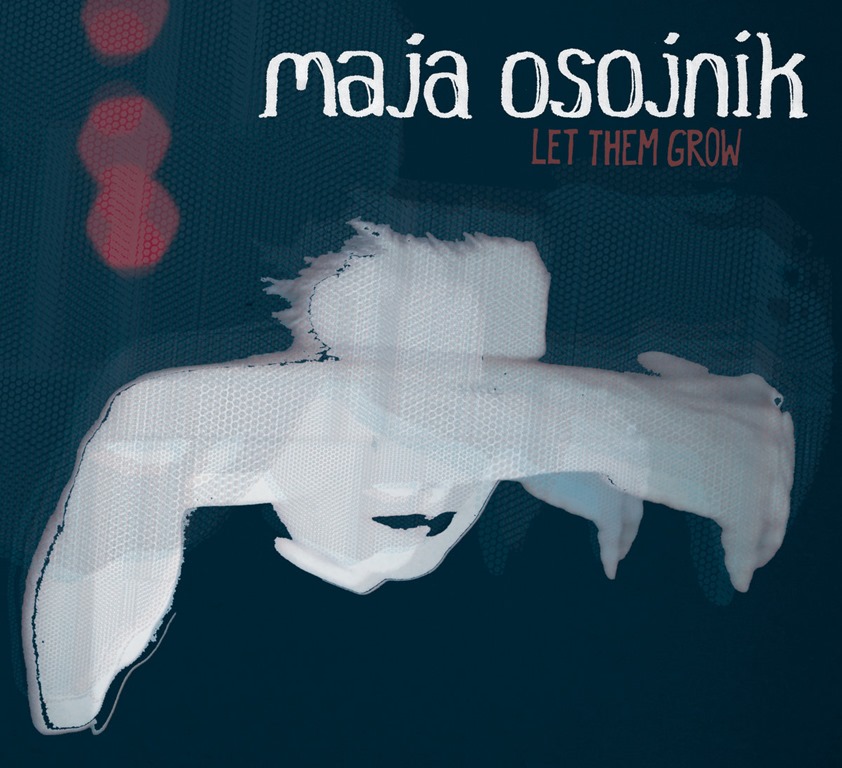
Maja Osojnik is an angry woman. A woman on the edge. A woman with inner strength. After 14 band albums, her first solo outing is a highly charged work, heavy with stark emotions and raw catharsis.

‘Tell me, what do you want me to be?’ she asks in an opium monotone on ‘Tell Me’. Slowly, her offers become more desperate and pained, her multiple voices speaking simultaneously before she slams it all down on the table, unable to maintain her decorum any further: ‘Ill become… all the images you want / so you can walk on me / sleep in me / so you can throw all your shit on me / Tell me, what the fuck do you want me to be?’ It’s chilling in its directness, its apparent lack of artistic distance.

‘Let Them Grow’ is one of those albums that hits like a punch to the solar plexus. It’s impossible not to laud the artist for her openness, her ability to convey so many painful emotions – but at the same time, it’s deeply uncomfortable. Listen, people who use terms like ‘TMI’ are, in the main, uncomfortable because they don’t like to face brutal truths, particularly those belonging to other people. On ‘Let Them Grow’, Osojnick pays no regard to these emotionally closed or stunted types and simply lays it all out there, telling it like it is, spilling her guts because she has no other choice. This isn’t simply music, this is pure art and the very definition of catharsis. Let Them Grow is a work of exorcism, of expulsion.

If you hadn’t already figured, this is a challenging work. ‘Condition’ is a full-tilt rant against a backdrop which amalgamates industrial noise and tribal beats. ‘Stick it up your ass… Come out, you rotten cocksucker, here’s your fucking POP SONG’ she hollers bitterly. And she fucking means it: this isn’t mere petulance, but a middle finger to an establishment and a wider world that’s failed and ultimately fucked up- and which doesn’t value the arts and doesn’t recognise the value of art. It’s a shame, because this is art.

It’s not just the music: I received the CD in its gatefold card sleeve enveloped within a four-leaf pamphlet type wrapper, accompanied by a sticker and five postcards of the artist beautifully shot by Rania Moslam in a range of striking poses. The whole package was in turn wrapped in a parchment paper bag. It’s about the artefact, the attention to detail, the building of suspense and expectation while gaining access to the disc itself, which, in turn, does not disappoint. This is not merely an album. It’s a grand gesture.

From the most subtle, delicate pieces, led by softly-fingered piano, she slowly drags out every sinew of anguish, draws on every drop of pain and presents real emotion. Emotion that can’t be faked.

Brooding instrumental passages offer moments of respite, but then there are sections of growling industrial noise, dark and sinister, grinding and crushing, which are nothing short of devastating. Taut, tense and from the heart, Let Them Grow sees Maja Osojnick present an album that is unparalleled in its sincerity and astounding in its emotional and musical power.

Maja Osojnik

Maja Osojnik Online

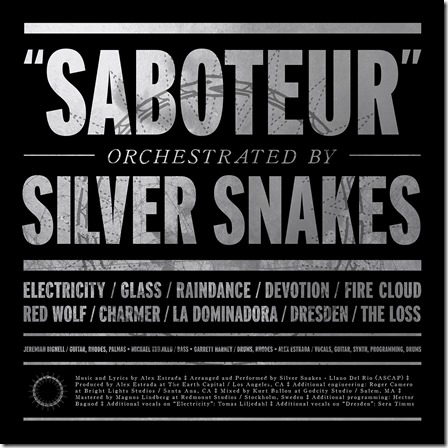
Silver Snakes – Saboteur

Posted: 21 February 2016 in Albums
Tags: , , , ,

12th February 2016

They come straight on with all guns blazing on this one. A repetitive, driving riff, amped up to eleven dominates the album’s first track, ‘Electricity’. It may be corny an cliché to say it grabs the listener by the throat and gives an instant hook, but the bottom line is that it’s entirely. As a music reviewer who received anywhere up to 50 albums and Eps a week for review, I know as well as anyone the importance of making an impact in the first minute or two. We live in a world that’s time-precious and time-pressured, of instant gratification and low patience thresholds. If whatever you’re pitching don’t grab the attention immediately, then fuggeddaboutit. ‘Saboteur’ is a riffcentric album that blasts off with the claws out, sinks ‘em in deep, and digs right in.

Full-on as it is, it’s got range and dynamics, and they don’t resort to formulaic verse/chorus/loud/ quiet structures by way of a default. Although, then they do tale the more conventional path they end up with ‘Raindance’, a full-on grunger reminiscent of Nirvana and lesser known T&G acts like Tar, and it’s belting – arguably, the most obvious single choice from an album that’s dominated by raging, overdriven guitars and angst-laden vocals, ripped with rage.

They stalk stealthily through the breakdowns and bring it all back with tumultuous overdriven attack. ‘Dresden; hit s a slower, more stoner-rock vibe, with some heavy-duty tom-driven-drumming propelling a slow, grinding riff into oblivion over the course of an expansive nine-minute sprawl. It’s one of three longer tracks (as in over seven minutes), through which they explore more prog territories, but without losing any momentum.

There are elements of Soundgarden and Korn are at play here, not to mention Nine Inch Nails (as exemplified by the full-tilt ‘Charmer’, but it would be wrong to tag them as 90s revivalists. Regardless of decade, the driving guitar riff and thunderous drumming is always king, and the song that conveys sincere emotion and delivers a tangible punch to the gut is god. Silver Snakes are both kings and gods, on the strength of this album.

They come straight on with all guns blazing on this one. A repetitive, driving riff, amped up to eleven dominates the album’s first track, ‘Electricity’. It may be corny an cliché to say it grabs the listener by the throat and gives an instant hook, but the bottom line is that it’s entirely. As a music reviewer who received anywhere up to 50 albums and Eps a week for review, I know as well as anyone the importance of making an impact in the first minute or two. We live in a world that’s time-precious and time-pressured, of instant gratification and low patience thresholds. If whatever you’re pitching don’t grab the attention immediately, then fuggeddaboutit. ‘Saboteur’ is a riffcentric album that blasts off with the claws out, sinks ‘em in deep, and digs right in.

Full-on as it is, it’s got range and dynamics, and they don’t resort to formulaic verse/chorus/loud/ quiet structures by way of a default. Although, then they do tale the more conventional path they end up with ‘Raindance’, a full-on grunger reminiscent of Nirvana and lesser known T&G acts like Tar, and it’s belting – arguably, the most obvious single choice from an album that’s dominated by raging, overdriven guitars and angst-laden vocals, ripped with rage.

They stalk stealthily through the breakdowns and bring it all back with tumultuous overdriven attack. ‘Dresden; hit s a slower, more stoner-rock vibe, with some heavy-duty tom-driven-drumming propelling a slow, grinding riff into oblivion over the course of an expansive nine-minute sprawl. It’s one of three longer tracks (as in over seven minutes), through which they explore more prog territories, but without losing any momentum.

There are elements of Soundgarden and Korn art play here, but it would be wrong to tag them as 90s revivalists. Regardless of decade, the driving guitar riff and thunderous drumming is always king, and the song that conveys sincere emotion and delivers a tangible punch to the gut is god. Silver Snakes are both kings and gods, on the strength of this album.


Silver Snakes


Silver Snakes Online

Consouling Sounds – 18th March 2016

Christopher Nosnibor

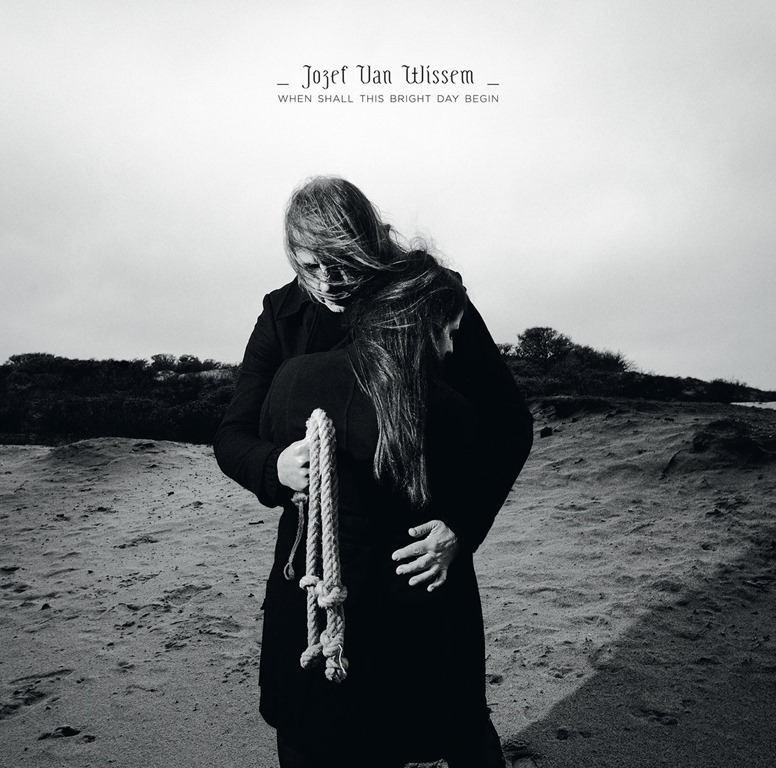
Oftentimes, I’ll set an album to play and, although listening to it, will find myself distracted by other things – email, Facebook, Twitter, whatever. We live in a world of information overload and we find ourselves multitasking – or distracted – constantly. It seemed fair to assume that I’d be able to get a few bits and bobs done while giving a first spin to Jozef Van Wissem’s latest offering. I was mistaken. But then. It’s not often I’m presented with an album that combines both elements of the avant-garde and the baroque, performed on the lute, an instrument I cannot help but associate with Elizabethan court poetry – not least of all Sir Thomas Wyatt, author of lyric verses ‘My Lute, Awake!’ and ‘Blame Not My Lute’.

Van Wiessem’s lute is very much awake, and there is no blame to be apportioned when examining his latest work, When Shall This Bright Day Begin. Am I uncomfortable with the absence of a question mark in the title? Yes, but that’s about all.

The Dutch composer has received no small degree of recognition for his lute compositions – which seems, on the face of it, a little odd. I mean, who plays the lute nowadays, apart from medieval revivalists, the kind of people who are heavily into LARP and all the rest? But listening to When Shall This Bright Day Begin, I find I’m doing nothing but listening. Van Wissem’s compositions and playing are magnificent, and utterly compelling. And it’s hard to imagine anything further removed from ‘Greensleeves’ or the Elizabethan court. The instrument may be ancient in its origins, but the eight tracks here aren’t steeped in historical reverence. Instead, Van Wissem conjured beautiful and timeless music.

If ‘To Lose Yourself is Eternal’ opens the album in what may be considered a fairly conventional, accessible, lutey way, the darkly warped swampy garage drone of ‘You Can’t Remain Here’ completely annihilates any sense of comfort or rapport that’s been established. Coming on like a ‘White Light’ era Swans track covered by Dr Mix and the Remix, it also drags in some fucked-up ketamine-slowed psychobilly leanings and imbue the song with a sense of absolute derangement. It’s genius.

By genius, I mean almost as genius as inviting Zola Jesus to feature on two of the right tracks. Another admirably idiosyncratic and utterly unique performer – not to mention a vocalist in possession of a stunning voice which is dramatic and stunningly powerful – she brings breathtaking dimensions to ‘Ruins’ with a suitably spellbinding performance that’s well-suited to the musical accompaniment.

The stark, dark country twang of scratchy strings, coupled with muffled samples, which make ‘The Purified Eye of the Soul is Placed in the Circle of the Eternal Sun’ and sort-of counterpart ‘On The Incomparable Nobility of Earthy Suffering’, pull hard on the attention.

Van Wissem shows admirable restraint, and contains the album to just eight tracks, with the sparse ‘Death of the Ego’ providing a delicate and understated conclusion which is enough to leave the listener sated. Bask in the glorious elegance, for this is music of the most magical kind.

Jozef Van Wissem

Jozef Van Wissem Online

clang records – clang032

Christopher Nosnibor

Stan Brakhage was an experimental filmmaker who sometimes closely shot glass objects. A huge influence on Frasconi, who sometimes makes music with glass instruments. The album title is a play on words, in reference not only to his artistic forebear but also the cracked quartz crystal bowl which was used to make this 20-minute musical work.

Having previously given the instrument a rather too vigorous workout during a rehearsal, Frasconi decided to explore its absolute limits. As Frasconi himself observes, ‘Glass is fragile. Glass is easily broken. Most glass instruments ignore these fact and instead focus on the material’s delicate beauty’.

Standing Breakage captures the artist’s efforts to complete the job he unintentionally began when the instrument – pictured on the front cover – became fractured. Ironically, despite labouring at the fracture in order to bring about the bowl’s ultimate destruction, he failed to achieve the desired moment of breakage. As such, for all its fragility, the glass held firm against a sustained assault.

An awareness of the circumstances of the album’s creation is, in this instance, integral to its appreciation, first and foremost, because if you didn’t know it was made using only the sounds created with a glass bowl, you would never guess that it was made using only the sounds created with a glass bowl. Because it doesn’t sound like it was made using only the sounds created with a glass bowl. In fact, it doesn’t sound like anything organic, or even of this world.

Standing Breakage finds Frasconi create an intriguing blend of chimes, rings, swirls and twangs, scrapes and chatters. Heavy, bulbous bass tones resonate, twisting and spinning upwards. Percussive thumps and sounds like scraping violin strings all emerge from the single instrument under the musician’s interrogation. Clanging, gong-like sounds crash. Eerie sounds that defy any obvious description, and sound alien and other-worldly in their origin drift. Booming synth-like notes balloon outwards, expanding in the air.

Tension mounts and builds. You sit, teeth on edge, fists clenched. You’ve no idea what will come next. You will twist and squirm. You’ll conjure myriad images in response to the strange sounds. But never once will you think ‘this sounds like someone pissing about with a glass bowl with a crack in it.’

Miguel Frasconi

Miguel Frasconi’s Website