Posts Tagged ‘Album’

30th May 2025

Christopher Nosnibor

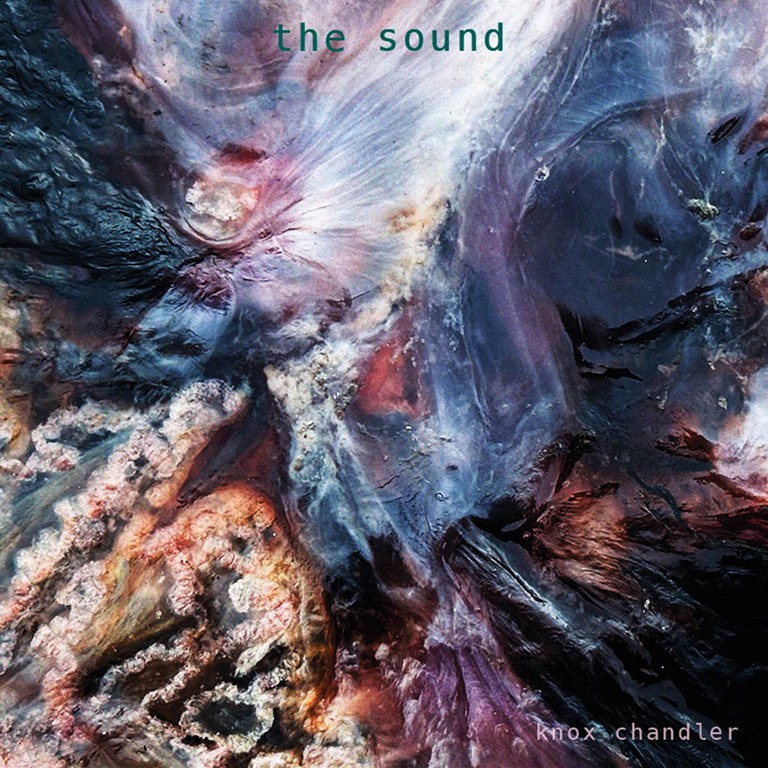
Knox Chandler may not be universally known, but many of the acts he’s credited as playing with over the last forty years are, with long stints as a member of  and the Cyndi Lauper band. Then there’s his work in various capacities with REM, Depeche Mode, Grace Jones, Marianne Faithful, Natalie Merchant, Tricky, The Creatures, Dave Gahan, Paper Monsters and The Golden Palominos… it makes for quite the CV.

This solo outing marks a fairly significant departure from all of that, though. The context behind it is that ‘Knox spent a decade residing in Berlin, Germany, while he explored sound-scaping. He developed a technique he calls “Soundribbons”, which he recorded and performed in its own right as well as applying it to different genres and mediums . He composed, recorded, toured, produced, and wrote string arrangements for Herbert Grönemeyer, Jesper Munk, Pure Reason Revolution, The Still, TAU, Miss Kenichi and the Sun, Mars William’s Albert Ayler Xmas, Rita Redshoes, Them There, The Night…”

And so what we have here is a collection of ten instrumental works, whereby the guitar doesn’t sound like a guitar. In fact, it doesn’t sound specifically like anything. Chandler conjures wispy, ephemeral sound sculptures, atmospheric, brooding, a shade filmic, soundtracky, with hints of sci-fi and BBC radiophonic workshop about their strange, twisting, abstract and keenly non-linear forms.

There’s more than simply droning guitar on offer here, though: flickering, surround-sound precision provides a shifting backdrop to the ever-morphing ‘Tea Stained Edge’, where tremulous, reverby guitar bounces here and there off sonorous string-like sounds and even something resembling a jazzy double bass, but in contrast, ‘Lost Dusk Feather’ takes the form of a magnificently disjointed collage work, flipping between ambience and discordant confusion. The playfully-titled ‘Hidden Hammock Pond’ is one of the album’s most overtly experimental works, a mish-mash of sounds overlaying one another, smooshed together and as strange and unpredictable as it gets, venturing via exploratory ambience and quivering drones and allusions of abstract jazz into Krautrock . It’s wilfully perverse, and swings between the dark and serious, and the light and entertaining within the space of a heartbeat. ‘Mars on a Half Moon Rising’ goes a shade New age strange, insectroid flutters, field sounds and mystical hoodoo, bells and chimes, Morris dancers and scraping bass which occasionally strays into some kind of Duran Duran bending bass moments.

It’s all going on here. It’s impossible to predict direction over the duration of this release: The Sound meanders here, there, and everywhere. At times expansive (as on ‘Burn’), at times claustrophobic, it’s never less than compelling or varied listening.

If you’re seeking anything in the vein of the headline acts with which Knox Chandler is associated with, you may well be disappointed. But if your ears are open to abstract, instrumental strangeness, you’re in the right place. The Sound is weird, unapologetically and strange – and it’s the sound of an artist cutting loose and exploring sound. It’s weird, and wonderful, in equal measure.

AA

a0385212710_10

Prophecy Productions – 6th June 2025

Christopher Nosnibor

Absence makes the hearty grow fonder, so the adage goes, and so it also goes that some acts return not only rejuvenated, but more prolific the second time around: this has certainly been true of a number of acts, ranging from Earth to The March Violets, and it seems that Austere are also finding a purple patch of creativity, with The Stillness of Dissolution being their third album in two years after a thirteen-year break – having only released two albums in their initial four-year career.

Older and wiser? Or perhaps older and feeling a greater sense of freedom in creative terms… it matters not, really. Here, the Australian duo, consisting of Mitchell Keepin (guitars, bass, keyboards, vocals), and Tim Yatras (drums, keyboards, vocals), we’re reminded that ‘their roots in early Norse black metal and its depressive Scandinavian offspring remain clearly audible’, and the album’s six lengthy tracks offer texture and detail, and darkness… much deep darkness.

Opening, ‘Dissolved Exile’ clocks in a little shy of eight minutes, and what’s striking us just how crisp the guitars sound, both the crunchy rhythm parks and the spindly lead, which takes off into an epic solo, propelled by double-pedal blasting drums. But something else stands out, too: as raspy and demonic as the vocals are, there’s a strong sense of groove to it, the chugging chords presenting a solid form and structure. ‘Redolent Foulness’, too, has an epic quality, and an almost neo-prog accessibility. There’s melody in the vocals, not to mention an abundance of dynamics and detail.

It would be easy to criticise Austere for pursuing a more commercial sound and a more ‘casual’ audience, but the simple fact is that they’ve got some crafted tunes here, and The Stillness of Dissolution showcases songwriting ability, rather than simply the ability to play fast while burying everything in muddy production. The Stillness of Dissolution is by no means a commercial album, or a pop album, but in melding genuine hooks to monster slugging riffs, Austere have forged an album that’s compelling, exciting, and yes, I’ll say it, catchy. Not in a pop sense, of course, but those juggernaut riffs just grab you: ‘Rusted Veins’ fully rocks out, and at nine and a half minutes, closer ‘Storm Within My Heart’ is a solid epic. Overused? Yeah, but have you got a better word? It begins atmospherically, before blasting in with explosive force, and with the snarling vocals buried beneath a frenzied blanket or fretwork, it’s the most overtly black metal cut on the album.

And what an album: it really is well-considered, crafted, detailed. ‘The Downfall’ borders on shoegaze and prog-metal, but there’s blistering rage in there, too. Metal tends to be underrated when it comes to texture and emotional range, but The Stillness of Dissolution brings it all by the truckload: ‘Time Awry’ bringing three songs in one, with a nagging lead guitar line that loops over a thunderous riff. This is an album which makes you feel – and its power is as immense as its stunning quality.

AA

450960

Not Applicable – 23rd May 2025

Christopher Nosnibor

For about five minutes, AI looked like it may provide some entertaining diversions in terms of creative potentials. It wasn’t so long ago that it produced glitchy, idiosyncratic writing and wild art that was so wrong it was hilarious, and lame synth-loop electronic music which had neither style nor substance. It didn’t look like the threat to humanity that dystopian sci-fi novels had portrayed.

But then more information began to emerge about how AI was ‘learning’ by essentially stealing from all available sources. AI is the worst plagiarist imaginable, and nothing is safe or sacred. Then there came the reports of the vast amounts of energy, and water, required to power it, and it started to look like AI will doom the planet by sapping its resources instead of going rogue and obliterating humanity. But then…AI evolved, and fast. In no time at all, people stopped having additional limbs and appendages, the writing transitioned beyond repetitious babble, and people have begun to use to AI chat as a substitute for expensive therapy, despite reports of rogue AI advocating suicide… and as its usage accelerates and it morphs into the nightmare of sci-fi dystopia we’d dismissed just a few months ago, so the use of energy and water increases exponentially. One way or another, it does now look very much like AI will finish us.

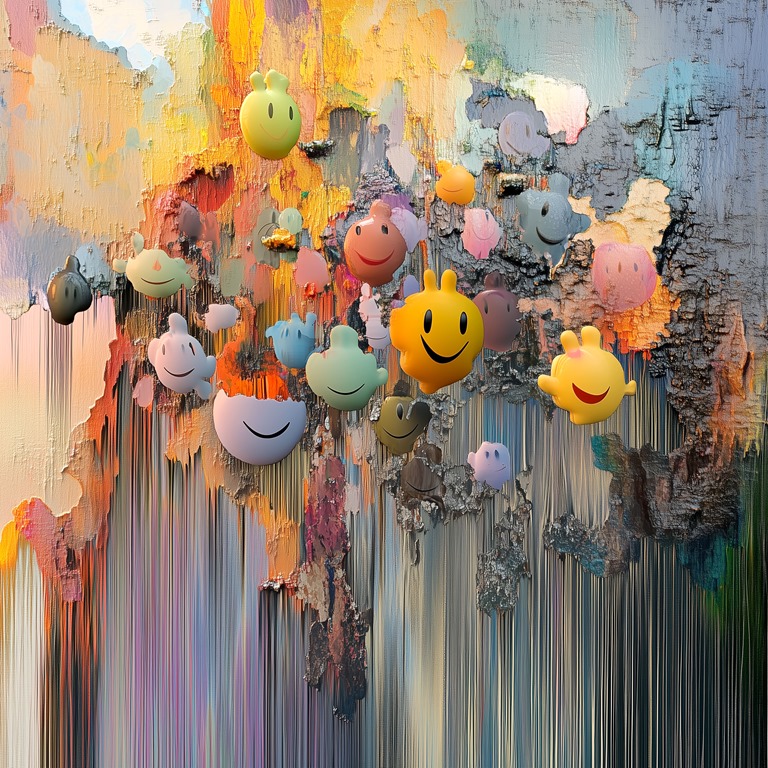
And so there’s a certain discomfort in approaching Put Emojis On My Grave by the spectacularly-monikered Ancient Psychic Triple Hyper Octopus, an album which is sold on the way it ‘boldly explores AI and improvisation on an album of freely improvised, experimental electroacoustic music’.

It features, as the press notes put it, ‘a new lineup of celebrated, British musicians’ (Alex Bonney (trumpet, bass recorder, Strohviol), Will Glaser (drums and percussion) and Isambard Khroustaliov, aka Sam Britton (electronics), and ‘ claims to forges ‘a new musical language’, with an album ‘which eschews traditional musical composition, seeks instead to “adopting the language of AI’s deep learning failures and glitches”, attempts to imagine how AI could make a positive contribution to the creative process’.

It’s hard to know how to really assimilate this. The six compositions which make up Put Emojis On My Grave are fine examples of exploratory jazz, with wandering trumpet tooting in meandering lines across clanking, clattering abstract percussion which sounds like cutlery and wind-chimes being knocked about while bleeps and bubbles interject seemingly at random. It has that avant-jazz, experimental, iprov feel which is in some ways quite familiar in its own strange way. That is to say, while it’s niche, the sonic experience is very much representative of a certain field. A field filled with jackrabbits, apparently.

‘Goats on Helium’ is bubbly, bibbly, scratchy, scrapy, wheezy, groany, a splatter and clatter of sounds piled up and colliding all over, and it gets pretty messy over its six and a half minutes. Warping drones and scratching, gargling abstract drones twist around deranged brass tootlings and crashing cymbals on ‘The Adiabatic Flux Differentials of the Id’, and I would challenge anyone to find a title that’s posier, more wankily intellectual than that this year. And while it’s a bit jazz-jizz in places, it’s certainly better than the title suggests.

This is, in my opinion, a fair summary of the album, a work which is concerned with space and time – not outer space, but inner space, the space which our minds explore in reflection like the clatter of 1,000,000 bongos, the space – or distance – between concept and execution, and virtual space, those our other selves occupy, both in the moment and, subsequently, leaving echoes and traces in infinite corners of the virtual world. It’s impossible to discern where the musicianship cedes to AI intervention here, which is certainly in its favour – and if Put Emojis On My Grave is used to train generative AI, then it could confuse it for a while, making for some interesting results. And Put Emojis On My Grave is certainly interesting.

AA

Ancient Psychic Triple Hyper Octopus – Put Emojis On My Grave cover 4000px

Finnish sludge metal powerhouse Demonic Death Judge has just revealed the official video for “Goner”, the blistering new single from their upcoming fifth album, Absolutely Launched, due out on April 30th via Suicide Records.

True to the band’s raw and gritty aesthetic, ‘Goner’ is a sludge-soaked sledgehammer of a track—loaded with thunderous riffs, blues-drenched venom, and apocalyptic swagger.

“We’ve all burned some bridges in our time,” says vocalist Jaakko Heinonen. “I certainly have. Man, even houses, not to mention churches. This is a story about a man who took a few too many wrong steps in his life. And now, the pay is due. This one is a goddamn banger!”

AA

d11f4408-dd51-cbb6-2304-79186f829952

14th March 2025

Christopher Nosnibor

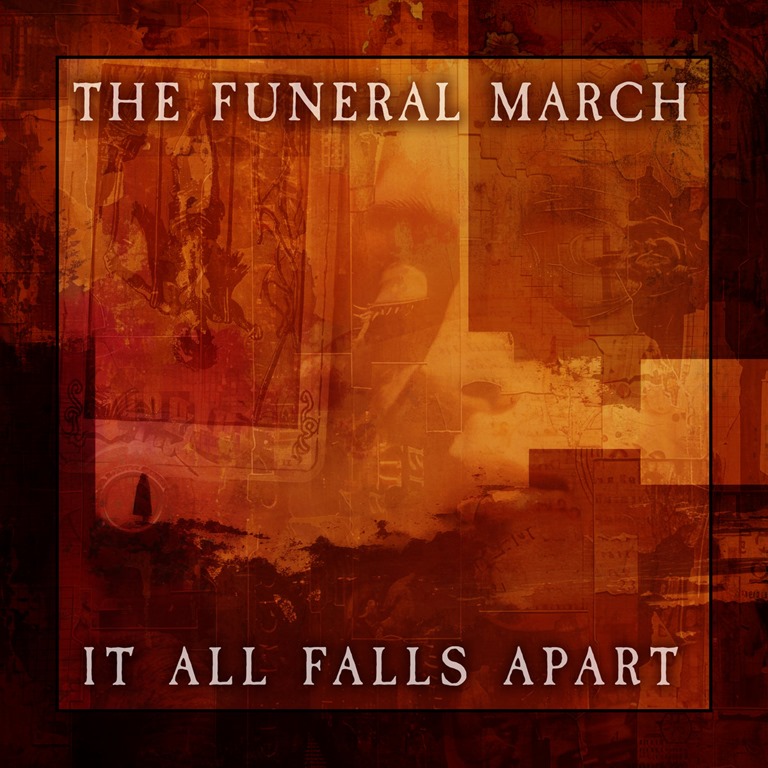
While the early- to mid-80s is considered by many to be the ‘golden age of goth’, 87-88 were pretty good years, too, and saw some of the first wave of bands breaking through commercially… It was at this time, with the release of Floodland and Children that The Sisters of Mercy and The Mission, respectively, broke big in the charts, and being 12/13 at the time, this was when my eyes – and ears – were opened to a whole new world of music. And so it was, too, that things really started to happen across the pond, too, and it was in 1987 that saw the formation of The Funeral March of the Marionettes, often referred to as The Funeral March.

There may well be a whole thing about how goths are obsessed with death, as even the band’s name suggests, but this release arrives in a genuinely sad context, namely the passing of founder and front man Joe Whiteaker from pancreatic cancer in his mid-fifties. With every year that passes, it becomes apparent that the people who are dying are closer to our own age, are our peers, or close to. But the fact Joe did complete the recording of It All Falls Apart is something to celebrate. Many of us ponder our legacy: what is it that we leave behind?

The Funeral March are drawing the curtain on a thirty-seven year career with what may be their finest work to date.

They started out, like so many gothy / post-punk inspired acts, drawing inspiration from seminal English acts like Bowie, The Cure, Siouxsie and the Banshees, Bauhaus, and Joy Division. The band’s name, meanwhile, was a nod to Charles Gounod’s ‘Funeral March of a Marionette’, best known as the theme music for TV’s Alfred Hitchcock Presents. And truth be told, this is all pretty standard: marionettes seem to be part of textbook goth catalogue: There was The Marionettes, for a start who started life as The Screaming Marionettes in ’86, and when you chuck all the words into a goth band name generator, let’s not forget Screaming Banshee Aircrew… So much goth seems to thrive on derivation.

It All Falls Apart brings with it a certain familiarity by necessity, really. But this release sees them push the boundaries rather more, forging their own identity more strongly than ever before. It’s a sign of artistic growth: many artists – regardless of medium, be it music, writing, visual arts – begin by learning from their precursors, leaning on their influences, and finding one’s own voice takes time and confidence. It’s also an album of two halves – essentially an EP and a remix EP, but again, in context, it feels appropriate.

So if ‘Starts at Night’ brings hints of The Mission’s ‘Sacrilege’ or ‘Amphetamine Logic’ by The Sisters, perhaps even Skeletal Family’s ‘Promised Land’, all of which are killer by virtue of the complex picked lead guitar parts, it’s equally worth noting just how hard it blasts out of the gates. Pow! It’s the drums that really make this one. More Danse Society circa Seduction than anything else than comes to mind, it packs all the power up front, and that impact really lands strongly.

All of the ‘standard’ goth tropes are present and correct, from the loping, dynamic drums, the chiming, chorus-rich guitars, and thumping down-on-the-floor bass, but their execution is exemplary. This is the sound of a band who are intensely honed and striding confidently through all aspects of songwriting and production. It’s the thinking bass that really makes ‘Shadow Games’, but with its chiming guitars and vocal inflections, it ventures into the territory of classic contemporary post-punk, in the way that the likes of Interpol have built on the foundations of Joy Division without being a carbon copy, and the energetic chorus calls to mind White Lies at their best. It’s not that The Funeral March have abandoned their roots here, but that they’ve cut loose and taken flight.

‘Save Us’ is more driving, more hard-hitting, more overtly post -punk than goth, bit it’s also dark, snarly, proper rock ‘n’ roll, the sound of leather jeans and legs akimbo, and a contrast with the more overtly atmospheric but no less punchy ‘Bobblehead’. As for the title track… well. It feels like the finale, and, with the benefit of hindsight, the farewell. Stretching out to six minutes, it’s the perfect blend of guitars, shimmering in waves of treble an reverb, atop the phattest drums and underpinned by a thick bass. It’s goth perfection and would have been at home on the recent album by Pink Turns Blue. It All Falls Apart is appropriately titled, as it turns out.

The quality is consistent throughout, and the remixes are actually nice additions here, making All Falls Apart a superb addition to the band’s catalogue, we can only speculate on what they might have done next, but All Falls Apart feels like the perfect way to finish a career.

AA

a1572369656_10

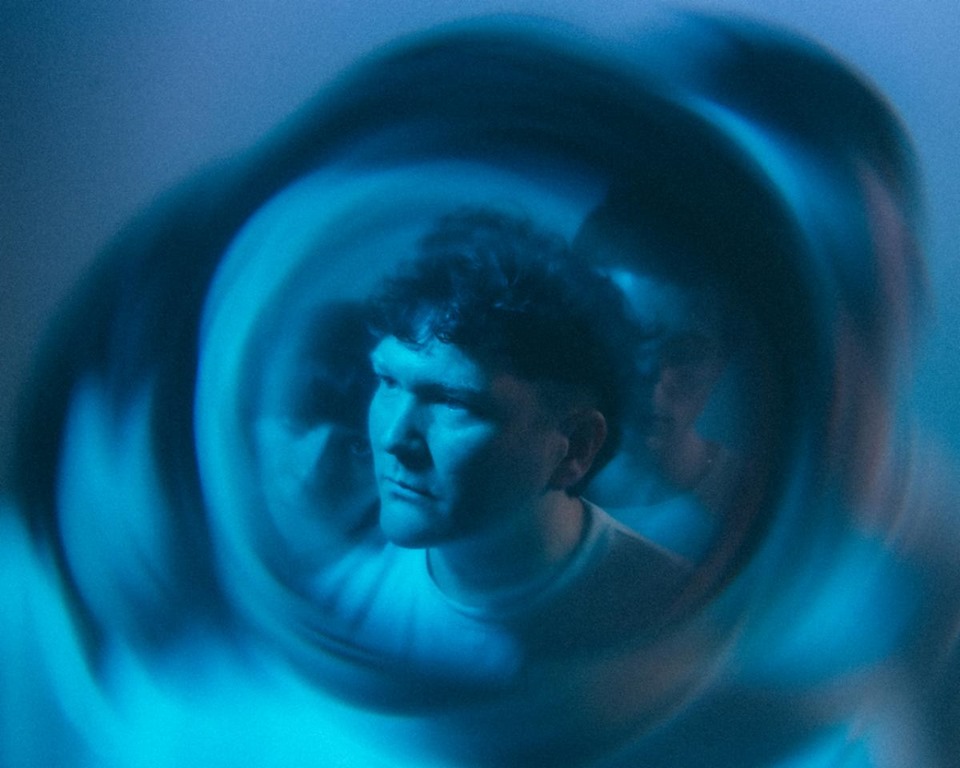
Pale Blue Eyes have announced details of their third studio album. New Place will be released on the band’s Broadcast Recordings label on 7th March. The latest single, ‘The Dreamer’ is out now.

Watch ‘The Dreamer’ video here:

Guests on the album include two musicians who have featured in the PBE live line-up – Tom Sharkett, music producer and guitarist with W.H. Lung, and music producer and musician Lewis Johnson-Kellett.

“The new album comes with a new landscape,” says Matt…“I hope the result is uplifting. The album reflects the end of an era and embracing new beginnings. But when we were unpacking in our new house in Sheffield we found an old slide projector that had belonged to my mum and Dad. We spent hours looking through the old 35mm slides and decided to use one for the album cover. The album arrives on the back of extensive and emotional transit, a record of time reflecting on a lifetime of memories – but now beside a world of new beginnings.”

The album will be released on classic black 180g vinyl, limited edition transparent blue 180g vinyl and CD. There will be an exclusive limited edition with Rough Trade that includes a clear 180g vinyl + bonus 7”. There will also be an exclusive signed print for anyone who pre-orders their copy through DRIFT record shop in Devon.

The band have announced a full UK tour for April 2025:

Thu 3rd – Thekla, Bristol

Fri 4th – Brudenell Social Club, Leeds

Sat 5th – Room 2, Glasgow

Sun 6th – Bodega, Nottingham

Tue 8th – Hare & Hounds, Birmingham Gorilla, Manchester

Wed 9th – Gorilla, Manchester

Fri 11th – Dust, Brighton

Sat 12th – Phoenix, Exeter

Sun 13th – Esquires, Bedford

Wed 16th – The Bullingdon, Oxford

Thu 17th – Islington Assembly Rooms, London

AA

Pale Blue Eyes_Press Shot_JAN25_PHOTO CREDIT_ AUBREY SIMPSON

Credit: Aubrey Simpson

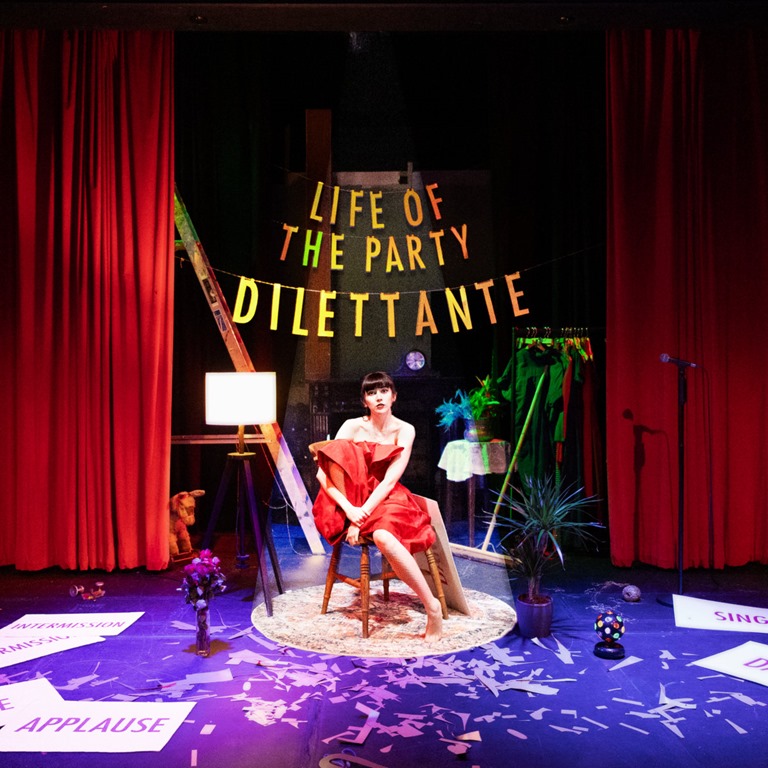
Dilettante return with their second album Life of the Party, Pidgeon’s first totally self-produced record and her most personal one yet. Made in the confines of a converted freight container, the album is an outpouring of frustration towards societal pressures and the acceptance of realising she sees the world differently to others. “I went to see Poor Things and I really felt like Emma Stone’s character made sense to me,” explains Francesca. “She’s really literal and sort of just looks at the way polite society always does things and says, ‘why are we doing that? That doesn’t make sense, let’s do it this way’.”

Life Of The Party covers a range of topics, from turning thirty and feeling the pressure to start a family, to feeling constrained within monogamous relationships as well as the more weighty matter of speaking out about sexual assault and dealing with the associated repercussions.

Sonically, the album maintains Dilettante’s signature art pop sound and impressive loop pedal skills whilst also diving into a more synth heavy realm. In parts, the record also sees Pidgeon exploring a gentler sound, reverting back to a more traditional and raw songwriting “I’d been listening to Andy Shauf and Harry Nilsson a lot and I was trying to actually write from the piano”. Life of the Party sees Dilettante continue to push boundaries, “This record is, at times, the weirdest stuff I’ve ever put out and at times the poppiest,” she adds.

To coincide with the release, Dilettante have released a video for the title track. Watch it here:

AA

a3699144988_10

Dret Skivor – 6th December 2024

Christopher Nosnibor

Another Bandcamp Friday, and another release from Dret Skivor, Swedish microlabel specialising in noise and weird shit on super-limited cassettes. This time, they promise a ‘beast of a release with artwork by the manbear that is Christian Blandhoel’. Side A of this cassette is supposedly the ‘hard side’ and Side B the ‘soft side’, but these things are relative. Mellow it is not, and it really is a beast. I’d been forewarned that it was a long one, and landing the same day I received my copy of the new Swans live album, which clocks in at a solid two and a half hours, I kinda shrugged it off, thinking ‘yeah, it’s long, but it’s not that long…’ and while that’s true, I perhaps should have paid more heed. It’s not just about the length with this one. It’s about the intensity. For the records, Swans’ Live Rope is intense, and anyone who’s seen them live in the last couple of years will appreciate this. But the recordings simply do not capture the experience of being in the room, the decimating volume.

The thing is, there’s listening to music, and listening to music. I listen to music while I’m cooking, but it’s simply on, whereas listening to music with focus is a true commitment, and takes some energy. Listening to and knowing is half the battle takes a lot of energy.

Only a minute or two into ‘bad things keep happening’, the first of the album’s seventeen tracks, there’s some extreme panning that’s churning my guts and making me dizzy, and that’s without the feedback whistles that land just in the region of tinnitus. It’s a challenging six minutes, which culminates in a slugging blast of lung-rattling bass sludge.

‘Danger draws near to what you hold dear’ is an ominous piece of dark ambience with static and hum, crackles and horrific ruptures of noise. There’s a low-end mechanical thrum, low-end doom frequencies which flicker and throb, and nothing comfortable. Trilling feedback whistles for what feels like an age before more bass frequencies hit, and then static and distortion hums and hovers from left to right. This feels like an album designed to inflict optimal pain and anguish. ‘Loaded for bear what a nasty spectackle’ hums and drones and bursts distortion to a point at which is inflicts pain at first, before diminishing in its confrontational intensity.

Scraping strings and ominous drones and unsettling discord and dissonance are all the things one might expect from a track bearing the disturbing title ‘i always hope to find you fully dilated and bleeding’, and when it suddenly ruptures into a surge of fizzing distortion, the experience becomes quite overwhelming – and it only grows more intense and anguishing as it progresses.

‘rendering flesh’ is a horrible mess of buzzes and hums, feedback trills and screams, snarling whirls and blips and glitches. And the unpleasant frequencies, the serrated waves, the tension-building noise just keeps on coming, with the pieces packed back-to-back with no pause for decompression. At times it sounds like a bulldozer ploughing through the speakers, at others it’s more akin to the soundtrack to psychological torture or one of those anxiety dreams from which you wake, drenched in sweat, which fuck the entirety of your day.

Christian may be in pain, and and knowing is half the battle is his way of letting it out. Or perhaps he’s a sadist who derives pleasure from inflicting pain on others. Either way, and knowing is half the battle is likely to stand as an endurance test which many listeners will fail. Christian seems to have a knack for finding all the frequencies which resonate in the wrong way: every throb and click is a tension-building, gut-worrying microassault. ‘Abakan hyperburst’ again exploits both wild panning and distortion to distressing effect, before ‘the current trend of selective autism’ presents a sparse but challenging question. What is he trying to say here? Well, it does seem that a certain type of person will defend shitty behaviour by claiming that they may be on the spectrum – undiagnosed, of course – or have some other issue as a justification, which diminishes and undermines those who are truly autistic, in the same way as the people who shout loudest about their mental health and take time off work for mental health reasons aren’t necessarily those who are truly suffering. It is a minefield, and a topic which goes far beyond the reach of this review, but one that we shouldn’t ignore, since Christian has raised it.

Other titles are perhaps less provocative, and instead are more surreal – such as ‘mcdelivery plush trumpet’ and ‘the wonder of phosphorous burned eyeholes’, but ‘exploding heads in peacetime’ is a blistering trill of feedback worthy of Whitehouse, underlaid with billowing bass.

This would be a tortuous work regardless of duration, as Christian remorselessly pushes all the buttons for noise which is uncomfortable, distressing, but the fact this album seems to last a lifetime only heightens the tension. and knowing is half the battle is painful, horrible in every way – so needless to say, I love it, but I wouldn’t recommend it.

AA

a1827600571_10

Metropolis Records – 6th December 2024

Christopher Nosnibor

The pitch:

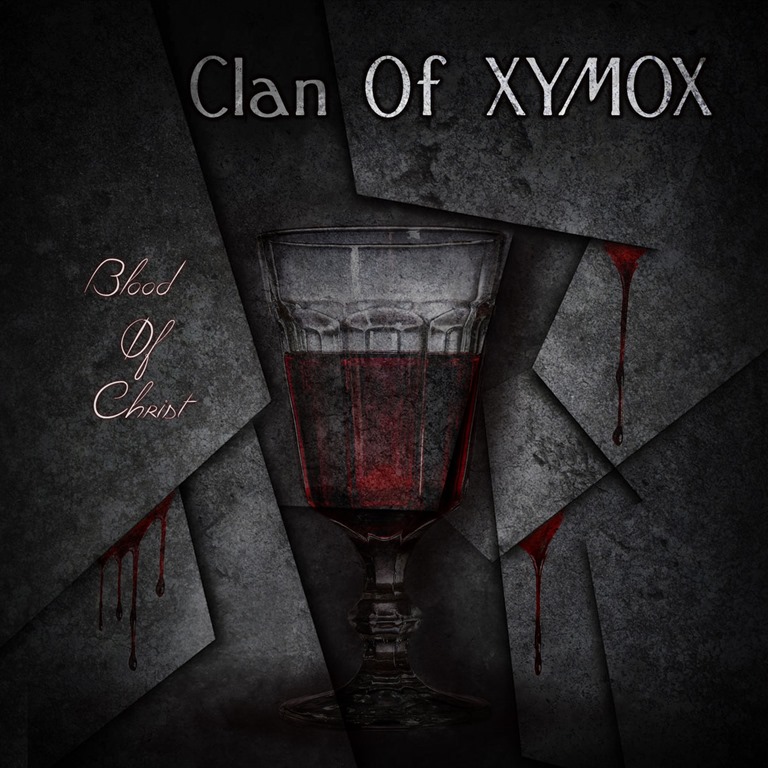
Clan Of Xymox will release a new EP entitled ‘Blood of Christ’ on 6th December. The title song is also included on ‘Exodus’, the current album by the dark wave wizards released in June 2024, with the EP also including the brand new ‘You’re The One’ plus six remixes of each track for a total running time of 64 minutes.

The reaction:

EP? EP??!! Well, yes, I suppose with fourteen tracks and a running time in excess of an hour, its play is certainly extended. What kind of duration would qualify for a long player, I wonder? On vinyl, this would be a double album at 33rpm. Available as a download only, Blood of Christ retails at the same price as the album which spawned it, Exodus, released in the summer.

Carping and pedantry aside, this is an ambitious project for a single, with the album track accompanied by a non-album B-side – something which is always welcome – and, as advertised, six remixes of each. Does anyone really need six remixes of any song, even the most diehard fan? It’s debatable, although not a debate I’m about to open to the floor.

I suppose electronic music does lend itself more readily to remix treatment than more rock-orientated stuff. The 80s and early 90s witnessed the rise of the remix via the extended 12” mix and then over time, we began to see 12” and CDs with different remixes, which were all about milking fans in order to boost sales and chart positions

As a choice of single, ‘The Blood of Christ’ is a strong one: pumping beat and pulsating bass underpin a solid tune with stacks of atmosphere and a huge, theatrical chorus, straddling the boundaries of both classic and contemporary goth. ‘You’re the One’ is a bit popper, but still driven by those all-essential dark undercurrents.

And so, onto the remixes: the album’s remaining twelve tracks alternate between the two songs, the obvious benefit being that you don’t get back-to-back takes of the same track for half an hour. However, by presenting the same two tracks alternately, it’s a little like the old days of flipping a 7” over and over, only hearing differences and new details with each play, and over the course of an hour and a bit it becomes quite mind-addling, and with both tracks employing similar stabby, undulating synths and tempos, the sameness starts to dull the senses after a while.

Too much of a good thing? Perhaps. And perhaps there’s a time commitment involved in distinguishing between the different versions and finding your favourites, preserved for the serious fan. Individually, the tracks are great, although I’m not convinced any of the remixes really improve on the originals, but presented together in such quantity, it feels like overkill.

AA

a1318500700_10

COP International – 6th December 2024

Christopher Nosnibor

What a year this is proving to be for bands who have lain dormant, at least on the studio front, for quite literally decades. And when it comes to Red Lorry Yellow Lorry, it really has been a long time. The last Lorries release was an ultra-limited gig-only affair back in 2015, with just 50 copies pressed for Leeds in the August and 100 for Valencia the following month. Said EP featured two new songs, ‘Safe as Houses’ and ‘Piece of my Mind’, which were listed as being from the ‘forthcoming album Strange Kind of Paradise’. Time passed, and it really didn’t look like the album would ever see the light of day. But now, this official EP presages its arrival in February 2025, some thirty-three years since they called it a day with Blasting Off (1992).

The Lorries always stood apart from their contemporaries: whereas the Leeds post-punk scene of the early 80s clearly favoured black in every possible way, the band’s guitar sound was steely grey and like scraping metal, and paired with murky bass and relentless percussion, they forged an industrial clang that, was the perfect mirror to both the landscape and the times. Chris Reed’s baritone was less theatrical and more gnarly and angry-sounding than your archetypal goths which would follow. Fans will already know and appreciate all of this, but with so much history – and so much time having passed – some context is worthwhile, especially for those unfamiliar.

During their 80s heyday, they built a catalogue of outstanding 12” releases, with some of their best cuts not on the albums, and with Driving Black, they’ve added another. It contains six tracks, with two mixes of the title track – I gather the original will feature on the album – long with a mix of the as-yet-unreleased ‘Chickenfeed’. ‘Safe as Houses’ and ‘Piece of my Mind’ finally get to be heard – and owned – by more than 150 people, and hearing them again in this context reminds me of the buzz I got when first heard them almost a decade ago: they’re unmistakably RLYL, and if they’re more in the vein of the material on Blow and Blasting Off, the one thing that’s remained consistent throughout the band’s entire career is their sonic density, that claustrophobic, concrete-heavy heft, with ‘Piece of Mind’ being a solid mid-tempo chugger and a grower at the same time. It seems that the two tracks from the 2015 EP didn’t make the album cut – but this can be seen as good news, if they have material of this quality going spare. The same is true of ‘Living With Spiders’, a frenzied track which has spindly guitars crawling and scratching all over it. It would be a standout, but the consistency of quality across the EP means it’s one more cracking tune.

The strangest thing is how time – or our perception of time – seems to become evermore distorted. Perhaps some of it’s an age thing, but… I remember at the time, The Sisters of Mercy’s release of Floodland was hailed not only as the rebirth it was – stylistically and in terms of commercial success – but as a huge comeback after a great absence. But Floodland arrived only just over two years after First and Last and Always. Even more remarkably, I seem to recall the release of Crawling Mantra under the name The Lorries that same year was considered something of a comeback and a departure, even though Paint Your Wagon was released only the year before. The world seemingly lost the plot when The Stone Roses delivered The Second Coming after a five-year gap (and they really needn’t have bothered). And now, while Daniel Ek is advocating the production of ‘content’ on a constant basis, we have bands putting out their first new material in an eternity, and rather than having forgotten about them, fans are fervent – and rightly so.

Chris Reed’s reuniting with David ‘Wolfie’ Wolfenden – Leeds alumni who first appeared with Expelaires in 1979 along with one Craig Adams, who would do a stint as a member of The Mission’s touring lineup – is most welcome, because they’re simply a great pairing, and this is nowhere more apparent than on lead track ‘Driving Black’, which is vintage Lorries, kicking off with urgent, driving drums, before the throb of bass and rhythm guitar and a sinewy lead guitar, sharp and taut as a tripwire cut in and casts a thread right back to their earliest work in terms of style and structure.

The parallels between now and the 80s are uncomfortable; we may have ditched a Conservative government, but workers are still feeling the pinch, and global tensions are off the scale. That the BBC’s apocalyptic movie Threads is getting only its fourth screening – to mark its fortieth anniversary – feels worryingly relevant. And so it is that Red Lorry Yellow Lorry still sound essential and contemporary is equally testament to their songwriting and delivery, and the bleak times in which we find ourselves. Putting the social and political backdrop to one side, the Driving Black EP is an absolute triumph. There are no half-measures, nothing is weak or half-arsed, and it’s – remarkably – as if they’ve never been away.

AA

Red-Lorry-Yellow-Lorry-_Driving-Black_-EP-3000-Cover