Posts Tagged ‘Album Review’

Trash Wax Recordings – 14th May 2021

Christopher Nosnibor

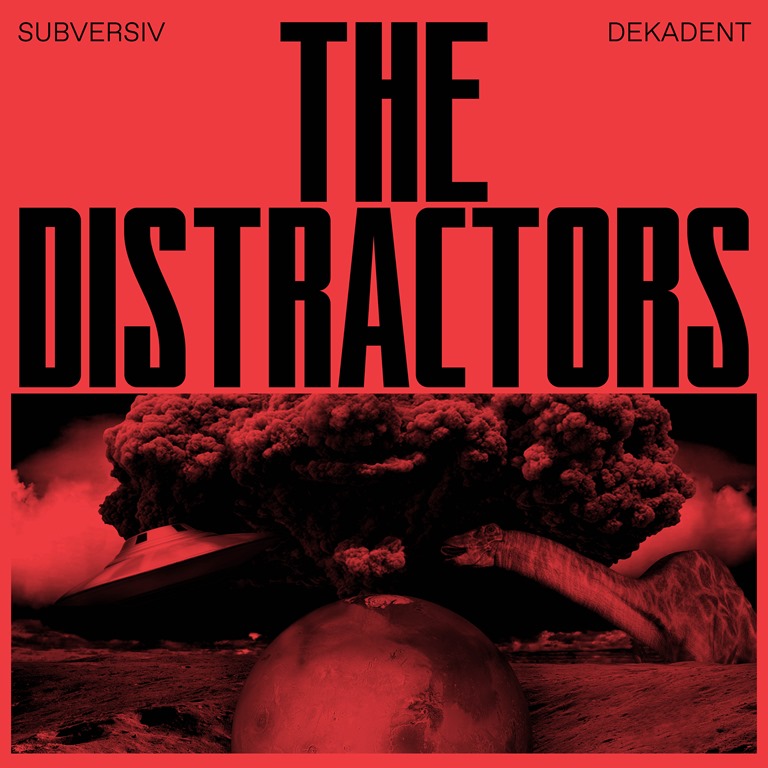
Belgian four-piece The Distractors formed in 2019, and despite the last year and a bit not being the time for bands to build a fan base through live activity, they’ve managed to deliver their debut long player, which they’re the first to admit is an homage to their influences, as filtered through the band’s quirky, anarchic creative methods and general disregard for orthodoxy.

‘Everybody Hates Poetry’ is a straight-ahead punk three-chord thrash with gruff vocals that isn’t a million miles from The Anti-Nowhere League, and immediately establishes their style and credentials. And there really is nothing fancy about any of this. It’s a no-messing punk album, and you could pretty much leave it at that.

For a movement that was so revolutionary in terms of its achievements, a lot of punk music wasn’t nearly that innovative, although it’s perhaps a fair assessment that the most commercially successful and renowned punk acts of that first watershed were the least innovative and most accessible. The likes of Sex Pistols, Sham 69, and The Vibrators, on reflection, were just pub rock cranked up a few notches, and pretty tame. Real punk was Wire, Metal Urbain, Throbbing Gristle, bands that challenged both the establishment and musical convention. I say ‘was’, as punk rapidly transitioned from anti-establishment to an establishment of its own, a genre rather than an attitude.

But The Distractors combine both: punk style and punk attitude, and that’s the selling point behind Subversiv Dekadent, an album that does live up to its title, by and large.

Simple chord sequences – no more than three or four – are standard, and the songs are very much cut from the simple-but-effective mould or energetic primitivism.

‘The Night is Young (and So Are You)’ has an element of wrongness to its lyrics, and also mines a surf-punk seem that’s big on reverb and swagger, with contrasting guitar parts that balance the choppy and the noodly to strong effect. ‘Love You to the Max’ isn’t exactly tender, but it’s heartfelt and brimming with passion, and with a picked, chiming guitar in the verses, it’s got dynamic range, too. ‘To Hell With Good Intentions’ is one of those full-throttle ragers that slams in hard and fast and is all over in under two minutes. It’s not pretty, but it is strong – and that’s probably a fair summary of the album as a whole.

The innovation and uniqueness ratings for Subversiv Dekadent are low, but that’s not the point: the fury and energy ratings are off the scale, with the driving, gritty guitars cranked up really high and the energy and passion going up to eleven. Subversiv Dekadent is loud, fast, and it’s exciting. And that’s what a punk album ought to be.

AA
Artwork

9th April 2021

Christopher Nosnibor

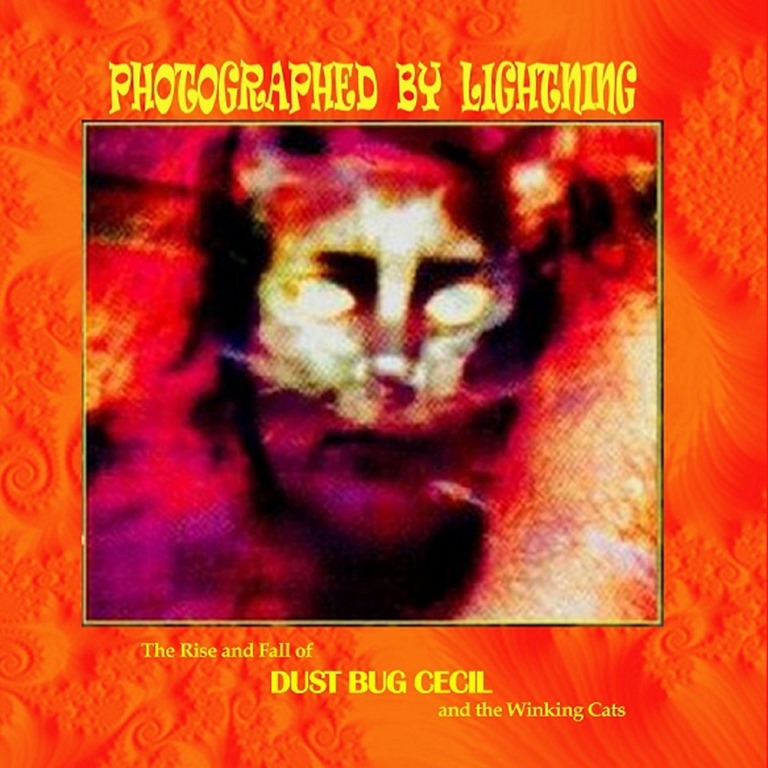
The remastered re-reissues of avant-experimentalist oddballs Photographed by Lightning continues apace with the emergence of Dust Bug Cecil (or, to give it its full title, The Rise and Fall of Dust Bug Cecil and the Winking Cats, supposedly taken from an obscure book about a direct to disc recording pioneer, and may in turn be a skewed play on Ziggy Stardust. Of course, everything is skewed in the world of PBL, and if Music From the Empty Quarter wasn’t evidence enough of this, then this should be enough to convince anyone: presented here as a whopping thirty-eight track document (2 CDs worth), Dust Bug Cecil is augmented with the entirety of their other 2002 album, Let Me Eat the Flowers. On the strength of this, it vocalist Syd Howells and co (here represented by Dave Mitchell (vocals, bass, keyboards); Bionio Bill (drums & percussives); Roland Ellis (saxophone); Chris Knipe (mandolin & fiddle), and Rev Porl Stevens contributing vocals to ‘White Master’)) had perhaps ingested more than just pansies prior to these sessions.

As Howells recounts it, ‘following the behemoth like Music From The Empty Quarter we went in search of tunes. Found some too. Glued them together with words and somehow found ourselves making a ‘pop’ album.’ In comparison to its predecessor, Dust Bug Cecil is a pop album in that there are none of the sprawling ten-minute epic headfucks on offer here, with most of the songs – and, indeed, they are songs – clocking in around the three-minute mark. It’s ‘pop’ in the style of the dark pop of post-punk, but its values are ostensibly altogether more punk, and its sound is primitive and murky. It’s pop in the way The Jesus and Mary Chain write breezy, surfy pop tunes and bury them in is a squall of noise that renders them almost indistinct.

There are melodies and choruses bursting out from every corner, but in context of 2002, songs like the album’s opener, ‘Eyes on Stalks’ and ‘Numb Alex’ sound like early 80s new wave demos: driving Joy Division-esque bass dominates a rhythm pinned down by a frenetic drum machine that sounds like it’s struggling to keep up with the throbbing energy, and there are hints of The Cure and B-Movie in the mix here.

The guitars buzz like flanged wasps on the vaguely baggy / shoegazey ‘Lady Lucifer’, prefacing the sound that A Place To Bury Strangers would come to make their signature. Elsewhere, the sound swings from almost straight 60s-tinged indie on ‘Let Me Eat the Flowers’, while ‘The Remains of a Tramp Called Bailey’ sounds like a head-on collision between The Pixies and The Psychedelic Furs, and ‘The Risen’ comes on like early New Order. If it reads like I’m chucking in a list of seemingly random and incongruous artists by way of confused and confusing reference points, it’s because that’s what the listening experience is like. None of the elements of the album are unique by any stretch, but their hybridisation very much is. The 60s garage vibe of ‘Untitled (for Dylan’) and the Fall-like scuzz of ‘David Dickinson Said’ (with its obvious but necessary ‘cheap as chips’ refrain) are well-realised, and suit the lo-fi production values.

Sonically, Dust Bug Cecil is nowhere near as challenging as Music From The Empty Quarter, and it was almost inevitable that they had to do something different, having taken the avant-jazz oddity to its limit. Then again, of course, there’s still the customary weird shit, like the squelchy racket with spoken word of ‘Bob’ and ‘Pablo’, and the doomy industrial synth robotix of ‘Be This Her Memorial’, which mean it’s hardly the most accessible album going and it is quite bewildering just in terms of its stylistic eclecticism.

It’s unquestionably a mixed bag, and not all of the efforts are completely successful or gel quite as hoped, something the band themselves acknowledge with hindsight. But it’s still very much a musical, if not commercial, success, showcasing a band capable of wild diversity in their creativity, as well as a band who’ve spent a career making the music that pleases them over anyone else.

AA

a2359923339_10

Christopher Nosnibor

Videostore continue to make the most of lockdown, with the pair banging out a second mini-album, comprising three of their recent singles along with three brand new tracks. Does the title have a significance? Does the end of lockdown mark the end of Videostore as Nathan and Lorna return to work and also reconvene with Argonaut? Perhaps time will tell, but for now, this is a document of the effects of life in confinement – or, as they put it, ‘what happens when you are locked down with Disney plus and Taylor Swift and Spacemen 3 CDs for company.’

It’s an interesting blend, but also a hybrid that works and is distinctively Videostore: scuzzed-out lo-fi pop songs that articulate ennui and nostalgia with a rare energy. As ever, it’s the contrast between Nathan’s worldweary monotone baritone and Lorna’s light, lilting, airy tones that really distinguish and define their sound.

It starts off with single cut ‘Superhero Movies’, a lively blast of choppy guitars where they ruminate on the disparity between movies and life, whereby everyone aspires to be a superhero from the comfort of their sofa. Media and unattainable aspiration is also the focus of ‘Your Perfect Life’. ‘Halfway There’ is a middle-aged lament that finds Nathan mulling over the passage of time, and in its downtempo mood and delivery, I’m reminded of The Fall’s ‘Time Enough at Last’, and even the semi-spirited call of ‘techno techno techno techno’ and a swerve into synth territory near the end can’t lift the melancholy mood – that’s a job for the blistering Pixies-like blast of single ‘Your Mind’, which stands out even more in context.

Low-key single ‘Anglepoise’ marks another return to Brix-era fall stylings, and there’s something affectingly sad in the sound of tiredness, of defeat. The last song, ‘Go’ is the biggest surprise of the set. It’s not a cover of the Moby track, but it is an all-out electro dance banger. It’s incongruous, so say the least, but there are some trademark squalls of noise among the trancey synths and insistent beats.

They Closed Down The Videostore may only contain six tracks, but it’s their most diverse work yet – and if the store remains open, the indications are they’ve no shortage of ideas to pursue.

AA

a1198813050_10

Tartarus Records – 28th May 2021

Christopher Nosnibor

Then a release comes pitched as ‘FFO Gnaw their Tongues, Lustmord, Haxan Cloak, etc’, you know it’s going to be pretty fucking gnarly and pretty fucking heavy, not to mention dark. The band describe themselves as ‘a vessel of auditory violence whose sole purpose is to exist in this place and moment in time. It is an overwhelming form of aural terror conveyed through primal and mechanical means, conjoining visceral matter of an organic origin with that of an abiotic one. These together fabricate an entity focused on the seething aspects of interminable dread and the humiliation of flesh’. Holy fuck. I’m simultaneously quaking and on the edge of my seat for this.

I’m not entirely sure what ‘larynge’ is, and even the Internet has been of minimal assistance, and the connotations of ‘golden dirges’ in my mind says probably more about me than a band whose name in the current climate makes me think of blood clots. In other words, none of the prefatory encounter is anything but bleak in the way it sets expectations for the album, and Golden Dirges, Molten Larynges is, indeed, a challenging work.

It’s harsh, it’s noisy, it’s hellish, a purgatorial racket that combines extraneous noise, guttural snarls, and ritual beats. It’s fucking nasty, the soundtrack to the most torturous horror imaginable. Imagine being skinned alive and flayed with torches as flames rise all around, and you’re being watched by razor-toothed beasts, pale, emaciated, and brutal, s pat of the most gruesome ritual you can conceive. Your eyes are stretched open and you’re forced to watch your own chest being torn open and your ribcage prised apart as your exposed heart quivers and pulsates in its cavity. Your halfway to experiencing Golden Dirges, Molten Larynges.

Harsh blasts of noise surge like a tide at the start of ‘Devour their Bodies Saturated with Brine’, before an explosion of demonic noise simply shreds everything as the ritual ceremony builds to its most brutal climax as chthonic entities revel in the bloodshed.

And there is absolutely no respite, no retreat, no light. Most of the tracks are under five minutes, but they each feel like an eternity. ‘Our Torches Soaked in Oil’ conjures a descent into an abyss both in title and sonically, but the clunking percussion, cutting through a dank morass of swirling noise is disconcerting, before the vortex of dark noise yields to a spitting demon spewing venom from an unexpectedly gentle piano. It’s but a brief respite before the industrial churn of ‘Rattling Mutter’ brings a wall of noise and anguish that redefined punishing.

Golden Dirges, Molten Larynges is a different kind of heavy: it’s certainly not metal, and nor is it industrial or power electronics. It’s also blacker than black. This is beyond. It’s

the sound of the earth being pulled apart – not by horses, but by Satan’s slaves. It’s like being dragged by barbed hooks buried into the chest and back over rough terrain if burning coals. It is all the torture, all the pain, the soundtrack to the catalogue listing of atrocities that make up the second half of 120 Days of Sodom. As the gut-hammering percussion resonates against a grumble of anguished muttering and screaming agonies on ‘A Thicket of Abrasions and Broken Wounds’, it becomes fully apparent the sheer extent of this album’s relentless abrasion and its capacity to plunder previously unseen depths. There is no preparation for this: it redefines torture.

AA

a2071770922_10

Southern Lord – 23rd April 2021

Christopher Nosnibor

Canadian trio BIG | BRAVE return bolder, heavier, and more intense than ever on Vital. But when to start?

I seem to recall an essay by William Burroughs which contained the advice for writers that narrative had to be visual in order to work – meaning that writing about a ‘indescribable monster’ just wouldn’t cut it: readers need to be able to visualise the monster in order for it to be scary. Writing about music may be a slightly different discipline, but the challenge is always to convey not only what the music sounds like – the objective bit – but how and why it makes you feel the way it does – the subjective, critical bit. After all, you’re not a music critic without providing any critique. And yet the first – and for some time, only – word that comes to mind to ‘describe’ the experience of listening to Vital is ‘overwhelming’.

The crushing power chords crash in after just a matter of seconds on the first mammoth track, ‘Abating the Incarnation of Matter’. But it’s the jolting, juddering stop / start percussion that hits so hard that really dominates. There’s so much space – and time – between each beat, that it feels as if time is hanging in suspension, and you catch your breath and hold it, waiting, on tenterhooks. And it’s this, the sound of a tectonic collision, juxtaposed with Robin Wattie’s commanding yet incredibly delicate, fragile vocal that makes it such an intriguing and powerful experience. As the song progresses, the anguished calling becomes a ragged, hoarse-throated holler and you feel the emotion tearing at her vocal chords, ‘dissolving each layer until there is little matter left’.

The yawning throb of feedback that fills the first minute and a half of single ‘Half Life’ sounds like a jet preparing for takeoff. And when it stops, it’s the hush that’s deafening and uncomfortable. The lyrics are actually an excerpt from the 2018 essay collection How to Write an Autobiographical Novel, by Alexander Chee. And when the music ends, leaving nothing but Watties’s acapella vocal, they’ve never sounded more stark and intense. Once you become adjusted to noise, there is little more shocking to the system than its absence. And so it is in life: we’ve become accustomed to traffic, to bustle, to busy shops and offices, to streaming media – and when it stops, we struggle to know what to do.

And so it is that the dynamics of Vital are so integral to its impact. ‘Wilted, Still and All…’ is different again. The album’s shortest track is still of a dense tonality and substantial volume but manifests as a billowing cloud of grumbling ambience, and it provides a certain respite ahead of the punishing ‘Of This Ilk’ – nine and a half minutes of slow, deliberate, and absolutely brutal punishment, a bludgeoning assault on a part with Cop-­era Swans. The drums and bass operate as one, a skull-crushing slab of abrasion that hits like battering ram, while the guitars provide texture as strains of feedback howl and whine. The false ending halfway through only accentuates the force ahead of the extended crescendo which follows. It’s the repetition that really batters the brain, though: bludgeoning away at the same chord for what feels like an eternity is somehow both torturous and comforting. The third and final movement is rather more tranquil, but nevertheless always carries the threat of another wave of noise, which doesn’t arrive until the title track, a nine-minute finale that grinds out a dolorous drone, a crawling dirge where a single chord and crashing beat rings out, echoes and decays for what feels like an eternity.

‘Timeless’ is a word that’s so often used and misused in describing music, but with Vital, I mean it to be understood rather more literally, in that time stalls and everything – time, perception, and the world itself – hangs, frozen in suspension. While listening to Vital, nothing exists outside this moment, and everything is sucked into the vacuum of its making. You can barely breathe or swallow, and for the time it’s playing, there is nothing else but this.

AA

LORD287_12inch Standard LP Jacket

13th April 2021

Christopher Nosnibor

I love an album that carries a warning. In the case of SINthetik Messiah’s full-length debut, Ambient Noize, we’re advised ‘Caution: When listening to the album with headphones the music may cause a form of psychosis, listen with caution’ (although we’re also advised that ‘All music on this album is meant to be listened to through headphones’. Is the Messiah wanting to fuck people up? Or just warn off the kind of people who may not appreciate an album ‘inspired by Ambient and Drone music from around the world’?

The album’s eighteen tracks are simply numbered, AN01-AN18, and due to the multitudinous influences absorbed within its fabric, while all existing within the broad sphere or dark ambient and drone, there is a considerable diversity on offer here. It’s rich in atmosphere, deep, dark, and dense.

If the title seems perhaps like a contradiction, the pieces tend to be either one of the other, and sometimes a collision of both, and while the ambience is often of a darker, rather more eerie persuasion, the noise is dense, abstract, and sometimes harsh.

‘AN01’ arrives with a low, sonorous drone and a crackle of degraded samples, and slowly throbs and eddies in a cloud-like drift, and the tracks run through in a seamless sequence that feels like a continuum. ‘AN03’ slithers and slides, the rasping breath of a dragon that rumbles and bursts before diminishing slowly to silence. ‘AN04’ plunges cavernously deep, dark depths, while a sing-song vocal sample collides with billowing harsh noise on ‘AN05’, while ‘AN06’ gyrates in slow-mo around a deliberate beat, and while there’s a speculative, shifting aspect of the album, there’s also a certain trajectory, and it’s downwards and into darkness from hereon in, as dank rumblings dominate the ever-more oppressive soundscape.

‘AN09’ marks a shift, with something of a folksy element, and with brooding strings alluding almost to a ‘Black Sails’ shipwreck pirate folk vibe, spun in with something more Japanese in origin, and it’s here that the album begins to develop new layers of interest.

And so it goes.

But what of process? It wasn’t perhaps as mystical as all that, when we learns that ‘the album’s creation, by Cajun front man Bug Gigabyte used vst synthesizers, field recordings and Garageband’s Electronic instruments on the Iphone’. Guess it just goes to show you don’t need the best kit and a full studio to capture something intense or professional-sounding. But then, ‘Grammy – nominated engineer, Joe Haze (The Banishment) then mastered the album by recording every track onto tape at 30 IPS (inches per second) and then mastered the audio through analogue gear.’ This isn’t turd-polishing, but an indication of the way some pro finishing can make all the difference. Then again, I’m not sure of the difference to be made to this…

Ambient Noize is challenging, as it’s intended to be. It has some great moments, and also moments that drag you down into dark places…

AA

a2627592000_10

Buzzhowl Records – 7th May 2021

Christopher Nosnibor

Health Plan’s all-caps bio on their Bandcamp doesn’t really tell us much, bujt it does, I suppose, tell us enough in the pan of three short, declarative sentences: ‘HEALTH PLAN ARE DAN, STEVEN AND FRANCOIS. WE PLUGGED GUITARS STRAIGHT INTO A LAPTOP AND MADE SOME POP SONGS. MEMBERS OF USA NAILS, BLKLSTRS, THE EUROSUITE, DEAD ARMS’. Whether or not that qualifies them as a supergroup I’m not sure, but this emerging hub of intersection musicians is proving to be a fertile melting pot, and on the musical evidence of this, their eponymous debut, they are a super group. And of course, as you’d expect, a noisy one.

The album’s eight tracks are an extended exercise in crashing, droning noise rock, and it’s not intended to be pleasant: this is the kind of music where you marvel at the layers of noise as they scrape and clash against one another, feedback shrieking against low-end-grooves, as reverbs bounce off one another in different directions. And maybe there is something masochistic about enjoying this kind of thing, but it’s about sensation, and feeling the sound batter your body and brain.

‘Post Traumatic Growth’ piles in as an introduction, a mess of buzzing bass, relentless percussion, and squalling guitars, landing somewhere between Big Black and The Jesus and Mary Chain, with additional blasts of exploding lasers and blank monotone vocals.

And this is the flavour of the album: motoric and messy, lo-fi and abrasive. The rhythm section holds things down, albeit muzzed up, fuzzed out and indelicately. It works a treat: the bass buzzes and booms, and the drums thump, and in combination they punch hard. The guitars are toppy, discordant and disco-ordinated, slashing away at angles across the linear rhythm grooves.

When they dial it down a bit, as on the altogether more sedate instrumental ‘Fade’, where a thumping bass beat flutters like a heartbeat beneath a current of swirling, meandering sound, the production is still such that it’s anything but comfortable, and it’s not lo-fi, but wilful awkwardness: there’s a cymbal that cuts through the mix at a mean volume, and it’s not smooth or in keeping, but harsh, crashing, incongruent.

‘Vapid Expressions’ comes on like The Fall, like MES at huis most hectoring in a swelling surge of motoric repetition that drills into your brain. ‘Stuck in a Loop’ lives up to its title, a cyclical repetition of a motif pinned to a relentless beat, providing some kind of lull before the acerbic hollering of ‘Cataract’ that drives it to a finish in a frenzy of sax and distortion.

While so many bands take cues from The Fall, Health Plan do so with real style, and moreover, take as much influence from the band’s stubborn refusal to conform, or to pretty up their sound with tidy production. To my mind, punk has always been about an aesthetic rather than a style – primarily about going against the grain and not giving a toss about anything other than pleasing yourself – meaning that Health Plan is truly as punk as fuck.

AA

a3115426715_16

False Industries False – 23rd April 2021

Christopher Nosnibor

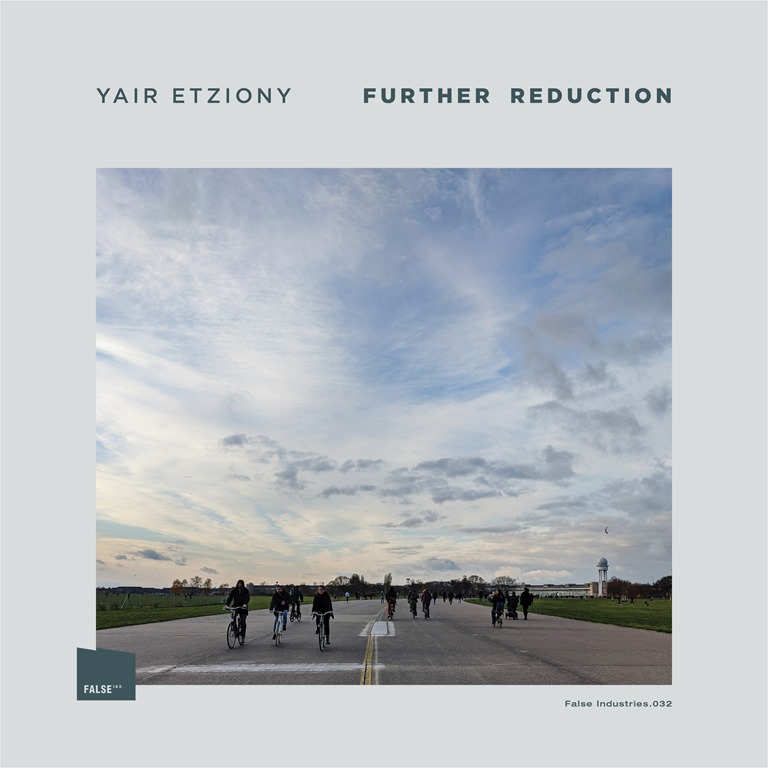
None of us was ready for this. Separation, detachment, deaths, a relentless media frenzy… New normal? We haven’t had a moment to process, not really: it’s been one thing after another, and any time for reflection has simply slammed home another level of horror as the realisation of the harshest realities not only of the present, but the possible future hit us. There are people and places we may never see again, but existing in the moment has afforded little time to really assimilate this prospect. ‘All art made in this period has been impacted by the shifts 2020 brought on the world, so why deny it?’ asks Etziony, and it’s a fair question: even art not specifically or directly influenced by the events of the last year will have been affected in some way, and the psychological impact of a year of global lockdown, apart from friends and relatives will likely take significantly longer to truly unravel.

How adjusted do you feel to talk to people or otherwise act normally in proximity, in your workplace, in public, general? How many of us have become desocialised, socially awkward, uncomfortable around others? How many with social anxiety have

And so it was that, as the blurb details, ‘Yair Etziony wrote Further Reduction after returning from Israel to his home of Berlin in September last year. In his own words, something in him “snapped” as he realized that many of the places he knew and loved had simply stopped existing.’

It begins with expansive, resonant ambience, and continues with more of the same: Further Reduction is an album that’s constructed around rhythmic pulsations and slow ebbs and flows. Take, for example, ‘Caves of Steel’, which is a definite ambient work, but one which points towards quite definite structures and sounds of a solidly percussive nature.

The first track, ‘Reploicaset’, transitions from sparse ad echoic to a full, building, slow-moving swell of sound. It maybe evocative of scenes of life beneath the oceans, as jellyfish pulse through deep waters There are a passages or extended tranquillity, but also of unrest.

Short vocal samples echo through the waves om both ‘Polar Vortex’ and ‘Recreate and Update’, and these moments disrupt the long, slow droning eeriness of the album as a whole – although this is very much a positive, adding texture and new layers of the uncanny as slow-shifting tones turn and reverberate. By ‘Service Recovery’, everything has been reduced to a scratching, hovering drone that hovers and hums, and the final stages of the album are ominous, unsettling, and taper down too a slow conclusion, whereby we’re left with nothing but silence to reflect upon, just like those dark night when the conversation stops and we find ourselves alone in the world, wondering precisely how we fit, who – if anyone – cares, and what will be next.

AA

False032_front

Opa Loka Records – OL2004

Christopher Nosnibor

Just over two years on from The Forcing Season: Further Acts of Severance, and Michael Page delivers another instalment of Sky Burial music.

According to the accompanying text, ‘Stations of the Sun was composed in the spring of 2020 after returning from travels through Europe, the Middle East, and North Africa’, and ‘the five tracks form a ritual soundtrack to a journey which became an inadvertent pilgrimage to view the rising and setting sun from ancient sites of historical significance’.

As is often the case with ambient works, while intended to be evocative, its evocations remain secret, hidden from the listener and locked inside the creator’s mind and separated by process. The sense of journey, the sense of location, isn’t particularly apparent here, and as is so common, to the genre where there’s a concept and an inspiration deriving from some specific experience or place, that sense of place, space, and inspiration is largely lost in vague mists. That said, there are some rich textures and nice tones here, and while the idea of ‘journey’ may not be readily conveyed, there is a definite trajectory and evolution across the album’s five tracks.

The expansive opener drifts and washes broad strokes, with little detail, but over its sixteen-minute duration becomes increasingly calm and soothing. As you let it wash over you, you become more attuned not to the location in Michael Page’s mind, but your own immediate surroundings. As ever, I’m in a small, tunnel-like rectilinear room, but at the same time, I am drifting beyond it in my mind due to the transportative effects of music on the mind.

‘Stations of the Sun 2’ is sparse, fleeting notes that glide in and out through tweets and trills of sounds that imitate birdsong without being actual birdsong, as n erratically-pulsing beat throbs and glitches at its heart, like a muted Kraftwerk, or an ultra-muted take on Throbbing Gristle’s ‘Discipline’. As the album progresses, distant samples and incidental interventions creep in, changing the tone, and the rhythms become more pronounced and the atmosphere grows darker, although by ‘Stations of the Sun 5’ – a sixteen-minute megalith to bookend the album with a counterpart to the opener, the beats have evaporated, replaced by random, clanks and scrapes that echo dolorously through eternal caverns of gloom. Whirs, bleeps and whooshes like shooting stars occasionally flicker and flash through the dense, dark space.

And so it ends more or less as it begins, and we find ourselves, having been led onwards and through a succession of sonic spaces, that the terminus resembles – at least in memory – the origin. So where have we been? For each of us, the answer will be different. From the comfort of our own spaces, Stations of the Sun leads the listener on a journey of the mind.

AA

OL2004_front

WHY Record Company (WRC) – 20th March 2021

Christopher Nosnibor

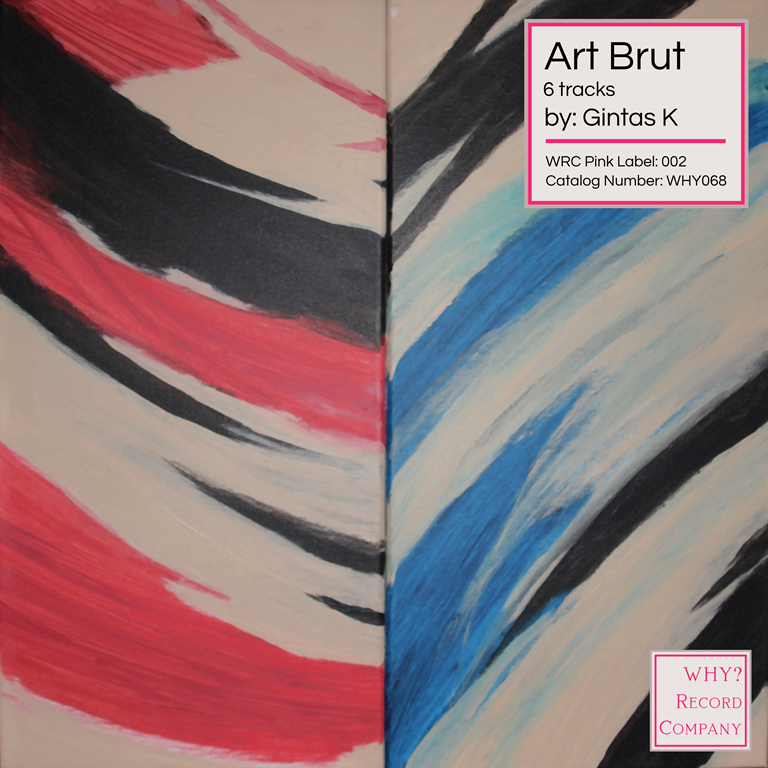
Once again, Gintas Kraptavicius, aka Gintas K has shamed me with his relentless output. Sure, Art Brut is only his second released of the year, but then, it is only the first week of April, and he’s maintained a pretty steady flow of two or three albums a year since 2003, and that’s before you get to the collaborations and visual projects. And if cranking out improvised sets using various permutations of keyboard and battered laptop with software seems to be something that can be done relatively quickly in principle, the setting up of said software for optimal effect, and devising how best to exploit it to achieve one’s aims and objectives can be time-consuming.

Art Brut finds Gintas delve deep into the most extreme digital territory in a while, with some wild improvisation and some pretty harsh keyboard battering conjuring a brain-frothing array of stammers and glitches, bleeps and bloops, all stop-starting, stutters, judders and clunks. This is one of those ‘everything all at once’ efforts that leaves you dizzy and bewildered, drowning in a digital foam. The experience is jittery and intense.

Although a digital release, it’s clearly designed as an album of two halves, corresponding with two sides of vinyl or cassette, with the three parts of ‘Art Brut’ in combination spanning some twenty-two minutes, and virtual B-side, the three parts of ‘Al Sublime’ stretching out over a similar duration, with the ten-minute ‘Al Sublime #2’ extending beyond the ten-minute mark.

The three movements of ‘Art Brut’ melt together in a transistor-troubling digital meltdown. Tractor beans and laser blast tear through warped tapes spinning on fast forward, and the whole bathful of bubbling noise swashes and sways in lurching waves. Fizzes and crackles and sparks fly like a heater dropped in, and you can almost hear the sizzling of flesh as electrodes pop at a rate of a hundred a minute. Everything fizzes, pops, squeaks, squeals and crackles in a crunching blizzard of scrappy, scratchy skitters and scrapes, and every single second is different.

‘Al Sublime’ isn’t radically different from ‘Art Brut’, but it is different nevertheless, with the effervescence countered by a broiling volcanic low-end simmer that grumbles and ferments. The low-end thrumming is at times almost subliminal, a humming drone that buzzes and grates, but is so often almost buries in the hectic insectoid clamouring. But this is also slower, lower, more warped and droning. Twisted tones resemble human voices, elongated moans droning become quite unsettling as gurgling electronic trails rise and fall and as jangling, chiming blips bounce off one another at random angles atop the gurgling discombobulation as if a blender is being sucked into a minuscule black hole, it all becomes to much to digest and assimilate… but then save for the two minute scrabble and scrape of a curtain closer in the form of the stammering ‘Al Sublime#3’ – a brief but tense bookend to an extended exercise in fractured fragmentation that digs deep into the cranial cavities and leaves you feeling slightly violated.

It’s a return to previous territory for Gintas K, and Art Brut finds him on peak form.

AA

AA

cover