Posts Tagged ‘Album Review’

By Norse – 26th November 2021

Christopher Nosnibor

Hildring is the second album by Wardruna vocalist Lindy-Fay Hella with musicians Dei Farne. It’s been a long time in the making, with ‘Taag’ dropping as a single back in the summer of 2020. But what is time when the world is off its keel and the world is spinning at a different pace, one so rapid we’ve lost touch with our innermost selves? Lindy-Fay Hella and Dei Farne connect with a past world, a time before technology: not necessarily a more primitive time, but a time in which there was a closer connection to earth and nature, and also to the inner self, the core spirit.

‘Hildring’ is the Norwegian word for mirage, and it’s fitting, for despite the solid, tribal percussion that dominates the sound, paired with solid, chunky basslines, the remaining musical elements are fleeting, flitting, mellifluous, transient, impossible to grasp a firm hold of.

That isn’t to say the album is all airy atmosphere and no substance: quite the opposite, in fact, there’s a sturdiness and density to the richly layered compositions, and it’s a very fine balance of the seemingly separate elements, namely the solid, and the ethereal and airy. The drumming is immense, ribcage-rattling, rousing. There is a wonderfully rich, earthy quality to Hildring. In keeping with Wardruna’s quest to explore Norse cultural and esoteric traditions by delving into ancient history and mythology, so in this collaborative project Lindy-Fay Hella continues that focus. The sound is modern, but the album is deeply evocative as echoes of the ancient resonate forward through every note, and you feel the aura of generations past around your being as you listen. It resonates in ways beyond expression, beyond lived experience. It’s deep, and it’s powerful, and strikes a resonant chord from the off with the percussion-led title track, where soaring vocals and a driving bass melt together amidst spacious waves of sound, and it sets the bar and the form.

In something of a shift from the overarching style, ‘Insect’ feels rather more overtly electronic, with skittering glow-worm flickers flitting hither and thither, but it’s still packing a rare emotional intensity.

‘Compositionally, ‘Briising’ is minimal; drums, bass, sweeping, droning synth, and incidental cymbals accompany a balanced, inwardly-focused vocal performance. There’s a menacing, growling vocal that is again otherworldly, and if not scary, then unsettling. ‘I return to fire’, he repeats in a dark, gravelled monotone.

‘Taag’ goes big on the expansive sound, and it’s sweeping, immense, immersive. It’s bordering on the grandiosity of post-rock, and propelled by urgent drumming. Elsewhere, the sparse, looping synth of the appropriately-titled ‘Otherworld’ is relentless and resonant.

Throughout, Lindy-Fay’s vocals are outstanding, and the album showcases her remarkable vocal dexterity. Often light and airy and floating and soaring above all layers of human perception, Hildring is magical, mystical, beautiful, majestic, and powerful. There, I managed to not to use ‘epic’!

AA

GDOB-30H3O1-001.pdf

Despot – 3rd November 2021

Christiopher Nosnibor

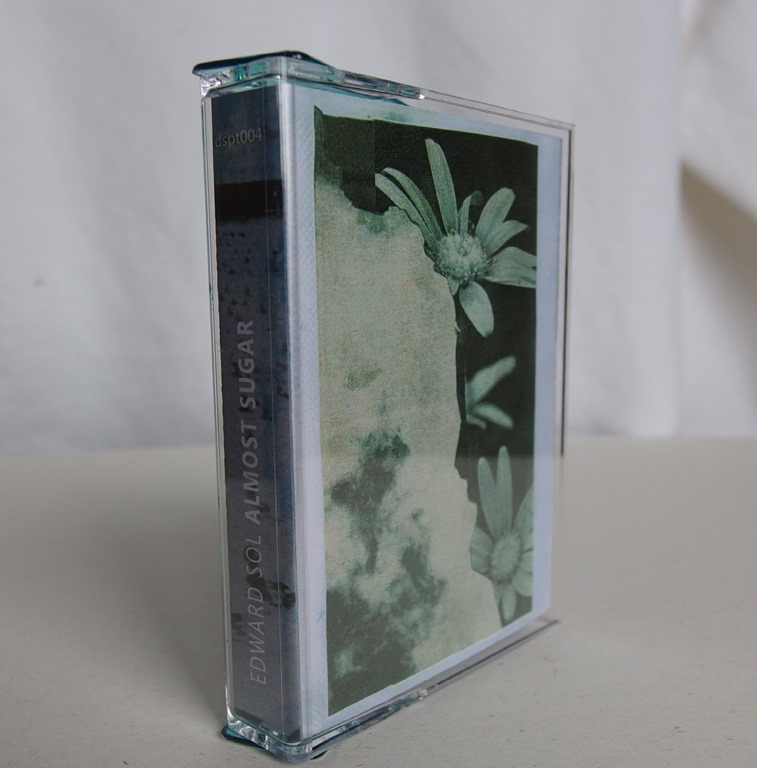
Ukraine continues to reveal itself as having a throbbing underground scene, producing some really high-quality nuggets of experimental and exploratory music. ‘Almost Sugar’ is one of those short albums, occupied with a single longform composition on each side of a cassette or 12” record – and with the wait times and increasingly prohibitive cost of producing short runs of vinyl die to myriad factors including but not exhausted by the pandemic, the cassette is becoming ever more the format of choice.

The cassette is something of an unexpected format to experience a renaissance, largely on account of some hipsterish nostalgia for a format that formed an integral part of the formative years for so many of us. It’s very much a rose-tinted hue: memes about pencils (I always used a Bic biro myself) fail to convey the anguish of a chewed tape that had spooled out, and never mind the hassle of endless hours rewinding and fast forwarding to locate specific tracks, and so on. Much of the cassette experience was centred around frustration, and it was simply something we accepted because that was the format we had, and the only recordable (and re-recordable) one at that. Still, it would be wrong to downplay the joy of the compilation (we didn’t all call them mixtapes back then). But also, there are now practical reasons for the return to the cassette as the physical format of choice, and that’s largely down to cost and availability.

However, as Neill Jameson recently wrote in Decibel Magazine, supply chain issues may soon prove to dent the demand for the cassette again, and while on a practical level, I can’t say I’m too disappointed, on a principal level, I very much am: the two sidedness of the format is closest to replicating the vinyl experience, and the limitations of length have a close relationship to duration of recordings. Format does matter; physical mediums to matter. Necessity isn’t only the mother of invention it’s also the driver of discipline. Two fifteen to twenty-minute sides require considerably more focus than a continuous seventy-two minute expanse.

Title track ‘Almost Sugar’ is fifteen minutes of bubbling analogue exportation, with a whole lot of hissing static and polytonal drones and hums combining to for a slow-twisting, heavily atmospheric work. It’s a high concept piece, constructed around the way in which the sugar crystal ‘changes its structure under any impact’. Consider this fact next time you’re stirring your tea or coffee, or tossing a couple of spoonfuls over your morning cereal, or maybe whipping up a cake batter.

‘Superdry People’, the piece which occupies side two, is darker, murkier, the sound of a slumbering beast awakening, an ominous dungeon rumble emanating from the some subterranean chamber or even the bowels of the earth. According to the accompanying notes, ‘Superdry People’ is ‘a play about «superdry people», who are heading to the pool, apparently to «soak off». Splashes of some substances, mechanisms, fragments of secular talks’, but the title simply makes me think of tossers in trendy expensive coats, and as a London-based brand feigning the exoticism of being from Japan with it’s ‘Superdry JPN’ logos and shit, it’s one that inspires ire that extends to the people who purchase their gear. I hope that this yawning sonic abyss is the conduit which will suck all the real Superdry people into its vortex, never to return. We can but hope.

But while we’re waiting for the tossers to evaporate, this is a perfect album to immerse yourself in.

AA

a0739924440_10

Cruel Nature Records – 3rd December 2021

Christopher Nosnibor

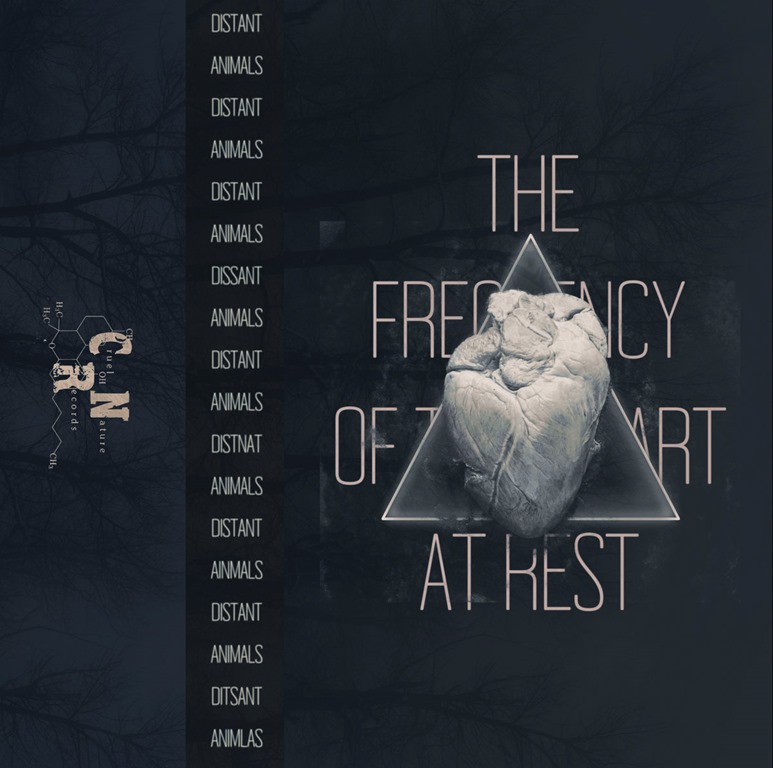
This is one of those albums where the approach to its creation is based around process and technical elements, and the title is not an abstract concept, but precisely the theme around which those technical aspects are centred. Specifically, as the accompanying notes explain, the album uses ‘a custom tuning system’ ‘based upon multiplications of the frequency of the human heart whilst sleeping’.

Or, indeed, not sleeping, as we learn of the composer’s own battles with ‘extreme sleep loss – waking as often as every 15 minutes throughout the night for a period of almost 3 years’ and how ‘the work encapsulates the haze of the perpetual tired’.

It’s relatable, as a near-lifelong insomniac myself, with my sleeping difficulties beginning at the age of five. And not sleeping is both traumatic and debilitating, and sleep deprivation can do awful things to the mind. The paranoia and hallucinations are real. ‘The Cats are Hiding and So Am I’ is a title that hints at this disconnection from the world that goes beyond the mind.

And so The Frequency Of The Heart At Rest is a curious compilation of sounds and sources, fleeting flickers of extranea in the mix beside powerful strings and dramatic drones, at times bordering on neoclassical, others something more industrial, others still folksy, and yet others still approaching ambience. In drawing on an array of sources, and then adapting and mutating them by means of overlays, adjustments of tape speed, this is very much a collage work, and the meticulous attention to detail – the way the sounds interact with one another, the slowing and the reverberations that contrive to create a rare and unique depth and density – is clearly the work of an artist who’s at once focused to the point of obsession, but also has found that point of detachment whereby the creation of such art becomes possible.

The result is incredibly powerful, in that it speaks to those who have occupied this space, where sleep and waking merge into a continuously blurry, bleary, fugue-like state. At times wistful, melancholic, or reflective in a more uplifting way, and yet at others bleak, The Frequency Of The Heart At Rest feels very much like an exploration, a work which strives to navigate this semi-real, half-lives, partially-cognisant existence.

‘6am, The Bathroom, Screaming’ is dark, ominous, heavy beats echo thunderously and captures the essence of the album, and the experience perfectly. No explanation as to why, what, if any story there is behind it, and it may be that the reason is unknown, but the piece transitions from bleak claustrophobia through a spell of ambient tranquillity before blossoming into a passage of soaring, string-led post rock with conventional percussion. The head is not so much a shed, as a cavern of chaos. The whiplash static storm of ‘The Hallways at Home’ is a synapse-blitzing crackle of electricity and fizz of pink noise over which gusts of nuclear wind drift with a desert emptiness. ‘Mealtimes at the Madhouse’ is Chris and Cosey in collision with Nine Inch Nails, a disorientating and hypnotic sketch built around a pulsing synth bass and thudding beat, while the final track, ‘Psalm of the Sleepless Child’ is an extended composition of dark shuffling and rumblings: it’s bleak, and feels very much like the soundtrack to being lost in an anxiety dream from which you can’t wake up, before veering into very different and positively Krautrock territory.

The Frequency Of The Heart At Rest is by no means restful, but is a work of rare intensity, one that prompts palpitations through its woozy, off-kilter other-worldly disorientations. It’s a restless jumble of tension and fatigue, where nothing makes sense, and it’s truly wonderful.

AA

a0578214927_10

Chapter 22 Records – 4th of December 2021

Christopher Nosnibor

Dawn After Dark first emerged in the second wave of goth in the late 80s, at the point where goth intersected with indie and straight-ahead rock to create something altogether more digestible for the masses than the dark, shadowy stylings of the like of The Sisters of Mercy and The March Violets (and this isn’t the time for the goth / not goth debate here, and no-one needs to hear my position on it: I’m going for the short cuts to provide context, nothing more).

The Birmingham-based act were pretty active during this time, playing in the region of 150 UK shows as headliners and support to acts including Balaam And The Angel, Wolfsbane, Fields Of The Nephilim, and Living Colour, and releasing 3 12” singles on Chapter 22 (the label that also launched The Mission in ’86 and released their first two singles, ‘Serpent’s Kiss’ and ‘Garden of Delight’) before calling it a day in 1991. 30 years on, they’ve finally delivered their debut album, and as the title suggests, its emergence is something like a phoenix from the ashes, since they’ve lain dormant all this time save for a one-off show in their hometown in September 2019.

Those three singles – ‘Maximum Overdrive’, ‘Crystal High’, and ‘The Groove’ are all featured here, albeit rerecorded using post-millennium technology and mastering, slotting in nicely alongside seven previously unreleased songs. It’s ‘Maximum Overdrive; that kick-starts the 11-track collection and is pure Cult, which is no shock given the original as performed by a band who sported long hair, leather jackets and bandanas back in the day. This version is much more polished and much more dense than the original, and you get a sense that this was how they always wanted it to sound. It’s less manic, smoother, but it still basks in rock ‘n’ roll excess and wild solos flame all over.

I’ve always filed DAD alongside the likes of Rose of Avalanche, although it’s fair to say they’ve always had a rather harder edge, and this is pressed to the fore on their long-delayed debut album, to the point that on reflection they’re more ones to file alongside The Cult and Zodiac Mindwarp now (only without the preposterous excess of the Bradford hard rockers).

‘The Day the World and I Parted Company’ brings more gritty riffery, and sounds like Sonic Temple era Cult with a hint of The Mission thanks to the twisting guitar lines and all the hammer-on descending runs. It’s enhanced by some overloading chug in the rhythm department, although there’s an expansive psychedelic workout in the mid-section.

Apart from slower, more anthemic stabs like ‘When Will You Come Home to Me’, they focus on the bold rock riffing, and you can’t exactly criticise a late 80s rock band for sounding like a late 80s rock band – and yes, that is the sound of New Dawn Rising, a title that perfectly captures their history and belatedness of their debut. It’s like they’ve never been away, apart from the fact that they’re back sounding crisp, and dense and more 2021, in terms of production if not songs.

It’s a solid, ballsy, gut kicking debut that packs in back-to-back slabs of the kind of rock they supposedly don’t make any more… only, of course, they very much do.

AA

Dawn After Dark artwork 1

31st October 2021

Christopher Nosnibor

The liner notes for this new outing from Vexillary proffer a rhetorical question that sounds like the start of a semi-intellectual joke: ‘What do you get when you mix a long winter with a pandemic of a lifetime and a bunch of synths lying around? The cabin fever stemming from an endless lockdown and the resulting mental demise? According to Vexillary, the perfect backdrop for a sonic self-portrait documenting one’s brush with madness.’

It’s probably fair to say that many of us have lost the plot top varying extents and in differing ways over the last couple of years, and we’ve all struggled in various ways, be it from lockdown isolation, bereavement, monetary worries, the pressure of confinement, being physically vulnerable, or scared for the future, or returning to ‘normality’ – and while anything resembling the normality we knew back in 2019 feels like a lifetime away if ever, simply resuming social interaction brings with it for many a tidal wave of anxiety.

No doubt the cabin fever that prompted the evolution of Full Frontal Lunacy will be relatable for many, myself included. Despite the comparative luxury of a back yard bit enough so sit out in and even to accommodate a paddling pool for a family of three to manage working from home and home schooling, things felt a bit claustrophobic at times, and there were many living in inner city environments and high-rise accommodation with many more people and considerably less space.

But what of the title? Full frontal carries the connotations of exposure, more in a movie / porn context than anything. That is precisely where Vexillary is coming from, of course. Social media has provided the platform where everyone airs all their grievances and let it all hang out, for better or for worse, and for many, among the food porn and actual porn, misery porn and trauma porn has been a source of entertainment since the world lost the plot and spiralled into pandemic psychosis. Full Frontal Lunacy is effectively the musical equivalent of getting your cock out on a global platform, with all things mental health and more out there on display for all to see. Trouble is, for many, it’s probably less embarrassing to get your cock out than to discuss your feeling, and so it’s a bold move, but one that sets an example and sends a message that it’s not only ok to confront these things, but vital that we share them.

It’s perhaps no surprise that the album is dominated by themes of confinement, torture, and mania, manifesting in various forms, and compressed concisely into eight slabs of dense dark, industrial-strength disco. Driven by big beats and booming bass, this is a banger in the obvious sense, although those basslines snake and grind , and the vocals are submerged in reverb or otherwise heavily treated. The ‘Scorched Mix’ of ‘Burnt Leather’ is dark and stark, sleazy and tense. The title track sounds like an outtake from Ministry’s Twitch; agitated electro cranked up and gnarly, with pulverising percussion all the way.

‘The Descent’ is dark, deep, hypnotic and follows the signature styling of repetitive motifs; ‘Absinthe Minded’ speaks – albeit not entirely coherently, conveying a mood more than a message – of self-medication, addlement and struggling through, pushing onwards toward the spacey dance of closer ‘Exit the Void’, which brings hints of Depeche Mode to the dark dance party.

Full Frontal Lunacy has a coherence and stylistic unity, but also feel like a work that’s both exploratory and urgent. It’s not an easy album, but it’s a good one.

AA

a2995884962_10

Nim Brut – 19th November 2021

Christopher Nosnibor

The hardest battles are those against yourself: they’re perpetually self-defeating and at the same time impossible to win. A duelling duality creates the core dynamic of Rejection Ops. The Leeds-based duo’s bio describes them as ‘a drummer and bass-and-electronics player who sound like each is trying to outdo the other at driving audiences from the room’, presenting a scene of duality and conflict, and this document of that internal tension was captured in its rawest form, namely self-recorded on a Zoom recorder during May 2021, so no engineering panache or highly-detailed production values here, no layering, multitracking, or overdubs. And it’s a mangled, gnarly mess of noise from beginning to end. It’ sets your teeth on edge, it makes your organs vibrate. It makes you feel tense, and grind your teeth. And these are the reasons to love it, because it has impact. It’s not some comfortable background work, and it’s not even songs that drift into your ears and lodge softly but with longevity. Rejection Ops vs. Rejection Ops is pre-emptive revenge for something you may do, and it’s going to punish you hard for it.

The first track, ‘Agendas Vary’ is a squall of feedback and overloading noise pitched against a tempest of thunderous drumming, and it does that free jazz thing of sounding like the climactic finale of an epic set without there having been the epic set preceding it. As such, it’s seven minutes of ear-bleeding, cranium-crushing chaos that doesn’t go anywhere, but then isn’t intending to.

‘Atomic Basketry’, the album’s longest track at almost eight minutes in duration, ratchets up the noise and almost buries the percussion beneath a blistering squall of screaming noise, a tidal wave of treble, a deluge of distortion. Blistering electronic noise, a bowel-shredding harsh noise wall splatters against arrhythmic clattering.

Thereafter, the form shifts away from expansive and exploratory towards brief blasts of mangled abrasion, every one faster and harder and wilder and more off the wall. Guitars thrashed hard splinter in a mesh of treble while the drums pop like bubblewrap. ‘Heeding Tartan’ is particularly abrasive, two-and-a-half minutes of metal-scraping, crunching, white hot molten noise, and ‘Raging Ninepin’ rages hard, so hard it blisters and peels and pulverises the grey matter to the point of near liquefication. The drums ricochet hard and fast like machine gun fire through ‘Rat Pie’, which snarls and crackles hard, but it’s all just a prep for the sonic blitzkrieg of the final cut, ‘Soon Learned’. Even sooner remember earplugs would be the advice, because this absolutely fucking hurts. Again, it’s three and a half minutes of everything all at once, only here, it’s the head-shredding crescendo climax it sounds like, rather than just some avant jazz end without a start.

By the time it’s over, you feel battered, bruised, drained, but also buzzed and exhilarated. The purpose of art is not to entertain, but to challenge, to arouse the senses. Rejection Ops certainly challenge – not only the listener, but themselves and one another, to create a stupendously intense experience.

AA

a3422423491_10

19th November 2021

Christopher Nosnibor

For a time, Maybeshewill were one of the definitive acts during the golden age of post-rock – and here in 2021 it’s possible to reflect and appreciate that the mid-noughties really was a peak time for the genre. Certainly in the circles I moved, every gig was wall-to-wall post rock, or otherwise there was at least one instrumental act on the bull, brimming with chiming guitars and epic crescendos. They were good times, too, and however quickly it moved from fresh to formulaic, there was a sense of excitement about this music you could lose yourself in. It felt like a moment in time, it felt like a movement, and it was exciting, particularly in Leeds and particularly around The Brudenell, which felt like something of an epicentre with its growing profile. But then again, smaller venues like The Packhorse were also showcasing so many emerging acts all doing that Explosions in the Sky thing.

During this time, Maybeshewill were one of the bands that stood out: while exploiting the template, they also expanded it with the use of strings and samples – plus, they were simply bloody good. And they still are. The title is, perhaps, an allusion to the fact that having called it a day, spent, back in 2016 they have decided to return to both the live forum and recorded a new album.

This recent reanimation was unexpected, but perhaps the last thing we expected to open Maybeshewill’s long-awaited comeback album is a thumping sequenced drum and squelching synth bubble. But then it yields to a rippling piano and a wash of surging, soaring strings and immediately we’re transported to a space of expansive, emotionally-charged instrumental post rock. The three and a half minutes of ‘We’ve Arrived at the Burning Building’ is perfect Maybeshewill – dramatic, expansive, dynamic.

Lead single ‘Zarah’ is up next, with samples lifted from the premier speech from MP Zarah Sultana at its core. It first perfectly into the early arc of the album, and it’s a great track, and anyone who says music and politics shouldn’t mix is wrong. Musicians have a platform that is theirs to use as they see fit, and to see Maybeshewill using their platform in this way is encouraging.

The strings really dominate the arrangements on this album, but there’s a lot of texture and a lot of detail, and propulsive drumming shapes the structures of the songs. ‘Complicity’ is exemplary, as it transitions from a driving swell to a loping, contemplative mid-section that slows the pace before exploding into a fill battery of strings, a barrage of live and electronic percussion, looping piano and driving guitars. Yes, it takes you back at least, if you were there at the time – but it also feels perfectly contemporary and forward-facing.

‘Invincible Summer’ alludes to both Krautrock and 80s AOR with its motoric beat and looping synths and clean guitar that nags away crisply, while ‘The Weight of Light’ is one of those tunes that simply makes you sag with sadness. It possesses an aching beauty, and the surging crescendo is simultaneously uplifting and utterly crushing. There’s a lot going on: ‘Refuturing’ takes a twist into mellow jazz territory, while ‘Green Unpleasant land’ makes a further political statement without words, a gnarly tempest of guitar-driven disquiet.

If the chiming, rolling, mellow ripplings that build to a thunderous storm on the seven-minute-forty-five ‘Even Tide’ is classic post—rock to the point of cliché and bordering on historical with its use of soaring guitars and sustained crescendos, then the brass is very much a departure, and it paves the way for the final salvoes of the seven-minute ‘The Last Hours’ that spirals and soars into the truly epic territories, and the rolling, piano-led ‘Tomorrow’, that sweeps in a wave of optimism.

Together these two tacks draw the album to an exhilarating yet measured close. It’s everything that’s defined the band over the course of their career, making this a most welcome return and an outstanding addition to their catalogue.

AA

a0585002003_10

Bearsuit Records – 12th November 2021

Christopher Nosnibor

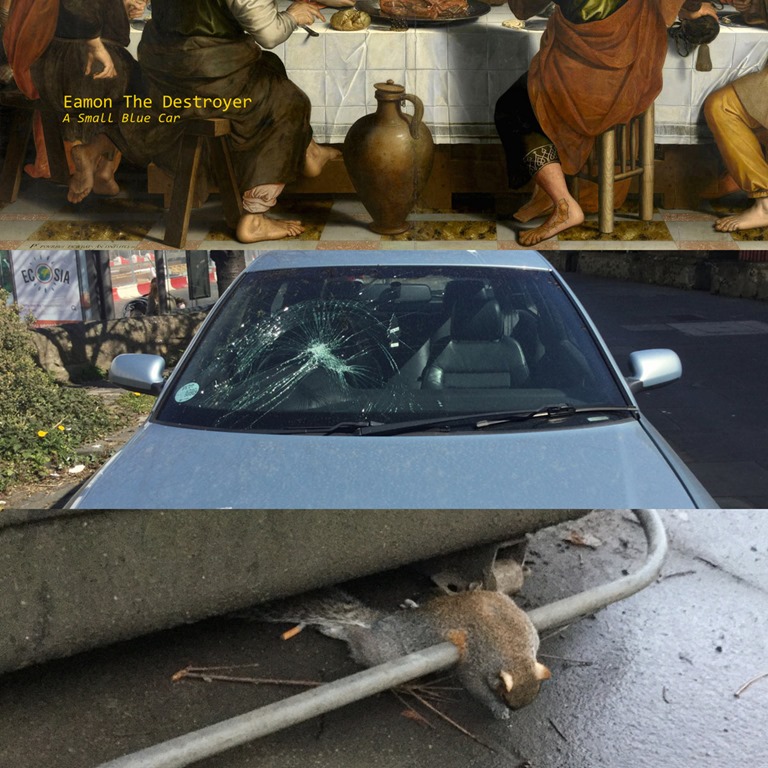
It’s unusual to open an album with a B-side from the lead single, but there’s nothing usual about Eamon the Destroyer or Bearsuit Records, and the scratchy soporific drone and distorted / filtered vocals of ‘Silver Shadow’ – which reference the ‘small blue car’ to which the album owes its name – makes for a worthy introduction by means of introverted minimalism. It’s largely representative of an album that’s slow sparse, minimal and somewhat lugubrious.

I take the nom de guerre Eamon the Destroyer ironically. That may be wrong, it may be some unpleasant prejudice, and if so, I do apologise. This isn’t a PC matter or issue. But names come with certain associations, and the connotations of Eamon aren’t particularly warlord, at least to my mind. No diss to any Eamons, but the name is about as warlord as Gavin, Kevin, or Craig. No doubt there are some brutal twats by the name of Kevin, but, well, y’know, it doesn’t evince fear. The concept of ‘the destroyer’ is one of something harsh, brutal, obliterative, too, but that also isn’t the case here. Consider Ah Puch the Destroyer, Mayan god of death and disaster whose coming would mark the end of days. There is nothing explosive or devastating about A Small Blue Car – it is not a violent sonic blast of earth-shattering, annihilative proportions, yet it does, strangely, evoke a sense of near-finality. There is an all-pervading sadness that hangs over the album’s entirety, a sadness that’s slow-creeping and heavy, like a weight that pulls you down, bending your back with the effort

‘Humanity is Coming’ is downbeat, gloomy, and things get particularly dark and dense on the short instrumental ‘The Conjuring Stops’, with a heavily phased synth yielding a pulsating throb in the style of Suicide. ‘The Avalanche’ also brings some weight, with lots of granular sounds and bolds bursts of sweeping synths in the choruses that contrast with the woozy drone and is perhaps how Leonard Cohen might have sounded in the early years of his career if he’s chosen Moods instead of an acoustic guitar. The end result, musically, is like Stereolab on Ketamine.

The slow rasp of single cut ‘My Drive’, with its whistle of feedback and detuned radio in the distance while the picked guitar – spacious and delicate – curls like smoke into the darkness, and it piles on the melancholy.

‘Uledaro’ follows, a dolorous jumble of discord. ‘Nothing Like Anything’ is conspicuous by its near-cheeriness ‘wake up / the sun is out / we’re almost home’, Eamon intones in a rare glimmer of optimism. There’s whistling and levity, and it’s almost, almost a pop song. But of course, it’s not. And perhaps it’s more me feeling autumnal, but the happiness only accentuates the sadness, as if the jollity is a mask to sorrow so inexplicably deep that it has to be covered up. The nights are dark, the world feels a very long way off and a long time ago. It’s time to hibernate, with A Small Blue Car for company.

AA

a2830016479_10

gk rec – 31st October 2021

Christopher Nosnibor

I have a sort of anguish-tinged relationship with artists who I admire who are super-prolific. First and foremost, I hold the utmost respect, where it’s not just the occasional creative burst, but a way of working that means they can maintain an almost endless stream of creativity and output. The anguish, selfishly, comes from the awareness that their output pisses on mine and my aspirations – and while I am of course aware that quantity is no real measure of anything, the ability to simply produce, relentlessly, is something that provokes, if I’m honest, a degree of envy. How do they do it? How do they have the headspace? How do the even have the time?

Gintas K is an artis whose work I’ve been covering for quite some time now, and I’ve long-marvelled at his output. Having come to understand his process over this time, and having watched some of the videos of his improvised recording sessions, the means of production is a significant factor in his ability to produce so much output. But that is by no means to say that he’s tossing out any old thing, and when it comes to his album releases, there are always multiple elements and sources involved, and if there isn’t specifically a theoretical element that’s integral to the process, there’s nevertheless a theoretical aspect in the mix.

For this album, ‘an electroacoustic music work that consists of stretched granular motives during the entire piece’, there are ‘voices and stories told by people of different ages and gender’, where ‘Stories blossom out of humorous fairytales told by 5 years’ child, stories about death, narrations of mindfulness, stories about consequences of WW2, deportation during Stalin regime and life in Siberia.’ It’s a mish-mash that features abstract voices in the most disturbing way. Then again, GK has a knack for the disturbing as well as for extranea.

There’s a lot of that to find here on Nervus Vagus. The album is dominated by GK’s trademark bubblebath of bloops and gloops, fizz and fuzz, and it’s often difficult to tell what’s going on. This kind of abstract mish-mash of electronica is difficult to process. ‘Rising’ is a whiplash blizzard or blips and blops, while on ‘A Dream. Relatives Story’ the dank atmosphere is hard to penetrate, and while the album may be abrim with stories, following any form of narrative is nigh on impossible. That’s no obstacle to enjoyment or appreciation of the work, though, provided you’re not averse to chaos and cacophony, and besides, the notion that narrative should be linear, or even cogent, is outmoded and based on the construct of linearity, which is by absolutely no means representative of lived experience or perception in real-time. Linear narrative exists simply to enable us to process things more readily, to simplify, and to make us feel more comfortable by imposing order on disorder. But that comfortable, ordered way is not the reality.

Gintas K’s chaotic concoction is a slice of life. Granular bubbles and extraneous noise dominate as ambient drones undulate, eddy and swirl into an uncomfortable mess of awkward noise. There are rumbles of thunder amidst the endless froth of microtones that cloud the brain and claw at it. The whole experience is quite bewildering. Sound familiar? Feel like life? It may not sound exactly like life as you know it but Nervus Vagus is likely to be uncomfortable because it’s real and interrupts the mediated flow of linear perception. But believe me, it’s good.

AA

a1479087284_10

Christopher Nosnibor

Over recent months – and more – we’ve unravelled the series of releases by experimental oddballs Kröter, via their affiliation with the king of quirk, Mr Vast, formerly of cack pop maestros Wevie Stonder, aka Wevie De Crepon. You can never have too many side-projects, offshoots, and affiliated acts, and so it is that Kröter-associated Hunger give us Wollufos. (Hunger is Christoph Rothmeier & Jörg Hochapfel; Rothmeier is the other half of Kröter along with Henry Sargeant, aka Mr Vast). This is their eighth self-distributed album, and their first on vinyl.

Have you managed to keep up so far? Good, because it’s only going to get more complex and convoluted, because these guys are a prolific, self-contained community cranking out endless oddities, and Wollufos is no exception. They pitch it as ‘mixing fake folk acoustic instrumentation like banjos and open tuning guitars with Harry Partch-style homemade devices’. Fake folk?

From the springy sproingy lo-fi shuffling synth whackout of the brief intro piece that is ‘Zwergenfieber’, it’s immediately apparent that this is going to be a substantial serving of quirky, off-the-wall music that doesn’t conform to any conventions, even their own. The Berlin-based duo work across time signatures and genres at the same time, with some woozy, warpy synths and picked guitars existing in the same space but seemingly playing different songs. Then there’s the leaning towards titling their quirky, heavily rhythm-orientated instrumental ditties in French.

‘Mambo Momie’ is an exercise in bleepy motoric minimalism, and the album is brimming with minimal beats and squelchy synths, as is nowhere more apparent than on the strolling ‘Sunset Sling’. When it comes to making music with all the bells and whistles, Hunger take this quite literally: download bonus cut ‘Schuhe aus Brot’ sees them pull out all the stops to create something that borders on the overwhelming, with additional droning horn sounds and blasts of noise on top of the stuttering, clamorous percussion, before winding down to trickling chimes.

There’s some kind of half-baked wonky country / space crossover on ‘Chariot de Pipi’, and the atonal, off-key pickings of ‘Macramée Cramée’ are truly brain-bending. And then there’s the twelve-minute ‘Hundenebel’, a quivering proggy space-rock workout that makes optimal use of space and distance and of Daniel Glatzel’s clarinet to forge a vast sonic vista. Great, yawning siren wails rub against bubbling synth swells, and there are so many contrasts, to may layers, so many juxtapositions.

Why do we find discord so difficult to process? Even while I enjoy it, I find that numerous things that are seemingly disconnected or otherwise independent create something of a sensory overload that isn’t always entirely pleasurable, and can at times prove quite disorientating and uncomfortable. It messes with our orientation and equilibrium, trips our sense of balance and spins us off centre. Wollufos will leave you dizzy. At times it’s quite bewildering, but it’s never dull or lacking in inspiration.

AA

a2004897443_10