Posts Tagged ‘Album Review’

26th November 2021

James Wells

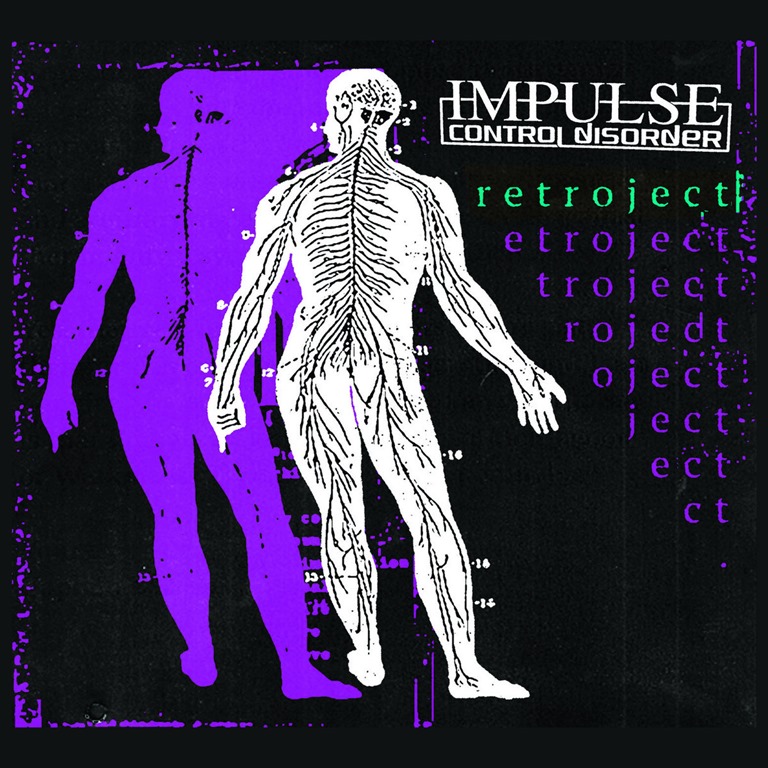
This one’s been a looooong time in the making. Like so many other creative projects, the pandemic compelled Frank Svornotten to get his shit together to revive a project that to all intents and purposes was dead and buried, and to see it to completion.

As the bio that accompanies Retroject explains, ‘Retroject is an album that was begun in 2001 but has just seen the light of day in 2021. Some of the songs may feel nostalgic and dated and that is because, well, they are!!! An excess of free time during the Covid-19 pandemic eventually grew tiresome and monotonous. So, it was decided to finish the album that had begun many years prior!’

Much as I sympathise with all of the people unable to work during lockdown, and all of the furloughed workers who struggled on reduced salaries, I can’t help but be a shade envious of all of these people who found themselves with an abundance of free time to explore creative avenues. Having a dayjob that meant working from home was entirely feasible, meaning that it was business as usual, but with home schooling on top thanks to the closure of schools, I found myself with less time than ever, and I couldn’t even go to a gig or hit the pub to unwind after.

Retroject certainly isn’t an album to unwind to, either. It’s a gnarly electogoth effort, with hefty dollops of early NIN and the signature Wax Trax! electro sound providing much of the influence there. ‘W.H.A.T’ could easily be mistaken for an outtake from Ministry’s Twitch, and would also have easily made the cut for a Wax Trax! single release in the late 80s / early 90s, while ‘Love, Hate and Machines’ really brings that KMFDM vibe and slams it in hard with some cybergoth dance grooves. Elsewhere, ‘Train Song’ is pure pop and is more Aha than aggrotech.

Some of the tunes may sound a shade dated (‘Mysterious Angel’ sounds like Depeche Mode circa 1981, which is particularly eye-opening for material from 2001), but then again, there are acts still cranking out material that sounds exactly like this, and there are some real industrial stompers along the way, and these never tire or grow old, regardless of the instrumentation, regardless of how tinny or trebly the synths sound. What matters, ultimately, are the songs, and Retroject packs some real bangers, propelled by throbbing synths and splenetic rage.

AA
a3867323310_10

4th February 2022

Christopher Nosnibor

It’s fitting that a doom / sludge metal act should take their time over things – and Sheffield trio Kurokuma have really taken their time over things in order to deliver their debut album. Having formed late 2013, they’re one band whose progress can’t have been said to have been hampered by the pandemic: instead, they’ve been evolving their sound over the course of a number of single and EP releases, notably the Advorsus EP in 2016 and 2018’s ‘Dope Rider’ single. This means that the arrival of Born of Obsidian feels like an event, a monumental summit in the band’s career. And if five tracks, in the face of it, does‘t look like much by way of a definitive statement that represents the apogee of some eight years of work, the fact that all bar one are over eight minutes long and each one packs the density of a black hole gives some necessary context.

‘Smoking Mirror’ lands things perfectly; there’s a definite groove, even a hint of funk – not in the Chili Peppers’ funk metal sense, but in a twisted, fucked-up psychedelic sense – to the bassline that bounces along before the crushing power chords crash in. The vocals snarl and scraw and everything comes together to deliver optimum weight. It may be a cliché to sat it needs to be played loud, and playing any metal not loud is a mistake, but having been recorded in London with Sanford Parker (YOB, Eyehategod, Indian), volume really increases the appreciation of the quality production. There’s not only great separation between the instruments, but each brings something more to the overall mix. On ‘Smoking Mirror’, your attention is likely to be on the churning guitar, but the drums are outstanding in the way they kick through the dense, treacle-like distortion.

They promise an album that’s ‘equal parts primitive brutality and mind-bending psychedelia’, and it’s all there in the pulverising repetitions of ‘Sacrifice to Huitzilopochtli’. For its brevity, it packs in a neatly-constructed structure, with intro, verses, chorus, mid-section – which brings an explosive change of tempo – and megalithic, gut-churning riffing that rages hard and heavy. It demonstrates that there’s a lot going on with these guys, and that they’re not just lug-headed chord-thudders, but possess a level of musical articulateness that separates them from many of their peers.

Single cut ‘Jaguar’ is, it turns out, entirely representative, a roaring beast of a tune that has a rare swing to it – and a lot of cowbell. It warps and lurches with remarkable dexterity for something of such colossal weight. The repetitive riffery of ‘Ololiuqui’ batters and bludgeons relentlessly, maintaining its form and instead varying the tone and depth of the distortion, and stepping up the volume incrementally, before the nine minute ‘Under the Fifth Sun’ delivers a decimating conclusion.

With bulldozing, unyielding mass and density, Born of Obsidian is high-impact: Kurokuma have mastered the power of hard volume and brutal force – as is in keeping with the genre. But where Kurokuma stand apart – and above – is in the detail, the nuance, the deviation from the blueprint, which shows a unique flair, and surely Born of Obsidian is destined for cult status.

AA

a0681611664_10

Everest Records – 14th January 2021

Christopher Nosnibor

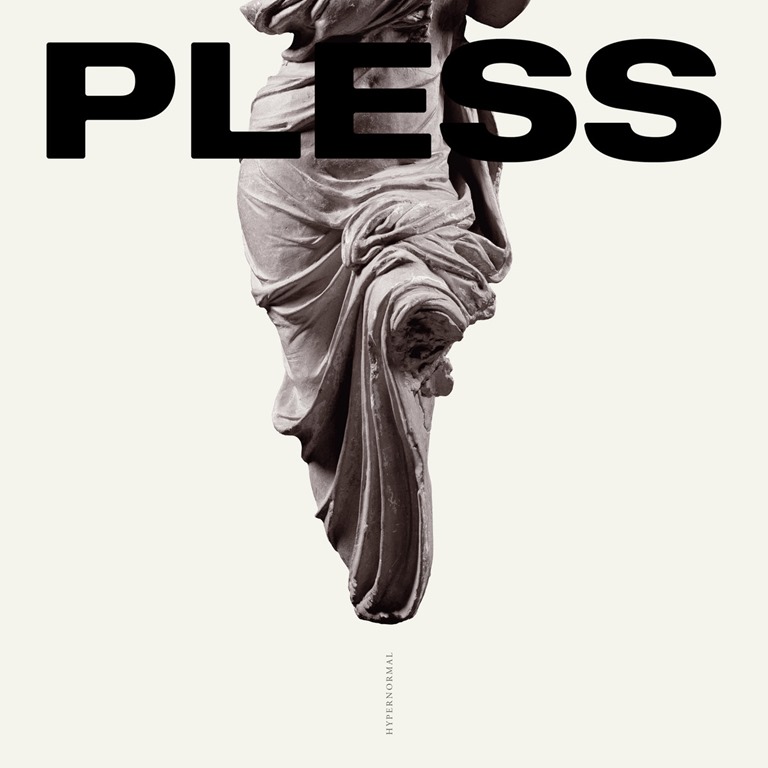
Language is fluid, it evolves. Sometimes I appreciate that, and like the fact. Other times, this is something which can be intensely frustrating, and it seems the meaning of hypernormal has evolved – seems to have been reconfigured, rechannelled – with remarkable rapidity. Initially, it was something of a colloquialism, an on-trend sassy term to describe something that was so normal it was beyond bland.

The connotations of the scarily mundane, the individual who was so lacking individuality that they made clones appear unique, which emerged late in the first decade of the new millennium remained largely stable until Adam Curtis delivered his seismic three-hour documentary in 2016, which espoused the theory that HyperNormalisation is a process whereby a mundane, readily-digested version of life and society has been superimposed over the complex world by those in power. And so according to this, we now live in a ‘fake’ world. And this concept of a constructed reality overlaying the true reality seems unsettlingly feasible. What, and who can you trust or believe? Trust no-one; believe nothing.

Perhaps because I think too much and don’t sleep enough, I’ve wondered ever since I was a child if the world we live in is real, or if we’re all figments of our own imagination, and if reality is a construct. Yes, I experienced existentialism combined with some kind of take on The Matrix at the age of five. But I digress, and there is a point to all of this, and that is that nothing is fixed, nothing is certain. We know so little, we don’t even know ourselves.

Pless’ hybrid sound is absolutely not normal, and it’s certainly not normal beyond normal so as to be the next level of mundane; but nor does it feel entirely like a carefully-constructed fiction which bears the ultimate lie. That said, there is a certain element of deception here: the façade of simplicity, of minimal, semi-ambient electronica belies the detail and complexity of these layered compositions, and as such, it’s something not normal, disguised as something that resembles normal, or at least familiar. Ultimately, it’s something else entirely; something mellow, something layered, something dark and something light. All of this filters into cognisance in the first piece, the slow-paced, semi-abstract ‘Azure’, whereby spectral synths drift around a metronomic drum and ever-moving bass tones.

The drum sound is noteworthy: it’s somehow immediate, up-front, and dry, as well as reverby, landing between Joy Division and Duran Duran.

The synths of ‘La Cienaga’ lean towards A Flock of Seagulls, but the stuttering drums and stammering incidentals contribute to transporting this track to another place entirely, one filled with dark shadows cast by brooding electropop and darkwave. Meanwhile, the six-minute ‘La Grenouille Volante’ has a bass that thrums like an engine throbbing at the dark heart of its soft ambient washes and distant drums. Around two-thirds in, it unexpectedly revs up a gear, and while the same, the additional volume translates to additional intensity, too.

The haunting, spectral organ drone of ‘Ante finem’ is blasted through with hefty tribal percussion, gradually shifting to a slow, deliberate bass-driven trudge, while ‘Fog City’ is every bit as murky and disorientating as you would likely imagine, with vocal samples and reverberated snare cracks echoing through stark synth stabs, and ‘Hot God’ comes on like a collision between Kraftwerk and DAF with a dash of early New Order, mining a deep seam of late 70s/early 80s electronica. The final track, the ten-minute ‘Reodorant’ is a dark-ambient epic in every sense, deep, moody, a little unnerving.

Each of the pieces shifts as it progresses, and evolves over the course of its duration, often subtly, twisting through expansive soundscapes front one plateau to another. Under the cloak of minimalism is shrouded considerable detail, and a quite remarkable focus on texture and movement. Even in the most stagnant of moments, there isn’t an element of stillness here. It may be cold, it may be distanced, but it’s also quite its own work. Normal? What even is that anyway? Stark, sparse, yet so, so rich, with Hypernormal, it becomes clear that Pless is more.

AA

a2732208461_10

3rd December 2021

Christopher Nosnibor

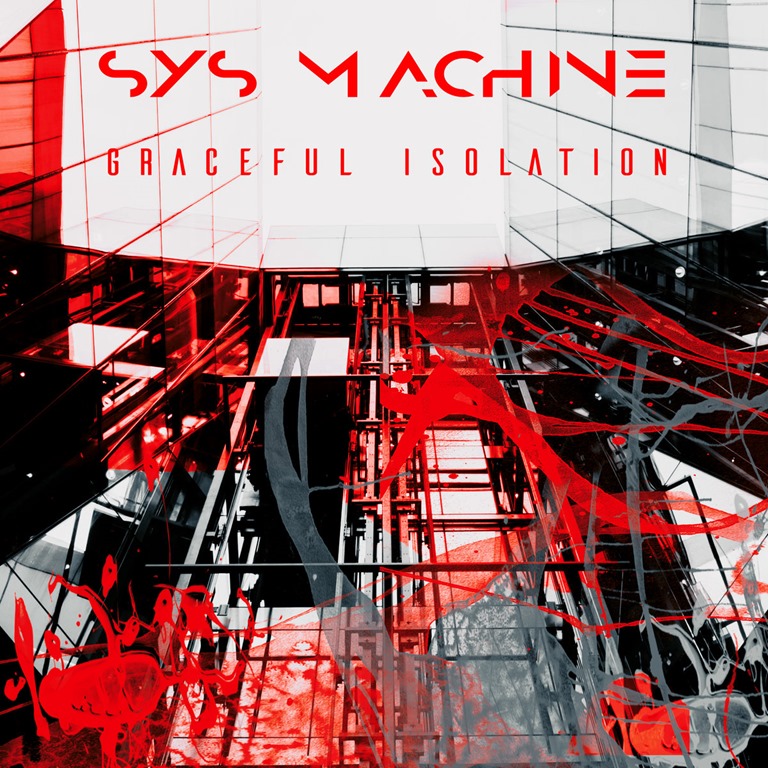
If there’s ever been an emerging theme across music of all genres in the last year and a half, it’s isolation. Yes, if a global pandemic has achieved one thing, it’s brought everyone together in their feelings of isolation.

And so it is that we learn that the tracks on Graceful Isolation ‘address the feelings of isolation and coming to terms with new norms that the past year has brought. The title is derived from the fact that over the course of the album, none of the collaborators were ever in the same room.

One could counteract that in creating an album featuring numerous collaborations (notably Kimberly Kornmeier of brooding orchestral electro goth act Bow Ever Down on vocals on three songs, but also a slew of remixers), Dave McAnally has been far from alone despite being forced to work in physical isolation, yielding an album that demonstrates that distance is no object and geography is a state of mind, even if it is no substitute for proximity.

‘Poison My Skin’ makes for an atmospheric opener, with stark, minimal synths and drum machine providing a cold backdrop. ‘You’re never gonna touch me again’, Kimberly croons in a detached, robotic monotone, with subtle hints of Siouxsie, while giving voice to the thoughts that have echoed around my head that there are likely many people I have seen, heard, and been in the presence of for the last time in my life. I don’t miss the office, I don’t miss the people I used to work alongside in that artificial, uncomfortable, unnatural space, and yet… well, none of us expected that way of life to be curtailed, and certainly not in the way it was, an instant switch-off. March 2020, on being told to go home to work, I never anticipated being away more than a few weeks. And here we are… people have moved on; people have left; people are no longer with us. It’s been a long and painful couple of years.

‘All the Pieces’ and in particular ‘Impossible Dreams’ are stripped-back and sparse in their arrangements – not quite demos, but certainly skeletal, with stuttering drum machines providing the brittle spine to the songs. The lack of flesh on the bones is integral to the appeal here.

‘Drowning in the Past’ and ‘Illusions’ are tense, queasy in their taut atmosphere. McAnally resumes vocal duties, and said vocals are pegged low in the mix, compressed, accentuating the dislocation and distance. The former pegs a particularly expansive guitar solo to some nagging synths and comes on like a proggy James Ray, and it’s some good shit if you’re on the market for dark, gothy electropop.

My only niggle – surprisingly or perhaps not so much – would be that the thirteen tracks on the album consist of only five individual songs, and with three mixes of ‘All The Pieces’ slap bang in the middle, in addition to the original version, plus three versions of ‘Drowning in the Past’ it’s does get a little bit repetitive, and it may have worked better as an EP and a remix EP rather than a full-length album in its own right. Put another way, I’d play the grooves off the EP, but would probably only spin the remixes every now and again – not because they’re poor remixes, but because the original cuts hang together so well, it feels like a fully-realised document that requires no adornment.

AA

a2053013240_10

Sub Rosa – 26th November 2021

Christopher Nosnibor

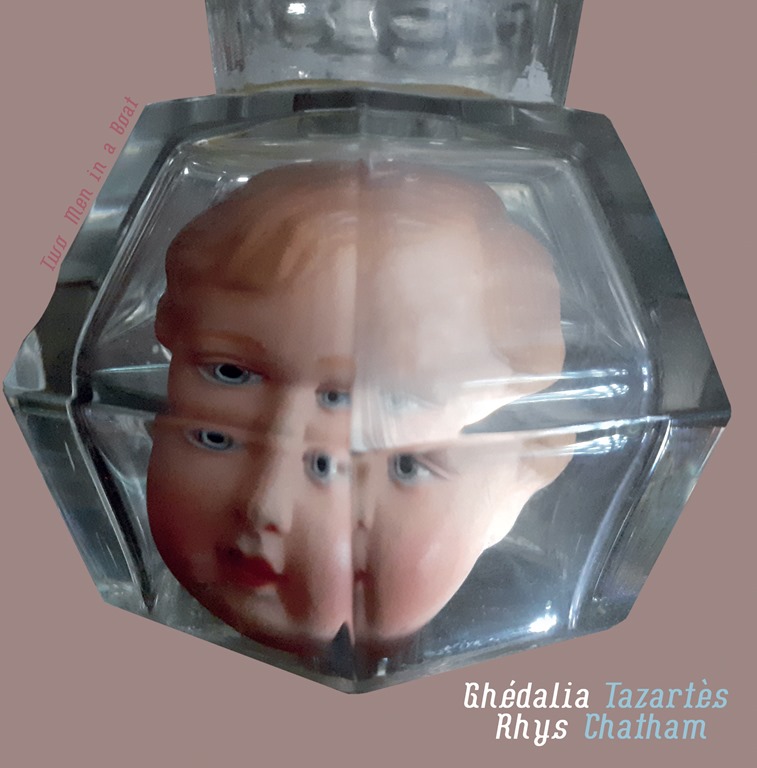
In the scheme of Ghédalia Tazartès singular career, which saw him featured more prominently in dance, theatre, and cinema than on record – a career spanning back to the mid-late 70s yielded just thirteen albums – this release is significant in several ways, not least of all in that it contains probably his final recordings prior to his death in February 2021 at the age of 73. It follows his last album release, Superdisque, which was released a full decade ago, in 2021. It also documents a collaboration that almost never happened.

As the story goes, ‘Tazartès and Chatham had met once in 1977 at CBGC’s and had not seen each other since then when they were asked by their mutual agent to play a private show in Paris. This happened in September 2018 in a house with a garden where sax player Steve Lacy had lived back in the 1990s. This album presents the recording of this show plus another show at La semaine du bizarre festival in Montreuil, France a year later, mixed with a couple of studio sessions.’

Their coming together yields something – and I’ve struggled to find a word that comes anywhere near describing what others have simply classed as ‘indescribable’ and ‘unclassifiable’ – most otherly. Tazartès singing is, in itself not only unique as a style, but also as an experience. It’s less about what it conveys as such, and more about how it touches you. It’s certainly not singing in the conventional sense; and yet, it is very much musical, rather than mere vocalisation. Tazartès sings from different parts of the body, and his voice tremors and quivers, trills, gargles, and ululates.

On the four parts (or ‘actes’) of the ‘Jardin de Simone’ performance, Chatham’s sparse, minimal backings provide a shimmering backdrop that ripples and glimmers softly. On ‘Acte 1’, it’s chiming notes, picked, on a clean electric guitar, while on ‘Acte 2’, it’s wavering woodwind which accompanies Ghédalia’s soft croon. Scraping strings create a dolorous discord alongside a wailing, weeping, skittish vocal performance on ‘Acte 3’ while the fourth and final piece floats into the atmosphere in amorphous waves if sound.

The three parts which make up the ‘Semaine du bizarre’ set are quite different, with Chatham’s backing on the ten-minute ‘Acte 1’ being denser, the electric guitar rattling and with strains of feedback filtering through the stuttering notes. The stutters are not of hesitation, but of tightly-reined tension, and over time the form evolves into an elongated tapering drone. The vocal adopts an almost falsetto-range droning quality, at times shifting to a guttural throb, at others, an open-throated note sustained on, and on. Woodwind drapes and twists around like fingers of mist. In combination, it feels mystical, in an impenetrable, occult way. Overall, this set is more drone-orientated, Tazartès’ vocals venturing more toward the lower register, the growlier, the more atonal. And yet, in places, he soars almost operatically, albeit descending like a punctured bellows after, while the instrumentation wheezes out, fatigued.

The vinyl finds a performance on each side, while the digital version features a bonus cut, appropriately entitled ‘Encore’. This, too, is quite drone-orientated, with the addition of a certain hint of an Eastern twang.

As a whole, Two Men In A Boat feels like a meditative work, and one which exists out of any kind of context, real or imposed. Without any constraints in terms of structure, culture, time, place, or even meaning – explicit or implied – the performers can be found revelling in the freedom of musical explorations. These are songs of the soul, and Two Men In A Boat is a unique document.

AA

SRV520_front

Southern Lord (CD/DL) | Pomperipossa Records (LP – Europe) – 14th January 2022

Christopher Nosnibor

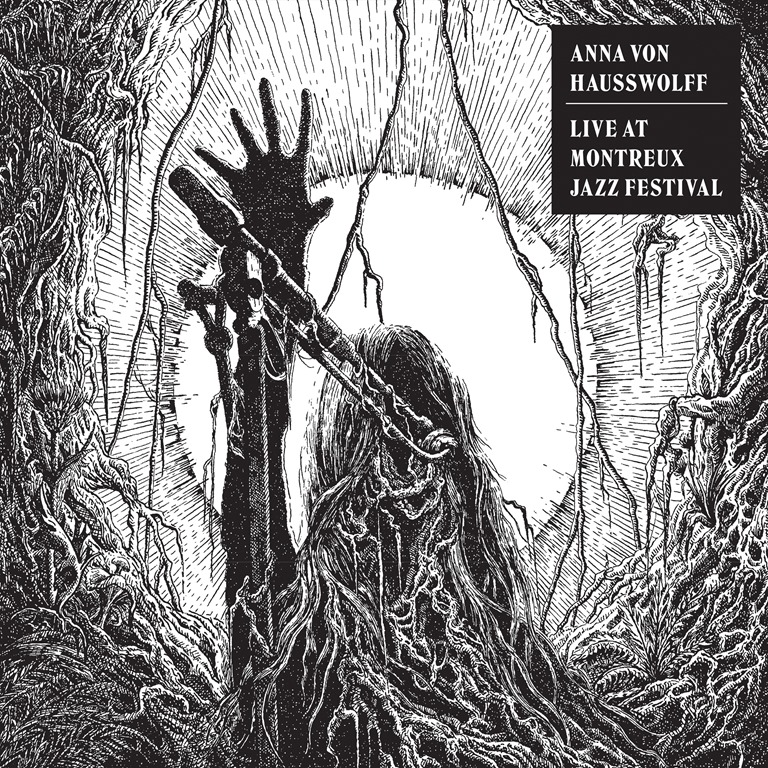
Perhaps the last thing one would expect to find being released on Southern Lord is a live jazz album. The label is, after all, home to much to the rawest, loudest, harshest metal and hardcore punk, not to mention, of course, the doom drone legends that are Sunn O))). But then, if Anna von Hausswolff seems like something of a roster misfit, it’s fair to say that her catalogue doesn’t conform to any obvious jazz tropes either.

The performance, from 2018, as the notes advise, features six fan-favourites from the two beloved albums; The Miraculous and Dead Magic, with the backing of a full band including additional vocals from her sister / cinematographer Maria von Hausswolff, and it’s ‘The Truth, The Glow, The Fall’ from Dead Magic, which opens the set in mesmerizingly hypnotic style. Against widescreen drones and rumbles, von Hausswolff’s vocal soar and swoop operatically. It’s a powerful and compelling start which paves the way for the grandiose expanse of creeping fear that is ‘Pomperipossa’ from The Miraculous.

‘The Mysterious Vanishing of Electra’ slows to a crawl with a Swans-like dirge centred around a simple, trudging repetition of bass and drum, and it’s here that things really take a turn for the heavy and the intensity builds. This rendition reminds me of the epic take on ‘Your Salvation’ by Foetus on the Male live album, grinding away at a single chord and hammering it into the ground before blossoming into something jaw-droppingly magnificent, and there simply are no words.

From hereon in, things only become more intense, more spectacular, with the brooding atmospheric ‘Ugly and Vengeful’ stretching out to almost twenty minutes, and leads the listener through an epic journey through a succession of sonic terrains. It’s a clear centrepiece within a set of vast sonic and emotional scale. It’s far, far beyond the domains of jazz, and even beyond the domain of ‘mere’ music: this is transportation and transcendental, taking you beyond the physical world and out of your own space to one beyond imagination. What’s perhaps most impressive is that this is all live; there’s no studio tweaking or trickery, but musicians conjuring pure aural alchemy in real-time.

After the delicate respite of ‘Källans återuppståndelse’, the fifteen-minute ‘Come Wander With Me Deliverance’ brings a suitably epic finale. The backing may be sparse at first, but the understated, almost wispy drones place von Hausswolff spectacular vocals to the fore. Then, when the drums and megalithic guitars crash in, they really do bring the weight. Yet the vocals remain the dominant force, and it builds – and builds, and builds – to a monumental crescendo. To have actually been there! The recording does a superb job of conveying just how gargantuan that finish would have been, and while there truly is no substitute for being in close proximity to a band working together, witnessing that connection and intuition as it flickers like electricity across the stage, and nothing can touch the experience of hearing, and feeling, music at gig volume as it vibrates the bones, Live at Montreux Jazz Festival comes very, very close.

We’re days into January, but it’s unlikely there’ll be a better live album this year.

AA

752975

Powdered Hearts – 25th December 2021

Christopher Nosnibor

I vowed not to cover anything Christmas-related, simply because, well, because, and also because fuck it. Christmas releases tend to be mawkish, and / or shitty cash-ins, which I have simply no time for, and even a general distain. Charity fundraisers are laudable, although in a just world there should be no need for them because ultimately the state should be supporting the needy and vulnerable without musicians, most of who make next to nothing from their art, having to donate their small royalty fees to food banks and the like. Christmas sucks on so many levels that it’s an essay or even a book in its own right, but this perhaps isn’t the place to begin expounding any of that.

But here we are, and here I am making an exception, and for what I feel to be the right reasons, with the additional bonus that this is no crappy cash-in, and no motive beyond itself.

The prodigiously prolific Gintas K celebrated Christmas unconventionally with yet another release, this time in the form of a Christmas treat entitled Christmas Till The End. With five tracks in all, which are mostly shorter pieces, apart from the twelve-minute title track, it’s quite a departure from much of his back-catalogue, not least of all some of his experimental digital explosions of recent years which have seen him move from microtonal explorations to squelch-laden sonic chaos delivered by means of some nifty software run though an ancient Lenovo Thinkpad (something I have infinite respect for: so many musos have state of the art hardware, while I’ve discovered for myself that reconditioned corporate laptops even from a decade ago have better specs and are built more sturdily than the majority of consumer-orientated laptops). Whatever the sonic differences, though, he’s maintained the same process, namely recording each track live in a single take with no overdubs.

Christmas Till The End may not be the frenzied digitised froth of recent releases, whereby GK simply blasts out various strains of laptop-generated whirring, blooping, crackling noise, and you couldn’t exactly call it a conventional Christmas album, or a celebration of the festive season, either. It’s more of an assemblage of elements of Christmas collaged, crossed out, crunched together.

If the first track, ‘Bah’, perhaps speaks for itself, ‘Für Elise’ presents a picture that highlights the complexities of Gintas’ work. It features Beethoven’s ‘Bagatelle No. 25 in A Minor’ (aka ‘Für Elise’) and mangles the absolute fuck out of it, because it’s a Gintas K digital mess mash-up. There’s no overt or explicit statement here but trashing the piece feels more like a desecration of the Christmas spirit than a celebration, an act of destruction that feels wonderfully irreverent and more than just a little cathartic in context. It is, also, an ultimately avant-garde act of destruction, in keeping with the principle of destroying the old to build anew. Here, Gintas renders that destruction performative, integral to the form and content.

‘Hymn Lithuania’, at first, does sound overtly Christmassy: a rendition of the Lithuanian national anthem on a glockenspiel, the notes ring out, chiming, bell-like and charming. But after about a minute, it begins to degrade and disintegrate as extraneous noise, feedback and bleeping whistles begin to disrupt the tranquillity, while the delicate piano of ‘vivaLIDL spring’ is ruptured by bomb-like detonations and the clatter and thud of descending rubble. If I’m not mistaken (and I may well be), a corruption of Vivaldi’s ‘Spring’ played at about a quarter pace provides the backdrop to this grim scene; you can almost picture the pianist playing, the film in slow motion, while the building collapses in flame around him. The wordplay is also worth noting – I’m assuming LIDL is bigger in Lithuania than Aldi, as VivALDI would have been the most seamless pun by which to highlight the commercialism of the season.

The title track wraps it all up nicely, and ventures closer to K’s whiplash blizzard off whirrs and bleeps, although in a relatively restrained form, whereby the discombobulating discord whirs and warps over delicately chiming tones. As things slowly disintegrate – both on the album and in the real world, it feels more like Christmas for the end: this is the soundtrack to the decline. May the end come soon.

AA

a3680885656_10

Klanggalerie – 5th December 2021

Christopher Nosnibor

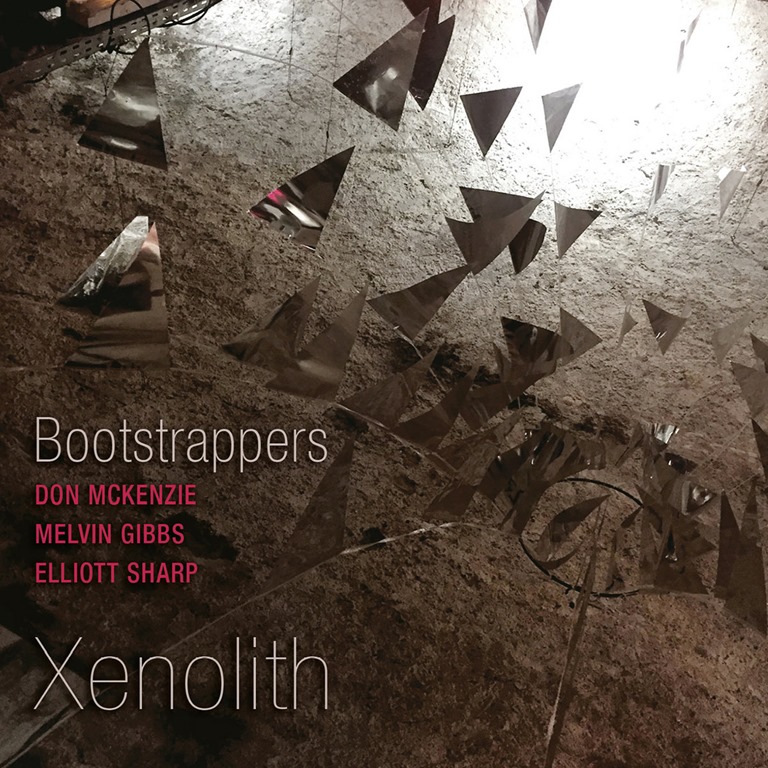
From the Greek xénos, a noun meaning “stranger, guest” or an adjective meaning “foreign, strange”, xeno has come to used as a prefix meaning “alien,” “strange,” or “guest.” Meanwhile, ‘lith’ refers to a stone (making megalith and monolith self-explanatory).

Elliott Sharp’s power trio Bootstrappers’ brand of free jazz / classic rock crossover, they say, is ‘filtered through the ethos of cyberpunk, techno, and free jazz: raging, psychedelic, and filled with fantastic extrapolations’, and since the group’s inception in 1990, they’ve undergone numerous changes in lineup, but the ethos has remained the same, meaning that this offering truly is a strange stone – one that’s hard and soft, smooth and rough, not just in different places, but in some patches, all at once. Such a stone should be geologically impossible, but then, so should the sensory explosion of the seven wildly varied and inventive compositions here, courtesy of Sharp, along with Melvin Gibbs and Don McKenzie.

If the first, ‘Telentechy’ is, at least on the surface, a fairly standard jazz-leaning rock workout, it also possesses enough detail and enough changes to render it rather more. It does seem customary for many such acts to open an album with a track that sounds like a slowly-winding down finale at the end of an hour-long live performance, and this track just does just that, but where so many similar acts lose my attention is in making every subsequent piece sound like another eight-minute winddown and seventy minutes later you’ve had nothing but a crashing, discordant conclusion and not a lot else. So while Bootstrappers do essentially begin at the end, and have numerous sprawling, somewhat formless expanses of barely-contained chaos on Xenolith, they also present numerous changes in mood and tempo, even approximating structural form in places.

‘Sieze the Mement’ is a wibbly, noodlesome piece that evokes eastern scales while also hinting at a dizzying progressive / Krautrock crossover. Immediately after, and after bouncing along for about four and a half minutes, I suddenly realise that ‘Lo Shu’ has grown quite funky in its groove… but then just as the dawning occurs, so the groove melts and dissipates into so much flickering light.

There is a lot going on, but where Bootstrappers succeeds and stand apart is their being only three: this necessitates more minimal arrangements and means they’re not prone to the spells of chaotic discoordination whereby it sounds like six people playing six different tunes in different keys and different time signatures, and instead feels altogether more focused for the most part, and as a result, they do pitch into some nice grooves that you can really get into.

According to their bio, ‘Future editions of Bootstrappers may see the group expand to orchestral dimensions’. While this may be an exciting evolution, Xenolith evidences that they’re fine just as they are right now.

AA

a0588468219_10

1st December 2021

Christopher Nosnibor

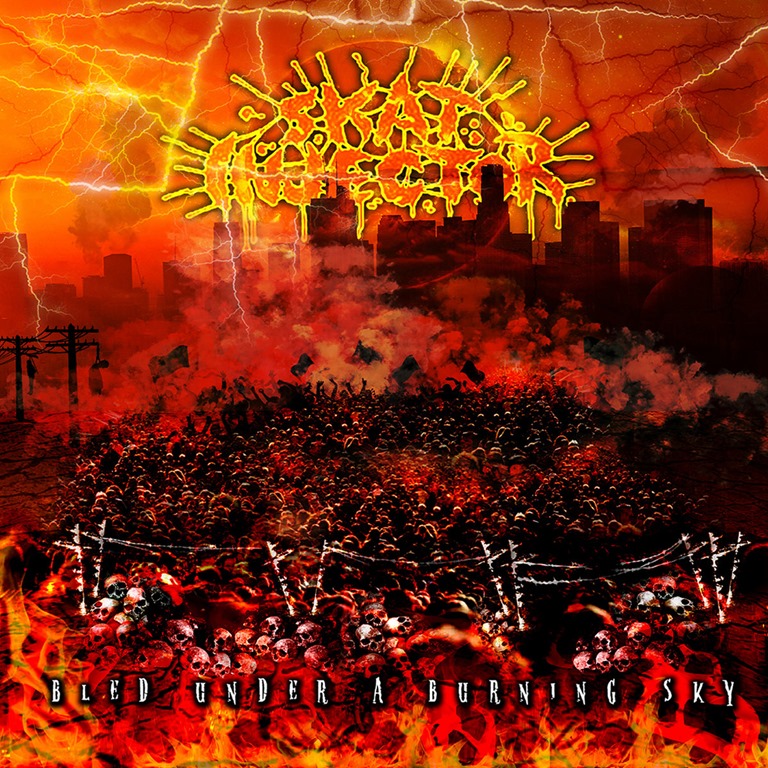
Do you ever feel that the problems facing humanity right now are of our own making? That the phrase ‘scum of the earth’ applies to humanity as a whole, because we as a species have simply fucked everything up beyond all repair? Because the simple fact is, we have. What other creature destroy its own habitat as well as those of nearly all others? Parasites seek to achieve symbiosis with their host; viruses mutate to become more transmissible but less fatal; the aim is not to kill its host but to thrive and expand. Mankind is worse than parasitic, the most brutal virus that evolves slowly and in ways which are counterintuitive, namely to exhaust its host. Where do we actually go from here? The prospect of inhabiting Mars with colonies because we’ve fucked up the world we were born to seems beyond insane.

The shock-factor-monikered Skat Injector are – as you’d likely expect – upfront in their positioning, pitched as serving up ‘Grindcore-inspired speedcore and a diatribe of anti-human propaganda because that’s what we deserve for what we’ve become.’ They have a deep sense of self-loathing and misanthropy, and it’s abundantly cleat on this dehumanised, inhuman blasting racket that’s dark, deep, glitchy, subterranean, demonic, wrecked on every level.

They rail against ‘Willful [sic] ignorance, habitat loss, animal abuse, global ecocide, global warming, environmental pollution, overpopulation and many other attributes of a leeching narcissistic race which needs to live within its bounds’. They shouldn’t have to; this is how life should work.

On Bled Under A Burning Sky, Skat Injector pound and rage and rage and pound, as grating, raw-threated vocals spit, snarl, and grind against a backdrop of frenzies percussion. The lyrics aren’t always – or often – decipherable, but the sentiment is clear.

‘All Tomorrow’s Genocides’ is like a grindcore Prurient, with soft, spindly synths slowly spinning misty swirls of fear chords around pulverizing drill-like beats. Explosive doesn’t come close to a fitting description.

‘An Earth Cleansed with Flame’ goes full harsh electro and is straight up Chis and Cosey trance backing, at least at first, manifesting as aggressive dance with harsh vocals, while the six-minute ‘The Future Sound of Suffering’ brings the suffering and it’s painful in its crunching brutality. ‘Vanishes Rapidly’ is constructed around explosive dynamics, and flips from near ambience to the firing of an AK-47 directly into the ear. It’s brutal and it’s savage, but also very much the ultimate expression of the industrial era, and ‘Obsidian Dawn’ only amplifies and intensifies. It fucking hurts.

The album is dominated by beats so hard and fast they sound like drills and nail guns, this is industrial and its hardest and most industrial, the sonic equivalent of applying a power drill on hammer setting to the eyeball.

At almost fifty-two minutes, it packs a lot of firepower, a lot of punch – so much so that it leases you panting and pounded – in a good way, of course, assuming you have at least a faintly masochistic streak and appreciate music that’s as much about testing your endurance as it is coaxing and massaging the pleasure zones with a battering ram and a taser simultaneously.

The second CD – another fifty-three minutes – of instrumental and extended versions of the album’s tracks is certainly not one for the passing listener or casual fan, and it’s perhaps not essential even for moderate fans, although the nine-minute extended version of the title track is certainly a nice pain-inflicting bonus.

AA

a0672851917_10

Southern Lord – 26th November 2021

Christopher Nosnibor

Long after the heyday of the legendary Peel Sessions, BBC sessions remain something to be revered and something special. Even back in the 80s and 90s, when Joh Peel’s show was the place to gain exposure as an underground band, and a Peel session the pinnacle of prestige for any act outside the mainstream, the likes of David ‘Kid’ Jensen and Janice Long were also notable DJs who invited bands to record live / studio sessions, and while R1 has since become the domain if wall-to-wall major label slop without a single window for anything remotely alternative (that died with Zane Lowe’s departure in 2015, and while his sycophantic arselicking was nauseating, he did at least provide a platform in an otherwise mainstream space), 6Music, recently salvaged from decommission continues to uphold the tradition, thanks to Mark Riley (formerly of all-time Peel faves The Fall) and Mary Anne Hobbs. Hobbs(who quit R1 in 2010 to mentor students at The University of Sheffield and stepped into 6Music a couple of years later) in many ways represents the last bastion of the old-school, in a good way: the veteran DJ is more attuned to less obvious music than many DJs a fair bit younger, as her offering a slot to Sunn O))) indicates.

The beauty of BBC sessions is that they offer acts studio time to use as they please. Many crank out versions of tracks off their latest album, but others explore new territory, either with works in progress, random covers, or something else entirely. Sunn O))) elected to record a whole new album. And so it is that the follow up to Pyroclasts is an extension of the work from that previous album (plus one from its predecessor, Life Metal (2019)) – of which Pyroclasts was in turn an extension of sorts, having been recorded during the same sessions. They certainly know how to stretch a concept: the thing with Sunn O)) is that for all of their impenetrable wall of seriousness, which corresponds with their impenetrable wall of sound, there is a sense of wryness, a sense that they’re more than self-aware of their mythmaking and stylisation, and that delivering it all with not even straight faces, but faces obscured by cowls, isn’t entirely serous. By this, I mean high art and humour aren’t mutually exclusive. Sunn O))) make serious music in a serious fashion, and are even serious about it, but maintaining character throughout is integral tom the wheeze. And so in keeping with maintaining both the style and the form, they grind out longform pieces that drone interminably and gnaw away at the intestines in an uneasy tonal probing.

Having toured with the band as a support on the UK leg of their tour, Anna Von Hausswolf joined the band in the legendary Maida Vale studio and lent vocals, adding an ethereal quality to the low-end drone that continues for all eternity.

Immediately, we’re dragged into Sunn O)) time. Most radio sessions comprise three or four songs, with a duration of maybe fifteen minutes or so in total. Because most radio shows last maybe three hours, and a feature slot of fifteen to twenty minutes is proportionate. But with Sunn O))), most tracks are half a show in duration, and the first track on here, ‘Pyroclasts F’, an excerpt of which was revealed in November, is comparatively gentle, drifting semi-ambient work, combining heavy guitar drone and feedback, and of course it’s never-ending. Well, fifteen minutes in duration, to be more precise, as its counterpart Pyroclasts C#.

It’s not until ‘Troubled Air’ starts and that the truly intense, gut-shredding sensation hits. It’s five ambient minutes until the monstrous power chords strike the knell of dark doom, and we’re in classic Sunn O))) territory. Growling for an uncomfortable eleven minutes on Life Metal, this performance extends the piece for over half an hour, with downturned chords struck at An impossibly slow rate. The earth turns between chords, the sustain extending light years. The ominous organ notes trill and quaver like mist creeping in a horror movie, while the doomy chords torture the bowels and lower intestine and blossom into blooming cathedrals of chthonic darkness. It’s a sonic black hole from which there is no escape, and it grinds and billows and the listener is slowly sucked under by the relentless swirling currents.

Metta, Benevolence captures Sunn O))) at their minimal best, conjuring enormous, sweeping soundscapes of the densest, darkest, most relentlessly dark drone.

AA

a3821764350_10