Posts Tagged ‘Album Review’

Bronson Recordings – 26th May 2023

Christopher Nosnibor

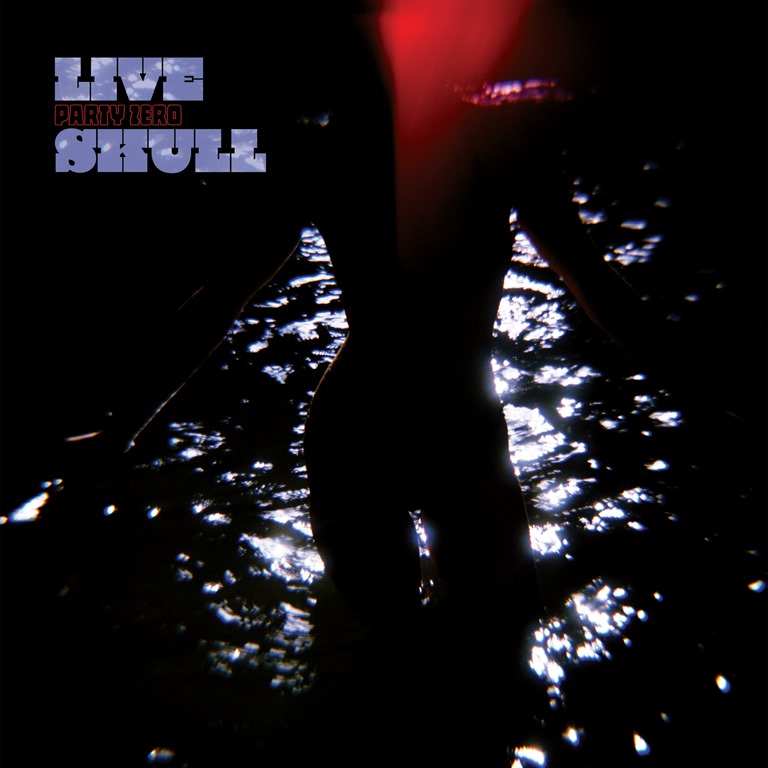
90s alt-rock band Come, fronted by Thalia Zedek, provided my route to discovering Live Skull, which she joined in 1987 and took over lead vocal duties. But my curiosity and interest in evolution and lineage led me to pick up cheap vinyl copies of Bringing Home the Bait and Don’t Get Any on You, which, brimming with shouty vocals, scratchy guitars and low-slung bass, could reasonably be described as No-Wave classics.

Somewhat ironically for a band which emerged out of the foment of 80s New York which also spawned Sonic Youth and Swans, the Live Skull reportedly disbanded in 1990 due to sustained lack of commercial success.

Perspectives change over time, although it was perhaps more of a returning to their original motivations which spurred them to reconvene in 2016, since when they’ve released two albums, with Party Zero being the third, and the seventh studio album of their career.

Delivering an album that’s described as ‘a fiercely political album, in keeping with this politically fierce age’ and ‘timely music, essential, impassioned, angry and beautiful’ founder Mark C. It is a politically fierce age, and now more than any time since the late 70s and early 80s – a period which spawned so many bands who existed as an outlet for frustration and anger and all kinds of difficult and even ugly emotions through nihilistic noise and various forms of confrontation and antagonism.

Sonically, Party Zero isn’t especially nihilistic or noisy, confrontational or antagonistic, but does very much refine these elements and hone the delivery of an almost obsessive focus on corruption, abuse of power, inequality and injustice.

If the sound is rather more polished and widescreen than their 80s releases, the key ingredients are still there, not least of all jagged guitars that blur and crackle with treble and careen into dissonance and discord against big, bold basslines. There’s a palpable sense of urgency to the songs on Party Zero. It may not be their strongest album or their most innovative or distinctive – but it’s an album that’s necessary.

“We’ve been pushed to the edge – how do we claw our way back? That’s been a common theme in Live Skull since the beginning, and so it is now. We’re trying to provoke thought.” There seems to be a rising tide of bands out to achieve these same ends, now, and from a vastly diverse range of stylistic contexts, from the minimal beats and loops of Sleaford Mods to the raging ranting noise-blasts of Benefits via the angular post-punk of I Like Trains. People are pissed off – and they’re frustrated, and scared – and those people in bands are using their platforms to call the bullshit, the fearmongering, the manipulation, the rise of the right and the immorality of governments and multinational companies.

It’s not just the pithy lyrics: ‘Neutralize the Outliers’ sounds like a rabble-rousing protest song, more New Model Army than anything that belies the band’s origins, and it works because it feels necessary, vital.

‘Chords of Inquiry’ plugs away at a simple, spare riff driven by crashing drums, and the drumming is a strong contributor to the album’s dynamic feel, and nowhere more on ‘Mad Kingship’, as they thunder along in a sustained roll. ‘Inside the Exclusion Zone’ is accessible, but driven, choppy, urgent, with a contemporary post-punk feel – think Radio 4’s take on the Gang of Four sound – and the same is true of ‘Turn Up the Static’, with its dubby strolling bass that ambulates through the reverby verses (before the chorus slugs out a mid-tempo fist-pumping holler-along call to arms).

And this is why the surge in protest music is what we need right now. It likely won’t change the world; the chances it won’t change opinions or provoke all that much thought, since most people who are likely to listen to Live Skull are the kind of people who are already in the same camp of political frustration or despair – and that’s ok. What these people – we – need is to know we’re not alone, and to feel a sense of unity and community, and for these feelings of frustration and anger to be articulated by relatable voices. Party Zero does that – and with some solid tunes.

AA
551413

Sinners Music Records – 15th May 2023

On reviewing the debut EP by Fashion Tips recently, I commented that the northern noise ‘scene’ was, in effect, more of a community. I suppose this is something that is true of many more niche corners of the musical world, and it’s certainly true of the electronic scene, particularly that which has grown up around the EMOM (Electronic Music Open Mic) nights that take place around the country as a platform for all strains of all things electronic based (several of which I’ve reviewed, and a few of which I’ve performed at). These nights are a broad church, and have not only welcomed me, but opened the doors for myriad collaborations, as well as providing a safe space for testing stuff out as well as an opportunity for seasoned performers and novices alike to connect with an accommodating audience, and this release comes courtesy of Sinners Music Records, established by Ian J Cole, another face familiar to attendees of the York EMOM nights, who also streams the Audiophile radio podcast showcasing weird and wonderful exploratory electronica.

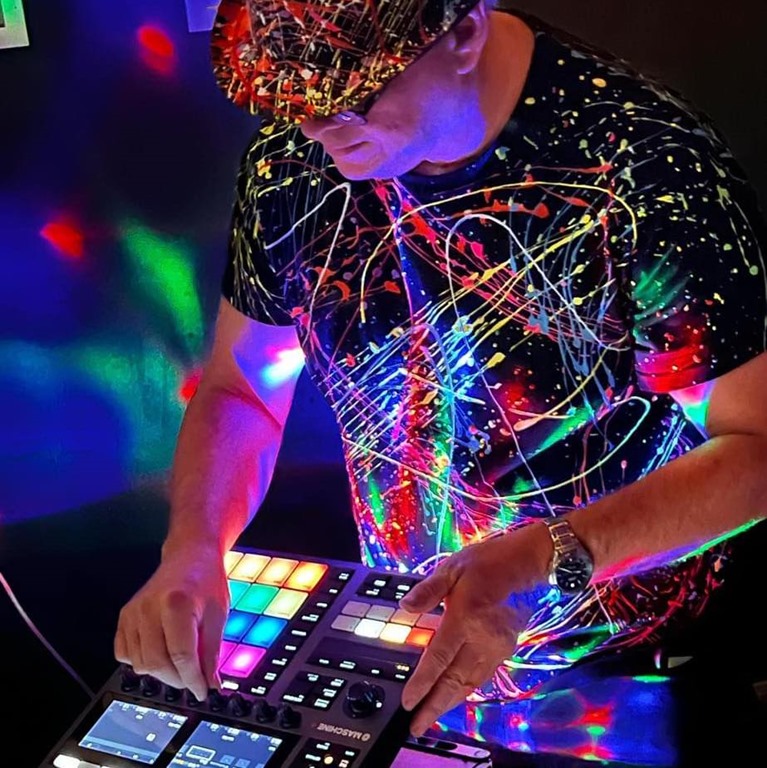
Mho – that’s ohm backwards, and pronounced ‘mo’ – is the musical vehicle of Dave Walker, who’s been a regular face at the EMOM scene, and has become established as being instantly recognisable for his stagewear, with neon-splatter t-shirt and hat. Obviously, these visual props don’t translate to the recordings, which must stand on their own merits – and they very much do.

Over the course of ten tracks, Walker showcases a broad span of styles and sounds, and the compositions are all accomplished and considered. As his bio states, he ‘began his foray into making electronic music at school when he built a Transcendent 2000 synthesiser and a ETI String Synth, as the Polymoog synth cost as much as a house back then’. He’s since switched to more contemporary kit, but his years of experience have led to a nuanced approach to musicmaking: there’s a lot of detail, but nothing’s overdone. Every drop, every time the beats bang back in, every layer, every stutter, every new sound and sample, is perfectly placed – but not in such a way that the precision leads to sterility. Walker’s tunes flow with a rare naturalness, and there are no jarring jolts or awkward lurches between segments.

Predominantly, these pieces are built around conventional piano sounds and broad strokes of synth which fill out broad spaces, and there’s a lot of analogue-style pulsations, too, cut from the cloth of Mike Oldfield and Tangerine Dream.

There’s something familiar that I just can’t quite place about the melody of ‘Nie Rozumiem’ (which will undoubtedly annoy me for days), and elsewhere, ‘Chorale’ brings ambience with low-key beats that washes along nicely, being largely undemanding but pleasant. ‘Eternal’ brings a hint of Eastern promise and a vaguely operatic vocal carried on a soft breeze of shuffling beats and rippling piano.

‘Contact’ and ‘Moon’ appear to be thematically linked, the former bursting with samples and laser-beam bleeps, and it does have quite an 80s feel to it. This, though, is true of much contemporary electronic music which isn’t overtly dance – or EDM and the encroaching Americanism would have it. The latter is a seven—minute sonic exploration that expands through time and space with crackling radio transmissions from the lunar landing of 69.

‘Take it Easy’ is pure 80s retro tootling melting into 90s euphoric trance, and while well-executed, it’s perhaps the least engaging or enticing tracks on the album, but it’s but a brief weakness in an otherwise solid album which concludes with the surprisingly light and accessible spin of ‘I Am With You’ which practically skips along.

With EMOM sets providing just ten to fifteen minutes for artists to showcase their style (these nights are absolutely bloody packed, to the point that despite being ‘open mic’, all slots are usually taken a full month in advance), it’s good to hear the full span of the elements which feature in an Mho set, and even better to hear that Mho has the material for not only a longer set, but a full album which is at once diverse and cohesive.

AA

333455632_2197845260603259_2646669291313228150_nmho1

Seismic Wave Entertainment – 3rd April 2023

Christopher Nosnibor

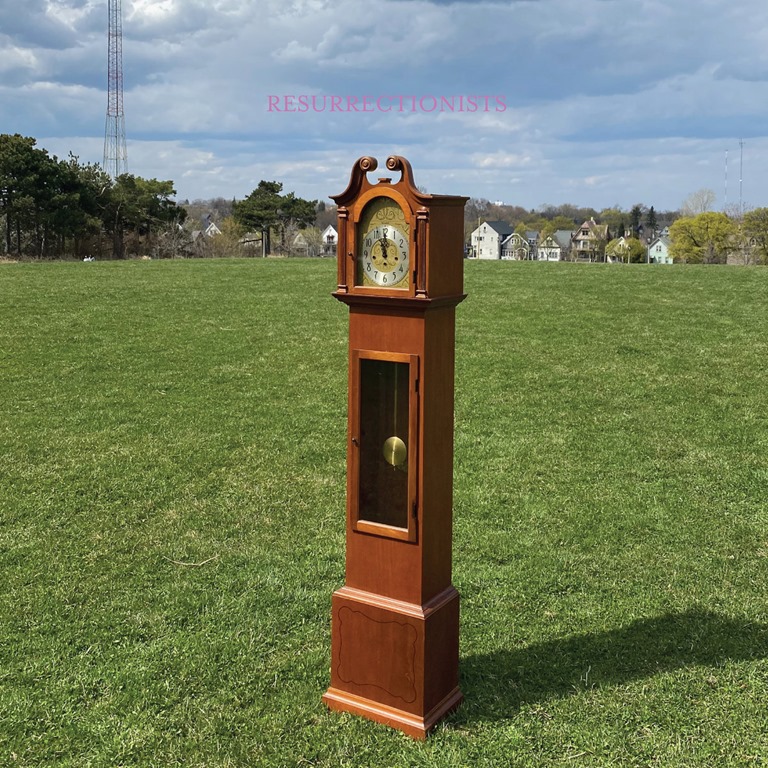
Now That We Are All Ghosts is the second album from Milwaukee’s Resurrectionists. It was self-engineered, recorded and produced; and mastered by Bob Weston at Chicago Mastering Service. The blurbage describes the album as featuring ‘nine songs of Doom Chamber-Americana, all powerfully cinematic and ripe for video treatments, leading the group to take the unusual and ambitious step of commissioning videos for every one of them.’ And we were privileged to premier the clip that accompanies ‘Let Me Talk You Through This One’ at the start of this week. Privileged because it’s really something special, not to mention unique.

It’s a crazy project for a crazy album. Returning with a different lineup and different approach to songwriting from their 2019 debut What Comes In, Now That We Are All Ghosts is, on the one hand, a set of accessible and somewhat folksy Americana songs. On the other…it’s dementedly intense and anything but the accessible Americana it presents as.

It’s noisy, and it’s intense, and the first song, ‘A Classic Dictionary of the Vulgar Tongue’ (also my first encounter with the band) is a magnificent work, an example of songwriting that gets the slow-build, the power of transition, evolving from a sparse and gloomy to a rip-roaring soul-purging in no time, and it paves the way for a tempestuous, tumultuous album that drags the listener through some tough and unexpected twists and turns. ‘Hobnobbing With High Value Targets’ is superficially docile but channels darker undercurrents, both sonically and lyrically.

Whatever this album seems to be, it’s always so much more. The songs always end up in a very different place from there they begin: ‘The Ghost This Time’ is a slow blues-crooner, but it’s bruised and raw and there are some tendrils of post-rock tendencies which tickle their way around the wandering bassline. Joe Cannon sounds fraught, wracked, caught in a turmoil, and to draw an obscure reference, it brings together the most fucked-up evangelism with the psychological spasms of Mark Eitzel’s sole turn at fronting Toiling Midgets on the album Son.

‘The New Winter’ starts out with some vintage 70s US rock swagger, but rapidly shifts somewhere else and winds up coming on like Dinosaur Jr, while ‘Blue Henry’ begins softly, before erupting in a tide of anguished emotion, Cannon practically choking on his words as he wrenches them from his throat. Thew downtempo ‘Let me talk You Through This One’ is two minutes of wistful, reflective slackerist Americana, with hints of The Silver Jews.

The album’s final – and finale – track ‘(hotel with pool)’ may sit in parenthesis, but it encapsulates all aspects of the album and amplifies them further in a monumental six-minute monster, that grows and grows, from a somewhat tentative and soulful start to climax as a raging tempest, where instruments and vocals alike are pushed to the limit.

Now That We Are All Ghosts is one of those albums that really does take you by surprise, curving in first from one way and then the other, sliding in gently before tearing shreds in its own very fabric. Understated yet intensely potent, this is a powerful and accomplished album.

AA

a2706103974_10

Editions Mego – 24th March 2023

Christopher Nosnibor

Editions Mego have since forever released ultra-niche but eternally-fascinating exploratory works. Since their inception in 1994 as MEGO, before transforming into Editions Mego, bearing eMEGO catalogue numbers, the label has given home to pretty much every significant and emerging artist working in the field of electronica given to abstraction, minimalism, glitch, and the more experimental side of things. As such, this release is a very comfortable fit in the catalogue.

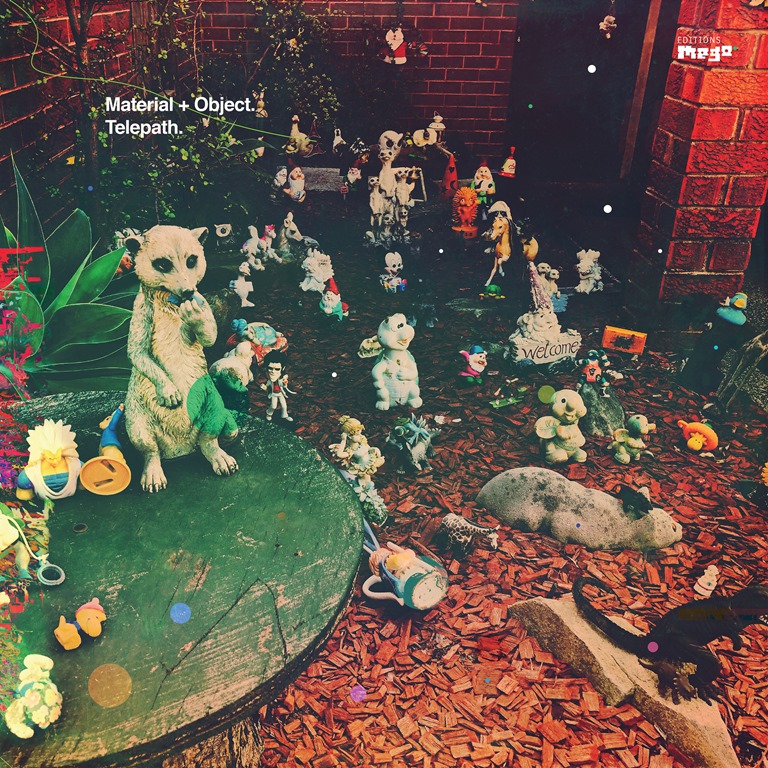
As the bio details, ‘Dismantling the acoustic to feed the electronic, Editions Mego presents Telepath, the new album by Material Object. Born out of a single improvised recording session with a lone Violinist, Telepath is a startling album of future electronic music, resulting in an LP of unique and timeless tracks that reimagine a classic sound for an endless future.’

Nothing about Telepath sounds remotely like a violin in any recognisable sense. Even the long, soaring tones and strong-scrapes which sound like a violin sound, in context, processed, abstract.

It’s all about the process, of course, and it’s the literal processing and manipulation of sound which renders the output so far from the initial input. The results are interesting, to say the least.

To return to the bio for context, Telepath is presented as ‘Boldly departing from his previous canon of largely ‘ambient’ work, Material Object’s Telepath renders itself out as something much stranger, something more spacious, more subtle and gradual. Moments of bouncing minimalism meet moirés of delayed pure tones phasing in and out of resolution, giving way to a series of strobing foreground gestures arranged and offset in disorienting landscapes which scatter themselves asymmetrically amongst crystal pools of reverb.

There are moments of deep, rumbling ambience to be found here, but it’s certainly not the album’s dominant feature.

‘Enter’ isn’t quite microtonal in its focus, but does very much narrow down to an extremely small sonic spectrum in order to interrogate minor changes and the relationship between notes as they resonate and bounce off one another – and that focus is intensely concentrated, remaining fixed for some nine and a half minutes. It sets the stall for Telepath overall: the fifteen-minute ‘Hyphae’ flickers and clicks as sounds bat back and forth at a rate of rapidity that’s tension-inducing, particularly as the click-clack becomes overwhelmed by a bubbling cloud of dense sound yet remains persistently audible.

Structurally, the album alternates between longer works and shorter interludes of a couple of minutes or so: these serve, I suppose, as the sonic equivalent of palate-cleansers, and they’re necessary in breaking up the vast sonic swaths of hyper-focussed detail as interrogated over five minutes or more.

It may seem a contradiction, but while focusing microscopically on the most minute details, Telepath also covers a lot of ground. It’s all about contrast and contradictions, and arguably these are the foundations of this intriguing and often quirky work.

Following the twitchy, processed pings of ‘Thermo’, the eleven-and-a-half-minute ‘Exit’ is the perfect bookend to stand opposite ‘Enter’. And as the album leaves us reflecting the whisps of mist left in its trails, there is a hanging sense that there is something yet to come. From among the shadows, Telepath presents us with an unexpected sense of insight, both outside and in.

AA

eMego299V_front

Ipecac Recordings – 28th April 2023

Christopher Nosnibor

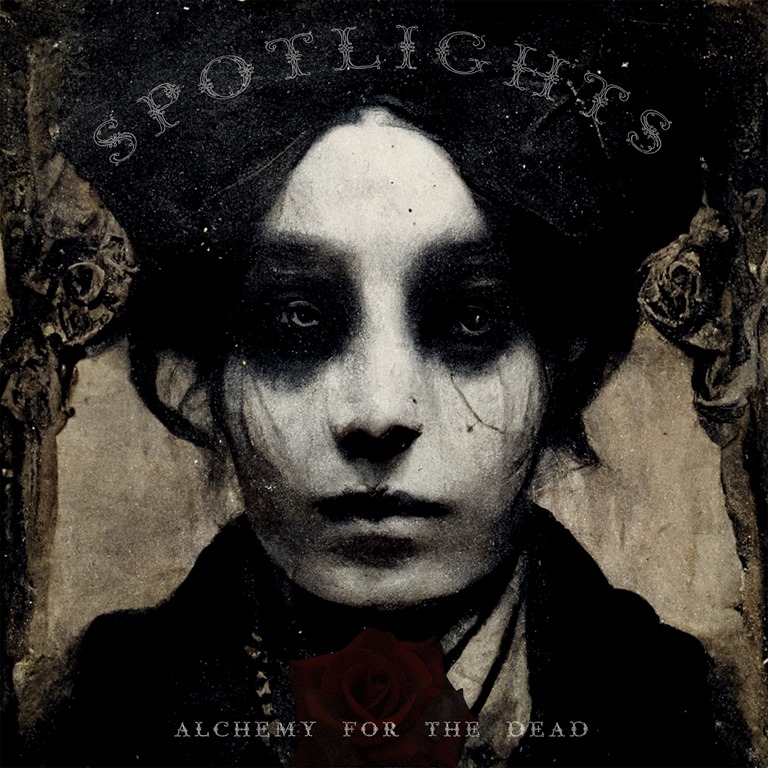
As their bio explains most succinctly, ‘Spotlights occupy the space between a push-and-pull of jarring metallic catharsis and sweeping distortion. Even as either side vies for supremacy, neither extreme ever completely tightens its grip, allowing waves of melodic vocals and expressive sonic sorcery to breathe in the middle. This deft balancing act has enabled the trio—husband-and-wife Mario Quintero [guitar, vocals, keys] and Sarah Quintero [bass, vocals] joined by Chris Enriquez [drums]—to carve a singular lane. Armed with an uncanny ability to wield darkness or light, the trio’s fourth full-length offering, Alchemy for the Dead [Ipecac Recordings], finds them exploring something we all face, yet few embrace…’

Expanding on this, Mario explains the album’s overarching theme, which the title alludes to: “One of the major parts of our lives, is the fact we’re all going to die,” he says “Most people are terrified of it, some people learn to look forward to it, and some see it as a way out of their misery. Various cultures view it differently. There isn’t necessarily a story to the album as a whole, but each song deals with the theme of death. It could be fantasy such as bringing a loved one back to life or darker moments like suicide and deep depression.”

It’s a fact that, at least in Western culture, death remains perhaps the last taboo, something of which even the dying tend not to talk about, not properly.

It was back in 2018 that I first encountered Spotlights: their cover of ‘Faith’ by The Cure from their Hanging by Faith EP was an instant grab. This was a band that really ‘got’ the atmospherics of the track and captured the essence of what, for many, myself included, remains as an untouchable trilogy of albums, 17 Seconds, Faith, and Pornography.

Alchemy For The Dead doesn’t sound like any Cure album specifically, but still takes cues in terms of weighty atmosphere. Following a gentle introduction that borders on dark synth pop, it’s not long before the blasting power chords crash in, thick and dark and heavy. And the thick, processed bass on ‘Sunset Burial’ blends with a rippling guitar that’s richly evocative and reminiscent of Oceansise at their best. But when they break into monolithic crescendos of distortion, I’m reminded more of the likes of Amenra, of BIG ¦ BRAVE.

There are some extravagant guitar breaks, but somehow, they’re as forgivable as the more processed prog passages, which in the hands of any other band would likely sound pretentious: Spotlights sound emotionally engaged and sincere without pomp or excessive theatricality: this isn’t something that’s easy to define, not least of all because it’s such a fine line when weighing up musical that’s so reliant on technical proficiency and very much ‘produced’. And the production is very much integral here: the arrangements require this level of separation and clarity. But this is where it’s important to distinguish between production and overproduction, and it’s testament to Mario’s skills at the desk that he’s realised the band’s vision so well. The bass really dominates the sound, which is so thick, rich, and textured, and also explores a broad dynamic range: the quiet passages are delicate, the loud ones as explosive as a detonation at a quarry.

Similarly while the songs tend to stretch beyond the five-minute mark, there’s nothing that feels indulgent or overlong here. ‘Repeat the Silence’ builds on a simple repeated sequence almost reminiscent of Swans’ compositions, but thunders into a bold, grungy chorus that’s more Soundgarden.

The album’s shortest song, the three-and-a-half-minute ‘Ballad in the Mirror’ is also the most overtly commercial, a straight-up quiet/loud grunge blast, and the riffage is colossal.

‘Crawling Towards the Light’ marries monster riffage with Joy Division-esque synths, and somewhere between Movement-era New Order and Smashing Pumpkins, but rendered distinctive by the propulsive drumming which drives the track which builds to a roaring climax.

The seven-minute title track is sparse and suffocating. It has a nostalgic quality that’s hard to define, and it’s perhaps something that’s only likely to punch the gut of nineties teens in this specific way, but it’s understated and emotive, and then the guitars crash in and it’s fucking immense and… well, what a way to conclude an album.

Alchemy For The Dead is a huge work, an album that draws its own parameters and digs new trenches around genre definitions before bulldozing them to the ground with riffs. Complex, detailed, and unique, Alchemy For The Dead is something special.

AA

SPOTLIGHTS_AFTD_LP FULL.png

Cruel Nature Records – 20th April 2023

Christopher Nosnibor

Regular readers – or even more casual ones – will likely have noticed that Cruel Nature releases have received a fair bit of coverage here. The Newcastle-based cassette label, and brainchild of Steve Strode, are now celebrating a decade of their existence, releasing non-conformist, way-outside-the-mainstream music, and they’re celebrating with a compilation of 23 (of course, it has to be 23) exclusive tracks recorded specifically for this release, on a label who can now boast the tagline of ‘Channelling sonic diversity since 2013’.

Spectrum very much succeeds in showcasing that sonic diversity, presenting a collection that spans ambience to brutal metal. In times past, no-one who would listen to one would listen to the other, but my own musical journey over the last decade and a half means that whereas once I’d have sneered at one and hesitated over the other, I’m now on board with both. And why not? Cruel Nature Records has spent a decade now giving a home to music that doesn’t really fit, and doesn’t conform to a specific genre.

Of the 23 contributors, a fair few of them have previously featured on these pages, so new material from them is most welcome. VHS¥DEATH are among them, and ‘Sacrifice’ is a relentless industrial hardfloor disco banger, which couldn’t be more different from the mellow jazz ambience of Aidan Baker’s contribution, ‘Grounded Hogs’. And in a nutshell, the contrast between the two tracks instantly encapsulates the ethos of Cruel Nature. Anything goes as long as it’s different and interesting.

It’s great to hear snarking antagonists like Pound Land in the same space as Nathalie Stern’s haunting atmospheres and the spare folk of Clara Engel. Pound Land deliver a gloomy grinder in the form of ‘Flies’; despite its minimal arrangement, it’s dense and oppressively weighty, not to mention really quite disturbing in its paranoid OCD lyrical repetitions.

‘K Of Arc’ by TV Phase’ is a punishing, percussion-led trudge through darkness, while Charlie Butler’s ‘Eagle’s Splendour’ which immediately follows couldn’t be more different, it’s rolling piano and soft, rippling chimes providing six and a half minutes of mellow enchantment.

Petrine Cross bring a rabid howl of utterly crushing, dungeon-dark black metal that’s as heavy and harrowing as anything they’ve done, making for a most welcome inclusion here. Offering some much-needed levity, Empty House’s ‘Blue Sky Dreamers’ is a wistful slice of breezy indie with a hint of New Order, not least of all on account of the run-filled bassline, while Katie Gerardine O’Neill swings something of a stylistic curveball with some quirky deconstructed jazz.

Also worthy of mention (although in fairness, there isn’t a contribution on here that isn’t, had I the time for a track-by-track rundown) are Aural Aggravation faves Whirling Hall of Knives and Omnibadger, with the former whipping up a mangles mess of glitching distortion and the latter – these buggers get everywhere, having featured on the Rental Yields compilation I covered only last week – mixing up a collage of hums, thunderous drones, and a cut-up melange of feedback and miscellaneous noises to discombobulating effect. Then again, the final two tracks, courtesy of Lush Worker and Lovely Wife respectively bring some mangled reverb-heavy drone-orientated avant-noise and eight and three-quarter minutes of demented, downtuned, downtempo sludgy space rock. Both are truly wonderful, and this is a superlative compilation that perfectly encapsulates the eclecticism of Cruel Nature. It’s also the perfect illustration of why we need these small labels who aren’t driven by commercialism or profits or shareholder value. For disseminating all of this weird and wonderful music – music which often challenges the very idea of music – the world is a much better place.

Fans of the label with absolutely love this, and for those unfamiliar with the label, there couldn’t be a better introduction. Here’s to the next ten years of Cruel Nature.

AA

cover

Invada Records – 21st April 2023

Christopher Nosnibor

‘Eagerly-awaited’ and ‘hotly-anticipated’ are phrases which are often tossed about with abandon when it comes to albums, but Benefits’ debut really has had a lot of people on the edge of their seats for months, and it’s no wonder the limited vinyl and less limited CD sold out well ahead of the release.

Their rise has been truly meteoric, but if ever a band deserved to be catapulted from nowhere to selling out shows up and down the country, it’s Benefits, who’ve done it all by themselves and on their own terms, garnering rave live reviews and scoring interviews in the NME and The Guardian and, well, pretty much everywhere. They don’t only deserve it because of their DIY ethic: they deserve it because they’re an unassuming bunch of guys from the north of England (which in industry terms is an instant disadvantage), and moreover, they’re fucking incredible. And it’s not hyperbole to say that they are the voice of the revolution. It’s unprecedented for a band this sonically abrasive to rocket into a position of such widespread appreciation, and even more so when they’re not readily pigeonholed.

Attitudinally, they’re punk as fuck, but musically, not so much: while there are elements of hardcore in the shouted sociopolitical lyrics and frenetic drumming, there isn’t a guitar in sight, not anything that remotely sounds like one. They’re certainly not metal. And you can’t dance to their tunes – because ‘tunes’ is a bit of a stretch (although that’s no criticism). If their subject matter and modus operandi share some common ground with Sleaford Mods – disaffected, working class, ranty, sweary – they’re leagues apart stylistically. Whereas the Mods will joince and jockey and nab the listener with a battery of pithy one-liners, Benefits are an all-out assault, ever bar a sucker-punch of anger blasted home on a devastating wall of noise.

A fair few tracks here have previously been released as singles, although several previous singles, including the recent ‘Thump’ are notably absent to make room for previously unreleased songs, and the sequencing of the ten tracks which made the cut is spot on.

The first, ‘Marlboro Hundreds’, is a massive blast of percussion that grabs the listener by the throat with its immediate impact. Reject hate! Question everything! Success is subjective! The messages may be simple, but they’re essential, positive, and delivered with sincerity and all the fire that cuts through the bullshit and mediocrity. The grinding electronics take a back seat against the drumming, and the vocals are quite low in the mix, but with a clearly enunciated delivery and a crisp EQ they cut through with a penetrating sharpness that really bites.

The album takes a very sharp turn into darker, less accessible territories: ‘Empire’ is a dark, mangled mess of agonising noise, and defines one of the album’s key themes, namely of the dark terrain of patriotism and nationalism which defines and divides Brexit Britain, while warning of the dangers of passivity and blind acceptance of the echo-chamber of social media and the shit pumped out by the government and right-wing media outlets.

Lead single ‘Warhorse’ is the most overtly song-like song in the set. It’s raw punk with electronics, and the one that could legitimately be described as a cross between Sleaford Mods and IDLES, but with a raging hardcore punk delivery. The slouching dub of ‘Shit Britain’ offers quite different slant, spoken word rap groove.

‘What More Do You Want’ swipes at critics of ‘political correctness gone mad’ and the ‘anti-woke’ wankers and it minimal musical arrangement with stuttering percussion renders it almost spoken with an avant-jazz backing, before horrendous blasts of noise tear forth with such force as to threaten to annihilate the speakers. This is Benefits at their best and most unique.

‘Meat Teeth’ is sparse and plain fucking brutal as Hall rants and raves over a growing tide of distortion and feedback. The track packs so much fury that its impact is immense, especially in its tumultuous climax.

Arguably the definitive Benefits cut, ‘Flag’ incorporates rave elements to test through jingoism and nationalistic bullshit, taking down the kind of cunts who voted Brexit while owning a second home in Spain, the monarchy-loving casually-racist flag-shaggers who sup Carling and love an Indian while bemoaning all the ‘coloured’ doctors in hospitals and surgeries, and the Poles ‘coming over here and taking our jobs’ despite no-one else being willing to sweat it out behind the counter at Costa or pick strawberries for less than minimum wage. It’s the same duality of these so-called ‘patriots’ and past generations that provide the focus of ‘Traitors’ ‘We get the future you deserve’ Hall rages at the boomers who’ve sold out the subsequent generations for buy to let homes and destroying the planet for greed, share dividends, and skiing holidays. His voice cracks as he spits the words, the fury at this fucked-up mess. It’s powerful, and it really does occupy every inch of your being listening to this, because it ignites every nerve in our body to connect with such raw intensity.

‘Council Rust’ brings a more tranquil tone, but it’s not a calmness that comes from seeing the light at the end of the tunnel but from a sense of hopelesness, of feeling battered and bereft. Nails leaves you feeling drained, but uplifted. Yes, everything is fucking shit, but you are not alone: Benefits know, and articulate those tensing muscles and clenching fists and heart palpitations and moments where you feel as if you can’t quite breathe into incendiary sonic blasts. Benefits are without doubt the most essential band in (shit) Britain right now. And with Nails, they have, indeed, nailed it.

AA

a0662330954_10

New Heavy Sounds

Christopher Nosnibor

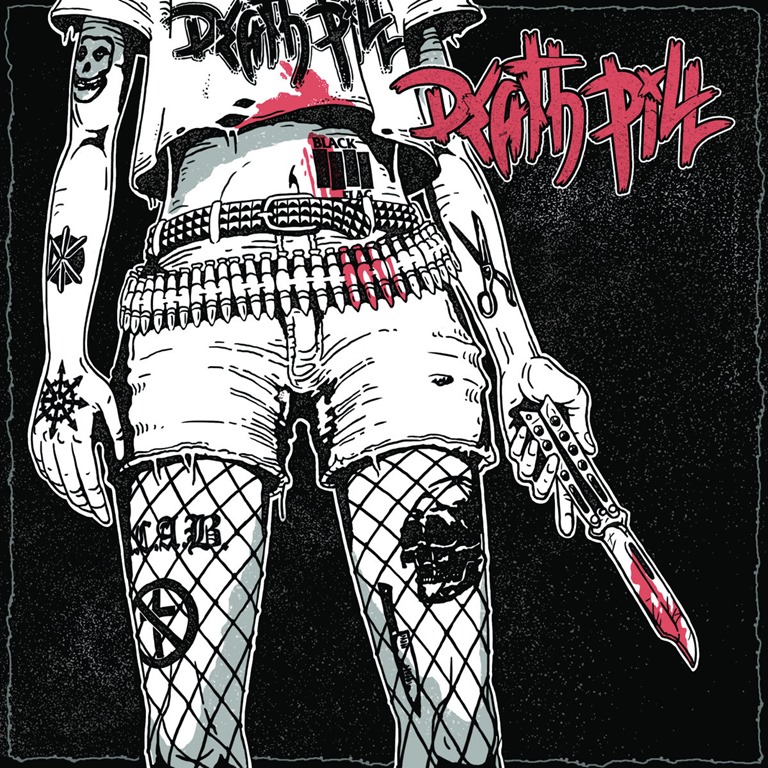
Death Pill most certainly aren’t signed to a major label, aren’t pop-punk, and truly understand adversity. If you want authenticity, then this is the band you need. The Ukrainian all-girl hardcore power trio sell themselves as having a ‘Riot Grrl’ vibe while citing ‘the classic punk of Black Flag, The Distillers and Circle Jerks, to modern outfits like Axe Rash and the thrash metal of Nervosa and Exodus’ as influences.

And fucking hell, do they work with all of those influences and distil them into something raw and powerful! Their self-titled debut contains nine tracks, none of which runs for more than four minutes, and they blast hard.

The fact they are an all-female act is significant and noteworthy. Writing as a white, middle-class male, it hard to write about this without sounding like a patronising patriarchal toerag, so I’ll simply quote singer/guitarist Mariana here:

“Just imagine: You are a 20-year-old girl. Society constantly puts pressure on you: you should find a nice husband, have children and at the same time build a successful career. But no one asks what do you really want? What are exactly your interests and ambitions?

Because maybe you want to be a punk rock star?

Yes, I do and even against it all. I can create a female non-commercial band, play heavy high-quality music, and ignite the crowd. After all, rock is not only about brutal men with curly long hair, right?

Some do it with weapons in their hands, some volunteer and help in any way they can. Hard times, but right now we have a real chance to change lives for the better.”

Death Pill address issues: they address political issues, they address female issues, they address human issues. They do so without fear, without self-censorship, and consequently, deliver an album that rages hard. A couple of the songs have previewed here – ‘Расцарапаю Ебало’ and ‘Miss Revolt, and both showcase the band’s raw metal-infused style perfectly.

The album delivers more of the same, from the whiplash-inducing brutal chug and churn of the opener, ‘Dirty Rotten Youth’ to the closer ‘Would You Marry Me’.

‘Die For Vietnam’ is as frantically-paced full-throttle driving punk-metal you’re going to hear, and Death Pill don’t go easy for a second. ‘It’s a Joke’ may lift from spiky post-punk reference points, but it comes with near-demonic vocals and draws together black metal and goth. ‘Kill The Traitors’ is perhaps the most furious song you’ll hear all year. It goes beyond political and is utterly punishing.

Overall, as an album, Death Pill is fucking gnarly. It’s dominated by driving guitars, thrashing out three or four chords at a hundred miles an hour. It’s proper punk alright.

AA

a1310712062_10

Pelagic Records – 5th May 2023

Christopher Nosnibor

‘Biblical’ has become a byword for something tremendously large, epic, or of intense proportion, but also brutal and torturous and bloody. King Herod the Great is perhaps best known, not for his extensive construction projects, but for ordering the slaughter of the innocents: fearful of the threat of a ‘new king’, the story goes (although only according to Matthew) that he ordered the execution of all male children who are two years old and under in the vicinity of Bethlehem. The legend has inspired some pretty horrific depictions in art, from Duccio Di Buoninsegna to Reubens, and in context, Herod is an outstanding name for a metal band. And Herod live up to their name, too.

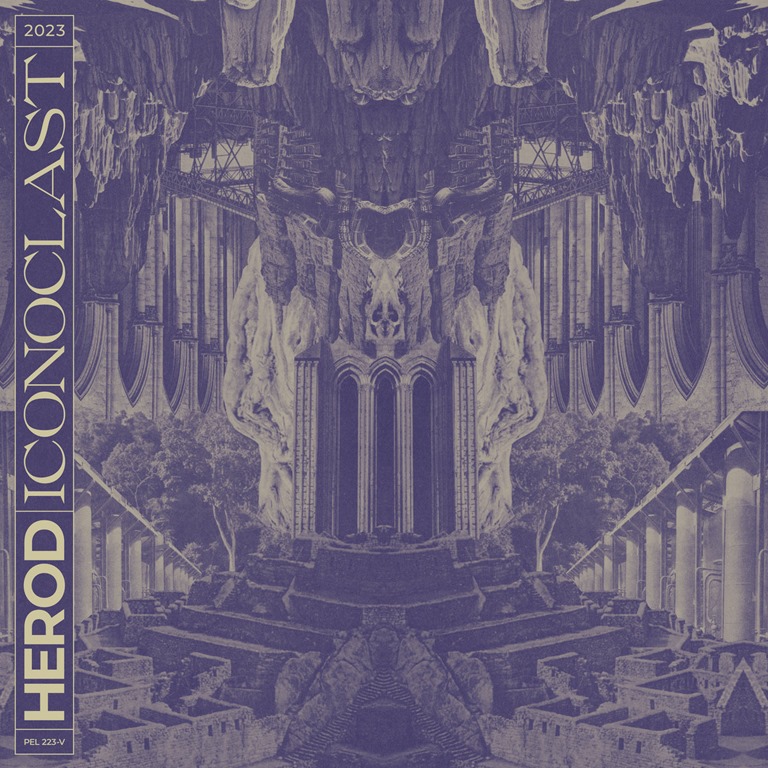
Iconoclast is a clear step on from Sombre Dessein, released in 2019. Back then, they were touting a ‘progressive sludge’ sound: in contrast, their lasts bio sees the band describe themselves as ‘atmospheric groove metal’.

“I’m obsessed with late 90’s Meshuggah, early Dillinger Escape Plan, and early Cult of Luna,” explains guitarist Pierre Carroz deftly about the influences behind the sound of his brainchild.

But for all the stylistic progression, thematically, they’re still squarely focused on the societal scourge of religion, as the title suggests, and it kicks off hard and heavy with ‘The Icon’, a barrelling, churning grind of dirty guitars which at the most unexpected moments switch tempo and gets tetchy and technical. Then, just shy of five minutes on, there are some clean, drawling vocals reminiscent of Alice in Chains – but disembodied, bent, it’s like Layne Staley is calling from the other side, and within just six minutes and a single track, Herod have slammed down a whole album’s worth of ideas.

The thematic thread is also apparent in the song titles, all of we which are ‘The…’ something. If imbues the album with a sense of being a book with the songs as chapters with corresponding titles which guide the way through a discursive exploration. Only, that discussion is a blast-out, a levelling by force.

There are eight tracks all, most well over the six-minute mark, and they blend sedated melodies with expansive guitar, raging, raw-throated vocals and thunderous percussion. There are slow, sedate passages, as on ‘The Girl with a Balloon’ which invite comparison to the earthy, low-tempo grit of Neurosis, and they really bring the weight when the riffs crash in. As much as the monolithic power chords dominate, the earth-shattering bass is absolutely essential to the sound.

‘The Ode to’ marks a significant shift in form, a resonantly vocal chorus scaling the heights and looking upwards to the heavens, a works of majesty that speaks to the ethereal and the eternal – but over the duration, the guitars harden and drive until the mid-point achieves a punishing plateau of distortion before returning to a mesmerising sway brimming with Eastern promise – before once again a landslide of guitars bring absolute devastation.

Herod get devastation, and get atmospheric, too. They get the merit of a melody, but tend to really delay gratification in favour of punishment before reward. Mostly, though, they get the power of punishment, and they mete out plenty of that over the course of fifty minutes. It’s a big fifty minutes, and it’s as heavy as fuck.

The nine-minute finale is heavily immersed in progressive sounds and styling, but when the crushing riffs blast in, all is well.

For all of the moments of levity and mindfulness, Iconoclast is everything fans – myself included – would want from Herod – snarling, churning riffs and roaring vocals, which combine to absolutely devastating effect. They’ve certainly evolved, but they’ve not lost sight of their sound, and have simply expanded it.

The resultant Iconoclast is an absolute monster.

AA

a1021108326_10

Möller Records – 23rd March 2023

Christopher Nosnibor

It’s clear that while the pandemic is officially over, collectively, we’re still very much coming to terms with it, and its aftermath. Lockdown, in particular, has had a deep psychological impact, on so many. Everyone’s experience was, and is, different, of course. I have friends who almost deny to themselves that it happened, that it was a dream or something, and for some of us, in some respects, it’s as though it never ended. This is how people deal with shock and trauma.

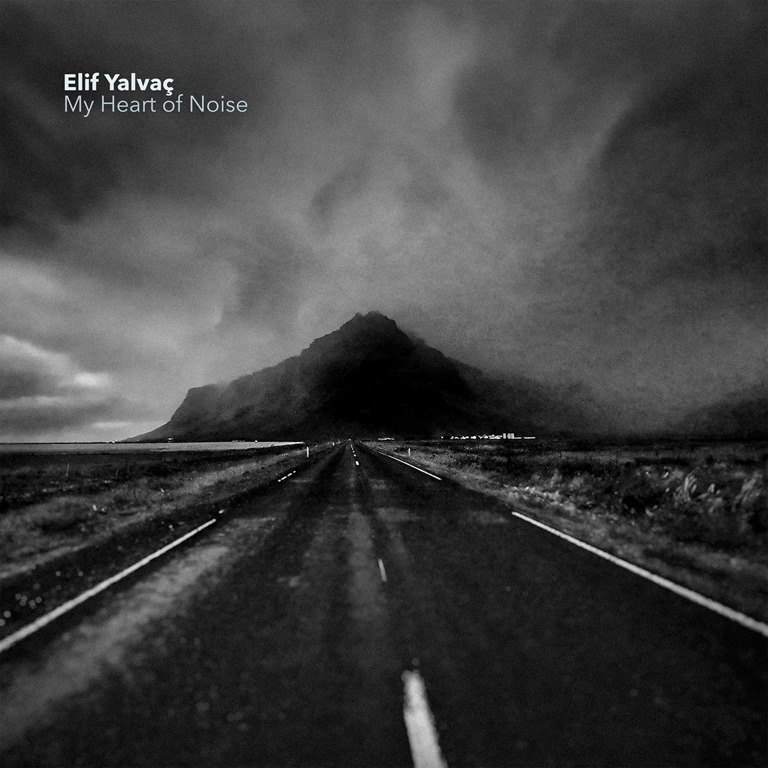
My Heart of Noise is not a pandemic album, a lockdown album, a post-trauma album, but as Elif explains, the album “began with a collection of studio and concert recordings from my travels north before the pandemic. It became like a puzzle: I could hear something special, but also that the pieces didn’t fit together well or feel complete. The breakthrough came in realising that this project was meant to be more about creation than preservation, and that it didn’t need to be a literal document any more. It could still be faithful, but instead to the spirit that inspired this music and my travels in the first place, instead of a particular recording. I created new musical starting points, and invited artists I met on my travels plus others, asking them to choose one to begin to work with together. Some artists incorporated our previous recordings, others set off in a new direction, while I shaped the pieces and found a way to connect them together.”

Recent history, then, is marked not as BC and AD, but BP and AP – before pandemic and after pandemic, and My Heart Of Noise reflects Yalvaç’s attempts to ‘make sense of a noisy world’. And the world is indeed, noisy, and difficult to articulate. There is simply too much noise too much happening all at once. It’s a perpetual sensory overload.

For this, her debut album, Elif Yalvaç involved a number of the people she encountered along the way of her journey, and the title also references this, the way she became the hub in a collective process.

The collaborative aspect means that each track does have a slightly different feel, despite all being centred around eerie ambient soundscapes.

‘Orchestra of Light’, the album’s first track, is a layered composition of dronies and hums and whispers which drift and swirl around some of the mind’s darker recesses. The textures and tones rub against one another and the edges aren’t all smooth, with buzzes and barbed, drilling sounds grating against the grain, meaning there’s a certain friction, a tension, creating a sense of discomfort.

‘Gate Check’, which follows, is softer, but the notes bend and twist and the supple, mellow tones are spun with a sense of the awkward and the uncanny, but nothing so warped as ‘Mielmaisema’, with its collage of human vocalisations and clunking clumps of thuds and thumps Amid whirls and crackles and hums, from which grinding groans of decaying Krautrock creak. It may be less than five minutes in duration but it packs a lot of shiversome strangeness into its short space, in which even chirruping birdsong feels somehow unsettling.

My Heart of Noise is not an overtly collage-based album, but it does assemble many sources and sounds, and often overlaps and overlays them to disquieting effect, and I’m at times reminded of vintage sci-fi and the BBC Radiophonic Workshop.

‘Cloud Score’ sits somewhere between post-rock and classic drifting ambience, while seven-minute closer ‘Taiga II’ very much feels like the lifting of the clouds and the breaking into light, but at the same time feels like a storm building on the horizon, and ‘Dronasaurus’ indicates that it’s not 100% serious 100% of the time.

My Heart of Noise is a restless work, one which ventures and explores, and never for a moment settles into comfort or conformity. It is not an easy album: whenever things feel like they’re settling into something nice, a cloud of disruption and difficulty will drift over and raise a shiver. You can never really settle or feel at ease with My Heart of Noise – but as a representation off life in the world as is, this is a fair summary. Keep your eyes and ears open: there is always something around the corner.

AA

a3629223309_10