Posts Tagged ‘Album Review’

Well, this is succinct, and a release most definitely well-suited to the format. I was reminded following a recent post that vinyl is not a friend of the environment. It’s a hard fact to take. I grew up with vinyl, I love vinyl. But then, petrolheads make the same defence of fast cars, and people who love overseas travel and cruises likewise. Well, maybe. Although I doubt many grew up with cruises, the most environmentally-damaging of all tourism, being primarily the domain of affluent retirees, and they don’t give a fuck about the environment because they’re not going to be here to see it burn.

Only today, I read a news item about how younger people suffer more mental health issues, suffer from greater anxiety over the future, while boomers sleep pretty well at night. The findings included that ‘Nearly 60% of young people approached said they felt very worried or extremely worried… More than 45% of those questioned said feelings about the climate affected their daily lives… Three-quarters of them said they thought the future was frightening. Over half (56%) say they think humanity is doomed.’

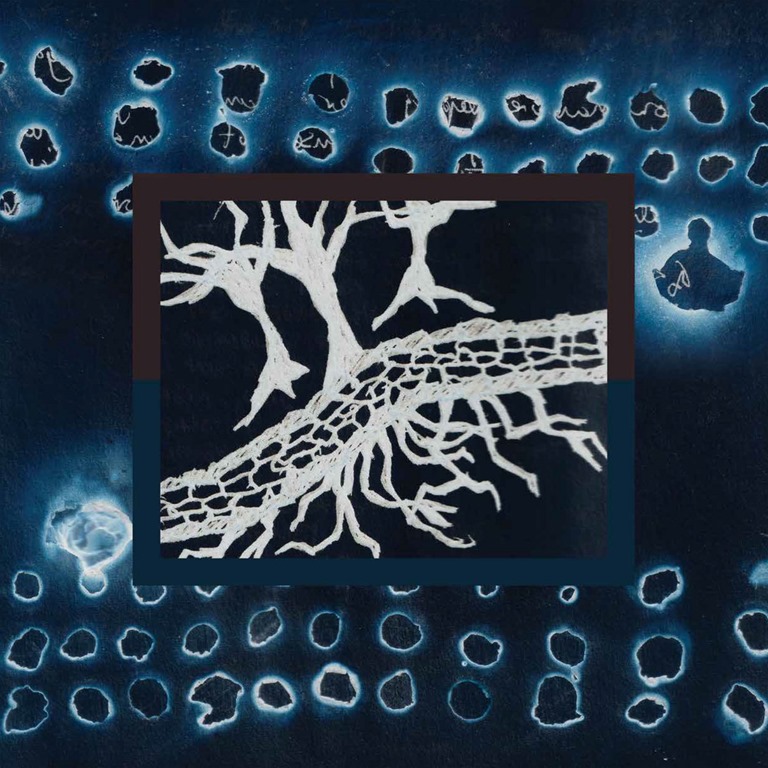
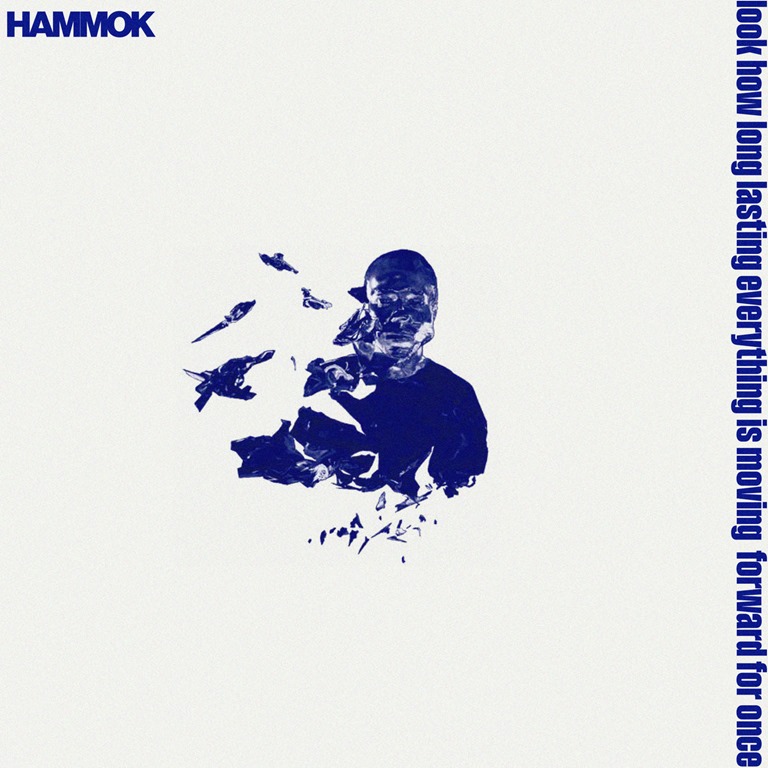
So I have every reason to feel conflicted here, and I can’t pretend that everything’s ok. But then the same people who are worried are also getting into buying showcase vinyl. I have no conclusion to this diversion: it’s simply something that’s rubbing as I approach this release, and we learn that ‘Ulrich Troyer’s MOMENTS transforms classical & acoustic guitar recordings through tape machine treatment, guitar effect pedals, analog & digital effects into a shimmering soundscape. The combination of textures and effects generates excitement and invites to listen repeatedly, surprising each time with new details’, and offers ‘Fractured tones, beautifully rooted and held together by the tune underneath.’

Troyer’s own words resonate on a personal level I had not expected. He explains that “The inspiration for the composition MOMENTS is based on personal experiences of the last years. I strived to achieve a beautiful and pleasant life for myself and my family through diligent and consistent work. In the hope that at some point “everything would be beautiful”, I lost sight of the moment – the here & now. Two serious cases of illness in my family made me realize that it will never be “nice and pleasant at some point”, but that there are just always beautiful moments in between, that cannot be captured and that need to be consciously enjoyed and experienced.”

His words articulate – albeit in vague terms -the difficulty of coming to terms with the fact that life is not what you expect, that it’s not viable to pin hope on a perfect future moment. The moments of enjoyment, or joy, of pleasure, emerge through the cracks in the face of bleak news.

On learning that my wife had – optimistically – years to live (it proved to be only months), we packed in as much as was physically possible. Making memories, as they say. They weren’t all good. Sometimes she was too ill to enjoy anything; some trips got cut short because she simply wasn’t up to it. She would rather we didn’t remember trips being marred by her being red-hot angry or through-the-floor down, and so we move on, and focus on what we did achieve and the better times.

In times of darkness, music so often provides comfort, and more, and this is clearly true for Ulrich Troyer. He writes, ‘I feel the most intense moments of happiness when I have the opportunity to completely immerse myself in a piece of music for a certain amount of time while composing, playing or listening… Music as such has always accompanied me since childhood and has been there for me in both beautiful and difficult moments. I started learning classical guitar when I was ten. I discovered electronic music in Vienna in the 90s and have been addicted to it ever since. With MOMENTS I wanted to interweave my musical beginnings with my current musical language and expression.’

The two compositions are both under five minutes long, and as such perfectly suited to a 7” release, and across the two pieces, Troyer presents jolting ruptures and blasts of glitch, occasional churns and crackles, and, flickering and out of the mix, amidst bulbous bass and busy ambience and a conglomeration of noise, some tuneage. Some of it’s quite pleasant: some of it is more discordant, difficult noise.

Troyer certainly packs a lot into these moments, and this is an interesting release, which places patience at the fore.

Distortion Productions – 8th March 2024

Christopher Nosnibor

Metamorph have made their way onto these virtual pages a couple of times with previous single releases, most recently ‘Witchlit’ just over a year ago to the day as I write this. And, it turns out, this single was the very long lead-in for this long-player, which comprises seven new tracks which follow ‘Witchlit’, augmented by three remixes.

I’m going to park the remixes to save retreading territory that’s growing tedious and focus on the album proper, which kicks off in solid style with the pumping dark disco of ‘Veridia’ which blends surging dance pulsations with 90s enigma music and a dash of eastern mysticism to conjure a compelling hybrid or esoteric origins that lands with a dancefloor-friendly immediacy and energetic beat and throbbing bassline – and packs it all into just two pumping minutes.

There’s a lot to be said for starting an album strong and going straight in and hitting hard over the slow-build, and in today’s attention-deprived climate, it really does seem like the way to go – and Metamorph nail it here. They want your attention, and they’re bold about it.

‘Witchlit’ is up next, and it’s perfectly placed as a shimmering slice of dark electropop, sultry but lively, like Siouxsie gone electro. This is Metapmorph at their best – haunting, gothy, a little bit twisted. The title track crashes in next, bursting with flamboyant Europop vibes counterbalanced by darker shades – and once again, they pack it all into two and a half minutes.

Casting an eye down the tracklist, the majority of the songs on HEX are under three minutes in duration, and the album showcases a real economy of songwriting – no expansive mid-sections, no extravagant solos. They really do keep it tight.

‘Woo Woo’ is perhaps the album’s weakest track , not only with its mundane lyrics – ‘I won’t lie / I’m gonna get real high’ and unimaginative efforts to be sexy – but its wholesale immersion in commercial pop stylings. It feels like a stab at mainstream accessibility which is beneath them and isn’t particularly successful; in contrast, the mid-tempo brooder, ‘Raining Roses’ is brimming with dark, doomed romanticism , and ‘Broken Dolly’ borders on industrial and steps over the edge into a darker shade of darkness. ‘Wasteland Witch’ is well placed, a glammy industrial stomper that pumps up the tempo just when it’s all getting a bit dark and moody.

‘Whore Spider’, the last album track proper, could reasonably describes as an electropop anthem – mid-tempo, building, and unexpectedly hooky, while unexpectedly bringing back the wild woodwind. You can almost smell the incense as it spirals thickly to its finale.

AA

a0251618540_10

Magnetic Eye – 15th March 2024

Christopher Nosnibor

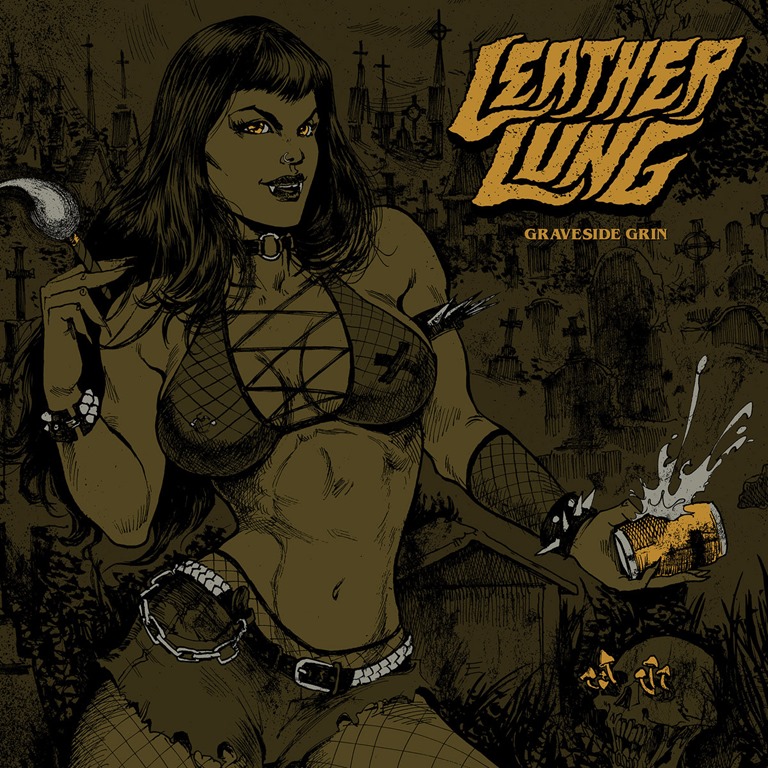
Emerging from the punk and hardcore scene of Boston (that’s Massachusetts, US, not the arse end of nowhere in rural Lincolnshire) in 2012, according to their bio, Leather Lung ‘quickly gained an excellent reputation in their local scene, as well as plenty of critical attention through a string of EPs’. And yet it’s taken them till now to complete their debut album. They’ve been busy launching their own lager, ‘Dive Bar Devil’, which has proven popular, and honing their sound, ‘a thick, chugging concoction of stoner metal, doom, and unrelenting sludge, blended into a refreshingly heavy brew with a catchy kick.’

They’re straight in with the big, thick guitars and hefty riffing. It’s mid-paced, weighty, heavy and gritty, and packs a punch. ‘Big Bad Bodega Cat’ is as loud and dumb as it sounds, a blown-out monster blues-based riff lumbering heavy as the backing for raw-throated vocals. It takes some nuts to sing such daft lyrics with such sincerity, and this, I guess, is a large part of Leather Lung’s appeal: they sound a lot more serious than they really are. The fact that the trash-talking ‘Freewheelin’ Maniac’ which comes on with some big-bollocked bravado about ‘getting the fuck outta my may’ shares so much sonic territory with Melvins is a fair indication of the territory Leather Lung occupy. Sure, it’s heavy, but it’s fun, too.

‘Empty Bottle Boogie’ is another example of the way they use the form for fun, landing slap band in between Motorhead and Melvins, before diverting on a melodic prog-metal mid-section and then flooring all the pedals for maximum overdrive to power on to the finish.

In something of a shift, ‘Guilty Pleasure’ starts moody and acoustic, blasts into black metal, spins through a brief electro passage before going full Slipknot. And it not only works, but the transitions are effortless. This should not be possible. It shouldn’t even exist. It’s testament to their abilities – and brazenness – that it does, and that that they carry it off.

Where they really succeed – is in balancing melody and aggression. ‘La La Land’ could easily be a Tad outtake, with a slugging grunge riff and a ragged vocal roar. In contrast, ‘Twisting Flowers’ harks back to seventies metal played through a more contemporary stoner filter.

Graveside Grin was worth the wait: Leather Lung have succeeded in producing a set of songs which is varied, and at the same time, consistently heavy, with a lot of attack and snarly, gnarly energy, with just the right level of irreverence and knowingly OTT extremity and violence. Win.

AA

a2197094414_10

Erototox Decodings – 1st March 2024

Christopher Nosnibor

Holy hell! Where to start? We’ll come to the band’s pedigree and the CVs of this supergroup in due course. But first, the immediate impact of this second album by The Children – that’s what hits in an instant. Perhaps because I missed the first, I simply wasn’t prepared in the way I might have been, but then again, is there any adequate preparation in advance of this?

A stark acoustic guitar – something about the way it’s picked and pulled is sharp, tense, scratchy, in the opening bars of ‘gOd is a Bereaved’ is prickly, awkward – paves the way for an eye-opening vocal performance. It simply doesn’t conform to the mores of conventional musicality, and instead flies skyward and swoops towards the ground in terrifying, unnatural flips and arcs. Something is certainly sudden, and it’s not a craving, but the impact of this completely out-there sound. Intense is an understatement.

‘Woven Mother Aflame’ brings brooding atmospherics split asunder by explosive percussion – a snare that has the power to split skulls cutting through serpentine strings and heavy, resonant bass reverberations which hang in the air, before the gentler ‘Breathing Shards’ fades electronics into a strummed acoustic guitar. Breathe… out. But all is not comfortable. The quavering vocals – not quite falsetto, not quite any specific range, but warbling, tremulous – quiver, uncomfortably atop and amidst the multi-layered backdrop which slopes and slides and traverses through starless space as basslines stroll and amble sedately.

Some background: The Children… ‘are . They have been making music together for over 15 years. Former Barkmarket bassist John Nowlin and drummer Rock Savage have consistently anchored the rhythm section, with a savagely airtight groove that’s both thunderous and mellifluous, primal and funky, and cellist Kirsten McCord has regularly enriched the band’s sound with her somber, lulling phrasing as a one-woman string section. John Andersen was a founding member and key early collaborator. The inimitable vocalist Shelley Hirsch has been a visceral contrapuntal foil for several live shows. Former Swans guitarist Norman Westberg and clarinetist Johnny Gasper provided invaluable texture to the recording sessions for this LP.

Norman Westberg has long been one of my favourite guitarists on account of his absolute minimalism: few guitarists would be content to bludgeon away at two chords for eight minutes straight, but his stoic patience is a rare trait which sets him in a league of his own. His more recent solo work is noteworthy for his sculpting feedback into musical shapes, and as such, his magnificently understated contribution to this album is essential.

Then again, how really to assimilate this? Our instinct, as humans, is to trust what we know, to lean into the familiar, the comfortable. This is perhaps why so much conformist pop, accessible blues-rock, landfill indie, continues to command so much appreciation. It’s not even that it’s easy and comfortable, but that it sits within an established framework with which people are comfortable – and the same, unsurprisingly, applies to people. ‘Weirdos’ are ostracised, and find themselves on the fringes, alone. People find ‘otherness’ simply too much of a challenge. Who can honestly say they haven’t taken a step back and made effort to put distance between themselves and a ‘crazy’ in their lives or on social medial? No shame in it: life is difficult as it is, and you have to have limits on who and what you can accommodate. But the point stands: other peoples’ disturbances create further disturbances. And A Sudden Craving sounds pretty disturbed.

A Sudden Craving is the sound of otherness. Yes, the vocals in particular are difficult to process. They sound… well, deranged. Wailing theatrically in a howling whorl of chaos and discord, underpinned by a hypnotic wave and monotonous plod of percussion, they really stand out as the definition of mania. ‘Breathing Shards’ may be mellower, but still possesses a sharp, jarring edge.

A Sudden Craving is scary because it doesn’t conform to any norms. Every one of the album’s ten tracks is unsettling, uncomfortable, unpredictable. It has depth and detail and many great qualities. Comfort and ease of access are not among then.

A Sudden Craving is a great album. It is not an accessible album, or an album which is comfortable or easy in any way. But then it’s not designed to be. It’s a head-shredding riot which really delivers some uncomfortable moments. At times I’m reminded of late Scott Walker. It’s compelling, and it’s quality, but one to file under ‘W’ for ‘Weird Shit’.

AA

a0924183782_10

Janka Industries – 3rd May 2024

Christopher Nosnibor

Once again, I find myself tussling with a jazz album and in a quandary as to quite what to make of it. For many, many years, I was absolutely certain I detested jazz. Until, that is, having been introduced in my line of work to acts like The Necks, I came to learn I’d simply been exposed to the wrong kinds of jazz. The weirdy, noisy, cacophonous kinds of jazz made sense in context of my appreciation of mathy noise rock, and wasn’t such an immense leap from Shellac to be incomprehensible. Like any genre, or even tea or coffee, it’s all about finding a point of entry, a flavour that suits your palette. I used to hate both tea and coffee, having been given the former with full-fat milk and sugar and the latter in the form of a fairly weak blend with milk but no sugar, and they only really clicked when I ditched the sugar and discovered Earl Grey, and that you could have really dark-roast coffee with no milk and a shovel-load of sugar. So, you know, you find your thing.

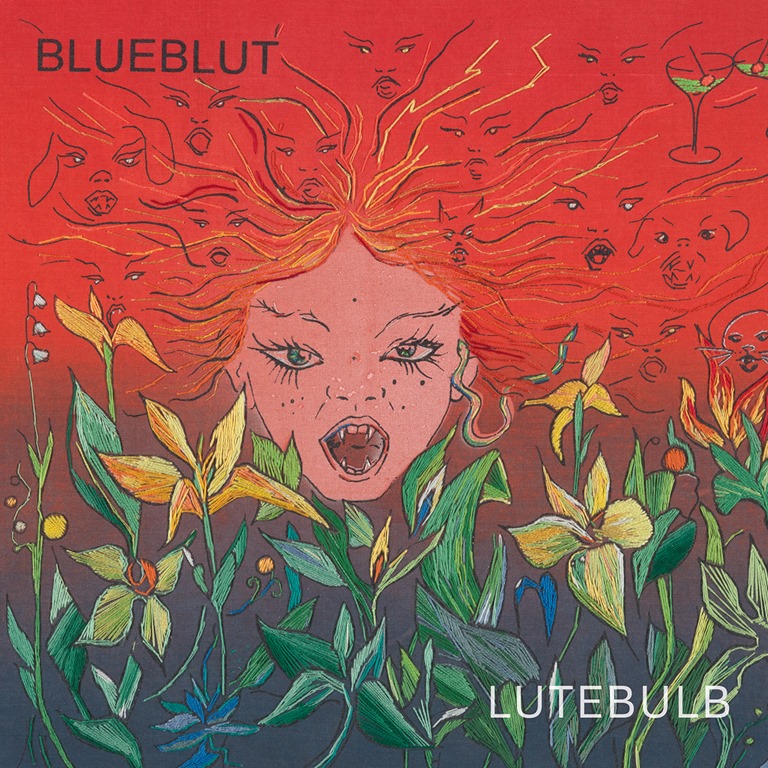
And then along comes Lutebulb, by Blueblut.

The blurb isn’t wrong in describing Blueblut’s lineup as ‘highly unusual, bringing together ‘three musicians acclaimed for exceptional contributions to their respective spheres in experimental jazz, electronica and rock.’ It’s a jazz-centred fusion, for sure, but it’s not jazz fusion as one tends to think of it, and certainly not as I’ve come to understand it. So what is it? As we learn, ‘Lutebulb is the fabulous culmination of ten years of intensive touring, with the Vienna based trio of Pamelia Stickney (theremin, vocals), Chris Janka (guitar, loops, samples) and Mark Holub (drums, vocals, percussion) socking it to global audiences with an international polystylistic musical language which takes in improv, jazz, avant-rock, ska, folk and Krautrock among other elements.’

There’s certainly a lot going on: initially, it comes on a bit laid back, not so much loungey as a smug muso pop collision of jazz and Latin dance, and I suppose the title, ‘Cocktail’ is something of a giveaway as to its swinging party vibes, but then shit happens – particularly some pretty crazy guitar work, and the percussion goes big and suddenly the party’s been crashed by a towering riot of sonic chaos, before suddenly, the entertainers seemingly remember themselves, pull their ties straight again and try to pull together some semblance of a funtime groove.

This sets the album’s template, really. Tracks tend to begin a bit kinda loose, a bit kinda boppable, a bit pool party fun times, albeit with some weirdness in the way the rhythms and the notes don’t quite chime in the conventional ways, and you wonder if it’s maybe the punch or the heat, but the tempo drifts a bit, first one way, then the other, and then maybe something doesn’t quite feel right, and it certainly doesn’t sound right and… what is going on? The room’s spinning and there are all sorts of random noises and you can’t tell if it’s people losing the plot or if some chickens have escaped and the sky’s falling in.

‘Aumba’ starts rather differently, a gentle piece led by acoustic guitar that brings a more reflective atmosphere, but it takes a hard swerve, the pace picks up, there are choral chanting vocals and then a handbrake turn into buoyant math-rock territory before some truly frantic fretwork. And because more surprises are needed, from nowhere, we get a crooning lyrical ballad in the last couple of minutes.

There’s unpredictable, and then there’s Lutebulb, which emerges with a fourteen-minute centrepiece of oddball experimental jazz that mashes absolutely everything together: one minute, I’m reminded of America’s ‘Horse With No Name’, the next, it’s Paul Simon’s Graceland and a Joolz Holland world music extravaganza. Then, somewhere in the midst of it all, we get the jazz breakdown with erratic percussion and space, dogs barking, and then, something else again. Led Zep riffage. Noise. More dogs barking. Every time I leave the house, the streets and parks and fields are like bloody Crufts, and the headfucking noise that’s emanating from my speakers – mostly a horrible conglomeration of barking and a strolling bass is making me angry and tense. And then the last piece, ‘Kaktusgetränk’, incorporates a familiar and popular jazz piece I can’t place or be bothered to research because by now I can’t decide if I need a lie-down or a massive gin.

With Lutebulb, Blueblut have created one of the most wildly varied – and in places, difficult, irritating, random – albums I’ve heard in a long time. I neither like nor dislike it: it has some truly great moments, and it has some not great moments. But when you throw this much into the blender, it’s to be expected, and I’d like to think that this kind of reaction isn’t entirely unexpected. The musicianship is outstanding, and their capacity to switch style, tempo, form, is something else, and the results are enough to leave anyone punchdrunk.

Blueblut – Lutebulb cover 1240px

1st March 2024

Christopher Nosnibor

Joe Solo is a man with a message. Through tireless touring, relentless releases, and devoting endless toil to the cause, he has established himself as a strong and singular voice for not only the working classes, but for social equality, fairness, and a proud advocate of socialism. He sings songs of solidarity, without resorting to lumpen sloganeering, penning protest songs which are bursting with humanity – political without being overtly mired in politics. He’s also staunchly DIY, plugging away at making music from his shed, from where he also hosted a radio show for a number of years.

The biggest obstacle facing any DIY artist is actually reaching an audience: the algorithms of social media don’t exactly favour the little guy, and so for his latest album, Sledgehammer Songs, he’s gone all-out on engaging his friends / fans on Facebook to help spread the word – and it’s paid off, with pre-sales sufficient to necessitate the production of more CDs and a big run on the vinyl, not to mention the wealth of merch. And why this album, and why now?

Well, first, it’s so easy to get stuck in the cycle of record, release, tour, often to returns which are plateaued or even more dispiriting, and second, Sledgehammer Songs is a significant work. And because Sledgehammer Songs is very much an album which is about collectivism and community, and features a number of likeminded singers – notably Rebekah Findlay, who features on several songs, as well as York’s Boss Caine, Jess Silk, Carol Hodges, and some community choirs, too.

As Joe’s notes on BandCamp explain, ‘This is an album about music and its importance, not only to the political struggle, but to our own sense of who we are. It is both personal and protest.’ Joe’s no middle-class muso lecturing on working-class issues: he squeezes in music-making around a dayjob repairing washing machines, and he knows what it is to grind out a living to support his family, and often recounts conversations with the people he encounters in his work. Real people, real lives. Real struggle. And so, when he speaks, he speaks for both himself and for the people, and does so truly from the heart.

This very much comes through in the songs themselves. It’s a set of acoustic-led songs with simple structures, some augmented with harmonica, there are hints of The Clash, hints of Bob Dylan, slivers of Billy Bragg, and Solo sings with an unashamedly northern accent, and his voice is melodic, gentle, but he’s capable of bringing some throat for emphasis when it’s called for. ‘The Last Miner’, which adds a folksy violin and the voices of The Hatfield Brigade for a lilting sing-song tune which balances melancholy and positivity.

‘A Better Way’, released ahead of the album, encapsulates the sound and spirit of Sledgehammer Songs. It’s a depiction of the everyday realities of life in Brexit Britain, from nurses in the food banks to the diminishing spending power of wages under rocketing inflation, social division and inequality, and each line a call and response met with the refrain ‘there has to be a better way’, and while it’s a bleak picture, the sentiment is positive, unifying.

The title track with Boss Caine and Rebekah Findlay brings folksy Americana, and a celebration of the power of music, while on ‘City of Sanctuary’, the message is simple, but effective: ‘If you’re a refugee, you’re alright by me’. Listening to Sledgehammer Songs reminds us just how bad a state we’re in, where we have members of parliament saying that asylum seekers should ‘fuck off back to France’ and demonising the poor and disabled in the most shamefully dehumanising ways – led by a multi-millionaire prime minister who’s so far removed from the realities of everyday living that he doesn’t know how to fuel a car and pay at the pump. But despite it all, instead of wallowing in the endless shit – the likes of which is floating along our rivers and washing up on beaches around our sorry island – everything about this album is so direct, vibrant, real, and uplifting that it restores faith, and brings hope in the human spirit. All is not lost yet.

AA

a3482388156_10

Sub Pop – 1st March 2024

Christopher Nosnibor

When grunge exploded and was endlessly touted as ‘the voice of a generation’, there was considerable truth in this: as a teen in the early and mid-90s, it felt like a moment in time which was fresh and exciting. After years of polished pop and hip-hop becoming the dominant forms, a breakthrough of music so raw and visceral felt like a tidal wave, crashing through the airwaves and obliterating the endless sameness, while articulating the angst and disaffection that filled the stagnant air at the time. Sub Pop unquestionably played a significant part in bringing these vital bands to the world – the label equivalent of a grass-roots venue putting out records by bands they believed in – and that belief proved to be justified. Even the ones who didn’t go full Nirvana or Hole, like Mudhoney and Tad, were culturally significant and remain so.

Every generation seeks music which speaks both to, and for it, in some way or another. Which brings us, smoothly, to Pissed Jeans. A racketous grunge band on Sub Pop who speak to, and for… well, I sort of feel an audience who are growing up – by which I mean older and more disillusioned all the time – with them. If grunge was initially supposed to be the voice of working class, blue-collar, flannel-shirt and knackered up jeans wearing folks and articulating the angst of the stuck in small town in menial dayjobs, then Pissed Jeans brought a post-millennial, global capitalist, tertiary industry aspect to it. Their appeal has always been their ordinariness: ordinary guys with ordinary office dayjobs, writing songs about the shitness of ordinary life in ordinary office dayjobs, office politics, and generally mundane things that really grind your gears. We love them because when they finally get enough time out of the office to make music, it’s real, and it’s relatable, venting all the frustration and anger that an accumulation of small niggles over the course of a crap day at the office can build to a desire to shout and kick stuff.

Pissed Jeans have always been, if not heart-on-sleeve, a band whose separation between life and art had been fine at most. As the awkwardness and ennui of disaffected youth has faded, so it’s given way to reflections on the tribulations of responsibility and the cloud which descends with the realisation that time is passing – and at an ever-accelerating pace – and what have you got to show for it? You’re still grinding away at the dayjob, you’ve maybe made it to be a call centre team leader or something equally mundane and FUCK!

As much as they’re a band who don’t appear to take themselves too serious, it’s also clear that they’re serious about what they do: they need this outlet, this escape. And so while it’s tempting to focus on Matt Korvette as the lyricist and focal point, their work is very much a collective thing. They all went to school together, and have grown together, and you can imagine them all collectively ad individually navigating arranging band practices around work, wives, and so on. Why Love Now was a dark exploration of office politics and crass chauvinism and the fact that men suck, and attempting to navigate these times as average white men – because when you see average white men posting online in response to the latest grim revelation that it’s ‘not all men’ your heart sinks because it’s clear it’s most men at some time and we all need to do better – isn’t easy when you recognise that you are part of the problem and there’s no escaping it. Korvette’s lyrics are burning with bile, and while loathing abounds, the fiercest, most incandescent anguish manifests as immolatory self-loathing.

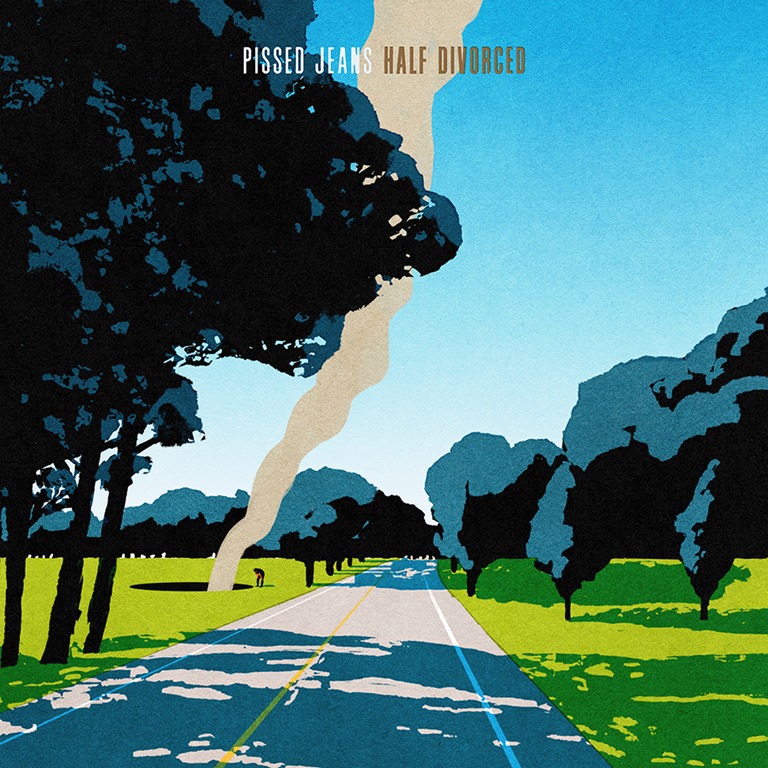
Half Divorced is an album burning with blind, impotent rage and life and the hand it deals. It sees the band really dive in hard to their hardcore roots and pack in track after track. Whereas Why Love Now may have ventured into more exploratory territory under the guidance of Lydia Lunch as a producer, with some longer songs, Half Divorced packs them in tight, with most songs coming in well under two minutes, in proper old-school hardcore style, and it’s one of their fiercest collections to yet.

The three singles released in advance, with the latest being ‘Cling to a Poisoned Dream’, are full of dark energy. Whereas its predecessor placed the lyrics more to the fore, they’re often buried in the blurry murk of the furious, balls-out hardcore assault, and overall, Half Divorced is about sonic impact and it rages hard through dingy basslines and squalls of feedback. Half Divorced is an angry record, and you get the impression they’re angry about everything, but a large portion of that anger is inwardly-focused. I mean, what’s more perfectly midlife than making an album that recreates the sound of your teens while being pissed off with work, the world, and the shitness of your ageing self? ‘Alive With Hate’, clocking in at just over a minute and a half is everything the title suggests, and pretty much sums up this dirty articulation of raging while ageing. If they’re overcompensating by cranking it all up a few notches, well, they can overcompensate away: as OFF! demonstrate, age is no barrier to being cool as long as you’ve still got the fire. Right now, Pissed Jeans have got all the fire, and Half Divorced is relentless and raging and as good as they’ve ever been.

AA

566464

Cruel Nature Recordings – 23rd February 2024

Christopher Nosnibor

Nnja Riot is the solo project of Lisa McKendrick, who also happens to be one half of experimental electronic noise duo Isn’tses, with Tim Drage, who makes serious noise as Cementemental.

It’s a small world, especially in circles of noise and experimental electronics, and so it is that a few years ago, I paired with Tim for a one-off collaborative set in London at the bottom of a bill curated by Human Worth, with the mighty Modern Technology headlining. I lost my hearing in one ear before the set due to some congestion, and by the end, I’d lost my voice, too. Somewhere along the way, I’m convinced I’ve crossed paths with Isn’tses, too, but can’t find the evidence at this moment in time.

Anyway, my needless digression brings me to the point of observation that their individual projects are quite different from one another, and their collaborative output. This is ultimately a good thing, because while algorithms which have seemingly replaced the music press in making recommendations of the ‘if you liked listening to this, you’ll like this’ ilk, it ain’t necessarily so. Because algorithms don’t understand art, or the fact that an artist’s output may be widely varied.

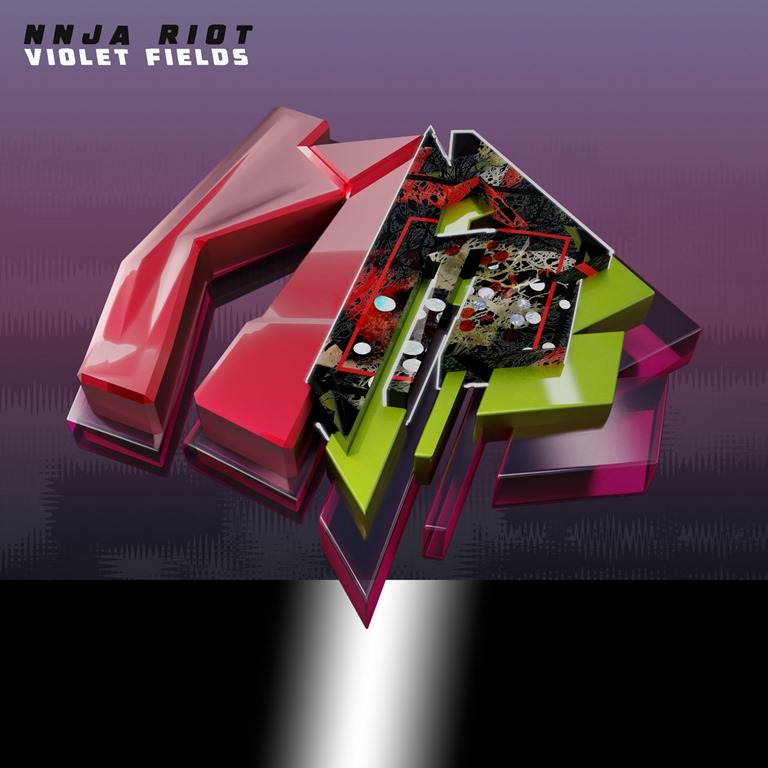
And so it is that as Nnja Riot, Lisa takes a much more songwriterly approach to things, and Violet Fields contains seven songs which can be described broadly as stark industrial electropop. ‘Horror Heart’ brings all of the elements in together to raise the curtains on the album: understated verses, with a thumping heartbeat bass beneath a delicate vocal bathed in reverb, are suddenly blown away in a wave of noise and monotone robotics with whipcracking synthetic snares cutting through the murk with some harsh treble.

‘The Evolve’ is a low, slow, dark pulsating grind which swells to a blistering ruckus of bubbling, broiling eruption of glitching electronic froth, and things get mangled fast and hard. Nnja Riot is indeed an appropriate moniker: the noise grows and takes over by stealth, as if from nowhere: one minute things are pretty mellow, the next, it’s all going off and you’re being carried away on a sonic tidal wave.

The album’s longest track, ‘Dark Assassination’, stretches beyond the seven-minute mark, and with a stuttering, beat hammering like a palpating heart in a state of fibrillation against the ribcage, it’s creates a muscle-tightening tension which is uncomfortable. The vocals are disconcerting, sounding as they do detached, off-key, non-melodic. Desperate drones bend and warp in the background, adding layers of dissonance and discomfort.

Everywhere across Violet Fields, there are subtle but essential incidental details, little lines of melody which ripple and fade. The title track is hazy, sedated, spaced-out, with melodic elements juxtaposed with swerving sci-fi noise which threatens to drown out the erratic beats and she cuts loose to another level of intensity with the vocal delivery: fuzzed with distortion, there’s a outflowing from the innermost which pours into the swirling wash of multi-faceted noise.

Violet Fields crackles and fizzes, often promising structures which crumble and evaporate and leave the listener feeling a little lost, grasping for something uncertain and just beyond reach. It’s this sense of vagueness which remains after the grainy ‘Musical Fix’ and the ephemeral drift of ‘Slow Release’, a mere fragment of a song which carries a spiritual richness on a ritual drumbeat before fading. There’s a sense that hearing Violet Fields and fully grasping it are not one and the same, and it feels that however long one spends engaging with it, there will always be depths and layers of implicit meaning that exist beyond the realms of conception. You wave a feeble hand, desperate to clutch and cling, but it’s gone. It’s gone.

AA

a2182947288_10