Posts Tagged ‘Album Review’

A-Zap Records – 23rd August 2024

Christopher Nosnibor

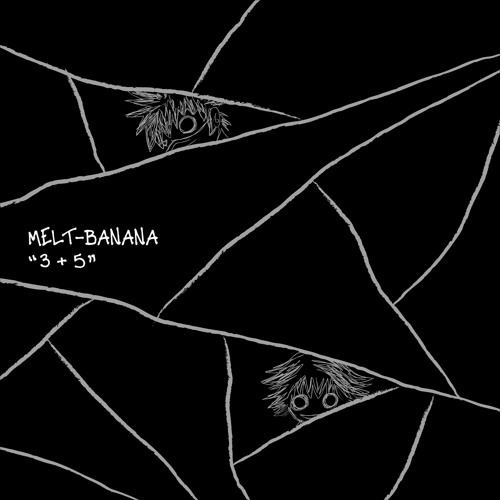
There is truly only one Melt-Banana. And Melt-Banana boldly encapsulate all of the craziness that makes Japanese music so peculiar and unlike the music to emerge from any other place. Here in the west, we can, in truth, only marvel at it – all of it. Because it makes no sense. It’s a country of extremes, with hyper-pop culture dominating, and a sense of plasticness and artifice defining the mainstream. But then, Japan is also the home of the most extreme noise – Merzbow, Masonna, for example. It’s not just extreme sonically, but beyond words in terms of performance.

The pitch for this, their eighth album, informs us that ‘3 + 5’ synthesizes elements of a variety of Extreme Musics, Hyper-Pop, classic Punk, vintage Metal, and Noise. It’s informed by Japanese culture in general, and the subcultures of gaming, anime and homegrown underground music in particular. The album’s nine tracks have been crafted to maximize the independent appeal of each song (since so many listeners will be streaming and playlisting these songs). Each selection boasts its own unique charm and ideas that beg for repeated listening.’

I had the good fortune to witness their live spectacle here in York not so long ago, and they were everything anyone even vaguely aware of their work would expect: intense, noisy, crazy, and wildly entertaining.

They create music that fits with the bizarre incongruity of their name – abstract, humorous, combining elements that don’t – or shouldn’t – really sit together – somewhat surreal, patently absurd, but also perhaps a shade Pop Art. Put another way, everything all at once, tossed in a blender and blitzed, the output being like a bubbling hot smoothie or something.

They do have a tendency to favour short and fast, as recent taster track ‘Flipside’ reminded us, clocking in at a minute and fifty-six. It does happen to be the album’s shortest track, but then, the longest is under three-and-a-half, and the majority of the nine songs are around the two-and-a-half minute mark. That means that with a running time of around twenty-seven minutes, the album would comfortably fit on a 10” record.

For a moment, ‘Code’ hints at something spacious, experimental and electronic to open the album – before seconds later, all kinds of sonic mayhem erupt and chipmunk yelping vocal squeak over something that resembles Metal Machine Music played at double speed, before it takes a turn into space rock territory, but again, at twice the pace, with some prog flourishes and a bunch or bleeps and widdly synths all criss-crossing over one another at two hundred miles an hour. For anyone for whom this is their introduction to Melt-Banana, they’ll likely find themselves dizzy and completely bewildered as to wat the fuck they’ve just heard. It is, unquestionably, utterly deranged, and at doesn’t get much more quintessentially Japanese than this.

‘Puzzle’ is kind of a high-octane rock tune, at least at first – but then someone hits the accelerator and in a blink you’re on ‘Rainbow Road’ on the N64 Mario Kart after eating three bags of Skittles and you’re totally wired.

Hyper doesn’t really cut it. Even the more expansive instrumental segments of ‘Case D’ happen at about 600bpm, and it’s like listening to a prog album at 45rpm.

As I listen, I find myself typing faster and faster, as if I’ve sunk six cans of Red Bull while chomping on a whole packet of Pro Plus. My fingers are pale blurs against my black illuminated keyboard, and they’ve seemingly run away from my brain and are just frothing out words in response to the frantic mania pouring into my ears – no, not pouring, but being injected by 10,000-volts of electrical current into my brain via my eardrums.

‘Scar’ slams big guitar rock and skittish melodic pop together like a banging of heads. It sounds like music from a computer game or an animated movie. It sounds like music made in a fictional context. Because in real life, music like this couldn’t exist. And in the main, it doesn’t. Only Melt-Banana are demented enough to actually make it.

Penultimate track ‘Whisperer’ goes big on dance / rock crossover and actually slows to a pace that doesn’t feel like a synaptic twitch or a seizure, before ‘Seeds’ closes the album with a two-and-a-half minute frenzy which chucks everything into the mix.

The whole experience leaves you feeling giddy, dazed, amazed. 3 + 5 may not bring anything radical, new, or revelatory to the Melt-Banana oeuvre, but stands as a classic example of what they do – and it’s as ace as it is nuts.

AA
MB 3 5

Dragon’s Eye Recordings – 7th June 2024

Christopher Nosnibor

There isn’t really anything funny about Yorkshire Modular Society, conceptually or otherwise. But one never really fully appreciates one’s own locale, especially not when it’s in the north of England, a region renowned for its pithy, gritty nature rather than its glamour. People will tell you that Yorkshire folk are welcoming and friendly – and tight – and as a non-native whose lived in Yorkshire the majority of my life now, it’s probably a fair summary. The county boasts some of the most magnificent countryside, and I only need to walk ten minutes from my house to be in woodland or fields – not bad considering I live twenty minutes from the centre of a cathedral city, not to mention twenty minutes from the train station, which will land me in Leeds in under half an hour. But for all that, and despite the huge number of outstanding bands to have emerged from Leeds over the years, mention Yorkshire and people will probably think of brass bands, cobbles, and Hovis, flat caps and equally flat brown beer. People tend not to think ‘Yorkshire, the county of experimental electronica’. They’re missing something significant.

There is a thriving modular / electronic scene in Yorkshire, notably with electronic music open mic (EMOM) nights in Leeds, York, and Halifax, all giving platforms to acts who aren’t necessarily on the main gig circuit, although venues like Wharf Chambers in Leeds and The Fulford Arms in York will often feature weird and wonky stuff from across the electronic spectrum.

Like many electronic experimenters, the YMS BandCamp page presents a prodigious self-released output, so if you’re wondering where to start, a release selected by a label seems like a fair point.

Of this continuous hour-long ambient work, Yorkshire Modular Society says, “As the cityscape pulses with electric fervor, oscillations emerge like whispers in the rain-soaked streets. LFOs, like elusive shadows, guide the listener through a maze of sonic intrigue, each modulation a glimpse into a world of mystery. Within the depths of digital tape modules, time unravels and reconstitutes, casting a veil of uncertainty over the sonic landscape. Reverb and delay wash over the senses like urban decay, adding depth to the sonic architecture that surrounds.”

Fiery the Angels Fell is a lot calmer, more soothing, and less apocalyptic than its cover art suggests.

As is often the case with ambient works, I find my mind – like the music – drifting, and my contemplations following divergent trajectories. Here, I found myself wondering what the end would – or will – really look like. Growing up in the 80s, I envisaged the white light of nuclear annihilation, but on recently watching Threads, came to realise that this may not be the spectacular moment of silence prefacing perfect oblivion my younger self had fantasized. But no part of me ever envisaged an globe, or an egg, colliding and splitting in half with molten flames as something I may witness. The cover art, then, harks back to pure 60s / 70s sci-fi vintage. The artwork propagates tension. The sound soothes it.

While there are some billowing clouds along the journey that is Fiery the Angels Fell, this is a delicate, graceful work dominated by organ-like drones and soft sounds which ebb and flow. If this is the soundtrack to the end, I will likely sleep through it, and awake pure nothingness.

AA

de6063_art

Southern Records – 24th May 2024

Christopher Nosnibor

I’d feel guilty for taking so long to get around to reviewing this one, but since the band took twelve years to get around to putting out a new album, I figure I deserve some leeway. Besides, this isn’t an album that you can just grab ‘n’ go with an opinion; with near-infinite twists and turns, it requires time to digest and reflect. Hell, ‘Soul Catchers’ kicks it off and packs into six minutes a whole album’s worth of riffs, tempo-changes, curves, and detours. At times angular and noisy, at others, showcasing a more technical style.

Loping drums and noodling guitars dominate the opening of ‘Mother’ before scratchy discords crashes. The Shellac comparisons have been done to death, but are entirely appropriate, although there’s something that’s perhaps a shade more jazzy in the playing style here. This is highlighted by the instrumental interludes, which really do change the dynamic of the album as a whole, with some really nice piano work on display. But crucially, during the actual songs, it’s the drums that are front and centre, and batter hard at delivering stuttering, stop/start rhythms. It’s a timely reminder – well, after the arrival of To All Trains – of the impact Steve Albini had on alternative rock and recording methodologies. Before Albini – and still, generally – in rock music, the drums are background, keeping time, while the guitars dominated. His approach saw the drums take on a new level of importance, and expressive drumming, recorded right, alters the whole dynamic of a track. And there’s a lot of dynamic and some serious drumming on From Fire I Save The Flame. Every snare smash blasts the top off your head, and you feel like your in the room while the band are cranking this out live just feet from your face.

Again, another lesson from Albini: bands are often at their best live, when the energy and adrenaline are pumping and the heat and the blood are up, and to capture that on record is gold. From Fire I Save The Flame feels live: the performances are raw, unpolished, intense. That Steve is gone doesn’t really seem entirely credible right now, and the world – not just the world of music – will be so sadly lacking in his absence. But it’s clear that his legacy will endure, and endure. This album might not even exist without him, and certainly wouldn’t sound the way it does were it not for him, and the same is true of many releases now and in the future. This isn’t to detract from anything the band themselves have done here – and Three Second Kiss have reconvened to deliver something special – but, well, the point stands.

‘Garum’ lurches into noisier territory once more, reminding us why you’ll often find TSK mentioned alongside the Jesus Lizard – who have recently announced a new album after significantly longer than twelve years. It’s as pretty as a barroom brawl, spilling and staggering in all directions: the bass repeatedly punches you in the gut while the drums leave you dazed and with a split lip.

There’s sinewy, straining guitar galore on ‘Fuss’, before the final track, ‘Heart Full of Bodies’ grinds down to a slow-swinging crawl, before the growling bass and some thrashing drums whip up a climactic frenzy to draw the curtain quite dramatically on an album that’s heavy with dinge and dirt, unashamedly unsmooth, untamed, unprimed for radio.

From Fire I Save The Flame isn’t just a brilliant return, it’s a brilliant album in its own right, period. And landing as it does in between the Shellac album and the upcoming LP from the Jesus Lizard, 2024 is shaping up to be an outstanding year for quality noise music from bands many had considered dormant. It’s about time we had some good news, and this is some very good news indeed.

AA

a2253768086_10

Christophedr Nosnibor

13th June 2024

With erratic and anomalous punctuation defining their testy antagonistic electronic stylings, the latest offering from self-styled ‘Industrial Bass’ pioneer, SINthetik Messiah is nothing if not intriguing.

This time around, there’s something of a ‘concept’ element to the work, outlined as follows: ‘In a galaxy torn by strife, a hero rises but falls to tyranny, sparking rebellion. Amid chaos, a journalist’s death fuels uprising, while another leader seeks peace. War looms between factions, as a loyalist questions his cause amidst shadowy manipulation, setting the stage for a power struggle.’

As such, there’s a keen narrative element to the album, which we learn via the pitch ‘expertly fuses industrial and drum and bass genres, creating a unique blend known as ‘Industrial bass.’ It serves as a sonic reflection of contemporary challenges, infused with a sci-fi allure.’

The end product is techno and gothy, heads down, heavy. ‘Assassins That Run On Faith’ brings driving techno and stomping beats and calls to mind later Pitch Shifter, and the same is true of ‘Don’t Lose Who You Are’.

A lot of the narrative element is lost on me, and maybe lost in translation.

Lies, SEcrets & Death is big on energy, and throbs and pulses away, hard, and deep. The beats blast hard and thrammer away relentlessly, and it’s tense and taut and delivers on its promise. But ultimately it’s a dance record, and I can’t get into that groove.

AA

a4216920167_10

8th June 2024

Christopher Nosnibor

This release is as intriguing – and strange – as its enigmatic and beautifully-crafted handmade packaging.

Music for Strangers continues the reissue programme for releases from underground experimental duo Photographed By Lightning, and arrives on the heels of NO, Not Now, never which represented their first new material in twenty years. For this one, we dive back twenty years, to 2004, the most prolific year of their career, until, suddenly, it halted.

While Blood Music (also 2004) consisted of a large number of comparatively brief pieces, Music for Strangers is a very different proposition, featuring as it does four longform tracks, with a couple around the ten-minute mark and a couple around the twenty. Each simply bears a numerical title.

The original release – produced in a CD edition of 100 – was disseminated not for sale on line or anywhere, but by covert means, with copies being left at random in public places. This was quite a thing in avant-garde circles for a time in the years after the turn of the millennium, particularly when MySpace was at its peak, and something that I myself participated in, leaving various pamphlets in pubs and the like, and slipping A5 leaflets various books in WHS and Waterstones. Why? Because.

Dave Mitchel and Syd Howells – aka Photographed by Lightning – are very much part of that avant-garde milieu. Something has been lost over time, and now there’s a certain nostalgia for it, meaning that the arrival of this reissue carries a certain resonance beyond the thing in itself.

There are bits of vocals interspersed here and there – abstract enunciations and discombobulous jabberings – and they emerge for fleeting moments amidst sprawling expanses of strange, otherworldly instrumental passages.

‘One’ (denoted as ‘I’ on the CD version) combines swampy abstraction and space-rock bleeepery to disorientating and atmospheric effect, which descends into dense murk in the final minutes before silence descends for a full minute. The silence is even more disconcerting than the sound which preceded it. The truth is, silence unsettles us, scares us even. It’s the reason some people can’t stand to be alone, and the reason many simply can’t shut the fuck up for a moment: they can’t handle silence, and find silence more terrifying than darkness. I suppose that while both are forms of sensory deprivation, in the modern world, while darkness still feels like a natural phenomenon – if your blinds or curtains blank out light pollution and you switch off your electricals – silence is almost beyond comprehension. There is always traffic, a distant siren, a phone vibration, the wind, rain, the babble of one’s own internal monologue. When was the last time you can honestly say you experienced true silence? That isn’t to say that with the hum of the hard-drive and my laboured hayfevery breathing, in connecting with this album I did, but the abrupt end of sound emanating from the speakers, in a time when a minute feels like an eternity, really struck me, left me feeling… what?

But at thirteen minutes, this is merely a prelude to the second track, a plunge into the subterranean swamps which drags the listener deeper into suffocating darkness for an immersive but uncomfortable nineteen minutes. There’s dadaist quirky playfulness in evidence here, the sonic equivalent of shooting water pistols and throwing overripe windfall berries at random passers-by, which redresses the balance against the backdrop of tetchy, grumbling noise created first and foremost to antagonise – which is course it does. It tests the patience and challenges the senses, with bubbles and ripples echoing as if from within a cave – for extended periods, as the sounds gradually mutate. For a spell, it sounds like water-filled lungs laboriously respiring, which makes for more difficult listening than it may appear on paper, drifting into something resembling the relentless rock of nodding donkeys at an oil drill site, and creeping into ‘Three’, it’s like sneaking down into the sewers to escape one threat only to be confronted with another.

Music for Strangers is certainly their darkest, most suffocating work, stretching dark throbs and abstract sound to the absolute limits and nudging beyond.

The bonus disc which is part of the physical release, containing Music from Nowhere, offers further insight into their prolific and prodigious experimentalism at the time, providing jut short of an hours’ worth of additional material. That it’s essentially more of the same only heightens the effect.

Given the varied and experimental nature of their output, there isn’t really a definitive release which encapsulates the work of Photographed By Lightning, and Music for Strangers isn’t really an entry-level release – but this does very much encapsulate their experimental spirit, their singularity – their awkwardness – and knack for creating difficult soundscapes.

AA

a0888861779_10

Human Worth – 5th July 2024

Christopher Nosnibor

Almost four years on, and still the shadow of the pandemic hangs over us. The way in which this manifests varies widely, and it feels as if it could yet take considerably more time yet to unravel the traumatic aftereffects. During the time people were forced to stay inside, many found themselves looking inside, too – inside themselves – and finding darkness and demons, and a whole lot more besides. Many were forced to face these alone, without the usual support mechanisms – support mechanism which may no longer be accessible, or even exist. The new normal in which we find ourselves is nothing like the one which seemed possible at the time, and that vague hope people clung to of emerging in a better world has been utterly devastated since, not only by global wars and accelerating climate change, but in the everyday, which simply feels like a battle for survival so much of the time, with the cost of gouging crisis, a mental health crisis, a collapsing NHS, decimated public services… the list goes on. Things have changed radically, but not for the better.

Pascagoula’s second album, For Self Defence, is a thorny thing which grew over the pandemic years and has taken some time to reach fruition. It’s not unusual in itself for an album to take four years from conception to release, but as we learn of this particular album, the circumstances and timing unquestionably influenced the end result:

‘The title of the band’s second album For Self Defence was decided upon in 2020 – It seemed fitting considering what was happening in the world then, and remains bitterly relevant now. Pascagoula remained in their secret tin-foil prefab shelter in Brighton (near Europe) and reflected the tightening chaos and hardship of the world outside. The nine songs on their second album are sharper and more barbed, more violent and vitriolic, and more cruelly calculated than before. Songs about past traumas, regrets, anxieties, damaging relationships, mental illness, the bad choices we make in life, and their consequences. It’s no easier in here than it is out there.’

Perhaps unsurprisingly, then, For Self Defence is hard-hitting, harrowing. The title tracks opens the album and its slow and heavy, but not in a raging deluge of distortion way, but more glacial math rock in the vein of Kowloon Walled City, and the tone of For Self Defence is very much in the vein of the slow, thick-timbred, gritty, granular metal with a really earthy, organic feel of Neurosis and a number of other Neurot bands.

Then again, ‘Insecurity Breach’ is a straight-up shouty noise song with lumbering bass and grungy guitars, evoking the sound of the underground in the early 90s – not grunge, but all of the mangled noisy shit you’d find in tiny venues and released on microlabels that only managed a handful of releases, and the album seems to get darker and denser and dirtier as it progresses. ‘Valve Kilmer’ is a title worthy of those niche 90s acts, too, or the numerous post-millennium noise acts emerging from Leeds.

And while such a title hints at there being humour to be found here, the off-the-cuff flippant wordplay is at odds with the overall mood. In keeping with the way in which For Self Defence shares much commonality with that early 90s scene, so it is that what the album conveys is inner turmoil, conflict, and yes, angst, articulating emotions which words alone cannot convey via the medium of churning guitars and a howl of anguish. ‘Consultants of Swing’ (boom boom) mines a seam that carves its way from the Jesus Lizard to Blacklisters, tossing in some noddlesome proggy post-rock elements into the gnarly noisy math metal mix. The result is dense, tense, and claustrophobic. This isn’t music that’s intended to make you feel at ease, and it doesn’t. You feel that knot in your chest tighten and the tension in your shoulders grow to a persistent ache, as if carrying a heavy load.

Since seemingly forever, there have been those who have decried the death or guitar music, who have declared it redundant, insisted that rock’s dead, grunge is dead, that metal is passé. Nothing could be further from the truth. These instruments, and these genres, are where people turn when looking to vent these most difficult emotions, when seeking release, catharsis. For Self Defence is pure catharsis, rabid in its intensity, foaming in its fury, exhausting in its weight: ‘Mournography’ brings the slugging monotony of early Swans, and Godflesh, and by the time we arrive at ‘Eternity Leave’, we’re ready for it. Relentless, raw, For Self Defence is quite simply a monster.

AA

HW035_Pascagoula_ForSelfDefence_CoverArtwork

Mortality Tables – 16th June 2024

Sometimes, personal events drive creative work in a way which runs away from the artist. It ceases being first and foremost about ‘art’, and the need to expunge, to offload, to outpour takes precedent. It’s not a conscious thing, something planned: the fact is that creativity leads the way, and art is not something one necessarily can direct or determine – at least, not true art. Art happens in response to things, and oftentimes, the most powerful art is born from exploring the deepest, most intensely personal scenarios. Such explorations may not reveal a great universal truth, but then again, they may present something that’s unexpectedly relatable. And this is where we find ourselves with The Engineer.

Mat Smith has no ambitions of leading the country, and nor does his musical output seek to obfuscate his journey or his reality. The Engineer documents this reality, and I shall quote, quite comfortably, the press release which provides vital context here:

‘In 2012, writer and Mortality Tables founder Mat Smith (Electronic Sound, Clash, Further. wrote a short story, ‘The Engineer’. A work of fiction, the story was loosely based on his father, Jim Smith, a skilled mechanical engineer who had spent most of his adult life working in a factory in Stratford-upon-Avon. The Engineer represented Mat’s thoughts, feelings and fears about his father’s retirement.

‘The story was later narrated by author, producer, playwright and poet Barney Ashton-Bullock. 29 artists, working in the fields of sound art, electronic, experimental and contemporary jazz music, were then approached to provide a sound response to a thirty-second extract of Barney’s narration. The order in which they agreed to be involved determined which section of narration they would be asked to respond to.

‘The collated 29 responses were curated and recorded over the next two-and-a-half years and assembled into a single, 14-minute collage by James Edward Armstrong. Its sprawling, disjointed presentation of short, rapidly-replaced ideas is intended to evoke the devastating confusion of Alzheimer’s, which Mat’s father was diagnosed with in 2018.’

This is about as intense and personal as it gets, and I’d like to think that this well-crafted work makes for a fitting homage. The sleeve image depicts a teenage Jim Smith on Margate’s Promenade in the 1950s, and the narrative tells the story based on his life against a shifting sonic backdrop.

On the surface, it’s a quite charming work. But it’s also sad, a tale of the way the ageing process is one of decline. And as the story progresses, a different kind of decline becomes the focus. It’s also a narrative of the way work has a way of stealing life away, especially for the manual worker. It also speaks of the difficulty of relationships, emotional disconnection, and ultimately faces the issue of mortality in the most real and matter-of-fact way. Time passes, and it passes far too fast. When you reach a certain age, every birthday gives pause for thought, and every picture gives rise to a pang of sadness. Even the passage of a year or two… how do you compute? How do you deal?

It seems that many simply don’t: I often hear or read people remark how people dying – and they die, they don’t pass, although hardly anyone ever says or writes it – people dying in their 60s or even early 70s is ‘no age’ or how they were ‘taken too soon’. I struggle with this. People have a finite time, and I speak from painful personal experience when I write that I feel that it’s quality of time which counts most. To witness a slow degeneration tends to be far more painful for those around the person experiencing it. Alzheimer’s is a cruel disease, and all profits from this release are going to the Alzheimer’s Society. This is to be applauded, of course, but not simply for its charitability, but because of its art.

The Engineer may only be fourteen minutes in duration but represents twelve years in the making, and the input of more than thirty people in various capacities. In short, it’s an immense project, and the amount of time and energy poured into such a complex, detailed work is immeasurable.

The narrator starts out feeling vaguely AI, but in no time, we come to feel a connection with poet Barney Ashton-Bullock’s delivery. It’s crisp and clear, and in some respects has BBC documentary commentary. Its power derives from its simplicity: the narrative itself is straightforward and linear. Its sonic backdrop is not, and it’s disorientating, and at times uncomfortable, incongruous, at odds with the point of the narrative with which it’s paired. The sounds behind the narrative range from grinding, churning industrial din to woozy blooping electronica and shuffling disco and is altogether less linear, mutating over the course of the piece. It will leave you feeling disorientated, it will leave you feeling harrowed, possibly even stunned, and drained. But this is as it should be. The Engineer is ambitious, and a quite remarkable work.

AA

a0182982649_10

Human Worth – 20th July 2024

Christopher Nosnibor

Exciting times always abound with Human Worth, and while the summer has up to now been a truly dismal washout, and it’s hard not to be sceptical about the hype around an imminent heatwave in a couple of weeks, July is almost guaranteed to be a scorcher in the environs of our favourite boutique London Label, with an album from Brighton supergroup Pascagoula, and this, the debut long player from Newcastle electro-disco-riot noisemakers Fashion Tips. The fact that the initial run of fifty ‘vibrant’ pink cassettes sold out in forty-eight hours, leading to an immediate second batch, indicates the level of buzz around this band – one might even say they’re pretty hot right now, and it’s not hard to understand why.

They only coalesced in late 2022, with the founding members of bass player Liam Slack and guitarist Jorden Sayer subsequently being joined by Esme Louise Newman who had established a name for herself with black metal duo Penance Stare. Fashion Tips signify quite a departure for her, but she seems well-suited and to be enjoying the change of style – pardon the pun. With opening slots for the mighty Mclusky and a tour with cult Leeds wonky noisemongers Thank, not to mention a well-received (and not just by us) debut EP.

For I Wish You Every Success, they’ve managed to get Anthony Chapman (Collapsed Lung, Mclusky, Bis, Skinned Teen) to work production duties – and a fine job he’s done, too.

The title may be a little less stunned – and stunning – than predecessor Fucking Hell, but is interesting and amusing, given that it’s a phrase you most commonly encounter on leaving cards or other notes of departure. One has to hope that this is knowingly ironic, given that the Tips (as at some point they should come to be known by an ardent and substantial fanbase) are very much still warming up here.

The album’s eight songs are cumulatively impactful, a sharp-edged, pointy-cornered assault of back-and-forth oscillating synths and thudding beats dominated by booming basslines which often threaten to submerge the abrasive, antagonistic vocals, which swing between sneer and squawk. ‘Radio Song’ – a song designed for the moshpit rather than the radio – is thee perfect opener, a raw blast of antagonism, a sonic middle finger to pretty much everything, and at the same time. That Bikini Kill have recently made a powerful and triumphant return suggests that now is the time for a riot grrrl revival after everything lese has been trawled over, but it’s the stabbing electronics and hard-edged synths which render Fashion Tips quite distinct.

‘The Lovers’ emerges in a blast of noise and locks into a frenetic groove before going wild disco, and it’s a proper hard slap around the face, electropunk cranked up to eleven.

They pack three songs’ worth of ideas into each composition, the majority of which clock in at around three minutes. It crackles and fizzes and bends the brain. Buzzing, bleeping, pumping single cut ‘Don’t Call Me’ is entirely representative of the blistering attack that I Wish You Every Success delivers. Hyped-up and hyperactive, it leaves you dizzy, dazed, punchdrunk even before the bratty drum ‘n’ bass blast of ‘Steve Lamaq’ crashes in and absolutely slays with two minutes of pure frenzy.

Grinding bass and laser-like blasts dominate the hi-NRG punk attack of ‘Hot Problems’, and Fashion Tips pack ‘em in tight and hard. There is quite literally no respite, not a moment to regain breath while listening to I Wish You Every Success, and you’re moshing in your head to some utterly punishing riffs.

Fashion Tips are the band we need right now. They are all the energy, and I Wish You Every Success is a massive rush from beginning to end.

They’ll probably be onto the third pressing by the time you read this. I certainly hope so. There ought to be a CD and vinyl edition, too. And, simply, taking quality to the next level, this album needs to be everywhere. I really do wish them every success – because they deserve it. And not in the leaving card sense.

AA

AA

a1197341982_10

Thrill Jockey – 21st June 2024

Christopher Nosnibor

You want epic? Look no further that this. As the press notes set out, ‘Over the course of 4 tracks in 76 minutes, SUMAC presents a sequence of shifting movements which undergo a constant process of expansion, contraction, corruption and regrowth.’

Four tracks. An hour and a quarter. And then we have the context, and the content of ‘the thematic nature of the record – narratives of experiential wounding as gateways to empowerment and evolution, both individual and collective.’

The emotional weight may not be immediately apparent without this context, but the sonic heft crashes down the doors with the opening chord, a low-down, distortion-heavy heave. The dynamic is one of a lumbering lurch rather than a forceful blast, a long, slow spew, a ruined speaker flapping a sigh in devastation. And then the bass grinds in, so slow, so dark, so heavy, like an emptying of the guts – a slow, painful Dysenteric purge. Around six minutes in, drums and vocals enter the mix and the picture – a scene of the most ruinous pain beyond imagination – is complete. ‘World of Light’ is either the most ironic or misleading song title going: it’s twenty-six punishing minutes, with extended passages of droning feedback in between riffs more brutal than crucifixion. This one track alone isn’t only the duration of some albums, but contains everything necessary.

Comparisons are references are easy and abundant, but, equally, futile: The Healer is a singular, monumental work. It would be an oversight to comment only on the brutal, crawling riffs and gut-shredding density when there are passages of haunting elegance and quite touching beauty. Solo guitar ripples and eddies like a small, quiet stream, and there are moments The Healer of calm, of grace. And the consequence – apart from rendering this post-metal – is a strong dynamic, meaning hat the bulldozer blast gave more than double impact when they hit. And hit they do.

During the gut-churning ‘Yellow Dawn’, you feel yourself hollow out, slumping inwardly following a punishing display of power. It’s hard, it, heavy, it hurts. The final track, ‘The Stone’s Turn’, is again twenty-five minutes in duration and it’s a punishing, pulverising sonic assault.

The Healer leaves you feeling hollowed out, sapped, sucked to a husk. It’s also a work of ambitious enormity. Immense doesn’t come close.

THRILL470-ocard-alt

19th April 2024

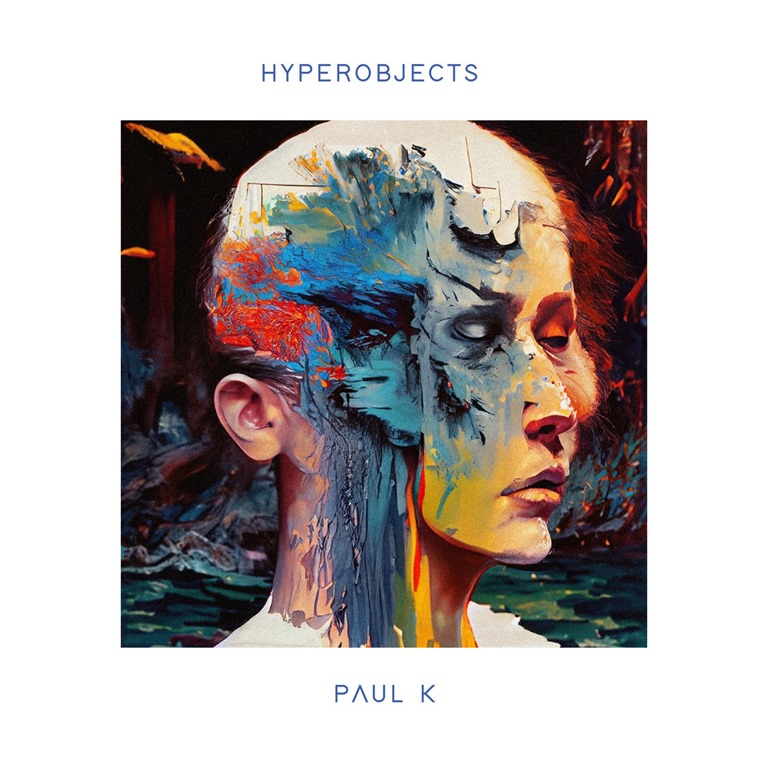
It’s been out a little while now, but some releases have a slow diffusion. Hyperobjects is one of them, and it seems fitting, given that Paul K’s latest work is an immersive work which is ‘a study in musical simplicity with a stripped-down sound creating a space where the listener can both listen to the album and imagine the worlds created by each track’s individual atmosphere’. Paul’s long-shown a fixation with space, as his last album The Space Between, evidenced. But Hyperobjects does something different, and heads in a different direction.

Space. And it’s immediate relative, time. We never seem to have enough of either in the present, or overall. We live in a state of perpetual future-placement, eternal postponement, dragging ourselves through endless days of drudge while promising ourselves a brighter future, be it a holiday, breaking free from a bad relationship, leaving the awful job, or retirement. Gratification is always over there, the aspiration is forever just over the horizon, on the other side of the next hurdle, an inch beyond reach. And we find ourselves entrapped within the special confines of our limitations, the four walls of our homes, the constraints of being unable to go places because of needing to be up and at work the following day, confined by affordability, and so on and so forth. Horizons shrink, and time passes in a blink and suddenly, time and space have both evaporated. What have you done, and what have you got to show for it?

‘Hyperobjects’ is a gentle work, and while much of it is electronically-created, many of the sounds replicate conventional instruments. As such, it’s a moving and mournful piano which leads the first track, a four-part neoclassical composition, ‘Diaspora (Movements I-IV)’.

It’s the sound of a soft, rolling piano which dominates this album, which is in equal parts classical and post-rock, with ambient elements interwoven throughout. ‘Döstädning’ sounds a little like an instrumental outtake by Talk Talk. Ethereal whisps and traces of voice swish around the piano and occasional strings which trace the supple structures of ‘Hyperobjects’, but in the main, it’s showcase of the most minimal compositions.

On ‘Hyperobjects’, the tracks drift into one another to create a continuous, mellifluous whole. Its power lies in its simplicity, its purity, and in doing so, Paul K has achieved something new, artistically, as well as attaining a new peak.

AA

a2391105810_10