Posts Tagged ‘Album Review’

Gizeh Records – 4th April 2025

Christopher Nosnibor

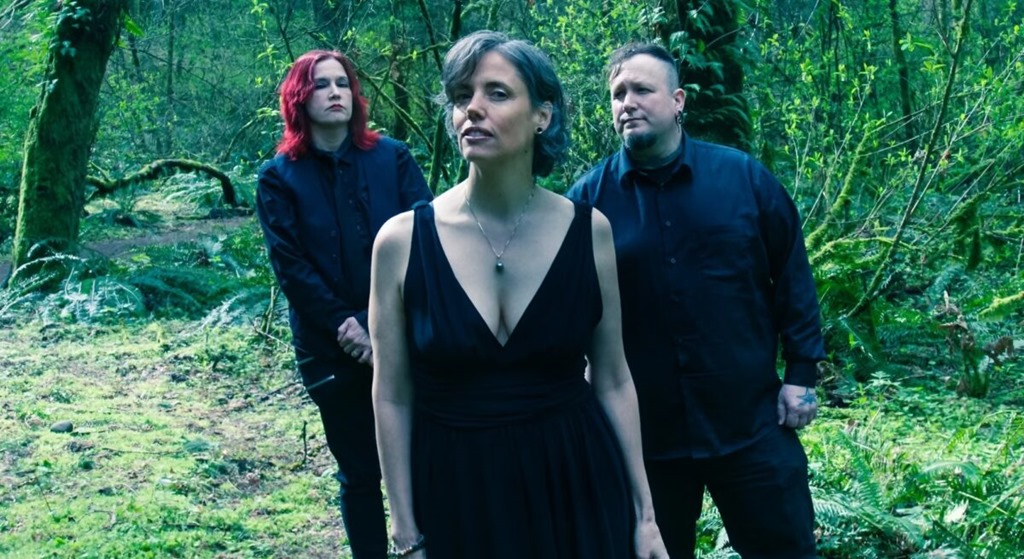
Returning for their eighth album, A-Sun Amissa, purveyors of drone-centric ambience centred around founder Richard Knox pull back from the rather larger avant-rock sound of 2024’s Ruins Era to concentrate once more on ‘unsettling drones and claustrophobic atmospheres’. Knox is joined for the third successive release by Luke Bhatia and Claire Knox, indicating that this is a fairly stable lineup, and perhaps this has been a factor in the album’s exploratory, evolutionary approach.

The promise is that the record’s ‘washed out and ethereal sound drags electric guitar, clarinet, voice and piano through pillows of reverb and distortion to build heaving, desolate dronescapes. Moving through dense, oppressive passages of sound and diffusing into sections of gloomy, haunting restraint. We Are Not Our Dread is filled with majestic, textural detail. It envelops and, at times, smothers you before releasing just at the right moment, resolving in a billowing, melancholic, distorted reverie.’

The first thing that strikes me – as is often the case with any project centred around Knox – is the evocative nature of the title. Perhaps I’m feeling uncommonly sensitive right now, but this one in particular lands with an unexpected impact, and as much as the implication is one of positivity – no, we are not our dread, our dread does not define us or dictate our lives – there is equally the emphasis on the fact that we have that dread. And not you, or I, but us, together, collectively. And so it is that dread become the focus, that thing which looms large over not only the title or the album, but our lives. Why do we have this dread? It would not be an overstatement that the pandemic changed everything: the world that we knew lurched on its axis and no-one knew how to handle it. And since then, insanity has run free. 9/11 may have rattled the rhythm of life for a time, but not it seems that the entire world spent the pandemic years just waiting to wage war, and now nothing is safe or predictable – not your job, your home, your ability to post stuff online. You don’t need to be a prominent protestor or social agitator to attract the wrong kind of attention. The dread hangs over every moment now. We thought we had seen the worst when COVID swept the globe and lockdowns dominated our lives, and began to breathe a collective sight od relief when things began to retract, as we looked with optimism toward the ‘new normal’. But who ever anticipated this today as the new normal the future held?

We Are Not Our Dread consists of four fairly lengthy instrumental compositions, and ‘Electric Tremble’ arrives in a dense cloud of ominous noise which immediately builds tension, and if the rolling piano which drifts in shortly afterwards is gentle, even soothing, the undercurrents of rumbling discord and distant thunder which persist maintain a sense of discomfort which is impossible to ignore.

Ever since his early days with Glissando, melding post-rock with ambient tropes, Knox has had an ear for the unsettling, deftly manoeuvring elements of the soft and gentle with the spine-tingling. And while the eleven-minute ‘All The Sky Was Empty’ is a quintessential work of epic post-rock abstract ambience, rich in texture as it turns like a heavy cloud billowing and building but without an actual storm breaking, instead dispersing to offer breaking light and a sense of hope, the wandering clarinet brings a vaguely jazz element to the sound.

‘Sings Death or Petals’ arrives on trails of feedback and rumbling guitar noise, and is immediately darker, and those dark undercurrents continue with crackles and rumbles and elongated drones which persist beneath the ghostly, ethereal voices and reverb-heavy piano and picked guitar notes. At times, this bears the hallmarks of latter-day Earth, but at the same time there’s a less structured, less motif-oriented approach to the composition, which leaves much open space. I still can’t choose between death or petals here. It builds to a churning whorl, before the final track, ‘Our Hearts Bent As Crooked Lightning’ stirs from a rippling array of simmering noise and evolves into a colossus of rumbling drones, and, over the course of ten-and-a-half minutes, grows supple with softer waves of expansive synth which remind you to breathe again. For all the fuzz and broad swells of abstract, buzzing noise that’s equal parts gripping and soothing, the overall effect is sedative, and welcome.

We Are Not Our Dread leads the listener through some challenging moments, and as each listener experiences works differently, as I hear the final soaring strains of ‘Our Hearts Bent As Crooked Lightning’ this strikes me personally as dark and challenging. The intentions may be quite different, but this is undeniably a work which is sonically ambitious, spacious, resonant. Even as the tension lifts, the mood remains, like a dream you can’t shake, like the paranoia that persists even when you’ve dome nothing wrong.

That We Are Not Our Dread is true, and so is the fact that, to quote from Fight Club, you are ‘not your job. You’re not how much money you have in the bank. You’re not the car you drive. You’re not the contents of your wallet. You’re not your fucking khakis.’ And you are not your dread. It may at times possess you, but this, this is not it. This, however, is a great album.

AA
a1068739543_10

Cruel Nature Records – 4th April 2025

Christopher Nosnibor

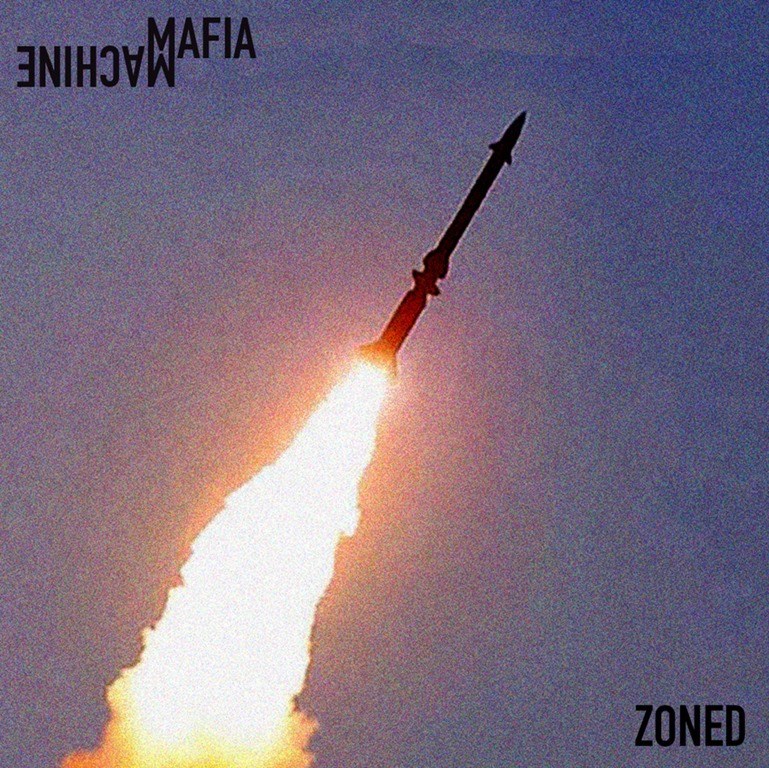
Machine Mafia may be largely unknown, but the duo’s members have some pedigree, being Adam Stone of Pound Land and Jase Kester (Omnibadger/Omnibael/Don’t Try/Plan Pony), all regulars at Aural Aggravation. Jase joined Pound Land’s ever-shifting lineup as the (then) sixth member in 2023 for a handful of live shows, and contributing additional noise to Mugged (because it needed more noise). Deciding to collaborate in early 2024, they slipped out a couple of self-released EPs, which as the notes which accompany Zoned observe, ‘more or less went under the radar at the time’ – which is why they’re getting a second go here, with Zoned being a compilation of those EPs plus four new tracks, or a new EP packaged with the previous ones, depending on your perspective. The tracks aren’t in their original order of release, and have bene resequenced, presumably for the purpose of creating a flow that’s sonic rather than chronological. And so it is that the album starts with ‘Killzones’, arguably the most overtly Pound land-like track on the album, which eases fans of Pound Land into the world of Machine Mafia nicely, or will otherwise alienate pretty much everyone else, unless they’re on the market for something that sounds like Sleaford Mods in collaboration with PiL while monged on Ketamine.

They describe themselves as ‘a voice/electronics duo in the grand tradition of Suicide, Silver Apples, Soft Cell, Pet Shop Boys etc.’ And it is indeed a grand tradition, to which one would reasonably add Sparks, Air, and Erasure, and even the final incarnation of Whitehouse, although what this list ultimately achieves is to demonstrate just how wide-ranging the electronic duo format stretches in terms of style. I very much doubt you’d find these guys donning big hats or flamboyant costumes and kicking out a set of brassy dancefloor-friendly pop bangers, at least on the evidence of the thirteen tracks on offer here. They recount that their first gig was ‘in a small craft ale bar in the Staffordshire town of Leek, receiving a ban for high decibel levels and foul language’. This sets the bar of expectation, and in this context, Zoned does not disappoint.

As I suggested in my write-up of the Killzones EP, the electronic duo they share the most common ground with is Cabaret Voltaire in their early years, mashing up samples and noise in a Burroughsian cut-up style, and churning out gnarly noise that sits between Suicide and Throbbing Gristle. This is particularly true of the collage chaos of ‘Lecture 0.3B’,

But then, ‘F.O.S’, is a blast of uptempo, lo-fi, bass driven drum-machine propelled hardcore punk strewn with feedback and snarling aggression, and ‘Where’s The Money Gone?’, from the Money Gone EP is a filthy racket with massive blasting beats which lands in the space between The Fall and Big Black, powering away at a motorik groove for the best part of six minutes while Stone hollers thickly and ever-more desperately ‘where’s the money gone?’ Well, we know it’s not gone into public services, but there some mega-rich cunts swanning around and jetting into space. And has anyone seen Michelle Mone since she sailed off on her multi-million quid yacht?

‘England’, originally released on Industrial Coast’s ‘Rock Against Racism’ compilation is very Throbbing Gristle, in the (pulsating) vein of ‘Very Friendly’.

Of the four new cuts, ‘Crabclaw’ invites comparisons to Selfish Cunt’s ‘Britain is Shit’, and this may not be entirely accidental, a stinking snarling assault on culture and the senses, with an overloading gritty bass and vitriolic vocals ranting in a mess of distortion and reverb over the murky morass of a musical backing. It’s the sound of frustration, it’s the sound of anger mashed together with despair. ‘Jackpot’, meanwhile, is like John Cooper Clarke spouting over a segment of Metal Machine Music. All the while, a drum machine and throbbing bass pulse away relentlessly: this is Sleaford Mods for real punks. ‘Human Like’ revisits the dubby tendencies first explored with ‘Killzones’, and it’s a dark, sprawling cavernous hell of reverb atop an organ-shaking bass, again bringing together PiL (think ‘Theme’) and Throbbing Gristle (think ‘What a Day’). It’s meaty, and then some, and crunches and grinds away for a full six echo-soaked minutes. Closing with the eight-and-a-half-minute megalith that is ‘Outside My House’, they go full Whitehouse, with a booming bass that’s positively weapons-grade density, over which Stone delivers a rabid, drawling rant from the perspective of a crabby right-wing old-timer while electronic extranea bubble and eddy around. It’s utterly brutal, and completely uncomfortable, and this is the brilliance of Machine Mafia. Gnarly, nasty, uncompromising, Zoned is not friendly, and it will leave you feeling drained, harrowed, punished. Mission accomplished. You’re not supposed to like this.

AA

a2183471837_10

Impossible Ark Records – 4th April 2025

Christopher Nosnibor

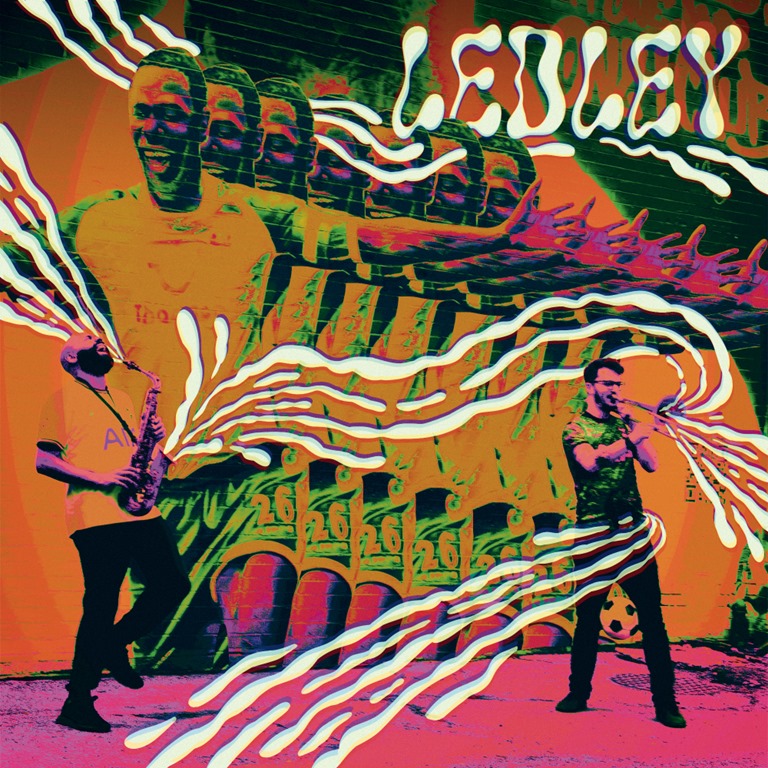
The jazzosphere has a way of throwing surprises, and in the most unexpected ways. Ledley’s eponymous debut, which sees acclaimed electroacoustic improvisational musicians Raph Clarkson (trombone, FX), Chris Williams (saxophone, FX) and Riaan Vosloo (electronics, post-production), is – let me check this – yes, a tribute to legendary Spurs footballer, Ledley King. You didn’t see that one coming, did you?

My knowledge of football is scant: I was born in Lincoln and so feel obliged to follow The Imps – by which I mean check on the scores on the BBC when I remember, and I sometimes watch England international, when I have time and can bear to – but clearly, this does not make me a football fan. But I do have a deep interest in music that’s out of the ordinary, the weirder the better. And this is pretty weird.

Ledley is pitched as ‘is a celebration of improvisation, friendship, and shared passions, blending music and sport into an exploration of community, belonging, and resilience – one of the most extraordinary tributes ever paid to a footballer.’

Although split into eleven tracks digitally, the album is essentially two longform compositions, corresponding with the two sides of the vinyl release, which contain loosely-defined segments, or passages, which flow into one another. Some of these are dramatic, film-score like, with the trappings of bold orchestral bursts, only without the full spectrum of instruments, lending these pieces the feel of somewhat stunted reimaginings of John Williams scores. But then there are the meandering straight-up jazz meanderings, trilling, tooting woodwind, and moments that sound more like some kind of noir soundtrack excerpt – you can envisage some old black and white movie version of something by Raymond Chandler – and then the more extravagant, indulgent moments, which are, it must be stressed, brief and infrequent, evoke the spirit of Kerouac and The Beats. The association with The Beat Generation is something I’ll park here, as The Beats were as stylistically diverse in their writing as The Romantics, and there was nothing jazz about Burroughs. I digress, but to do so feels appropriate: while it does have a musical flow to it Ledley is not a narrative album, and it in no way presents a sense of sequentiality.

The second half is most definitely more sedate, and more prone to abstract wanderings, as the instruments criss-cross, snake, and interweave through and around one another, before tapering down into spacious, semi-ambient, almost drone-line expanses which yawn and stretch in one direction and swoon and glide in the other. Towards the end, it feels as if the batteries are slowly winding down to a low drone. There are bird-like squawks and slow, heraldic horns ringing out, but it’s more the sound of mournful defeat than triumph and celebration. Perhaps this is intentional, and perhaps an understanding of the context is beneficial here Or maybe not: hearing the final tapering tones fade over the horizon, Ledley could as easily be a hymnal to seabirds as it is to a football player, and the beauty of music, particularly instrumental works, is that regardless of their intent, there is ultimately a sense of interpretation which lies with the receiver. Personal experiences, life in the moment, these things come to weigh on how we receive and interpret, and determine not only pour reaction and response but the relationship we have with a given work of art.

Having a knowledge of Ledley King and his career may, or may not, be beneficial when it comes to this album. Sonically, it’s interesting, it slides between moods and spaces, pulling the listener along through them. No naff sporting analogy is required in creating a punchline for this one: it’s simply intriguing, and the musicianship is of an undeniable quality.

AA

LEDLEY – Ledley artwork cover 1000px

Strategic Tape Reserve – 21st March 2025

Christopher Nosnibor

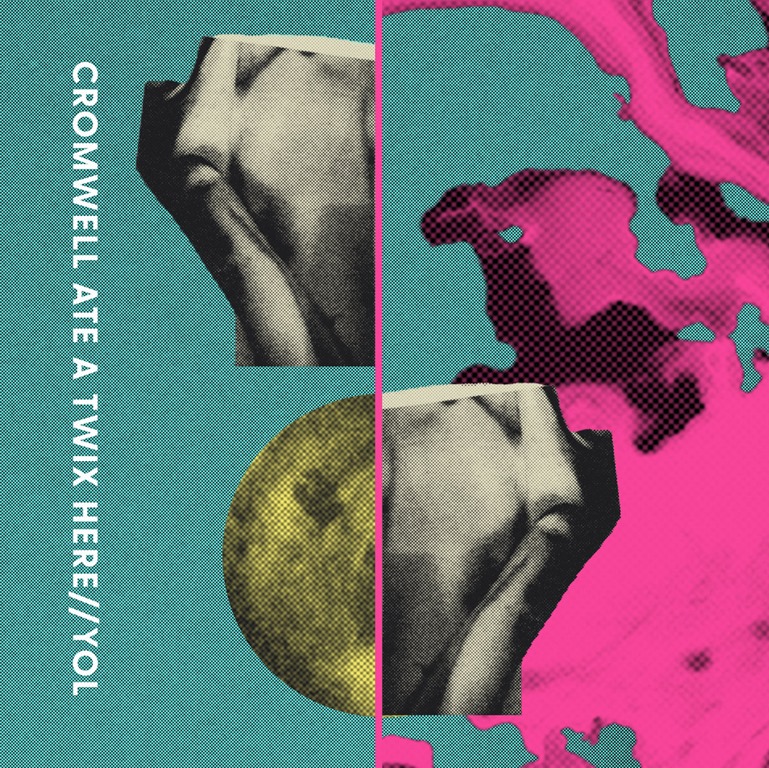
It’s certainly been a while since we last heard from Justin Watson, the epically-bearded being who formerly ran the Front & Follow label, but here he has temporarily resurfaced as one half of the absurdly-monikered Cromwell Ate A Twix Here on a split release with underground noise legend YOL, released by Spanish cassette label Strategic Tape Reserve. As such, even before hearing a sound, one can predict that this is destined to be unpopular – by which I mean an ultra-cult release for a microniche audience – or, put simply, the noise scene.

The bio for Cromwell Ate A Twix Here tells us more about what they aren’t than what they are, hammering home that ‘Justin ran Front & Follow and definitely doesn’t now. It’s over. He’s half of MORE REALISTIC GOALS, a third of The Incidental Crack and a quarter of The Watson Marriage Experiment (2006-)’. So in the wake of its brief revival for the charity fundraising Rental Yields series of complications not so long ago, we can be confident that the lid is now firmly nailed onto the coffin of F&F and even Dracula wouldn’t resurrect the label’s activity. But this is how it tends to be with those of a creative bent. They simply can’t not do anything forever. It’s not even an itch: it’s a compulsion. ‘Fragile’ occupies side one, and is eighteen minutes of expansive, filmic music, constructed around quavering, wavering drones, sparse pseudo-strings and soft, supple abstractions by way of an accompaniment to a somewhat surreal spoken-word narrative about… what is it about, exactly? Death, yes, but also a new relationship, interaction… The music fades into the background during the narrative, rising to the fore between passages. David Yates’ delivery is natural, down to earth, friendly, even, and is fitting for a tale which is largely given to quite mundane details before shit gets weird at the end. The audio begins to grow more unsettling, a shade disturbing around the seven-minute mark, and things only get darker thereafter.

And then there is eighteen minutes of Yol, which is pure derangement. Anyone acquainted with his work will be expecting nothing less. It begins with him stuttering and choking in convulsions over a mess of noise about ‘wheel of life, wheel of cheese’, and he yelps and roars, sounding as if he’s utterly possessed or dying, spasmodic ranting overloading over a horrific mesh of feedback and sonically rough terrain. You can practically hear your speakers wilting as the blasts of distortion scratch and scrape and glitch and burst and grind and buzz like so much sputtering, sparking, damaged circuitry. The whole thing is deranged, although it’s no less deranged than Liz Truss’ famous proclamations about cheese or any statement issued by The Whitehouse in recent weeks. He knows this, of course: however insane his work sounds, there are political undercurrents and a certain knowingness to his brand of frenzied avant-gardism, as evidenced on viral cats and dogs (2021).

The fact that this is just short of twenty minutes of a man yelping and barking and seemingly losing the plot before a microphone, and yet making more sense than five minutes spent perusing the news or social media tells us where we are in the world right now.

The two sides of this split release may be very different, but the contrasts are complimentary, and in combination, offer a welcome excursion beyond the everyday madness we’re living through, offering insights into rather more specialist madness instead. But this is artful madness, or good mad, or something. These guys won’t wreck the economy, invade or annexe your country, or fuck you over. They’ll just be over there making some weird noise. I’ll be over there with them, and you’re more than welcome to join us.

AA

a4054677057_10

Gizeh Records – 28th March 2025

Christopher Nosnibor

I sometimes wonder if Aidan Baker has secretly mastered cloning, since he has seemingly pursued multiple careers simultaneously. He’s been active for some time, it’s true, but even the compressed version of his bio makes for quite the read:

As a member of Nadja, Hypnodrone Ensemble, Noplace Trio, Tavare and a host of other projects and solo endeavours, Baker’s prolific output remains vital as he continues to explore a vast terrain of sounds and genres across a 30 year musical career.

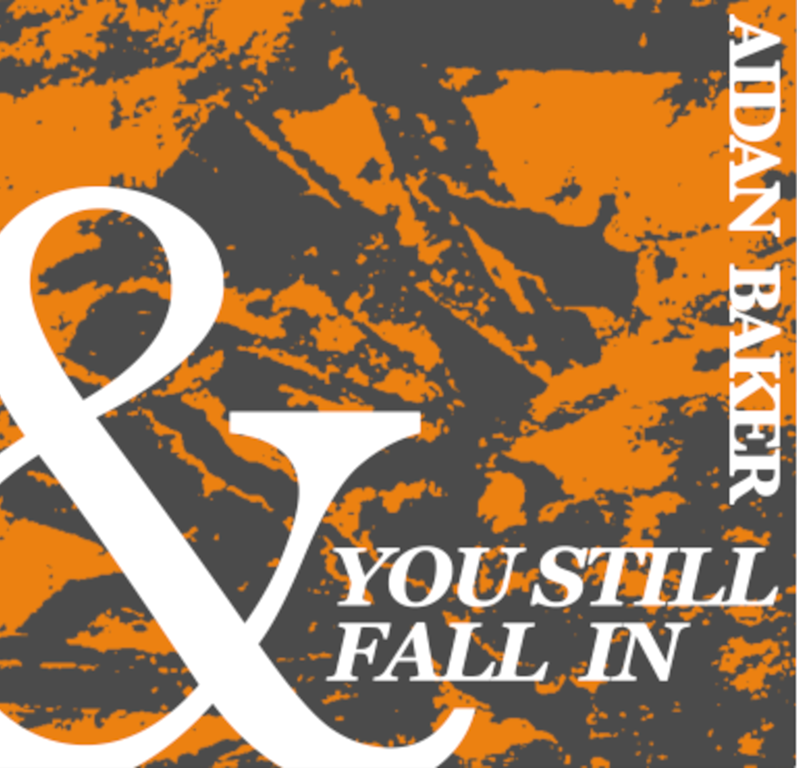
His latest work, & You Still Fall In, we learn, was recorded at Baker’s home studio in Berlin, and ‘hints at the mood and songcraft of the likes of Midwife, Hood, Stina Nordenstam and Movietone. The album is a compelling listen, stripped down to mostly electric guitar and vocals and moving at a distinctly glacial pace. The intimacy of the hushed tones and muted textures lean into a dark, hypnotic and gentle stillness that lingers in the air…’

That fact that this is a truly solo work, with Baker taking care of guitar, bass, drum machine, and vocals is perhaps key to its low-key, introspective atmosphere. Intimate is the word: on the title track which raises the curtain on this soporific sequence of compositions, the acoustic guitar strum hovers to a drone, wavering in volume, seeming to drift, seeming to warp, to fade, you can hear fingertips swiping on strings between frets, and Baker’s vocal is but a mumble; you hear sound, but the words don’t fall free to clarity.

‘Drowning Not Waving’ blends rumbling bass distortions with glitching drum machine and an air of uneasiness: the experience is every inch the struggle the title suggests. And that title… the phrase may have become a popular adaptation of the line from Stevie Smith’s 1957 poem and a metaphor for depression, but to momentarily reflect on the actuality of this all-too -common experience is to recognise the extent to which we, as a society, still – STILL – fail to identify a person in crisis. ‘Cheer up, it might never happen’, we hear often. But it does happen. Even well-meaning friends will diminish the spasms of crisis with ‘well, my life’s shit or probably worse, actually’ type responses. And each such response is like a hand on the head, pushing down. And yes, I speak from experience, and not so long ago I was out for a walk in an attempt to find some tranquillity, some headspace, some time with my thoughts. A dog, off lead, ran up to me and began barking and hassling. Its owners called it back and then groused at me for my failure to smile and thank them. “Ooh, someone’s lost their smile,” the guy said loudly, purposefully so that I could hear. No fucking shit. But you know nothing about my life. My wife died recently and I am not in the mood for being hassled by dogs, and I owe you twats nothing, least of all a smile. I continued on my way without a word, let alone a smile, and there was no point in waving. I was simply drowning. The moral? People may have stuff going on you know nothing about, so don’t be a twat. And anger is only a few degrees along from depression. Music has a boundless capacity to inspire the most unexpected responses.

Things stray into even more minimal, lo-fi territory with ‘You Say You Can See Inside Me’, which captures the spirit of Silver Jews and the soul of some of Michael Gira’s solo recordings. It’s muffled, droning, barely there, even. And yet, somehow, its sparsity accentuates its emotional intensity. There’s almost a confessional feel to this, but it’s a confession so mumbled, either through shame, embarrassment, or plain unwillingness.

On the surface, & You Still Fall In is a gentle work, defined by mellow, picked acoustic guitar and vocals so chilled as to be barely awake – but everything lies beneath the surface. And the surface isn’t as tranquil as all that: ‘When The Waves They Parted’ may be defined by a rippling surge but there’s discomfort beneath the ebb, and the reverb-soaked crunch of ‘Still Cold from the Rain’ is bleak and lugubrious.

Although presented as two separate pieces, ‘Thin Film Interface’ is a continuous thirteen-minute expanse of murky ambience with lead guitar work which soars and echoes over a shifting sonic mist. It hovers in the background, yet simultaneously alters the texture and colour of the air, relaxing but with an unresolved tension beneath.

& You Still Fall In is a difficult album to place – but why should that be necessity? A lot happens, an at the same time, it doesn’t. & You Still Fall In is sparse, drifting between acoustic and altogether simpler acoustic instrumentation. But instead of dissecting the details or reasoning, I’m going to point to the album, and simply say ‘listen to this’. Because it’s simply incredible.

AA

cover

17th March 2025

Christopher Nosnibor

Deborah Fialkiewicz has been busy again, recording and releasing her latest offering in a compressed timeframe. Deborah Fialkiewicz is a low-key and predominantly ambient set, comprising twelve sparse, minimal works which rumble and eddy around the lower reaches of the conscious mind.

There are beats, but they’re way off in the background, as is the rest of everything. The restraint shown on ‘summer mantra’ is impressive: it’s the musical equivalent of holding your breath for five minutes. ‘the lief’ is rather more structured, centred around a descending motif which tinkles and chimes mellifluously, guiding the listener down a delicate path which leads to a murky morass of unsettling sonic experimental in the vein of Throbbing Gristle. The crackling static and muffled, impenetrable verbal mutterings of the ominous title track is exemplary, and it makes for uncomfortable listening. A hovering, quavering, UFO-drone hangs over words which are indecipherable, as if spoken from the other side of a thin wall – but their tone is menacing, and everything about this tense experience feels uncomfortable.

The circular, rippling waves of ‘star lady’ offer some respite, but it still arrives with strong hints of Throbbing Gristle circa Twenty Jazz Funk Greats and Chris and Cosey’s Trace, but also alludes to both Kraftwerk and Tangerine Dream. Thinks take a turn for the darker on the swarming drone of ‘Corpus’, which feels angry, abrasive, serrated edges buzzing attackingly, a thick rippling dominating like a helicopter directly overhead. In the present time, I can’t help but feel twitch and vaguely paranoid hearing this, even as it descends into a lurching, swampy nothing, because ‘bloodchild’ goes full churning assault, an echo-heavy wall of noise that cranks the oscillators this way and that, churning the guts and shredding the brain in a squall of resistor-driven frequency frenzy.

‘norther star’ is particularly mellow, as well as particularly tied to vintage beats and rippling repetitions, a work that’ simultaneously claustrophobic and intense. Synth notes hover and drift like mist before the next relentless, bubbling, groove. ‘widershin; is static, a locked-in ripping of a groove. And then there is the thirteen-minute ‘timeslip’, which marks an unexpected shift towards that domain of screaming electronic noise. The fact I found myself zooning out to the thirteen-minute monster mix of ambience and noise that is ‘timeslip’ is testament to the track’s immense, immersive expansions which massage and distract the mind.

Genetic Radio i.d delves deep into the electronica of the late 70s and early 80s, embracing the points of intersection between ambient and industrial, early Krautrock and BBC Radiophonic Workshop, while at times venturing into the domain of noisemongers like Prurient. It’s a harsh, heavy, extraneous incursion into the quietude of daily living, and it’s a sonically gripping and ultimately strong work which stretches in several direction simultaneously.

AA

AA

a1096582352_10

Exile On Mainstream – 21st March 2025

Christopher Nosnibor

Noisepicker get a pass for a rather lame name by virtue of being absolutely phenomenal purveyors of noise rock, and that they are absolutely phenomenal purveyors of noise rock is a fact, not an opinion.

It’s also a fact that the album’s title, The Earth Will Swallow The Sun, is factually inaccurate. But again, they get a pass, not least of all because without Earth, there would be no Sunn O))) and the whole world of drone metal was born from Earth and the sun, or at least Sunn O))) revolve around that… but I digress. The Earth Will Swallow The Sun marks the return of Noisepicker after a seven-year break following the release of their debut, Peace Off, in 2018, because… life, apparently. This seems to be how it goes. Stuff happens, you get busy dealing with it, and simply doing everyday stuff, like laundry and life admin, and before you know it, shit, five years have evaporated, and that’s half a decade.

‘Do not expect neat, polished, note perfect, carefully constructed sound. Noisepicker are loud and abrasive. They pay homage to the genres which made them fall in love with music in the first place – doom, punk and blues – and bring it all together in a hearty and heavy concoction that is all their own.’, they forewarn, and yes, it’s all true. The Earth Will Swallow The Sun places texture and impact and density over palatability and accessibility. And that’s for the good: the world is engulfed in slick digital mass-produced music, and there seems to be something of a rebellion against it in underground circles, with artists with nothing to lose going all-out to splurge their souls with unapologetically raw output. And this is something that feels relatable, it’s music to connect with, because it’s real, immediate, direct, and without compromise. To listen to something so unfiltered is to feel alive.

The album starts sparse, with strong hints of Mark Lanegan, with Harry Armstrong delivering a heavy-timbred vocal croon that emanates from the chest and crackles in the throat, over a simple guitar strum and some anguished drones, until finally, almost two minutes in, it all kicks in with some big guitars, thudding drums, booming bass. It’s a hint at the potential energy that Noisepicker offer, and if opening an album with a slow-paced dredger of a song seems like an odd choice, it paves the way for some high-octane, high-impact racket, sliding immediately into the darkly chaotic snarl of raging riff-out roar of single cut ‘Chew’, which lurches and lumbers between grunge and metal and heavy psychedelia.

Things only get more intense from hereon in. ‘Tomorrow Lied the Devil’ is built around a solid blues-based boogie, but with everything cranked up to eleven and Armstrong giving it some gravel-throated grit while the guitars chug hard against thunderous percussion. ‘Leave Me the Name’ sees them coming on like Chris Rea not on the road to hell, but dragged up, charred and rotting from the depths of hell, and ‘What Did You Think Was Going to Happen’ is dense, dark, gnarly, menacing and lands like a punch to the gut. The riff is actually a bit Led Zep, but with so much distortion and a vocal that sounds like a death threat, it all takes on a quite different dimension, while ‘The End of Beginning’ is simply a slow but blistering assault. None of this is pretty, and none of this is gentle. All of it is strong, and rabid in its intensity. ‘Start the Flood’ offers some wild bass runs amidst the raving riff-driven mayhem – because we need for there to be more happening here. There’s some rabid raving about supernovas, and then the title track comes on like some deranged stoner rock blitzkrieg that has hints of Melvins and a megadose of daftness. We need that daftness as much as we need the guitar carnage. There’s a smoochy swagger to the blues / jazz-hued ‘Lorraine in Blood’ that’s like Tom Waits narrating a pulpy crime novel, before ‘Lunatics’ brings the album to a more experimental conclusion with its dominant crowd noise backing.

It’s rare for a side-project to stand above the main band, but Armstrong has his fingers in many pies beyond Orange Goblin, and Noisepicker are a rare entity in every way. The Earth Will Swallow The Sun is something else. It’s the sound of a pair of extremely capable musicians really testing themselves, and having fun in the process. It’s fun to listen to, too. Hard, and harrowing at times and in places, but ultimately fun.

AA

AA

420726

20th March 2025

Christopher Nosnibor

And finally, following the single release of ‘The Reflecting Skin’, Mercury’s Antennae deliver their first album in seven years, in the form of Among the Black Trees, the release date set to mark the Spring Equinox. It’s a nice detail which feels pertinent. This last winter has felt particularly grim: not necessary especially cold or even seasonal by historical or conventional standards – but dark, unpleasant, and relentlessly grim – and that’s without even contemplating global events. The Spring Equinox is a specific point of celebration, even elation, perhaps, at which the long, dark nights begin to recede, buds and shoots begin to appear, leaves unfurl, and the first flowers bring colour. The renewal, rebirth, and even a bubbling sense of optimism is palpable, and reminds us that whatever atrocities mankind commit upon the planet and one another, nature has a resilience which transcends all of it.

They describe the album’s nine tracks as ‘existential tales [which] inhabit a ghostly realm of reflection, rebirth and reconciliation, overlaying dense bass, swirling ghostly guitars, and atmospheric electronics, all melding with lustrous and soaring vocal melodies’.

It begins with the glacial synth-led six-minute ‘A Sunless Winter Night’, and it conveys that through the medium of sound as the layers of vocals sweep and soar. It’s vaguely reminiscent of Ultraviolet-era All About Eve, and its slow beats are absorbing and compelling as they clip through the swirling sonic backdrop.

It’s a heavily chorused, reverbed, and otherwise processed guitar which chimes and flutters its way through ‘The Moon Viewing Garden’, a song which is truly beautiful, but also aches with a beautiful sadness, while the six-and-a-half-minute ‘Whispered Among Flowers’ presses the downtempo, atmospheric vibe, with soft washes of chiming, reverb-hazed guitar and wispy synths shaping and shading everything delicately – although it’s the thudding classic goth bass groove that really pins everything together.

As much as the early goth sound emerged from a range of sources, spanning Siouxsie and the Banshees to Bauhaus, and not forgetting The Cure, it’s fair to say that Craig Adam’s bass style and Wayne Hussey’s twelve-string picking on The Sisters of Mercy’s debut album set a definitive template. Among the Black Trees is by no means derivative, but the lineage is evident.

This brings us to the lead single, ‘The Reflecting Skin’: it’s certainly a high mark of the album, but also perfectly representative of its boldly atmospheric intent, and the way it blends the melancholy and the uplifting, perfectly articulating the complexities of emotional and mood-driven highs and lows and the swings that come with what one may describe as ‘seasonal variations’.

While the instrumental ‘PERMIAN’ provides a solid-sounding interlude, ‘As I Lay Hidden (Deer Island)’ offers something quite different, a swashing, dark, Cocteau-Twins influenced slice of dream-pop which also brings with it a folksy twist, and the result is – I’ll say it – epic. And that’s perhaps the ultimate summary of Among the Black Trees as a whole.

As much as many of the songs feel introspective, their expansive nature feel very much outward-looking, as if scanning the horizon for hope, for optimism. It’s something we need to cling to. It can’t all be bad, after all.

To suggest that Among the Black Trees offers light at the end of the tunnel would be misleading. There is no end to the tunnel right now. But Among the Black Trees is a magnificent work, one which is abrim with subtle emotional depth and sound which is truly immense – yes, epic – in scope. It’s an ambitious and expansive album, which offers so much – and delivers on all of it. For the large part, it’s a work that’s understated, but it is, in its own way, quite spectacular.

AA

Mercury_s Antennae promo shot v4

Lavadome Productions – 14th February 2025

Christopher Nosnibor

This is a release that’s certainly been a long time in coming: twelve years, in fact. Time flies when… life happens. Chaos Inception tore their way through two albums and then… they stopped. But now the Brazilian makers of supremely full-on black / death metal are making their return with eleven cuts of  brutal, two-hundred-mile-per-hour, gnarly, grunty metal, charged with the most relentless riffs and no apologies.

Sometimes, words feel somewhat futile in the face of such a monster attack. As you find yourself gasping for breath and your heart racing – because music can be so much more than something you listen to, and can be something that you feel, and even if death metal isn’t something you’re drawn to, there’s something to appreciate in the blistering force of a release like this.

Vengeance Evangel is everything they promise when they write that ‘The music channels an intensity that transcends mere aggression, evoking a spirit of triumph from within its seemingly chaotic energy.’ The energy does, indeed, seem chaotic: every track presents a maelstrom of churning guitars, blistering blastbeats, double-pedal bass drum attack, raw-to-the-core – but making music this frenetic also requires immense discipline and technical ability, and this is something that perhaps escapes the casual listener, or the non-listener who skips it and dismisses it as just so much frenzied metal noise.

The intensity of the sonic assault is matched by the intensity of focus in the performance on Vengeance Evangel. The solo work on ‘Falsificator’ is absolutely wild, a complete fretboard frenzy, swerving between a blanket of rapidfire notes and virtuoso mania, crazed tapping and squealy notes all over, while the drumming is nothing less than a raging tempest that goes way beyond timekeeping and hits a different platform of exploding, beat-heavy attack.

They slow things considerably on the slugging, chugging, ‘La Niebla en el Cementerio Etrusco’, but while the chords are low and slow the percussion blasts away at twice the speed, and the contrast alone is utterly brain-melting, and that’s before you get to the gut-punching guitar and vocals dredged from the pits of hell.

The title track is perhaps one of the weakest, by virtue of its predictability, being rather death-by-numbers – or perhaps it’s simply because of the strength of the tracks it finds itself in company with.

The jolting explosion of ‘Ultima Exitium’ is fast and furious, and it feels as if they crank everything up a few notches on the second half of the album for a pounding, punishing, relentless assault, pulling out unexpected stops/starts, swerving tempo changes, eye-popping solos – it’s got the lot, and all delivered with heartstopping precision. Vengeance Evangel is monster of an album, and the level of detail within each composition is remarkable. No wonder it took twelve years.

AA

a1483258639_10

Cruel Nature Records – 28th March 2025

Christopher Nosnibor

Pound Land have evolved, expanded, metamorphosed, mutated, from two guys cranking out two-chord dirges, to a shifting lineup of musicians cranking out some wild freeform jazz over murky two-chord dirges. And now we learn that they’ve returned to their roots for this latest offering, their third of the year, no less. As they put it, ‘Can’t Stop sees founding Pound Land members Adam Stone and Nick Harris return back to the gratifying freedom and eccentricity of DIY recordings and lo-fi audio projects. Nine diverse tracks spread over half an hour, this short experimental collection nods to Pound Land’s absurdist ‘kitchen-sink punk’ past’.

Can’t stop? Or won’t stop? Not that they should, either way: Pound Land’s mission, it seems, is to proliferate their dingy bass-driven racket as far and wide as possible, and the world – as unspeakably shit as it is, especially right now – is in some small way better for it.

“Got my joggers on / got my flapjack / got my shaven head,” Stone mumbles laconically as if half asleep, over some trickling electronics at the start of the opening track, ‘Armed with Flapjack’. Then some dirty, trebly guitar clangs in and everything slides into a messy mesh that’s neither ambient nor rock, providing a seething, surging drone by way of a backdrop to the spoken word narrative, which is only partially audible, but seems to be a gloriously mundane meandering tale involving, essentially, leaving the house and going about ordinary business.… But it actually turns out to be more of an internal monologue of an anxietised mind. “I’m alright, I tell myself that, I’m gonna be ok, I can do this… bus, and train, take one thing at a time…” It’s really quite powerful in its way.

And staying with the mundane, ‘Watching TV’ is a spectacularly sloppy-sounding celebration of the mindrot pastime that starts out sounding almost sensitive and with a dash of country in the mix, but slides into soporific sludge, before the choppy ‘Lathkill’, which clocks in at just under two and a half minutes, shifts the tone again: it’s a classic Fall rip, or perhaps Pavements ripping The Fall, a sparse, lo-fi four-chord effort which just plugs away repetitively.

Things get really murky with the pulsating ‘Stuff’, where Stone’s meandering contemplations ring out through waves of reverb, and the whole thing feels – and sounds – very Throbbing Gristle. Dark, muffled, monotonous, it grinds and clatters away, a thick sonic soup, and it’s as primitive and unproduced as it gets. It’s not pleasant, but it works perfectly: it needs to be rough, raw, unfiltered. There’s simply no way this act is ever going to have commercial appeal, and that’s perfect: Pound Land are made for limited cassette releases and playing tiny venues to audiences who will be split roughly down the middle between absolutely loving them and wondering what the fuck they’ve stumbled upon. Pound Land really aren’t for everyone. They’re the anti-Coldplay. They’re for people who relish being challenged. ‘I Spy’ brings that challenge straight away, being different again, the rawest, scratchiest, scratchiest, most abrasive no-fi-punk you’ll hear all year.

Things get even more jarring and difficult towards the end of the album. ‘Janet’s Here’ should be a breezy interlude, announcing the arrival of a guest, but instead it’s tense because the delivery is straight-up demented, and ‘Affordable Luxury’ is a rabid rant, again reminiscent of Throbbing Gristle. It’s uncomfortable, the drawling vocal secondary to the warping drones and scratchy experimentalism. Stripped-back not-quite acoustic ‘EGG’ is a trick: again, it has hints of The Fall doing ‘sensitive’ – like ‘Time Enough at Last’, for example – and it’s delicate, but it’s also not.

And this is the thing. Can’t Stop is their most wide-ranging and accessible album to date. And yet… well, it’s not really accessible, for a start.

Can’t Stop is challenging in new ways, too. Working with so little, they’ve pushed the songwriting in divergent directions, making for an album that reaches in all different directions, while, of course, retaining that primal Pound Land core and purposefully simple, direct approach and aesthetic. I love it, but I expect many will hate it. And that’s the way it should be. It’s peak Pound Land.

AA

a3349026030_10