Posts Tagged ‘Album Review’

20th December 2017

There’s something uniquely enjoyable about watching a band develop from their most formative stages to become the act they aspired to be, and showed the potential to be. I first encountered Seep Away on a bill of noisy shit around Christmas in 2015, soon after they came into existence.

They describe their sound as ‘raw and punkish,’ and not that ‘there’s not too much melody, a lot of anger and a tonne of noise’. Their performance was ragged, and it was clear they were very much in development, both musically and as an act. But the sheer passion and raw energy they poured into that set was something else. They would stop and gasp for breath between songs, having played each one like it was the last song they would ever play.

Over the course of the next two years, they didn’t just get better, they got awesome. Tighter, louder, harder, harsher. Jay Sillence swiftly evolved into one of the most compelling front men you could hope to see: fearlessly in your face, anarchic and unpredictable, and it was clear watching them play that they were loving every minute.

It’s therefore sad that The Blackened Carnival of Societal Ineptitude is a parting gesture. But it’s also a cause for elation that they’re signing off with a collection of songs that encapsulate the sound – not to mention the brutal, ferocious, energy of those later live shows. Circumstance and geography may be behind the band’s demise, but better that than acrimony or creative collapse, and they’re departing on a high. The Blackened Carnival of Societal Ineptitude contains eight tracks and clocks in at around twenty-two minutes and condenses all elements of the essence of Seep Away into that.

‘Rot’ is all about the churning, pulverizing riffage, the ribcage-rattling bass and snarling vocal attack. For dingy, murky, metal-done-dirty, it’s up here with Fudge Tunnel at their best. Single cut ‘Matchstick Man’ throbs and rages. Their rendition of Ol’ Dirty Bastard’s Shimmy Shimmy Ya’ has long been alive favourite, and the studio version captures the spirit of their interpretation perfectly. You’ll be leaping round the house hollering ‘baby I like it rrrrrrrrrrroooooaaaaawwwwww!’ for a week after hearing it just once.

The album’s second cover, a take on Minnie Riperton’s ‘Loving You’ sees Sillence come on full Marilyn Manson, and they ratchet up the sneering sleaze to eleven. It’s a showy, metallic-grinding wheeze, brimming with sadistic malice. It’s also a sackful of deliciously manic and suitably irreverent fun.

‘Joie de Vivre’ returns to the snarling, churning, grunt and chug of the heavy grindy / metal / hardcore amalgam that defines the band’s sound, and it’s hard-edged and gnarly in the best possible way. It packs in all of the band’s intensity and full-throttle attack into under four minutes (and is the longest track here).

Closing the album (EP. whatever) in quirky and irreverent style, ‘The Awkward Handjob’ is a piece of silly fairground japery about, er, wanking, of course. It’s fitting that of any band, Seep Away should end their all-too-brief career with a toss-off track about tossing off.

Instead of bemoaning unfulfilled potential or mourning their departure, we should focus on the positive: Seep Away have delivered a blinder of a set here.

AA

Seep Away - Blackened

Malignant Records – TUMRCD117 – 8th January 2017

Christopher Nosnibor

Greek ritual ambient duo, Martyria promise ‘5 stunning tracks of textural depth, sepulchral darkness, and exotic, richly detailed atmospheres’, and are pitched for fans of Dead Can Dance, Funerary Call, Voice of Eye, and Shibalba. I’m not going to feign superior knowledge: I’m only aware of Dead Can Dance from that list, but I have a hunch I know what’s reasonable to expect here. I’m braced for dark, haunting, atmospheric. I’m anticipating compositions which emanate subterranean spiritualism and mystery. And this is precisely what Martyria deliver.

This is dark. Dark in the sense of ominous, eerie. Dark in the sense of foreboding. Dark in the sense of the occult and the otherworldly. Dark in the sense of the unheimlich. Rhythms clatter and patter as wordless invocations float and drift above eternal drones. Dolorous bells herald the arrival of an elongated drone and an ethereal, choral female voice. Bells chime in a whorl of what sounds like didgeridoo as heaving chants and vocalisations conjured from the depths of the diaphragm in monasterial intonations.

At the mid-point of the album, ‘Nekron’, plunges into deeper, darker depths: dank rumblings and distant thunder which registers low on the sonic spectrum, churning at the gut, conjure dark, shadowy visions. It bleeds into the even longer darker, more sinister ‘Nyx’, dominated by cavernous percussion, muffled by distance and depth. It evokes flickering images of candlelit rituals held in carved temples far beneath the surface in secret cave networks.

The final composition, ‘Eschaton’, stretches out over some twelve and a half minutes with wordless vocal evocations and intimations of ancient occultism. It’s not music you can readily understand or cognise: it registers on a level far, far beneath the surface of comprehension. It’s the calling of the earth, the rocks, the trees. It registers and calls to a part of the psyche long-buried. Martyria speaks to the resonant brain, to genetic imprints, to the soul as conveyed through generations of heredity. It speaks to ancient history, knowledge buried through centuries of ‘progress’. Martyria is not a work to comprehend, but to allow to bury its way into the canals of the mind devoted to instinct. Its impact is difficult to quantify or even to explain on a rational, scientific level. And yet, it has impact and resonance – deep, slow-register resonance.

AAA

Martyria – Martyria

6th June 2017

Christopher Nosnibor

Mention Surrealism and the chances are Dali will be the first – and perhaps only – name mentioned by many. Breton, Ernst, Magritte may follow, but the chances are few would likely mention Beat luminary Brion Gysin, who was ejected from the Surrealists on the eve of a major exhibition. The fact of the matter is that Surrealism covers a broad territory, and is represented by myriad lesser known – although by no means lesser value – artists in all media. Leonara Carringon may be competitively obscure – as, indeed, are most women in Surrealism – but the English-born Mexican artist was both a painter, and novelist, who not only received an OBE but is also notable as being one of the last surviving members of the 1930s Surrealist movement, living until 2011.

This album (originally released by Wist Rec) is based on Carringon’s works, and the accompanying text quotes lines penned by Carringon: ‘Ice ages pass, and although the world is frozen over we suppose someday grass and flowers will grow again. In the meantime I keep a daily record on three wax tablets. After I die Anubeth’s werecubs will continue the document, till the planet is peopled with cats, werewolves, bees and goats. We all fervently hope that this will be an improvement on humanity, which deliberately renounced the Pneuma of the Goddess.’

Clara Engel, meanwhile, has built quite a body of work, and has also featured on a number of other works, including Aidan Baker’s Already Drowning in 2013. This is album is not overtly Surreal in its sound or delivery, but then again, it does forge an atmospheric depth that reaches into the subconscious and the further reaches of the listener’s psyche.

From the chiming minimal post-rock leanings of ‘Birdheaded Queen’ to the delicate, almost folky ‘Anubeth’s Song (Burn Eternally)’ (although it’s more the arboreal, ancient folk patina of latter-day Earth than anything most would recognise as ‘folk’), the album’s five compositions explore the spaces between the notes and use them to pull the listener in almost imperceptibly.

Soft piano notes and delicately-picked guitar are the primary instruments which provide the backdrop to strong imagery of animal devourment, transformation, and otherworldliness, not to mention infinite intangibles depicted in the most visually engaging of ways. Engel draws together a mesmerising, magical vocal style with compelling yet understated approach to arrangement and lyrical composition. Simple motifs and structures accrue power through repetition.

‘Microgods of the Subatomic Words’ is a splendorous work, brimming with rippling, shimmering electronic atmospherics over a solid but restrained rhythm. ‘The Ancestor’ is slow and sparse and ponderous: echo-laden guitar notes ring out into the thick air and hang, slowly resonating.

Engel’s voice conveys emotional depth, is rich and possesses an ethereal otherness, a kind of disembodied, abstract spirituality that’s haunting and deeply evocative. Exquisitely played and beautifully nuanced, it all combines to make for an album which is subtly strong.

AAA

Clara Engel – Songs for Leonora Carrington

Ripple Music – 19th January 2018

James Wells

Maybe it’s just me – and it’s quite possible – but many of the current crop of so-called doom-metal bands are pretty tame, and are little more than Sabbath-inspired hard rock bands lacking in inspiration and keen to jump on the metal zeitgeist of circa 2015.

I’m not intentionally singling out female-fronted doom acts, but I was recently appalled by Jess and the Ancient Ones for reasons which really ought to be apparent, and those reasons aren’t a million miles away from the anguish on being presented with Witchcryer’s latest offering.

Cry Witch is better, less cliché and less Jeffersone Airplane meets The Doors, which is a relief. A major fucking relief. But it’s still so steeped in cliché and heritage as so be not so much so last year and so ersatz retro bullshit and to be deeply uncomfortable. And it’s not especially doomy.

There are some ok riffs and the thumping bass embarks on some neat little runs, and the title track, which is also the opener makes for a strong enough start, and sonically, stylistically, it’s representative of the album as a whole. So what’s the problem? Actually, that’s precisely the problem. Against, say, Black Moth, who are also of a similar ilk Witchcryer sound tame, and while there’s not much different in the two band’s approaches, the lack of real bite could be forgiven if the hooks were sharper. But the preoccupation with mining the vintage seam has apparently eclipsed any quest to forge their own identity.

AAA

Witchcryer – Cry Witch

Klangbad Records – 20th October 2017

Christopher Nosnibor

This is one difficult album to digest. It’s hard to assimilate, or even comprehend precisely what Audiac are aiming to achieve here. At first, the title track comes on like some kind of electro-soul effort with a soft-focus, analogue-hued retro vibe, augmented by some doodlesome 80s synths. But then everything goes haywire with eternal delay overlaps and there are overloading circuits and the soul turns to strain and… oh, it’s bending my brain.

Thankfully, the album’s second song, ‘People Going Places,’ is a relatively conventional piano-led post-rock ballad, with heartfelt vocals and soaring, quasi-operatic backing vocals. It perhaps goes without saying, then that conventionality is relative. It’s brimming with theatricality and bombast, a wildly extravagant composition

And back and forth it goes, alternating between weirdy and vaguely fucked-up experimental electronica and relatively straight piano songs with odd twists. There are moments of absolute beauty here, moments which not only tug on the heartstrings but nag at the corners of the soul. Audiac’s website places them as having ‘roots in the German Romantic Lied, chansons, theatre music traditions and the burlesque’.

‘Not Bound to Anything’ is scratchy and soulful: grandiose and , and there are hints of Scott Walker circa Tilt on ‘Doberman’, a bleak, piano-led piece that’s less post-rock drama than a warped and intense sonic smorgasbord, while the soft-edged ‘Dreamadream’ borders on the dreamy lounge side of synth pop. And then there’s ‘When You Say My Name’, which is subtle and sensitive, with its acapella opening and soft piano that gives way to brooding atmospherics before things get dramatic and a bit odd. JG Thirlwell’s post-millennium Foetus releases are something of a touchstone here.

Audiac could only ever hail from Germany. There’s something about the way they’re unbound by convention, about the undocumented, unspoken undercurrents of their sensibilities which belongs to Germany. Ultimately, though, So Waltz is an album that exists out of time and stands free of geography.

AAA

Audiac – So Waltz

Störung – str011 – 7th July 2017

Christopher Nosnibor

I need to work a better filing system for my to-review albums. As it stands, it’s literally a pile, with new deliveries being tossed on top of the pile or otherwise littering the floor next to my desk. The chaotic disorder doesn’t sit comfortably with my innate sense of order and organisation, but the pile has a life of its own. Logically, new arrivals should go to the bottom of the pile, but lifting the pile, precarious as it is, is a risky operation. The teetering stack reached a height and degree of instability this morning that lifting the disc and accompanying press release from the top caused the whole thing to slide in several directions at once. Gathering the strewn and scattered discs and press releases, many of which had become separated from one another, I happened upon The Broken Glass. This seems to be something of a recurring theme, with Miguel Frisconi’s Standing Breakage standing out as a work centred around the exploitation and exploration of a cracked glass bowl. Rather later, I located the press release, too.

The pieces on The Broken Glass aren’t nearly as haphazard as my filing, but there’s a loose and spontaneous, improvised feel to much of the album, whether the composition is a sparse (dis)arrangement of electro / acoustic instruments (‘The Broken Glass v1’) or rippling, rhythmically pulsating electronica (‘The Broken Glass v2). There is a strong sense of variation and variety between the two complimentary yet highly contrasting versions – so much so that it’s difficult to discern how it’s the same piece performed differently. On the face of it, their commonality lies in the organic incorporation of Asférico’s field recordings and the subtle washes of sound.

The album’s third and final track (a CD-only bonus), ‘Sonidos del Subconsciente II’ (‘Sounds of the Subconscious II’) is different again, and has a running time of some forty minutes. An exploratory piece which evolves gradually and naturally, it begins with what sounds like the sound of the wind, a hushed and distant rumble. way off, distant machines clank and grind, the sound of heavy industry blown many miles on the breeze Brooding string notes creep in. The low tones surge and grow and build… and then there is silence. Abrupt, unexpected and unexplained silence. It simply arrives after nine minutes. The disc is still playing. Straining my ears for the faintest hint of sound above the whirring of the CD player and my hard-drive. I stop typing, so as to listen for sounds buried by the clatter of keys. But no: there is nothing.

Is this the sound of my subconscious? How long do I resist skipping the track forward thirty seconds, a minute? Why does the silence unsettle me so? Suddenly, I’m called to leave the room. On returning, the track is at the fourteen-minute mark, and there is sound. I skip back to discover where sound resumes I turn up the volume, to discover that there had been no silence, only extreme quiet. I go back to the beginning.

And from the so-quiet calm slowly, almost imperceptibly builds a funnelling storm of noise, a howling gale of tempestuous noise, amidst which crashing explosions of metallic noise, like sheet steel against sheet steel, reverberate. And the volume and intensity continues to grow and swell, to a level that’s difficult to bare. It’s no longer mere sounds, but a physical force. It’s all-encompassing, and I find myself cowering as though on a small boat in the middle of a violent storm, while the only land is an erupting volcano.

And yes, sometimes my subconscious does sound like this: a raging barrage of relentless, surging noise, amorphous, indistinct, it’s abrasive and it hurts. Not so much the sound of breaking glass, but sound to break the psyche.

AAA

Mia Zabelka & Asférico – The Broken Glass

Consouling Sounds – 10th November 2017

The cover art to Jozef Van Wissem’s latest album isn’t only intrinsically connected to the musical contents, but is essentially an explanation. The picture in questions is a contemporary vanitas painting by the Belgian artist Cindy Wright.

More common in the 16th and 17th centuries, vanitas are, according to the Tate, ‘closely related to memento mori still lifes which are artworks that remind the viewer of the shortnes (sic) and fragility of life (memento mori is a Latin phrase meaning ‘remember you must die’) and include symbols such as skulls and extinguished candles’.

Like Wright’s drawing, Van Wissem’s music is of another time. And while any album on which the dominant instrument is the lute is inevitably going to evoke times long past, something about Nobody Living Can Ever Make Me Turn Back hints only in part at the Renaissance. Across the seven compositions, Van Wissem conjures a deep, almost occultic mysticism. Humming chorial swells and sparse drums beating like thunder, all enveloped in cavernous, sepulchral echoes.

Each piece is a response to the painting, entwining Biblical references into the titles by way of referencing the origin of the term ‘vanitas’ in the opening lines of the Book of Ecclesiastes: ‘Vanity of vanities, saith the Preacher, vanity of vanities, all is vanity.’

Just as Wright’s work is exquisitely executed with a remarkable level of detail and craft, so the playing is rendered with an intense focus, but not so as to sound stiff or stilted: the notes flow elegantly. And while the overarching theme may be mortality, Nobody Living Can Ever Make Me Turn Back has an air of lightness and optimism about it, carrying in a sense of a celebration of life and hinting that what may follow may be brighter and more beautiful still.

AAA

wissem_cover_1

Interstellar Records – INT043

Christopher Nosnibor

And suddenly, one cold, wet, dark, depressing November night, an album arrives that slaps you round the face, hard, and makes its presence known. And within three songs, you know it’s probably one of the best things you’ve heard all year. And it’s a concept album.

I’d been thinking that 2017 hasn’t been a great year for music, while chewing on the irony of the fact I often berate people making the same complaint for their failure to look in the right places: there is always good – awesome, exciting – new music emerging from somewhere. Admittedly – and this shouldn’t be about me, but I find that reception of music is an intensely personal and individualism – I may not have in the most receptive of moods, or have kept up with as much of the music passed my way this year, but 2017 simply doesn’t feel like one of the greats, despite having a handful of clear highlights. But these highlights are less about objective merit and commercial success, and what’s actually stuck. This, however, is an album with immediate impact. It grabs the listener by the throat in the opening bars. And it doesn’t let up.

According to the liner notes, ‘Calamitas deals with danger babe Ruby, who stole Silvio Berlusconi’s heart, Satan deceiving us all by using the purgatory doctrine, dictator Kim Jong Senior (II), the sexiest man alive back in the days, beautiful femmes fatales with a look that kills, the man who cut off his own leg to get disablement pension (he didn’t succeed), personal misery, the best days of my life, the abyss that is staring back, etc.’ So, it’s a true story, albeit one where the narrative is buried beneath a strain of sinewy guitars and barked vocal delivering impenetrable lyrics. And that’s all good.

‘Calamitas’, we also learn, means ‘loss, disaster, damage, harm, defeat and misfortune’. These things, the album’s ten tracks convey with crystal clarity through the medium of raging, guitar-driven noise. And as much as Calamitas is a snarling, gnarly mess of brutality, it’s gritty, tense, and cut from a different cloth from so much murky metal thrashing.

I’m reminded as much of anything of the swagger of Girls vs Boys on their debut album, Hey Colossus, and Henry Blacker, and there’s a strong flavour reminiscent of Helmet and The Jesus Lizard and the Am Rep / Touch and Go label styles. There’s noodly, Shellac-meets-Tar math-grunge on ‘A Knife for Every Heart’ and ‘Best Days of Our Lives’, which builds a tripwire tension. ‘Fuck me Blind’ is darkly claustrophobic, built around a cyclical riff, sinewy top guitars and ballistic hollering. There’s also a gnarly blues undercurrent to many of the songs here, and for all the messy guitars, the bass is pure thunder and lays down some irresistible grooves over the course of the album’s ten cuts. There’s a dark, gritty vibe and a gloriously ragged edge to it all, and Markus Dolp’s gruff, Cookie Monster vocals have hints of Tom Waits and JG Thirlwell.

Some cuts do venture into all-out hardcore punk / metal attack, like the squalling black mass that is, opener ‘Anti’ but what makes Calamitas such a corking album – beyond the fact that it simply is a corking album – is its range. Yes, it’s all a bloody, brutal, guitar-driven mess of noise, as becomes a band who’ve spent two decades exploring the terrains of noise-rock, but it’s sonically articulate while it rages blindly and incogently. It’s the perfect balance, and the frenetic and the furious drive that defines Calamitas makes for a gloriously intense listen.

BUG

Miasmah Recordings – MIALP037 – 25th November 2017

Christopher Nosnibor

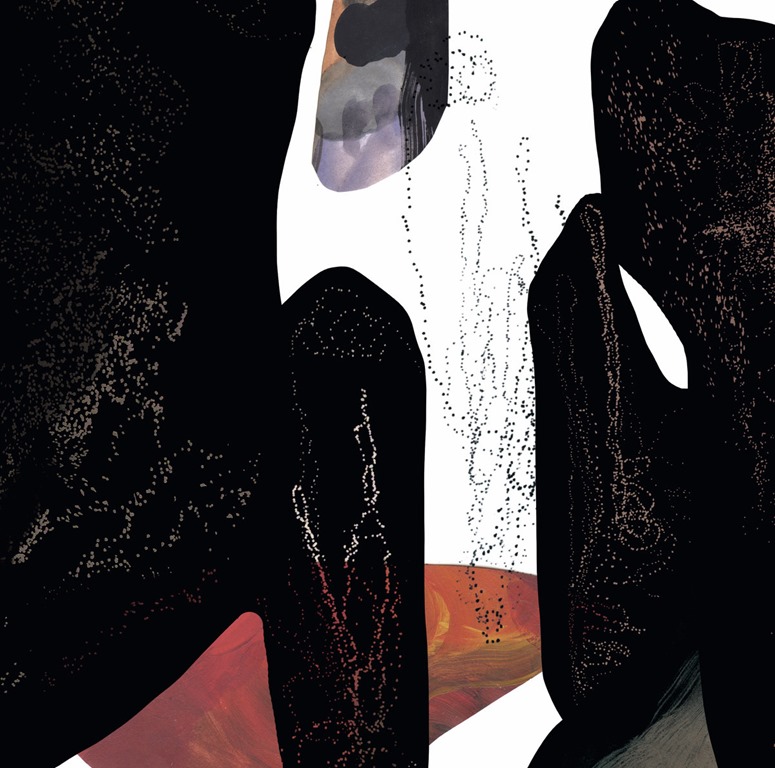
Svarte Greiner is in fact Erik K Skodvin. But identity is mutable, and on Moss Garden, Skodvin explores the mutable identity of sound in space. And by space, I mean both in terms of the spatial creations of soundscapes, and outer space: through the former, Moss Garden evokes the latter.

The album contains two side-long tracks. ‘The Marble’ creates a slow-moving sonic expanse of drifting ambience. Crackles of static create minor interference in the smooth surface which extends over light years of distance. It’s a journey of infinitesimally gradual transition and glacial, galactic expansion. Everything moves in suspension, slowly, moving in its own dense molecular soup.

‘Garden’ begins with a crescendo and works backwards, tapering off into near-silence before beginning to grow at vegetable pace. There’s no specific purpose to this elliptical reference to Andrew Marvell, but listening to musical explorations so overtly background affords the mind space to wander, and it’s always a source of amazement what thoughts and recollections venture to the fore when given the room to surface at will. Sitting back in a dimly-lit room with a large measure of something strong, this is the perfect sonic immersive to lift the listener out of the humdrum and into another dimension.

AAA

Svarte Greiner – Moss Garden

Bearsuit Records – 1st December 2017

Christopher Nosnibor

The album’s acknowledgements indicate that the little Edinburgh label has some high-profile and well-respected champions, including Stuart Maconie, Tom Ravenscroft, Gideon Coe, Mark Riley, David Stubbs… and some guy called Nosnibor. I’m deeply flattered to find myself in such prestigious company. It’s no secret that as a music writer, I’m a fan first and foremost, and Bearsuit stand out for their unswerving commitment to the weird and the wonderful – and, indeed, the wonderfully weird.

From minimal, brooding electro-pop to experimental avant-folk via haunting, spectral gothtronica, and space-prog in waltz-time, it’s all here on this latest compilation. Psychedelic dreampop, scratchy, glitchy trip-hop, stark post-industrial noise, and a jumble of all other elements which should never meet cozy up side but side and on top one another. Quirky isn’t in it.

Luscious, sweeping strings glide over a softly pulsating throb, and it’s all very cinematic, very John Williams on ‘Fulfilling Eclipse’, Alexander Storadiau’s contribution to this collection. No two ways about it, it’s a grand opening worthy of JG Thirlwell. But then PoProPo bring a busy mess of high-friction jazz-funk-punk, which just wouldn’t be complete without the wibbly Theremin wails. The weirdy, sultry cabaret of Martian Subculture’s ‘Chewing Gum’ contrasts again.

The reason I love Bearsuit isn’t because I love every tune they release, but because every tune they release opens my ears to something new, and because they’re fearless in pushing the most far-out stuff from the deepest underground. Tthere are some truly ‘what the fuck?’ moments on here. ‘Tous Les Rochers’ by Yponomeutaneko leads the way. Swaggering brass and monotone spoken word breaks into discord and a load of crazed shouting. I haven’t a fucking clue what they’re shouting about, or why, or why the track even got recorded, but the fact it did, and that it’s on here is utterly brilliant. The sing-song vaudeville oompah of ‘World Travel of the Piano Tuner’ by Shinnosuke Sugata is music completely out of time, complete with muffled wax cylinder production.

The Moth Poets offer up some glacial post-punk disco hybrid collision with operatic bombast. Swords Reversed bring a palace of oddball melody and thumping beats, while Petridisch – one of three acts with two tracks featured – cultivate an air of otherness. No two acts featured are alike, and yet they compliment one another perfectly. Sequencing matters as much as selection on a compilation album, and The Invisible & Divided Sea flows nicely.

It’s a gloopy, tangential, often disorientating concoction of disparate sounds that somehow stands as the perfect representation of both the artists involved and the label itself.

AAA

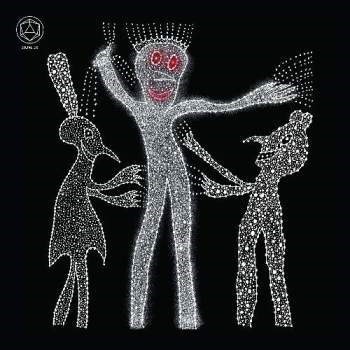
Bearsuit Comp Cover