Posts Tagged ‘Album Review’

Sargent House – 14th September 2018

Christopher Nosnibor

Emma Ruth Rundle clearly likes to keep busy. Her career with The Nocturnes crossed over with her joining The Red Sparowes, which in turn crossed with the start of her solo career, which saw the release of ambient effort Electric Guitar: One in 2011, while also embarking with another band in the form of the trio Marriages in 2012. Her sprawling and rapidly-expanding discography is a document of a restless soul, and a spirit who’s not only creative but incapable of taking respite.

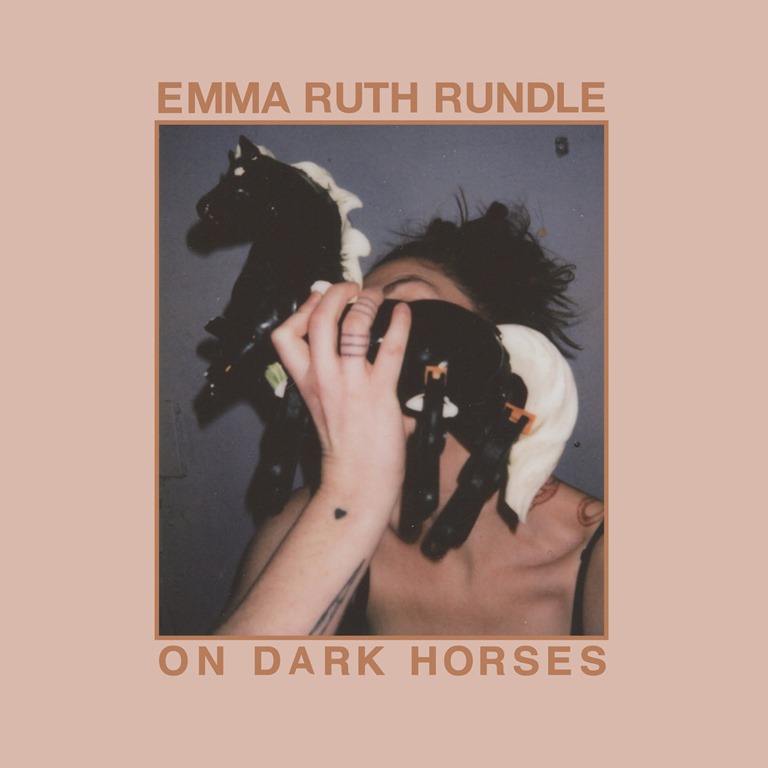
On Dark Horses may only contain eight songs, and none of significant length (the album clocks in around the forty-two minute mark, harking back to the days of an album fitting snugly, ideally with just a little breathing room, on one side of a C90 cassette), but it’s got range and intensity.

There are dark, haunting undertones to the dramatic shades cast on opener ‘Fever Dreams’, which bursts loud from between delicate wisps of fractal guitar before taking a more languid and wistful turn around the mid-point. ‘This shit is real,’ she agitates at one point. This shit is also graceful and expansive and powerful. ‘Control’ – one of the album’s real standouts – begins gently, mellow, chiming guitar that’s a post-rock country crossover providing the backdrop to Emma’s lilting country-infused vocals… before the deluge of distortion crashes in like a landslide. And keep on crashing, thunderously, a massive mess of sludgy weight, burying the drums an all but the cymbals, mashing and crashing away in the background. ‘Darkhorse’, too, builds gradually, chimes gracefully, and roars like thunder beneath a delicate vocal.

While any Chelsea Wolfe comparisons have merit, particularly in relation to the front end of the album, Emma Ruth Rundle brings a whole slew of other aspects to the party on On Dark Horses there’s a heavy folk element, both to the music and in Emma’s voice. Then again, post-rock passages yield to blistering crescendos that also draw on the most explosively soaring shoegaze.

When she takes it downtempo, as on ‘Races’, there are deep, sad guitar notes which arc, aquiver with reverb. And across the album, the sense of depth conveyed by the rich textures and the three-dimensional fullness of the sound render the songs with a rare physicality and intensity.

AA
Emma Ruth Rundle – On Dark Horses

Karl Records – 31st August 2018

Christopher Nosnibor

Christ, what am I listening to? Everything all at once. This is one of those ‘plucked at random from the cascading pile of CD I haven’t listened to but should probably give a go’ releases. Because one downside of doing the whole music reviewing thing is that there’s a certain pressure – albeit self-made – to push certain releases to the fore, be it on account of the act, the label, the PR, or a certain sense of duty. Other times, it’s simply the pull of fascination. But because there are only so many hours in the day, especially after the drudge of the 9-5 (Or, thanks to flexible working, my preferred 6:50-3:40), I can only cover so many releases. But the randoms are often the ones that keep me going. Discovering new music – and when the whim takes, the weirder the better – is what makes this worthwhile. And this is weird, alright: it’s a live reinterpretation of the first collaboration between Turkish free jazzers Konstrukt and Keiji Haino, who’s apparently a Japanese avant-garde / noise icon, which surfaced in December last year. Here, the original album’s six tracks have been melted down into two longform works, namely ‘Into A Trap Surely So Elaborately Laid Air Has Entered And A Splendid, Beautiful Monster Now Swims’ and ‘Excess + Analysis / Courage =’, continuing the equational theme of the original.

Brooding strings scrape before suddenly breaking out into manic jig with electronic squawks and bleeps. Then, atop the ever-wilder percussion, shrieking sax erupts. There’s a segment that’s a bit jazz, a bit math, a bit Joujouka about a third of the way through, and I’m dazed, bewildered. Crashing cymbals fly in all directions – not literally, although it’s possible – and then it goes quiet for a bit. Whistles. Some people in the audience are evidently quite appreciative. By the end of the first side – some 20 minutes of cacophonous, tempestuous dissonance that builds – and builds, and builds – to a wild crescendo that ultimately and inevitably collapses into a ragged ending.

Side two, the open-ended ‘Excess + Analysis / Courage =’ is a lot sparser, more spaced, and spacey, less frenetic and more atmospheric. Its all about the scratchy angles: at one point, things take a turn for the off-kilter jazz-funk oddity, before clanging Gang of Four style guitars collide with wandering progginess and parping horns drifting though howls of multi-faceted feedback.

Toe-tapping easy jazz it isn’t, but then again, nor is it all-out free-noise, despite the occasional riotous bursts. And where does it leave us once it’s all tapered to silence? Bewildered, in no-man’s land, agog, and confused. Whether or not the intent, it’s a fair response and better than shrugging and switching off. It’s seriously niche, but it explores new avenues, and for that alone, the existence of A Philosophy Warping, Little by Little That Way Ahead Lies a Quagmire (Live) is justified.

AA

Konstrukt

Southern Lord – 24th August 2018

James Wells

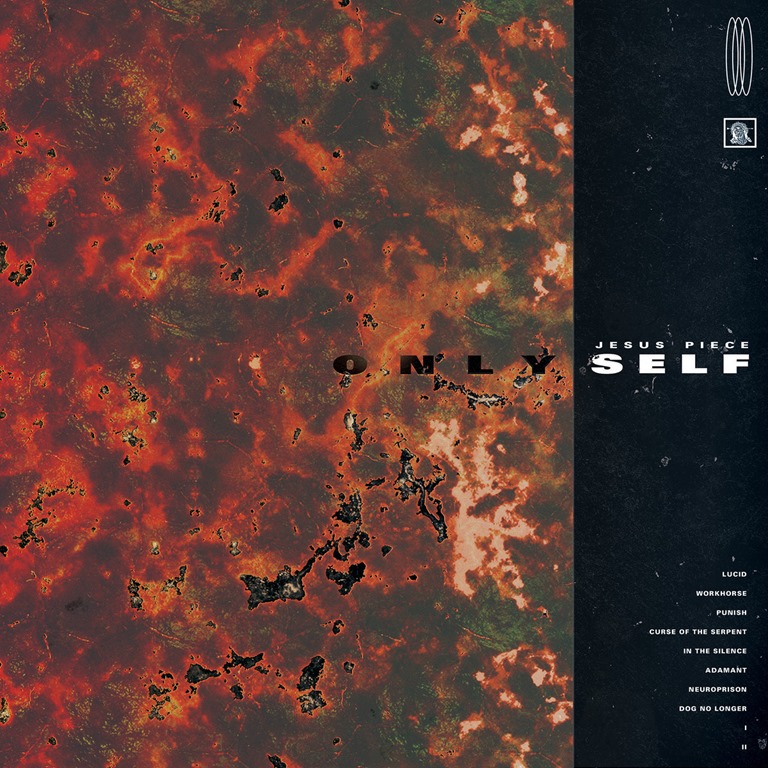
According to their biography, Jesus Piece ‘have left craters in their path over recent years, quickly developing a reputation as one of the heaviest, most uncompromising acts both on record and on the stage. With the brutal grooves of Y2K-era metallic hardcore at the core, the band also incorporates elements of noise, ominous tones, and haunting atmospheres into their dynamic songwriting.’

‘Lucid’ batters its way out to herald the album’s arrival: rapid pedal-work on the kick drum powers the cutty, hard-edged guitar. Its brutal, regimented, industrial, grinding like early Godflesh, but with snarled, guttural vocals spitting and howling nihilistic dismantlements of personal struggle and loss, racism, police brutality, and social and political injustice.

They distil all of these violent emotions and unspeakabe rage into short explosive packages: the majority of the songs on here are under three minutes. ‘Punish’ brings a sinewy, spectral lead guitar to twist its way over the grinding churn of the rhythm section, hinting at the dynamics of early Pitchshifter.

When they do slow things down, as on the stripped-back ‘In the Silence’ where the bass wanders and weaves a murky path and haunting chorused guitar notes rise from the swamp quite unexpectedly to create an unsettling atmosphere, the impact remains undiminished, and for the most part, it’s the heavy pummelling that defines Only Self.

The album concludes with an immense shift in style and sound in the form of a pair of contrasting but complimentary atmospheric pieces titled by number only: ‘I’ something of a monastic, ritual ambience to it, as voices echo in the mist before the doomy guitars break through in a slow landslide on ‘II’.

With such variations and deviations from the template of howling aggression and blind fury, Only Self stands apart from so many albums of its ilk, and reveal Jesus Piece to be capable of more than just endless anger – although they’ve got the rage in spades, and bring it to devastating effect on what is one hell of a debut.

AA

Jesus Piece – Only Self

August 2018

Christopher Nosnibor

Every town and city has at least one. One of those bands who knock around for years, are solid, and actually pretty decent, but never moves beyond the local scene. Once of those bands who’ll never be massive, but have all the right credentials and enough decent songs to do well on the pub / small venue circuit, if only…. Well, it’s all the iffs. It’s often not even lack of ambition in many cases – although the 9-5 and family life and mere existence so often take precedence and gnaw away at both ambition and the time available to do the things that make achieving any ambition possible. In other cases, of course, it’s simply lethargy. But is that so wrong? If a band is content to remain local and enjoys doing what they do, and people turn up to shows and enjoy what they do… aren’t they fulfilling a purpose, culturally? Fun is important, and where’s the harm? There’s joy to be had in the simple process of writing, rehearsing and performing songs.

Close to home (for me me) Wakefield and Piskie Sits, who in a parallel universe enjoy a cult status somewhere between Pavement and Truman’s Water. Or something. They’re ace, but will likely never find their audience in their locale. The same is true of PERCY, and it’s not negative to place them in this bracket – after all I first caught them playing the back room of a pub in York in the late 90s (they formed 22 years ago in 1996). Since then, they’ve gone on to pursue a more punk-pop trajectory, been signed, gone back independent, undergone numerous drummer changes, and received airplay from John Peel and Steve Lamacq.

I moved away, returned, did other stuff, and, well here we are: they’re independent again and doing what they do, and so am I. And so it goes.

On this outing, their back-to-basics, Fall-influenced, workaday, hacked-off, angular post-punk pub rock really mines deep into that rough ‘n’ ready Sleepers Wake sees PERCY step out of their comfort zone and at the same time return to their roots to deliver something quite different, while at the same time perfectly familiar.

‘Why Are You Still Here’ kicks the album off in choppy, lo-fi, rough ‘n’ ready style that captures the spirit of The Fall circa 1979. The guitars are raw, the rhythm section is functional but far from pretty in its detail, and the vocals are sneering: it’s more about delivery than musicality. ‘HEP!’ is pure Grotesque (think the Rockabilly of ‘Container Drivers’), and it’s fair to say that Sleepers Wake is a no-fi ruckus.

If the majority of the material fits the form, and is as messy as, with the choppy as ‘It Is Time’ going a bit throatier and noisier but still sounding like a thick-throated Killing Joke cover of ‘How I Wrote Elastic Man’ and ‘Enlightened’ drawing on any shit floating around from Fray Bentos pies to Skegness in the rain; Sleepers Wake is both diverse and coherent.

‘Alice Stone’ – one of two tracks mixed by underground avant-electro / techno legend Tim Wright goes all dubby and builds to a tempestuous racket over the course of its sprawling six-and-a-half minutes.

But ultimately, Sleepers Wake is uncluttered and unpretentious and brings bags of driving energy. Polish? Nah. PERCY don’t piss about with any of that shit, just s they don’t fuss with production, blah, blah. No, this is as it is. And as it is ace, encapsulating the spirit of punk and the band’s blistering live energy.

3rd August 2018

Christopher Nosnibor

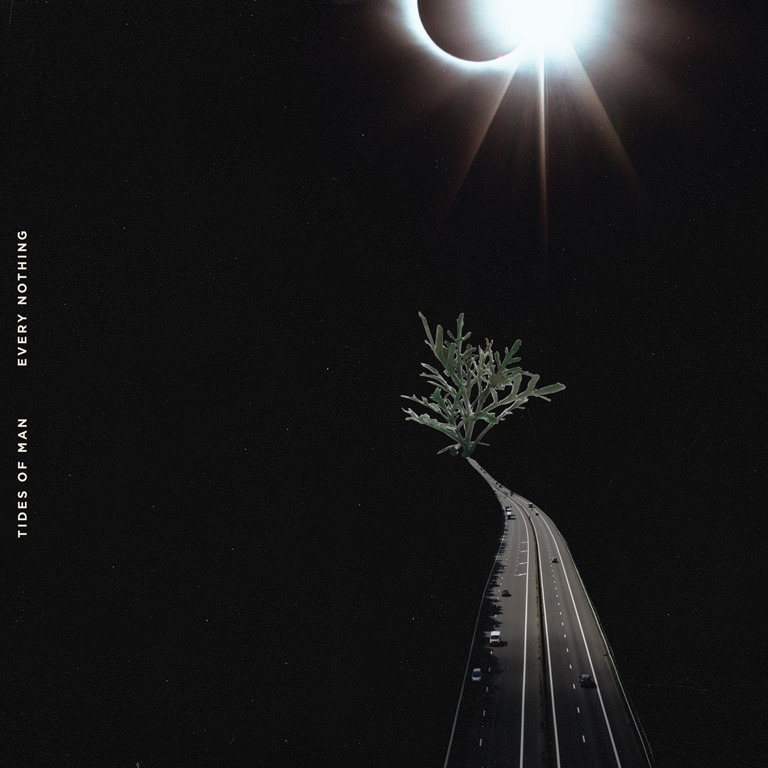
A decade in existence and with three previous albums to their credit, instrumental prog band Tides of Man from Tampa, Florida, deliver album number four. While their first two albums featured vocals courtesy of Tilian Pearson (who, since his departure in 2010 has provided the ‘clean’ vocals for craply-named post-hardcore act Dance Gavin Dance and enjoys a solo career as Tilian), 2014’s Young and Courageous saw the band emerge as a very different, instrumental, entity.

This means that Every Nothing has been four years in the making. It’s an expansive post-rock / prog crossover, with the twelve compositions spreading and exploring in various directions, both in terms of mood and instrumentation. Ranted, the majority of the album weaves reverby soundscapes from chiming guitars, rolling drums and understated, strolling bass, breaking into the occasional sustained crescendo that alludes strongly to the slow-build and big-burst stylings of Explosions in the Sky. And while they do really work hard to delay gratification, to the point that there are moments the album borders on frustration, and much of the album is so much standard template form, when they do break out, as on ‘Old 88’, and the explosive, choppy breaking on ‘Everything is Fine, Everyone is Happy’, which veers into Shellac territory, it proves to be more than worth it.

Elsewhere, the spacious, wistful piano of ‘Far Off’ – a song that exists more in the echoes between the notes than in the notes themselves – reveals a band who are comfortable with giving the structures and sounds room to breathe, and the piano-led ‘Death is No Dread Enemy’ which slows the pace, lowers the tempo and conjures a reflective mood marks an atmospheric shift.

Every Nothing is by no means a high-impact album, or a set which even stands out as an exemplar in its field. It’ll never set the world alight, but is solid, and a pleasure to listen to. And that’s probably enough.

AA

Tides of Man

Gizeh Records – 31st August 2018

The Great Lake Swallows is a collaboration between Canadian cellist Julia Kent and Belgian guitarist/tape machine manipulator Jean D.L. The former came to my attention some time ago, and her nuanced style of playing had yielded some compelling works. Jean DL, however is an unknown quantity to me, and I came to approach the release without any real preconceptions. I leave it with none either. It’s ambient and droney, but offers infinite layers. The Great Lake Swallows doesn’t really fit anywhere in terms of genre, and this is very much a positive. Sometimes, music simply is.

The Great Lake Swallows is a graceful and co-ordinated suite in four parts, and finds the duo creating sonic interplay that displays a certain musical connection, even telepathy. Collaborations of this type, which find musicians with such different approaches (and modes of instrumentation) requires a certain intuition to achieve coherence.

Its brevity contrasts with its scale and scope. The four tracks have a total running time of a shade over 25 minutes, but the aching cello bends and melts over hushed, brooding atmospherics to create compositions of great atmospheric depth and imbued with great significance. At times manifesting as dark portent, others seeping sadness without words to describe it, the layers build and pull at the senses almost subliminally.

The press release informs us the album was recorded in Charleroi, Belgium in 2015 during a video installation with Sandrine Verstraete, and that the music was created using field recordings, processed guitar and cello and serves as a soundtrack to the video of the same name. And the soundtrack qualities of the compositions are very much evident: the parts bleed together to forge a single, continuous piece, which slowly and subtly transition between place and mood.

On ‘Part 3’, a low throb slowly oscillates beneath the ebb and flow of strings that weft and warp, before ‘Part Four’ forges an expansive vista of surge and swell, as ghostly voices echo in the shadowy background. The effect is haunting, but also beautiful and as a whole, the work is deeply evocative. The Great Lake Swallows doesn’t just occupy space, but creates it.

AA

GZH84DP-Sleeve

Season Of Mist – 31st August 2018

Christopher Nosnibor

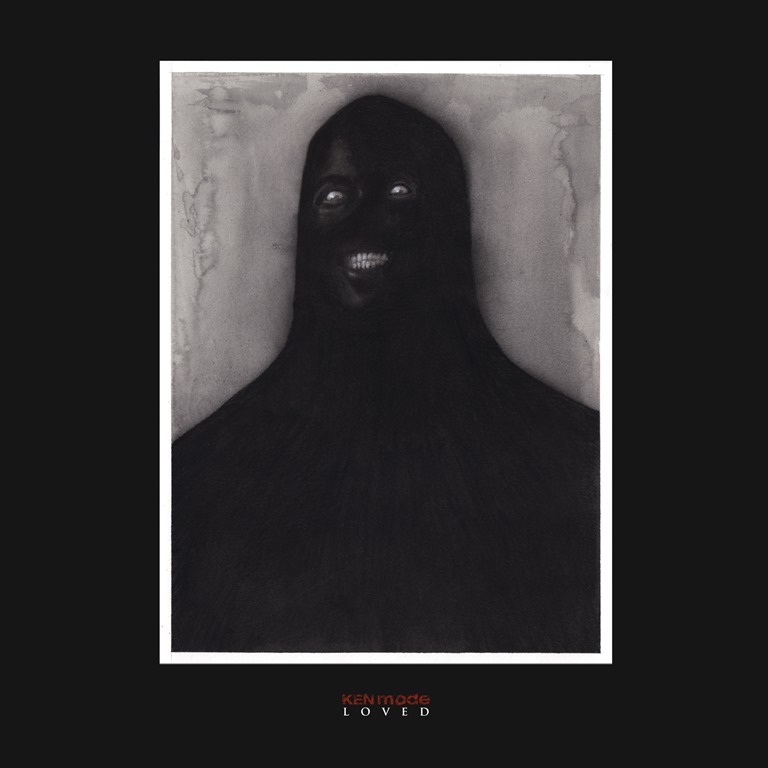
I don’t know what’s more exciting about the proposition of Loved – whether it’s the introduction of ‘decidedly more extreme tone and presence of death and black metal’ into KEN Mode’s palate, or the fact it’s been produced by Andrew Schneider (Unsane, Cave In, Daughters), who has, we’re told, a ‘vision of noise and girth’.

It’s got to be the girth.

And add all this to their existing sources – ‘the desperate noise and industrial sonics of the 80’s and 90’s’ and you’ve got a truly lethal cocktail.

Lead single ‘Doesn’t Feel Pain Like He Should’ sets the tone, a squall of feedback prefacing a deluge of thunderous bass and drums and shouted vocals. The Unsane parallels are immediately apparent. This isn’t just intense, but claustrophobic: less black than steely grey, hard, and with a matt sheen.

A heavy bass trudge and guitar that’s more geared toward texture than tune evoke the spirit of Godflesh and early Swans on ‘The Illusion of Dignity’. However, the braying sax owes more to another Justin Broadrick-related project, the industrial avant-jazz brutality of GOD. It hits hard, both sonically and sentimentally.

And that sentiment is the motivation to produce an album that responds to the fucked-up ties in which we find ourselves, while also revelling in the absurdity of it all. Because the only sane response to such madness as Trump and Brexit and social media and the dominance of global corporations is insanity – to adopt an antic disposition, to appropriate from Shakespeare. In the postmodern climate, an appropriation is appropriate, although Loved lifts more in terms of spirit than anything concrete.

Jesse Mathewson (guitar / vocals) sets out the purpose: “We wanted tones that bash and cut, and for you to feel that desperate part of yourself clawing for a way out. And then, just when things are at their most bleak, you start to focus on what’s actually being said, and you’ll see the humour in absolutely everything that is transpiring before you.”

In surveying the scene that is the socio-political landscape, the humour is pretty bleak – more grim irony and a gallows grimace than a belly laugh. But it is funny in the sense that you couldn’t make any of this shit up. Loved is also pretty bleak and also full-on and brutal. It grinds and points relentlessly, churning guitars carving angularity and discord. And the bass… it hits the guts. Hard.

The tempo and tone don’t alter all that much over the course of the album’s nine tracks (‘This is a Love Test’ notwithstanding, that is – its spacious intro with strolling bass and wandering sax create an eerie calm): like any album by Unsane, it’s a work to simply let pummel you furiously, channelling the fury of US hardcore and beefing it up to industrial strength. And yes, fury is the key: this is the sound of the fury. And while the majority of the songs are fairly short, sharp shots of adrenaline injected with a large dose of acidic bile, the album closes with the eight-and-a-half-minute ‘No Gentle Art’. It goes for the slow build, scratching away, quiet but chugging away on the low end. In that sense, it’s a bit Shellac… and when it breaks out into an explosive cacophony of distortion and braying brass… it’s a bit crazy. And by the end, I’m more than ready to kill everyone. Now.

AA

878050

Sacred Bones Records – 31st August 2018

Christopher Nosnibor

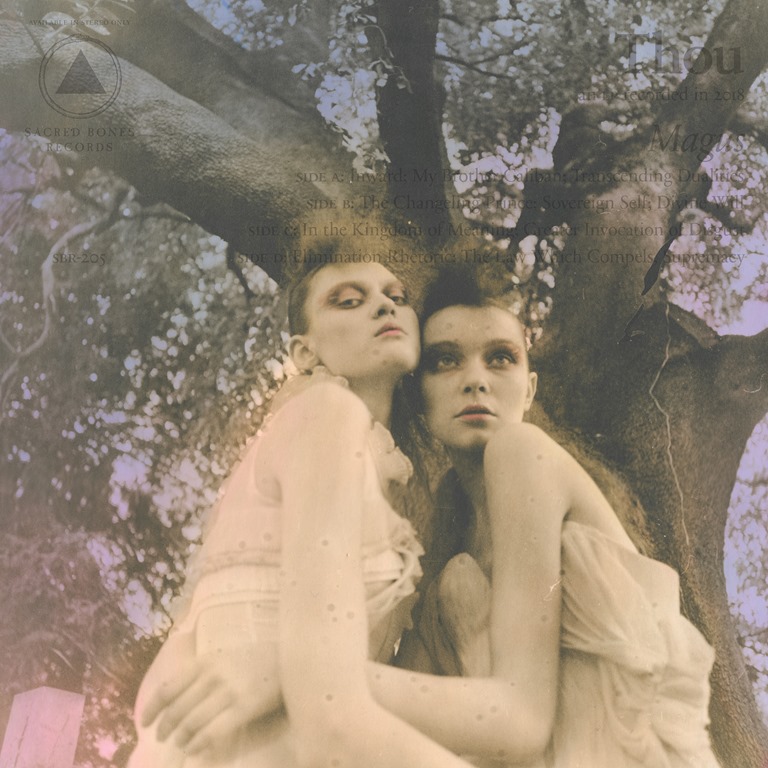
Magus is Thou’s first full-length since 2014’s Heathen. It’s perhaps fair to say that the three EPs which preceded it – which they forewarned would be ‘a complete sonic departure from Magus and from each other’ – which effectively constituted albums in their own right – did nothing to prepare us for this.

But what exactly is this? As the album’s press blurb acknowledges, they’re ‘often lumped in with New Orleans sludge bands like Eyehategod and Crowbar, [but share] shares a more spiritual kinship with ‘90s proto-grunge bands like Nirvana, Alice in Chains, and Soundgarden’, while ‘the band’s aesthetic and political impulses reflect the obscure ’90s DIY hardcore punk found on labels like Ebullition, Vermiform, and Crimethinc’. All this makes them hard to place.

The album’s opener, ‘Inward’, provides just over ten full minutes of snarling fury that carries enough weight to crush weaker souls who may venture forth expecting any of the soft musicality of the Inconsolable EP (which revealed Thou to be capable of extreme gentility, and, indeed, extreme beauty).

Things turn very black and very sludgy and very heavy on ‘Transcending Dualities’; and while it’s a snarling, low-tuned mess of slow-creeping sludge, there are stray notes that break free to squeal to break the trudging oppression. Bryan Funck’s twisted vocals draw every ounce of excruciation into the mix.

‘The Changeling Prince’ brings grace and grandeur to proceedings, and the hushed intro and expansive sound of ‘Sovereign Self’ (the second of three songs to cross the ten-minute mark) calls to mind Amenra, but his is a whole other level of gnarly, demonic savagery, and the overall sonic density is suffocating.

But Magus does find Thou continue to expand and explore in all directions, and there are three shorter tracks that serve as interludes between the towering monoliths which are the songs themselves: the cacophonous racket of ‘My Brother Caliban’ contrasts sharply with ‘Divine Will’, with its ethereal female vocals and pounding tribal drums. Elsewhere, the sprawling epic that is ‘In the Kingdom of Meaning’ introduces a psychedelic twist to the doomy trudge. And there are passages of extreme delicacy, rich in evocative atmosphere, which draw the lister into quiet clearings with dappled light where an air of calm radiates before the shadows loom, the clouds gather and the next tempestuous storm breaks. Such tension-building passages and contrasts of mood and volume create a compelling dynamic and makes Magus a mighty album which requires attention and exploration of the detail.

AA

954503

Constellations – 24th August 2018

Christopher Nosnibor

Automatisme is the moniker of reclusive glitch artist and electronic music producer William Jourdain. Transit is the follow-up to 2016 debut Momentform Accumulations, and has been formulated using modular synth racks and a vast library of field recordings.

As the title suggests, Transit is an album of movement. In transit are not only the creators, but the listener, who finds themselves being taken – often at pace – to unexpected destinations. But there is no stopping – each port of call is no more than a glance and a wave out of the window, perhaps a quick photo, before you’re on the move again.

The first suite – ‘Bureau’, a work in four movements, combines ambience and rhythm to often disorientating effect, and explores brooding expanses of sound and juxtaposes them with often jolting beats. ‘Bureau 0’ rapidly shifts from softly swirling cloudlike ambience to snarling, grating overloading noise – and back again. Blast of distorted beats and speaker-crackling overdrive create some disturbing kind of Dalek disco. ‘Bureau 1’ casts shades of gloopy glitchtronica which crackles and hisses, before bleeding into the more overtly groove-orientated ‘Bureau 2’. Groove is all relative, of course, and there are natural non-beat-orientated rhythms, too: shuddering oscillations swell like thunder on ‘Bureau 3’.

‘Registrariat’ stands alone between the ‘Bureau’ and ‘Bateau’ suites, and forges a more overtly dance beat. Only, the tempos shift erratically and sampled voices echo in the swirling sonic mists, and it gets too fast and before long, you feel your heart race increasing and instead of wanting to get down, you’re on the edge of panic.

The two-part ‘Bateau’ builds tonal intensity and volume, culminating in a dense eddying swell of noise that fills the cranium and creates an all-encompassing throb.

And it’s only at the final destination – a roar that abruptly leaves silence – that the album’s overall route becomes clear, a deleterious course from A to B via Z, Q and an unexpected assortment of curious places. You cast your eyes back over the map but it by no means conveys the experience of the territory. And after a pause, a moment of quiet reflection, you can’t quite recall the sequence of events that brought you here. You turn, and start to retrace your steps…

AA

cover_1528731707797039