Posts Tagged ‘abrasive’

29th November 2025

Christopher Nosnibor

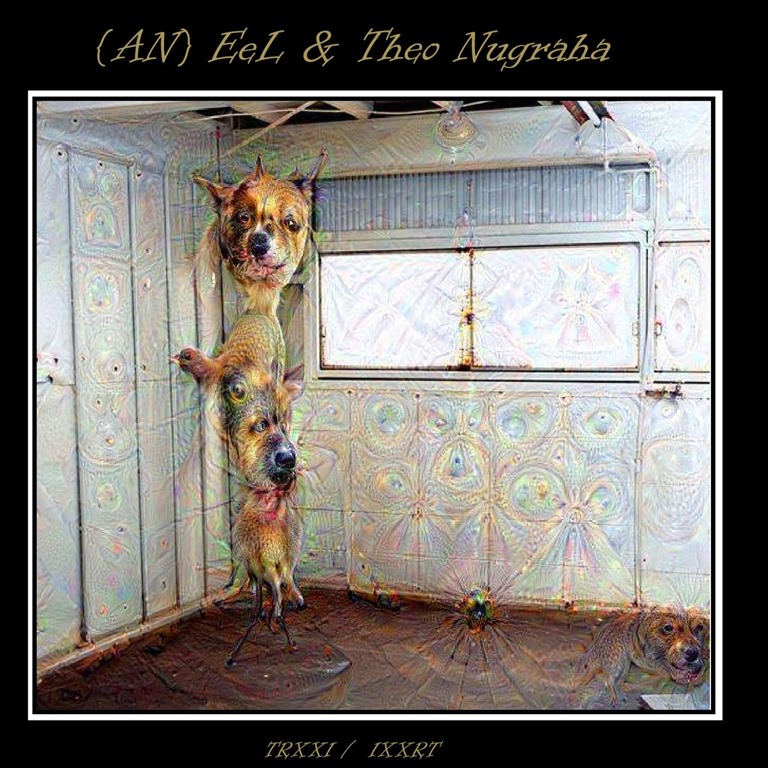
It’s not a good thing to feel nostalgia for something from the recent past which wasn’t even any good to begin with. But on seeing the cover for this split release by Theo Nugraha and {AN} EeL, I’m reminded that Google DeepDream was actually quite fun for about five minutes in 2015. Ah, hindsight… The results DeepDream produced were weird, psychedelic, trippy, and resembled no dream or subconscious thoughts I’ve ever known, its hallucinatory aspects were oft said to share qualities with LSD. But this was part of the appeal: it was novel, silly, with dog faces emerging from inanimate objects, whappy wallpaper, and the like. How many of us knew that it would be a precursor to the AI hell we now find ourselves in? Ten years is not such a long time in the scheme of things, but in the context of the now, it feels like another lifetime. A lifetime when doing daft stuff with digital tools wasn’t annihilating the environment, when it wasn’t stealing the work of writers and artists, when it wasn’t rendering jobs obsolete while creating billionaires at the expense of those losing their livelihood. Arguably, the golden age of The Internet was in the first years post-millennium, when applet-based chatrooms first made it possible to connect in real-time with people around the globe and MySpace was a wild melting pot where people came together through shared interest and communities evolved. This isn’t just some nostalgia wank: these were exciting times, and the world truly began to open up in ways hitherto unseen. These were times when The Internet offered freedom, where, as Warren Ellis’ novel Crooked Little Vein expounded, anything goes and if you could imagine it, you’d find it online. Godzilla Bukkake? You got it.

Everything changed when major corporations realised that they could really, really make on this. But major corporations being major corporations, they didn’t want to participate – they wanted to take over and own it, to wring every penny of profit from every last keystroke. And so now, while Napster and Soulseek were the equivalent of home taping, which didn’t kill music, Spotify and most other major streaming services really are damaging artists’ livelihoods – because unlike small-time peer-to-peer file sharing, this is a multi-billion dollar industry which siphons off pretty much all of the money for owners and shareholders rather than artist – and then you have scums like Daniel Ek using those proceeds to fund war. Something has gone seriously wrong.

Theo Nugraha’s contribution, 1XXTR is a longform work – seconds short of thirty minutes – and while it’s perhaps not quite Harsh Noise Wall, it’s most definitely harsh noise, and there’s not a lot of variation. It may even be that any variation is in the imagination as the mind struggles to process the relentless barrage of sound and seeks tonal changes, details within the texture. It doesn’t so much sound like a cement mixer – more like being in a cement mixer with half a ton of rocks, at the heart of an atomic blast. There are squalls of feedback and mutterings beneath the blitzkrieg, and around ten minutes in, the tempest suddenly begins to rage even harder and it’s like being hit by a train. Twenty minutes in, the relentless roar drops to merely the blast of a jet engine and the sensation is like huge pressure drop, or a fall. It’s impossible to discern what’s going on inside this swirling vortex of noise (there does sound like a vast amount of collaging and random things floating in and out), but it’s a full-on physical assault that vibrates every cell in the body. By the end of this most brutal half hour, you feel battered, bruised, damaged.

‘TRXX1’ by {AN} EeL, which runs for a second over the half-hour mark, is altogether less abrasive, but it’s no more comfortable. At first, it’s a clattering, metallic rattle, like an aluminium dustbin rolling down the street in a gale, accompanied by rattles and chimes. Extraneous noises – twangs and scrapes – enter the mix, and the sound starts to build, like the wind growing stronger at the front-end of a storm. But soon, from nowhere, a squall of static – or rainfall – begins to swell and while off-tune notes reverberate in the background, and a scan of radio stations yields alternately cut-up fragments and random noise, and while it may not possess the same physical force as Nugraha’s piece, ‘TRXX1’presents a disturbing array of frequencies and makes for a particularly tense listen. There’s a thunderous ripple like a freight train a mile long barrelling along, while disjointed voices echo here and there, and as bhangra and old-time brass fade in and out, the collage approach to the track’s creation, harking back to William Burroughs’ tape experiments, and early Throbbing Gristle become increasingly apparent. The Police’s ‘Can’t Stand Losing You’ cuts through what sounds like a snippet from lecture or interview. The repetition of the same fragments becomes difficult to deal with after a time, and you begin to feel like you’re cracking up. The it’s back to the sound of metal buckets being dragged down a cobbled street, with random busts of discordant noise jabbing in for extra discomfort. The final segment is a cacophony of abstract drones and crashing, calamitous racketry – a combination which is uncomfortable and unsettling.

The two pieces are quite different, but equally difficult in their own ways, and as such compliment one another. And if you’re seeking an album that really tests your capacity for abrasion and nauseating noise, 1XXTR / TRXX1 hits the spot like a fist to the stomach.

AA

a2950925012_10

17th October 2025

Christopher Nosnibor

From the very outset, this is not easy on the ear. Sometimes, something leaps out about an album in the opening minutes, and here it’s the production – or lack of. The title track heralds the arrival of Benefactor, the first album by Washington D.C. improvisational psychedelic outfit Zero Swann in two years. And it’s a swampy, reverby, dingy mess. It’s integral to the experience, but it’s also likely to be a deterrent for some – but screw them, it’s their loss, right?

Although straddling heavy psychedelic and the dramatic gothic style, it’s the sludgy, feedback-riven outtakes of The Jesus And Mary Chains’s Barbed Wire Kisses which first come to mind when listening to this.

Benefactor is the follow up to 2023’s Amon Zonaris, which, at the time, was a one-off collaborative release with Scott “Wino” Weinrich. This time around, bandleader and Saccharine Underground label curator Jeremy Moore is flying solo, handling guitars, fretless bass, drums and noise assault. And there’s no shortage of the noise assault on this punishing no-wave behemoth. As they tell it, ‘From the noise rock / no wave snarl of Ritual Tension and early Sonic Youth, to the shoegaze sounds of My Bloody Valentine, to doom and free jazz chaos over a backdrop of pure lo-fi abrasion, Moore’s latest outing is a true crosspollination of styles’. It is, and what’s more, many of those styles are melted together to form a dark, disturbing sonic sludge.

‘Grave Wax Horticulture’ is a skull-splitting mesh of noise, equal parts The Jesus and Mary Chain and Christian Death. It’s theatrically gothy, in the vein of The Horrors, but primitively noisy – which is a fair summary of the album as a whole. It’s experimental, overloading in its racketaciousness – and while is a psychedelic album, it’s a full-on assault album, too, which draws parallels with Head of David’s first album, LP, and simply summarises a noise ethos which eschews convention in every sense.

Moore’s commanding baritone brings a sense of drama, not to mention a certain theatricality to the chaotic, palpating grind, and there’s an edge to his delivery which is both world-weary and tense, a voice emerging from the desolation of a society collapsing, a world in flames. This is surely the sound of the apocalypse, the sound of everything ending. Everything is overloading, murky, blown-out, blasted with distortion and reverb, resulting in a discordant thunderous attack which fires in all directions at once. It’s a primal roar reverberating from buildings collapsed to rubble, a brain-bleeding blitzkrieg of ruinous proportions, as mechanised drum sounds fire like machine guns and missile explosions, cutting through the wildest, densest racket. The absence of overt structures only compounds the sense of things falling apart. It’s the sound of unravelling, of societal threads pulling apart in real-time, a descent into mayhem, anarchy, barbarity.

‘Anagrams for Agnosia’ is perhaps jazz, but jazz in the loosest sense: it’s exploratory, experimental, freeform, but more than anything, it’s the sound of fracture, or fragmentation, instruments churning and burning, and pulling in different directions like splinters of an object in the wake of a detonation. As the screams die down, there is the thud of a panicked heartbeat, before the final track, ‘Phaneron’ obliterates with a squalling wall of howling guitar, stuttering drums and raw, ruinous noise.

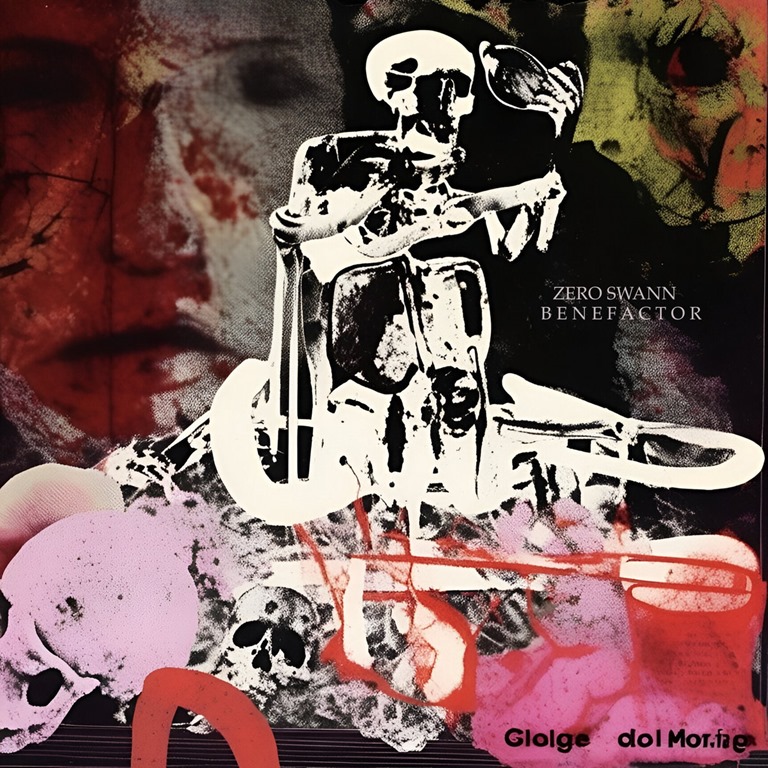
Benefactor is an album without let-up, which provides no breathing space, and is thoroughly relentless in its intensity from beginning to end. Recommended, but approach with caution, and a stiff drink. It sounds like the cover looks.

AA

a0986994420_10

Dret Skivor – 3rd October 2023

Christopher Nosnibor

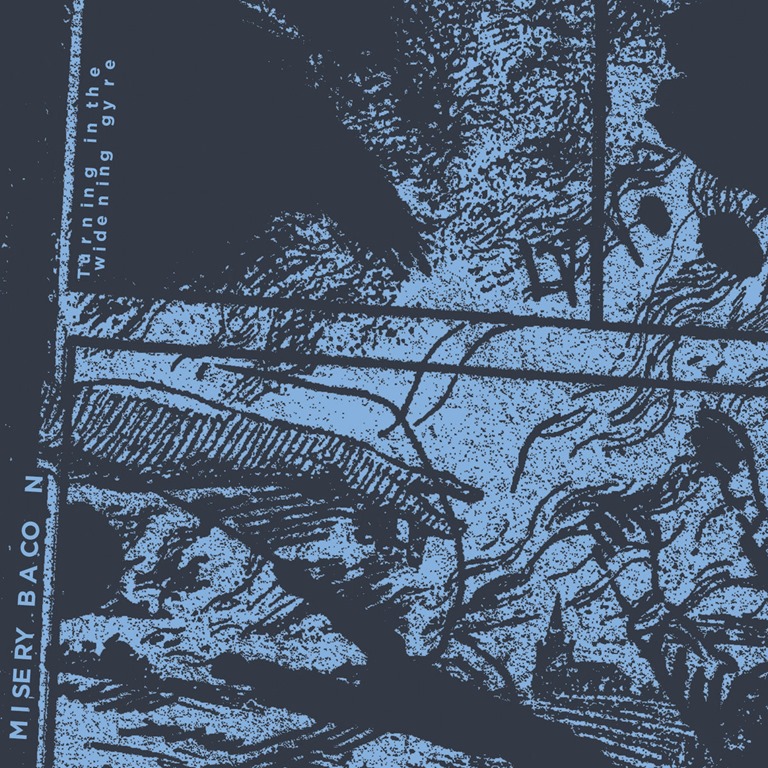
This is proving to be a particularly good week in the world of noise, what with Foldhead’s Paris Braille and this being released on the same day. There’s more information given about this release than most to slip out from Swedish underground label Dret Skivor – in that there is actually some. We learn that the work was ‘Recorded and assembled on residency at Bergen Centre for Electronic Arts, Leveld AIR and Gallery ASK, Norway 2025’, and that the ‘Album and song titles taken from / inspired by WB Yeats ‘The Second Coming’’. We also learn that Misery Bacon is the vehicle of Bergen’s Luke Drozd. It’s not clear if this is one of those monikers that’s amusing because translation, or if it’s a case of humour that doesn’t translate geographically, like Die Toten Hosen. I’m sure dead trousers are a massive wheeze in Germany, but here it’s vaguely surreal but mostly a bit odd. Then again, ‘Misery bacon’ makes me think of all the moaning gammons we have here in the UK, red-faced and chuntering into their Carling about ‘immagrunts’ and how everything’s ‘bloody woke’ nowadays.

It contains two longform pieces, each filling a side of the cassette release – of which there are just six copies – ‘Every finger double crossed as things fall apart’, and ‘Shambling onwards in the shadows of indignant birds’, and neither literary allusions or social commentary are apparent in the work itself.

‘Every finger double crossed as things fall apart’ starts with some sampled dialogue and an array of pops, clicks, whirrs and glops, a swampy collage of seemingly random elements layered across one another. It’s atmospheric, but also difficult to get a handle on any idea of where it’s headed, if there’s any theme or concept that connects the diverse sources. But soon, serrated drones and distortion build to a sustained whorl of noise atop a quivering bass judder. Five minutes in, and it’s an all-out assault worthy of Merzbow or Kevin Drumm. It’s noise, and it’s harsh, but it’s an ever-shifting, seething mass of tinnitus-inducing tones and textures, at time fizzing and crackling in such a way as to give the impression that the sound is actually inside your own head, rather than reaching the brain from an external source. There’s a niggling crackle of static that sounds like there might be a problem withy your equipment. This is most pronounced and unsettling during a quieter spell of jangling metal which sounds like a light metallic object being rattled against a metal fence, or the clattering of cutlery. It’s a piece that slides and slithers hither and thither, and sits well against Throbbing Gristle’s most experimental, abstract works. Towards the end, it does feel like it could be the soundtrack to the collapse of everything. Listening to it while the US government is in shutdown, Israel seemingly continues to level Gaza despite a supposed ceasefire, hundreds of people are arrested in London and other cities for protesting against genocide, and Russia continues to expand its campaign of interference across Europe, it’s hard to feel much positivity.

On a personal level, the present feels overwhelming. The world is at war. The world is on fire, and at the same time that we have drought, we have flooding. But instead of coming together collectively to address this global crisis, as a species, we’d rather bomb the fuck out of one another. And with shootings, mass knife attacks and all manner of savagery taking place daily, it really does feel as if humanity has descended into a spiral of insanity and self-destruction. And there are really no words to articulate the panic and anguish of all of this. Music and literature may provide a certain comfort and distraction, but it’s in sound alone – more specifically, sense-shattering noise – that I find something which articulates the experience of living in these torturous times.

And so it is that ‘Shambling onwards in the shadows of indignant birds’ returns to the sampled dialogue which opens ‘Every finger double crossed as things fall apart’, before plunging into a mess of static cackles and hiss. It’s a Bladerunner world of rust and robotics gone wrong. It’s murky and it’s unsettling. A blast like the roar of a jet engine momentarily hampers the hearing, and we sit, dazed, in the comparative quiet of crackles and pops. There’s a mid-track lull, which feels uncomfortable as whistles of feedback and laser bleeps criss-cross before collapsing into a broken wall of noise on noise.

Turning in the widening gyre is harsh, heavy, bursting with uncomfortable frequencies. The final minutes are nothing short of punishing. And yet, at the same time, that punishment offers vital release. This is where you get to let go. At last.

AA

a2298054435_10

30th August 2025

Christopher Nosnibor

Just when you think every genre hybrid has been done, and are feeling worn and jaded by everything, someone chucks you something unexpected. You’re not even sure if you like it, at least not at first, because, well, the different elements are all good independently of one another, but in combination..?

It’s taken until their third album for me to discover Australian ‘Industrial Synth Crust’ outfit Schkeuditzer Kreuz, the brainchild of Kieren Hills, and ‘better late than never’ is one angle to take with it – although another is ‘would I have been ready for it before? Would I ever be ready?’

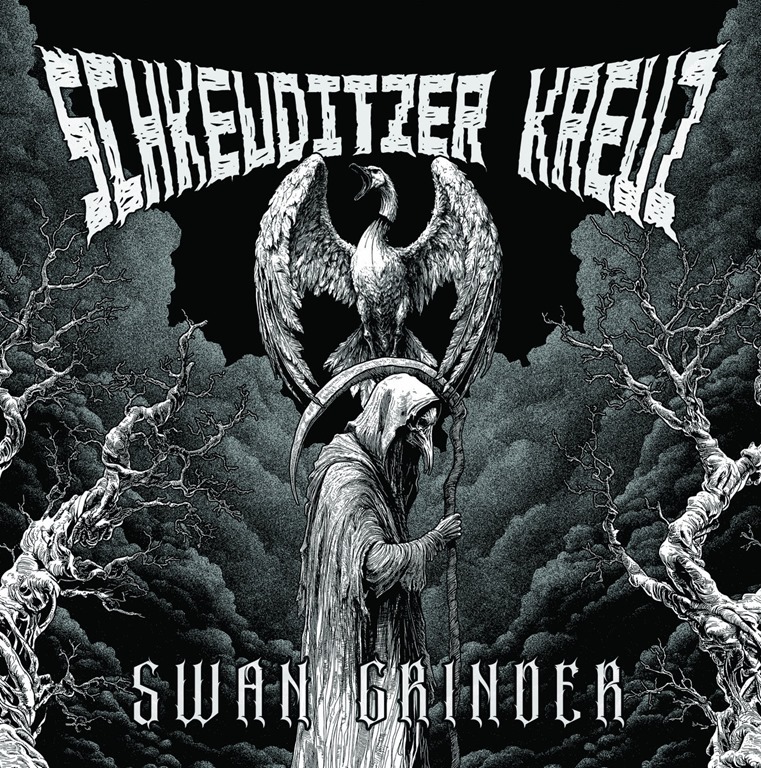
Swan Grinder is as ugly and intense and industrial as its title suggests. Spasmodic drum machines sputter and blast all over, underpinning pulsating electronic basslines and ear-shredding blasts of noise and distortion. And all of this provides the backdrop to raw, rasping vocals. In some ways, I’m reminded of really early Pitch Shifter – but with the wall of guitars replaced by abrasive squalls of electronic noise.

To think, there was really nothing like this before the 90s. While the 80s are the subject of great affection, and there’s a broad consensus that this was the decade of innovation, with the exception of grunge, the 90s are largely portrayed as a retrograde decade, with a return to ‘rock’, guitar-orientated music, and, in particular, the Britpop era, something born out of a nostalgia for the pre-punk era and a golden age which never really was. And now this period is revered with what one might even call a double-nostalgia; folks in their forties getting dewy-eyed over their teenage years listening to music that was nostalgic for the music of their parents’ generation. There’s something inherently sad about that, really.

But the alternative scene of the 90s was something else again. It was here that all kinds of metal migrogenres were birthed, while rap and rock came together and industrial metal emerged, melding crushing guitars with electronic elements. And there was also just so much weird shit percolating through various channels, and it wasn’t just something you had to tune in to John Peel late at night in the middle of the week for: with the major labels getting in on the action, you could catch the likes of Ministry and Butthole Surfers on MTV.

Anyway. There’s nothing sad about Swan Grinder. Angry, perhaps. Deranged, almost certainly. But sad? Nah. While there are elements of the construction which share common ground with , say, KMFDM, or PIG, the overall sound is altogether dirtier, gritter, rawer – and then there are the vocals, which are pure metal. As such, the result is a different kind of hybrid – hard, abrasive, and as nasty as the image the title conjures.

AA

a0603919453_10

Panurus Productions – 2nd May 2025

Christopher Nosnibor

Northern noisemongers Belk are no strangers to the virtual pages of Aural Aggravation: I personally first caught them live as a duo back in 2021, when I remarked in my review that as fierce as they were, they might benefit from some bass. I could never have imagined just how much. These days, their sound is dominated by some juddering low-end that’s practically arsequake. It’s as if they thought ‘you want some bass, eh, bastard? Here’s some fookin’ bass. BOWWWWWWWMMMM’. They’ve certainly evolved over the last four years – but what that means, in real terms is that they’ve developed methods of making noise that’s even more nasty and gnarly and generally unkind to the eardrums. This is a good thing, and ‘Flayed’, the first of their two contributions to this split release is a beast. It has a definite and undeniable sense of swing to it, a swaggering groove that’s somewhat unexpected. But what is expected – and delivered – is a crashing riot of noise, a juddering wall of distortion, squalling, dirty guitars, drums blasting at a hundred miles an hour and guttural vocals half-submerged by the swirling chaos, with tempo changes galore and simply all hell happening at once inn explosive, brutal frenzy.

‘Cloak of Bile and Oil’ begins a little more gently – and for a moment I’m reminded of the intro to Fudge Tunnel’s ‘Hate Song’, which inevitably bursts into shards of incendiary sludge and squall – and sure enough, so does this, the extended intro giving the deluge of noise even more impact when it finally does arrive. They describe their style as ‘Blackened Leeds Hardcore’ and this must surely be a definitive example of what that means.

Casing are an unknown quantity, and their two contributions are brief – the longest piece is just over two minutes in duration. The sound they offer is certainly no less abrasive or disturbing. There’s nothing to indicate what the initialisms of the song titles actually mean, but the electronic excursion which is ‘L.U.A.N.L.B.’ begins with some rumbling dark ambience, soon rent with the wail of siren-like feedback, before a wall of harsh noise distortion swells like a tsunami and swallows everything. In contrast, ‘D.T.H.D.T.C.’ launches headlong into a gut-churning blast of manic grind, with a nauseating bass churn to rival that of Belk.

What it lacks in duration (the four tracks have a combined running time of less than eight minutes), this release more than makes up in devastating intensity. Mission accomplished.

AA

cover

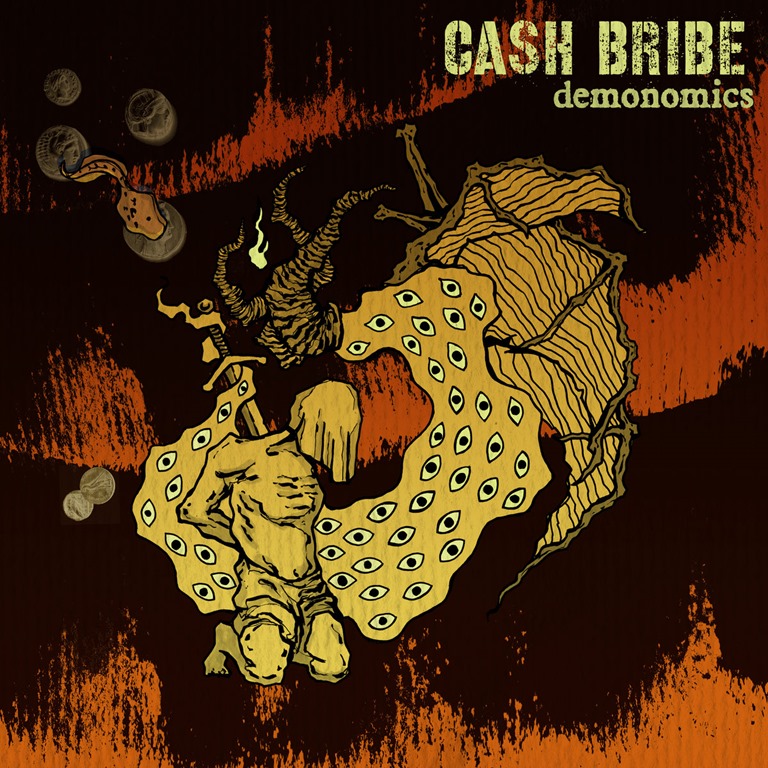
Brooklyn bruisers Cash Bribe are back with their third EP, Demonomics, dropping June 13, 2025, via Futureless. This marks their first release on the label, and they’ve never sounded louder, sharper, or more furious.

Leading the charge is the blistering first single, ‘Death Tax,’ now streaming everywhere.

Listen now:

AA

Of the single vocalist Joe Dahlstrom: says, “’Death Tax’ comes from thinking about entropy and decay. Nature can be cruel, violent, and indifferent — the suffering seems pointless — but accepting and understanding the terms of our existence comes with a certain viriditas, an empowering vitality to approach it head-on.”

Guitarist Kirk McGirk adds, “This one made it into our live sets pretty quickly – people would respond to it pretty well, and we like when we do something that makes people move.”

a0585114272_10

Dret Skivor – 23rd December 2022

Christopher Nosnibor

Swedish microlabel Dret Skivor may be many things, primarily a champion of the obscure and staunchly uncommercial (hell, they even put out a split release with one of my spoken work / noisewerks this time last year), but exuberant is not one of the adjectives that comes to mind. But look at those exclamation marks in the title!

But following the customary roughly annual Procter / Poulsen collaboration, they’re putting out a bonus release – release twenty-three, no less – to celebrate the label’s second anniversary. It’s a just cause for celebration and a display of public exuberance, not least of all because the catalogue they’ve swiftly amassed is a treasure trove of wonderfully weird and dark experimental noise, and this three-tracker featuring Fern and Fåntratt is no exception.

Fåntratt’s fifteen-minute excursion into harsh noise wall sits between ‘frolics from Fern! It’s an F-macka!!’ the blurb tells us (which I assume is a good thing, since my ears tell me it is). And the contrast works well: the two Fern tracks are brief, at least in comparative terms, with the five minutes of ‘Field Trip’ pulling together dark, damp, ominous ambience and achingly spiritual choral singing which drifts and glides in and out of the nightmarish soundscape. It creaks and rumbles and thunders with deep, murky tones, the vocals rendering the experience even more unsettling. ‘Heaven in my Hands’ couldn’t be more different – a snarling blast of industrial/grindcore crossover, where everything is so mangled and distorted it’s impossible to make anything out other than the broken-sounding beats. It’s as heavy as hell.

Yet, perversely, it feels like light relief after the release’s centrepiece. Fåntratt’s ‘Morot’ is fifteen minutes of high-end hell. It’s harsh even by harsh noise all standards. And whereas many of the Dret releases have been HNW exemplars, the majority have featured subtle variations in tone or frequency: not this cut. This is pure HNW. We’re in Vomir territory, but pitch-shifted up a few notches to a pitch that drills through the brain penetrates to the core.

I did, for a moment, think I had detected some slight sonic shift, but then realised, after further exploration, that this was simply an effect created by moving my head to one side or the other in relation to the stereo speakers. Swallow, move, it sounds different for a fleeting second, but the fact is that this is solid noise, a sheer and unmoving wall of noise of the kind that will induce migraine, tinnitus, and seizures. Possibly. While some noise can be quite soothing – admittedly, I speak for myself here, but can’t be alone in finding this – Fåntratt’s ‘Morot’ is torturous, tension-building, painful-inducing. It’s powerful stuff, and the perfect party tune for Dret’s second birthday. Here’s to the next two years.

a1095810778_16

New Heavy Sounds is stoked to announce their first release of 2023, and what a beast it is. The self-titled debut album by Death Pill, an all-female hardcore punk power trio of considerable muscle, combining metalcore, punk rock and (like labelmates ‘Shooting Daggers’) oodles of ‘Riot Grrl’ vibe.

It’s significant how many female punk bands are using the stance and attitude of the ‘Riot Grrl’ movement as a touchstone for what they are about, but it doesn’t end there. From the classic punk of Black Flag, The Distillers and Circle Jerks, to modern outfits like Axe Rash and the thrash metal of Nervosa and Exodus, there’s a nod to all of this in Death Pill’s visceral sound. Full on and fully formed.

That aside, what makes this release even more pertinent for us, and the fact that it is happening at all, is that Mariana, Anastasiya and Nataliya are from the Ukraine, who’s troubles are well known to all of course, but naturally enough have hit the band very hard.

Singer/guitarist Mariana tells the story so far.

Just imagine: You are a 20-year-old girl. Society constantly puts pressure on you: you should find a nice husband, have children and at the same time build a successful career. But no one asks what do you really want? What are exactly your interests and ambitions?

Because maybe you want to be a punk rock star?

Yes, I do and even against it all. I can create a female non-commercial band, play heavy high-quality music, and ignite the crowd. After all, rock is not only about brutal men with curly long hair, right?

Nafa (Anastasiya), the drummer, also got sick of this idea. Together we created an all-female punk rock band Death Pill (2017), just like we wanted to! Before COVID started we played a lot of gigs at the main underground festivals in Ukraine (“Back to Youth”, “Burn the Scene for Fun”). We also released EP (2018). We had a lot of success in front of our audience, which led to the creation of more female bands.

We did have trouble with bass players. They changed one after another and we were looking for someone who would be “on the same vibe” with us …

There is a strong and super friendly community of people in Ukraine. It’s a big family of true music lovers, people who live by creating the Ukrainian underground scene. This is also how we met Nataliia. After our first practice with her, we realized that this is a real perfect match, and the problem was solved. We started recording our first full album, filming music clips etc.

Until the war comes… In February fucking Russia started a full-scale invasion of Ukraine. It really changed our plans, dreams, and attitude. So now we are spread out, Mariana stays in Kyiv, Nafa is in Spain, Nataliia is in Australia. We try to stay in touch online, we keep working on the album and support our defenders. Like all in our Ukrainian scene.

Some do it with weapons in their hands, some volunteer and help in any way they can to bring our victory closer. Hard times, but right now we have a real chance to change lives for the better.

Victory will be ours; we are sure of it.

P.S. It is soon, and we have already decided to make the most hot, amazing and gig ever!

Watch out.

Watch ‘Расцарапаю Ебало’ here:

AA

Death Pill

The buggers keep doing this: disappearing, then coming back, with no forewarning, no fanfare, with more killer noise.

And so here we are: ‘Leisure Centre’ crash-landed today to herald the imminent arrival of a new EP, out next month.

It’s as good as anything they’ve ever done. ‘Leisure Centre’ has the same kind of nagging, repetitive riff that features in so much of their work, from the definitive early songs like ‘Trick Fuck’ through to more recent classics like ‘Shirts’. And if anything, ‘Leisure Centre’ sounds like ‘Shirts’ on heavy tranquilisers: slow, stumbling, lunging, all the weight and all the murk. And of course, it’s all about that big, churning riff. It sounds a whole lot like Pissed Jeans. This is very much a good thing.

If the rest of the EP is half as good, it’s going to be a corker.

AA

a4007833085_10

7th October 2022

Christopher Nosnibor

Having been introduced to GLDN this summer via the gritty industrial gore-flecked First Blood EP, the vehicle of Nicholas Golden continues at juggernaut pace, having prefaced the full-length Haemophilia with lead single ‘Suicide Machine’.

While some are particularly sensitive about anything pertaining to suicide, its disturbing prevalence means it’s a topic that needs to be out there and under discussion. While rates among the young are conspicuously high, here in the UK, rates are now highest for men in the 45-49 bracket (my own demographic), while globally, it’s rocketed among those beyond retirement age. And, traumatic as it may be for some directly affected, it shouldn’t be considered taboo or require a trigger warning – otherwise, pretty much all industrial and metal would need to carry warnings before every song.

Point is, that suicide, death, and, indeed, the fixational theme of plasma and platelets that dominates the work of GLDN are as much tropes, themes as much metaphorical as literal – and that’s ok. To confront one’s darker thoughts is healthy, and is a world apart from acting upon those thoughts. More often than not, those who produce the most dark and grotesque art, in any medium, prove to be the most balanced and the least dangerous, as they’ve found a healthy outlet for whatever it is that’s chewing at them.

On the evidence of Hemophilia, there’s a lot chewing at Nicholas G, and he channels every last ounce of that angst into his art. The result is an album that’s tense, taunt, relentless. And yes, of course it’s harsh. Not to a power electronics level of extremity, but this is an album that’s edges are serrated with industrial abrasion every inch of the way. Oh, and there’s blood and guts all over – just look at the cover. It sounds how it looks: by turns incendiary with rage and ominous and sinister with disconsolate darkness, Hemophilia has sonic and emotional range, but at the sae time, it’s bleak, bleak, bleak, as song tiles like ‘Self-Mutilation as a Form of Compliance’ indicate.

It opens with the lo-fi punky metal thrashabout of ‘Animal’, which is as up-front as it is unexpected, with GLDN roaring raggedly against a gritty, grimy guitar blast. But ‘New Face, Same Lies’ is bleakly electronic, dingy, subterranean, whispered and tense and is everything you would expect. The contrast of these two tracks alone tells you pretty much everything you need about GLDN and Hemophilia – namely it’s every inch the gritty, dark industrial album you’d expect, but it’s got twists – lots of twists. ‘#1 Crush is just one of them – a chugging metal reworking of the flipside to Garbage’s second single ‘Vow’, it clearly recognises the song’s lyrical darkness, then plunges is into an abyss and culminates in screaming angst. Despite being familiar with the song – it’s something of a personal favourite from the Garbage catalogue – it didn’t land as immediately recognisable, and that’s a positive, and a measure of just how much GLDN have twisted and mangled the tune – or put their own twist on it, if you’re talking more commercially. It’s a bold move, and one that proves successful. In contrast again, ‘Half-Life’ is sparse, stark electronics and as gritty, grimy and gnarly as hell.

At times it’s pure NIN: often it’s much more, not least of all in that it does its own thing within the industrial framework and at times pushes beyond, making for an exciting and dynamic album, and one that is, naturally, brimming with anguish and existential angst. And relentless, pounding beats, too. ‘Suicide Machine’ stands as a highlight, with parallels to ‘Happiness in Slavery’ from Nine Inch Nails’ Wish, which is clearly one of Nicholas Golden’s touchstones – and it’s a solid choice, as a release that really took harsh noise to a massive audience.

Hemophilia is dark, dense, and intense, the sonic equivalent of bloodletting. And the production is tight. It’s clearly a studied work, and the execution is magnificent – not just the performance, but the production, too, which presents the songs in their best light, tugging out the details and the dynamics to yield maximum impact.

AA

a0853929147_10