Posts Tagged ‘90s’

Blaggers Records – 2nd October 2025

Christopher Nosnibor

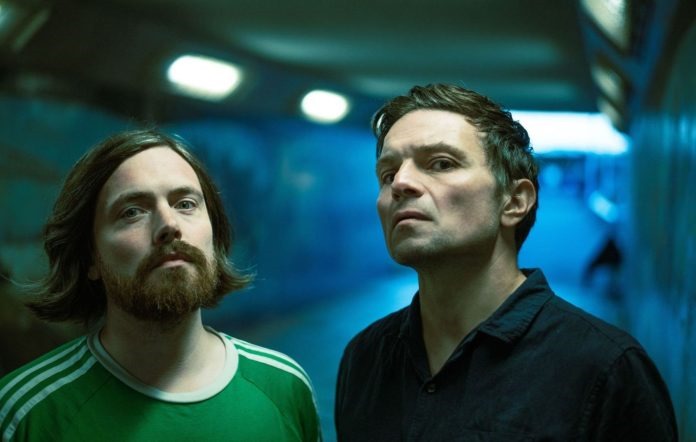
Continuing the thread of my review of the new Eville EP, which sees a young band push hard on the forward trajectory of a nu-metal revival, I find myself basking in the retro sound of ‘Anything,’, the latest offering from JW Paris, trashy indie / alternative trio from London. This isn’t some kind of nostalgia wank, whereby the 90s is largely misrepresented through the prism of Britpop (or grunge), but a cut that reminds us just how eclectic the 90s – particularly the first half of the decade – was. It was a melting pot of skewed guitar-led bands which were often lo-fi, ramshackle, bands who would grace the pages of Melody Maker but rarely play outside Camden, and the only way you’d ever hear any of their music would be by tuning in to John Peel, where they’d be wedged in between some weird dancy shit and the filthiest grindcore going, alongside something jangly on Sarah Records and something else entirely on Rugger Bugger records. And something by The Fall, of course.

‘Anything’, the lead track from their forthcoming EP, packs the essence of that period into just shy of three and a half energetic minutes. As much as it’s 90s indie / Britpop in its attitude, it’s the early Wonderstuff that comes through most strongly here. Before they became the beloved band of every cherry-red DM wearing sixth former, and way before the Gallagher brothers came onto the scene, Miles Hunt swaggered forth with colossal confidence, and songs that sizzled with snappy wordplay and hooks, and while I never really dug much after The Eight-Legged Groove Machine, they were exhilarating and fresh, and it’s this that JW Paris recreate here. The woo-ooh-wooooh backing vocals are a bit dandy Warhols, and there’s a lot going on, a lot of ideas and energy compressed into this neatly crafted nugget of a tune.

Bad Song Single (3000 x 3000 px) - 7

Cardiff Indie-gaze band Wylderness release their brand new and highly anticipated EP Safe Mode via digital streaming platforms.

The concept for this EP is reimagining the software and tech boom of the 90s. But instead of being centred on the west coast of America, it takes place in the south coast of Wales.

About ‘What Happens To The Rain’ single:

This is the closer to the EP and really it’s another two songs in one. The title could be a question or a statement. The first half has a Real Estate vibe and the second half goes in a more trippy Brian Jonestown direction.

It’s a song about going back to where you grew up, retracing memories and finding that they don’t quite add up to how you remember them (“Seeing faces you had forgotten / Crying for no-one / Recollections made of concrete / Fade in the sun”).

Woozy sun-drenched pop wrapped in a wall of stabbing fuzzy guitars and mesmerising shoegaze, echoing the sounds of Ride, DIIV, Sonic Youth and Yo La Tengo. Wylderness’ eponymous debut album, released in 2018, was championed by SteveLamacq (BBC 6 Music), Huw Stephens (BBC Radio 1) and was part of Radio 1’s Best of BBC Music Introducing.

It garnered critical acclaim from Clash, DIY and Drowned inSound, with the song On a Dais being featured on the US version of the TV show Shameless.

Wylderness have played shows for Huw Stephens, Sonic Cathedral, Swn Festival and support with Acid Mothers Temple.

The Cardiff band’s second album, Big Plans for a Blue World (2022), was recorded with an expanded line up and featured added layers of vintage synths and clarinet. It placed no.28 in Far Out Magazine’s Best Albums of 2022 and charted in the North American College & Community Radio Chart.

2025 will see the release of their much anticipated new Safe Mode EP recorded with producers Andrew Sanders and long time collaborator Rory Attwell.

Wylderness are: Ian (guitars/vox), Jim (bass/guitars), Ben (drums/percussion), Dan(guitars/vox), and Harri (clarinet/keys)

AA

a3691174443_10

Benefits blast in ahead of another substantial UK / EU tour with the release of the first new material since their debut album, Nails.

‘Land of the Tyrants’ features additional vocals by Zera Tønin of Arch Femmesis.

It may be more overtly dancey than previous outings, hitting an almost trance groove, perhaps even a bit KLF, and the rage is more simmering than roaring in in terms of delivery, but lyrically… as explosive as ever, ‘Land of the Tyrants’ tells it like it is. The video is more overtly produced, but it’s dark and stark. It’s grim up north, right?

Tour dates:

05/10 HUDDERSFIELD Parish

06/10 LANCASTER Kanteena

07/10 GLASGOW The Hug and Pint

08/10 EDINBURGH Wee Red Bar

09/10 ABERDEEN Tunnels

10/10 STIRLING Tolbooth

11/10 MIDDLESBROUGH Play Brew

12/10 LIVERPOOL The Shipping Forecast

13/10 PRESTON The Ferret

17/10 ROTTERDAM Left of the Dial Festival

18/10 UTRECHT ACU

19/10 ROTTERDAM Left of the Dial Festival

20/10 OSTEND Cafe de Zwerver

22/10 SOUTHAMPTON The Joiners 23/10 BRIGHTON Hope and Ruin

24/10 MARGATE Where Else

25/10 LONDON The George Tavern

26/10 NEWPORT Le Pub

AA

Benefits@2000x1270-696x442

Pic: Tom White

Human Worth – 20th May 2024

Christopher Nosnibor

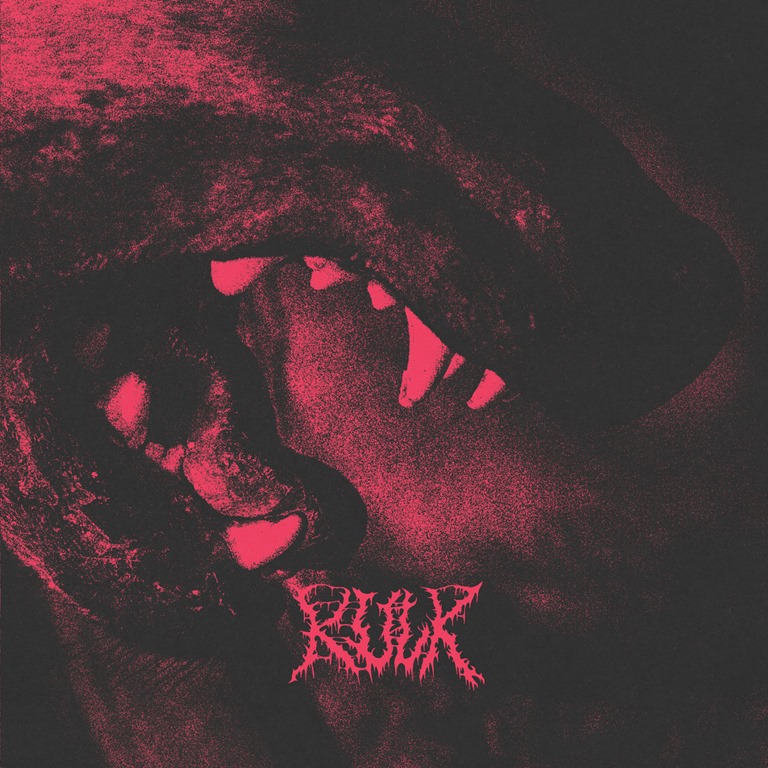
The latest album from Norwich based two-piece Kulk, It Gets Worse, arrives two and a half years after the release of We Spare Nothing, described as ‘thunderous and experimental’, and honing their ‘unique and monolithic brand of heavy doom and sludge’.

The timing – and the title – couldn’t be more apt. Just when you were probably thinking we’d endured the absolute worst of life on this planet – from Brexit and Trump via a global pandemic and insane inflation and everything money-related being utterly screwed and still getting more painful by the day after 14 years of a Conservative government – it continues to get worse – half the world is at war, the other half the world is either flooded or in flames, and there are mass killings practically every other week. It’s not, then, simply a nihilistic strapline to grab the attention, but pretty much a demonstrable fact. Things never get better – only worse.

The band articulate both the circumstances and the mood when they frame the album thus: “This album is about the universal suffocating weight of hoping for more while navigating a climate where the apparatus for seeking it is being consistently undermined. What it feels like to not only struggle keeping your head above water but to try jumping out from the deep end without losing your trunks. It is selfish guilt and misplaced woe, desire is a distraction from the world at our feet”.

Bookended by short instrumental intro and outro tracks, ‘More’ and ‘Less’, It Gets Worse packs back-to-back balls-out riff-fests, where the bottom end sounds like a bulldozer and the beats sound like bombs. Whereas a lot of stuff on the doom and sludge spectrum is simply plain slow, Kulk are masters of the tempo shift. ‘A Heavy Sigh’ comes on at pace and builds a real groove, before hitting the breaks around two thirds in, at which point it becomes reminiscent of Melvins. The reason Melvins have endured is that – perhaps despite the popular perception – they’ve showcased a remarkable versatility and an urge to experiment, and it’s here that the comparison stands strongest with Kulk: they’re not just big, dirty riffs and shouting, although they do a first-class job of putting those things up front and centre. ‘Out of Reach’ is a pounding, raging roar of frustration amped up and overdriven to the max, hitting that perfect pitch at which blasting out a repetitive riff at skull-splitting decibels is the ultimate catharsis and the only practical and sane response to the world in which we find ourselves.

Things take a turn with ‘Mammoth’ showcasing a more hardcore bent initially, before descending into a howl of feedback, a noise-rock quasar delivered with the most brutal force. The vocals are barely audible, and then things get ever harder and harsher on ‘Beyond Gone’ which goes full industrial, hammering away at a simple, repetitive chord sequence with murderous fury. You feel your adrenaline pumping as they thunder away, combining pure precision with absolute chaos as feedback swirls and squalls all around like an ear-shattering cyclone.

The slower ‘Fountain’ shows considerable restraint and makes for an oppressive four minutes: it brings a bleak mood, and the hit lands late but hard when the distortion slams in. Getting Adam Sykes of Pigsx7 to play on ‘Life Will Wait’ is a major coup, and the track is a belter, built around a hypnotic three-chord riff – because all the best riffs have three chords – and really works the quiet/loud dynamic to the max.

Often, when people – particularly people in my demographic – write of the music of the 90s, it’s with a dewy-eyed nostalgia for their lost youth. Sure, I have my moments, but when I say that It Gets Worse takes me back to the 90s, I’m recalling the excitement of discovering endless obscure little bands cranking out major racket in pubs and tiny venues, some of whom managed to either get records or CDs released by shoestring labels, or otherwise scrape together funds to record and release a 7” or CD – and many of whom didn’t, and only exist in hazy recollections. The point is that these were exciting times. The only positive about living in shit times is that shit times make for good music, as people need an outlet to channel their pain, anguish, frustration, and rage. It Gets Worse is saturated with pain, anguish, frustration, and rage. And because of that, it’s very much a product of our times, and it’s absolutely essential.

AA

AA

a2498304630_10

1st December 2023

Christopher Nosnibor

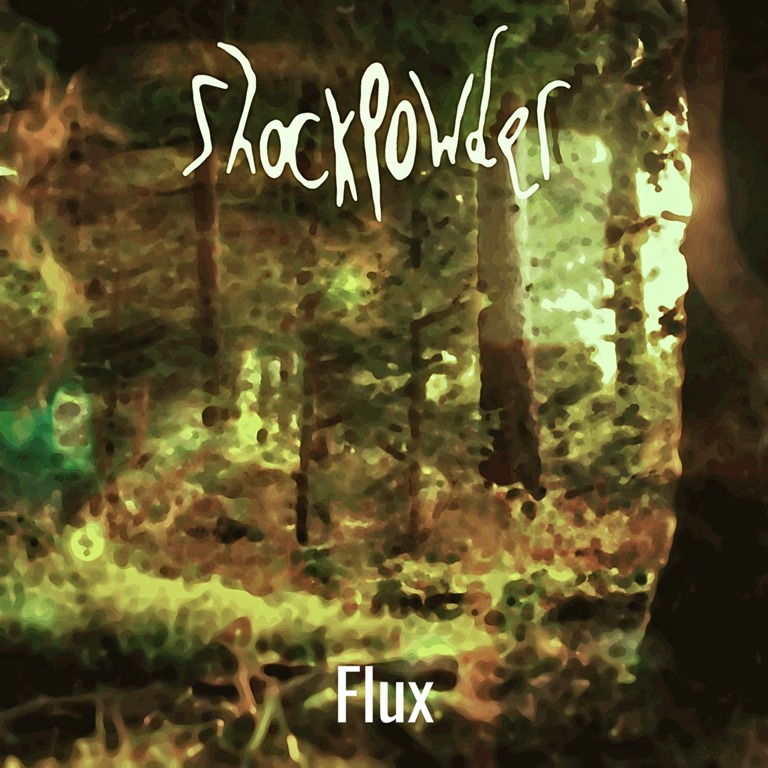
Ah, the power of a strong intro… and the power of nostalgia. The beefy riffage that launches ‘Flux’ by London act Shockpowder… it’s bold and it’s grungy, and the vocals are dreamy melodic, drifting, and I’m instantly dragged back to the early 90s.

Formed in 2015, I wonder if the members of Shockpowder would even remember the early 90s, but they clearly have a strong affinity, and note that they’re ‘heavily influenced by post rock, shoegaze and metal bands such as God is an Astronaut, Alcest and Slowdive.’

What I get from ‘Flux’ is a wistful, emotive element which is carried on some amped-up guitars that are simultaneously jangling and loud, and in many ways reminiscent of early Ride, and, perhaps rather less well-known, Eight Storey Window. Why they never gained more recognition, I will never understand, but then, the era was littered with great bands who were criminally underrated. How long did it take for The God Machine’s greatness to be recognised? Too long, and even now, they seem to be something of a cult for connoisseurs.

It’s not just a question of sound: any musician who’s spent enough time immersed in listening and paying attention to detail, and given the right gear, the right amp, the right pedals, the right production, can recreate the sound of their influences. But what counts is the feeling. ‘Flux’ is imbued with that vaguest, most inaccessible and yet essential ingredients – emotion. There’s something that goes beyond the minimal lyrics, reflecting on the ephemerality of life, something that goes beyond the distortion and reverb, hitting that indefinable spot of resonance. You don’t hear it, you feel it.

After this long, and having amassed a considerable catalogue, Shockpowder probably aren’t about to go stratospheric any time soon, but it’s the world’s loss, ultimately, because ‘Flux’ is, quite simply, a great song.

AA

a1289201518_10

Negative Gain Productions – 8th September 2023

Christopher Nosnibor

It likely seems strange to anyone born in the last thirty years that electronic music as we know it simply wasn’t a thing at one point. If the Seventies saw a slow emergence of new technology in music, it wasn’t until the early 80s that that technology became accessible – that is to say, affordable and more widely available in commercial terms. This was truly revolutionary, and to hear bands like The Human League, Soft Cell, Depeche Mode, all coming through in the charts felt like, well, the dawning of a new era. Which is precisely what it was, and this would evolve in darker directions – as well as dancier, poppier ones – as the decade progressed, and through the 90s, by which time the sense of revolution had become fully assimilated. No-one bealed about the lack of instruments involved in the making of the Utah Saints’ album.

You can see why your traditionalists hated it, of course, and the Musicians Union, too, and this friction did continue into the 90s: as they saw it, drum machines threatened to make drummers obsolete, and if you had a synthesiser which could do bass and lead, both bassists and guitarists would be out of work! It was of course pure knee-jerk, and one wonders to what extent the same is true of the outcry over AI, but on that score only time will tell. As it stands, history had proven that home taping didn’t kill music – no, that would come later with the advent of streaming, and not illegal streaming via Napster and subsequent P2P platforms like Gnutella and Soulseek.

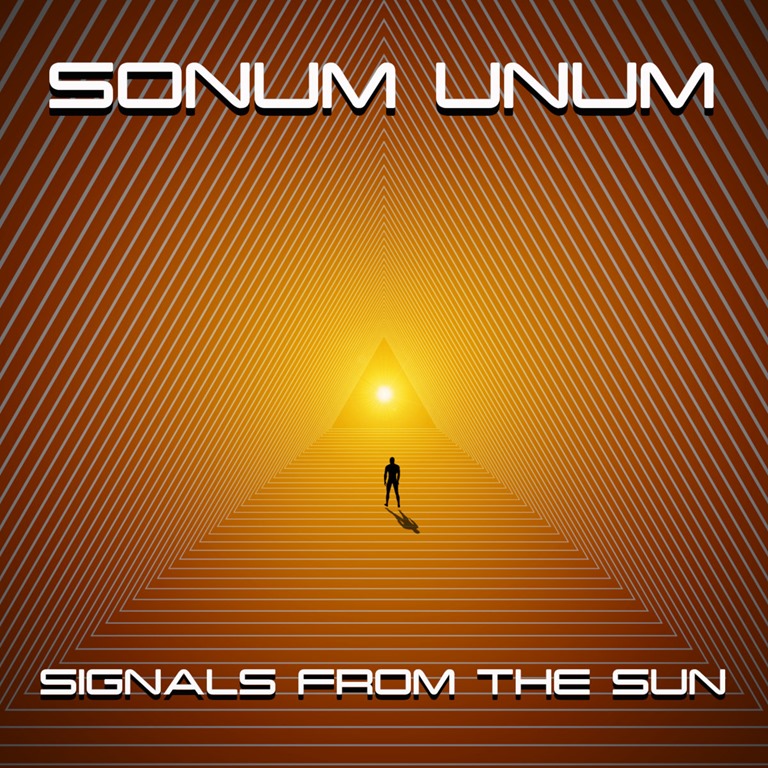
This s the backdrop for the debut album for electronic rock duo, Sonum Unum. Signals From The Sun is, according to their bio, ‘heavily inspired by 80s and 90s eras electronic and synth-pop music. Dark and ominous tones, ambient textures and thumping beats abound while lush, layered vocals soar to epic and cinematic tiers.’

It’s tempting to slide into the easy commentary which maintains the narrative of this being an album with a retro vibe, primarily because it’s true: it’s an amalgamation of two decades of electropop slickly delivered to draw in elements from specific acts, but the entire oeuvre of the timespan, from bolder darker grooves of gothier European dark electro, but also incorporating elements of the emerging case sound, with the quickfire drum builds that pace the way for expansive choruses.

There are times where it feels as if their approach to appropriation – essentially pulping and compressing the very essence of the forms into smooth perfection – results in songs that are simply too generic to have a real sense of character or identity. But then, plough through myriad releases from that time span from acts who either bubbled under or who only had a hit or two, and you’ll find the same is true of the rest of the album tracks. Moreover, to return to the question of sounding ‘retro’ – it feels like an increasingly obsolete concept. More or less everything draws on something precursive, and most of what is starting to be a recycling of a recycling. It’s no longer a case of a seventies or eighties or nineties revival: all of these things now exist in perpetuity. Retro is the new contemporary, and I can’t decide of the seeping sadness I experience listening to it is because of the emotive quality of the songs – which are tightly crafted more than gripping, to the point that they slip past without for a second taking hold – or if it’s because of the way they evoke so much that entirely removed from the songs themselves.

Signals From The Sun is Mr Mister to Depeche Mode via Eurythmics and A-Ha and Nine Inch Nails and Bastille. Slick, anthemic, it seeps nostalgia and has immense commercial appeal if it finds its way to the right channels and outlets.

AA

a3576946630_10

Amphetamine Reptile Records – 16th July 2023 (CD, DL) / 23rd July 2023 (LP)

Christopher Nosnibor

The late 80s and early 90s were my time in terms of musical discovery. Door seemed to open door seemed to open door… and these were exciting times, too. There was a lot happening, and a lot of it was noisy. While endless column inches were given to Sub Pop – and not wrongly – two other labels stood out to me at this time: Touch and Go, and Amphetamine Reptile, the former home to the likes of Shellac, and Girls Against Boys, the latter, Cows, Helmet, Tar, Dwarves, and the mighty Melvins. It’s hard to overstate the importance of these labels at the time. But latterly, Sub Pop turned pop, releasing fay indie by Fleet Foxes, while cranking out reissues of the albums that put them on the map as the home of the ‘Seattle Sound’, and Touch and Go reduced its roster significantly few years after The Butthole Surfers hauled them to court over (lack of) contractual issues, releasing only a handful of more commercially-orientated artists in recent years.

And then there’s AmRep. They’ve kept on doing what they do. The label never put out masses of releases per year, and perhaps that’s been a factor in its sustainability, focusing on curation. That, and the fact that The Melvins’ output alone is enough to keep the label both busy and afloat. A label dedicated to alternative and noise rock, Mr.Phylzzz are right at home here.

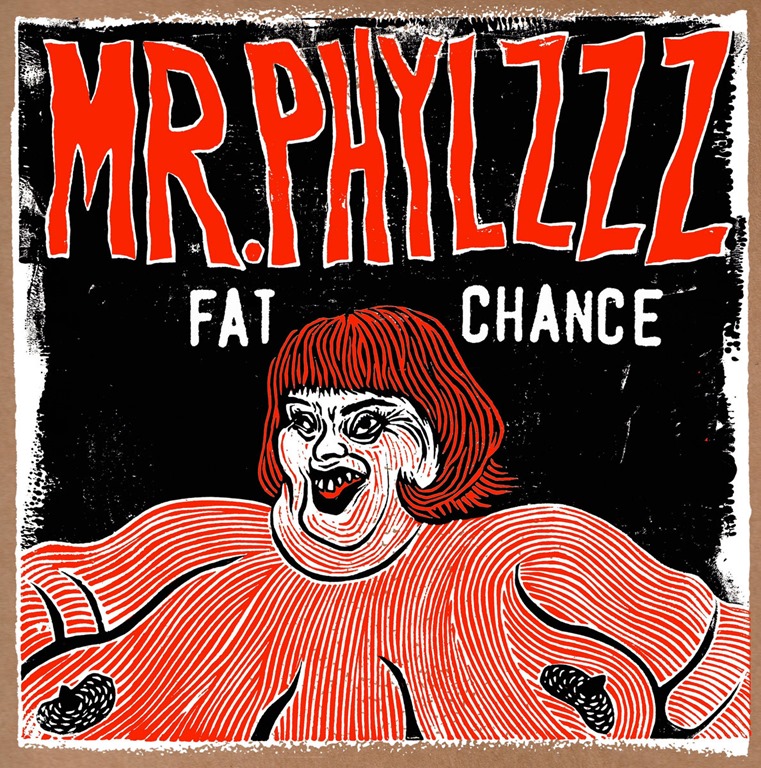
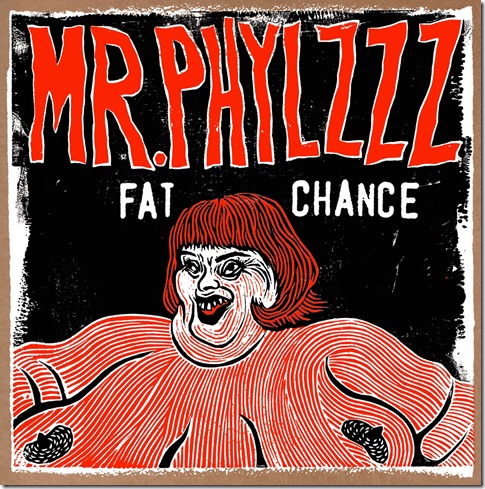
Fat Chance, the third album from Mr.Phylzzz, and which swiftly follows its 2022 predecessor, Cancel Culture Club, promises a ‘a distinct tonal shift while staying true to the band’s signature style’ and ‘an unrelenting, dynamically charged experience, described by the band as their most straightforward and focused record yet.’

It was recorded at Electrical Audio studios, a fact which speaks for itself, and the tracks were laid in just four days. Having road-tested the material in advance, the recordings capture a big, dense live sound and a real sense of immediacy. And there is very much a sense not only of focus, but of purpose, which radiates from the songs, and the sound quality and production is much improved but with no loss of power. Squalling noise and cacophony has yielded to tight structures and slugging grooves.

‘Pontiac Grand-Am’ brings blistering slabs of guitar and pumping drums, driven by a wild energy, and it’s one hell of a way to start an album. With Clinton Jacob’s yelping vocal style, I’m reminded of Electric Six and Pulled Apart by Horses, although it’s the latter they clearly bear the closer overall sonic resemblance. But the difference is that this mad, manic chaos of noise is created by just two guys instead of a full band. And this is a mad, manic noise that takes no breathers. The majority of the songs are two-and-a-half to three-and-a-half minutes long and are defined by absolutely piledriving riffs.

‘Maybe’ takes what starts out sounding like a fairly standard Nirvana-inspired riff and then chops it into a jarring, stuttering churn. The first six songs are crammed into sixteen eye-popping minutes without a second’s let-up, and it leaves you panting, your heart palpating.

And then there’s the obligatory long song to bring the curtain down, and the seven-minute ‘Pick Scrape’ delivers what it says on the tin, an experimental instrumental with a pick scape that builds through a series of crashing crescendos, something that’s somewhere between no-wave and avant-garde jazz, and one hundred percent racket.

If stylistically, Fat Chance has its roots in grunge and the noise rock sound of the 90s, it’s also an extremely contemporary album, and not just on account of duos being very much en vogue (although as likely a fashion borne out of practicality and necessity in terms of logistics and finances in this direst period of capitalism yet, which finds the artist at the bottom of the pile when it comes to making their work pay). Sonically, and in terms of its delivery, and its all-out, in-yer-face attack, Fat Chance is an album of the now – and it’s a blinder.

AA
a2133784088_10

Blaggers Records – 30th June 2023

Christopher Nosnibor

Earlier this year, JW Paris were the millionth act to cover Chris Isaak’s ‘Wicked Game’ – a song that bombed on initial release in 1989 and only started getting attention when it was featured on the soundtrack to David Lynch’s Wild at Heart, and becoming a hit in 1991. What was interesting about JW Paris’ version is that it was different. It didn’t pussyfoot around being nice and delicate – not that it was insensitive or trashed the original, it just had the guts to be different instead of a predictably, safe, straight copy. And I suppose this sums the band up, really. They do their own thing – and it so happens to be good.

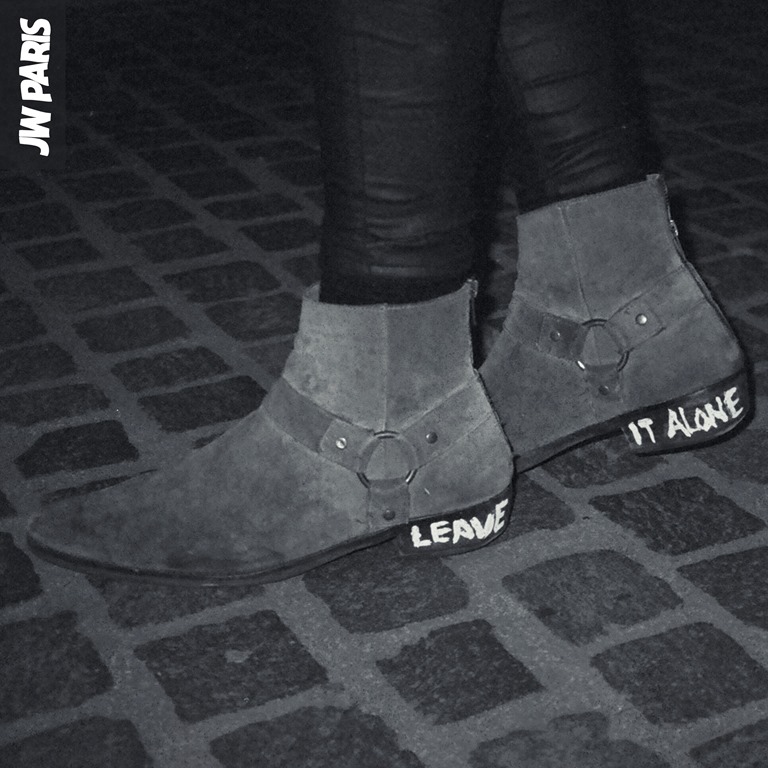
‘Leave It Alone’ is three-and-a-half minutes of choppy post punk with bite – not to mention a yawning guitarline that evokes the essence of Nirvana and The Pixies, straddling a magnificent strolling bassline and exploiting that classic quiet / loud dynamic – but keeping the overdrive in check in favour of a cleaner guitar sound – but with a chorus that’s eminently moshable.

Yes, of course it all pulls me back to the early 90s – no one song or band or anything specific, but that vague, aching haze of what it was like to be there in my late teens and early twenties. There’s some recycled gag about the 60s now being applied to the 90s along the lines of if you can remember the decade, you weren’t there, and there’s an element of truth on a personal level with it being the time I got into beer (and vodka) and live music, but there’s that other key element, namely the passage of time. It’s not even about memory fading: when you’re living life and simply in the midst of things, you don’t stop to take stock or pin a marker on your memory that any given moment in time was something to remember as special. It’s only in hindsight – even if that hindsight is developed in relative proximity to the event – that you often come to appreciate things for what they were. This is, of course, the nature of nostalgia, and why people in their thirties become fixated on the ‘golden age’ of music, movies, and TV, which almost invariably coincides with their late teens and early twenties before the weight of adulthood and the crushing tedium of work and shit took over. But I say this because the further a time recedes into history, the vaguer and more nebulous the recollections become.

It’s not that I can’t pinpoint where bands have leaned on Nirvana or The Pixies for inspiration, but the bigger – and vaguer – picture is that TV and radio and gigs were awash with acts which represented the zeitgeist: it’s impossible to remember all of the little bands who maybe released one single or nothing at all, who played in upstairs rooms in poky pubs, but the period overall is indelibly etched into my memory banks. And this is important, because JW Paris don’t sound like they’ve studied key albums of the time and appropriated accordingly, but have, instead, soaked up the spirit and distilled it into a sweet and powerful shot.

There are layers to this: ‘Take a look at me, am I the person that you wanna be?’ becomes ‘am I who you want to see?’ How much is projection, perception? And not just perception of others, but self-perception. Look in the mirror: are you who you want to see? And how much does that change over time? It’s not always easy to make peace with your former selves.

Speaking on the single, the band say “‘Leave It Alone’ is a deeply personal song that reflects our own inner journey of self-discovery and acceptance… With honest lyrics and a haunting melody, it invites our audience and listeners on an introspective exploration of identity and the longing for inner peace”.

And I guess that’s what the preceding five-hundred-word contemplation is: it’s my introspective exploration, as inspired by the song. A good song does so much more than fill a few minutes with sound: it enters you and takes you places. ‘Leave It Alone’ is a fucking good song.

AA

923819

19th May 2023

Christopher Nosnibor

A couple of months after the epic grind-influenced outing that was ‘I Am Weak’, Bournemouth-based quartet Solcura return with their fourth single since their debut album, Serotonin, released in 2021, ‘Imposter Syndrome’. They describe it as an ‘absolute rager’ and ‘a result of the miasma of deceit and media tyranny we are all forced to swallow every single day of our lives.’

Music that was so angry and overtly political was rare only a year or so back. Practically every other release was a lockdown project, or addressed the challenges and traumas of lockdown; the isolation, the depression, and it was only natural that that would be the case. Not everyone is over lockdown or has recovered from the impacts of the pandemic and its handling, not by a long shot. Many suffer from levels of anxiety – particularly social anxiety – not experienced before, and many still haven’t got back on track financially, either. So many people got fucked in so many ways, and the likelihood is that it will take years – and years – before people are back to themselves again.

But the mood has definitely shifted, at least here in the UK, and particularly in England. The zeitgeist is no longer one of reflection, and if the mood remains on the downside, it’s no longer directed inward, as the fallout of the Johnson administration has ignited an incendiary rage that eclipses any inward-looking darkness. As the corruption of our government becomes exposed with new revelations practically by the day, from the billions tossed to mega-rich buddies for PPE that either never materialised or was otherwise unfit for purpose, to the crumbling NHS and public network system, while top execs and shareholders gouge immense profits while workers – now striking en mass – are being told there’s no spare cash for wages because of inflation, the swell of anger at the sense not only have we all been had, but that we’re being utterly screwed and lied to, brazenly, has built from a mutter of dissent to a scream of rage.

For a time, Sleaford Mods and Killing Joke were pretty much the only acts telling it like it is, but the explosive rise of Benefits, on paper the band least likely to go massive and hit the festival circuit of all time tells you precisely where we’re at now as a nation. And this is where Solcura are at: they’re pissed off and are going to shout about it.

‘Imposter Syndrome’ finds Solcura exploring some richly atmospheric vibes at the start, with spaced-out, slightly trippy, stumbling guitar and mystical wordless vocals that radiate spiritualism. Then, thirty-odd seconds in, the guitar slams in on hard overdrive and bangs into Soundgarden territory, with a beefy riff. The drums really stand out among it all, the snare a sharp crack that cuts through the thick distortion, with a hint of Therapy? pulling through it all.

The commination of melodic, reverby vocals and chunky riffage also reminds me of early Amplifier, but then there are some dark overtones and screamy backing vocals that are more nu-metal than neo-prog, and the two elements combine to optimal effect. This is some savvy musical alchemy here, and ‘Imposter Syndrome’ is a dense work with depth and dynamics. Yes, it harks back to the early 90s, but that’s another reflection of the time we live in. Recycling is good, especially when it’s done this well. Believe the hype. Believe in Solcura.

IMG_1703

The Bobby Lees are thrilled to share their brand new full-length, Bellevue, available via Ipecac Recordings. The band have also shared the video for title track, which you can view below.

The Bobby Lees recently wrapped up a European tour that included the Woodstock, N.Y-based band’s first stint in the UK. The four-piece band have several shows coming over the next few months including a 9th October performance at Aftershock 2022.

The Bobby Lees tour dates:

October 9 Sacramento, CA Aftershock 2022

October 25 Brooklyn, NY Baby’s All Right

October 28 Woodstock, NY Colony

November 5 Tulsa, OK Cain’s Ballroom

The 13-song album, which was recorded live in-studio, was produced by Vance Powell (Jack White, Chris Stapleton, The Raconteurs).

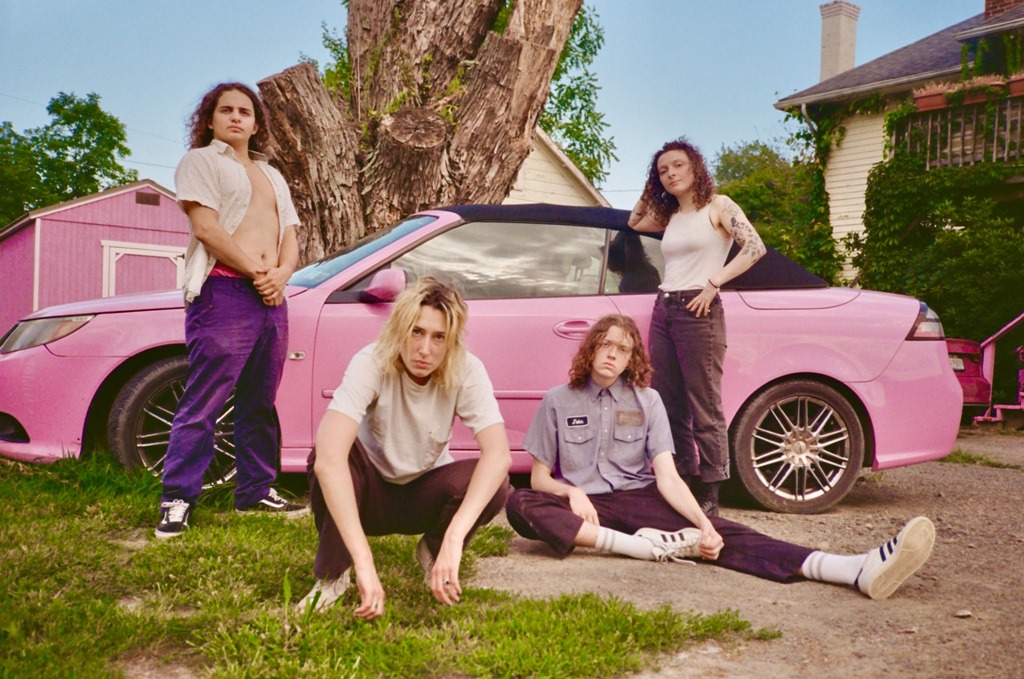
Iggy Pop, Debbie Harry, Henry Rollins…these are just a few of the punk icons who have shown support for Woodstock, NY based band The Bobby Lees. Sam Quartin [vocals, guitar], Macky Bowman [drums], Nick Casa [guitar], and Kendall Wind [bass] — make music that is punk in spirit and soul; unfettered and resolutely honest. To say their sound is wild and untethered is an understatement. It’s the kind of aural exorcism any listener can tap into, something that struck a chord with Henry Rollins who brought them to Ipecac Recordings where Mike Patton and Greg Werckman signed them.

RAA_89Ig

Photo Credit: John Swab