Archive for the ‘Singles and EPs’ Category

Cleopatra Records – 8th November 2023

Christopher Nosnibor

The goth crowd are an odd bunch. Like many subcultures, there’s a strong tribalism ingrained among them, and not even simply the older adherents or trad goths. There’s a perplexing contradiction here, in that a subculture born out of a broad church of outsiders should be so defensive and exclusive, even antagonistic towards those outside their club, while at the same time many are the most broad-minded and accommodating people you could encounter. I suspect the less accommodating are keen to protect their thing from people who aren’t really into it. Casuals, weekend goths, emos and metallers who misrepresent what it is to be goth… yeah, there’s a logic to not want to be tarred with the same mascara brush as some.

In my experience, some goth gigs – and I have been to many, although can’t claim to have been ‘there’ in the early 80s when it was all starting out because I simply wasn’t of an age – do seem to attract more than their share of ‘gother than thou’ posers, and while my collection is very heavy on vintage goth records (and CDs) and my wardrobe is 90% black (as Andrew Eldritch once quipped, and I paraphrase, it saves on laundry), I’ve always felt that I’m not goth enough for the weekend tribal gatherings in Whitby.

This is all to say that I get where Neon Funeral are coming from with this release. The New Jersey-based darkwave/post-punk band, are on Cleopatra Records, which has some pretty strong goth credentials. But then no doubt there will be British goths who will say that it’s an American label and the Americans don’t really ‘get’ goth and created their own strain and yadda yadda yadda.

As the blurbage explains, ‘The EP’s theme is based upon the band feeling alienated from the goth scene. The name of the EP, Banned From The Goth Club was given because of the band’s challenge in finding their audience given their contradictory sound.

The band states, “The goth audience can’t exactly get fully immersed into the music because of the aggression and intensity of the vocals and the hardcore scene can’t exactly understand the softer and dance-driven instrumentals for moshing. We once performed at a goth venue and seemed out of place and out of touch with the audience. We then coined the phrase ‘Banned From The Goth Club’ to welcome the eclectic sound and introduce it playfully.” As is to accentuate this point, the last track on the EP is a cover of Eddie Murphy’s 80s foray into music-making, ‘Party All The Time’.

‘A Void’ is probably too synthy for the traditionalists who like their guitars, trebly and drenched in chorus – but then the switch to gritty, snarling vocals are too metal for the darkwave fans. Of course, you can’t please all of the people all of the time, but what do you do when the people are ultra-picky and pedantic? In the words of Valor Kand – fuck ‘em! It’s a cracking tune, dreamy on the surface but with a heavy dash of nightmare in there. On ‘Avolition’, the heavy synths and hyperactive programmed drumming, melded to solid bass and overlaid with theatrical vocals bring all the ingredients of 90s goth as represented by the likes of Suspiria and the Nightbreed Roster (although thankfully not Every New Dead Ghost). ‘High Tech Low Life’ is short – a mere two minutes and fifty seconds – and gloomy, a droning, drifting synth that lands between Faith era Cure and New Order circa Movement, but with some roaring metal vocals, before it skips into something that’s more like The Mission on crack and fronted by Carl McCoy. All to often, hearing the popular elements of goth being jigsawed together is a bit of a yawn, but it would be way off to describe this as derivative. With its harder edge, Banned From The Goth Club isn’t going to appeal to a large portion of the crowd, particularly the trads and the purists, and it’s not one for the dreamwave, darkwave, or cybergoths either. But for anyone who isn’t set on genre limitations, and with ears, and who likes it dark and a shade gnarly, this is a winner.

AA

AA

a0967268712_10

Christopher Nosnibor

It’s a common issue for artists, even those with labels, that a release simply fails to gain traction. There are myriad reasons and multiple factors, and it’s often a combination of them which contrive to leave a release sunk like a stone, dead in the water. It’s rarely a question of quality. Even A-Ha’s ‘Take On Me’ and ‘West End Girls’ by the pet Shop Boys took more than one attempt to break through, despite major label backing at a time when labels would plough absolutely hods of cash into new artists.

Sometimes it’s simply a question of timing: some weeks and months there’s a glut of major releases or releases that otherwise grab the attention that mean some great records slip through the cracks. This month is a classic example, and it seems there are at least half a dozen truly killer releases all landing on the 10th. I can’t even listen to them all, let alone write about them.

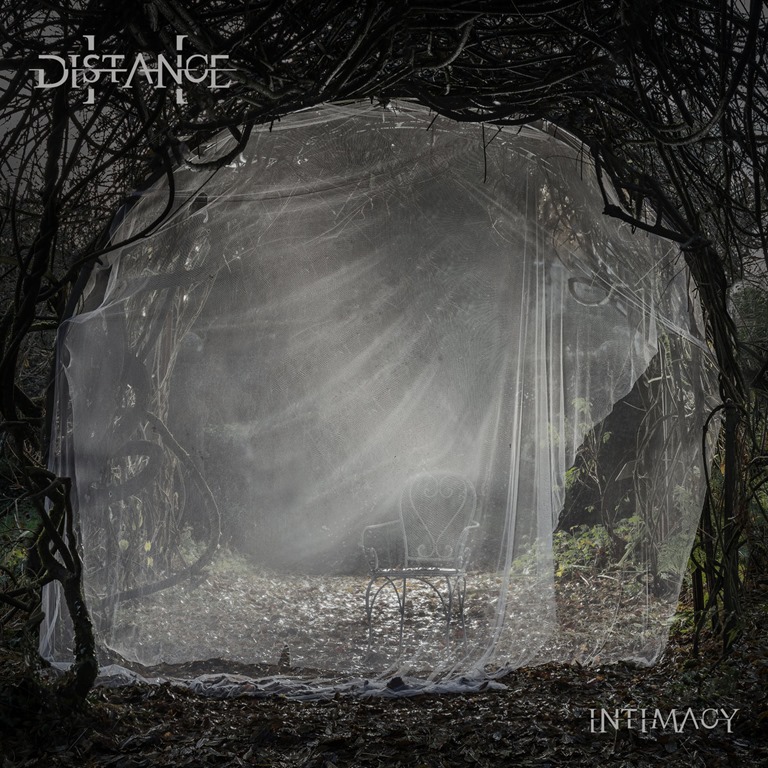
And so it seems to have been the case when Distance H dropped debut EP Intimacy a few months ago. The single cuts released in advance of this EP grabbed my attention, not least the first, Bitch 16’, featuring Ophelia from Saigon Blue Rain. In fact, there wasn’t a weak selection among the three singles: ‘Waters of Woe’ by Distance H feat. Marita Volodina was – and remains, as I described it at the time – ‘vintage goth with a contemporary spin’ and ‘a cracking tune’.

But having failed to make a splash, Intimacy is getting a PR reboot, and it’s a good thing, because the tracks which didn’t get single releases a year ago or whenever, are just as strong, and this makes for a full and founded EP. Casting an eye back to the 80s and 90s when big bucks were doing the rounds, it was often the case that albums would depend on a strong single or two, and that those singles would stand as beacons in set of mediocre slop, or, as was often the case, indulgent turd. It’s rather harder to get away with that ‘lead single’ marketing approach now people can stream the album or hear to by other means in advance without needing to go and check out a listening booth or blag it off your mate.

But Intimacy is truly all killer. ‘Twilight’ is a big, sweeping slab of majestic melancholy, balancing cool synths and chiming guitars that lean on Disintegration era Cure and sits nicely alongside The Twilight Sad circa Nobody Wants to Be Here and Nobody Wants to Leave. It’s a song with a sadness that aches, but at the same time, there’s an ethereal majesty about it, due in no small part to the sweeping, soaring vocals. The epically multi-faceted ‘Waters of Woe’ we’ve already raved about here, but hearing it afresh in the context of the EP, it seems to gain power. The same if true of ‘Reasons to Rush’ which features Liset Alea, combining heavy goth vibes with the electric rush of 90s alternative acts like Curve.

The final track, the epic six-minute ‘Leaden Sky’ now selected to lead the reboot, again features Ophelia on vocals. It’s another gothy epic, clocking in at over six minutes, with a bulbous bass and a wash of echo-soaked guitars weaving a richly textured backdrop cut through with programmed drums which punch out a rolling rhythm. In the context of the EP, it rounds off a big journey ending as it begins, while stepping through some memorable terrain. For these collaborative cuts, Manu H has made some truly immaculate selections. Each of the vocalists brings a subtle but essential twist to the sound, and while tied tightly to the templates of his stated influences (The Cure, Joy Division, Siouxsie And The Banshees, Cocteau Twins, The Sisters of Mercy or The Chameleons), Intimacy sees Distance H emerge victorious by capturing the atmospheric aspects of his forebears without falling to cliché, and the quality of the songs seals it.

AA

a1691727151_10

Rare Vitamin Records – 20th October 2023

Christopher Nosnibor

The Battery Farm have had a truly extraordinary twelve months: the Manchester foursome released their debut album last November, and have been gigging hard off the back of it, with some pretty high-profile shows along the way. And this is a band that’s driven – not so much by ambition or aspirations of stardom, but by passion. These guys are purveyors of political, pissed off, authentic punk – not haircuts and threads, but sweaty, full-throttle 110% all the way. Benjamin Corry makes for a powerful presence, vocally, visually, and in the interviews he’s given. He may appear a shade scary and borderline deranged, but comes across as affable, articulate, and genuine.

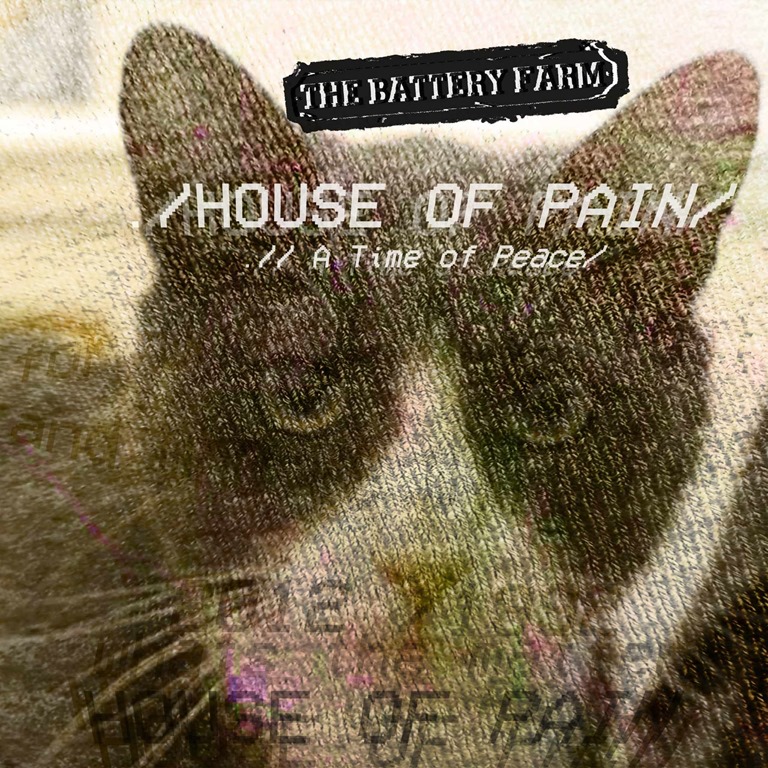
The band exists to rail against the shitness of the world we find ourselves in, and perhaps buoyed by the reception of the album and recent shows, their twelfth single is more amped-up and fiery than ever. ‘House of Pain’ is three minutes of riff-driven fury that blasts in at a hundred miles an hour with a message that needs to be heard. Arguably, that message could be boiled down to the barest bones of ‘fuck this bullshit’, but the expanded articulation is that it addresses ‘the shame imposed on all of us who are scraping by in an ongoing and worsening cost of greed crisis. You do what you have to to survive, and how dare anyone in a position of privilege look down their nose.’

It needs to be heard because, as I was reading only earlier today online in The Guardian, ‘The number of people experiencing destitution in the UK has more than doubled in the last five years – up from 1.55 million in 2017. One million children are now living in destitute homes – a staggering increase of 186% in half a decade.’ That every single supermarket now has a place to donate to food banks speaks for itself; yet our government, whose job it is to protect society’s most vulnerable, simply dispense advice that if you can’t afford a cheese sandwich, to forgo the cheese, and who seem to think that broadband and mobile phones are luxury items the poor should do without, despite the fact it’s impossible to apply for jobs or even maintain benefits without them. The privately-educated governing elite are in the pockets of the likes of the oil industry, and they absolutely fucking hate the poor, and they want you to hate the poor too. And their hateful campaigning and sloganeering is depressingly effective: how else do you explain working-class people voting Conservative? It’s bewildering to think that people in impoverished towns in the north of England would vote for these cunts who’d happily bulldoze every council estate in the country, that they might think that the likes of Bozo Johnson and Richboi Sunak give even a flake of shit about them, let alone represent them – but the increasingly right-wing Tories appeal to the mentality of the impoverished and disenfranchised by apportioning the blame for the state of everything on ‘illegal’ immigrants, who come over here and sponge all the benefits. Stop the boats! Right. Then what?

The Battery Farm are spot on when they describe the current situation in the UK as a ‘cost of greed’ crisis. Everyone who’s already in the money is making on this: banks, oil and energy companies, supermarkets… any increases in costs are being passed directly to customers, and then some, all to protect profits, all to pass on to shareholders, all to give CEOs even bigger bonuses. The injustice, the social division is at a point where something has to give. Sadly, it seems that something is the lives of those at the bottom of the heap.

The Battery Farm can’t change the world, but they can provide a voice and an outlet to the anger at this injustice, and flipside ‘A Time of Peace’ is another full-throttle gritty blast of punk fury, reminiscent of the sound of ‘79/’80 – I’m thinking grimy roar of The Anti-Nowhere League and fellow Mancunians Slaughter and the Dogs by way of references here.

At the time of writing this, four days after release (I’ve been slack / drowning in dealing with everyday life stuff (delete as appropriate); physical copies on 7”, CD, and cassette have sold out, which is a huge achievement and shows just how they’ve built a committed following through a combination of belting tunes and sheer hard slog. This is their strongest work to date.

AA

394506170_667417382037187_39104650144548114_n

Prohibited Records – 27th October 2023

Christopher Nosnibor

The… the… you know? Clicking fingers, gesticulating, waving hands in a rolling motion around your ears. The… thing? The… you know? The thing? The thing!

We’ve all been there. It’s on the tip of your tongue, the fringes of your memory. It hangs like a shadow, a fraction beyond the reach of the active brain. You curse your mind because you know it, and your interlocutor would, too, if only they had a clue what you were on about. The thing. The fucking thing.

The very prospect of reviewing Shane Aspergen’s EP flung me into a spin , because the title tossed me into the frantic headspace in which words run out and everything feels overwhelming, and it’s all down to the title. Because… well, that’s the thing. What is the thing? And how do you even begin to describe it?

This EP, we’re told, ‘comes as a precursor to a forthcoming album (tentatively titled Emblems of Transmuting Heat) that was finished a few months prior to the conceptualization of this four-track EP. While recent in its development, the music originates from the same period of transition, during which Shane Aspegren relocated from Hong Kong to Los Angeles.’

It feels like the sonic articulation of transition, of movement, and it feels transitory, ephemeral, fleeting moments, some of which leave an indelible imprint, others which fade instantly or barely even register in the moment. Precisely how or why this is, it’s hard to pinpoint with any kind of exactitude. But then, that feels like the point: the pieces are impressionistic sound collages. It’s a molecular morass of clamorous, scrabbling treble and scratching insectoid busyness and bubbling synthines which dissolves in a fuzzy hum and clatter; a cross of Gregorian chant, ambient, experimental electronica, and dance.

Aspegren explains how the title track ‘is a complete reworking of a different piece [he] started in 2022. “I completely abandoned the original in its initial form — the raw vocalizations were the only thing that I wanted to keep when I went back to revisit those sessions. The voices were recorded as a form of cathartic release during a period of time that I was heavily exploring voice and frequency as a form of somatic connection and release. In the end, this morphed through several different iterations, and finally turned into this version more than a year later, after moving to LA.” The sense of movement here is one of a forward propulsion, which comes largely from the subtle but insistent beat.

‘Imaginal Pathway’ is but a brief interlude, as was intended, penned as an interlude for the Imaginal Pathways app for which Aspegren was the lead artist. It’s a mere minute and a half – of eddying ambience layered with light, hovering drones which bends and droop amidst birdlike tweets, over which a narrative – seemingly lifted straight from an education video – explains the workings of the ear, a ‘magical’ organ ‘which transports perceptual vibrations from the physical realm into the experiential’.

The final track, ‘iTiS’, is the most recent composition, which came about following his relocation, with Aspegren recounting “It started with a Moog Subharmonicon improvisation and turned into a slow build of layers and structure. Strangely, it feels like the oldest track to me… like I made it in another era of my life.”. It certainly sounds like music from another era, too, the contemporary kit very much harking back to more vintage analogue sound. There’s a soft, squelchiness to the bass tones, a blurring edge to the broad space-filling sweeps. But perhaps sometimes the equipment determines the mood and the sound more than the creator. Either way, it makes for a fitting close to the EP – for having brought the listener through a journey of upheaval, of uncertainty, of feeling unsettled, it ends with what feels like a sense of final settlement, of resolution. And end, but also a new vista, and the possibility of a new beginning.

AA

PRO065_art

7th October 2023

Christopher Nosnibor

West Midlands post-punk trio , The Glass House Museum, comprising Joe and Jon Cummings (both vocals and guitar) and Lee Meadows (programming and bass), have been releasing music since 2017, but ‘The Committee’ is their first new material since the mini-album Artifacts in 2020.

It begins with some dark atmospheric grumbling, some gloomy bell chimes and squawks, presumably the menacing cries of the vultures mentioned in the song’s chorus, and also featured on the cover art. And, naturally, the collective noun for vultures is a committee. Despite this literal referencing and representation, it’s apparent that the song’s meaning is truly somewhat rather more figurative: ‘Tread careful, stranger,’ is the caution which starts the song’s lyrics.

With the sequenced rhythm section, they hold the solid core groove tight, giving it that quintessential goth vibe.

Over the years, I’ve witnessed many detractors – and even fans – ask why bands like The Sisters of Mercy don’t get a drummer. There are numerous reasons why they don’t, won’t, and never would, but the main one is that the drum machine is a defining feature of the sound of that particular strain of post punk which came out of Leeds in the early 80s. That hard, relentless beat, paired with a bass that followed it, bam-bam-bam-bam, overlayed with guitars, edged with a metallic clang and shrouded in chorus and reverb created a perfect tension that isn’t really like anything else – and this is why it’s provided the blueprint for so many bands over the last forty years.

But to dismiss it as being ‘derivative’ would be to miss the point: this is about heritage and lineage, and also there’s a certain degree of knowingness to making references that are, in some ways, I suppose, tribal in their function. If you know, you know, and you’re one of ‘us’. And so it is that the lettering on the cover is lifted from Siousxie and the Banshees’ A Kiss in the Dreamhouse, offers another referential insight into the band’s stylistic touchstones. The devil really is in the details.

The vocals aren’t of the spiky punkier aspect of post-punk, eschewing the edgy styles of Siouxsie and Skeletal Family’s Anne-Marie Hurst and if anything, are more in the vein of Julianne Reagan in her rockier moments.

But the most significant thing here is that the ingredients are well-blended and folded in together around a decent tune with some sharp energy and a solid chorus, and none of it feels formulaic or ripped off. In short, ‘The Committee’ is in the ‘classic’ style, but with a strong identity of its own.

AA

533356

20th October 2023

Christopher Nosnibor

It’s all been happening in the Eville camp since the release of their second single, ‘Messy’, back in June – and now they’ve been gathering advance airplay in spades for the follow-up, ‘Leech’. Again, produced by Jamie Sellers (best known for his work with the likes of Ed

Sheeran and Elton John), this offering sees them really step things up a few notches.

Whereas ‘Messy’ was grungy and melodic, ‘Leech’ is all fiery fury: the rapidfire clattering drumming and roaring guitars – and vocal howl – which kickstarts the song harks back to the point around the turn of the millennium, when Pitchshifter joined forces with Prodigy live guitarist Jim Davies to create a dance/industrial metal fusion and saw them find favour with the nu-metal crowd – and although their preferred reference points are more in the vein of Slipknot, for all the emotional rawness of the lyrics, there’s still a strong melodic edge to the vocals.

Eva Sheldrake has range, and a knack for delivering a hook, not to mention a monster riff, and in the company of Milo Hemsley (drums) and Billy Finneran (bass), the Brighton ‘brat-metal’ trio are a powerful unit. And as much as I’ve been digging the vogue for duos lately – a setup often born as much out of necessity as choice – and hearing how far it’s possible to push the most minimal format it’s possible to have and still be a band – there is something so classic about a trio. It’s because while maintaining all of the component parts, there has to be absolute focus, there’s no room for a weak element like an iffy rhythm guitarist, and no-one has anywhere to hide, but everyone has to deliver optimally. And when they do, the sum is greater than the parts.

“I hope listeners take as much from it as I did by relating through experience with inner

conflict and toxic situations that are hard to escape,” says Eva.

She certainly channels it, and hard, here. Eville are clearly no suckers, and ‘Leech’ is a killer tune that says this is a band with much promise.

AA

IMG_8878

New Reality Records – 17 October 2023

Christopher Nosnibor

Speculum Bunny’s been doing the rounds on the live circuit with New Reality Records labelmate Stewart Home of late, and while in terms of presentation they’re leagues apart, her modus operandi bears strong parallels with Home’s, not least of all the audacious piss-takery of his earlier career, which is – quite unexpectedly – experiencing something of a renaissance – she’s also a completely different animal.

Her bio outlines how ‘Having written music since she was a kitten, Speculum Bunny enjoys blending words and sound to provoke, enthral and mystify her audience. Inspired by the depraved nature of love in all of its majestic forms, her childhood, masochism and devotion. Challenging mainstream narratives on motherhood and women’s expression she blends noise, synths, voices and field recordings. She pushes her edges.’

Female voices in music – strong ones, not sonic wallpaper popmakers dollied up by record labels – may be growing in number, but they’re still few and far between in the scheme of things. It’s a sad reflection on society and the music industry, but it does mean that when someone comes along and says ‘fuck the norms’, it’s powerful, and stands out, and Speculum Bunny – an overtly challenging moniker, uses a profile pic on her Bandcamp bearing the slogan ‘I’m not cute, I’m disgusting’ (it’s the cover art from her first release in May 2023: this is her fourth). It’s clear that her objective is to provoke a real sense of discomfort, and if both her choice of name and the EP’s title work through incongruous juxtapositions of hard / soft or similar, then the four tracks contained therein are the sonic manifestations of this oppositionality.

‘Demon Boyfriend’ is built around a chubby bass groove that’s reminiscent of the early years of The Cure, and it provides the backdrop to a dark spoken word piece. ‘he’s quite old… and he’s quite hairy… and he’s got horns…’ Much of the impact / appeal lies in the delivery, of course. Flat, monotone.. and unashamedly Scottish. There’s a tinkly fairytale tone to the keyboard sounds on the lo-fi ‘Dragon of Lure and Dread’. The vocals are sung, but mumbled so as to render the words almost inaudible, and the drums are distant, a thumping heartbeat below the surface.

You can probably consider this a spoiler alert. Pretty much the last thing I expected was for ‘House of the Rising Sun’ to be a fairly straight acoustic cover, delivered in what one might – for wont of a better description – an intimate, witchy tone. As the song plays out, a double-tracked vocal gives a slightly disorientated twist. The final song, ‘There is No Ash Without Fire’ is again minimal in its arrangement, and while a bulbous Curesque bassline provides the main element of the backdrop to her haunting vocal, which soars and swoops, the atmosphere is more akin to Young Marble Giants.

Liminal Fluff doesn’t sit within any single genre pigeonhole: in fact, none of the songs really conform to any style or genre, and ultimately, it seems a fair summary of Speculum Bunny as an artist. It’s truly refreshing to discover an artist who really doesn’t sound like anyone else – and even more of a deal when what they’re doing is good. And this is good.

AA

a3042142564_10

Blaggers Records – 19th October 2023

Christopher Nosnibor

True revolution will come when the workers own the means of production. This is something that’s emerged in music not through an uprising, but a thoroughly screwed-up state of affairs, but one that’s very much a result of a capital-driven model. Major labels, and a fair few indies, don’t exist for the artists: they exist for themselves, for their execs, for the machine, the mechanism which enables them to gouge maximum profit for themselves, the shareholders, the middlemen, hell, anyone in the chain. And, depressingly it looks like even Bandcamp could be going this way before long. Capitalism doesn’t give a shit about art: it cares only about money, and art is simply another commodity, provided it’s got mass appeal. And who generates the profit? The artist, of course. The model is the same in any capitalist structure: without call centre and admin staff, multinational corporations would simply have no business: even banks need staff to manage the money being poured into them (although retail customers get the least service because they may be many, but they’re just your average pleb on the street, so fuck them and their wanting local branches and stuff that eat into the profit margins). But the staff who essentially generate the wealth are at the bottom of the pile with the worst pay and the worst conditions.

Sure, some artists get rich, but how many Coldplays and Ed Sheerans are there in the scheme of things? And there has been a shift since the turn of the millennium. Massive advances – or any advance at all in many cases – are a thing of the past. But labels have always been behind the time, and the concept of A&R is a longstanding joke in that labels aren’t interested in finding the next movement as riding on the coattails of whatever’s breaking in order to milk it.

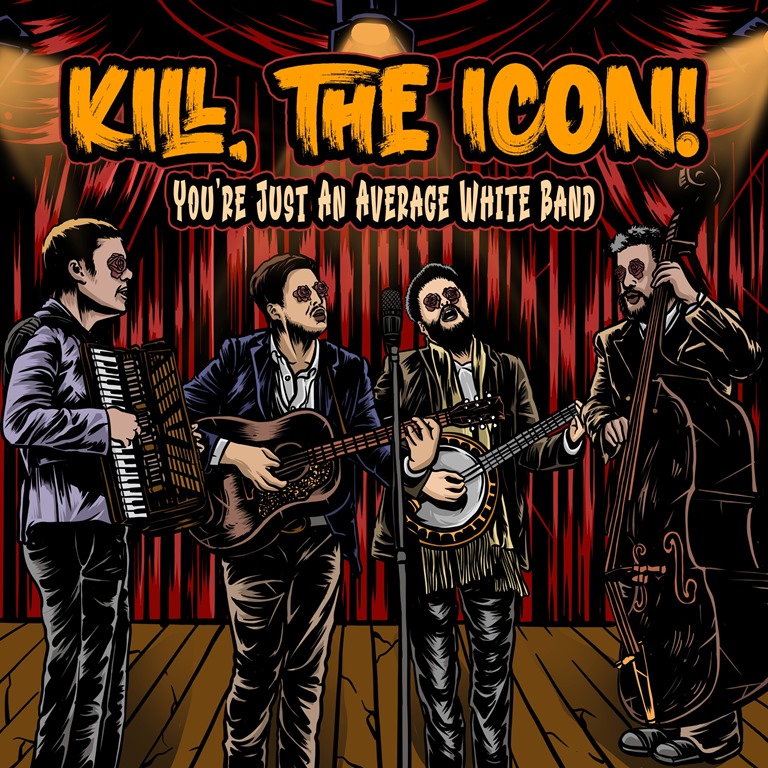
This latest offering from Kill, The Icon! marks something of a stylistic shift, at least superficially: less aggro and overtly confrontational, it’s also less guitar-orientated, built around a simple and unchanging synth loop. Nagging, earwormy, irritating… the repetition does become somewhat numbing after a while, but by the end off its three-and-a-half minute duration, you start to consider playing it again anyway.

Talking to me about the single, Nishant admitted ‘It’s really different and I expect will be polarizing in terms of content.’ He’s right on both counts, in that it’s not only a departure, but also likely to alienate a few fans and critics. But this is to the good: as I’ve written before, and will likely do so again in the future, you can’t please all of the people all of the time, and nor should you aim to do so. If you do, you’re Oasis or Ed Shearan. Punk is an attitude, not a style per se, punk is creating the music and art you believe in and not giving a fuck about the reception. Kill, The Icon! are punk, and this stylistic detour doesn’t see them budge an inch in their message or tame their fury for a second. Yes, true to their credo, Kill, The Icon are calling out institutional racism and general bullshit in society, and here, specifically, the music industry:

Average White Band / For the average white fan / Making average white music for the average white man

Joshi explains: “Mumford and Sons were the archetypal Average White Band. They had the son of a near-billionaire in their midst. And they made a career out of denying their privilege. They were bankrolled from the very start, and so they had a precious resource that’s not afforded to other bands: time. Most artists are told to play more shows, work harder, network harder. But that’s a huge lie that’s perpetuated by the music industry… Everyone involved in the music industry assures us that diversity, inclusion and equality are priorities – it’s written as much on the website of every festival, booking agent, manager, and record label. But the reality is an utter lie. We’re not all running the same race.”

One benefit of being a truly independent act is that the artistic control is not only retained by the artist, so is the scheduling. That means the pokes in ‘Average White Band’ are still contemporary, as Joshi calls it out:

“Once a band has been elevated, It’s fair to ask what they do with their new-found power: are they maintaining the status quo, or are they actively seeking change to make the music industry more equitable? The reality is that the music industry has been fantastic at improving diversity in indie music, but only to the extent that it champions female-led bands who approximate western beauty standards.”

Sitting on your chaise longue / Writing all your new songs / About cliches of cliches of cliches of cliches

It’s not a matter of sour grapes here: there’s no way Kill, The Icon! are jealous, or would want to be in the position of Wet Leg. But given the same elevated platform, Kill, The Icon! would be telling it like it is and making sure their message had maximum reach. But political bands don’t tend to get maximum reach, especially when they’re from minority backgrounds. Benefits are perhaps the most ‘real’ band with a broader reach right now – Sleaford Mods are simply too obvious are more about commentary than promoting change – but while they’re white, they’re too working class to be embraced beyond a certain demographic. In keeping it real, they’re not likely to get much radio airplay – or earn huge radio royalties – any time soon.

387832866_352631890438769_7374464432126662280_n

1st September 2023

Christopher Nosnibor

Details around Scottish black metal act Euchridian and sketchy. They’re a trio, and the drums were recorded at a different studio from the rest of the instruments. And this is to the good. I don’t need to know, and ultimately, probably don’t want to know. What does it matter when they formed, where they live, what gigs they’ve done? The lack of social media presence is admirable: in the absence of corny posed photos and candid snaps and videos of them gurning away at their instruments, I have nothing to judge them on but the music and the enigmatic cover art. And a little enigma goes a long way.

The advent of social media has not been a great thing for many artists. Before social media, it was possible for the music and the record sleeves to represent, and promotion didn’t have to involve endless posts about pointless shit like pictures of the band’s takeaway delivery before a rehearsal. Social media says that bands now need to build a rapport with their fans, to interact, to engage, and frequently to keep them engaged. But acts like Sunn O))) and Khanate prove it’s possible to not do that and build an immense fanbase. Likewise, you won’t see JK Broadrick doing rounds of inane interviews, spouting pointless opinions on pointless subjects to flog a few more Godflesh albums, or GYBE raffling off drum skins and offering personalised hand-written lyric sheets for £75 or whatever.

Musicians by nature tend not to be as extrovert as the act of making and performing music may suggest – and there’s a world of difference from being a pop act with aspirations to performing arenas, to murky metal which channels all the pain and anguish of existence and is much less about reaching an audience than it is about having an outlet for all that shit.

Philia is, according to my light research, one of the four ancient Greek words for love, and compared to agape and eros, it’s perhaps the most obscure. This may in part be a reason for the choice for the EP’s title, but philia is usually translated as ‘friendship’ or affection, and this is what carries into the first track, the nine-and-a-half minute ‘Sweetness’.

Sweetness and black metal may seem unusual pairings, and sure enough, this absolute monster of a track. The guitar sound is quite bright, and it’s a solo riff that opens what starts a crunching slow-burner. The drums crash in slowly next, before Matt Davies’ manic mangled rasp of a strangled snake spitting venom enters the fray. There is a sense of pomp, a sense of ceremony, but above all, this feels maniacal, murderous, deranged and fucked up. The temp shifts here and there, and there’s the obligatory monster guitar solo, but it’s the driving riff that blossoms into something truly epic.

And on the subject of the truly epic, the second track, ‘The Rule Of Three’ is an absolute monster, clocking in at over thirteen-and-a-half minutes and built around a slow, trudging riff. The guitar may be bright, but it’s mangled as fuck and squirms in an agonised tandem with the raw, ruined vocals. Around the mid-point, it switches focus and embarks on a break that s beyond epic – but it’s not corny, either. It is, however, one of those chord sequences played in a way that makes you feel. And the it goes really dark.

Overall, Philia is properly nasty: this is the sound of a band fully committed to plunging the deepest depths of darkness, and ‘Philia’ doesn’t punch you in the guts, but pulls your guts out and squeezes them. Philia is full-on intensity, and hits where it hurts.

AA

a1811233614_10

Inverted Grim-Mill Recordings – 6th October 2023

Christopher Nosnibor

Yes Grasshopper’s ‘Ghost Dog Pagoda’ is the lead single from the forthcoming album of the same name.

Grasshopper? Yes, grasshopper. Not cricket. While on a recent day trip to Berwick Upon Tweed, my daughter was asking about the sounds of the crickets or grasshoppers, and I had to confess I was unaware of the difference, and had to look up the main visual difference is the length of their antennae, and the main biological difference is how they make that distinctive sound.

While I’m still unsure if we were hearing crickets or grasshoppers, it’s clear that despite being in the north-east, we weren’t hearing Yes Grasshopper, as their most informative biography clarifies: ‘Grasshoppers are among what is possibly the most ancient living group of chewing herbivorous insects, dating back to the early Triassic period around 250 million years ago. Those species that make easily heard noises usually do so by rubbing a row of pegs on the hind legs against the forewings, this is known as stridulation. Yes grasshopper formed in 2020 and make noises with a guitar and some drums. Emerging from England’s unforgiving northern coast, this dynamic duo present a wholly unique take on noise rock, with crushing riffs, white water rhythmic twists and barking intertwined vocals making way for heinously catchy hooks.’

As titles go, ‘Ghost Dog Pagoda’ it’s simultaneously visual and abstract. As songs go, it’s absolutely mighty.

The single starts out with a tight picked guitarline, which nags away, before the bass and drums crash in, hard and with the kind of density that feels like a body blow. There’s a moment of pullback to build the tension further before POW!! Fuck!

This isn’t the sound of innocuous insects: it’s the sound of ground-razing devastation. The distorted vocals are way low in the mix, only adding to the impression of monster volume – those smallish gigs where the backline and guitars are so fucking loud the in-house PA simply cannot compete and so the vocals are lost but somehow cut through and the thrill is just beyond words because the sheer sonic impact is beyond words… If you’ve ever experienced this, you will know, and this is the blistering force of ‘Ghost Dog Pagoda’. If you haven’t experienced it, then you need to get out and witness more small-venue live music.

Back to the single, it’s a mess of noise, a full-tilt, all-out sonic assault. The hooks really come in the respite, where the nagging guitar returns, because the rest… it’s a brain-shredding attack. The vocals aren’t only low in the mix, but they’re a frenzied howl blanketed in distortion, and the song’s structure is a long way from a neat verse/chorus alternation. Fuck, it’s impossible to follow, and I have no idea what’s going on from one second to the next. But herein lies its sheer brilliance: ‘Ghost Dog Pagoda’ isn’t pretty, and makes no concession to commercialism or accessibility – not a single one. It hits you, hard, with a wall of abrasive noise, and it’s a beast alright.

AA

YG