Archive for the ‘Reviews’ Category

16th February 2024

James Wells

US singer-songwriter Shannen Bamford trades in melodic rocky indie, and despite being a solo artist in name, delivers a full band sound. If the title brings connotations of anguish, agony, conflict, and distress, the song itself steps meekly in and looks at its shoes as it ponders what to confess.

With an acoustic guitar and Shannen’s easy, floating vocals to the fore, and with a picked guitar running through it, ‘Addicted’ is tuneful and accessible, as well as layered in its sound. While there’s no real musical resemblance, in terms of sound and production, I’m vaguely reminded of Natalie Imbruglia, but Bamford’s delivery is altogether more subdued and introspective, and perhaps less enunciated, more breathy. ‘I’m addicted to the pain’, she sings in this song of sadness and loss, on which the mood is more melancholy than anguish or agony.

Structurally, there’s no real separation between the verses and choruses, with the song instead favouring a cyclical repetition which rises and falls along with the vocal melody. It works, not least of all because of its sing-song nature, and her vocal delivery balances confidence with an intimate feel.

So far, so much ok but nothing particularly special, but half a minute from the end, it bursts into a big, big climax, where everything gets louder and the guitars overheat and suddenly, from nowhere, it’s a rush, and the preceding four and a half minutes of ‘nice’ proves to have been suspense while she was holding back.

I’m a sucker for a slow-burner, a climax, a crescendo, and find the fact that a large majority of listeners won’t give a song more than thirty seconds before skipping – because they’re missing out. The final thirty seconds of ‘Addicted’ are explosive and transform the entire song.

su84757-Addicted_Artwork

(Clicking image launches song)

Hallow Ground – 7th February 2024

Christopher Nosnibor

Silent movies provide a perfect inspiration for musical scores: unencumbered not only by pre-existing scores, but also dialogue or incidental sound, they offer a completely blank canvas and space for musicians to fully explore – and articulate – the mood of the movie, the moments of drama, to become both immersed in and enhance, even create, atmosphere.

Following the split of Siouxsie and the Banshees in 1996, Steven Severin devoted much time to writing scores for old movies, and performing them as live soundtracks in movie theatres, and I was fortunate to catch him in around 2012 when touring Carl Theodor Dreyer’s 1932 Vampyr. It was a powerful and haunting experience, and one which clearly brought new dimensions to a very old film.

In the same vein, Musique Infinie – the collaborative project of Manuel Oberholzer a.k.a. Feldermelder and Noémi Büchi – present an improvised score for Alexander Dovzhenko’s groundbreaking 1930 silent movie Zemlya (Earth) created for the 24th edition of the VIDEOEX festival for experimental film.

For those unfamiliar – such as myself, the crib notes inform that ‘Frequently cited as a masterpiece of early 20th century filmmaking, the movie deals with the collectivisation of Ukraine’s agriculture.’

Now, the movie clearly holds up on its own to be so revered and still revisited almost a century on, but what of the soundtrack? How does it hold up without the visuals which inspired it?

The soundtrack is divided into two movements of roughly similar duration – ‘Creation’ (14:25) and ‘Destruction’ (12:54). It begins with big, bold, sweeping symphonia, synthesised choral soarings atop majestic, broad-sweeping synth tones. There is a palpable sense of grandeur, and with deep string sounds resonating low beneath big, emphatic surging drones, this feels immense and so strongly cinematic that it’s hard not to be caught up in the tide. A sudden droning downturn marks a temporary change of mood before we’re brought out into calmer waters and begin to regain our breath around the five-minute mark. Robotic, industrial glops and bleeps undulate and oscillate, cresting through the smooth surface. Over time, the piece transitions between organic-sounding orchestral manoeuvres to altogether more space-age sounding synthscapes, before fading rapidly at quite an interesting intersection.

‘Destruction’ – as one might well expect – steps up the drama and the dynamics, but perhaps less expectedly becomes more overtly electronic, with stuttering, glitching disturbances and cold, dark waves blasting in, bending and warping. At times haunting, disconsolate, others foreboding and unsettling, this is certainly the more challenging half of the album. But on the one hand, while it’s more exciting, in some respects, it’s also less fulfilling. Partly, it’s because of the way in which the organic-sounding strings rub against the more overtly electronic sounds, and as much as this juxtaposition and interplay is essential to the compositional form, it sometimes feels like a clash whereby the pair are seeking to achieve two separate ends. Given its improvised nature, this is perhaps to be expected, and the overall flow of the album as a whole is marked by moments of convergence and divergence.

There’s also the nagging sense of just how contemporary this feels in contrast to the visuals the sound is designed to accompany, although without being able to observe the intended setting, it’s difficult to fairly judge the level of success here.

One could – and probably should – see the film, and should also watch it with this accompanying it, as intended – but that isn’t this release, which must be judged on its audio content alone. And taken apart, in isolation, Earth is a stimulating and dynamic work, and one which demonstrates that Musique Infinie aren’t afraid to test themselves and to test boundaries, and to create a powerful and dramatic listening experience.

AA

HG2401_front

Incunabula Media – 28th January 2024

Christopher Nosnibor

First new music in twenty years. Crikey. This seems to be becoming a thing: collaborators reconvene after a really, really long time. Sometimes, it’s to the frothing enthusiasm of fans flooding out of the woodwork, as in the case of Khanate, sometimes, rather less so, in the case of a number of recently reconvened acts, including Photographed By Lightning. There ought to be some fanfare, of course, but that’s now how it goes for acts on the fringes. And PBL are fringe, niche, underground, and for all of the right reasons. Photographed by Lightning is essentially a side project for aa couple of guys who have countless projects on the go at any given time. Consisting of Syd Howells – words and music, vocals and instruments, and D M Mitchell – music, instruments, painting – the duo make noise, they do drone, they do weird shit, and NO, Not Now, never reinforces this with the addition of some heavy texture.

There is something strongly emphatic about the title, that solid ‘NO’ like a foot-stomping cry of dissent. No! Not now… not ever is certainly definitive. Prematurely perhaps. Maybe: let’s discuss. Whatever happened to ‘never say never?’ Perhaps it depends on what one is saying ‘never’ to – although it seems that the things which should never come to pass, and never should again, do, and do so again, and again, with depressing predictability. If Piers Morgan was offering me a bet, I’d have probably gone with WW3 being more likely than a new album by Photographed by Lightning. But it seems the recent reissues of their previous work may have been something of a catalyst for this rekindling. And if you’ve heard those previous albums, you’ll be buckling on for a weird ride, and recent single video for ‘Hands of Humans’  gives an idea of what to expect:.

The album starts as strange as it means to go on, with ‘Act Like Nero’, a curious collage of woozy bulbous bass, percussion that sounds like the clanking of cutlery and weird, warped, ghostly vocals which drift through waves of reverb, before ‘Dead Sparrow’ arrives sounding like a Bauhaus demo or on a tape that’s been stretched and is spooling at one-and-a-half speed, or Brian Eno’s ‘Baby’s on Fire’ and Metal Machine Music being played simultaneously and captured on a condenser mic. The experience isn’t dissimilar to the first time I heard My Bloody Valentine’s Loveless, wondering if the record was warped. The vocals are twisted, and from among the polytonal strains of mangled guitar, only snippets of lyrics are discernible: ‘follow your heart / follow the dream’; ‘static in my head’: they feel incongruous and disjointed, only adding to the discombobulating effect.

Howell’s words are poetic, quirky, often abstract or otherwise seemingly stream-of-consciousness – at least when they’re audible amidst the sonic maelstrom – occasionally pithy and unexpected, with lines like ‘My social circle needs a transplant / and the donor ain’t you’.

Strolling basslines wander around most of the compositions, but they’re jerky, breaking the groove and creating tiny, nagging knots of awkwardness. NO, Not Now, never does seem to exist to challenge the listener, by needling away with relentless pokes and occasional punches of uncomfortableness reigning in from all sides, sculpted from discord, disjunction, and disparity. ‘Cantilever’ is exemplary, finding the pair making a foray onto more overtly dance-orientated territory – but doing so in a fashion reminiscent of some of The Fall’s more experimental efforts (I’m thinking ‘Mollusc in Tyrol’ from Seminal Live and the like).

Elsewhere, ‘I Wish I Could be Sure’ is theatrical, dramatic, gothic, and unsettling, a seething morass of wailing feedback and stuttering beats which eventually coalesce into a wonky motoric groove, amidst all of which Howells pulls at every psychological sinew to wrestle with his unease with himself. It’s the darkest, swampiest not-quite dance cut, and ‘Streel Echoes’ is a straight-up what-the-fuck splat of cheesy 80s synths and vocals that veer between Bowie on Outside and semi-spoken word, with more busy, chubby, but not-quite-tight bass bloomphing and bouncing about. Yes, it’s necessary to invent words to convey the experience.

The album’s final track, the seven-minute ‘Some One Thing’ is a whirling fairground nightmare of noise, which sees the krautrock-inspired repetition of a whipcracking snare blast and thudding bass yield to a whorling barrage of noise and a super-mellow-piano, while Howells achieves peak atonality in his vocal delivery. While many albums go out on an anthemic high, it feels as if the cogs are winding down and everything is slowly disintegrating as NO, Not Now, never drags its way to its conclusion. It seems fitting. With NO, Not Now, never, Photographed by Lightning seem to have gone out of their way to challenge every notion of how an album should hang together, what music should do, and to render the most uncompromising and uncomfortable aural experience, in a fashion which places them firmly within the lineage of Throbbing Gristle. NO, Not Now, never is an artistic triumph, a work created for its own ends and with no mind for audience or critical reception. And for that, it deserves applause. It’s a good album. Variable, difficult, and purely for the art.

AA

a3154678567_10

Negative Gain Productions – 9th February 2024

Christopher Nosnibor

Pitched as ‘a battle cry against the facade of perfection that suffocates an authentic connection’ and a song that’s ‘about the dark, often unseen journey of seeking forgiveness and finding solace in the unexpected kindness of strangers’ ‘Necessity Meal’ is perhaps the ultimate hybrid of everything that’s gothy and on the darker side of electro/synth pop.

I’d wager it’s pretty much impossible to write about ‘Necessity Meal’ without recourse to Depeche Mode. That isn’t to say it’s just some rip-off, so much as an indication of just how deep and broad their influence is felt at the darker end of the electro spectrum.

‘Necessity Meal’ is built around a rolling drum beat with a harsh snare, and some brittle, trilling synths pave an intro that gives way to some guitars that are by turns cutty and deliver strains of feedback. The verses are a bit rappy / spoken and I can’t help but think of it being like a gothy take on grebo and it sort of works but sort of doesn’t – in the way that The Sugarcubes worked but didn’t: you know, you either dug – or more likely tolerated – the Einar bits, or outright hated them as rubbish intrusions into some great songs, but ultimately, it worked because the Björk bits and the overall thing was more than worth the clash. This feels confused and confusing, a bit messy. But then, as front man Mychael says of the song, “In the end of it all, life can be rather messy, and I can sing if I want to, at my own pity-party!” In the mix there’s a bunch of noise that casts a nod to Nine Inch Nail, and…

…And so it is that from all of this sonic jostling emerges a magnificent refrain: the vocals suddenly come on like David Bowie, and with a heavy sarcasm, deliver the line, ‘Thank you, thank you for the guilt’. It’s unexpectedly, and almost inexplicably, affecting, but somehow, in this moment, the whole song, and everything around it makes some sort of sense.

AA

a0341299273_10

23rd February 2024

Christopher Nosnibor

On the Ropes started out in 2012, but called it a day with a farewell show in November 2019. Not a bad run for any band, but especially not for a ‘local’ band with dayjob commitments and all the rest. Being in a band, and maintaining it, is hard work – really hard work, especially in recent years. Even pre-COVID, unless you’re filling O2 arenas and selling fucktonnes of albums and merch, sustaining a band as anything more than a hobby was a challenge, and as such beyond the reach of most working-class people who can’t afford luxuries like guitars or amps. In the early days of punk, anyone could pick up a guitar, learn three chords, and for a band. Those days are gone: even if you can afford a guitar and learn three chords, where are you going to play? The industry is fucked – at least for all but the major labels, and acts who score deals without even playing enough gigs to build a following before being scooped up and being handed major support tours and slots at Glastonbury before the debut single even hits Spotify.

I know I’ve been sniffy – to say the least – about pop-punk. I’ve been sniffy about a lot, and I make no apology for it. As a critic, as much as I try on the one hand to be as objective as possible, I also am of the fundamental view that music is personal, subjective. Music that demonstrates more technical proficiency certainly isn’t superior because of it. But, as I say, I’ve been pretty down on punk-pop. But I’ve always said that there are two kinds of music – good, and bad, and maintained the position that there are great songs, even great bands, within every genre, even emo, nu-metal, and ska-punk. Well, maybe not ska-punk. There’s always a bridge too far somewhere.

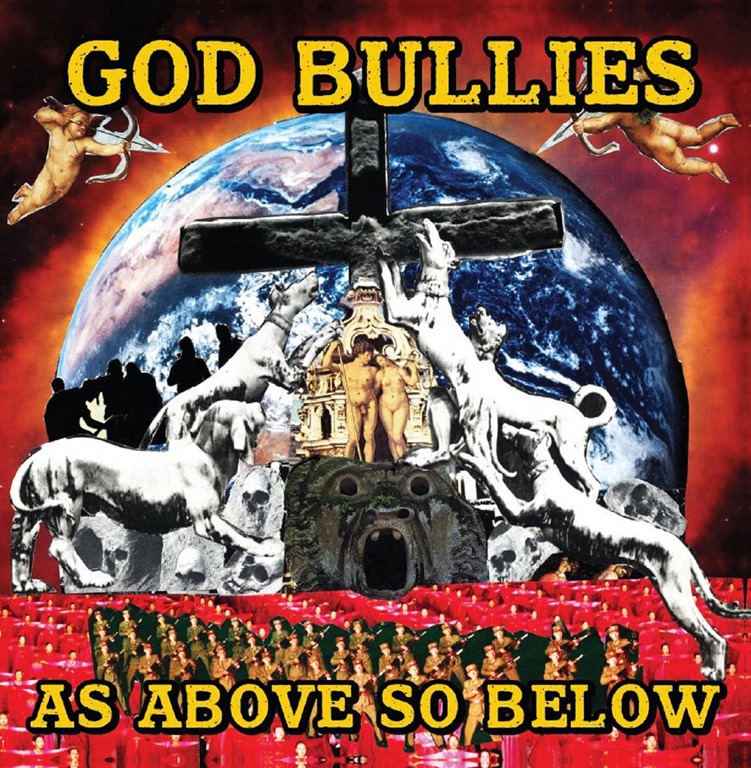
Anyway, a full nine years on from their last proper release (discounting a cover of The Spice Girls’ ‘2 Become 1’ at Christmas, following a return to live shows last year, On the Ropes have reconvened for a new self-titled EP, with seven songs which stand some way above your identikit punk-pop template stuff, and I suppose it’s the sameness – and the endless buoyancy – of so much of the genre that grinds my gears. There’s a melancholy, a wistfulness, that pervades even the most upbeat songs on offer here, and while the vocals are super-clean and super-melodic – the pop, you might say, the guitars are beefy and up in the mix and the drumming is fast and hard, very much placing the emphasis on the punk element.

‘Deserter’ kicks off with a blast of energy and some well-timed minor chords which create a dynamic twist and an emotionally-rich – and yes, I suppose emo – edge. This is very much the characteristic form of their songs. And it works. This isn’t dumb, cheesy pop-punk, and nor is it self-pitying, whiny emo: it’s emo gone grown up, reflective, and exploring themes of love and loss, but letting it all out, and the songs are both punchy and catchy thanks to the contrast between the instruments and the vocals.

The slower, sadder, introspective ‘West Coast Living’ is certainly more Placebo than Panic! At the Disco, while ‘Broken Shutter’ packs a delicate verse with an explosive chorus and manages to be aching and epic and achieves it all in two-and-a-half minutes. ‘Saturnine’ has a Twin Atlantic vibe to it, and while it’s perhaps not the strongest song of the set, it’s hard to deny the quality of the songwriting, or the fact that this EP feels like the work of a much, much bigger band.

Local fans are going to relish this return, for sure – and given the quality on offer here, maybe they’ll actually become the much bigger band.

AA

OTR

12th January 2024

Christopher Nosnibor

Sometimes, a song has the capacity to make you feel different. I find this happens most often when it’s least expected. ‘Coming Good’, the debut release by Learn to Surf came particularly unexpected. It’s certainly not my usual kind of thing – but there’s just something about that melancholic, reverby picked guitar and the washes of rippling chords cascading down over the top, and there’s a nuanced complexity in the relationship between this, and the layered harmonies, which are imbued with a carefree dappled-haze chilledness with a twist of wistful pining that’s hard to really put a finger on.

Because all music is now a vast nexus of intertext and influence, unravelling or otherwise attempting to frame songs – and bands – in a clear and specific context is nigh on impossible, not least of all because so much context comes from within, from one’s own spheres of reference, and as culture has become increasingly fragmented, so our experiences and references lose the sense of universality they once would have had. Time was, when there were only four, or five, TV channels, the entire nation was glued to the same show at the same time, and the following day, everyone would be talking about that episode, even if it was only EastEnders. This was a time when the main way to access music was via the radio, and if you wanted to hear anything beyond the charts or the classics, you needed to tune into John Peel, or Annie Nightingale after the Top 40 on a Sunday night. How times have changed!

I digress, but for a purpose, insomuch as the more disparate our experiences and reference points become, the less relatable and relevant they become to anyone who doesn’t live inside your head. I spent an age wondering what it was about ‘Coming Good’ that sounded familiar, before eventually concluding that it was ‘Gentle is Her Touch’ by Post war Glamour Girls, and the Alt-country / Americana act Sons of Bill on their Cure-influenced last album Oh God, Ma’am. It would likely be more useful for a broader audience to draw comparisons to Ride, and note the jangly indie psychedelic aspects of what is an absolutely marvellous, goosebump-inducing song with ‘classic’ vibes radiating from it in every direction.

and also the trees will be releasing their new album, Mother-of-Pearl Moon, on 23rd February. Ahead of its release, they’ve unveiled a video for the track ‘Valdrada’, which you can watch here:

and also the trees (AATT) formed during the original post-punk era in rural Worcestershire, an environment that has provided a constant inspiration to a group whose music has often explored the dark underbelly as well as the beauty of the British countryside. They are renowned for their captivating live performances, a unique style of mandolin-like electric guitar, evocative lyrics and dark jazz rhythms – not to mention a creative independence fiercely preserved for over four decades.

AATT immediately caught the attention of Robert Smith of The Cure, who invited them to tour with his group on several occasions. Smith was also involved with their early recordings alongside his bandmate Lol Tolhurst, who produced their first records, a long-term friendship and mutual respect further solidified when AATT were invited to perform at the 2018 edition of the Meltdown festival in London, an event that Smith curated.

Founded by singer Simon Jones and his guitarist brother Justin, AATT have maintained a continuous presence on the post-punk, alternative rock and Gothic scenes worldwide. They have released fifteen studio albums and toured frequently throughout mainland Europe, as well as North America and Japan where they have also built a sizeable following.

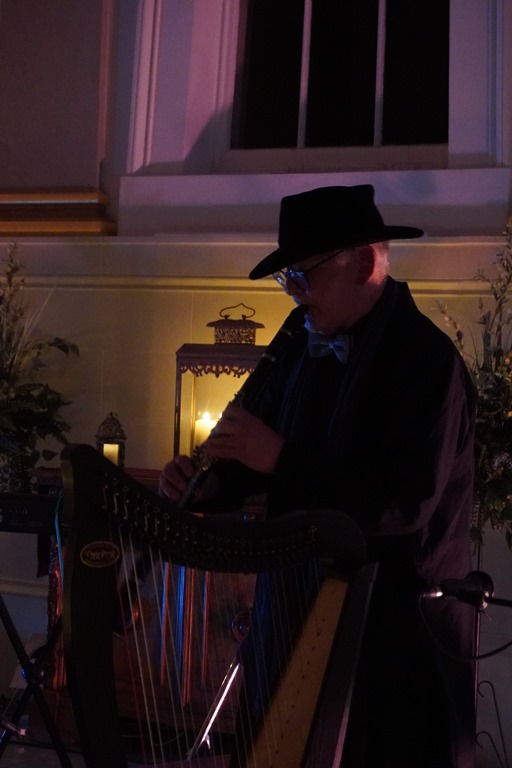
The panoramic soundscapes on AATT’s compelling new album, Mother-of-pearl Moon, were born from a series of extraordinary electric guitar improvisations created in the pre- and post-dawn hours during a month of solitude in 2020. With the artful integration and imagery added by the voice, clarinet, piano, percussion, autoharp and Moog, the listener is taken on a voyage from the depths of the English countryside far out in all directions of the compass.

The music on Mother-of-pearl Moon is often filmic and reminiscent of various genres from the ‘50s to the ‘70s, perhaps most apparent in ‘This path through the meadow’, which explores the intertwining of nature in its human, animal and botanic form. Elsewhere, AATT visit ‘Valdrada’, an imaginary city described by Marco Polo to Kublai Kahn in the novel Invisible Cities by Italo Calvino, telling us what they saw, while the album title track transports the listener oceans away to the Far East…to its exotic gardens, still waters and the Mother-of-pearl Moon.

Mother-of-pearl Moon will be released on 23rd February and promoted with tours throughout the year, beginning with a rare UK show in Birmingham on 24th March followed by six dates in Belgium and France in early April.

bd137761af3ff0f3876a7bee8a567ae0e0ee5843

5th February 2024

Christopher Nosnibor

People often say they hate surprises. I know where they’re coming from, although by and large, the surprise is less the issue than their reaction being seen. As children, we’ve all had the Christmas party and the birthday where we’ve suffered a head-exploding embarrassment where something’s been sprung unexpectedly, and where, as a consequence the walls have closed in and you’ve felt entrapped within a tight, tunnelling space and simply wanted to disappear – right? But there are two kinds of surprises: good ones and bad ones, just as there are two kinds of music: good, and bad.

‘Cryptic Bodies’ is good music, and the perfect surprise, presenting as a discordant chaotic mess of purgatorial abrasion, which smashes its way into a collision of post-punk and… well, what else is hard to say, beyond sinewy, straining dissonance. Really, this is one of those ‘what the fuck is this?’ releases. Personally, I absolutely love this kind of stuff, that’s challenging, shouty, difficult to listen to, let alone define. The music shifts in tone and intensity, a meandering twisting thread of jangliness and extraneous noise that bears jazz influences without being jazz, noise-rock elements without being noise-rock. What does it mean? What is it for? Cryptic is certainly the word, and perhaps it’s best to simply revel in the strangeness than attempt to unravel and decipher it.

But there’s more. The track is lifted from Hungarian artist Porteleki’s forthcoming album Smearing, which is out in March, and it’s not his first work by the title ‘Cryptic Bodies’, as a moment’s cursory research brings us to a ‘documentary’ film on YouTube, uploaded in three parts, which captures Porteleki – a percussionist first and foremost – performing a solo score, which is ‘structured yet improvised’ as the audio backdrop to ‘a contemporary dance piece, where 5 dancers traverse through space, body and time to throbbing experimental live metal music. The work is inspired by ancient bodily practices such as Egyptian mummification and Mesopotamian occult healing rites’.

Being instrumental, and extending to around forty minutes, it’s a powerful soundtrack to a visually striking and remarkably compelling multimedia experience, which also showcases Porteleki’s inventive, atmosphere-building approach to guitar playing. Elsewhere online, his SoundCloud uploads present an array of experimental works, ranging from minimalist dark ambience to wild, maximalist bursts of noise, meaning how representative of the album this cut might be is anyone’s guess. But given the title track, which is currently streaming on Bandcamp, there’s a strong possibility that it’s going to be an extremely varied and extremely unusual collection of highly experimental bits and pieces. ‘No genres’ he states on his Bandcamp. No kidding: Porteleki’s modus operandi appears to be to shatter every mould there is. He isn’t so much leftfield, or outside the box, but outside the field, and he’s burned the box to ashes.

Porteleki clearly likes to push boundaries, and none more than his own. ‘Cryptic Bodies’ offers a gateway into the world of an artist who warrants exploration – but not if you don’t like surprises.

AA

a3137193342_10

AA

Neurot Recordings – 23rd February 2024

Christopher Nosnibor

The band’s website contains, if not exactly a manifesto, an eye cast over the world in which we find ourselves here in the early weeks of 2024: ‘Human singularity, a third world war, scorching deserts, rising seas – it’s all coming for us. The slow grind is already in motion, pushing concrete, bodies, Teslas, skyscrapers, shacks, banks and bitcoin into a collective abyss. Piles of discarded trash will inherit the earth. It’s anyone’s guess as to what happens next. Is this the end of the world? Who knows. Who cares? Stand by with the rest of us and watch it burn. We’re all guiltless. We’re all blameless.’

Here, then, we come to learn the origin of the band’s name, a grim, grimacing irony condensed into a single word. This articulates the sense of pit-of-the-gut despondency we should all feel when we look around us. The drivers to take to the roads in their SUVs to drive five minutes up the road for the school run because it’s raining doing their bit to ensure it’s going to rain a hell of a lot more; the moneyed who jet off for their annual skiing holidays who bemoan the lack of snow without for a second considering the fact that they’re the reason there’s no snow, may be small-scale compared to Shell declaring profits which are double the UK’s climate funding and being pressured to can their ‘green’ strategies in order to siphon off even more for their shareholders, but the point is, we could all do better, much better, but simply none of us is truly willing to sacrifice comfort and consumerism for a future they can’t comprehend.

The accompanying press release delivers a similarly positive pitch, telling how ‘Guiltless creates apocalyptic soundscapes in their imaginings of the surreal return to proto-human civilisation, as well as what life might be like for the survivors of the next mass extinction event on Thorns.’ Prepare to be harrowed, people, prepare to be harrowed. But also, prepare to take a look in the mirror: do you need to buy products from Nestle and Unilever? Do you have to shop at Tesco and Amazon, or are their local business you can buy from? How about loose fruit and veg instead of packed in plastic? And do you actually need that thing, the latest phone model, the delivery from McDonald’s? It’s a tough one: the majority of people who are most driven towards such basic convenience choices are on the lowest wages and are the ones generating the wealth for the rich cunts who will happily watch the earth burn rather than pay tax. You might think they’d grow a conscience for the future their children will find themselves in, but they’re banking on shipping off to Mars before the half of the world that isn’t incinerated is under water. Hey, they can probably take a few polar bears and pandas along, too.

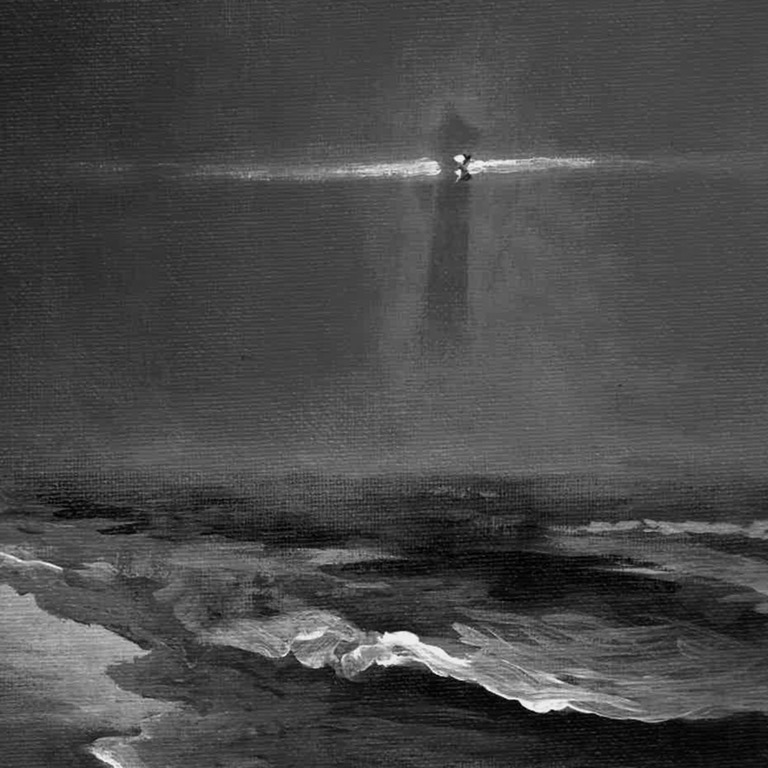
Thorns is twenty-four minutes of hellish bleakness. It’s an EP to play when you’re in the mood for basking in bone-breaking blackness. ‘Devour Collide’ begins deceptively gently, a hum of extraneous noise which is overtaken by some gentle guitar and an understated bass, propelled by rolling toms – then forty-six seconds in, everything slams in, hard and heavy, the distortion rages and the snare crashes like a tectonic event. The riffage grinds to a crawl and churns it way to crushing lows, while Josh Graham’s raw, ravaged vocals sound as if his larynx has been scorched by fire and pollution. It makes for an utterly punishing six-and-a-half minutes, and sets the tone for a truly monstrous set.

It’s a thick blast of flanged guitar which powers in on a wave of thunderous drums on ‘All We Destroy’. It’s a criminally underrated and underused effect, and one which is far more versatile than is perhaps appreciated, with the capacity to create brittle metallic tones with quite the old-school goth vibe as well as sweeping swirls – and it’s a bold ‘whoosh’ which yields to a thick, sludgy grind, as dense and heavy as a mudslide. ‘Dead-Eye’ delivers repeated punches to the gut with its lurching, lumbering low-end tumult, jarring, sinewy guitars and clattering, slow, slow, slow drumming reminiscent of early Swans, but with a doomy metal aspect. It makes for a long and challenging five-and-a-half minutes, which leaves you drained, physically and mentally, weak in the limbs and gasping for air in the wake of its devastating intensity.

The EP’s closer, ‘In Radiant Glow’ starts slow and low, and as such, it’s vibe is classic Neurot. And then, just around a minute in, BOOM! Everything slams in and hits like a tsunami. It’s utterly punishing – and rightly so.

It’s perhaps fair to say that everything is fucked. As I write, the UK government is adamant that it’s bombing of Yemen and a growing number of countries in the Middle East is ‘not an escalation’, while continuing to give support to Israel’s ‘right to defend itself’ against Hamas. No-one would reasonably deny any state’s right to defend itself, but can anyone really justify 25,000 deaths and rising daily as ‘proportionate’ or ‘defence’? Meanwhile, Russia continues to pound Ukraine, and shareholders in weapons manufacturers like BAE Systems are making a killing from all the killing. Well, might as well make as much as you can while you can, eh?

And so, here we are. Twenty, twenty-five years ago, you’d have been labelled an apocalyptic nutter for stressing out over the future and over climate change. Sadly, big business and cunts like Trump and his supporters still will, raving about the ills of wind farms and favouring fracking and nuclear power instead. Even when Venice becomes the new Atlantis, they’ll still be saying the same. But there’s no escaping now that we are fucked. Guiltless know it and they’re not here too win anyone over or to change anything, because they recognise that it’s too late and it’s all utterly futile. Thorns is a dark document which faces the grim reality. Its purpose is not to offer solace, but simply solidarity for those who also realise that we’re on a one-way road to oblivion.

AA

527031