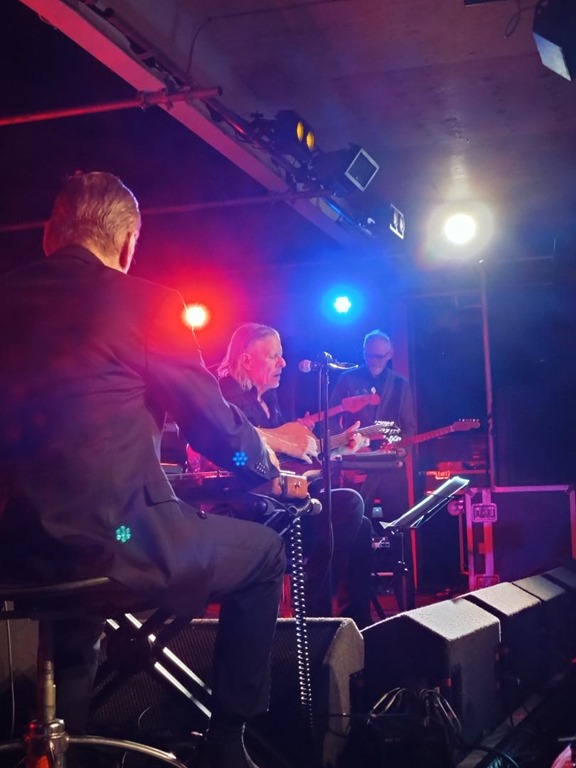
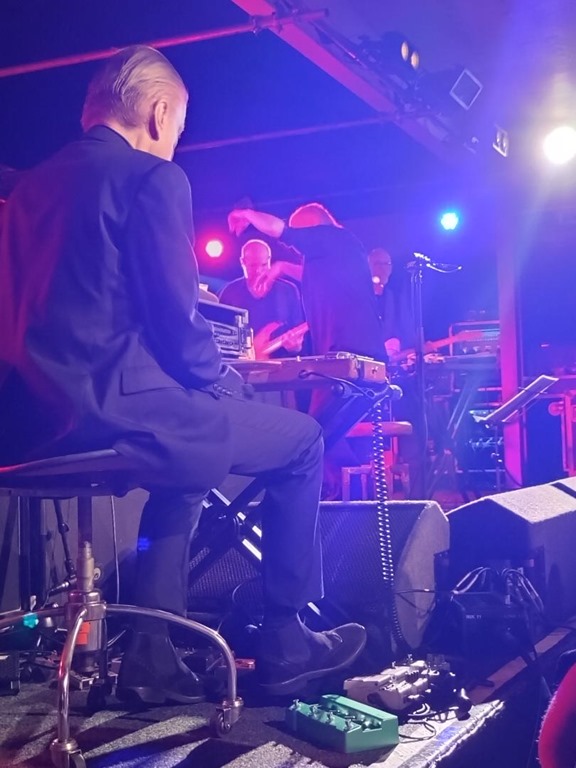
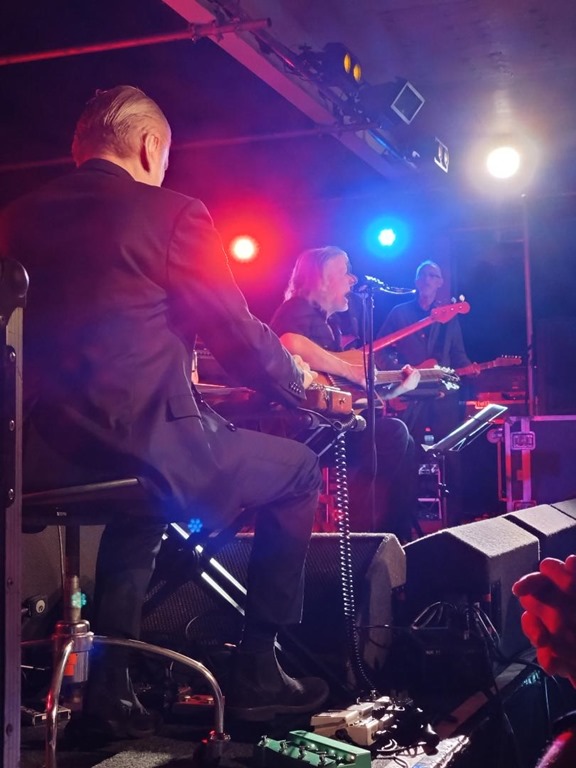
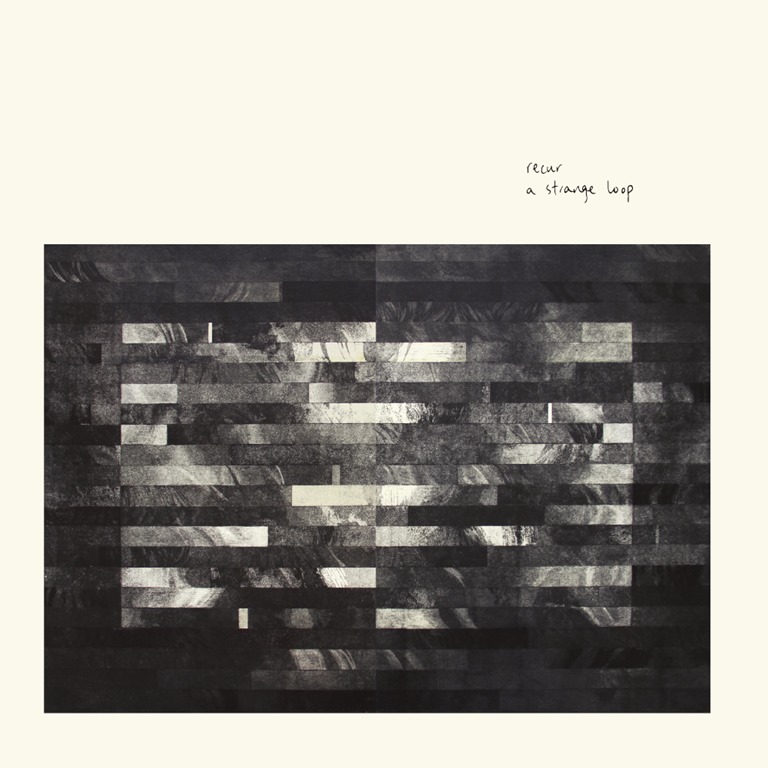
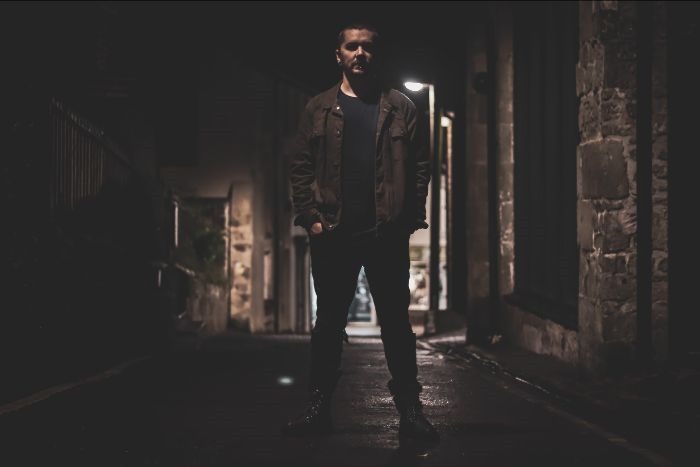
Knox Chandler may not be universally known, but many of the acts he’s credited as playing with over the last forty years are, with long stints as a member of and the Cyndi Lauper band. Then there’s his work in various capacities with REM, Depeche Mode, Grace Jones, Marianne Faithful, Natalie Merchant, Tricky, The Creatures, Dave Gahan, Paper Monsters and The Golden Palominos… it makes for quite the CV.
This solo outing marks a fairly significant departure from all of that, though. The context behind it is that ‘Knox spent a decade residing in Berlin, Germany, while he explored sound-scaping. He developed a technique he calls “Soundribbons”, which he recorded and performed in its own right as well as applying it to different genres and mediums . He composed, recorded, toured, produced, and wrote string arrangements for Herbert Grönemeyer, Jesper Munk, Pure Reason Revolution, The Still, TAU, Miss Kenichi and the Sun, Mars William’s Albert Ayler Xmas, Rita Redshoes, Them There, The Night…”
And so what we have here is a collection of ten instrumental works, whereby the guitar doesn’t sound like a guitar. In fact, it doesn’t sound specifically like anything. Chandler conjures wispy, ephemeral sound sculptures, atmospheric, brooding, a shade filmic, soundtracky, with hints of sci-fi and BBC radiophonic workshop about their strange, twisting, abstract and keenly non-linear forms.
There’s more than simply droning guitar on offer here, though: flickering, surround-sound precision provides a shifting backdrop to the ever-morphing ‘Tea Stained Edge’, where tremulous, reverby guitar bounces here and there off sonorous string-like sounds and even something resembling a jazzy double bass, but in contrast, ‘Lost Dusk Feather’ takes the form of a magnificently disjointed collage work, flipping between ambience and discordant confusion. The playfully-titled ‘Hidden Hammock Pond’ is one of the album’s most overtly experimental works, a mish-mash of sounds overlaying one another, smooshed together and as strange and unpredictable as it gets, venturing via exploratory ambience and quivering drones and allusions of abstract jazz into Krautrock . It’s wilfully perverse, and swings between the dark and serious, and the light and entertaining within the space of a heartbeat. ‘Mars on a Half Moon Rising’ goes a shade New age strange, insectroid flutters, field sounds and mystical hoodoo, bells and chimes, Morris dancers and scraping bass which occasionally strays into some kind of Duran Duran bending bass moments.
It’s all going on here. It’s impossible to predict direction over the duration of this release: The Sound meanders here, there, and everywhere. At times expansive (as on ‘Burn’), at times claustrophobic, it’s never less than compelling or varied listening.
If you’re seeking anything in the vein of the headline acts with which Knox Chandler is associated with, you may well be disappointed. But if your ears are open to abstract, instrumental strangeness, you’re in the right place. The Sound is weird, unapologetically and strange – and it’s the sound of an artist cutting loose and exploring sound. It’s weird, and wonderful, in equal measure.
How times have changed. Back in the early 80s, this would have been mainstream. It would have been major label. It would have been huge. It would have smashed the charts. 2025: nah. And so Crystal Heights is a self-released effort, and the chances are its audience will be respectable but limited.
This is an album which is steeped in all things retro: it’s an electropop work which is light and airy and easy on the ear, and low on demand.
He describes it as ‘a sonic love letter to the 1980s’, and the title track is exemplary: it’s light, bouncy, melodic. But it feels somewhat shallow, a shade flimsy. Then again, this was also true of much 80s pop, and it was a criticism levelled at pop music at the time. Critics in particular were not especially enamoured by electronic instruments, particularly sequencers. Here in the UK, the Musicians’ Union sought to ban drum machines as they were seen as doing drummers out of a job. They weren’t really all that keen on synths, either. Using machines to make sound wasn’t considered ‘real’ music.
Again, how times have changed (although drum machines in a ‘rock’ context are still unusual). Drum machines didn’t eradicate drummers, but the death of small venues pretty much killed off bands, impacting the number of places for them to play in the most dramatic fashion. And the proliferation of two-piece acts, and solo acts, is nothing to do with technology, and everything to do with the simple practicalities of performing live music. Rehearsal spaces are as scarce as gig spaces: what are bands to do?
The mid-tempo ‘Love is Only What We Are’ sounds like mid-80s radio-friendly movie soundtrack material, and drifts along nicely with some picked reverby guitar work, and it works nicely as a counterpoint to the crisp snare and clinical kick drum sounds. ‘Echoes Still Remain’ is atmospheric, evocative, and also sounds so familiar – not because it is, but because it’s the very quintessence of so much music released circa 1984. It’s hard to fault the level attention to detail here. ‘Ruby Shards’ provides perfect evidence of this, in that it manages to compress pretty much the entirety of New Order’s output into four and a half minutes.
‘Transforming’ was recorded with Lunar Twin, and is a bona fide electropop banger. Constructed around a rippling loop, it’s a supple work that oozes 80s vintage. It’s going to nag me for weeks which songs it reminds me of. It’s a clear standout in an album that’s solid but… but what, exactly? It feels light, perhaps lacking, even. But what more should we want from it, realistically? Innovation? No, that was hardly the objective here. Lunar Twin also features alongside The Antonio Family Singers on ‘Persist3nce’, a brooding slow-burner built around a mesmeric beat which fades to grey.
With Crystal Heights, Nowhere has achieved something that’s not insignificant – an album that’s instantly accessible, strong on melody, and enjoyable.
Absence makes the hearty grow fonder, so the adage goes, and so it also goes that some acts return not only rejuvenated, but more prolific the second time around: this has certainly been true of a number of acts, ranging from Earth to The March Violets, and it seems that Austere are also finding a purple patch of creativity, with The Stillness of Dissolution being their third album in two years after a thirteen-year break – having only released two albums in their initial four-year career.
Older and wiser? Or perhaps older and feeling a greater sense of freedom in creative terms… it matters not, really. Here, the Australian duo, consisting of Mitchell Keepin (guitars, bass, keyboards, vocals), and Tim Yatras (drums, keyboards, vocals), we’re reminded that ‘their roots in early Norse black metal and its depressive Scandinavian offspring remain clearly audible’, and the album’s six lengthy tracks offer texture and detail, and darkness… much deep darkness.
Opening, ‘Dissolved Exile’ clocks in a little shy of eight minutes, and what’s striking us just how crisp the guitars sound, both the crunchy rhythm parks and the spindly lead, which takes off into an epic solo, propelled by double-pedal blasting drums. But something else stands out, too: as raspy and demonic as the vocals are, there’s a strong sense of groove to it, the chugging chords presenting a solid form and structure. ‘Redolent Foulness’, too, has an epic quality, and an almost neo-prog accessibility. There’s melody in the vocals, not to mention an abundance of dynamics and detail.
It would be easy to criticise Austere for pursuing a more commercial sound and a more ‘casual’ audience, but the simple fact is that they’ve got some crafted tunes here, and The Stillness of Dissolution showcases songwriting ability, rather than simply the ability to play fast while burying everything in muddy production. The Stillness of Dissolution is by no means a commercial album, or a pop album, but in melding genuine hooks to monster slugging riffs, Austere have forged an album that’s compelling, exciting, and yes, I’ll say it, catchy. Not in a pop sense, of course, but those juggernaut riffs just grab you: ‘Rusted Veins’ fully rocks out, and at nine and a half minutes, closer ‘Storm Within My Heart’ is a solid epic. Overused? Yeah, but have you got a better word? It begins atmospherically, before blasting in with explosive force, and with the snarling vocals buried beneath a frenzied blanket or fretwork, it’s the most overtly black metal cut on the album.
And what an album: it really is well-considered, crafted, detailed. ‘The Downfall’ borders on shoegaze and prog-metal, but there’s blistering rage in there, too. Metal tends to be underrated when it comes to texture and emotional range, but The Stillness of Dissolution brings it all by the truckload: ‘Time Awry’ bringing three songs in one, with a nagging lead guitar line that loops over a thunderous riff. This is an album which makes you feel – and its power is as immense as its stunning quality.
And so we arrive at the end of another era in the epic history of Swans. When they called it a day in 1996 with Soundtracks for the Blind, and a farewell tour documented on Swans are Dead, it really did seem as if that was it. Swans had run their course, and the colossal Soundtracks double CD summarised everything they had achieved over
It may seem strange that the bookend to this phase of their career should be titled Birthing. But such is the cycle of life, and indeed, the avant-garde: death gives way to new life, to build anew one must first destroy. And so in this context, Birthing, which Gira has announced will be the last release of this epic, maximalist phase, makes sense. With a running time of a hundred and fifteen minutes, it’s comparable in duration to its predecessor, The Beggar, and The Glowing Man (a hundred and twenty-one minutes and a hundred and eighteen minutes respectively) , but on this outing, the individual pieces are all immense in proportion, with the album containing just seven tracks, with only one clocking in at less than ten minutes.
‘The Healers’ makes for a suitably atmospheric, slow-burning opener. Around seven minutes in, the gentle eddying begins to swell, like a breeze which wisps and ruffles the leaves on the trees – a minute or so later, the drums have entered the mix, and the ambient drift begins to take a more solid form, and there’s a change in the air temperature, the barometer plummets and the breeze becomes a wind. In no time, there’s a swirling wail of sound surrounding Gira’s increasingly exultant enunciations, but as he growls and mumbles and raises his voice higher, he’s increasingly drowned by the maelstrom. And yet, it’s nowhere near a crescendo, and I’m reminded of their set on the 2013 tour, where, having told my friend that having seen them in the same venue three years previous that they took volume to another level, the first twenty minutes of the set was loud, but not remarkably so – and then suddenly, there was a leap of around thirty percent that felt like a double-footed kick in the chest. Will it happen here? Around the fifteen minute mark, it tapers down to a haunting whistle of wind – and it’s the calm before the storm, as a raging tempest suddenly erupts, a frenzied wall of noise that has become their signature, and the song surges to a powerful sustained climax.
While the delivery is considerably less brutal than it was in the early 80s, Gira’s lyrics are still riven with dark and disturbing imagery, and now coloured with a hint of abstraction and madness, and this is nowhere more evident than on ‘I Am a Tower’, which was aired as a lyric video a little while ago. ‘With thin boneless fingers and pink polished nails, I’m searching for the fat folds of your blunder. Speak up, Dick! …Bring your fish-headed fixer to whisper in my ear. Please worry me here, tongue that victim in there…’ he intones like a cracked messianic cult leader against a backdrop of swirling drones. Attempting to unpick sense or meaning from it feels futile, and potentially traumatic, so instead, it’s perhaps experienced holistically, as a jumble of images and impressions, a fractured collage, a derangement of the senses whereby you allow it to transport you to another plane, away from anything concrete or grounded, beyond all that you know. Seemingly from nowhere, a motorik rhythm kicks in and we get something approximating a driving Krauty post-rock riff, hook and all. It could be Swans’ most pop moment since the White Light / Love of Life albums in the early 90s.
The title track arrives in a ripple of proggy synth that has a hint of Mike Oldfield about it, but gradually builds into a dramatic swell of sound, the likes of which has come to characterise the last decade of Swans, with a single chord struck repeatedly for what feels like an eternity. And then, from nowhere, they launch into something approximating a jig – on a loop, where the bass and drums simply hammer away repeatedly, like a stuck record. It is, if course, pure hypnotic magnificence. Gira’s words slip into soporific sedation amidst descending piano rolls. ‘Does it end? Will it end?’ he asks at the start of an extend wind-down, and it does feel like this would make a perfect gentle close – but there are more jarring, jolting ruptures to come, whipping up a truly punishing climax by way of a close, and by the end of the first disc – a full hour in duration – we’re left drained and hollowed out, tossed this way and that on a sonic – and emotional – tempest only Swans could create. Disc one, then, feels like a compete album. But this is a Swans release, and a landmark one, at that there isa whole further album’s worth of material yet.
‘Red Yellow’ begins in a dreamy drift, but soon slides into a warping drone pitched against another of those relentless, repetitive grooves, this time with some jazz horns freaking out in every direction. And at this point, there does arise the question of what new this iteration of Swans is offering at this point, but the immense, immersive soundscapes provide the answer in themselves. Swans have certainly evolved, but they have always done so gradually. The first half of the eighties was devoted to crushing slow grind, and you’d have to be a glutton for punishment to listen to more than one album in a sitting. The point is that Swans have always pleased themselves and made music that tests the listener’s limits, and Birthing is no exception.
Reviewing a Swans album is always a challenge, especially their comeback releases. They’re not about songs, and, broadly speaking, not really about impact in the way their early works were: instead, they’re about transcendence, about moving beyond mere music.
‘Guardian Spirit’ starts out textured an atmospheric, but ends full Merzbow, before ‘The Merge’ takes noise to the next level, albeit briefly. It’s as if Gira is toying with us. Perhaps he is, but when the noise erupts, it really erupts. ‘Rope’ returns us full cycle to there My Father Will Guide Me, while making an obvious connection with all phases of their career, through which ropes and hangings have been a perpetual theme.
Birthing is not an easy album, but it is one which requires listeners (and reviewers) to do something different in terms of approach. You don’t listen so much a feel it, and ride its endless waves: sometimes slow, gentle, at others an absolute roar, Birthing brings together everything Swans have done, and achieved, over the course of this iteration. It’s often overwhelming, and almost impossible to reduce to words. The second disc does feel softer, more abstract, and leaves on wondering precisely what the next phase will look or sound like.
Ashley Reaks first came to the public’s attention under the guise of Joe Northern, fronting promising turn-of-the-millennium dark synthpop act Younger Younger 28s, a head-on collision between The Human League and Clock DVA, who released their sole LP, Soap in 1999. Since then, the Harrogate-based Reaks has expanded his field and is now as known for his disturbing collages as he is for his eclectic musical output, which spans dub, postpunk, and whatever other genre concepts come his way. Reak’s creative diversity, while very much an artistic strength, has likely been an obstacle to his achieving more commercial success, because the sad fact is that polyartists who venture into the domains of oddness are extremely difficult to market, because, well, how to you pigeonhole or genre categorise someone who works not only in a host of media, but does stuff which is, at times, quite disturbing and impossible to place in a given bracket? Of course, another likely, and more obvious, obstacle to commercial success is that the fact that a lot of his work is what a lot of people would likely consider plain fucking weird.
But even before Younger Younger 28s, Reaks – whose appreciation of The Sisters of Mercy and the like is widely-stated on his social media – was dabbling with the gothier aspects of post-punk, and would continue to do so for some time. His decision to release Ancient Ruins may only be for the sake of posterity, as a document, but here it is, and it’s not bad either.
Because this is Ashley Reaks, it’s not a set of songs which adhere to straight-up genre conformity, as is immediately apparent from the first track, ‘A God in the Devil’s World’, which has a certain swagger and a swing to it, the female vocals not only providing a counterpoint to the growling baritone Reaks adopts, but also a pop shimmer that’s still more Human League than The March Violets.
‘No Man’s Land’ offers picked guitar and jittery synths melded to an insistent drum machine, and comes on with the trappings of mid-80s rock, and a bit Prefab Sprout. ‘Disconnected’, however, plunges into darker territories, an echo-heavy bass-driven blast of angst that’s more the sound of the underground circa 1983. And it’s good, but then you realise how anachronistic it is for the time it was recorded.
Between 1997 and 2002, Britpop died a slow and painful death and Nu-Metal exploded. The post-punk revival was still some time off, and simply no-one was making, or listening to, anything that evoked the spirit of The Batcave. But then, they weren’t really digging 80s synth pop, other than the original stuff in a kitsch or nostalgic way, and the much-touted 80s revival hadn’t really gained any traction. To top it, in keeping with Reeks’ other output, thew songs on here are littered with lyrical observations and kitchen sink vignettes, pithy pairings, and couplets which are wilfully wordy and awkward.
‘Christiane’ is a campy goth pop effort that’s wistful and theatrical, with hints of late 80s Damned woven into its fabric, while ‘I Always Wanted to be You’ brings some indie jangle and… brass. Then again, there’s the chugging industrial blast of ‘Swimming Against the Tide’ which sounds a bit like Therapy? circa Nurse but with an overtly ‘baggy’ beat and a Prodigy-influenced midsection. Oh yes, it’s all going on here.
If nothing else, Ancient Ruins provides some insight into the evolution of Reaks’ compositions, from oddball pop to off-the-wall melting-pot madness, with loads of ska brass and a whole lot more besides. The dubby closer ‘Ghost Town In My Heart (Version 2)’ is particularly illuminating. If only all history lessons were this interesting.
Just as the birds of prey from which they take their name are creatures of the night, so this Irish act – essentially one guy – who draw inspiration from the darker realms of postpunk, goth, and synth-based music are very much dwellers of the dark hours, as debut album Death Games attests, with titles such as ‘Perfect Nightmare’, ‘Tombs’, and ‘Send Me to My Grave’. The album’s themes are timeless and classic, offering ‘a haunting exploration of love, mortality, and the fragile nature of existence,’ while casting nods to touchstones such as Lebanon Hanover, Boy Harsher, and Black Marble.
Lead single ‘Give Me Your Stare’ opens the album in style with a disco beat and throbbing bass giving this bleak, echo-soaked song a dancefloor-friendly groove. The vocals are backed off but ring clear through a haze of reverb, offering a hint of The Cure’s Seventeen Seconds in terms of production values.
AA
The compositions on Death Games are pretty direct: there’s not a lot of detail or layers, and it’s the electronic beats and pulsating basslines which not only define the sound but drive the songs. The sonorous synths which twist and grind over the top of these predominantly serve to create atmosphere more than melody, although haunting, repetitive motifs are commonplace, and the vocals, too, being low in the mix and with a fairly processed feel, are more a part of the overall sound than the focal point.
‘Skin on Skin’ brings a wibbly, ghosty synth that sounds a bit like a theremin quivering over a minimalist backing of primitive drum machine and bass synth, and the likelihood is that they’re going for early Depeche Mode, but the end result is more like a gothed-up Sleaford Mods, although, by the same token, it’s not a million miles away from She Wants Revenge around the time of their electro-poppy debut, and that’s perhaps a kinder and more reasonable comparison. ‘Fevr 2’ brings an increased sense of urgency with skittering bleeps skating around the reverberating drums: it has both an 80s movie soundtrack vibe and a vintage goth disco feel, and despite its hectic percussion and busy bass, ‘Tombs’ conjures a haunting, requiem-like atmosphere.
The ‘death’ thematic may not always be literal, and as much concerned with the death of love and the ends of relationships, but the duality the theme offers serves OWLS well. There’s no denying that it’s both a stereotype and a cliché that an obsession with death is such a goth thing, and OWLS fulfil these unashamedly – but then, why should there be shame? Why is it only goth and some strains of metal which embrace life’s sole inevitability, and explore mortality and the finite nature of existence? Even now, after millennia, we aren’t only afraid of death, but, particularly in Western cultures, we’re afraid to think or talk about it. People passing in their eighties and nineties still elicits a response that it’s a tragedy or that they should have had more time, and I’ve seen it said of people departing in their sixties or even seventies that it’s ‘no age’. We seem to have a huge blind spot, a blanketing case of denial when it comes to death, as if it shouldn’t happen, that it’s an injustice, and that no-one deserves it. But nothing is forever, be it love or life, and while loss – any loss – is painful, it comes attached to inevitability, being a matter of when, not if.
The stark and sombre ‘Send Me to My Grave’ commences a trilogy of dark, downbeat, funereal songs, which grow progressively darker, more subdued, the vocals more swallowed by evermore cavernous reverb. Even when the beats kick in and the bass booms, things warp, degenerate, and seem to palpably decay and degrade. There’s a weight to it, a claustrophobic heaviness, and the kick drum thwocks away murkily as if muffled by earth and six feet under sods. ‘This Must be the End’ is brittle, delicate, the calm that comes with the acceptance of… of what? What comes after the end? It feels like the song, and the album, leave this question hanging with an ellipsis, a suspense mark. It seems fitting, since we simply don’t know. But it does very much leave the door ajar for OWLS’ follow up, and that is something to look forward to.
Yes, they’re still going. Despite not having released any new material since 1993, they’ve continued to tour frequently over the last thirty years, and have during that time showcased about two albums’ worth of new songs. And while performances of said new songs are all over YouTube, it’s no substitute for a live performance witnessed in person, which goes some way to explain why this, the first of two nights at the Roundhouse, is sold out. Another key reason of course is that people love this band with a rare devotion. I am here as one of those people, rather than in a press capability.
The support act, Oversize, deliver 90s-style alt-rock with grunge and shoegaze elements. I’d have probably dug them if it was 1992-3. Or perhaps not: there’s too much “How are you doing?” and “Let’s see those heads banging” calls between songs, in addition to the obligatory merch plugs. The longhaired bassist stomps about and flings his hair around, while the lead guitarist, who’s waring a Type O Negative T-shirt, does melodic backing vocals and also some metalcore screamy bits which don’t really gel within the overall sound. Still, they were well-received and did the job of warming the crowd up.
The Sisters’ set list on the current tour may not be radically different from those of the last couple of years, and as we will come to learn to no surprise whatsoever, identical to every night on this tour, but it’s certainly quite a different crowd they’ve drawn compared to the last few times I’ve seen them (either side of the pandemic, the last time being in thissame venue in September 2021 on their three-night run belatedly marking their fortieth anniversary, and before that in Leeds in 2020). Dare I say it… younger. There are a lot of makeup goths out tonight, people born after the turn of the millennium dressing in the 2025 reimagining of 1985. Or something. No doubt many of the older fans – the ones who were there in 1985 who like to moan endlessly about how The Sisters have been shit since Wayne Hussey left will say that they missed out and are only seeing a karaoke tribute or similar now, but that they’re all here more than validates the case that The Sisters are still a going concern, and that there are plenty of more recent concerts who are keen to hear the unreleased material live alongside back-catalogue hits and classics. It’s certainly a livelier crowd than I’ve witnessed in these later years (although the less said about the tall woman dressed like a member of Bananarama who was swinging about and busting moves in the second row near me the better – I’ll simply leave it that there’s lively and there’s being an attention-seeking dickhead).
‘Alice’ is dispatched early on in a set which largely ignores their pre-Floodland releases, with ‘Marian’ being the sole representation of First and Last and Always (in contrast, there’s a lot of Vision Thing). It’s almost as if Andrew is stubbornly ignoring the forty year anniversary of the band’s debut album to wind up the ‘golden age’ complainers, and you wouldn’t put it past him.
The band – and that extends to Chris Catalyst, former guitarist and now nurse to the Doktor – look to be enjoying themselves. Eldritch’s vocals sound rather more warmed up and he relaxes into the show more with the arrival of ‘Summer’, and the newer songs – in particular ‘I Will Call You’, ‘Here’ and ‘On the Beach’ – sound particularly strong. Yes, his voice is still a scratchy, crackling croak for the most part, but he’s much more audible and there some of the deeper notes come through. Eldritch seems to revel particularly keenly in giving it some on ‘More’: ‘I don’t know why you gotta be so undemanding’ he growls, before snarling a full-throated ‘I what MORE!’ and the bombastic backing vocals power in. Credit to Chris and Kai for their contributions on that score and the pair do work well together, bringing movement and energy to the stage, the former with classic rock poses, the latter twirling and pirouetting about with abandon, and Kai’s switching between electric, acoustic, and twelve-string guitars adds texture to the sound.
On the subject of the sound, for many years, Sisters gigs have been on the quiet side, with the drums reduced to a clattering in the background rather than the relentless boom that was always integral to the band’s signature sound. Tonight, the volume and mix are both substantially stronger, with a denser sound overall, even the sequenced bass sounding more powerful and resonant. And this, this is what we came for: because when The Sisters are good, they’re GOOD.
Eldritch remains on stage after the band depart at the end of ‘Temple of Love’, performed in the 1992 style, with Kai doing the Ofra Haza parts. They do a decent job, too, although I find myself on the fence with it, not least of all because I wasn’t rabid about the later version in the first place. But, as with the more backing-track-based version of ‘This Corrosion’, a lot of people in my vicinity seemed to be absolutely over the moon to be hearing the hits in a recognisable form, and it’s quite possible that this is what the newer fans want to hear over, say, ‘Heartland’ or deep cuts from The Reptile House EP. You can’t please all of the people all of the time, but tonight, the Sisters seem to be pleasing enough of the crowd as well as themselves.
“I take requests,” he jokes, before muttering the punchline and leaving the stage.
On returning, Ben takes up a bass guitar (something rarely seen onstage at a Sisters gig since the 90s, particularly since ‘Romeo Down’ was dropped from the set) and leads a hefty version of ‘Neverland’. It seems the song suits Eldritch’s current vocal range, and Andrew’s vocals sound the best yet, and remain strong for both ‘Lucretia’ and ‘This Corrosion’ which cap off a solid set. Overhearing exchanges on the way out, there seemed to be an overall positive consensus, and with this, I would have to concur.
Deborah Fialkiewicz’s neoclassical album Ad Vitam Decorus, has been in Bandcamp’s neoclassical ambient bestsellers chart for fully five years now, although she’s hardly been resting on her laurels and basking in the success since it’s release, having released a slew of works in a range of genre styles, with this, the latest, being a collaboration with (AN) Eel, who describes himself as ‘An Experimental Vocalist & Full Bodies Inhabitant of this Colorful universe’. His output is also remarkable, and his catalogue consists mostly of collaborative efforts, this being his second with Fialkiewicz (the first being Inkworks in April 2022)
Although the words are (AN) Eel’s work, those which are published on the release’s Bandcamp page could easily be about Fialkiewicz’s friendly foxy visitors, who she feeds and often photographs and writes of online:
Two Foxes, Out of Boxes,
In Your Garden
Seven Tales
Shape Shifter, Sun & Moon
Shadow Dancers, Rod & Womb
Silk and Cobwebs,
Perhaps this is simply an indication of how closely attuned this collaboration is.
Compelled by Nature contains two longform pieces, each hitting that magical twenty-three minute mark – meaning it would be ideally suited for a vinyl release, but in its digital form, has the feel of a ‘classic’ experimental electronic album, the likes of which you’d find on Editions Mego or Ici, d’ailleurs. The two compositions break down the title: ‘Compelled’ and ‘By Nature’, bringing an element of linguistic play into the frame.
‘Compelled’ offers up some fractured drones which crack and lurch in volume and frequency. As the piece progresses, looping, repetitive motifs emerge, atop of which gurgling, chattering, insect-like scratches emerge, chittering and bibbling, rising and falling, and when these incidentals fall to silence, the repetitive underlying sonic skeletal frame of the composition sits sparse and alone, becoming thoroughly hypnotic. The experience isn’t dissimilar from watching waves lap the shore on a calm day with a gentle tide. In time, 16-bit bleeps reminiscent of 80s arcade games ripple through an ever slower, evermore dolorous droning of a slow-strummed bass guitar. The vocalisations are eerie, ethereal, haunting – spiritual, but somehow detached from the world as we know it, a keening, crooning, mewling. It may or may not be wordless, but is in some ways similar to Michael Gira’s wordless articulations during the immense, immersive sonic expanses which have defined Swans output and performances in recent years – it’s not about song, or structure, but transcending sound and language. And in this context, the title, ‘Compelled’ takes on a clear and specific meaning: this is not music made for entertainment, or with an audience in mind, but music made because it needs to be made, the product of creativity as an outlet, a necessity as a means of getting through life in this insane world.
‘By Nature’ begins with distorted, distant babbling voices over a low, ominous drone, reminiscent to an extent of the start -and end – of ‘Pornography’ by The Cure. It’s dark and oppressive, not to mention somewhat disorientating. There are fragments of sampled narrative, but there are glitches, fractures, which disrupt it, and against this infernal, churning drone, chiming bells and similarly innocuous sounds take on a disturbing sense of portent, a certain horror-like suspense. Anyone familiar with the tropes of horror as a genre will be aware of how the most successful horror works because it transforms mundane situations to a source of fear by adding an undercurrent of the unknown, and / or a foreshadowing of nightmarish events ahead. This brings that quite specific sense of something bad about to happen. The digital bloops, computer game chimes and laser bleeps of ‘Compelled’ return, but this time against an altogether more sinister backdrop, a drone like a black hole opening up to swallow the entire solar system.
So many of the sounds are familiar, even if only vaguely so, but their collaging and recontextualization strips them of meaning by contextual connotation, and so what we find ourselves facing is something quite alien, and as such, uncomfortable, unsettling, even scary. What is this? What does it all mean? Only Deborah Fialkiewicz and (AN) EeL know – or perhaps even they don’t, really – perhaps – and it seems likely – Compelled by Nature is a work of instinct, something which happened because it simply came to be, and is as it is by happenstance. I can believe this is most likely, and that Compelled by Nature is more about process than product. It’s a compelling work. It is not, however, an album to be listened to in the dark.
For about five minutes, AI looked like it may provide some entertaining diversions in terms of creative potentials. It wasn’t so long ago that it produced glitchy, idiosyncratic writing and wild art that was so wrong it was hilarious, and lame synth-loop electronic music which had neither style nor substance. It didn’t look like the threat to humanity that dystopian sci-fi novels had portrayed.
But then more information began to emerge about how AI was ‘learning’ by essentially stealing from all available sources. AI is the worst plagiarist imaginable, and nothing is safe or sacred. Then there came the reports of the vast amounts of energy, and water, required to power it, and it started to look like AI will doom the planet by sapping its resources instead of going rogue and obliterating humanity. But then…AI evolved, and fast. In no time at all, people stopped having additional limbs and appendages, the writing transitioned beyond repetitious babble, and people have begun to use to AI chat as a substitute for expensive therapy, despite reports of rogue AI advocating suicide… and as its usage accelerates and it morphs into the nightmare of sci-fi dystopia we’d dismissed just a few months ago, so the use of energy and water increases exponentially. One way or another, it does now look very much like AI will finish us.
And so there’s a certain discomfort in approaching Put Emojis On My Grave by the spectacularly-monikered Ancient Psychic Triple Hyper Octopus, an album which is sold on the way it ‘boldly explores AI and improvisation on an album of freely improvised, experimental electroacoustic music’.
It features, as the press notes put it, ‘a new lineup of celebrated, British musicians’ (Alex Bonney (trumpet, bass recorder, Strohviol), Will Glaser (drums and percussion) and Isambard Khroustaliov, aka Sam Britton (electronics), and ‘ claims to forges ‘a new musical language’, with an album ‘which eschews traditional musical composition, seeks instead to “adopting the language of AI’s deep learning failures and glitches”, attempts to imagine how AI could make a positive contribution to the creative process’.
It’s hard to know how to really assimilate this. The six compositions which make up Put Emojis On My Grave are fine examples of exploratory jazz, with wandering trumpet tooting in meandering lines across clanking, clattering abstract percussion which sounds like cutlery and wind-chimes being knocked about while bleeps and bubbles interject seemingly at random. It has that avant-jazz, experimental, iprov feel which is in some ways quite familiar in its own strange way. That is to say, while it’s niche, the sonic experience is very much representative of a certain field. A field filled with jackrabbits, apparently.
‘Goats on Helium’ is bubbly, bibbly, scratchy, scrapy, wheezy, groany, a splatter and clatter of sounds piled up and colliding all over, and it gets pretty messy over its six and a half minutes. Warping drones and scratching, gargling abstract drones twist around deranged brass tootlings and crashing cymbals on ‘The Adiabatic Flux Differentials of the Id’, and I would challenge anyone to find a title that’s posier, more wankily intellectual than that this year. And while it’s a bit jazz-jizz in places, it’s certainly better than the title suggests.
This is, in my opinion, a fair summary of the album, a work which is concerned with space and time – not outer space, but inner space, the space which our minds explore in reflection like the clatter of 1,000,000 bongos, the space – or distance – between concept and execution, and virtual space, those our other selves occupy, both in the moment and, subsequently, leaving echoes and traces in infinite corners of the virtual world. It’s impossible to discern where the musicianship cedes to AI intervention here, which is certainly in its favour – and if Put Emojis On My Grave is used to train generative AI, then it could confuse it for a while, making for some interesting results. And Put Emojis On My Grave is certainly interesting.
It’s encouraging to arrive twenty minutes before the first band are due on, and, despite it being a pleasant, sunny spring evening in the middle of the week, it’s already busy inside the venue, and not just at the bar. There’s a tangible buzz.
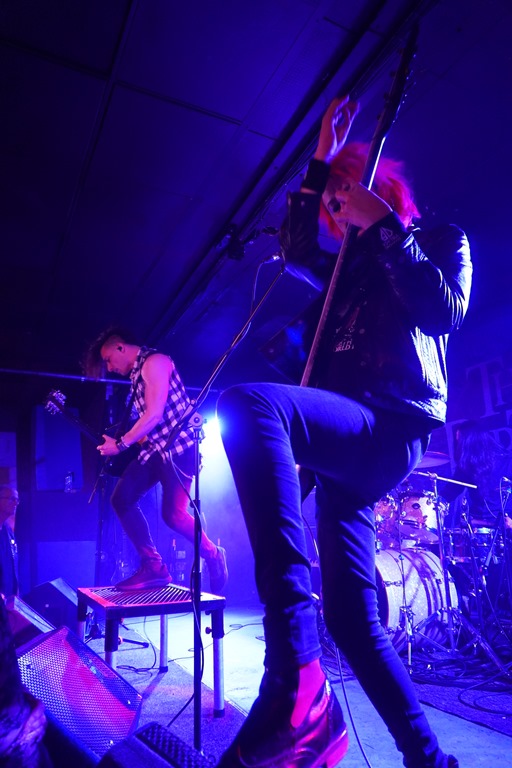
The arrival of the first act, Chefs Kiss, who describe themselves as a ‘comedic food themed slam metal band’, brings a fair few forward, and it’s clear that they’ve brought their mates with them. There was a time when I may have viewed this in a rather sneery way, but what matters, I realise these days, is that if they’ve got people in through the door, then it’s all to the good.
With a wardrobe which included kilts and masks and aprons and chef hats, Chefs Kiss weren’t all that comedic – or at least that funny – a comedy act, nor especially musically accomplished either. Does the world need a joke thrash act? Actually, it probably does, and fair play to them, in that they didn’t take themselves seriously, and largely adhered to their rather daft concept, and were good fun, bringing out a life-size cardboard cut-out of Ainsley Harriot which was passed around the venue above the heads of the audience like some sort of crowd surfing cardboard deity. What’s more, they looked we enjoying themselves, and every young band has to start somewhere. This is once again why we need venues like this.
Chefs Kiss
Just as Chefs Kiss were a shade shambolic, so Kraken Waker were finely honed performers, clearly with not only hours of rehearsals behind them, but also a lot of gig experience. They seriously were incredibly tight. Their sound is very much classic US rock at the heavier end of the spectrum, with a strong, dirty, stoner leaning. I had afforded myself a chuckle while they checked their mic levels: the three beardy longhairs all came on with affectations as if they were from Texas. But piling into their set, they were instantly impressive, and it soon became apparent that they were unapologetic Geordies, with strong songs about being drunk, smoking weed, and wanting all the billionaires to fuck off to Mars. Quite possibly the band of the night.
Kraken Waker
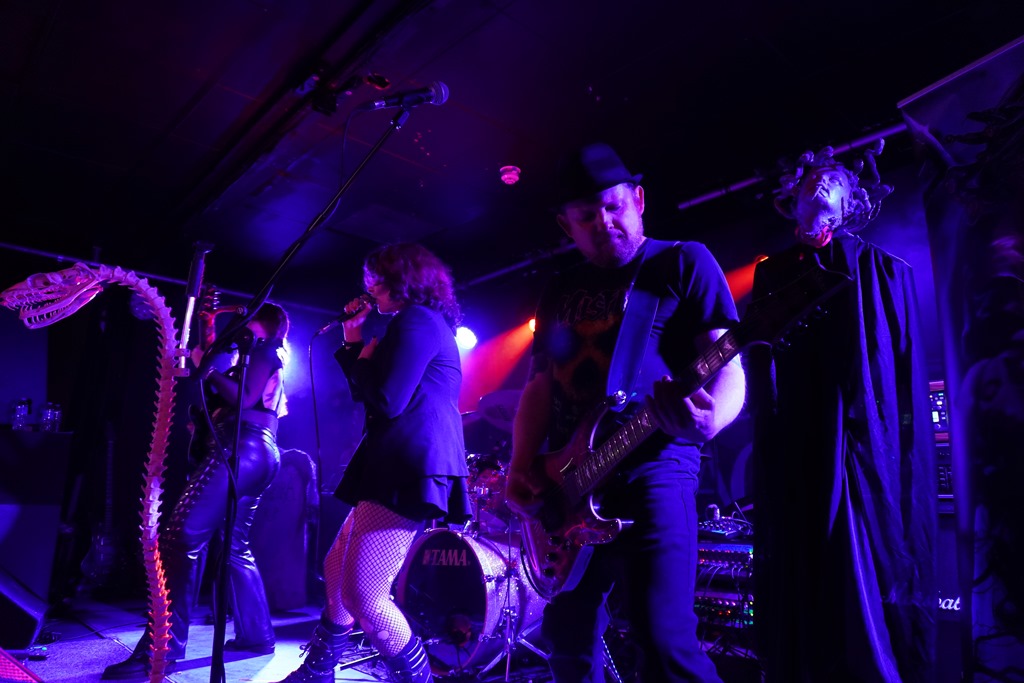
If you’re going to pursue a concept – particularly one that’s ridiculous – you really have to go all-in to pull it off. Oh, and Froglord do. The Bristol band’s five – yes, five – albums to date, including the most recent, Metamorphosis, released just a couple of weeks ago, are all preoccupied with expanding the lore of The Frog Lord, centred around the Book of the Amphibian, with swamp rituals and The Wizard Gonk and the like. Behind all this stupidity, there are some fierce riffs, and a fantastically solid doom metal band. I would have been perfectly happy if they turned up in jeans and T-shirts and blasted out the raging riffs. I might even have found it easier to connect with. But this is about performance, theatre. It’s also about doing something different. There is certainly no shortage of serious doom bands. There are considerably fewer doom bands who have devoted their entire careers to a concept as absurd as this.
Froglord
The more preposterous the concept, the more committed you have to be, and Froglord prove that they’re one hundred per cent committed (or that they perhaps ought to be), with a stage set which has all the props, from a stage backdrop to a lectern on which stands a copy of some esoteric bible, via masks, cloaks, and a giant plastic frog. The set is structured around a swamp ceremony, and there’s no breaking character – apart from when plugging merch, which is done in character while acknowledging it’s a break in character, which offers some postmodern reflexivity, and in the way front man Benjamin ‘Froglord’ Oak will adopt the stance of a high priest before getting down and grooving to the monster riffs, cloak flapping, mask slipping. It’s funny because they clearly know it’s daft but play it with straight faces. That kind of dedication is impressive – as is their shit-your-pants bass sound.
Froglord
And perhaps this is why it works. There’s a knowingness in the delivery of the performance, but they’re feigning that they don’t know we know it. Or something. And musically, they’re really strong. By the end, there are people traversing the venue, just grazing beneath the room’s low ceiling, in the same fashion as the cardboard Ainsley at the start of the night, and we filter out into the night to a chirping chorus of frogs. No two ways about it, Froglord put on a show.