Archive for the ‘Albums’ Category

Human Worth – 25th August 2020

Christopher Nosnibor

Modern Technology crashed the scene hard with their eponymous debut EP in January of 2019. A devastating detonation of thunderous post-punk nihilism that dismantled consumer culture with half a dozen hard-hitting sonic blasts, it was focused and perfectly formed. It also very much captured the zeitgeist, while plunging sonic depths appropriate to the bleakness of mass consumerism and a culture that favours conformity and the erosion of individuality.

The duo – bassist / vocalist Chris Clarke and drummer Owen Gildersleeve gigged hard for a full year off the back of the EP, proving themselves to be a truly formidable live act: with a clear grasp of dynamics, intensity, and the importance of volume, they not only won a proper grass-roots fanbase, but also used their art for social good, donating proceeds from their Human Worth events and the profits from said EP to a selection of charities, notably Mind, Shelter, and The Trussell Trust.

Service Provider finds the duo even more aflame with fury and frustration at contemporary society, and although they seemed pretty well-honed on their first outing, they’ve taken things up another level or three here. The formula – such as it is – is unchanged, with the compositions centred around repetitive, cyclical grooves, pulverizing percussion and anguished vocals swamped in reverb to forge dense capsules of nihilism. The artwork, similarly, consolidates their identity, and the stark monochrome design with its dissolving text is a perfect summary of the stark images of social decay the band depict in their songs. But now, they’ve triple-distilled their ire, and the mammoth production only enhances the effect.

The first of the eight songs, ‘Therapy’ starts sparse, just Clarke’s brooding baritone voice and a primitive thudding drum beat. Those opening bars contain pure anguish, his voice cracked and distorted. Then, in a sharp squeal of feedback, the bass tears in like a whole troop of tanks crashing in, their caterpillar treads tearing at the earth, before locking into a single grinding note that booms out, each simultaneous strike of drum and bass like an explosion. Part Unsane, part Swans, it’s a heavy-hitter, and sets the tone and weight from the outset.

The bass buzzes and rumbles, the drums are understated, thumping away an insistent slow build, and it’s mostly just a scream of feedback like a jet engine that accompanies Chris’ vocal, an edge of distortion on the epic reverb, while he hollers, half-buried in the mix on ‘Blackwall Approach’. According to Wikipedia, ‘The northbound Blackwall Tunnel is a traffic bottleneck with tailbacks. A TfL study in 2009 revealed that the 1.1-mile (1.7 km) approach to the northbound tunnel took around 19 minutes in rush hour traffic, or a delay of approximately 11 minutes per kilometre.’ As such, it makes sense, the band casting a bleak eye over miles of excess traffic and literally tonnes of CO2 emissions. Because this is how we will die, choking the planet and ourselves in our question for exponential growth. And if you think ‘The Great Pause’ will change anything, then while I applaud your optimism, you are completely deluded: lockdown isn’t even over and there are mile-long queues of traffic to access beaches and beauty spots.

‘All is Forgiven’ is an epic grunger, coming on like an outtake demo for Nirvana’s Bleach played at half speed, with Owen’s powerhouse drumming driving thunderously. It’s raw and dingy and hits with serious velocity. The riff on ‘Gate Crasher’ is cyclical, repetitive, gut-churning, ribcage rattling, an intensely physical experience, which captures the force of the band’s live performances perfectly.

Describing a riff as ‘crushing’ may be a cliché, but fuck it: ‘Twitcher’ is a monolithic doom-weight crusher of a beast. A low-slow stealth verse yields to a thick distortion-ripping chorus that is absolutely punishing.

‘Terra Firma’, the album’s shortest song at a mere two-and-a-half-minutes, finds the band explore their more experimental side in a bleepy intro that gives way to a devastating bass blast paired with a squall of treble that calls to mind early Head of David, and serves as an into to the closer, ‘Life Like’, into which it segues. It begins with a spoken-word narrative, a rolling drum and bass almost serene as Clarke hovers around a calm monotone. Early crescendo threats subside and contribute to a simmering tension. But around the four-minute mark the build really begins in earnest, the bass thickening, swelling, and emerging in a tempestuous burst for an elongated outro that takes it to near the eight-minute point.

As a social commentary, Service Provider gets right to the rotten core of capitalist exploitation, and the way it pitches everyone as competition. The upper echelons are competing for supremacy: the majority are competing for scraps and for survival as the divide grows wider. And yet the irony is that the supremacy at the top is predicated on the rest purchasing whatever they’re selling, and all too often it’s shit they don’t need and can’t afford but that’s somehow become essential to contemporary living.

If anyone believes a world emerging from lockdown after the first wave of Covid-19 will be kinder, more accommodating, more humane, the early signs are that they’re sadly mistaken, as businesses slash employees and push even harder to return profits in the wake of a global financial slump.

We’re all fucked, and Service Provider sells it out loud – very loud – and clear, in stark, brutal terms. It’s a pretty punishing set, and what’s impressive is that they sustain the bludgeoning impact throughout, making for an absolute monster of an album. It’s hard to fault service like this.

AA

a1432357693_10

30th May 2020

Christopher Nosnibor

Having begun May with a new release in the form of Beyond Life, an exploratory ambient work in the form of a single twenty-six minute track, Ashley Sagar ends the month with a follow-up, and counterpart of similar scope and scale.

If the title suggests something a bit new-age, a bit hippy, trippy cosmic, and a bit pretentious, the music is contains isn’t anything of the sort, although there is a certain haze of mysticism and perhaps a sniff of incense about the album’s slow-drifting atmospherics.

There’s a faint scratching pulsation, like a metal object scraping against scratched glass, that grabs my attention early on: the arrival of slow, sedate, rolling percussion– possibly conga or similar hand drums – provides a new focus for the attention, and changes the tone considerably. With a rhythmic structure providing a framework and solidity, the piece becomes less overtly ambient and abstract. Shifting further over time towards cyclical, non-percussive rhythms transports the listener into a softer pace, before an unexpectedly weighty segment around the eleven-minute mark where the beats crash in and dominate, however briefly.

Thereafter the looming shadows are longer and darker, with rumbling low notes and heavy drones underlying Ian Mitchell’s delicate picked guitar notes and the returning percussion, along with one of Sagar’s distinctively strolling basslines. It may be subtle and muted, but its presence builds depth beneath the numerous shimmering layers which ebb and flow.

The segments are short and the transitions relatively swift, which gives The Temple… a strong sense of movement, movements that’s effortless and natural, since the parts flow seamlessly into one another like a stream flowing through a varied landscape, cascading from a spring-line, down a hillside and through a woodland. This may not be the most fitting metaphor, but you get the idea, and it’s perhaps telling that my mind is drawn to the natural rather than the spiritual, and I’m drawn to the distant horizon as the final notes throb and ripple to the fade.

AA

a0892150820_10

Sargent House

Christopher Nosnibor

Chelsea Wolfe and her band drummer Jess Gowrie came together while touring Wolfe’s Hiss Spun album in 2017. I reasonably expected Chelsea to be the dominant force here, and it’s perhaps because of that expectation that Self Surgery, the fruits of their collaboration under the moniker of Mrs Piss, hits as hard as it does. It’s the best kind of collaboration, greater than the sum of its parts, and finds Wolfe standing equal creative billing.

If Wolfe’s albums are marked by a degree of poise, control, balance, then those are tossed to the wind in a deluge of noise on Self Surgery. It’s unrefined, even messy in places, and all the better for it. It feels like a true exploration as the pair cut loose, dredge deep, and find what’s really inside themselves.

‘To Crawl Inside’ is but an intro track, 43 seconds of no-wave buzz and a vocal stew that bubbles discord and disquiet. It sets the tone in that it’s raw and ragged, angular and challenging, but it barely begins to set the levels for volume and abrasion. On Self Surgery, Wolfe and Gowrie crank it up and go all out.

‘Downer Surrounded by Uppers’ blasts headlong into a grunge blast, and we’re talking more early Hole than the stereotypically formulaic quiet/loud dynamic of what’s come to be associated with grunge since Nevermind and Live Through This redrew the template and rendered it accessible. It’s not the only full-throttle grunge explosion: ‘Nobody Wants to Party with Us’ is throws in some skull-cracking percussion and an industrial edge that lands it somewhere between Pretty On the Inside and The Downward Spiral. It’s heavy-duty.

‘Knelt’ finds Chelsea in more familiar territory, with a grinding, low-registering bass and swirling maelstrom of distorted guitar providing a dense, murky backdrop to a breathy, brooding vocal that’s reminiscent of ‘Spun’. But while still cinematic, and also deep, dark, and weighty, as well as simultaneously ethereal, the guitars wrapped in layers of effects and drenched in reverb, there’s a different feel to the production here: less polished, less precise, everything is more up-front, more direct.

If the first half of the album is intense, the second is next level: muscles twitch and nerves jangle in the face of the upshift in pace and intensity that begins with the driving riffery of ‘M.B.O.T.W.O.’ and steps up with ‘You Took Everything’, which is shadowy, gloomy, gothic in mood, stark snare ricochets shaping the direction as screaming banshee backing vocals fill the backdrop with a fearful hauntology.

The title track is a daunting morass of dingy bass and pulverising percussion that paves the way for the mess of no-wave noise that is the pair’s titular tune and sums up what their about perfectly, as the guitars and dual vocals swirl in currents of feedback before a driving drum thrash that calls to mind Bleach-era Nirvana hammers to an unexpected moment of calm to fade.

Because of its timing, and its staunchly uncommercial titling, this project could well be a bit of a sleeper, but the fact is, it’s as strong as anything Wolfe has released during her career to date, and is a truly killer album in its own right.

A

AA

a4118909094_10

Cruel Nature Records – 19th June 2020

Christopher Nosnibor

Much as I love living in York because of The Fulford Arms, and the ease of access to limitless gigs in Leeds (without having to actually live in Leeds), I’m starting to think that Newcastle is the place to be.

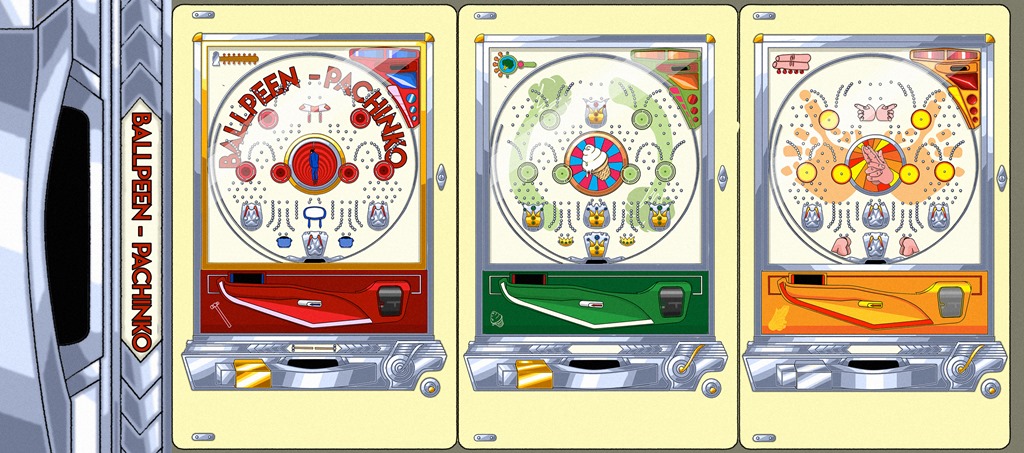
Cruel Nature’s roster is reason alone, and this latest offering from full-throttle noisemakers Ballpeen is exemplary. Three years on from their first live show and, the band have established themselves, ‘through releases on premier DIY punk label, Serial Bowl Records’. As the press release recounts, ‘2018’s ‘Loose Knot’ with its wry nod to Black Flag in title and excellent artwork, rapped five across the listener’s brow from the get-go, with its attention-grabbing power and undulating groove, coursing through the 6 tracks, leaving you thirsty – but not miserable – for more’.

In attempting to capture the energy of their live performances, Pachinko is a relentlessly balls-out, up front amalgamation of all things post-hardcore, with a big, bold 90s slant that evokes the spirit of Touch & Go and Amphetamine Reptile, as well as contemporaneous little UK labels like Eve Recordings and Jackass.

At times, it feels like we’re wading through endless indie sameness, and even so much alternative music, spanning metal, hardcore, post-hardcore and whatever else you’ve got simply fails to hit the spot, and I’ve felt listless, uninspired many evenings while reviewing these last few weeks. And then Pachinko slams in with a proper smack to the chops and I’m instantly reinvigorated and reminded of all of the reasons for music. Pachinko is distilled excitement. The album’s eight tracks are packed back-to-back and are all the guitars, spasmodic, jolting, big distortion. The fact it’s a mere twenty-one minutes in duration indicates the density and hell-for-leather pace of the album, which last less time than it takes some bands to tune up, or in the case of Sunn O))), to strike the first chord.

Pachinko isn’t pretty: it’s direct, and drives straight for the jugular. Following the lurching drive of ‘One Man’s Opinion’, a thorny mess of Killing Joke and early Therapy? with a dash of Milk, ‘Flipper’ brings a downtuned churning riff assault, before ‘Ornate Coleman’ slugs out a messy morass of guitar-driven abrasion.

Blending Trail of Dead and Blacklisters at their most attacking, or to pluck lesser-known but perhaps more accurate reference points, Tar, Guzzard, and Hora Douse all spin into Ballpeen’s sonic blast.

‘Kancho’ goes full-on Bleach era Nirvana with a driving, circular riff and sprays of feedback bursting from the halts in the crushing percussion. It’s heavy in a relentless, churning way. Some songs, like the closer, ‘No Mark’ are straight-ahead hardcore punishers that are Black Flag and all the hardcore releases Southern Lord have released in the last five years rolled together and deep-fried in breadcrumbs that stick in the throat simply to choke you.

No prisoners. No respite. Just full-on fury. The best.

AA

ballpeen outer

Hallow Ground – HG2005 – 5th June 2020

Christopher Nosnibor

For this release, it’s worth laying out the context in detail, as provided in he press release, which explains that the album ‘was conceived as the soundtrack for the eponymous installation piece by the French artist Fanny Béguély.’

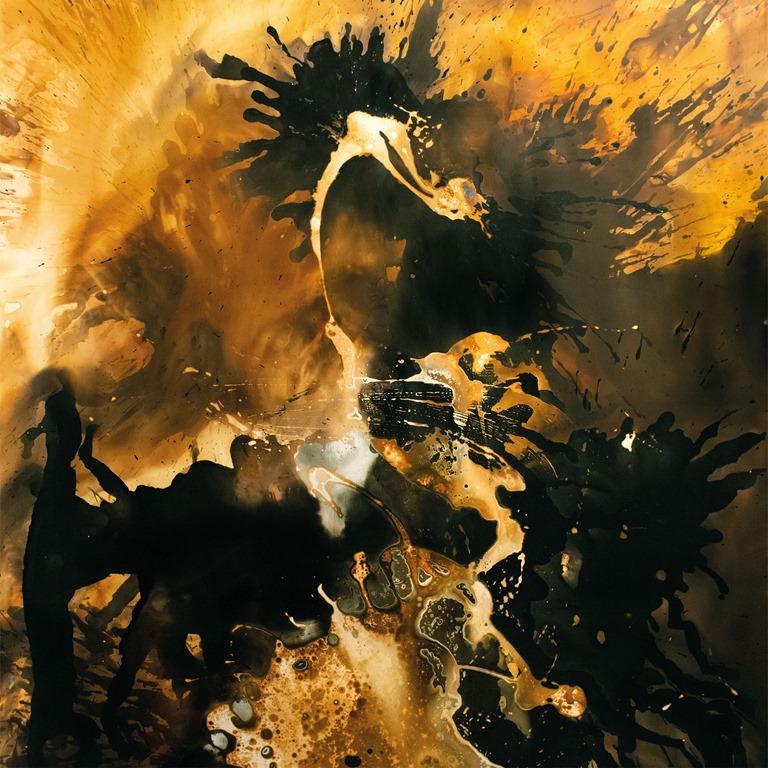
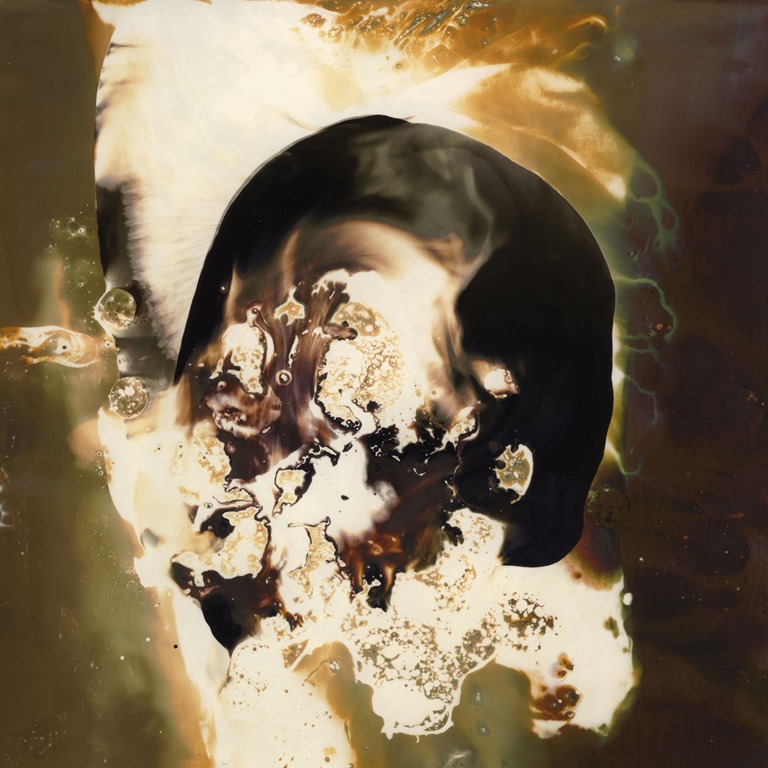
‘First presented as part of the group exhibition »Panorama 21 – ›Les Revenants‹« at Tourcoing’s Le Fresnoy Studio National des Arts Contemporains in December 2019, Béguély’s chemically painted photographs focused on humankind’s propensity for self-examination and its attempts to probe the mysteries of the past, present and future. Oberland’s heavily processed electric hurdy-gurdy, the »boîte à bourdons,« provides the foundation upon which the Borghesia member Tomažin unfolds her gripping vocal magic(k). Their dense mesh of soundscapes and singing mediate between the mystic and the modern, the natural and the all-too-unreal to further examine our persistent desire to decipher the signs we find in nature. As the first collaboration between these prolific experimental artists, ARBA, DÂK ARBA is as evocative and thought-provoking as the art that has inspired it.’

The hurdy gurdy is by no means a common or popular instrument. Not that you’d be likely to be able to discern any specific instruments on the five sparse, ominously atmospheric pieces presented here.

From a sparse, quivering tone surrounded by emptiness, ‘Grotta’ builds in density over the course of fourteen and a half minutes into dense bugle of sound, a deep, resonant thrum over which mournful sounds – voice-like but not voices – moan and groan as they drape elongates notes of sadness over an increasingly uncomfortable backdrop.

This is not an album so settle down comfortably with, and it’s not a comfortable kind of ambience: ‘Fumes’ brings a suffocating tension, heightened by the unintelligible vocals that speak – wordlessly – of an inner torment as they reverberate in an endless monotone, through which rumbles of thunder rupture. Ululations undulate evoking strange, distant lands and mystical esotericism. It culminates in a long, isolated drone, almost lost beneath a cacophony of shrieking, wailing, and crying. It’s difficult to hear: I feel my chest tighten: it’s the sound of pain of torture.

‘Hieromancy’ (brief research tells me this is a form of divination involving sacrificial remains or sacred objects) only heightens the anguish amidst more shrieking and wordless despair. It fades down to a defeated murmur and a hovering hum which drift into the more optimistic dawn of ‘Hereafter’, which offers a glimmer of light and hope. It’s late-coming, but welcome.

LP_Cover.indd

Pretty Ugly Records – 13th March 2020

Christopher Nosnibor

So I stumbled over Sex Cells by practically sticking a pin in last year’s Live at Leeds programme, and it paid off. Ok, that’s not quite true: while surveying the schedule, they looked interesting and probably worth a punt, so I took a gamble it paid off, with the their tense industrial-edged electronica that reminded me of Pretty Hate Machine era Nine Inch Nails, only weirder and sleezier. Coupled with the duo’s slightly oddball, even vaguely awkward, presentation, it was compelling. The same has been true of their releases to date, which lead us to this, their debut album.

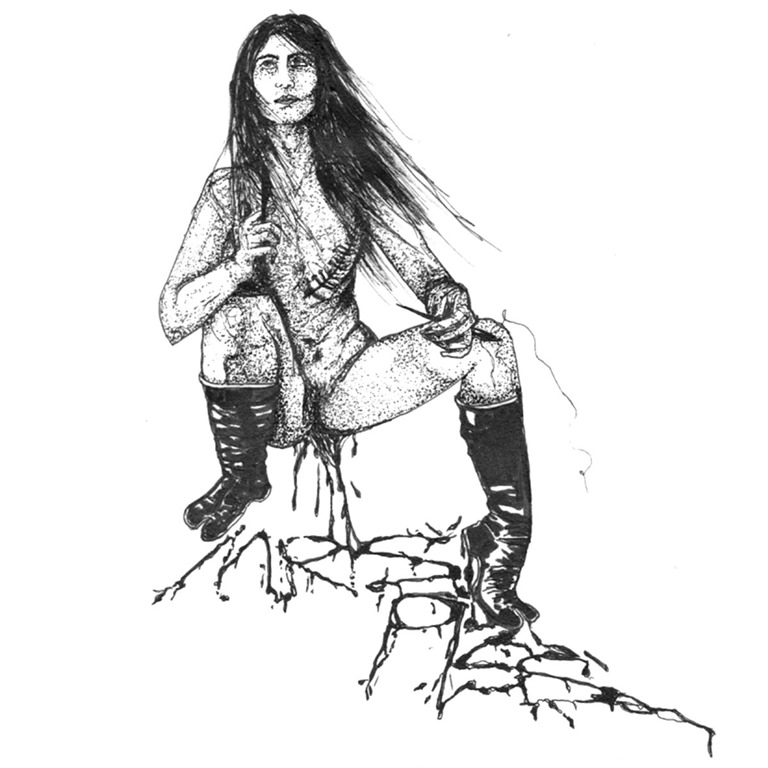
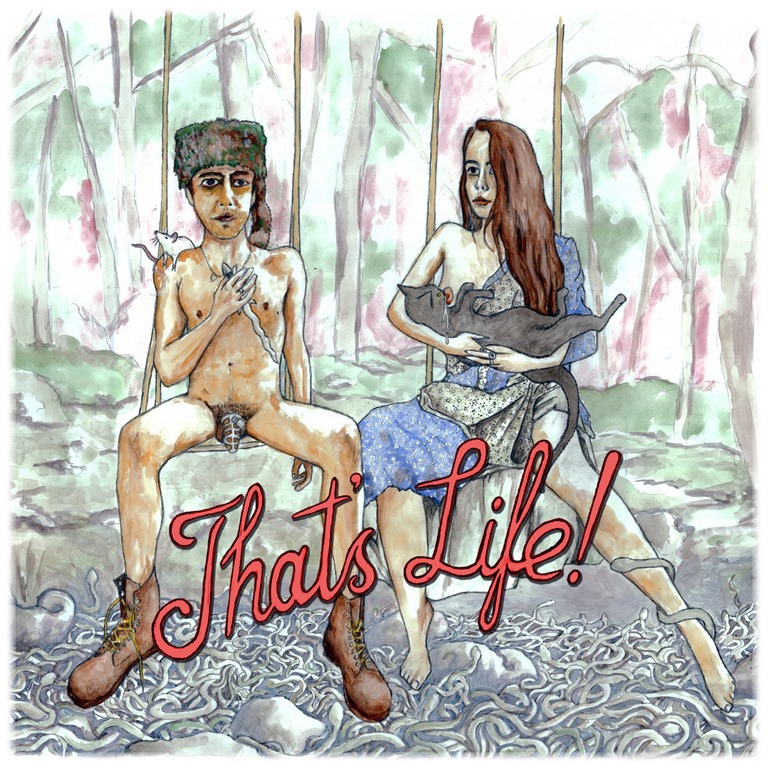
The album’s cover is a bizarre watercolour-style tableau of the pair, and on the one hand, it’s naff (and I’m being polite: the more you look at it, the more awful details reveal themselves. Like, is the cat really supposed to be licking her nipple? What’s that on his dick?), but on the other, it’s a perfect encapsulation of their perverse, quirky style. They don’t play by the rules. And if their name is a play on the adage and Soft Cell, then it’s entirely fitting. If it isn’t, it maybe ought to be.

The headline here should perhaps be that David M Allen is the lead producer here. Renowned for his work with The Human League, The Sisters of Mercy, The Mission, Depeche Mode, The Psychedelic Furs, Wire, The Associates, and The Chameleons, little more probably needs to be said here, beyond the fact that in terms of production, ‘That’s Life’ sounds like you’d probably expect.

‘That’s Life’ bridges the gap between The Human League and Nine Inch Nails, and doesn’t include any of their previous single releases apart from leader ‘Deranged’, which crashed in with a suitably salaciously shocking promo video in March, demonstrating their tenser, harder-edged side while at the same time nailing everything about the band into a box of two-and-a-half minutes.

Opening song, ‘Shimmer,’ is dominated by a low-slung oscillating bass and trudging drum machine that provides the backdrop to Matt Kilda’s monotone spoken word vocal and Willow Vincent’s lost, demented banshee shrillness that calls to mind Skeletal Family, early Siouxsie, and early Cranes.

‘We Are Still Breathing’ is a neatly-crafted reflective electropop tune. It’s got hooks, melody, and a dreamy quality. Things take a dark turn on the next song, ‘Human Costume’ a spiky post-punk electrogoth stomper that screams Hallowe’en and horror, with some pretty barbed lyrics that turn the mirror on society and the human psyche. And it still packs a killer chorus, too.

They go full death disco with ‘Cruel Design’, and Willow coms on all breathy and ice witch in the vocal department, bringing a contrast between the vibrant energy of the instrumentation and the cold detachment of the voice, in a role reversal between human and machine. It’s a complete contrast to the final song, ‘Hang the Flowers’, which is a sparse, folksy number that ripples dappled shade to fade.

The combination of shock tactics and neat dark-edged electropop is a well-established tradition that can probably be traced back as far as Suicide, but really became a thing in the 80s, and as such, Sex Cells should by rights be a yawn, their edginess predictable, their material laden with well-worn tropes, and the metaphorical shrug of a title does nothing to raise expectations. And yet they make it work, and make it exciting.

AA

a3207339964_10

AA

Cruel Nature – CN132 – 25th May 2020

Christopher Nosnibor

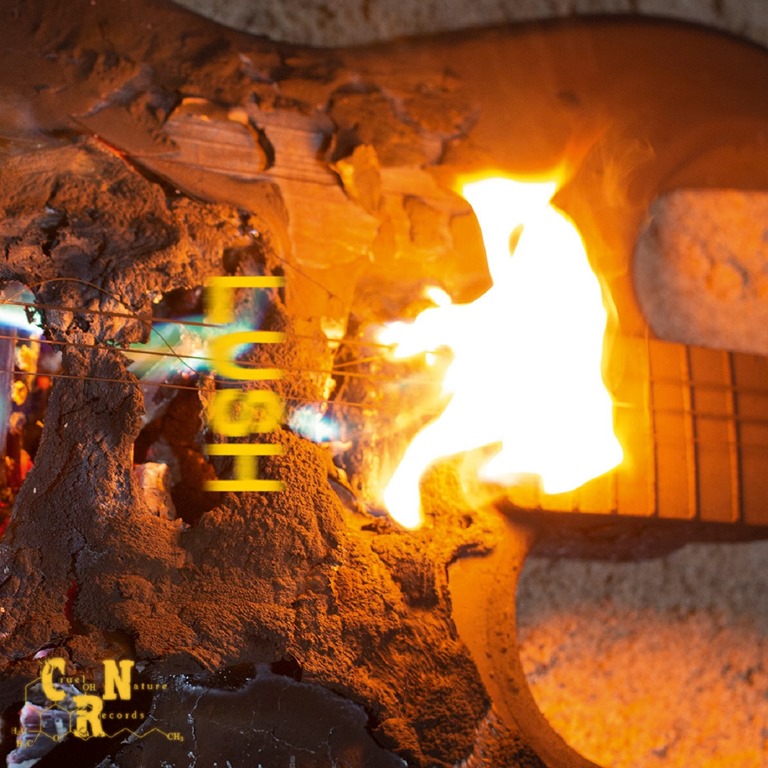
Mike Vest happens to be in several noisy bands I really, really rate, notably Ozo, Bong, Blown Out, 11Paranoias and Drunk in Hell. And now, while I’m wondering if the guy has somehow mastered cloning and not told anyone, you can add to that staggering list Lush Worker, his solo project.

Cruel Nature, one of two Newcastle-based cassette labels who represent the city’s tight-knit but remarkably prolific and outstandingly strong underground scene, which is a melting pot for all shades or nasty noise and dark metal-orientated music, here serves up a whopping portion of Lush Worker, with three albums bundled onto a limited-edition double cassette spanning nearly two hours of what they describe as ‘heavy shockwave drone and dream guitar noise overload, perfect to bliss out to’.

The first of half a dozen Lush Worker releases from 2019, Cruise was first released digitally last February, and essentially comprises the twenty-eight-minute title track, a long, swirling guitar drone that straddles shoegaze and ambience, with a brace of shorter (sub-two-minute) ‘sample’ tracks, omitted here presumably for space, continuity and purpose. Because while this may be three albums, it may s well be one monster album, and is perhaps best approached as such.

Admittedly, no-one is likely (alright, I’m making a substantial assumption here) to listen to this either an album at a time, or as a whole in a single sitting. Not because it doesn’t flow perfectly as a single-sitting piece, but because even in lockdown, does anyone have that kind of time?

So ‘Cruise’ cruises on, slowly, a spiralling cathedral of guitar that simultaneously drones and soars in a mess of wailing feedback and misshapen chords. There’s some distant beat in the mix, but its submerged beneath an undulating tide of treble.

The five cuts of ‘slow burn guitar’ from the appropriately-titled Uplift, released in October 2019, with the exception of ‘Flatliner’ are all around the nine-minute mark, and are more rhythmic, if not necessarily overtly structured: ‘Sub-Ether’ is a heavily psychedelic shoegaze swirl, centred around a repetitive, cyclical motif overlaid with layer upon layer of FX-soaked overdrive, with the album tapering to an elongated buzzing drone on ‘Frozen Egypt’, where it’s the slow-melting bass trip that makes it.

Somewhere in the haze of dubby desert rock, there’s a soaring experimental psychedelic drone on ‘Slow Zone Design’, and howling lead guitars duel against one another, occasionally colliding in a smash of metallic sparks.

Although presented here out of sequence (and the cassette sequence is different again from the digital release), with Hb1c MkII having been released in May, it makes sense for its two half-hour behemoth efforts to round off this release, mirroring its opening counterpart. However, ‘Hb1c MkII’ is a much mellower piece, a near-ambient drift of echo and delay, the chiming notes floating and fading into a rippling haze, before ‘Sobek 110’ delineates things further, a twenty-eight minute single-note drone at heart, it’s a meditative, medicated, soporific experience.

Collectively, these three albums demonstrate different but connected and complimentary facets of Vests Lush Worker output. Dim the lights and explore.

AA

cover

1st May 2020

Christopher Nosnibor

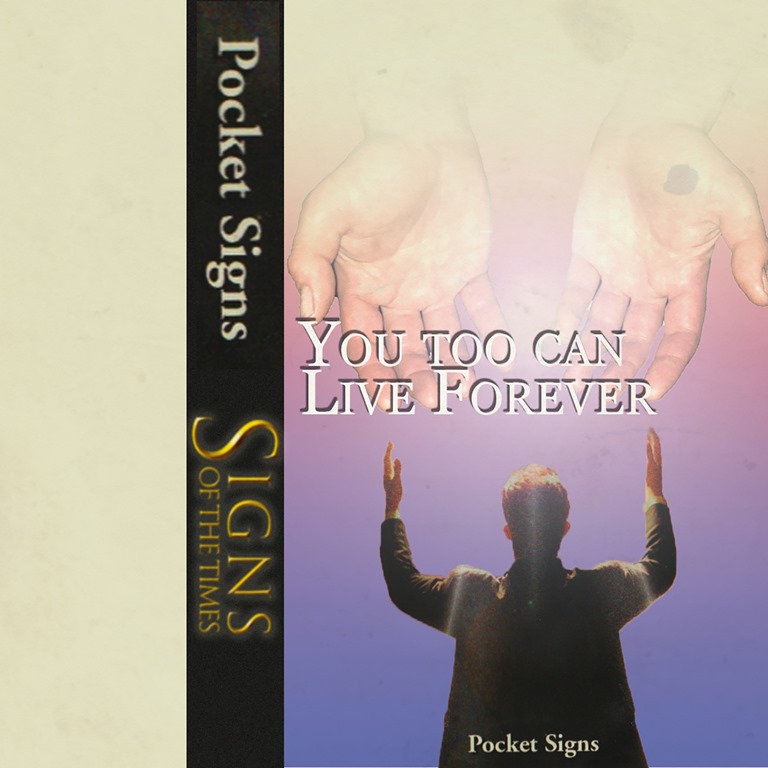
Pocket Signs is Sly & the Family Drone’s Matt Cargill and UKAEA’s Dan Jones, and according to Matt’s mail, Signs of the Times was ‘fired out in an afternoon with the aid of lager and pepsi max. Lights out, volume up, watch yer face bins.’ He describes it as the result of ‘plugging in all the objects and making a haunted, sprawling, disorientating racket. Blown out electronics, lacerated drums, churning bass and crumbling voices’. Which means I know I’m going to love it, along with at last 50 other people.

The album features two longform tracks, each a magical, mystical 23 minutes in duration, and like the times in which they were created, they’re a confusing mess of incoherence, a fractured and nonsensical sonic collage.

‘What About Obedience?’ starts out with what sounds like an engine roar – but not a real engine, so much as an engine on a racing console game. Then a deluge of clanks, bleeps, whirrs, clicks, pops, shoot-‘em-up laser guns and twanging elastic bands melting in a nuclear storm all pile in, more or less simultaneously and it feels like watching the news while scrolling through social media (as I do around five every evening while cooking dinner). The experience is utterly bewildering and to even attempt to unravel it all is futile, because the world has truly gone mad.

Searching for structures in this chaotic morass of noise is like trying to find logic in the UK government’s strategy for loosening lockdown, but there are some amazing moments to be found here, as snippets of tunes and spacey krautrock synth motifs emerge briefly from the blistering howl of undifferentiated nose that funnels like a gale.

Gurgles and glops and electronic extranea combine to forge an aural blitzkrieg that could easily be the soundtrack to a digital apocalypse. Everything swirls and melts into a maelstrom that builds a physical mass and hits with an impact that’s more than simply sensory.

Where do you go from a piece that concludes with a sustained squalling blast of white noise that leaves you with the sensation of the end of days? More of the same, of course: ‘How to be Saved’ begins with a series of murky vocal samples, echoed and overlaid, atop burrs of electronic discord, and in no time at all, later upon layer of dissonance has emerged to forge a raging torrent of noises. Feedback strains and scrapes, sharp and metallic with knife-like edges while surging currents gurgle and synth sounds squelch and quirt, titter and tweet around a vortex. Abstraction and chaos reigns, pulsing, bouncing, screaming and bumping in all directions. At time, the melee is impenetrable, bewildering, as it echoes around your cranium. Voices emerge and fade again at random: seemingly, everything is at random, and it’s a glorious headfuck. Not so much a dronewerk as a metadrone assemblage, it’s a wild and brain-frying journey, this may just be the perfect soundtrack to the now – or it may just tip you over the edge.

Oh, and the cover art is truly special.

AA

cover

Nahal Recordings – 10th April 2020

Christopher Nosnibor

Because detail is important, let’s begin with the parenthesis. The label’s press release announces ‘We teamed up with the extraordinary French ondist Christine Ott to create an unprecedented album entirely made with Ondes Martenot, one of the very first monophonic and experimental synthesizers in history’, resulting in ‘a cosmic journey of layered waves of sound’.

Maurice Martenot’s invention may not have acquired the popular status of the theremin, but Christine Ott’s instrument of choice is nevertheless significant in the evolution of sound generation as one of the very first monophonic and experimental synthesizers in history back in 1920.

Chimères begins with a pause, at least metaphorically: ‘Comma’ is six minutes of instrumental hauntology, as the notes trail, taper and quaver into still air and silence. As the album’s title suggests, this is a curious hybrid work, and while perhaps less monstrous than all that, the Ondes Martenot conjures strange, otherworldly sounds that are, at times, quite unsettling as they yawn, quiver, and squelch into seas of reverb. At times resembling analogue synth sounds, and at others approximating strings and even woodwind, the

‘Todeslied’ is the sound of disembodied spirits flittering around in the physical world, a phantasmagorical freakshow of sonic ectoplasm which gradually bubbles its way through a succession of bursts and plumes via something semi-industrial into a tranquil sunlit meadow of sound. Meanwhile ‘Sirius’ brings some deep ambience, while the eight-minute ‘Eclipse’ brings swirl of darkness that’s more of a sucking black hole than a fleeting dimming of light, building to a whupping rotary sound and blizzard of bleeps in the final minute.

It’s a lot to take in, and closer ‘Burning’ is a magnificent if slightly disorientating combination of slow-glooping electronica and orchestral chamber music. It isn’t easy to assimilate, but it is wonderfully executed, and once you can overcome the unfamiliarity of the form, there are some magical moments to be discovered.

AA

a3802769926_10

7th May 2020

Christopher Nosnibor

Of all of the releases that have been created under the great lockdown of 2020, this may be one of the most inspired, innovative, and also poignant I’ve encountered yet.

Although the project has been, in part, something to keep York-based lo-fi instrumentalist owl (Oli Knight) busy and connected while there’s no live music, no band rehearsals, or studio time to be had, its foundations are far deeper: the liner notes explain that the album is ‘dedicated to the memory of Alex Winspear who we sadly lost 13/09/2011’, and continue with further detail:

‘Alex had the idea to record pieces of music with as many people as he could in as many different styles, since then I have always wanted to do a similar thing. He inspired me as a musician and a human and I’m happy that I managed to get so many people to be a part of this project, I think he would have loved this’.

As such, all proceeds from Family & Friends are being donated to the Samaritans, and it’s available on a pay-as-you-feel basis.

The album’s forty tracks feature no fewer than thirty-seven contributors, including parents – because if nothing else, being confined to the home has made people resourceful, and to use what’s immediately to hand. As it happens, mum brings hefty percussion and a driving psych/desert rock vibe that’s quite a standout, so it’s a win there.

No doubt partly on account of geography, there are a number of contributors on this album I either know personally, or have seen performing locally, and in some odd way, they provide not only a warm glow of pride, but also a certain sense of comfort.

The first piece features Alex Winspear with owl., and was constructed using a sample from a salvaged recording. Its placing feels obviously significant under the circumstances, and in many ways counts for more than the gentle, flickering jazz-tinged acoustic post-rock of the actual composition, which, it has to be said, is extremely pleasant.

All of owl’s parts were recorded to iPhone in a single take, and any errors remain preserved. This is integral to the lo-fi authenticity of his work, and give it not only an immediacy, but also a humanity that’s disarming, endearing. None of the pieces have titles, beyond the names of the performers, and their range is remarkable, from rolling piano that broods and emotes, to flighty folk, and warpy glitchtronica.

Members of Bull independently provide sounds on two of the tracks, while Charlie Swainston is very much a notable name, but it’s Lou Terry’s scratchy country that stands out, along with

Ste Iredale and Jean Penne’s spoken word segments, which bring a different dimension – primarily words – to proceedings. Elsewhere, Matthew Dick’s gloopy, spacious, looped bass work is quite hypnotic, and paired with a full percussion track, there’s an expansive rock vibe being mined to full effect.

Martyn Fillingham from …And the Hangnails and Wolf Solent, who brings noise and drone are obvious namechecks, and their contributions are also worthy of mention musically.

Family & Friends is ambitious, and succeeds on so many levels, not least on the artistic level that is contains some nice tunes, and with such diversity, there’s something for everyone. Buy it: it’s for a good cause.

AA

a0450403177_10